Ephemeris: 07/28/2026 – The size and shape of the Milky Way
7/
This is Ephemeris for Tuesday, July 28th. Today the Sun will be up for 14 hours and 48 minutes, setting at 9:13, and it will rise tomorrow at 6:25. The Moon, 1 day before full, will set at 6:11 tomorrow morning.
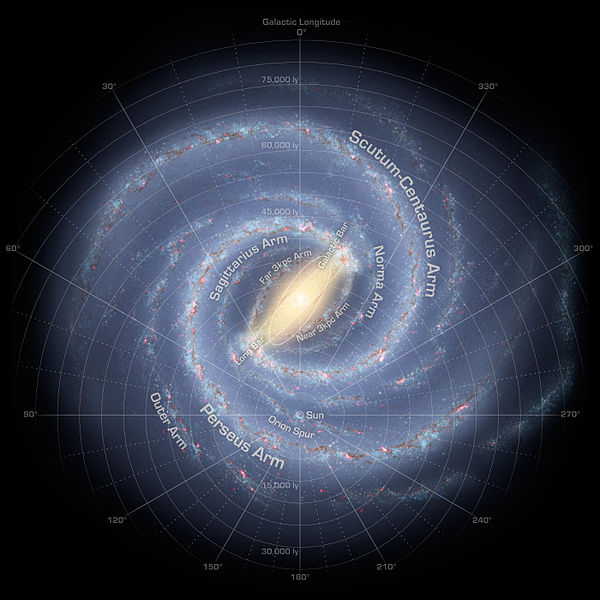
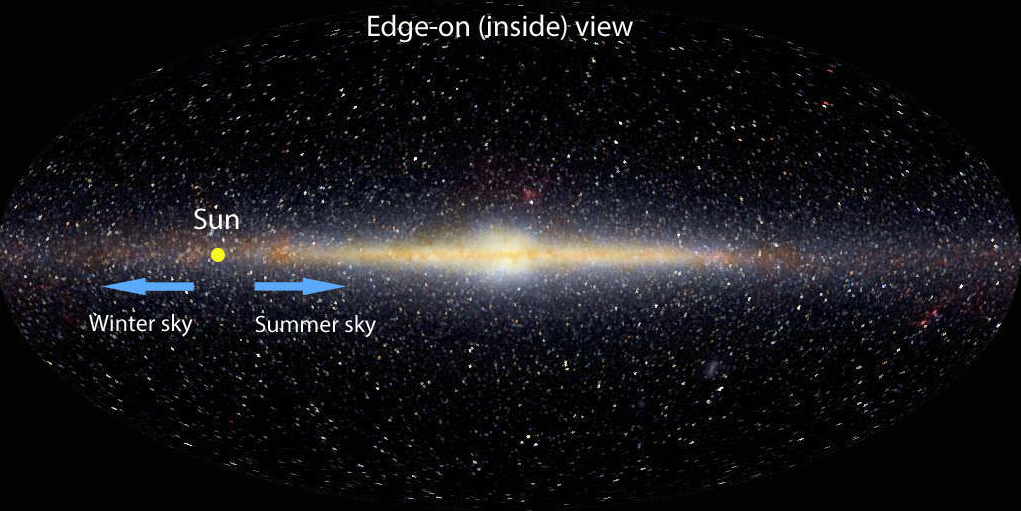
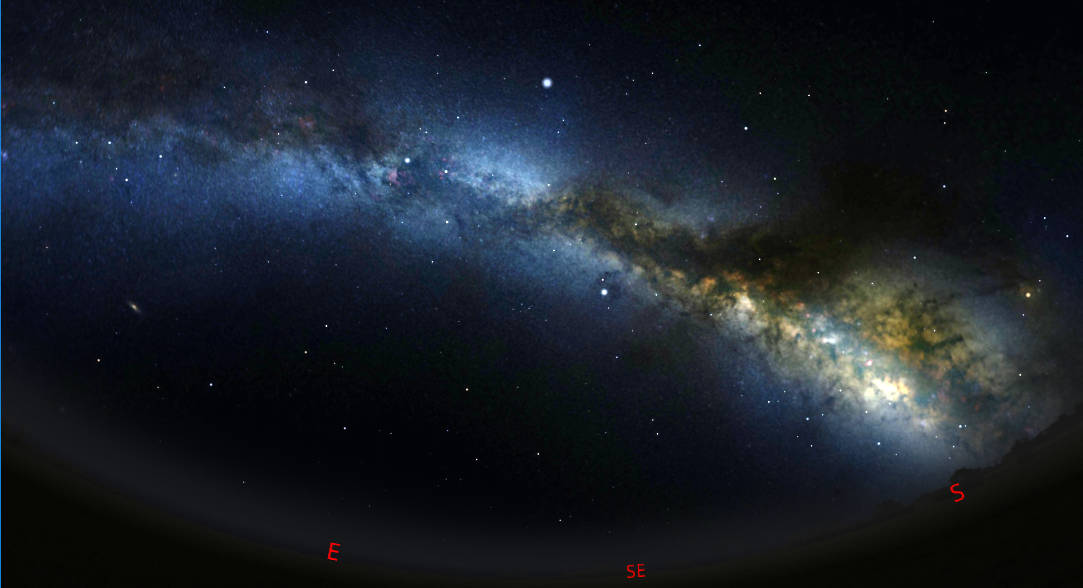
August and September are the two months in which the Milky Way dominates the evening sky. It also dominates the sky in the winter, six months from now but we’re looking out away from the center of the Milky Way. It is dimmer, an almost invisible as a band, but we have a great number of really bright stars, including those of Orion. The Milky Way is a galaxy, a large conglomeration of stars that are arranged in a disk, with the central bulge, whose diameter is about 87,400 light years. The thickness of the disk runs from 8,500 light years near the center to 1,000 light years farther out. The sun’s location is 25 to 26,000 light years from the center. From our location within the disk it appears to be a glowing band that surrounds the sky.
The astronomical event times given in this blog are for the Traverse City/Interlochen area of Michigan (Lat 44.7° N, Long 85.7° W; EDT, UT – 4 hours) unless stated otherwise. Times will be different for other locations.
Addendum