Archive
09/03/2018 – Ephemeris – Looking for Sagittarius, Centaur or Teapot
Ephemeris for Labor Day, Monday, September 3rd. The Sun will rise at 7:07. It’ll be up for 13 hours and 8 minutes, setting at 8:15. The Moon, 1 day past last quarter, will rise at 1:08 tomorrow morning.
The Milky Way runs from northeast to south through the heavens at 10 p.m. The Milky Way is brighter and broader just above the horizon in the south. In that glow in the south is a star pattern that looks like a stout little teapot, with a bright stream of the Milky Way rising from the spout, which faces the west. This pattern of stars is the major part of the constellation called Sagittarius. This year the planet Saturn appears right above it. According to Greek mythology Sagittarius is a centaur with a bow and arrow poised to shoot Scorpius the scorpion setting in the southwest. This centaur is Chiron, the most learned of the breed, centaurs usually being a rowdy bunch. The center of the pin wheel of our Milky Way galaxy lies hidden beyond the stars above the spout of the teapot.
The times given are for the Traverse City/Interlochen area of Michigan. They may be different for your location.
Addendum
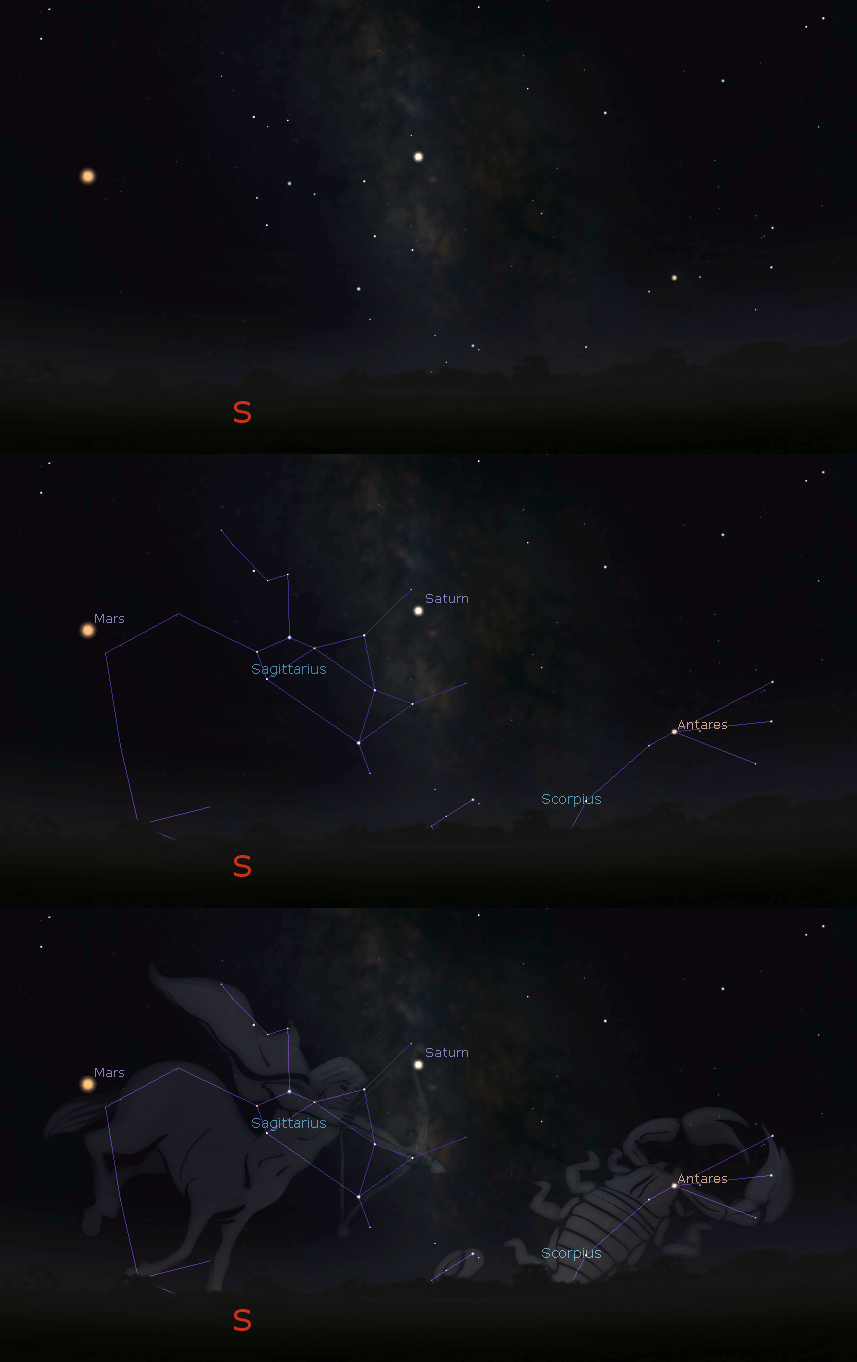
Sagittarius Finder animation for 10 p.m. September 3, 2018. Created using Stellarium and GIMP.
07/17/2018 – Ephemeris – Finding Cygnus the swan
Ephemeris for Tuesday, July 17th. Today the Sun will be up for 15 hours and 10 minutes, setting at 9:24, and it will rise tomorrow at 6:14. The Moon, 2 days before first quarter, will set at 12:32 tomorrow morning
High in the east northeast as it gets dark flies the constellation of Cygnus the swan. This constellation is also known as the Northern Cross. The cross is seen lying on its side with the bright star Deneb at the head of the cross to the left. The rest of the cross is delineated in the stars to the right. As a swan, Deneb is the tail, the stars of the crosspiece of the cross are the leading edges of wings as Cygnus flies south through the Milky Way. There are faint stars that also define the tips and trailing edges of its wings. It is a very good portrayal of a flying swan, like the mute swans we see on the wing. In Cygnus we are looking in the direction that the Sun and the Earth are traveling as we orbit the center of the Milky Way.
The times given are for the Traverse City/Interlochen area of Michigan. They may be different for your location.
Addendum
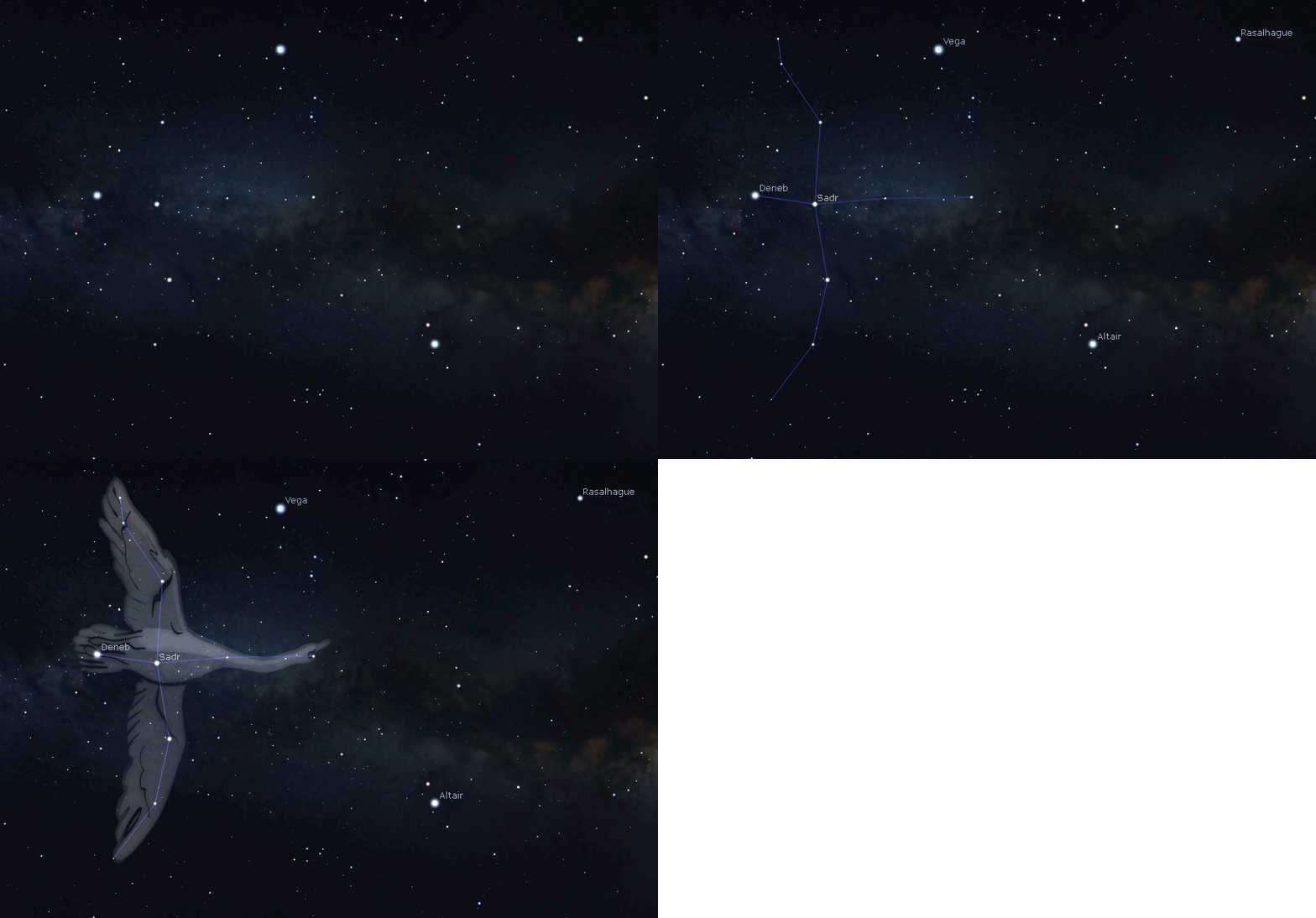
Animated Cygnus finder chart. Included also are, beside Deneb, the other stars of the Summer Triangle: Vega and Altair and their constellations Lyra the harp and Aquila. See if you can find them. Created using Stellarium.
07/16/2018 – Ephemeris – Lyra the harp, Hermes’ invention
Ephemeris for Monday, July 16th. Today the Sun will be up for 15 hours and 12 minutes, setting at 9:24, and it will rise tomorrow at 6:13. The Moon, 3 days before first quarter, will set at 12:02 tomorrow morning.
Very high up in the eastern sky at 11 p.m. can be found a bright star just north of a small, narrow, but very distinctive parallelogram of stars. They are the stars of the constellation Lyra the harp. The bright star is Vega, one of the twenty one brightest first magnitude stars. Vega is actually the 5th brightest night-time star. The harp, according to Greek mythology, was invented by the god Hermes. The form of the harp in the sky, is as he had invented it: by stretching strings across a tortoise shell. Hermes gave it to his half-brother Apollo, who in turn gave it to the great musician Orpheus. The Sun has a motion with respect to most stars around it. Its direction is towards the vicinity of Lyra.
The times given are for the Traverse City/Interlochen area of Michigan. They may be different for your location.
Addenda
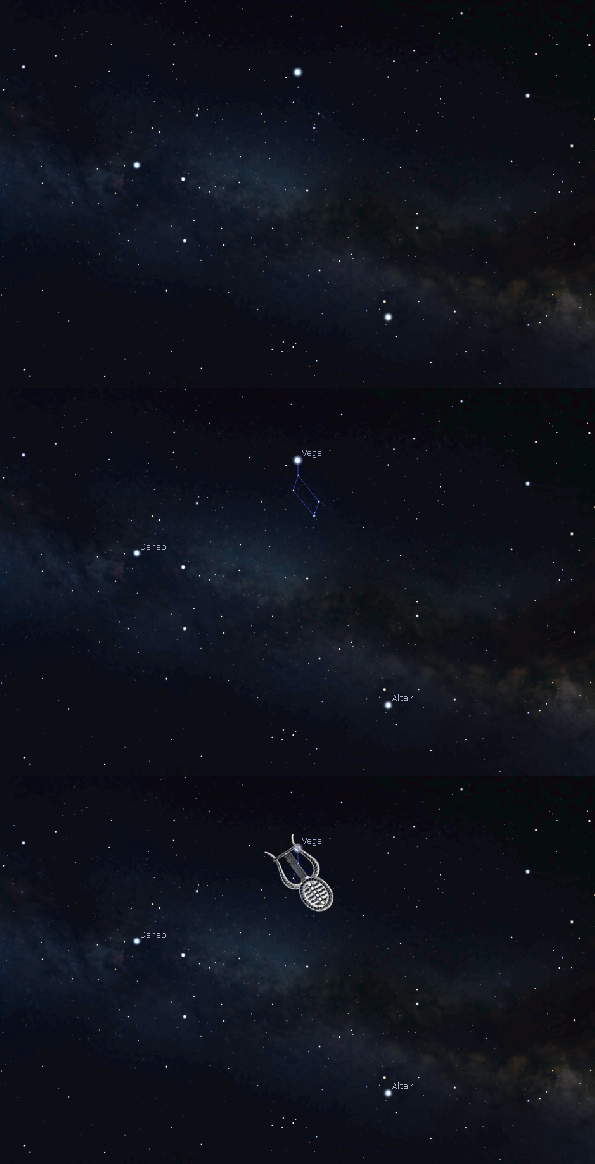
Animated Lyra finder chart. with Vega and the other named stars of the Summer Triangle. The lyre image not supplied by Stellarium but is from The World’s Earliest Music by Hermann Smith, Figure 60, A Project Gutenberg Ebook, and captioned “The Chelys or Greek Tortoiseshell Lyre”. Click on the image to enlarge Created using Stellarium and GIMP.
Last Saturday night’s wild Sun ‘n Star Party
Last Saturday night the Grand Traverse Astronomical Society, myself included, and the rangers and volunteers of the Sleeping Bear Dunes National Lakeshore held our Sun ‘n Star Party at the Dune Climb. I live 20 miles southeast of the Dune Climb, and about half way between Traverse City and Interlochen. It’s also the location for which the Ephemeris sunrise and sunset times are calculated for. We rely on the GOES East satellite imagery to show us the cloud patterns and movement. Saturday morning was pretty overcast and hot. GOES East showed that a big clearing was heading for us. At 1 p.m. I emailed our members that the event was a GO, and began to pack up the car with my two telescopes, and assorted items. Meanwhile some raindrops were showing up on the windshield. A check with weather radar on my phone confirmed that some rainstorms were popping up between my location and Lake Michigan. This is rather normal when it’s hot and humid in the afternoon, and wouldn’t affect the Dune area close to the lake. In driving to the Dune Climb I drove through some rain showers, but the skies cleared by the time I got within 5 miles from the lake.
The solar observing from 4 to 6 p.m.was great, except for no sunspots. We had 2 solar telescopes that did reveal some prominences. The sky was clear. The storm clouds were receding to the east. Of course we couldn’t see much to the west because the dune was in the way. Its angular altitude averaged 12 degrees. Some of us stayed there and ate our dinner. By 7:30 the wind came up from the southwest. A check of the GOES East satellite showed us a large, roughly square cloud the width of the lake slowly moving northward that was just south of us. Just after 8 p.m. we noticed clouds looming from the south, then fog was overtaking the tops of the dunes to the southwest. Shortly thereafter we were socked in. At a little after 9 p.m. Marie Scott the ranger in charge of this event gave introductions, and handed the microphone to me, who introduced our members and went over what we were supposed to see that night. We couldn’t track this cloud anymore by satellite because it was between the daytime color imagery and the nighttime infrared imagery. However around 10 p.m. someone spotted Vega, nearly overhead. And while I was swinging my 11″ Dobsonian towards it, someone else called out Jupiter. Looking around the fog was lifting. The night was salvaged. We stayed over an hour after the official 11 p.m. to watch Mars rise near the end of the star party, and finally view some of the wonders of the dark summer sky.
This was the fourth of seven monthly star parties scheduled at the Dunes this year. It was the first we didn’t cancel due to weather. We generally cancel one or two of then a year, but to start the year with three was depressing.
07/09/2018 – Ephemeris – Ophiuchus. the serpent bearer in the sky
Ephemeris for Monday, July 9th. Today the Sun will be up for 15 hours and 22 minutes, setting at 9:29, and it will rise tomorrow at 6:07. The Moon, half way from last quarter to new, will rise at 3:50 tomorrow morning.
The red star Antares shines in the south at 11 p.m. In the constellation of Scorpius. In the area of sky above and a little to the left lies a large constellation of faint stars called Ophiuchus, the serpent bearer. The constellation shape is like a large bell, which reminds me of the head, shoulders and arms of a fellow that’s holding the snake-like a weight lifter pulling up a heavy barbell. The serpent he’s holding is Serpens, the only two-part constellation in the heavens. The head rises to Ophiuchus’ right and the tail extends up to the left. In Greek legend Ophiuchus was a great physician, educated by the god Apollo, and the centaur Chiron, also found in the stars as Sagittarius, now rising below and left of him.
The times given are for the Traverse City/Interlochen area of Michigan. They may be different for your location.
Addendum
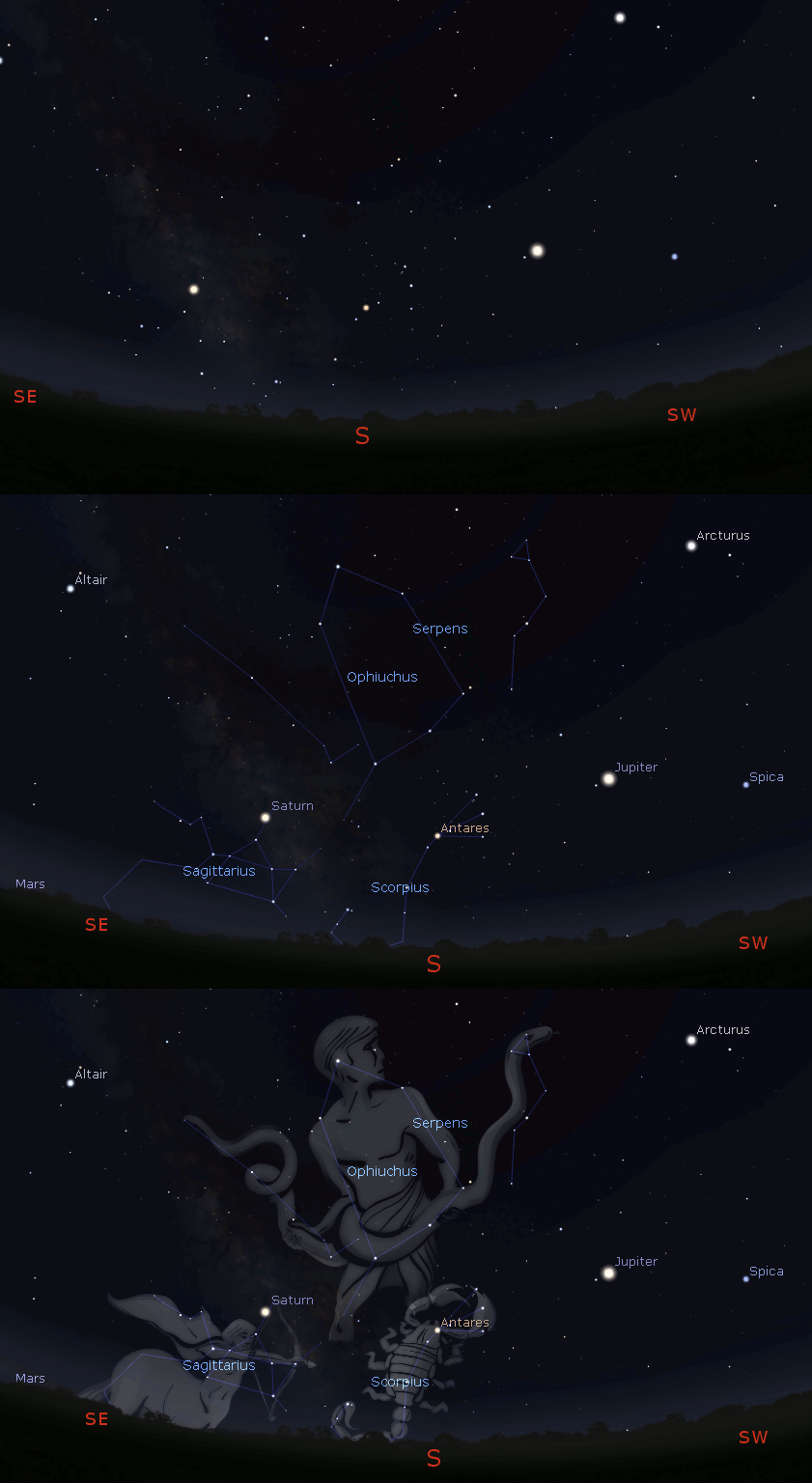
Ophiuchus finder animation plus constellations discussed. Created using Stellarium and GIMP.
06/14/2018 – Ephemeris – The mighty hero Hercules in the sky
Ephemeris for Flag Day, Thursday, June 14th. Today the Sun will be up for 15 hours and 33 minutes, setting at 9:29, and it will rise tomorrow at 5:56. The Moon, 1 day past new, will set at 10:27 this evening.
Orion, the hard luck Greek hunter gets a splashy constellation in the winter sky, but the greatest hero of all, Hercules, gets a dim group of stars on the border between the spring and summer stars. At 11 p.m. Hercules is high in the southeast. It is located above and right of the bright star, Vega in the east. Hercules’ central feature is a keystone shaped box of stars, called the Keystone, which represents the old boy’s shorts. From each top corner extend lines of stars that are his legs, from the bottom stars, the rest of his torso and arms extend. So in one final indignity he’s upside down in our sky. Some see him crouched down, club upraised holding the Hydra about to throttle it. For those with a telescope it contains the beautiful globular star cluster M13.
The times given are for the Traverse City/Interlochen area of Michigan. They may be different for your location.
Addendum
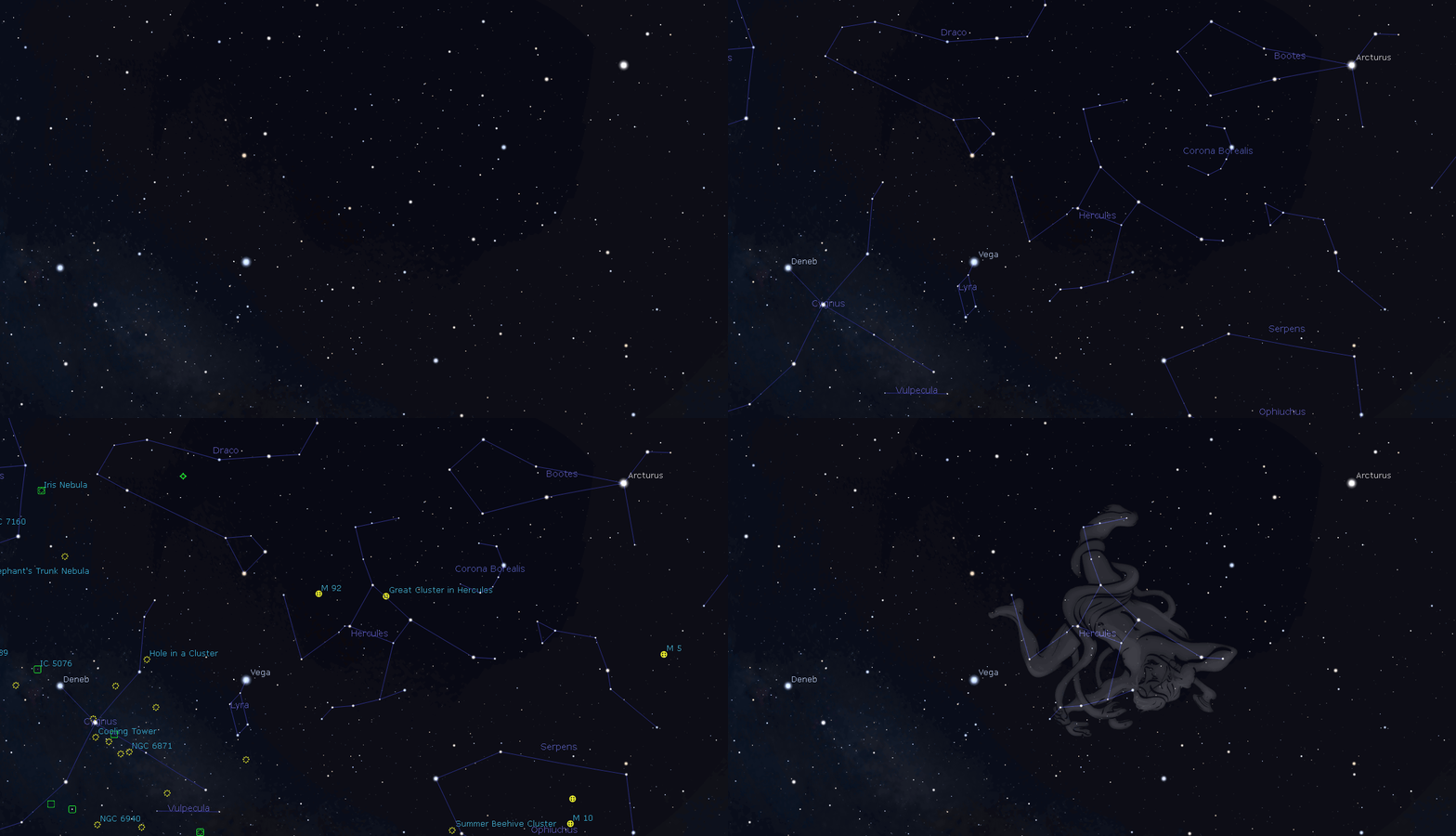
Hercules animation showing neighboring stars, constellation outlines, deep sky objects, and constellation art for Hercules. Created using Stellarium. Click on image to enlarge.
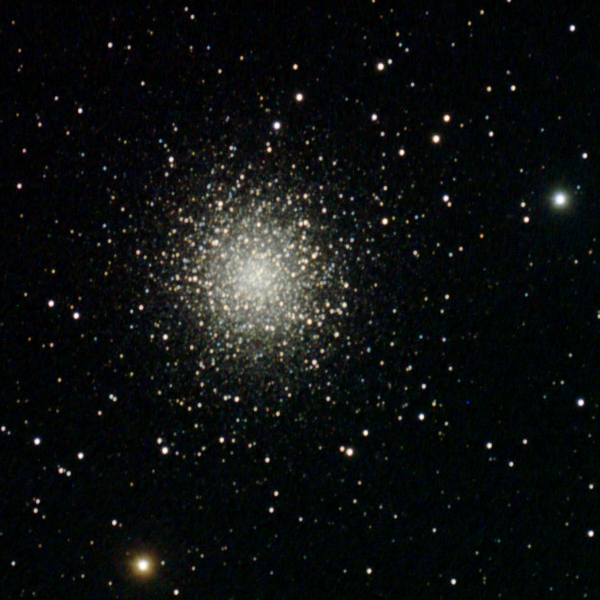
M13, the Great Globular Star Cluster in Hercules. Credit: Scott Anttila
06/12/2018 – Ephemeris – Virgo the virgin
Ephemeris for Tuesday, June 12th. Today the Sun will be up for 15 hours and 32 minutes, setting at 9:28, and it will rise tomorrow at 5:56. The Moon, 1 day before new, will rise at 6:02 tomorrow morning.
Tonight in the sky: to the south, is bright Jupiter. The brightest star to the right of Jupiter is Spica. It is in the constellation and member of the of the zodiac: Virgo the virgin. Virgo is a large constellation of a reclining woman holding a stalk of wheat. The bright star in the center of the constellation, Spica, is the head of that spike of wheat; and as such it ruled over the harvest in two of Virgo’s guises as the goddesses Persephone and Ceres. Ceres is now a dwarf planet and the root of the word cereal. Virgo is also identified as Astraea the goddess of justice. The constellation of Libra, the scales of justice, which she is associated with, is found just east of her low in the southeast.
The times given are for the Traverse City/Interlochen area of Michigan. They may be different for your location.
Addendum
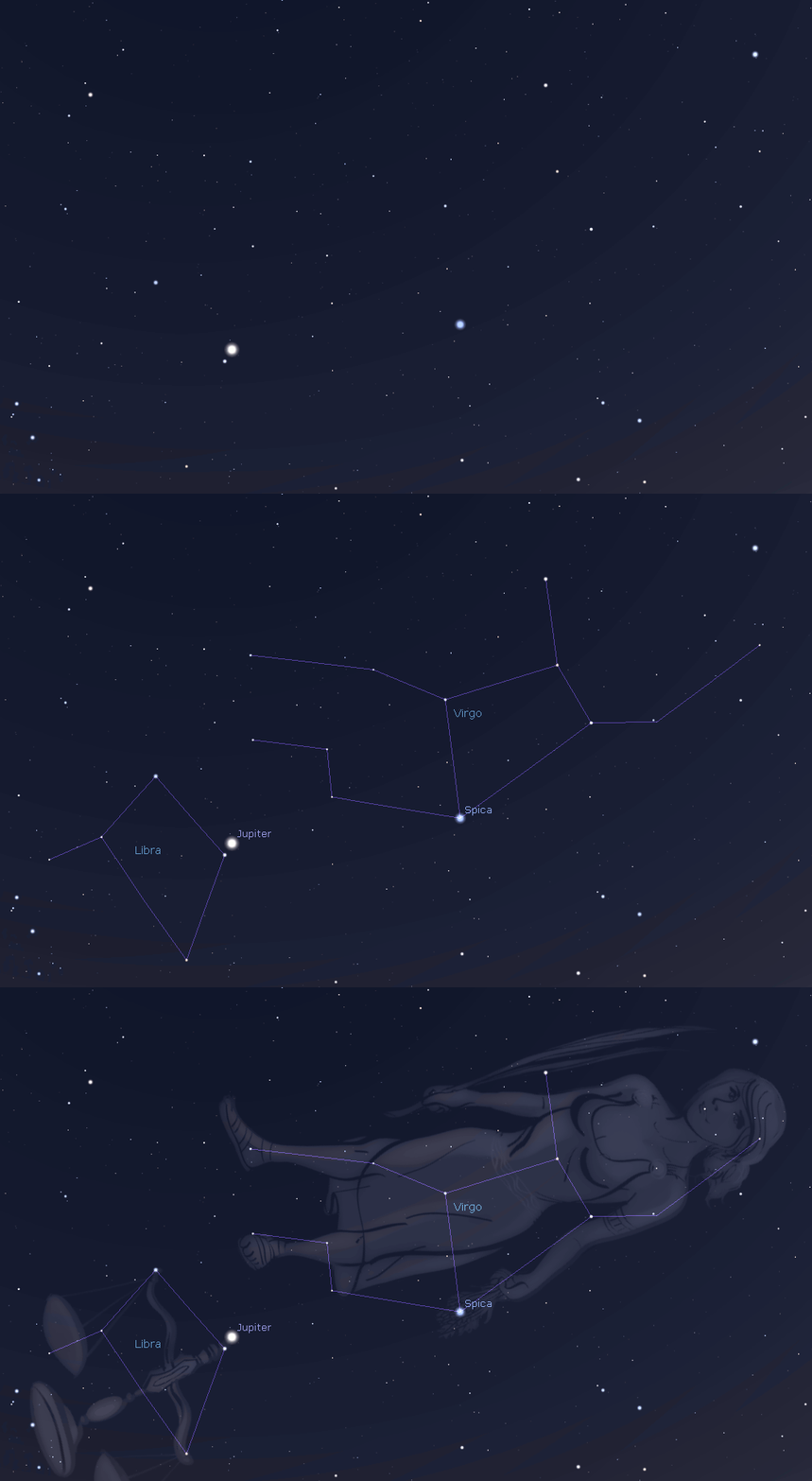
Virgo finder animation for 10:30 p.m. June 12, 2018. Click on image to enlarge. Created using Stellarium and GIMP.
06/04/2018 – Ephemeris – Ariadne’s crown
Ephemeris for Monday, June 4th. Today the Sun will be up for 15 hours and 24 minutes, setting at 9:23, and it will rise tomorrow at 5:58. The Moon, 2 days before last quarter, will rise at 1:47 tomorrow morning.
High in the southeast at 11 p.m. can be found a small but easily spotted constellation of Corona Borealis, the Northern Crown. It is located just east or left of the kite shaped constellation of Boötes, with its bright star Arcturus at the base. The Northern Crown is a semicircle of stars, like a tiara, with a brighter star Gemma at the bottom. Despite the obvious allusion of stars to diamonds and the sound of one of the star’s name, this is not a gem studded crown. Gemma means blossom, so Corona Borealis may represent a floral crown. According to Greek mythology it belonged to Princess Ariadne, daughter of King Minos of Crete. She was abandoned by Theseus, whom she helped out of the Labyrinth of the Minotaur.
The times given are for the Traverse City/Interlochen area of Michigan. They may be different for your location.
Addendum
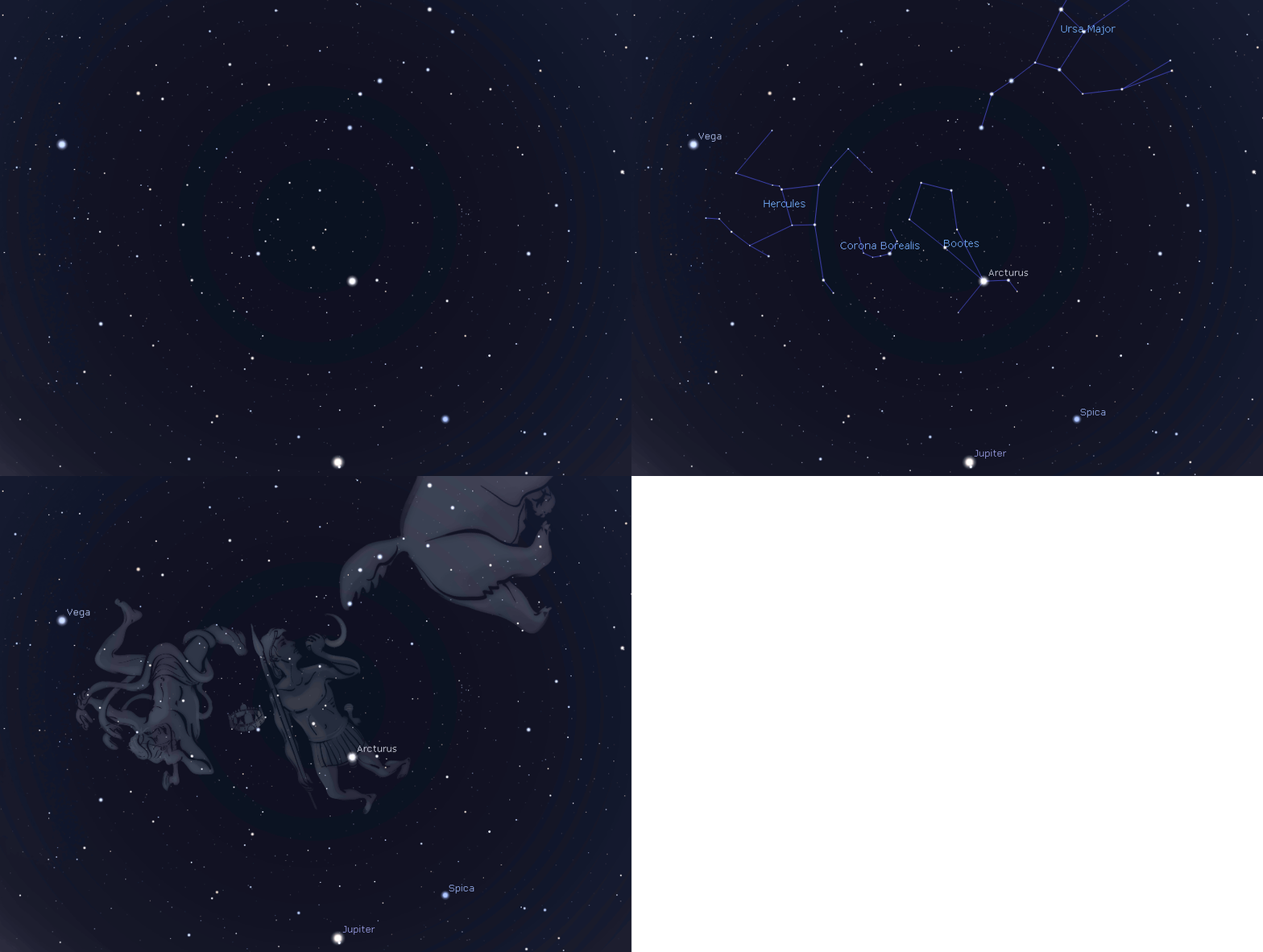
Animated Corona Borealis Finder Chart looking to the southeast at 10:30 p.m. June 4, 2018. Corona Borealis is a small constellation, so I added its neighbors for context. Click on the image to enlarge. Created using Stellarium and GIMP.
05/11/2018 – Ephemeris – Corvus, Crater, Hydra and a fig
Ephemeris for Friday, May 11th. The Sun rises at 6:19. It’ll be up for 14 hours and 40 minutes, setting at 8:59. The Moon, half way from last quarter to new, will rise at 5:09 tomorrow morning.
The small constellation of Corvus the crow is located low in the south at 10:30 this evening. It’s made of 5 dim stars, but the pattern is a distinctive distorted box with two stars at the upper left marking that corner. To the right is a fainter constellation of a thick stemmed goblet called Crater. Both appear above the long constellation of Hydra the water snake who is slithering above the southern horizon. In Greek mythology Corvus, then white, was the god Apollo’s pet. He once bid Corvus to take a cup and fetch him some water. Corvus however dallied and waited for a green fig to ripen. Corvus then grabbed a snake and returned with a story on how the snake had delayed him. The angry Apollo turned the crow and all crows black to this day.
The times given are for the Traverse City/Interlochen area of Michigan. They may be different for your location.
Addendum
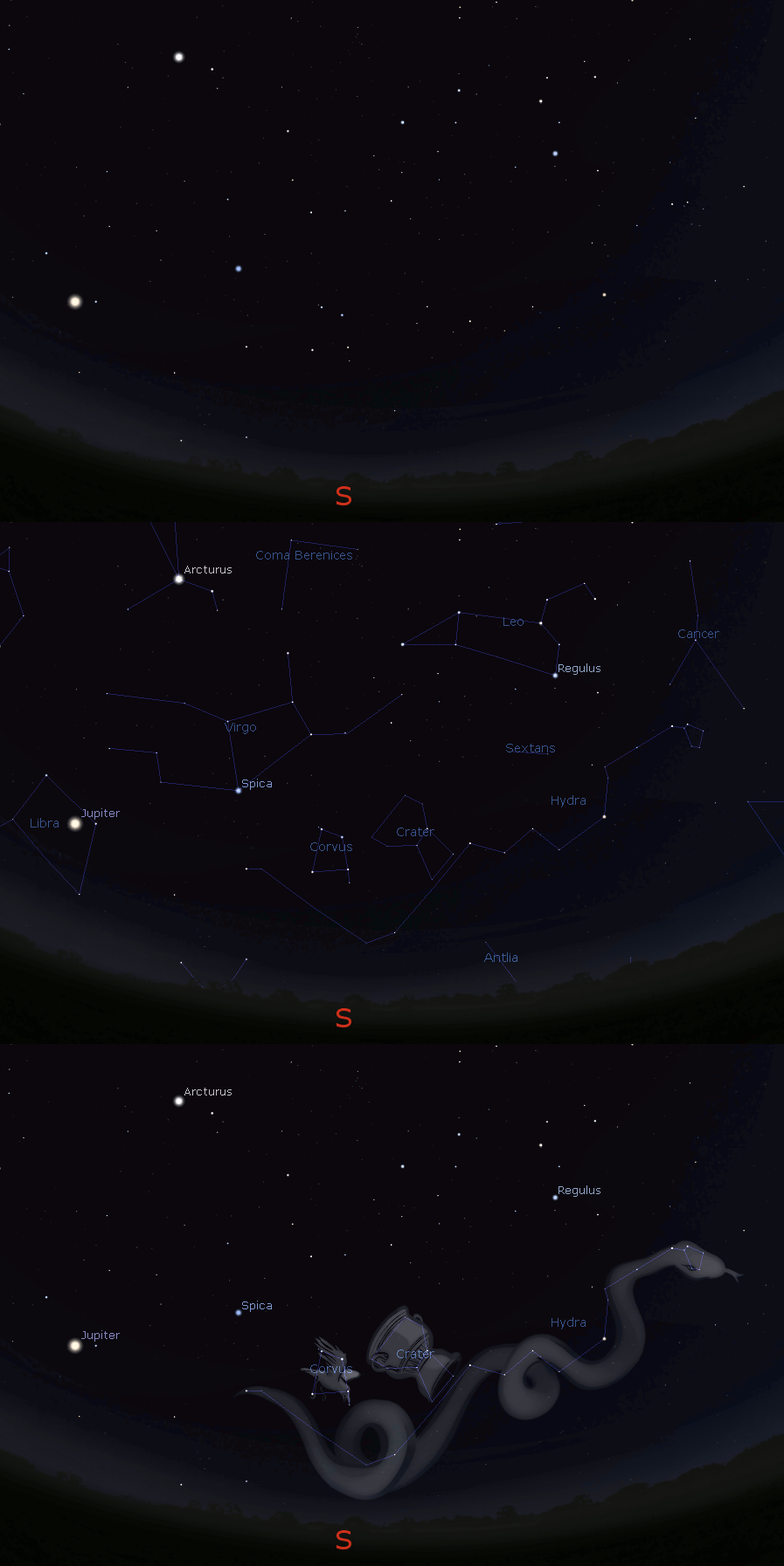
Corvus, Crater and Hydra finder chart for 10:30 p.m. May 11, 2017. Apollo is not in the night sky, and is presumably resting after guiding the Sun’s (Helios) chariot across the daytime sky. The fig? Corvus ate it. Click on the image to enlarge. Created using Stellarium and GIMP.
04/10/2018 – Ephemeris – How Boötes and the Great Bear got into the sky
Ephemeris for Tuesday, April 10th. The Sun will rise at 7:07. It’ll be up for 13 hours and 14 minutes, setting at 8:21. The Moon, 2 days past last quarter, will rise at 5:14 tomorrow morning.
Appearing mid way up the sky in the east at 10 p.m. is the kite shaped constellation of Boötes the herdsman. The bright star Arcturus is at the bottom-right of the kite, pointed to by the arc of the handle of the Big Dipper, above it. In one Greek myth Boötes represents a young hunter named Arcas, son of Callisto, a beautiful young lady who had the misfortune of being loved by Zeus the chief of the Greek gods. Zeus’ wife Hera, found out about the affair, and since she couldn’t punish Zeus, turned the poor woman into an ugly bear. Arcas, unaware of the events surrounding his mother’s disappearance in his youth was about to kill the bear when Zeus intervened and placed them both in the sky to save her. To this day Boötes continues to chase the great bear Ursa Major around the pole of the sky each night.
The times given are for the Traverse City/Interlochen area of Michigan. They may be different for your location.
Addendum
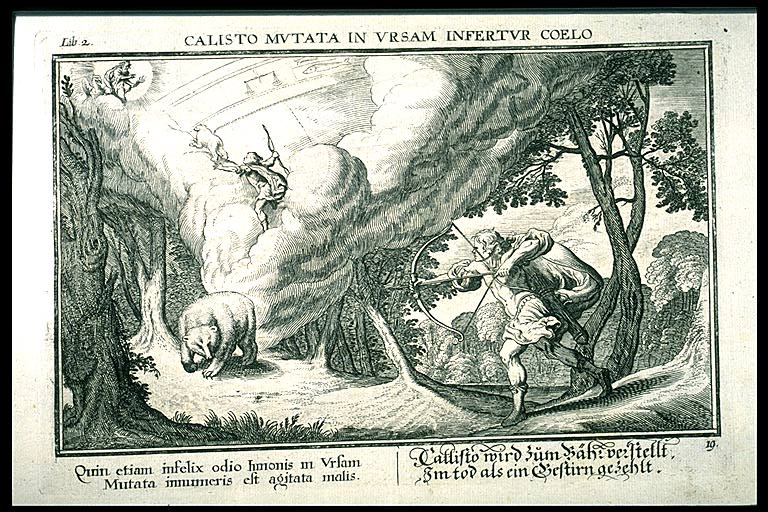
Arcas about to slay the bear by the 17th century artist Baur. Source: University of Virginia Electronic Text Center
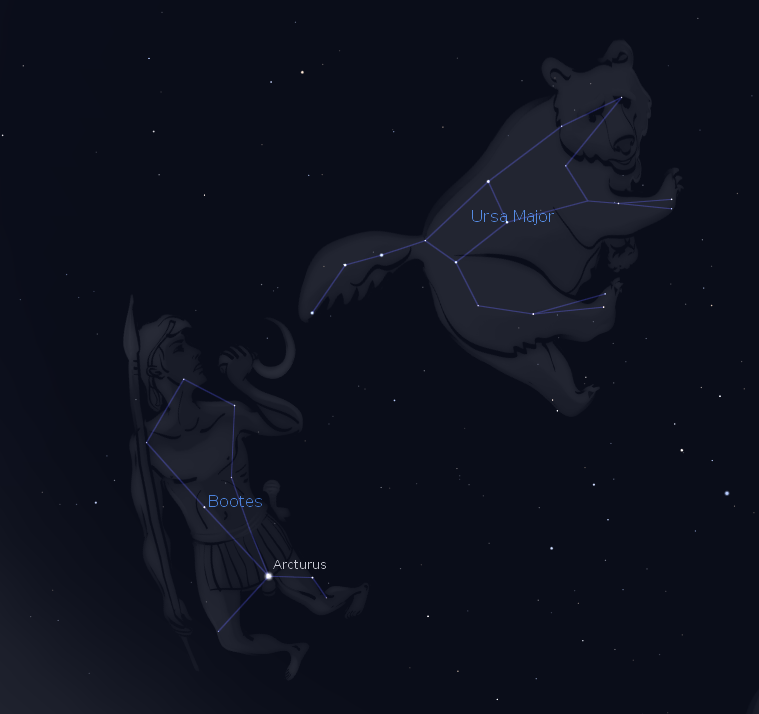
Bootes and Ursa Major aka Arcas chasing Callisto around the pole of the sky. Created using Stellarium.
03/05/2018 – Ephemeris – Spring is coming: Leo is rising
Ephemeris for Monday, March 5th. The Sun will rise at 7:13. It’ll be up for 11 hours and 22 minutes, setting at 6:35. The Moon, half way from full to last quarter, will rise at 10:53 this evening.
The constellation Leo the lion is now rising in the east at 9 pm. It’s below and left of the Big Dipper higher up in the east-northeast. Leo is marked by two sets of easily recognizable stars. The front of him is a backward question mark of stars, also known as the Sickle that mark his head and mane, along with the front part of his body. Regulus is the star at the bottom of that backwards question mark. It’s the Little King Star. The hind end of him is a triangle of stars ending with another bright star, but not as bright as Regulus. It’s Denebola which means Lion’s tail. It is thought when the Sun was in this constellation long ago that the lions were driven by the heat to quench their thirst in the Nile river. Ancients physicians thought medicines were poison when the Sun was here also.
The times given are for the Traverse City/Interlochen area of Michigan. They may be different for your location.
Addendum
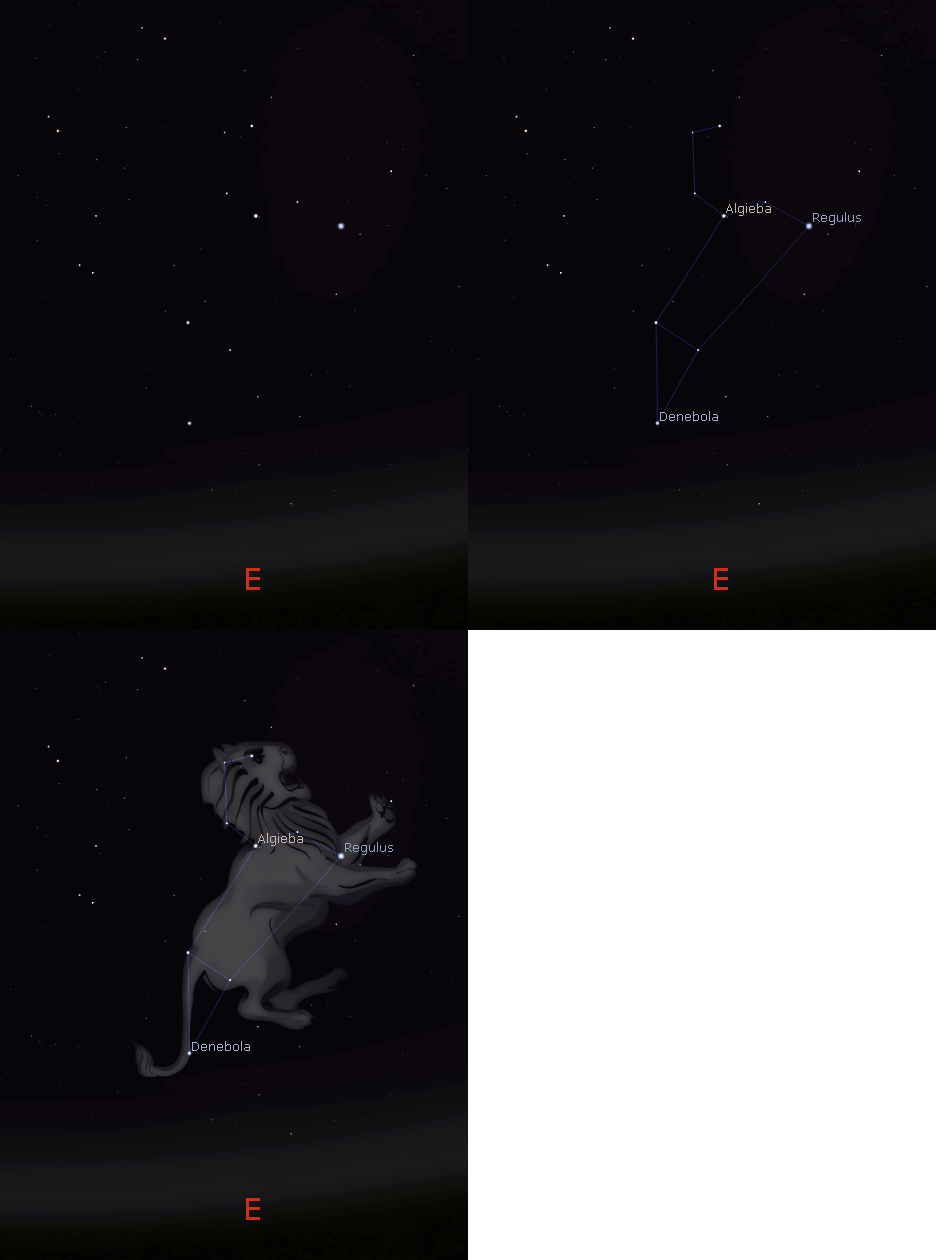
The constellation Leo animation. Created using Stellarium and GIMP.
Algieba is a binary star, which should be able to be split with any good telescope. The magnitude 2.4 and 3.6 components are separated by 4.6 arc seconds. Binary stars are one type of object that benefit from using high power to resolve. The stars are very close in temperature, so each appears a yellow-orange color offering no color contrast.
 Bob Moler's Ephemeris Blog