Archive
Ephemeris: 09/24/2026 – The Harvest Moon Effect
This is Ephemeris for Thursday, September 24th. Today the Sun will be up for 12 hours and 3 minutes, setting at 7:36, and it will rise tomorrow at 7:33. The Moon, 2 days before full, will set at 6:18 tomorrow morning.
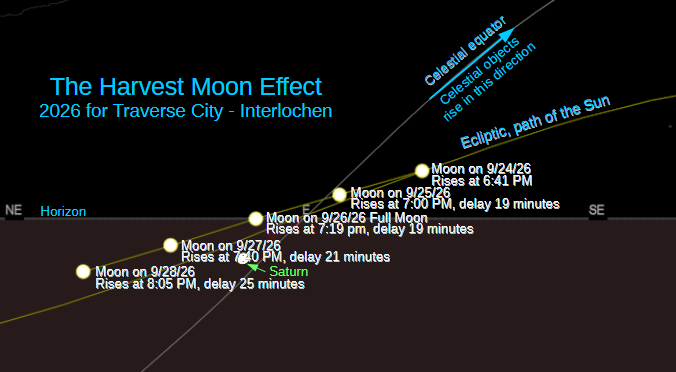
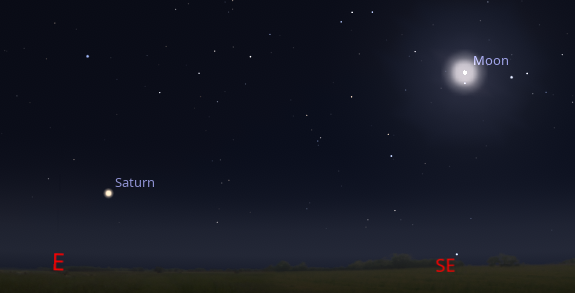
The full, or nearly full moon, just rising, looks like a large orange pumpkin. The color, like the red of the sunset is caused by the scattering out of blue light by the atmosphere. It can happen at any full moon, not just the Harvest Moon, which will occur on Saturday. What the Moon around the Harvest Moon does do is rise only a little later each evening. This helped the farmers in earlier times effectively extend twilight to bring in the crops. On average the moon rises or sets 50 minutes later each night. However when the Moon is in the part of the sky where it is moving northward as well as eastward, then it rises only a little later each night. Tomorrow’s Moon will rise only 19 minutes later than it will this evening.
The astronomical event times given in this blog are for the Traverse City/Interlochen area of Michigan (Lat 44.7° N, Long 85.7° W; EDT, UT – 4 hours) unless stated otherwise. Times will be different for other locations.
Addendum
Ephemeris: 09/23/2026 – Where did Venus go?
This is Ephemeris for Wednesday, September 23rd. Today the Sun will be up for 12 hours and 6 minutes, setting at 7:38, and it will rise tomorrow at 7:32. The Moon, 3 days before full, will set at 5:08 tomorrow morning.
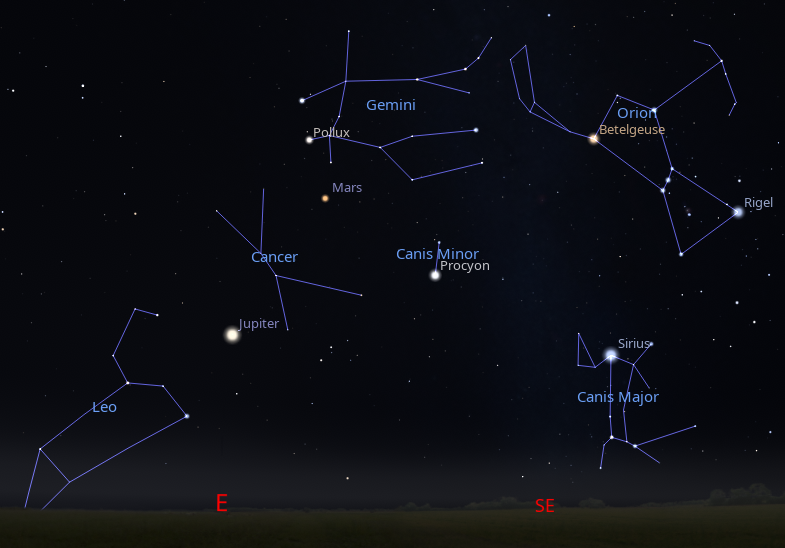
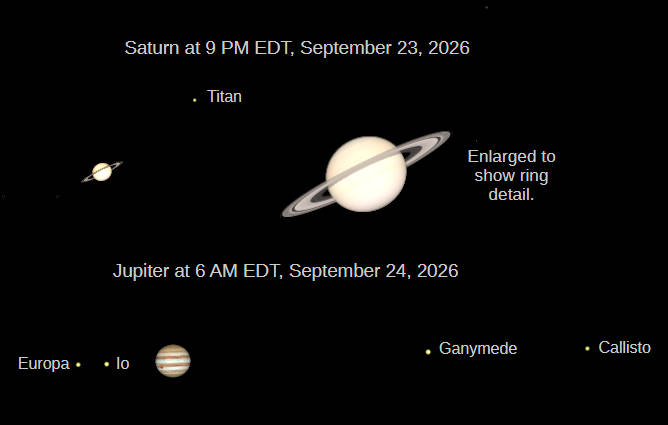
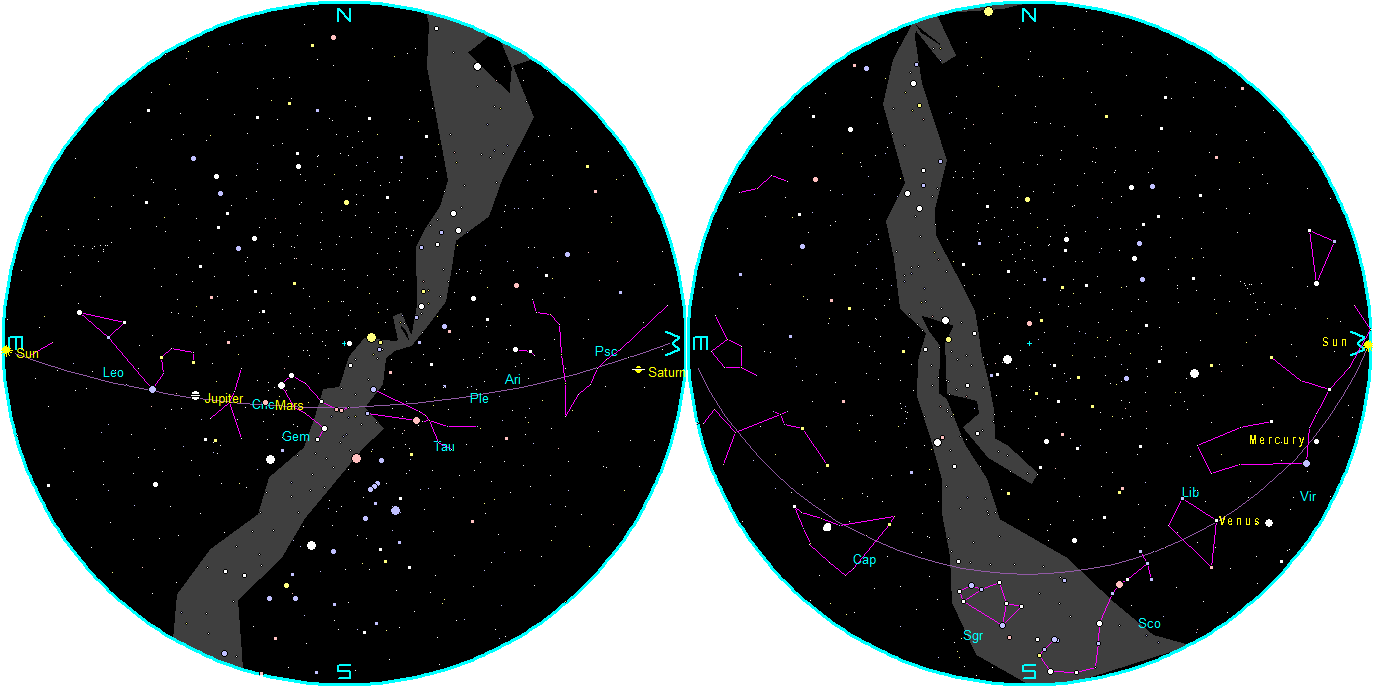
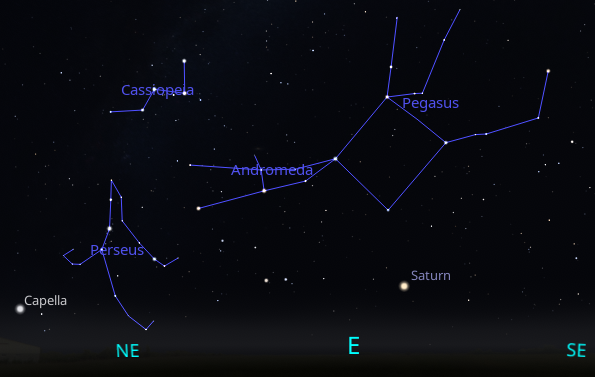
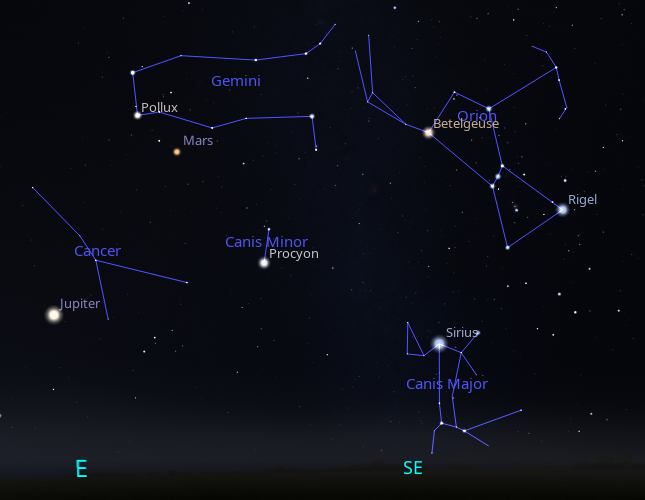
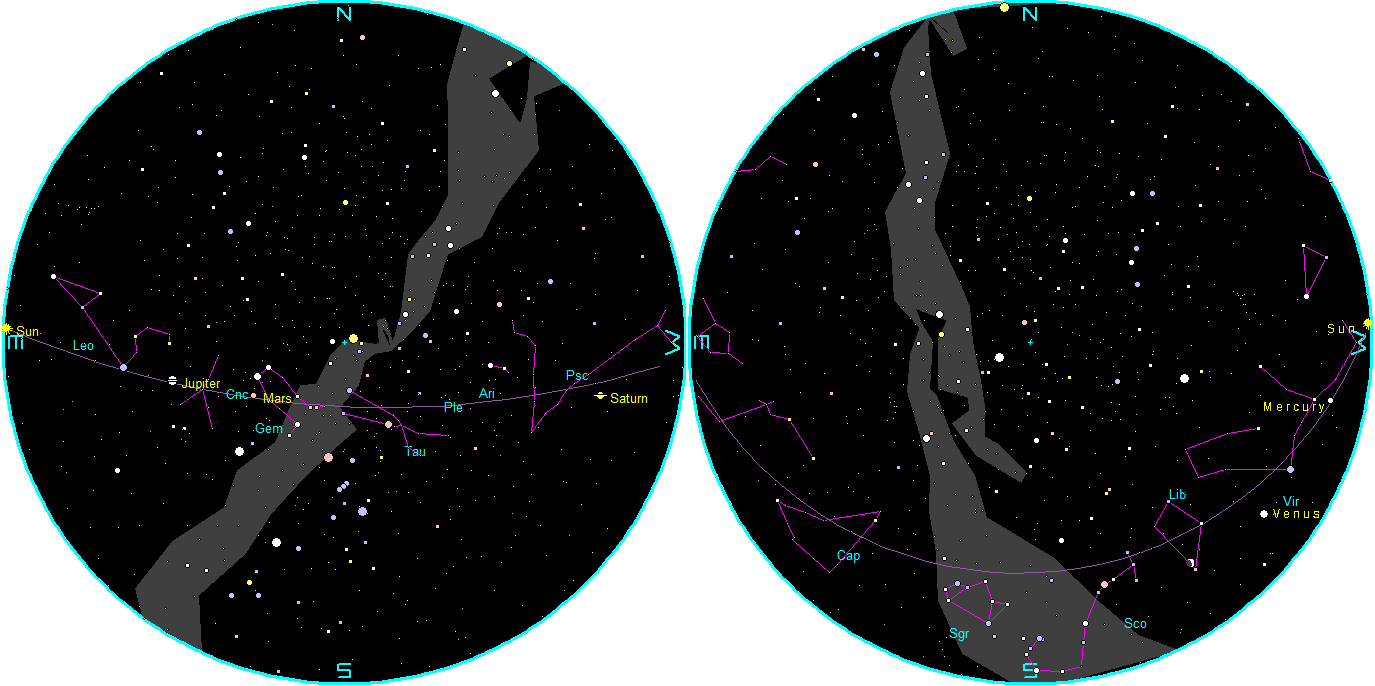
Let’s take our weekly look at the whereabouts of the naked-eye planets. Venus, now is too close to the horizon at sunset to easily spot. At sunset Venus will be only 5º above the horizon at sunset and will set at 8:25 PM. We will await its dramatic reappearance in the morning sky in early November. Saturn will be in the eastern sky as it gets dark. It is the brightest starlike object low in that direction. It will be below the four stars that make large distinctive pattern, that marks the body of Pegasus the flying horse, called the Great Square of Pegasus. At 6 AM, Jupiter will be due east. Jupiter is brightest and lowest while Mars will be just below and nearly in line with Castor and Pollux of Gemini.
The astronomical event times given in this blog are for the Traverse City/Interlochen area of Michigan (Lat 44.7° N, Long 85.7° W; EDT, UT – 4 hours) unless stated otherwise. Times will be different for other locations.
Addendum
Ephemeris: 09/22/2026 – Autumn will fall upon us tonight
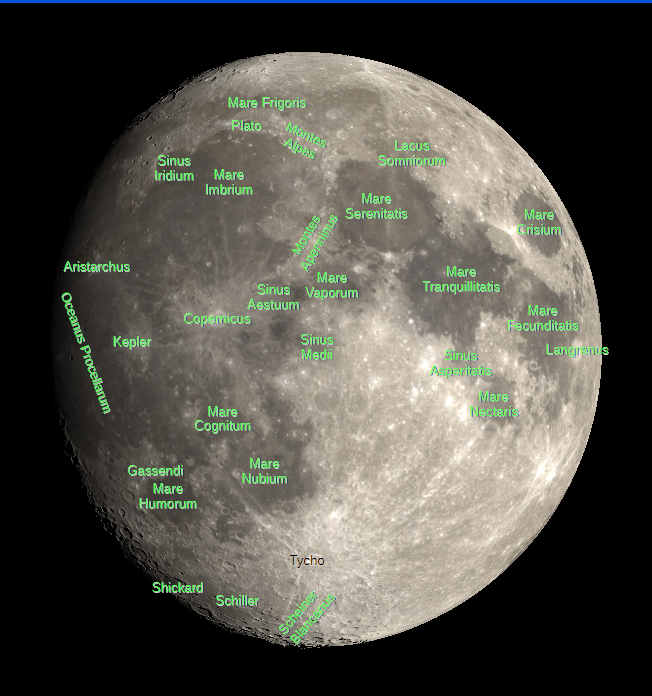
This is Ephemeris for Tuesday, September 22nd. Today the Sun will be up for 12 hours and 10 minutes, setting at 7:40, and it will rise tomorrow at 7:31. The Moon, half way from first quarter to full, will set at 3:58 tomorrow morning.
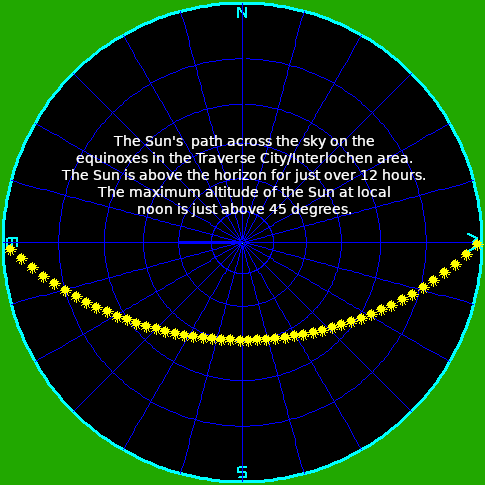
The season of fall is about to, ah well, fall upon us and in a few weeks so will the leaves. At 8:06 this evening (00:06 UT tomorrow) the Sun will cross the celestial equator heading south. The celestial equator is an imaginary line in the sky above the earth’s equator. At that point, the Sun will theoretically set at the North Pole and rise at the South Pole. The day is called the autumnal equinox and the daylight hours today is 12 hours and 10 minutes instead of 12 hours exactly. That’s due to our atmosphere and our definition of sunrise and sunset. The reason for the cooler weather now and the cold weather this winter is that the length of daylight is shortening, and the Sun rides lower in the sky, spreading its heat over a larger area, thus diluting its intensity.
The astronomical event times given in this blog are for the Traverse City/Interlochen area of Michigan (Lat 44.7° N, Long 85.7° W; EDT, UT – 4 hours) unless stated otherwise. Times will be different for other locations.
Addendum

Ephemeris: 09/21/2026 – What is an ephemeris?
This is Ephemeris for Monday, September 21st. Today the Sun will be up for 12 hours and 13 minutes, setting at 7:41, and it will rise tomorrow at 7:30. The Moon, 3 days past first quarter, will set at 2:49 tomorrow morning.
I’ve given the name of this program as being Ephemeris, which is a rather obscure term. A related word, ephemeral, an adjective, may be more familiar, meaning something that lasts a brief period of time, no more than a day. The word ephemeris itself comes from the Greek, and picked up by the Romans meaning a diary. In astronomy an ephemeris a tabular list of daily positions of astronomical objects, which part of this program really does with the rising and setting times of the sun and moon. The request of the station back in 1975 when I started this, was just to get sunrises and sunsets, I’ve added an astronomical tidbit. Now, of course, you can get sunrises and sunsets for your precise location from your smartphone.
The astronomical event times given in this blog are for the Traverse City/Interlochen area of Michigan (Lat 44.7° N, Long 85.7° W; EDT, UT – 4 hours) unless stated otherwise. Times will be different for other locations.
Addendum
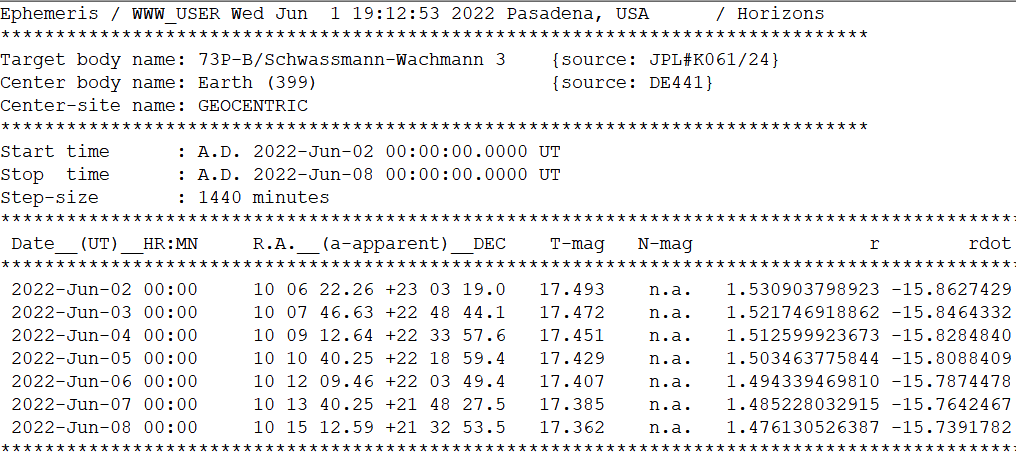
The columns represent, from left to right: The date and time, and then the position R.A. is Right Ascension which is the east-west position of the object in the sky in hours, minutes, and seconds where an hour is 15 degrees. The next three columns are the declination which is the north-south position in degrees, minutes, and seconds. Plus meaning north of the celestial equator T-mag is total magnitude or brightness of the comet, and seventeen is very dim, N-mag is the magnitude of the nucleus which is not applicable here. Small r is the distance from the sun an astronomical units. The Earth’s mean distance from the Sun is 1. I don’t know what rdot is and I wouldn’t need it for finding the comet. The example is truncated in width. Another column, Delta, is the comet’s distance from the earth.
Ephemeris: 09/18/2026 – The Moon will be lower than the winter solstice Sun tonight
This is Ephemeris for Friday, September 18th. Today the Sun will be up for 12 hours and 22 minutes, setting at 7:47, and it will rise tomorrow at 7:26. The Moon, at first quarter today, will set at 11:40 this evening.
Tonight’s first quarter moon will appear low in the southern sky at its highest at about 11 minutes before sunset tonight. The moon is in the part of the sky where the sun will be on the first day of winter, December 21st at it’s lowest and the moon will be even lower tonight. For us, in Northern Michigan that’s 15 degrees, or one and a half times the width of a fist held at arms length. The moon, though, is even lower than the sun will be that day. The sun will be 22º above the southern horizon that day, a bit more than two fist widths above the southern horizon. I talk a lot about angles on this program, because measuring angles is what astronomers did before the invention of the telescope. A telescope allows better precision, among other attributes.
The astronomical event times given in this blog are for the Traverse City/Interlochen area of Michigan (Lat 44.7° N, Long 85.7° W; EDT, UT – 4 hours) unless stated otherwise. Times will be different for other locations.
Addendum
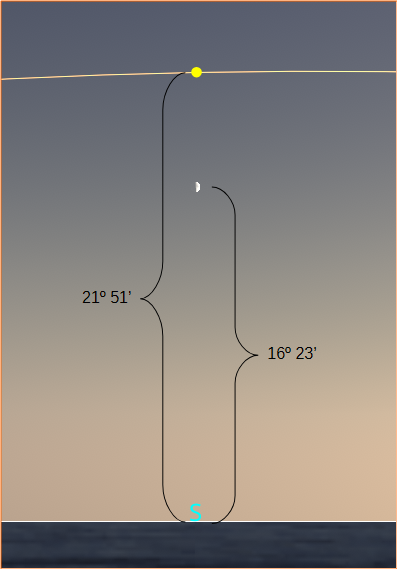
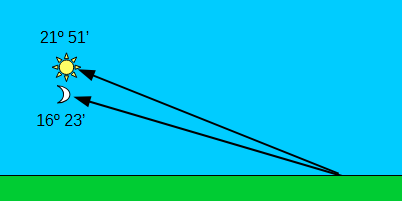
As readers of this blog may have surmised, I’m facinated by angles in the sky.
Ephemeris: 09/17/2026 – A new telescope joins Hubble and James Webb
This is Ephemeris for Thursday, September 17th. Today the Sun will be up for 12 hours and 25 minutes, setting at 7:49, and it will rise tomorrow at 7:25. The Moon, 1 day before first quarter, will set at 10:49 this evening.
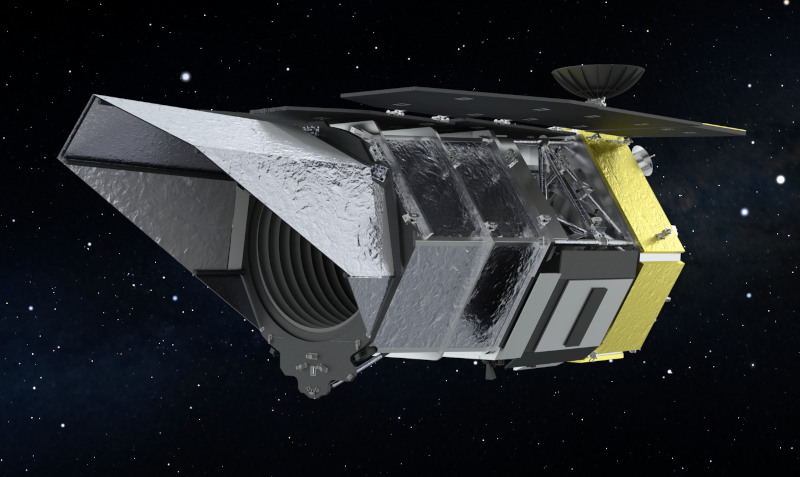
A new Space Telescope has been launched last August 30th, the Nancy Grace Roman Space Telescope. It is has the same diameter mirror as the Hubble Space Telescope, a leftover from the reconnaissance satellites which looked at the Earth and like the Hubble would be looking into space. It is shorter, and can take images 100 times the area that are covered by the Hubble and James Webb Space Telescope cameras. It works in the infrared though not as much of the infrared as James Webb. It is classed as a survey instrument taking in a large area whereas Hubble and James Webb concentrate on a very small area of the sky for each image. The Roman telescope, its short name, will join the telescopes at the Earth Sun L2 Lagrangian point.
The astronomical event times given in this blog are for the Traverse City/Interlochen area of Michigan (Lat 44.7° N, Long 85.7° W; EDT, UT – 4 hours) unless stated otherwise. Times will be different for other locations.
Addendum
Ephemeris: 09/16/2026 – Taking our weekly look at the whereabouts of the naked-eye planets
This is Ephemeris for Wednesday, September 16th. Today the Sun will be up for 12 hours and 28 minutes, setting at 7:51, and it will rise tomorrow at 7:24. The Moon, 2 days before first quarter, will set at 10:08 this evening.
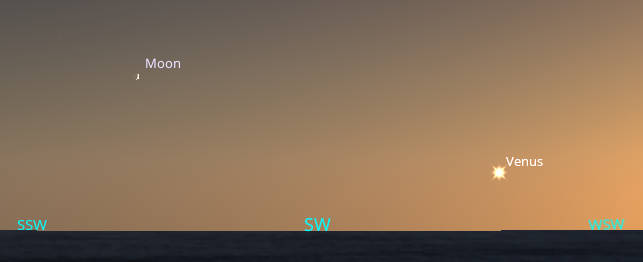
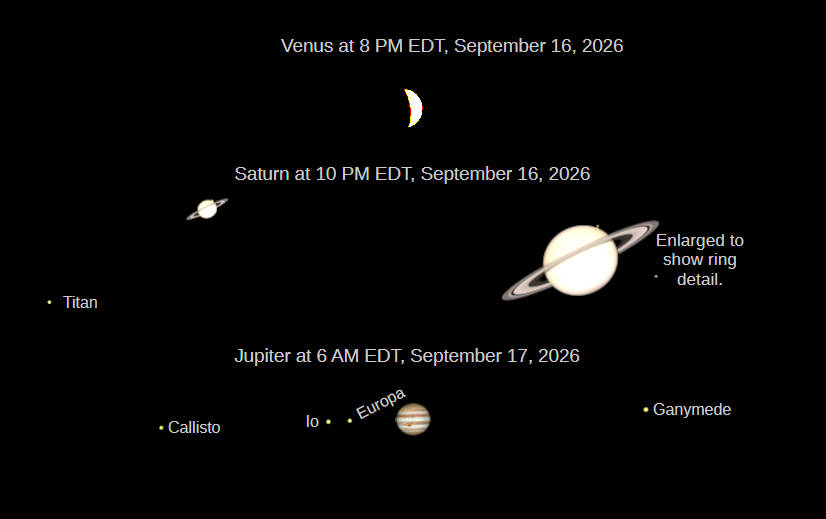
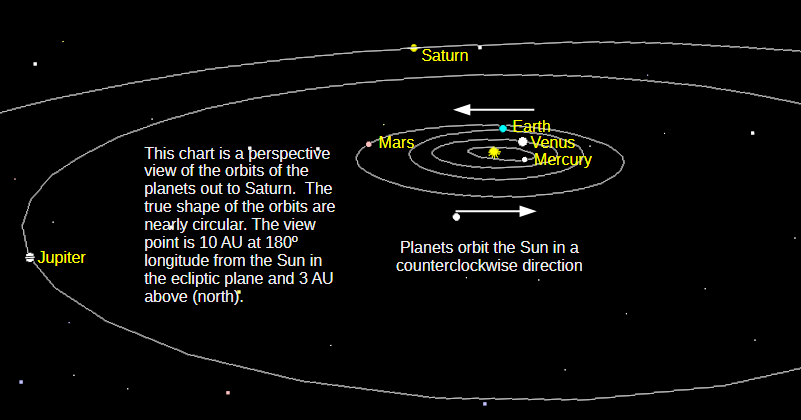
Let’s take our weekly look at the whereabouts of the naked-eye planets. By 8:15 tonight, about a half-hour after sunset, Venus will be spotted very low in the west southwestern sky with the moon above and to the left. Though at a 41º angle from the sun, it’ll only be 4º above the horizon then. A telescope will show a small crescent disk of the planet. It is now rapidly approaching earth in its orbit, at 41.2 million miles (66.3 mil km) away from us. Venus is becoming an ever decreasing crescent as its apparent diameter grows in telescopes. Saturn will rise at 8:47 PM in the east. At 6 AM, Mars and Jupiter will be in the east. Jupiter is brightest and lowest while Mars is just below and right of Pollux, the brightest star in Gemini.
The astronomical event times given in this blog are for the Traverse City/Interlochen area of Michigan (Lat 44.7° N, Long 85.7° W; EDT, UT – 4 hours) unless stated otherwise. Times will be different for other locations.
Addendum
Ephemeris: 09/14/2026 – The young September Moon slowly enters the evening sky
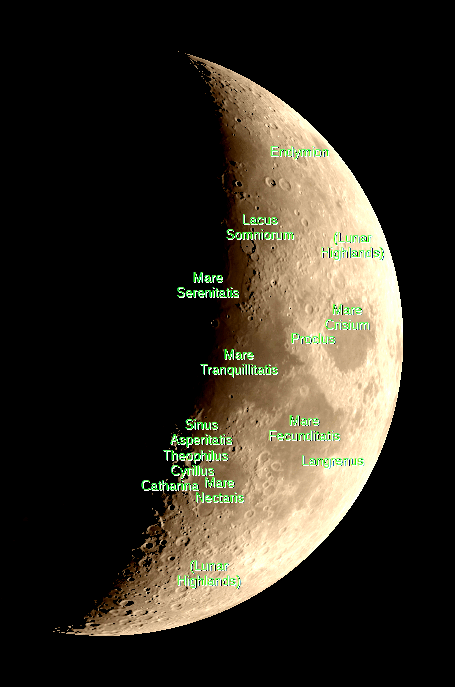
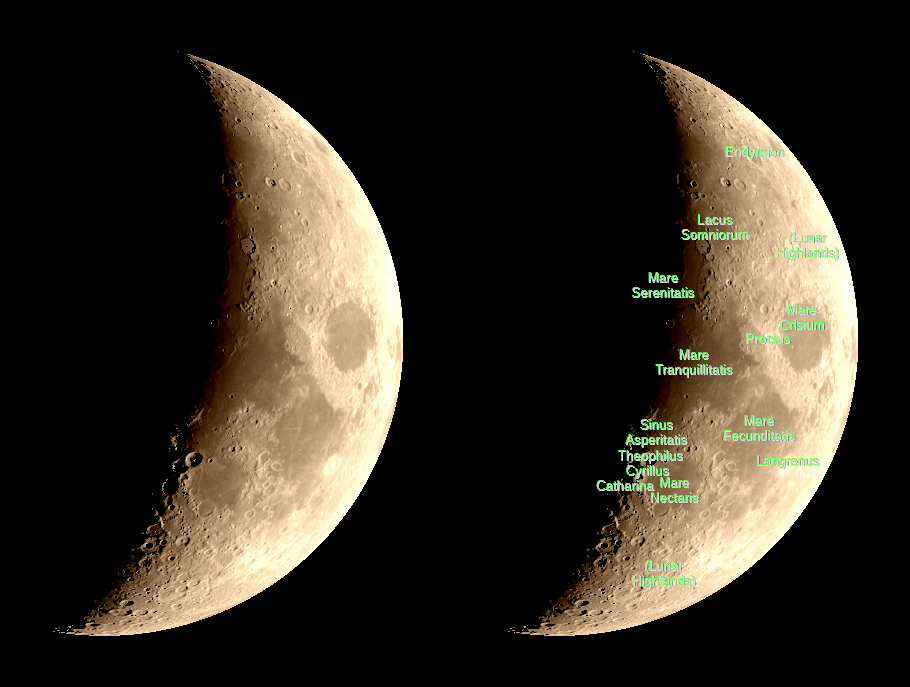
This is Ephemeris for Monday, September 14th. Today the Sun will be up for 12 hours and 34 minutes, setting at 7:55, and it will rise tomorrow at 7:21. The Moon, half way from new to first quarter, will set at 9:07 this evening.
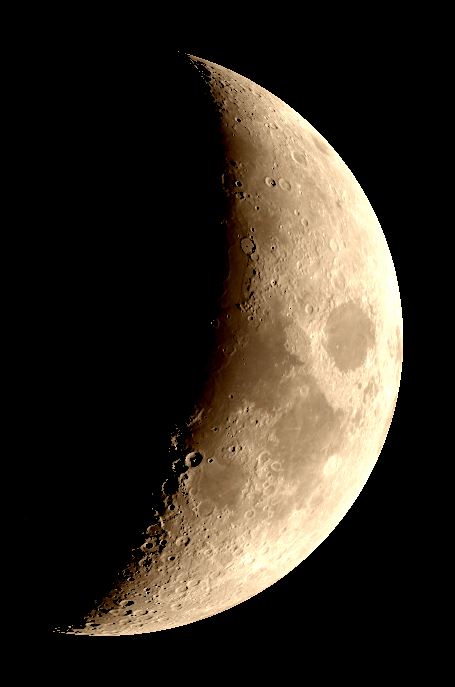
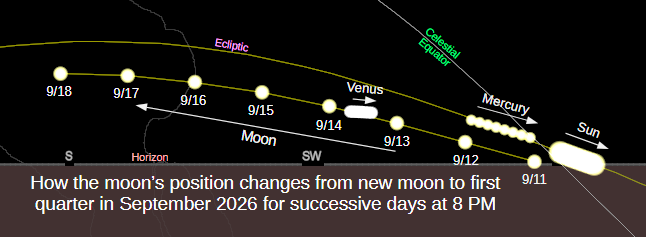
Something interesting is happening to the moon in late summer and early autumn. The moon, when either near new or near full, tends to hang low near the horizon for a long time. We are now about 4 days past new moon, and it is hanging low in the southwestern sky, and will set only about an hour and 12 minutes after the sun. Later this month we’ll have the Harvest Moon when the moon rises at short daily intervals later each night around full moon. I call it the Harvest Moon effect and that allowed farmers of old together in their crops by extending twilight. What the young moon does right now is keeping it really low in the sky so as a crescent it’s not easy to observe low on the southwestern horizon.
The astronomical event times given in this blog are for the Traverse City/Interlochen area of Michigan (Lat 44.7° N, Long 85.7° W; EDT, UT – 4 hours) unless stated otherwise. Times will be different for other locations.
Addendum
Ephemeris: 09/11/2026 – Star Party tomorrow night if it’s clear
This is Ephemeris for Friday, September 11th. Today the Sun will be up for 12 hours and 43 minutes, setting at 8:00, and it will rise tomorrow at 7:18. The Moon, 1 day past new, will set at 8:04 this evening.
Tomorrow night, Saturday, September 12th, the Grand Traverse Astronomical Society will join the park Rangers at the Sleeping Bear Dunes National Lakeshore’s Dune Climb for a star party from 9 to 11 PM or later, if clouds permit. Both of our previous star parties this year have been clouded out We’re hoping the third time is a charm. Visible tomorrow night, will be the planet Saturn, now showing its rings. Last year the rings were nearly edge on and very difficult to see as more than a line, but they’re opening up this year. Also featured will be the summer Milky Way in the waning days of summer, when we can look towards the center of our Galaxy, to all the star clusters and clouds of gas and dust called nebulae. Plus as a bonus, we get an early look at one of the features of the fall sky the great Andromeda Galaxy.
The astronomical event times given in this blog are for the Traverse City/Interlochen area of Michigan (Lat 44.7° N, Long 85.7° W; EDT, UT – 4 hours) unless stated otherwise. Times will be different for other locations.
Addendum

Ephemeris: 09/10/2026 – Finding Pegasus the winged horse of Greek myth
This is Ephemeris for Thursday, September 10th. Today the Sun will be up for 12 hours and 46 minutes, setting at 8:02, and it will rise tomorrow at 7:17. The Moon is new today, and won’t be visible.
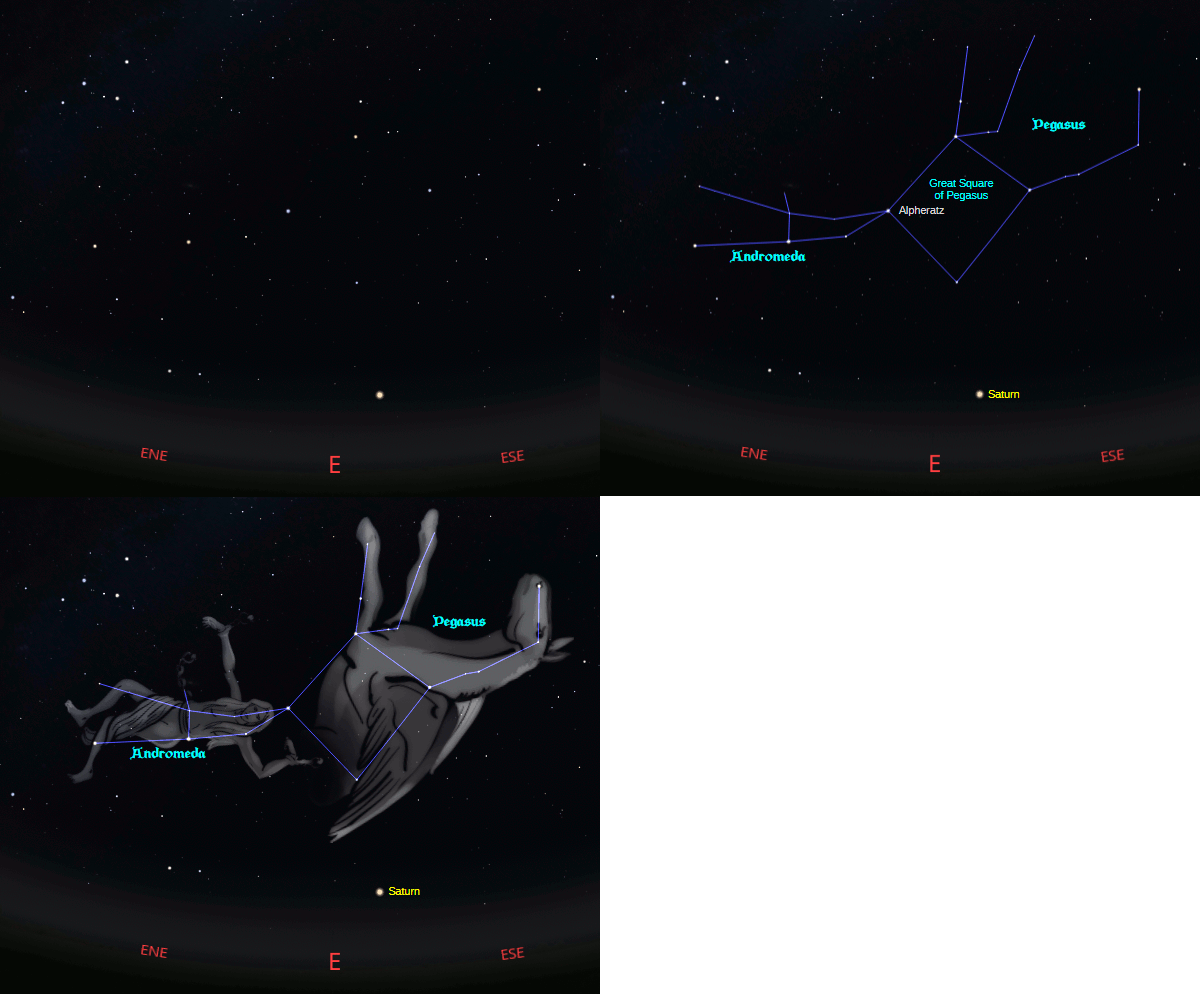
Saturn is low in the eastern sky at 10 PM. This is the brightest “star” in that direction. Above Saturn is the Great Square of Pegasus, a large, nearly perfect square of stars, standing on one corner. This is the front part of the body of Pegasus the flying horse. He’s climbing to the upper right, following the rotation of the sky. But it’s flying upside down, having its neck and head extend from the rightmost star of the square. From the top star are his forelegs extend. From the leftmost star extend two curved lines of stars which may look like hind legs, but belong to another constellation, Andromeda the Princess. Pegasus’ wings are not seen in the stars. Pegasus is part of a Greek myth, which has been made into two movies, both titled Clash of the Titans. But no actual Titans were used in the movies. All gods and godesses in the movie were their decendents.
The astronomical event times given in this blog are for the Traverse City/Interlochen area of Michigan (Lat 44.7° N, Long 85.7° W; EDT, UT – 4 hours) unless stated otherwise. Times will be different for other locations.
Addendum