Archive
Ephemeris: 07/23/2024 – Albireo, a blue and gold double star
This is Bob Moler with Ephemeris for Tuesday, July 23rd. Today the Sun will be up for 14 hours and 58 minutes, setting at 9:18, and it will rise tomorrow at 6:20. The Moon, 2 days past full, will rise at 11:01 this evening.
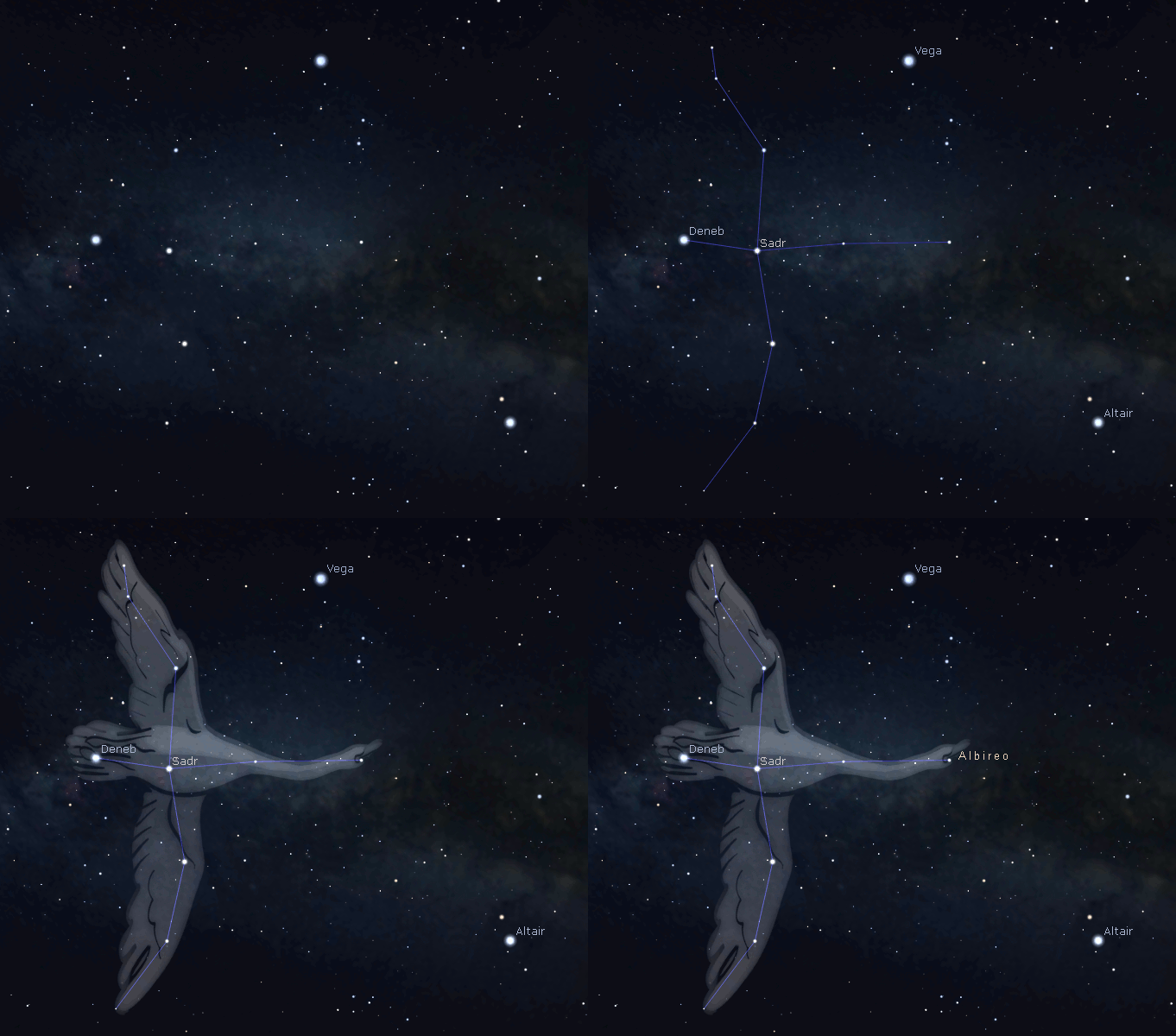
Alberio is the name given to the star that is in the head of the constellation of Cygnus the swan, which is in the east these evenings, flying south along the Milky Way. It is also at the foot of the asterism or informal constellation of the Northern Cross. To the naked eye and binoculars Albireo looks like a single star. However, even in small telescopes its true nature is revealed. It’s a double star whose individual star colors are strikingly different Its brightest star is yellow, and the dimmer star is blue. While star colors are subtle, these two, due to their apparent closeness, make an obvious color contrast. Unlike what your interior decorator says: In stars, blue is hot, yellow, orange and red are cool. The two stars are too far apart to be considered a binary star system that are gravitationally bound, but appear to move together in space. It is what is called an optical double, though they’re both around 430 light years away.
The astronomical event times given are for the Traverse City/Interlochen area of Michigan (EDT, UT–4 hours). They may be different for your location.
Addendum

Ephemeris: 07/22/2024 – Happy Pi Approximation Day
This is Bob Moler with Ephemeris for Pi Approximation Day*, Monday, July 22nd. Today the Sun will be up for 15 hours exactly, setting at 9:19, and it will rise tomorrow at 6:19. The Moon, 1 day past full, will rise at 10:37 this evening.
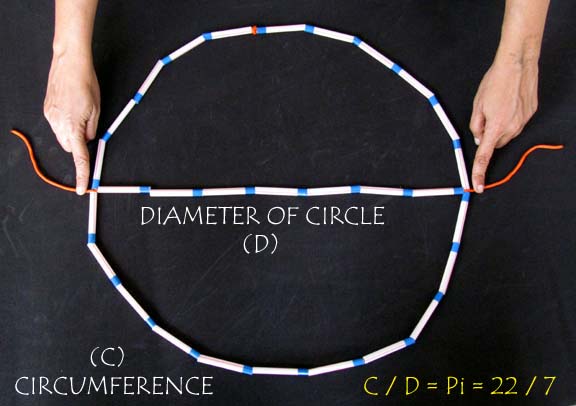
The first Pi day of the year for mathematics junkies was March 14th utilizing the three most significant digits of the mathematical value π, the ratio of the circumference of a circle to its diameter, written as 3.14. Today is the second version of π written as the fraction 22/7. We don’t write our date that way, we write it as 7/22. In other parts of the world it is written as 22/7. So whichever way you slice it, it’s a pi day and in Northern Michigan I would imagine it’s a cherry pi. In the sky today the planet Mercury is at its greatest elongation or separation east of the Sun in the western sky. It is preceding the Sun heading southward against the stars and is not easily visible after sunset.
The astronomical event times given are for the Traverse City/Interlochen area of Michigan (EDT, UT–4 hours). They may be different for your location.
* In the radio program I called it Pi Day #2. I have since found out that today has a special name.
Addendum
Ephemeris: 07/19/2024 – SpaceX’s Falcon 9 has the first failure in many years
This is Ephemeris for Friday, July 19th. Today the Sun will be up for 15 hours and 6 minutes, setting at 9:21, and it will rise tomorrow at 6:16. The Moon, 2 days before full, will set at 4:45 tomorrow morning.
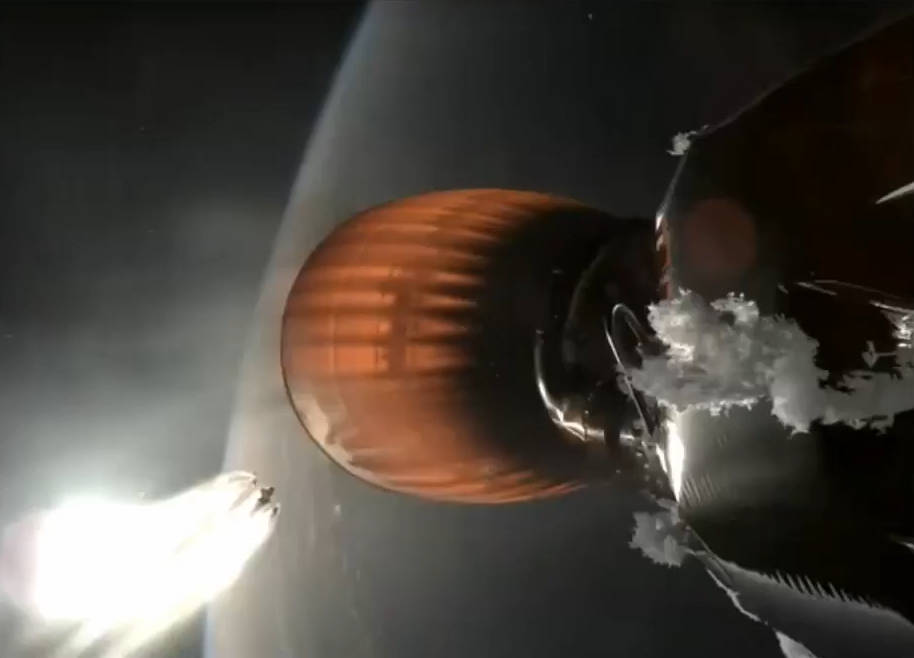
A week ago yesterday a SpaceX Falcon 9 rocket was unable to put a batch of 20 Starlink satellites into the proper orbit due to a failure in the second stage. The problem seems to be an oxygen leak that prevented a second burn of the engine to circularize the orbit leaving the orbit perigee or low point to be 135 kilometers high, which though in orbit, that orbit would soon decay, having the satellites burn up on reentry after a few orbits. The Falcon 9 fleet has been grounded pending an investigation. However, there are two immediate planned flights of the Falcon 9 utilizing the Crew Dragon, the first is at the end of July which is a private mission called Polaris Dawn and in August the Crew 9 transfer to the International Space Station. It remains to be seen how long those missions will be postponed.
The astronomical event times given are for the Traverse City/Interlochen area of Michigan (EDT, UT–4 hours). They may be different for your location.
Addendum
Ephemeris: 07/18/2024 The brightest spot on the Moon
This is Ephemeris for Thursday, July 18th. Today the Sun will be up for 15 hours and 7 minutes, setting at 9:22, and it will rise tomorrow at 6:15. The Moon, 3 days before full, will set at 3:40 tomorrow morning.
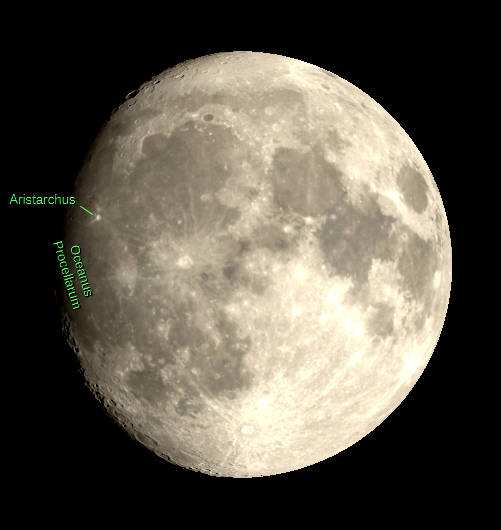
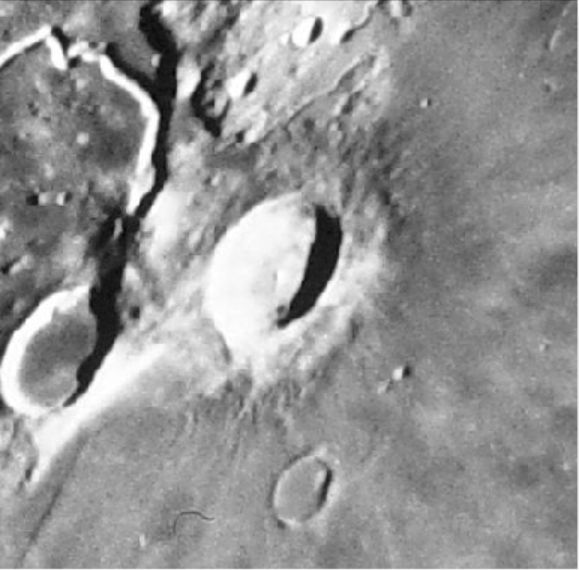
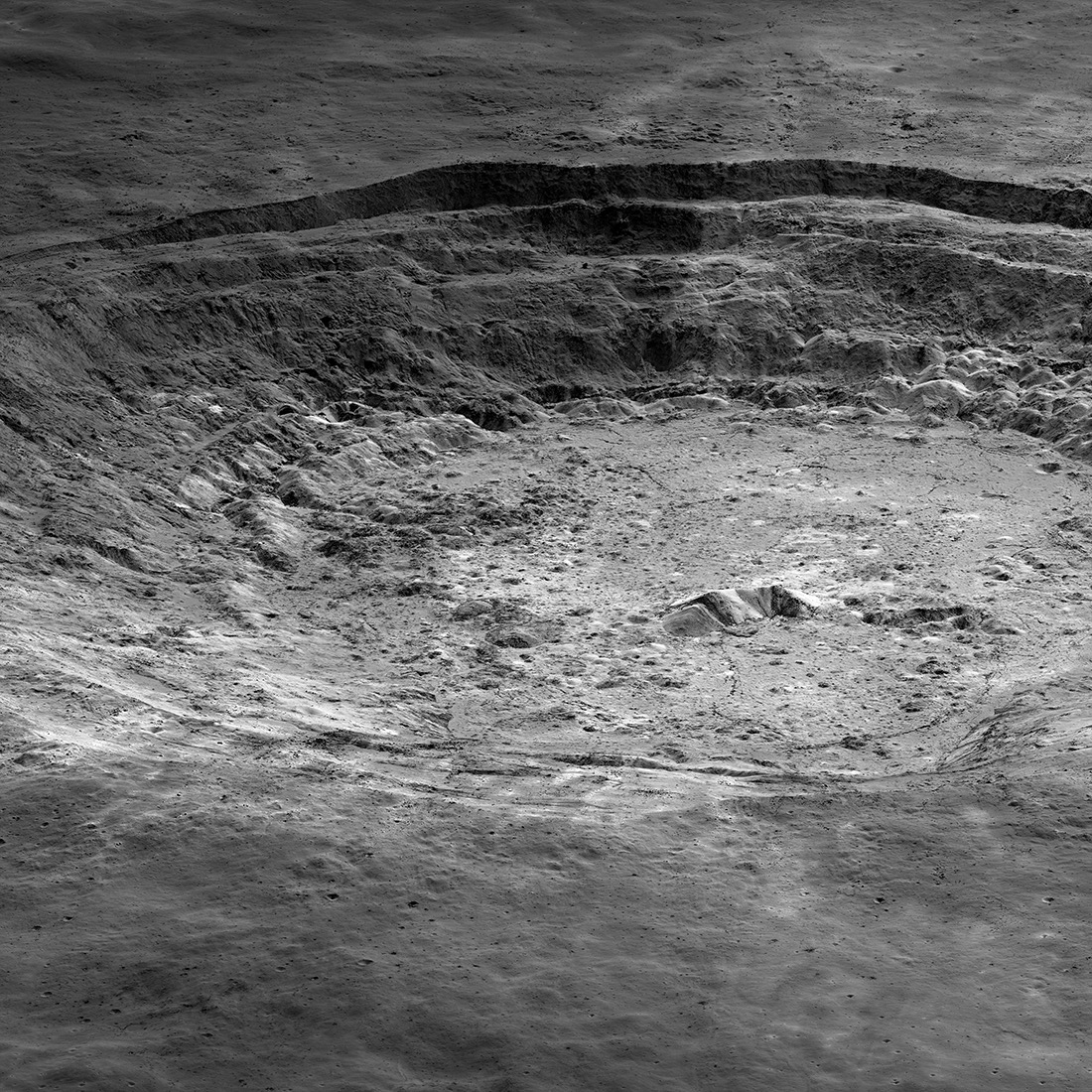
The moon tonight is bright. The sunrise line or terminator on the moon is crossing the large gray plain called Oceanus Procellarum, the largest of the moon’s seas. These seas were figments of the first telescopic observer’s imagination. They are really huge impact basins into which interior lava flowed. On the left side of the Moon is a bright spot in the gray expanse of Oceanus Procellarum visible in binoculars. In a telescope it is a crater called Aristarchus. It is a fairly new crater in lunar terms, probably less than a billion years old. As a rule the brighter the crater the newer it is. Aristarchus is the brightest spot on the Moon. Over the years visual astronomers have seen hazes and bright spots from time to time in and near Aristarchus.
The astronomical event times given are for the Traverse City/Interlochen area of Michigan (EDT, UT–4 hours). They may be different for your location.
Addendum
Ephemeris: 07/17/2024 – Where are the naked-eye planets this week?
This is Ephemeris for Wednesday, July 17th. Today the Sun will be up for 15 hours and 9 minutes, setting at 9:23, and it will rise tomorrow at 6:14. The Moon, halfway from first quarter to full, will set at 2:49 tomorrow morning.
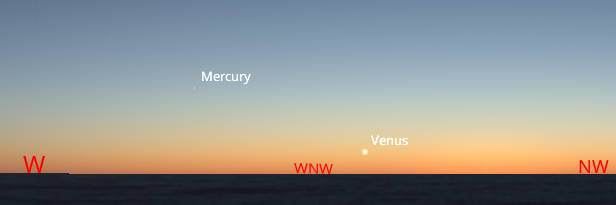
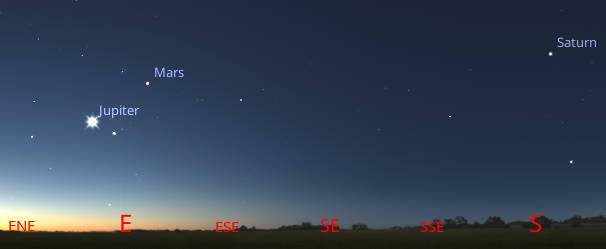
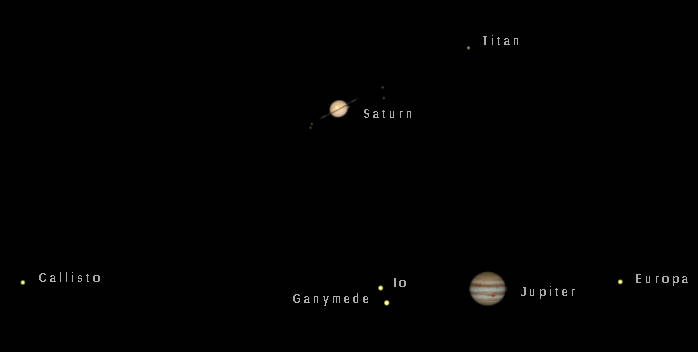
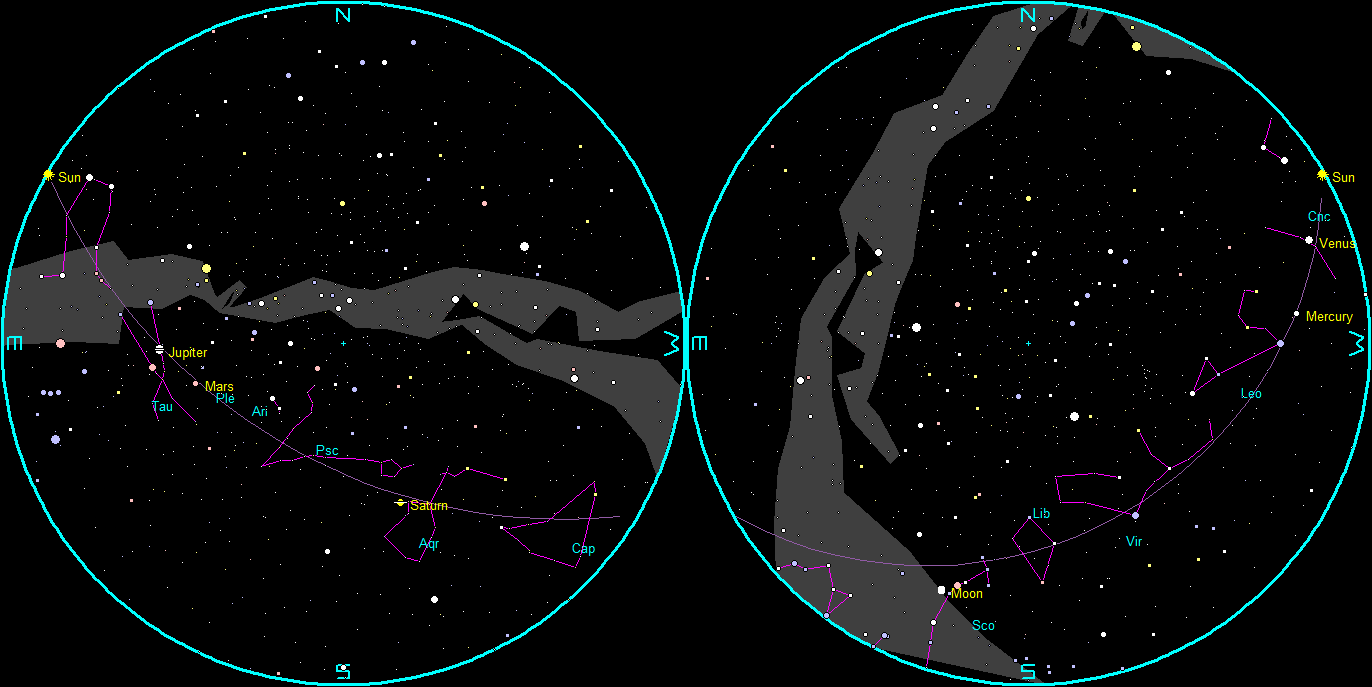
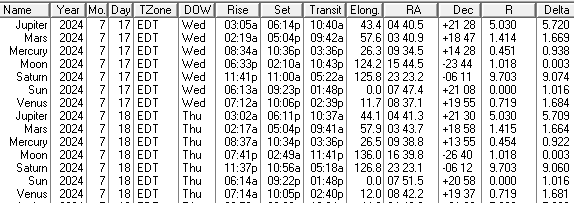
Let’s take our weekly look at the whereabouts of the naked-eye planets. Venus is still too close to the direction of the Sun to be easily seen, it will set at 10:04 pm in the west-northwest. It is below and right of Mercury. That elusive planet just might be seen very low in the west-northwest by 10 pm or so. By 5:30 tomorrow morning, or about 45 minutes before sunrise, Saturn will be in the south, Mars will be lower in the east, and Jupiter will below it in the east-northeast. Mars is closing in on Jupiter and will pass it on August 14th. Saturn may look disappointing in telescopes this year since the rings are nearly edge on and appear almost as a line through the planet. It will rise before midnight tonight, at 11:45 pm.
The astronomical event times given are for the Traverse City/Interlochen area of Michigan (EDT, UT–4 hours). They may be different for your location.
Addendum
Ephemeris: 07/16/2024 – Find the rabbit in the Moon
This is Ephemeris for Tuesday, July 16th. Today the Sun will be up for 15 hours and 11 minutes, setting at 9:24, and it will rise tomorrow at 6:13. The Moon, 3 days past first quarter, will set at 2:10 tomorrow morning.
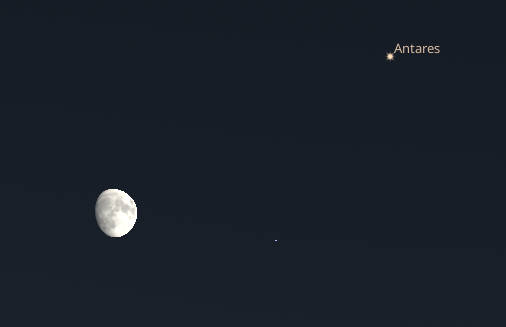
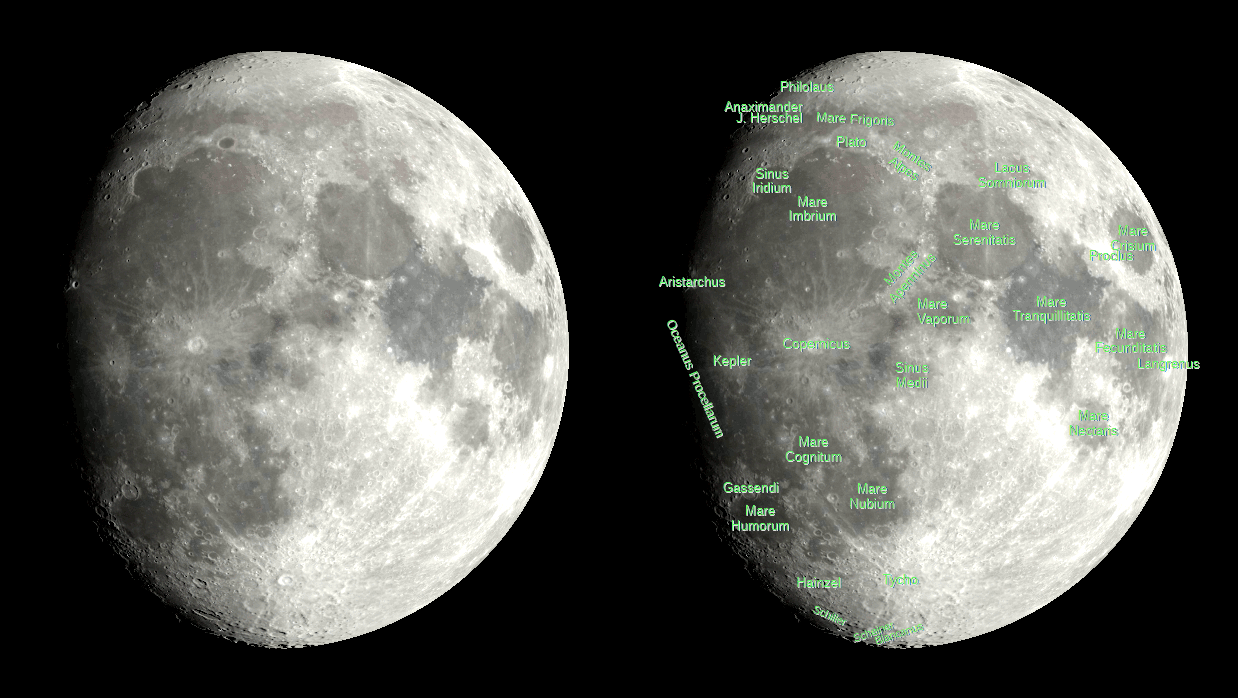
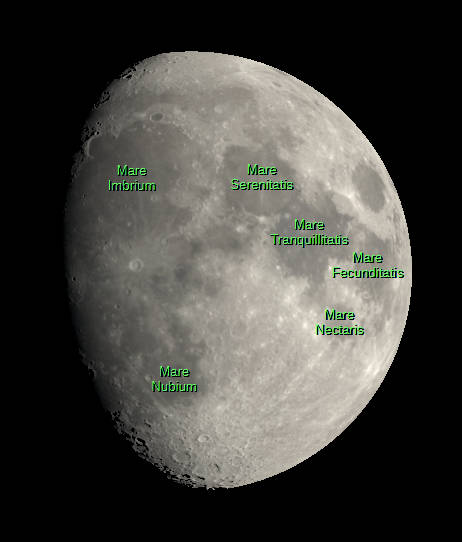
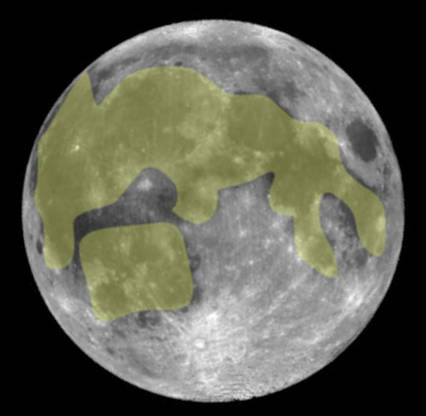
The Moon tonight is a gibbous phase which is between first quarter and full. The sunrise line we call the terminator is moving across the lunar sea Oceanus Procellarum, or Ocean of Storms. As I look at the Moon more and more, I’m beginning to appreciate what the Chinese saw in the pattern of the lunar seas, that of a rabbit. A very particular rabbit named Yutu, belonging to the moon goddess Ching’e. He’s curled up head down towards the right. His two rabbit ears, his head and part of his body is displayed in the five connected seas of Fecunditatis (Fruitfulness), Nectaris (Nectar), Tranquillitatis (Tranquility), Serenitatis (Serenity), and Imbrium (Showers). The rest of his body is slowly being revealed by the advancing terminator to the left. He is shown with a mortar, the sea Nubium (Clouds) and pestle pounding out medicine according to Chinese mythology.
The astronomical event times given are for the Traverse City/Interlochen area of Michigan (EDT, UT–4 hours). They may be different for your location.
Addendum
The Chinese lunar landers have been named Chang’e, and the rovers named Yutu.
Ephemeris: 07/15/2024 – When planets go rogue
This is Ephemeris for Monday, July 15th. Today the Sun will be up for 15 hours and 13 minutes, setting at 9:25, and it will rise tomorrow at 6:12. The Moon, 2 days past first quarter, will set at 1:40 tomorrow morning.
We all know that there are stars and there are planets and planets orbit stars, right? Well maybe not. Astronomers have recently discovered planets that don’t orbit stars. They float free in interstellar space. They are called rogue planets. There seems to be two ways to produce a rogue planet. The first way is to have the planet ejected from a star system through gravitational interaction with other planets especially big ones like Jupiter. Also, it appears that rogue planets can form like stars, and have protoplanetary discs. Or proto-moon disks? They can be discovered by the infrared light they give off, or by gravitational microlensing of a star that passes directly behind them.
The astronomical event times given are for the Traverse City/Interlochen area of Michigan (EDT, UT–4 hours). They may be different for your location.
Addendum

Ephemeris: 07/12/2024 – Star Party tomorrow night at Sleeping Bear Dunes National Lakeshore
This is Bob Moler with Ephemeris for Friday, July 12th. Today the Sun will be up for 15 hours and 17 minutes, setting at 9:27, and it will rise tomorrow at 6:10. The Moon, 1 day before first quarter, will set at 12:42 tomorrow morning.
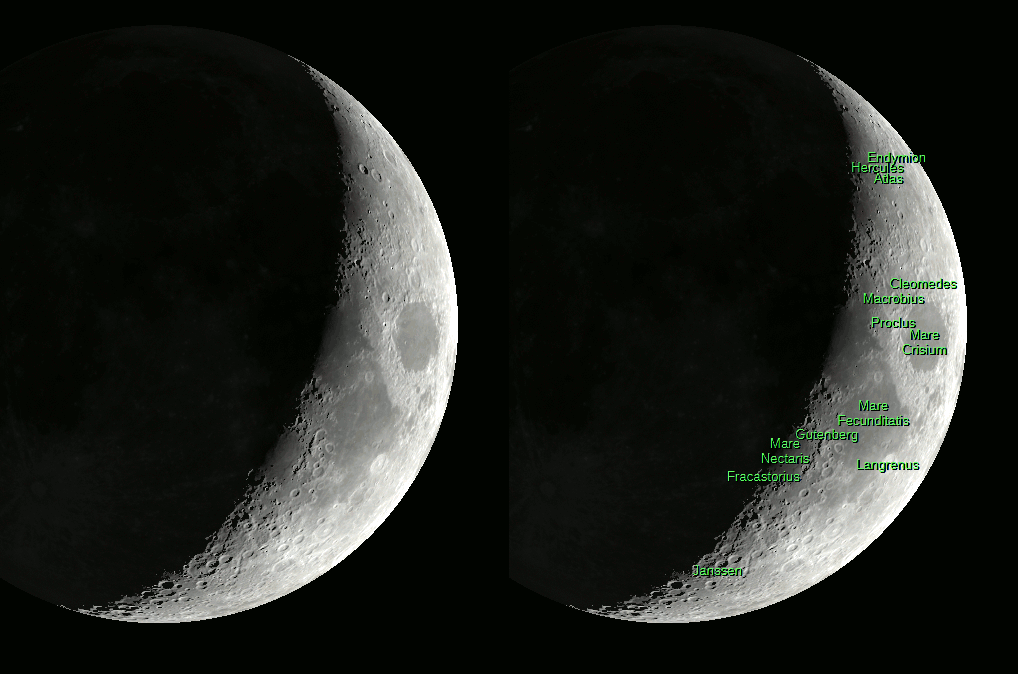
Tomorrow night, Saturday, July 13th, the Sleeping Bear Dunes National Lakeshore will team up with the Grand Traverse Astronomical Society to host a star party at the Dune Climb from 9 to 11 PM or later. It won’t be a star party only, because the featured attraction will be the first quarter Moon. To my mind, this is the best time to view the Moon, showing its craters with deep shadows near the terminator or sunrise line which crosses the Moon slowly over the month. There are no planets out in the evening, but we do have some interesting stars to look at besides the Moon. And the bright International Space Station will be seen moving from west to northeast, passing through the bowl of the Big Dipper around 10:28 pm.
The astronomical event times given are for the Traverse City/Interlochen area of Michigan (EDT, UT–4 hours). They may be different for your location.
Addendum
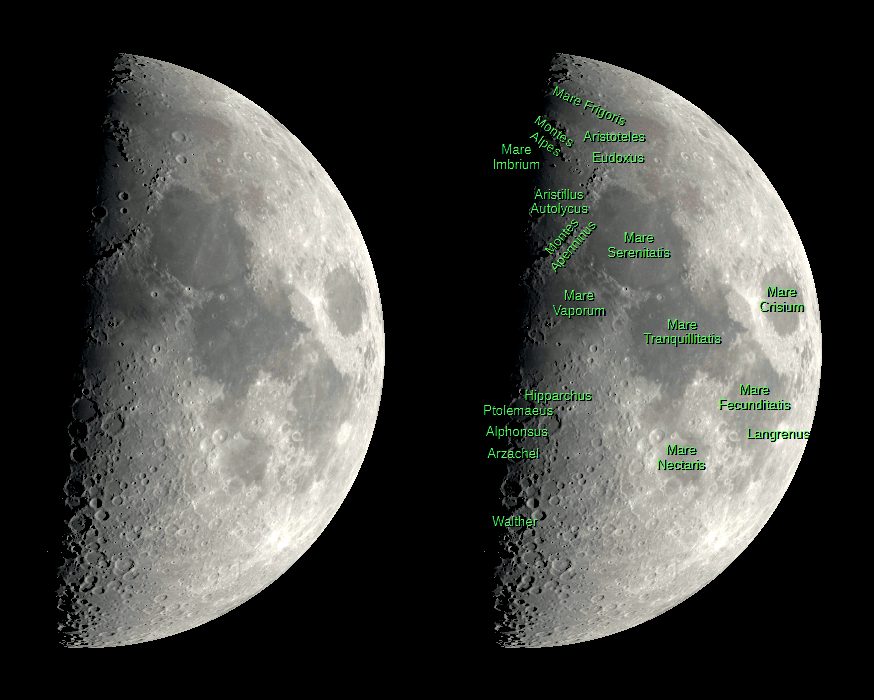
Translations of some lunar feature names according to Virtual Moon Atlas
Mare Crisium – Sea of Crises
Mare Fecunditatis – Sea of Fruitfulness
Mare Frigoris – Sea of Cold
Mare Imbrium – Sea of Showers
Mare Nectaris – Sea of Nectar
Mare Serenitatis – Sea of Serenity
Mare Tranquillitatis – Sea of Tranquility
Mare Vaporum – Sea of Vapors
Montes Alpes – Alps Mountains
Montes Apenninus – Apennines Mountains
Craters are named for persons, real or otherwise.
Ephemeris: 07/11/2024 – Low energy routes to get to the Moon
This is Ephemeris for Thursday, July 11th. Today the Sun will be up for 15 hours and 19 minutes, setting at 9:27, and it will rise tomorrow at 6:09. The Moon, 2 days before first quarter, will set at 12:26 tomorrow morning.
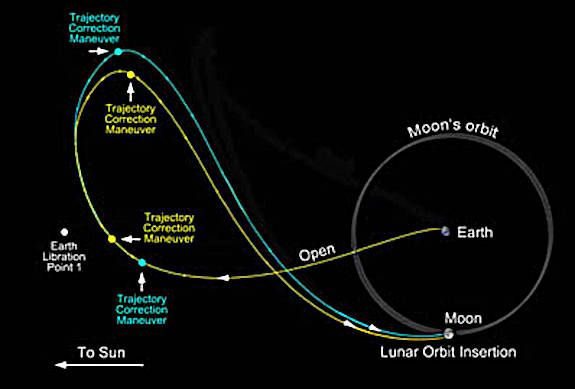
Back in the Apollo days when we sent people to the Moon, the trip out was only three days. The latest generation of unmanned probes to the Moon sent by the United States and other countries can take days, weeks, or even months to reach the Moon, so what’s going on? These are robot probes, needing little power. Humans however are high maintenance. Even when they’re doing nothing they are breathing, eating, and using resources. So when humans are aboard you have got to get there fast. Also, many of these probes are CubeSats, no bigger than a breadbox*. They must get into orbit of the Moon with very little thrust other than that of the rocket that launched them. They can go out as far as a million miles away before falling back to the Moon.
The astronomical event times given are for the Traverse City/Interlochen area of Michigan (EDT, UT–4 hours). They may be different for your location.
* OK, I’m an old guy, the modern size comparison would be a microwave.
Addendum
Ephemeris: 07/10/2024 – Where are the naked-eye planets this week?
This is Ephemeris for Wednesday, July 10th. Today the Sun will be up for 15 hours and 20 minutes, setting at 9:28, and it will rise tomorrow at 6:08. The Moon, 3 days before first quarter, will set at 12:10 tomorrow morning.
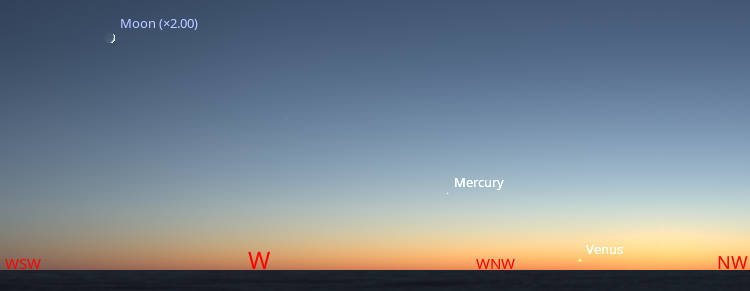
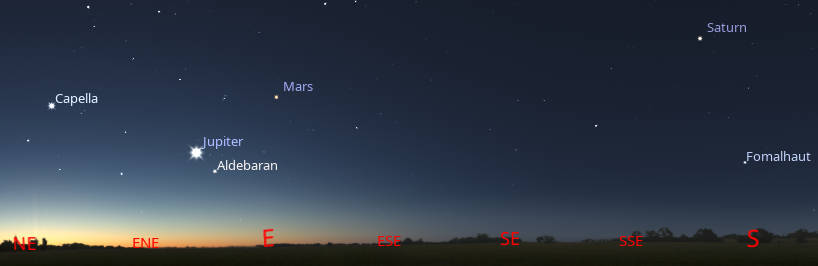
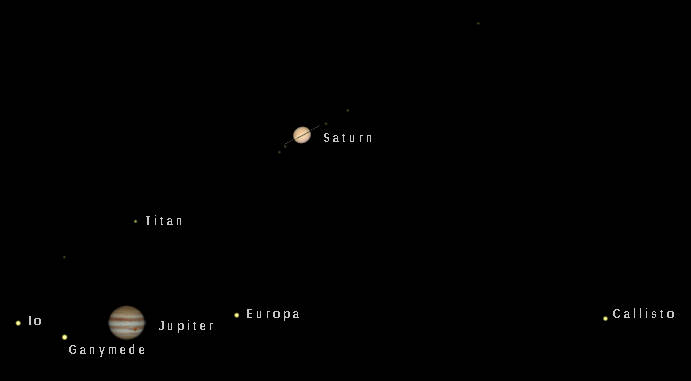
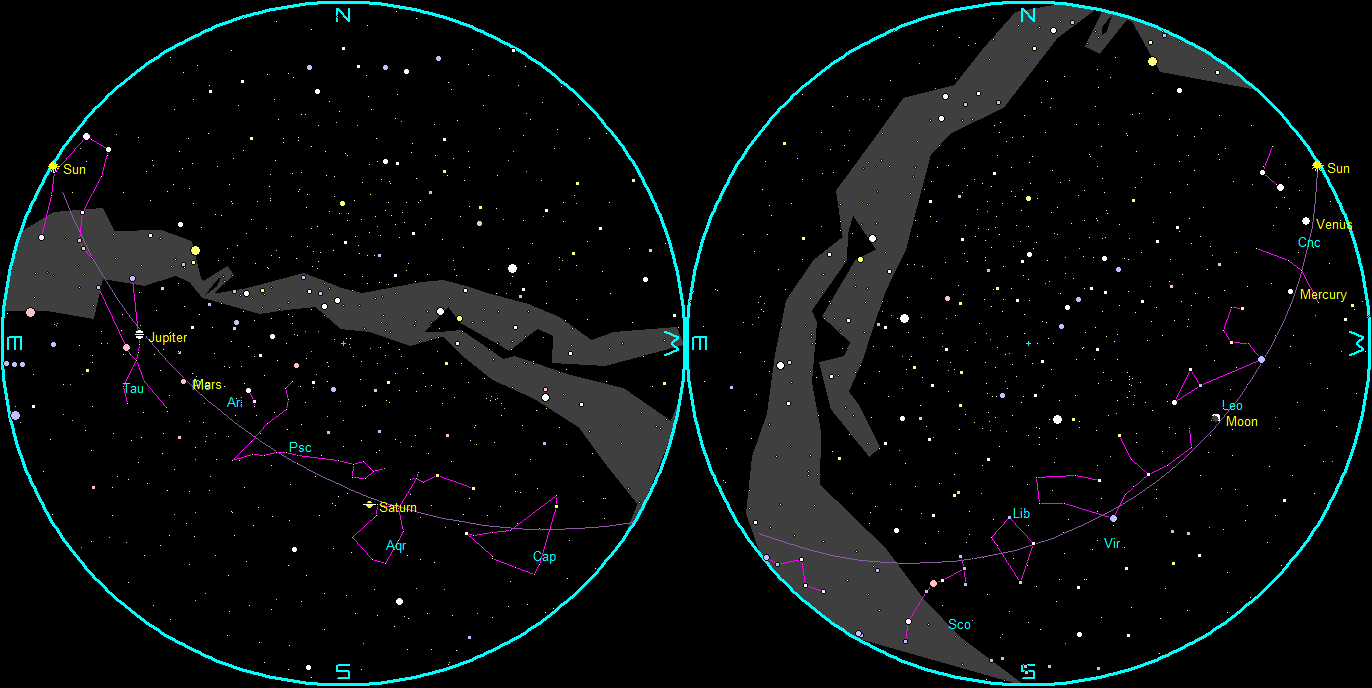
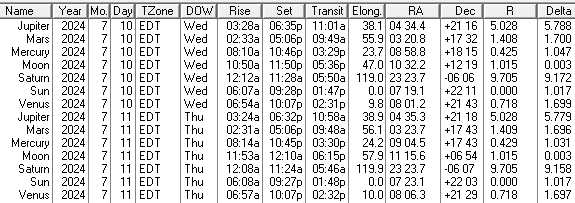
Let’s find out where the naked-eye planets have wandered off to this week. Venus is too close to the direction of the Sun to be easily seen, it will set at 10:07 pm in the west-northwest below and right of Mercury. That elusive planet just might be seen very low in the west-northwest by 10 pm or so. By 5:15 tomorrow morning, or about 50 minutes before sunrise, Saturn will be in the south, Mars will be lower in the east, and Jupiter will below it in the east-northeast. Mars is closing in on Jupiter and will pass it on August 14th. Saturn may look disappointing in telescopes this year since rings are nearly edge on and appear almost as a line through the planet. It will rise at 12:09 am, Mars at 2:34 am, and Jupiter at 3:28 am.
The astronomical event times given are for the Traverse City/Interlochen area of Michigan (EDT, UT–4 hours). They may be different for your location.
Addendum
 Bob Moler's Ephemeris Blog