Archive
10/23/2014 – Ephemeris – Partial solar eclipse tonight for most of the US
Ephemeris for Thursday, October 23rd. The sun will rise at 8:08. It’ll be up for 10 hours and 36 minutes, setting at 6:44. The moon is new today, and won’t be visible.
This evening there will be a partial solar eclipse, in which we will see only the first part before the sun sets. The eclipse will be visible for all but the extreme eastern part of the country. It will be a partial eclipse for all who can see it because the core of the Moon’s shadow will miss the Earth to the north. For the Interlochen Public Radio listening area (Northwestern Lower Michigan) the eclipse will star a couple of minutes before or after 5:32 p.m. and will end at sunset around 6:44 p.m. The low position of the sun make a lack of cloud cover necessary to be able to see it. Proper approved solar filters, or a projection method are necessary to view the eclipse. Do Not Look Directly at the Sun! The NMC Observatory south of Traverse City will be open, weather permitting starting at 5 p.m. Also the Platte River Point location at the Sleeping Bear Dunes National Lakeshore will also be available.
An added attraction for this eclipse is the appearance of the largest sunspot group to appear on the sun in years.
Times are for the Traverse City/Interlochen area of Michigan. They may be different for your location.
Addendum
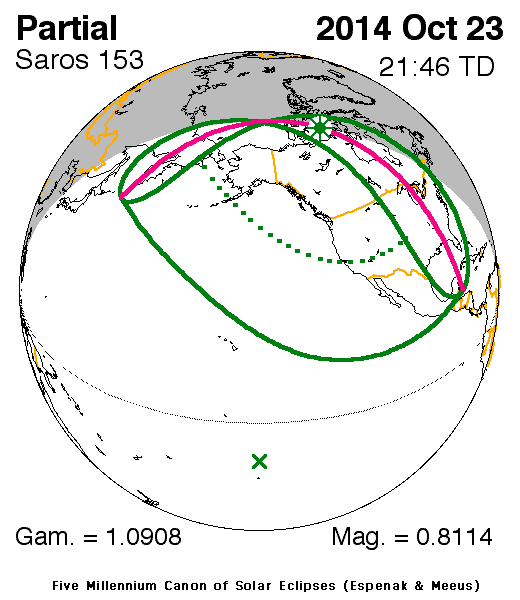
Coverage of the partial solar eclipse of October 23, 2014. Credit: NASA.

The setting partially eclipsed sun from Traverse City. Created using Stellarium.
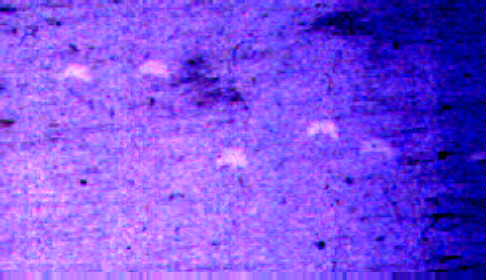
Partially eclipsed sun using a series of pinholes projected on a reasonably white surface.
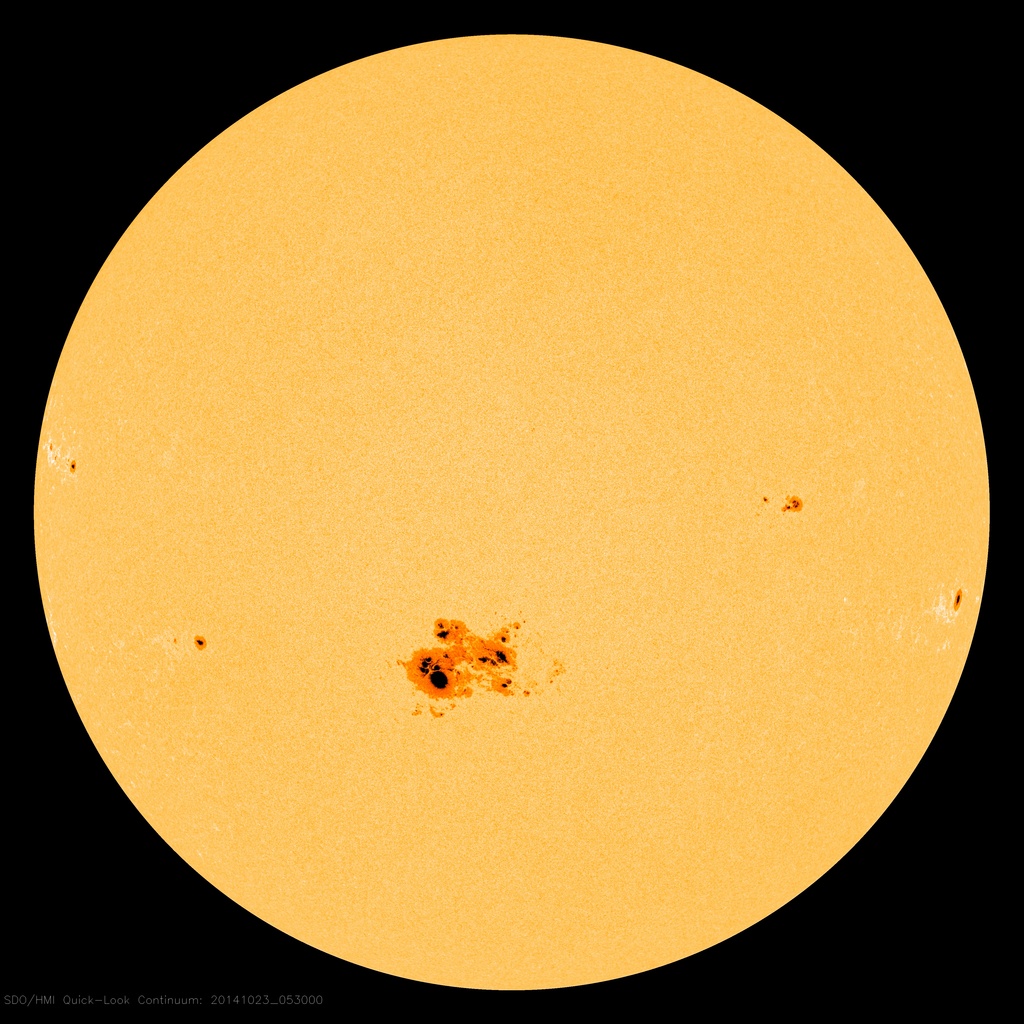
The Sun at 1:30 a.m. 10/23/2014 with large sunspot group AR 2192. Credit NASA – Solar Dynamics Observatory.
This baby gave off a X Class flare yesterday (10/22/2014). Could be more in store. Maybe we’ll see an aurora later this week.
10/21/2014 – Ephemeris – There’s a star party tonight at the Sleeping Bear Dunes National Lakeshore
Ephemeris for Tuesday, October 21st. The sun will rise at 8:05. It’ll be up for 10 hours and 42 minutes, setting at 6:47. The moon, 2 days before new, will rise at 6:44 tomorrow morning.
Tonight if it’s clear the Grand Traverse Astronomical Society will join the rangers at the Sleeping Bear Dunes National Lakeshore for their 44th anniversary celebration with a star party at Stop number 3, the Dunes Overlook on the Pierce Stocking Scenic Drive. The event will run from 8 to 10 p.m. featuring the wonders still visible among the northern summer stars along with those appearing in the autumn skies. To get a heads up on the status of the star party call 231-326-4700, extension. 5005, for a message after 4 p.m. The Orionid meteor shower is also at peak now with the meteors seeming to come from between the constellations Orion and Gemini. The Orionids are visible from 11 p.m. to 6:30 a.m. The Orionids will be visible in diminishing numbers through the first week in November.
Times are for the Traverse City/Interlochen area of Michigan. They may be different for your location.
Addendum
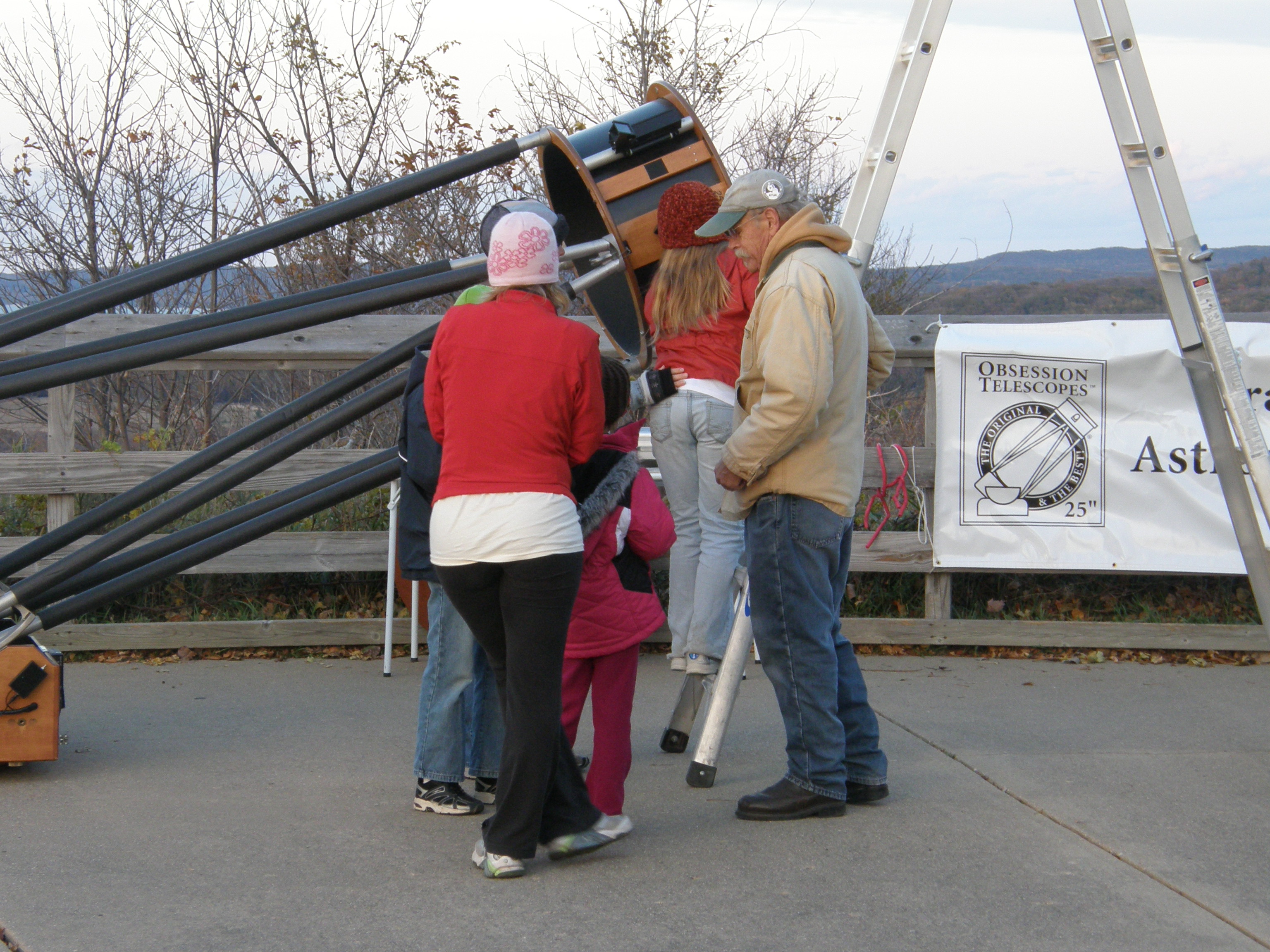
Views from the anniversary star party in 2010. Credit: Eileen Carlisle.
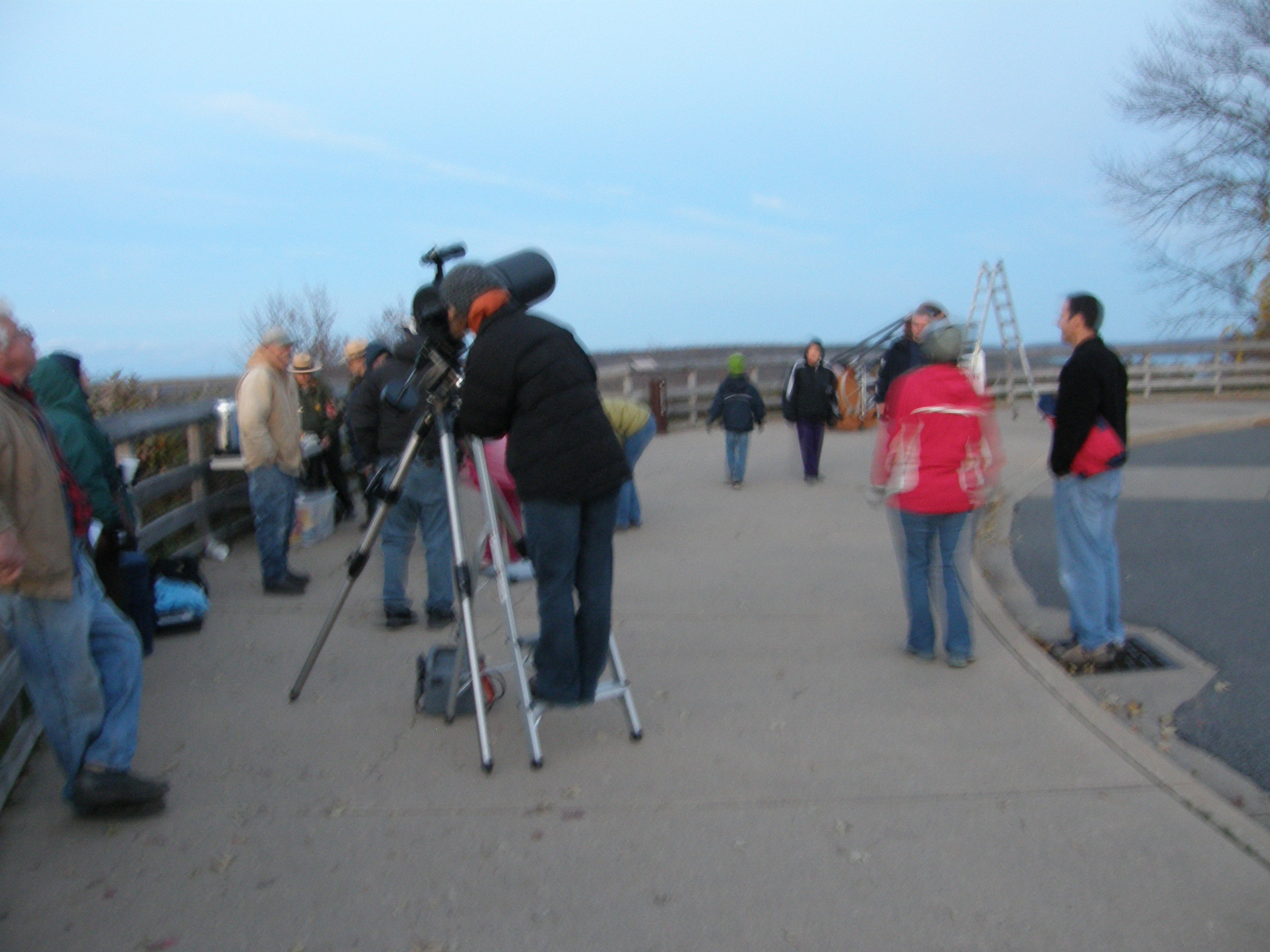
Views from the anniversary star party in 2010. Credit: Eileen Carlisle.
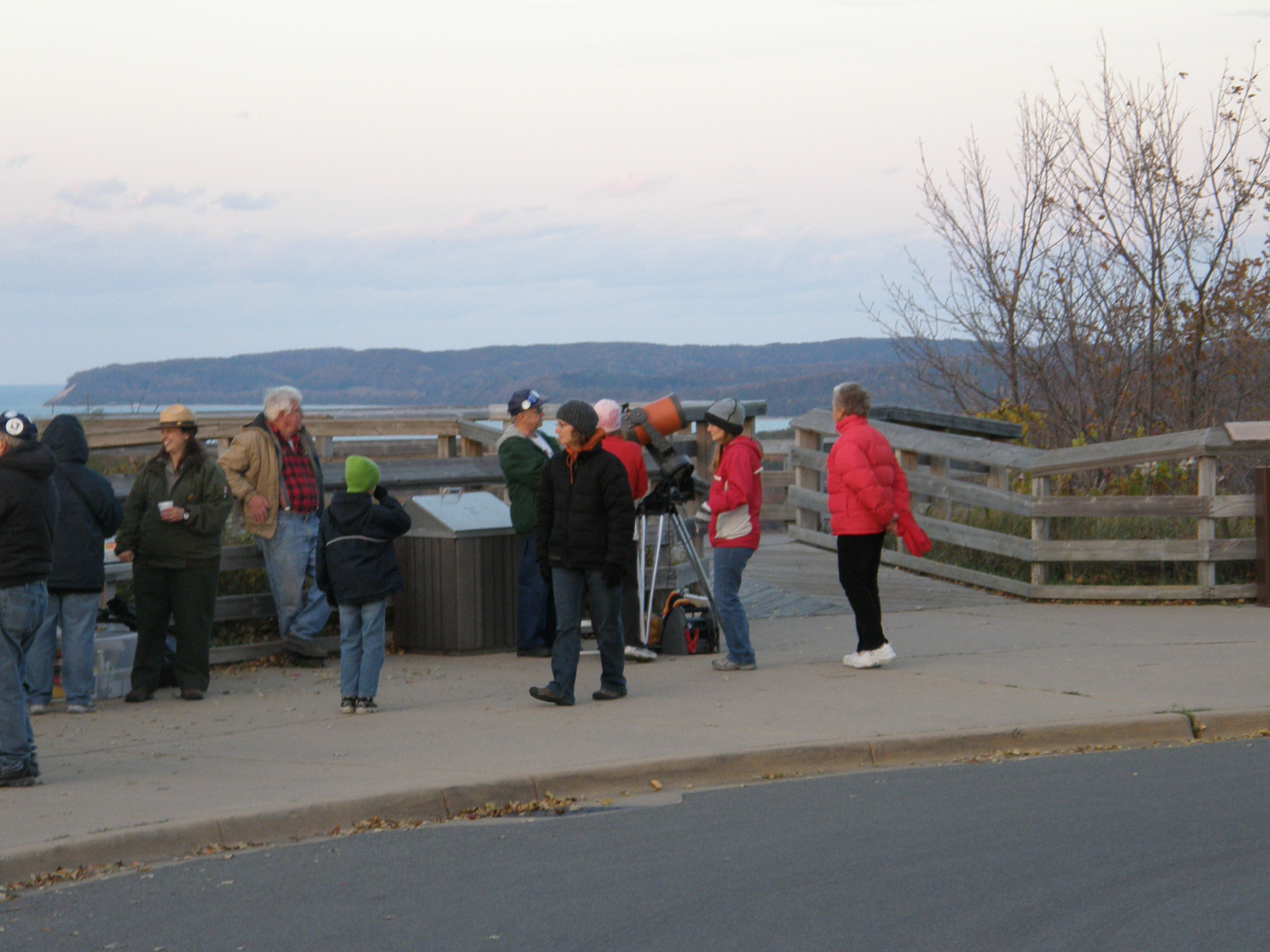
Views from the anniversary star party in 2010. Credit: Eileen Carlisle.
10/17/2014 – Ephmeris – There’s a star party Saturday at the NMC Rogers Observatory
Ephemeris for Friday, October 17th. The sun will rise at 8:00. It’ll be up for 10 hours and 54 minutes, setting at 6:54. The moon, 2 days past last quarter, will rise at 2:47 tomorrow morning.
Tomorrow night the Grand Traverse Astronomical Society will host a Star Party at Northwestern Michigan College’s Rogers Observatory from 9 p.m. to 11 p.m. On tap, if it’s clear will be the wonders of both the summer and the autumn skies, The summer Milky Way is still visible moving off to the southwest with its star clusters and nebulae. The autumn sky has star clusters too, including the famous Pleiades, best seen in binoculars or telescope finders, and the wonderful Double Cluster. The autumn sky is also host to the closest spiral galaxy to us the Great Andromeda Galaxy, which will get a whole lot closer in 4 billion years. Come on out to the observatory on Birmley Road, about 2 miles south of South Airport Road.
Times are for the Traverse City/Interlochen area of Michigan. They may be different for your location.
Addendum
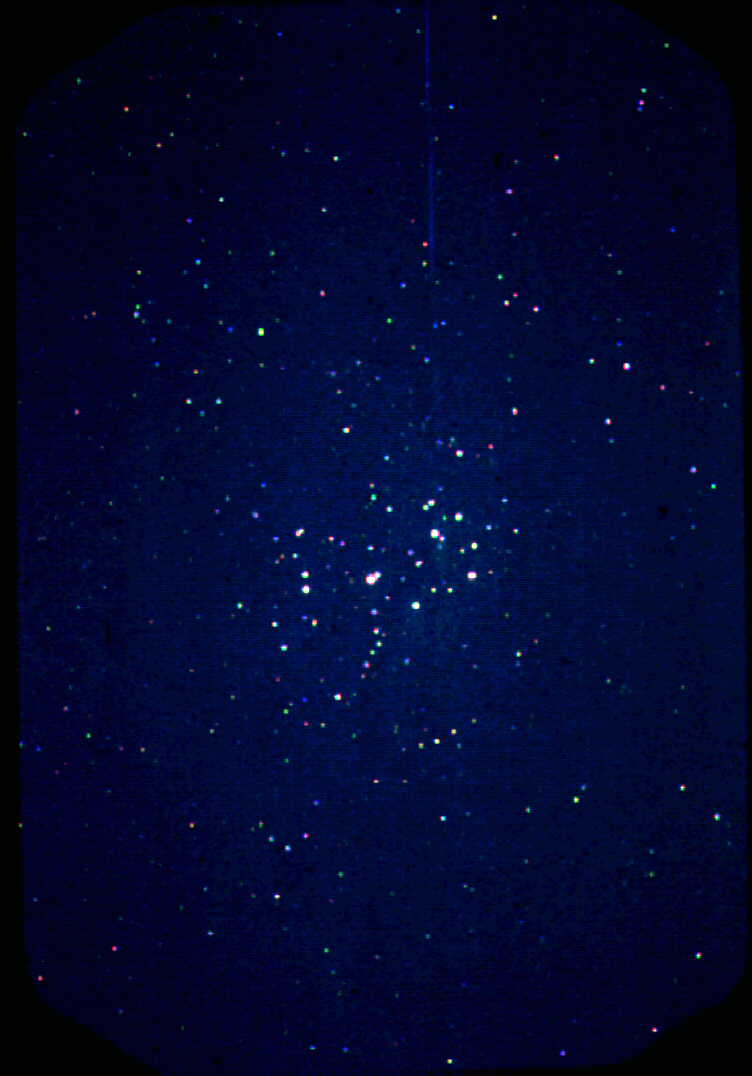
The Pleiades, about what you’d see in binoculars.
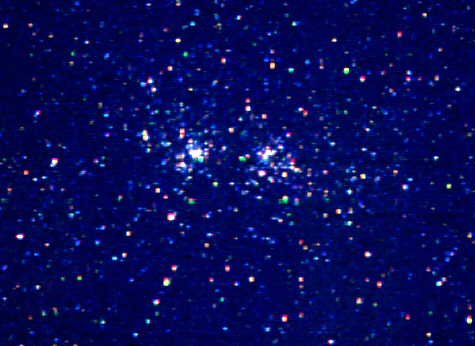
Double Cluster as it would be seen in a small telescope.
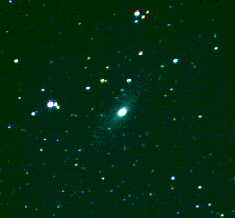
The Great Andromeda Galaxy (M31) as seen in binoculars. Visually even in a telescope the hub of this galaxy is all that is seen. However it also can be seen with the naked eye. However a telescope can also show its two satellite galaxies.
10/09/2014 – Ephemeris – The next lunar eclipses and recollections of what happened with yesterday’s eclipse
Ephemeris for Thursday, October 9th. The sun will rise at 7:50. It’ll be up for 11 hours and 18 minutes, setting at 7:08. The moon, 1 day past full, will rise at 8:01 this evening.
With the two total lunar eclipses done for this year, we can look forward to two more next year. The April 4th, 2015 eclipse won’t appear total here because the moon will set before totality. However the September 28th, 2015 lunar eclipse will be an evening eclipse. These 4 eclipses make a rare tetrad of total lunar eclipses that won’t be repeated until 2032 and 2033. After September 28th the next total lunar eclipse visible from northern Michigan will be in 2021. On the solar eclipse side there’s one on the 23rd of this month, a partial eclipse at sunset. I’ll have more on that later. After that is the big event, the total solar eclipse on August 21, 2017. The path of totality will run from coast to coast, running just south of St. Louis Missouri, and just north of Nashville Tennessee.
Times are for the Traverse City/Interlochen area of Michigan. They may be different for your location.
Addendum
What follows is my recollection of the October 8th lunar eclipse. Originally relayed in an email to Pat Stinson, freelance writer and author of the wonderful article in the Grand Traverse Insider about the activities of Space Week and the astronomical events in October:
The skies were trending clearer at midnight and again at 2:30 a.m. when I took a shower to prepare for the eclipse. After that it got slowly worse. That afternoon Ranger Marie Scott of the Sleeping Bear Dunes National Lakeshore said she’d go to our site, Platte River Point, clouds or not, and I was willing. In setting up the eclipse observing sites,earlier in the year, this site was the one place that if it were clear, we could see either the moon or the sun set onto the Lake Michigan horizon for the three eclipses this year. I loaded my van with my two telescopes, the C8 and an 11″ Dobsonian and lots of coffee.
I got to the site at 4:30 and began to set up. Marie arrived a few minutes later and another Grand Traverse Astronomical Society member Don Flegel arrived shortly after that. They had some rain in Kingsley, where he lived that morning. We had a strong, cold northwest wind. When we’re at the Point we commandeer the small parking lot to the north of the road that’s up against a hill. That hill and my van offered some protection from the wind. I got the C8 set up just in time to spot the moon emerging from the clouds a few minutes after first contact. We were able to follow the eclipse intermittently until about 5:45 when a large cloud covered the moon big time. We could see the glint of the moon off the water until after totality.
This was our situation until about 7:30 when the clouds began to break up, By then the moon was so low that the foreshortened breaks weren’t all that open. Then about 10 minutes before moon set it did peek out at intervals. Unlike the Cheshire Cat’s smile, the moon (cat) had a frown because the upper edge of the moon was coming back into sunlight. 5 minutes later the moon finally disappeared for good in a cloud bank as the puffy clouds overhead caught the sun’s golden sunrise rays.
Marie Scott counted 18 folks that at one time or another came out to witness the event. Marie also posted some pictures she took of the eclipse on the park’s Facebook page.
10/07/2014 – Ephemereis – One more day: Tomorrow’s total lunar eclipse
Note: Being a radio program, I do have to repeat the eclipse timings a couple of times.
Ephemeris for Tuesday, October 7th. The sun will rise at 7:47. It’ll be up for 11 hours and 24 minutes, setting at 7:12. The moon, 1 day before full, will set at 7:56 tomorrow morning.
Tomorrow’s Total Lunar Eclipse will be visible without losing too much sleep. Just set the alarm clock so you’ll be ready to view the start of the eclipse at 5:15 a.m. That’s when the partial phase starts when the upper left edge of the moon enters the Earth’s inner shadow called the umbra. The total phase or totality starts at 6:25 with morning twilight just beginning. The middle of the eclipse will occur at 6:54. Totality will end at 7:24 when twilight will be bright. The ending partial phase will not be completely visible from northern Michigan. From the Dakotas and westward the entire ending partial phase will be visible. Amazingly, next year we will have two more total lunar eclipses in the United States, April 4th and September 28th.
Times are for the Traverse City/Interlochen area of Michigan. They may be different for your location.
Addendum
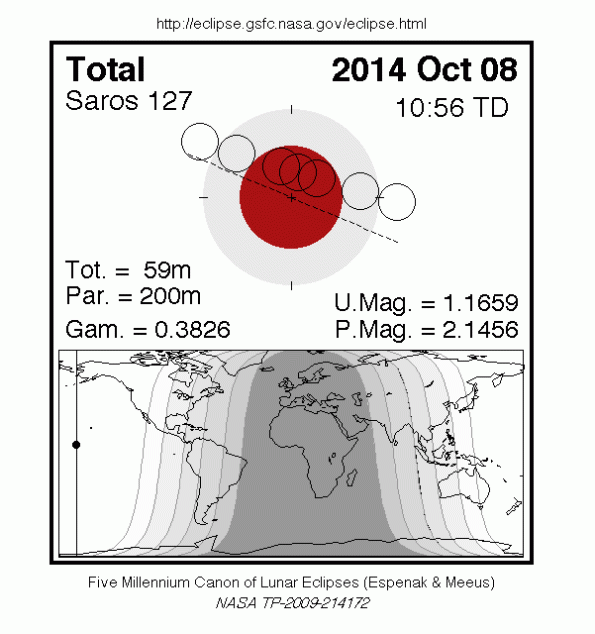 Click on the image above to display or download a more detailed Adobe Acrobat (PDF) image showing more information about the eclipse. The time shown will be Universal Time (UT). Subtract 4 hours for EDT, 5 hours for CDT, etc.
In the Grand Traverse area there are two locations the Grand Traverse Astronomical Society (GTAS) will be set up to view the eclipse if it is clear enough. Opens at 5 a.m.
- Northwestern Michigan College’s Joseph H. Rogers Observatory. located south of Traverse City on Birmley Road, between Garfield and Keystone roads. (One road south of Hammond)
- Sleeping Bear Dunes National Lakeshore at Platte River Point. It’s in several miles from the Platte River Campground off M22 on Lake Michigan Rd. Park in the big parking lot to the left. The GTAS will have their scopes in the small parking lot to the right.
If it’s cloudy, there is a place to view the lunar eclipse on the Internet from Griffith Observatory in Los Angeles. There will probably be more locations. I’ll put them up if and when I find them. Last eclipse, it was cloudy here, so I watched the eclipse Livestream from Griffith Observatory. They also have a running commentary and answer your questions. Though it still wasn’t as good as seeing it with your own eyeballs. Videos cannot duplicate the range of brightness and color that can be seen with your own eyes.
10/06/2014 – Ephemeris – Previewing Wednesday’s lunar eclipse
Ephemeris for Monday, October 6th. The sun will rise at 7:46. It’ll be up for 11 hours and 27 minutes, setting at 7:13. The moon, 2 days before full, will set at 6:42 tomorrow morning.
Wednesday’s Total Lunar Eclipse will be visible without losing too much sleep. Just set the alarm clock for about 5 a.m. The partial phase starts at 5:15 a.m. when the upper left edge of the moon enters the Earth’s inner shadow called the umbra. The total phase or totality starts at 6:25 with morning twilight just beginning. The middle of the eclipse will occur at 6:54. Totality will end at 7:24 when twilight will be bright. The ending partial phase will not be completely visible from northern Michigan. From the Dakotas and westward the entire ending partial phase will be visible. Amazingly, in the next eclipse season another lunar eclipse will be visible, though not as favorable as this one. That one is April 4th 2015 with a totality duration of only 5 minutes.
Times are for the Traverse City/Interlochen area of Michigan. They may be different for your location.
AddendumClick on the image above to display or download a more detailed Adobe Acrobat (PDF) image showing more information about the eclipse. The time shown will be Universal Time (UT). Subtract 4 hours for EDT, 5 hours for CDT, etc.
In the Grand Traverse area there are two locations the Grand Traverse Astronomical Society (GTAS) will be set up to view the eclipse if it is clear enough. Opens at 5 a.m.
- Northwestern Michigan College’s Joseph H. Rogers Observatory. located south of Traverse City on Birmley Road, between Garfield and Keystone roads. (One road south of Hammond)
- Sleeping Bear Dunes National Lakeshore at Platte River Point. It’s in several miles from the Platte River Campground off M22 on Lake Michigan Rd. Park in the big parking lot to the left. The GTAS will have their scopes in the small parking lot to the right.
10/03/2014 – Ephemeris – Sundials and Fall Astronomy Day on tap tomorrow at the NMC Observatory
Ephemeris for Friday, October 3rd. The sun will rise at 7:42. It’ll be up for 11 hours and 36 minutes, setting at 7:19. The moon, 2 days past first quarter, will set at 3:01 tomorrow morning.
Tomorrow is Fall Astronomy Day. To celebrate the Grand Traverse Astronomical Society will move its first Friday of the month meeting and star party to Saturday the 4th. At 8 p.m local landscape architect and sundial expert Dean Connors will talk about, of course, sundials and the myriad of forms they take. Starting at 9 p.m. the star party portion of the night will begin with the moon as the featured celestial object. Members of the society will also provide information on this month’s two eclipses and how to observe a solar eclipse safely. The meeting and star party will be held at Northwestern Michigan College’s Rogers Observatory located south of Traverse City on Birmley Road. Between Garfield and Keystone roads.
Times are for the Traverse City/Interlochen area of Michigan. They may be different for your location.
09/26/2014 – Ephemeris – Mars meets its rival
Ephemeris for Friday, September 26th. The sun will rise at 7:34. It’ll be up for 11 hours and 58 minutes, setting at 7:32. The moon, 2 days past new, will set at 8:45 this evening.
The planet Mars and the bright star Antares will appear at their closest tomorrow night. The name of the star Antares means “Rival of Mars”. “Ant” meaning anti, “Ares”, the Greek equivalent to the Roman god Mars. This is about a 26 month recurrence, give or take. Usually Mars is way brighter than Antares, or way dimmer. This time Mars and Antares are the same brightness. Both planet and star have the same color, kind of a faded orange color, made redder by being low in our sky which drains even more of the blue out. The reason Mars is red is that its surface is rusty. Antares is another matter. It is a cool red giant star. Well, cool on the outside by hotter than the sun’s interior on the inside where it’s changing helium into carbon and oxygen for power. Hint: Mars is always on top. Also tomorrow night the crescent Moon will be just to the right of Saturn.
Times are for the Traverse City/Interlochen area of Michigan. They may be different for your location.
Addenda
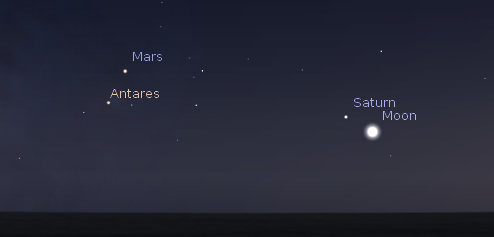
Mars appears its closest to Antares. Here seen low in the southwest at 8:30 p.m. on September 27, 2014. The Moon, near Saturn is too small to show a phase. Created using Stellarium.
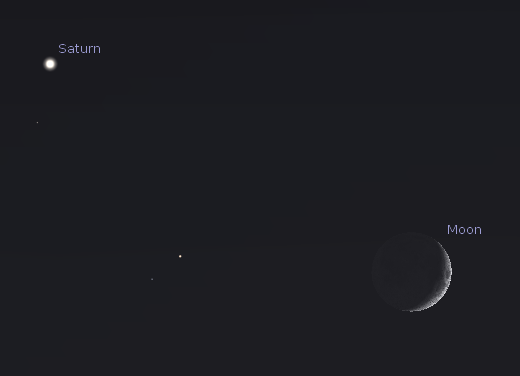
Saturn with the crescent moon. Earthshine may still be visible on the three day old Moon’s night side. Created using Stellarium.
Acme Fall Festival
The Grand Traverse Astronomical Society will be at the Acme Fall Festival at Flintfields Horse Park on Bates Rd, North of M72, which runs from 10 a.m. to 4 p.m. Saturday the 27th. The society will bring telescopes, including the 25 inch Dobsonian telescope and the Solar Telescope to view the Sun in white light and the light of the element hydrogen. There will also be exhibits and free stuff from NASA for the kids.
09/19/2014 – Ephemeris – Astronomical events for Saturday local and far off
Ephemeris for Friday, September 19th. The sun will rise at 7:26. It’ll be up for 12 hours and 19 minutes, setting at 7:45. The moon, 4 days past last quarter, will rise at 3:59 tomorrow morning.
Saturday will be a big day for astronomical viewing, if it’s clear. Tomorrow’s events start early with the planet Jupiter just above and right of the thin crescent moon. They will be visible by 6 a.m. During the day the Grand Traverse Astronomical Society will be at the Leland Heritage Celebration. That runs from 9 a.m. to 5 p.m. on River Street in Leland. Weather permitting the Sun will be in view with some giveaway items for the kids even if it’s cloudy. At night starting at 9 p.m. will be a star party at Northwestern Michigan’s Rogers Observatory. Being the dark of the moon the wonders of the summer Milky Way will be in view if it’s clear. An alternate program will be presented if it’s cloudy.
Times are for the Traverse City/Interlochen area of Michigan. They may be different for your location.
Addendum
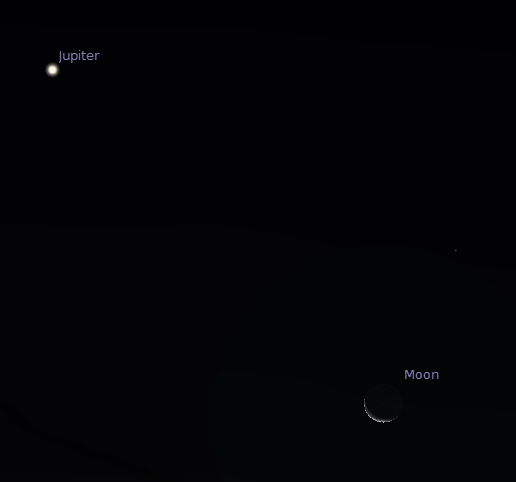
Jupiter and the moon at 6 a.m. Saturday September 20, 2014. Created using Stellarium.
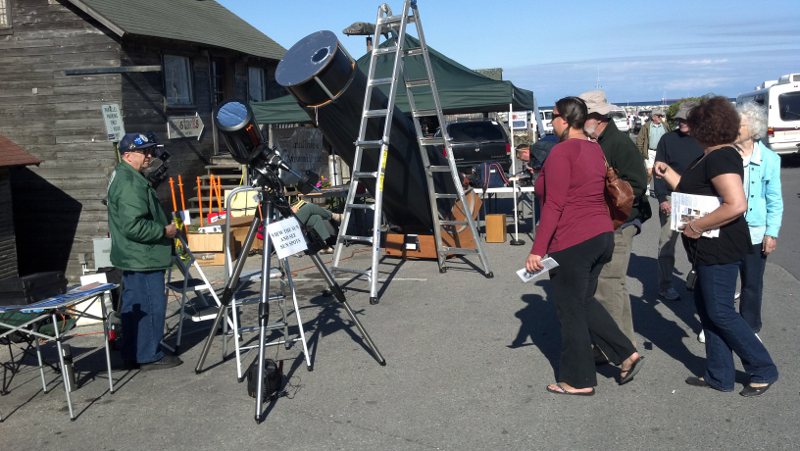
GTAS telescopes at Leland Heritage Celebration in 2011.
Arrrr! Today is Talk Like a Pirate Day mateys. Just in time for the Schooner tall ship Festival in Traverse City this weekend.
09/12/2014 – Ephemeris – There’s a star party tomorrow night at the Sleeping Bear Dunes National Lakeshore
Ephemeris for Friday, September 12th. The sun will rise at 7:17. It’ll be up for 12 hours and 40 minutes, setting at 7:58. The moon, 3 days before last quarter, will rise at 10:08 this evening.
Tomorrow night will be the last of the Sleeping Bear Dunes National Lakeshore held on Saturday by the Grand Traverse Astronomical Society for the year. Never fear the GTAS has three more events planned in October: a lunar eclipse on the 8th, the Sleeping Bear Dunes National Lake Shore’s 44th anniversary star party on the 21st, and a partial solar eclipse at sunset on the 23rd. Saturday’s event will be held at the Dune Climb starting around 9 p.m., and the featured attractions will be the wonders of the summer Milky Way. These are star clusters and nebulae or clouds of gas, some expelled by dying stars and others where new stars are being born. The Dune observing events will be canceled if completely overcast or rain.
Times are for the Traverse City/Interlochen area of Michigan. They may be different for your location.
Addendum
The Grand Traverse Astronomical Society (GTAS) is available to host sun and star parties around the Grand Traverse Area. Below are photos from two recent visits to the Betsie Valley District Library in Thompsonville, MI. First an evening visit inauguration of their new library building, and a daytime visit for the youngster’s reading program. The photos courtesy of Librarian Michelle Guerra and her staff. Contact the society via email at info@gtastro.org.
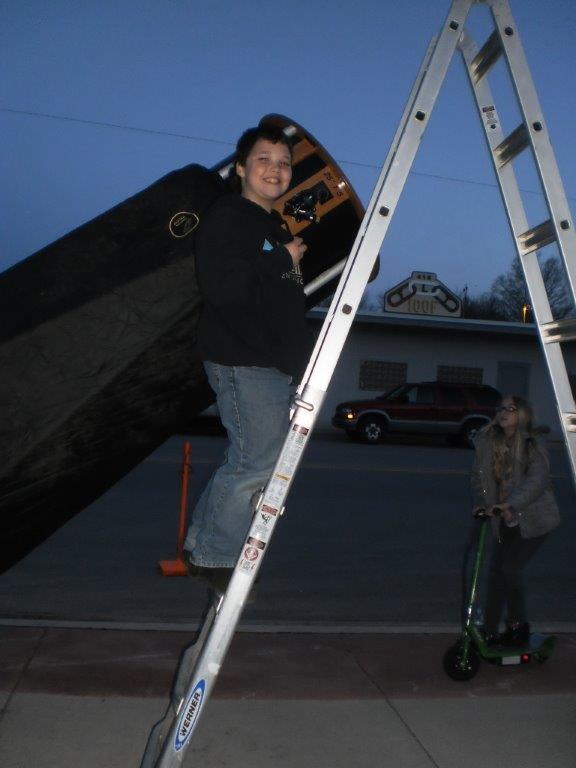
He just saw Jupiter through the GTAS 25″ telescope.
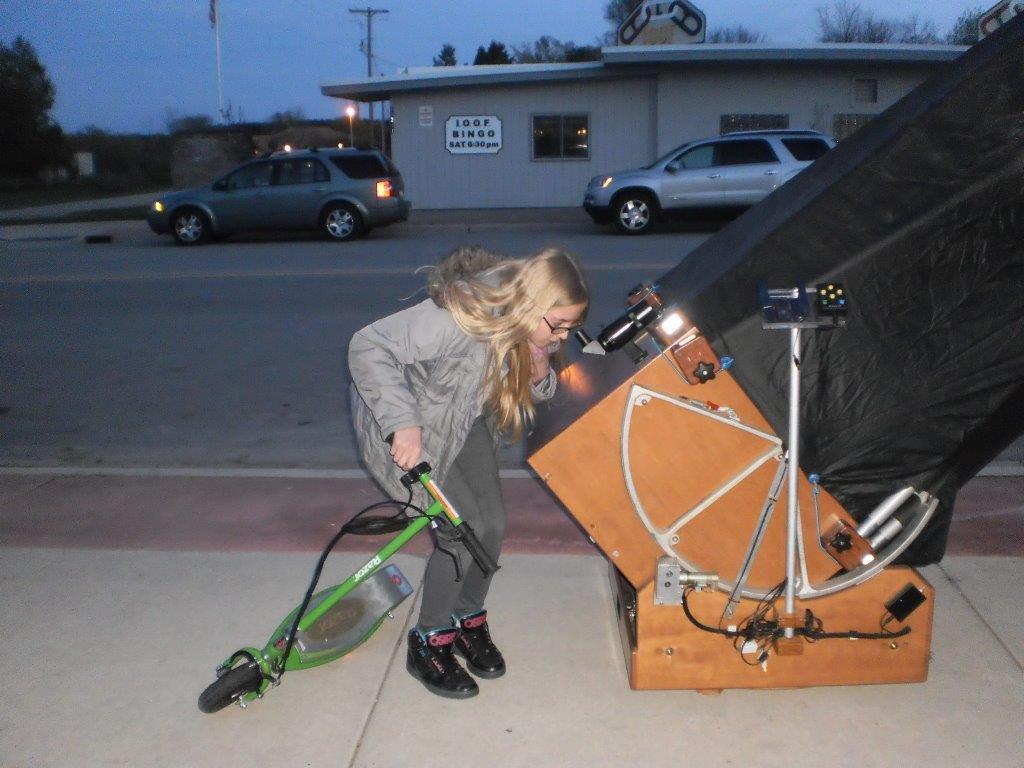
What’s in this telescope? (A really small Jupiter.)
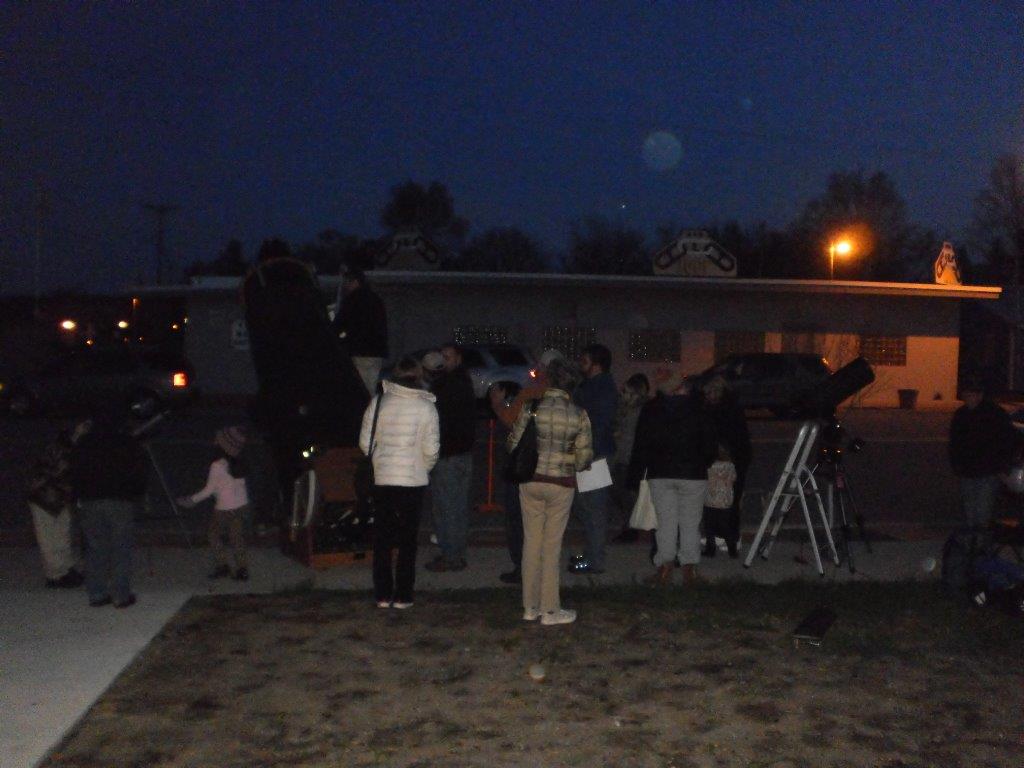
A crowd gathers to view Saturn and Jupiter.
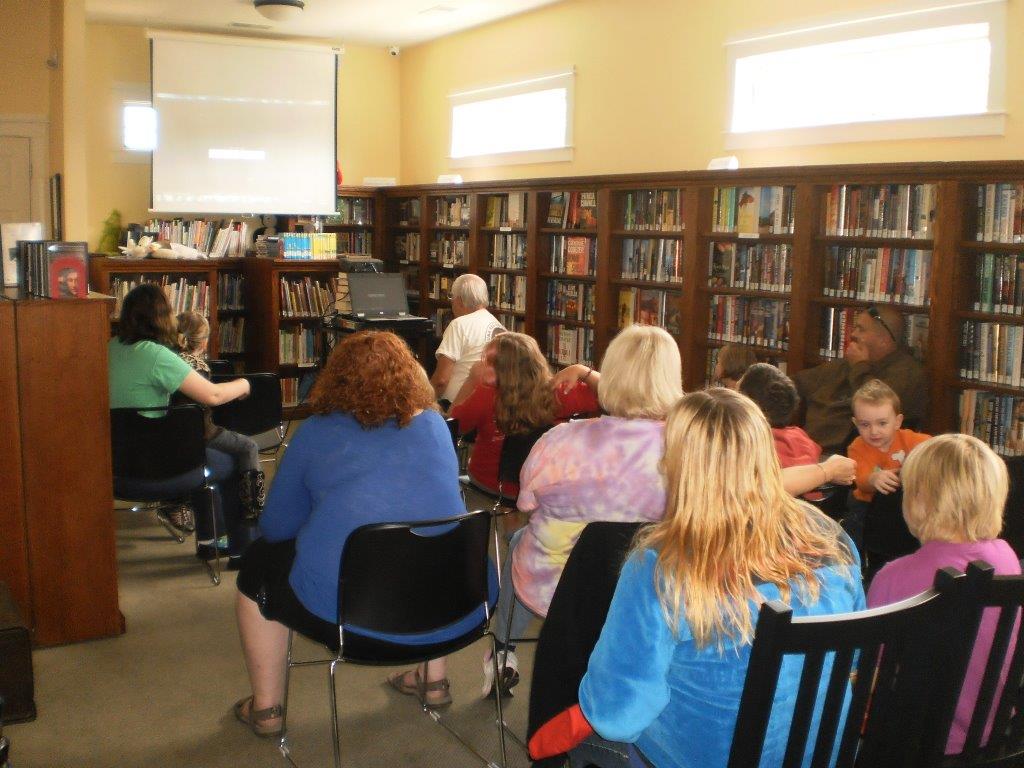
During both the evening and the daytime visits I take the folks through the sky using Stellarium pointing the constellations and telling their stories.
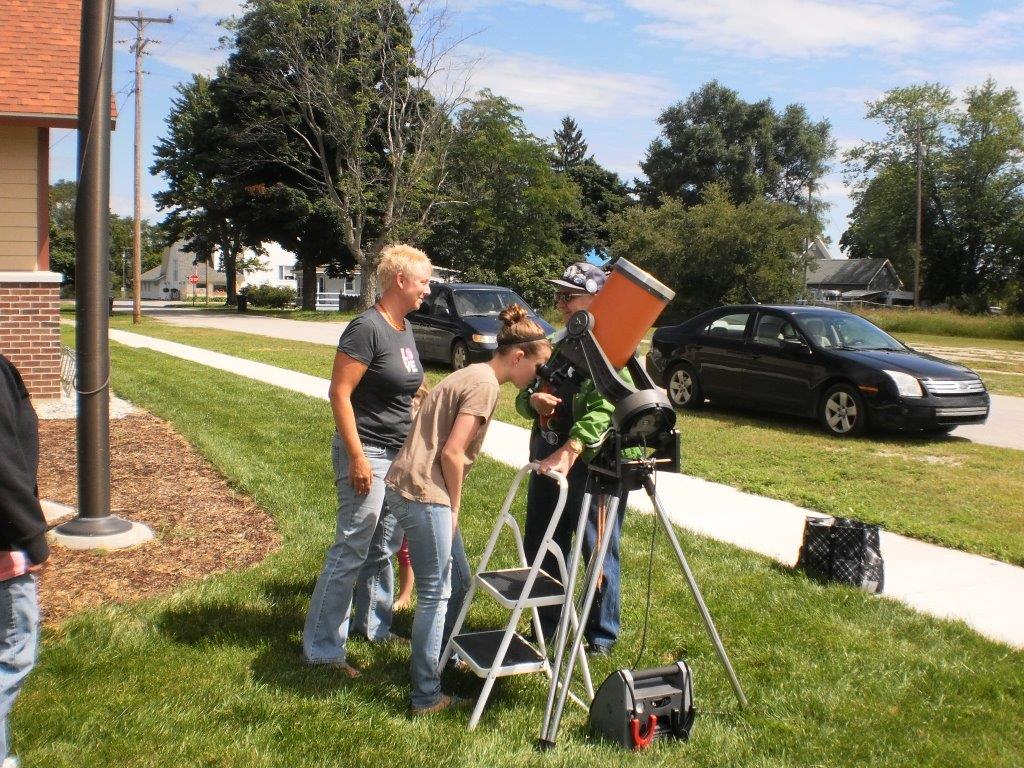
GTAS member Gary Carlisle shows the Sun through his telescope.
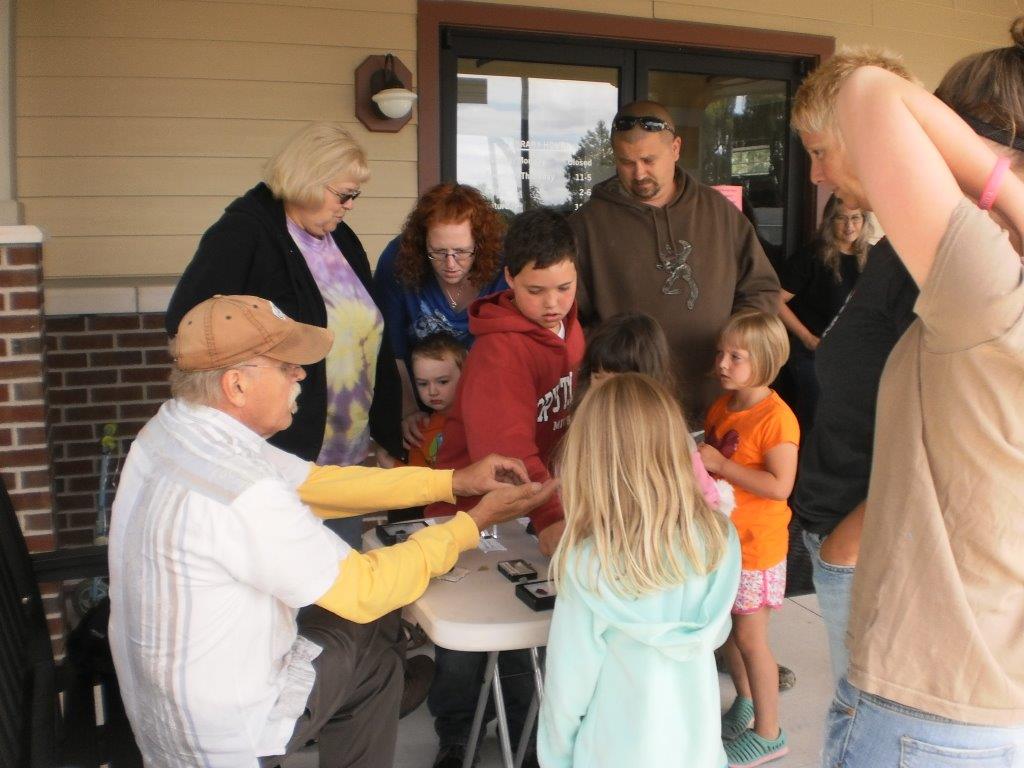
GTAS member Richard Kuschell shows his meteorite collection. Always a hit.
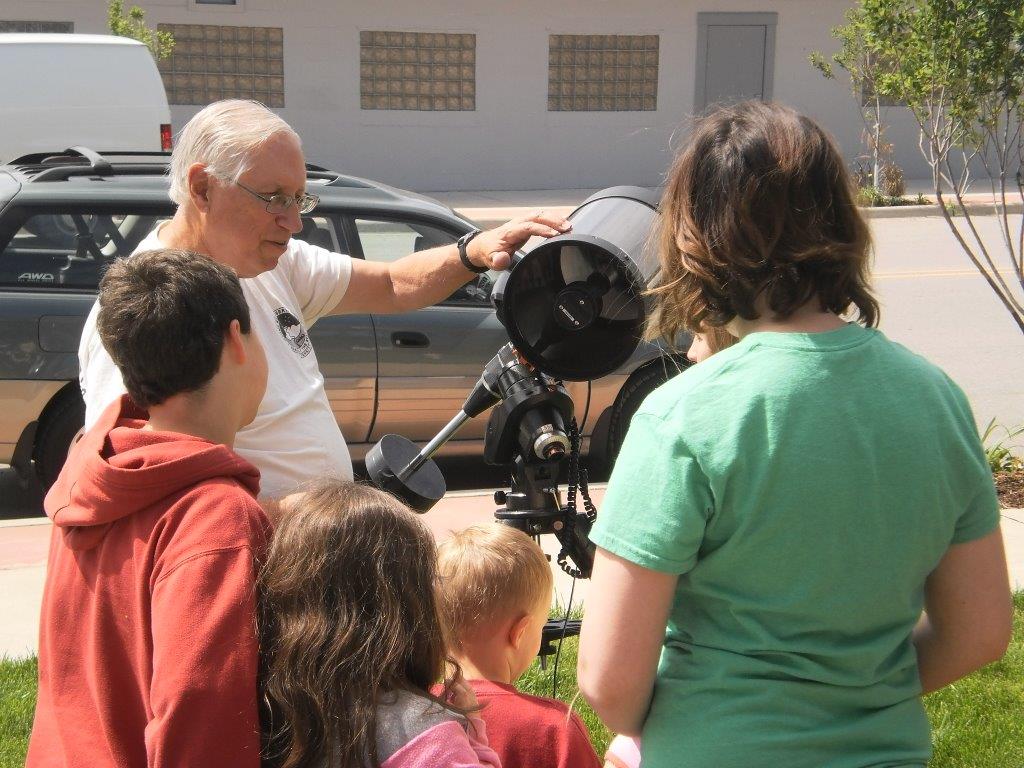
Here I am showing the kids how a telescope works.
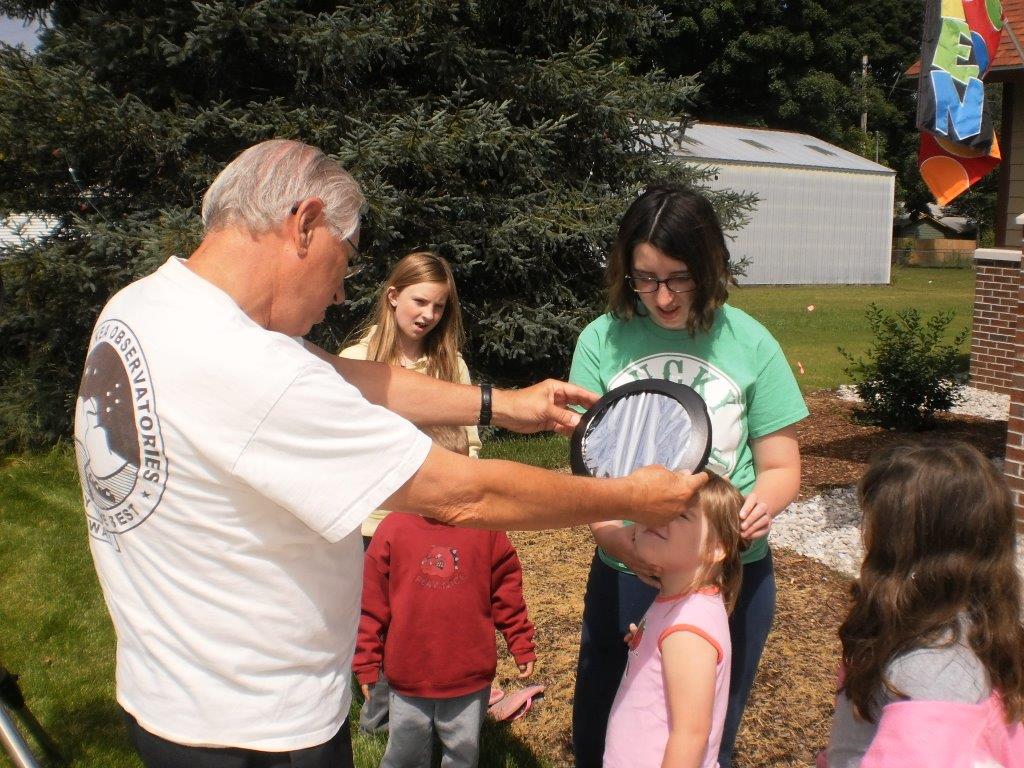
Using a telescope solar filter to show how small the sun looks.
 Bob Moler's Ephemeris Blog