Archive
Ephemeris: 12/04/2025 – Orion survives a full moon
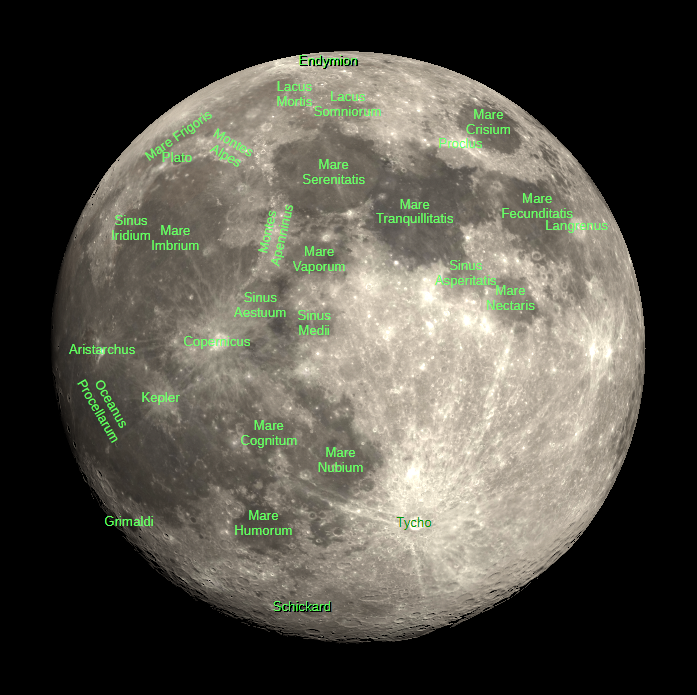
This is Ephemeris for Thursday, December 4th. Today the Sun will be up for 8 hours and 59 minutes, setting at 5:02, and it will rise tomorrow at 8:04. The Moon, at full today, will rise at 4:24 this evening.
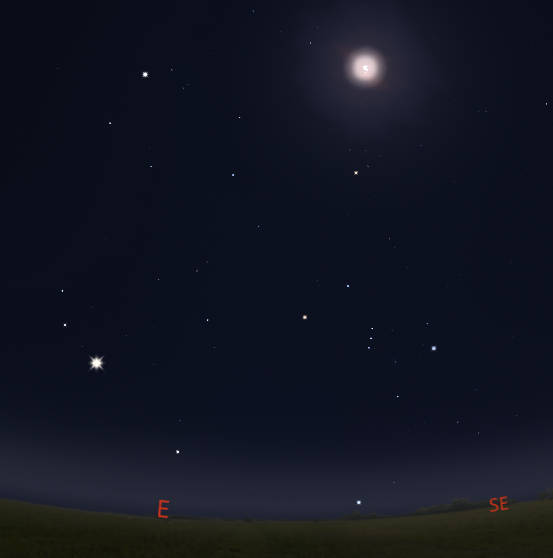
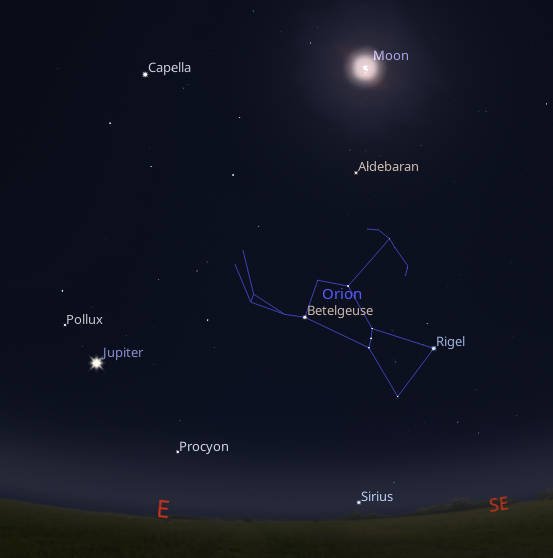
While the full moon overpowers most stars, the bright stars of winter persist. This is even true with tonight’s supermoon, a bit larger and brighter than average. Nowhere in the sky is there a concentration of bright stars as there is in the winter sky. I know it’s not winter yet, but if you stay up late enough, say 10 PM, all the winter stars will be in the sky. Last to rise is the brightest star of all, Sirius. And by 10 o’clock will be low in the southeast. Jupiter has joined the winter stars this year, outshining them all. As a constellation the mighty hunter Orion is easiest to spot on a full moon night, containing seven very bright stars, with three bright stars in a straight line as his belt, which most folks find as his most distinctive feature.
The astronomical event times given in this blog are for the Traverse City/Interlochen area of Michigan (Lat 44.7° N, Long 85.7° W; EDT, UT – 4 hours) unless stated otherwise. Times will be different for other locations.
Addendum
Ephemeris: 12/03/2025 – Taking our weekly look at the whereabouts of the naked-eye planets
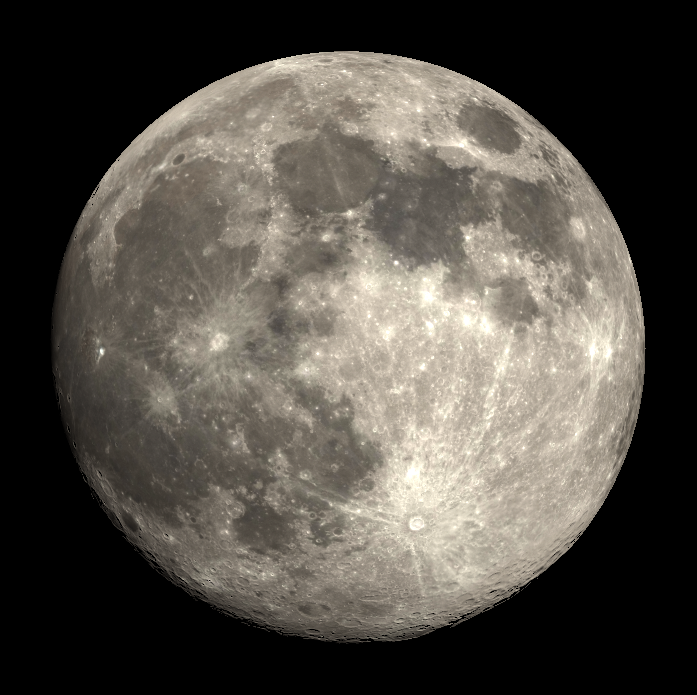
This is Bob Moler with Ephemeris for Wednesday, December 3rd. Today the Sun will be up for 9 hours, setting at 5:02, and it will rise tomorrow at 8:03. The Moon, 1 day before full, will set at 7:59 tomorrow morning.
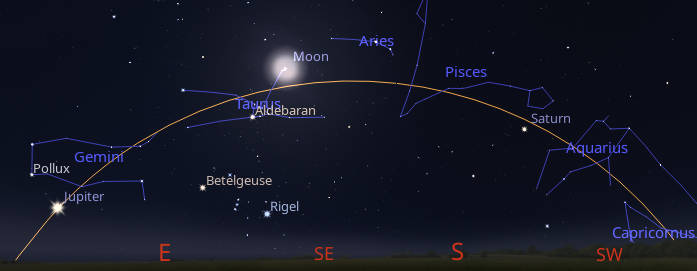
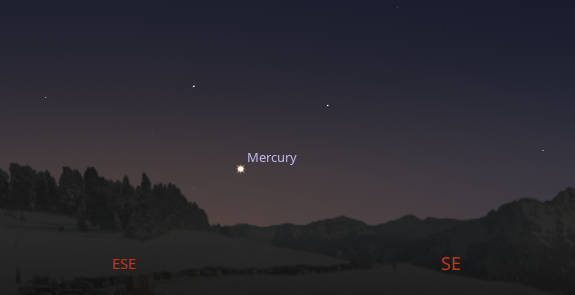
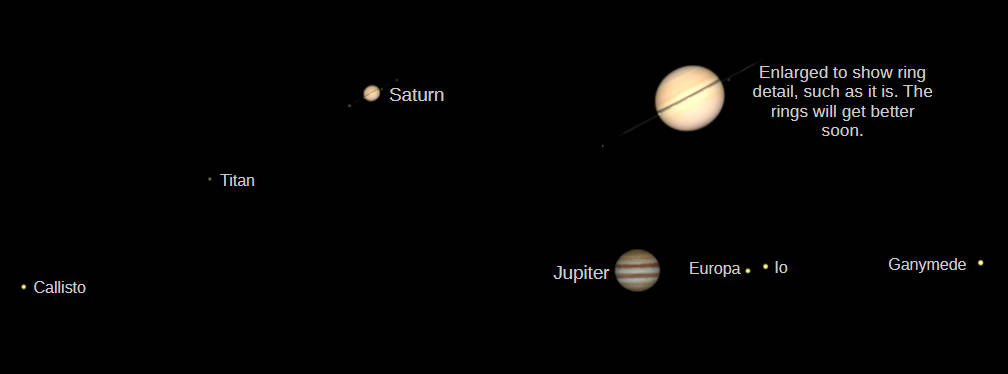
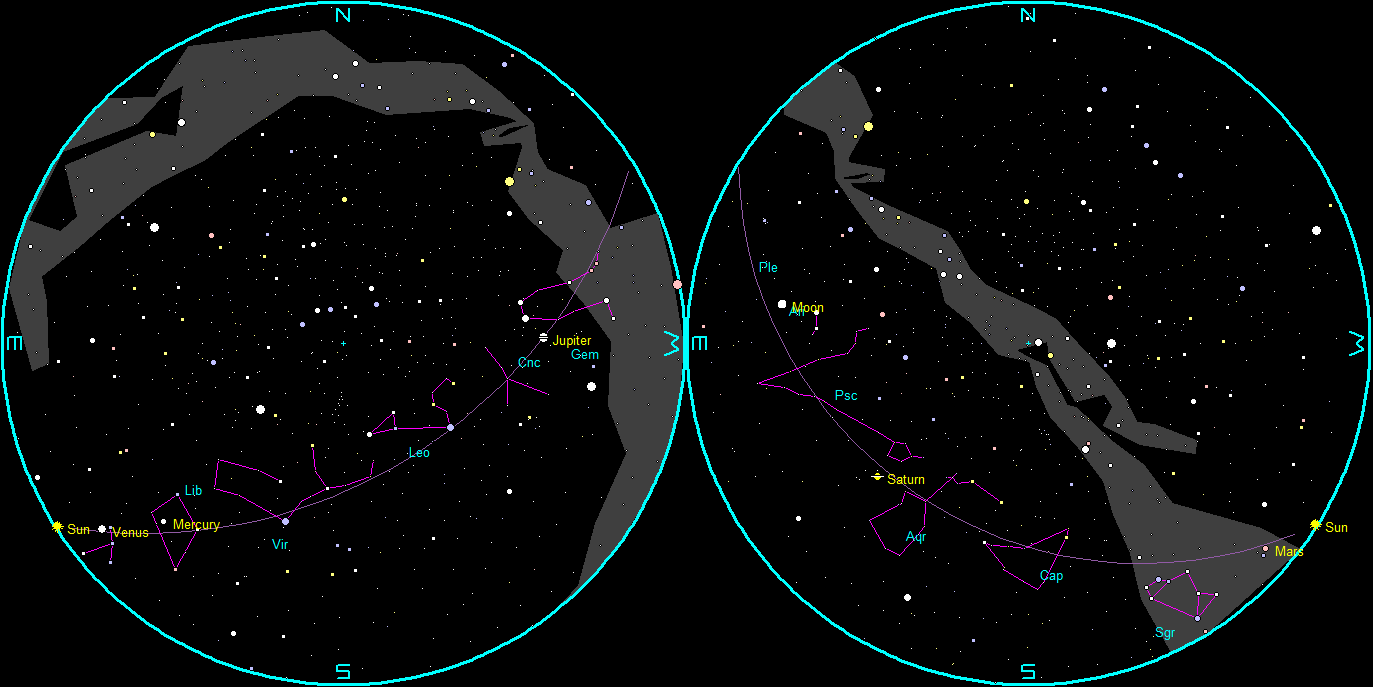
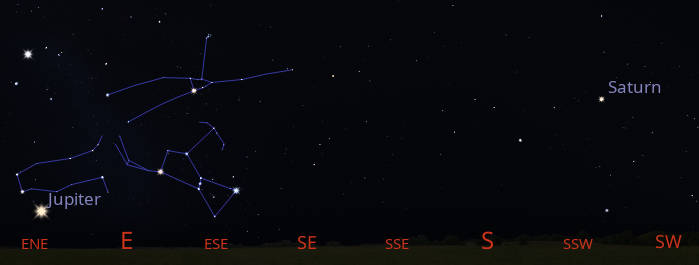
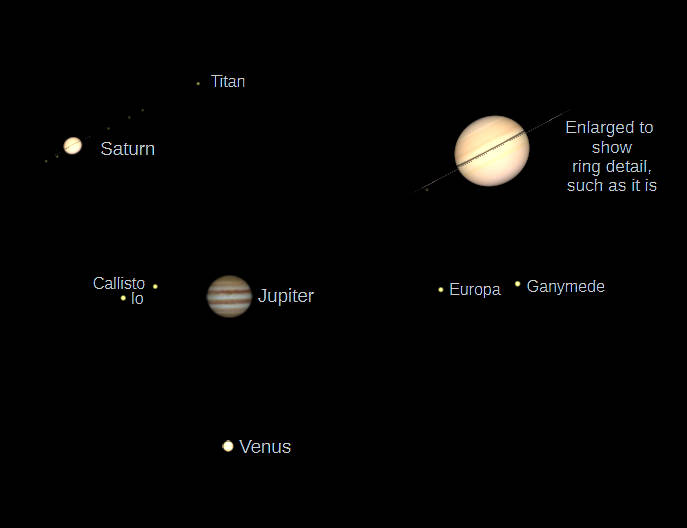
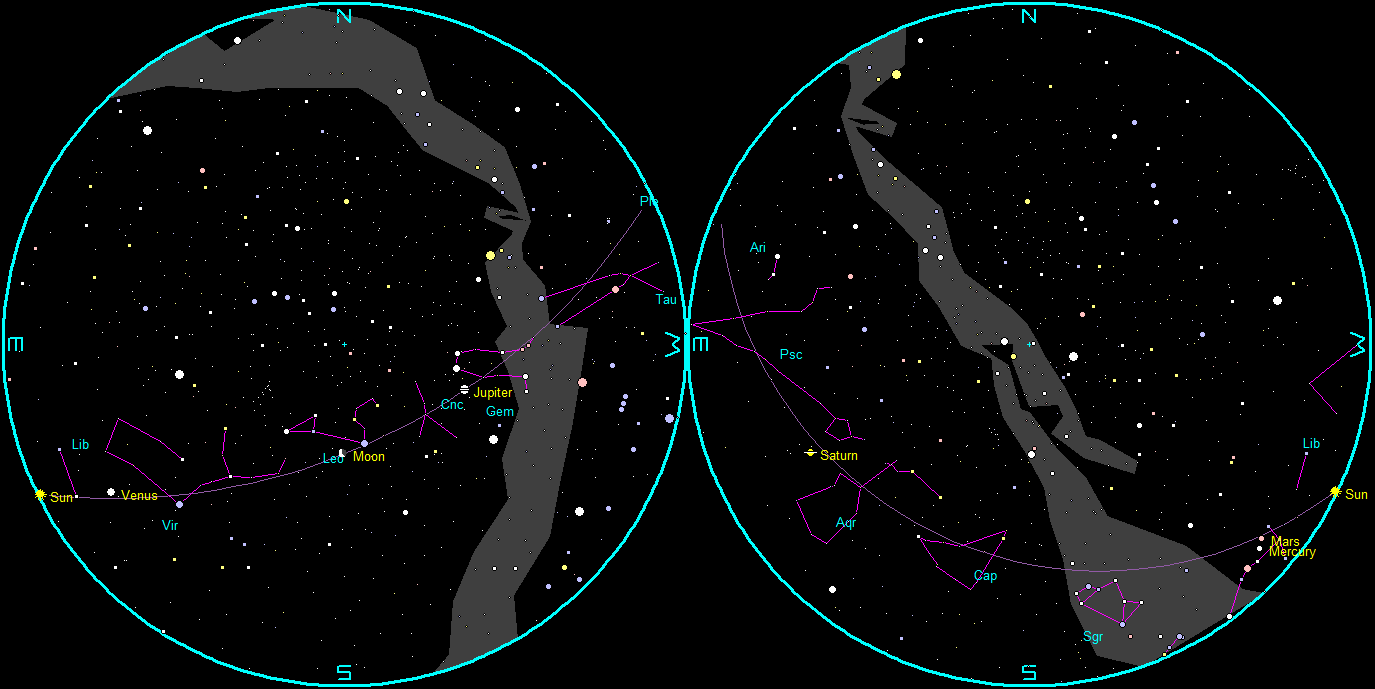
Let’s take our weekly look at the whereabouts of the naked-eye planets. Saturn is the brightest star-like object in the southern sky as soon as it gets dark. In a telescope Saturn sports a very thin ring, 4/10ths of a degree from being edge on. The rings are slowly opening up. Normally, I’d say that Saturn’s rings are easy to see in a telescope. In a couple of months the rings will be much more visible in telescopes. Jupiter will rise at 8 PM in the east-northeast, beneath Castor and Pollux, the bright stars of Gemini. Jupiter’s 4 brightest moons can even be seen in binoculars, and shift position night to night. Mercury might be spotted low in the east-southeast by 7 AM tomorrow morning, having risen 45 minutes earlier.
The astronomical event times given in this blog are for the Traverse City/Interlochen area of Michigan (Lat 44.7° N, Long 85.7° W; EDT, UT – 4 hours) unless stated otherwise. Times will be different for other locations.
Addendum
Ephemeris: 11/26/2025 – Checking out the naked eye planets
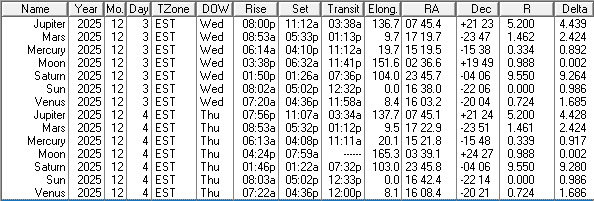
This is Ephemeris for Wednesday, November 26th. Today the Sun will be up for 9 hours and 11 minutes, setting at 5:05, and it will rise tomorrow at 7:55. The Moon, 2 days before first quarter, will set at 10:49 this evening.
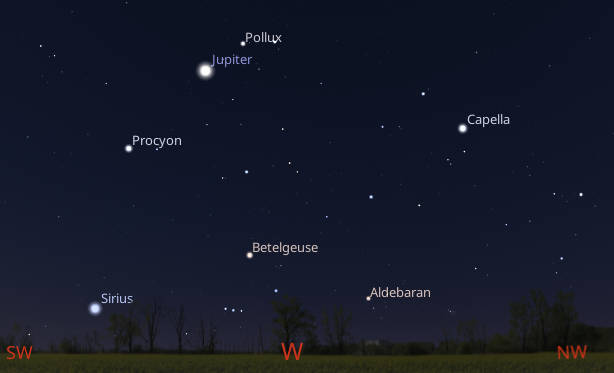
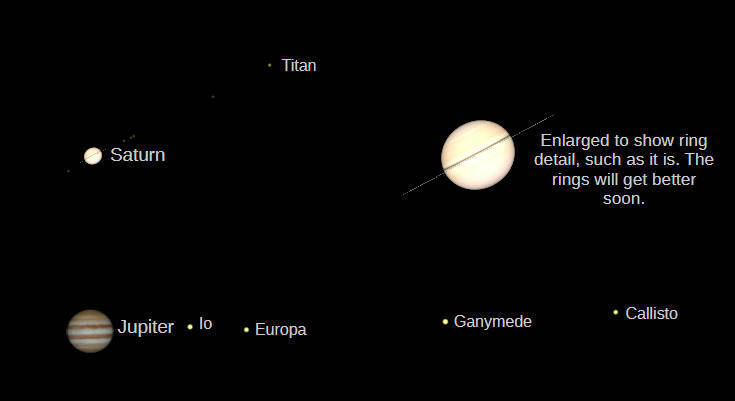
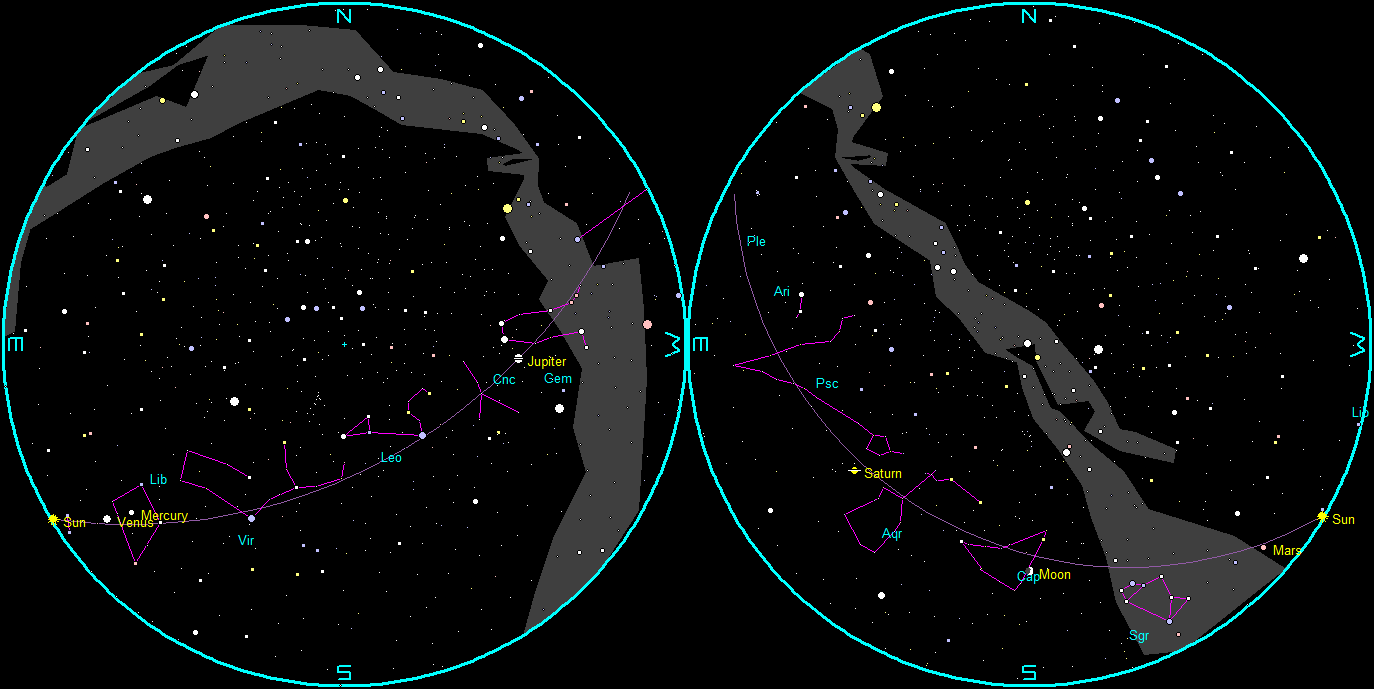
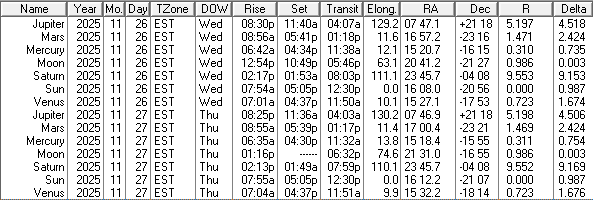
Pausing my exploration of AI to check out the naked eye planets this week. Mars and Mercury are too close to the Sun to be seen. Saturn is the brightest star like object in the southeastern sky as soon as it gets dark. In a telescope Saturn sports a very thin ring, 4/10ths of a degree from being edge on. In 4 days the rings will slowly start to open up. Normally, I’d say that Saturn’s rings are easy to see in a telescope. Currently, the rings appear extremely thin and can be difficult to pick up. Jupiter will rise at 8:29 PM in the east-northeast. Beneath Castor and Pollux, the bright stars of Gemini. By 7 AM, it will appear high in the west southwest, above the stars Procyon below and Sirius, near the horizon. Venus will rise at 7:04 in the east southeast and will probably not be visible.
The astronomical event times given in this blog are for the Traverse City/Interlochen area of Michigan (Lat 44.7° N, Long 85.7° W; EDT, UT – 4 hours) unless stated otherwise. Times will be different for other locations.
Addendum
Ephemeris: 11/21/2025 – Finding Taurus the bull
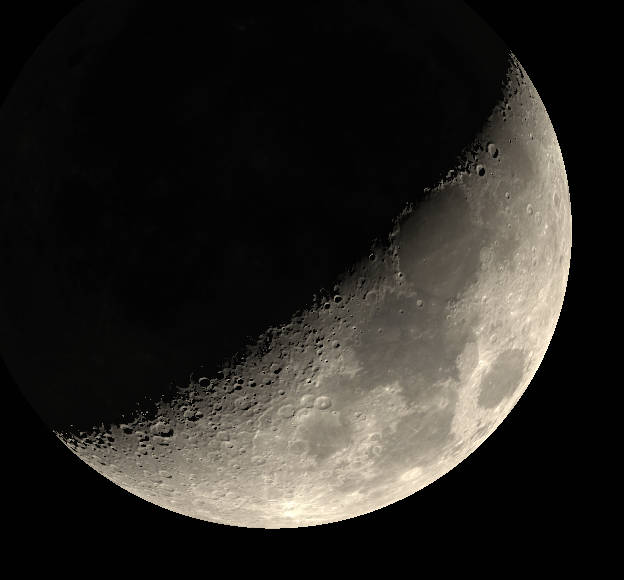
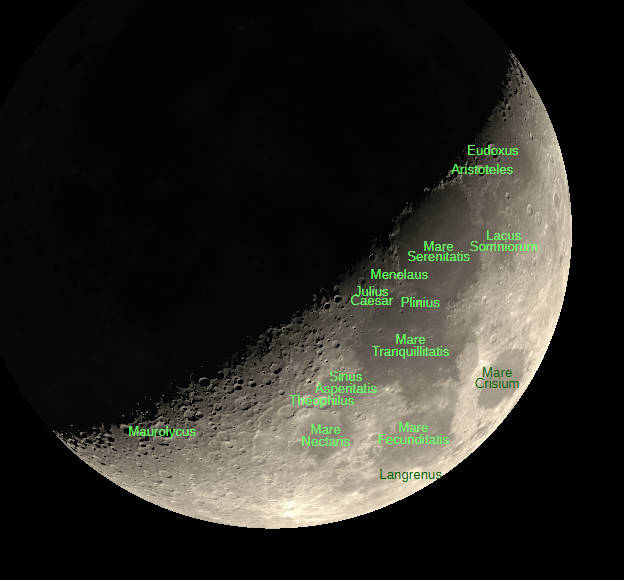
This is Ephemeris for Friday, November 21st. Today the Sun will be up for 9 hours and 21 minutes, setting at 5:09, and it will rise tomorrow at 7:49. The Moon, 1 day past new, will set at 5:36 this evening.
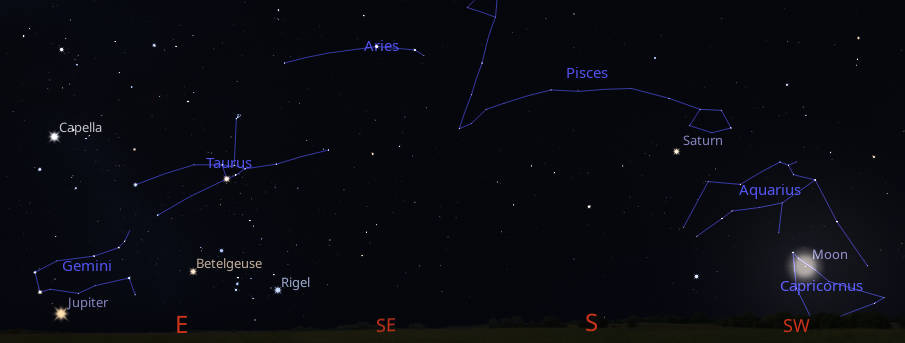
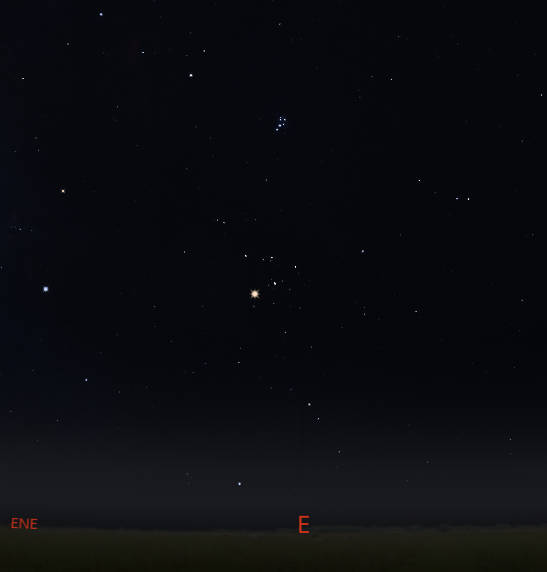
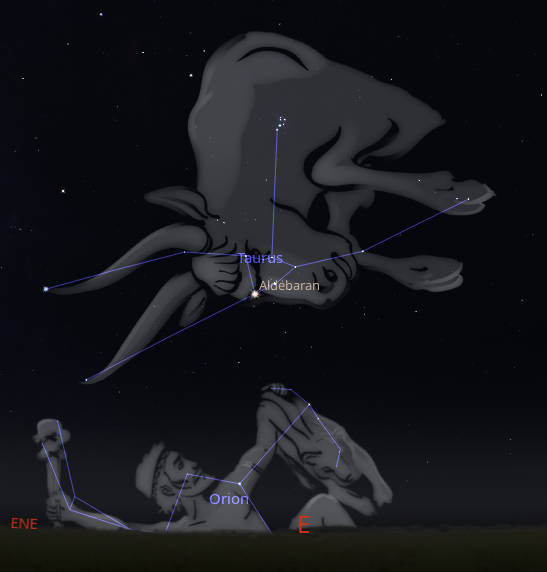
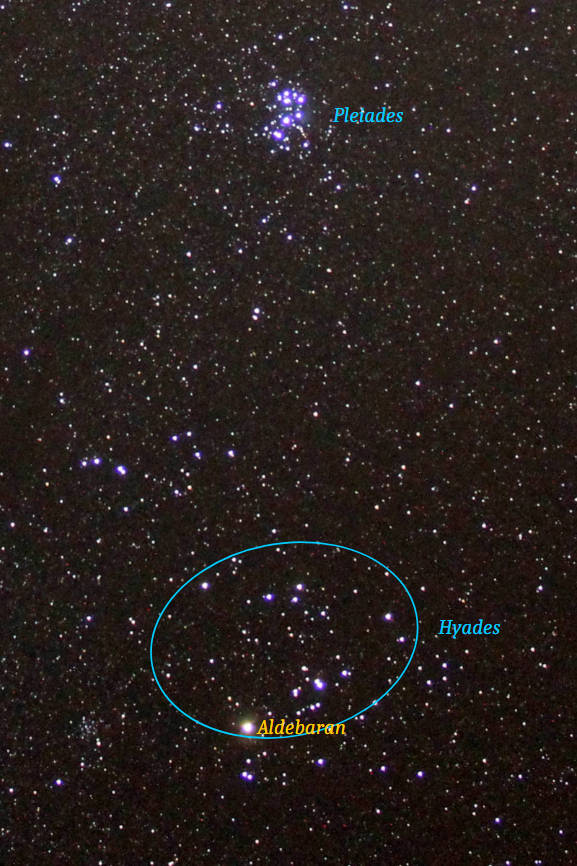
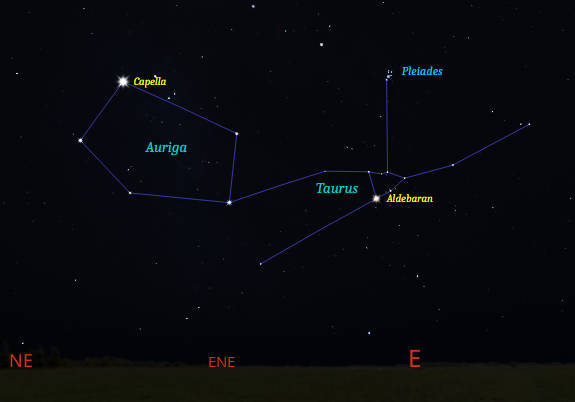
Low in the east at 8 this evening and below the beautiful Pleiades star cluster is Taurus the bull. His face is a letter V shape of stars lying on its side, the star cluster Hyades, which in Greek Mythology were the half-sisters of the Pleiades, with the bright orange-red star Aldebaran at one tip of the V as its angry bloodshot eye. Aldebaran is actually about halfway between us and the cluster. The Pleiades star cluster is in his shoulder. Taurus is seen charging downward at that hour, the rising constellation of Orion. Taurus in Greek mythology was the form the god Zeus assumed when he carried off the maiden Europa. Europa’s still with him as a moon orbiting Zeus’ Roman counterpart, the planet Jupiter.
The astronomical event times given in this blog are for the Traverse City/Interlochen area of Michigan (Lat 44.7° N, Long 85.7° W; EDT, UT – 4 hours) unless stated otherwise. Times will be different for other locations.
Addendum
Ephemeris: 11/19/2025 – Taking our weekly look at the whereabouts of the naked-eye planets
This is Ephemeris for Wednesday, November 19th. Today the Sun will be up for 9 hours and 25 minutes, setting at 5:10, and it will rise tomorrow at 7:46. The Moon, 1 day before new, will rise at 8:28 tomorrow morning.
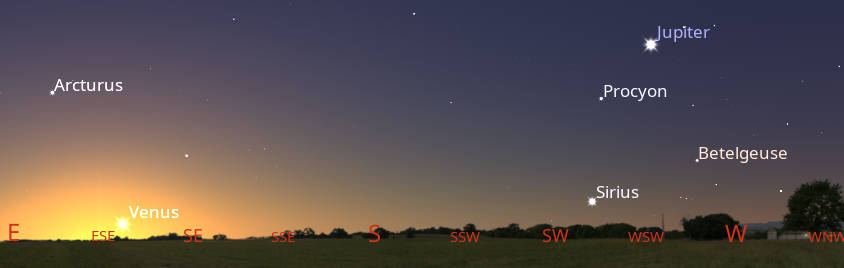
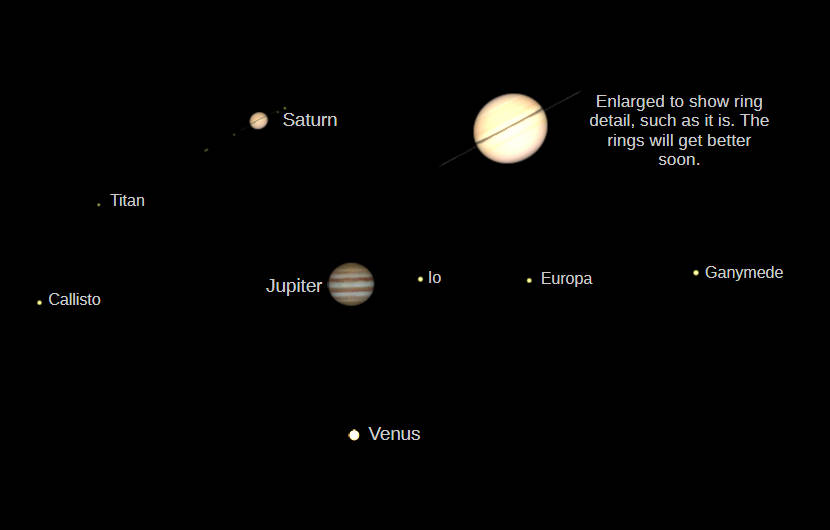
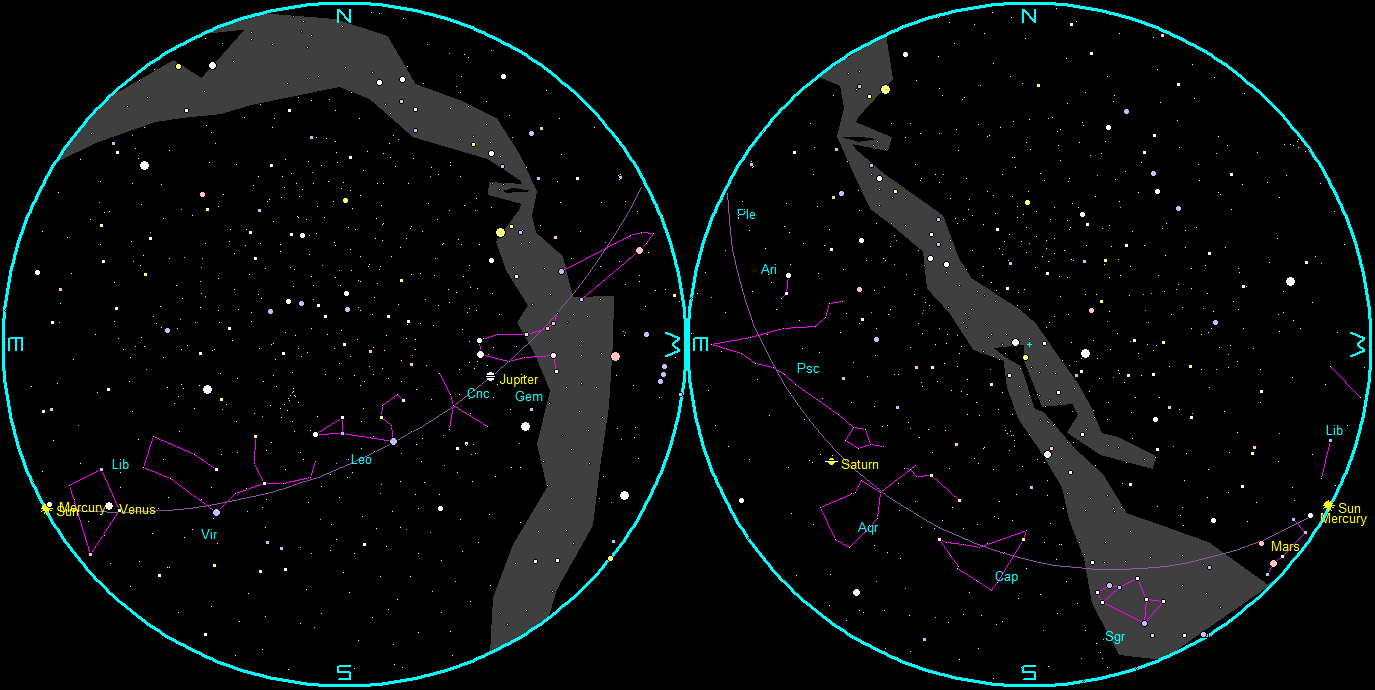
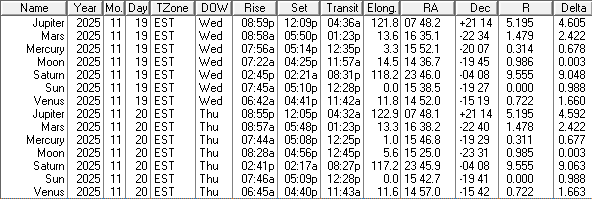
Let’s take our weekly look at the whereabouts of the naked-eye planets. Saturn is the brightest star like object in the southeastern sky as soon as it gets dark. In a telescope Saturn sports a very thin ring, 4/10ths of a degree from being edge on. In 4 days the rings will slowly start to open up. Normally, I’d say that Saturn’s rings are easy to see in a telescope. Currently, the rings appear extremely thin and can be difficult to pick up. Jupiter will rise at 8:58 PM in the east-northeast. By 6:30 AM, it will appear high in the southwest, near the stars of Gemini, with Orion and the other bright stars of winter in the southwest. Venus, which will rise at 6:48 AM will be difficult to spot in the morning twilight.
The astronomical event times given in this blog are for the Traverse City/Interlochen area of Michigan (Lat 44.7° N, Long 85.7° W; EDT, UT – 4 hours) unless stated otherwise. Times will be different for other locations.
Addendum
Ephemeris: 11/18/2025 – What other cultures see in the Pleiades
This is Ephemeris for Tuesday, November 18th. Today the Sun will be up for 9 hours and 27 minutes, setting at 5:11, and it will rise tomorrow at 7:45. The Moon, 2 days before new, will rise at 7:22 tomorrow morning.
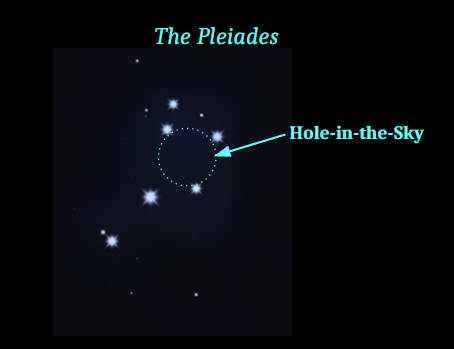
Let’s look at how some other cultures saw the Pleiades, the star cluster that is seen in the eastern sky these evenings. To the Anishinaabe native peoples around here, the Pleiades is the “Hole in the Sky” or the seven stones that are heated for the sweat lodge ceremony. To the Kiowa, these were sisters who were whisked up into the sky from the top of Devil’s Tower in Wyoming, where they were threatened by a huge bear. An Iroquoian legend has seven daughters who danced all day and were drawn into the sky, along with a black bear who danced with them. One daughter heard her mother’s call and fell back down to the Earth. In Norse mythology, these were the goddess Freya’s hens.
The astronomical event times given in this blog are for the Traverse City/Interlochen area of Michigan (Lat 44.7° N, Long 85.7° W; EDT, UT – 4 hours) unless stated otherwise. Times will be different for other locations.
Addendum
Ephemeris: 11/17/2025 – More about the Pleiades
This is Bob Moler with Ephemeris for Monday, November 17th. Today the Sun will be up for 9 hours and 29 minutes, setting at 5:12, and it will rise tomorrow at 7:44. The Moon, 3 days before new, will rise at 6:16 tomorrow morning.
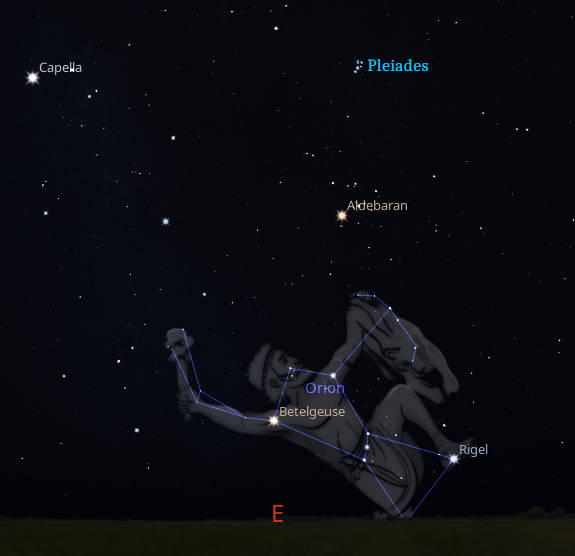
Around 8 in the evening the marvelous small star group called the Pleiades, or Seven Sisters will be in the eastern sky. Most people can see six stars, but they’re called the Seven Sisters, so the story has come up about the Lost Pleiad. It was said that her star was dimmed because she married a mere mortal. In Greek mythology the Pleiades were the daughters of the god Atlas and Pleione. By 9 PM the hunter Orion is rising in the east to chase the Pleiades across the sky until dawn. The word Pleiades is related to the Greek word for sail, and in ancient times the sailing season in the Mediterranean Sea started with the heliacal * rising of the Pleiades at dawn in mid-spring.
The astronomical event times given in this blog are for the Traverse City/Interlochen area of Michigan (Lat 44.7° N, Long 85.7° W; EDT, UT – 4 hours) unless stated otherwise. Times will be different for other locations.
* Heliacal Rising – The first appearance in the morning of a celestial body after disappearing in evening twilight.
Addendum
Ephemeris: 11/14/2025 – The Leonid meteor shower peaks Monday morning
This is Ephemeris for Friday, November 14th. Today the Sun will be up for 9 hours and 36 minutes, setting at 5:15, and it will rise tomorrow at 7:40. The Moon, 2 days past last quarter, will rise at 3:02 tomorrow morning.
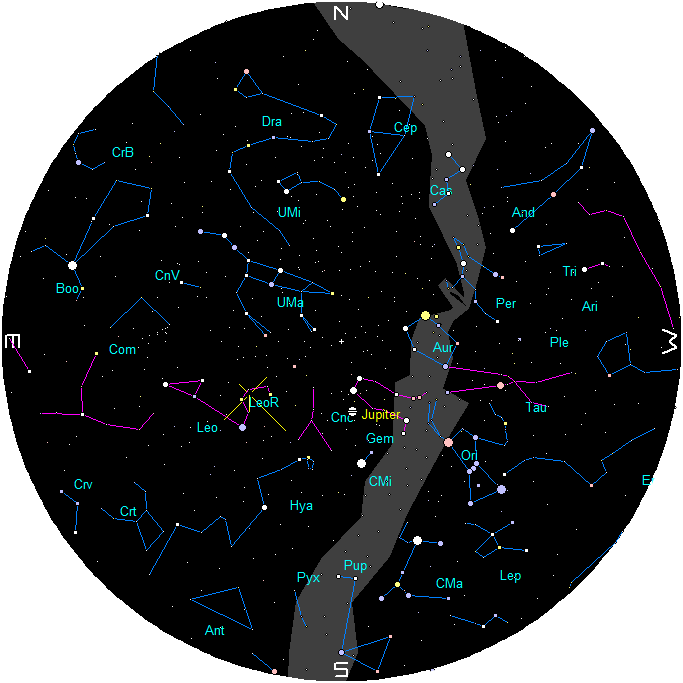
This coming Monday morning after midnight we’ll see the peak of the Leonid meteor shower. It is called the Leonids because the meteors appear to come from the head of Leo the lion, which will rise about midnight. This meteor shower is mediocre most years. However, every 33 or so years it can be spectacular with thousands of meteors per hour appearing in the sky for a short time. The meteoroid particles that produce the shower come from the comet 55P/Tempel-Tuttle which comes into the vicinity of the Sun in the inner solar system every approximately 33 years. The next peak year is predicted to be 2031, though it is expected to be not as active as recent peak years.
The astronomical event times given in this blog are for the Traverse City/Interlochen area of Michigan (Lat 44.7° N, Long 85.7° W; EDT, UT – 4 hours) unless stated otherwise. Times will be different for other locations.
Addendum
Ephemeris: 11/13/2025 – Looking at the Pleiades or Seven Sisters
This is Ephemeris for Thursday, November 13th. Today the Sun will be up for 9 hours and 38 minutes, setting at 5:16, and it will rise tomorrow at 7:38. The Moon, 1 day past last quarter, will rise at 1:56 tomorrow morning.
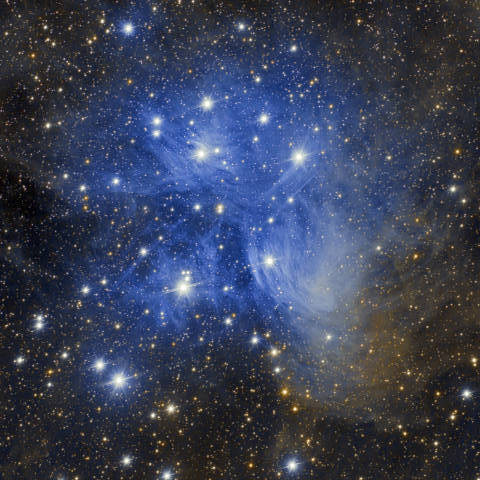
A marvelous member of the autumn skies can be found low in the east around 8 in the evening. It is the famous star cluster called the Pleiades or the Seven Sisters. I might also add the ‘Tiny Dipper’. Many people can spot a tiny dipper shape in its six or seven stars, and mistake it for the Little Dipper. With binoculars, one can see over a hundred stars that appear, along with the dipper shape of the brightest. In photographs, the Pleiades actually illuminate wisps of the dust that surround them. In Greek mythology, the sisters were daughters of the god Atlas and Pleione. The most people can only see is six stars. The reason, according to mythology, is that one of the sisters married a mortal, dimming her star.
The astronomical event times given in this blog are for the Traverse City/Interlochen area of Michigan (Lat 44.7° N, Long 85.7° W; EDT, UT – 4 hours) unless stated otherwise. Times will be different for other locations.
Addendum
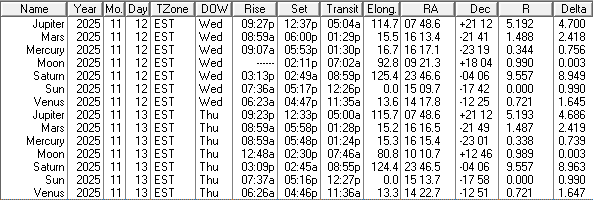
Ephemeris: 11/12/2025 – Taking our weekly look at the whereabouts of the naked-eye planets
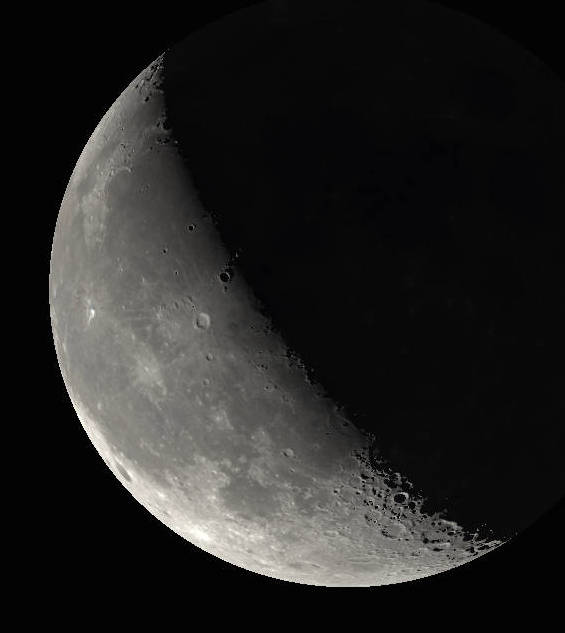
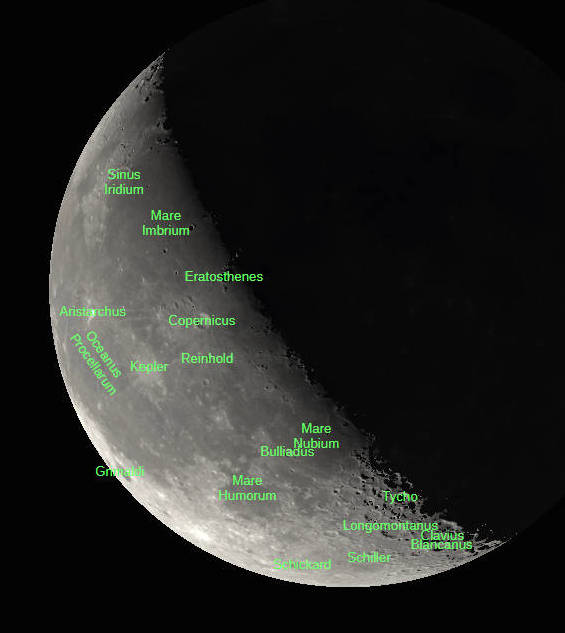
This is Bob Moler with Ephemeris for Wednesday, November 12th. Today the Sun will be up for 9 hours and 41 minutes, setting at 5:17, and it will rise tomorrow at 7:37. The Moon, at last quarter today, will rise at 12:48 tomorrow morning.
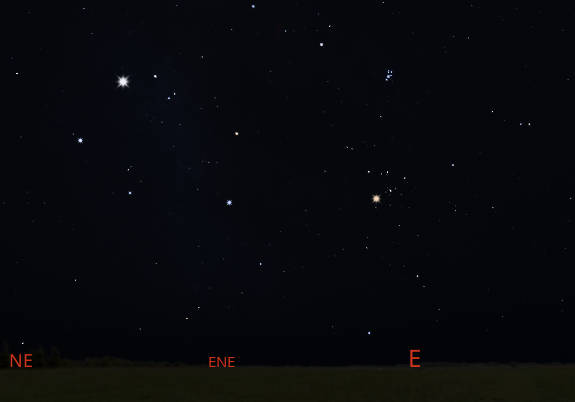
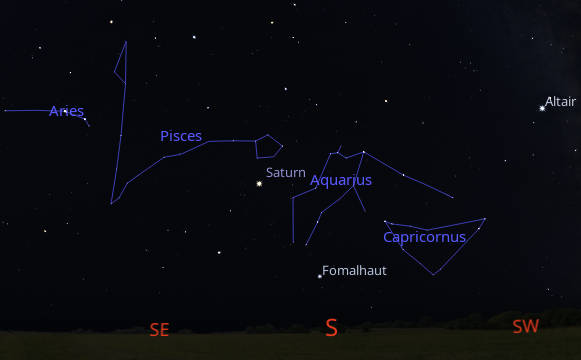
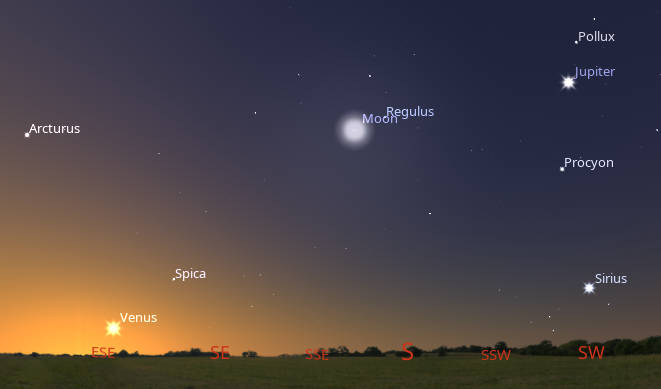
Let’s take our weekly look at the whereabouts of the naked-eye planets. Saturn is the brightest star like object in the east southeastern sky as soon as it gets dark. In a telescope Saturn sports a very thin ring, 4/10ths of a degree from being edge on. Normally, I’d say that Saturn’s rings are easy to see in a telescope. Currently, the rings appear extremely thin and can be difficult to pick up. Jupiter will rise at 9:27 PM in the east-northeast. By 6:30 AM, it will appear high in the southwest, below the stars of Gemini, with Orion and the other bright stars of winter in the southwest. Venus, which will rise at 6:26 AM will be difficult to spot in the morning twilight.
The astronomical event times given in this blog are for the Traverse City/Interlochen area of Michigan (Lat 44.7° N, Long 85.7° W; EDT, UT – 4 hours) unless stated otherwise. Times will be different for other locations.
Addendum
 Bob Moler's Ephemeris Blog