Archive
Ephemeris: 12/21/2023 – Winter comes late this evening
This is Bob Moler with Ephemeris for Thursday, December 21st. Today the Sun will be up for 8 hours and 48 minutes, setting at 5:04, and it will rise tomorrow at 8:17. The Moon, 2 days past first quarter, will set at 3:37 tomorrow morning.
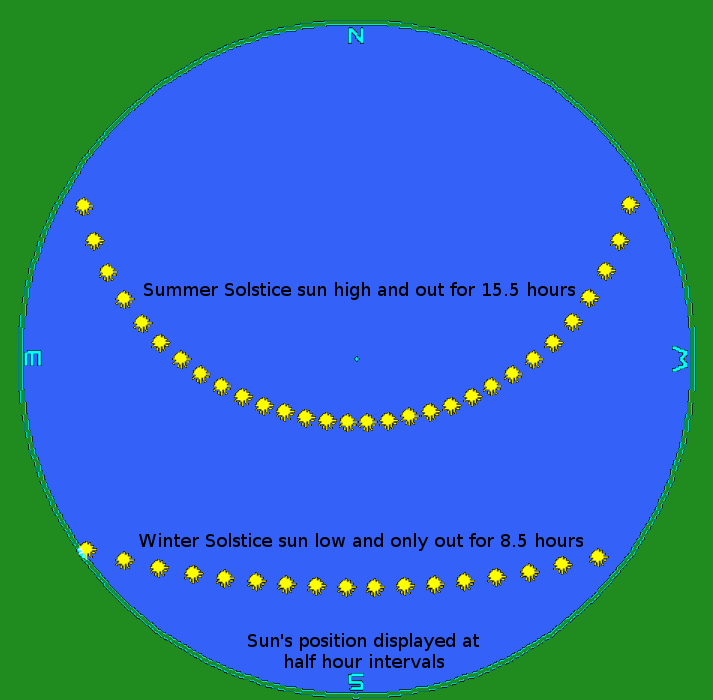
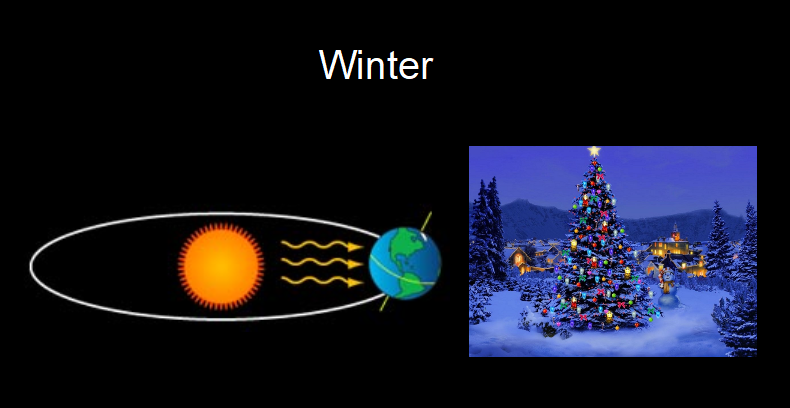
Today is mostly the last day of Fall, since the moment of solstice will arrive at 10:28 pm (03:28 on the 22nd UTC). If you’re south of the equator this is the first day of summer. The Earth reaches a point in its orbit where its North Pole is tipped its furthest away from the Sun, and is in shadow in the middle of its six-month night. The Sun for us is up only 8 hours, 48 minutes, and to boot the Sun only rises 22 degrees above the horizon giving us the least amount of energy of any day of the year. Why did the ancients celebrate this time of year? That’s because the Sun had slowed and stopped its drift southward and was beginning to come back higher in the sky. Spring and summer would eventually return!
The astronomical event times given are for the Traverse City/Interlochen area of Michigan (EST, UT –5 hours). They may be different for your location.
Addendum
Ephemeris: 09/25/2023 – Now that autumn has set in, what does that mean?
This is Bob Moler with Ephemeris for Monday, September 25th. Today the Sun will be up for 12 hours and 1 minute, setting at 7:34, and it will rise tomorrow at 7:34. The Moon, 3 days past first quarter, will set at 3:34 tomorrow morning.
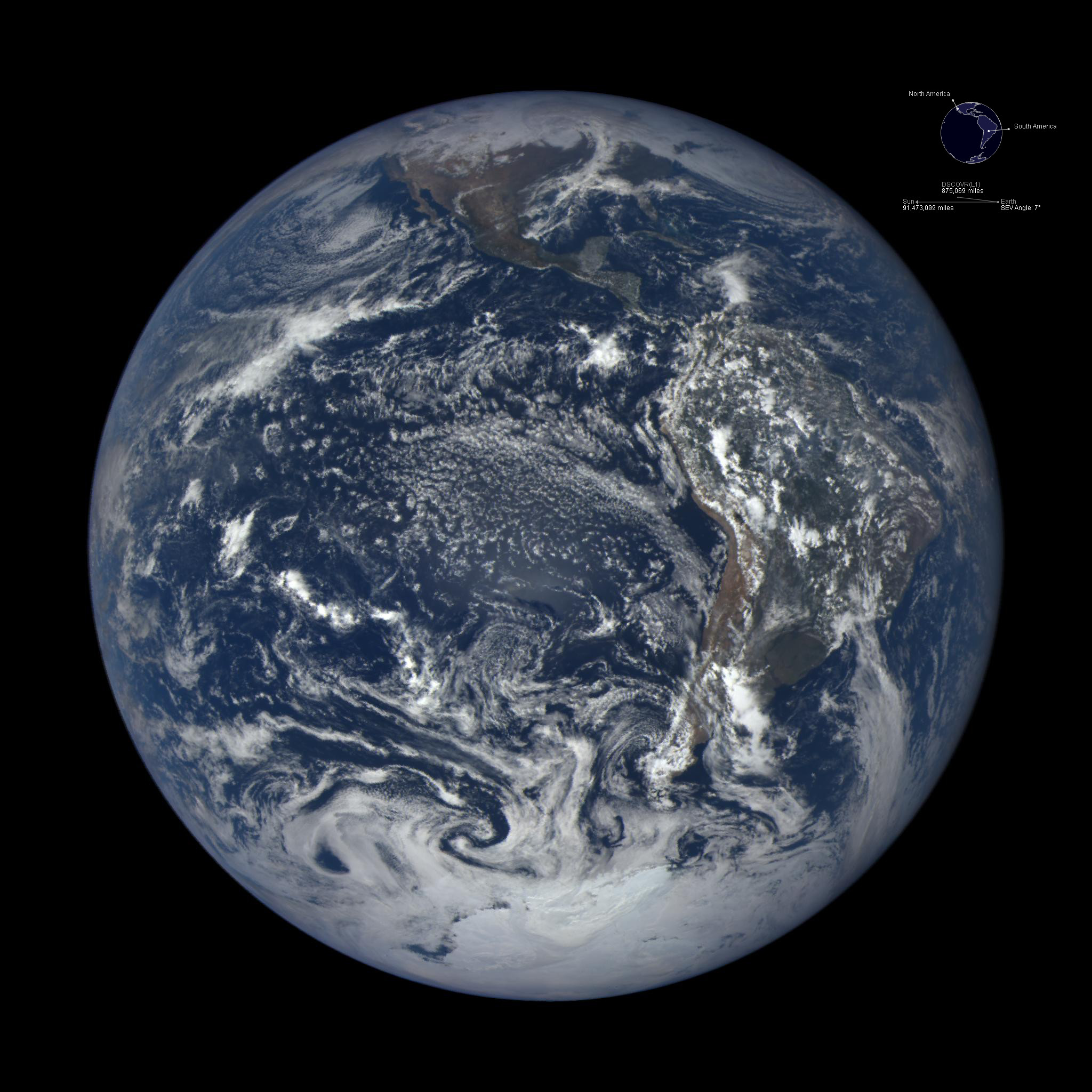
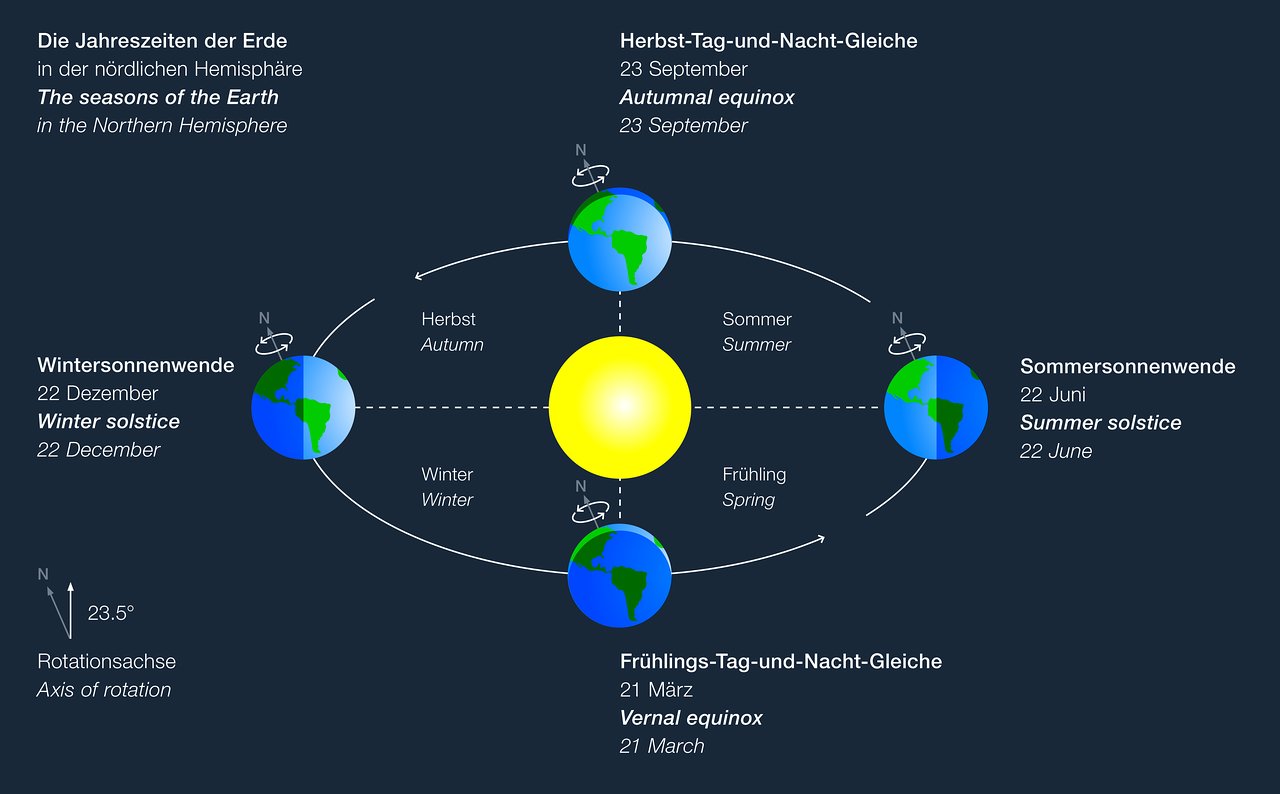
Now that autumn has set in, what does that mean? The latitude on the Earth where the Sun passes overhead is now south of the equator, and will stay south of the equator until March 19th, our time, next year. The North Pole of the Earth is experiencing a prolonged sunset, starting six months of night, while the South Pole is enjoying an equally long sunrise, for their six months of daylight. The Earth’s seasons are not caused by our distance from the Sun. We’re closer to the Sun now than we were in early July, and will continue to move closer to the Sun until early January. The Earth’s average distance of 93 million miles only varies by a million and a half miles either way. It’s the Earth’s axial tilt that causes the seasons.
The astronomical event times given are for the Traverse City/Interlochen area of Michigan (EDT, UT –4 hours). They may be different for your location.
Addendum
07/06/2023 – Ephemeris – Today the Earth is farther from the Sun than anytime this year
This is Ephemeris for Thursday, July 6th. Today the Sun will be up for 15 hours and 26 minutes, setting at 9:30, and it will rise tomorrow at 6:04. The Moon, halfway from full to last quarter, will rise at 12:16 tomorrow morning.
Today, the Sun is at its farthest distance from the Earth. It’s called aphelion. The exact time actually occurred at 4:59 this morning at a distance of 94 and a half million miles away. Because of the gravitational pull of the Moon and planets on the Earth, especially Jupiter and Venus and gravitational pull of the planets, especially Jupiter on the Sun, the aphelion and perihelion, the closest date in January don’t occur on the same date or same distance every year. The date wanders by a day or two each year. The entire distance variation of the Earth from the Sun is plus or minus 1.5 million miles (2.4 million kilometers) over the year, makes summer the longest season by a few days because the Earth moves slower when farther from the Sun, than when it is nearer.
The astronomical event times given are for the Traverse City/Interlochen area of Michigan (EDT, UT –4 hours). They may be different for your location.
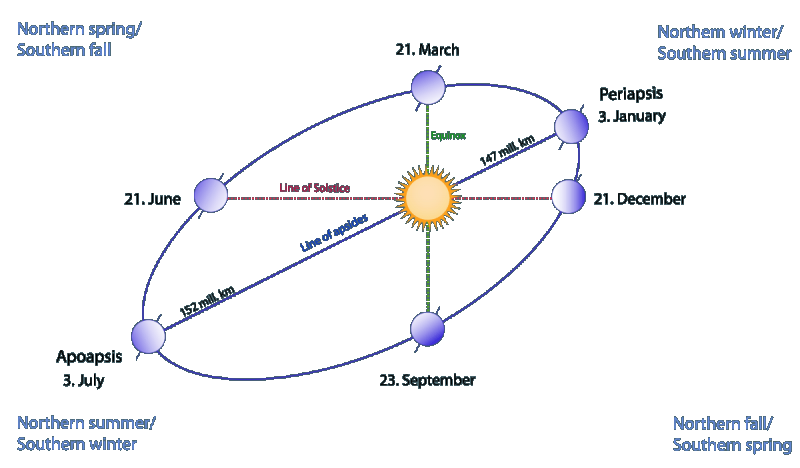
Note: Apoapsis and Periapsis are generic terms for the farthest and nearest points in an orbit to the central body. For a body orbiting the Sun, it’s aphelion and perihelion. For a satellite of the Earth, it’s apogee and perigee.
06/20/2023 – Ephemeris – Summer starts tomorrow!
This is Bob Moler with Ephemeris for Tuesday, June 20th. Today the Sun will be up for 15 hours and 34 minutes, setting at 9:31, and it will rise tomorrow at 5:57. The Moon, 2 days past new, will set at 11:58 this evening.
Tomorrow is the day of the longest daylight hours, the summer solstice. The exact time of the summer solstice will occur at 10:58 am. One really can’t tell where the Sun is against the constellations and its eastward motion along the ecliptic because when the Sun’s out the sky is blue and the stars are invisible. However the ancients could notice that the Sun changed its height in the South over the year and the summer solstice was the time that the Sun was highest in the sky. The word solstice means “Sun standstill”. All through winter and spring the Sun has been moving northward in the sky at local noon. This has slowed down and tomorrow it will stop. After that it will begin to descend in the South at local noon until the winter solstice on December 21st.
The astronomical event times given are for the Traverse City/Interlochen area of Michigan (EDT, UT –4 hours). They may be different for your location.
Addendum
03/21/2023 – Ephemeris Extra – Spring has sprung without me
Being in the hospital and now in inpatient rehab one loses a sense of time. So the vernal equinox snuck by me unnoticed. My view of the outside world is another part of the hospital, a part of the HVAC system, and a piece of sky.
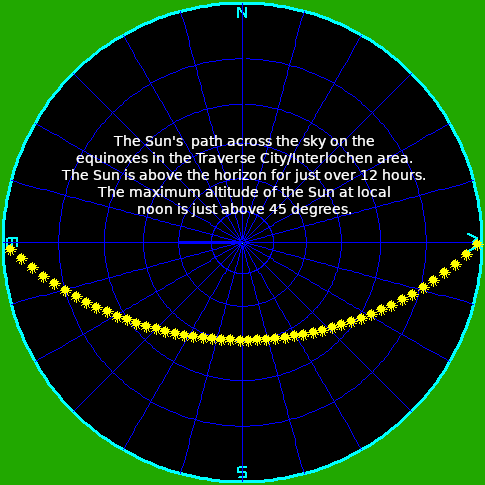
Yesterday, the Sun passed over the Earth’s equator, heading northward. The Sun is gradually setting at the South Pole and rising at the North Pole. Folks like me who live in the Northern Hemisphere are experiencing longer daylight than those south of the equator, who are beginning autumn. The daylight hours will increase daily until June 21st, the summer solstice. In the Interlochen/Traverse City area, that will be 15 hours and 34 minutes.
The cause of the Earth’s seasons is not our varying distance from the Sun in our eliptical orbit of the Sun of 93 million plus or minus a million and a half miles.By the way, the Earth is currently moving away from the Sun. It will be farthest from the Sun around July 4th or 5th.
Our perception of the advance of spring, besides the gradully warming temperatures and increasing daylight hours, will be the height of the Sun’s path in the sky, and the position of the Sun’s rise and set points on the horizon. All these annual changes are angles having to do with one’s latitude (an angle), Earth’s position in orbit (an angle), and the tilt of the Earth’s axis to it’s orbit (more angles).
Bob
02/06/2023 – Ephemeris – The Persephone Period is ending
This is Ephemeris for Monday, February 6th. Today the Sun will be up for 10 hours and 2 minutes, setting at 5:58, and it will rise tomorrow at 7:54. The Moon, 1 day past full, will rise at 6:53 this evening.
All over the Interlochen Public Radio broadcasting region, the Persephone period is ending. What’s the Persephone period? The Persephone period is a time when the daylight hours drop below 10 hours a day. Around here, this would affect natural lighted greenhouses, since our world is still covered in snow. This is because plants don’t grow very well with less than 10 hours of sunlight. It is named for the Greek goddess Persephone, who is goddess of crops that are sewn. She was kidnapped by her uncle Hades, the god of the Underworld, and was made his bride and became Queen of the Underworld. However, every time she went down to the underworld all the plants on the surface of the earth died, so Zeus made an arrangement with Hades that she could only be in the underworld for part of the year.
The astronomical event times given are for the Traverse City/Interlochen area of Michigan (EST, UT –5 hours). They may be different for your location.
Addendum
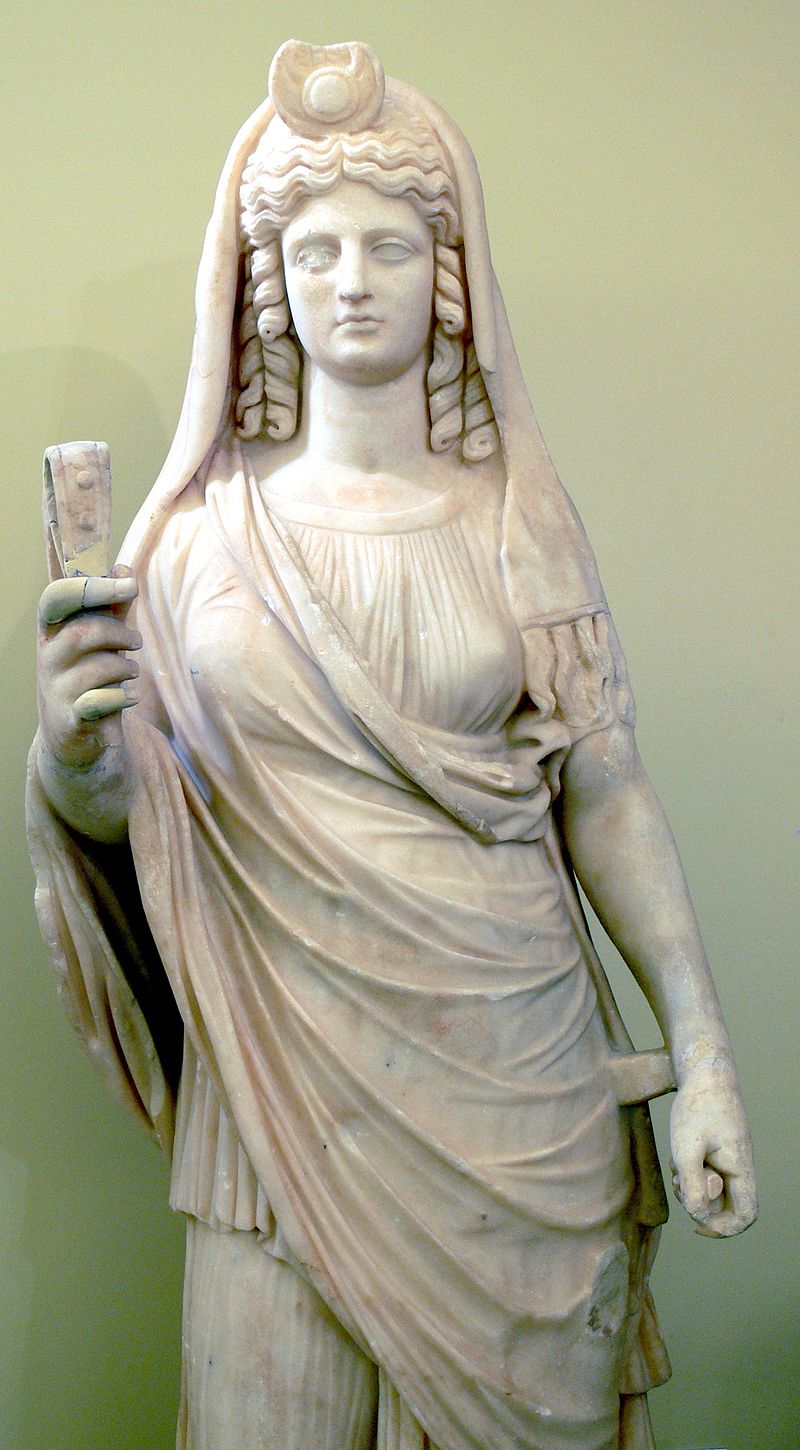
Statue of Persephone-Isis at the Heraklion Archaeological Museum, Crete. Credit: Wolfgang Sauber.
In the Interlochen/ Traverse City area, the Persephone period runs from about November 5th to about February 6th. Of course, we make up for it in late spring and early summer with up to 15 1/2 hours of daylight near the summer solstice.
01/02/2023 – Ephemeris – The Earth is actually closest to the Sun this week
This is Ephemeris for Monday, January 2nd 2023. The Sun will rise at 8:20, the latest of the year. It’ll be up for 8 hours and 53 minutes, setting at 5:13. The Moon, halfway from first quarter to full, will set at 5:36 tomorrow morning.
We have a fun week ahead. The first week of the year is an active one in astronomy. Not all the events are visible, though some could, if it weren’t cloudy, as it is so much this time of the year. But active nonetheless. Like Wednesday’s perihelion. A what? The date the Earth is closest to the Sun in its orbit. We’re a million and a half miles closer to the Sun than average. It’s a teensy bit hotter, which is more than offset by the Sun’s arc low in the sky, plus it’s up less than 9 hours. However, it does make winter the shortest season, because the Earth moves faster when closer to the Sun. This is Northern Michigan, so you probably don’t believe me. Get out a calendar and count the days. Winter has 89 days, while summer has 93.
The astronomical event times given are for the Traverse City/Interlochen area of Michigan (EST, UT –5 hours). They may be different for your location.
Addendum
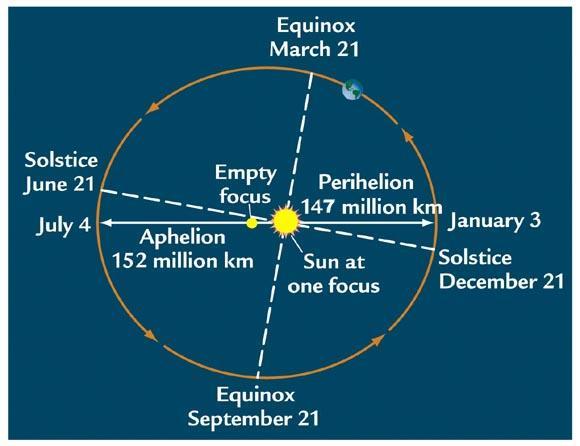
The Earth’s orbit, somewhat exaggerated, showing perihelion and the seasons. Credit “Starts with a Bang” blog by Ethan Siegel.
12/16/2022 – Ephemeris – The Anishinaabe constellation of Winter Maker announces the coming of winter
This is Ephemeris for Friday, December 16th. Today the Sun will be up for 8 hours and 49 minutes, setting at 5:03, and it will rise tomorrow at 8:14. The Moon, at last quarter today, will rise at 1:22 tomorrow morning. | The native peoples of the Great Lakes area are the Anishinaabe, composed of the Odawa or Ottawa, and Chippewa or Ojibwe tribes. One of their great constellations is the Winter Maker, whose central part we know as Orion. Instead of turning to face the charge of Taurus the bull, holds his arms outstretched to embrace all the winter stars. His rising in November foretells the coming of winter. His name in their Anishinaabemowin language means North Wind. Now that winter is almost here, he is moving to the southern part of the sky in the evening to reign over the brilliant stars of winter. The star we call Sirius, the brightest nighttime star, is called Gizhii’anung. Anung means “star”.
The astronomical event times given are for the Traverse City/Interlochen area of Michigan (EST, UT –5 hours). They may be different for your location.
Addendum
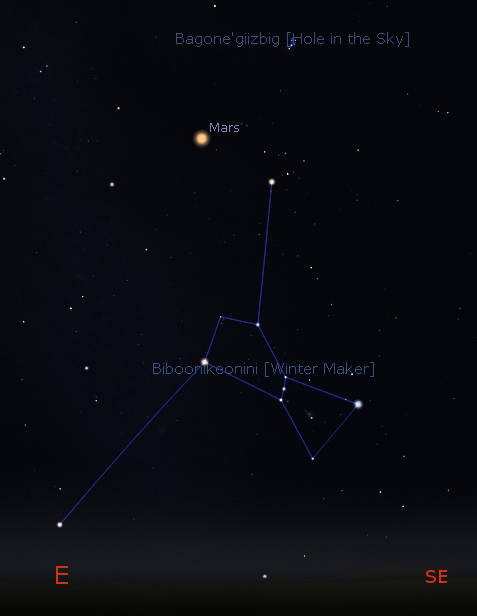
The Anishinaabe constellation of the Winter Maker, whose arms will encompass the rest of the winter stars, once they rise later in the evening. Also shown is the Hole in the Sky, which we know as the Pleiades.
12/08/2022 – Ephemeris – Tonight’s full-ish Moon is near where the June solstice Sun was
This is Ephemeris for Thursday, December 8th. Today the Sun will be up for 8 hours and 54 minutes, setting at 5:02, and it will rise tomorrow at 8:08. The Moon, 1 day past full, will rise at 5:10 this evening.
The bright Moon near full in December rises very high in the south around midnight to 1 am. It is near where the Sun is at the summer solstice. Actually, tonight it is to the lower right of the constellation of Gemini, and to give a topical reference. Tonight, the Moon appears as a soccer ball being kicked by Castor, one of the twins. It’s right off the toe of his foot. In June, the Sun and Full Moon’s positions are reversed. The Sun rises very high in the southern sky at local noon, while the full moon stays low in the south. Or Moon is odd in that respect, Most large satellites of the other planets orbit over their primary’s equator. Our Moon’s orbit is aligned to about 5 degrees off Earth’s own orbit of the Sun, which is angled at 23 and a half degrees from Earth’s equator.
The astronomical event times given are for the Traverse City/Interlochen area of Michigan (EST, UT –5 hours). They may be different for your location.
Addendum
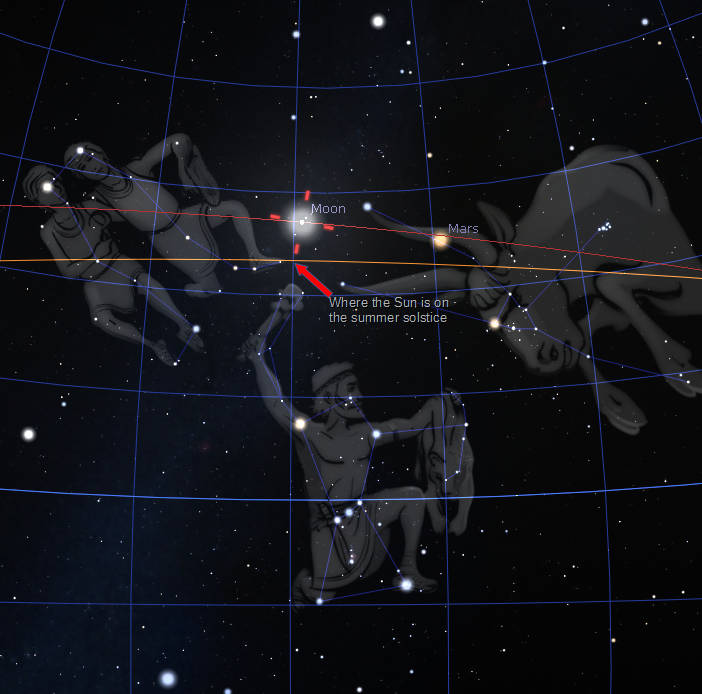
The Moon near the summer solstice point overnight tonight at 1:15 am (the 9th). The sky is overlaid with the equatorial grid. The bright blue line that runs just above Orion’s belt is the celestial equator. The declination lines match Earth’s latitude lines are 10 degrees apart. The vertical blue lines are right ascension lines, like earthly longitude lines, and are 15 degrees apart. Each one represents one hour. The orange line is the ecliptic, the path of the Sun in the sky, also the plane of the Earth’s orbit. The red line is the Moon’s orbit, which is inclined by about 5 degrees to the ecliptic. Click on the image to enlarge it. Created using Stellarium and LibreOffice Draw.
11/03/2022 – Ephemeris – The Persephone Period
This is Ephemeris for Thursday, November 3rd. The Sun will rise at 8:23. It’ll be up for 10 hours and 5 minutes, setting at 6:28. The Moon, 2 days past first quarter, will set at 3:53 tomorrow morning.
The Moon, tonight, is spending its second night between Saturn and Jupiter. Tomorrow night will find it just above Jupiter. Down in our area, the Persephone period is starting. I didn’t find out about this until recently. According to Greek myth, Persephone, daughter of Zeus and Demeter, was abducted by her uncle the god Hades to be made his queen of the underworld. When she was in the underworld, the crops died. An arrangement had to be made by her father Zeus, so she would spend part of the year above ground, so that crops would flourish, and part of the year below. When the daylight hours drop below 10 hours, which it is doing in our area now, we are entering the Persephone period, where there is too little sunlight for plants to thrive. This period will last until around February 5th. When daylight hours advance past 10 hours.
The astronomical event times given are for the Traverse City/Interlochen area of Michigan (EDT, UT – 4 hours). They may be different for your location.
Addendum
Statue of Persephone-Isis at the Heraklion Archaeological Museum, Crete. Credit: Wolfgang Sauber
Around here, in the Grand Traverse Region of Michigan, and indeed the whole state, the Persephone period generally starts after the first killing frost, though this year only the tenderest plants have succumbed to whatever frost there was so far at my place. Daytime temperatures this week have reached the high 60s, which is unusual. The end of the Persephone period comes way early for us. Snow could persist for another two and a half months.
 Bob Moler's Ephemeris Blog