10/23/2020 – Ephemeris – What is a Near Rectilinear Halo Orbit?
This is Ephemeris for Friday, October 23rd. Today the Sun will be up for 10 hours and 34 minutes, setting at 6:44, and it will rise tomorrow at 8:10. The Moon, at first quarter today, will set at 12:46 tomorrow morning.
When the astronauts of the Artemis program head for a landing on the Moon is as little as four years from now they will meet their lunar landing craft or Lunar Gateway space station with landing craft docked to it before they descend to the Moon. The orbit of the gateway and/or lander is an odd one. It’s called a near rectilinear halo orbit. And uses the motion and gravitational interaction of the Moon and Earth to create an orbit of the Moon which is nearly face-on to the Earth. The vehicles will never pass behind the Moon. The orbit will pass 1,900 miles (3,000 km) above the Moon’s north pole and out to 43,000 miles (70,000 km) above the south pole. It’s called a halo orbit, because as seen from the Earth it appears to trace a halo around the Moon.
The event times given are for the Traverse City/Interlochen area of Michigan. They may be different for your location.
Addendum
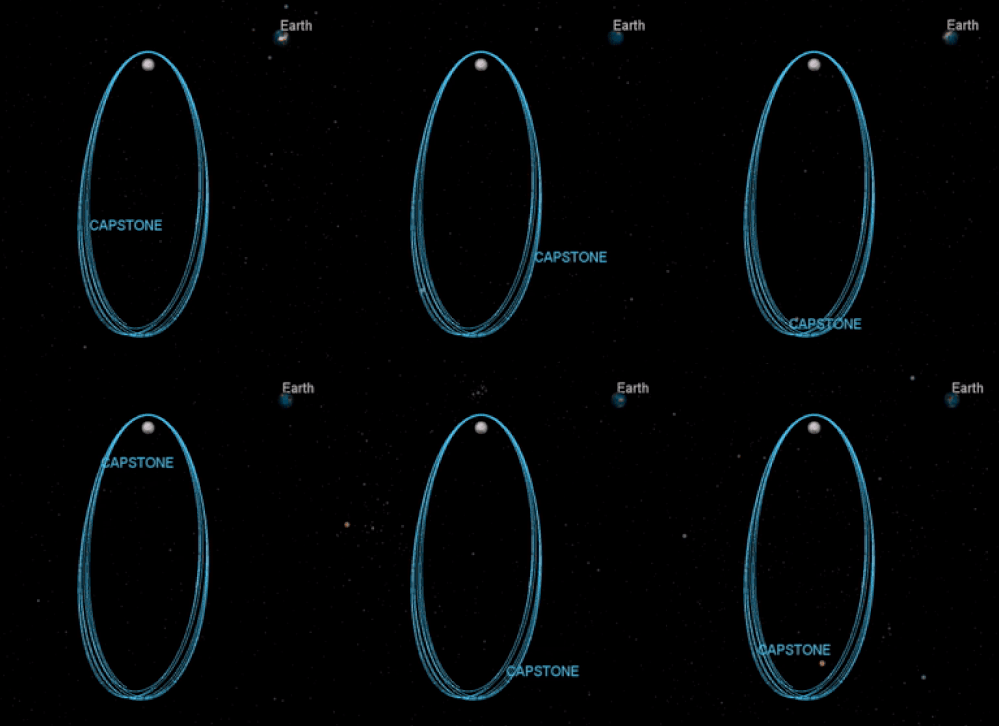
NASA CAPSTONE* pathfinder for gateway orbit is to be launched next year by Rocket Lab to prove out the near rectilinear orbit for the Lunar Gateway. The orbit will always be more or less face on to the Earth, so it and the lunar lander will be always be in contact with the Earth. Credit Advanced Space via Spaceflight Now.
* Yes, CAPSTONE is an acronym: Cislunarˆ Autonomous Positioning System Technology Operations and Navigation Experiment. Aren’t you glad you asked?
ˆ Cislunar: The volume of space between the Earth and Moon’s orbit.
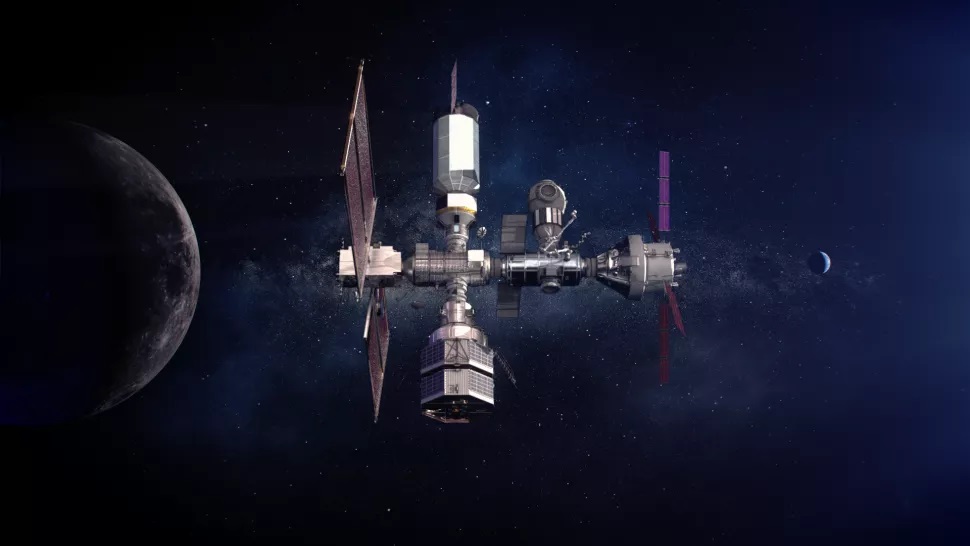
An artist’s rendition of the Lunar Gateway with the Orion spacecraft docked to it. Credit NASA.
For more information
https://www.space.com/nasa-capstone-cubesat-moon-gateway.html
10/22/2020 – Ephemeris – Tonight the Moon is hanging out with Jupiter and Saturn
This is Ephemeris for Thursday, October 22nd. Today the Sun will be up for 10 hours and 37 minutes, setting at 6:45, and it will rise tomorrow at 8:09. The Moon, 1 day before first quarter, will set at 11:41 this evening.
The fat crescent Moon and the planets Jupiter and Saturn will make a pretty triangle low in the southwestern sky tonight. Jupiter has been noticeably approaching Saturn the last few years. Their paths will appear to cross for us the evening of December 21st, the first day of winter. I won’t make any bets on it being clear that night, or any night around here in December. On the 21st of December they will be seen low in the southwest in twilight a third of the diameter of the Moon apart, and both be seen together in binoculars or low power telescope. The eye should resolve them, though Jupiter’s brightness compared to Saturn may make that difficult. Jupiter passes Saturn on average every 20 years.
The event times given are for the Traverse City/Interlochen area of Michigan. They may be different for your location.
Addendum
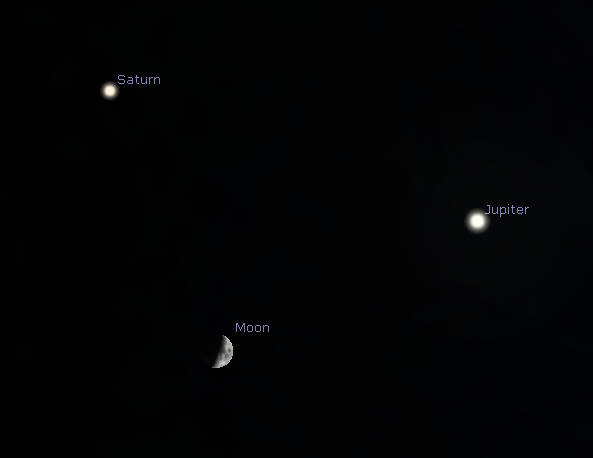
Jupiter, Saturn, and Moon triangle as it will appear in the south at 8 pm in the eastern US. In the western US the Moon will slide closer to Saturn at the same local time. Created using Stellarium.
10/21/2020 – Ephemeris – Let’s look for the naked-eye planets for this week
This is Bob Moler with Ephemeris for Wednesday, October 21st. Today the Sun will be up for 10 hours and 40 minutes, setting at 6:47, and it will rise tomorrow at 8:08. The Moon, 2 days before first quarter, will set at 10:39 this evening.
Let’s look for the naked-eye planets for this week. Jupiter and Saturn are both low in the south-southwestern sky at 9 pm. Jupiter is the very bright one. Left and a bit above it will be the somewhat dimmer Saturn. They are closing slowly, so they will cross paths on December 21st and be in the same telescope field that evening. Jupiter will set first tonight at 11:28 with Saturn following at midnight. Off in the east-southeast at 9 pm will be Mars. Since the it was closest 15 days ago its distance is slowly increasing to 40.1 million miles (64.6 million km) away. Brilliant Venus will rise at 4:55 am in the east as it retreats slowly toward the Sun. It’s brilliant and looks like a tiny featureless gibbous moon in telescopes.
The event times given are for the Traverse City/Interlochen area of Michigan. They may be different for your location.
Addendum
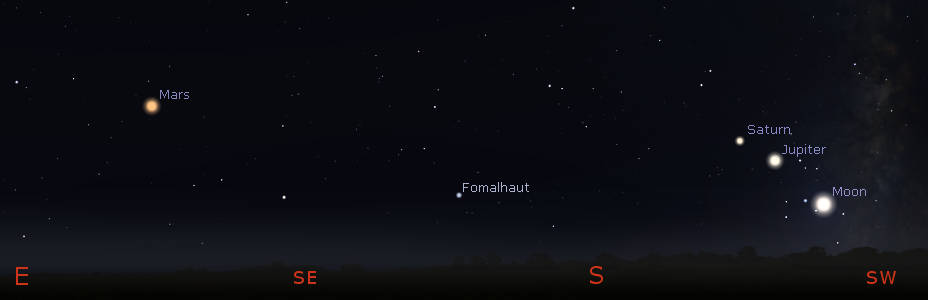
The evening planets and the Moon at 9 pm tonight, October 21, 2020. Click on the image to enlarge. Created using Stellarium.
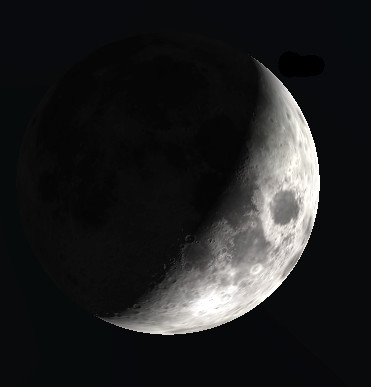
The waxing crescent Moon tonight October 21, 2020 as it might appear in binoculars or a low power telescope. Created using Stellarium.
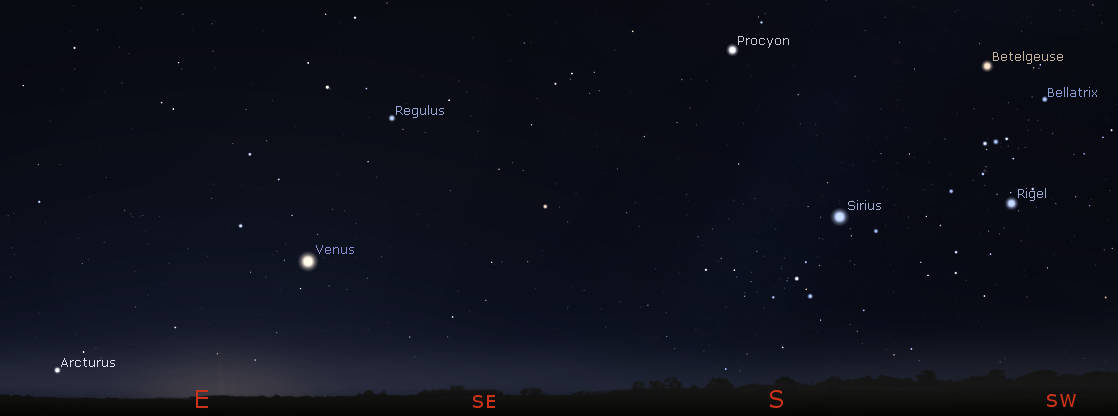
The morning planet Venus visible at 7 am October 22, 2020 with some of the stars of morning. Click on the image to enlarge. Created using Stellarium.
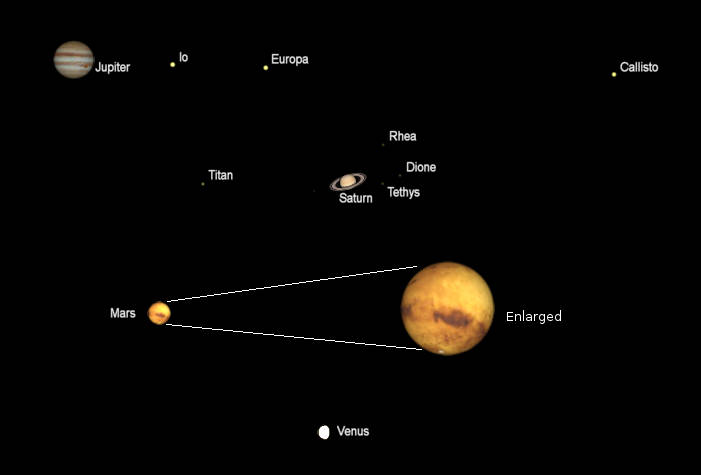
The planets as seen in a telescope (north up) with the same magnification for the night of October 21/22, 2020. Times of the display are: Jupiter and Saturn, 9 pm; Mars, 11 pm; Venus, 7 am. Apparent diameters: Jupiter, 38.01″; Saturn, 16.61″, rings, 38.69″. Mars, 21.57″, and Venus 13.75″. Mars also displays an enlargement showing surface detail. Mars was closest to the Earth this go-a-round on October 6. The ” symbol means seconds of arc (1/3600th of a degree.) Created using Cartes du Ciel (Sky Charts).
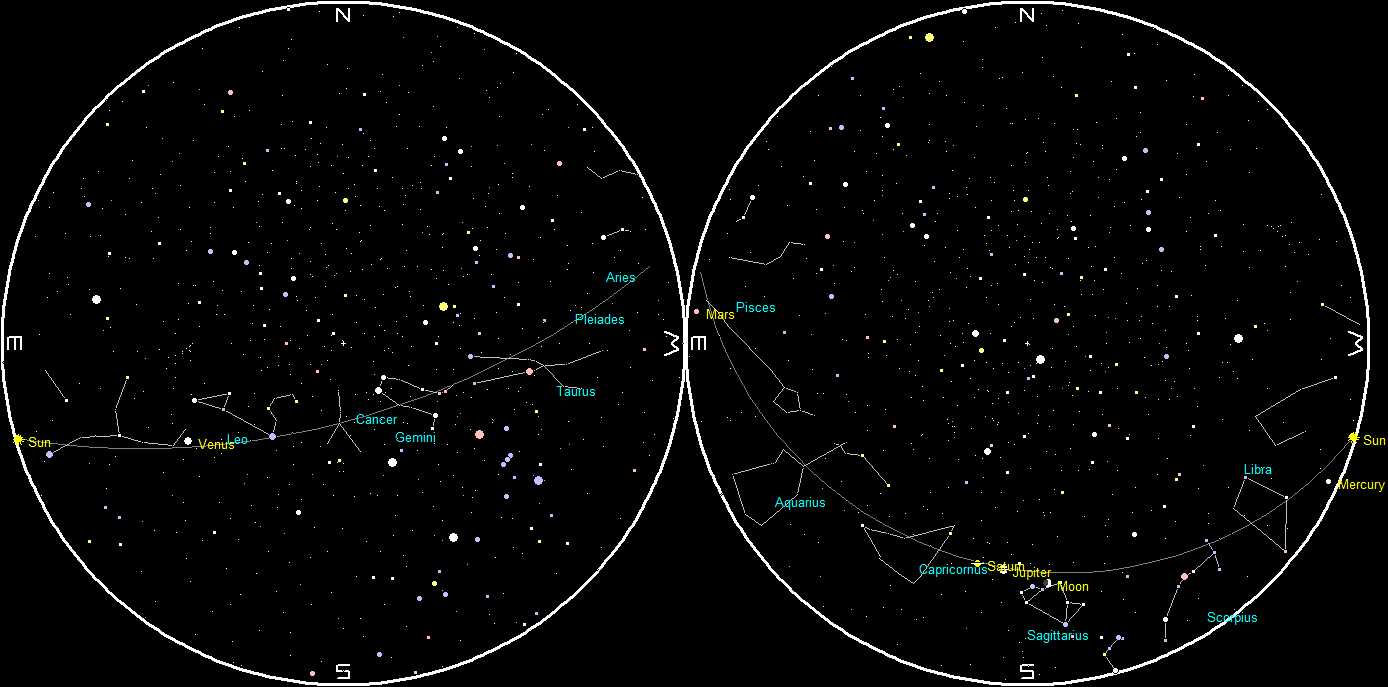
Planets and the Moon at sunset and sunrise of a single night starting with sunset on the right on October 21, 2020. The night ends on the left with sunrise on 22nd. Click on the image to enlarge. Created using my LookingUp program.
10/20/2020 – Ephemeris – The Orionid meteor shower reaches peak overnight
This is Bob Moler with Ephemeris for Tuesday, October 20th. Today the Sun will be up for 10 hours and 43 minutes, setting at 6:48, and it will rise tomorrow at 8:06. The Moon, 3 days before first quarter, will set at 9:44 this evening.
Halley’s Comet is back! (Pronounced Hall-ee’s) Well sorta. In the form of the Orionid meteor shower. Bits of Halley’s Comet from previous passes by the Earth’s orbit make their twice-yearly show in our skies as these bits collide with the Earth’s atmosphere. Halley’s orbit passes close to the Earth’s orbit at points where the Earth is around May 6th and again near October 21st. Light dust and ionized gas get blown back into the tail of the comet. Heavier particles will roughly following the comet’s orbit. The radiant, a spot above the constellation Orion and below Gemini from which they will seem to come will rise around 11 pm. So view them any time after that as their numbers will increase until morning twilight begins.
The event times given are for the Traverse City/Interlochen area of Michigan. They may be different for your location.
Addendum
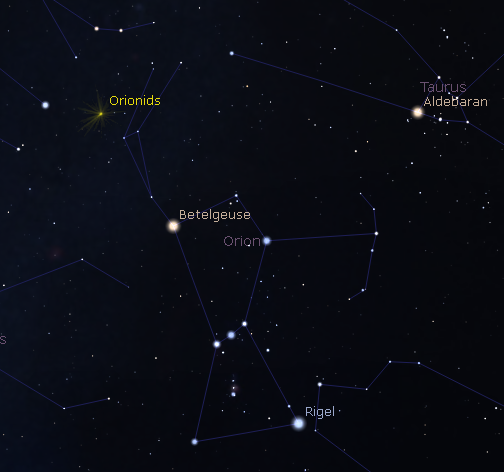
The Orionid meteor shower radiant at 5 a.m. October 21st. The radiant rises at 11 p.m., so the meteors will be visible from then into morning twilight. Despite the location of the radiant, the meteors will be seen all over the sky. However true Orionids can be traced back to the radiant point. Created using Stellarium.
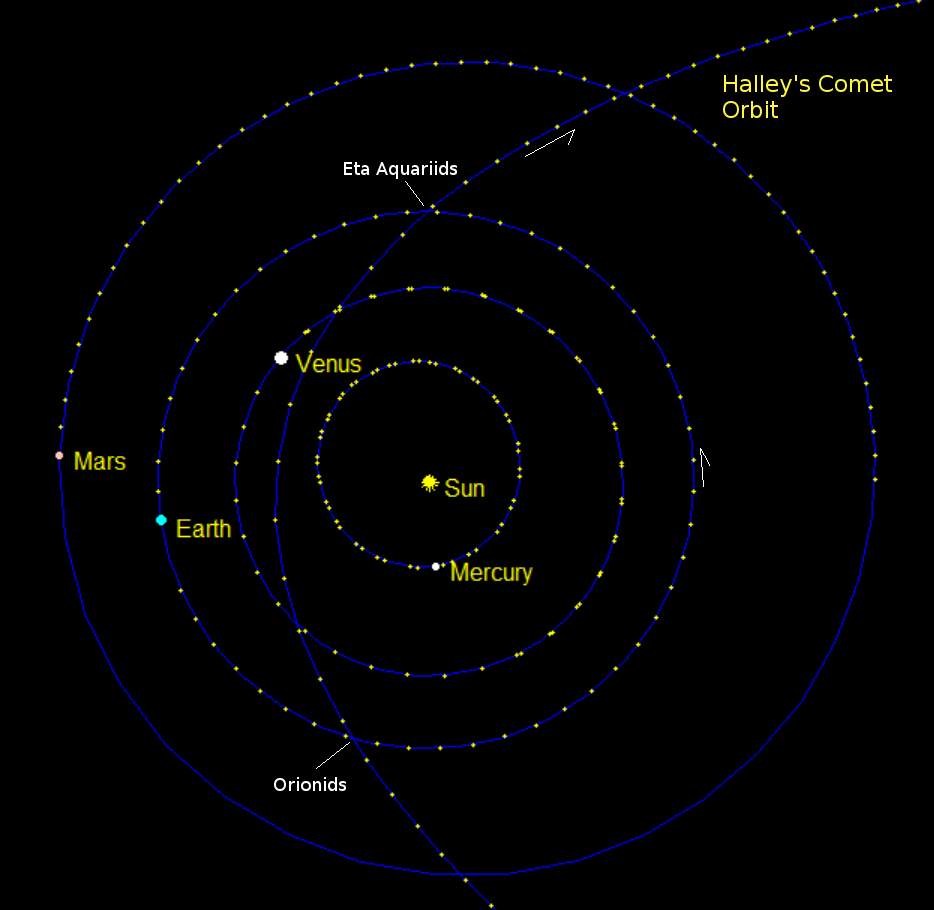
We get two meteor showers from Halley’s Comet. The Orionids, when Halley’s meteoroids are approaching the inner solar system, and the Eta Aquariids when they’re leaving. Created using my LookingUp program.
10/19/2020 – Ephemeris – This zodiacal constellation seems fishy
This is Bob Moler with Ephemeris for Monday, October 19th. Today the Sun will be up for 10 hours and 46 minutes, setting at 6:50, and it will rise tomorrow at 8:05. The Moon, 3 days past new, will set at 8:58 this evening.
High in the southeast at 9 p.m. are the four bright stars of the Great Square of Pegasus, the upside down flying horse. Lying along the left and bottom sides of the great square is the constellation of Pisces the fish, one of the 12 constellations of the Zodiac. Even though the constellation is called the fish, the fish themselves are not well represented in the stars. What can be traced in the stars is the rope, that’s tied to their tails, anchored at the extreme southeastern part of the constellation that is seen in the stars. It is near where the bright red planet Mars currently is. The right or western end of Pisces is the asterism, or informal constellation, of the Circlet. It’s the loop of 5 stars, the rope around the tail of one of the two fish.
The event times given are for the Traverse City/Interlochen area of Michigan. They may be different for your location.
Addendum
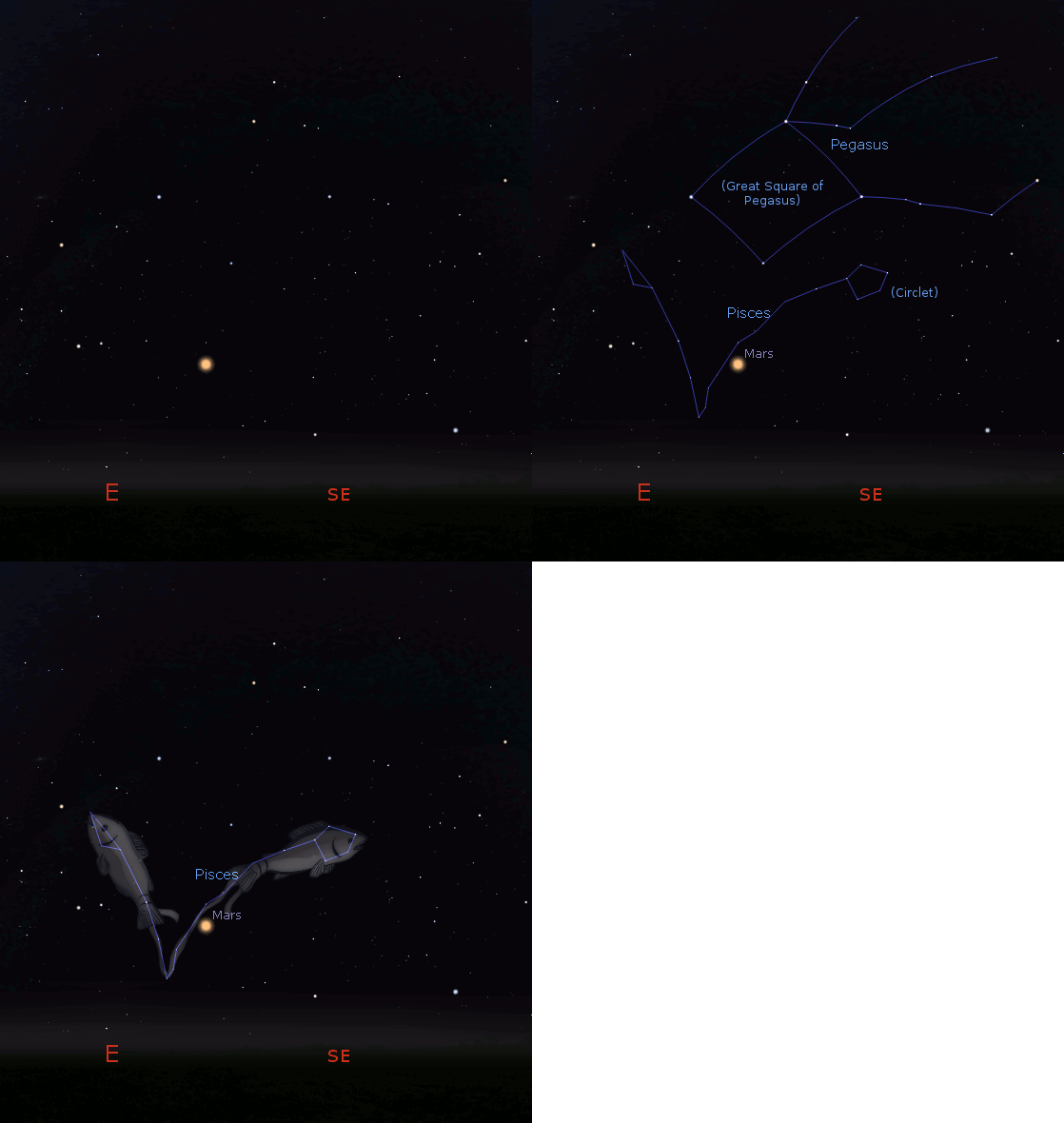
Pisces finder animation showing the Great Square of Pegasus as a way to find it, though this year bright Mars will show where it is. Created using Stellarium and GIMP.
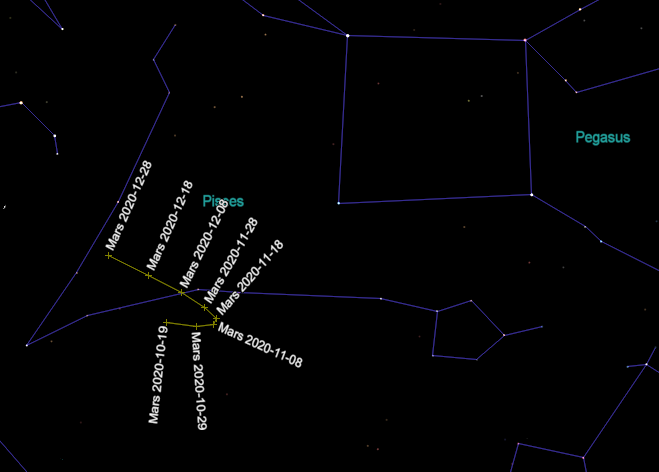
Mars’ apparent path for the rest of 2020 stays within Pisces. Mars doesn’t do a loop de loop as the ancients thought when they thought the Earth was motionless. It’s the effect of the Earth passing Mars in their orbits. Mars will stop its westward or retrograde motion around November 13th and resume its normal eastward motion. This view created using Cartes du Ciel (Sky Charts).
10/16/2020 – Ephemeris – There’s an online star party tonight if it’s clear
This is Bob Moler with Ephemeris for Friday, October 16th. Today the Sun will be up for 10 hours and 55 minutes, setting at 6:55, and it will rise tomorrow at 8:01. The Moon is new today, and won’t be visible.
Tonight the Sleeping Bear Dunes National Lakeshore and the Grand Traverse Astronomical Society may hold the another of the park’s 50th anniversary online star parties this evening starting around 8 pm via the Zoom app available for Android smart phones, iPhones and computers. Instructions for joining are on the society’s web site gtastro.org and the Sleeping Bear Dunes Facebook page. The images will be captured live from Northwestern Michigan College’s Rogers Observatory south of Traverse City. If it is cloudy, the event will be rescheduled for Saturday night at 8 pm. Another backup night will be Friday the 23rd. The images will be pretty much what is visible at the telescope eyepiece, and definitely not Hubble Space Telescope quality.
gtastro.org will announce cancellations and alternate plans as soon as the decision to cancel is made.
The event times given are for the Traverse City/Interlochen area of Michigan. They may be different for your location.
Nights of star parties past
These pictures were taken before the star parties actually began and most of the crowds showed up, when there was enough light for photography. We don’t take flash pictures during the events.

Sleeping Bear Dunes National Lakeshore’s 40th anniversary cake lighting at the Stop 3, Pierce Stocking Scenic Drive (Dunes Overlook) October 21, 2010. This was the GTAS’ second star party with the park in the society’s now a bit over 10 year collaboration with the park. Credit: Eileen Carlisle.

Star Party at the Sleeping Bear Dunes National Lakeshore, Thoreson Farm August 2013. Credit Eileen Carlisle.
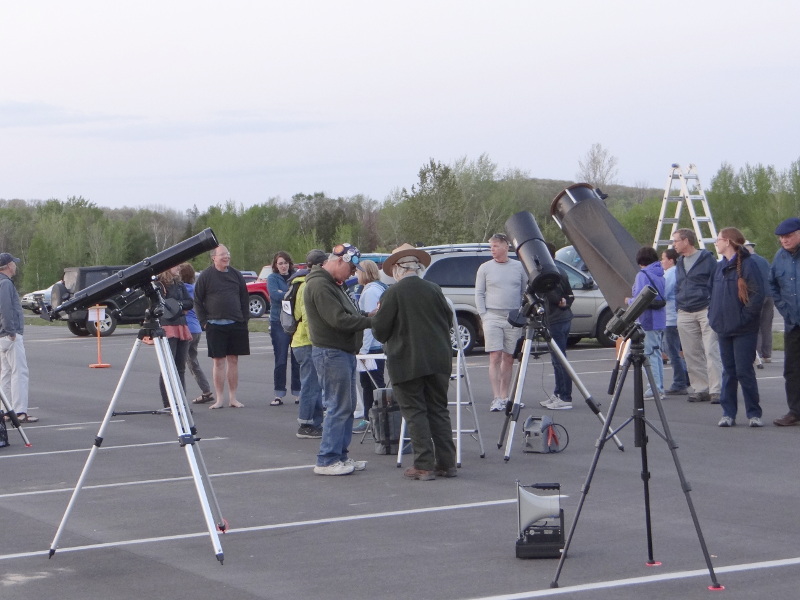
Preparing to start the May star party at the Dune Climb. A few of the telescopes are visible including the GTAS 25″ “Emmettron” telescope at the far right. Credit: Eileen Carlisle.

Star Party at the Dunes Overlook. Credit: Eileen Carlisle. We’ve since had to abandon hosting star parties here. A victim of our success, due to a lack of enough parking here and at Picnic Mountain next door.
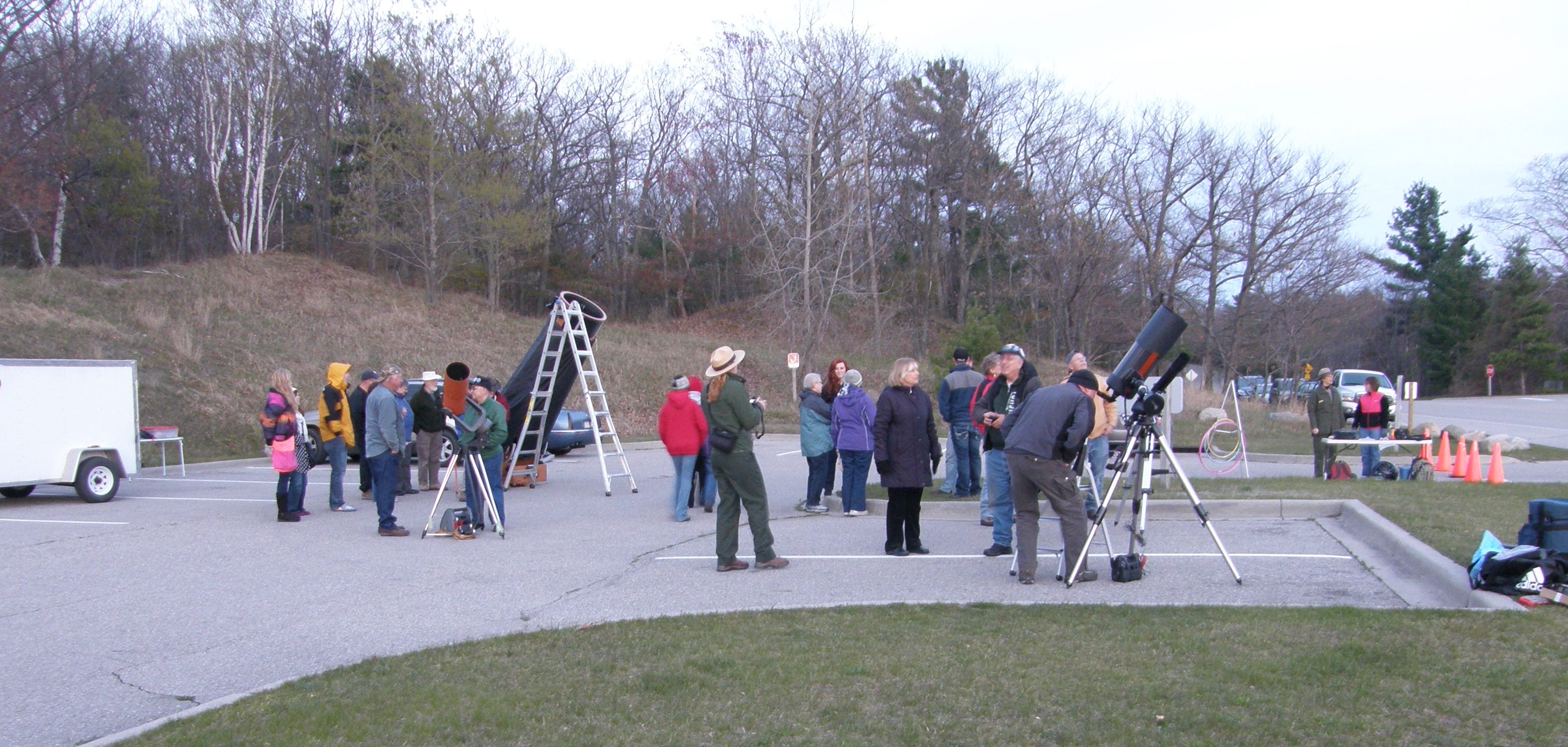
A Star Party at Sleeping Bear Dunes National Lakeshore’s Platte River Point. Credit: Eileen Carlisle
10/15/2020 – Ephemeris – The Great Andromeda Galaxy
This is Ephemeris for Thursday, October 15th. Today the Sun will be up for 10 hours and 58 minutes, setting at 6:57, and it will rise tomorrow at 8:00. The Moon, 1 day before new, will rise at 7:30 tomorrow morning.
The closest large galaxy to our Milky Way galaxy is the Great Andromeda Galaxy seen in the eastern sky when it gets dark. It is barely visible to the naked eye. To locate it first find the Great Square of Pegasus high in the east, standing on one corner. The left star of the square is the head of the constellation Andromeda. Follow two stars to the left and a bit downward, then two stars straight up. The galaxy is near that last star as a small smudge of light. Binoculars are the best way to see it as a thin spindle of light. Visually through a telescope one can see only the bright nucleus of the galaxy, that spans six Moon diameters in photographs. M31 is its most famous catalog designation and it is two and a half million light years away.
The event times given are for the Traverse City/Interlochen area of Michigan. They may be different for your location.
Addendum
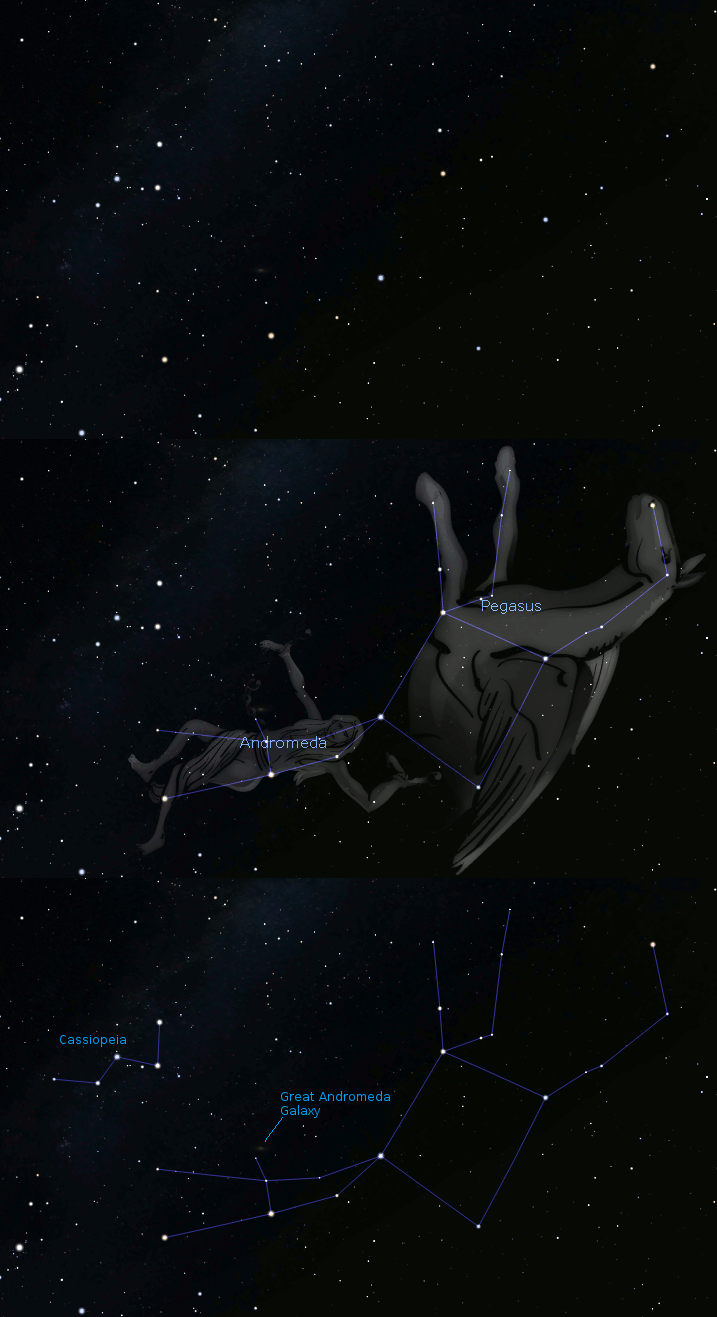
Andromeda animated finder, including the Great Andromeda Galaxy. I’ve added Cassiopeia that some folks use to find the galaxy. I start with the leftmost star of the Great Square of Pegasus that connects to Andromeda. I count off two star on the lower curve because they are brighter than the upper curve. Then count two stars up. Next to that top star is a little smudge. That is the core of the Great Andromeda Galaxy. Created using Stellarium and GIMP.
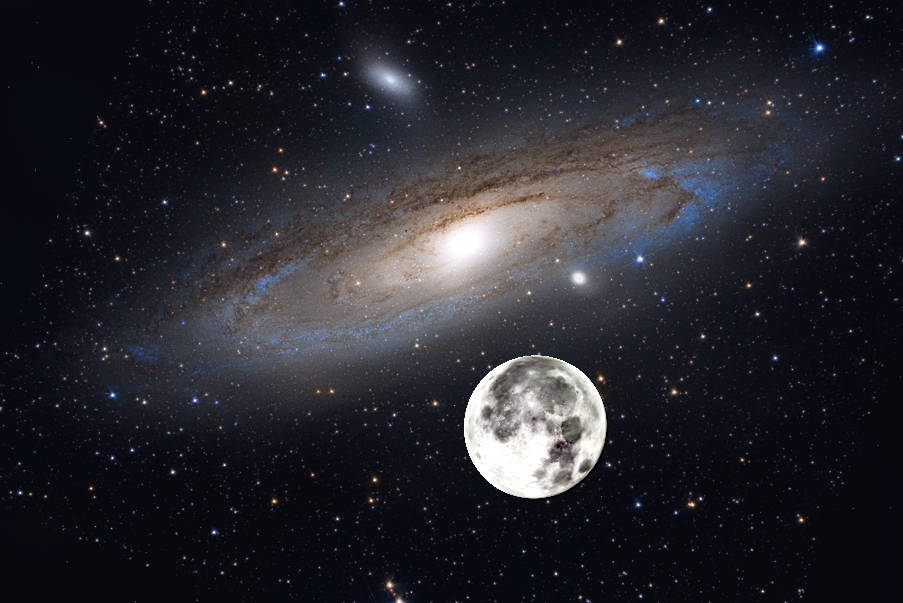
The moon superimposed on the Great Andromeda Galaxy, M31, for apparent size comparison. Created using Stellarium and the embedded image of the galaxy with that of the full Moon of October 31, 2020. M31 Image credit: Herm Perez License: “Feel free to use these images, if you use them in a commercial setting please attribute the source.”
10/14/2020 – Ephemeris – Let’s look for the naked-eye planets for this week
This is Bob Moler with Ephemeris for Wednesday, October 14th. Today the Sun will be up for 11 hours and 1 minute, setting at 6:58, and it will rise tomorrow at 7:58. The Moon, 2 days before new, will rise at 6:10 tomorrow morning.
Let’s look for the naked-eye planets for this week. Jupiter and Saturn are both low in the south-southwestern sky at 9 pm. Jupiter is the very bright one. Left and a bit above it will be the somewhat dimmer Saturn. They are closing slowly, so they will cross paths on December 21st and be in the same telescope field that evening. Jupiter will set first tonight at 11:52 with Saturn following at 12:29 am. Off in the east-southeast at 9 pm will be Mars. Since the Earth passed it yesterday its distance is slowly increasing to 38.9 million miles (62.7 million kilometers) away. Brilliant Venus will rise at 4:39 am in the east as it retreats slowly toward the Sun. It’s brilliant and looks like a tiny featureless gibbous moon in telescopes.
The event times given are for the Traverse City/Interlochen area of Michigan. They may be different for your location.
Addendum
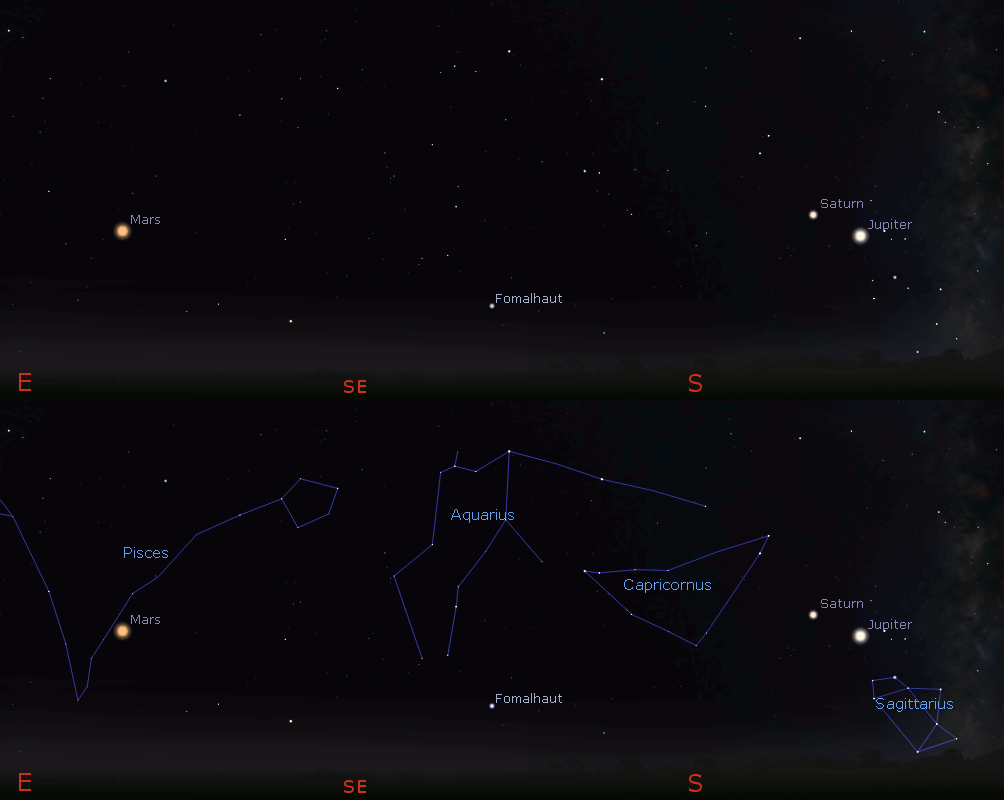
Evening Planets animation showing Jupiter, Saturn and Mars with the constellations of the zodiac for 9 pm October 14, 2020. Click on the image to enlarge. Created using Stellarium.
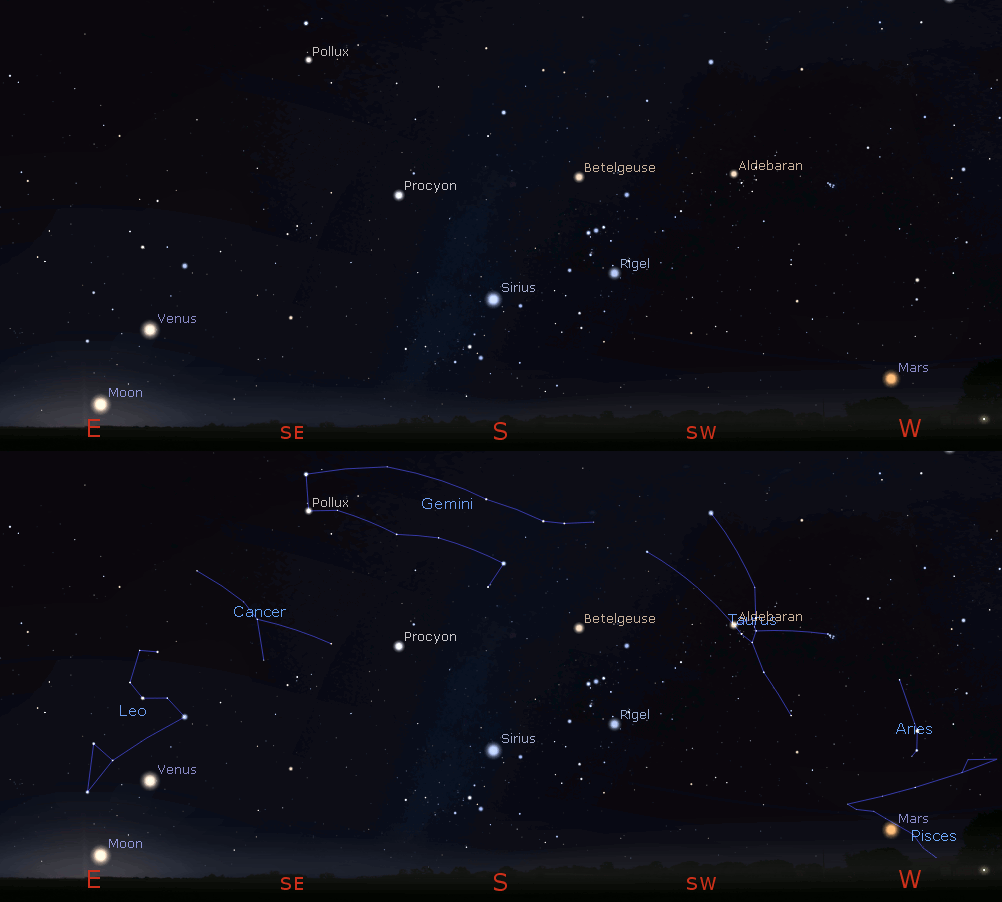
Morning planet animation for 6:45 am tomorrow October 15, 2020. Click on the image to enlarge. Created using Stellarium.
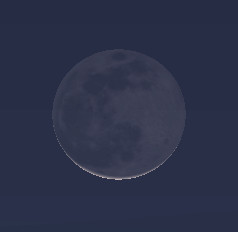
The waning thin crescent Moon about a day and a half from new. as it might be seen in binoculars with earthshine at 6:45 am tomorrow morning October 15, 2020. Created using Stellarium.
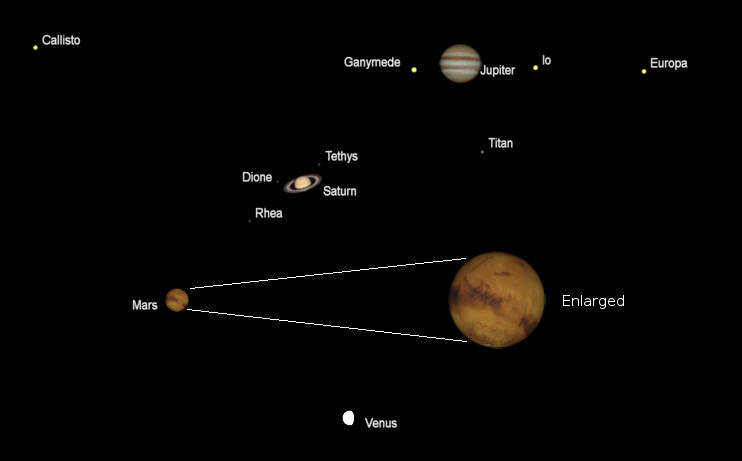
The planets as seen in a telescope (north up) with the same magnification for the night of October 14/15, 2020. Times of the display are: Jupiter and Saturn, 9 pm; Mars, 11 pm; Venus, 7 am. Apparent diameters: Jupiter, 38.82″; Saturn, 16.81″, rings, 39.15″; Mars, 22.27″; and Venus 14.27″. Mars also displays an enlargement showing surface detail. Mars was closest to the Earth this go-a-round on October 6, and at opposition yesterday. The ” symbol means seconds of arc (1/3600th of a degree.) Created using Cartes du Ciel (Sky Charts).
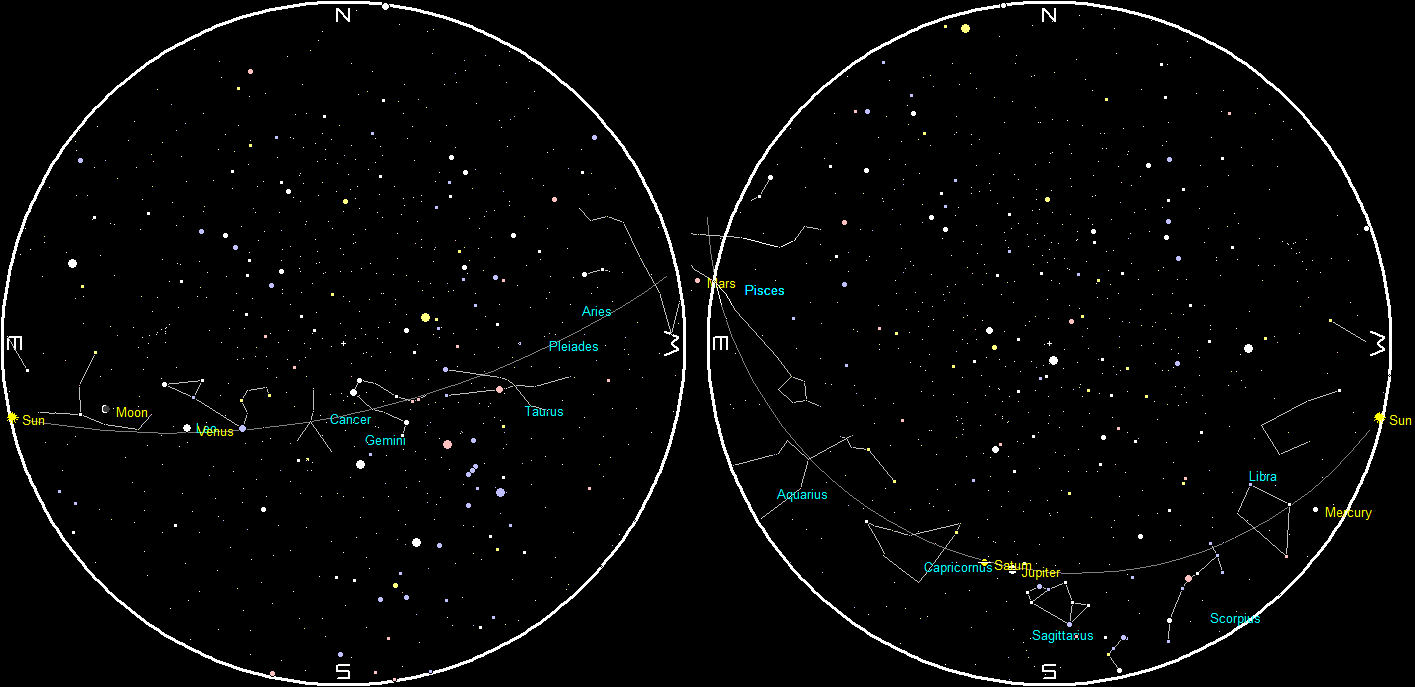
Planets and the Moon at sunset and sunrise of a single night starting with sunset on the right on October 14, 2020. The night ends on the left with sunrise on 15th. Click on the image to enlarge. Mars, near opposition and a bit south of the ecliptic, actually rises after sunset, so I included it in the sunset chart even though it is below the horizon at sunset. Created using my LookingUp program.
10/13/2020 – Ephemeris – Mars at opposition and Ada Lovelace Day
This is Bob Moler with Ephemeris for Ada Lovelace Day, Tuesday, October 13th. Today the Sun will be up for 11 hours and 4 minutes, setting at 7:00, and it will rise tomorrow at 7:57. The Moon, 3 days before new, will rise at 4:50 tomorrow morning.
Mars will be in opposition from the Sun this afternoon and will officially enter the evening sky and begin rising before sunset. Ada Lovelace or more properly Augusta Ada King, Countess of Lovelace was the daughter of Lord Byron and worked for Charles Babbage, and is considered the first computer programmer, even though Babbage was unable to build his mechanical computer the Analytic Engine in the mid 1800s. This day is set aside to celebrate the accomplishments of women of science, technology, engineering and math, STEM. This year three women were awarded Nobel Prizes: Two in chemistry, and one shared with two men in physics. The computer language Ada was created for the US Department of Defense.
The event times given are for the Traverse City/Interlochen area of Michigan. They may be different for your location.
Addenda
Mars Opposition
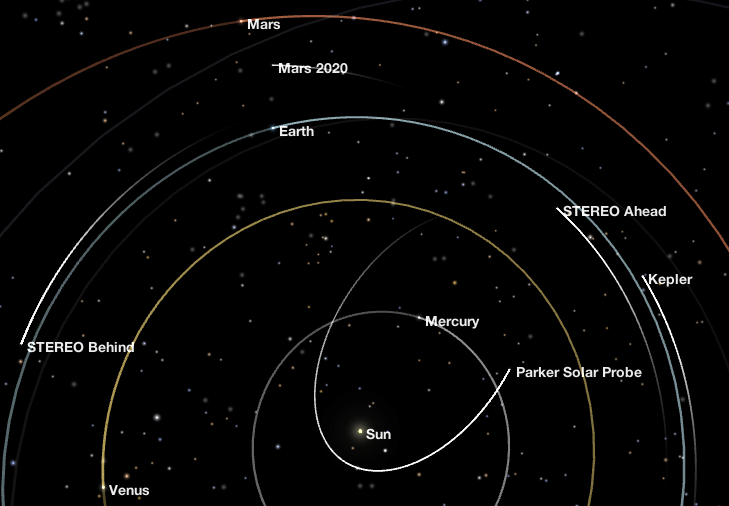
Inner solar system on October 13, 2020 showing Mars at opposition from the Sun. The Sun, Earth and Mars are in a straight line. Note the motion of the planets and space probes are counterclockwise. Mars was closest to the Earth a week ago. It is moving away from the Sun in its orbit. Its closest point to the Sun, called perihelion, at about the 2 o’clock point in its orbit. The Mars 2020 Rover “Percy” has a bit more than 4 months to go to reach Mars. Credit: NASA Eyes App https://eyes.nasa.gov/.
Don’t worry, that the Mars 2020 is behind both the Earth and Mars. In being sent to Mars, it is now moving slower than the Earth, but faster than Mars, which it will reach on February 18, 2021.
Ada Lovelace

Ada, Countess of Lovelace (1815-1852) considered the first computer programmer, even though the machine she wrote code for was never built. Credit: Science & Society Picture Library

Trial model of a part of the Analytical Engine, built by Charles Babbage, as displayed at the Science Museum (London). By Bruno Barral (ByB), CC BY-SA 2.5.
Women winning the Nobel Prizes in Chemistry and Physics
The 59 second program length of Ephemeris prevented me from naming the Nobel prize winners. Here they are.
Emmanuelle Charpentier and Jennifer A. Doudna won the 2020 Nobel Prize in Chemistry for their work on CRISPR-Cas9 as a way to edit genomes. Andrea Ghez shared the Physics Prize with Roger Penrose who got half the prize for discovering that black holes were a prediction of Einstein’s general theory of relativity, and Reinhard Genzel for the discovery of the supermassive black hole in our Milky Way galaxy. Ghez and Genzel shared the other half of the prize.
10/12/2020 – Ephemeris – Columbus’ lucky mistake
This is Ephemeris for Columbus Day or Indigenous Peoples Day, Monday, October 12th. Today the Sun will be up for 11 hours and 7 minutes, setting at 7:02, and it will rise tomorrow at 7:56. The Moon, 3 days past last quarter, will rise at 3:32 tomorrow morning.
Columbus has become a controversial person in recent years mainly on how he treated the indigenous peoples and the havoc subsequent Europeans wrought on them and their culture for the last 600 plus years. I maintain that he was also bad at geography. That the Earth was round was not an issue among the educated of his day. The Earth’s size, however, was. The Earth’s circumference accepted by most scholars of that day was pretty close to the modern value of about 25 thousand miles. Columbus thought it was about 7 thousand miles less putting the Orient that much closer by sailing west from Europe. This was a minority opinion, but he convinced the king and queen of Spain to finance his venture based on it.
The event times given are for the Traverse City/Interlochen area of Michigan. They may be different for your location.
Addendum
Wikipedia entry for Eratosthenes who calculated the circumference of the Earth in the 3rd century BCE.
 Bob Moler's Ephemeris Blog