Archive

Posts Tagged ‘Jupiter’

Ephemeris: 12/10/2025 – Taking a look at the whereabouts of the naked-eye planets

December 10, 2025 Comments off

This is Ephemeris for Wednesday, December 10th. Today the Sun will be up for 8 hours and 52 minutes, setting at 5:02, and it will rise tomorrow at 8:10. The Moon, 1 day before last quarter, will rise at 11:45 this evening.

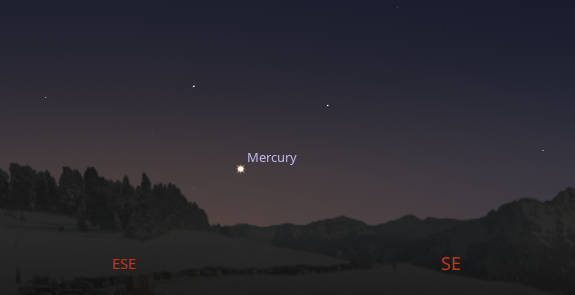
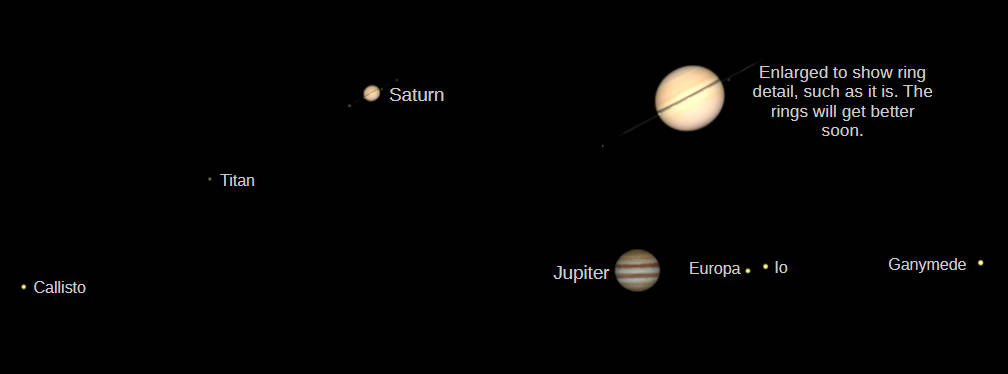
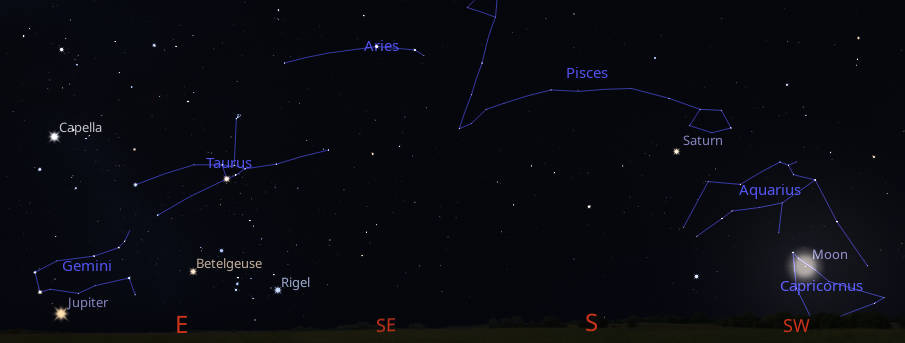
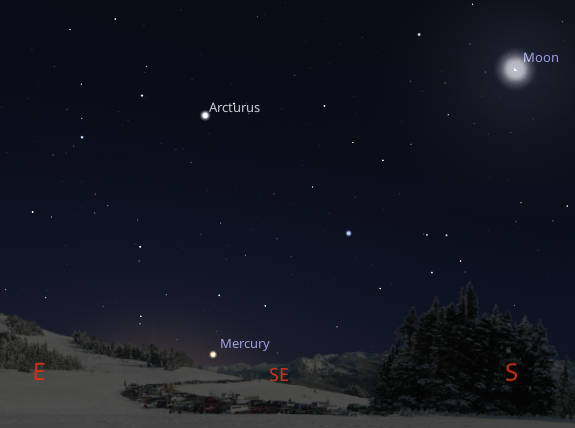
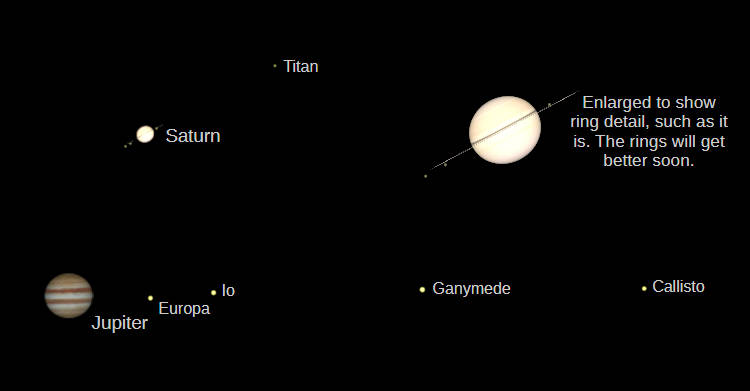
Let’s take our weekly look at the whereabouts of the naked-eye planets. Saturn is the brightest star-like object in the southern sky as soon as it gets dark. In a telescope Saturn sports a very thin ring, half a degree from being edge on and slowly opening. Normally, I’d say that Saturn’s rings are easy to see in a telescope. In a couple of months the rings will be much more visible in telescopes. Jupiter will rise at 7:29 PM in the east-northeast, beneath Castor and Pollux, the bright stars of Gemini. Jupiter’s 4 brightest moons can be seen even in binoculars, and shift position night to night. Tonight they will all be in line on one side of the planet. Mercury might be spotted very low in the east-southeast by 7 AM tomorrow morning.

The astronomical event times given in this blog are for the Traverse City/Interlochen area of Michigan (Lat 44.7° N, Long 85.7° W; EDT, UT – 4 hours) unless stated otherwise. Times will be different for other locations.

Addendum
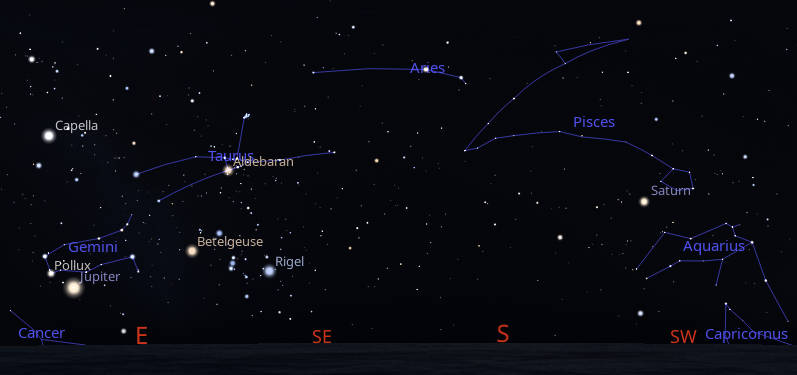
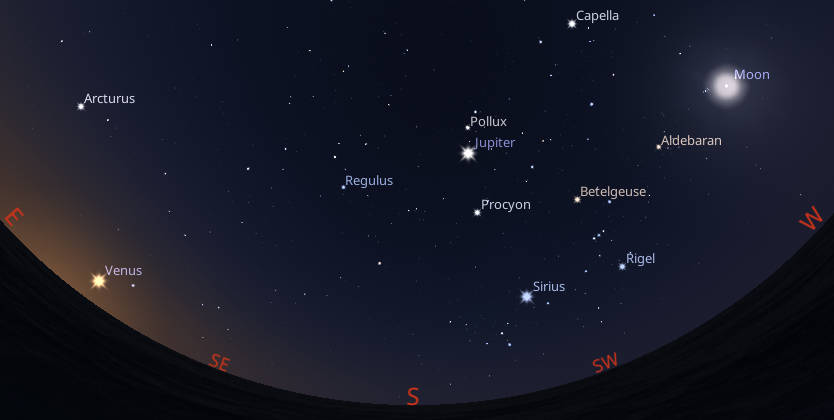
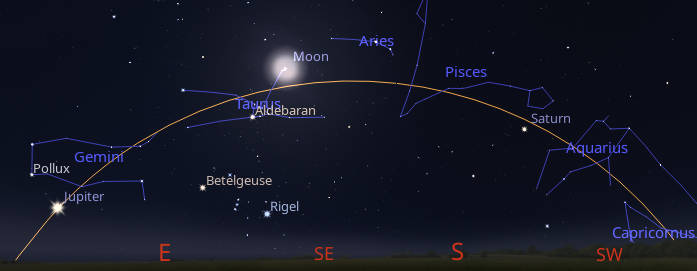
Jupiter and Saturn along with the zodiacal constellations in this panorama at 9 PM tonight.
Jupiter and Saturn along with the zodiacal constellations in this panorama at 9 PM tonight, December 10, 2025. Created using Stellarium.
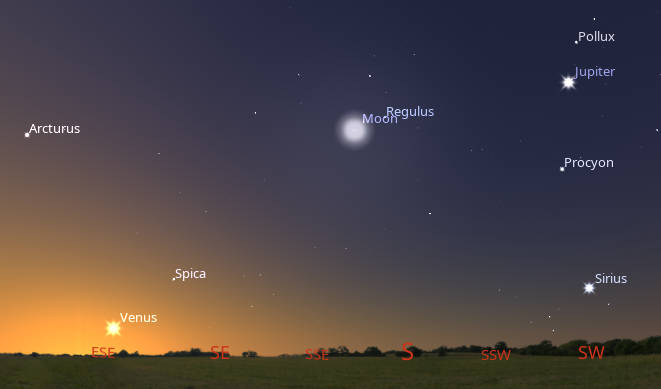
Mercury (though not as bright as this) and the last quarter Moon, as they might appear at 7 AM tomorrow morning.
Mercury (though not as bright as this) and the last quarter Moon, as they might appear at 7 AM tomorrow morning, December 11, 2025. Created using Stellarium.
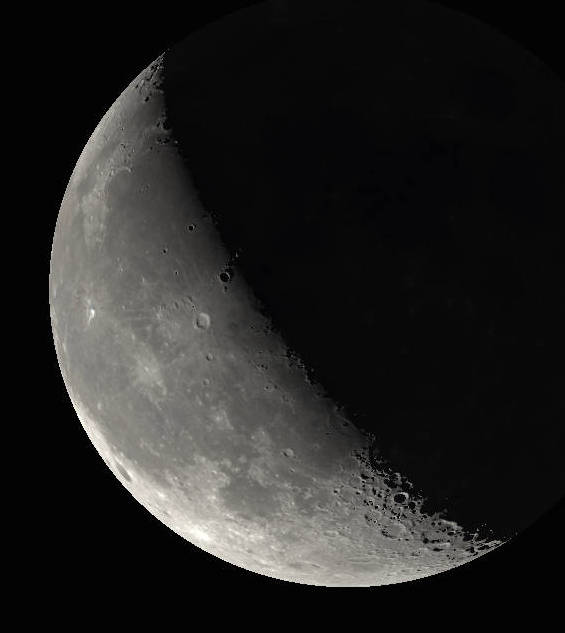
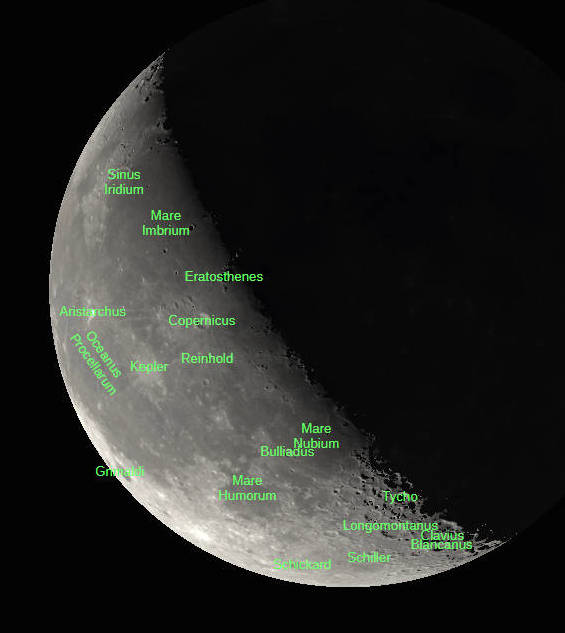
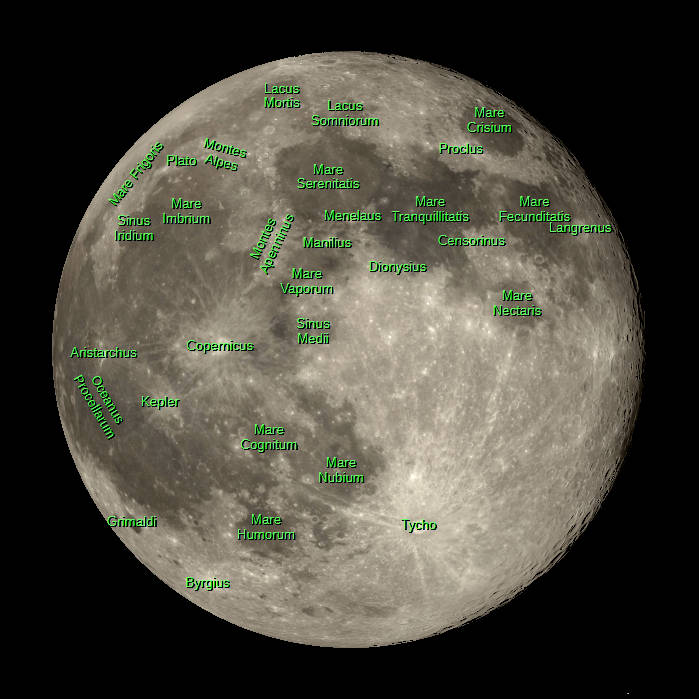
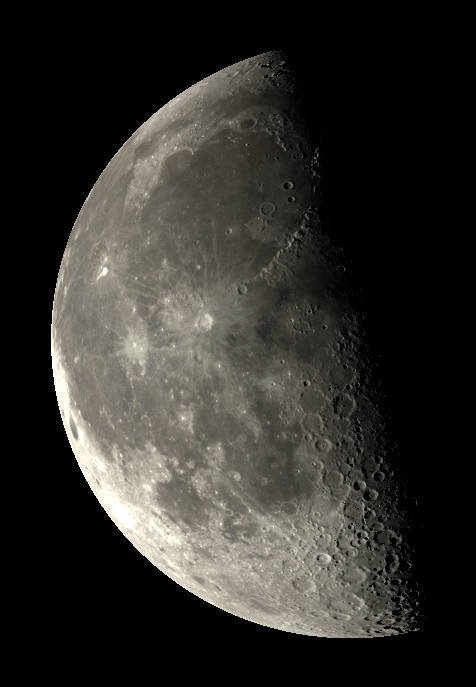
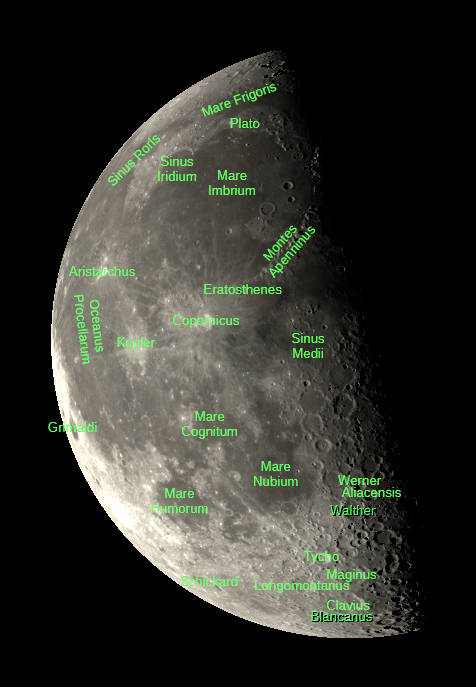
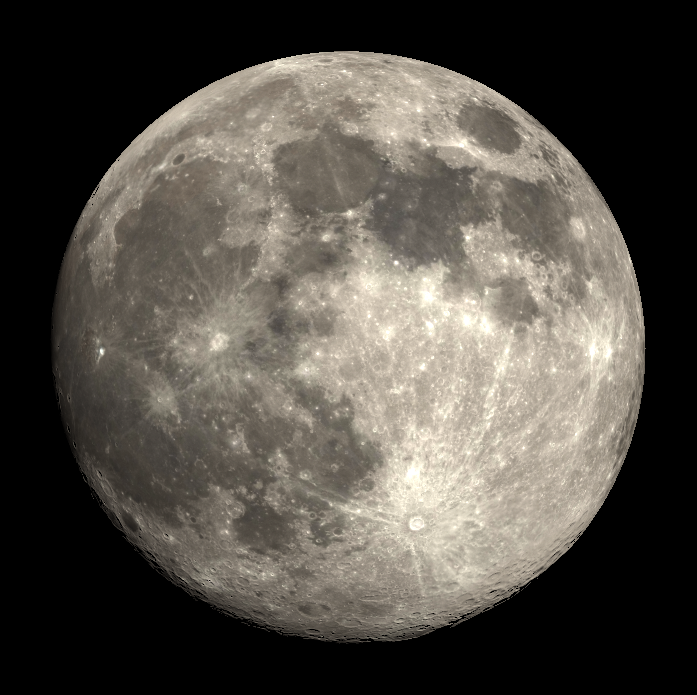
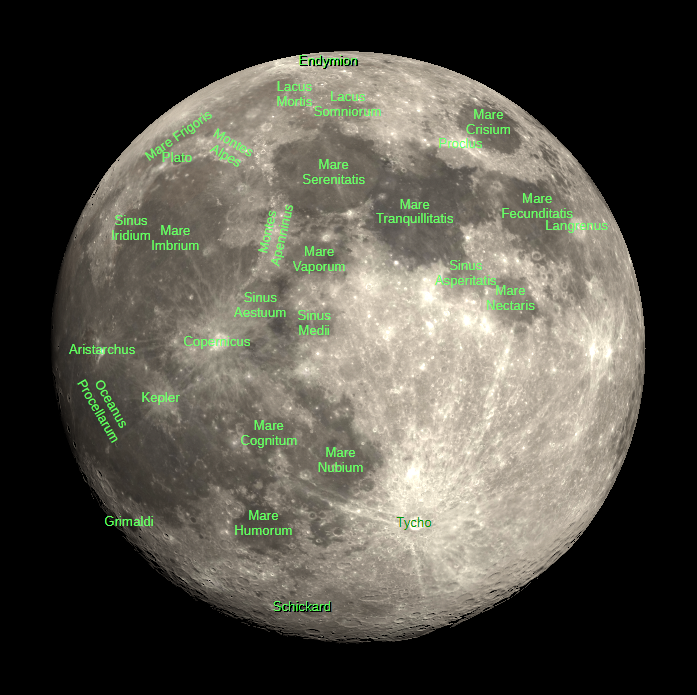
The Moon, at last quarter, as seen tomorrow morning, December 10, 2025. A view visible in small telescopes showing an image with and without selected features labeled. Created using Stellarium, LibreOffice Draw, and GIMP.
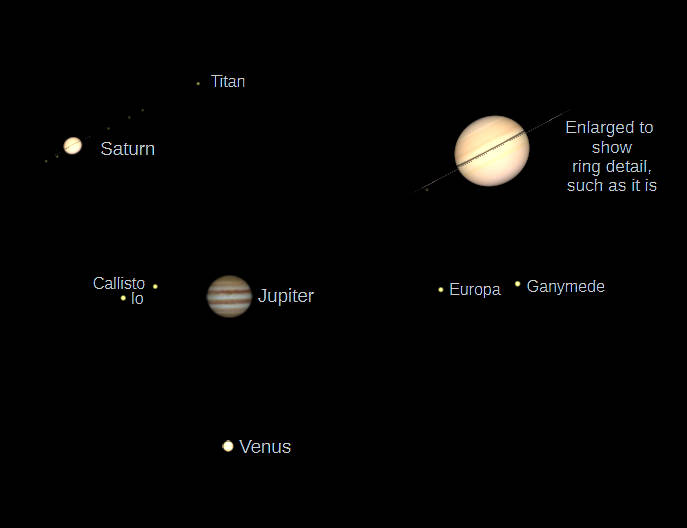
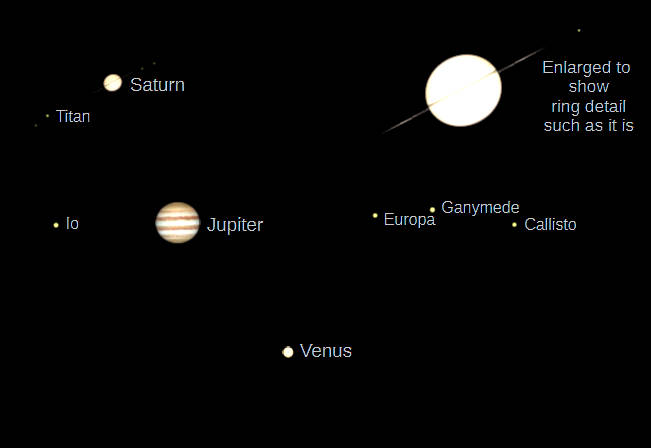
Telescopic Saturn, and Jupiter (north up) as they would be seen in a small telescope with the same magnification at 9 PM tonight.
Telescopic Saturn, and Jupiter (north up) as they would be seen in a small telescope with the same magnification at 9 PM tonight, December 10, 2025, Saturn will be 17.7″ in diameter, but its rings, being nearly edge on, may show up brighter than seen here, and extend to 41.3″. They are tilted 0.5° from being edge on. Jupiter will be 45.2″ in diameter. Mercury appears too small to be shown here, but its apparent diameter will be 6.2″ and appears 72% illuminated. The (”) symbol means seconds of arc, or 1/3600th of a degree. Created using Cartes du Ciel (Sky Charts), LibreOffice Draw and GIMP.
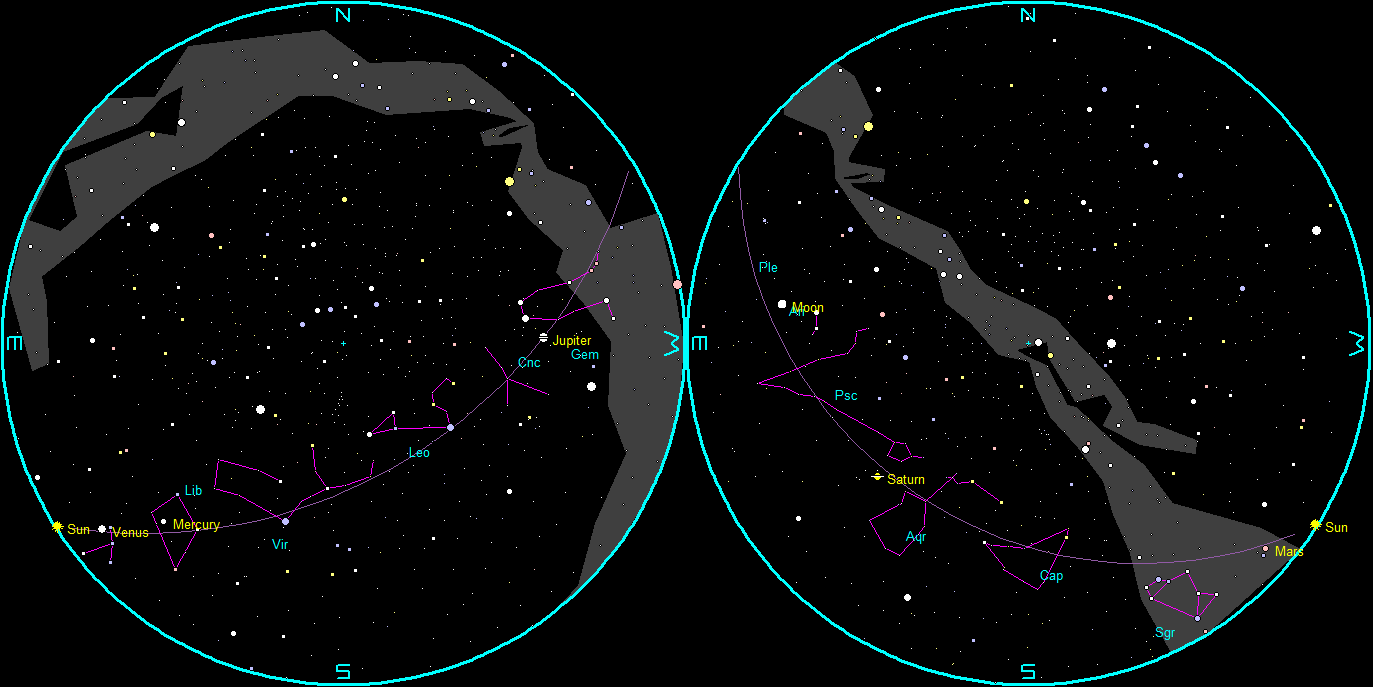
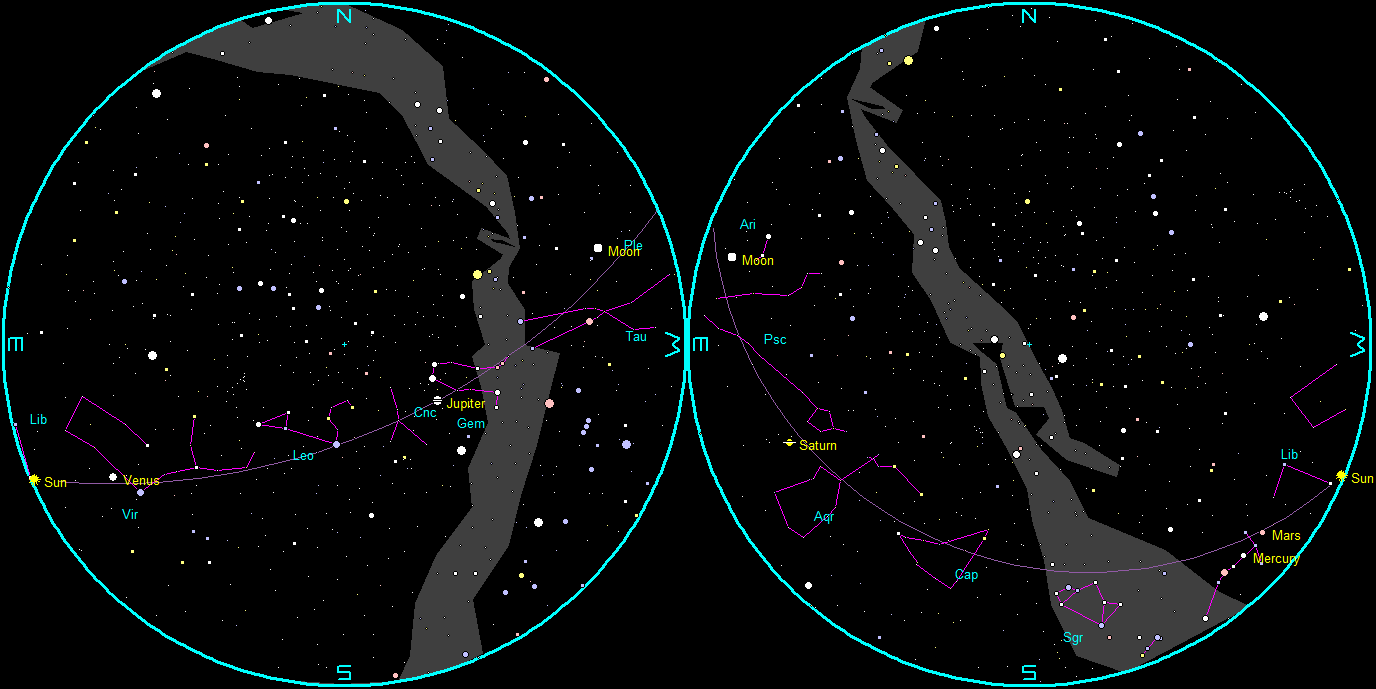
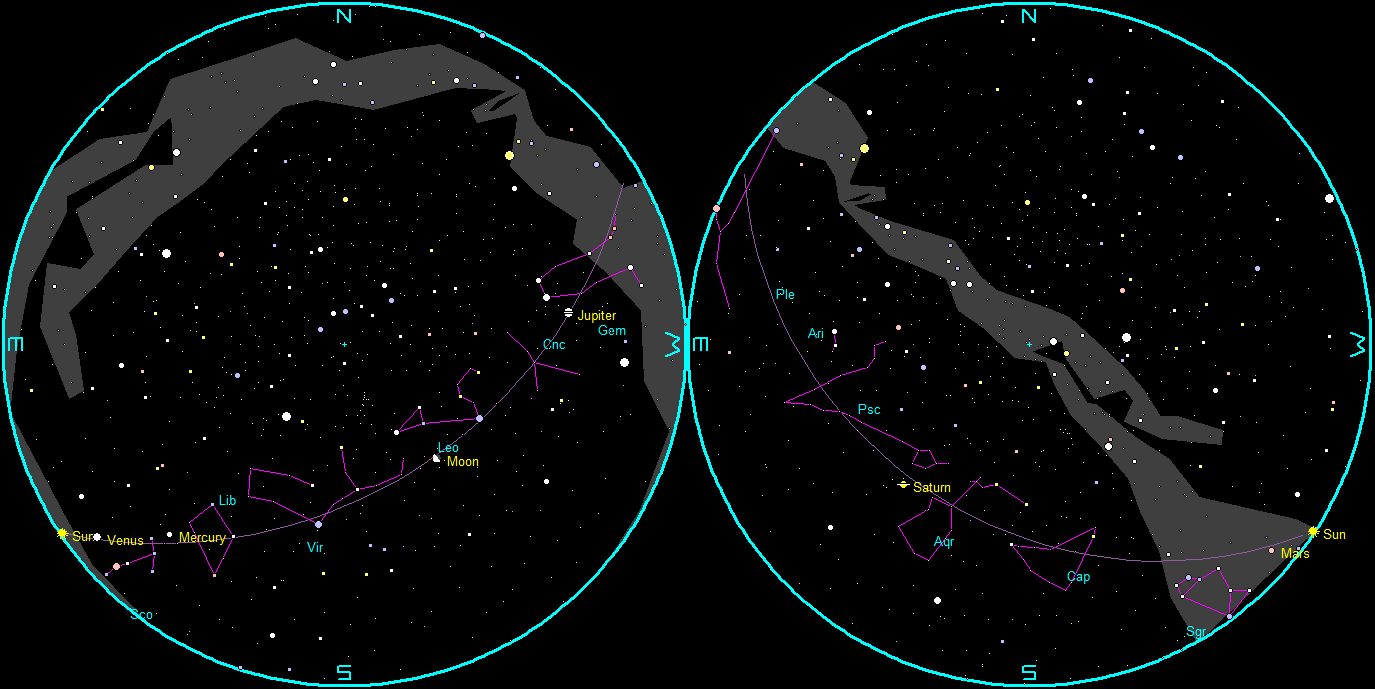
The naked-eye planets and the Moon at sunset and sunrise on a single night, starting with sunset on the right on December 10th, 2025. The night ends on the left with sunrise on the 11th.
The naked-eye planets and the Moon at sunset and sunrise on a single night, starting with sunset on the right on December 10th, 2025. The night ends on the left with sunrise on the 11th. Click or tap on the image to enlarge it. Created using my LookingUp app and GIMP.
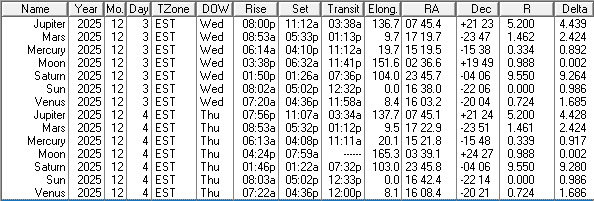
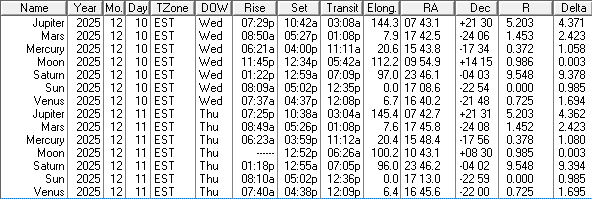
A low precision ephemeris of the Sun Moon and naked eye planet positions for today and tomorrow.
This is a low precision ephemeris of the Sun Moon and naked eye planet positions for today and tomorrow, December 10th and 11th, 2025. Some of the columns are self-explanatory, others are not. The transit column is the time that the body crosses the meridian and is due south. Elong, for elongation, is the angle between the Sun and that body. RA is right ascension, which is the object’s east-west position on the celestial sphere in hours and minutes. Dec is declination which is the north-south position of the object on the celestial sphere in degrees and minutes. R is the distance of that object from the Sun in astronomical units. An astronomical unit is about 93 million miles or 150 million kilometers. And Delta is the distance of that object from the Earth, also in astronomical units. I omit the ‘m’ in am and pm for compactness. The data was generated using my LookingUp for DOS app and displayed as a table by my Ephemeris Helper app.

Ephemeris: 12/03/2025 – Taking our weekly look at the whereabouts of the naked-eye planets

December 3, 2025 Comments off

This is Bob Moler with Ephemeris for Wednesday, December 3rd. Today the Sun will be up for 9 hours, setting at 5:02, and it will rise tomorrow at 8:03. The Moon, 1 day before full, will set at 7:59 tomorrow morning.

Let’s take our weekly look at the whereabouts of the naked-eye planets. Saturn is the brightest star-like object in the southern sky as soon as it gets dark. In a telescope Saturn sports a very thin ring, 4/10ths of a degree from being edge on. The rings are slowly opening up. Normally, I’d say that Saturn’s rings are easy to see in a telescope. In a couple of months the rings will be much more visible in telescopes. Jupiter will rise at 8 PM in the east-northeast, beneath Castor and Pollux, the bright stars of Gemini. Jupiter’s 4 brightest moons can even be seen in binoculars, and shift position night to night. Mercury might be spotted low in the east-southeast by 7 AM tomorrow morning, having risen 45 minutes earlier.

The astronomical event times given in this blog are for the Traverse City/Interlochen area of Michigan (Lat 44.7° N, Long 85.7° W; EDT, UT – 4 hours) unless stated otherwise. Times will be different for other locations.

Addendum
Jupiter, Saturn and the Moon along with the zodiacal constellations and ecliptic (Sun's path) in this panorama at 9 PM tonight.
Jupiter, Saturn and the Moon along with the zodiacal constellations and ecliptic (Sun’s path) in this panorama at 9 PM tonight, December 3, 2025. Created using Stellarium.
The Moon, a day before full, as seen in the evening tonight, December 3, 2025. A view visible in small telescopes showing an image with and without selected features labeled. Created using Stellarium, LibreOffice Draw, and GIMP.
Mercury, as it might appear, though not as bright as this, at 7 AM tomorrow morning.
Mercury, as it might appear, though not as bright as this, at 7 AM tomorrow morning, December 4, 2025. Created using Stellarium.
Telescopic Saturn, and Jupiter (north up) as they would be seen in a small telescope with the same magnification at 9 PM tonight.
Telescopic Saturn, and Jupiter (north up) as they would be seen in a small telescope with the same magnification at 9 PM tonight, December 26, 2025, Saturn will be 18.0″ in diameter, but its rings, being nearly edge on, may show up brighter than seen here, and extend to 41.8″. They are tilted 0.4° from being edge on. Jupiter will be 44.5″ in diameter. Mercury appears too small to be shown here, but its apparent diameter will be 7.2″ and appears 50.6% illuminated. The (”) symbol means seconds of arc, or 1/3600th of a degree. Created using Cartes du Ciel (Sky Charts), LibreOffice Draw and GIMP.
The naked-eye planets and the Moon at sunset and sunrise on a single night.
The naked-eye planets and the Moon at sunset and sunrise on a single night, starting with sunset on the right on December 3rd, 2025. The night ends on the left with sunrise on the 4th. Click or tap on the image to enlarge it. Created using my LookingUp app and GIMP.
A low precision ephemeris of the Sun Moon and naked eye planet positions for today and tomorrow.
This is a low precision ephemeris of the Sun Moon and naked eye planet positions for today and tomorrow, December 3rd and 4th, 2025. Some of the columns are self-explanatory, others are not. The transit column is the time that the body crosses the meridian and is due south. Elong, for elongation, is the angle between the Sun and that body. RA is right ascension, which is the object’s east-west position on the celestial sphere in hours and minutes. Dec is declination which is the north-south position of the object on the celestial sphere in degrees and minutes. R is the distance of that object from the Sun in astronomical units. An astronomical unit is about 93 million miles or 150 million kilometers. And Delta is the distance of that object from the Earth, also in astronomical units. I omit the ‘m’ in am and pm for compactness. The data was generated using my LookingUp for DOS app and displayed as a table by my Ephemeris Helper app.

Ephemeris: 11/26/2025 – Checking out the naked eye planets

November 26, 2025 Comments off

This is Ephemeris for Wednesday, November 26th. Today the Sun will be up for 9 hours and 11 minutes, setting at 5:05, and it will rise tomorrow at 7:55. The Moon, 2 days before first quarter, will set at 10:49 this evening.

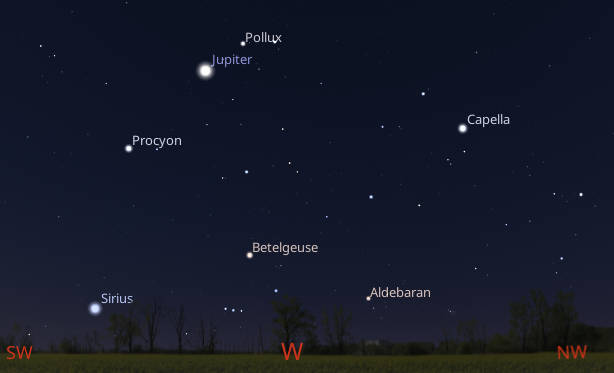
Pausing my exploration of AI to check out the naked eye planets this week. Mars and Mercury are too close to the Sun to be seen. Saturn is the brightest star like object in the southeastern sky as soon as it gets dark. In a telescope Saturn sports a very thin ring, 4/10ths of a degree from being edge on. In 4 days the rings will slowly start to open up. Normally, I’d say that Saturn’s rings are easy to see in a telescope. Currently, the rings appear extremely thin and can be difficult to pick up. Jupiter will rise at 8:29 PM in the east-northeast. Beneath Castor and Pollux, the bright stars of Gemini. By 7 AM, it will appear high in the west southwest, above the stars Procyon below and Sirius, near the horizon. Venus will rise at 7:04 in the east southeast and will probably not be visible.

The astronomical event times given in this blog are for the Traverse City/Interlochen area of Michigan (Lat 44.7° N, Long 85.7° W; EDT, UT – 4 hours) unless stated otherwise. Times will be different for other locations.

Addendum
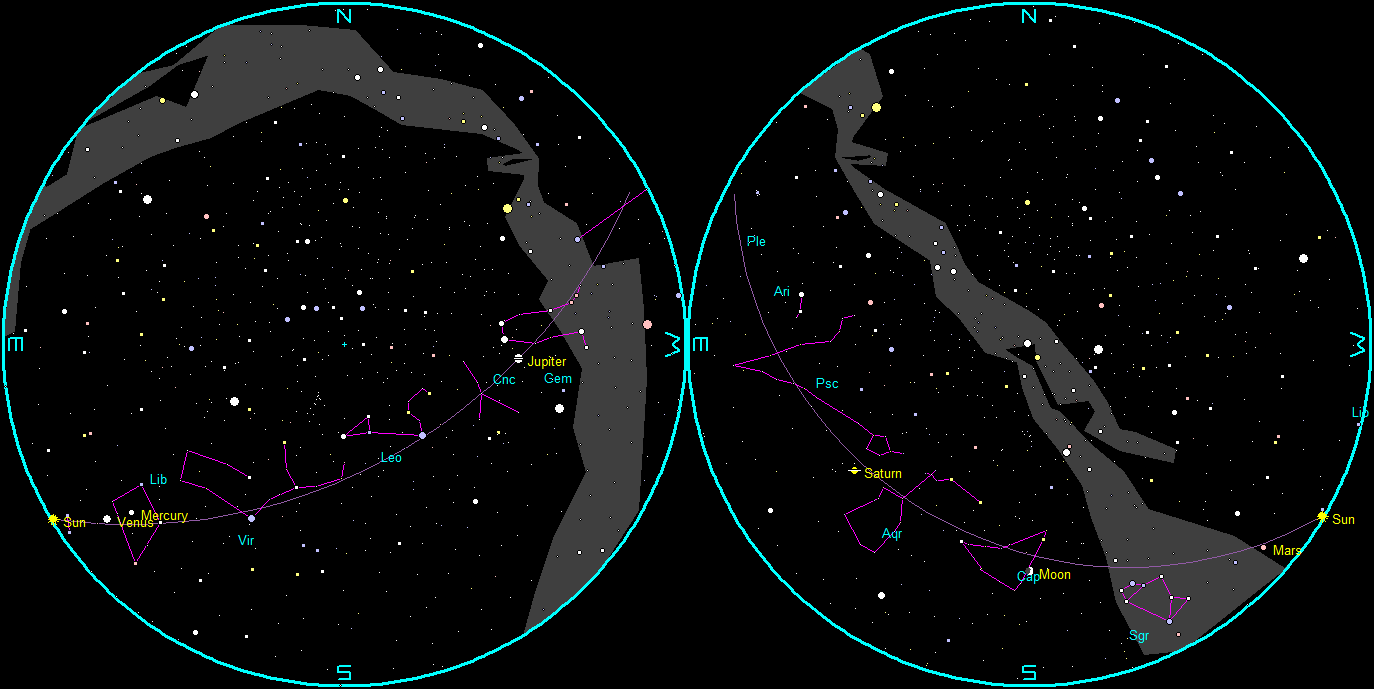
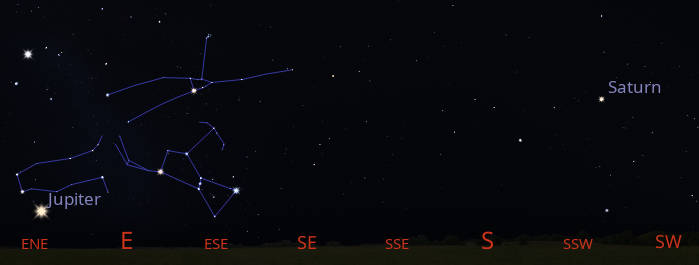
Jupiter, Saturn and the Moon along with the zodiacal constellations in this panorama at 9 PM tonight
Jupiter, Saturn and the Moon along with the zodiacal constellations in this panorama at 9 PM tonight, November 26, 2025. Created using Stellarium.
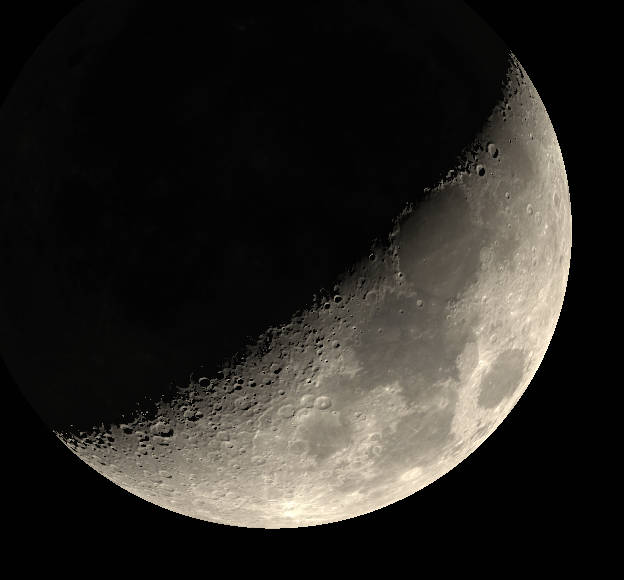
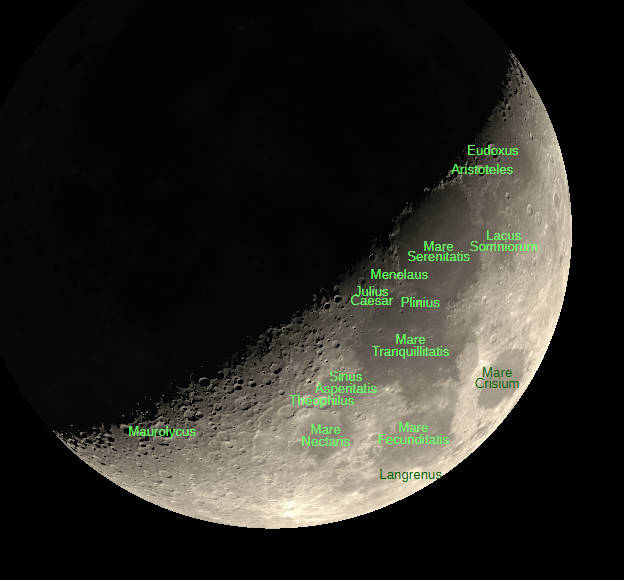
The Moon a day before first quarter as seen in the evening tonight, November 26, 2025. A view visible in small telescopes showing an image with and without selected features labeled. Created using Stellarium, LibreOffice Draw, and GIMP.
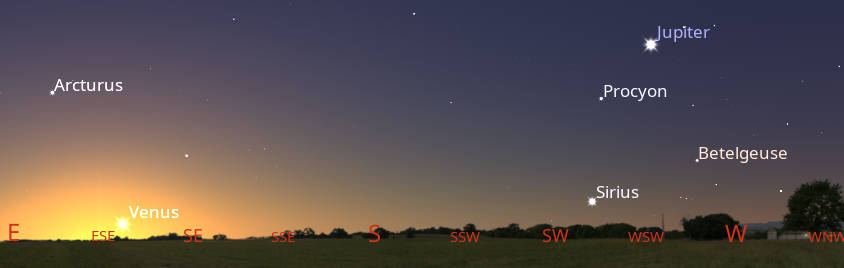
Jupiter and the winter stars setting in the 7 AM morning sky tomorrow morning.
Jupiter and the winter stars setting in the 7 AM morning sky tomorrow morning, November 27, 2025. Moving to a December evening sky near you. Created using Stellarium.
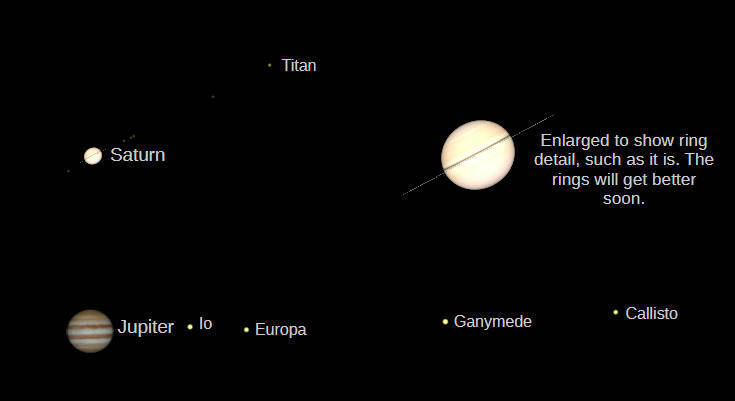
Telescopic Saturn, and Jupiter (north up) as they would be seen in a small telescope with the same magnification at 10 PM tonight.
Telescopic Saturn, and Jupiter (north up) as they would be seen in a small telescope with the same magnification at 10 PM tonight, November 26, 2025, Saturn will be 18.2″ in diameter, but its rings, being nearly edge on, may show up brighter than seen here, and extend to 42.3″. They are tilted 0.4° from being edge on. Jupiter will be 42.3″ in diameter. Jupiter’s moon Io will disappear in the planet’s shadow at 1:14 AM, and reappear at the far edge of the planet at 4:30 AM. The (”) symbol means seconds of arc, or 1/3600th of a degree. Created using Cartes du Ciel (Sky Charts), LibreOffice Draw and GIMP.
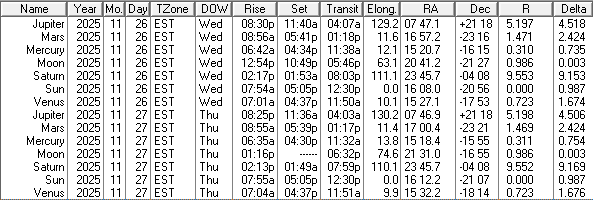
The naked-eye planets and the Moon at sunset and sunrise on a single night, starting with sunset on the right on November 26th, 2025. The night ends on the left with sunrise on the 27th. Click or tap on the image to enlarge it. Created using my LookingUp app and GIMP.
This is a low precision ephemeris of the Sun Moon and naked eye planet positions for today and tomorrow, November 26th and 27th, 2025. Some of the columns are self-explanatory, others are not. The transit column is the time that the body crosses the meridian and is due south. Elong, for elongation, is the angle between the Sun and that body. RA is right ascension, which is the object’s east-west position on the celestial sphere in hours and minutes. Dec is declination which is the north-south position of the object on the celestial sphere in degrees and minutes. R is the distance of that object from the Sun in astronomical units. An astronomical unit is about 93 million miles or 150 million kilometers. And Delta is the distance of that object from the Earth, also in astronomical units. I omit the ‘m’ in am and pm for compactness. The data was generated using my LookingUp for DOS app and displayed as a table by my Ephemeris Helper app.

Ephemeris: 11/21/2025 – Finding Taurus the bull

November 21, 2025 Comments off

This is Ephemeris for Friday, November 21st. Today the Sun will be up for 9 hours and 21 minutes, setting at 5:09, and it will rise tomorrow at 7:49. The Moon, 1 day past new, will set at 5:36 this evening.

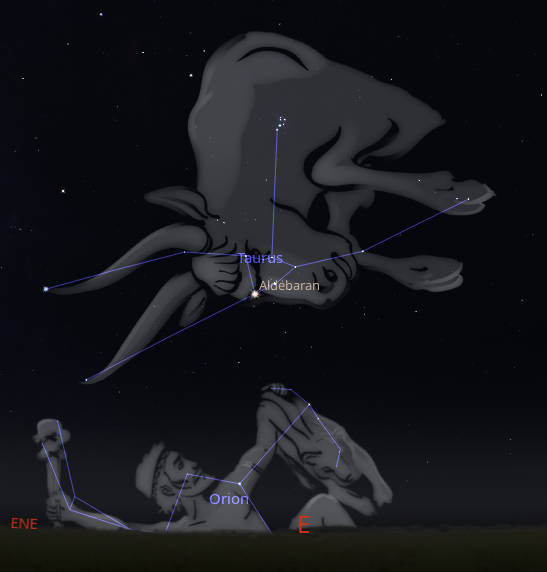
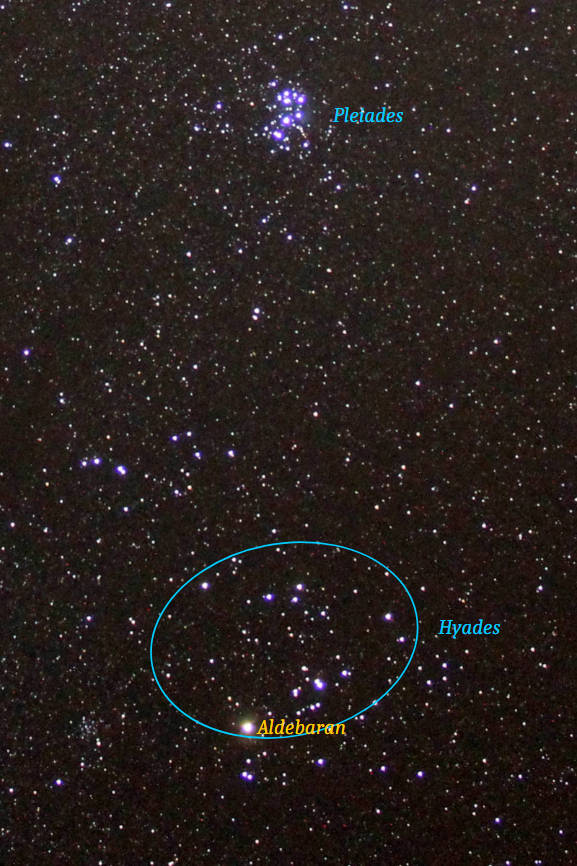
Low in the east at 8 this evening and below the beautiful Pleiades star cluster is Taurus the bull. His face is a letter V shape of stars lying on its side, the star cluster Hyades, which in Greek Mythology were the half-sisters of the Pleiades, with the bright orange-red star Aldebaran at one tip of the V as its angry bloodshot eye. Aldebaran is actually about halfway between us and the cluster. The Pleiades star cluster is in his shoulder. Taurus is seen charging downward at that hour, the rising constellation of Orion. Taurus in Greek mythology was the form the god Zeus assumed when he carried off the maiden Europa. Europa’s still with him as a moon orbiting Zeus’ Roman counterpart, the planet Jupiter.

The astronomical event times given in this blog are for the Traverse City/Interlochen area of Michigan (Lat 44.7° N, Long 85.7° W; EDT, UT – 4 hours) unless stated otherwise. Times will be different for other locations.

Addendum
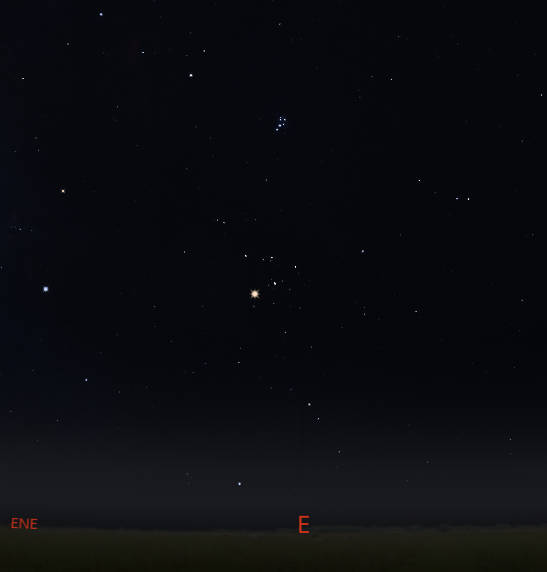
Taurus with Orion rising at 8 PM tonight, November 21. Created using Stellarium.
Closeup of the Pleiades and Hyades in the orientation as they are rising in the east.
Closeup of the Pleiades and Hyades in the orientation as they are rising in the east. Actual photo by Bob Moler, with annotations.

Ephemeris: 11/19/2025 – Taking our weekly look at the whereabouts of the naked-eye planets

November 19, 2025 Comments off

This is Ephemeris for Wednesday, November 19th. Today the Sun will be up for 9 hours and 25 minutes, setting at 5:10, and it will rise tomorrow at 7:46. The Moon, 1 day before new, will rise at 8:28 tomorrow morning.

Let’s take our weekly look at the whereabouts of the naked-eye planets. Saturn is the brightest star like object in the southeastern sky as soon as it gets dark. In a telescope Saturn sports a very thin ring, 4/10ths of a degree from being edge on. In 4 days the rings will slowly start to open up. Normally, I’d say that Saturn’s rings are easy to see in a telescope. Currently, the rings appear extremely thin and can be difficult to pick up. Jupiter will rise at 8:58 PM in the east-northeast. By 6:30 AM, it will appear high in the southwest, near the stars of Gemini, with Orion and the other bright stars of winter in the southwest. Venus, which will rise at 6:48 AM will be difficult to spot in the morning twilight.

The astronomical event times given in this blog are for the Traverse City/Interlochen area of Michigan (Lat 44.7° N, Long 85.7° W; EDT, UT – 4 hours) unless stated otherwise. Times will be different for other locations.

Addendum
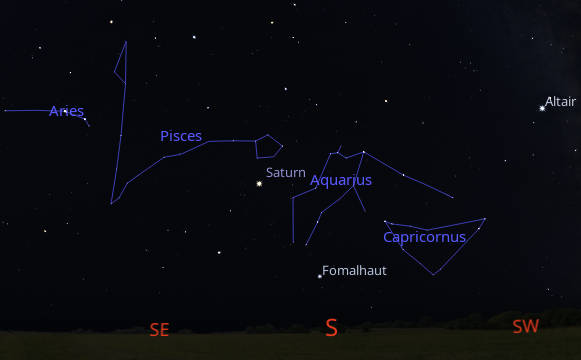
Jupiter, in the east, among the rising winter stars and Saturn in the south southwest at 10 PM tonight.
Jupiter, in the east, among the rising winter stars and Saturn in the south southwest at 10 PM tonight, November 19, 2025. Created using Stellarium.
Jupiter among the setting bright winter stars, and the just risen Venus in the east southeast at 7:15 AM, about a half hour before sunrise tomorrow morning November 20, 2025.
Jupiter among the setting bright winter stars, and the just risen Venus in the east southeast at 7:15 AM, about a half hour before sunrise tomorrow morning November 20, 2025. Created using Stellarium.
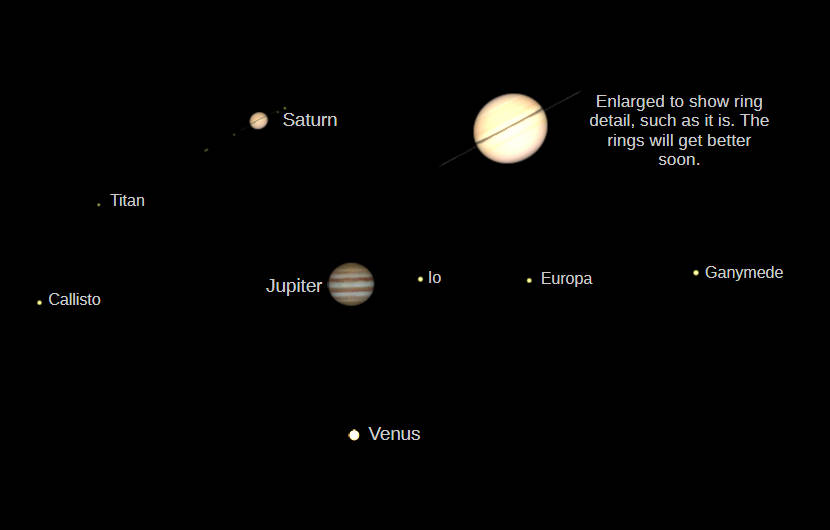
Telescopic Saturn, Jupiter and Venus (north up) as they would be seen in a small telescope.
Telescopic Saturn, Jupiter and Venus (north up) as they would be seen in a small telescope with the same magnification. At 10 PM on the evening of the November 19, 2025, Saturn will be 18.4″ in diameter, but its rings, being nearly edge on, may not be visible, and extend to 42.8″. They are tilted 0.4° from being edge on. At 6:00 AM on the morning of November 20, 2025, Jupiter will be 43.0″ in diameter. Io will disappear in Jupiter’s shadow at 11:20 PM EST, and will reappear at the opposite edge of Jupiter at 2:43 AM. Venus’ apparent diameter will be 10.0″, and be 98.1% illuminated. It’s on the far side of the Sun. The (”) symbol means seconds of arc, or 1/3600th of a degree. Created using Cartes du Ciel (Sky Charts), LibreOffice Draw and GIMP.
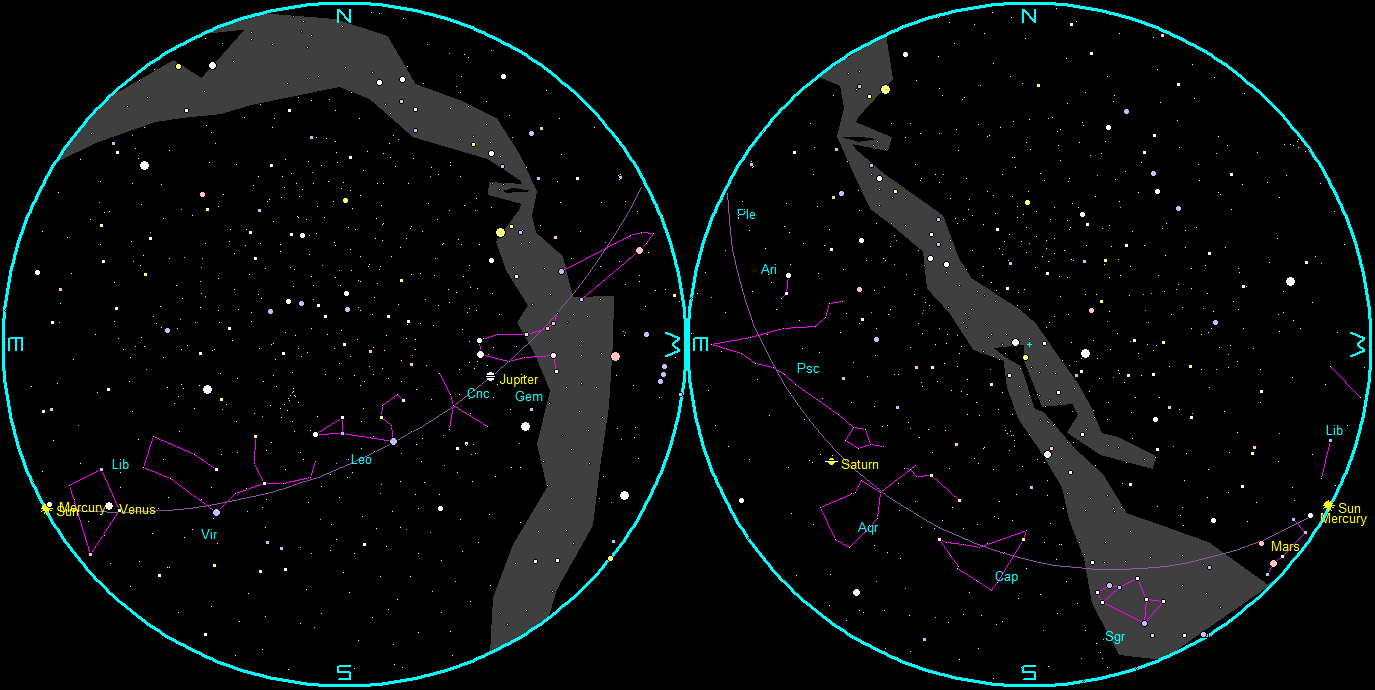
The naked-eye planets and the Moon at sunset and sunrise on a single night
The naked-eye planets and the Moon at sunset and sunrise on a single night, starting with sunset on the right on November 19th, 2025. The night ends on the left with sunrise on the 20th. Interestingly, the Moon is not shown, because it will be New overnight. Mercury is shown twice. It will pass inferior conjunction, also overnight. Click or tap on the image to enlarge it. Created using my LookingUp app and GIMP.
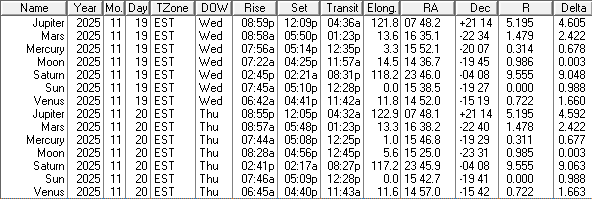
A low precision ephemeris of the Sun Moon and naked eye planet positions for today and tomorrow
This is a low precision ephemeris of the Sun Moon and naked eye planet positions for today and tomorrow, November 19th and 20th, 2025. Some of the columns are self-explanatory, others are not. The transit column is the time that the body crosses the meridian and is due south. Elong, for elongation, is the angle between the Sun and that body. RA is right ascension, which is the object’s east-west position on the celestial sphere in hours and minutes. Dec is declination which is the north-south position of the object on the celestial sphere in degrees and minutes. R is the distance of that object from the Sun in astronomical units. An astronomical unit is about 93 million miles or 150 million kilometers. And Delta is the distance of that object from the Earth, also in astronomical units. I omit the ‘m’ in am and pm for compactness. The data was generated using my LookingUp for DOS app and displayed as a table by my Ephemeris Helper app.

Ephemeris: 11/12/2025 – Taking our weekly look at the whereabouts of the naked-eye planets

November 12, 2025 Comments off

This is Bob Moler with Ephemeris for Wednesday, November 12th. Today the Sun will be up for 9 hours and 41 minutes, setting at 5:17, and it will rise tomorrow at 7:37. The Moon, at last quarter today, will rise at 12:48 tomorrow morning.

Let’s take our weekly look at the whereabouts of the naked-eye planets. Saturn is the brightest star like object in the east southeastern sky as soon as it gets dark. In a telescope Saturn sports a very thin ring, 4/10ths of a degree from being edge on. Normally, I’d say that Saturn’s rings are easy to see in a telescope. Currently, the rings appear extremely thin and can be difficult to pick up. Jupiter will rise at 9:27 PM in the east-northeast. By 6:30 AM, it will appear high in the southwest, below the stars of Gemini, with Orion and the other bright stars of winter in the southwest. Venus, which will rise at 6:26 AM will be difficult to spot in the morning twilight.

The astronomical event times given in this blog are for the Traverse City/Interlochen area of Michigan (Lat 44.7° N, Long 85.7° W; EDT, UT – 4 hours) unless stated otherwise. Times will be different for other locations.

Addendum
This image has an empty alt attribute; its file name is saturn-among-the-zodiacal-constellations_2000-111225.jpg
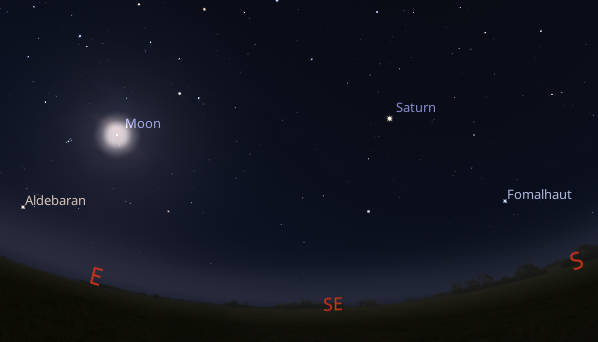
Saturn in the south southeast with the nearby zodiacal constellations at 8 PM tonight.
Saturn in the south southeast with the nearby zodiacal constellations at 8 PM tonight, November 12, 2025. Created using Stellarium.
Venus will be visible very low in the east-southeast, and Jupiter will be high in the southwestern sky with the winter stars at 7 AM tomorrow morning.
Venus will be visible very low in the east-southeast, and Jupiter will be high in the southwestern sky with the winter stars at 7 AM tomorrow morning, November 13, 2025. Created using Stellarium.
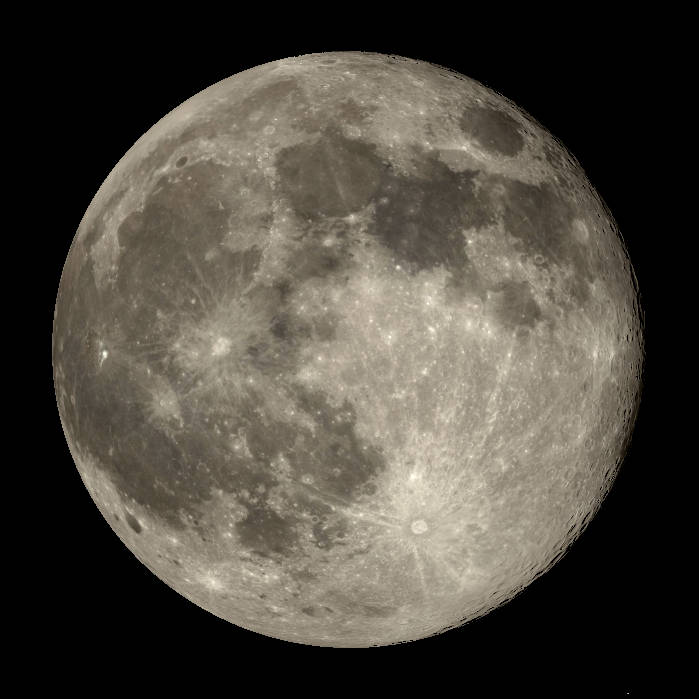
The Moon a day past last quarter as seen before sunrise tomorrow, November 13, 2025. A view visible in small telescopes showing an image with and without selected features labeled. Created using Stellarium, LibreOffice Draw, and GIMP.
Telescopic Saturn, Jupiter and Venus (north up) as they would be seen in a small telescope with the same magnification.
Telescopic Saturn, Jupiter and Venus (north up) as they would be seen in a small telescope with the same magnification. On the evening of the November 12, 2025, Saturn will be 18.6″ in diameter, but its rings, being nearly edge on, may show up brighter than seen here, and extend to 43.3″. They are tilted 0.4° from being edge on. At 6:00 AM on the morning of November 13, 2025, Jupiter will be 42.1″ in diameter. Venus’ apparent diameter will be 10.1″, and be 97.5% illuminated. It’s on the far side of the Sun. The (”) symbol means seconds of arc, or 1/3600th of a degree. Created using Cartes du Ciel (Sky Charts), LibreOffice Draw and GIMP.
The naked-eye planets and the Moon at sunset and sunrise on a single night.
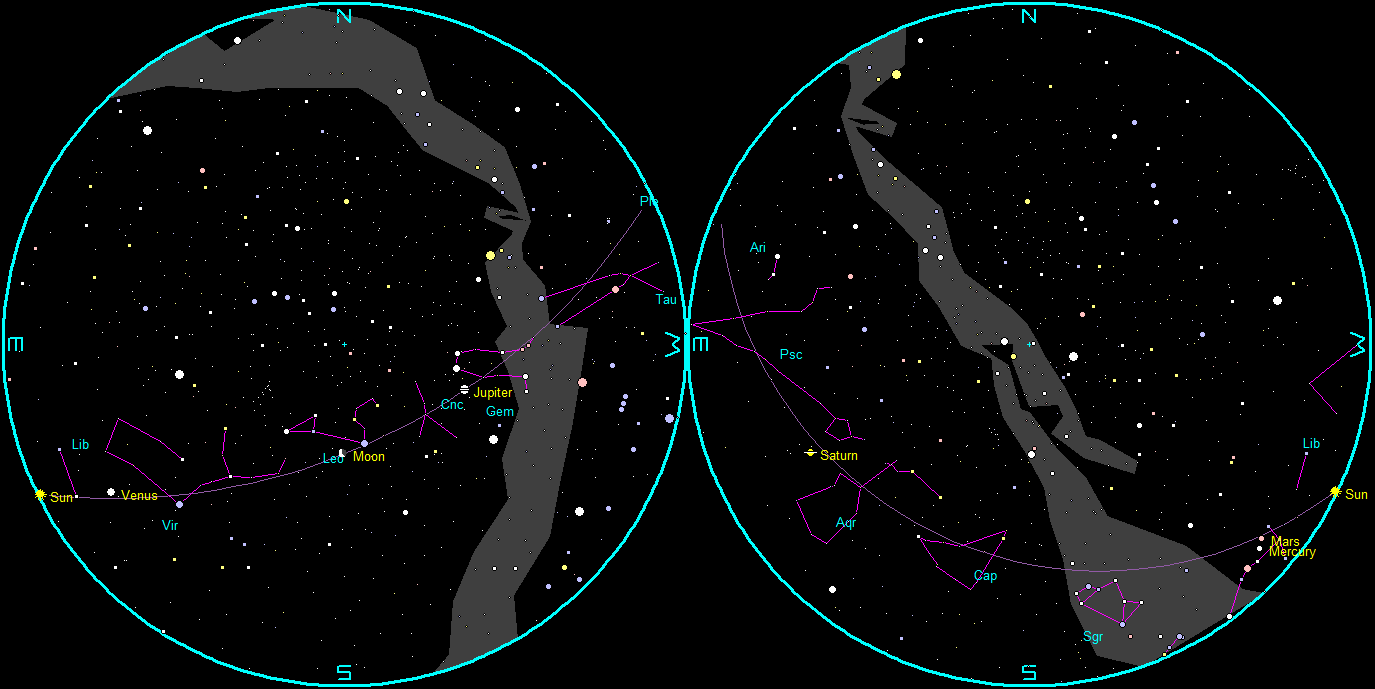
The naked-eye planets and the Moon at sunset and sunrise on a single night, starting with sunset on the right on November 12th, 2025. The night ends on the left with sunrise on the 13th. Click or tap on the image to enlarge it. Created using my LookingUp app and GIMP.
A low precision ephemeris of the Sun Moon and naked eye planet positions for today and tomorrow.
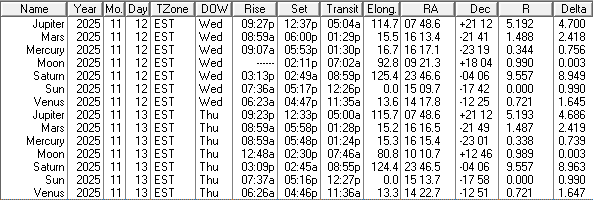
This is a low precision ephemeris of the Sun Moon and naked eye planet positions for today and tomorrow, November 12th and 13th, 2025. Some of the columns are self-explanatory, others are not. The transit column is the time that the body crosses the meridian and is due south. Elong, for elongation, is the angle between the Sun and that body. RA is right ascension, which is the object’s east-west position on the celestial sphere in hours and minutes. Dec is declination which is the north-south position of the object on the celestial sphere in degrees and minutes. R is the distance of that object from the Sun in astronomical units. An astronomical unit is about 93 million miles or 150 million kilometers. And Delta is the distance of that object from the Earth, also in astronomical units. I omit the ‘m’ in am and pm for compactness. The data was generated using my LookingUp for DOS app and displayed as a table by my Ephemeris Helper app.

Ephemeris: 11/05/2025 – Taking our weekly look at the whereabouts of the naked-eye planets

November 5, 2025 Comments off

This is Ephemeris for Wednesday, November 5th. Today the Sun will be up for 9 hours and 59 minutes, setting at 5:25, and it will rise tomorrow at 7:28. The Hunter’s Full Moon today, will rise at 5:10 this evening.

Let’s take our weekly look at the whereabouts of the naked-eye planets. Saturn is the brightest star like object in the east southeastern sky as soon as it gets dark. In a telescope Saturn sports a very thin ring, half of a degree from being edge on in telescopes. Many times I’ve been asked whether they can see Saturn’s rings in their telescope. Normally I’d say yes. Currently, the rings appear extremely thin and can be difficult to pick up. Jupiter will rise at 9:58 PM in the east-northeast. By 6:30 AM, it will appear high in the south-southeast, below the stars of Gemini, with Orion and the other bright stars of winter in the southwest. Brilliant Venus, which will rise at 6:04 AM will be very low in the east-southeast at 6:30.

The astronomical event times given in this blog are for the Traverse City/Interlochen area of Michigan (Lat 44.7° N, Long 85.7° W; EDT, UT – 4 hours) unless stated otherwise. Times will be different for other locations.

Addendum
Saturn in the east south southeast with the full Moon in the east at 8 PM tonight.
Saturn in the east south southeast with the full Moon in the east at 8 PM tonight, November 5, 2025. Created using Stellarium.
The full Moon tonight, November 5, 2025. A view visible in small telescopes showing an image with and without selected features labeled. Created using Stellarium, LibreOffice Draw, and GIMP.
Venus will be visible very low in the east-southeast, and Jupiter will be high in the south southwestern sky among the winter stars at 6:30 AM tomorrow morning.
Venus will be visible very low in the east-southeast, and Jupiter will be high in the south southwestern sky among the winter stars at 6:30 AM tomorrow morning, November 6, 2025. Created using Stellarium.
Telescopic Saturn, Jupiter and Venus (north up) as they would be seen in a small telescope with the same magnification.
Telescopic Saturn, Jupiter and Venus (north up) as they would be seen in a small telescope with the same magnification. On the evening of the November 5, 2025, Saturn will be 18.8″ in diameter, but its rings, being nearly edge on, may show up brighter than seen here, and extend to 43.8″. They are tilted 0.5° from being edge on. At 6:30 AM on the morning of November 6, 2025, Jupiter will be 41.2″ in diameter. Venus’ apparent diameter will be 10.2″, and be 96.7% illuminated. It’s on the far side of the Sun. The (”) symbol means seconds of arc, or 1/3600th of a degree. Created using Cartes du Ciel (Sky Charts), LibreOffice Draw and GIMP.
The naked-eye planets and the Moon at sunset and sunrise on a single night.
The naked-eye planets and the Moon at sunset and sunrise on a single night, starting with sunset on the right on November 5th, 2025. The night ends on the left with sunrise on the 6th. Click or tap on the image to enlarge it. Created using my LookingUp app and GIMP.
A low precision ephemeris of the Sun Moon and naked eye planet positions for today and tomorrow
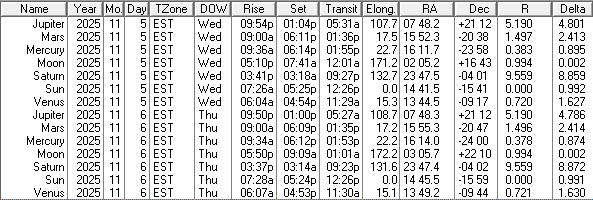
This is a low precision ephemeris of the Sun Moon and naked eye planet positions for today and tomorrow, November 5th and 6th, 2025. Some of the columns are self-explanatory, others are not. The transit column is the time that the body crosses the meridian and is due south. Elong, for elongation, is the angle between the Sun and that body. RA is right ascension, which is the object’s east-west position on the celestial sphere in hours and minutes. Dec is declination which is the north-south position of the object on the celestial sphere in degrees and minutes. R is the distance of that object from the Sun in astronomical units. An astronomical unit is about 93 million miles or 150 million kilometers. And Delta is the distance of that object from the Earth, also in astronomical units. I omit the ‘m’ in am and pm for compactness. The data was generated using my LookingUp for DOS app and displayed as a table by my Ephemeris Helper app.

Ephemeris: 10/29/2025 – Looking at the whereabouts of the naked-eye planets for this week

October 29, 2025 Comments off

This is Ephemeris for Wednesday, October 29th. Today the Sun will be up for 10 hours and 18 minutes, setting at 6:35, and it will rise tomorrow at 8:18. The Moon, at first quarter today, will set at 12:50 tomorrow morning.

Let’s take our weekly look at the whereabouts of the naked-eye planets. Saturn is the brightest star like object in the east southeastern sky as soon as it gets dark. In a telescope Saturn sports a very thin ring, six tenths of a degree from being edge on in telescopes. Many times I’ve been asked whether they can see Saturn’s rings in their telescope. Normally I’d say yes. Currently, the rings appear extremely thin and can be difficult to pick up. Jupiter will rise before midnight at 11:17 PM. By 7:30 AM, it will appear high in the south-southeast, below the stars of Gemini, with Orion and the other bright stars of winter in the southwest. Brilliant Venus, which will rise at 6:48 AM will be very low in the east-southeast at 7:30 AM.

The astronomical event times given in this blog are for the Traverse City/Interlochen area of Michigan (Lat 44.7° N, Long 85.7° W; EDT, UT – 4 hours) unless stated otherwise. Times will be different for other locations.

Addendum
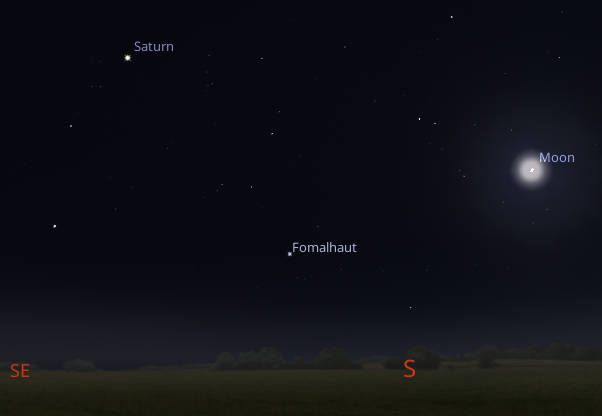
Saturn with Fomalhaut and the Moon tonight at 9:00 PM, October 29, 2025.
Saturn with Fomalhaut and the Moon tonight at 9:00 PM, October 29, 2025. Created using Stellarium.
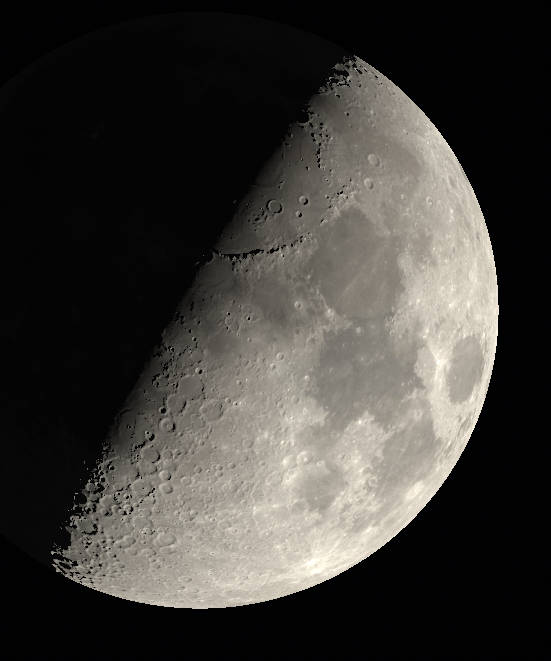
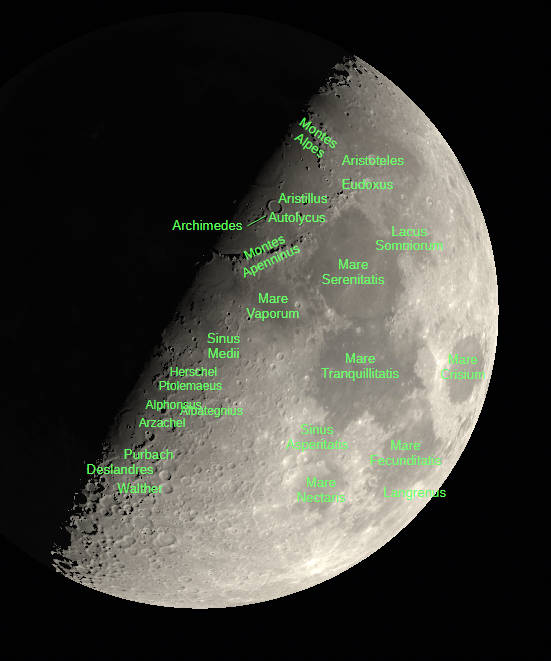
The first quarter Moon tonight, October 29, 2025. A view visible in small telescopes showing an image with and without selected features labeled. Created using Stellarium, LibreOffice Draw, and GIMP.
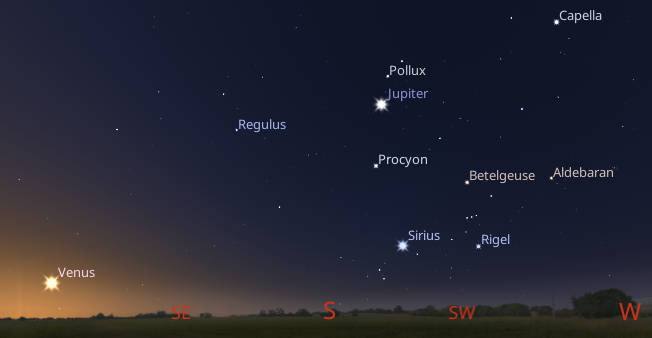
Venus and Jupiter are visible in the east and southern sky among the winter stars at 7:30 AM tomorrow morning, October 30, 2025.
Venus and Jupiter are visible in the east and southern sky among the winter stars at 7:30 AM tomorrow morning, October 30, 2025. Created using Stellarium.
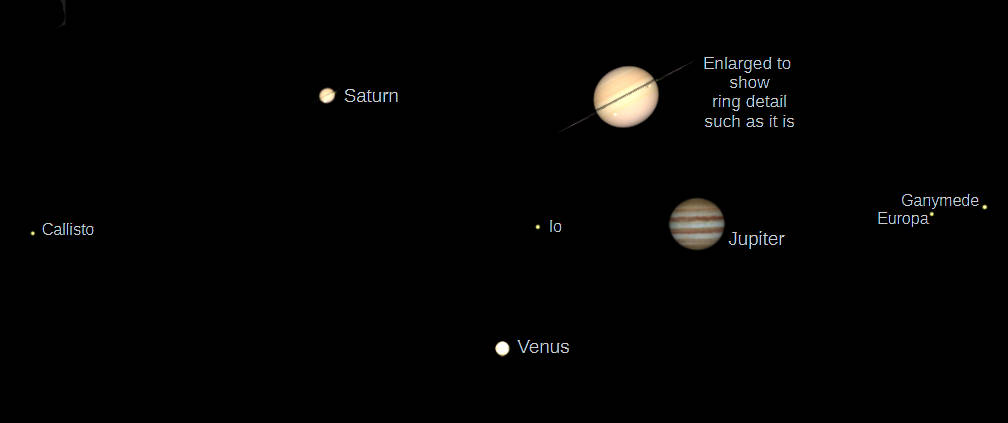
Telescopic Saturn, Jupiter and Venus
Telescopic Saturn, Jupiter and Venus (north up) as they would be seen in a small telescope with the same magnification. On the evening of the October 29, 2025, Saturn will be 19.0″ in diameter, but its rings, being nearly edge on, may not be visible at all though they extend to 44.2″, they are tilted 0.7° from being edge on. Titan is transiting the planet at that time. At 6 AM on the morning of October 30, 2025, Jupiter will be 40.4″ in diameter. At 7:30 AM, Venus’ apparent diameter will be 10.5″, and be 95.9% illuminated. It’s on the far side of the Sun. The (”) symbol means seconds of arc, or 1/3600th of a degree. Created using Cartes du Ciel (Sky Charts), LibreOffice Draw and GIMP.
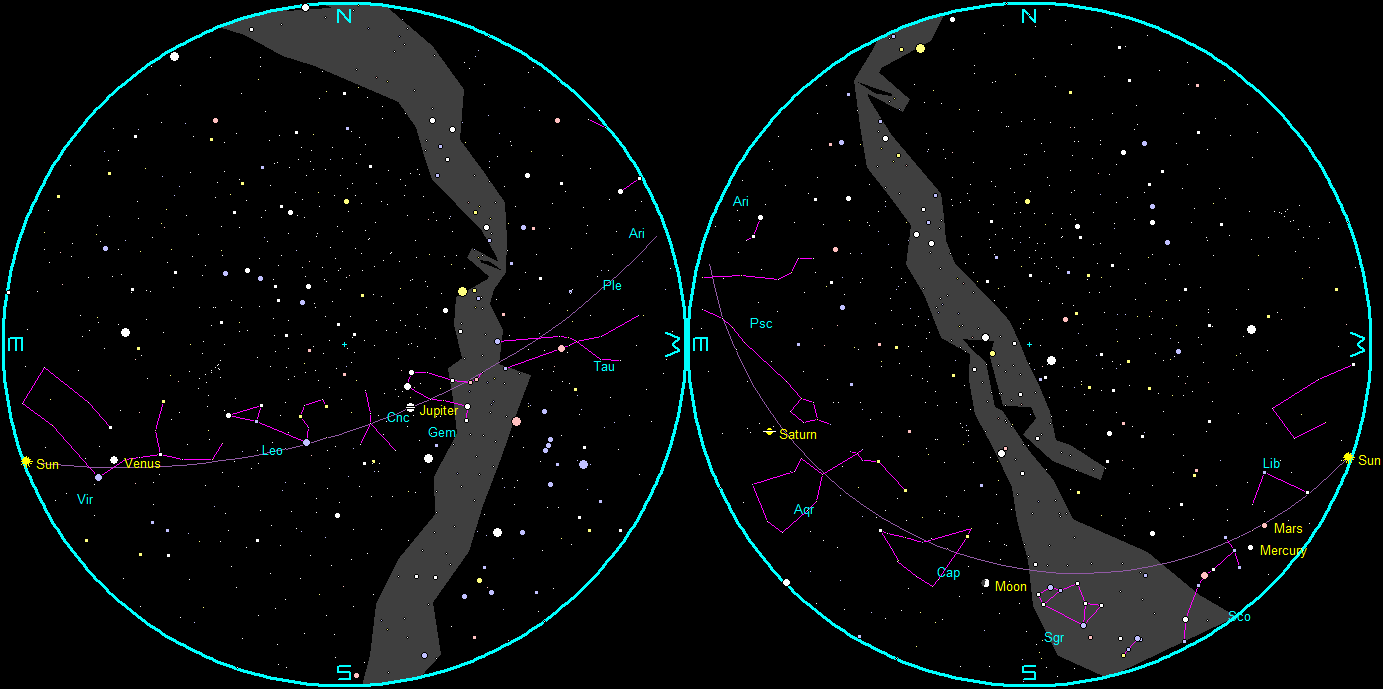
The naked-eye planets and the Moon at sunset and sunrise on a single night, starting with sunset on the right on October 29th, 2025. The night ends on the left with sunrise on the 30th.
The naked-eye planets and the Moon at sunset and sunrise on a single night, starting with sunset on the right on October 29th, 2025. The night ends on the left with sunrise on the 30th. Click or tap on the image to enlarge it. Created using my LookingUp app and GIMP.
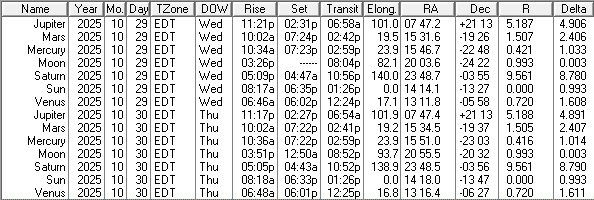
A low precision ephemeris of the Sun Moon and naked eye planet positions for today and tomorrow, October 29th and 30th, 2025.
This is a low precision ephemeris of the Sun Moon and naked eye planet positions for today and tomorrow, October 29th and 30th, 2025. Some of the columns are self-explanatory, others are not. The transit column is the time that the body crosses the meridian and is due south. Elong, for elongation, is the angle between the Sun and that body. RA is right ascension, which is the object’s east-west position on the celestial sphere in hours and minutes. Dec is declination which is the north-south position of the object on the celestial sphere in degrees and minutes. R is the distance of that object from the Sun in astronomical units. An astronomical unit is about 93 million miles or 150 million kilometers. And Delta is the distance of that object from the Earth, also in astronomical units. I omit the ‘m’ in am and pm for compactness. The data was generated using my LookingUp for DOS app and displayed as a table by my Ephemeris Helper app.

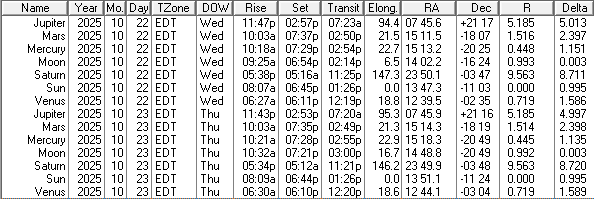
Ephemeris: 10/22/2025 – Taking our weekly look at the whereabouts of the naked-eye planets

October 22, 2025 Comments off

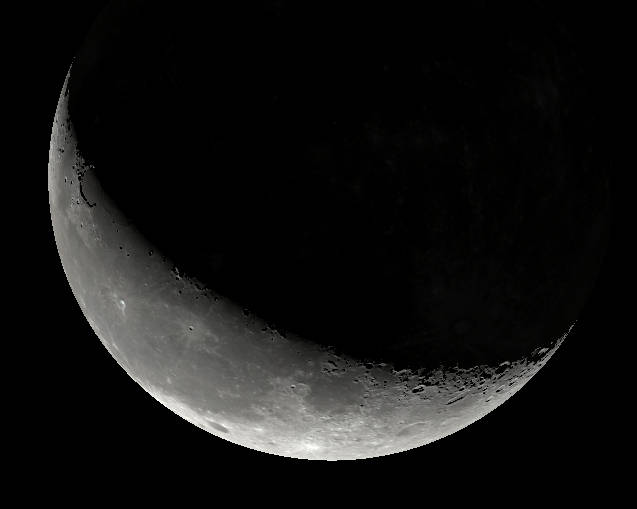
This is Ephemeris for Wednesday, October 22nd. Today the Sun will be up for 10 hours and 38 minutes, setting at 6:45, and it will rise tomorrow at 8:09. The Moon, 1 day past new, will set at 6:54 this evening.

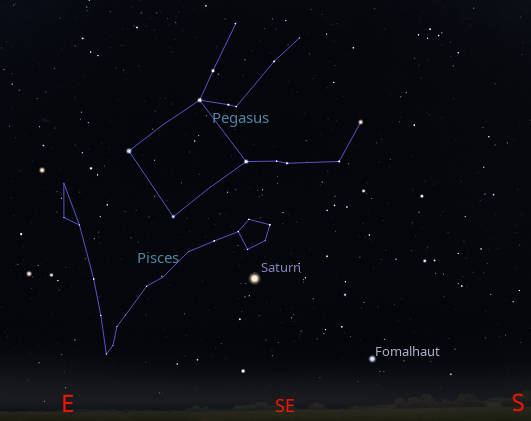
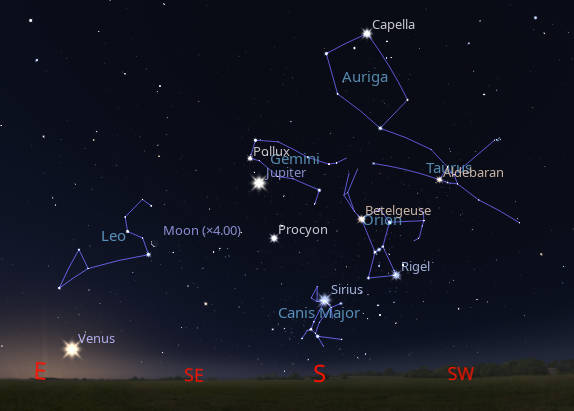
Let’s take our weekly look at the whereabouts of the naked-eye planets. Saturn is the brightest star like object in the east southeastern sky at 8 PM. In a telescope Saturn sports a very thin ring, eight tenths of a degree from being edge on in telescopes. Many times I’ve been asked whether they can see Saturn’s rings in their telescope. Normally I’d say yes. Currently, the rings appear very thin and can be difficult to pick up. Jupiter will finally rise before midnight, barely, at 11:50 PM. By 7 AM, it will appear high in the south-southeast, below the stars of Gemini, with Orion and the other bright stars of winter in the south. Brilliant Venus, which will rise at 6:30 AM will be very low in the east at 7 AM.

The astronomical event times given in this blog are for the Traverse City/Interlochen area of Michigan (Lat 44.7° N, Long 85.7° W; EDT, UT – 4 hours) unless stated otherwise. Times will be different for other locations.

Addendum
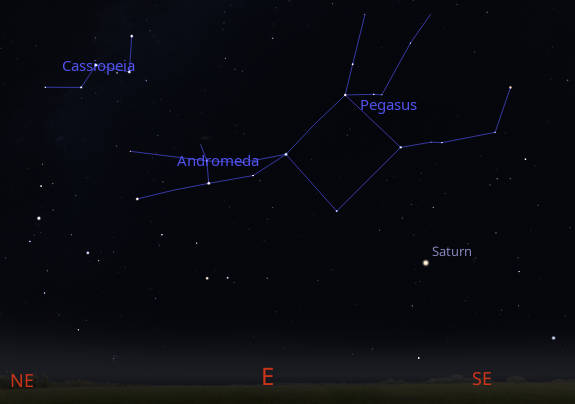
Saturn with the constellations Pegasus, Andromeda and Cassiopeia in the southeastern sky at 8:00 PM, October 22, 2025. Created using Stellarium.
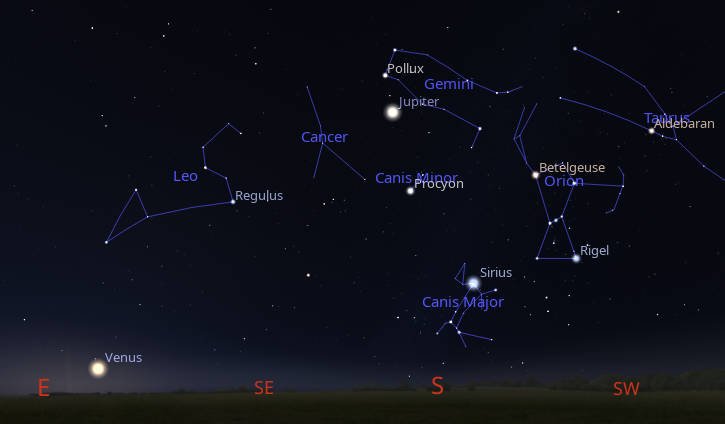
Jupiter with the stars and constellations of winter, and below is the just risen Venus at 7 AM.
Jupiter with the stars and constellations of winter. A preview of the evening skies a few months from now, but in the morning at 7:00 AM, October 22, 2025. Leo, a spring constellation is up at that, and below is the just risen Venus. Created using Stellarium.
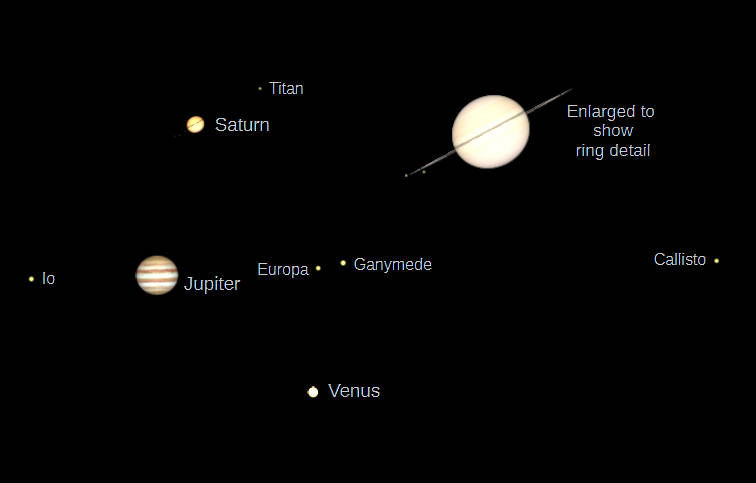
Telescopic Saturn, Jupiter and Venus.
Telescopic Saturn, Jupiter and Venus (north up) as they would be seen in a small telescope with the same magnification. On the evening of the October 22, 2025, Saturn will be 19.1″ in diameter, but its rings, being nearly edge on, should show up brighter than seen here, and extend to 44.5″. They are tilted 0.8° from being edge on. At 7 AM on the morning of October 23, 2025, Jupiter will be 39.5″ in diameter. Venus’ apparent diameter will be 10.5″, and be 95.0% illuminated. It’s on the far side of the Sun. The (”) symbol means seconds of arc, or 1/3600th of a degree. Created using Cartes du Ciel (Sky Charts), LibreOffice Draw and GIMP.
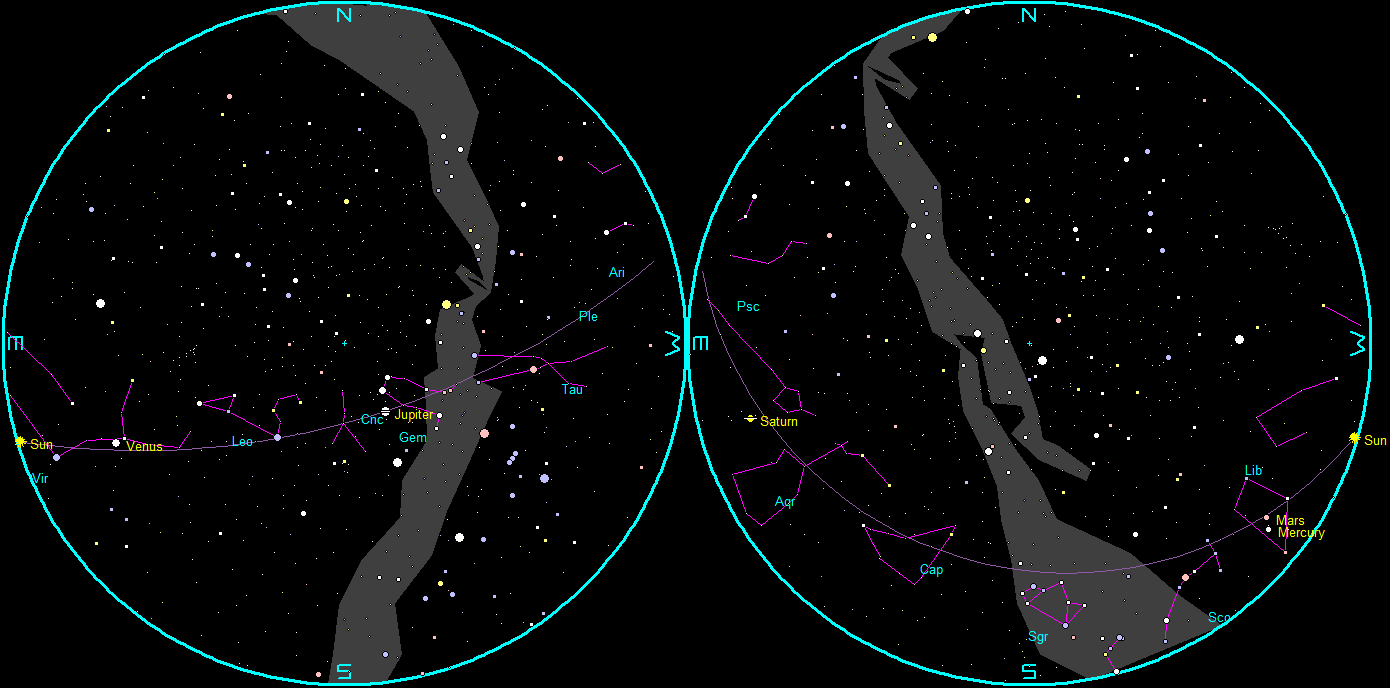
The naked-eye planets and the Moon at sunset and sunrise on a single night.
The naked-eye planets and the Moon at sunset and sunrise on a single night, starting with sunset on the right on October 22nd, 2025. The night ends on the left with sunrise on the 23rd. Click or tap on the image to enlarge it. Created using my LookingUp app and GIMP.
A low precision ephemeris of the Sun Moon and naked eye planet positions for today and tomorrow, October 22nd and 23rd, 2025.
This is a low precision ephemeris of the Sun Moon and naked eye planet positions for today and tomorrow, October 22nd and 23rd, 2025. Some of the columns are self-explanatory, others are not. The transit column is the time that the body crosses the meridian and is due south. Elong, for elongation, is the angle between the Sun and that body. RA is right ascension, which is the object’s east-west position on the celestial sphere in hours and minutes. Dec is declination which is the north-south position of the object on the celestial sphere in degrees and minutes. R is the distance of that object from the Sun in astronomical units. An astronomical unit is about 93 million miles or 150 million kilometers. And Delta is the distance of that object from the Earth, also in astronomical units. I omit the ‘m’ in am and pm for compactness. The data was generated using my LookingUp for DOS app and displayed as a table by my Ephemeris Helper app.

Ephemeris: 10/15/2025 – Taking our weekly look at the whereabouts of the naked-eye planets

October 15, 2025 Comments off

This is Ephemeris for Wednesday, October 15th. Today the Sun will be up for 10 hours and 58 minutes, setting at 6:57, and it will rise tomorrow at 7:59. The Moon, 2 days past last quarter, will rise at 2:47 tomorrow morning.

Let’s take our weekly look at the whereabouts of the naked-eye planets. Saturn is the brightest star like object in the east southeastern sky at 8 PM. In a telescope Saturn sports a very thin ring, 1° from being edge on in telescopes. Many times I’ve been asked whether they can see Saturn’s rings in their telescope. Normally I’d say yes. Currently, the rings appear very thin and can be difficult to pick up. Jupiter will rise at 12:11 AM. By 7 AM, it will appear high in the south-southeast, below the stars of Gemini, with Orion and the other bright stars of Winter in the south. Brilliant Venus, which will rise at 6:12 AM will be low in the east at 7 AM. Tomorrow morning the waning crescent of the Moon will appear between the two planets.

The astronomical event times given in this blog are for the Traverse City/Interlochen area of Michigan (Lat 44.7° N, Long 85.7° W; EDT, UT – 4 hours) unless stated otherwise. Times will be different for other locations.

Addendum
Saturn with the constellations Pisces and Pegasus in the southeastern sky
Saturn with the constellations Pisces and Pegasus in the southeastern sky at 9:00 PM, October 15, 2025. Created using Stellarium.
Jupiter with the stars and constellations of winter. A preview of the evening skies a few months from now, but tomorrow morning at 7:00 AM.
Jupiter with the stars and constellations of winter. A preview of the evening skies a few months from now, but in the morning at 7:00 AM, October 16, 2025. Leo, a spring constellation is up at that time with the waning crescent Moon (enlarged by a factor of 4 for visibility) and below is the just risen Venus. Created using Stellarium.
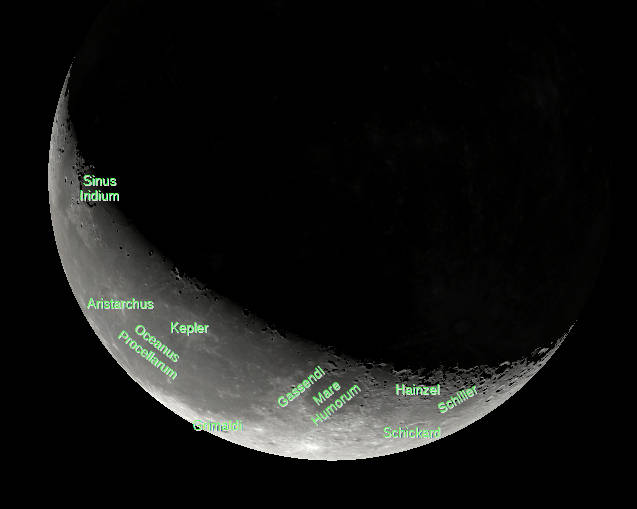
The Moon, tomorrow morning, October 16, 2025. A view visible in small telescopes showing an image with and without selected features labeled. Created using Stellarium, LibreOffice Draw, and GIMP.
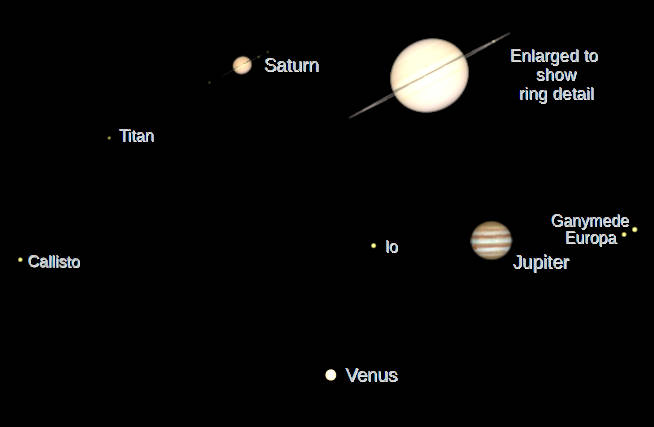
Telescopic Saturn, Jupiter and Venus (north up) as they would be seen in a small telescope with the same magnification. On the evening of the October 15, 2025, Saturn will be 19.″ in diameter, but its rings, being nearly edge on, should show up brighter than seen here, and extend to 44.8″. They are tilted 1.0° from being edge on. At 7 AM on the morning of October 16, 2025, Jupiter will be 38.7″ in diameter. Venus’ apparent diameter will be 10.7″, and be 93.9% illuminated. It’s on the far side of the Sun. The (”) symbol means seconds of arc, or 1/3600th of a degree. Created using Cartes du Ciel (Sky Charts), LibreOffice Draw and GIMP.
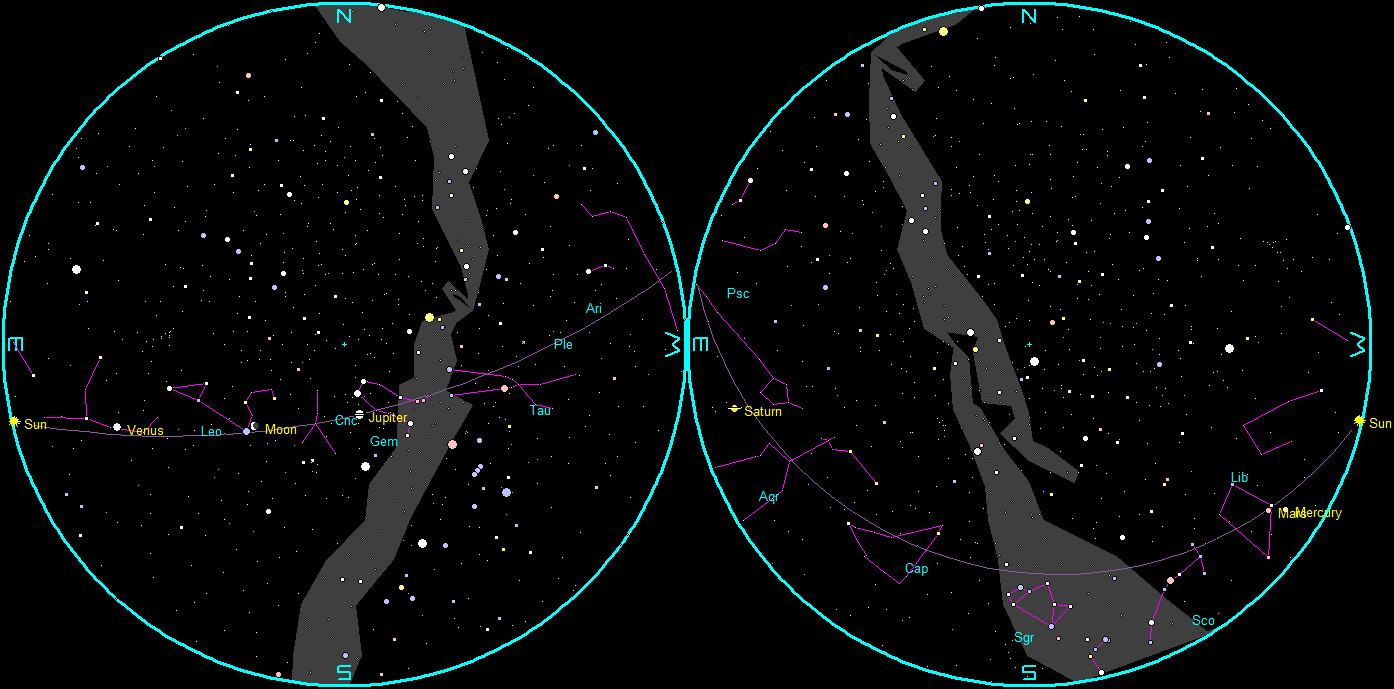
The naked-eye planets and the Moon at sunset and sunrise on a single night
The naked-eye planets and the Moon at sunset and sunrise on a single night, starting with sunset on the right on October 15th, 2025. The night ends on the left with sunrise on the 16th. Mars and Mercury’s labels overlat on the right side of the chart. Mars is to the left with a reddish color. Click or tap on the image to enlarge it. Created using my LookingUp app and GIMP.
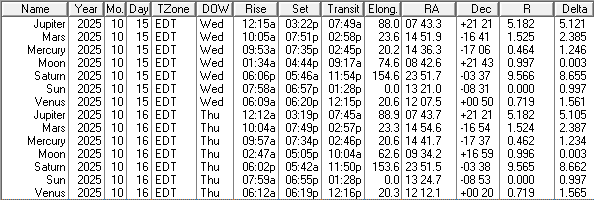
This is a low precision ephemeris of the Sun Moon and naked eye planet positions for today and tomorrow.
This is a low precision ephemeris of the Sun Moon and naked eye planet positions for today and tomorrow, October 15th and 16th, 2025. Some of the columns are self-explanatory, others are not. The transit column is the time that the body crosses the meridian and is due south. Elong, for elongation, is the angle between the Sun and that body. RA is right ascension, which is the object’s east-west position on the celestial sphere in hours and minutes. Dec is declination which is the north-south position of the object on the celestial sphere in degrees and minutes. R is the distance of that object from the Sun in astronomical units. An astronomical unit is about 93 million miles or 150 million kilometers. And Delta is the distance of that object from the Earth, also in astronomical units. I omit the ‘m’ in am and pm for compactness. The data was generated using my LookingUp for DOS app and displayed as a table by my Ephemeris Helper app.