Archive
04/01/2015 – Ephemeris – No fooling, it’s time to look at the bright planets for this week
Ephemeris for April Fools Day, Wednesday, April 1st. The Sun will rise at 7:24. It’ll be up for 12 hours and 45 minutes, setting at 8:10. The Moon, 3 days before full, will set at 6:29 tomorrow morning.
Lets take a look at the bright planets for this week. Brilliant Venus is in the west by 8:40 p.m. It will set at 11:23 p.m. Mars appears much lower and to the right of it. The Red Planet will set tonight at 9:48. Jupiter will appear In the southeastern sky in the evening. It will set at 5:20 a.m. It’s near the sickle-shaped head of Leo the lion, and it’s the second brightest star-like object in the sky after Venus. All four moons will be visible in telescopes tonight, but tomorrow morning the moon Io will duck behind Jupiter at 2:55, but will not pop into sunlight until after Jupiter sets. Early risers will be able to spot Saturn which will rise in the east-southeast at 12:30 a.m. It will be low in the south at 5 to 6 a.m.
Times are for the Traverse City/Interlochen area of Michigan. They may be different for your location.
Addendum
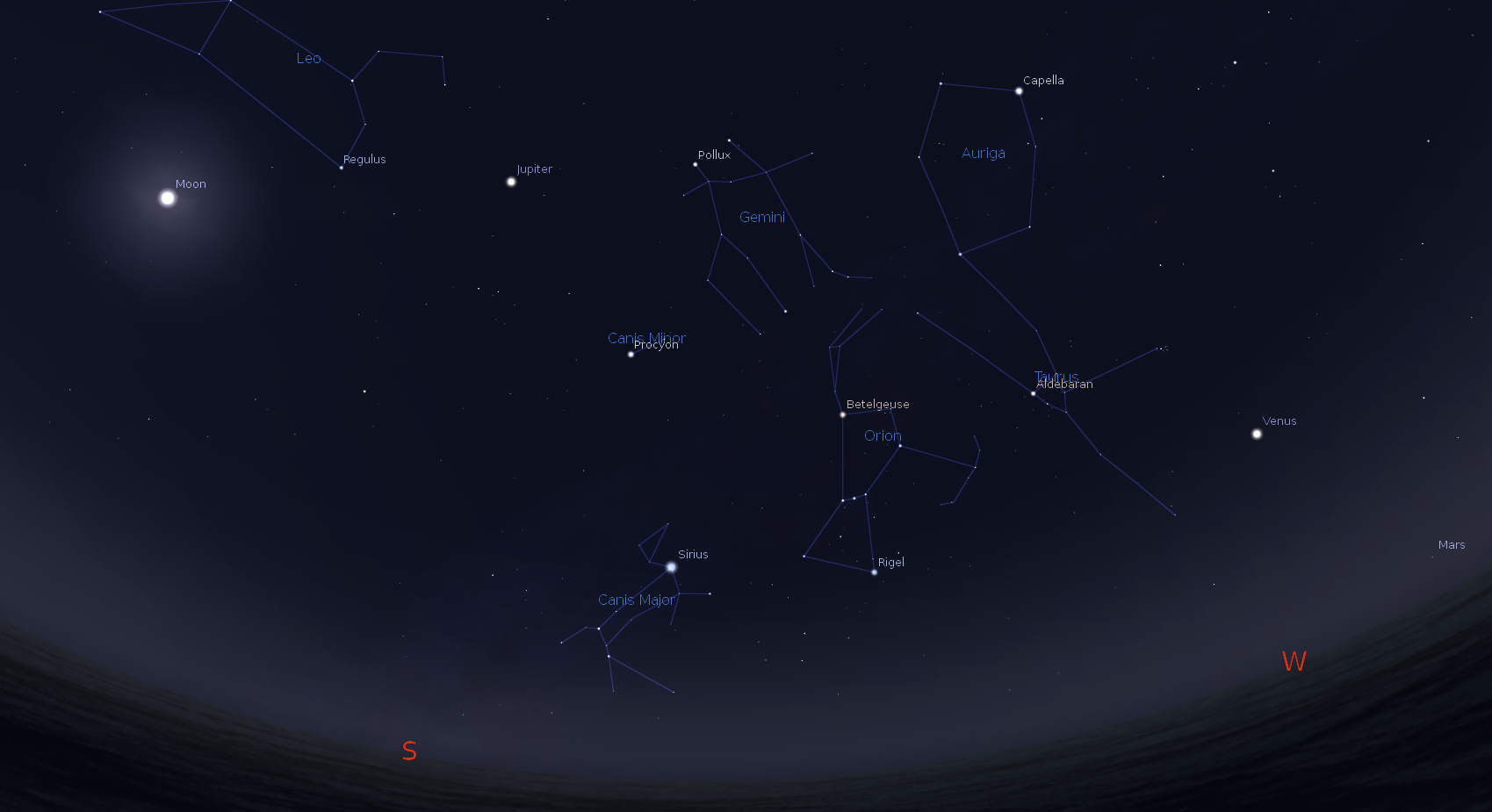
The Moon, evening planets and bright constellations at 9:30 p.m. April 1, 2015. Created using Stellarium.
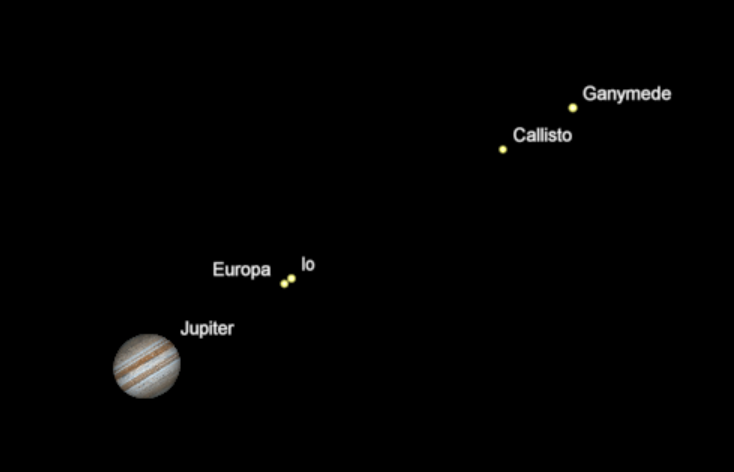
Jupiter as seen in a telescope at 9:30 p.m. April 1, 2014. Europa will partially occult Io starting at 9:41 p.m. for 4 minutes. They will appear to merge. Later at 11:21 p.m. Io will be partially eclipsed in Europa’s shadow for about 4 minutes. Europa will dim slightly. Created using Cartes du Ceil (Sky Charts).
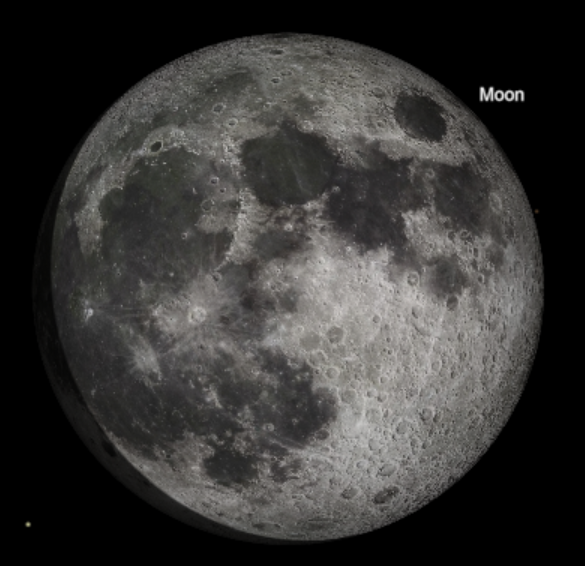
The Moon at 9:30 p.m. April 1, 2015. Created using Cartes du Ceil (Sky Charts).
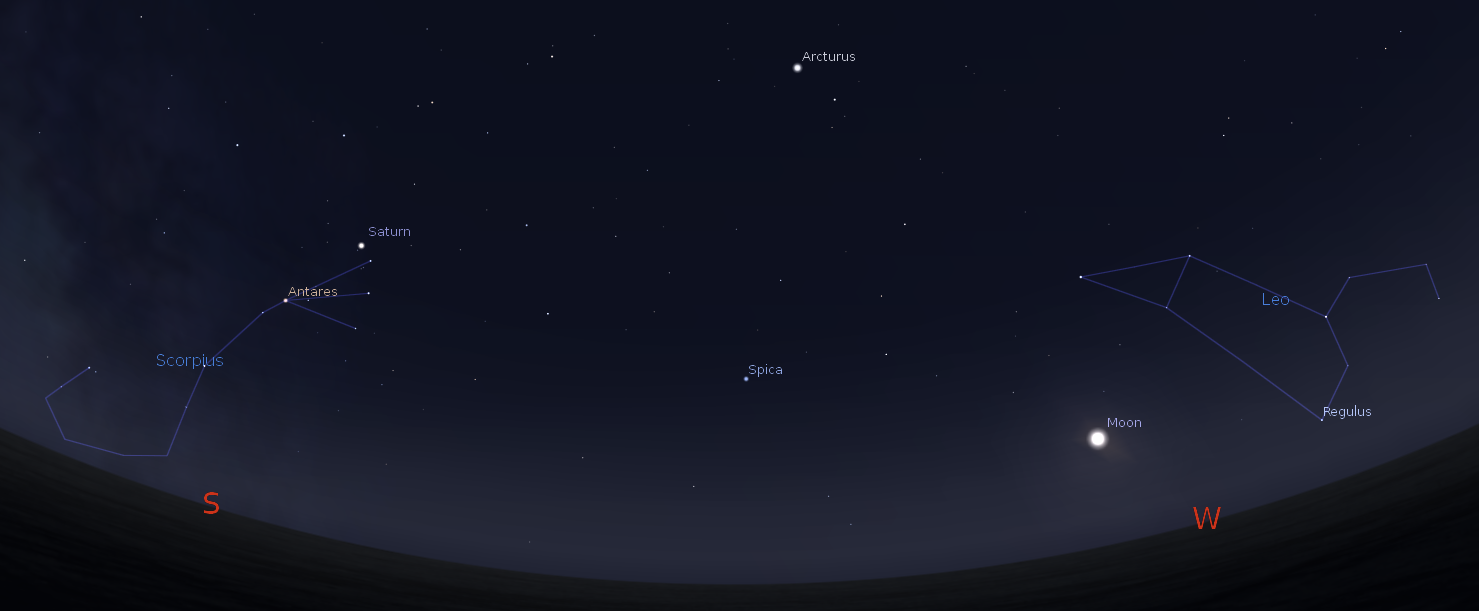
Saturn, the Moon with Scorpius and Leo at 5:30 a.m. April 2, 2015. Created using Stellarium.
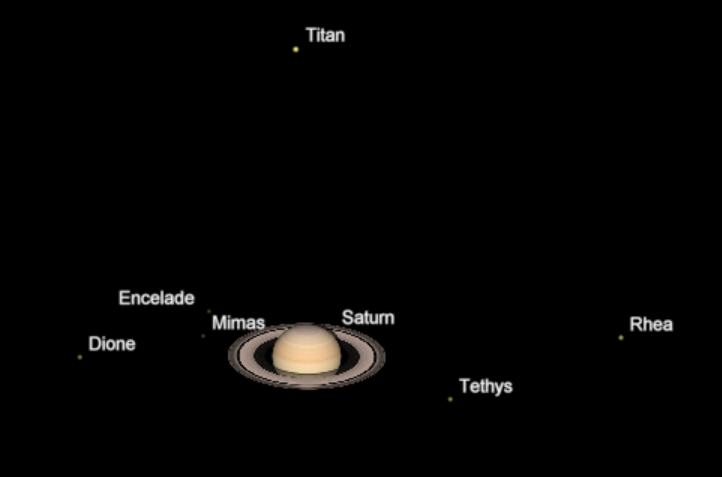
What Saturn and its moons might appear like in a telescope at 5:30 a.m., April 2, 2015. Small telescopes will show only the moon Titan. Created using Cartes du Ceil (Sky Charts).
03/25/2015 – Ephemeris – Where are the bright planets tonight?
Ephemeris for Wednesday, March 25th. The Sun will rise at 7:37. It’ll be up for 12 hours and 24 minutes, setting at 8:01. The Moon, 2 days before first quarter, will set at 2:13 tomorrow morning.
Lets take a look at the bright planets for this week. Brilliant Venus is in the west by 8:30 p.m. It will set at 11:07 p.m. Mars appears much lower and to the right of it. The Red Planet will set tonight at 9:48. Jupiter will appear In the southeastern sky in the evening. It will set at 5:48 a.m. It’s near the sickle-shaped head of Leo the lion, and it’s the second brightest star-like object in the sky after Venus. In telescopes tomorrow morning the moon Io will duck behind Jupiter at 1:05, but will pop into sunlight a bit away from the planet on the other side at 4:23 a.m. because it also will be hidden in Jupiter’s shadow. Early risers will be able to spot Saturn which will rise in the east-southeast at 12:59 a.m. It will be low in the south at 6 to 7 a.m.
Times are for the Traverse City/Interlochen area of Michigan. They may be different for your location.
Addendum
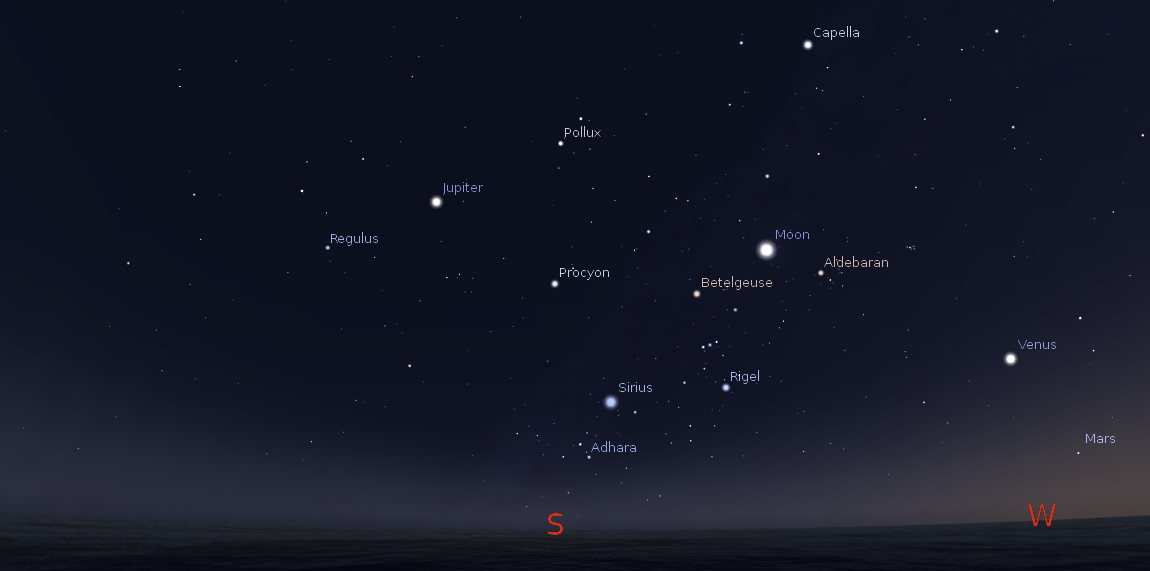
The evening planets of Mars, Venus and Jupiter with the Moon and winter stars. Created using Stellarium.
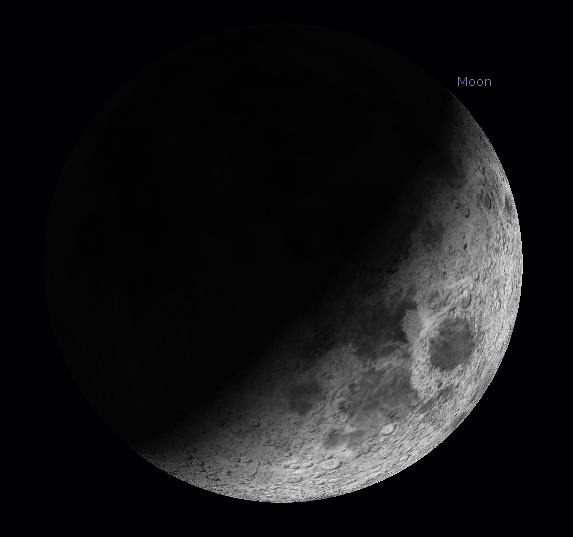
The Moon as it would appear in binoculars at 9 p.m. March 25, 2015. Created using Stellarium.
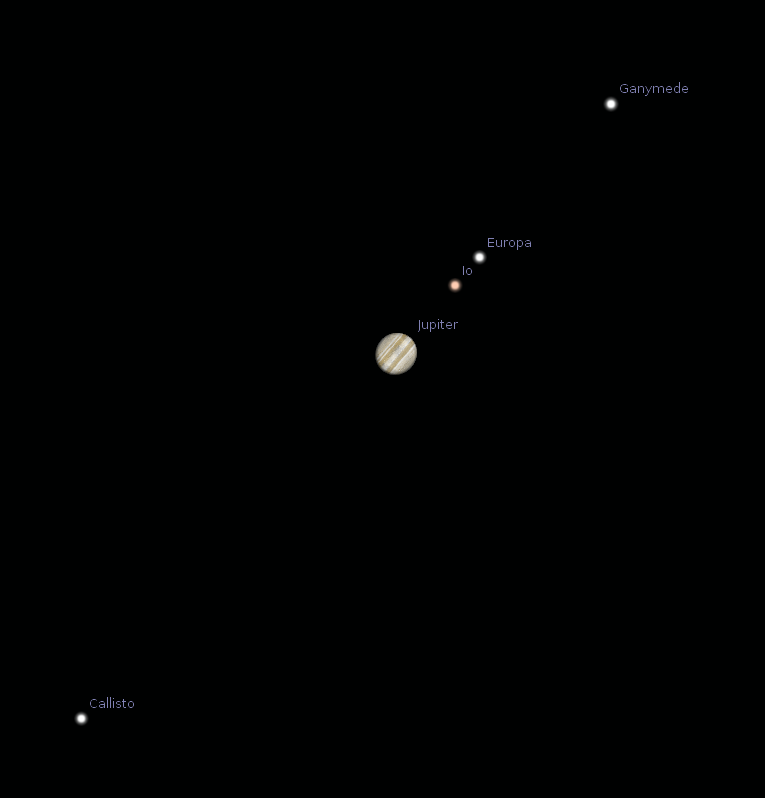
Jupiter and its moons at 9 p.m. March 25, 2015. Created using Stellarium.
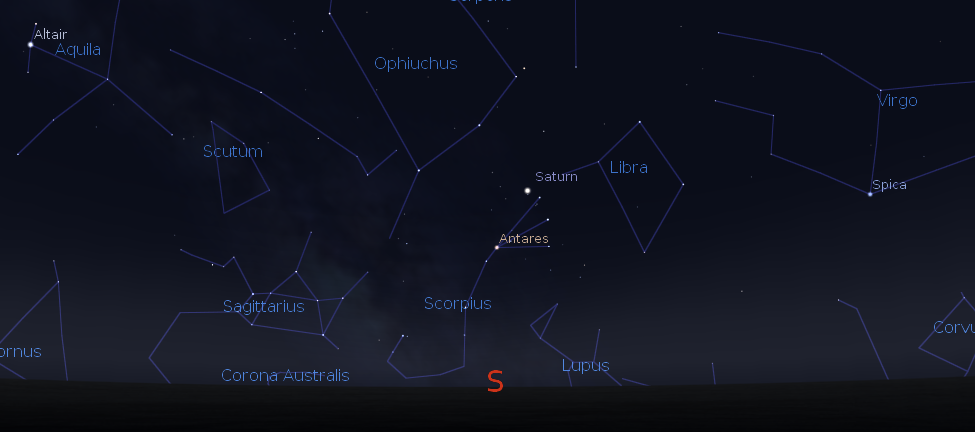
Saturn and the southern summer constellations at 6 a.m. on March 26, 2015. Created using Stellarium.
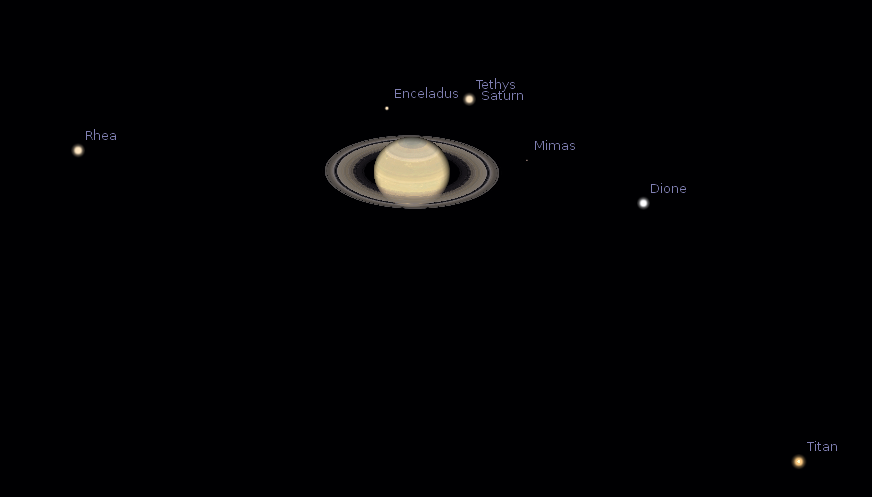
What Saturn and its moons might appear like in a telescope at 6 a.m., March 26, 2015. Small telescopes will show only the moon Titan. Created using Stellarium.
03/18/2015 Ephemeris – It’s Wednesday, so where are all the bright planets?
Ephemeris for Wednesday, March 18th. The Sun will rise at 7:50. It’ll be up for 12 hours and 2 minutes, setting at 7:52. The Moon, 2 days before new, will rise at 7:14 tomorrow morning.
Lets take a look at the bright planets for this week. Brilliant Venus is in the west by 8:30 p.m. It will set at 10:49 p.m. Mars appears below and right of it. The Red Planet will set tonight at 9:47. Jupiter will appear In the southeastern sky in the evening. It will set at 6:41 a.m. It’s near the sickle-shaped head of Leo the lion, and it’s the brightest star-like object in the sky after Venus sets. In telescopes tonight the moon Io will duck behind Jupiter at 11:17, but will pop into sunlight a bit away from the planet on the other side at 2:28 a.m. because it also will be hidden in Jupiter’s shadow. Early risers will be able to spot Saturn which will rise in the east-southeast at 1:27 a.m. It will be low in the south at 6 to 7 a.m.
Times are for the Traverse City/Interlochen area of Michigan. They may be different for your location.
Addendum
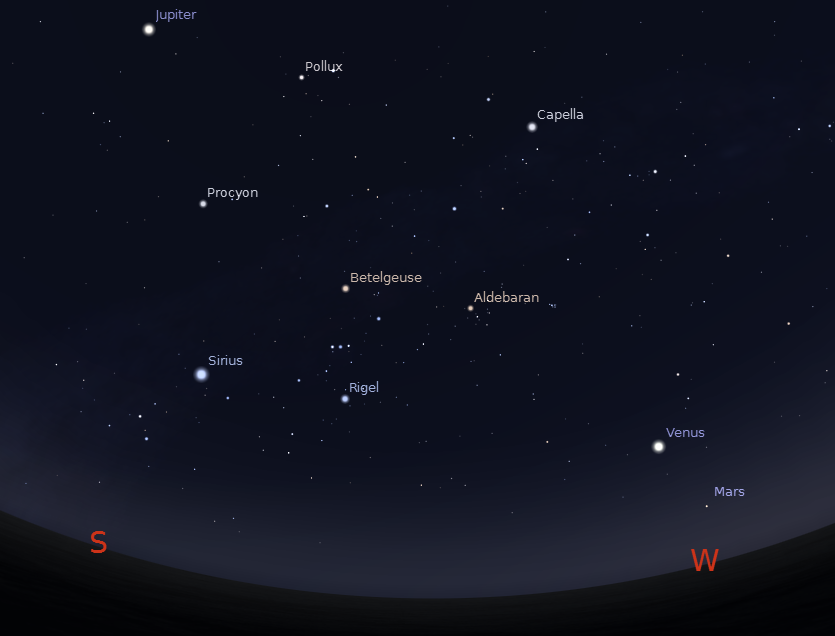
Jupiter, Venus and Mars at 9 p.m. March 18, 2015. Created using Stellarium.
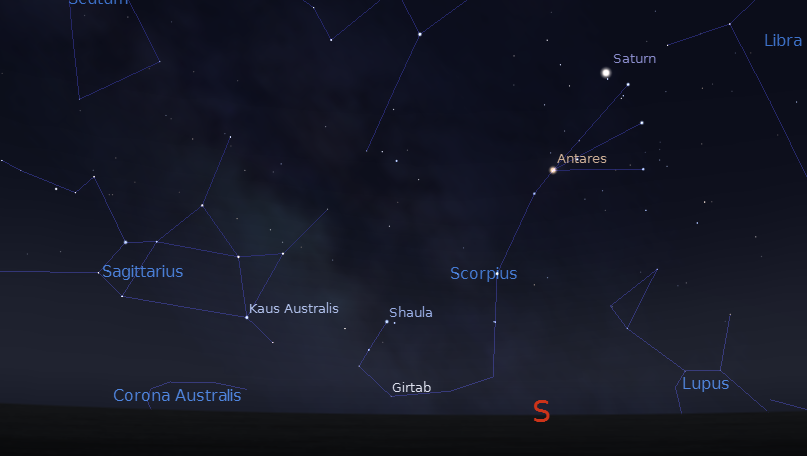
Saturn and the summer constellations of Scorpius and Sagittarius at 6:30 a.m. March 19, 2015. Created using Stellarium.
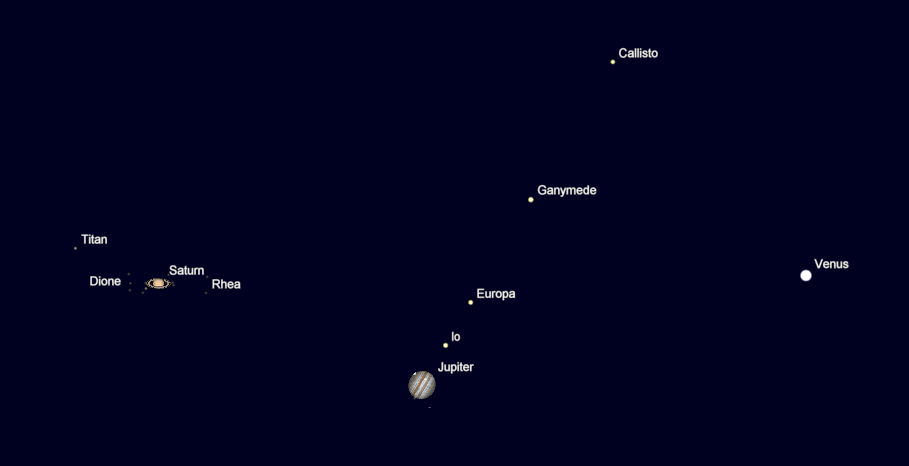
Planets to the same scale as viewed in a telescope of the same power. Venus and Jupiter at 8:30 p.m. on March 18, 2015. Saturn at 6:30 a.m. on March 19. 2015. Created using Cartes du Ceil (Sky Charts).
03/17/2015 – Ephemeris – Jupiter’s cloud stripes
Ephemeris for St. Patrick’s Day, Tuesday, March 17th. The Sun will rise at 7:51. It’ll be up for 11 hours and 59 minutes, setting at 7:51. The Moon, 3 days before new, will rise at 6:37 tomorrow morning.
Jupiter is the one planet that we can see detail on with telescopes in the evening sky. Venus is so bright that it is hard to even see its gibbous phase. Actually the best way to see Venus is during the day with the blue sky around it. Jupiter is a big planet, 11 times the Earth’s diameter and 1,300 times it volume. Despite this it is only 318 times the Earth’s mass, so much of its mass is the atmosphere. It’s rotation rate is just under 10 hours at its equator. This drops with latitude, so its atmosphere is twisted into alternate belts and zones. The belts are dark brown while the zones are lighter. They move around the planet at different speeds causing storms that their boundaries. The Great Red Spot is a anticyclone in the south.
Times are for the Traverse City/Interlochen area of Michigan. They may be different for your location.
Addendum
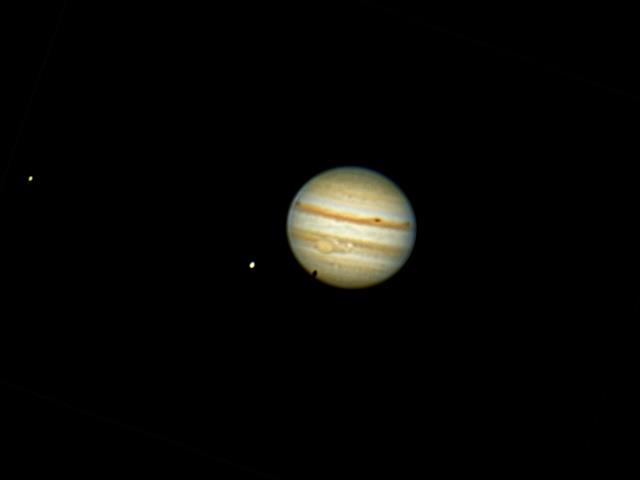
Jupiter by Scott Anttila November 14, 2011. With shadow on the planet and the Great Red Spot.
03/13/2015 – Ephemeris – Leo rising
Ephemeris for Friday, March 13th. The Sun will rise at 7:59. It’ll be up for 11 hours and 46 minutes, setting at 7:46. The Moon, at last quarter today, will rise at 3:35 tomorrow morning.
The constellation Leo the lion is now rising in the east at 9 pm. It’s below and left of the Big Dipper higher up in the east-northeast. Leo is marked by two sets of easily recognizable stars. The front of him is a backward question mark of stars, also known as the Sickle that mark his head and mane, along with the front part of his body. Regulus is the star at the bottom of that backwards question mark. It’s the Little King Star. Jupiter this year is above right if it. The hind end of him is a triangle of stars ending with another bright star, but not as bright as Regulus. It’s Denebola which means Lion’s tail. It is thought when the sun was in this constellation long ago that the lions were driven by the heat to quench their thirst in the Nile river. Ancients physicians thought medicines were poison when the sun was here too.
Times are for the Traverse City/Interlochen area of Michigan. They may be different for your location.
Addendum
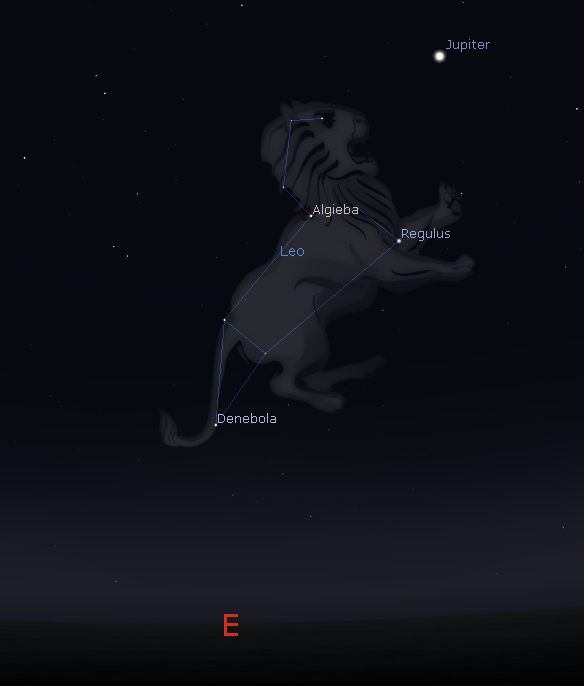
Leo rising in the east behind Jupiter at 9 p.m. on March 13, 2015. Created using Stellarium.
03/11/2015 – Ephemeris – On Wednesday we look at the bright planets
Ephemeris for Wednesday, March 11th. The Sun will rise at 8:02. It’ll be up for 11 hours and 40 minutes, setting at 7:43. The Moon, 2 days before last quarter, will rise at 1:42 tomorrow morning.
Lets take a look at the bright planets for this week. Brilliant Venus is in the west by 8:30 p.m. It will set at 10:31 p.m. Mars appears below and right of it. The Red Planet will set tonight at 9:47. Jupiter will appear In the southeastern sky in the evening. It will set at 6:41 a.m. It’s near the sickle-shaped head of Leo the lion, and it’s the brightest star-like object in the sky after Venus sets. In telescopes tonight the moon Io duck behind Jupiter at 9:29 early, but will pop into sunlight a bit away from the planet on the other side at 12:33 a.m. because it also will be hidden in Jupiter’s shadow. Early risers will be able to spot Saturn which will rise in the east-southeast at 1:54 a.m. It will appear below the Moon tomorrow morning.
Times are for the Traverse City/Interlochen area of Michigan. They may be different for your location.
Addendum
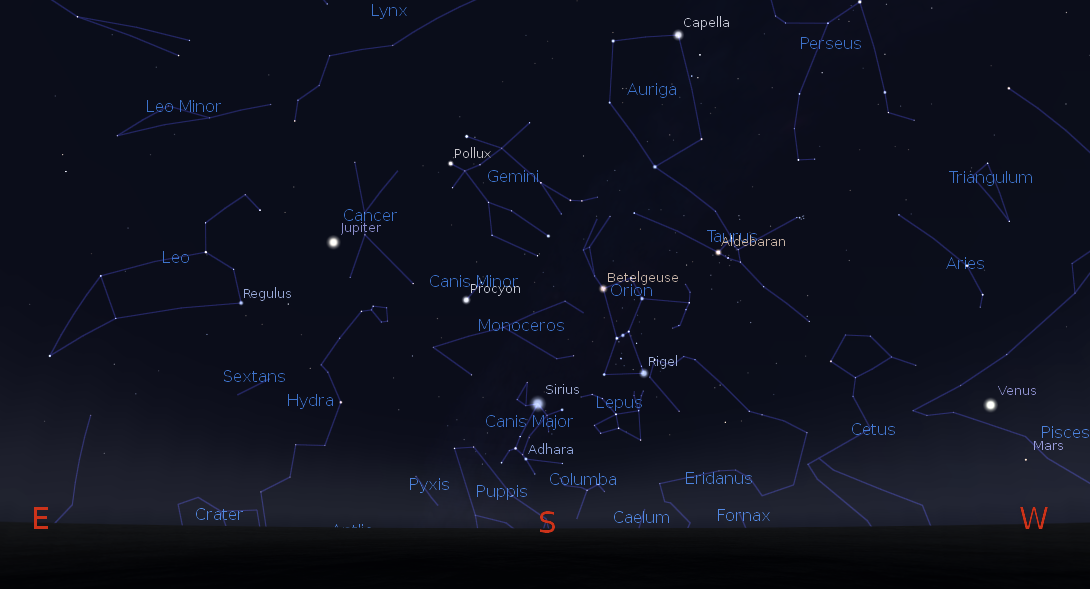
The evening planets Mars, Venus, and Jupiter with the winter constellations at 9 p.m. March 11, 2015. Created using Stellarium.
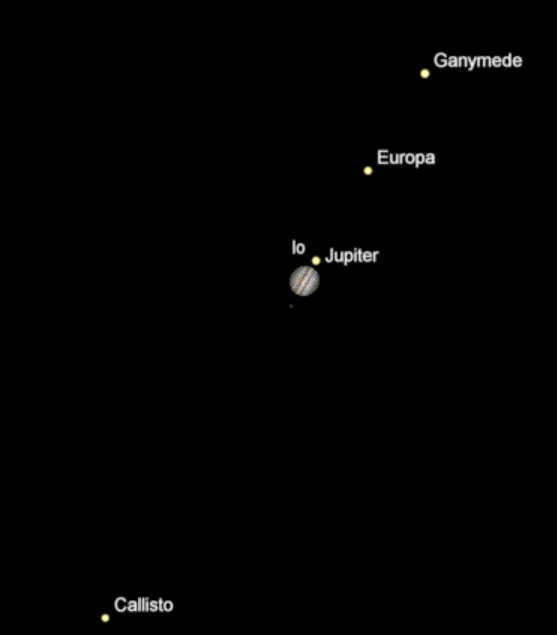
Jupiter and moons at 9 p.m. March 11, 2015, about 29 minutes before Io moves behind Jupiter. Created using Cartes du Ceil (Sky Charts).
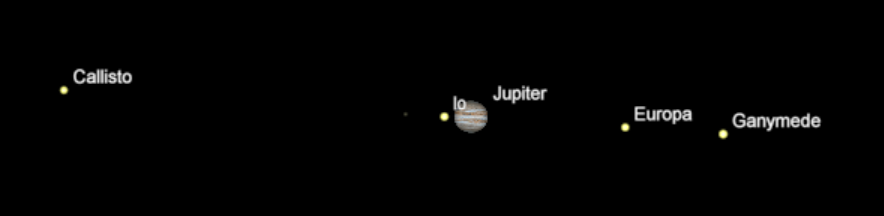
Jupiter and moons at 12:33 a.m. March 12, 2015, about when Io emerges into sunlight from Jupiter’s shadow. Created using Cartes du Ceil (Sky Charts).
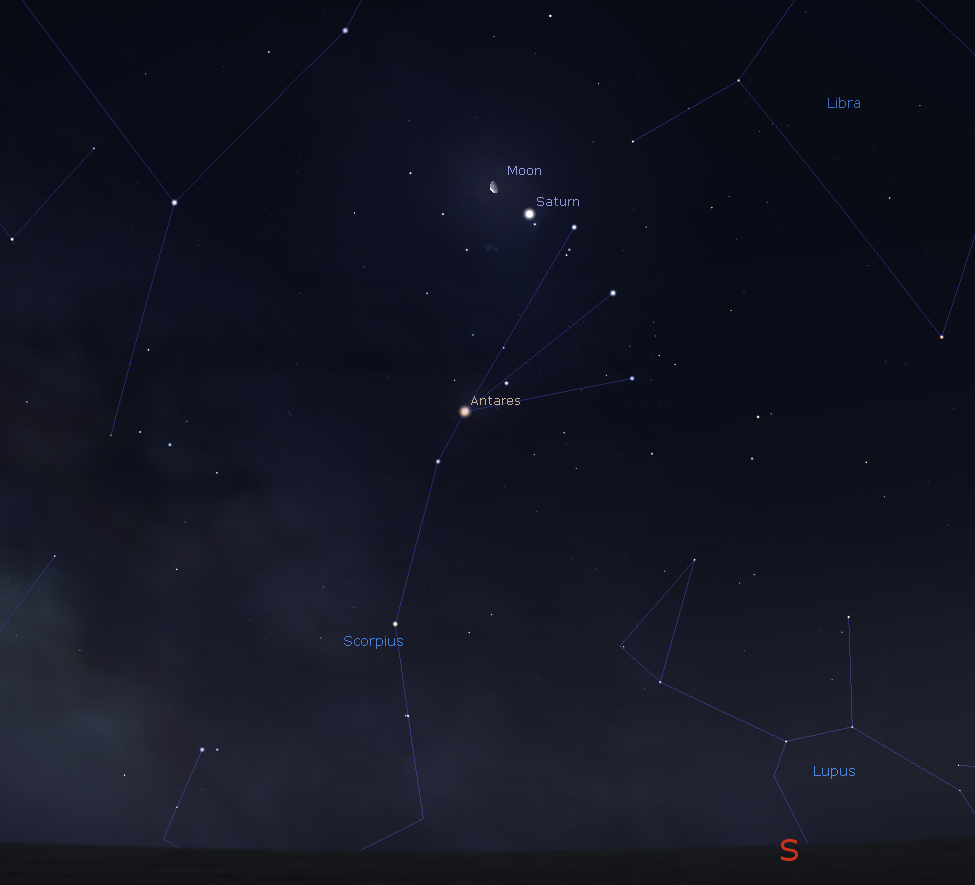
Saturn and the Moon in Scorpius in the south at 6 a.m. March 12, 2015. Created using Stellarium.
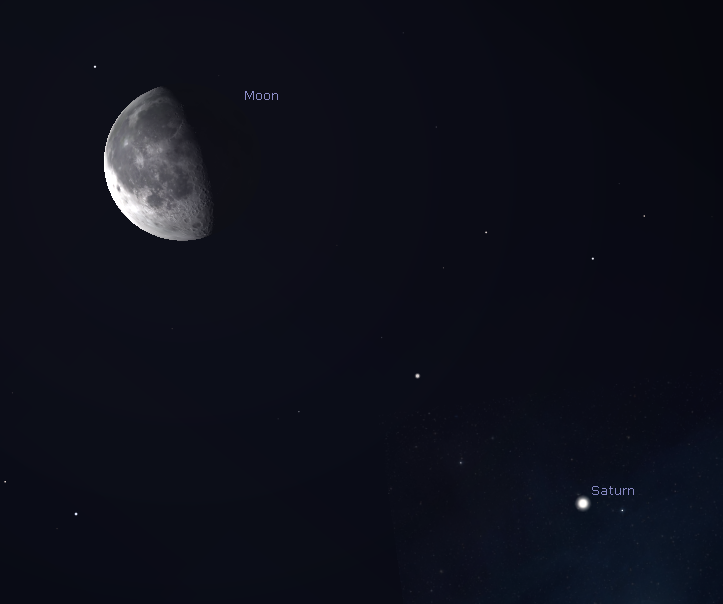
Closeup of Saturn and the Moon at 6 a.m. March 12, 2015. Created using Stellarium.
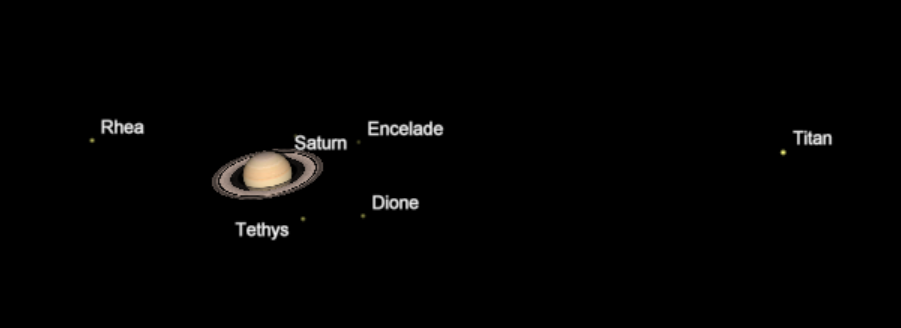
What Saturn and its moons might appear like in a telescope at 6 a.m., March 12, 2015. Small telescopes will show only the moon Titan. Created using Cartes du Ceil (Sky Charts).
03/04/2015 – Ephemeris – Our weekly look at the bright planets
Ephemeris for Wednesday, March 4th. The Sun will rise at 7:15. It’ll be up for 11 hours and 18 minutes, setting at 6:34. The Moon, 1 day before full, will set at 6:59 tomorrow morning.
Lets take a look at the bright planets for this week. Brilliant Venus is in the west by 7:30 p.m. It will set at 9:13 p.m. It’s separating from Mars which appears below and right of it. The Red Planet will set tonight at 8:47 p.m. Jupiter will appear In the southeastern sky in the evening. It will be up just about all night, and will set at 6:16 a.m. It’s near the sickle-shaped head of Leo the lion, and it’s the brightest star-like object in the sky. In telescopes tonight the moon Io will be behind Jupiter and will pop into sunlight a bit away from the planet at 9:39 p.m. Tomorrow night the 5th the moon Europa will duck behind Jupiter at 8:48 p.m. After that only 3 of the moons will be visible, until 12:57 a.m. when Europa will appear on the other side.* Early risers will be able to spot Saturn which will rise in the east-southeast at 1:25 a.m. It’s in the south at 6 a.m.
Times are for the Traverse City/Interlochen area of Michigan. They may be different for your location.
* Due to a date mix up the radio program may be incorrect. The occultation of Europa on the 5th being set on the 4th. The Io occultation is since added.
Addendum
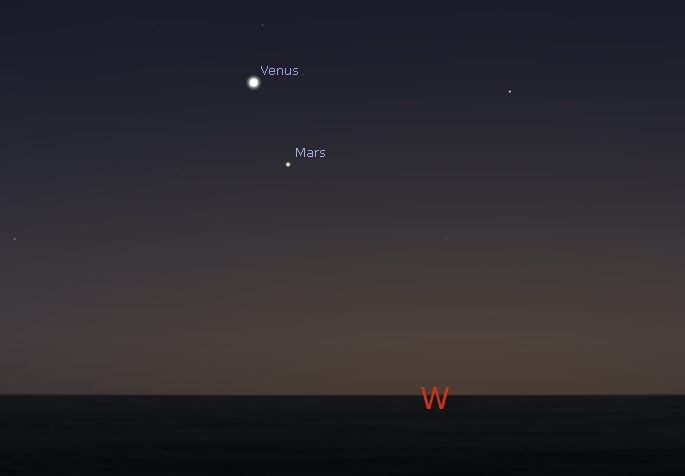
Venus and Mars in the west at 7:30 p.m. on March 4, 2015. Created using Stellarium.
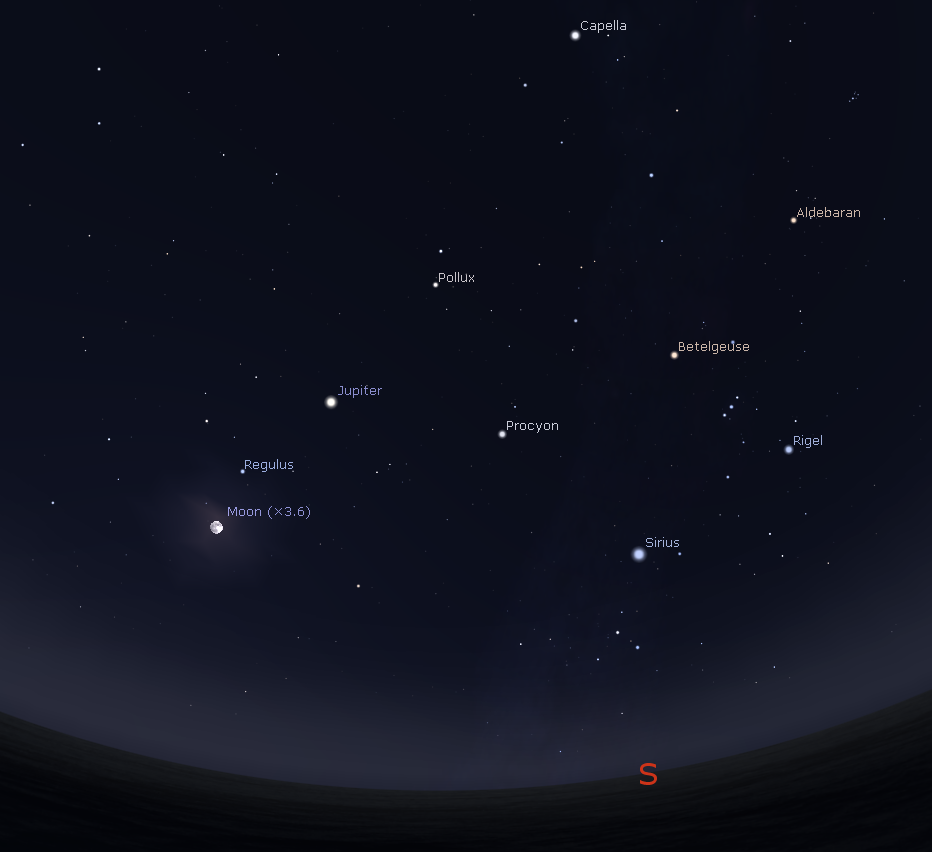
Jupiter, the full Moon and the winter stars at 9 p.m. on March 4, 2014. Created using Stellarium.
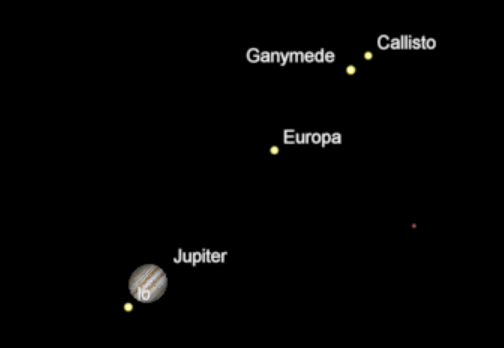
Jupiter and moons at 9:39 p.m., when Io leaves Jupiter’s shadow on March 4, 2015. Created using Cartes du Ceil (Sky Charts).
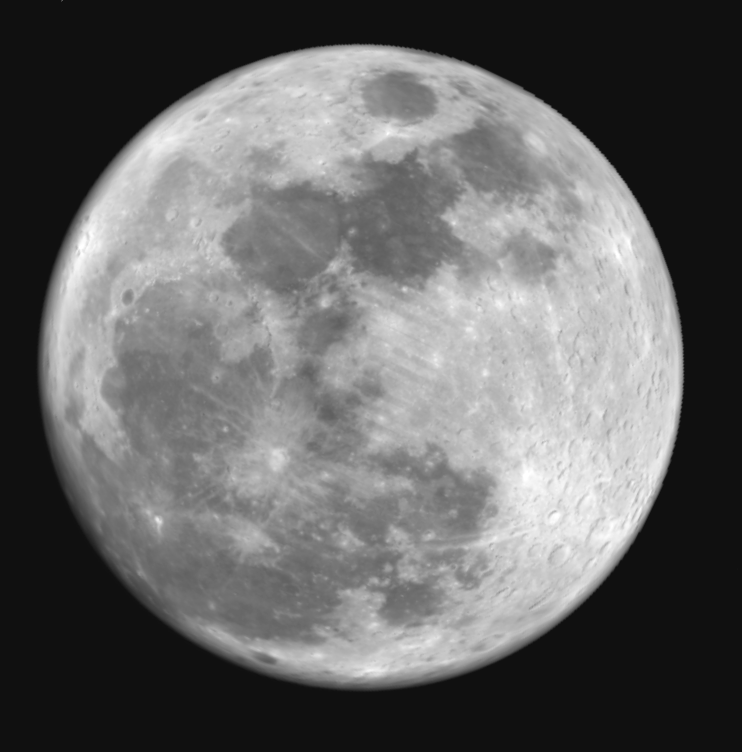
The nearly full moon at 9 p.m. on March 4, 2015. Created using Virtual Moon Atlas.
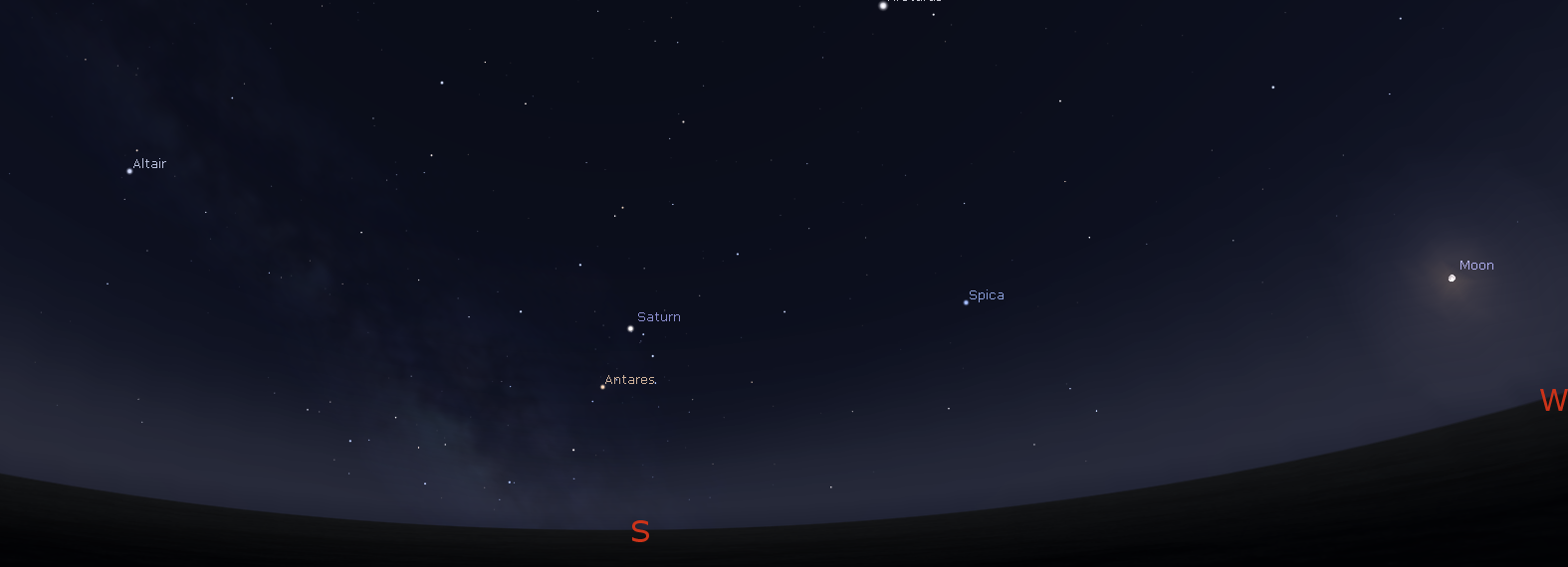
Looking south toward Saturn along with the summer stars and the setting Moon in the west at 6 a.m. March 5, 2015. Created using Stellarium.
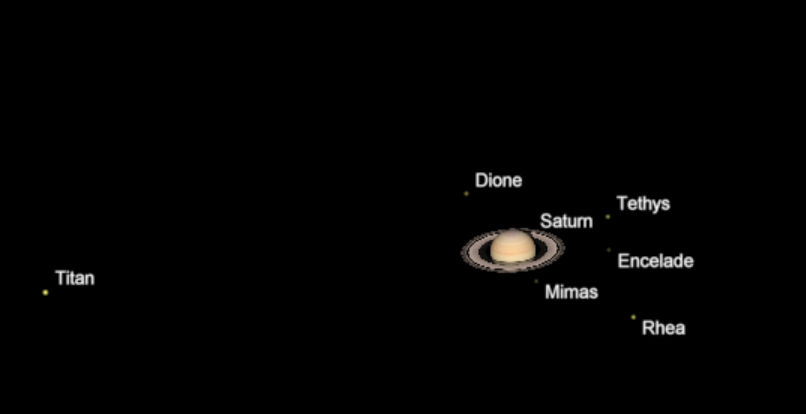
What Saturn and its moons might appear like in a telescope at 6 a.m., March 5, 2015. Small telescopes will show only the moon Titan. Created using Cartes du Ceil (Sky Charts).
02/25/2015 – Ephemeris – It’s planet day on Ephemeris
Ephemeris for Wednesday, February 25th. The sun will rise at 7:27. It’ll be up for 10 hours and 57 minutes, setting at 6:24. The moon, at first quarter today, will set at 2:28 tomorrow morning.
Lets take a look at the bright planets and a fading binocular comet for this week. Brilliant Venus is in the west-southwest by 7 p.m. It will set at 8:55 p.m. It’s separating from Mars which appears below and right of it. The Red Planet will set tonight at 8:46 p.m. Jupiter will appear In the southeastern sky in the evening. It will be up just about all night, and will set at 6:44 a.m. It’s near the sickle-shaped head of Leo the lion, and it’s the brightest star-like object in the sky. Early risers will be able to spot Saturn which will rise in the east-southeast at 1:48 a.m. It’s in the south at 6 a.m. Comet Lovejoy, visible in binoculars, is about half way from the star at the end of Andromeda, called Almaak and the “W” of Cassiopeia.
Times are for the Traverse City/Interlochen area of Michigan. They may be different for your location.
Addendum
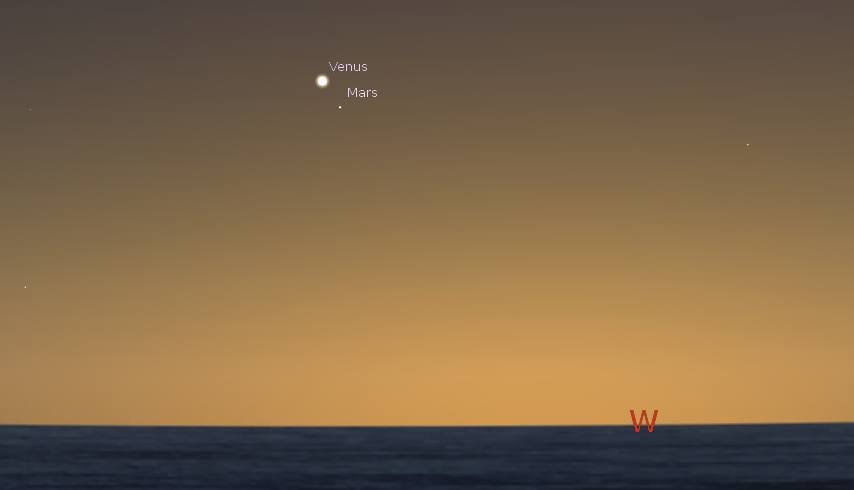
Venus and Mars low in the west after sunset. This is 7 p.m., February 25, 2015. Created using Stellarium.
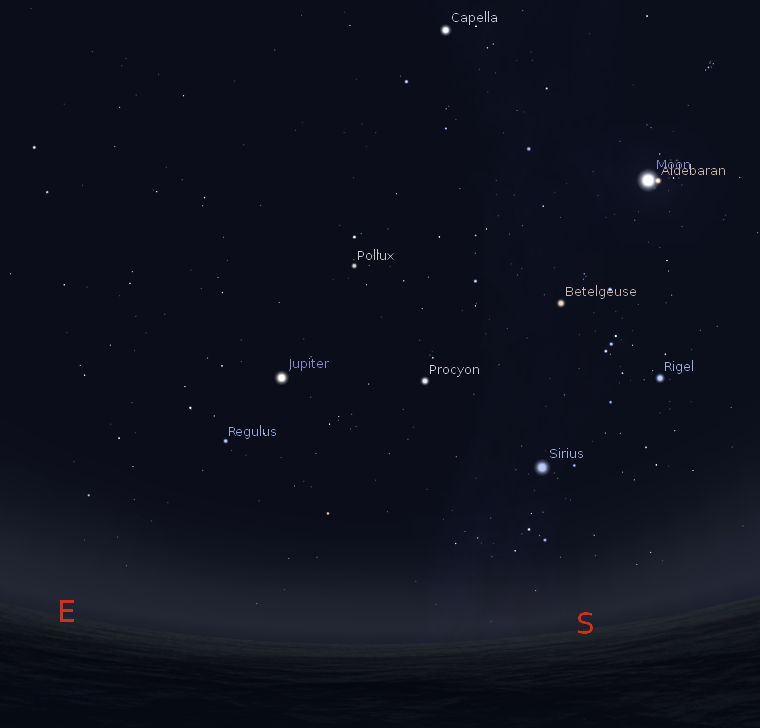
Jupiter with the first quarter moon and the winter stars at 9 p.m., February 25, 2015. Created using Stellarium.
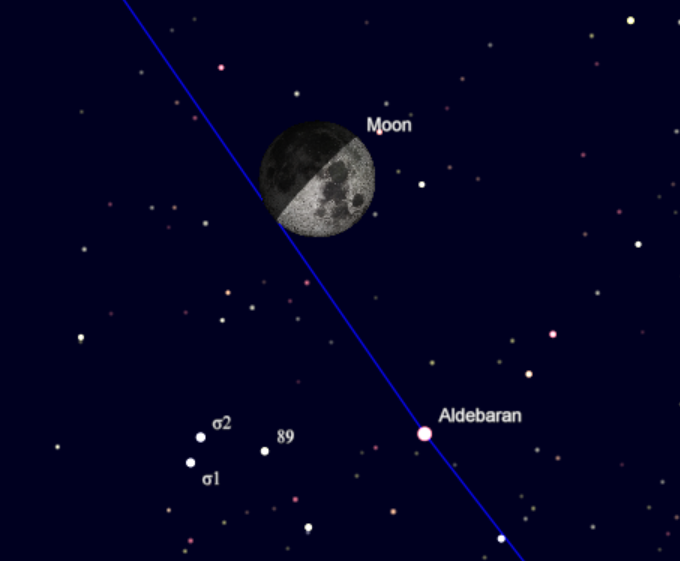
Closeup of the Moon and Aldebaran at 9 p.m. on February 25, 2015. They appeared their closest at 6 p.m. They might be glimpsed with binoculars or a small telescope at that time.
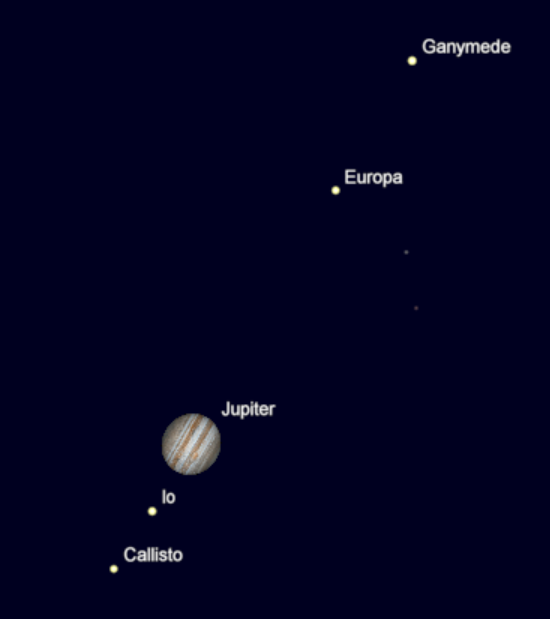
Jupiter and it’s moons at 9 p.m. February 25, 2015. Note that at this time the Great Red Spot is on the face if Jupiter. Created using Cartes du Ciel (Sky Charts).
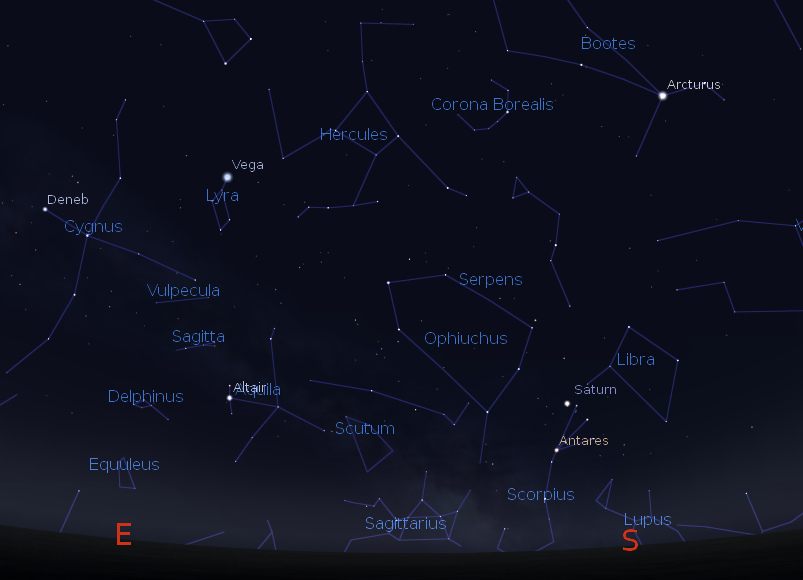
Looking southward at Saturn and a preview of the summer constellations at 6 a.m. February 26, 2015. Created using Stellarium.
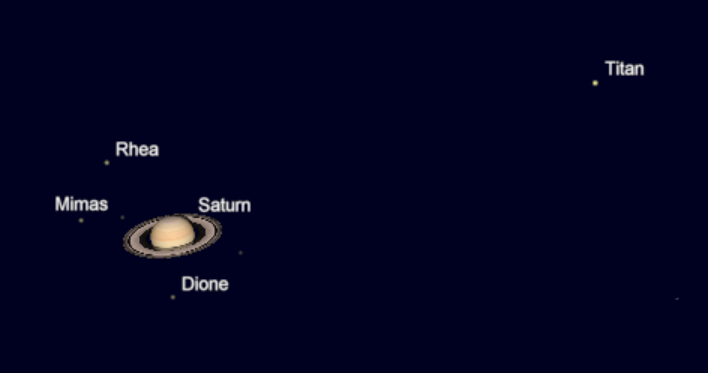
What Saturn and its moons might appear like in a telescope at 6 a.m., February 26, 2015. Small telescopes will show only the moon Titan. Created using Cartes du Ceil (Sky Charts).
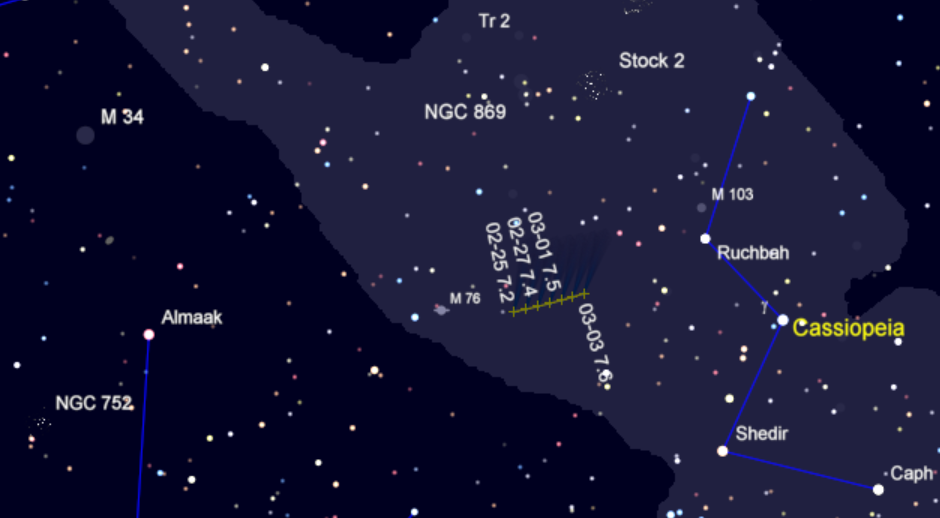
The track of Comet 2014 Q2 (Lovejoy) from 2/25/15 to 03/03/15 which will appear high in the west at 9 p.m. The comet is approaching Cassiopeia. The comet is dropping below binocular visibility, so this is the last time I will cover it on this blog. Created using Cartes du Ceil (Sky Charts).
02/18/2015 – Ephemeris – Wednesday is bright planet day (or night) on Ephemeris
Ephemeris for Ash Wednesday, Wednesday, February 18th. The sun will rise at 7:38. It’ll be up for 10 hours and 36 minutes, setting at 6:15. The moon is new today, and won’t be visible.
Lets take a look at the bright planets and a fading binocular comet for this week. Brilliant Venus is in the west-southwest by 7 p.m. It will set at 8:37 p.m. It’s nearing Mars which appears above and left of it. They will be at their closest on the 22nd. The Red Planet will set tonight at 8:45 p.m. Jupiter will appear In the southeastern sky in the evening. It will be up all night, and will set at 7:14 a.m. It’s near the sickle-shaped head of Leo the lion, and it’s the brightest star-like object in the sky. Early risers will be able to spot Saturn which will rise in the east-southeast at 2:15 a.m. Comet Lovejoy, visible in binoculars, is about half way from the star at the end of Andromeda, called Almaak and the “W” of Cassiopeia.
Times are for the Traverse City/Interlochen area of Michigan. They may be different for your location.
Addendum
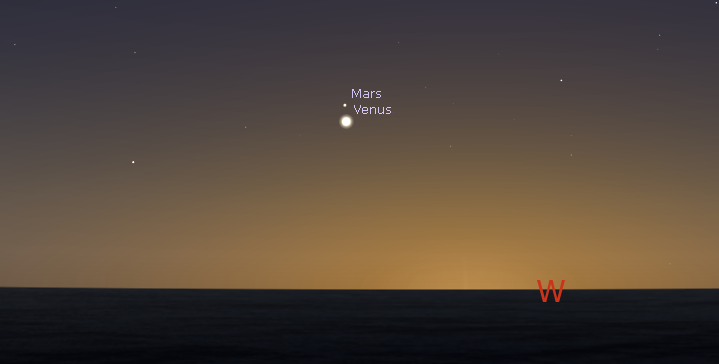
Venus and Mars low in the west after sunset. This is 7 p.m., February 18, 2015. Created using Stellarium.
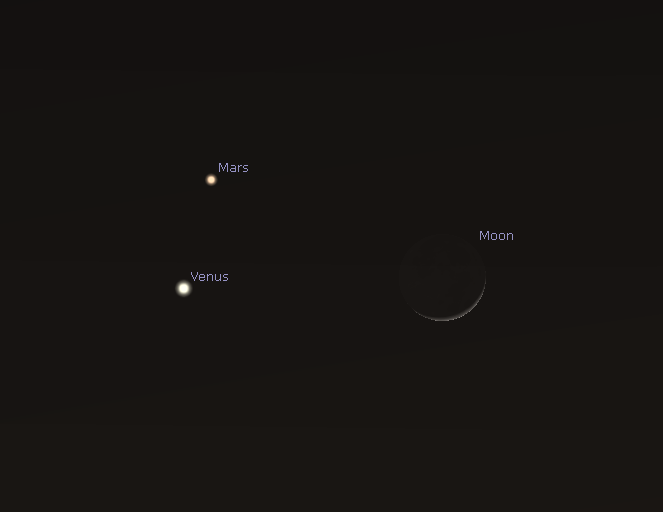
Venus, Mars and the moon on Friday night at 7 p.m. (2/20/15). Created using Stellarium.
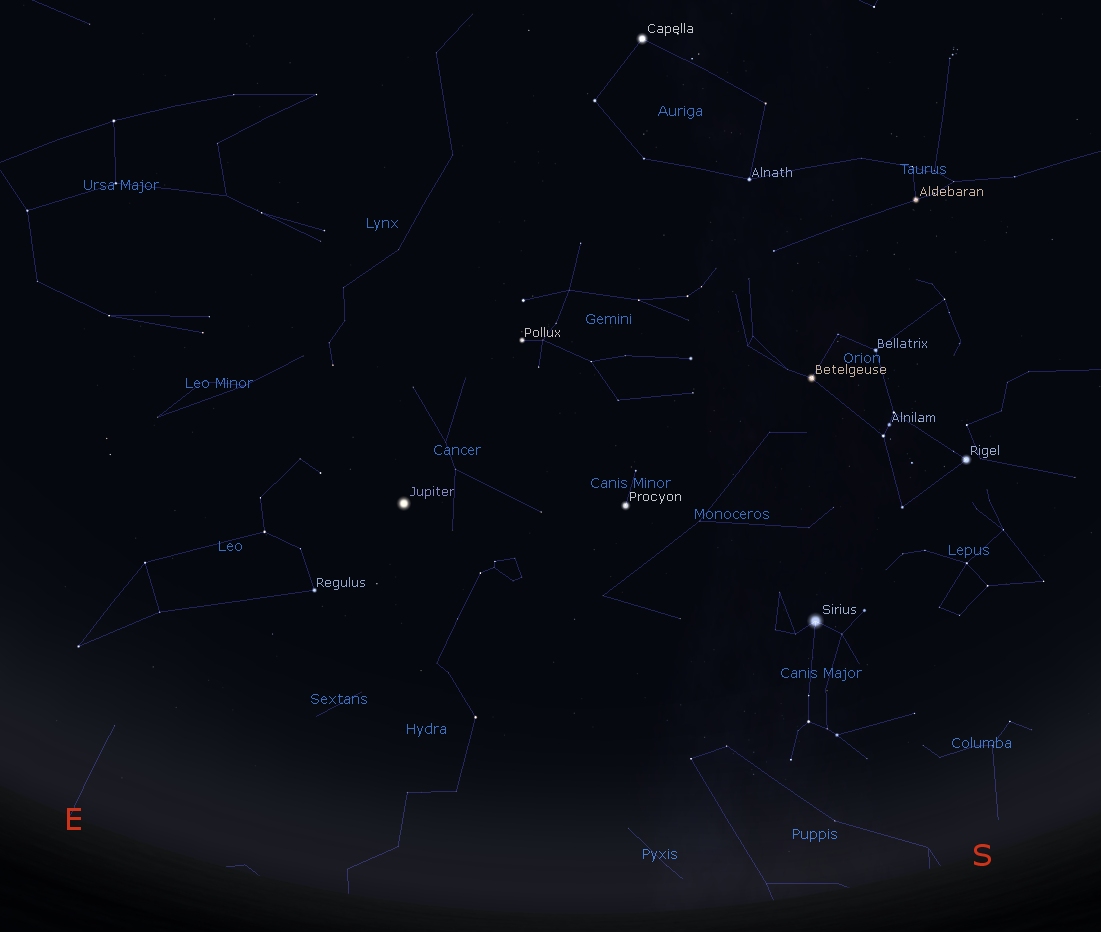
Jupiter with the winter constellations at 9 p.m., February 18, 2015. Created using Stellarium.
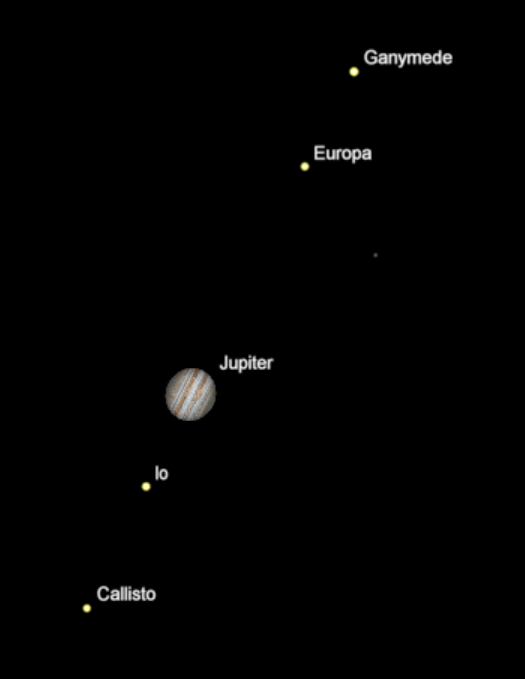
Jupiter and it’s moons at 9 p.m. February 18, 2015. Note that at this time the Great Red Spot is on the face if Jupiter. Created using Cartes du Ciel (Sky Charts).
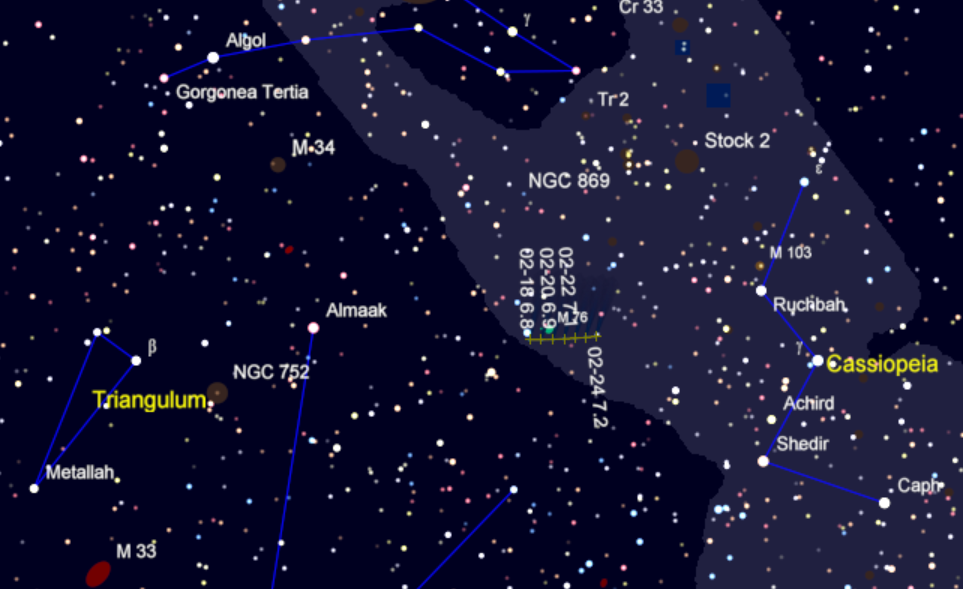
The track of Comet 2014 Q2 (Lovejoy) from 2/18/15 to 02/24/15 which will appear high in the west at 9 p.m. On the 20th the comet will pass near M76, a 10th magnitude planetary nebula. It will be much dimmer than the comet. Created using Cartes du Ceil (Sky Charts).
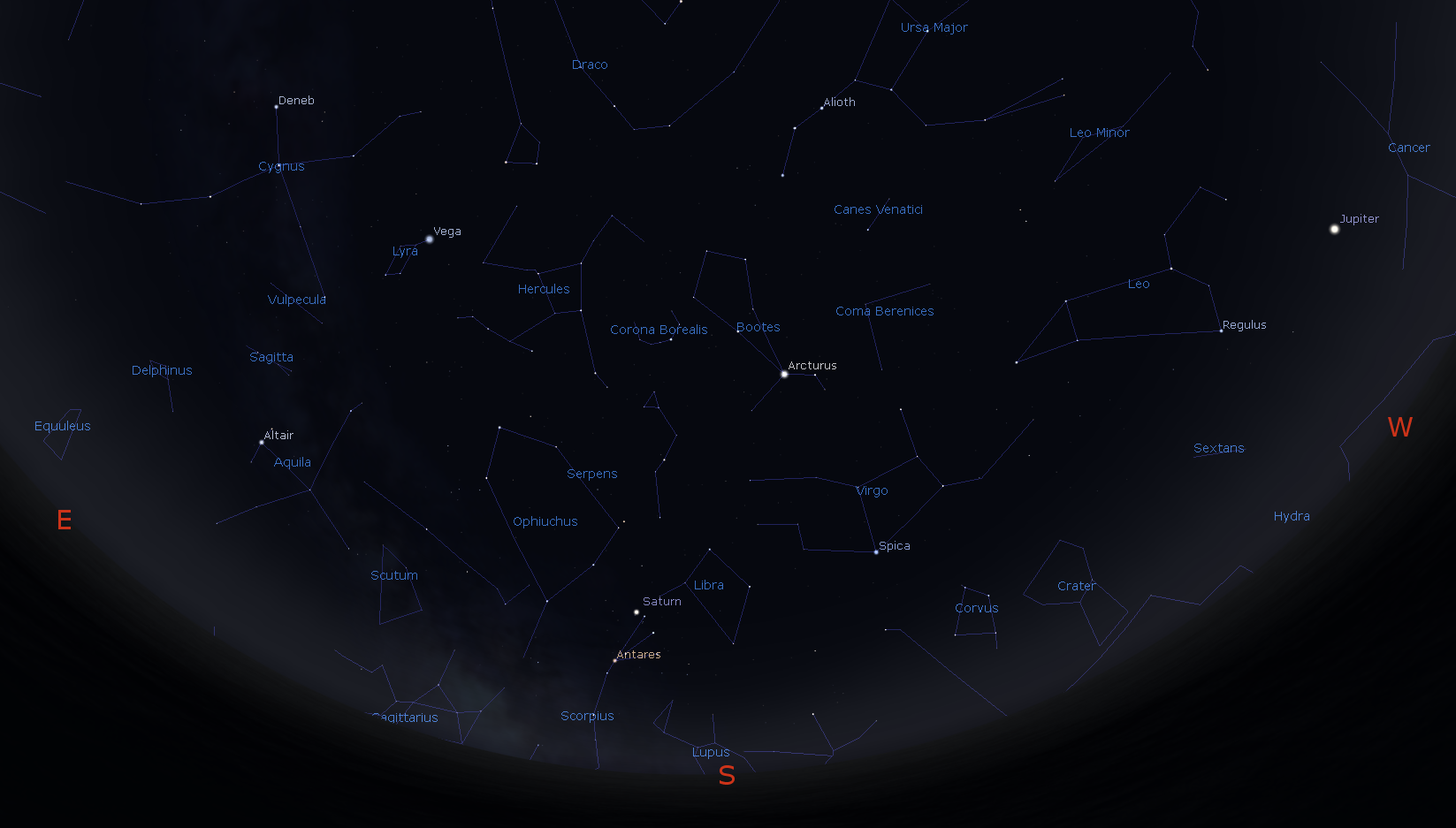
Looking southward at 6 a.m. February 19, 2015 to a preview of the constellations of summer with Saturn in the south and Jupiter setting in the west. Click to enlarge.
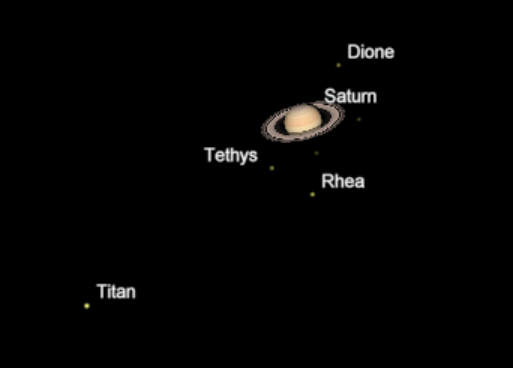
What Saturn and its moons might appear like in a telescope at 6 a.m., February 19, 2015. Small telescopes will show only the moon Titan. Created using Cartes du Ceil (Sky Charts).
02/11/2015 – Ephemeris – Wednesday is bright planet day around here
Ephemeris for Wednesday, February 11th. The sun will rise at 7:49. It’ll be up for 10 hours and 16 minutes, setting at 6:05. The moon, at last quarter today, will rise at 1:52 tomorrow morning.
Lets take a look at the bright planets and a binocular comet for this week. Brilliant Venus is in the west-southwest by 7 p.m. It will set at 8:19 p.m. Mars appears above and left of Venus in the southwest. Venus is approaching Mars and they will be at their closest on the 22nd. The Red Planet will set tonight at 8:44 p.m. Jupiter will appear In the southeastern sky in the evening. It will be up all night, and will set just before sunrise. It’s near the sickle-shaped head of Leo the lion, and it’s the brightest star-like object in the sky. Early risers will be able to spot Saturn which will rise in the east-southeast at 2:41a.m. Comet Lovejoy, visible in binoculars, is about the width of a binocular field to the right of the star at the end of Andromeda, called Almaak.
Times are for the Traverse City/Interlochen area of Michigan. They may be different for your location.
Addendum
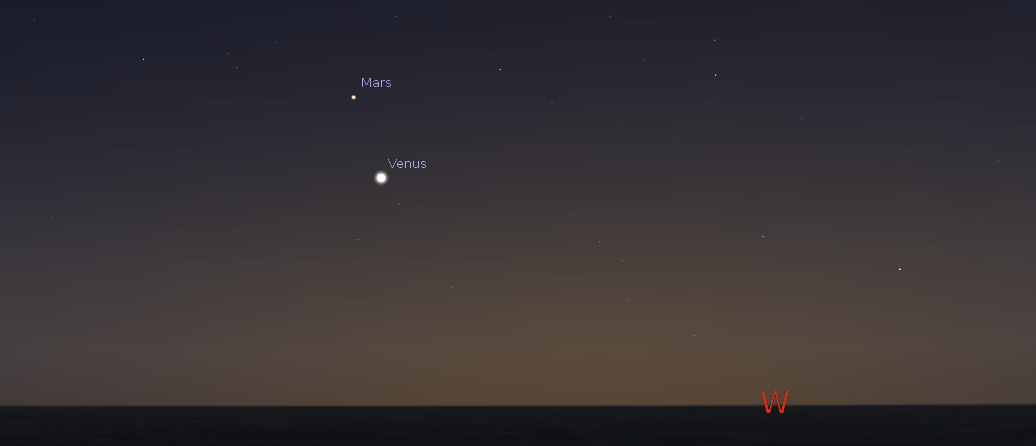
Venus and Mars low in the west at 7 p.m. on February 11, 2015. The crescent moon will be seen with the two planets on the evening of the 20th, and they will be in conjunction on the 22nd. Created using Stellarium.
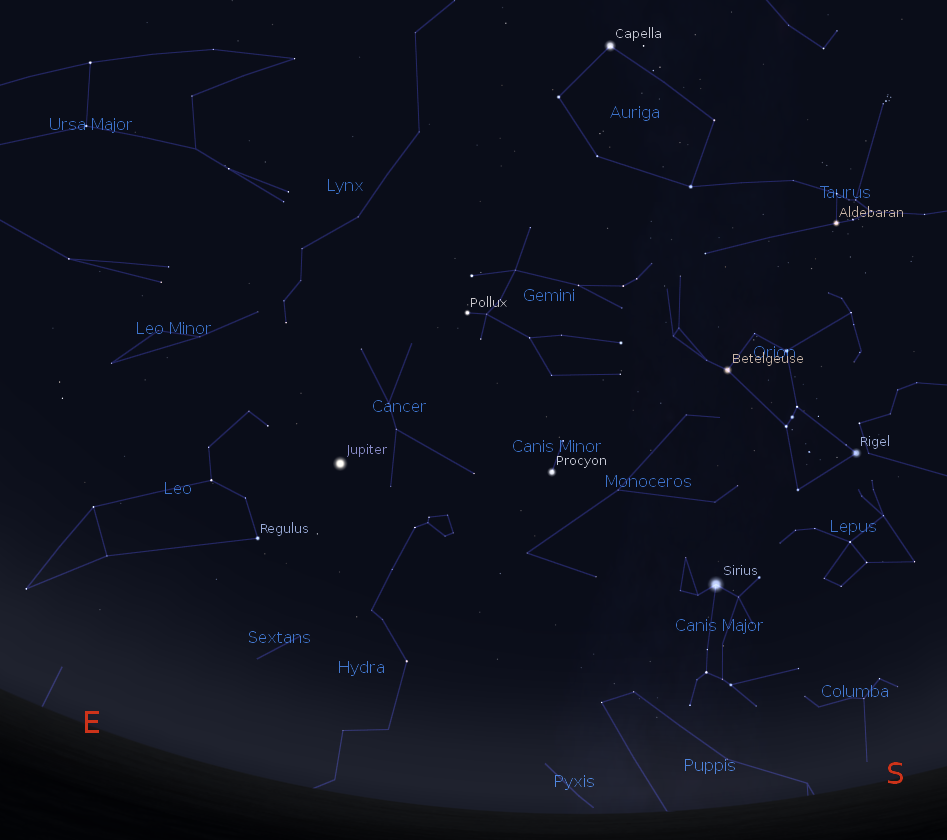
Jupiter and the bright winter stars at 9 p.m. on February 11, 2015. Created using Stellarium.
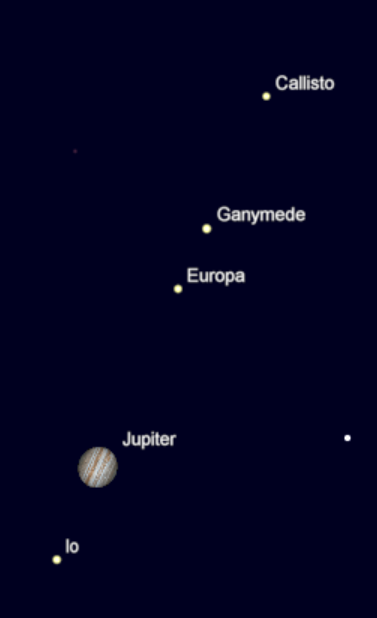
Jupiter and its moons as they might appear in a telescope tonight. Created using Cartes du Ceil (Sky Charts).
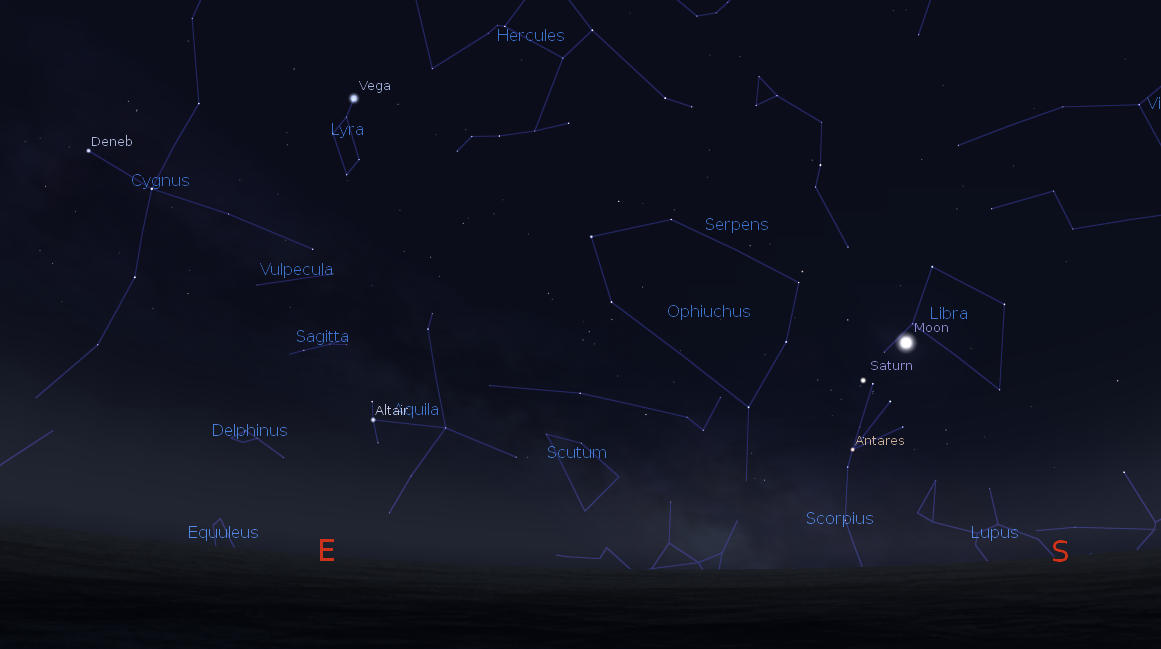
The Moon will appear near Saturn at 6 a.m. February 12, 2015. Created using Stellarium.
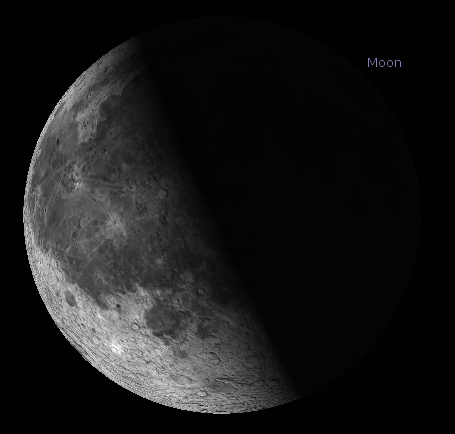
The Moon as it might appear in binoculars at 6 a.m. on February 12, 2015. Created using Stellarium.
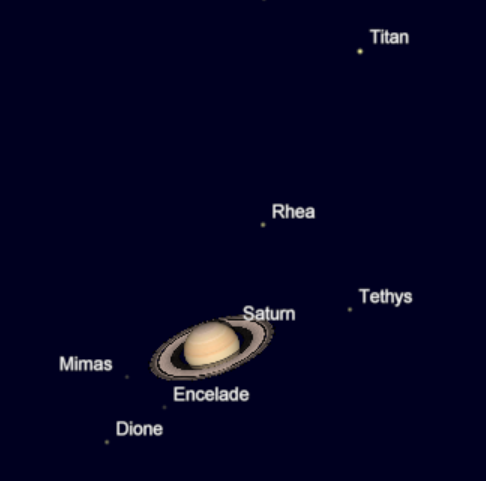
What Saturn and its moons might appear like in a telescope at 6 a.m., February 12, 2015. Small telescopes will show only the moon Titan. Created using Cartes du Ceil (Sky Charts).
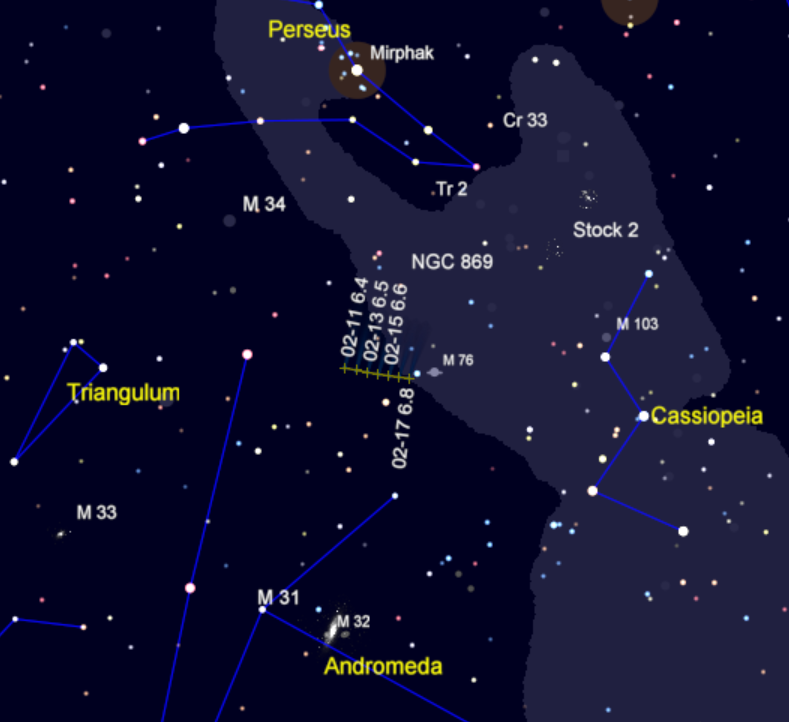
The track of Comet 2014 Q2 (Lovejoy) from 2/11/15 to 02/17/15 which will appear high in the west at 9 p.m. Toward the end of the period the comet will pass near M76, a 10th magnitude planetary nebula. It will be much dimmer than the comet. Created using Cartes du Ceil (Sky Charts).
 Bob Moler's Ephemeris Blog