Archive
07/16/2014 – Ephemeris – A late post for the planet day
Ephemeris for Wednesday, July 16th. Today the sun will be up for 15 hours and 11 minutes, setting at 9:24. The moon, 2 days before last quarter, will rise at 11:52 this evening. Tomorrow the sun will rise at 6:13.
It’s Wednesday and once again time to locate the bright planets for this week. Reddish Mars is in Virgo in the southwest as darkness falls. It’s 101 million miles (163 million km) away now, nearly 2 and a half times farther away than last April, and will set at 12:56 a.m. Saturn will be low in the south-southwest as darkness falls, in the faint constellation of Libra the scales. It will set at 2:06 a.m. Saturn’s in perfect position for viewing with a small or large telescopes to see those fabulous rings and its large moon Titan. Somewhat larger telescopes can spot some smaller moons closer in. Brilliant Venus will rise in the east at 4:14 a.m. in morning twilight. Mercury will rise at 4:46 and be barely visible below Venus.
Times are for the Traverse City/Interlochen area of Michigan. They may be different for your location.
Addendum
I’m late on this one, so the planet positions below are for Thursday evening and Friday Morning.
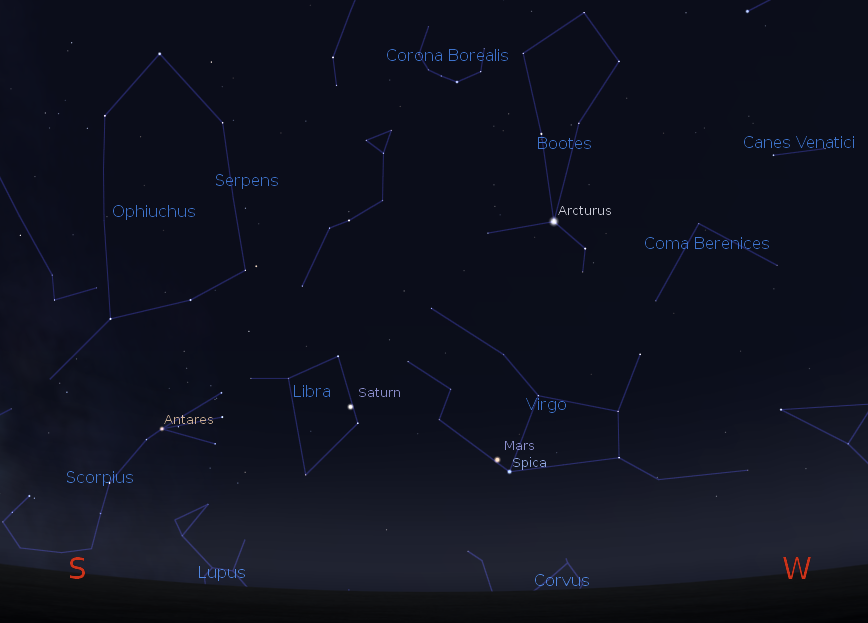
Mars and Saturn with the evening stars and constellations at 11 p.m. Thursday July 17, 2014. Created using Stellarium.
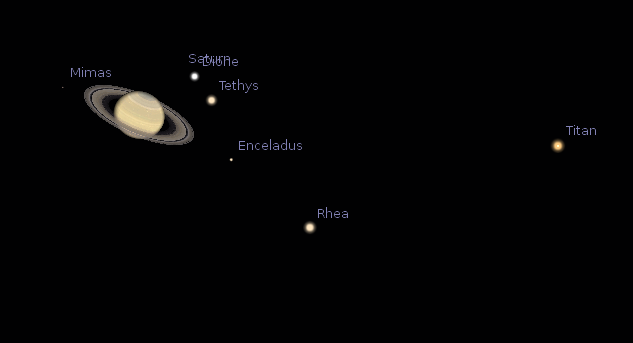
Saturn through a telescope. In small telescopes of the moons only Titan will be visible. July 17, 2014. Created using Stellarium.
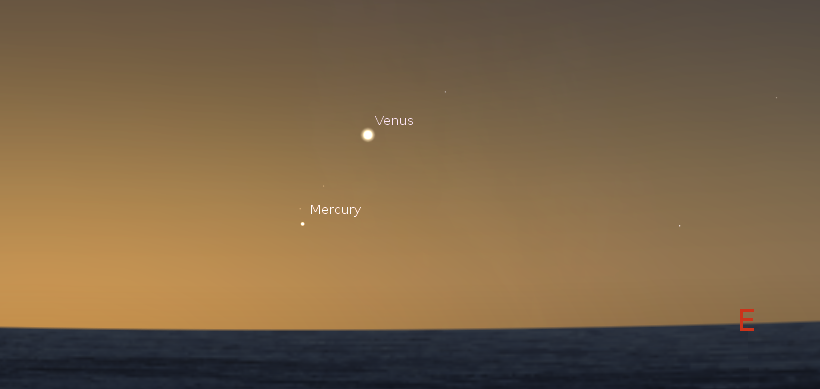
Venus and Mercury at 5:30 a.m. July 18, 2014. Created using Stellarium.
07/11/2014 – Ephemeris – Spot Mercury tomorrow and Learn about two comets tonight
Ephemeris for Friday, July 11th. Today the sun will be up for 15 hours and 19 minutes, setting at 9:27. The moon, 1 day before full, will set at 6:31 tomorrow morning. Tomorrow the sun will rise at 6:08.
Really diehard Mercury watchers just may catch a glimpse of this very elusive planet tomorrow morning after it rises at 4:47 a.m. It’s below and left of Venus at that time. But before then the Grand Traverse Astronomical Society will hold its monthly meeting tonight at Northwestern Michigan College’s Observatory on Birmley Road. Yours truly will be giving the talk starting at 8 p.m. about the two comets that will be in the news starting next month. The first will be orbited by the European Rosetta spacecraft which will send down a lander starting next month. The second will be a close approach of a comet to Mars, near enough to possibly menace our satellites orbiting Mars in October. There will be viewing afterwords.
Times are for the Traverse City/Interlochen area of Michigan. They may be different for your location.
More information on the talk is here.
Addendum
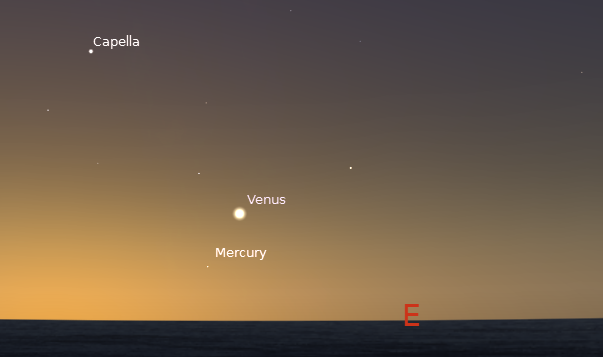
Mercury and Venus rising in twilight at 5:30 a.m. July 12, 2014. Created using Stellarium.

Title Slide for Tail of Two Comets
07/09/2014 – Ephemeris – Where are the bright planets this week?
Ephemeris for Wednesday, July 9th. Today the sun will be up for 15 hours and 22 minutes, setting at 9:28. The Moon, 3 days before full, will set at 4:20 tomorrow morning. Tomorrow the sun will rise at 6:07.
It’s Wednesday and once again time to locate the bright planets for this week. Jupiter sets less than a half hour after the sun, so it’s gone for us until September mornings. Reddish Mars is in Virgo in the southwest as darkness falls. It’s 97 million miles (156 million km) away now, nearly 2 and a half times farther away than last April, and will set at 1:17 a.m. Saturn will be low in the south-southwest as darkness falls, in the faint constellation of Libra the scales. It will set at 2:34 a.m. Saturn’s in perfect position for viewing with a small or large telescope to see those fabulous rings and its large moon Titan. Somewhat larger telescopes can spot some smaller moons closer in. Brilliant Venus will rise in the east at 4:09 a.m. in morning twilight.
Times are for the Traverse City/Interlochen area of Michigan. They may be different for your location.
Addendum
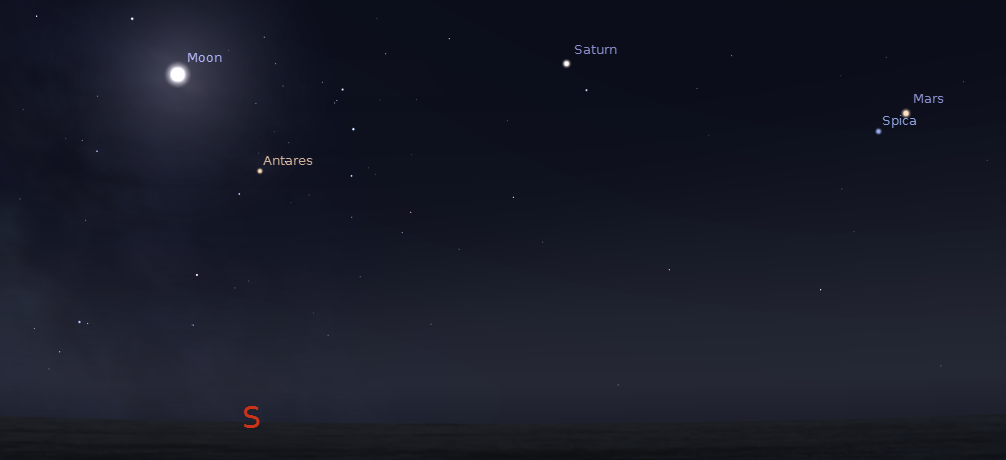
Mars, Saturn and the Moon will appear along with the brighter stars of summer at 11 p.m. on July 9, 2014. Created using Stellarium.
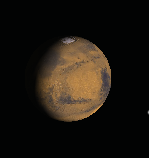
Mars as seen through a large telescope. It appears really tiny in any other telescope. Time: 11 p.m. on July 9, 2014. Created using Stellarium.
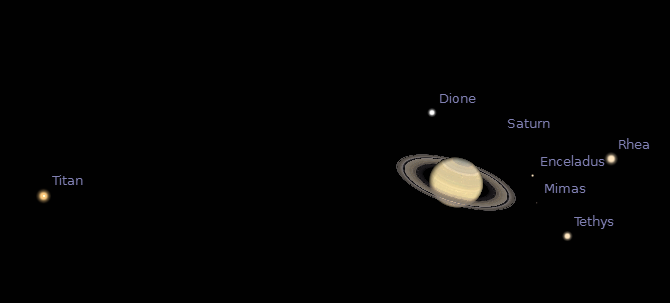
Saturn and some of its moons. Smaller telescopes will see only Titan, but see how many moon you can see. July 9, 11 p.m. Created using Stellarium.
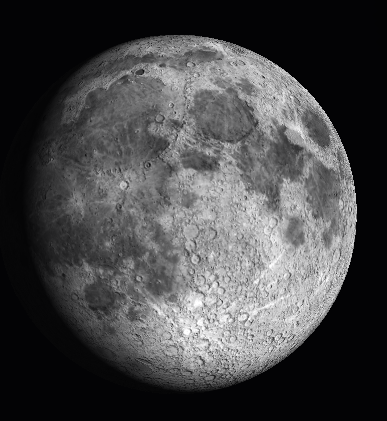
A binocular view of the gibbous Moon on July 9, 2014 at 11 p.m. Created using Stellarium.
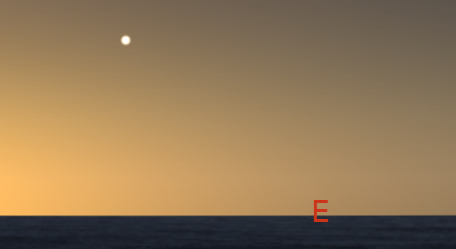
Venus low in the east at 5:45 a.m. July 11, 2014; roughly a half hour before sunrise. Created using Stellarium.
Venus low in the east at 5:45 a.m. July 11, 2014; roughly a half hour before sunrise. Created using Stellarium.

Bright gibbous disk of Venus as seen through a telescope on July 10, 2014. Created using Stellarium.
07/04/2014 – Ephemeris – Find patriotic red, white and blue stars
Ephemeris for Independence Day, Friday, July 4th. Today the sun will be up for 15 hours and 27 minutes, setting at 9:30. The moon, 1 day before first quarter, will set at 1:03 tomorrow morning. Tomorrow the sun will rise at 6:03.
On this patriotic day let’s look for some red, white, and blue stars. Red is easy, the red star Antares is seen in the south at 11 p.m. Mars, the red planet, in the southwest, can be added even though it’s not technically a star. White is easy too, the official white calibration star Vega high in the east at 11 p.m. The blue star is really blue-white. The brightest of these out at 11 p.m. is Spica, low in the southwest. The color is best seen in binoculars. Star colors are quite subtle, and are an indicator of the temperature of their outer gaseous layers. The temperature of a stars outer layers, in order of their increasing temperatures, red, white and blue, is not related to the temperature in their cores. Of these three the coolest on the outside, Antares is really the hottest inside, using helium as fuel.
Times are for the Traverse City/Interlochen area of Michigan. They may be different for your location.
Addendum
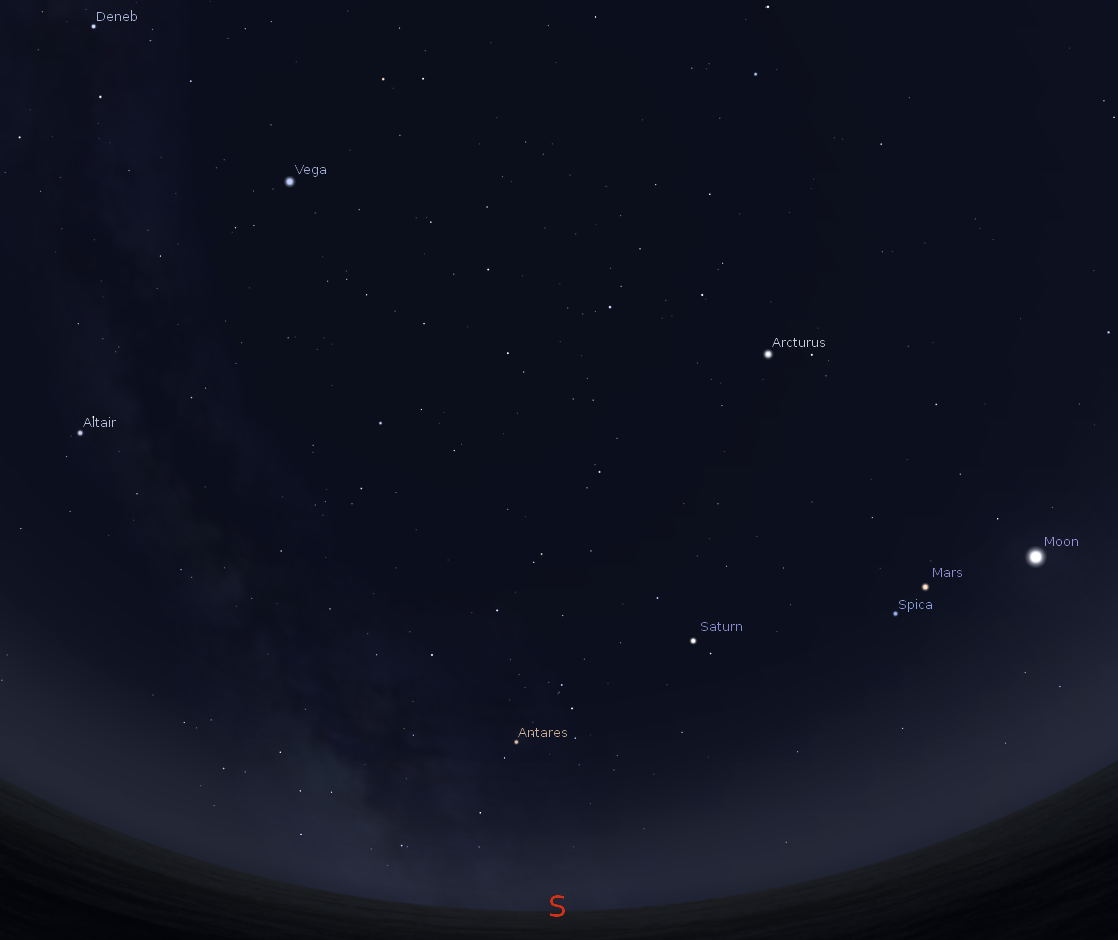
Red white and blue stars for Independence Day at 11 p.m. on July 4, 2014. Created using Stellarium.
07/02/2014 – Ephemeris – Bright planets to start off the 3rd quarter of 2014
Ephemeris for Wednesday, July 2nd. Today the sun will be up for 15 hours and 29 minutes, setting at 9:31. The moon, 3 days before first quarter, will set at 12:09 tomorrow morning. Tomorrow the sun will rise at 6:02.
It’s Wednesday and once again time to locate the bright planets for this week. Jupiter sets less than an hour after the sun, for most folks finding it in twilight will be futile. It will next be seen on September mornings. Reddish Mars is in Virgo in the southwest as darkness falls. It’s 93 million miles (150 million km) away now, and will set at 1:39 a.m. Saturn will be low in the south as darkness falls. It’s in the faint constellation of Libra the scales this year. It will pass due south at 10 p.m. It will set at 3:02 a.m. Saturn’s in perfect position for viewing with a small or large telescope to see those fabulous rings and its large moon Titan. Brilliant Venus will rise in the east at 4:07 a.m. in morning twilight.
Times are for the Traverse City/Interlochen area of Michigan. They may be different for your location.
Addendum
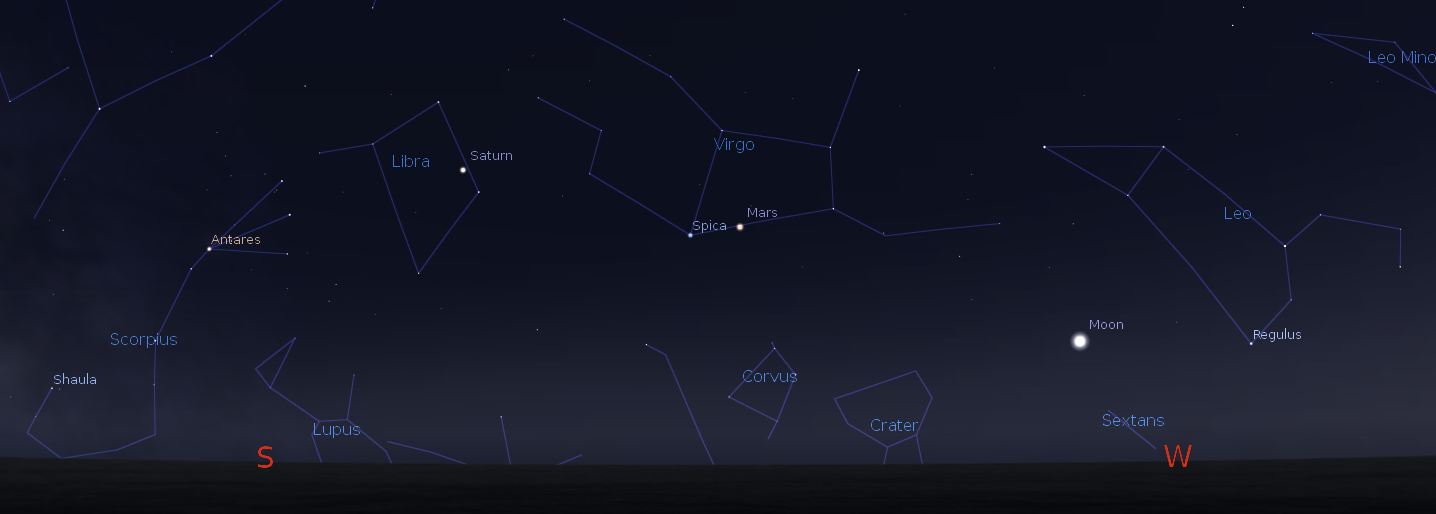
Saturn, Mars and the moon at 11 p.m. on July 2, 2014. Created using Stellarium.
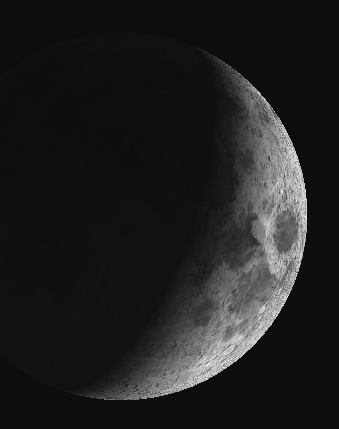
Binocular view of the Moon at 11 p.m., July 2, 2014. Created using Stellarium.
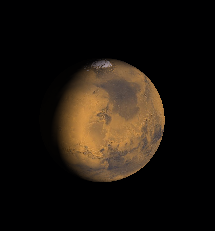
Telescopic view of Mars at high power at 11 p.m., July 2, 2014. Created using Stellarium.
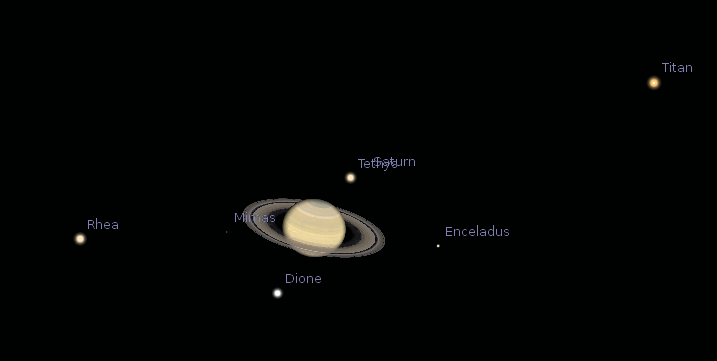
Telescopic view of Saturn and some of its moons on July 2, 2014. Created using Stellarium.
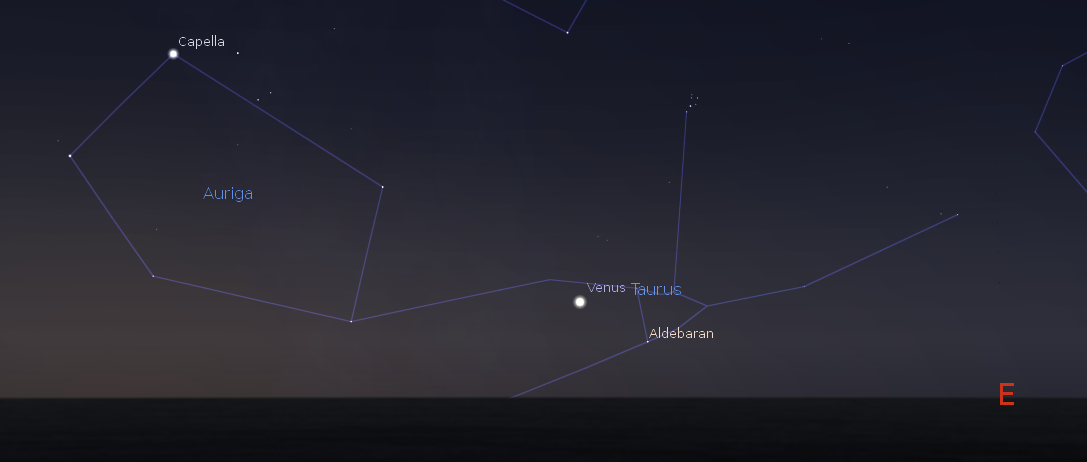
Venus and the morning stars at 4:45 a.m., July 3, 2014. Created using Stellarium.
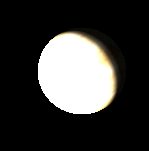
Telescopic view of Venus on July 3, 2014. Created using Stellarium.
06/25/2014 – Ephemeris – Wednesday is bright planet day here on Ephemeris
Ephemeris for Wednesday, June 25th. Today the sun will be up for 15 hours and 33 minutes, setting at 9:31. The moon, 2 days before new, will rise at 5:41 tomorrow morning. Tomorrow the sun will rise at 5:58.
It’s Wednesday and once again time to locate the bright planets for this week. Brilliant Jupiter will be in the west-northwestern sky in Gemini as darkness falls tonight. It’s getting lower each night and will set at 10:51 p.m. Reddish Mars is in Virgo in the southwest as darkness falls. It’s 88 million miles (142 million km) away now, and will set at 2:01 a.m. Saturn will be low in the south as darkness falls. It’s in the faint constellation of Libra the scales this year. It will pass due south at 10:28 p.m. It will set at 3:30 a.m. Saturn’s in perfect position for viewing with a small or large telescope to see those fabulous rings. Brilliant Venus will rise in the east at 4:07 a.m. in morning twilight.
Times are for the Traverse City/Interlochen area of Michigan. They may be different for your location.
Addendum
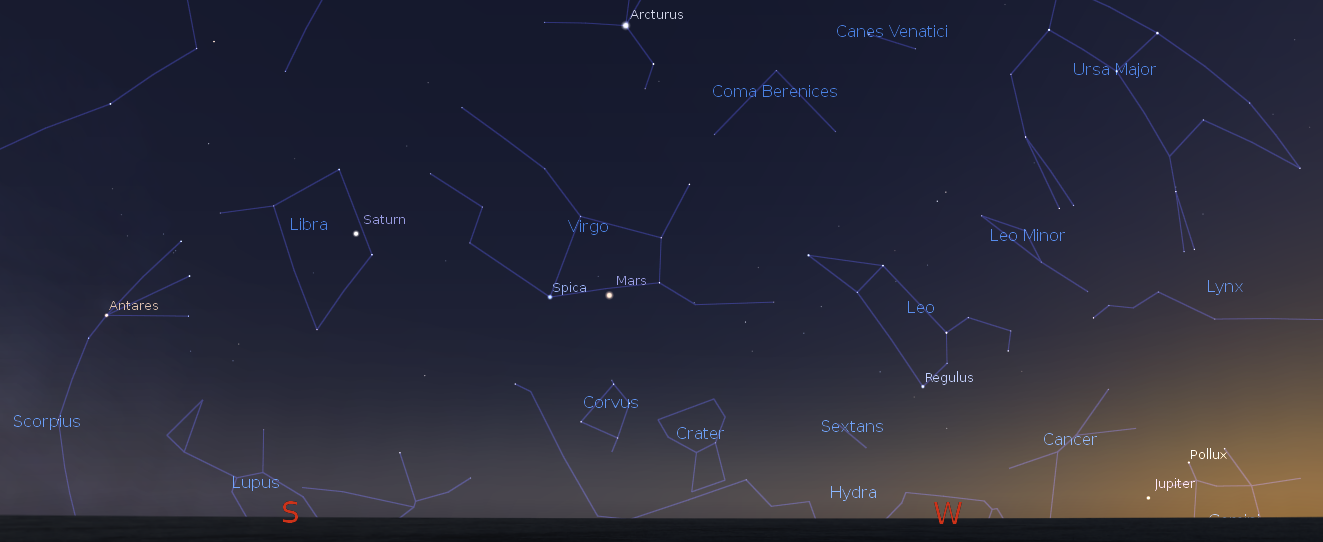
The Evening Planets and constellations at 10:30 p.m. June 25, 2014. Created using Stellarium.
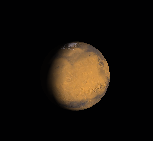
Mars through a powerful telescope at 10:30 p.m. June 25, 2014. Created using Stellarium.
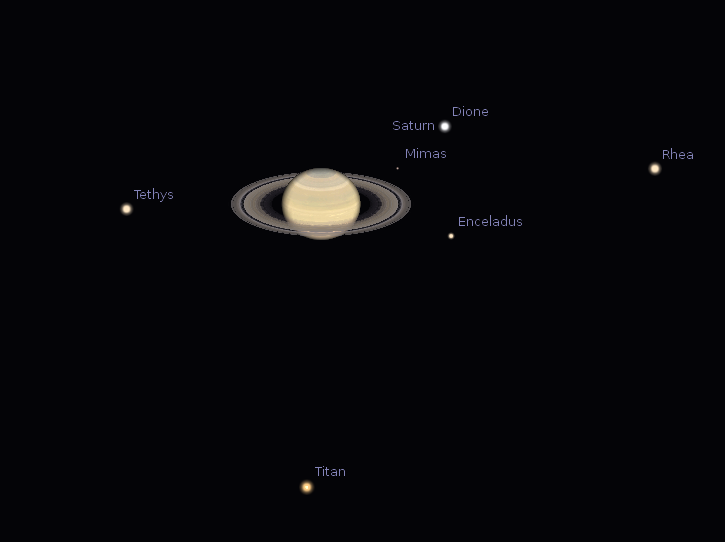
Saturn with its moons on June 25, 2014. Created using Stellarium.
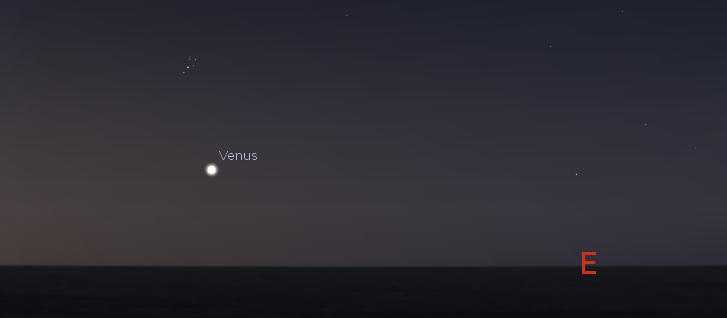
Venus and a glimpse of the Pleiades at 4:45 a.m. on June 26, 2014. Created using Stellarium.
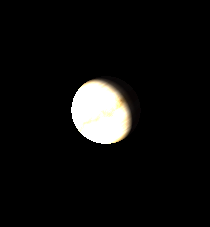
Telescopic Venus on June 26, 2014. Created using Stellarium.
06/18/2014 – Ephemeris – The bright planets for this week
Ephemeris for Wednesday, June 18th. Today the sun will be up for 15 hours and 33 minutes, setting at 9:30. The moon, 1 day before last quarter, will rise at 1:18 tomorrow morning. Tomorrow the sun will rise at 5:56.
It’s Wednesday and once again time to locate the bright planets for this week. Brilliant Jupiter will be in the west-northwestern sky in Gemini as darkness falls tonight. It’s getting lower each night and will set at 11:13 p.m. tonight. Reddish Mars is in Virgo in the southwest as darkness falls. It’s 83 million miles (135 million km) away now, and will set at 2:25 a.m. Saturn will be low in the south-southeast as darkness falls. It’s in the faint constellation of Libra the scales this year. It will pass due south at 10:57 p.m. It will set at 3:59 a.m. Saturn’s in perfect position for viewing with a small or large telescope. Brilliant Venus will rise in the east at 4:10 a.m. in morning twilight.
Times are for the Traverse City/Interlochen area of Michigan. They may be different for your location.
Addendum
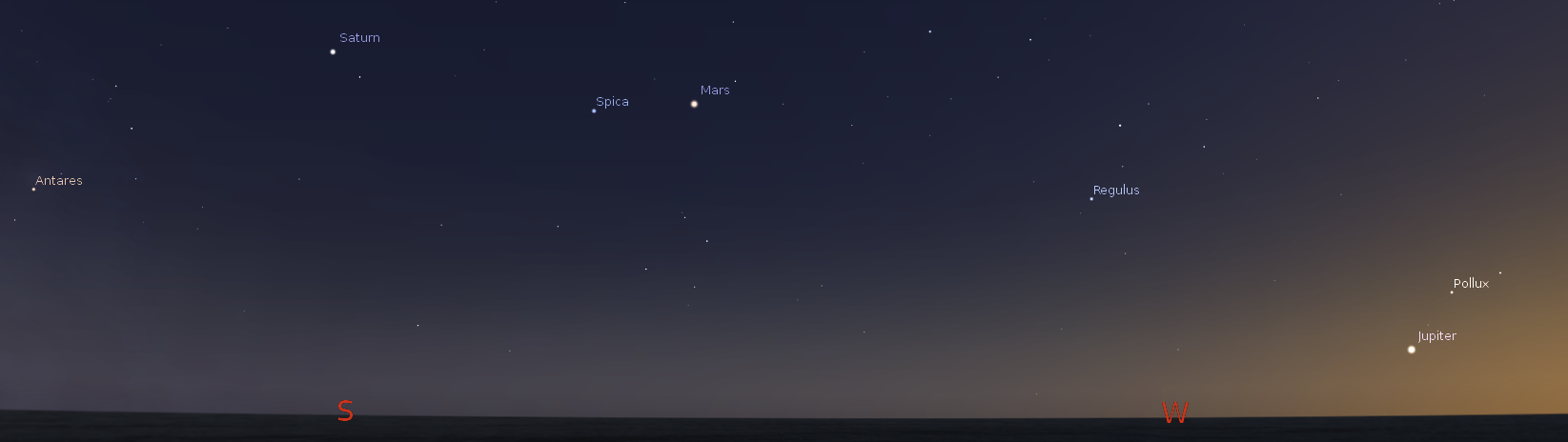
The bright evening planets and stars at 10:30 p.m., June 18, 2014. Created using Stellarium.
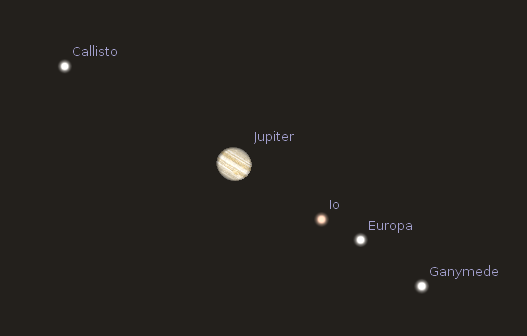
Jupiter and moons in a telescope on June 18, 2014. Due to the low altitude of Jupiter not all the moons may be visible and Jupiter will suffer color fringes due to atmospheric dispersion. Created using Stellarium.
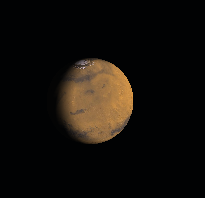
Mars through a telescope on June 18, 2018. Note that Mars is not fully illuminated, and appears as a gibbous disc. This effect will increase for another month. Created using Stellarium.
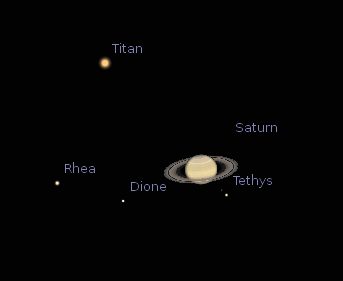
Saturn and its moons through a telescope on June 18, 2018. Titan is easy to spot, the other moons will be more difficult. Created using Stellarium.
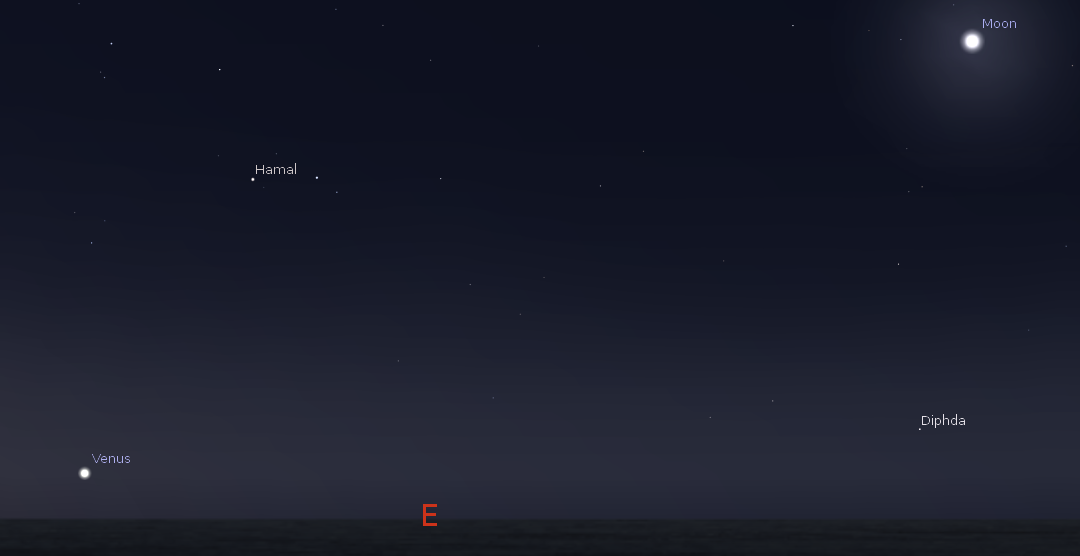
Venus and the Moon at 4:30 a.m. on June 19, 2014. Created using Stellarium.
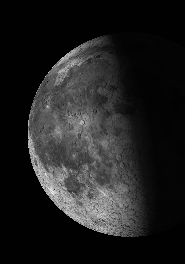
The Moon as seen in binoculars on June 19, 2014. Created using Stellarium.
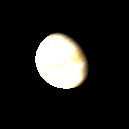
Venus as seen in a telescope on June 19, 2014. Created using Stellarium.
06/11/2014 – Ephemeris – It’s 11 p.m., do you know where your bright planets are?
Actually yes we do. Three are visible at 11 p.m., One, Mercury is MIA too close to the sun to be seen. And the 5th bright planet is a morning person planet. Uranus and Neptune are beyond the scope of this radio program. Well, on with the transcript:
Ephemeris for Wednesday, June 11th. Today the sun will be up for 15 hours and 30 minutes, setting at 9:27. The moon, 2 days before full, will set at 5:40 tomorrow morning. Tomorrow the sun will rise at 5:56.
It’s Wednesday and once again time to locate the bright planets for this week. We have lost Mercury to the bright twilight glow, and the fact that it’s getting dimmer as a crescent. Brilliant Jupiter will be in the western sky in Gemini as darkness falls tonight. It’s getting lower each night and will set at 11:36 p.m. tonight. Reddish Mars is in Virgo in the south-southwest as darkness falls. It’s 80 million miles (128 million km) away now, and moving away, and will set at 2:49 a.m. Saturn will be low in the southeast as darkness falls. It’s in the faint constellation of Libra the scales this year. It will pass due south at 11:26 p.m. Brilliant Venus will rise in the east at 4:14 a.m. in morning twilight.
Times are for the Traverse City/Interlochen area of Michigan. They may be different for your location.
Addendum
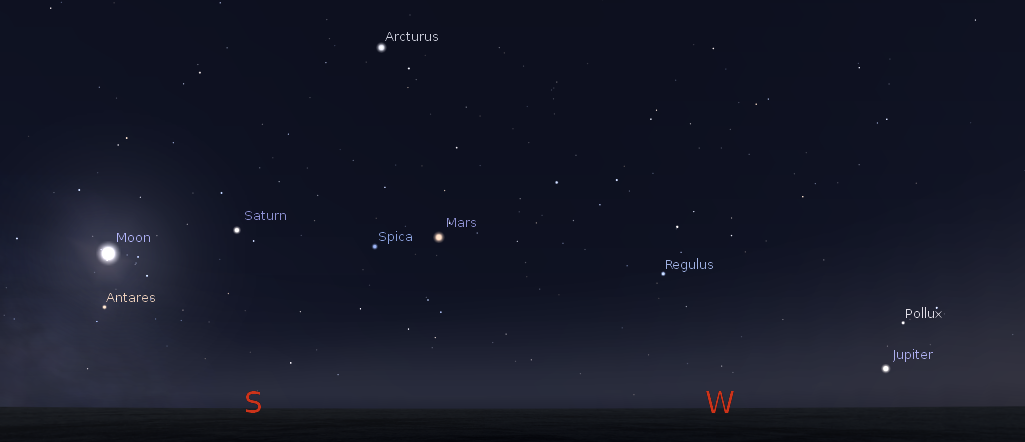
The evening planets at 11 p.m. on June 11, 2014. Created using Stellarium.
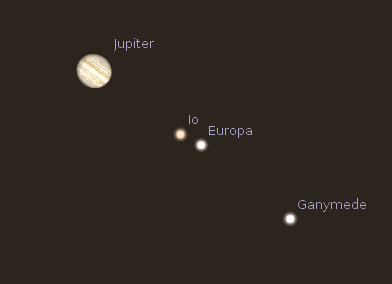
Jupiter and moons at 10 p.m., June 11, 2014 Callisto is in Jupiter’s shadow and wont emerge until 11:09 p.m. when Jupiter will be less than 5 degrees above the horizon in Michigan. Created using Stellarium.
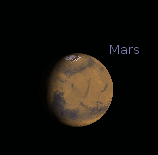
Mars through a telescope at 11 p.m., June 11, 2014. The large dark feature Syrtis Major is rotating onto the Earth side face of the planet from the left. Created using Stellarium.
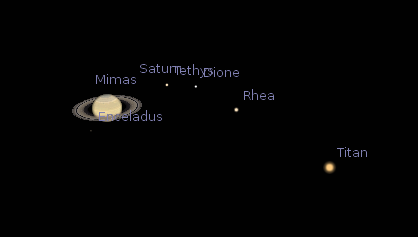
Saturn and some of its brighter moons at 11 p.m. June 11, 2014. The moon Titan can be seen in small telescopes, but larger scopes may be necessary to pick out the other satellites. Created using Stellarium.
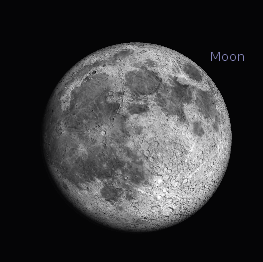
The Moon as seen in binoculars at 11 p.m., June 11, 2014. Created using Stellarium.
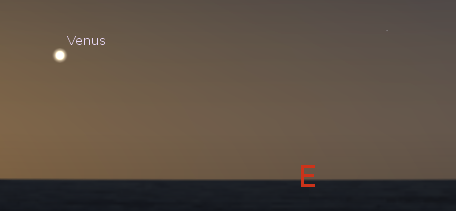
Venus in morning twilight at 5 a.m., June 12, 2014. Created using Stellarium.
A telescopic view of Venus as it would be seen at 5 a.m., June 12, 2014. Created using Stellarium.
06/04/2014 – Ephemeris – Last week for all 5 pre-telescopic planets to be visible for a while
Ephemeris for Wednesday, June 4th. Today the sun will be up for 15 hours and 23 minutes, setting at 9:22. The moon, 1 day before first quarter, will set at 1:39 tomorrow morning. Tomorrow the sun will rise at 5:58.
It’s Wednesday and once again time to locate the bright planets for this week. Mercury is showing up in the west shortly after sunset, It is getting dimmer (magnitude 1.6) as it is becoming a thin crescent. It will set at 10:47. Brilliant Jupiter will be in the western sky in Gemini as darkness falls tonight. It will set at 11:59 p.m. Reddish Mars is in Virgo in the south-southwest as darkness falls. It’s 76 million miles (122 million km) away now, and moving away, and will set at 3:14 a.m. Saturn will be low in the southeast as darkness falls. It’s in the faint constellation of Libra the scales this year. It will pass due south at 11:55 p.m. Brilliant Venus will rise in the east at 4:21 a.m. in morning twilight.
Times are for the Traverse City/Interlochen area of Michigan. They may be different for your location.
Addendum
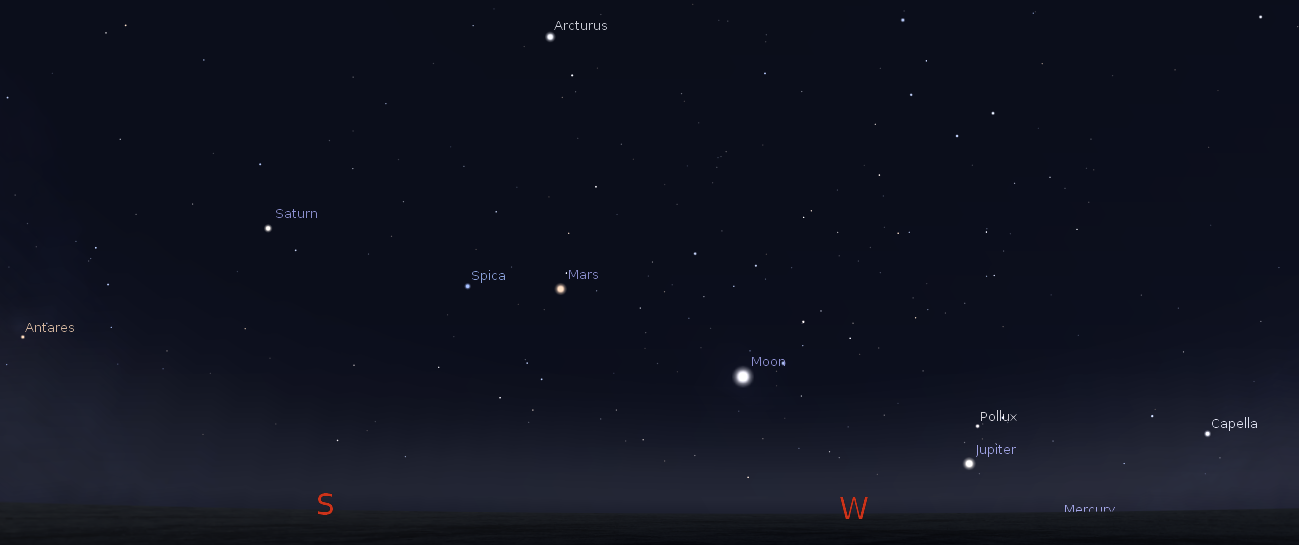
Jupiter, Mars, Saturn and the Moon seen at 11 p.m. June 4, 2014. Created using Stellarium.
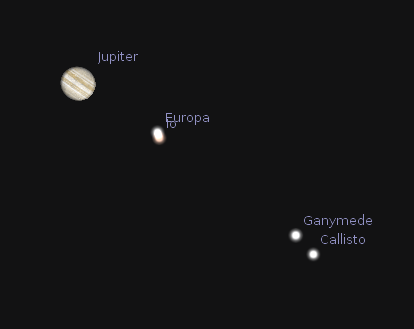
Jupiter and moons in a telescope at 11 p.m. June 4, 2014. Created using Stellarium.
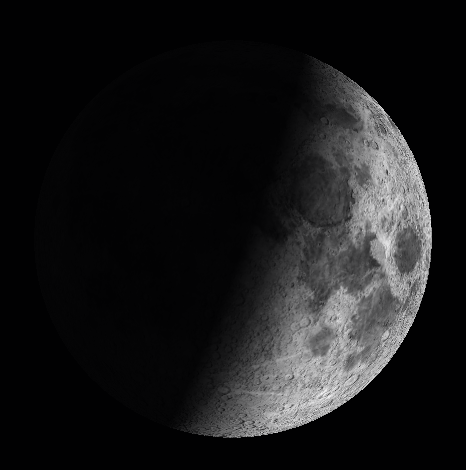
The Moon as it might appear in binoculars at 11 p.m. on June 4, 2014. Created using Stellarium.
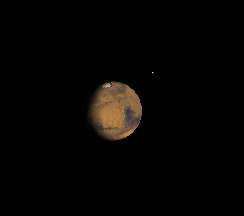
Mars, probably a bit better than it will appear in a small telescope at 11 p.m. June 4, 2014. Created using Stellarium.
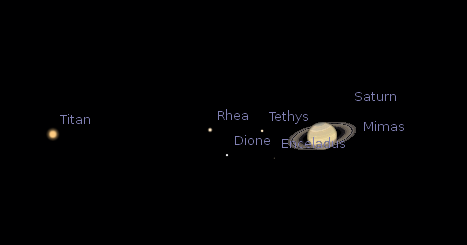
Saturn with some of its moons, not all of them will be visible in a small telescope, at 11 p.m. on June 4, 2014. Created using Stellarium.
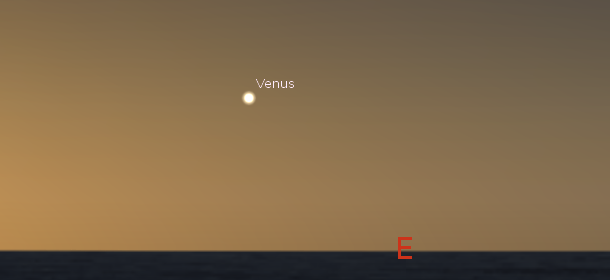
Venus in morning twilight in the east at 5:15, June 5, 2014. Created using Stellarium.
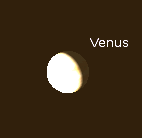
Venus showing its gibbous phase in a telescope at 5:15 a.m. on June 5, 2014. Created using Stellarium.
05/28/2014 – Ephemeris – Wednesday is planet day on Ephemeris
Ephemeris for Wednesday, May 28th. Today the sun will be up for 15 hours and 14 minutes, setting at 9:17. The moon is new today, and won’t be visible. Tomorrow the sun will rise at 6:02.
It’s Wednesday and once again time to locate the bright planets for this week. Mercury is showing up in the west shortly after sunset, It was at its farthest from the Sun 3 days ago. It will set at 11:09. Brilliant Jupiter will be in the western sky in Gemini as darkness falls tonight. It will set at 12:25 a.m. Reddish Mars is in Virgo in the south as darkness falls. It will pass due south at 9:52 p.m. It’s 72 million miles (115 million km) away now, and moving away, and will set at 3:41 a.m. Saturn will be low in the southeast as darkness falls. It’s in the faint constellation of Libra the scales this year. It will pass due south at 12:24 a.m. Brilliant Venus will rise in the east at 4:29 a.m. in morning twilight.
Times are for the Traverse City/Interlochen area of Michigan. They may be different for your location.
Addendum
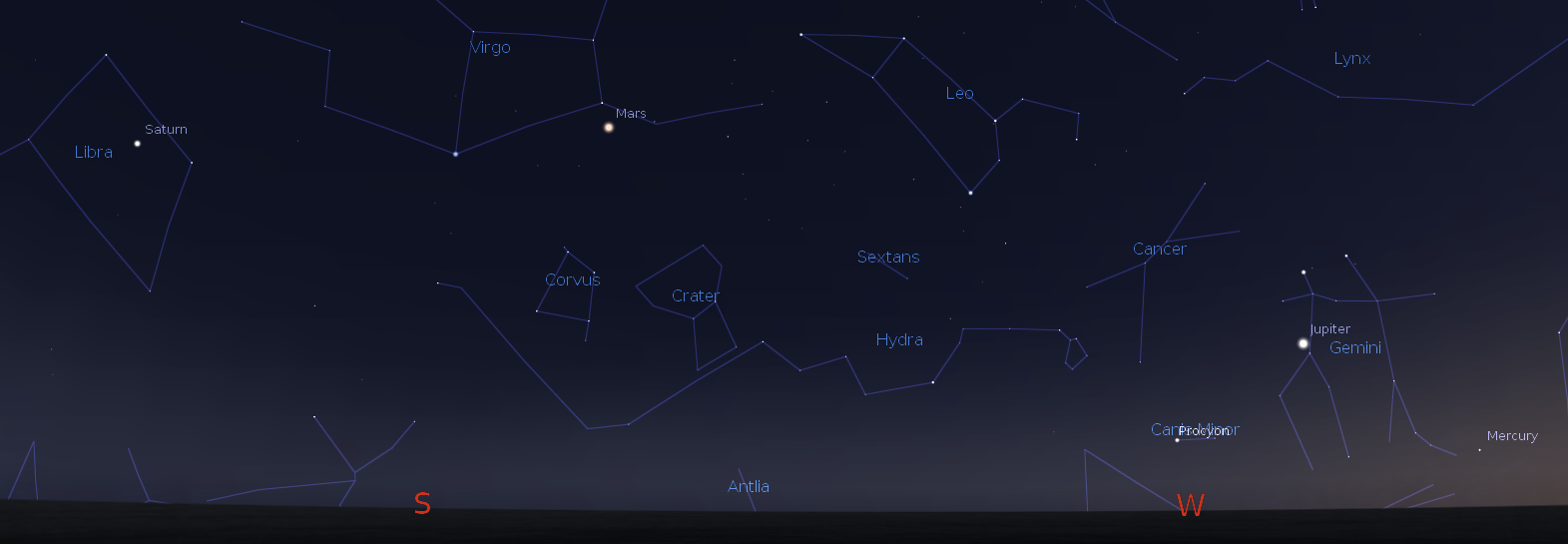
The planets Mercury, Jupiter, Mars and Saturn at 10:30 p.m. on May 28, 2014. Created using Stellarium.
Mercury barely shows a disc in telescopes.
In the planetary images below the scale is the same. It is the same as using the same magnifying power for each planet.
Jupiter is definitely the largest appearing planet.
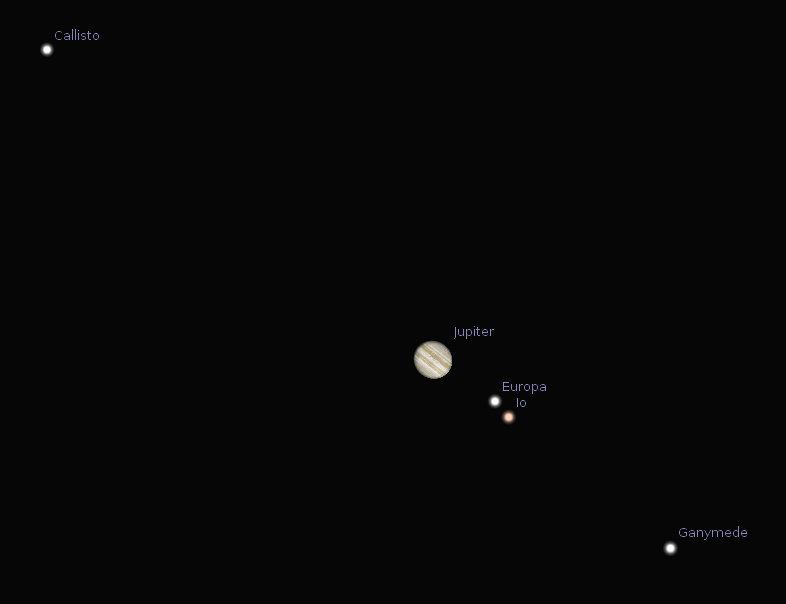
Jupiter and its four moons Galilean moons at 10:30 p.m. May 28, 2014. Created using Stellarium.
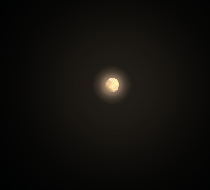
Mars at 10:30 p.m. May 28, 2014. Detail is difficult to see. Created using Stellarium.
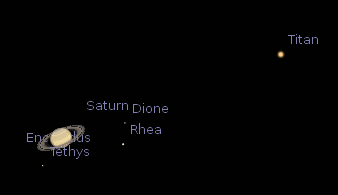
Saturn and moons as seen through a telescope at 10:30 p.m. on May 28, 2014. Created using Stellarium.
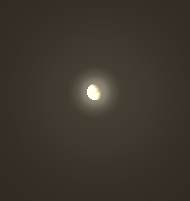
Venus in a telescope at 5:30 a.m. May 29, 2014. Created using Stellarium.
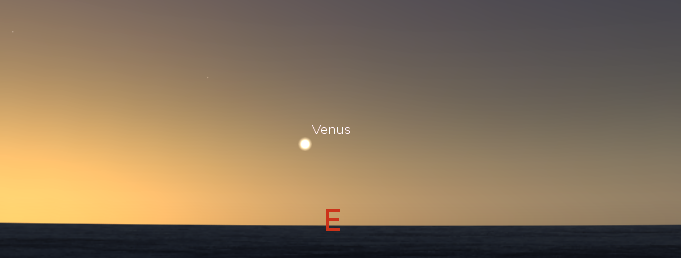
Venus in the eastern twilight at 5:30 a.m. May 29, 2014. Created using Stellarium.
 Bob Moler's Ephemeris Blog