Archive
05/22/2013 – Ephemeris – Where are the bright planets this week?
Ephemeris for Wednesday, May 22nd. Today the sun will be up for 15 hours and 4 minutes, setting at 9:11. The moon, 3 days before full, will set at 4:54 tomorrow morning. Tomorrow the sun will rise at 6:06.
The early evening will be taken up with the grouping of Jupiter, Venus and Mercury low in the west northwest at about 10 p.m. Jupiter will be on top and the easiest to spot with Venus below and right of Jupiter and tiny Mercury off to its right. Mercury sets at 10:24 p.m., with Venus following a minute later, while Jupiter will set at 10:48. Hanging backing from this planetary grouping in the east southeast will be Saturn this evening, the brightest star-like object in the constellation Virgo appearing yellowish to the left of the extremely blue-white star Spica. Tonight Saturn will be to the left of and above the bright moon. Saturn will pass due south at midnight, and will set at 5:16 tomorrow morning.
Times are for the Traverse City/Interlochen area of Michigan. They may be different for your location.
Addendum
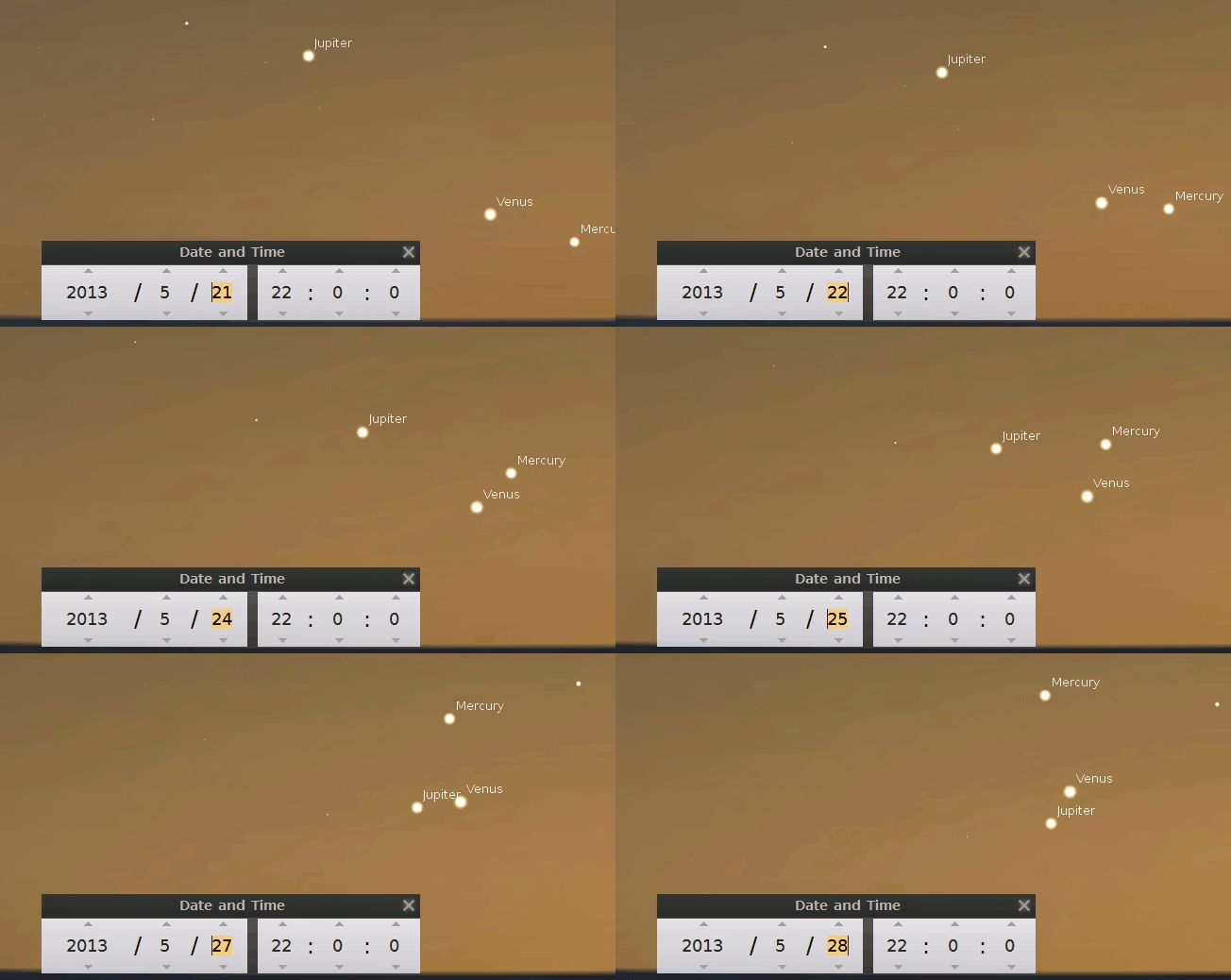
Dance of the planets Jupiter, Venus and Mercury, May 21 thru May 28, 2013. Created using Stellarium. Click on the image to start animation.
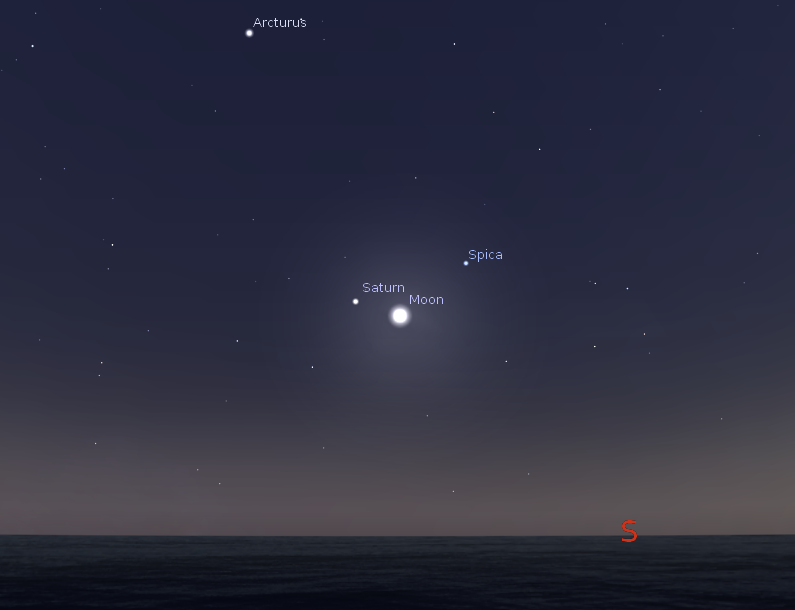
Saturn and the moon at 10 p.m. on May 22, 2013. Created using Stellarium.
05/21/2013 – Ephemeris – Dances with Planets
Ephemeris for Tuesday, May 21st. Today the sun will be up for 15 hours and 2 minutes, setting at 9:10. The moon, 3 days past first quarter, will set at 4:17 tomorrow morning. Tomorrow the sun will rise at 6:07.
Over the next week there will be a planet grouping low in the west about 10 p.m. as Jupiter continues it slide toward the sun while Venus and Mercury move away from the sun. Mercury will earn its title as the messenger of the gods, and fastest planet by overtaking Venus and Jupiter on consecutive nights. The group of the three planets will be their most compact on Sunday night he 26th. Tonight however Mercury will be to the right and a bit below Venus with Jupiter above and left of them both. Tomorrow night Mercury will have moved to be almost level with Venus, while Jupiter drops toward them. On bobmoler.wordpress.com there is an animation of these planets for the next 8 days.
Times are for the Traverse City/Interlochen area of Michigan. They may be different for your location.
Addendum
Dance of the planets Jupiter, Venus and Mercury, May 21 thru May 28, 2013. Created using Stellarium. Click on the image to start animation.
02/20/2013 – Ephemeris – Where are the bright planets this week?
Ephemeris for Wednesday, February 20th. The sun will rise at 7:34. It’ll be up for 10 hours and 43 minutes, setting at 6:18. The moon, 3 days past first quarter, will set at 4:43 tomorrow morning.
Let’s check out the planets for this week. Mercury can still be seen low in the west southwest. It will set at 7:50. This is a good apparition of Mercury for us in the northern hemisphere. Binoculars will help you locate it low in the sky. Jupiter is located in the constellation of Taurus and moves from the high south to the southwest during the evening. It will transit or pass due south at 6:59 p.m, and will set at 2:31 a.m. Jupiter is a wonderful sight in telescopes with its cloud bands and its moons which change positions each night. Saturn will be the next planet to rise at 12:07 a.m. in the east southeast. It’s located in eastern Virgo. Saturn will pass due south at 5:17 a.m. It will rise before midnight in a couple of days.
Times are for the Traverse City/Interlochen area of Michigan. They may be different for your location.
Addendum
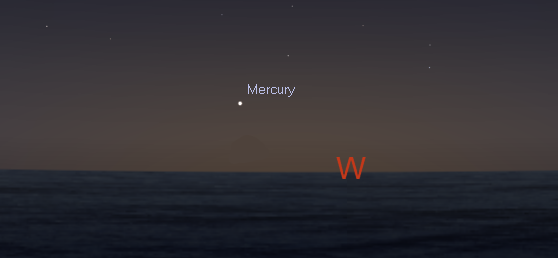
Mercury low on the western horizon at 7:15 p.m. on February 20, 2013. Created using Stellarium 0.12.0.
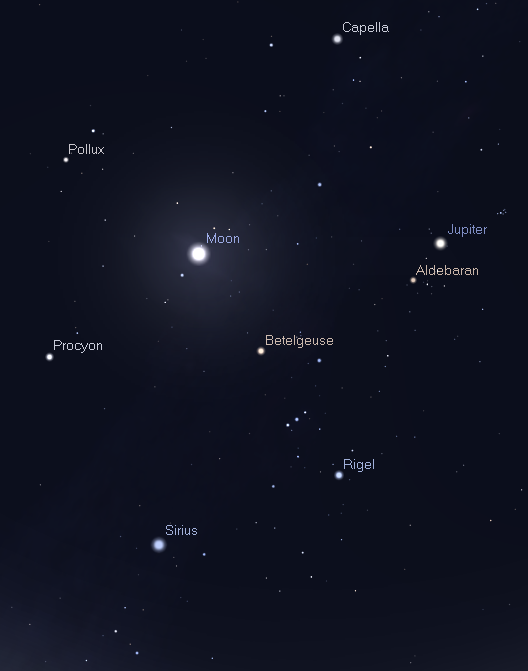
Jupiter and the stars of winter at 9 p.m. on February 20, 2013. Created using Stellarium 0.12.0
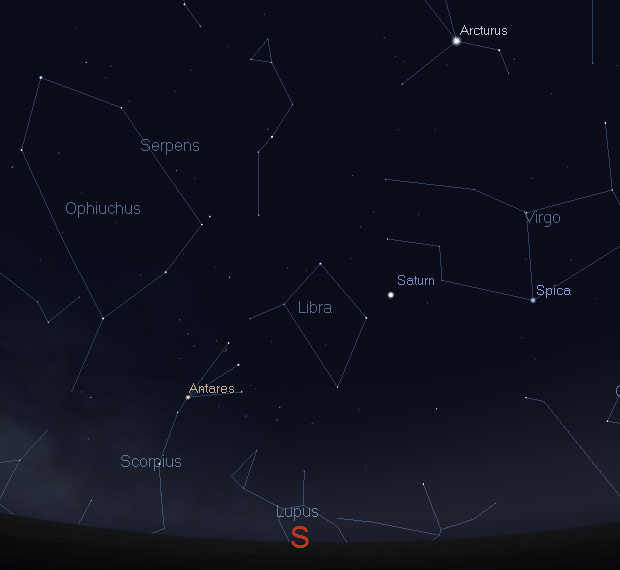
Saturn and the coming stars of late spring and early summer at 6 a.m. on February 21, 2013. Created using Stellarium 0.12.0.
02/13/2013 – Ephemeris – Where are the bright planets this week?
Ephemeris for Ash Wednesday, Wednesday, February 13th. The sun will rise at 7:45. It’ll be up for 10 hours and 23 minutes, setting at 6:08. The moon, 3 days past new, will set at 10:23 this evening.
Let’s check out the planets for this week. Mercury can be seen low in the southwest. Mercury will set at 7:41 p.m. This is a good apparition of Mercury for us in the northern hemisphere. Binoculars will help you locate it low in the sky. Jupiter is located in the constellation of Taurus and moves from the high southeast to the high southwest during the evening. It will transit or pass due south at 7:25 p.m, and will set at 2:56 a.m. Jupiter is a wonderful sight in telescopes with its cloud bands and its moons which change positions each night. Saturn will be the next planet to rise at 12:34 a.m. in the east southeast. It’s located in eastern Virgo. Saturn will pass due south at 5:44 a.m. It will rise before midnight by the end of the month.
Times are for the Traverse City/Interlochen area of Michigan. They may be different for your location.
Addendum
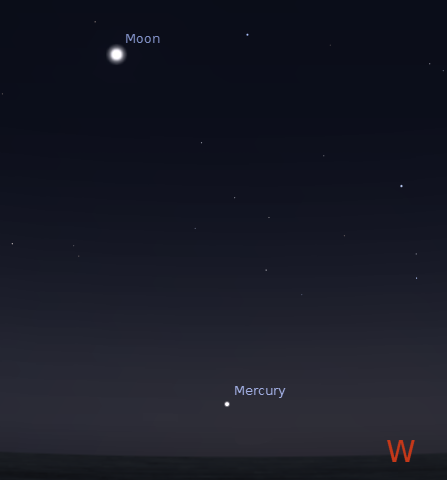
Mercury and the moon at 7:15 p.m. on February 13, 2013. Created using Stellarium.
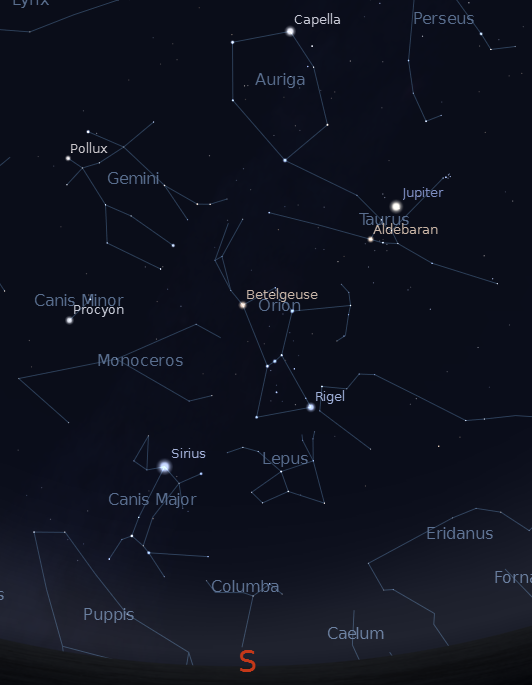
Jupiter and the winter constellations at 9 p.m. on February 13, 2013. Created using Stellarium.
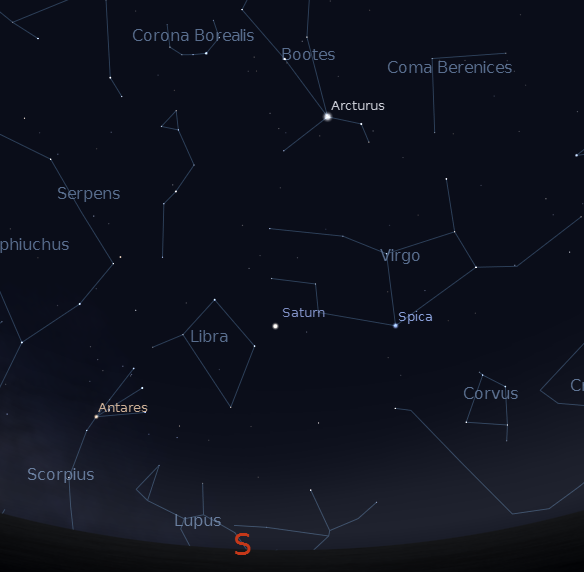
Saturn and the late spring and early summer constellations, as seen in the evening, but at 6 a.m. February 14, 2013.
2/11/2013 – Ephemeris – The moon will appear near Mercury tonight
Ephemeris for Monday, February 11th. The sun will rise at 7:48. It’ll be up for 10 hours and 17 minutes, setting at 6:05. The moon, 1 day past new, will set at 8:09 this evening.
Mercury will appear below the skinny crescent moon tonight shortly after sunset. The best time to spot them is about 6:45 p.m. looking very low to the west southwestern horizon. Binoculars as always are a real help in picking them out of the evening twilight. Mercury will appear about 6 degrees or 12 moon widths below the moon. They will be actually at their closest appearance this afternoon, and will have separated a bit before we will get to see them. As a rule of thumb, the moon will move its diameter against the stars in an hour’s time. Mercury’s got its thing going too. In 5 days it will be at greatest elongation or apparent angle of separation from the sun of about 18.1 degrees. At about the same time Mercury will actually pass its closest to the sun.
Times are for the Traverse City/Interlochen area of Michigan. They may be different for your location.
Addendum
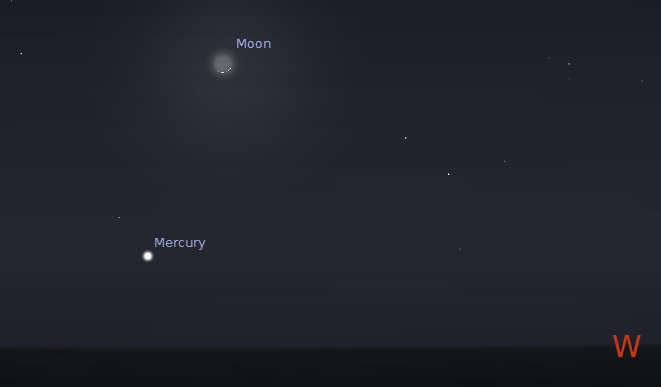
Mercury and the moon at 7:15 p.m. on February 11, 2013. Created using Stellarium. Note a one day old moon doesn’t show well in this view.
02/06/2012 – Ephemeris – Where are the bright planets this week?
Ephemeris for Wednesday, February 6th. The sun will rise at 7:54. It’ll be up for 10 hours and 3 minutes, setting at 5:58. The moon, 3 days past last quarter, will rise at 5:36 tomorrow morning.
Let’s check out the planets for this week. Mars and Mercury can be seen low in the southwest. Mercury will set at 7:09, Mars 8 minutes later. Mercury will be the brighter of the two. They will be closest this Friday. I’ll talk more about that then. Jupiter is located in the constellation of Taurus and moves from the high southeast to the high southwest during the evening. It will transit or pass due south at 7:51 p.m, and will set at 3:22 a.m. Jupiter is a wonderful sight in telescopes with its cloud bands and its moons which change positions each night. Saturn will be the next planet to rise at 1:01 a.m. in the east southeast. It’s located in eastern Virgo. Saturn will pass due south at 6:11 a.m. It will rise before midnight by the end of the month.
Times are for the Traverse City/Interlochen area of Michigan. They may be different for your location.
Addendum
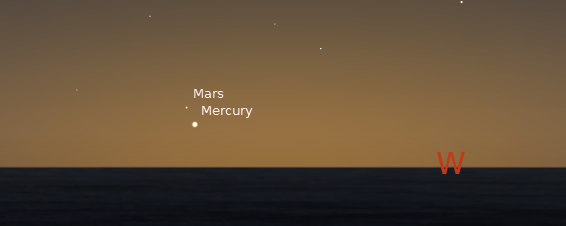
Mercury approaches Mars at 6:45 p.m. in the west on February 6, 2013. Created using Stellarium.
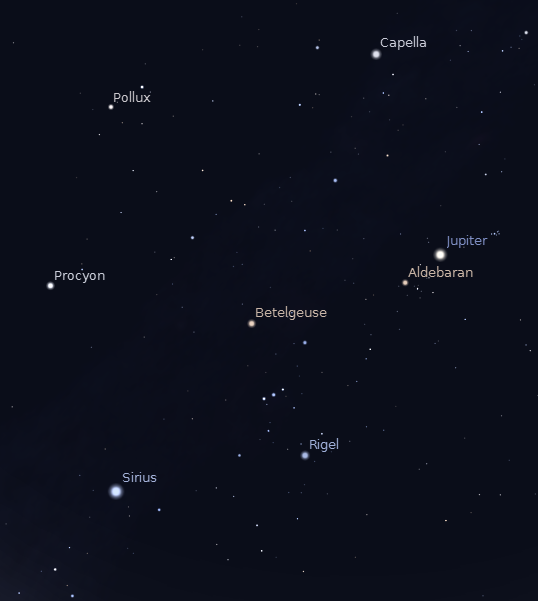
Jupiter with the winter stars at 9 p.m. on February 6, 2013. Created using Stellarium.
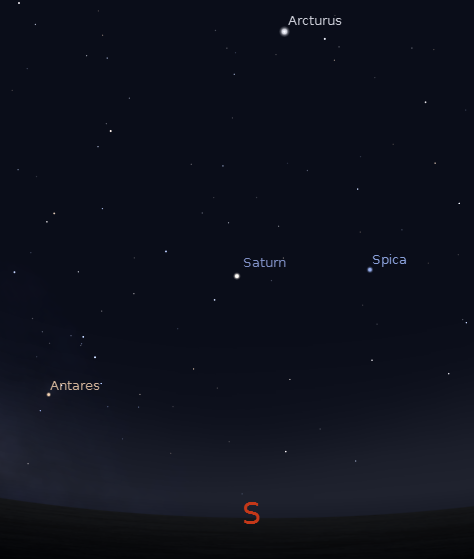
Previewing the Late spring stars with Saturn at 6 a.m. on February 7, 2013. Created using Stellarium.
01/30/2013 – Ephemeris – Where are the bright planets this week?
Ephemeris for Wednesday, January 30th. The sun will rise at 8:03. It’ll be up for 9 hours and 45 minutes, setting at 5:48. The moon, half way from full to last quarter, will rise at 9:58 this evening.
Let’s check out the planets for this week. Mars can be seen low in the west southwest. It will set at 7:15 p.m, two minutes later than last week because Mars is moving northward. The sun is gaining on it since it sets 10 minutes later each week. Jupiter will be visible in the southeast as it gets dark. Jupiter is located in the constellation of Taurus and moves from the southeast to the high south southwest during the evening. It will transit or pass due south at 8:15 p.m, and will set at 3:45 a.m. Jupiter is a wonderful sight in telescopes with its cloud bands and its moons which change positions each night. Saturn will be the next planet to rise at 1:24 a.m. in the east southeast. It’s located in eastern Virgo. Saturn will pass due south at 6:38 a.m.
Times are for the Traverse City/Interlochen area of Michigan. They may be different for your location.
Addendum
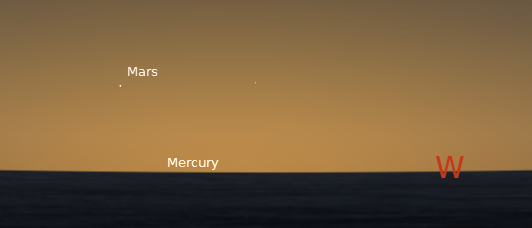
Mars low in the west southwest with Mercury just below the horizon at 6:30 p.m. on January 30, 2013. Created using Stellarium.
On February 8th Mercury will appear closest to Mars. Mercury’s greatest elongation from the sun will be on February 16th.
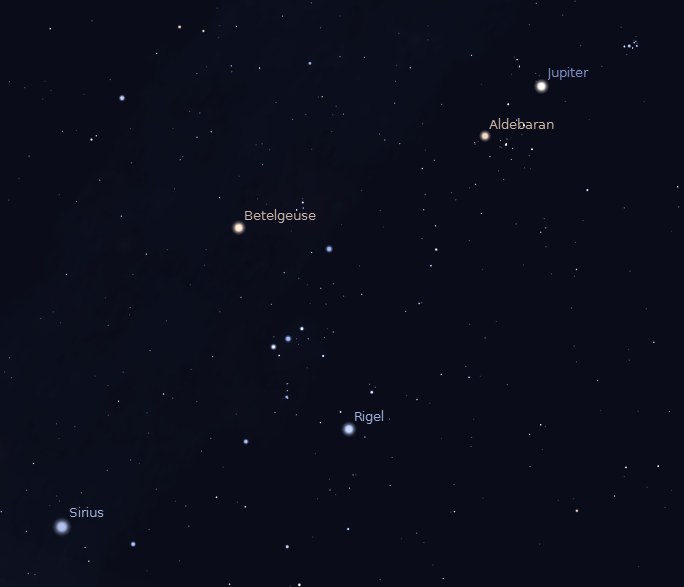
Jupiter and the stars of Taurus and Orion at 9 p.m. on January 30, 2013. Created using Stellarium.
Also see the Pleiades right and just above Jupiter.
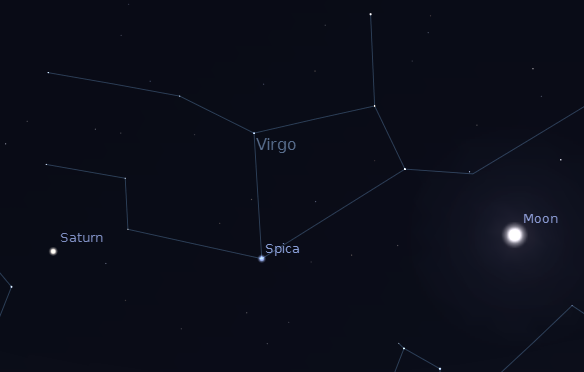
Saturn and the moon in Virgo at 6 a.m. on January 31, 2013. Created using Stellarium.
The moon will pass Saturn Sunday morning February 3rd.
12/12/2012 – Ephemeris – Where are the bright planets this week?
Ephemeris for Wednesday, December 12th. The sun will rise at 8:10. It’ll be up for 8 hours and 51 minutes, setting at 5:02. The moon, 1 day before new, will rise at 8:18 tomorrow morning.
Let’s check out the planets for this week. Mars can be seen low in the southwest. It will set at 7:04 p.m. The planetary action will have already picked up on the other side of the sky. Jupiter is located in the constellation of Taurus on the southeast in the evening. It will transit or pass due south at 11:47 p.m, and will set at 7:19 a.m. Saturn will be the next planet to rise at 4:24 a.m. in the east southeast. Venus will rise at 6:02 and is below and left of Saturn. Mercury will rise at 6:36 a.m. Below and left of Venus. A half an hour later it should be high enough to spot. The three planets will appear in a straight line and nearly equally spaced. After a few days Mercury will not be visible again until next February.
Times are for the Traverse City/Interlochen area of Michigan. They may be different for your location.
Addendum
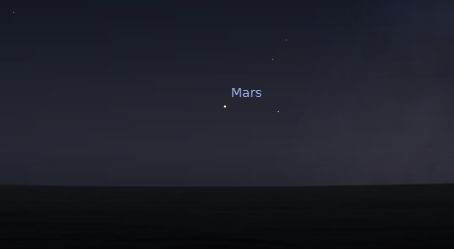
Mars low in the southwest at 6:15 p.m. on December 12, 2012. Created using Stellarium.
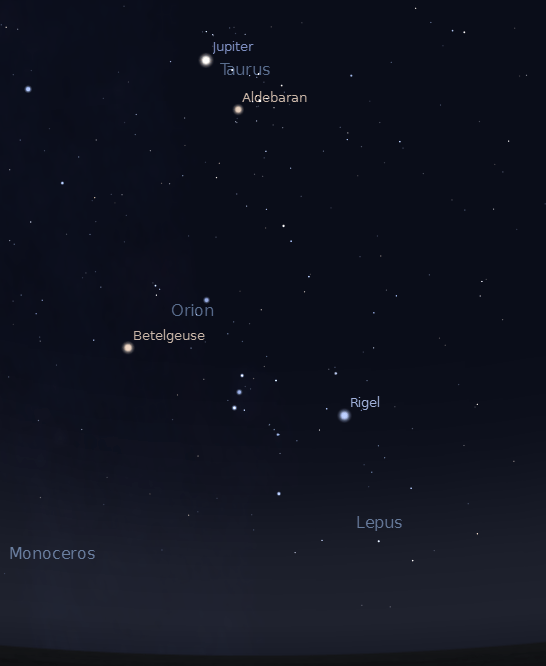
Jupiter and the winter stars at 9 p.m. December 12, 2012. Created using Stellarium.
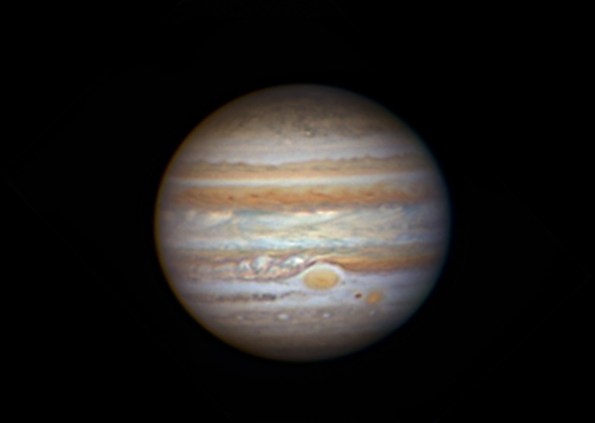
Jupiter with its Great Red Spot November 18, 2012 by Scott Anttila.
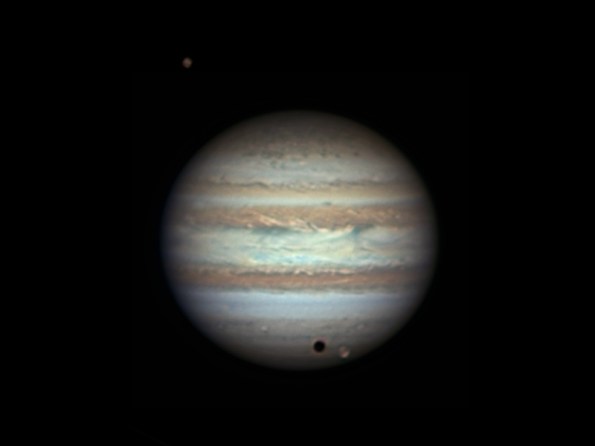
Jupiter with Callisto above, Ganymede and its shadow below on December 6, 2012 by Scott Anttila, Click to enlarge.
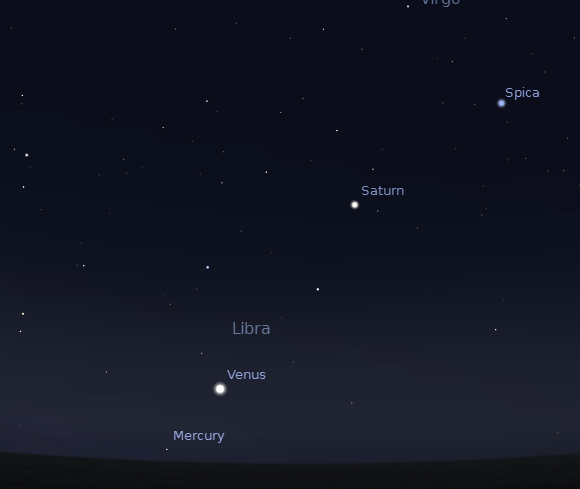
Saturn, Venus and Mercury at 6:45 a.m. ay December 13, 2012. Created using Stellarium.
12/05/2012 – Ephemeris – Where are all the bright planets this week?
Ephemeris for Wednesday, December 5th. The sun will rise at 8:04. It’ll be up for 8 hours and 58 minutes, setting at 5:02. The moon, 1 day before last quarter, will rise at 12:03 tomorrow morning.
Let’s check out the planets for this week. All 5 classical planets are visible now. Mars can be seen low in the southwest. Mars will set at 7:05. The planetary action will have already picked up on the other side of the sky. Jupiter is located in the constellation of Taurus on the southeast in the evening. It will transit or pass due south at 12:18 a.m, and will set at 7:51. Saturn will be the next planet to rise at 4:48 a.m. in the east southeast. Venus will rise at 5:44 and is below and left of Saturn. Mercury will rise at 6:16 a.m. Below and left of Venus. A half an hour later it should be high enough to spot . The three planets will appear in a straight line and nearly equally spaced. After about a week, Mercury will not be visible again until next spring.
Times are for the Traverse City/Interlochen area of Michigan. They may be different for your location.
Addendum
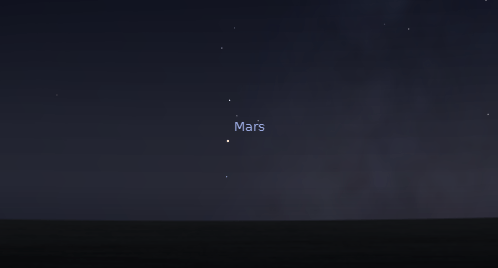
Mars low in the southwest at 6:15 p.m. on December 5, 2012. Created using Stellarium.
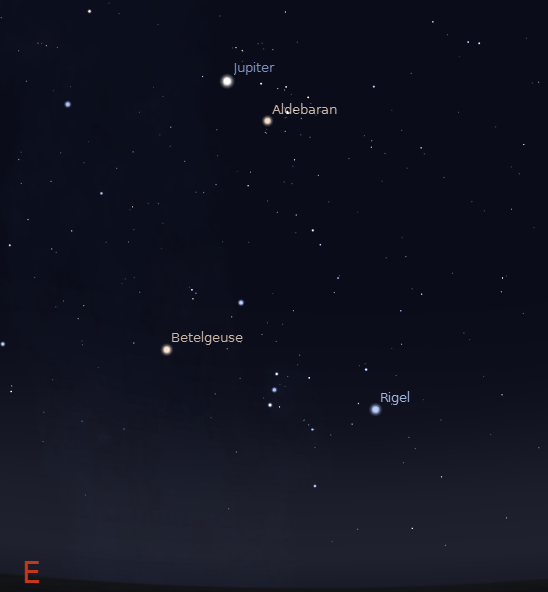
Jupiter and the winter stars at 9 p.m. on December 5, 2012. Created using Stellarium.
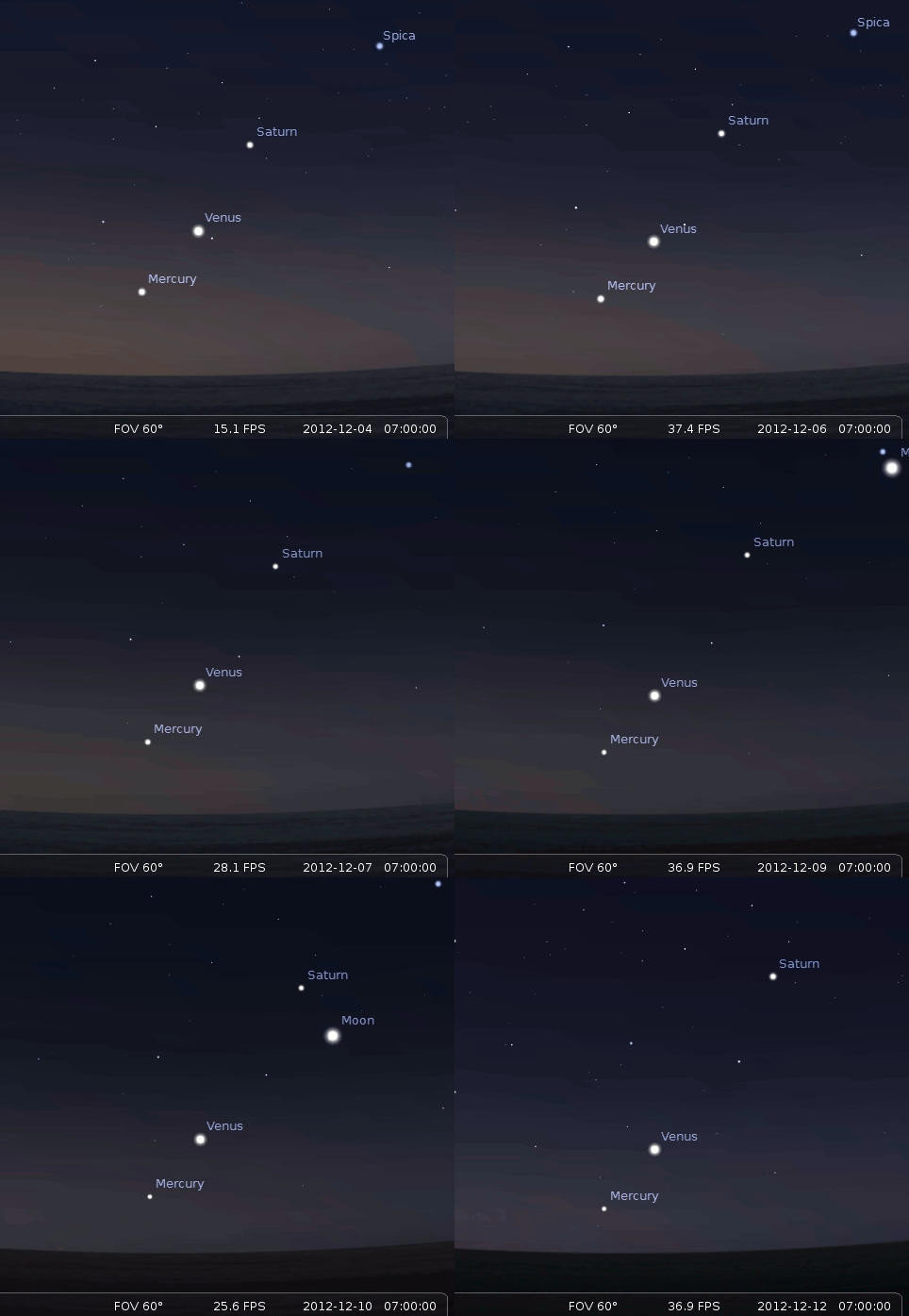
Mercury animation from December 4 to thru 12, 2012. Created using Stellarium
12/04/2012 – Ephemeris – Mercury in the morning
Ephemeris for Tuesday, December 4th. The sun will rise at 8:02. It’ll be up for 8 hours and 59 minutes, setting at 5:02. The moon, 2 days before last quarter, will rise at 10:59 this evening.
The planet Mercury has joined the morning planets for a week or so. Mercury can be best spotted low in the east southeast starting about 7 a.m. It will be below and slightly left of Venus, the brightest planet, about the same distance below as Saturn is above Venus. They’re just about in straight line. Binoculars will help in the search. Once found Mercury may be tracked past 7:30. Mercury will be visible for about a week as become somewhat brighter as it does. That’s because Mercury’s phase at its half illuminated today at its greatest elongation from the sun. It will be becoming more and more full as it moves around the sun mostly away from us now. Mercury is a prise, few people have ever seen it.
Times are for the Traverse City/Interlochen area of Michigan. They may be different for your location.
Addendum
Mercury animation starting December 4, 2012. Created using Stellarium
Note the passage of the moon on the mornings of the 10th and 11th. The moon will actually be a thin crescent.

