Archive
05/10/2023 – Ephemeris – Let’s find where the naked-eye planets have wandered off to this week
This is Bob Moler with Ephemeris for Wednesday, May 10th. Today the Sun will be up for 14 hours and 37 minutes, setting at 8:58, and it will rise tomorrow at 6:19. The Moon, 2 days before last quarter, will rise at 2:42 tomorrow morning.
Let’s find where the naked-eye planets have wandered off to this week. Venus is our blazing Evening Star, seen in the west all evening. It will set after midnight. The red planet Mars is in Gemini, left and a bit below Pollux, the leftmost of the namesake stars of the twins, with Castor on the right. Mars is above and left of Venus. By 20 degrees, or two times the width of one’s fist held at arm’s length. Venus is closing the gap between them, but will never quite reach Mars while they are in the evening sky. The closest they will get is three and a half degrees or 7 moon diameters apart, before Venus pulls back toward the Sun faster than Mars will. In the morning, Saturn will be visible and low in the east-southeast by 5 am, rising at 3:37 am. Both Jupiter and Mercury are too close to the direction of the Sun to be seen.
The astronomical event times given are for the Traverse City/Interlochen area of Michigan (EDT, UT –4 hours). They may be different for your location.
Addendum
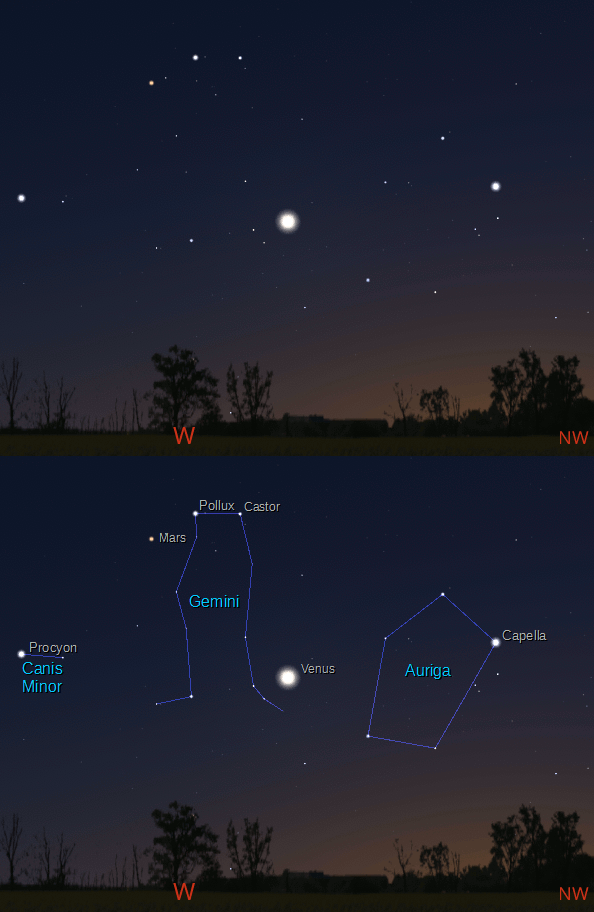
Venus and Mars among the setting winter stars at 10 pm tonight, May 10, 2023. Created using Stellarium, LibreOffice Draw and GIMP.
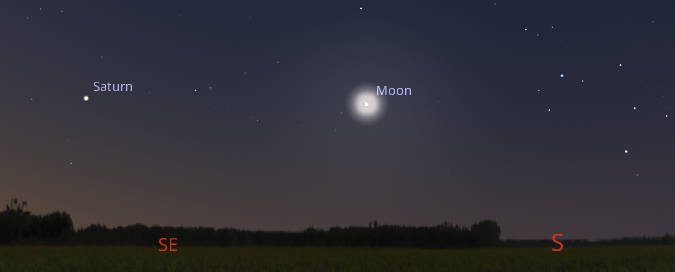
Saturn and the Moon in the morning sky at 5:30 am. Note the Sagittarius’ Teapot asterism on the right. Created using Stellarium.
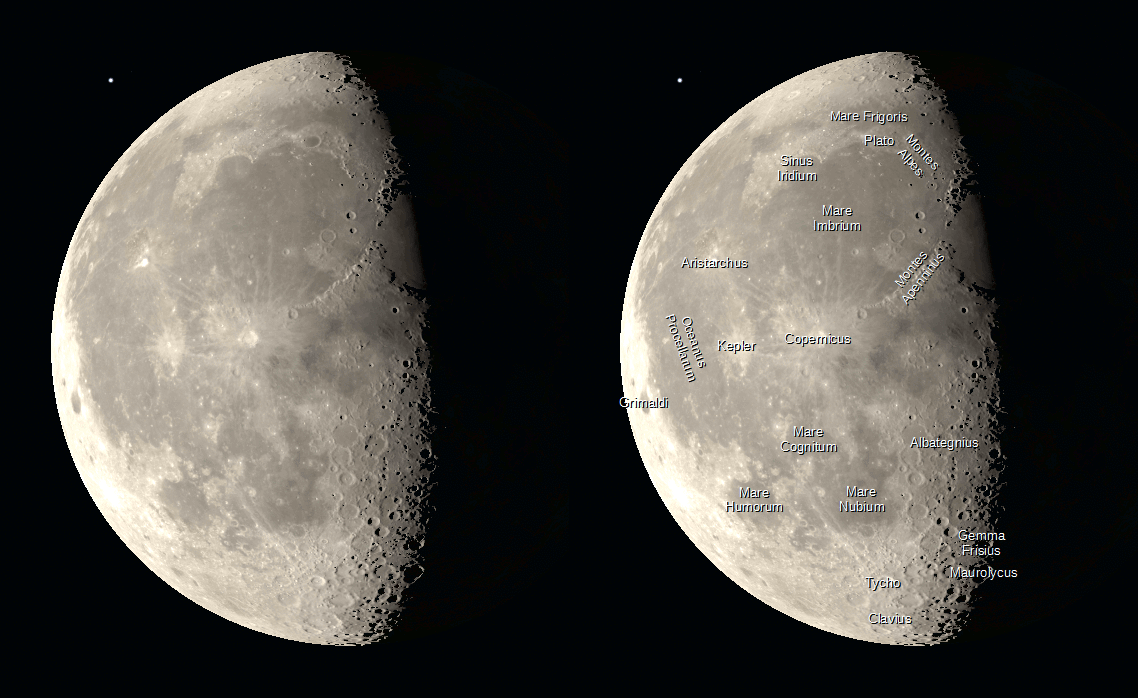
Waning gibbous Moon animation with selected features labeled. Labels are centered on their feature. Created using Stellarium, LibreOffice, and GIMP.
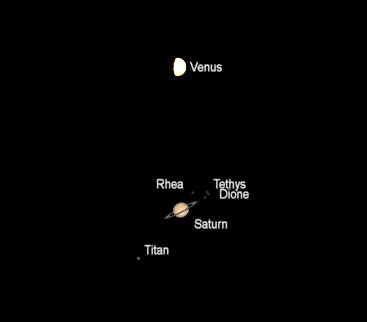
Telescopic Venus and Saturn (north up) as they would be seen in a small telescope, with the same magnification tonight, the night of May 10/11, 2023. Apparent diameters: Venus 18.45″ and is 62.1% illuminated; Saturn 16.58″, its rings 38.61″. Mars, too small to be represented here, is 5.12″ in diameter. Both Venus and Saturn are getting larger as they approach us. Created using Cartes du Ciel (Sky Charts).
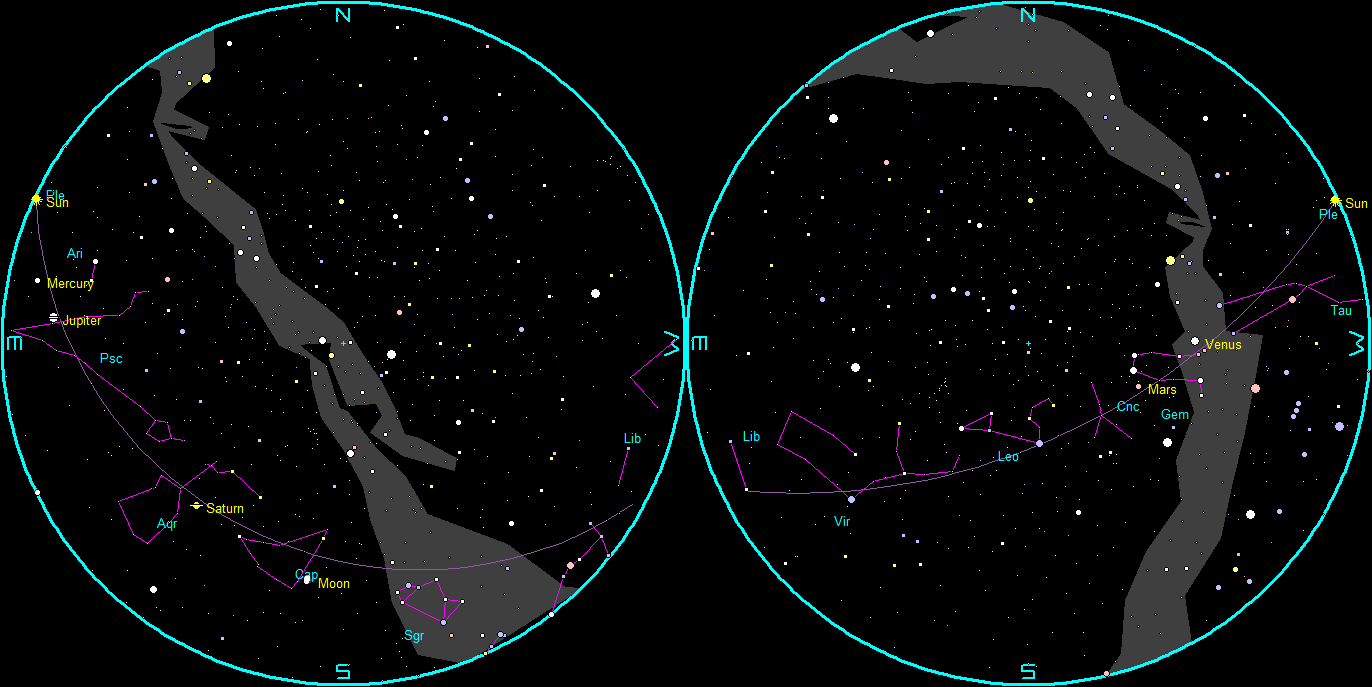
The naked-eye planets and the Moon at sunset and sunrise on a single night, starting with sunset on the right on May 10, 2023. The night ends on the left with sunrise on the 11th. Click or tap on the image to enlarge it. Created using my LookingUp app and GIMP.
05/03/2023 – Ephemeris – Let’s find where the naked-eye planets have wandered off to this week
This is Ephemeris for Wednesday, May 3rd. Today the Sun will be up for 14 hours and 19 minutes, setting at 8:49, and it will rise tomorrow at 6:28. The Moon, 2 days before full, will set at 5:56 tomorrow morning.
Let’s find where the naked-eye planets have wandered off to this week. Venus is our blazing Evening Star, seen in the west all evening. It will set after midnight. The red planet Mars is in Gemini, below Pollux, left of Castor, the namesake stars of the twins. Mars is above and left of Venus by 24 degrees, or almost two and a half times the width of one’s fist held at arm’s length. Venus is closing the gap between them, but will never quite reach Mars while they are in the evening sky. The closest they will get is three and a half degrees or 7 moon diameters apart, before Venus pulls back toward the Sun faster than Mars will. Saturn, low in the southeast by 6 am, is emerging from morning twilight, rising at 4:07 am. Both Jupiter and Mercury are too close to the direction of the Sun to be seen.
The astronomical event times given are for the Traverse City/Interlochen area of Michigan (EDT, UT –4 hours). They may be different for your location.
Addendum
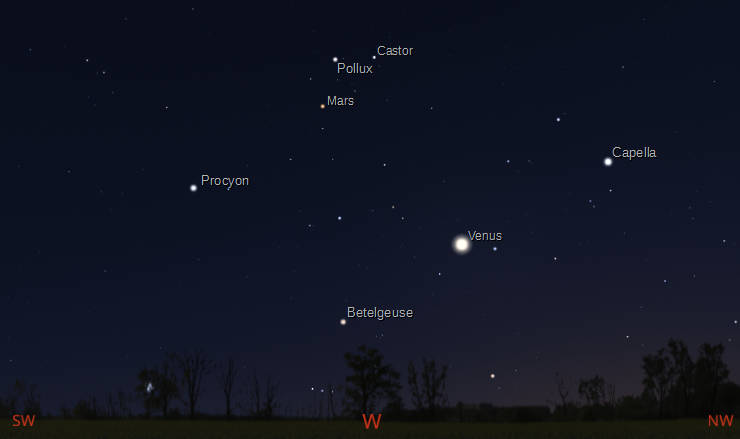
Venus and Mars among the setting winter stars tonight, at 10 pm, May 3rd, 2023. Click or tap on the image to enlarge it. Created using Stellarium, Libreoffice Draw and GIMP.
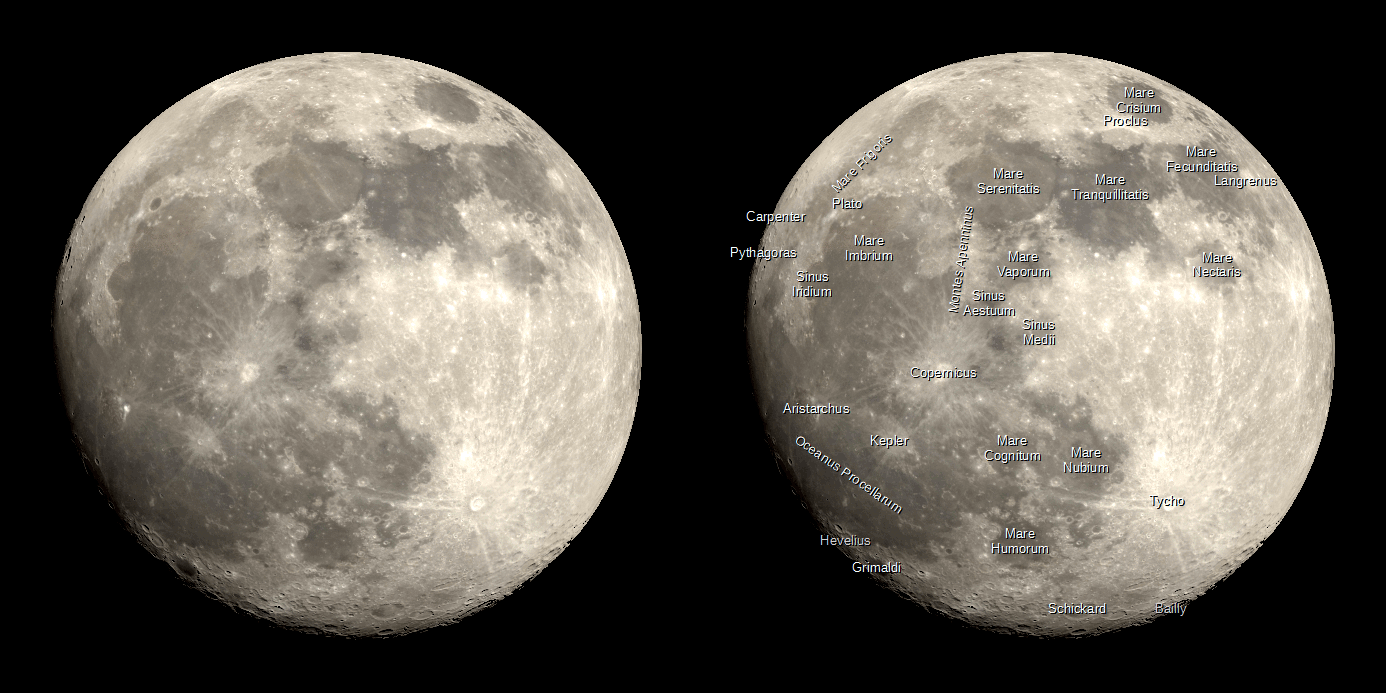
Moon 2 days before full, annotated for 10 pm, May 3, 2023. Created using Stellarium, LibreOffice Draw, and GIMP.
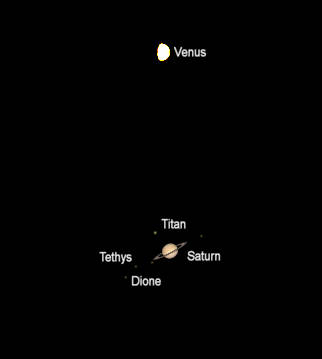
Telescopic Venus and Saturn (north up) as they would be seen in a small telescope, with the same magnification. Apparent diameters: Venus 17.43″ and is 65.2% illuminated; Saturn 16.39″, its rings 38.19″. Mars, too small to be represented here, is 5.30″ in diameter. Created using Cartes du Ciel (Sky Charts).
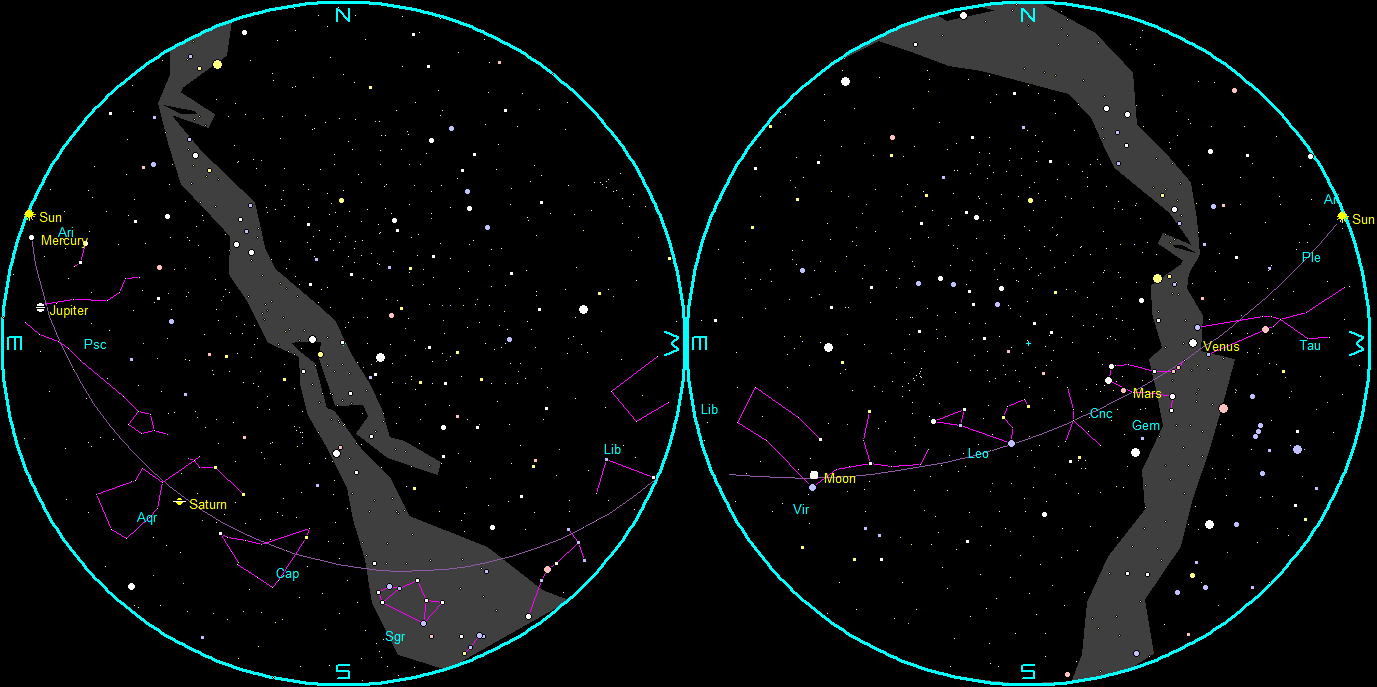
The naked-eye planets and the Moon at sunset and sunrise on a single night, starting with sunset on the right on May 3, 2023. The night ends on the left with sunrise on the 4th. Click or tap on the image to enlarge it. Created using my LookingUp app and GIMP.
04/26/2023 – Ephemeris – Let’s find where the naked-eye planets have wandered off to this week
This is Ephemeris for Wednesday, April 26th. Today the Sun will be up for 14 hours even, setting at 8:41, and it will rise tomorrow at 6:39. The Moon, 1 day before first quarter, will set at 3:28 tomorrow morning.
Let’s find where the naked-eye planets have wandered off to this week. Venus is our blazing Evening Star, seen in the west all evening. It will set after midnight. It’s in Gemini, below the namesake stars of the twins Castor on the right and Pollux on the left. Pollux is a bit below and to the right of the Moon tonight. Mars is above and left of Venus. Venus is closing the gap between them, but will never quite reach Mars while they are in the evening sky. The closest they will get is three and a half degrees or 7 moon diameters apart, before Venus pulls back toward the Sun faster than Mars. They won’t cross paths until February of next year. Saturn is emerging from morning twilight, rising at 4:33 am in the east-southeast. Both Jupiter and Mercury are too close to the direction of the Sun to be seen.
The astronomical event times given are for the Traverse City/Interlochen area of Michigan (EST, UT –4 hours). They may be different for your location.
Addendum
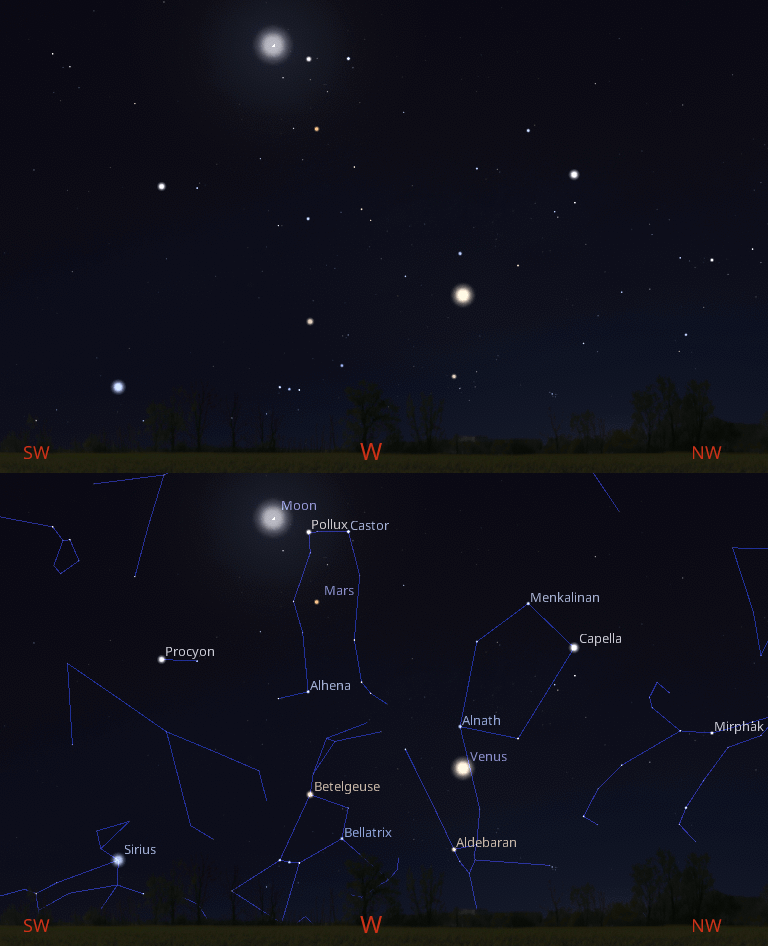
Evening planets and stars looking westward at 10 pm tonight, April 26, 2023. Click or tap on the image to enlarge it. Created using Stellarium and GIMP.
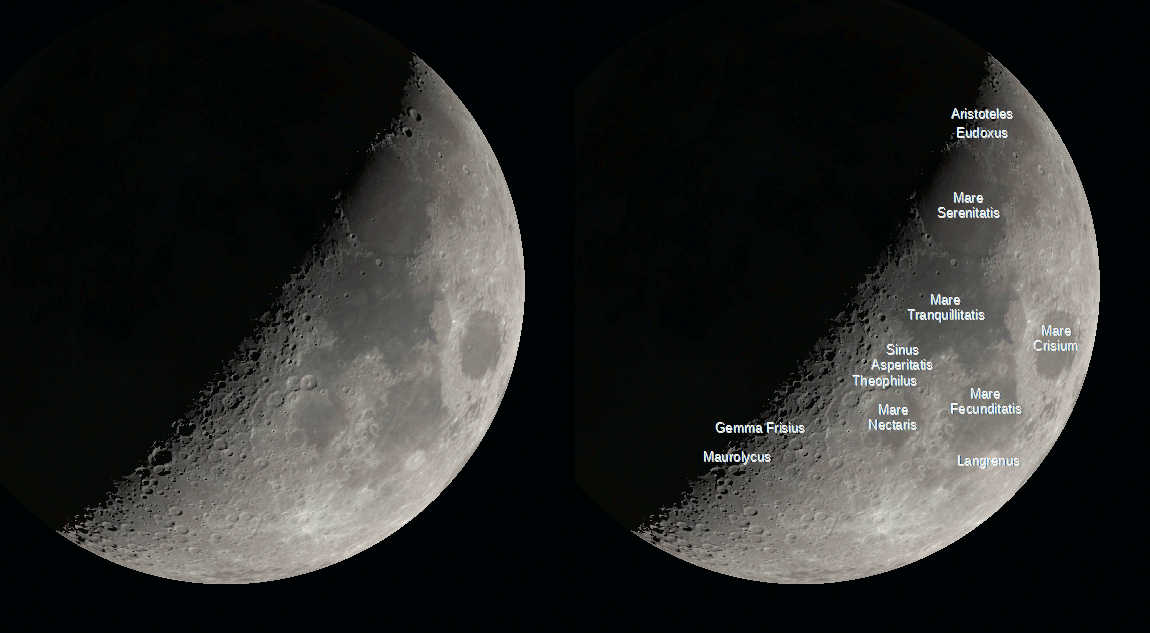
The Moon, one day before first quarter tonight, April 26, 2023, with prominent features labeled. Created using Stellarium, GIMP and LibreOffice Draw.
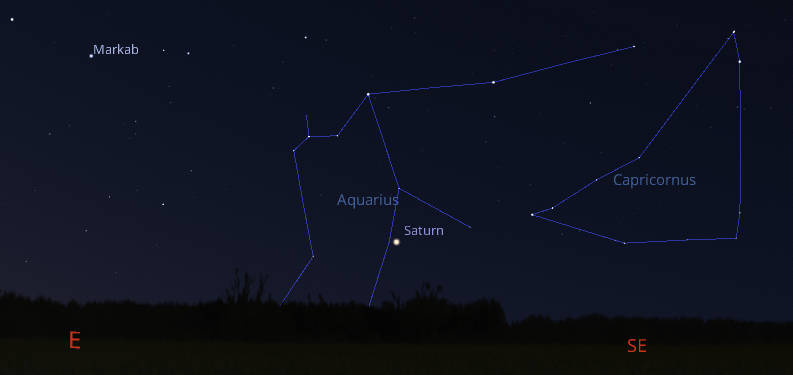
Saturn, low in the east-southeast at 5:30 am, April 27, 2023. Created using Stellarium.
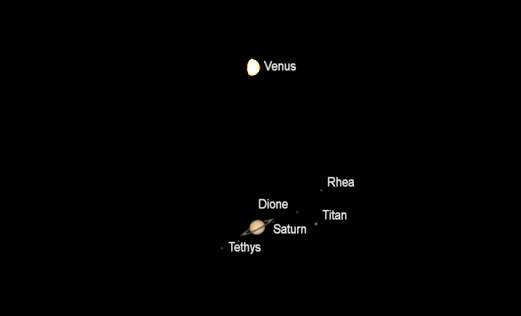
Telescopic Venus and Saturn (north up) as they would be seen in a small telescope, with the same magnification. Apparent diameters: Venus 16.51″ and is 68.1% illuminated; Saturn 16.23″, its rings 37.80″. Mars is too small to be represented here. It is 5.5″ in diameter. Created using Cartes du Ciel (Sky Charts).
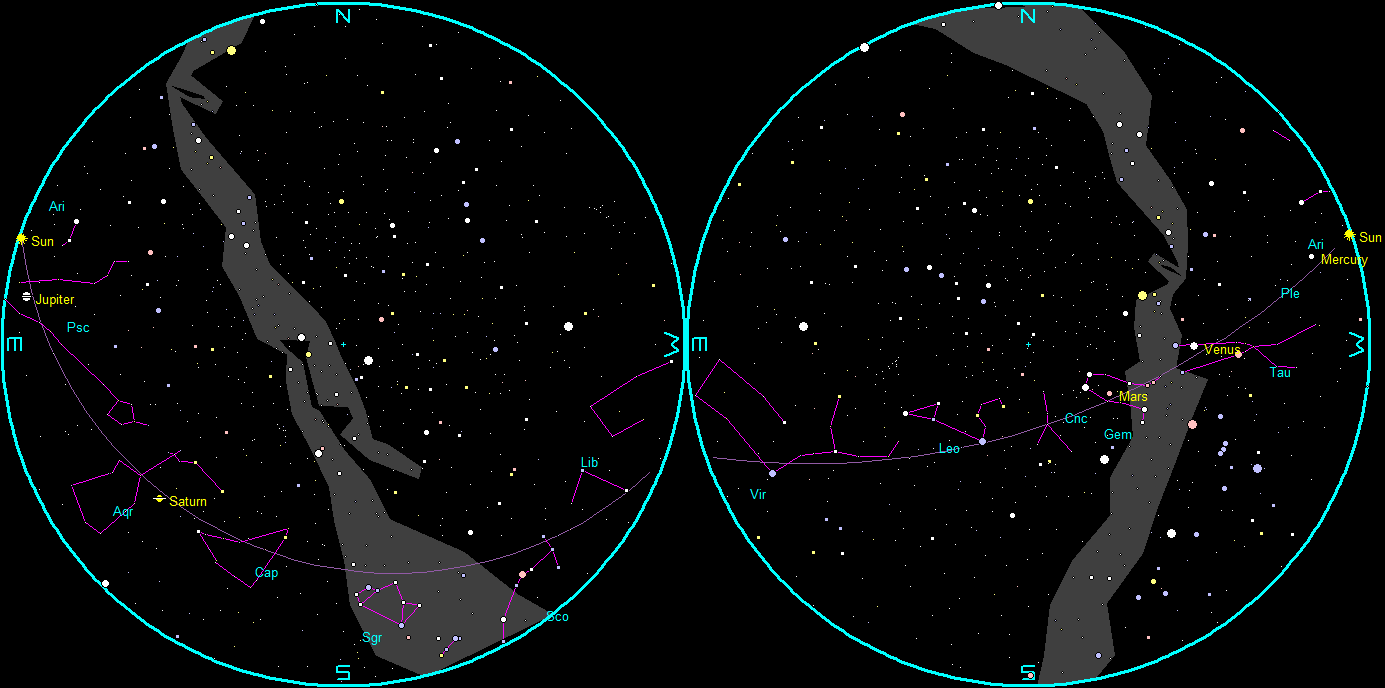
The naked-eye planets and the Moon at sunset and sunrise on a single night, starting with sunset on the right on April 26, 2023. The night ends on the left with sunrise on the 27th. Click or tap on the image to enlarge it. Created using my LookingUp app and GIMP.
04/19/2023 – Ephemeris – Let’s find where the naked-eye planets have wandered off to this week
This is Ephemeris for Wednesday, April 19th. Today the Sun will be up for 13 hours and 40 minutes, setting at 8:32, and it will rise tomorrow at 6:50. The Moon, 1 day before new, will rise at 7:04 tomorrow morning.
Let’s find where the naked-eye planets have wandered off to this week. Since I left you in February, Jupiter passed behind the Sun 8 days ago and moved to the morning side of the Sun. Though it will be more than a month before it is far enough from the Sun to be spotted before sunrise. Venus is our blazing Evening Star, seen in the west all evening. It will set shortly after midnight. It’s in Taurus, with the bright star Aldebaran below and left of it and the Pleiades below and right of it. Mars is above and left of Venus. Venus is closing the gap, but will never quite reach Mars while they are in the evening sky. The closest they will get is three and a half degrees or 7 moon diameters apart, but won’t cross paths until February of next year. In the morning sky, Saturn is now visible by 6 am in the east-southeast.
Addendum
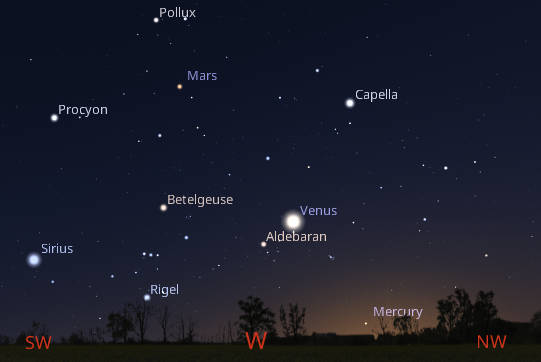
Evening planets Venus and Mars among the bright stars of winter at 9:30 pm with Mercury about to set, April 19, 2023. Created using Stellarium.
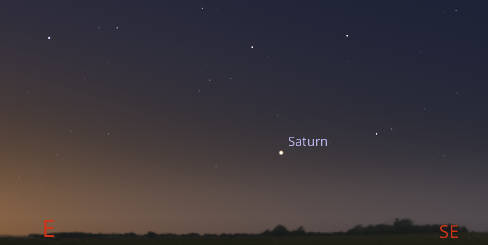
Saturn in morning twilight at 6 am on April 20, 2023. Created using Stellarium.
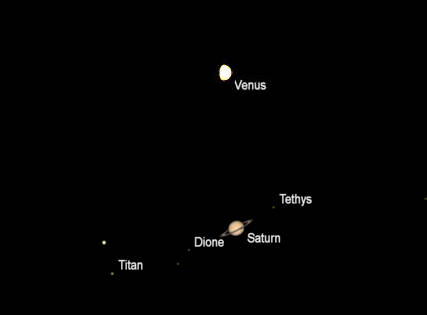
Telescopic Venus and Saturn (north up) as they would be seen in a small telescope, with the same magnification. Apparent diameters: Venus 15.72″, and is 70.8% illuminated; Saturn 16.07″, its rings 37.43″. Created using Cartes du Ciel (Sky Charts).
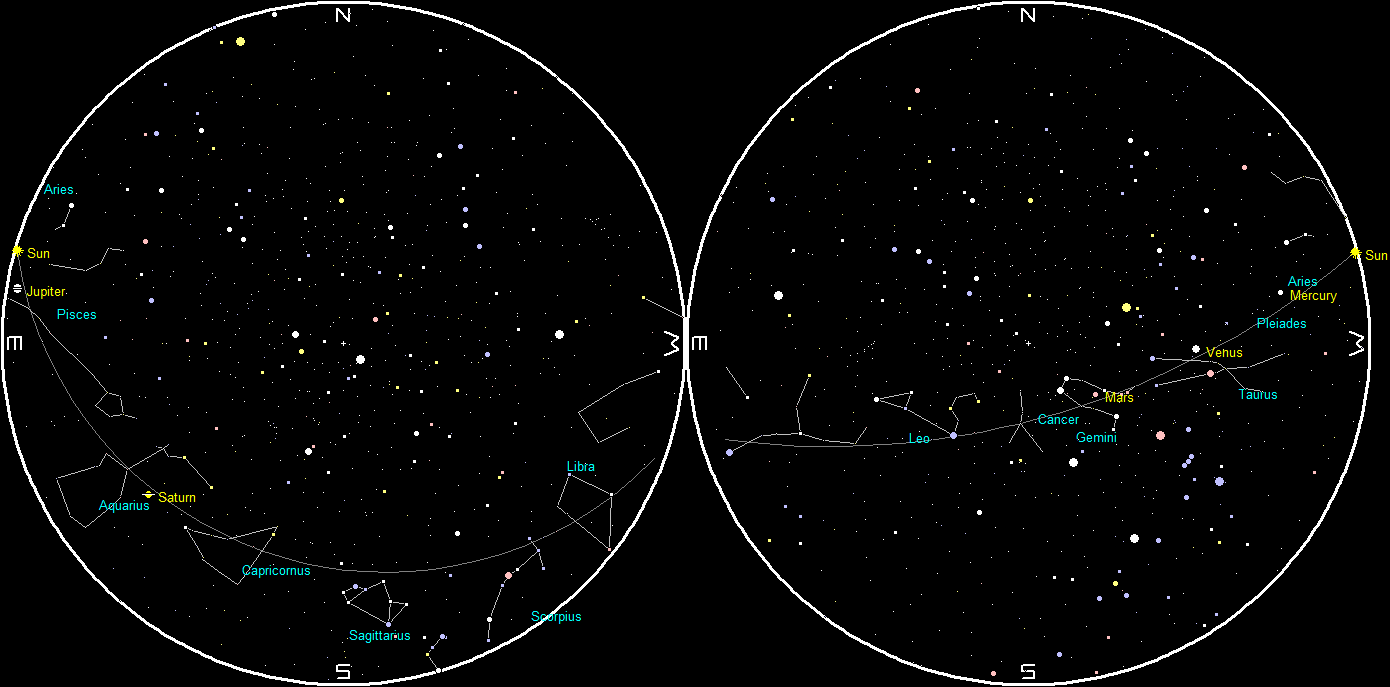
The naked-eye planets and the Moon at sunset and sunrise on a single night, starting with sunset on the right on April 19, 2023. The night ends on the left with sunrise on the 20th. Click on the image to enlarge it. Created using my LookingUp app and GIMP.
02/08/2023 – Ephemeris – Let’s find where the naked-eye planets have wandered off to this week
This is Bob Moler with Ephemeris for Wednesday, February 8th. Today the Sun will be up for 10 hours and 7 minutes, setting at 6:01, and it will rise tomorrow at 7:52. The Moon, 3 days past full, will rise at 9:02 this evening.
Let’s find where the naked-eye planets have wandered off to this week. Very early after sunset, Venus can be spotted low in the southwest by 6:30 pm. Mars, and Jupiter will be visible this evening by 7 pm. Mars will be above Orion in the southeast and is pulling away from the Pleiades. Jupiter will be in the southwest. Saturn is way below Venus now, so it’s gone until it reappears in the morning sky in a few months. It will make the crossing to the morning sky with its solar conjunction on the 16th. Jupiter will cross paths with Venus on March 1st. Mercury is now in the morning sky, but too close to the Sun to be visible.
The astronomical event times given are for the Traverse City/Interlochen area of Michigan (EST, UT –5 hours). They may be different for your location.
Addendum
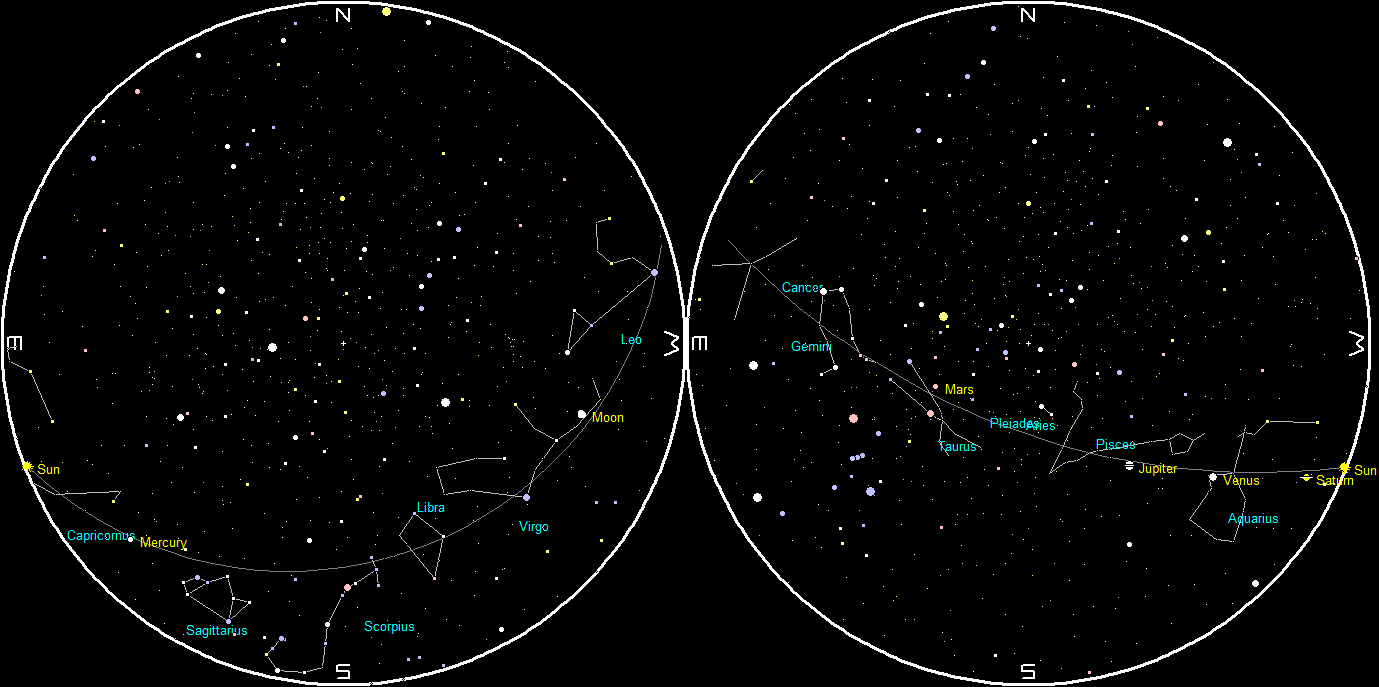
The naked-eye planets and the Moon at sunset and sunrise on a single night, starting with sunset on the right on February 8, 2023. The night ends on the left with sunrise on the 9th. Click on the image to enlarge it. Created using my LookingUp app and GIMP.
02/01/2023 – Ephemeris – Let’s find where the naked-eye planets have wandered off to this week
This is Ephemeris for Wednesday, February 1st. Today the Sun will be up for 9 hours and 49 minutes, setting at 5:51, and it will rise tomorrow at 8:00. The Moon, halfway from first quarter to full, will set at 6:31 tomorrow morning.
Let’s find where the naked-eye planets have wandered off to this week. Very early after sunset. Venus can be spotted low in the southwest by 6:30 pm. Mars, and Jupiter will be visible this evening by 7 pm. Mars will be above Orion in the southeast and is pulling away from the Pleiades. Jupiter will be in the southwest. Saturn is way below Venus now, so it’s gone until it reappears in the morning sky in a few months. It will make the crossing to the morning sky with its solar conjunction on the 16th. Mercury is now in the morning sky. It has a few more days visibility around 7 am in the southeastern sky after reaching greatest western elongation from the Sun last Sunday.
The astronomical event times given are for the Traverse City/Interlochen area of Michigan (EST, UT –5 hours). They may be different for your location.
Addendum
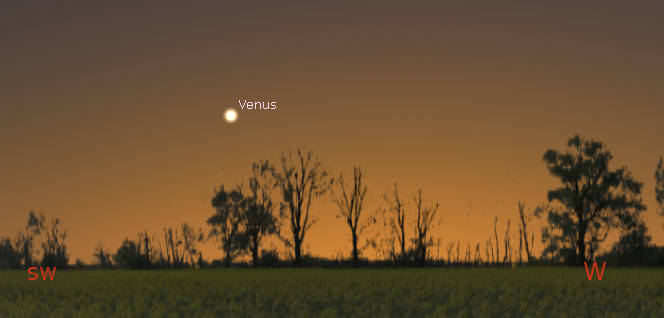
Venus low in the west-southwestern twilight at 6:30 pm tonight, February 1, 2023. Created using Stellarium.
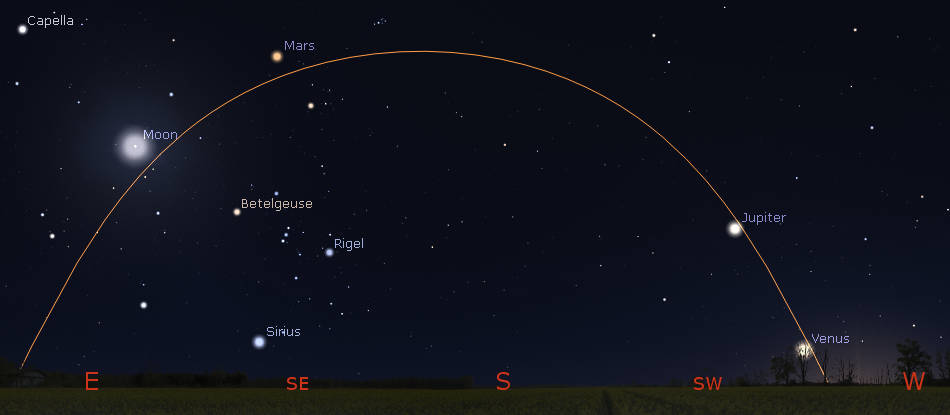
Evening planets at 7 pm tonight, February 1, 2023. The orange line is the ecliptic, which is the plane of the Earth’s orbit. The sun appears on that line throughout the year. Notice that all the other planets are very close to that line. That is an artifact of the accretion disk from which the planets formed some 4 1/2 billion years ago. The planets still maintain the nearly same plane for their existence to this day. Click on the image to enlarge it. Created using Stellarium.
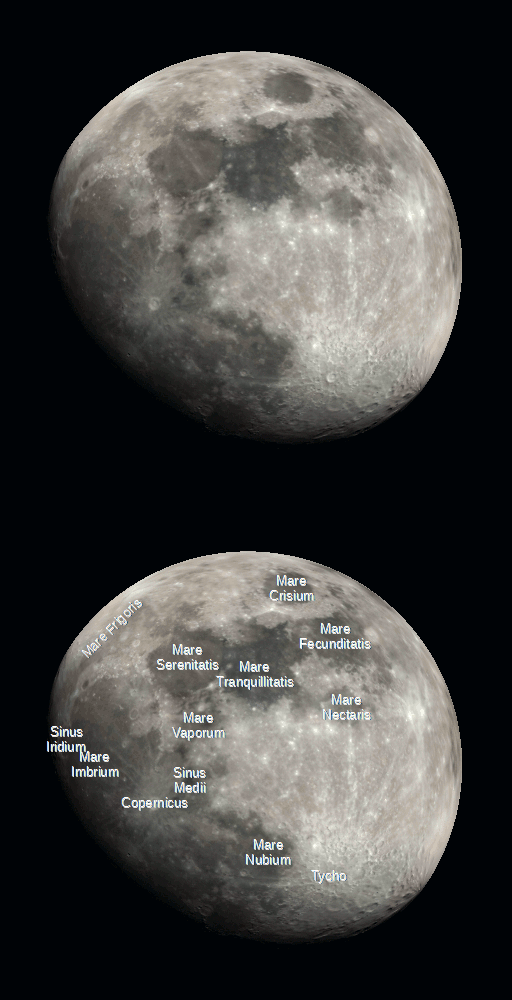
The gibbous Moon tonight at 7:00 pm, labeled. Created using Stellarium, LibreOffice Draw, and GIMP.
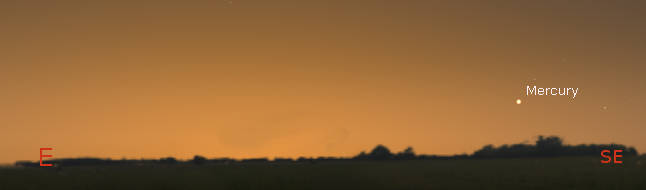
This is what Mercury might look like in the southeast around 7:20 tomorrow morning, February 2nd from Interlochen/Traverse City. At that time, it’ll be 5 degrees above a sea horizon, which is half the width of a fist held at arm’s length. Any trees of course will reduce it. Created using Stellarium.
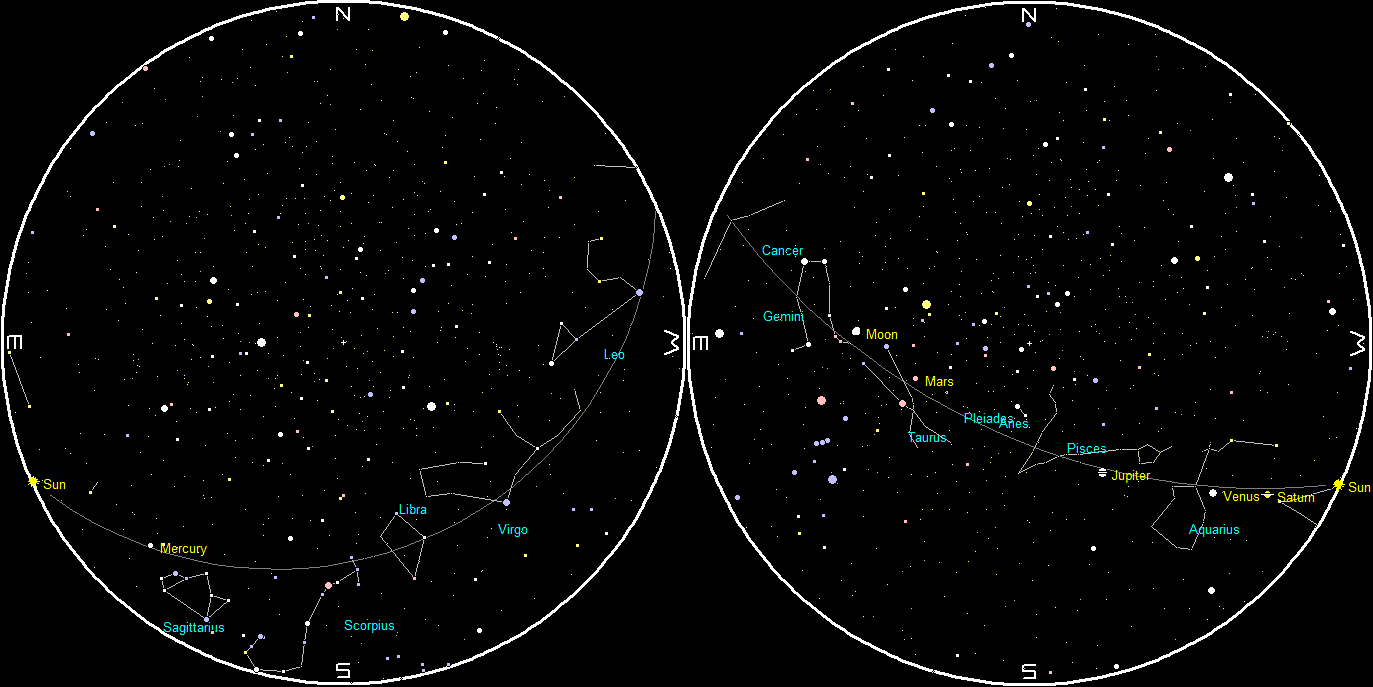
The naked-eye planets and the Moon at sunset and sunrise on a single night, starting with sunset on the right on February 1, 2023. The night ends on the left with sunrise on the 2nd. Click on the image to enlarge it. Created using my LookingUp app and GIMP.
01/25/2023 – Ephemeris – Let’s see where the naked-eye planets have wandered off to this week
This is Bob Moler with Ephemeris for Wednesday, January 25th. Today the Sun will be up for 9 hours and 32 minutes, setting at 5:41, and it will rise tomorrow at 8:08. The Moon, 3 days before first quarter, will set at 10:42 this evening.
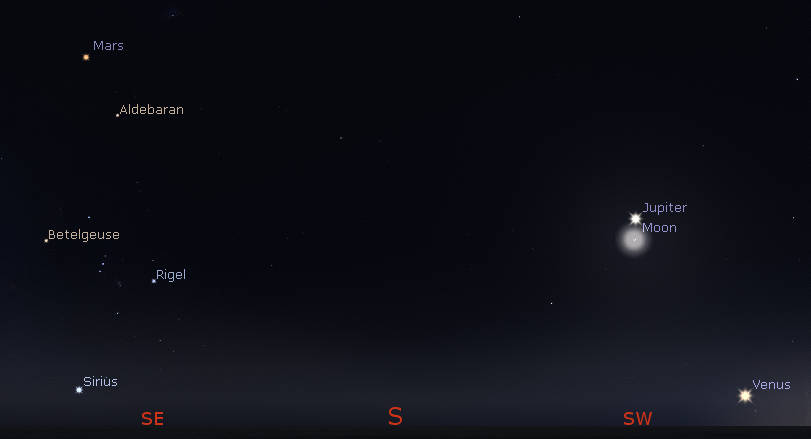
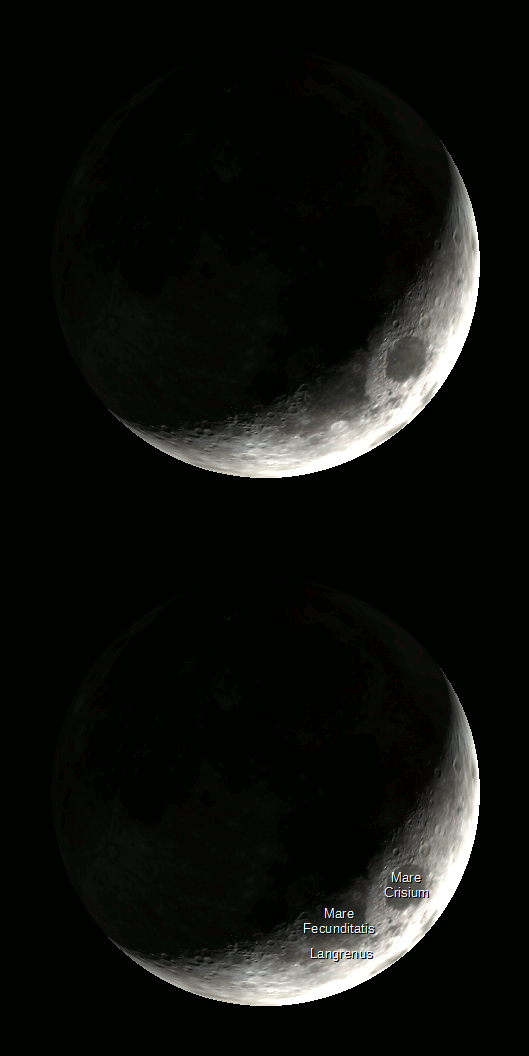
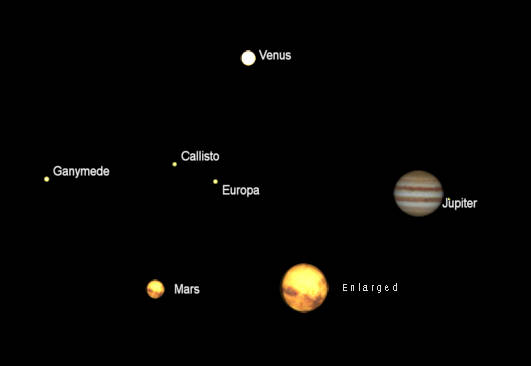
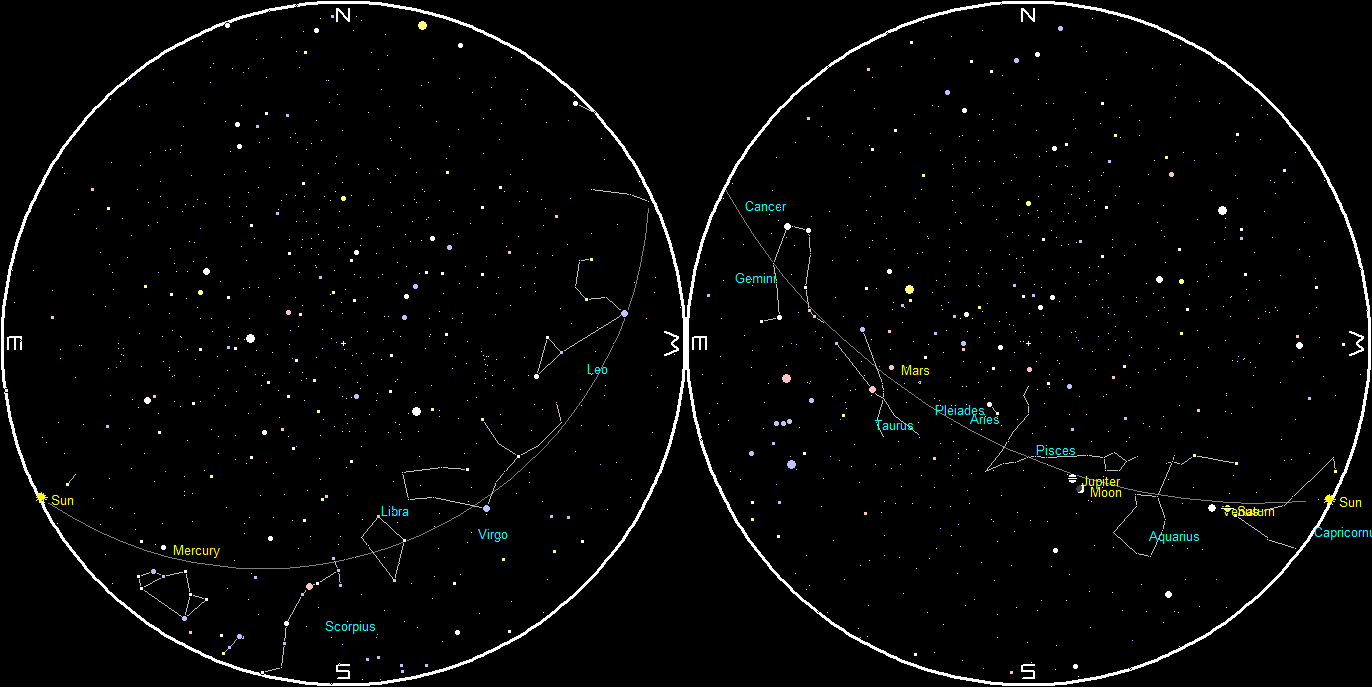
Let’s see where the naked-eye planets have wandered off to this week. Very early after sunset, Venus might be spotted very low in the southwest by a little past 6 pm. Mars, and Jupiter will be visible this evening, in the east to southwestern sky by 6:30 or 7 pm. Mars will be above Orion in the east-southeast and is pulling away from the Pleiades. Jupiter is brighter than Mars, and will be in the south-southwest, and tonight it’s directly above the crescent Moon. Saturn is below Venus now, so it’s pretty much gone until it reappears in the morning sky in a few months. Mercury is now in the morning sky, after it passed inferior conjunction with the Sun on the 7th, that is, it passed between the Earth and the Sun. It should be briefly visible before sunrise by month’s end.
The astronomical event times given are for the Traverse City/Interlochen area of Michigan (EST, UT –5 hours). They may be different for your location.
Addendum
\
01/18/2023 – Ephemeris – Let’s see where the naked-eye planets have wandered off to this week
This is Ephemeris for Wednesday, January 18th. Today the Sun will be up for 9 hours and 17 minutes, setting at 5:32, and it will rise tomorrow at 8:14. The Moon, 3 days before new, will rise at 6:28 tomorrow morning.
Let’s see where the naked-eye planets have wandered off to this week. Very early after sunset, Venus might be spotted very low in the southwest by 6 pm. Mars, Jupiter and Saturn will be visible this evening, in the east to southwestern sky by 6:30 or 7 pm. Mars will be above Orion in the east-southeast and near the Pleiades. Jupiter is the brightest of the three and will be in the south-southwest., while dimmer Saturn will be very low in the southwest at that time. Saturn, the westernmost of these bright planets, will set around 7:42 this evening. It’s a bit above and left of Venus. Mercury is now in the morning sky, after it passed inferior conjunction with the Sun on the 7th, that is, it passed between the Earth and the Sun. It should be briefly visible before sunrise by month’s end.
The astronomical event times given are for the Traverse City/Interlochen area of Michigan (EST, UT –5 hours). They may be different for your location.
Addendum
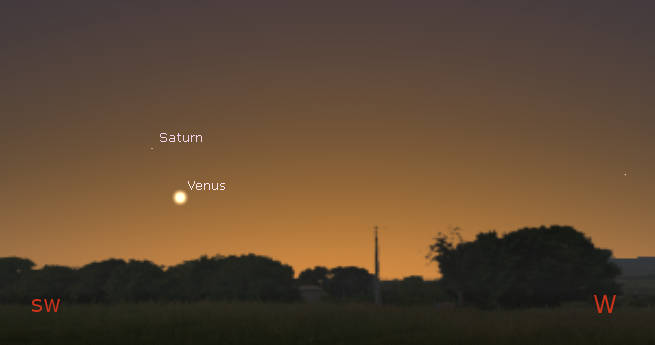
Venus and Saturn low in the southwest at 6:15 pm tonight, January 18, 2023. Saturn will probably not be visible yet, but Venus should be plenty bright enough. Created using Stellarium.
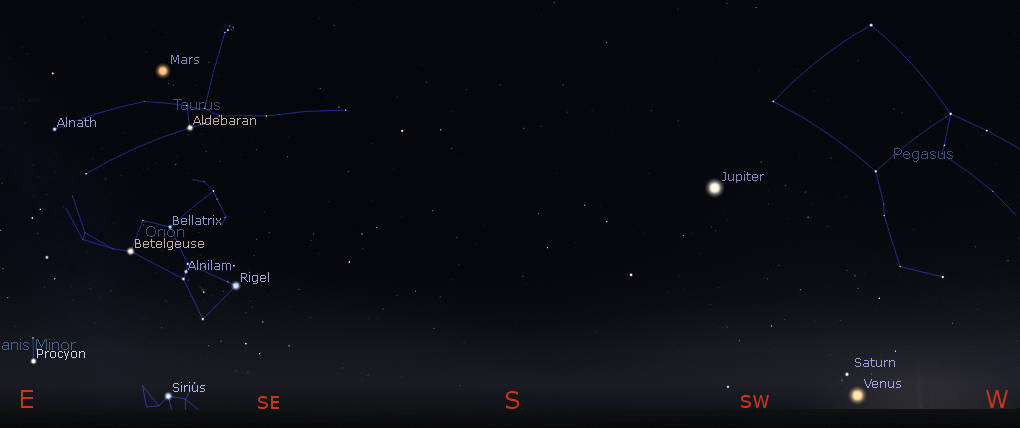
All the evening planets before Venus sets are in this panorama looking southward from east to west at 7:15 tonight, January 18, 2023. I dropped lines from some of the dimmer constellations. Click on the image to enlarge it. Created using Stellarium.
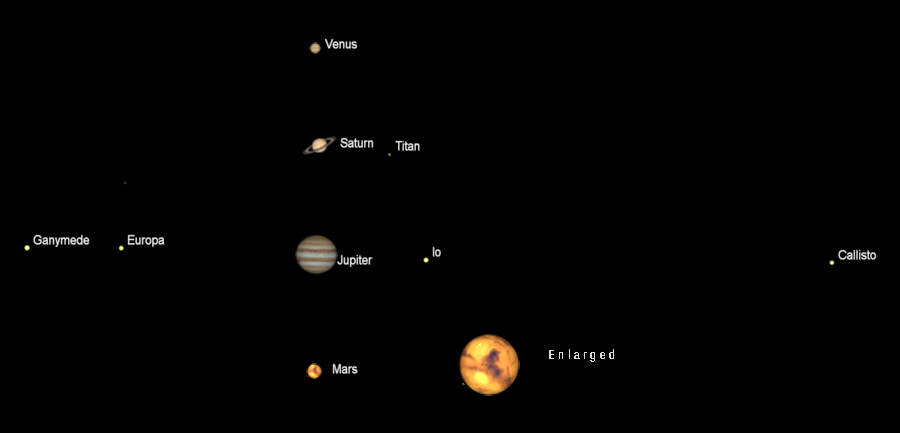
Telescopic views of Saturn Jupiter and Mars (north up) as they would be seen in a small telescope, with the same magnification. The image of Mars doesn’t show it, but the white north polar cap will appear at the top or north limb of Mars. The planets are shown at 7 pm tonight, January 18, 2023. Apparent diameters: Venus 10.77″ and is 93.5% illuminated; Saturn 15.52″, its rings 36.16″; Jupiter 37.32″. Mars 12.25″. Mars’ distance is71.6 million miles (114.4 million kilometers). The ” symbol means seconds of arc (1/3600th of a degree.) Click on the image to enlarge it. Created using Cartes du Ciel (Sky Charts).
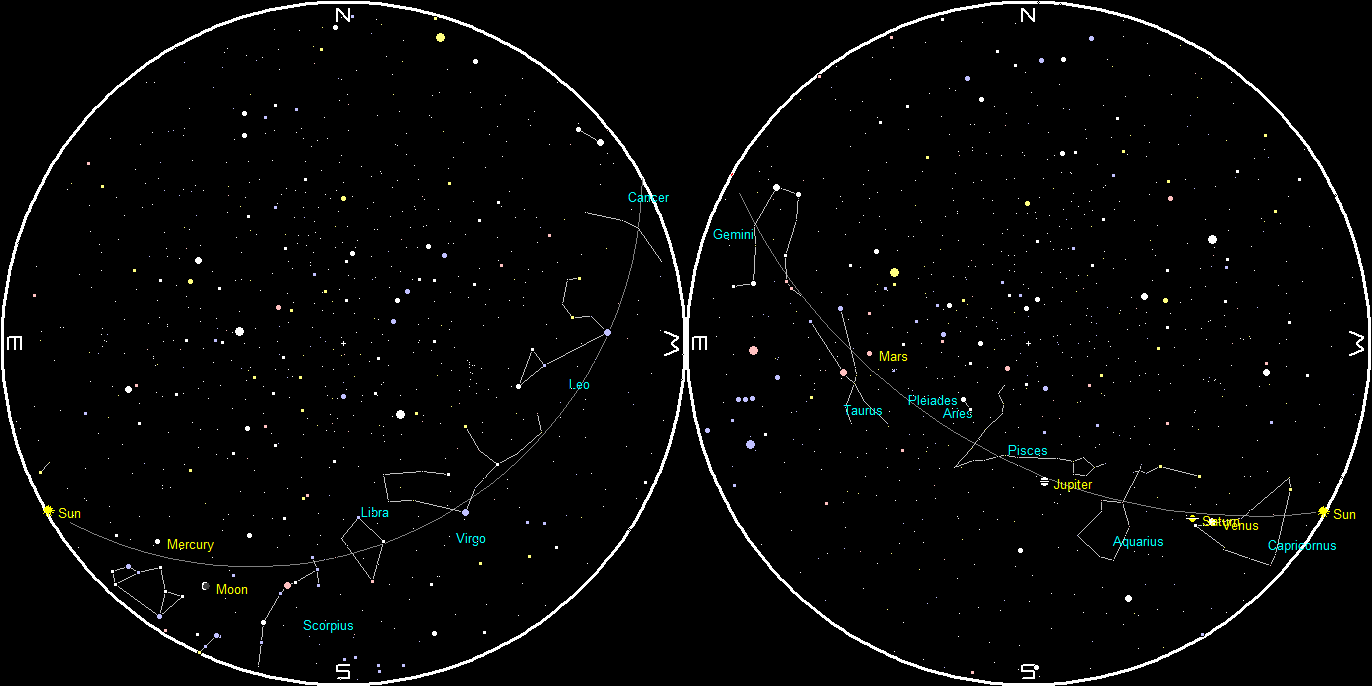
The naked-eye planets and the Moon at sunset and sunrise on a single night, starting with sunset on the right on January 18, 2023. The night ends on the left with sunrise on the 19th. Click on the image to enlarge it. Created using my LookingUp app and GIMP.
12/28/2022 – Ephemeris – Taking a look at the bright planets for the last week of the year
This is Ephemeris for Wednesday, December 28th. Today the Sun will be up for 8 hours and 49 minutes, setting at 5:09, and it will rise tomorrow at 8:19. The Moon, 1 day before first quarter, will set at 11:46 this evening.
Let’s see where the naked-eye planets have wandered off to this week. Mars, Jupiter and Saturn will be visible this evening, in the east to southwestern sky at 6:30 pm. Mars is in the east. Jupiter is the brightest of the three in the south, while dimmer Saturn is low in the southwest at that time. Mars is above Orion as it rises in the early evening. Saturn, the westernmost of the bright planets, will set around 8:52 this evening. Venus and Mercury are also in the evening sky, but too close to the setting Sun to be easily spotted. At 6 pm, both will be very low on the southwestern horizon, with Mercury just above Venus by three moon-widths. There are now no bright morning planets, though Mars won’t set until 6:32 am in the northwest.
The astronomical event times given are for the Traverse City/Interlochen area of Michigan (EST, UT –5 hours). They may be different for your location.
Addendum
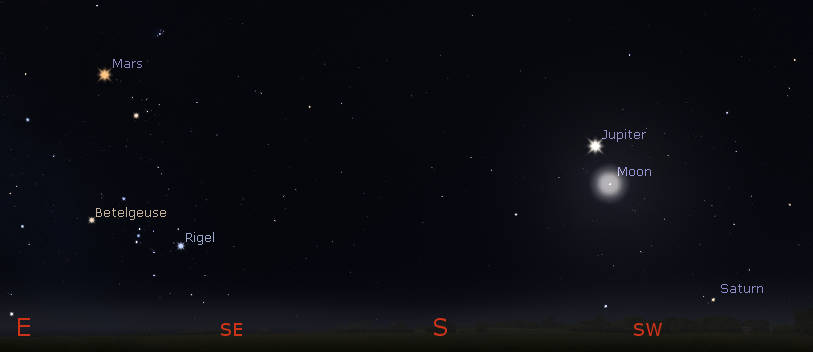
The naked eye Planets and Moon at 8 in the evening tonight, December 28, 2022. Created using Stellarium.
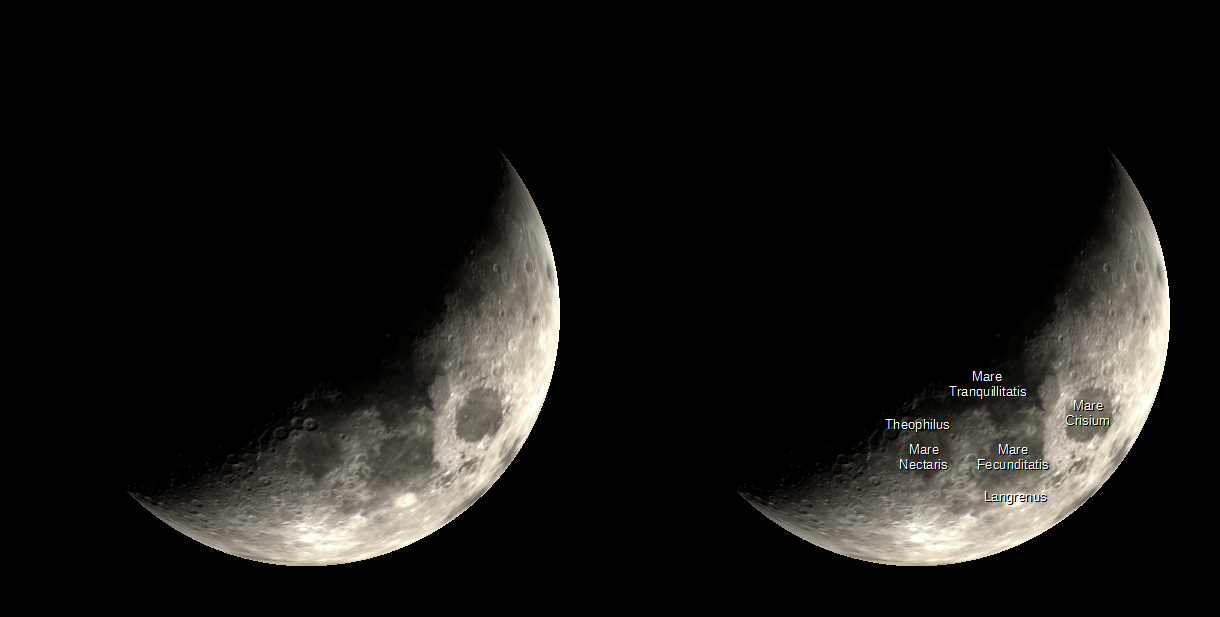
Waxing crescent Moon as it might appear in binoculars or low power telescope tonight, December 28, 2022. Created using Stellarium, LibreOffice Draw and GIMP
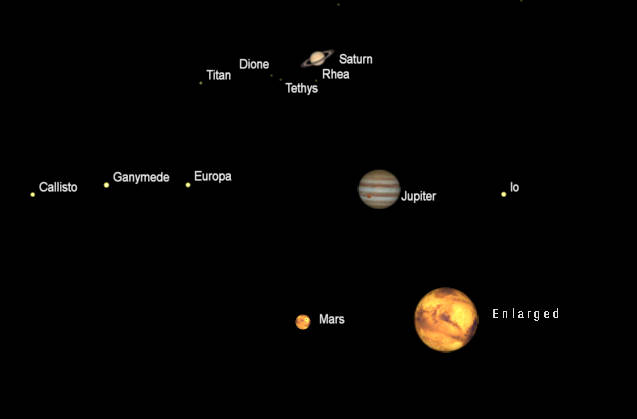
Telescopic views of Saturn Jupiter and Mars (north up) as they would be seen in a small telescope, with the same magnification. The image of Mars doesn’t show it, but the white north polar cap will appear at the top or north limb of Mars. The planets are shown at 8 pm tonight, December 28, 2022. Apparent diameters: Saturn 15.82″, its rings 36.84″; Jupiter 39.72″. Mars 15.06″. Mars’ distance is 57.8 million miles (93.0 million kilometers). The ” symbol means seconds of arc (1/3600th of a degree.) Created using Cartes du Ciel (Sky Charts).
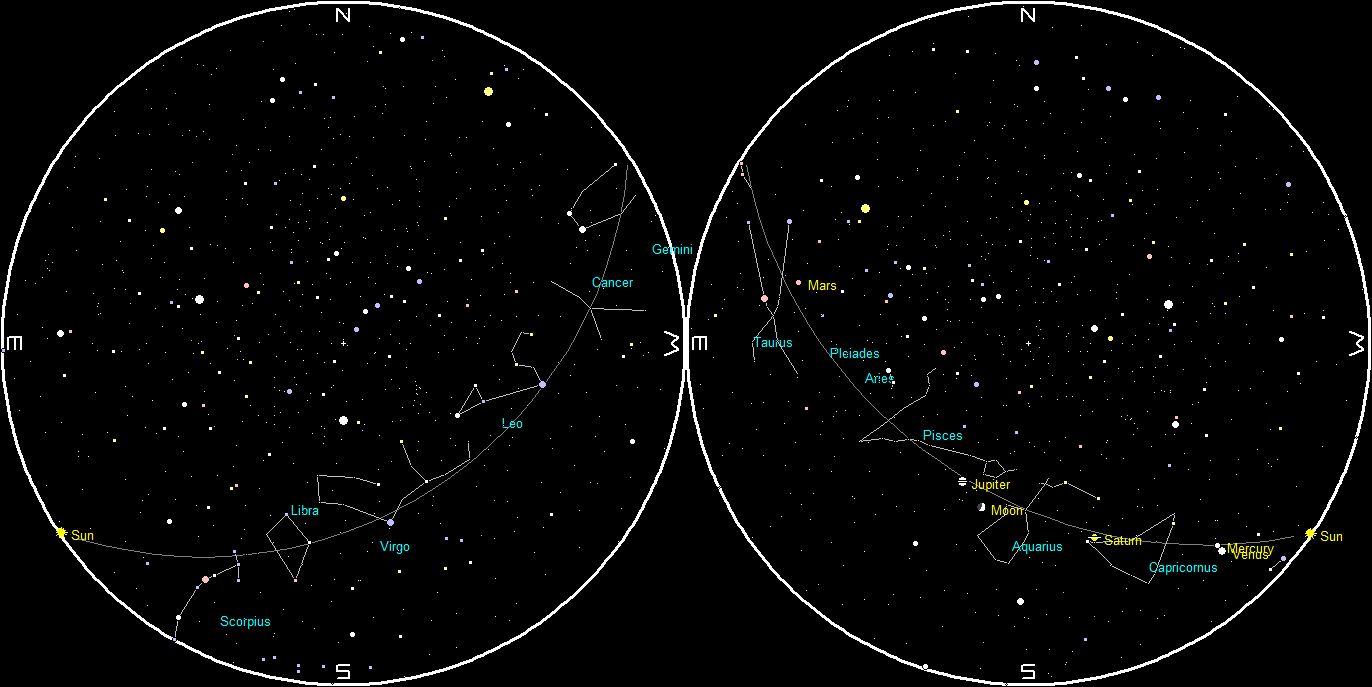
The naked-eye planets and the Moon at sunset and sunrise on a single night, starting with sunset on the right on December 28, 2022. The night ends on the left with sunrise on the 29th. Click on the image to enlarge it. Created using my LookingUp app and GIMP.
12/26/2022 – Ephemeris – Some space firsts this year
This is Ephemeris for Monday, December 26th. Today the Sun will be up for 8 hours and 49 minutes, setting at 5:08, and it will rise tomorrow at 8:19. The Moon, halfway from new to first quarter, will set at 9:10 this evening.
I hope we all survived the holiday season so far. We now have one more to go, New Year’s Eve. The Moon will pass the planet Saturn later this morning. By this evening, Saturn will be to the right of the Moon in the southwestern sky. Now that we’re ending the year, we can look back at some space firsts. The James Webb Space Telescope was launched last Christmas. It became operational late spring of this year and presented its first 5 spectacular images in July. The DART spacecraft, also launched last year, collided with the small asteroid Dimorphos, orbiting the larger Didymos in a 12-hour orbit produced an amazing effect on its orbit. And late this year Artemis I finally launched, making a nearly flawless orbit of the Moon with its Orion space capsule, and returned.
The astronomical event times given are for the Traverse City/Interlochen area of Michigan (EST, UT –5 hours). They may be different for your location.
Addendum
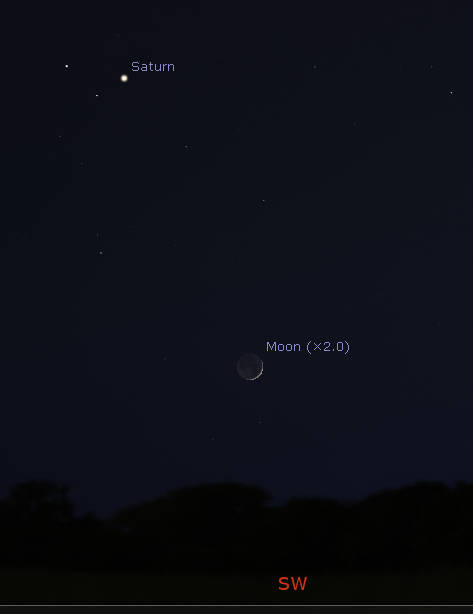
The Moon and Saturn at 6:30 pm tonight, December 26, 2022. Note that the Moon is shown at twice its apparent size to better show its phase. Created using Stellarium.
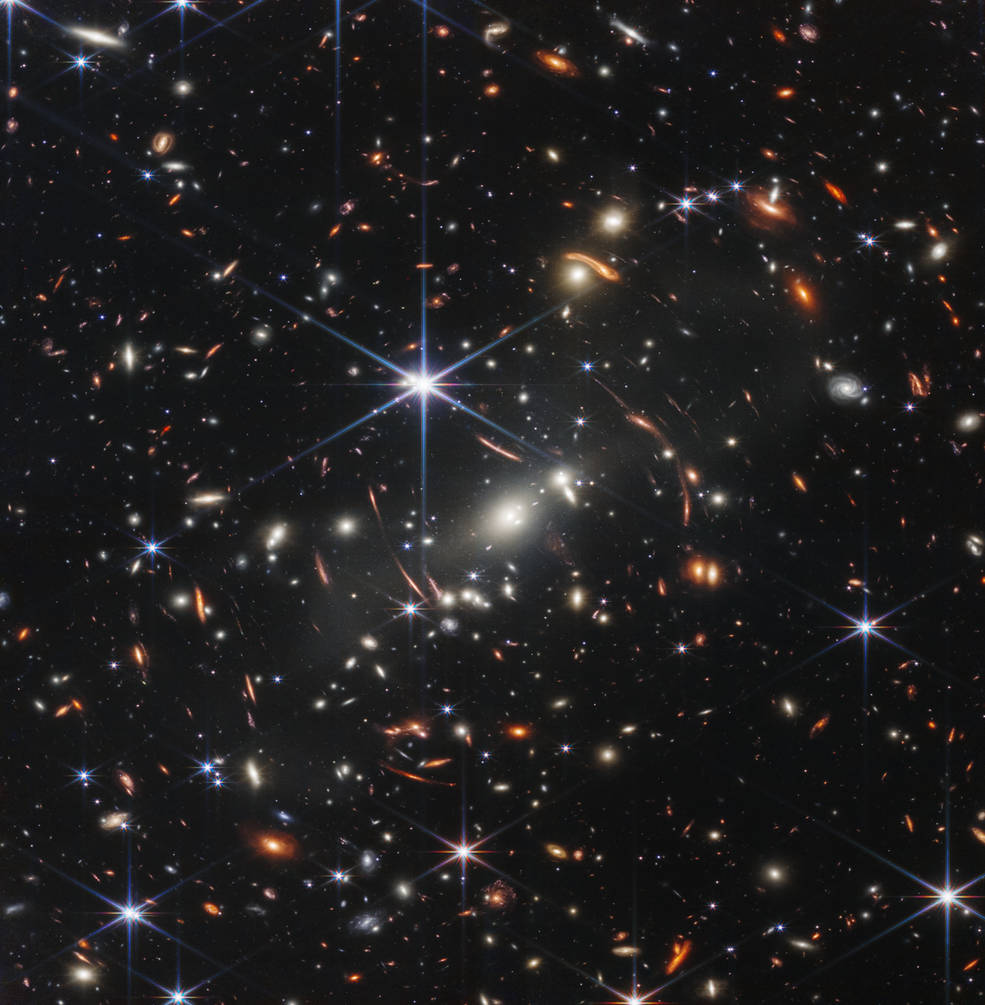
The James Webb Space Telescope teaser deep field image from President Biden’s July 11th presentation. Credit: NASA, ESA, CSA, JWST, STScI.
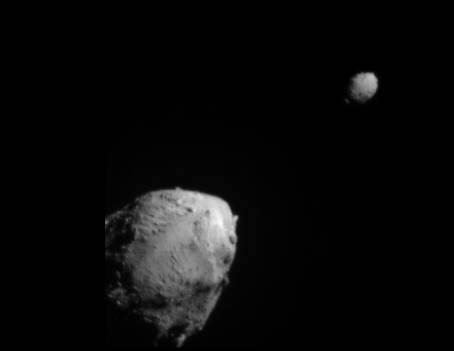
DART images of both Didymos, the big one, and Dimorphos, on approach. Dimorphos is the target. Credit NASA / JHAPL.
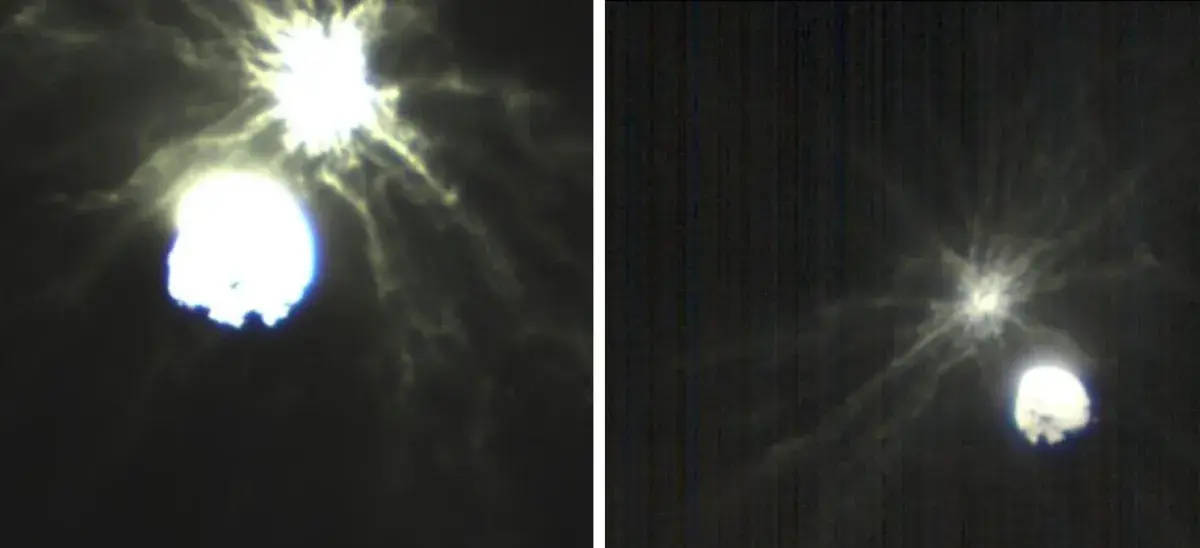
Two images from the LiciaCube satellite launched from the DART spacecraft 15 days before the impact, and trailing it to record the collision with its wide and narrow angle imagers. Dimorphos does appear to be a rubble pile asteroid from its appearance and the amount of ejecta caused by the impact. The ejecta adds to the effect of the spacecraft’s kinetic energy by pushing away from the asteroid by Newton’s third law of motion.
Credit Italian Space Agency.
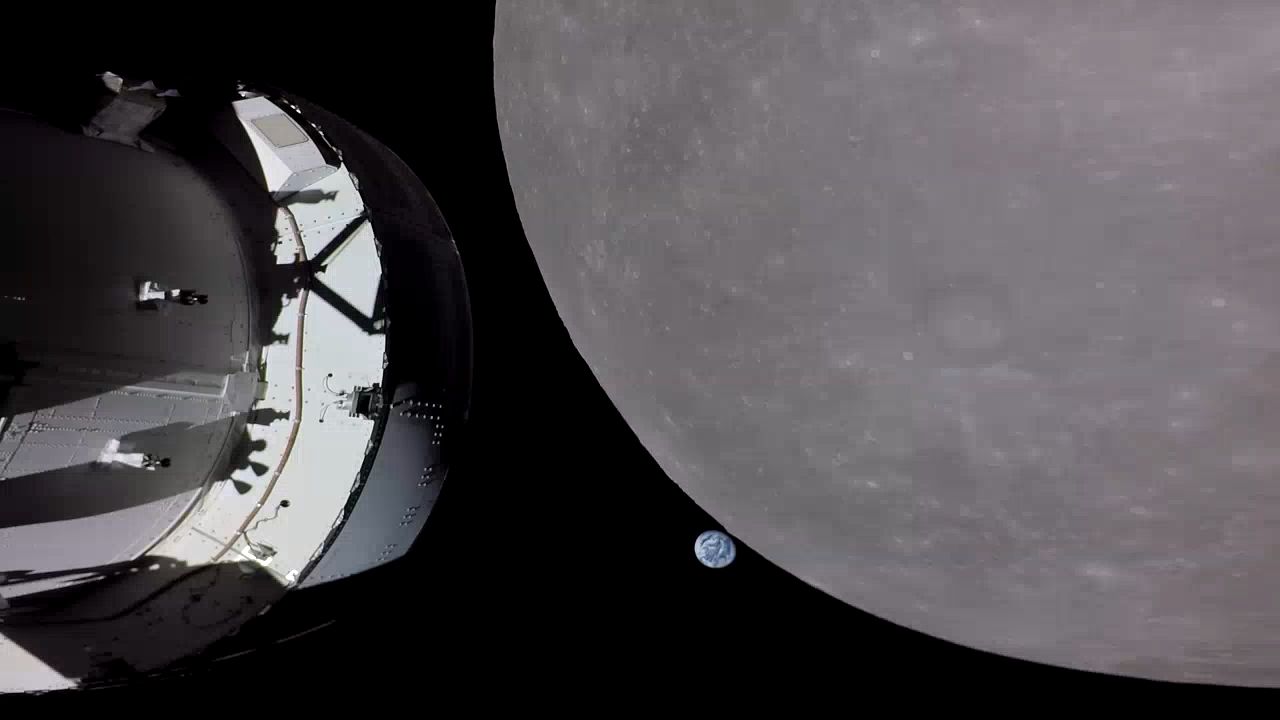
Earthset from Artemis I’s Orion spacecraft, as it moves around to the far side of the Moon. Click on the image to enlarge it. Credit: NASA.
 Bob Moler's Ephemeris Blog