Archive
Ephemeris: 08/16/2023 – Let’s find out where the naked-eye planets have wandered off to this week
This is Ephemeris for Wednesday, August 16th. Today the Sun will be up for 14 hours and 1 minute, setting at 8:47, and it will rise tomorrow at 6:47. The Moon is new today, and won’t be visible.
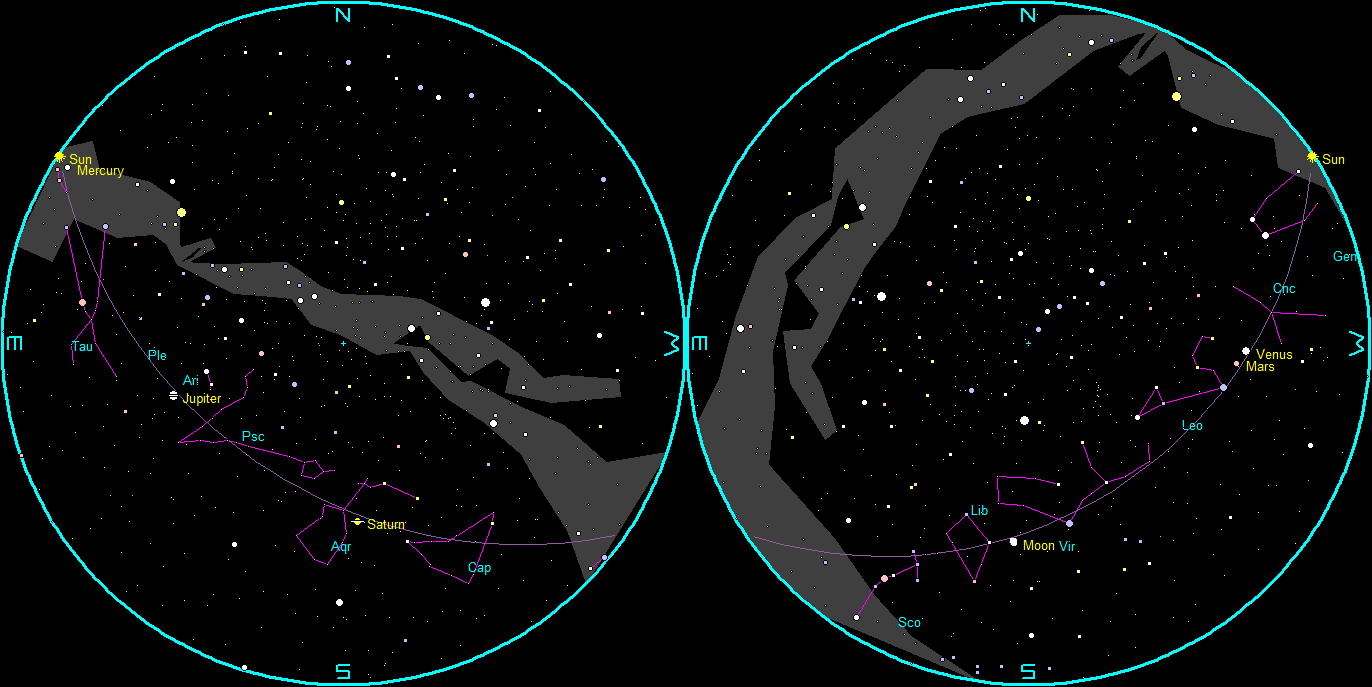
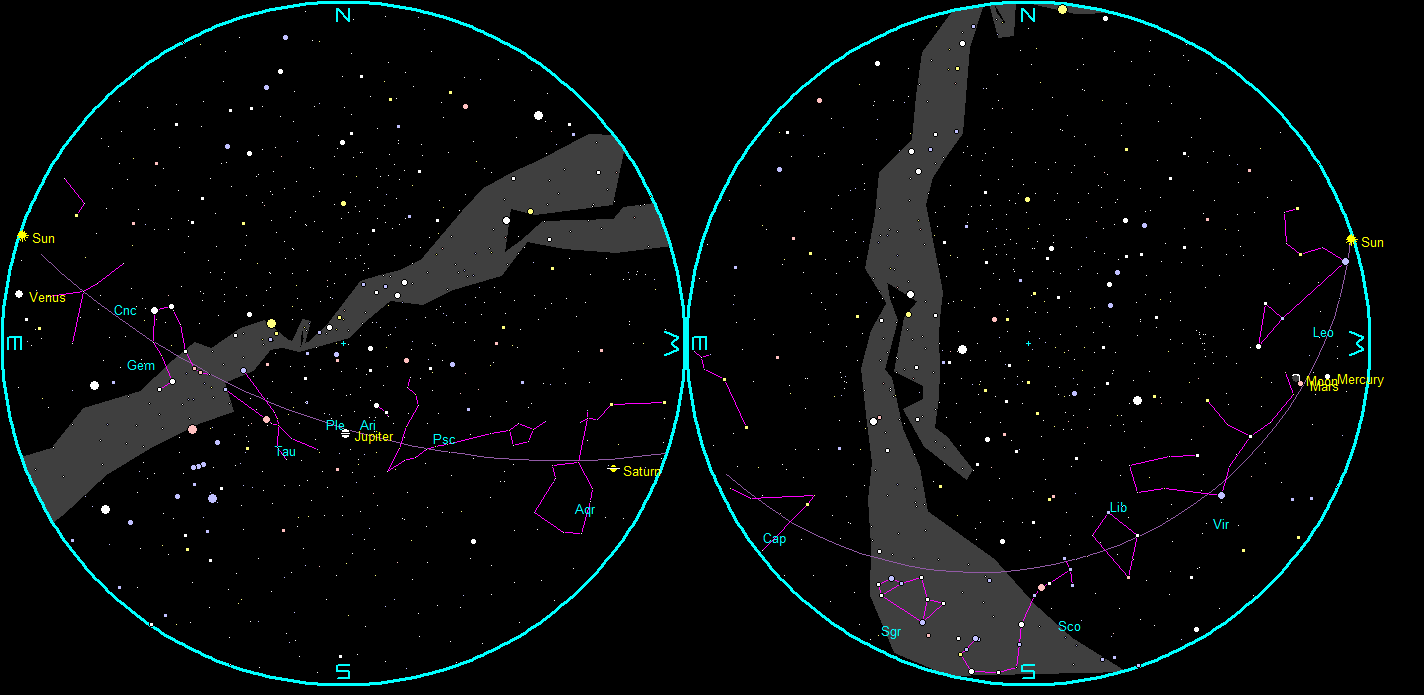
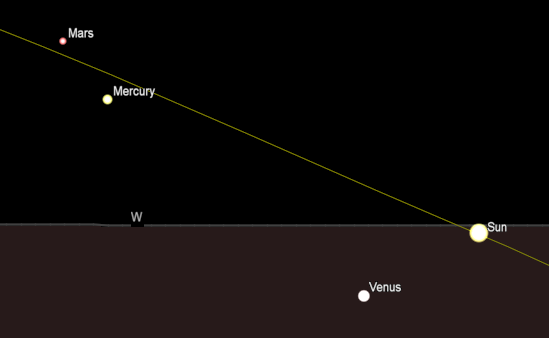
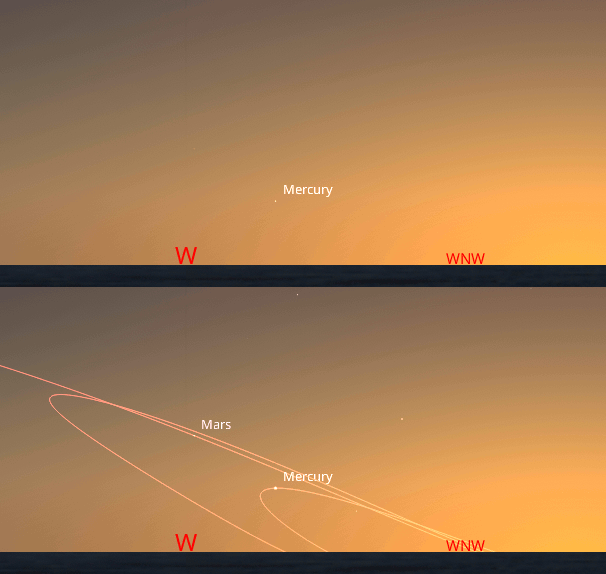
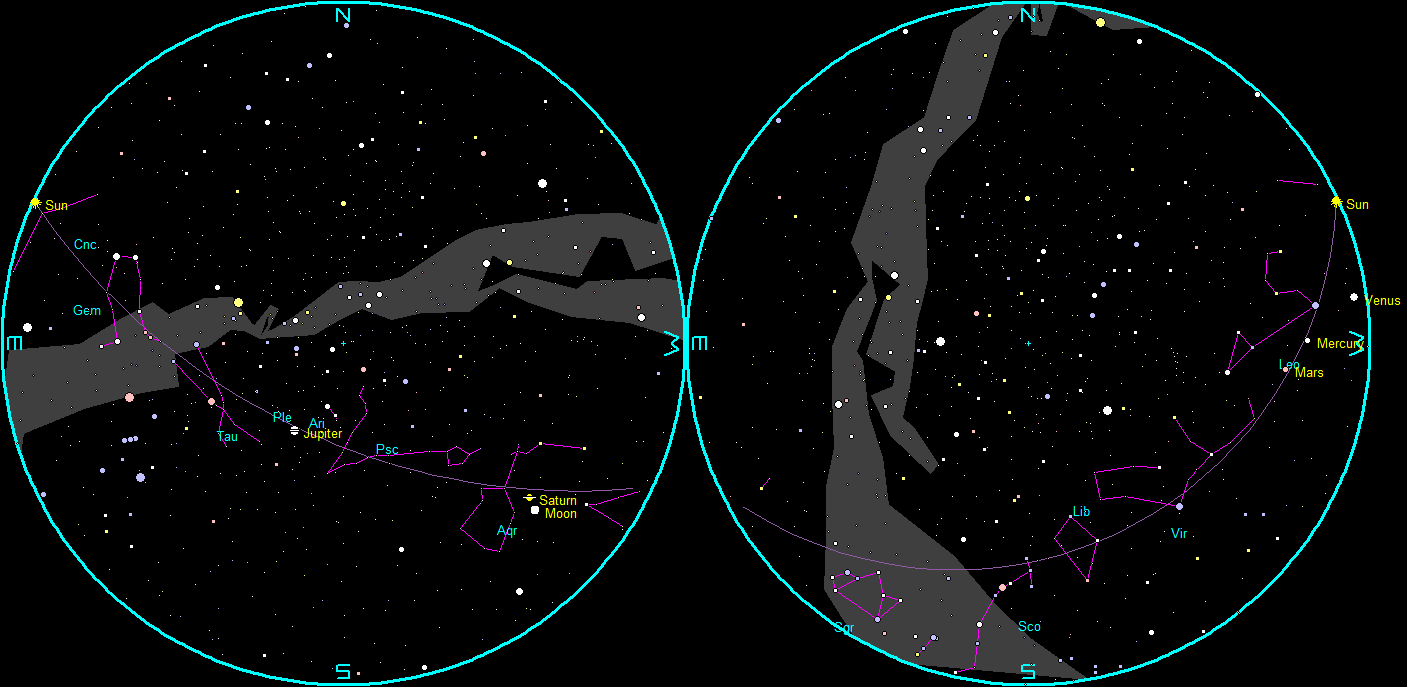
Let’s find out where the naked-eye planets have wandered off to this week. Only two of these five planets are visible. Mars, Mercury and Venus are all too close to the Sun to be seen. Jupiter and Saturn are officially morning planets, although Saturn does rise in the evening shortly after sunset. It will become an evening planet on the 27th, when it will rise at sunset. It can be spotted in the southeastern part pf the sky in the evening. It will also be visible throughout the morning hours. Saturn is in retrograde or westward motion against the stars of Aquarius now. Jupiter, still moving slowly eastward against the stars of Aries the ram, also rises in the evening, but barely, rising just before midnight. It will be stationary, that is, it will stop its eastward motion against the stars, and will begin its retrograde or westward motion on September 7th.
The astronomical event times given are for the Traverse City/Interlochen area of Michigan (EDT, UT –4 hours). They may be different for your location.
Addendum
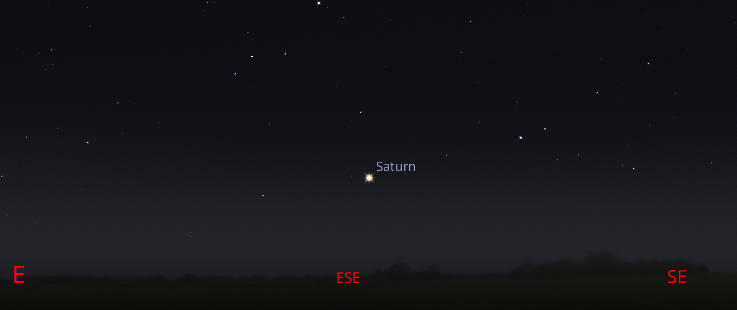
Saturn can be seen low in the east-southeast around 10 pm, or an hour or so after sunset. Created using Stellarium.
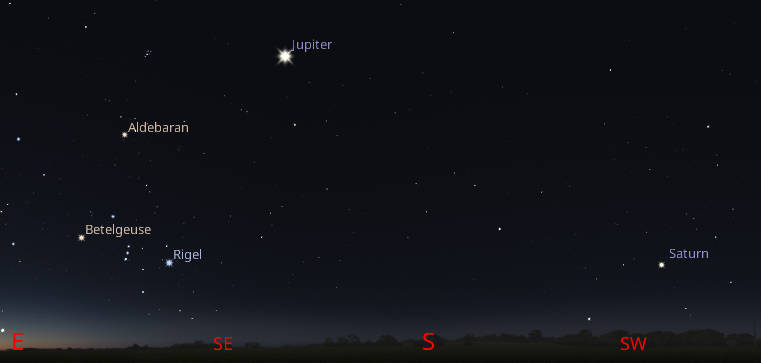
Morning planets and the winter stars are still visible about 45 minutes before sunrise. In the Interlochen/Traverse City Area, that would be about 5:45 am. Large images can be truncated on the right. Click or tap on the image to enlarge and display the complete image. Created using Stellarium.
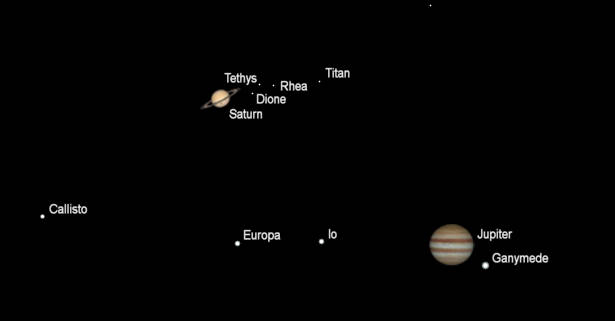
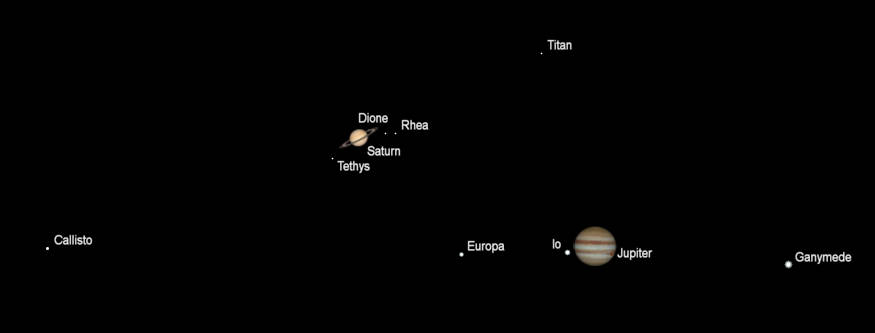
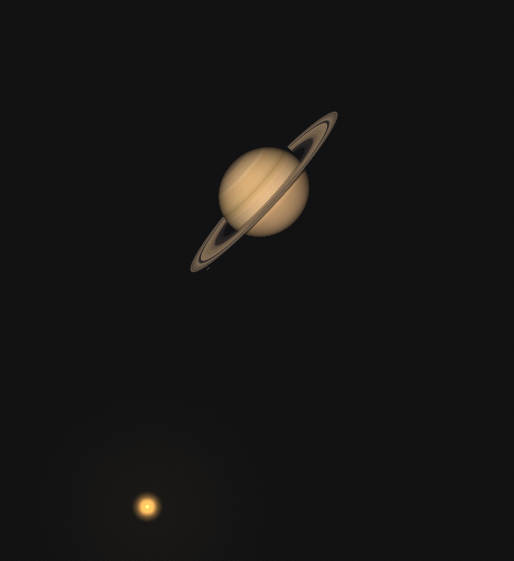
Telescopic Saturn and Jupiter (north up) as they would be seen in a small telescope, with the same magnification, Saturn at 11 pm, tonight, August 16, 2023, and Jupiter at 5:45 am on the 17th. Apparent diameters: Saturn 18.93″, its rings 44.10″; Jupiter 41.94″. Saturn and Jupiter are approaching us, so their apparent diameters are growing. The ” symbol means seconds of arc (1/3600th of a degree). Click or tap on the image to enlarge it. Created using Cartes du Ciel (Sky Charts).
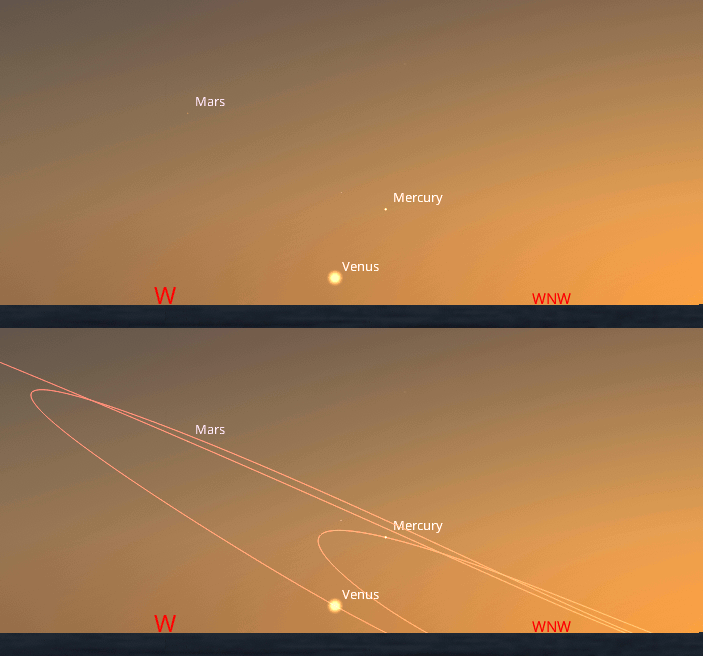
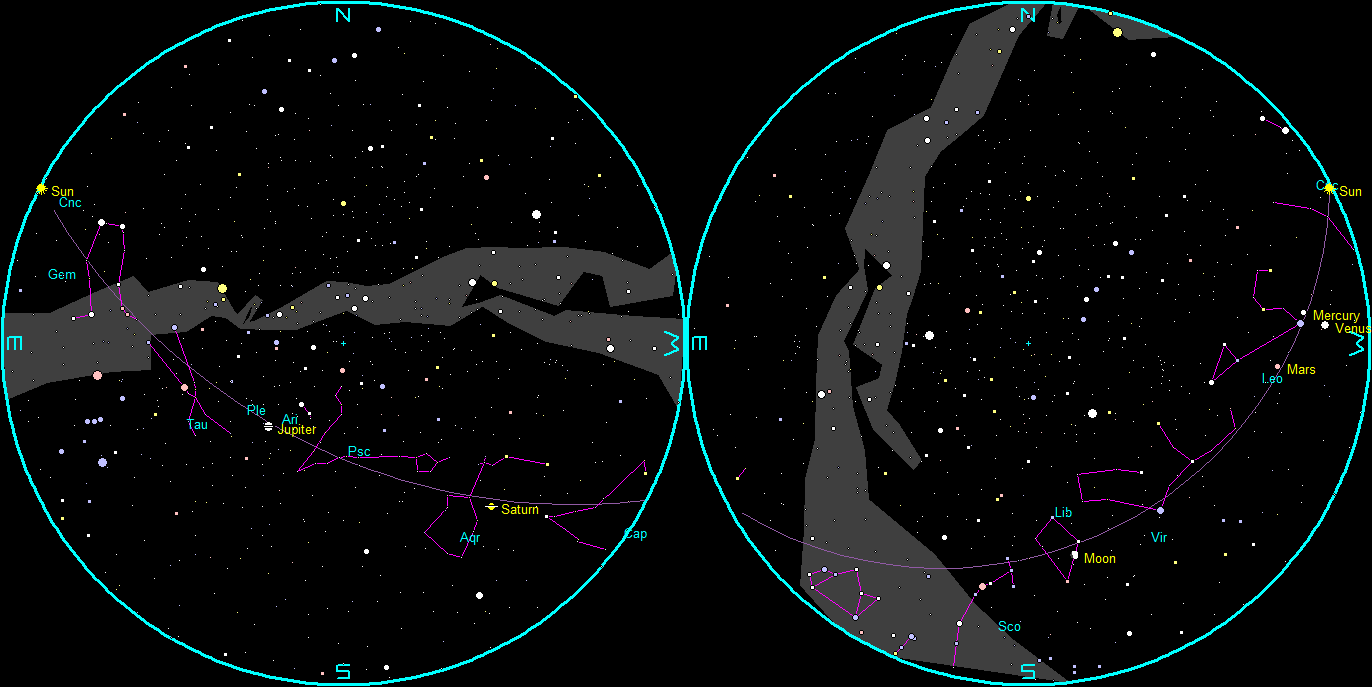
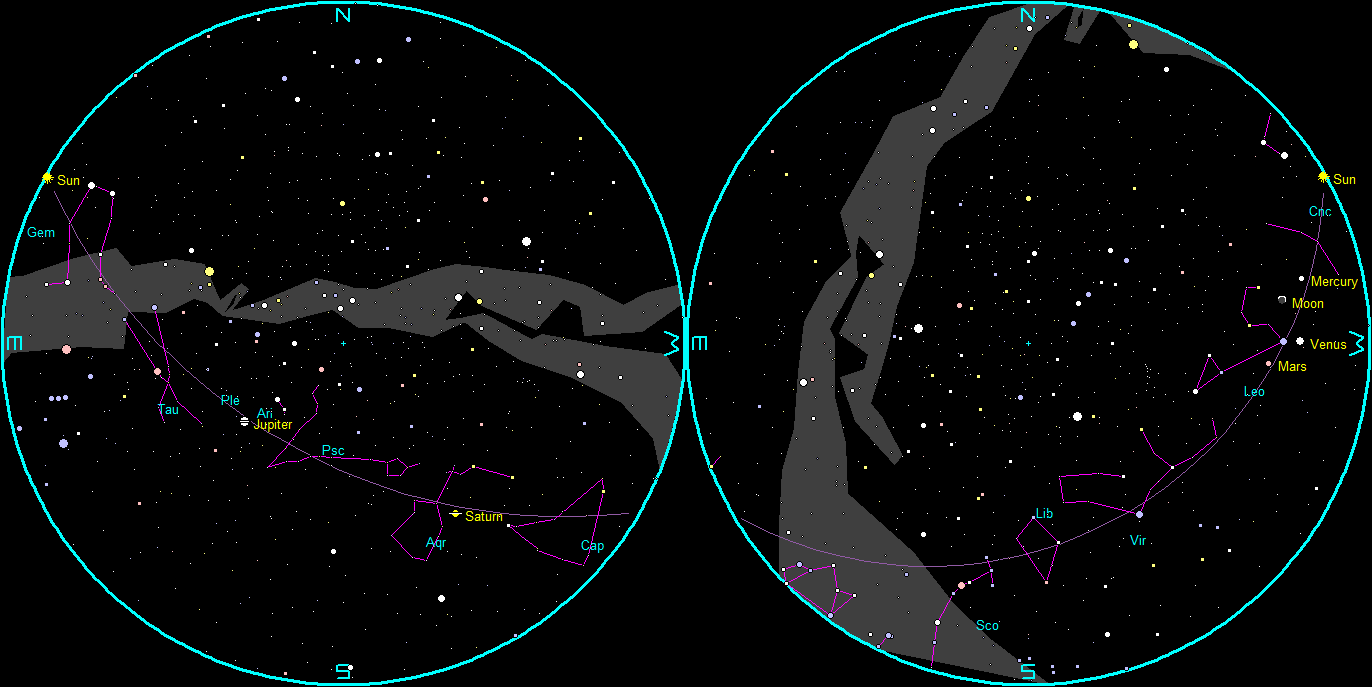
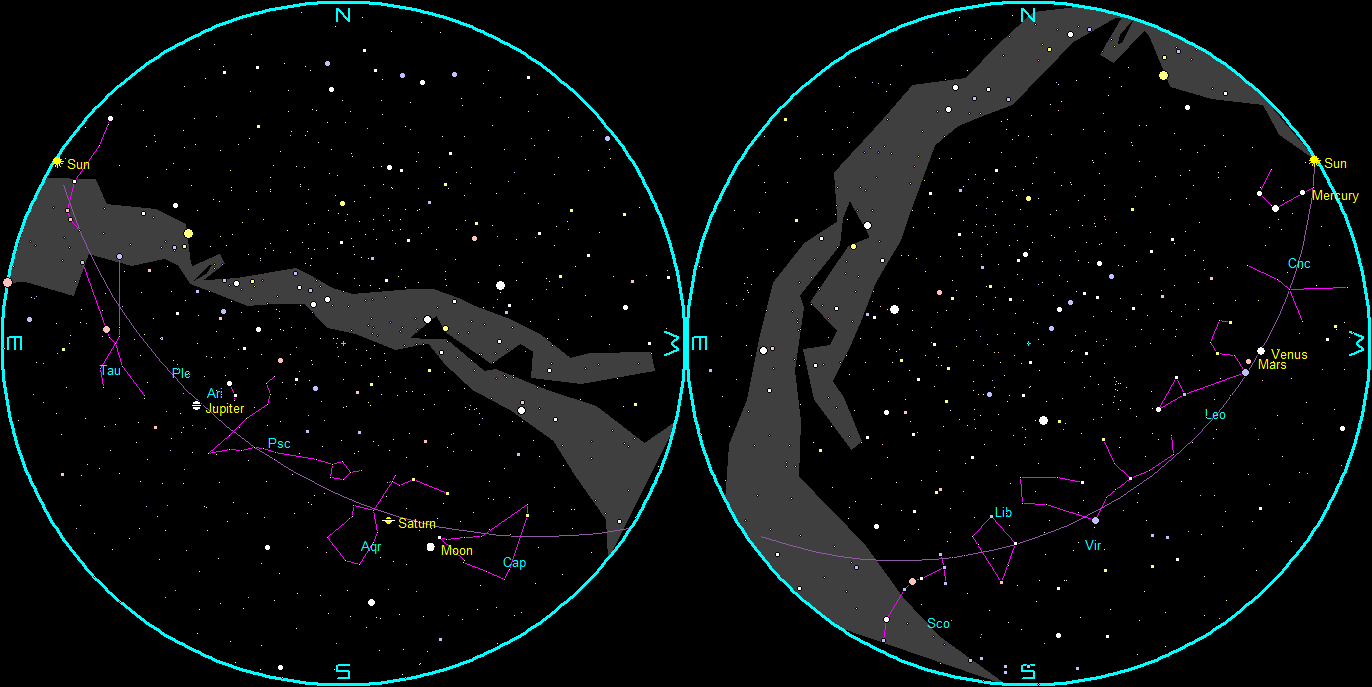
The naked-eye planets and the Moon at sunset and sunrise on a single night, starting with sunset on the right on August 16, 2023. The night ends on the left with sunrise on the 17th. Click or tap on the image to enlarge and display the complete image. Created using my LookingUp app and GIMP.
Ephemeris: 08/09/2023 – Let’s find out where the naked-eye planets have wandered off to this week
This is Ephemeris for Wednesday, August 9th. Today the Sun will be up for 14 hours and 19 minutes, setting at 8:57, and it will rise tomorrow at 6:39. The Moon, 1 day past last quarter, will rise at 1:04 tomorrow morning.
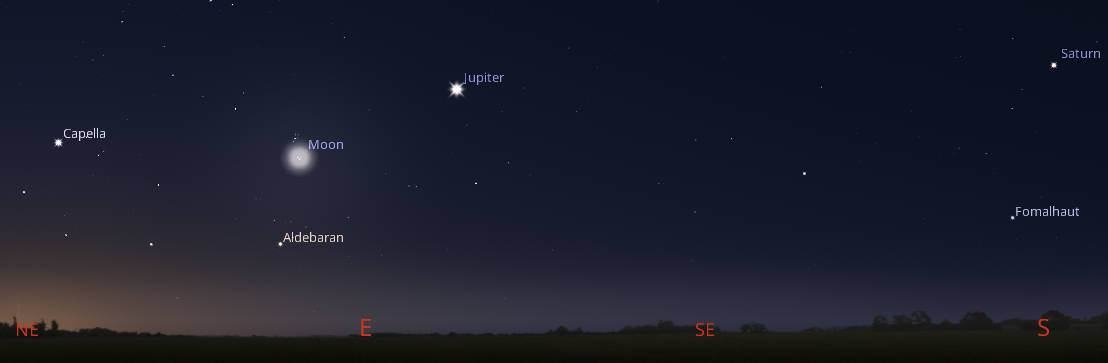
Let’s find out where the naked-eye planets have wandered off to this week. Venus is gone, setting too close to sunset. It will pass between the Earth and the Sun on the 13th, and be visible before sunrise by the end of the month. Mars and Mercury, though technically in the evening sky and like Venus also appear too close to the Sun to be spotted. Mars will pass behind the Sun in November. The other two naked eye planets are in the morning sky. Appearing at 5:45 am, which is roughly 55 minutes before sunrise, tomorrow morning, Jupiter will be high in the southeast, Saturn will be lower in the southwest. And tomorrow morning, the waning crescent Moon will be midway up the sky in the east.
The astronomical event times given are for the Traverse City/Interlochen area of Michigan (EDT, UT –4 hours). They may be different for your location.
Addendum
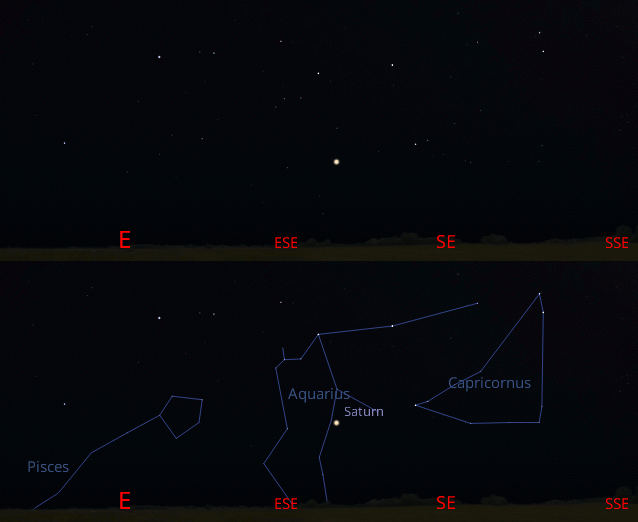
Saturn, low in the east-southeast at 11 pm, or about 2 hours after sunset, along with nearby zodiacal constellations. Click or tap on the image to enlarge it. Created using Stellarium and GIMP.
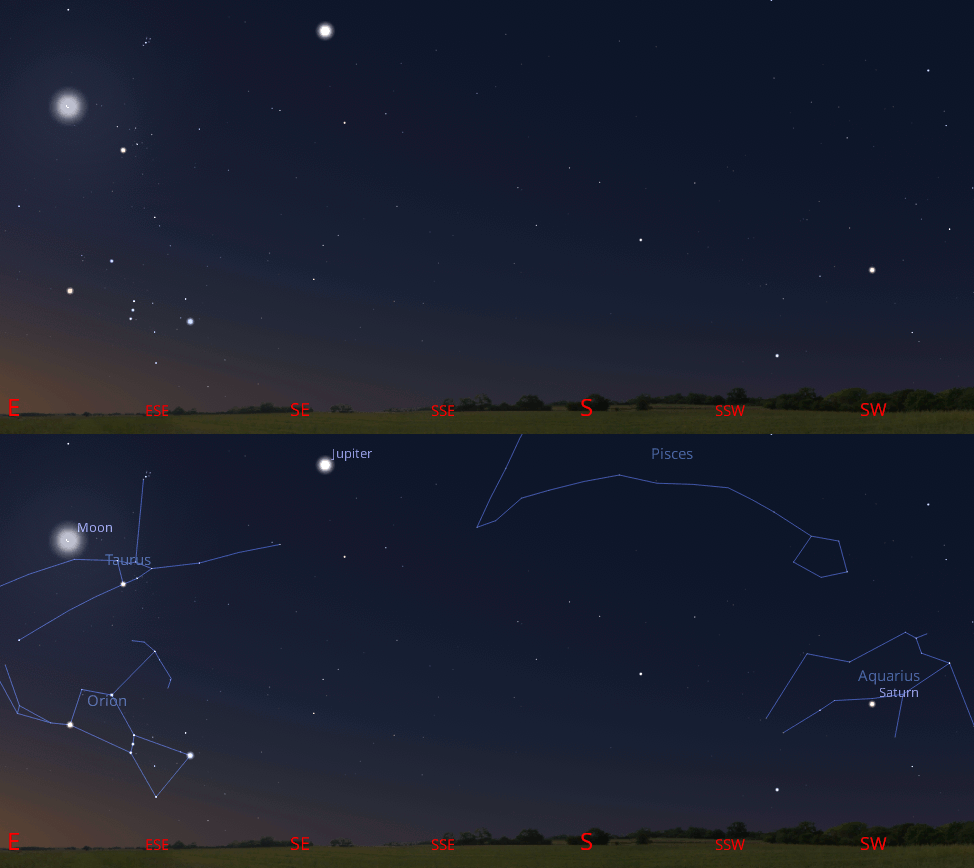
Jupiter Saturn and the Moon are seen at 5:45 tomorrow morning, August 10, 2023, about 55 minutes before sunrise. Also shown are the zodiacal constellations and Orion. The native peoples of our area, the Anishinaabe, called Orion the Winter Maker. So enjoy summer while it lasts, because and relatively few months it’s going to be all over, and Orion will be in the evening sky and winter will be here. Click or tap on the image to enlarge it. Created using Stellarium and GIMP.
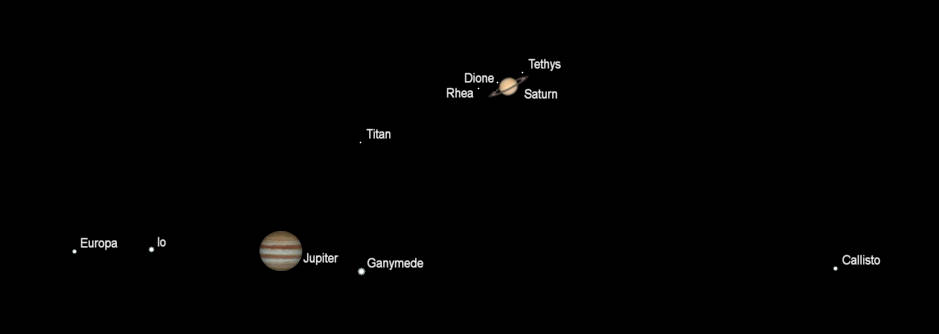
Telescopic Saturn and Jupiter (north up) as they would be seen in a small telescope, with the same magnification, Saturn at 11 pm, the 9th and Jupiter at 5:45 am August 10, 2023. Apparent diameters: Saturn 18.87″, its rings 43.96″; Jupiter 41.02″. Saturn and Jupiter are approaching us, so their apparent diameters are growing. The ” symbol means seconds of arc (1/3600th of a degree). Click or tap on the image to enlarge it. Created using Cartes du Ciel (Sky Charts).
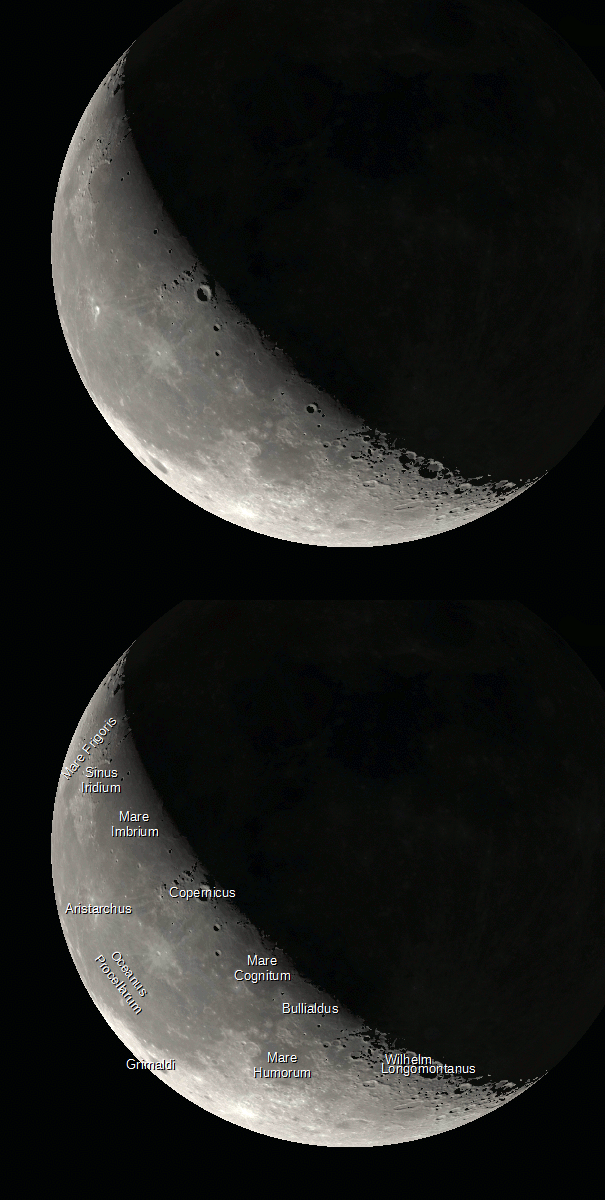
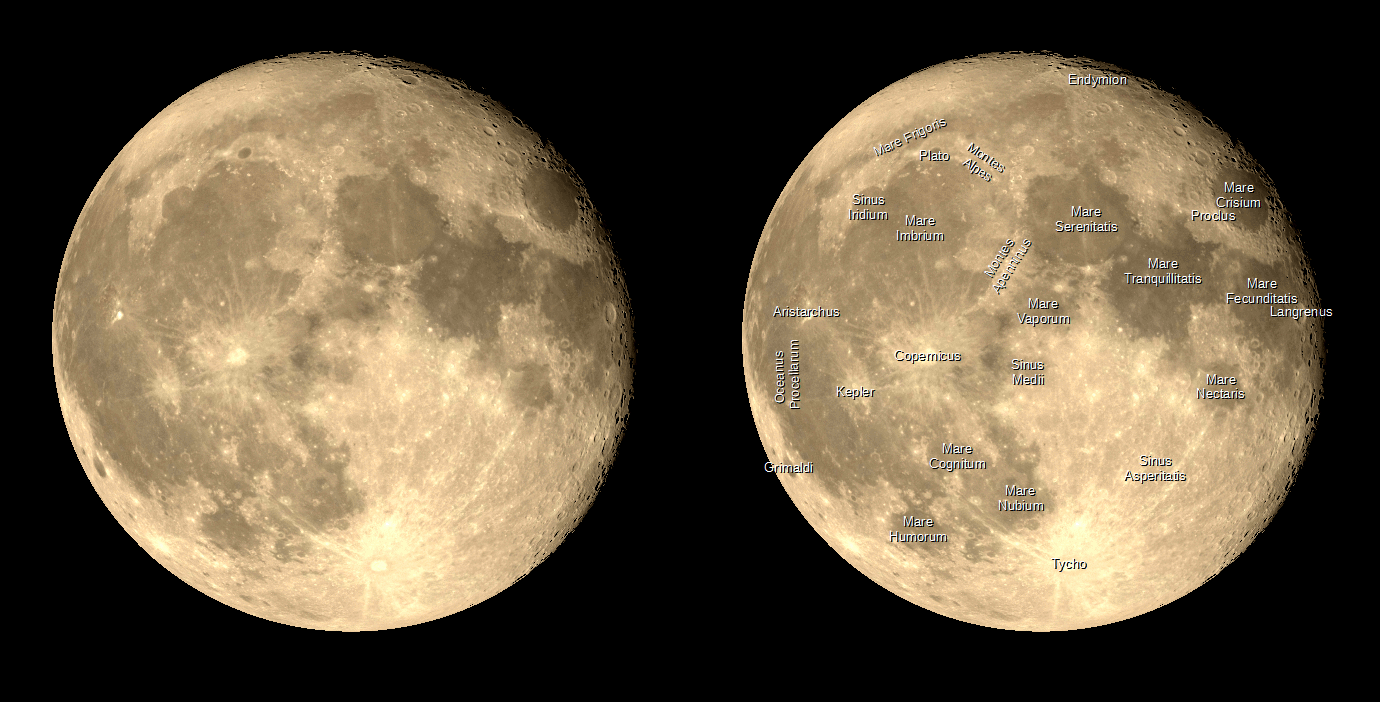
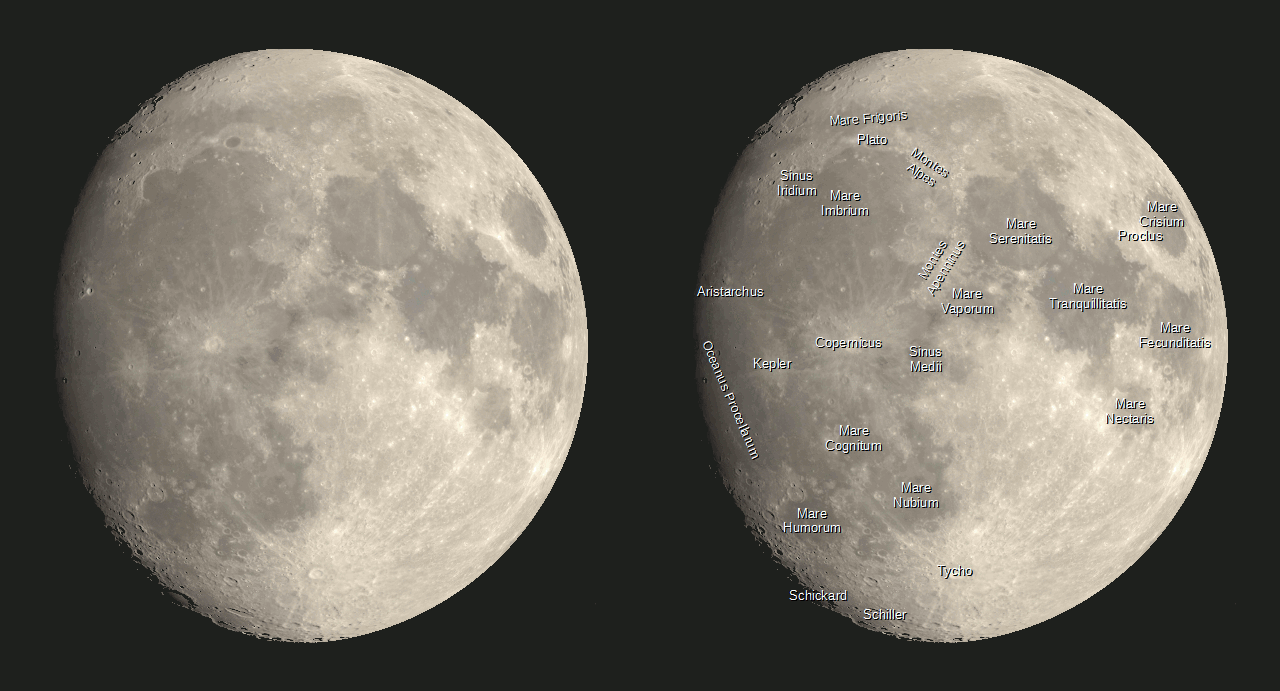
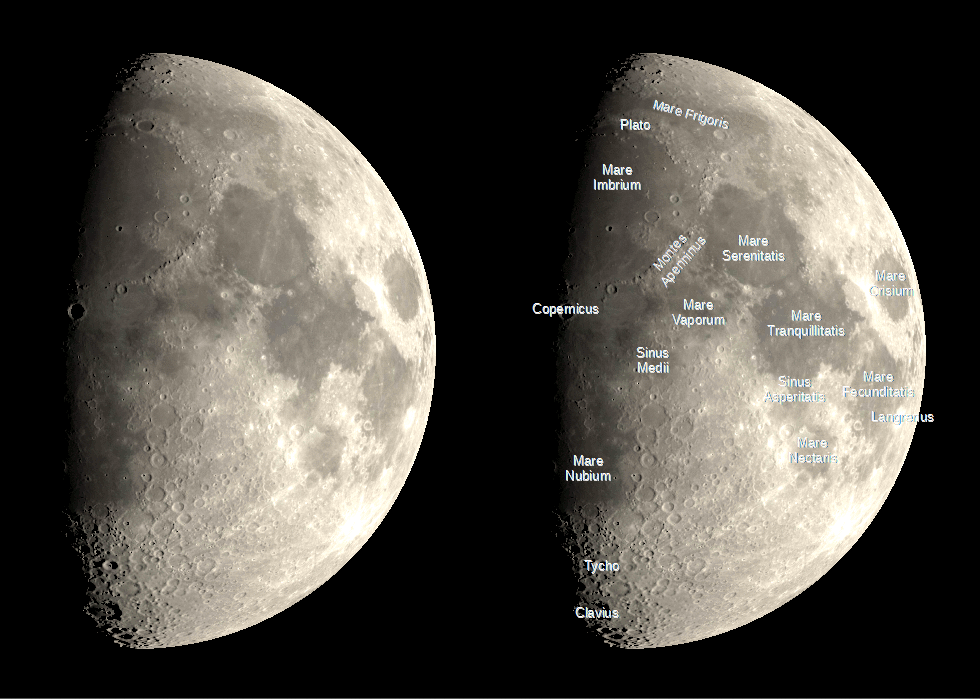
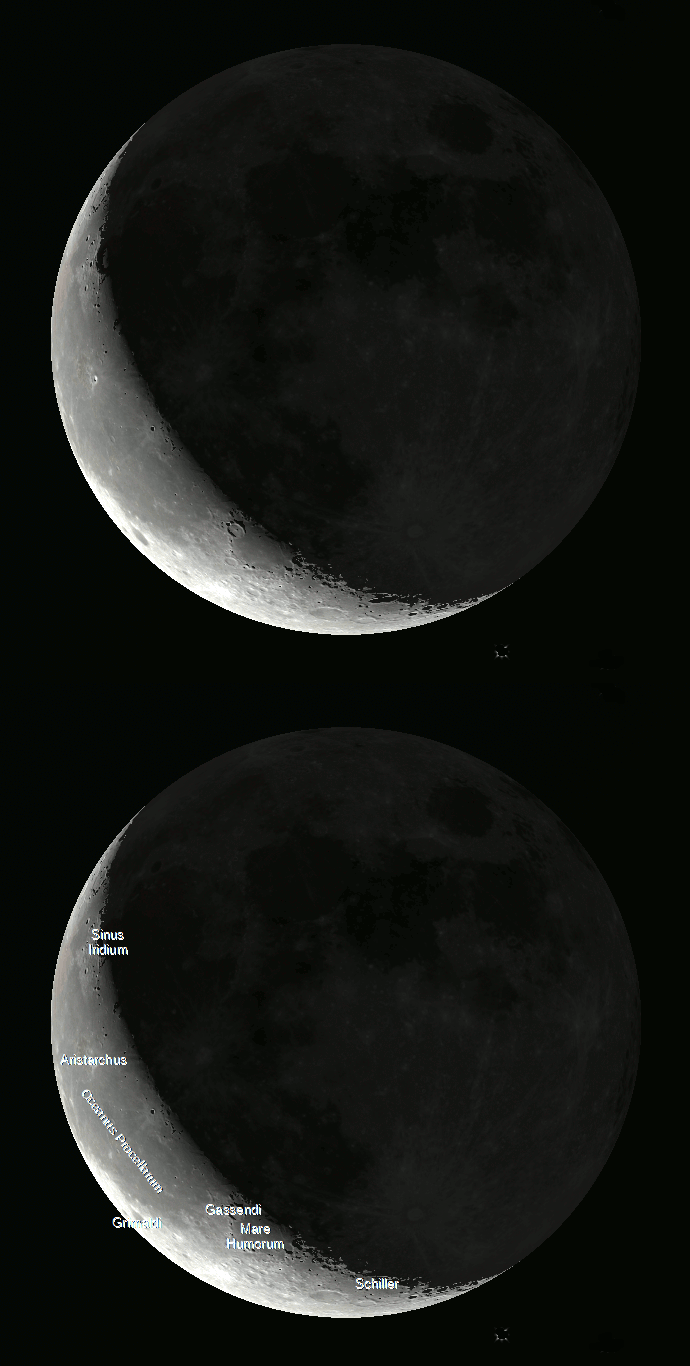
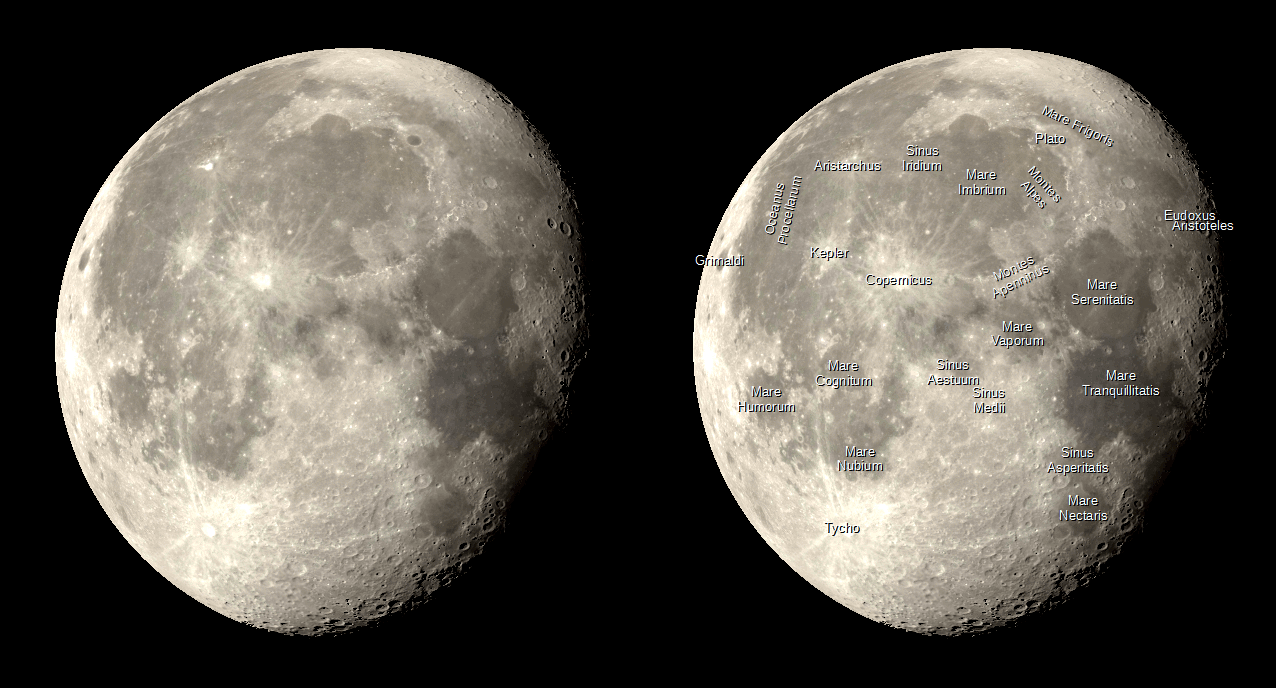
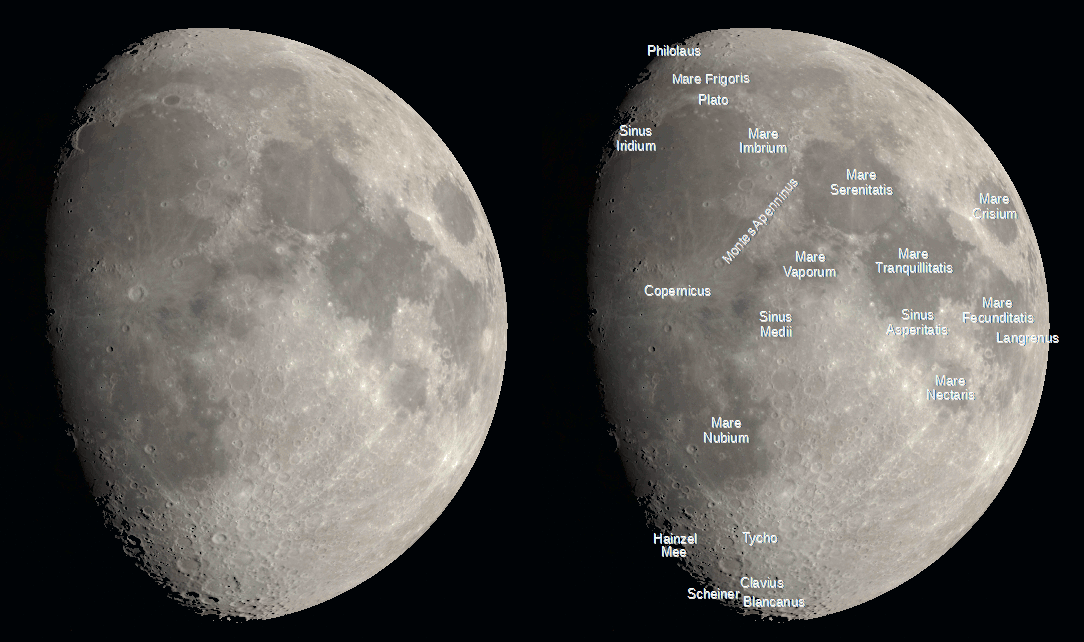
The Moon as it might appear in binoculars or telescope with selected features labeled tomorrow morning, August 10, 2023. Created using Stellarium, LibreOffice Draw for labels, and GIMP for the GIF animation.
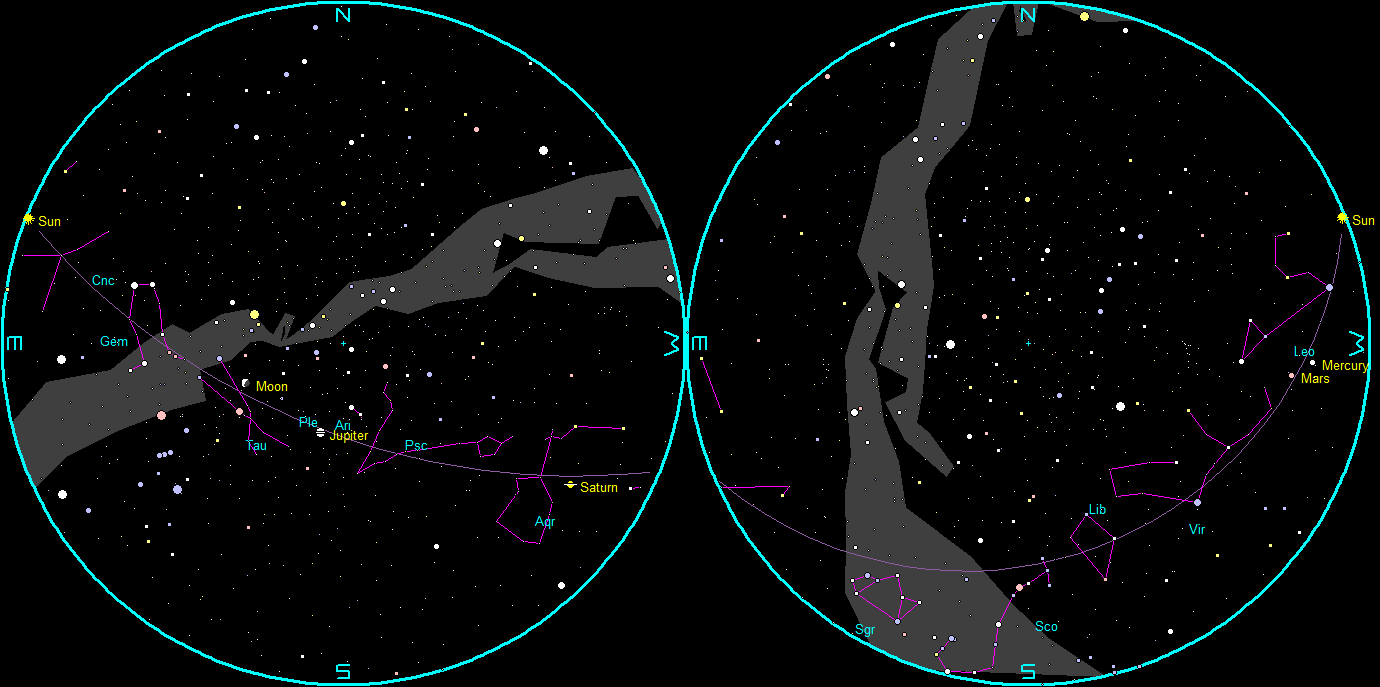
The naked-eye planets and the Moon at sunset and sunrise on a single night, starting with sunset on the right on August 9, 2023. The night ends on the left with sunrise on the 10th. Venus is not in the sky at either sunset or sunrise, being south of the Sun. Large images can be truncated on the right. Click or tap on the image to enlarge and display the complete image. Created using my LookingUp app and GIMP.
Ephemeris: 08/04/2023 – Star party tonight if it’s clear
This is Ephemeris for Friday, August 4th. Today the Sun will be up for 14 hours and 32 minutes, setting at 9:04, and it will rise tomorrow at 6:33. The Moon, 3 days past full, will rise at 11:02 this evening.
The Grand Traverse Astronomical Society will be hosting a star party tonight at Northwestern Michigan College’s Joseph Rogers observatory from 10:00 and midnight. If it’s clear, there will be at least a good solid hour of relatively dark sky to view the wonders beyond the solar system between 10 and 11 pm tonight before the bright moon rises. Saturn should be spotted by 11 pm. Low in the east southeast. Though Saturn will be fuzzy due to all the Earth’s atmosphere we have to look through to see it, it will still be a great sight. Astronomers don’t consider Saturn to be an evening planet yet. To be an evening planet, it must rise before sunset. The observatory is located south of Traverse City, MI on Birmley Road between Keystone and Garfield roads.
The astronomical event times given are for the Traverse City/Interlochen area of Michigan (EDT, UT –4 hours). They may be different for your location.
Addendum
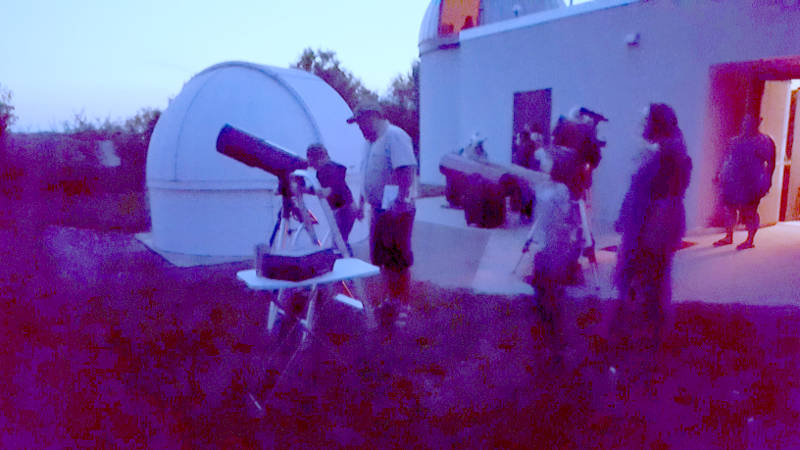
Some of the GTAS members’ telescopes set up behind the observatory for the star party. There’s a 16-inch telescope in the dome above. The dome at ground level is set up for to transmit images for a Zoom connection with a 14-inch telescope. When Saturn and the Moon rise, they will only be visible from the 16-inch telescope in the big dome.
Ephemeris: 08/02/2023 – Let’s find out where the naked-eye planets have wandered off to this week
This is Bob Moler with Ephemeris for Wednesday, August 2nd. Today the Sun will be up for 14 hours and 37 minutes, setting at 9:07, and it will rise tomorrow at 6:31. The Moon, 1 day past full, will rise at 10:15 this evening.
Let’s find out where the naked-eye planets have wandered off to this week. Venus is gone, setting too close to sunset. It will pass between the Earth and the Sun on the 13th, and be visible before sunrise by the end of the month. Mars and Mercury, though technically in the evening sky and like Venus, appear too close to the Sun to be spotted. Mars will pass behind the Sun in November. The other two naked eye planets are in the morning sky. Appearing at 5:45 am, which is roughly 45 minutes before sunrise, tomorrow morning, Jupiter will be high in the southeast, while Saturn will be lower in the southwest. And tomorrow morning Saturn will be just above the bright waning gibbous Moon.
The astronomical event times given are for the Traverse City/Interlochen area of Michigan (EDT, UT –4 hours). They may be different for your location.
Addendum
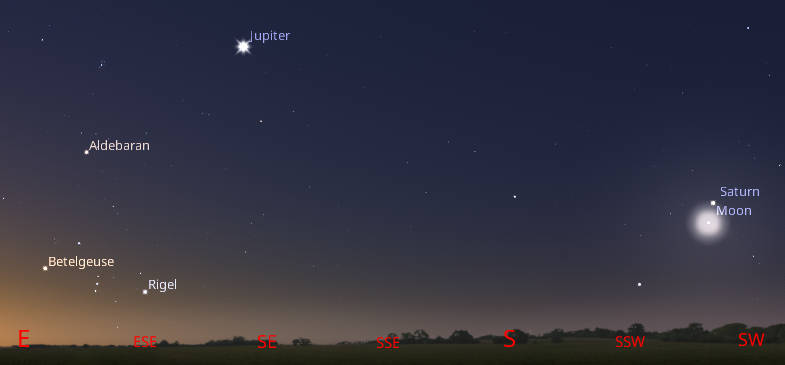
Large images like this are sometimes truncated to the right. Enlarging the image will restore the whole image.
Ephemeris: 07/28/2023 – Sun and Star Party scheduled for tomorrow at the Sleeping Bear Dunes
This is Ephemeris for Friday, July 28th. Today the Sun will be up for 14 hours and 49 minutes, setting at 9:13, and it will rise tomorrow at 6:25. The Moon, 3 days past first quarter, will set at 2:19 tomorrow morning.
Tomorrow, the Sleeping Bear Dunes National Lakeshore and the Grand Traverse Astronomical Society will host a Sun and Star Party at the Dune Climb area of the park. There will be a solar viewing period from 5 pm to about 7 pm. The society has two hydrogen alpha solar telescopes to view the Sun’s chromosphere and prominences. Plus, some members also have solar scopes and white light filtered telescopes to view sunspots on the face of the Sun. Night viewing will start at 9 pm with the Moon featured, along with the brighter telescopic wonders of summer. The park rangers will leave at 11 pm, but society members will stay later to get a good view of Saturn as it moves higher in the sky. All this will happen only if clouds permit.
The astronomical event times given are for the Traverse City/Interlochen area of Michigan (EDT, UT –4 hours). They may be different for your location.
Addendum
There will be a pass of the International Space Station starting in the WNW at 9:48 pm, reaching maximum altitude at 9:52 pm of 63o in the SW, entering the Earth’s shadow at 9:55 pm. Note, these are specific times to the nearest minute for the Dune Climb, but close for the Grand Traverse area of Michigan. For other locations, go to: heavens-above.com.
Ephemeris: 07/26/2023 – Let’s find out where the naked-eye planets have wandered off to this week
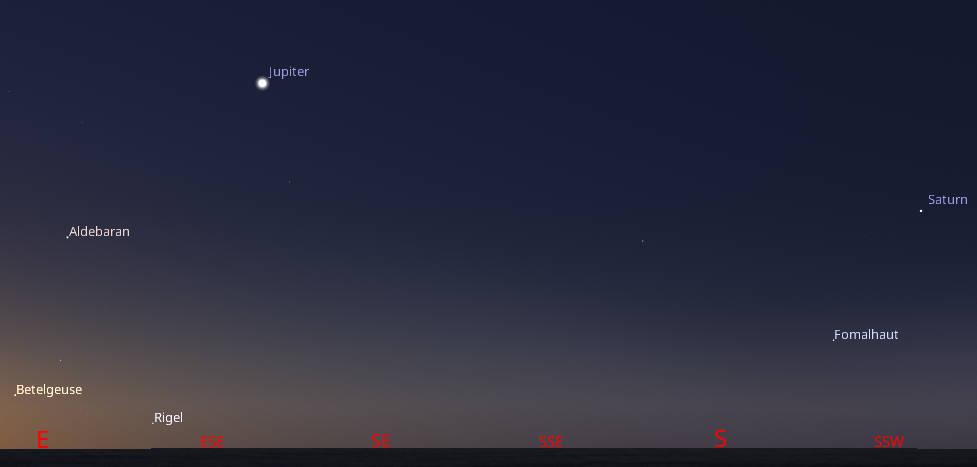
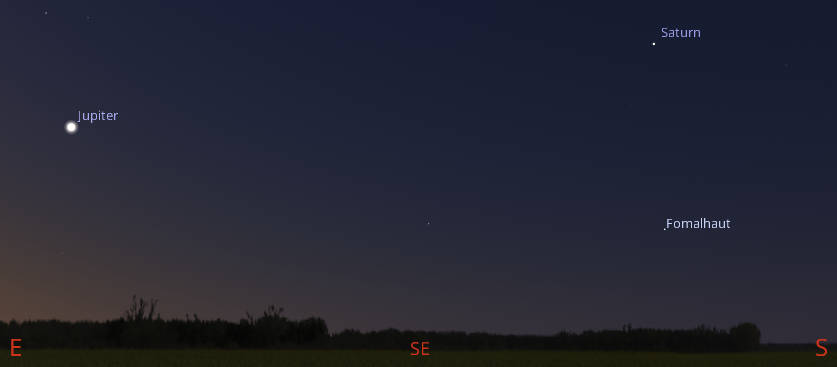
This is Bob Moler with Ephemeris for Wednesday, July 26th. Today the Sun will be up for 14 hours and 53 minutes, setting at 9:15, and it will rise tomorrow at 6:23. The Moon, 1 day past first quarter, will set at 1:08 tomorrow morning. | Let’s find out where the naked-eye planets have wandered off to this week. Venus is our hard to find Evening Star, seen very low in the west in evening twilight by 9:45 pm. It will set at 10:11 pm, Mercury might be spotted to Venus’ right and a bit above. The red planet Mars is pretty much lost in the evening twilight, above and left of Venus. Saturn will rise at 10:38 pm. And by 5:30 am, or a bit less than an hour before sunrise tomorrow, it will appear in the south-southwest, the brightest “star” in that direction. Its above the bright star Fomalhaut, normally the loneliest bright star in the sky. Jupiter will be in the east-southeast at that hour. Jupiter is the brightest star-like object in the morning sky now, near some of the bright stars of a winter’s evening.
The astronomical event times given are for the Traverse City/Interlochen area of Michigan (EDT, UT –4 hours). They may be different for your location.
Addendum
Ephemeris: 07/19/2023 – Let’s find out where the naked-eye planets have wandered off to this week
This is Ephemeris for Wednesday, July 19th. Today the Sun will be up for 15 hours and 7 minutes, setting at 9:22, and it will rise tomorrow at 6:16. The Moon, 2 days past new, will set at 10:55 this evening.
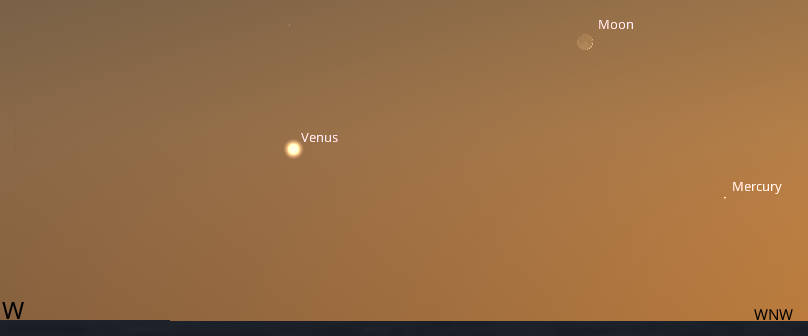
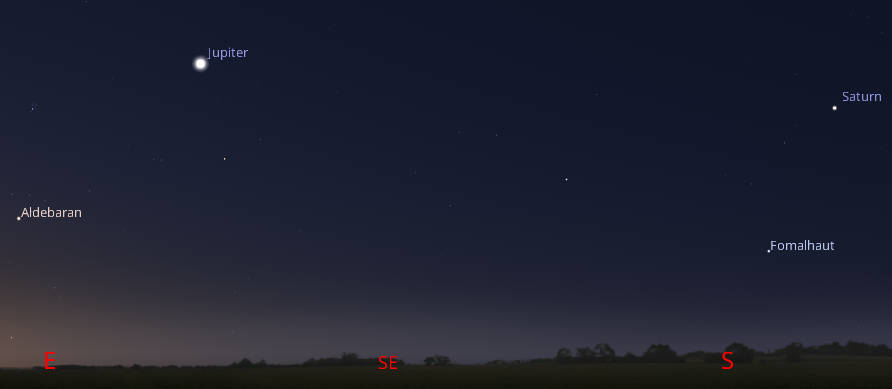
Let’s find out where the naked-eye planets have wandered off to this week. Venus is our blazing Evening Star, seen very low in the west in evening twilight. It will set at 10:31 pm, and by four minutes earlier each night. The red planet Mars is now pretty much lost in the evening twilight. We’ll see it in the morning sky in a few months. Venus too will soon leave the evening sky. Saturn will rise shortly after 11 pm. And by 5:15 am, or an hour before sunrise, it will appear in the south-southwest, the brightest “star” in that direction. It’s above the bright star Fomalhaut, normally the loneliest bright star in the sky. Jupiter will be in the east-southeast at that hour. Jupiter is the brightest star-like object in the morning sky now.
The astronomical event times given are for the Traverse City/Interlochen area of Michigan (EDT, UT –4 hours). They may be different for your location.
Addendum
07/12/2023 – Ephemeris – Let’s find out where the naked-eye planets have wandered off to this week
This is Bob Moler with Ephemeris for Wednesday, July 12th. Today the Sun will be up for 15 hours and 19 minutes, setting at 9:27, and it will rise tomorrow at 6:09. The Moon, 3 days past last quarter, will rise at 2:30 tomorrow morning.
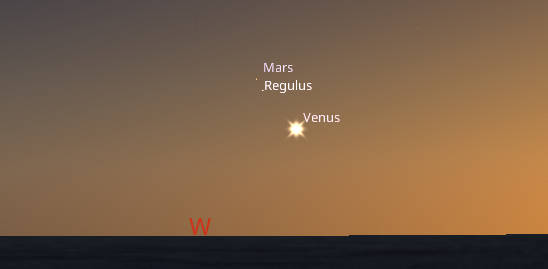
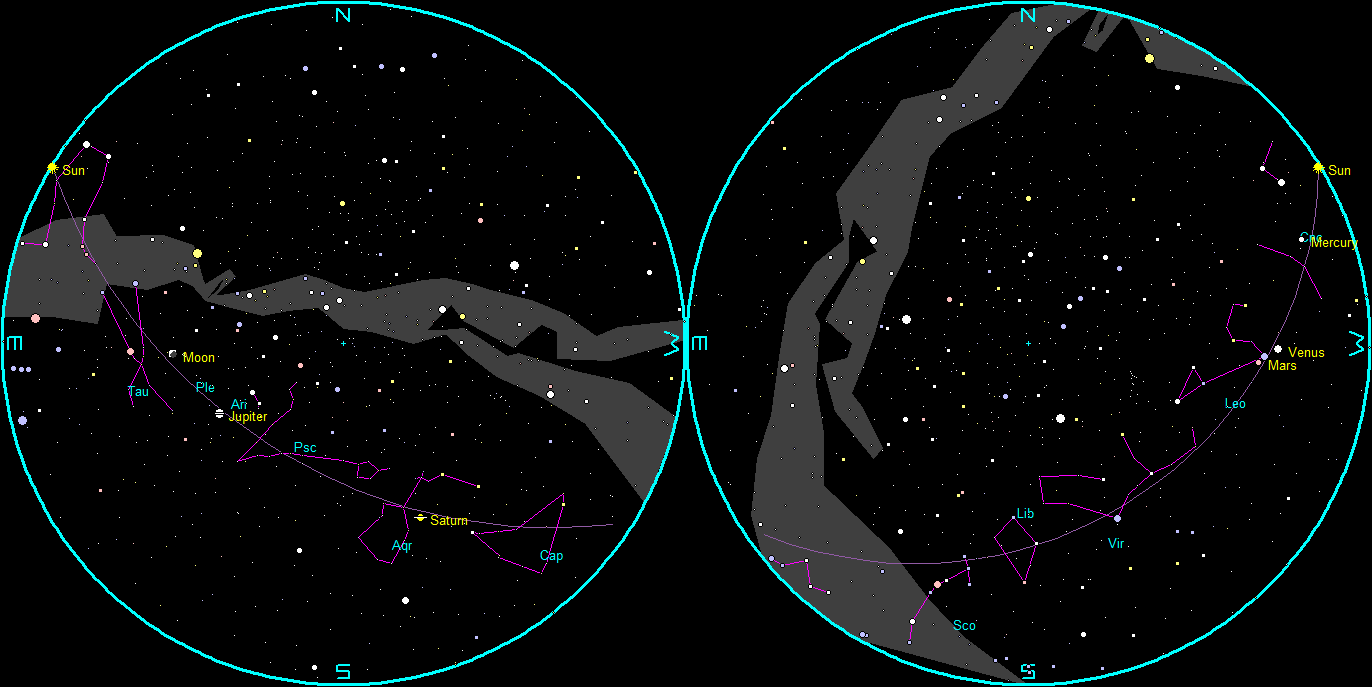
Let’s find out where the naked-eye planets have wandered off to this week. Tonight, Venus is our blazing Evening Star, seen very low in the west in evening twilight. It will set at 11:06 pm, and by four minutes earlier each night. The red planet Mars is seen left of and above Venus. It’s the second “star” with the brighter real star Regulus in Leo the lion between it and Venus. Mars is much fainter than Venus and difficult to spot in twilight. Saturn will rise shortly before midnight. And by 5 am tomorrow, will appear in the south, the brightest “star” in that direction. Jupiter will be in the east at that hour. It will appear above and right of the waning crescent Moon at that hour. Jupiter is the brightest star-like object in the morning sky now.
The astronomical event times given are for the Traverse City/Interlochen area of Michigan (EDT, UT –4 hours). They may be different for your location.
Addendum
07/05/2023 – Ephemeris – Let’s find out where the naked-eye planets have wandered off to this week
This is Ephemeris for Wednesday, July 5th. Today the Sun will be up for 15 hours and 27 minutes, setting at 9:31, and it will rise tomorrow at 6:04. The Moon, 2 days past full, will rise at 11:49 this evening.
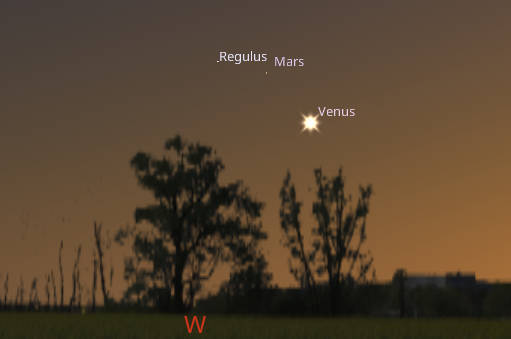
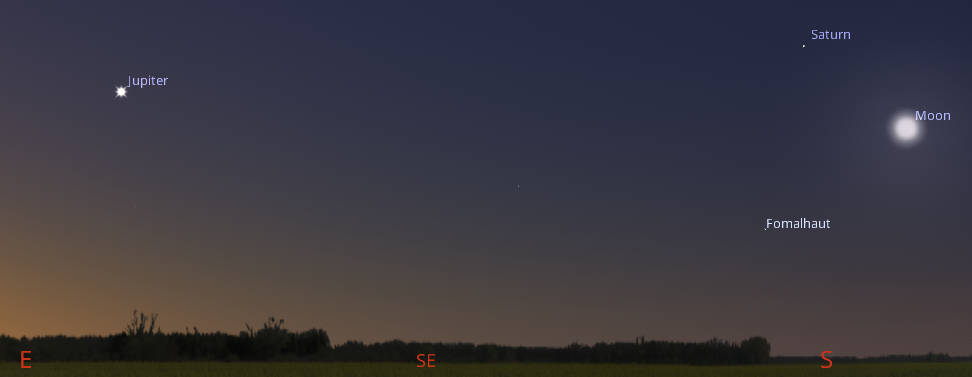
Let’s find out where the naked-eye planets have wandered off to this week. Venus is our blazing Evening Star, seen low in the west most of the evening. It sets tonight at 11:28 pm, and by three minutes earlier each night. The red planet Mars is seen left of and above Venus. And left of Mars is the brighter star Regulus in Leo the lion. Venus is pulling away from Mars now. Mars is much fainter than Venus and difficult to spot in twilight. Saturn will rise shortly after midnight. And by 5:15 am will appear in the south, the brightest “star” in that direction. It will appear above and left of the waning gibbous Moon at that hour. Jupiter will be in the east at that hour. It is the brightest star-like object in the morning sky now.
The astronomical event times given are for the Traverse City/Interlochen area of Michigan (EDT, UT –4 hours). They may be different for your location.
Addendum
06/28/2023 – Ephemeris – Let’s find out where the naked-eye planets have wandered off to this week
This is Ephemeris for Wednesday, June 28th. Today the Sun will be up for 15 hours and 32 minutes, setting at 9:32, and it will rise tomorrow at 5:59. The Moon, 2 days past first quarter, will set at 2:43 tomorrow morning.
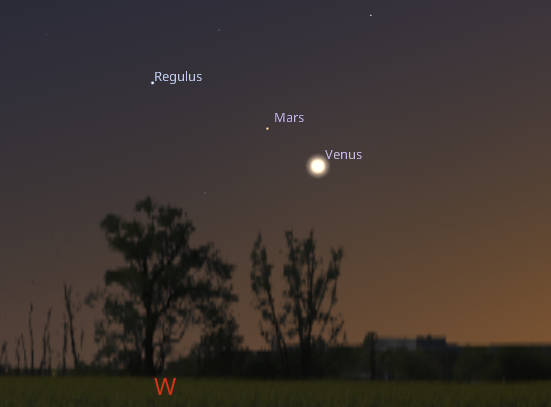
Let’s find out where the naked-eye planets have wandered off to this week. Venus is our blazing Evening Star, seen in the west all evening. It sets tonight at 11:51 pm, and three minutes earlier each night. The red planet Mars is seen left of and above Venus by around a third the width of one’s fist held at arm’s length. Venus is closing the gap between them, They will be closest this Saturday, before Venus pulls away. Their paths will not cross while they are in the evening sky. Mars is much fainter than Venus and difficult to spot in twilight. In the morning, Saturn will be visible in the south-southeast at 5 am, the brightest “star” in that direction. Jupiter will be low in the east at that hour. Jupiter is the brightest star-like object in the morning sky now.
The astronomical event times given are for the Traverse City/Interlochen area of Michigan (EDT, UT –4 hours). They may be different for your location.
Addendum
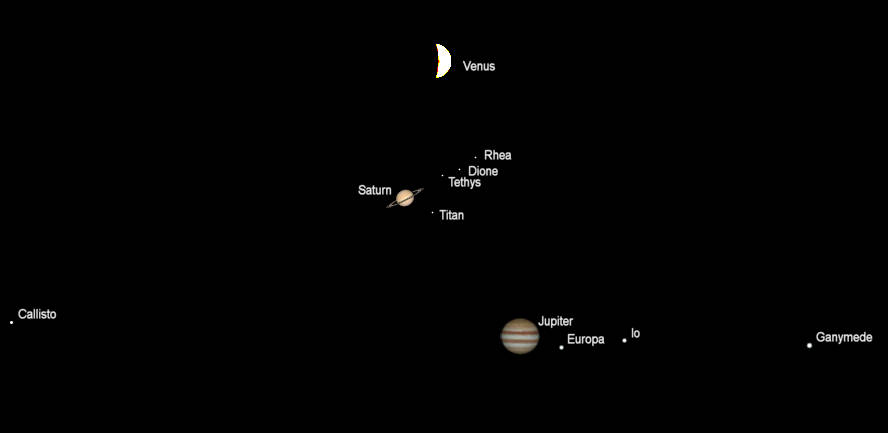
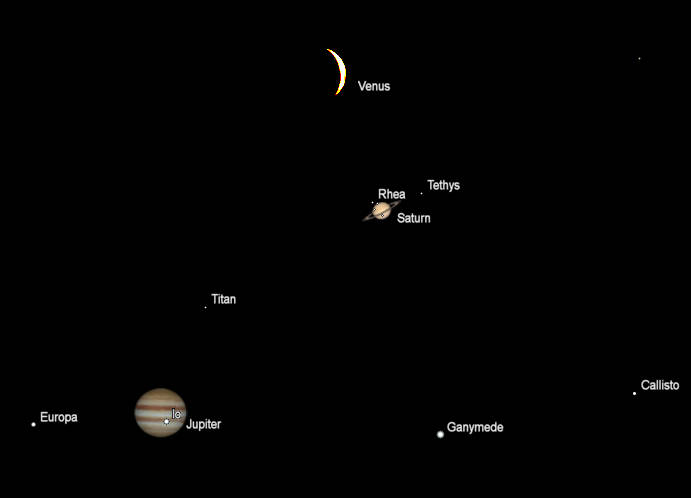
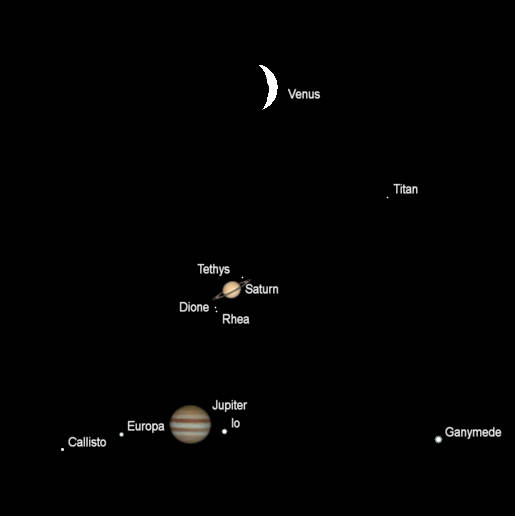
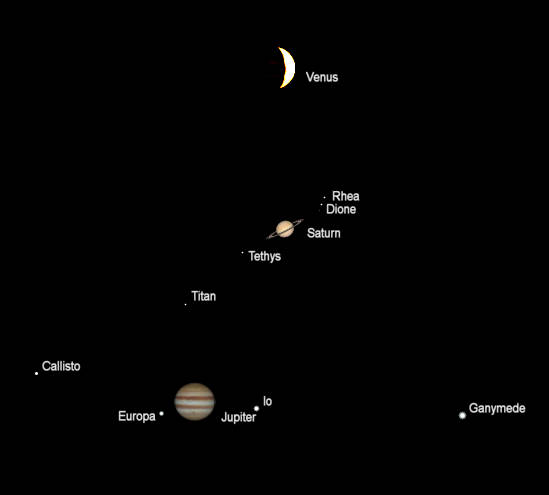
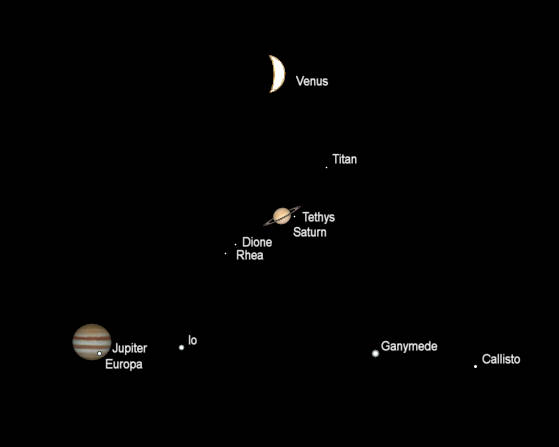
Apparent diameters: Venus 32.52″ and is 33.6% illuminated; Saturn 17.99″, its rings 41.91″; Jupiter 36.41″. Mars, too small to be represented here, is 4.26″ in diameter. Venus, Saturn and Jupiter are approaching us, so their apparent diameters are growing. The ” symbol means seconds of arc (1/3600th of a degree.) Click or tap on the image to enlarge it. Created using Cartes du Ciel (Sky Charts).