Archive
11/17/2021 – Ephemeris – Let’s search for the naked-eye planets for this week
This is Ephemeris for Wednesday, November 17th. Today the Sun will be up for 9 hours and 29 minutes, setting at 5:12, and it will rise tomorrow at 7:44. The Moon, 2 days before full, will set at 6:54 tomorrow morning.
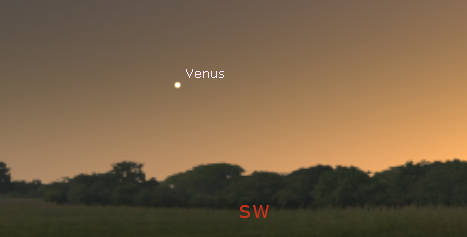
Let’s search for the naked-eye planets for this week. Venus will be visible in the southwestern evening twilight by 5:30 tonight. It’s a fat crescent in telescopes. Venus will set at 7:48 pm. By 5:45 pm, both Jupiter and Saturn should be able to be spotted in the southern sky. Saturn will be dimmer, and to its right. It will set first at 10:19 pm, with Jupiter following at 11:42 pm. Saturn’s rings are a beautiful sight in a telescope of even modest power, but the planet will appear tiny. Jupiter, however, is still quite large, and its four biggest moons are spread out and might all be glimpsed in binoculars. In the morning sky, Mars is starting to make its appearance, rising at 6:33. Binoculars might be able to pick it out low in the east-southeast until 7:15 am.
The astronomical event times given are for the Traverse City/Interlochen area of Michigan (EST, UT – 5 hours). They may be different for your location.
Addendum
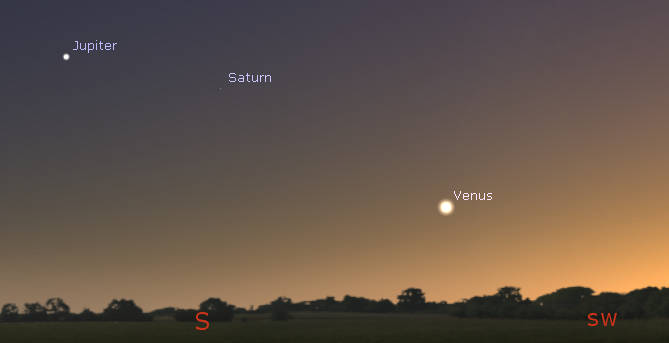
The evening planets Venus, Saturn and Jupiter at 5:45 pm this evening, November 17, 2021. Created using Stellarium.
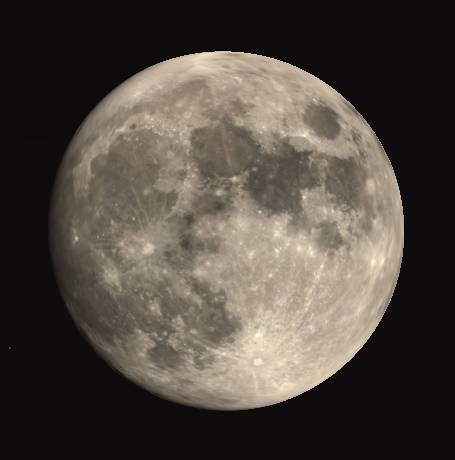
The Moon in binoculars or small telescope as it might appear tonight, November 17, 2021. Created using Stellarium.
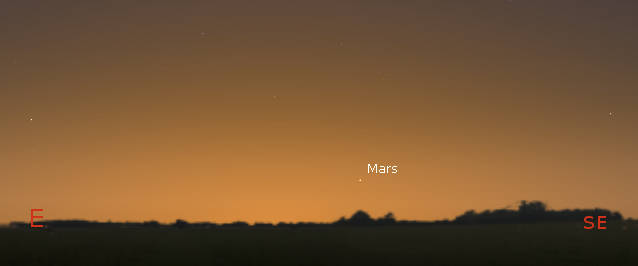
Mars in twilight, tomorrow morning at 7 am, November 18, 2021. Create using Stellarium.
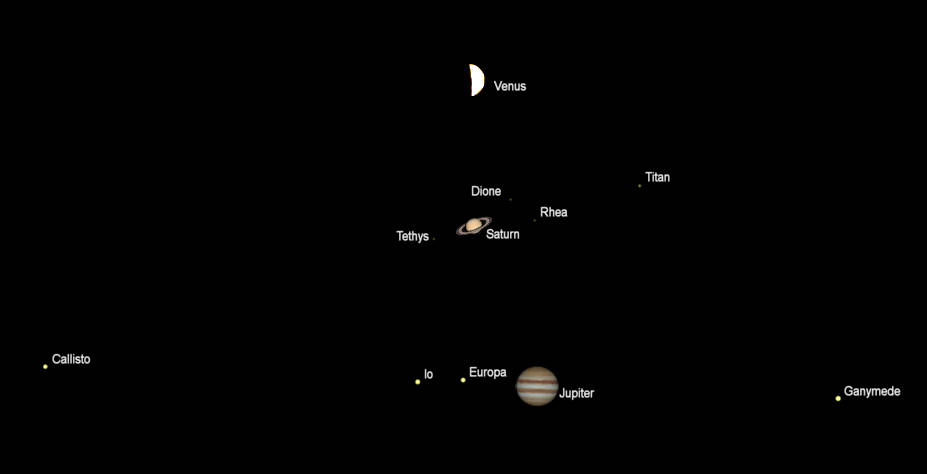
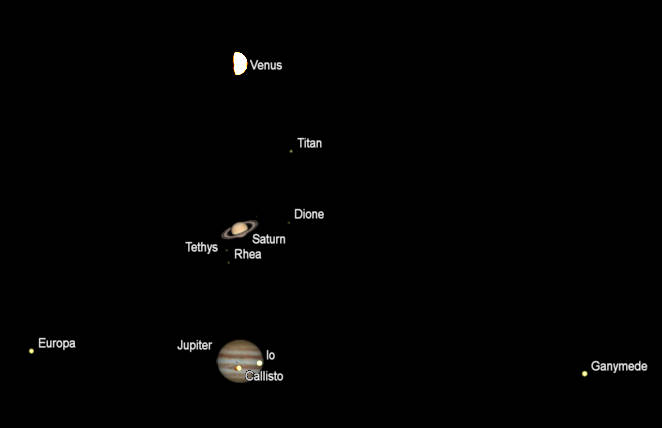
Telescopic views of the bright planets (north up) as they would be seen in a small telescope, with the same magnification, this evening at 7 pm, November 17, 2021. Apparent diameters: Venus, 31.89″, 38.3% illuminated; Saturn 16.32″, its rings 38.01″; Jupiter, 39.95″. Mars in the morning is not shown, but is 3.70″ in diameter. The ” symbol means seconds of arc (1/3600th of a degree.) Click on the image to enlarge it. Created using Cartes du Ciel (Sky Charts).
In the image above, Jupiter’s moon Europa is shown. Actually, before 7:03 pm, it will be hidden in Jupiter’s shadow. Watching it appear is kind of cool. Eclipses of Jupiter’s moons happen all the time. The information for the satellite events is published in Sky and Telescope Magazine. Also tonight, farther to the west, farther out than Ganymede, is the star 45 Capricorni, about the same brightness as the Jovian moons, and nearly in line with them. Don’t mistake it for one of the moons, especially before Europa appears.
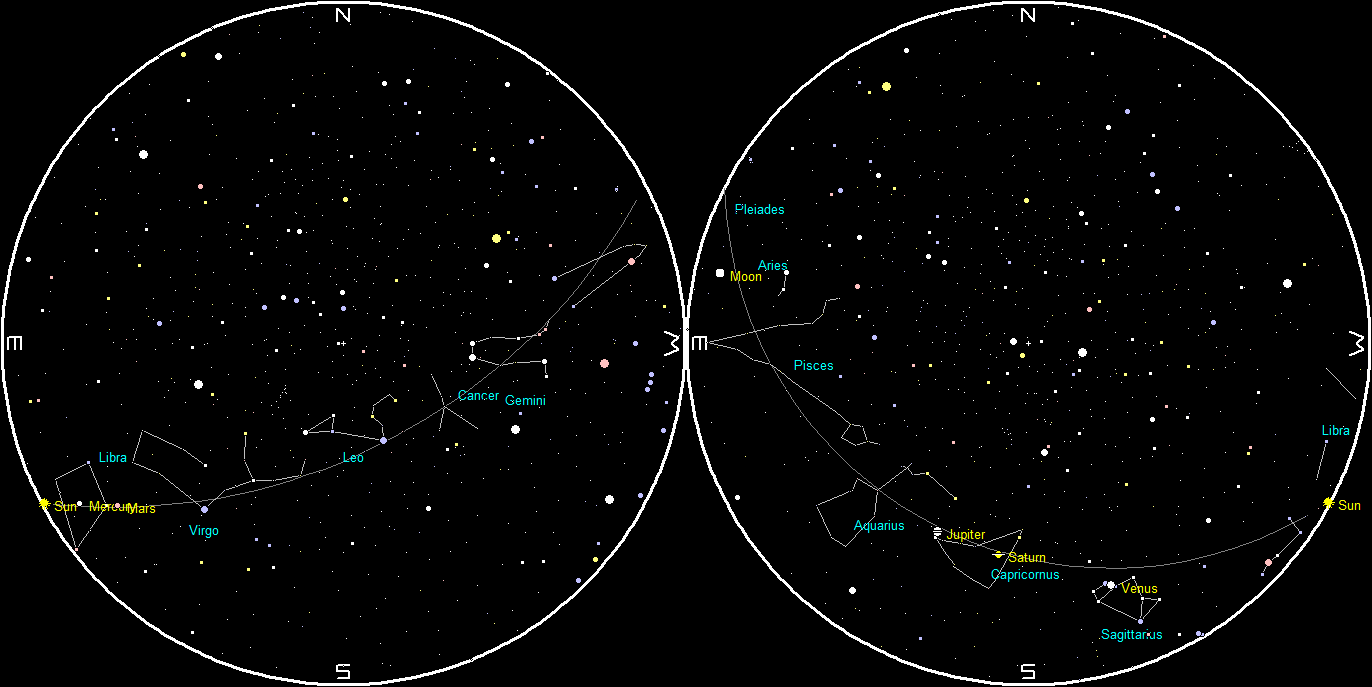
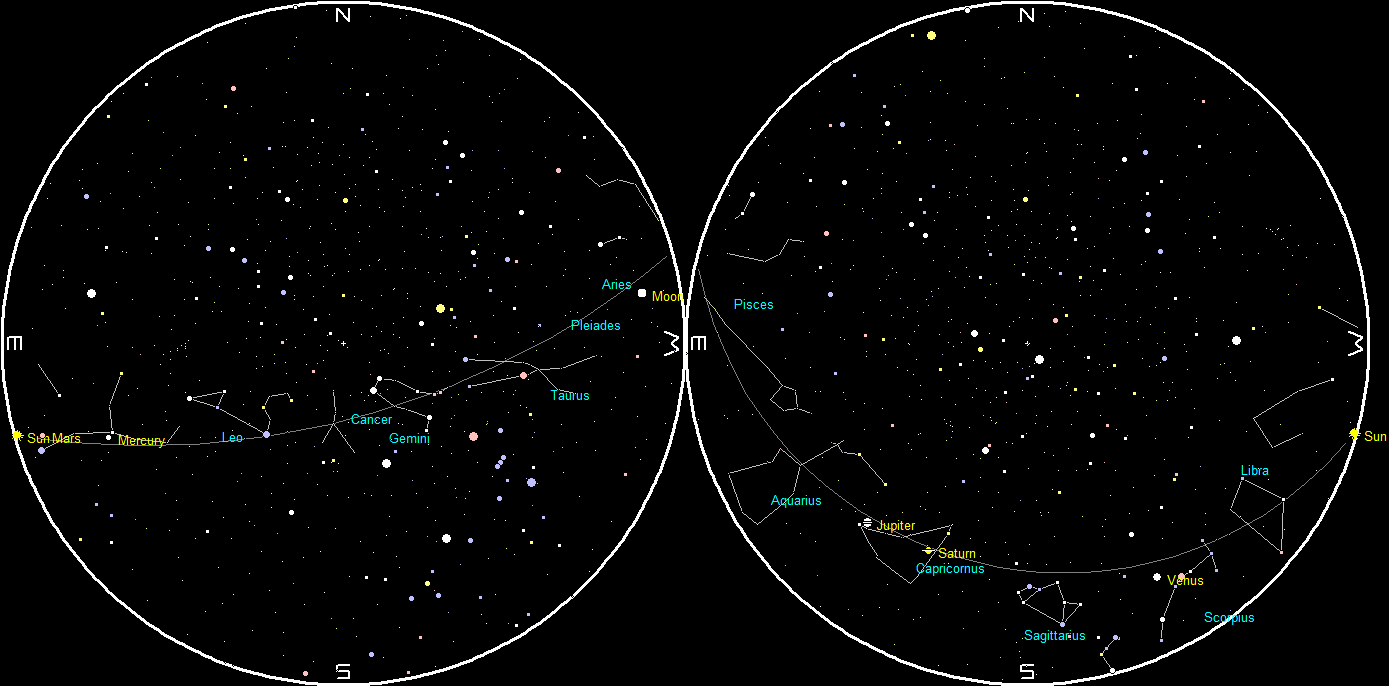
The naked-eye planets and the Moon at sunset and sunrise on a single night, starting with sunset on the right on November 17, 2021. The night ends on the left with sunrise on the 18th. Click on the image to enlarge it. Created using my LookingUp program.
11/10/2021 – Ephemeris – Let’s search for the naked-eye planets for this week
This is Bob Moler with Ephemeris for Wednesday, November 10th. Today the Sun will be up for 9 hours and 46 minutes, setting at 5:19, and it will rise tomorrow at 7:34. The Moon, 1 day before first quarter, will set at 11:02 this evening.
Let’s search for the naked-eye planets for this week. Venus should be visible in the southwestern evening twilight by 5:40 tonight. It’s a fat crescent in telescopes. Venus will set at 7:46 pm. By 6 pm, Both Jupiter and Saturn should be able to be spotted in the southern sky. Saturn will be dimmer, and to its right. Saturn will be above and right of the Moon tonight. It will set first at 10:45 pm, with Jupiter following at 12:07 am. Saturn’s rings are a beautiful sight in a telescope of even modest power, but the planet will appear tiny. In the morning sky, Mercury now can only be spotted in a telescope, so its appearance in the morning sky is, for all practical purposes, over.
The astronomical event times given are for the Traverse City/Interlochen area of Michigan (EST, UT – 5 hours). They may be different for your location.
Addendum
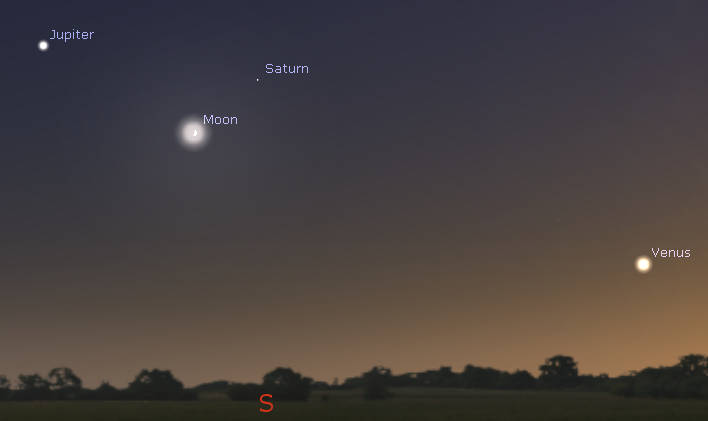
Evening planets and the Moon in twilight at 6 pm tonight, November 10, 2021. Click on the image to enlarge it. Created using Stellarium.
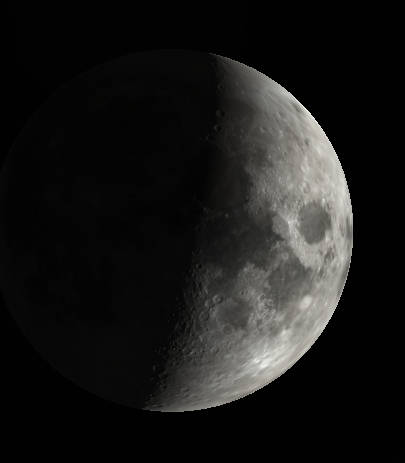
The crescent Moon as it might appear tonight in binoculars or small telescope. It appears here right side up as it would appear in the sky at 6 pm tonight, November 10, 2021. Created using Stellarium.
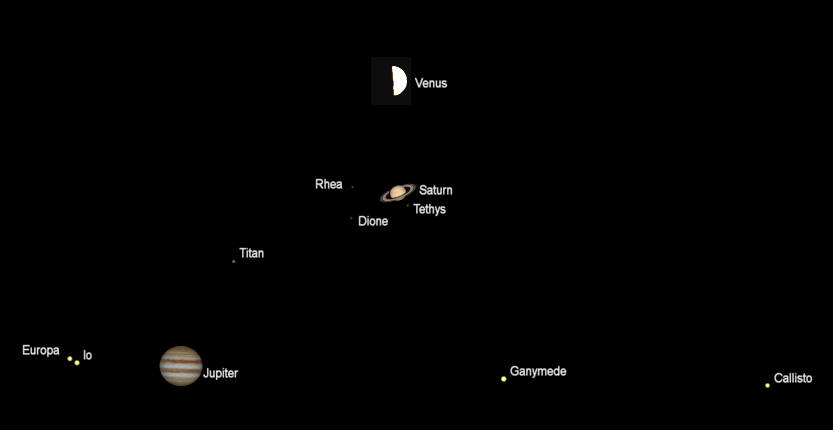
Telescopic views of the bright planets (north up) as they would be seen in a small telescope, with the same magnification, this evening at 7 pm, November 10, 2021. Apparent diameters: Venus, 28.99″, 42.7% illuminated; Saturn 16.50″, its rings 38.44″; Jupiter, 40.94″. The ” symbol means seconds of arc (1/3600th of a degree.) Click on the image to enlarge it. Created using Cartes du Ciel (Sky Charts).
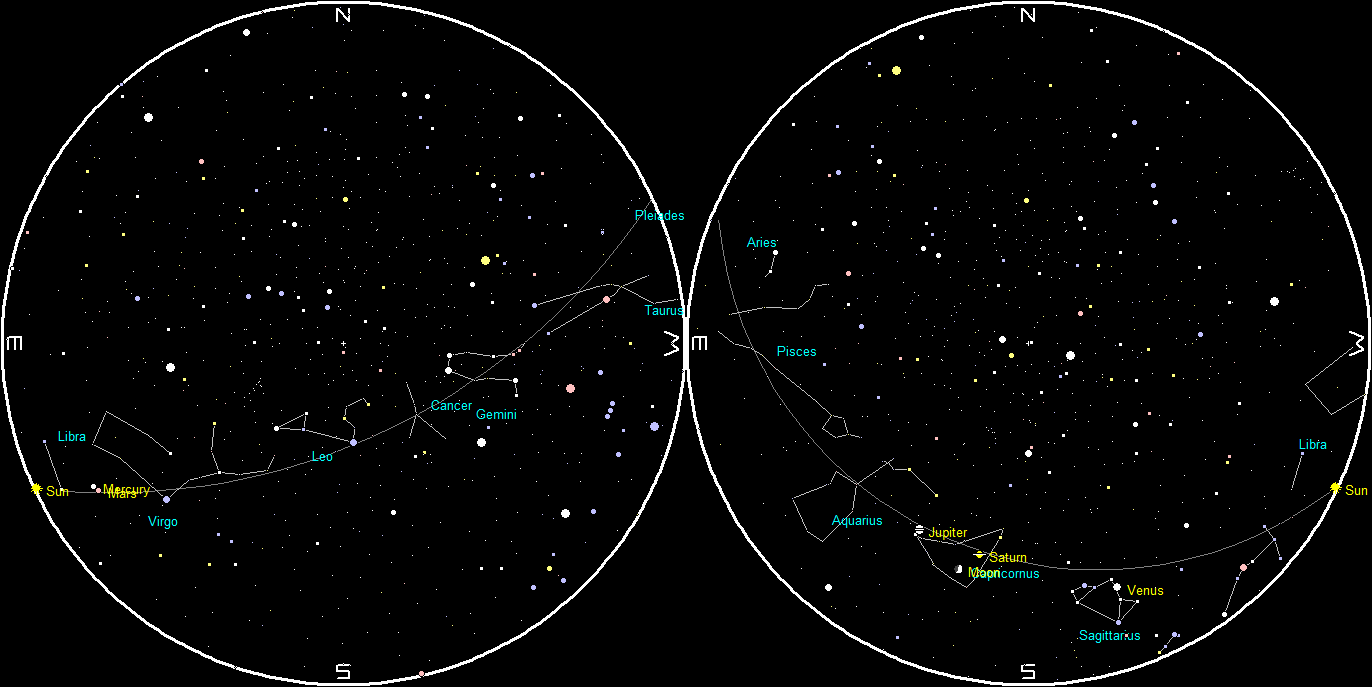
The naked-eye planets and the Moon at sunset and sunrise on a single night, starting with sunset on the right on November 10, 2021. The night ends on the left with sunrise on the 11th. Click on the image to enlarge it. Created using my LookingUp program.
11/09/2021 – Ephemeris – The Moon, Saturn and the return to standard time
This is Bob Moler with Ephemeris for Tuesday, November 9th. Today the Sun will be up for 9 hours and 48 minutes, setting at 5:20, and it will rise tomorrow at 7:33. The Moon, 2 days before first quarter, will set at 9:48 this evening.
Ever since new moon, the Moon has been moving eastward each night. It will be approaching Saturn tonight, and pass south or below Saturn at mid-morning tomorrow. By tomorrow night, the Moon will have moved just past Saturn, on its way toward Jupiter. The return to standard time since Sunday has darkened our evenings and lightened our mornings. We are about 30 days from the earliest sunset on December 9th, just 18 minute earlier than tonight’s sunset. Our sunrise has a longer time to go to reach last week’s late sunrise times, all the way to January second. Thanks to Congress’s messing around with it, we are on daylight saving time for a longer part of the year than standard time. Don’t get me started.
The astronomical event times given are for the Traverse City/Interlochen area of Michigan (EST, UT – 5 hours). They may be different for your location.
Addendum
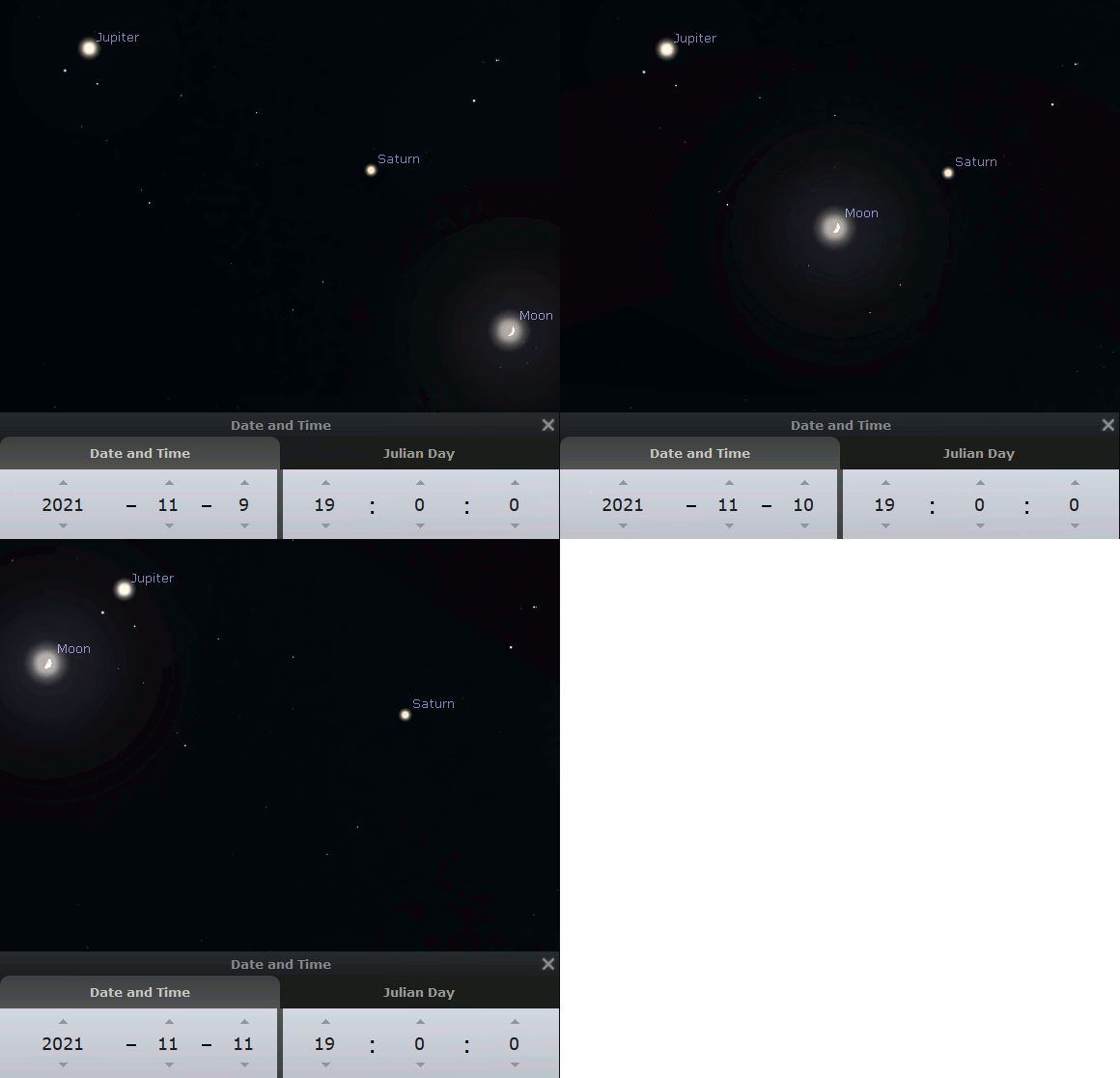
Viewing the Moon’s passage by Saturn and Jupiter for three nights, November 9, 10 and 11, 2021. Created using Stellarium, and GIMP.
11/03/2021 – Ephemeris – Searching for the naked-eye planets for this week
This is Ephemeris for Wednesday, November 3rd. The Sun will rise at 8:23. It’ll be up for 10 hours and 4 minutes, setting at 6:28. The Moon, 1 day before new, will rise at 7:56 tomorrow morning.
Let’s search for the naked-eye planets for this week. Venus should be visible in the southwestern evening twilight by 6:50 tonight. It’s a fat crescent in telescopes. Venus will set at 8:44 pm. By 7 pm, Jupiter should be able to be spotted in the south-southeastern sky. Saturn will be dimmer, and to its right. They will set after midnight in the southwest, with Saturn setting first at 12:11 am, and Jupiter following at 1:32. Saturn’s rings are a beautiful sight in a telescope of even modest power, but the planet will appear tiny. In the morning sky, Mercury will be harder to spot than it was last week. It will be visible and low in the east-southeast from 7:30 to 8 am. All four of Jupiter’s brightest moons will be visible in binoculars early in the evening tonight.
The astronomical event times given are for the Traverse City/Interlochen area of Michigan (EDT, UT – 4 hours). They may be different for your location.
Addendum
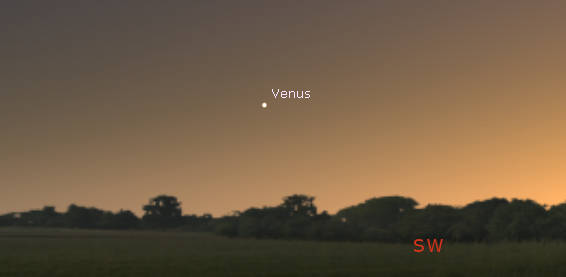
Venus will appear low in the south-southwest by 6:50 pm tonight, November 3, 2021. Created using Stellarium.
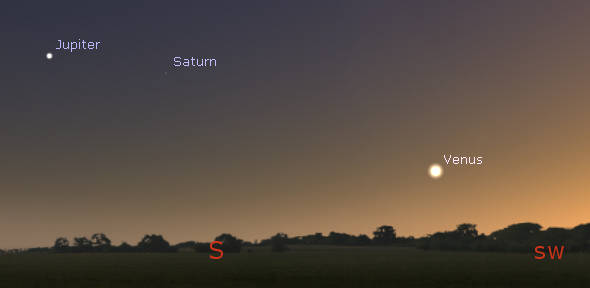
Venus, Jupiter and Saturn at 7 pm in the southern sky. Created using Stellarium.
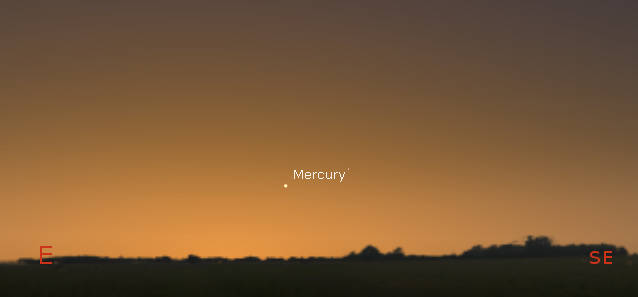
Mercury in morning twilight at 7:45 am, November 4, 2021. Created using Stellarium.
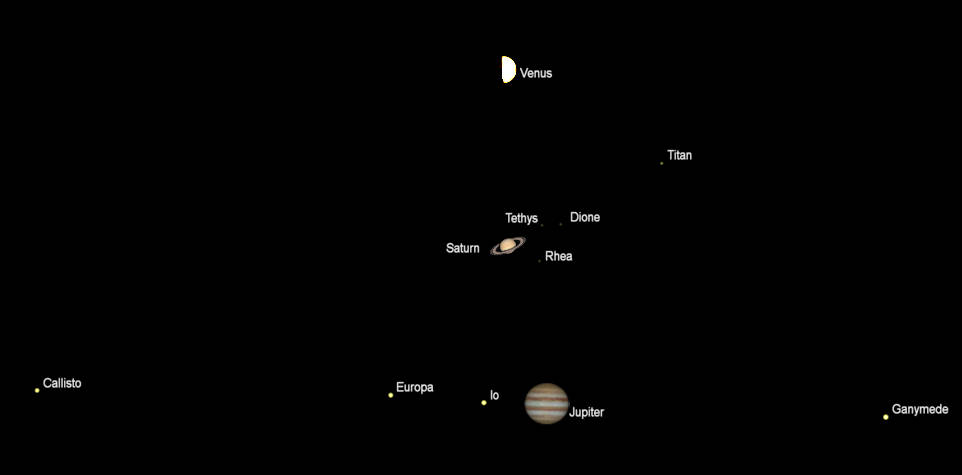
Telescopic views of the bright planets (north up) as they would be seen in a small telescope, with the same magnification, this evening at 9 pm, November 3, 2021. Apparent diameters: Venus at 7 pm, 26.54″, 46.7% illuminated; Saturn 16.69″, its rings 38.88″; Jupiter, 41.77″. Mercury at 7:30 am on the 4th and not plotted, 5.49″, 86.4% illuminated. The Jovian moon Io will begin transiting the face of the planet at 11:14 pm. Its shadow will start to cross at 12:32 am. The ” symbol means seconds of arc (1/3600th of a degree.) Click on the image to enlarge it. Created using Cartes du Ciel (Sky Charts).
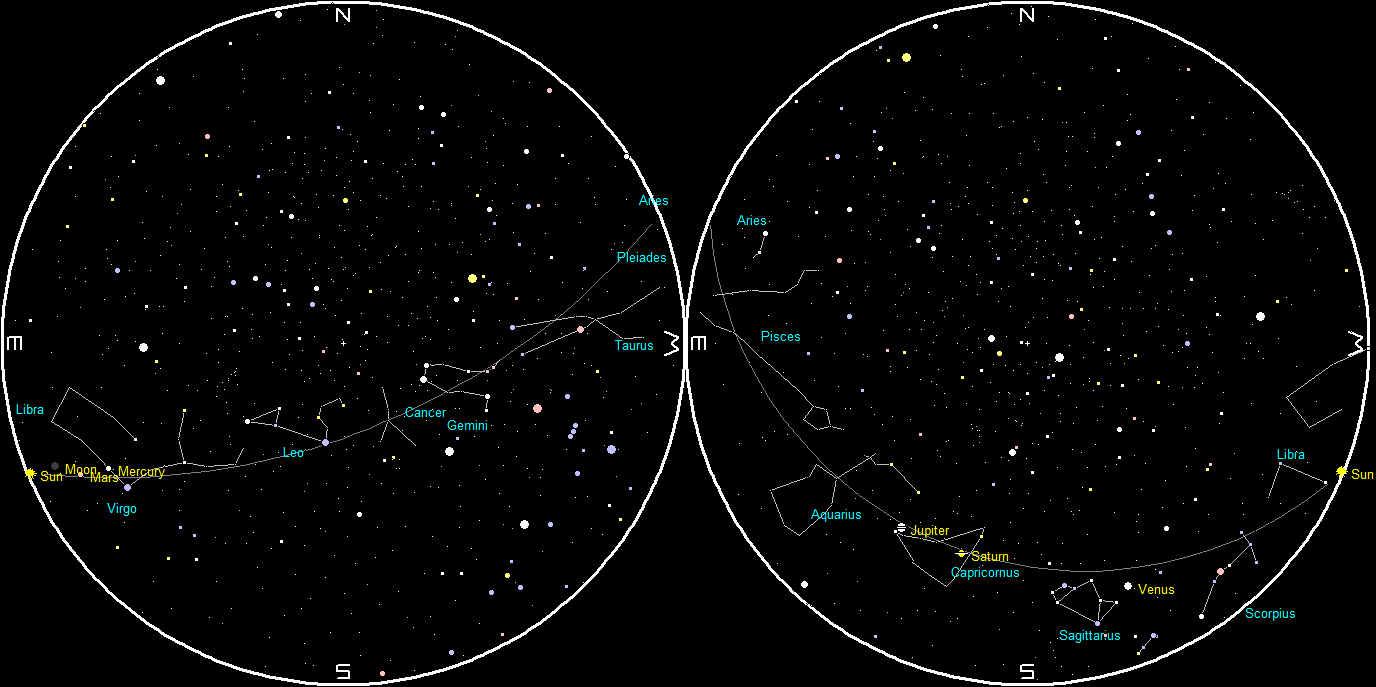
The naked-eye planets and the Moon at sunset and sunrise on a single night, starting with sunset on the right on November 3, 2021. The night ends on the left with sunrise on the 4th. Click on the image to enlarge it. Created using my LookingUp program.
10/27/2021 – Ephemeris – Let’s search for the naked-eye planets for this week
This is Bob Moler with Ephemeris for Wednesday, October 27th. Today the Sun will be up for 10 hours and 23 minutes, setting at 6:38, and it will rise tomorrow at 8:15. The Moon, 1 day before last quarter, will rise at 11:27 this evening.
Let’s search for the naked-eye planets for this week. Venus should be visible in the southwestern evening twilight by 7 tonight. It will set at 8:43 pm. By 7:15 pm, Jupiter will be spotted in the south-southeastern sky. Jupiter should be easy to spot at that hour. Saturn will be dimmer, and to its right. They will be visible for a while after midnight in the southwest, with Saturn setting first at 12:37 am, and Jupiter following at 1:57. Saturn’s rings are a beautiful sight in a telescope of even modest power, but the planet will appear tiny. In the morning sky, Mercury will be visible and low in the east-southeast for most of the 7 am hour. All four of Jupiter’s brightest moons will be visible in binoculars early in the evening tonight.
The astronomical event times given are for the Traverse City/Interlochen area of Michigan (EDT, UT – 4 hours). They may be different for your location.
Addendum
Venus will appear low in the southwest by 7 pm tonight, October 27, 2021. Created using Stellarium.
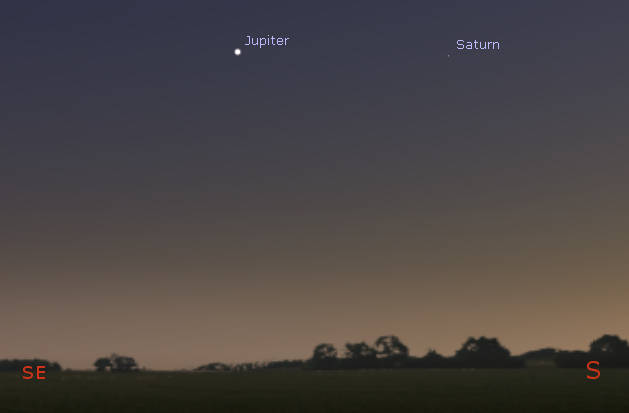
Jupiter and Saturn in evening twilight at 7:15 pm tonight, October 27, 2021. Created using Stellarium.
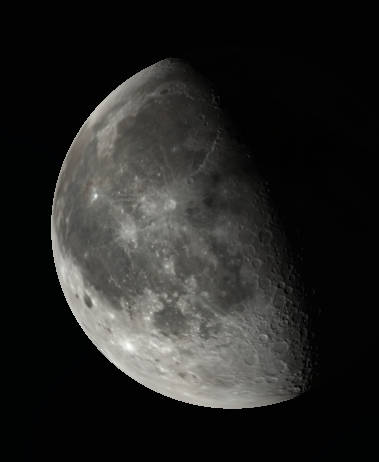
The Moon as it might appear in binoculars or a small telescope tomorrow morning, October 28, 2021. Created using Stellarium.
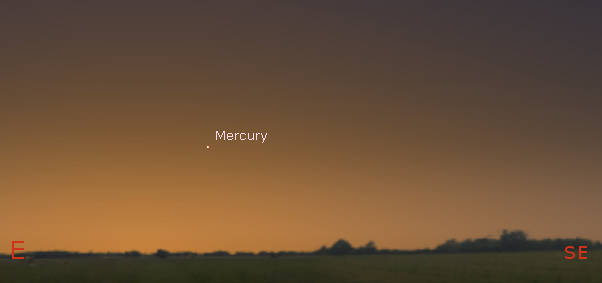
Mercury in morning twilight finder for 7:30 am tomorrow, October 28, 2021. Created using Stellarium.
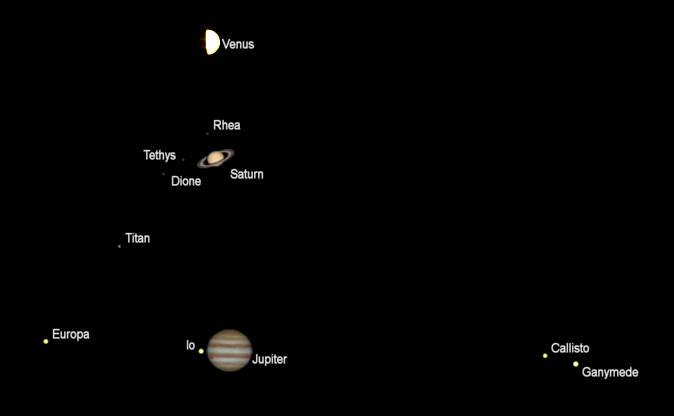
Telescopic views of the bright planets (north up) as they would be seen in a small telescope, with the same magnification, this evening at 9 pm, October 27, 2021. Apparent diameters: Venus at 7 pm, 24.19″, 50.8% illuminated; Saturn 16.92″, its rings 39.41″; Jupiter, 42.87″. Mercury at 7:30 am on the 28th and not plotted, 6.47″, 64.9% illuminated. The Jovian moon Io will begin transiting the face of the planet at 9:20 pm. Its shadow will start to cross at 10:37 pm. Io’s transit will end at 11:37 pm. The ” symbol means seconds of arc (1/3600th of a degree.) Click on the image to enlarge it. Created using Cartes du Ciel (Sky Charts).
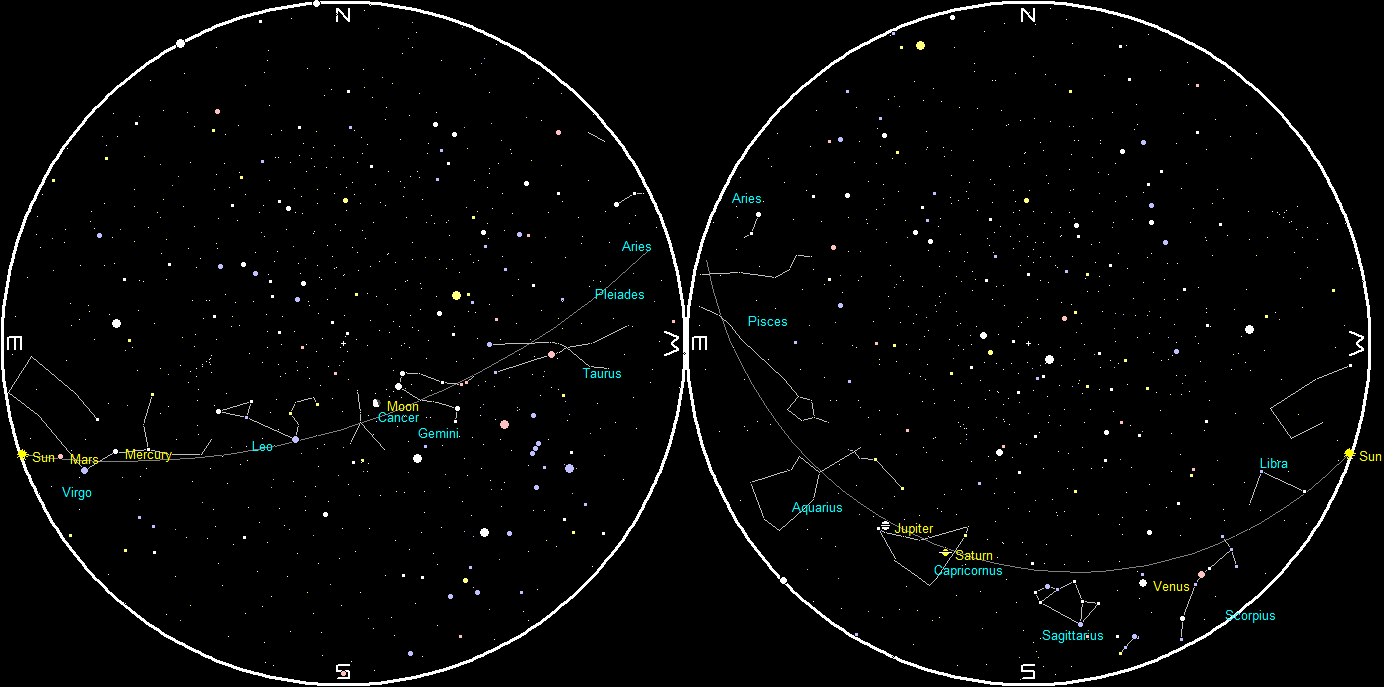
The naked-eye planets and the Moon at sunset and sunrise on a single night, starting with sunset on the right on October 27, 2021. The night ends on the left with sunrise on the 28th. Click on the image to enlarge it. Created using my LookingUp program.
10/20/2021 – Ephemeris – Let’s search for the naked-eye planets for this week
This is Bob Moler with Ephemeris for Wednesday, October 20th. Today the Sun will be up for 10 hours and 44 minutes, setting at 6:49, and it will rise tomorrow at 8:06. The Moon, is full today, the Hunter’s Moon, and will rise at 7:07 this evening.
Let’s search for the naked-eye planets for this week. Venus should be visible in the southwestern evening twilight by 7:10 tonight. It will set at 8:44 pm. By 7:30 pm, Jupiter will be spotted in the south-southeastern sky. Jupiter should be easy to spot at that hour. Saturn will be dimmer, and to its right. They will be visible for a while after midnight in the southwest, with Saturn setting first at 1:04 am, and Jupiter following at 2:24. Saturn’s rings are a beautiful sight in a telescope of even modest power, but the planet will appear tiny. In the morning sky, Mercury will be visible and low in the east-southeast by 7:15 am. It will reach its greatest separation from the Sun in six days.
The astronomical event times given are for the Traverse City/Interlochen area of Michigan (EDT, UT-4 hours). They may be different for your location.
Addendum
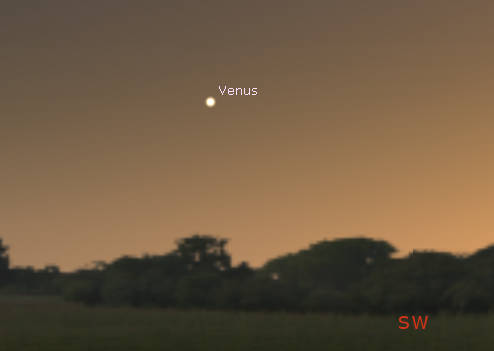
Venus seen in twilight at 7:10 pm, about 20 minutes after sunset tonight, October 20, 2021. Created using Stellarium.
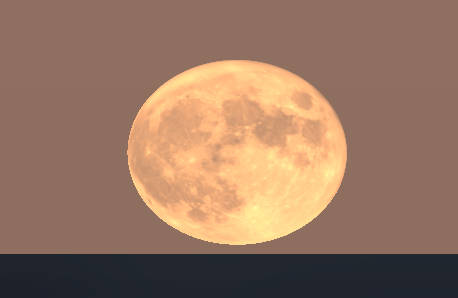
Full Hunter’s Moon rising at 7:11 this evening, October 20, 2021. Created using Stellarium.
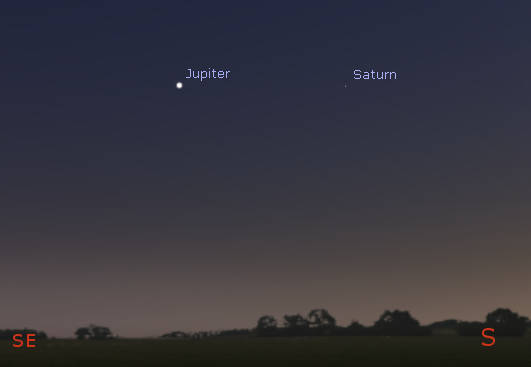
Jupiter, Saturn and the Moon at 7:30, about 40 minutes after sunset tonight, October 20, 2021. Created using Stellarium.
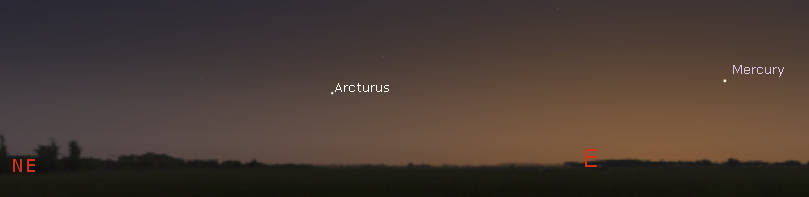
Mercury and the star Arcturus in the morning twilight at 7:15 am, about 50 minutes before sunrise tomorrow morning, October 21, 2021. Don’t confuse the two. Click on the image to enlarge it. Created using Stellarium.
Telescopic views of the bright planets (north up) as they would be seen in a small telescope, with the same magnification, this evening at 8 pm, October 20, 2021. Apparent diameters: Venus, 22.70″, 53.7% illuminated; Saturn 17.08″, its rings 39.80″; Jupiter, 43.68″. Mercury at 7:15 am on the 21st and not plotted, 7.68″, 38.1% illuminated. The two Jovian moons transiting the face of the planet are usually not visible, though their shadows can be spotted. The ” symbol means seconds of arc (1/3600th of a degree.) Click on the image to enlarge it. Created using Cartes du Ciel (Sky Charts).
The naked-eye planets and the Moon at sunset and sunrise on a single night, starting with sunset on the right on October 20, 2021. The night ends on the left with sunrise on the 21st. Click on the image to enlarge it. Created using my LookingUp program.
10/18/2021 – Ephemeris – Jupiter is stationary today
This is Ephemeris for Monday, October 18th. Today the Sun will be up for 10 hours and 50 minutes, setting at 6:52, and it will rise tomorrow at 8:03. The Moon, 2 days before full, will set at 6:49 tomorrow morning.
The planet Jupiter is stationary today after moving westward for the last four months, as the Earth passed it in our race around the Sun. And it will resume its normal prograde or eastward motion against the stars and constellations of the Zodiac. During this retrograde time it had seemed to move closer to Saturn. Now that it and Saturn are appearing to resume their eastward motion, Jupiter again will appear to open up the distance between them. The ancient Greeks had a devil of a time trying to model this behavior, because they started with two false premises. One, that the Earth was stationary in the center of the universe; and two, that the Sun, Moon, and planets moved in uniform circular motion because they were perfect.
The astronomical event times given are for the Traverse City/Interlochen area of Michigan (EDT, UT-4 hours). They may be different for your location.
Addendum
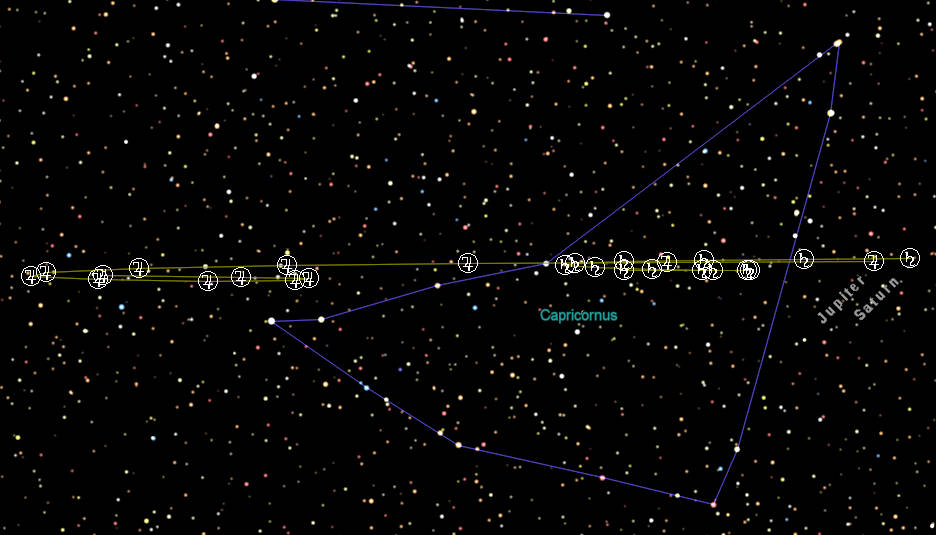
Jupiter and Saturn’s apparent motions seen against the constellation of Capricornus in 2021, including their retrograde loops. Click on the image to enlarge it. The tracks begin on the right. By the end of 2021 neither planet recovers all the eastern progress they lost in their retrograde loops. Created using Cartes du Ciel (Sky Charts).
10/13/2021 – Ephemeris – Let’s search for the naked-eye planets for this week
This is Ephemeris for Wednesday, October 13th. Today the Sun will be up for 11 hours and 5 minutes, setting at 7:01, and it will rise tomorrow at 7:57. The Moon, 1 day past first quarter, will set at 1:00 tomorrow morning.
Let’s search for the naked-eye planets for this week. Venus should be visible in the southwestern evening twilight by 7:20 tonight. It will set at 8:37 pm. By 7:45 pm, Jupiter will be spotted in the south-southeastern sky. The Jupiter should be easy to spot at that hour. Saturn will be dimmer, and to its right. It will be above and left of the Moon tonight. They will be visible for a while after midnight in the southwest, with Saturn setting first at 1:31 am, and Jupiter following at 2:52. Saturn’s rings are a beautiful sight in a telescope of even modest power, but the planet will appear tiny. Jupiter’s 4 brightest moons are spread out, two on each side of the planet tonight. They might all be visible in binoculars.
The astronomical event times given are for the Traverse City/Interlochen area of Michigan (EDT, UT-4 hours). They may be different for your location.
Addendum
Venus seen in twilight at 7:20 pm, about 20 minutes after sunset on October 13, 2021. Created using Stellarium.
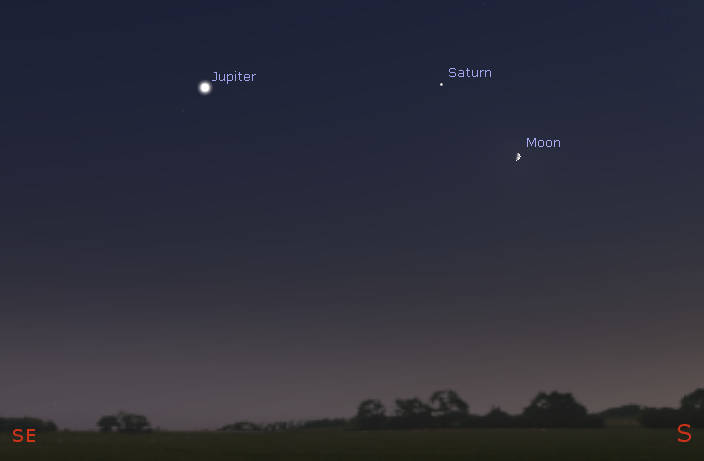
Jupiter, Saturn and the Moon at 7:45, about 45 minutes after sunset in this view to the south-southeast. Click on the image to enlarge it. Created using Stellarium.
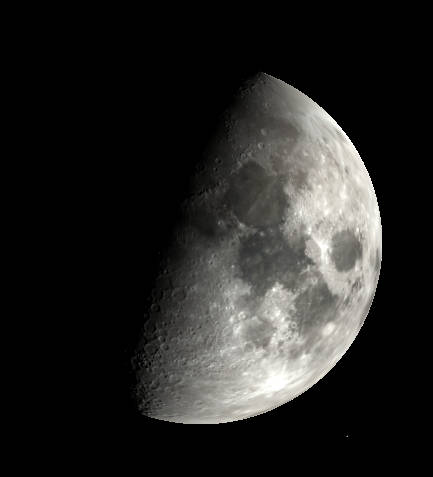
The slight gibbous Moon as it might appear tonight in binoculars or small telescope. It appears here right side up as it would appear in the sky at 9 pm. Created using Stellarium.
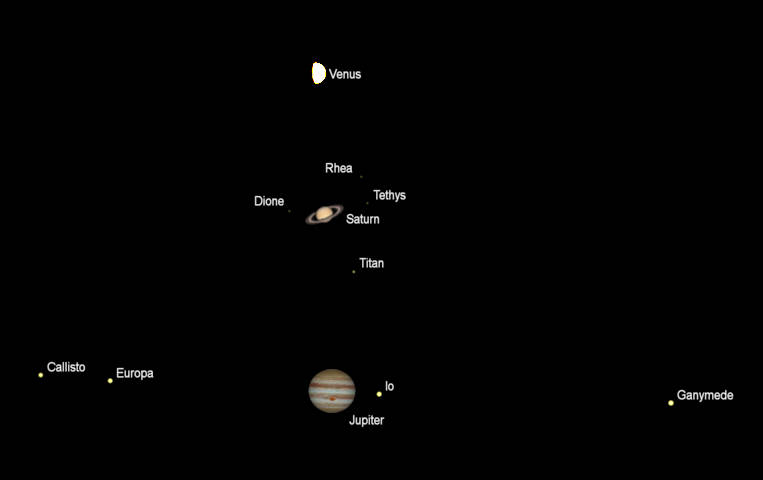
Telescopic views of the bright planets (north up) as they would be seen in a small telescope, with the same magnification, this evening at 9 pm, October 13, 2021. Apparent diameters: Venus, 21.15″, 56.8% illuminated; Saturn 17.29″, its rings 40.27″; Jupiter, 44.63″. 9 pm is also the best time to find the Great Red Spot on Jupiter’s face. Io will be in transit of the face of Jupiter until 7:53 pm. After that, Io will be increasing its distance from the planet. The ” symbol means seconds of arc (1/3600th of a degree.) Click on the image to enlarge it. Created using Cartes du Ciel (Sky Charts).
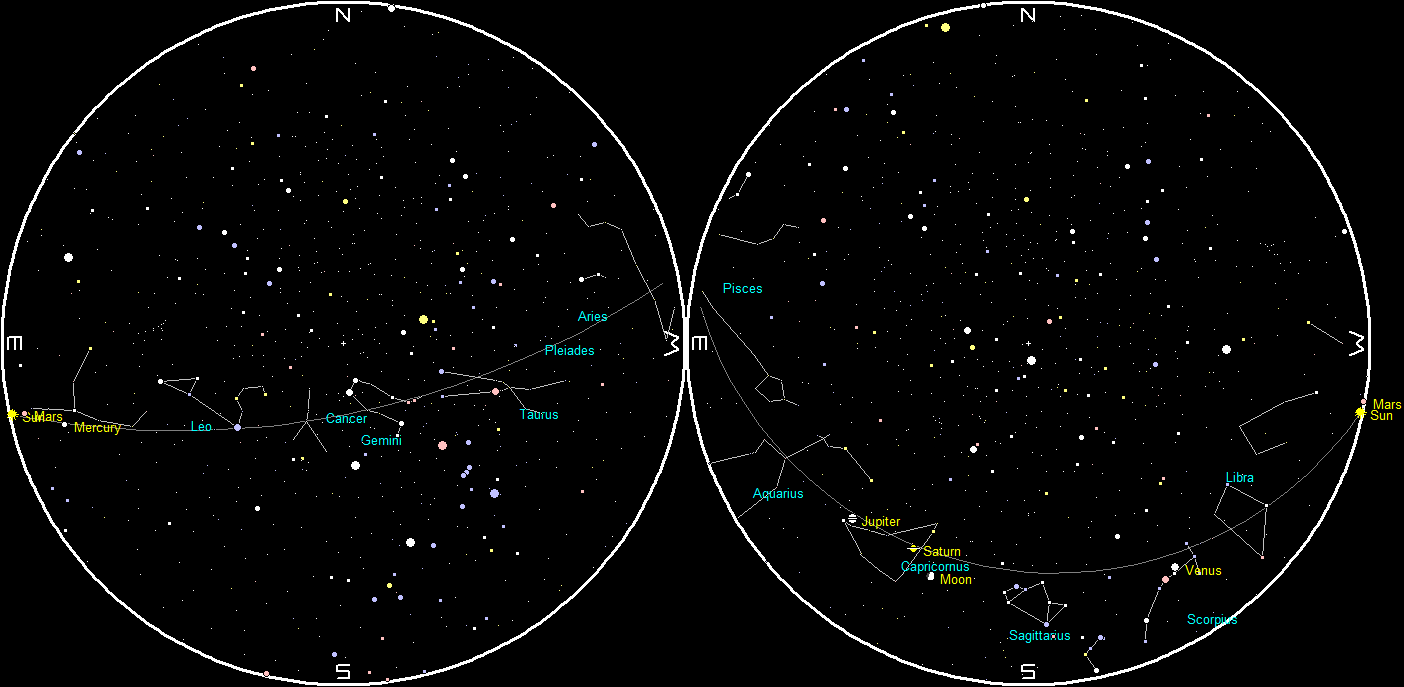
The naked-eye planets and the Moon at sunset and sunrise on a single night, starting with sunset on the right on October 13, 2021. The night ends on the left with sunrise on the 14th. It looks like Mercury will be far enough from the Sun next week to spot in the morning. Click on the image to enlarge it. Created using my LookingUp program.
10/12/2021 – Ephemeris – It’s Ada Lovelace Day!
This is Bob Moler with Ephemeris for Ada Lovelace Day, Tuesday, October 12th. Today the Sun will be up for 11 hours and 8 minutes, setting at 7:02, and it will rise tomorrow at 7:56. The Moon, at first quarter today, will set at 11:50 this evening.
Saturn has stopped its retrograde or westward motion against the stars of Capricornus and today has resumed its normal eastern motion.
Ada Lovelace, or more properly Augusta Ada King, Countess of Lovelace, was the daughter of Lord Byron and worked for Charles Babbage, and is considered the first computer programmer. She devised a way to use the same punch cards that were used on the Jacquard loom to store and run her programs, even though Babbage was unable to complete his mechanical computer the Analytic Engine in the mid 1800s. This day is set aside to celebrate the accomplishments of all the women of Science, Technology, Engineering and Math, (STEM). The computer language Ada, named after her, was created for the US Department of Defense.
The astronomical event times given are for the Traverse City/Interlochen area of Michigan (EDT, UT-4 hours). They may be different for your location.
Addendum

Ada, Countess of Lovelace (1815-1852) considered the first computer programmer, even though the machine she wrote code for was never completed. Credit: Science & Society Picture Library.
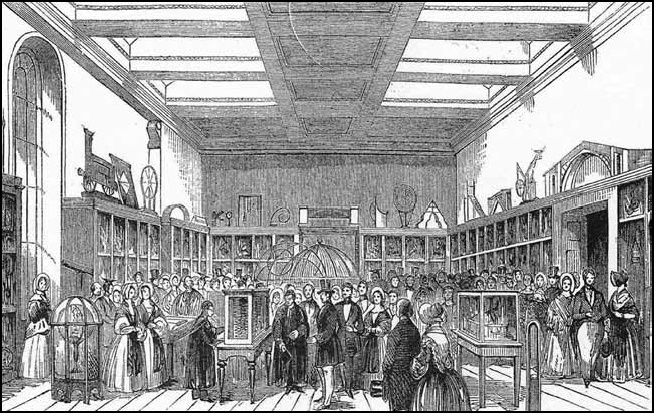
Part of Charles Babbage’s Analytical Engine on display, in 1843, left of center in this engraving of the King George III Museum in King’s College, London. Unknown engraver.
10/07/2021 – Ephemeris – The loneliest star in the sky
This is Bob Moler with Ephemeris for Thursday, October 7th. Today the Sun will be up for 11 hours and 23 minutes, setting at 7:11, and it will rise tomorrow at 7:49. The Moon, 1 day past new, will set at 8:06 this evening.
There’s a bright star that appears for only seven and a half hours on autumn nights. It’s appearance, low in the south-southeast at 9 p.m., is a clear indication of the autumn season. The star’s name is Fomalhaut, which means fish’s mouth. That’s fitting because it’s in the constellation of Piscis Austrinus, the southern fish. At our latitude it’s kind of the fish that got away, because Fomalhaut appears to be quite alone low in the sky. The dimness of the constellation’s other stars and location close to the horizon make the other stars hard to spot. The Earth’s thick atmosphere near the horizon reduces their brightness by a factor of two or more, so Fomalhaut, one of the brightest stars in the sky, keeps a lonely vigil in the south.
The astronomical event times given are for the Traverse City/Interlochen area of Michigan (EDT, UT-4 hours). They may be different for your location.
Addendum
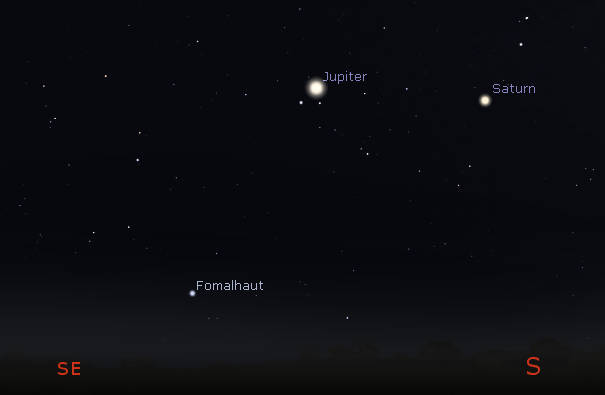
Fomalhaut at 9 pm, October 7, 2021. This year it has two bright planets relatively nearby, By they’re just passing through, albeit slowly. Normally the closest first magnitude star to Fomalhaut is Altair, the southernmost of the Summer Triangle stars. Created using Stellarium.

