Archive
01/12/2022 – Ephemeris – Let’s search for the naked-eye planets for this week
This is Bob Moler with Ephemeris for Wednesday, January 12th. Today the Sun will be up for 9 hours and 6 minutes, setting at 5:24, and it will rise tomorrow at 8:17. The Moon, 3 days past first quarter, will set at 4:45 tomorrow morning.
Let’s search for the naked-eye planets for this week. There are three planets left in the evening sky now. Jupiter will be visible in the southwest by 6:15 pm. Saturn should appear below and right of it, much closer to the Horizon, with the slightly brighter Mercury a bit below and right of it. Mercury is a bit brighter than Saturn, but in brighter twilight. Finding Saturn and Mercury might take a pair of binoculars. Mercury will set at 6:55 pm, Saturn at 7:07, and Jupiter at 8:52 pm. In the morning sky, Mars is now visible by 7:15 am low in the southeast. Mars’ rival in color and brightness, the red giant star Antares, is to its right and a bit higher. Another bright star is low in the east at that time, the summer time evening star Altair.
The astronomical event times given are for the Traverse City/Interlochen area of Michigan (EST, UT – 5 hours). They may be different for your location.
Addendum
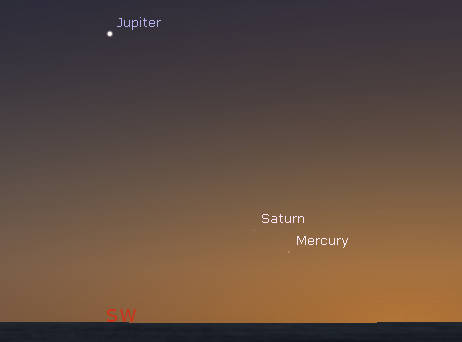
The three planets in evening twilight at 6:15 pm tonight, January 12, 2022. Created using Stellarium.
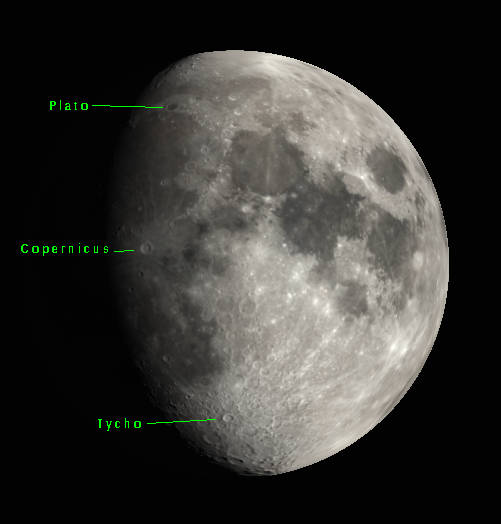
The waxing gibbous Moon, seen at 9 pm tonight, January 12, 2022. The easily spotted craters of Plato, Copernicus and Tycho are labeled. Created using Stellarium.
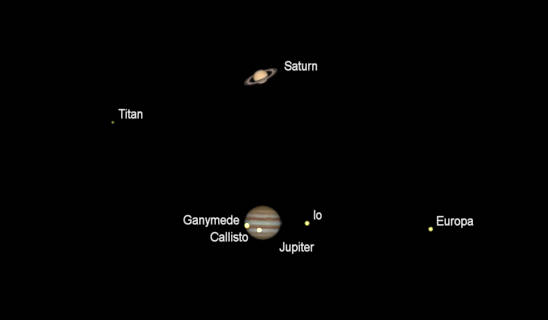
Telescopic views of the bright planets and their brighter moons (north up) as they would be seen in a small telescope, with the same magnification, this evening at 7 pm, January 12, 2022. I do not show planets less than 10 seconds of arc in diameter. Apparent diameters: Saturn 15.34″, its rings 35.74″; Jupiter, 34.59″. Mercury is not shown, its apparent diameter is 4.12″ and is 34.1% illuminated. Mars also is not shown, its apparent diameter is 4.12″. Jupiter is showing two of its moons transiting its face. They will actually be invisible. Ganymede’s start of transit will be at 6:50 pm and should be visible before then. The ” symbol means seconds of arc (1/3600th of a degree). Created using Cartes du Ciel (Sky Charts).
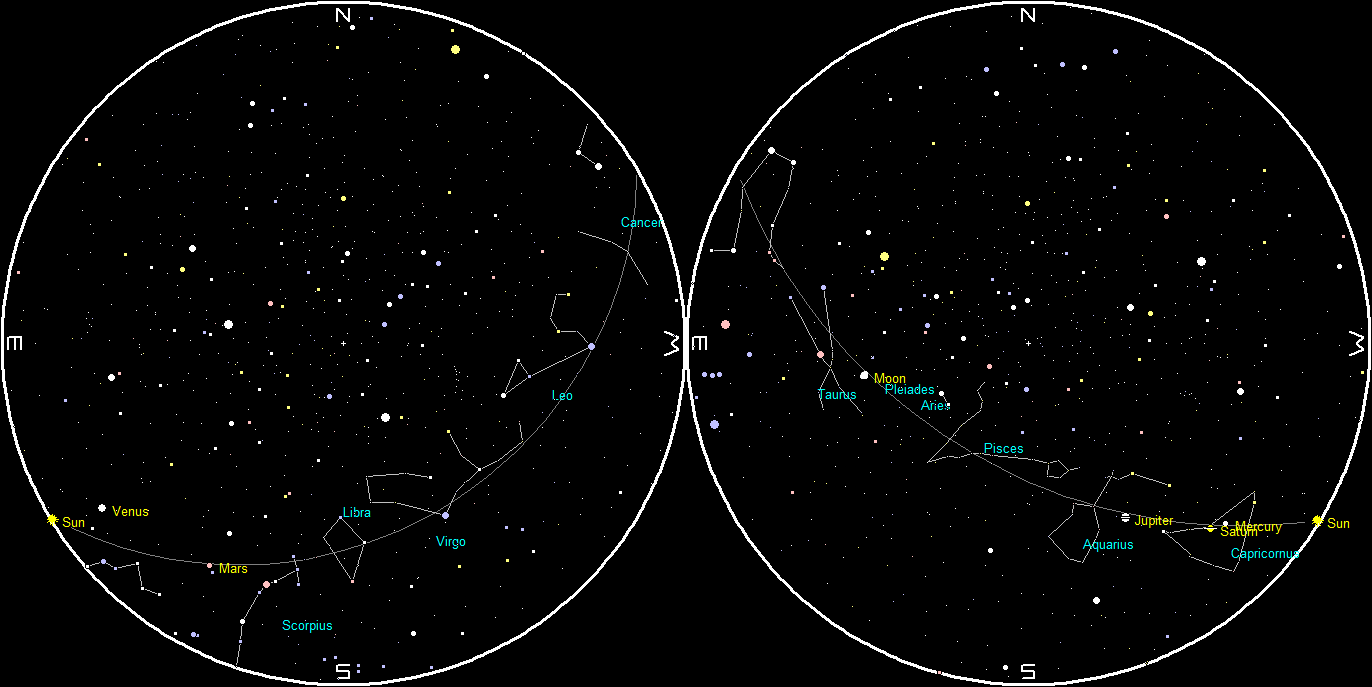
The naked-eye planets and the Moon at sunset and sunrise on a single night, starting with sunset on the right on January 12, 2022. The night ends on the left with sunrise on the 13th. Click on the image to enlarge it. Created using my LookingUp program.
01/05/2022 – Ephemeris – Let’s search for the naked-eye planets for this week
This is Bob Moler with Ephemeris for Wednesday, January 5th. Today the Sun will be up for 8 hours and 57 minutes, setting at 5:16, and it will rise tomorrow at 8:19. The Moon, 3 days past new, will set at 8:53 this evening.
Let’s search for the naked-eye planets for this week. Venus is three days from passing between the Earth and the Sun in what is called an inferior conjunction. It really isn’t visible in the bright evening twilight. It will emerge later this month in the morning sky. Jupiter might be visible in the southwest by 6 pm, above the 3-day-old crescent Moon. Saturn should appear a bit later, halfway between Jupiter and the horizon, but on an angle to the lower right. Mercury might be spotted again halfway to the horizon from Saturn to the lower right of it. This isn’t the best appearance of Mercury in the evening this year, the one in early April will be better. Mercury will set at 6:48 pm, Saturn at 7:30, and Jupiter at 9:11 pm.
The astronomical event times given are for the Traverse City/Interlochen area of Michigan (EST, UT – 5 hours). They may be different for your location.
Addendum
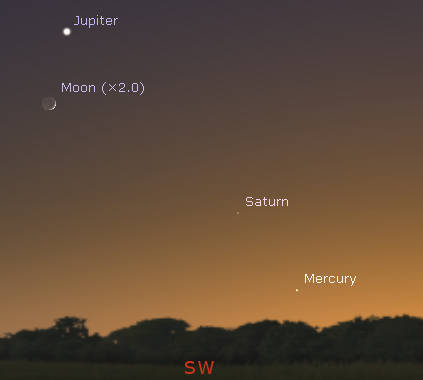
Three Evening planets and the Moon at 6 pm on the southwest horizon tonight, January 5, 2022. Created using Stellarium.
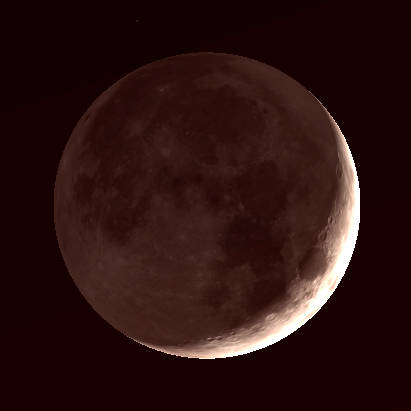
Three day old Moon with earth shine as it might look like in binoculars tonight, January 5, 2022. Created using Stellarium.
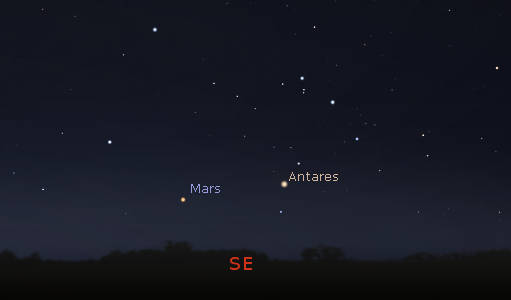
Mars and Antares at 7:00 tomorrow morning, January 6, 2022. The name Antares means “Rival of Mars”, Ares being the Greek equivalent to the Roman Ares. Created using Stellarium.
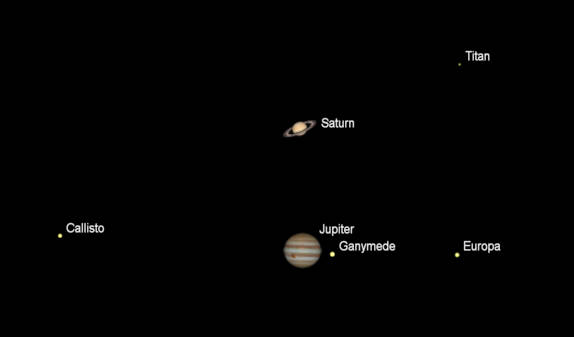
Telescopic views of the bright planets and their brighter moons (north up) as they would be seen in a small telescope, with the same magnification, this evening at 7 pm, January 5, 2022. I do not show planets less than 10 seconds of arc in diameter. Apparent diameters: Saturn 15.41″, its rings 35.89″; Jupiter, 35.05″. Mercury is not shown, its apparent diameter is 6.67″ and is 64.2% illuminated. Mars also is not shown, its apparent diameter is 4.05″. Jupiter is showing 3 of its 4 bright moons. Io is in front of the planet. The ” symbol means seconds of arc (1/3600th of a degree.) Created using Cartes du Ciel (Sky Charts).
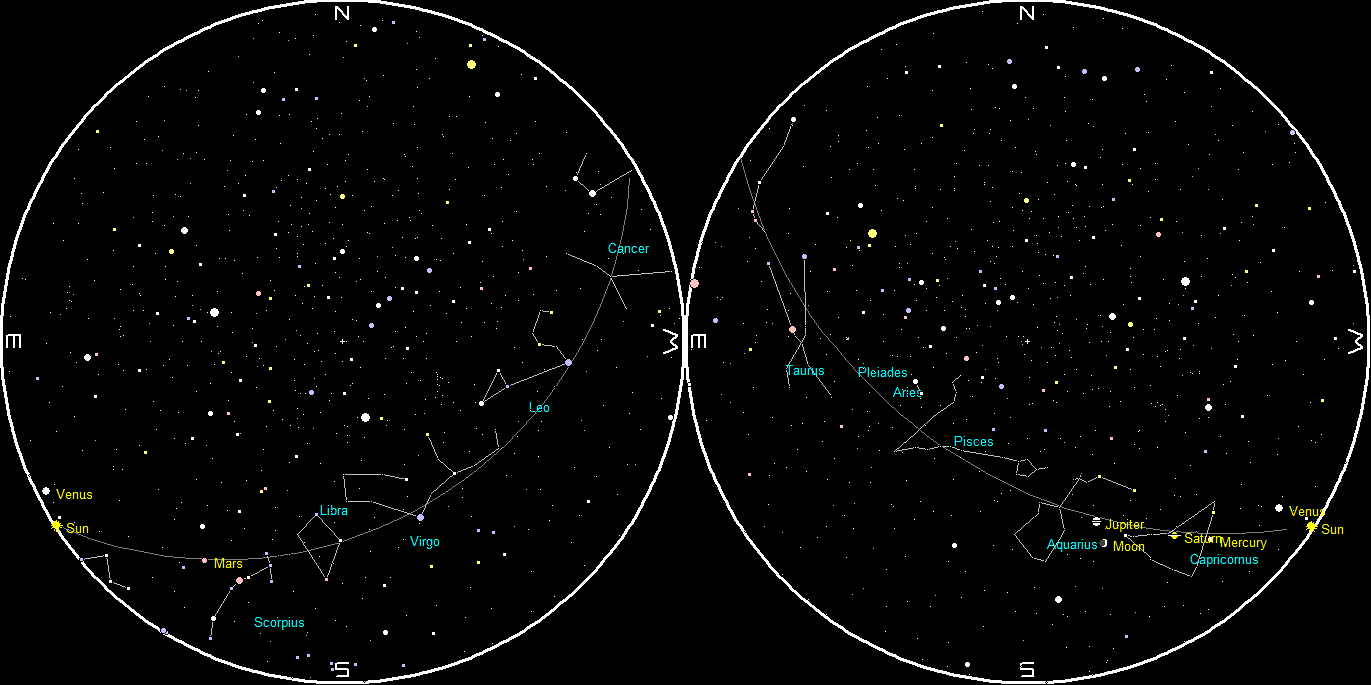
The naked-eye planets and the Moon at sunset and sunrise on a single night, starting with sunset on the right on January 5, 2022. The night ends on the left with sunrise on the 6th. Click on the image to enlarge it. Created using my LookingUp program.
01/04/2022 – Ephemeris – Planet show in the evening twilight tonight
This is Bob Moler with Ephemeris for Tuesday, January 4th. The Sun will rise at 8:20. It’ll be up for 8 hours and 55 minutes, setting at 5:15. The Moon, 2 days past new, will set at 7:34 this evening.
Tonight, if it’s clear, there’s a chance that one could spot four planets, plus the Moon, in the southwestern evening twilight. However, not all at the same time. Venus should make an appearance at about 5:45 very low in the west-southwest, only 3 degrees or 6 moon-widths above a lake horizon. Jupiter might be visible then or in a few more minutes much higher in the southwest. The two-day-old Moon might be visible then, about halfway between Jupiter and Venus. By 6 pm, Mercury might be visible halfway between the Moon and where Venus was, because Venus will be setting at that time. By this time, too, Saturn will appear just above right of the Moon. This is the last chance to spot Venus in the evening sky until the last months of this year.
The astronomical event times given are for the Traverse City/Interlochen area of Michigan (EST, UT – 5 hours). They may be different for your location.
Addendum
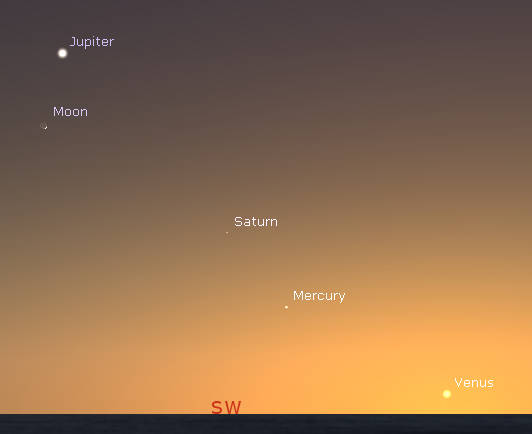
Four Evening planets and the Moon at 5:45 pm on a flat horizon at 5:45 pm tonight, January 4, 2022. Venus, because it is so low on the horizon, and Saturn, the dimmest of the four planets, may not be visible. Created using Stellarium.
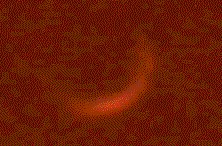
Venus is only 4 days away from inferior conjunction. Back in 1969 I took this photo of Venus then only 4 days from inferior conjunction from the Grand Rapids Amateur Astronomical Society’s Veen Observatory outside of Lowell, MI.
Venus was low in the sky, and the atmosphere made it very fuzzy.
12/29/2021 – Ephemeris – Let’s search for the naked-eye planets for this week
This is Bob Moler with Ephemeris for Wednesday, December 29th. Today the Sun will be up for 8 hours and 50 minutes, setting at 5:10, and it will rise tomorrow at 8:19. The Moon, halfway from last quarter to new, will rise at 4:37 tomorrow morning.
Let’s search for the naked-eye planets for this week. Venus will be visible in the southwestern evening twilight by 6:00 tonight. It’s a crescent in telescopes, and even binoculars now. It is moving closer to us, and now appears larger than Jupiter in telescopes. Venus will set at 6:35 pm, 31 minutes earlier than it set a week ago, which means that the Sun is catching up with it faster and faster. It has only 10 days left in the evening sky, Mercury might be spotted just below left of Venus. By 5:45 pm, both Jupiter and Saturn should be able to be spotted in the southwestern sky. Saturn will be dimmer, and to its lower right, halfway between Jupiter and Venus. Saturn will set at 7:35 pm, with Jupiter setting later at 9:31 pm.
The astronomical event times given are for the Traverse City/Interlochen area of Michigan (EST, UT – 5 hours). They may be different for your location.
Addendum
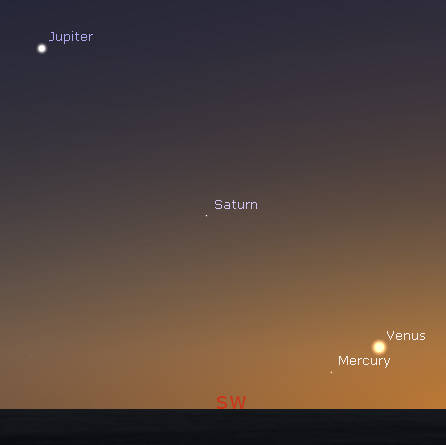
The evening planets in the southwest at 6 pm tonight, December 29, 2021. Created using Stellarium.
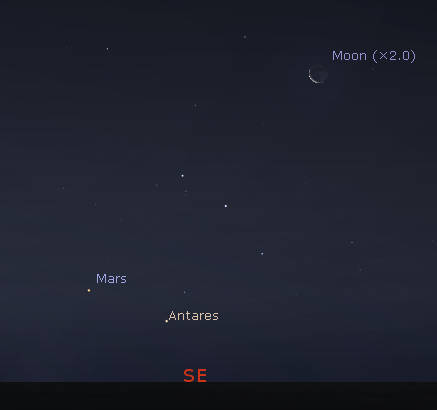
Mars and the Moon in the southeast at 7 am, tomorrow morning, December 30, 2021. Note that Mars is near its rival in color, the red giant star Antares in Scorpius the scorpion. Sometimes Mars is dimmer than Antares, sometime it’s brighter. It depends on Mars’s distance. Currently, it’s quite far away, at 218 million miles (352 million kilometers). The Moon is shown at twice its actual size to better show its thin crescent phase. Created using Stellarium.
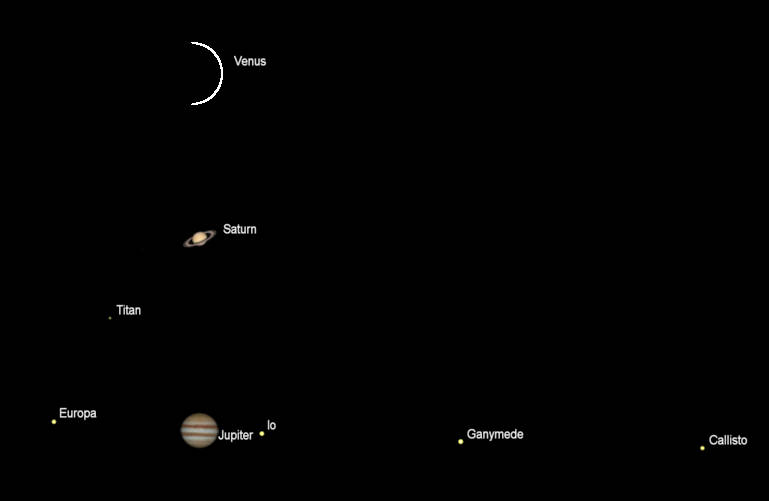
Telescopic views of the bright planets and their brighter moons (north up) as they would be seen in a small telescope, with the same magnification, this evening at 7 pm, December 29, 2021. Apparent diameters: Venus, 59.89″, 3.7% illuminated; Saturn 15.49″, its rings 36.09″; Jupiter, 35.57″. Mercury is not shown, its apparent diameter is 5.68″ and is 82.4% illuminated. Mars also is not shown, its apparent diameter is 3.99″. The ” symbol means seconds of arc (1/3600th of a degree.) Created using Cartes du Ciel (Sky Charts).
In the above chart, I don’t show any planet that’s less than 10 seconds of arc in diameter due to the limitations of scale of what I can show that would be appropriate or small telescopes.
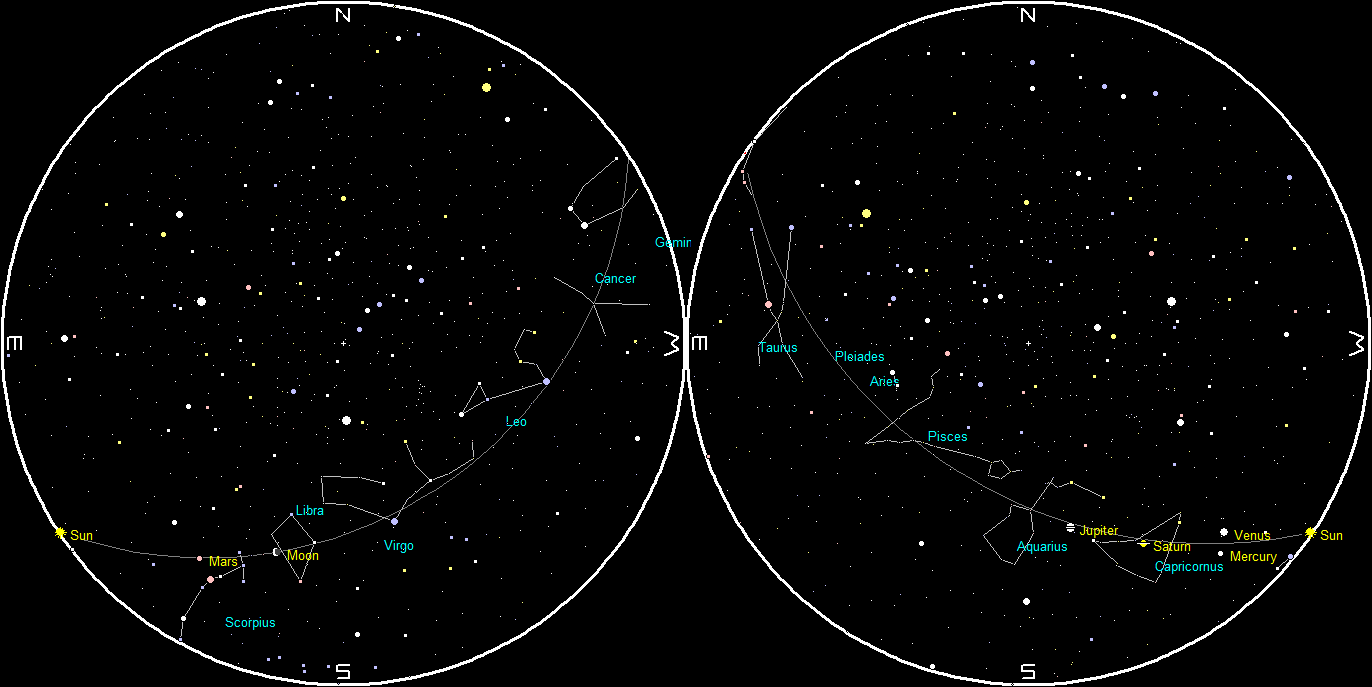
The naked-eye planets and the Moon at sunset and sunrise on a single night, starting with sunset on the right on December 29, 2021. The night ends on the left with sunrise on the 30th. Click on the image to enlarge it. Created using my LookingUp program.
12/22/2021 – Ephemeris – Let’s search for the naked-eye planets for this week
This is Ephemeris for Wednesday, December 22nd. Today the Sun will be up for 8 hours and 48 minutes, setting at 5:05, and it will rise tomorrow at 8:18. The Moon, halfway from full to last quarter, will rise at 8:16 this evening.
Let’s search for the naked-eye planets for this week. Venus will be visible in the southwestern evening twilight by 5:30 tonight. It’s a crescent in telescopes, and even binoculars now. It is moving closer to us, and now appears larger than Jupiter in telescopes. Venus will set at 7:06 pm, 21 minutes earlier than it set a week ago, which means that the Sun is catching up with it faster and faster. It has only 17 days left in the evening sky, It’s now pulling away from Jupiter and Saturn. By 5:45 pm, both Jupiter and Saturn should be able to be spotted in the southwestern sky. Saturn will be dimmer, and to its lower right, halfway between it and Venus. Saturn will set at 8:17 pm, with Jupiter following an hour and a half later at 9:51 pm.
The astronomical event times given are for the Traverse City/Interlochen area of Michigan (EST, UT – 5 hours). They may be different for your location.
Addendum
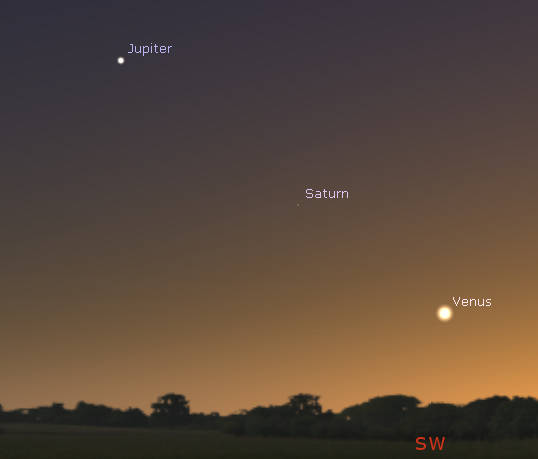
The evening planets, Venus, Saturn and Jupiter in the southwestern at 5:45 pm Tonight, December 22, 2021. Created using Stellarium.
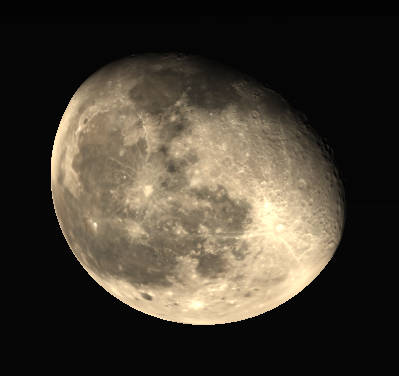
The Moon as it might appear in binoculars or small telescope low in the east northeast, tonight at 9 pm, December 22, 2021. Created using Stellarium.
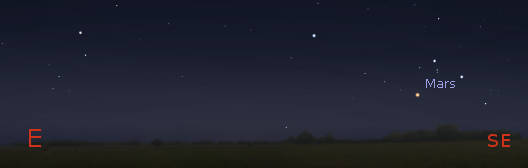
Mars, low in the southeast at 7 am tomorrow morning, December 22, 2021. Created using Stellarium.
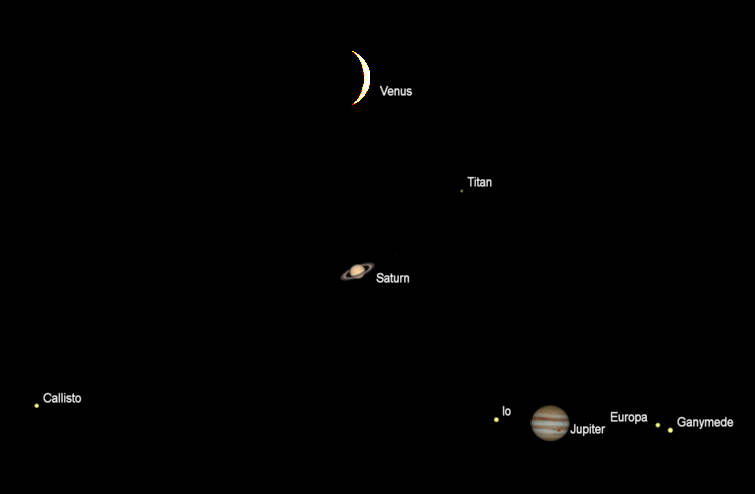
Telescopic views of the bright planets and their brighter moons (north up) as they would be seen in a small telescope, with the same magnification, this evening at 7 pm, December 22, 2021. Apparent diameters: Venus, 55.10″, 9.1% illuminated; Saturn 15.59″, its rings 36.32″; Jupiter, 36.16″. Mars is not shown, its apparent diameter is 3.93″. The ” symbol means seconds of arc (1/3600th of a degree.) Created using Cartes du Ciel (Sky Charts).
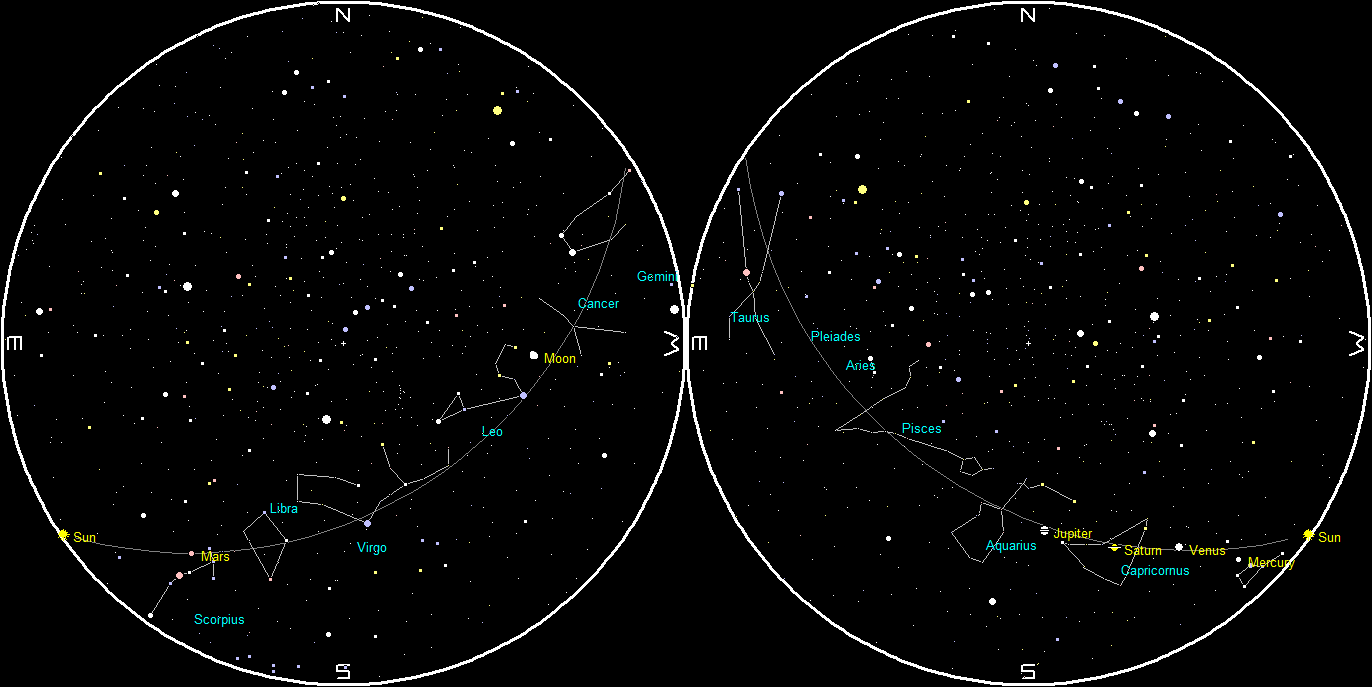
The naked-eye planets and the Moon at sunset and sunrise on a single night, starting with sunset on the right on December 22, 2021. The night ends on the left with sunrise on the 23rd. Click on the image to enlarge it. Created using my LookingUp program.
12/20/2021 – Ephemeris – Could the Star of Bethlehem have been a triple conjunction of Jupiter and Saturn in 7 BCE?
This is Ephemeris for Monday, December 20th. Today the Sun will be up for 8 hours and 48 minutes, setting at 5:04, and it will rise tomorrow at 8:17. The Moon, 2 days past full, will rise at 6:12 this evening.
This year we have two bright evening Christmas stars, Venus and Jupiter. But what about the one described in the Bible, in the Gospel of Matthew? We will look today at the first of two events that may have been recorded as the Star of Bethlehem. In 7 BCE there was a rare event over 6 months when three times the planet Jupiter passed Saturn against the stars of the constellation Pisces. Could the Persian astrologer priests, called Magi, have read into the event enough significance to start the journey to Jerusalem in search of the newborn King of the Jews? It was the scribe’s readings that sent them to Bethlehem. Jupiter, Saturn and Pisces all may have had significance to the Magi.
The astronomical event times given are for the Traverse City/Interlochen area of Michigan (EST, UT – 5 hours). They may be different for your location.
Addendum
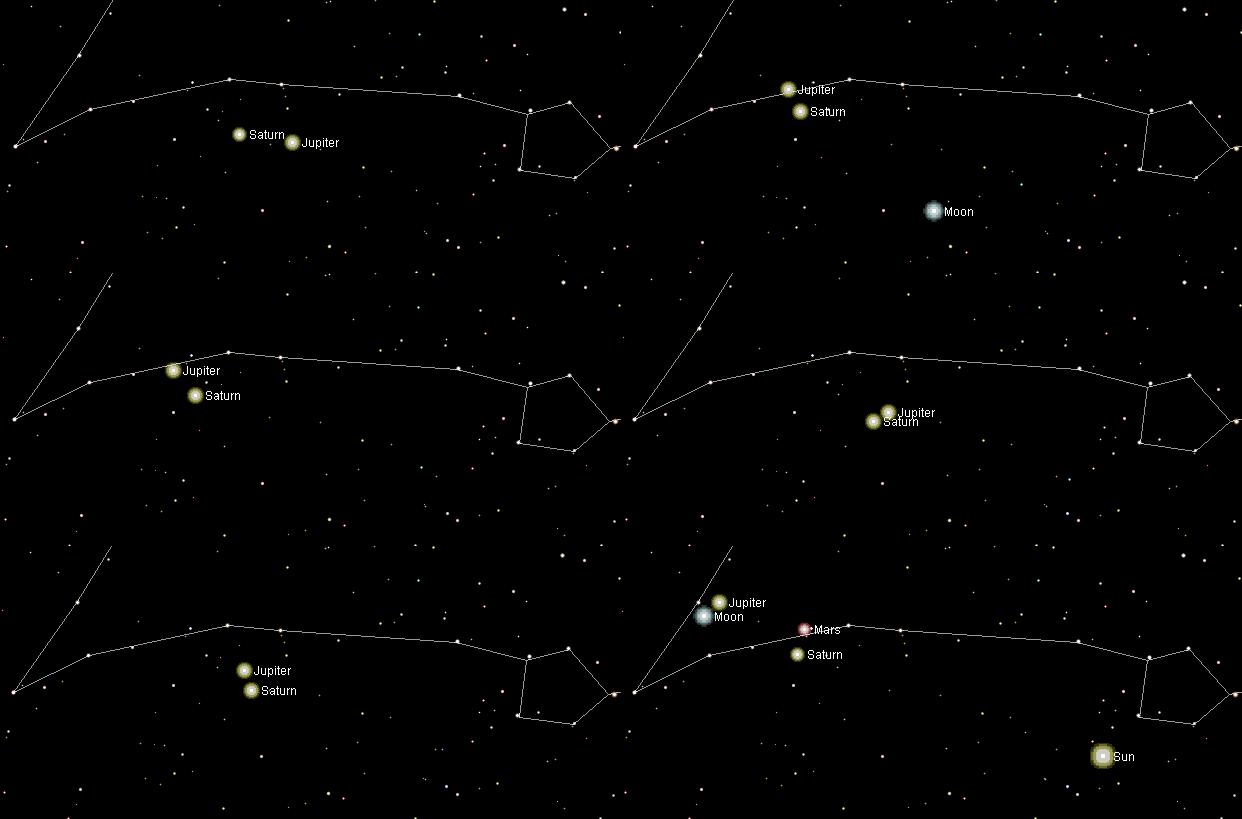
Jupiter and Saturn pass each other three times from May to December in 7 BC. Created using Cartes du Ciel (Sky Charts) and GIMP.
This timing of the Star is based on the Jewish historian Josephus, dating the death of Herod the Great just before a lunar eclipse. The eclipse most historians accept was the one on March 13, 4 BCE. So Jesus could have been born in 6 BCE.
I have been giving a presentation to the Grand Traverse Astronomical Society every other December since the 1980s on the Star of Bethlehem, tweaking it each time, and completely rewriting it a few times. Below is my script from my 2020 program In Search of the Star of Bethlehem for the Grand Traverse Astronomical Society. It has small thumbnails of the slides. The name says notes, but it evolved into a complete script, and is laid out to be read that way.
Star of Bethlehem 2020 Notes (PDF)
In the presentation, I cover another possibility for the “Star”, which I happen to like more. I’ll talk about that on Christmas Eve. If you can’t wait, check out the PDF, or a prior December program in the Archives.
12/15/2021 – Ephemeris – Let’s search for the naked-eye planets for this week
This is Ephemeris for Wednesday, December 15th. Today the Sun will be up for 8 hours and 49 minutes, setting at 5:02, and it will rise tomorrow at 8:14. The Moon, 3 days before full, will set at 5:50 tomorrow morning.
Let’s search for the naked-eye planets for this week. Venus will be visible in the southwestern evening twilight by 5:30 tonight. It’s a crescent in telescopes, and even binoculars now. It is moving closer to us, and now appears larger than Jupiter in telescopes. Venus will set at 7:27 pm, 14 minutes earlier than it set a week ago, which means that the Sun is catching up with it faster and faster. It has only 24 days left in the evening sky, though it might be hard to spot by the end of the month. By 5:45 pm, both Jupiter and Saturn should be able to be spotted in the southwestern sky. Saturn will be dimmer, and to its lower right, halfway between it and Venus. Saturn will set at 8:41 pm, with Jupiter following an hour and a half later at 10:12 pm.
The astronomical event times given are for the Traverse City/Interlochen area of Michigan (EST, UT – 5 hours). They may be different for your location.
Addendum
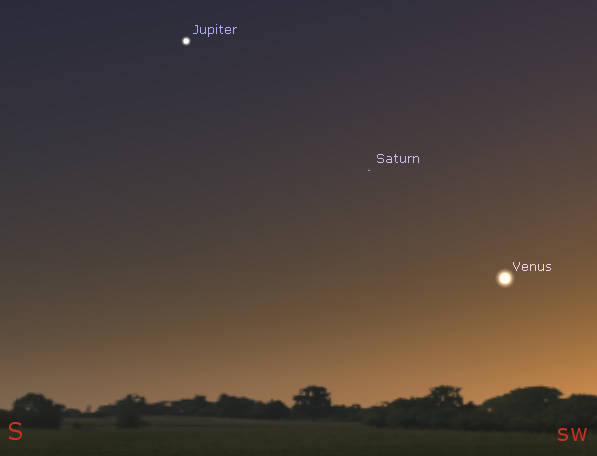
The evening planets, Venus, Saturn and Jupiter in the southwestern at 5:45 pm Tonight, December 15, 2021. Created using Stellarium.
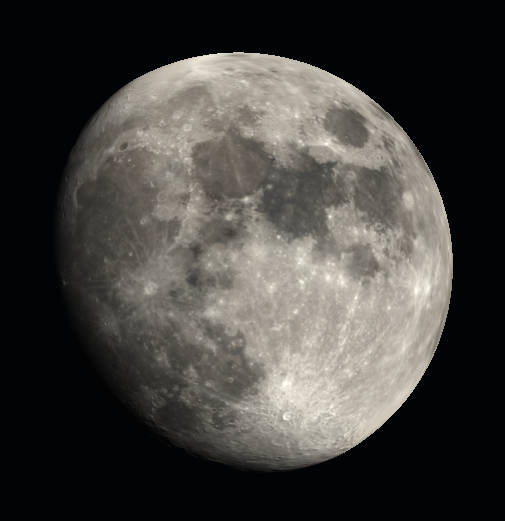
The waxing gibbous Moon, seen at 6 pm tonight, December 15, 2021. Created using Stellarium.
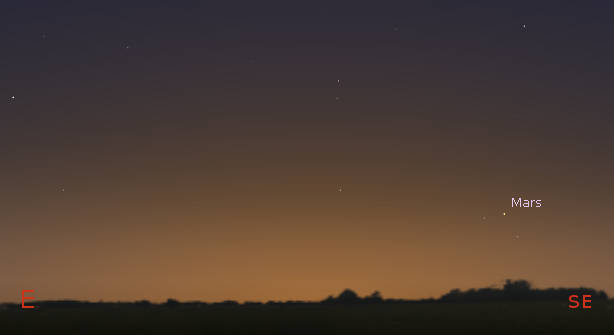
Mars, seen low in the southeast at 7:20 am tomorrow morning, December 16, 2021. Mars was not covered in the recorded program due to time constraints and the fact that Mars, still far away on the other side of the Sun, is only second magnitude and difficult to spot. It will rise at 6:25 am. Created using Stellarium.
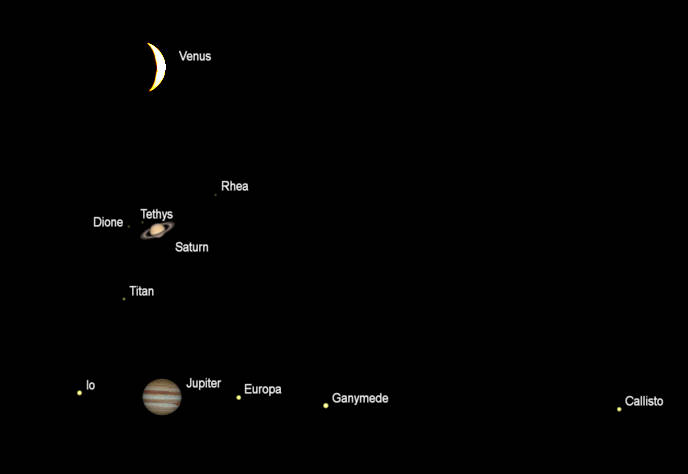
Telescopic views of the bright planets and their brighter moons (north up) as they would be seen in a small telescope, with the same magnification, this evening at 7 pm, December 15, 2021. Apparent diameters: Venus, 49.50″, 15.5% illuminated; Saturn 15.71″, its rings 36.59″; Jupiter, 36.80″. Mars is not shown, its apparent diameter is 3.87″. The ” symbol means seconds of arc (1/3600th of a degree.) Created using Cartes du Ciel (Sky Charts).
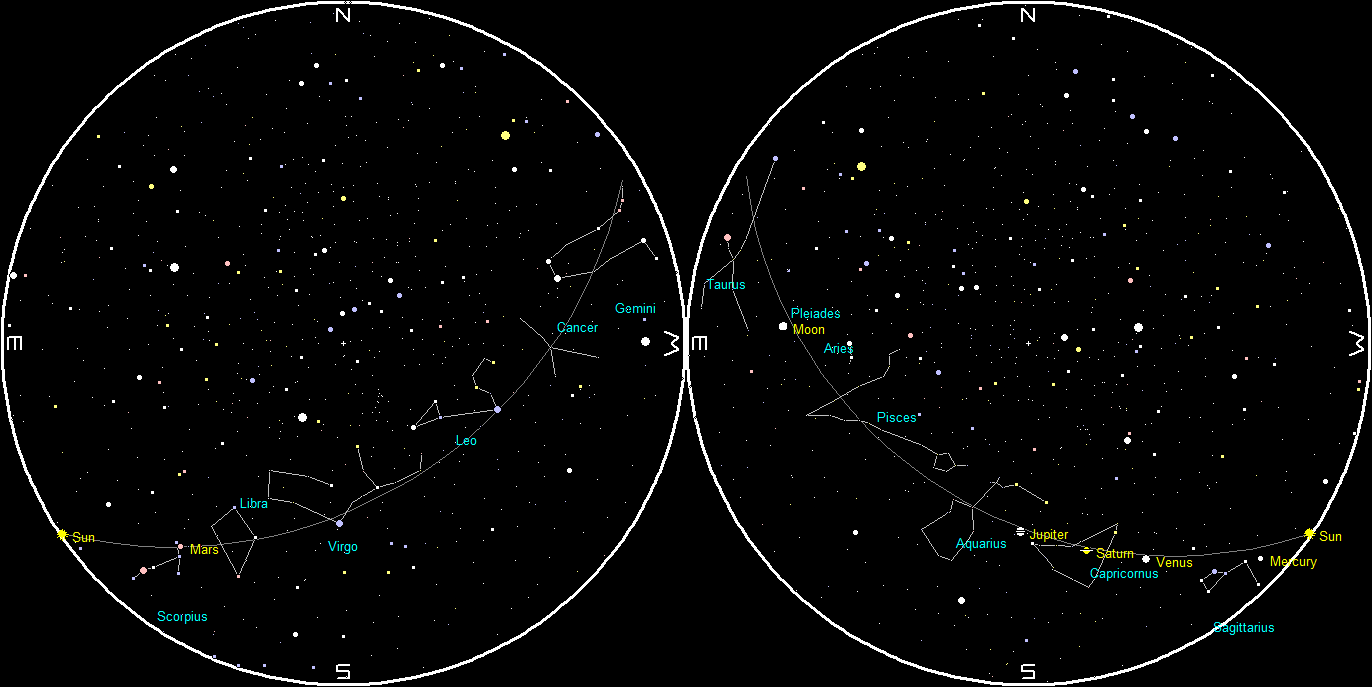
The naked-eye planets and the Moon at sunset and sunrise on a single night, starting with sunset on the right on December 15, 2021. The night ends on the left with sunrise on the 16th. Click on the image to enlarge it. Created using my LookingUp program.
12/08/2021 – Ephemeris – Let’s search for the naked-eye planets and a comet for this week
This is Ephemeris for Wednesday, December 8th. Today the Sun will be up for 8 hours and 54 minutes, setting at 5:02, and it will rise tomorrow at 8:08. The Moon, 2 days before first quarter, will set at 10:00 this evening.
Let’s search for the naked-eye planets for this week. Venus will be visible in the southwestern evening twilight by 5:30 tonight. It’s a crescent in telescopes. It is moving closer to us, and now appears larger than Jupiter in telescopes. Venus will set at 7:41 pm. By 5:45 pm, both Jupiter and Saturn should be able to be spotted in the southwestern sky. Saturn will be dimmer, and to its lower right, between it and Venus. It will set at 9:05 pm, with Jupiter following an hour and a half later at 10:34 pm. Comet Leonard can be spotted with binoculars about 19 degrees below and a bit left of the bright star Arcturus in the east from 6 to 7am tomorrow morning. 19 degrees is a bit less than two widths of a fist held at arm’s length. The comet will move lower each morning.
The astronomical event times given are for the Traverse City/Interlochen area of Michigan (EST, UT – 5 hours). They may be different for your location.
Addendum
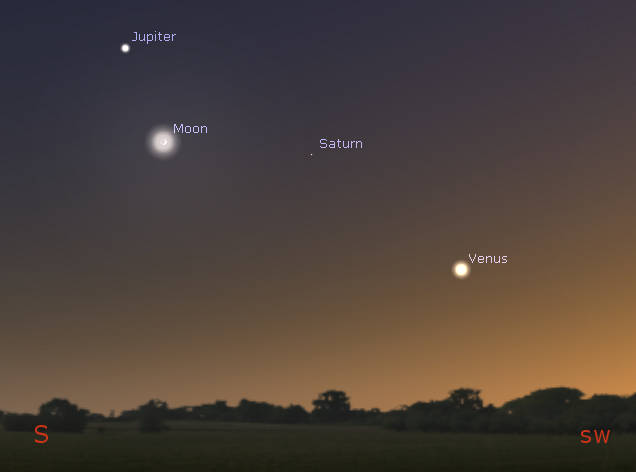
The evening planets Venus, Saturn, the Moon and Jupiter at 5:45 pm this evening, December 8, 2021. Created using Stellarium.
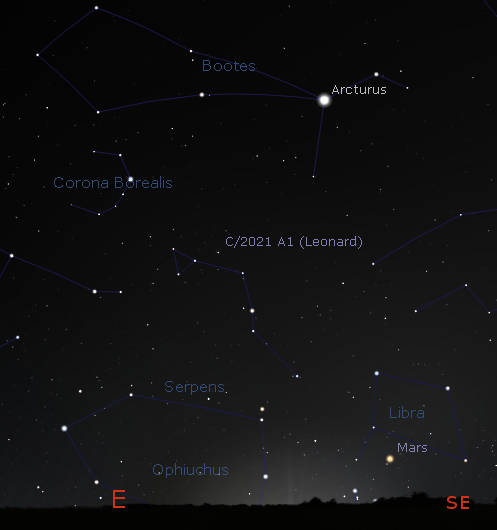
Comet Leonard and Mars at 7:15 am tomorrow morning, December 9, 2021. Though technically visible to the naked eye, binoculars will be needed for most of us. Mars is now visible low in the southeast at that time. Created using Stellarium.
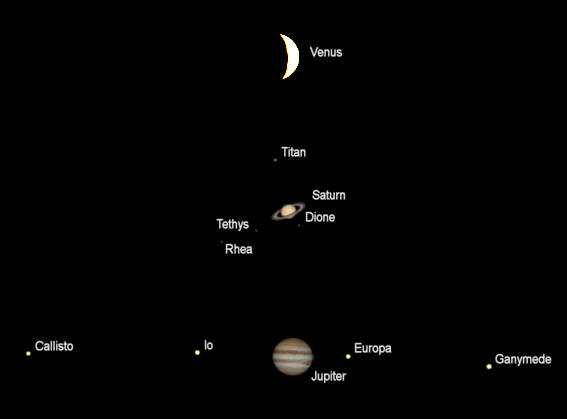
Telescopic views of the bright planets (north up) as they would be seen in a small telescope, with the same magnification, this evening at 6 pm, December 8, 2021. Apparent diameters: Venus, 44.08″, 21.5% illuminated; Saturn 15.84″, its rings 36.90″; Jupiter, 37.51″. Mars is not shown, its apparent diameter is 3.82″. The ” symbol means seconds of arc (1/3600th of a degree.) Created using Cartes du Ciel (Sky Charts).
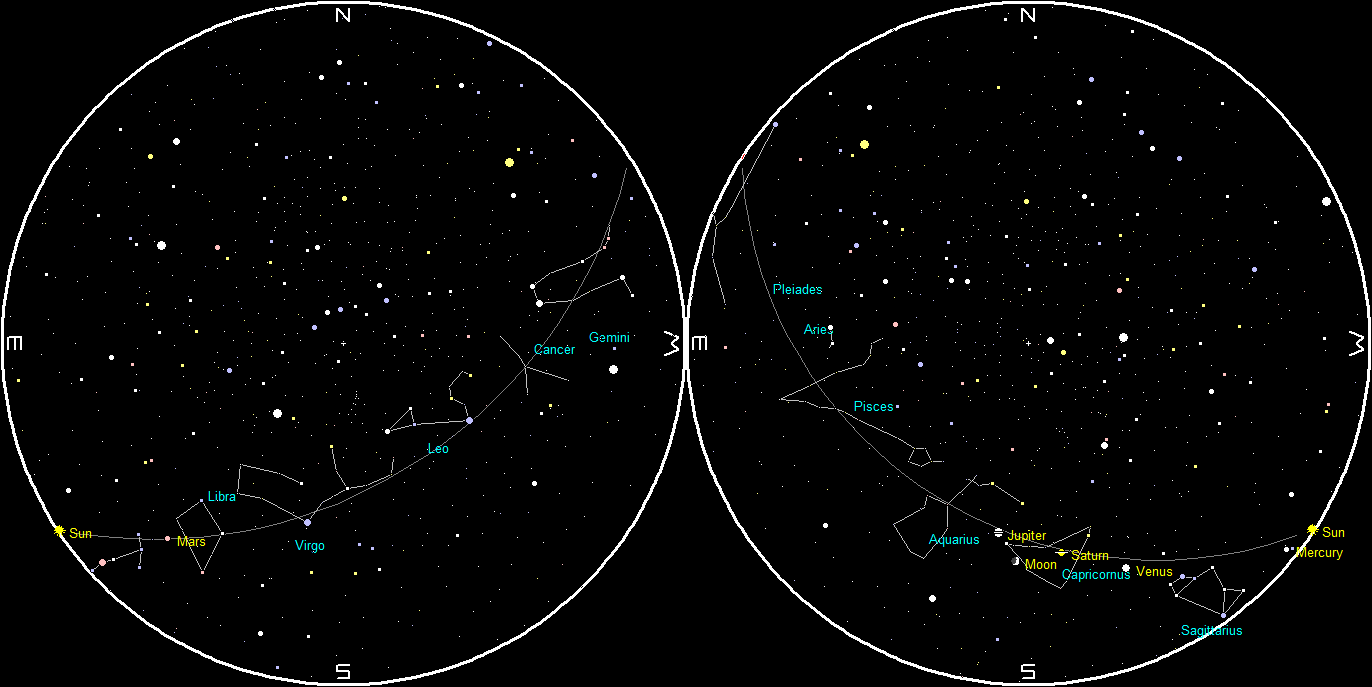
The naked-eye planets and the Moon at sunset and sunrise on a single night, starting with sunset on the right on December 8, 2021. The night ends on the left with sunrise on the 9th. Click on the image to enlarge it. Created using my LookingUp program.
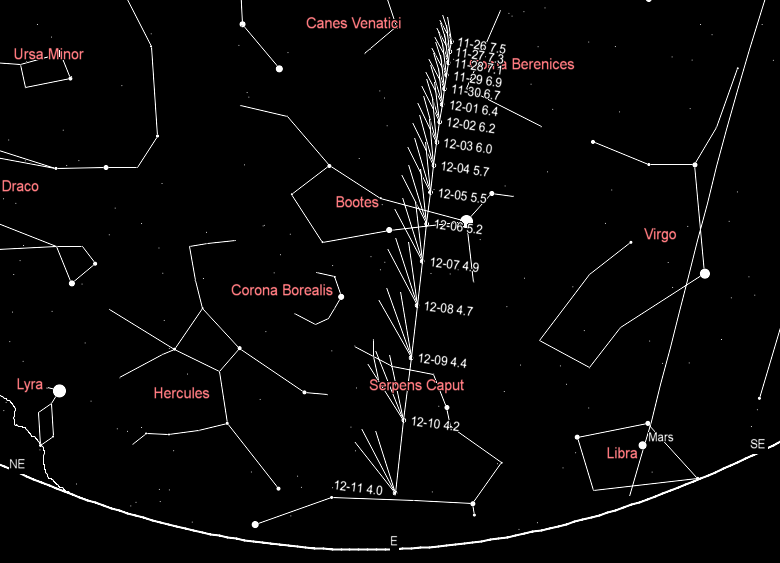
Comet Leonard’s positions at 6:30 am on the dates indicated. The labels are Month-Day Total Magnitude. The star’s position relative to the horizon and the position of Mars are for November 27th. The star field will be shifting to the upper right each morning at 6:30 from the November 27th date at 6:30. Comets always appear dimmer than their magnitude suggests because they are extended objects, not points like stars. Also, comet magnitudes can be unpredictable. Created using Cartes du Ciel (Sky Charts). I’ve reversed the colors from previous printings of this image. Reprinted from my article in the Stellar Sentinel, the newsletter for the Grand Traverse Astronomical Society.
12/01/2021 – Ephemeris – Let’s search for the naked-eye planets and a comet for this week
This is Bob Moler with Ephemeris for Wednesday, December 1st. Today the Sun will be up for 9 hours and 3 minutes, setting at 5:03, and it will rise tomorrow at 8:01. The Moon, 3 days before new, will rise at 5:45 tomorrow morning.
Let’s search for the naked-eye planets for this week. Venus will be visible in the southwestern evening twilight by 5:30 tonight. It’s a crescent in telescopes. It is moving closer to us, and now appears a bit larger than Jupiter in telescopes. Venus will set at 7:47 pm. By 5:45 pm, both Jupiter and Saturn should be able to be spotted in the southern sky. Saturn will be dimmer, and to its right. It will set first at 9:30 pm, with Jupiter following at 10:56 pm. A new comet named Leonard can be spotted with binoculars about 14 degrees above the bright star Arcturus in the east before 6:30 or 7am tomorrow morning. The spread of your fingers at arm’s length is about 15 degrees. The comet will move lower each morning.
The astronomical event times given are for the Traverse City/Interlochen area of Michigan (EST, UT – 5 hours). They may be different for your location. That also applies to the times in the addendum below.
Addendum
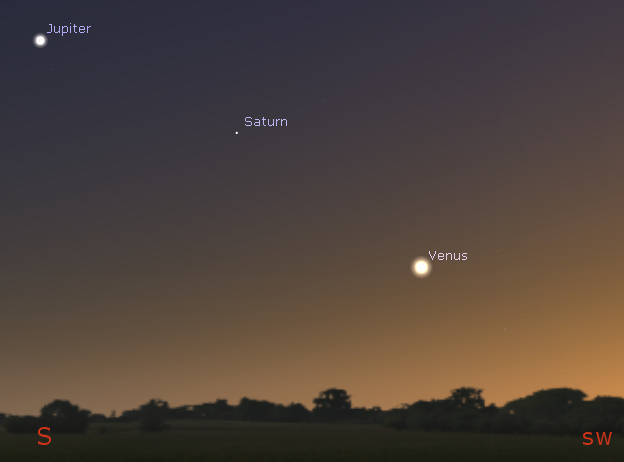
The evening planets Venus, Saturn and Jupiter at 5:45 pm this evening, December 1, 2021. Created using Stellarium.
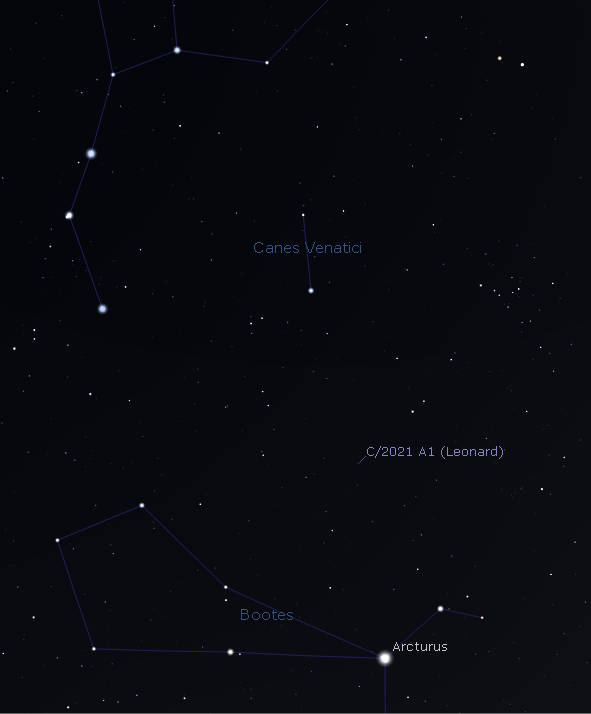
Comet Leonard, designation C/2021 A1, Finder chart looking East at 6:30 am. Arcturus is the brightest star in that direction. The handle of the Big Dipper is above and right of it. The comet is expected to be 7th magnitude, requiring binoculars or a telescope. It is expected to brighten to possibly be visible to the naked eye by the end of next week. No promises though. Created using Stellarium.
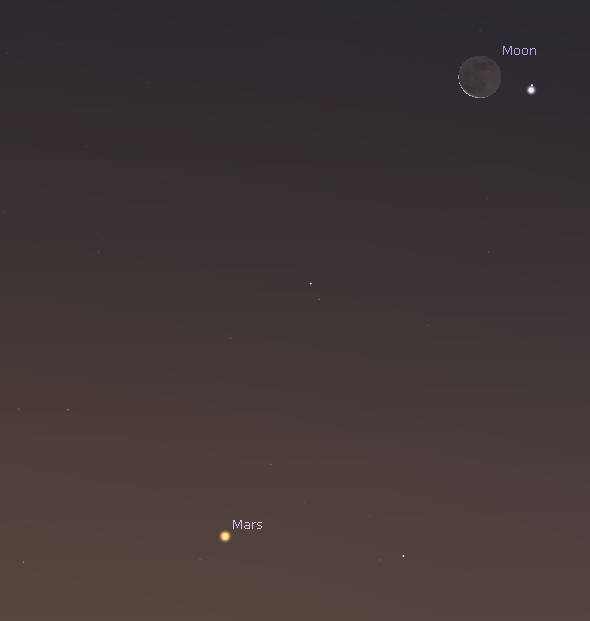
A closeup of the Moon and Mars at 7 am tomorrow morning, December 2, 2021. The star next to the Moon is Zubenelgenubi (south claw of the scorpion), in Libra. The Arabs, who named this star and most others, saw this star as part of Scorpius, to the left and yet to rise.
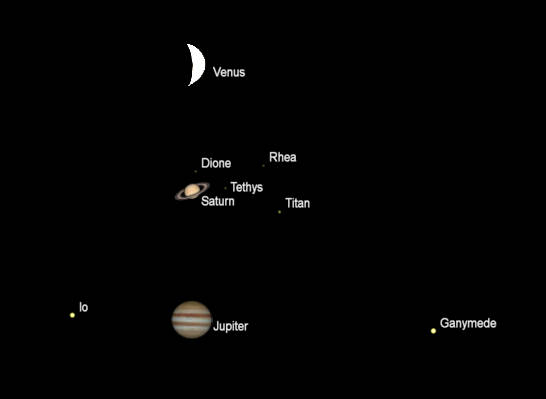
Telescopic views of the bright planets (north up) as they would be seen in a small telescope, with the same magnification, this evening at 7 pm, December 1, 2021. Apparent diameters: Venus, 39.41″, 27.9% illuminated; Saturn 15.99″, its rings 37.24″; Jupiter, 38.25″. The ” symbol means seconds of arc (1/3600th of a degree.) Jupiter’s other bright moons are behind the planet at 7 pm. Callisto will reappear on the eastern edge of Jupiter (Io’s side) at 9:13 pm. Created using Cartes du Ciel (Sky Charts).
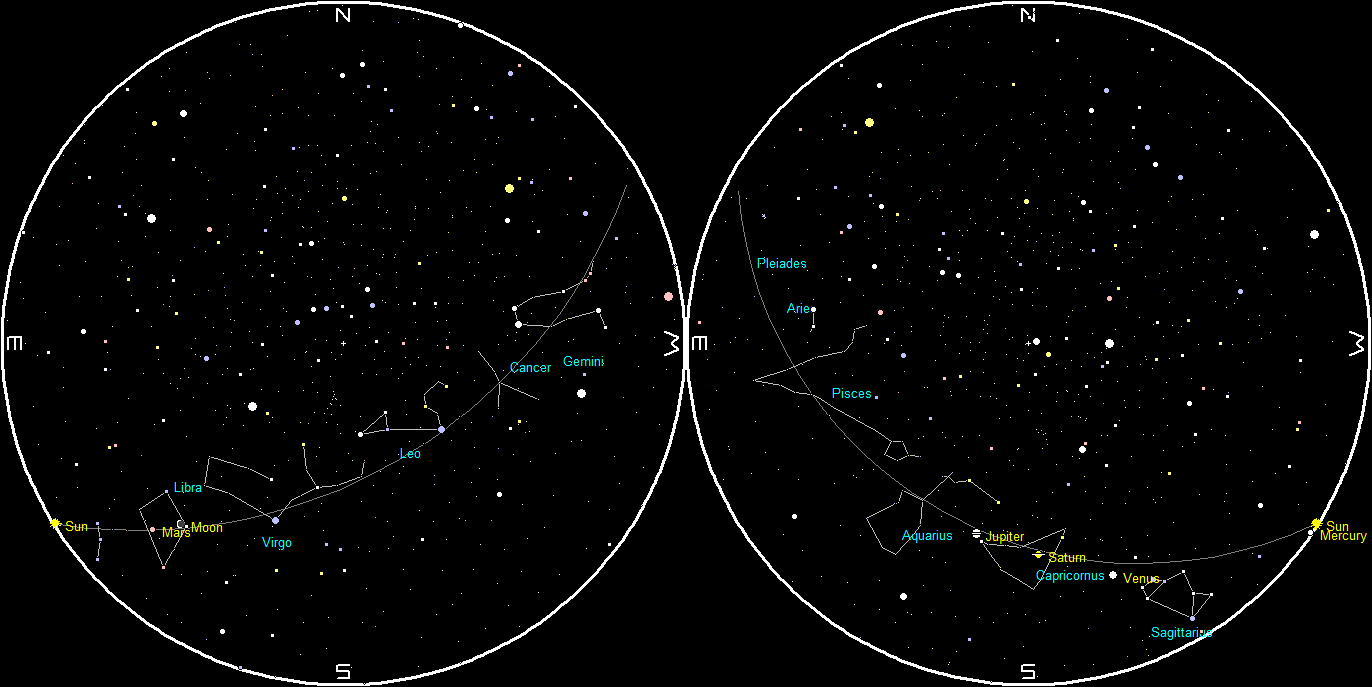
The naked-eye planets and the Moon at sunset and sunrise on a single night, starting with sunset on the right on December 1, 2021. The night ends on the left with sunrise on the 2nd. Click on the image to enlarge it. Created using my LookingUp program.
11/24/2021 – Ephemeris – Let’s search for the naked-eye planets for this week
This is Ephemeris for Wednesday, November 24th. Today the Sun will be up for 9 hours and 15 minutes, setting at 5:07, and it will rise tomorrow at 7:53. The Moon, 3 days before last quarter, will rise at 9:19 this evening.
Let’s search for the naked-eye planets for this week. Venus will be visible in the southwestern evening twilight by 5:30 tonight. It’s a fat crescent in telescopes. Venus will set at 7:49 pm. By 5:45 pm, both Jupiter and Saturn should be able to be spotted in the southern sky. Saturn will be dimmer, and to its right. It will set first at 9:54 pm, with Jupiter following at 11:19 pm. Saturn’s rings are a beautiful sight in a telescope of even modest power, but the planet will appear tiny. Jupiter, however, is still quite large, in binoculars it might seem that it only has two moons tonight, since Io and Europa are together on one side, and Ganymede and Callisto are together on the other side.
The astronomical event times given above and below are for the Traverse City/Interlochen area of Michigan (EST, UT – 5 hours). They may be different for your location.
Addendum
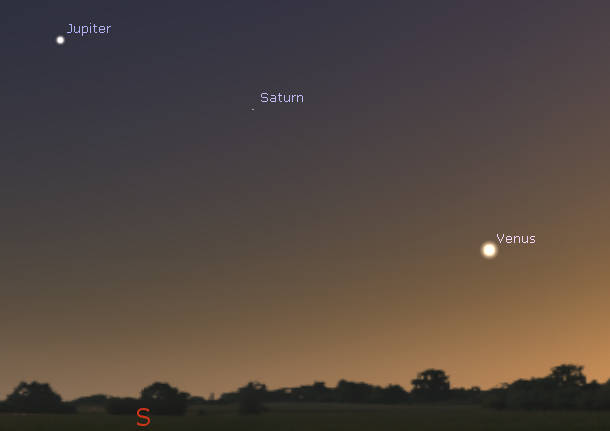
The evening planets Venus, Saturn and Jupiter at 5:45 pm this evening, November 24, 2021. Created using Stellarium.
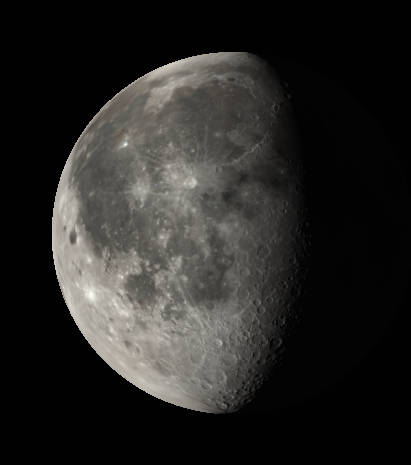
The Moon as it might appear in binoculars or small telescope, tomorrow morning, November 25, 2021. Created using Stellarium.
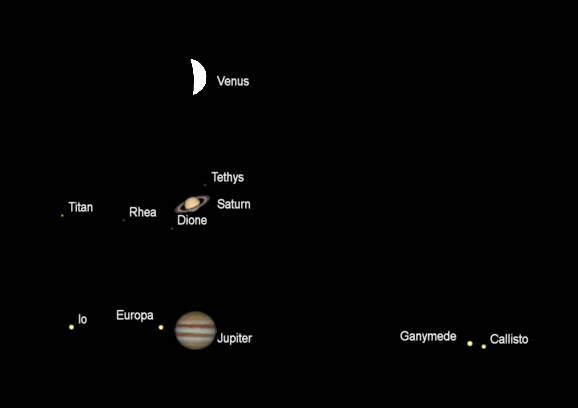
Telescopic views of the bright planets (north up) as they would be seen in a small telescope, with the same magnification, this evening at 7 pm, November 24, 2021. Apparent diameters: Venus, 35.32″, 33.4% illuminated; Saturn 16.15″, its rings 37.61″; Jupiter, 39.07″. The ” symbol means seconds of arc (1/3600th of a degree.) Click on the image to enlarge it. Created using Cartes du Ciel (Sky Charts).
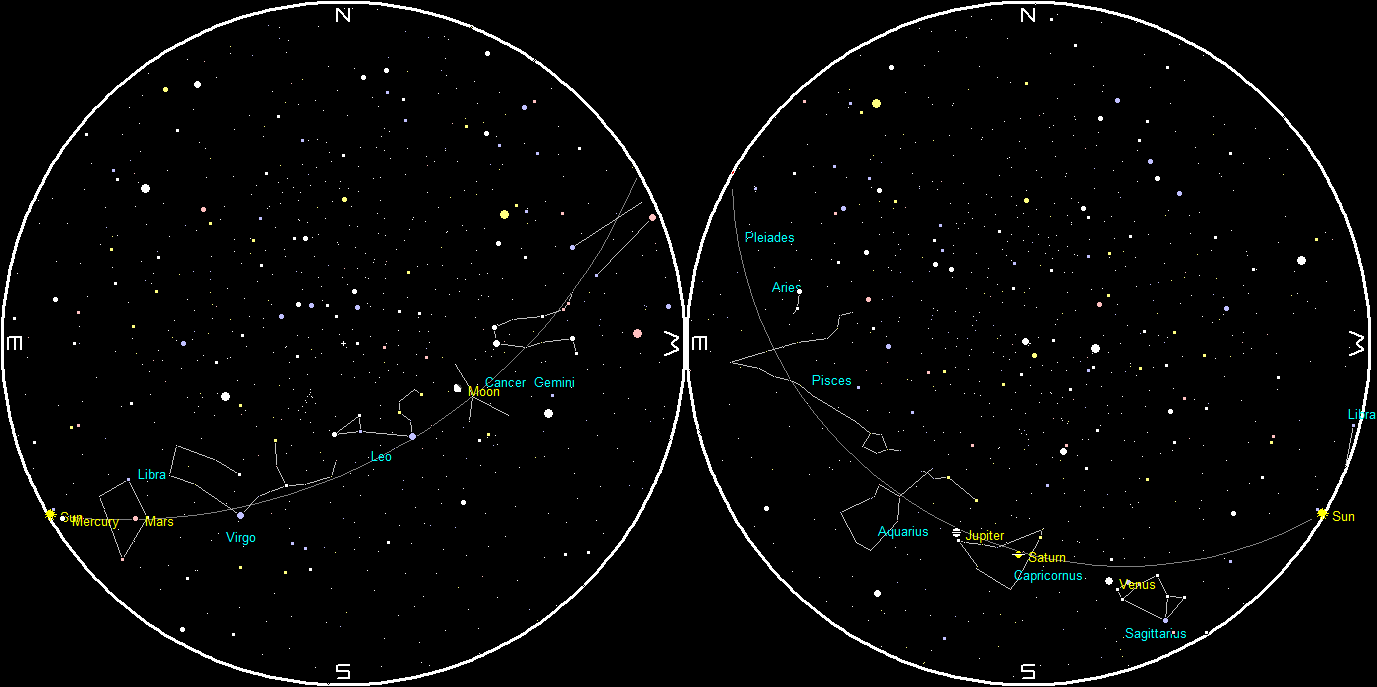
The naked-eye planets and the Moon at sunset and sunrise on a single night, starting with sunset on the right on November 24, 2021. The night ends on the left with sunrise on the 25th. Click on the image to enlarge it. Created using my LookingUp program.

