Archive
03/12/2014 – Ephemeris – It’s Wednesday, do you know there the bright planets are?
Ephemeris for Wednesday, March 12th. The sun will rise at 8:00. It’ll be up for 11 hours and 44 minutes, setting at 7:44. The moon, 4 days before full, will set at 6:11 tomorrow morning.
Wednesday is where are the bright planets day on Ephemeris. Jupiter will be in the southeastern sky as darkness falls tonight. It’s cruising against the stars of Gemini now, and starting to move east after spending a couple of months backtracking to the west. It will pass due south at 9:05 p.m., and will set at 4:49 a.m. in the west-northwest. Reddish Mars is in Virgo now and above and left of the bright star Spica, which it now outshines. Mars will rise at 10:30 p.m. It will pass due south at 4:02 a.m. Saturn will rise at 12:50 a.m. in the east-southeast. It’s seen against the stars of Libra the scales this year. Venus will rise at 5:53 tomorrow morning and shines brightly in the southeast before sunrise.
Times are for the Traverse City/Interlochen area of Michigan. They may be different for your location.
Addendum
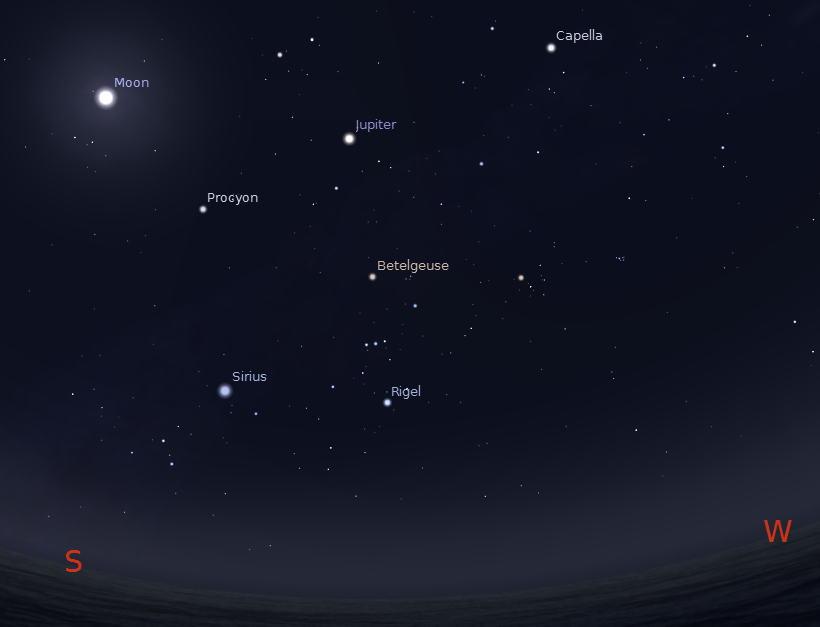
Jupiter, the Moon and the winter stars at 10 p.m. on March 12, 2014. Created using Stellarium.
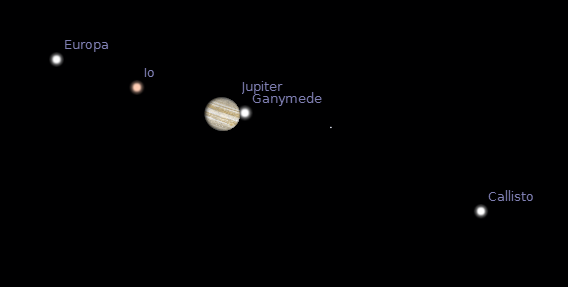
Jupiter and moons at 10 p.m. on March 12, 2014. Created using Stellarium.
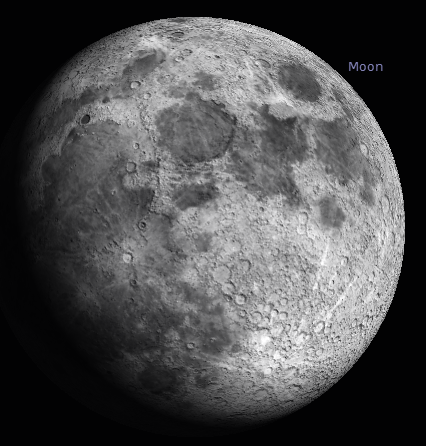
The Moon at 10 p.m. on March 12, 2014. Created using Stellarium.
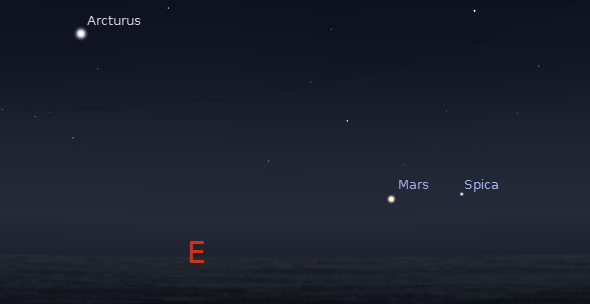
Mars rising at 11 p.m. on March 12, 2014. Created using Stellarium.
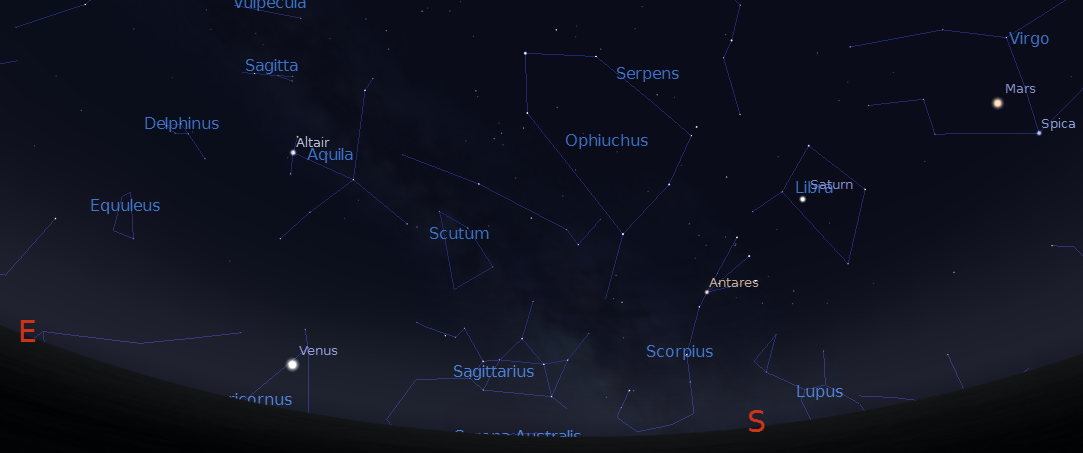
Mars, Saturn, and Venus with the constellations of summer at 6:30 a.m. on March 13, 2014. Created using Stellarium.
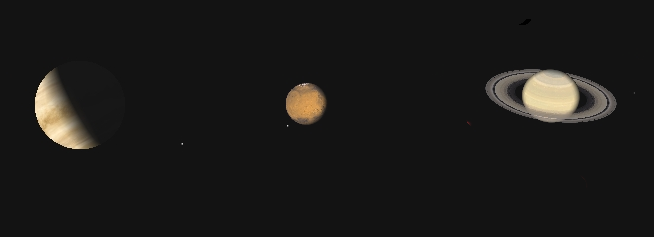
Venus, Mars and Saturn at the same magnification as seen in a telescope on March 13, 2014. Created using Stellarium.
03/05/2014 – Ephemeris – It’s Wednesday, do you know where your planets are?
Ephemeris for Ash Wednesday, Wednesday, March 5th. The sun will rise at 7:12. It’ll be up for 11 hours and 22 minutes, setting at 6:35. The moon, 3 days before first quarter, will set at 11:56 this evening.
Wednesday is the “Where are the bright planets?” day on Ephemeris. Jupiter will be in the southeastern sky as darkness falls tonight. It’s cruising against the stars of Gemini now. It will pass due south at 8:33 p.m., and will set at 4:16 a.m. in the west-northwest. Reddish Mars is in Virgo now and above and left of the bright star Spica, which it now outshines. Mars will rise at 10:01 p.m. It will pass due south at 3:32 a.m. Saturn will rise at 12:18 a.m. in the east-southeast. It’s seen against the stars of Libra the scales this year. Venus will rise at 4:57 tomorrow morning and shines brightly in the southeast before sunrise.
Times are for the Traverse City/Interlochen area of Michigan. They may be different for your location.
Addendum
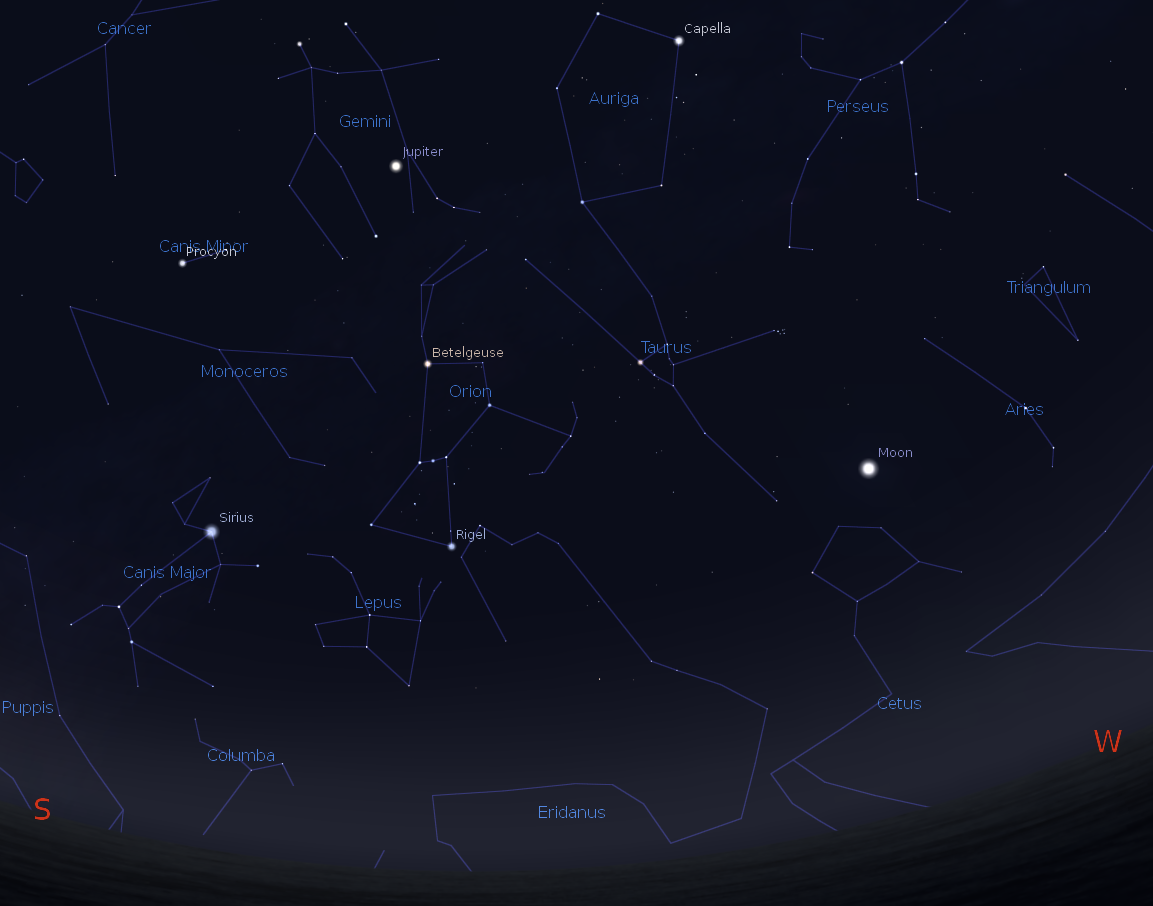
Jupiter, the Moon and the winter constellations at 9 p.m. on March 5, 2014. Created using Stellarium.
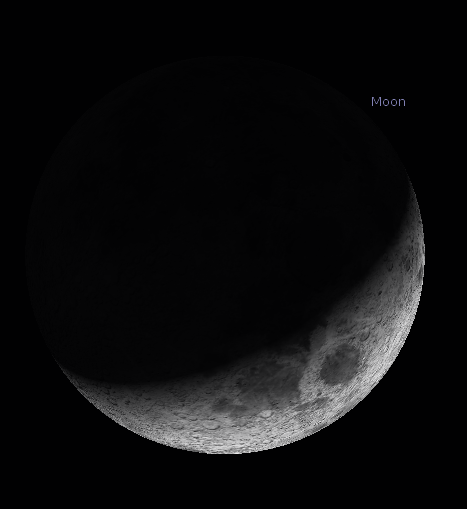
The Moon at 9 p.m. on March 5, 2014. Created using Stellarium.
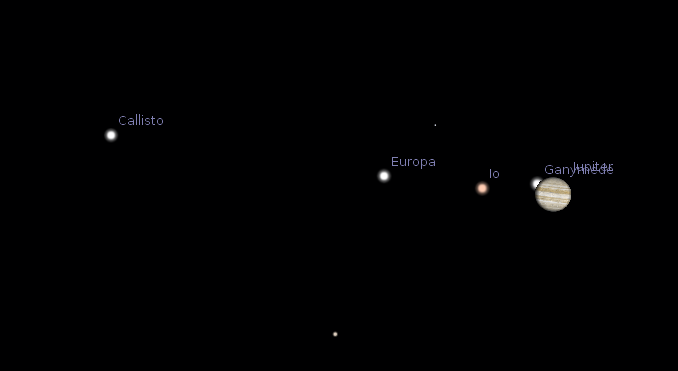
Jupiter and its moons at 9 p.m. on March 5, 2014. Created using Stellarium.
The Stellarium timing is a bit off. Ganymede won’t emerge from behind Jupiter until 9:37 p.m. It will disappear into Jupiter’s shadow at 11:07 p.m. and emerge from the shadow at 1:17 a.m.
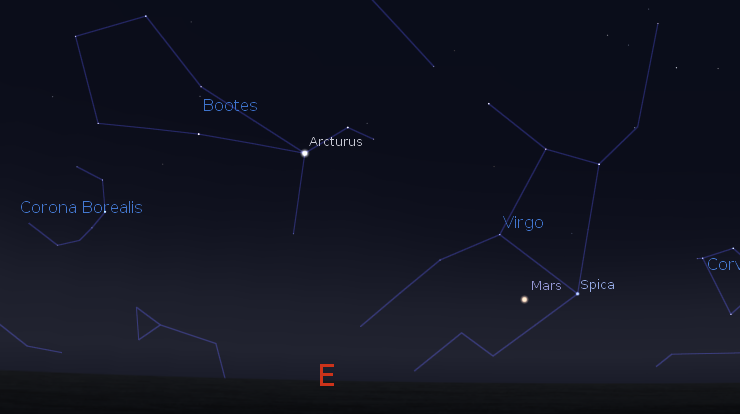
Mars rising near the star Spica at 11 p.m. March 5, 2014. Created using Stellarium.
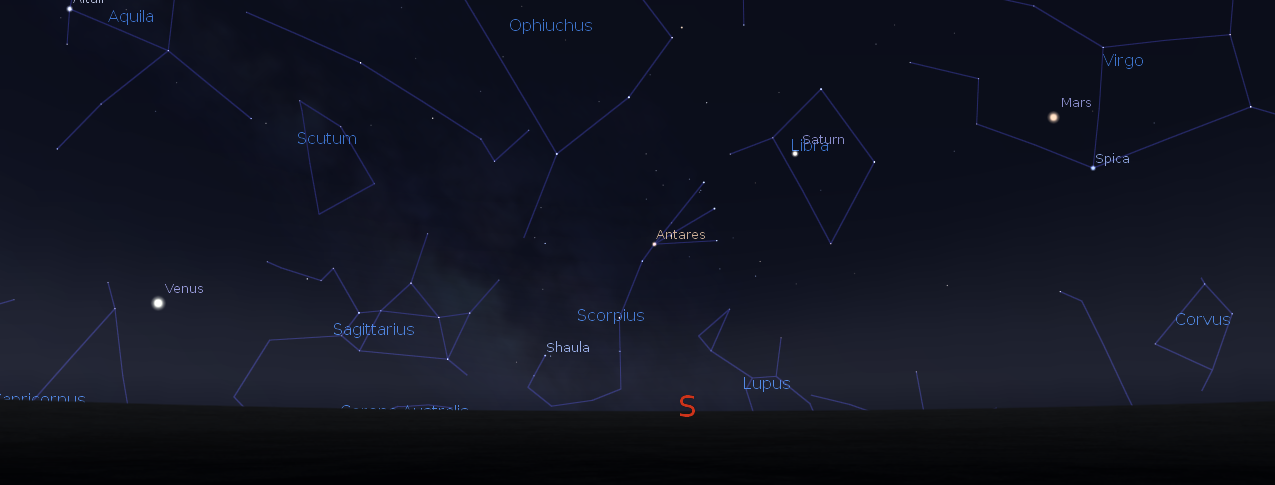
The morning planets Mars, Saturn and Venus with the moon at 6 a.m. March 6, 2014. Created using Stellarium.
The planets below is how they’d look in a small telescope. They are magnified twice as much as Jupiter and its moons above.

Mars at 6 a.m., March 6, 2014. Created using Stellarium.
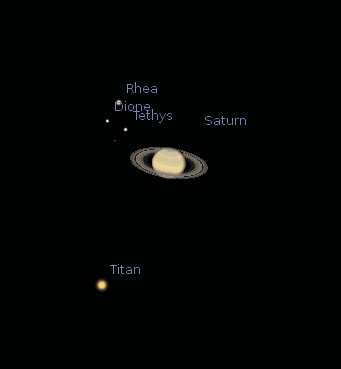
Saturn and its moons at 6 a.m., March 6, 2014. Created using Stellarium.
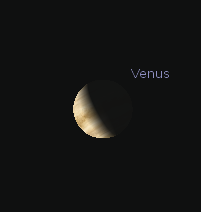
Venus at 6 a.m., March 6, 2014. Created using Stellarium.
02/26/2014 – Ephemeris – Where are the bright planets this week?
Ephemeris for Wednesday, February 26th. The sun will rise at 7:25. It’ll be up for 11 hours and 1 minute, setting at 6:26. The moon, 3 days before new, will rise at 5:58 tomorrow morning.
Let’s take our weekly look at the planets. Jupiter will be in the southeastern sky as darkness falls tonight. It’s cruising against the stars of Gemini now. It will pass due south at 9:01 p.m., and will set at 4:44 a.m. in the west-northwest. Reddish Mars is in Virgo now and above and left of the bright star Spica, which it now outshines. Mars will rise at 10:29 p.m. and will appear above the moon when it rises a half an hour later. It will pass due south at 4 a.m. Saturn will rise at 12:45 a.m. in the east-southeast. It’s seen against the stars of Libra the scales this year. Venus will rise at 5:03 tomorrow morning but this morning it will appear above and right of the Moon. and shines brightly in the southeast before sunrise.
Times are for the Traverse City/Interlochen area of Michigan. They may be different for your location.
Addendum
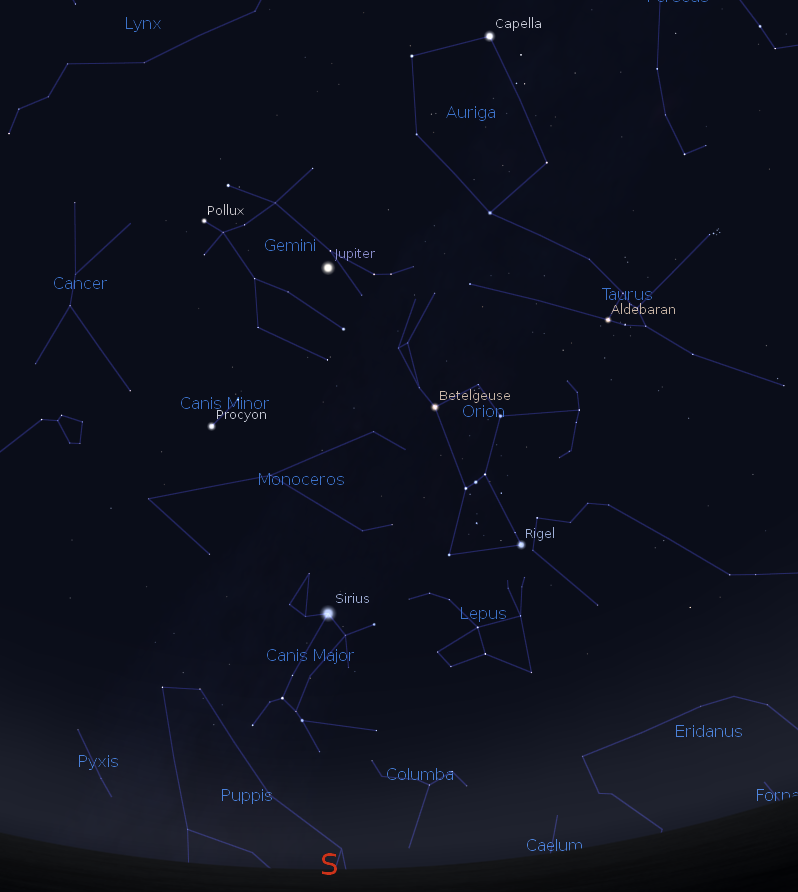
Jupiter and the winter constellations at 9 p.m. on February 26, 2014. Created using Stellarium.
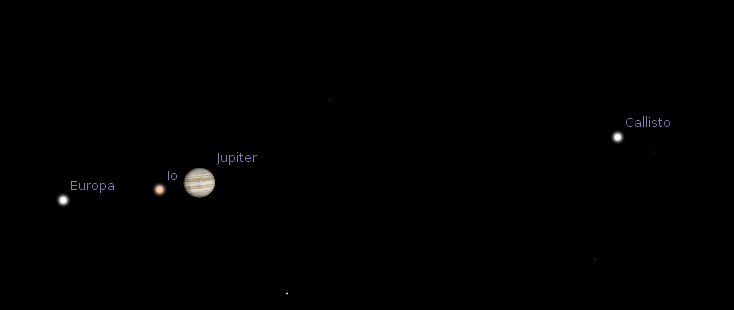
Telescopic Jupiter. The missing moon Ganymede is near Io from our vantage point, however it’s in Jupiter’s shadow. It will emerge into sunlight at 10:25 p.m. (3:25 UT on the 27th) between Io and Europa. Created using Stellarium.
Stellarium models the eclipses of the satellites fine, but for this one it is more than a half hour early. It may not take into account the light travel time between Jupiter and the earth. Another free program Cartes du Ciel does not model Jovian satellite eclipses at all.
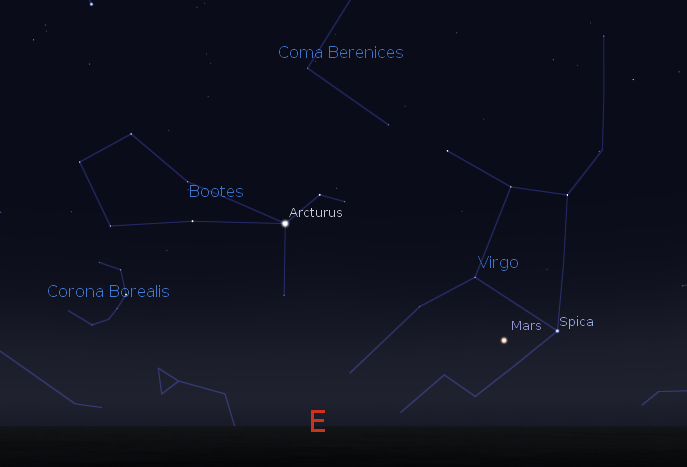
Mars rising near the star Spica at 11:30 p.m. February 26, 2014. Created using Stellarium.
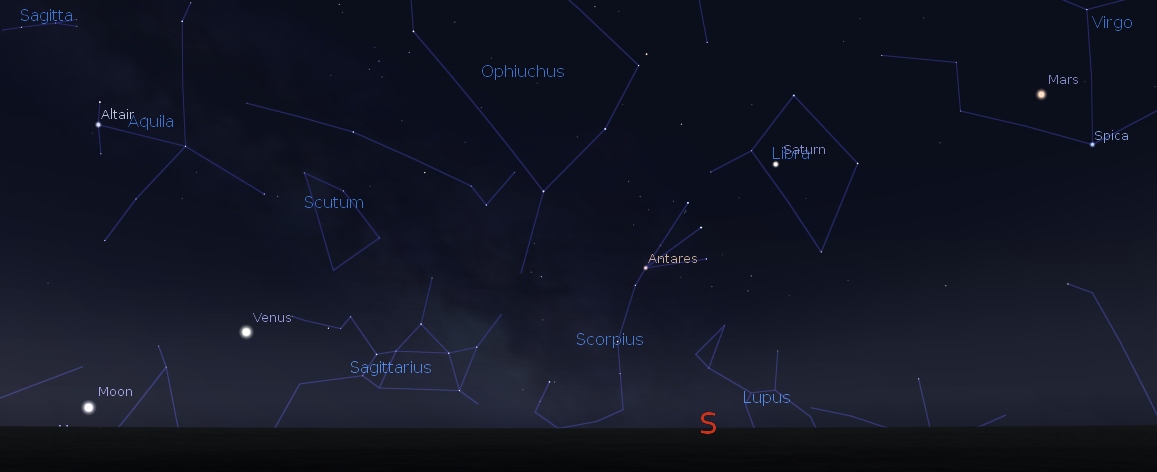
The morning planets Mars, Saturn and Venus with the moon at 6:15 a.m. February 27, 2014. Created using Stellarium.
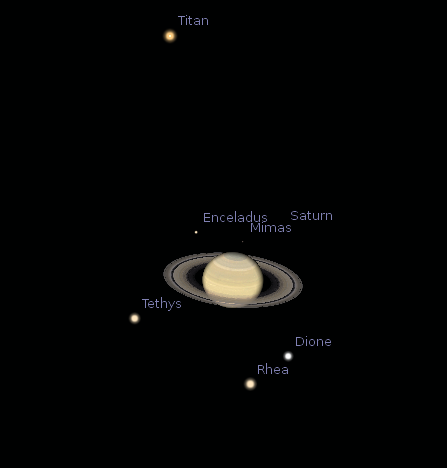
Saturn through a telescope on the morning of February 27, 2014. It would be difficult to see any satellites other than Titan with a small telescope. Created using Stellarium
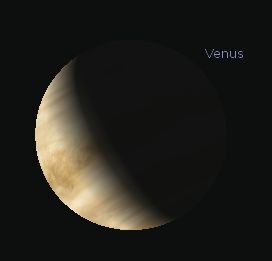
Venus through a telescope, except there will be no cloud detail, in the morning of February 27, 2014. Created using Stellarium.
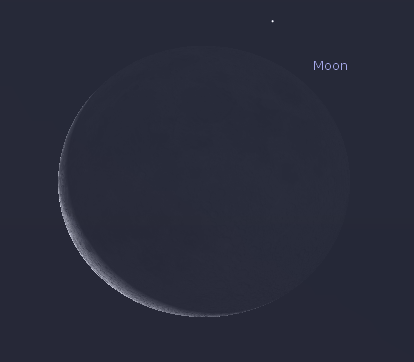
The thin crescent moon at 6:15 a.m. on February 27, 2014. Created using Stellarium.
02/19/2014 – Ephemeris – Where are the bright planets this week?
Ephemeris for Wednesday, February 19th. The sun will rise at 7:36. It’ll be up for 10 hours and 40 minutes, setting at 6:16. The moon, 3 days before last quarter, will rise at 11:23 this evening.
Let’s take our weekly look at the planets. Jupiter will be in the southeastern sky as darkness falls tonight. It’s cruising against the stars of Gemini now. It will pass due south at 9:29 p.m., and will set at 5:12 a.m. in the west-northwest. Reddish Mars is in Virgo now and above and left of the bright star Spica, which it now outshines. Mars will rise at 10:54 p.m. and will appear above the moon when it rises a half an hour later. It will pass due south at 4:26 a.m. Saturn will rise at 1:13 a.m. in the east-southeast. It’s seen against the stars of Libra the scales this year. Venus will rise at 5:10 tomorrow morning, and shines brightly in the southeast before sunrise. It’s in Sagittarius, left of its Teapot shape of stars.
Times are for the Traverse City/Interlochen area of Michigan. They may be different for your location.
Addendum
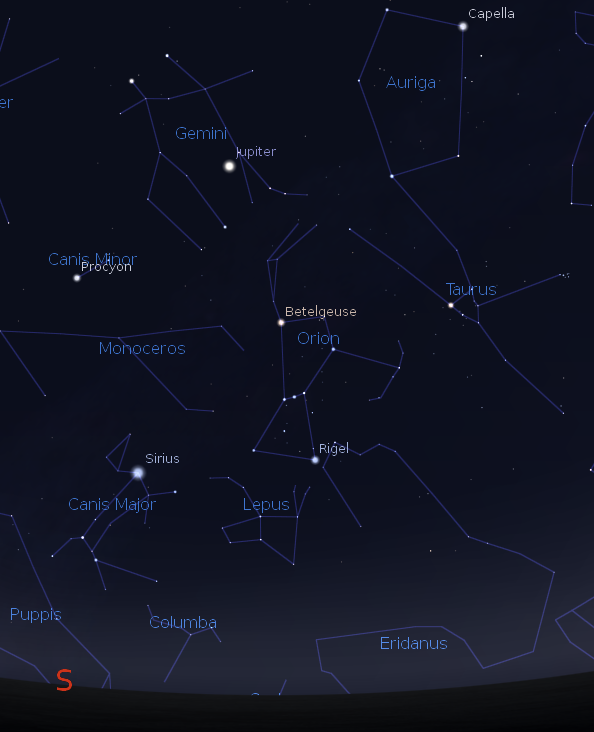
Jupiter and the constellations of winter at 9 p.m. February 18, 2014. Created using Stellarium.
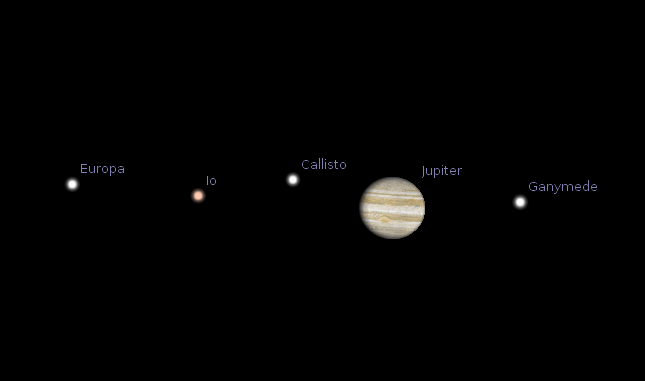
Jupiter at 9 p.m. on February 18, 2014. Created using Cartes du Ciel.
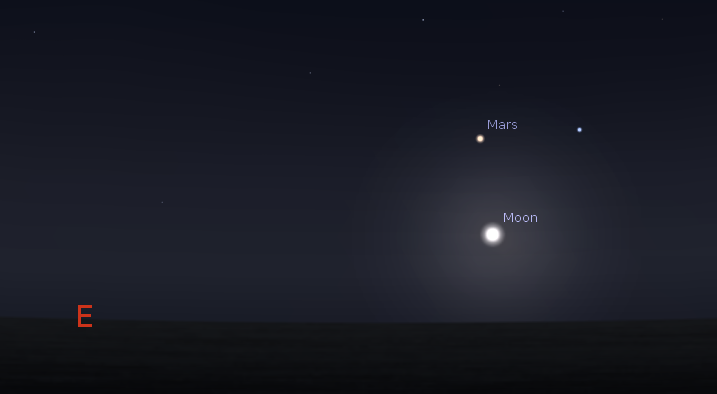
Mars and the Moon at midnight on February 20, 2014. Created using Cartes du Ciel.
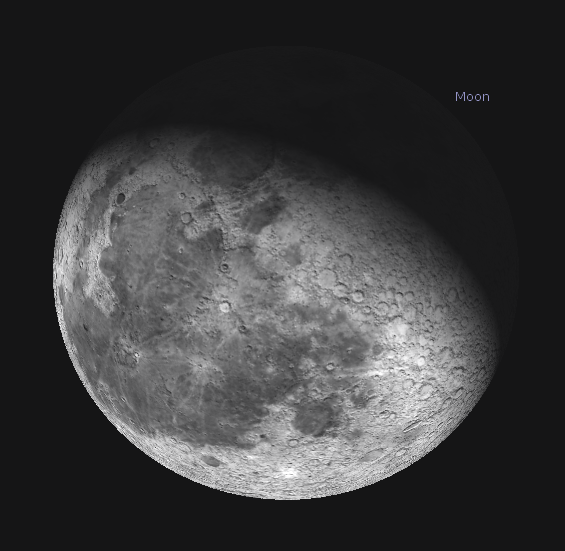
The Moon at midnight on February 20, 2014. Created using Stellarium.
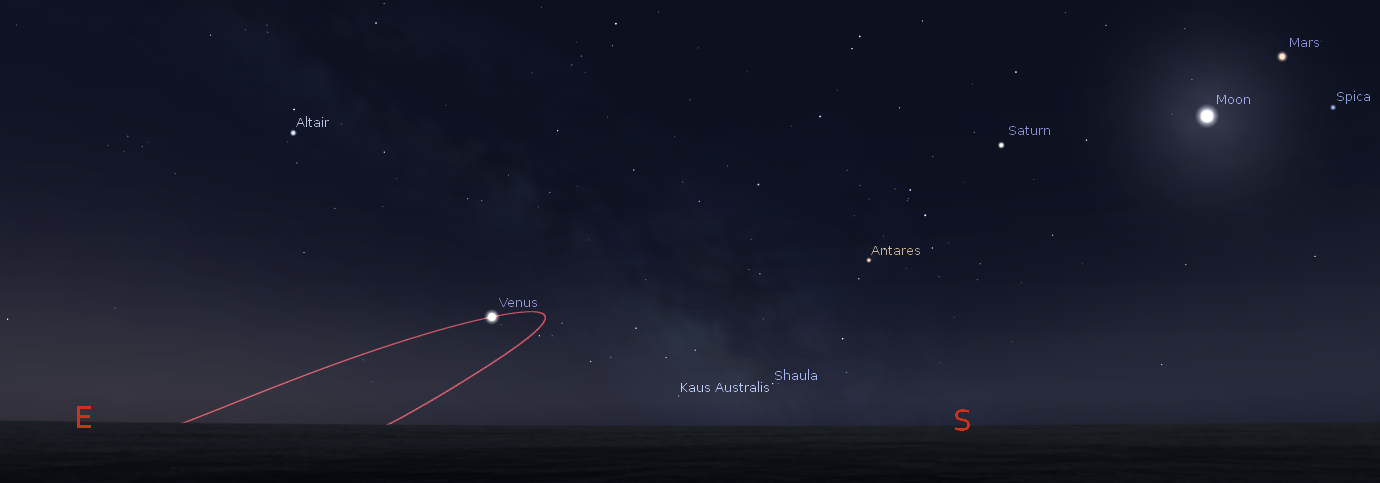
The morning planets at 6:30 a.m. February 20, 2014, including the orbit of Venus. Created using Stellarium.
Venus will reach the end of the red loop, its orbit as seen from Earth, on March 22nd. Of course we and Venus are moving, and so the apparent position of Venus will change also by the Earth’s motion.
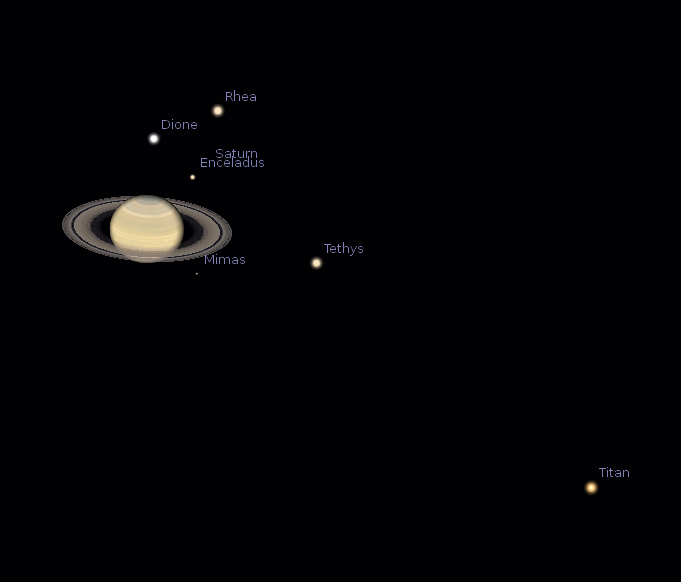
Saturn and its moons at 6:30, February 20, 2014. Of the moons, Titan will be the only one visible in small telescopes. Created using Stellarium.
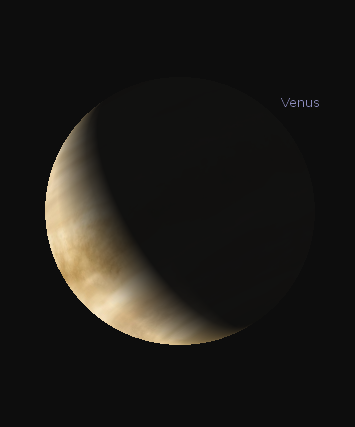
Venus through a telescope. The planet is getting smaller and its crescent is getting fatter as it moves away from the Earth. This image is for 6:30 a.m. February 20, 2014.Created using Stellarium.
02/12/2014 – Ephemeris – Where are the bright planets this week?
Ephemeris for Wednesday, February 12th. The sun will rise at 7:47. It’ll be up for 10 hours and 19 minutes, setting at 6:06. The Moon, 2 days before full, will set at 6:39 tomorrow morning.
Let’s take our weekly look at the planets. Jupiter will be in the southeastern sky as darkness falls tonight. It’s cruising against the stars of Gemini now. It will pass due south at 9:58 p.m., and will set at 5:41 a.m. in the west-northwest. The moon is seen where Cancer is tonight. Mars will rise at 11:17 p.m. in the east-southeast. Reddish Mars is in Virgo now and above and left of the bright star Spica, which it now outshines. Mars will pass due south at 4:49 a.m. Saturn will rise at 1:39 a.m. in the east-southeast. It’s seen against the stars of Libra the scales this year. Venus will rise at 5:21 tomorrow morning, and shines brightly in the southeast before sunrise. It’s in Sagittarius, above the Teapot asterism.
Times are for the Traverse City/Interlochen area of Michigan. They may be different for your location.
Addendum
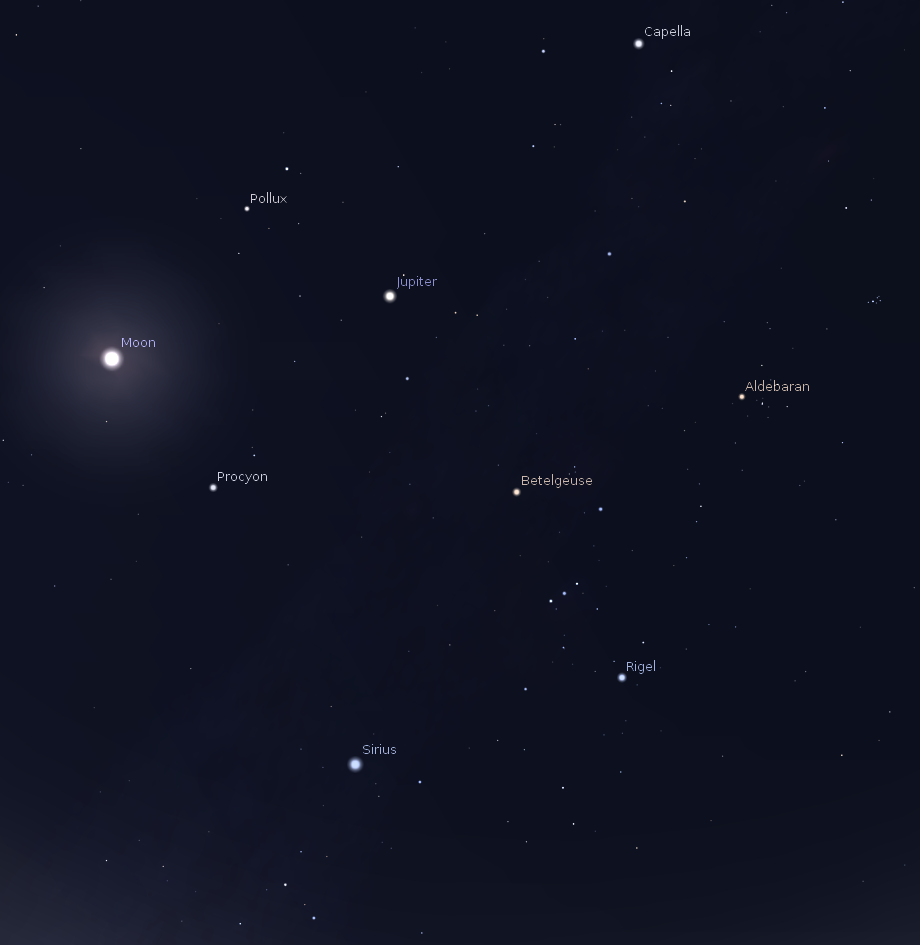
Jupiter, the Moon and the bright stars of winter at 9 p.m. February 12, 2014. Created using Stellarium.
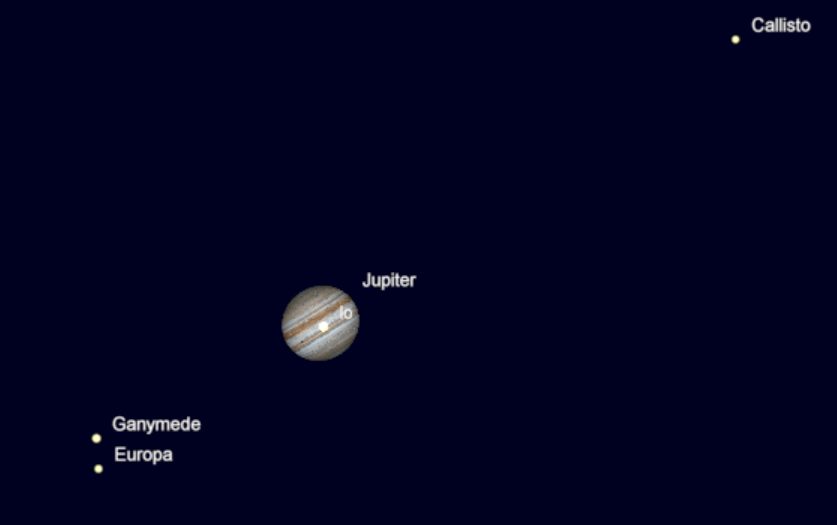
Jupiter at 9 p.m. on February 12, 2014. IO is pretty much invisible in front of the planet. Created using Cartes du Ciel.
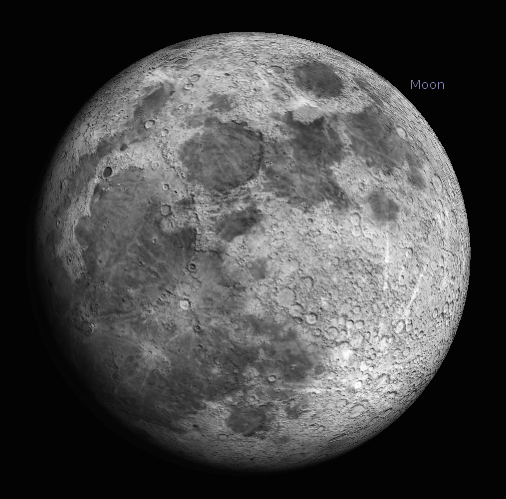
The Moon at 9 p.m. on February 12, 2014. Created using Stellarium.
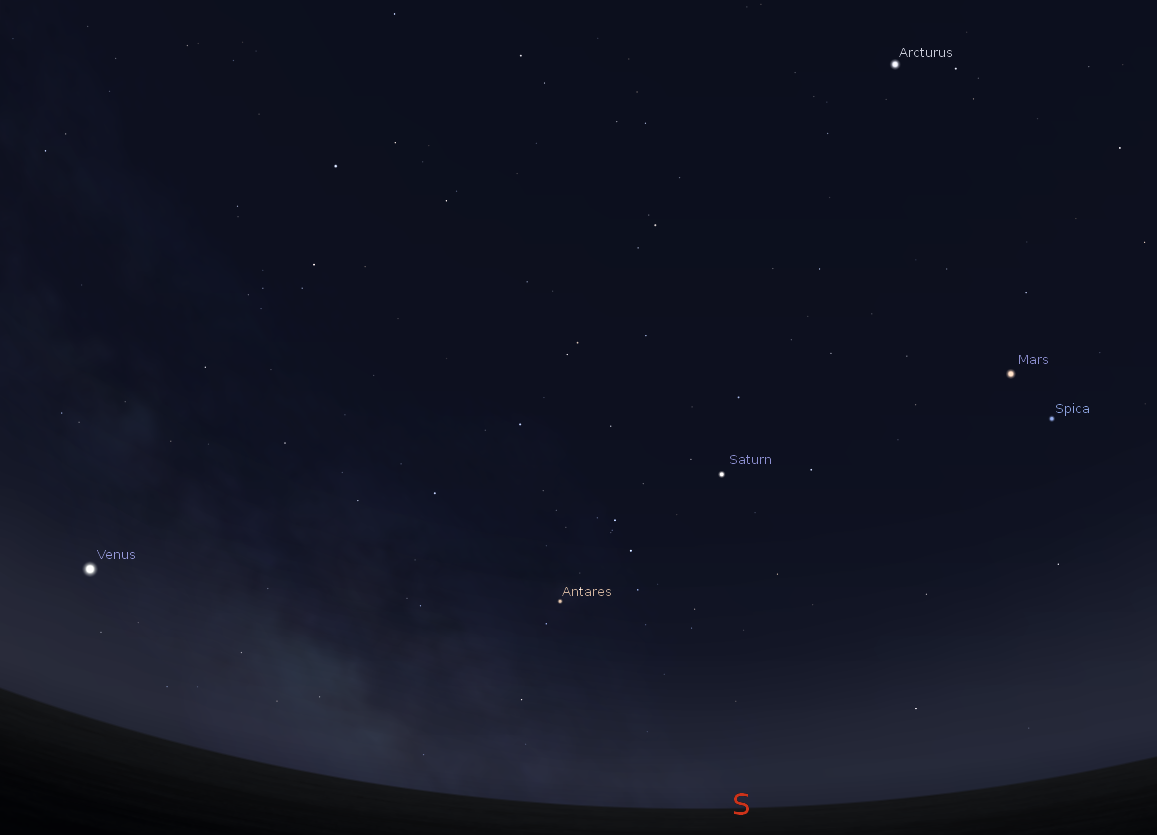
Mars, Saturn, and Venus at 6:30 a.m. February 13, 2014. Created using Stellarium.
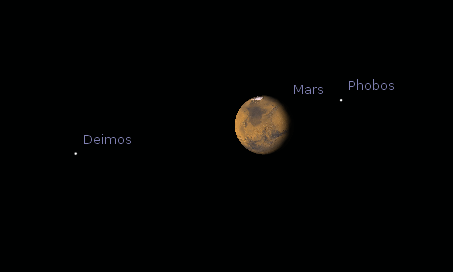
Tiny Mars in a telescope at 6:30 a.m. on February 13, 2014. Don’t expect to see it’s satellites Phobos and Deimos. Created using Stellarium.
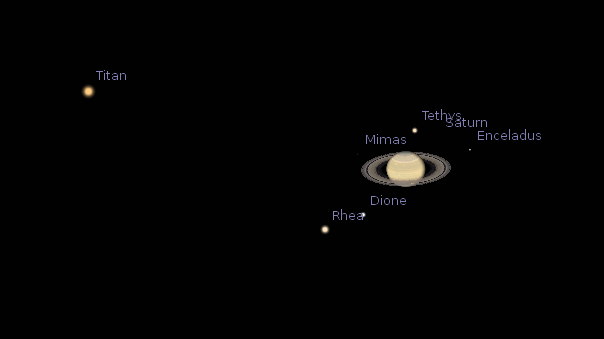
Saturn and its moons at 6:30, February 13, 2014. Of the moons, Titan will be the only one visible in small telescopes. Created using Stellarium.
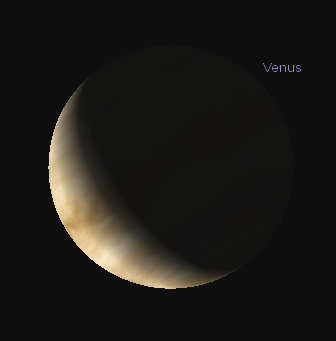
Venus through a telescope. The planet is getting smaller and its crescent is getting fatter as it moves away from the Earth. This image is for 6:30 a.m. February 13, 2014.Created using Stellarium.
02/05/2014 – Ephemeris – Where are the bright planets this week?
Ephemeris for Wednesday, February 5th. The sun will rise at 7:56. It’ll be up for 10 hours and 1 minute, setting at 5:57. The moon, 1 day before first quarter, will set at 1:10 tomorrow morning.
Let’s take our weekly look at the planets. Tiny Mercury is 4 days after its greatest eastern elongation and is seen low in the west-southwest between sunset and 7:25, when it sets. After that Jupiter takes over the evening sky. It will be in the southeastern sky as darkness falls tonight. It’s cruising against the stars of Gemini now. It will pass due south at 10:28 p.m., and will set at 6:11 a.m. in the west-northwest. Mars will rise at 11:37 p.m. in the east-southeast. Reddish Mars is in Virgo now and above the bright star Spica, which it now outshines. Saturn will rise at 2:06 a.m. in the east-southeast. It’s seen against Libra the scales this year. Venus will rise at 5:38 tomorrow morning, and shines brightly in the southeast before sunrise.
Times are for the Traverse City/Interlochen area of Michigan. They may be different for your location.
Addendum

Mercury, its orbit and the ecliptic (you’ll only see Mercury) at 6:30 p.m. on February 5, 2014. Created using Stellarium.
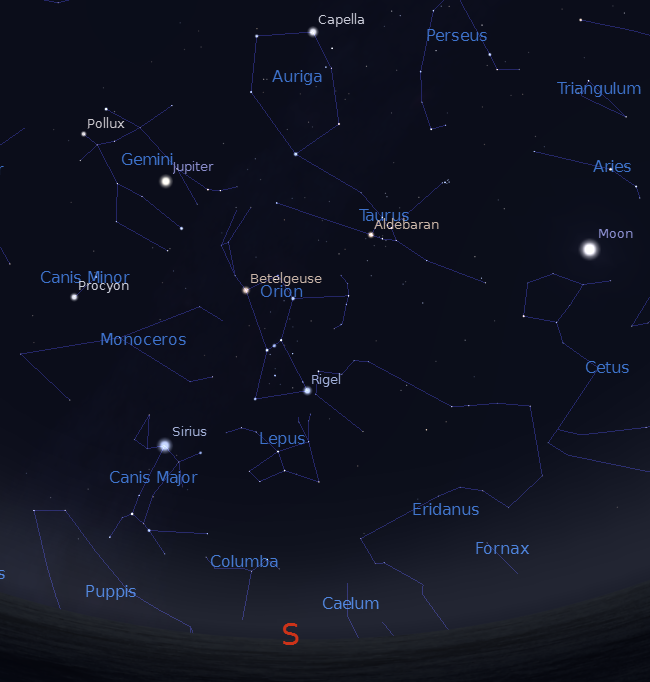
Jupiter, the Moon and the constellations of winter at 9 p.m. February 5, 2014. Created using Stellarium.
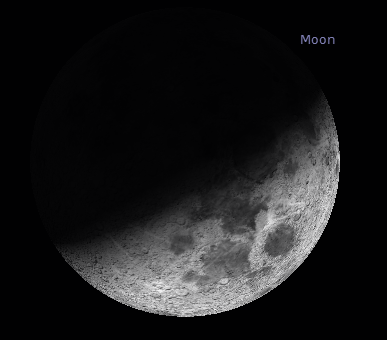
The Moon at 9 p.m. February 5, 2014. Created using Stellarium.
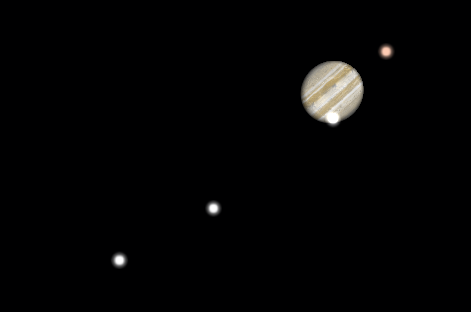
Jupiter and it’s satellites at 9 p.m. February 5, 2014. The satellites from left to right are Ganymede, Europa, Callisto and Io) Callisto may not be visible against the face of Jupiter. Created using Stellarium.
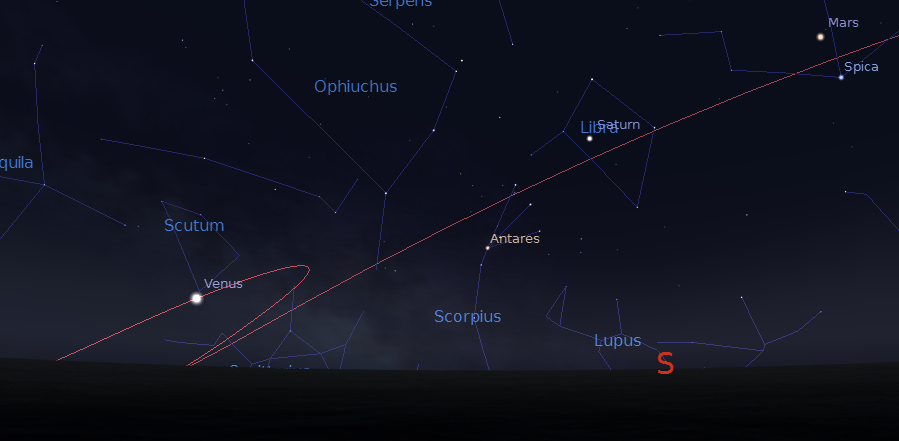
Mars, Saturn, and Venus at 6:30 a.m. February 6, 2014 along with imaginary lines of Venus’ orbit and the ecliptic. Created using Stellarium.
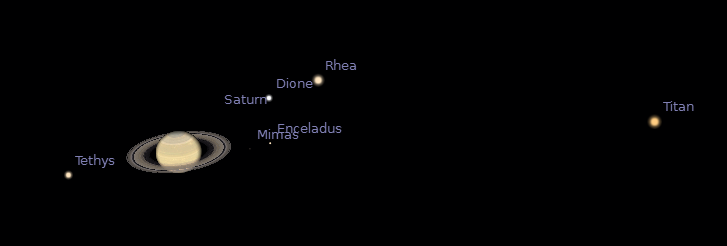
Saturn and its satellites at 6:30 a.m. February 6, 2014. You’ll need a big telescope to see any satellites other than Titan. Created using Stellarium.
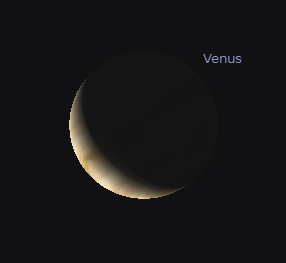
Venus through a telescope. The planet is getting smaller and its crescent is getting fatter as it moves away from the Earth. Created using Stellarium.
Sorry for the late post, but I was watching the Bill Nye – Ken Ham creationist debate last night. Bill took him apart like Inherit the Wind 2.
01/29/2014 – Ephemeris – We could spot all the 5 naked eye planets this week
Ephemeris for Wednesday, January 29th. The sun will rise at 8:04. It’ll be up for 9 hours and 42 minutes, setting at 5:47. The moon, 1 day before new, will rise at 7:27 tomorrow morning.
Let’s take our weekly look at the planets. Tiny Mercury is 3 days from its greatest eastern elongation low in the west-southwest between sunset and 7:22, when it sets. After that Jupiter takes over the evening sky. It will be in the eastern sky as darkness falls tonight. It’s cruising against the stars of Gemini now. It will move southeast and pass due south at 10:59 p.m., and will set at 6:41 a.m. in the west-northwest. Mars will rise at 11:55 p.m. in the east-southeast. Reddish Mars is in Virgo now and above the bright star Spica. Saturn will rise at 2:32 a.m. in the east-southeast. It’s seen against Libra the scales this year. Venus will rise at 6:02 tomorrow morning, so it may become visible around 6:30 or so very low in the east-southeast.
Times are for the Traverse City/Interlochen area of Michigan. They may be different for your location.
Addendum
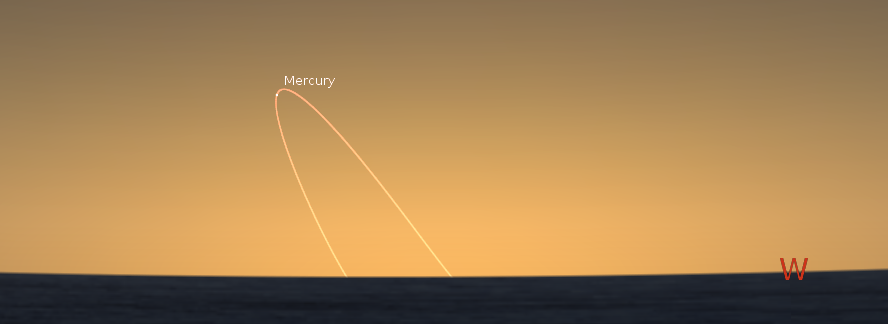
Mercury in the west southwest at 6:15 p.m. on January 29, 2014. Also displayed is Mercury’s orbit. It will reach the peak, its greatest eastern elongation from the Sun on Friday. Created using Stellarium.
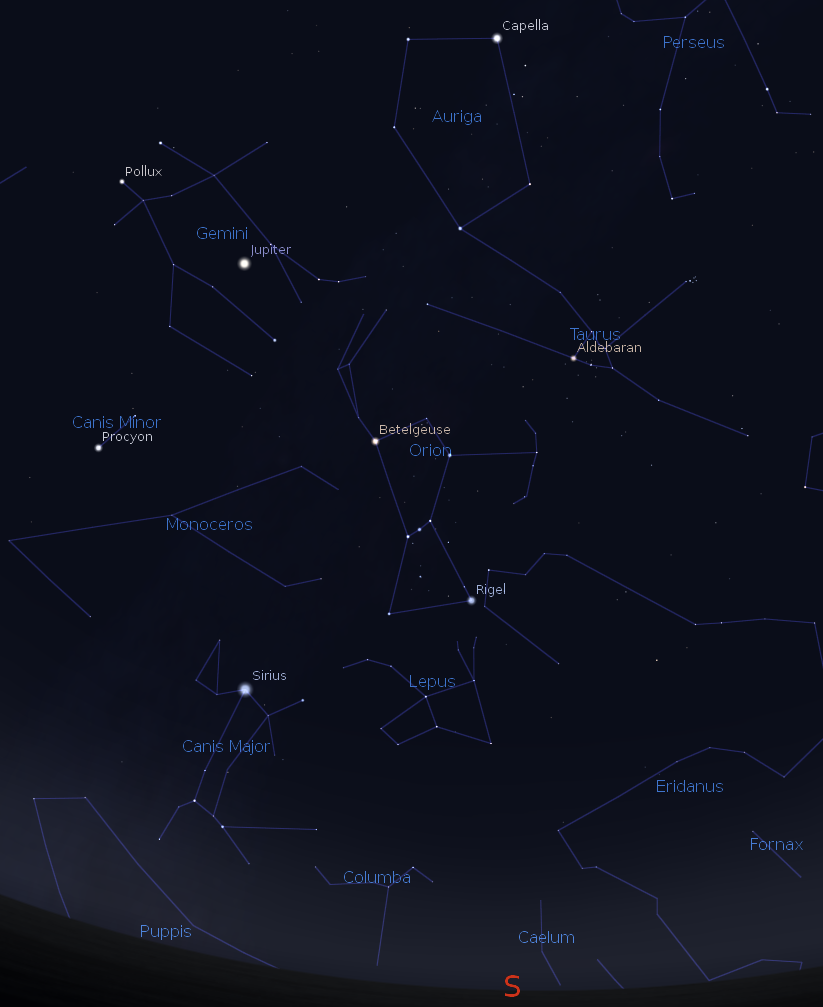
Jupiter with the winter constellations at 9 p.m. on January 29, 2014. Created using Stellarium.
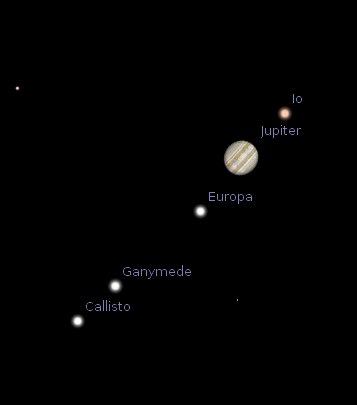
The telescopic Jupiter at 9 p.m. and January 29, 2014. Created using Stellarium.
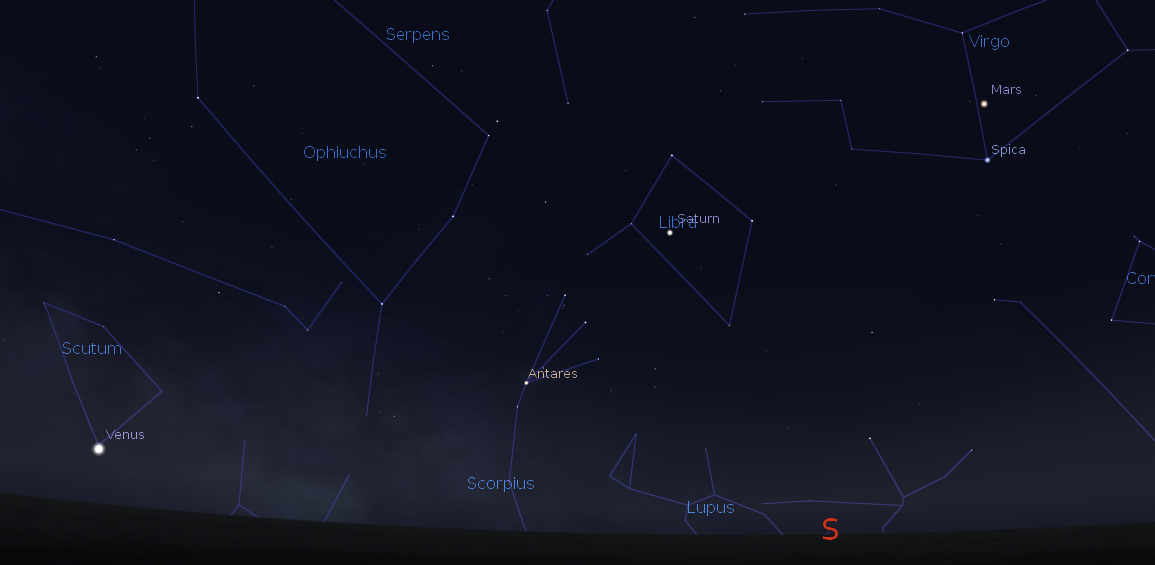
Mars, Saturn and Venus with the spring constellations at 6:30 a.m. on January 29, 2014. Created using Stellarium.
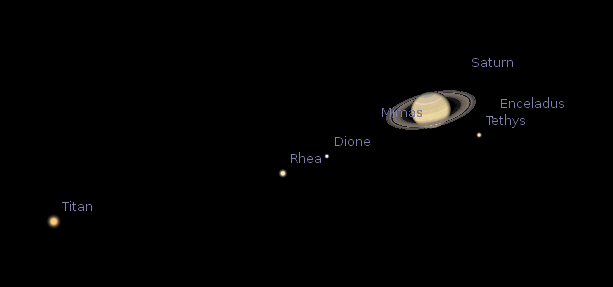
Saturn and its moons at 6:30, January 30, 2014. Of the moons, Titan will be the only one visible in small telescopes. Created using Stellarium.
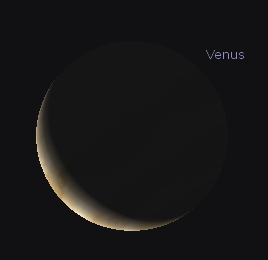
Venus as seen in a telescope at 7 a.m. on January 30, 2014. Created using Stellarium.
01/22/2014 – Ephemeris – Where are the bright planets this week?
Ephemeris for Wednesday, January 22nd. The sun will rise at 8:11. It’ll be up for 9 hours and 26 minutes, setting at 5:37. The moon, 2 days before last quarter, will rise at 12:27 tomorrow morning.
Let’s take our weekly look at the planets. Tiny Mercury is starting its week and a half appearance low in the west-southwest between sunset and 6:53, when it sets. After that Jupiter takes over the evening sky. It will be in the eastern sky as darkness falls tonight. It’s cruising against the stars of Gemini now. It will rise and pass due south at 11:30 p.m., and will set at 7:11 a.m. in the west-northwest. Mars will rise at 12:11 a.m. in the east-southeast. Reddish Mars is in Virgo now and above the bright star Spica and the Moon tomorrow morning. Saturn will rise at 2:57 a.m. in the east-southeast. It’s seen against Libra the scales this year. Venus will rise at 6:35 tomorrow morning, so it may become visible around 7 or so very low in the east-southeast.
Times are for the Traverse City/Interlochen area of Michigan. They may be different for your location.
Addendum
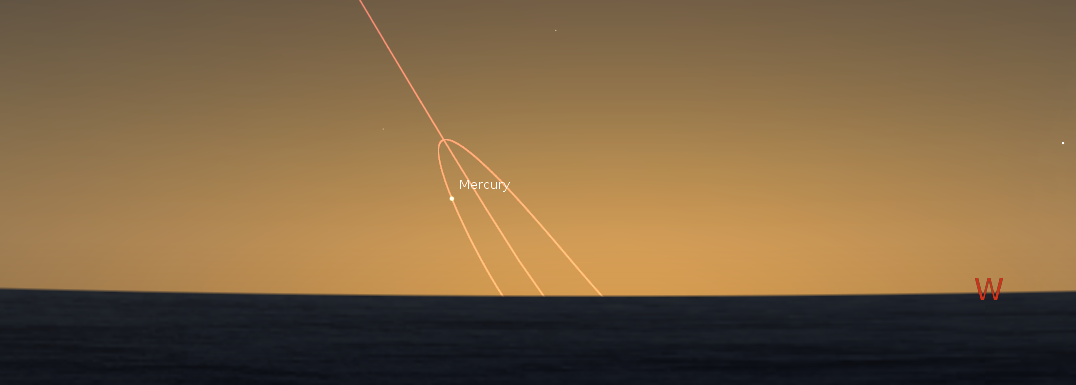
Mercury in the west-southwest at 6:15 p.m. on January 22, 2014. Also displayed is Mercury’s orbit, the loop, and the ecliptic, the plane of the Earth’s orbit. Created using Stellarium.
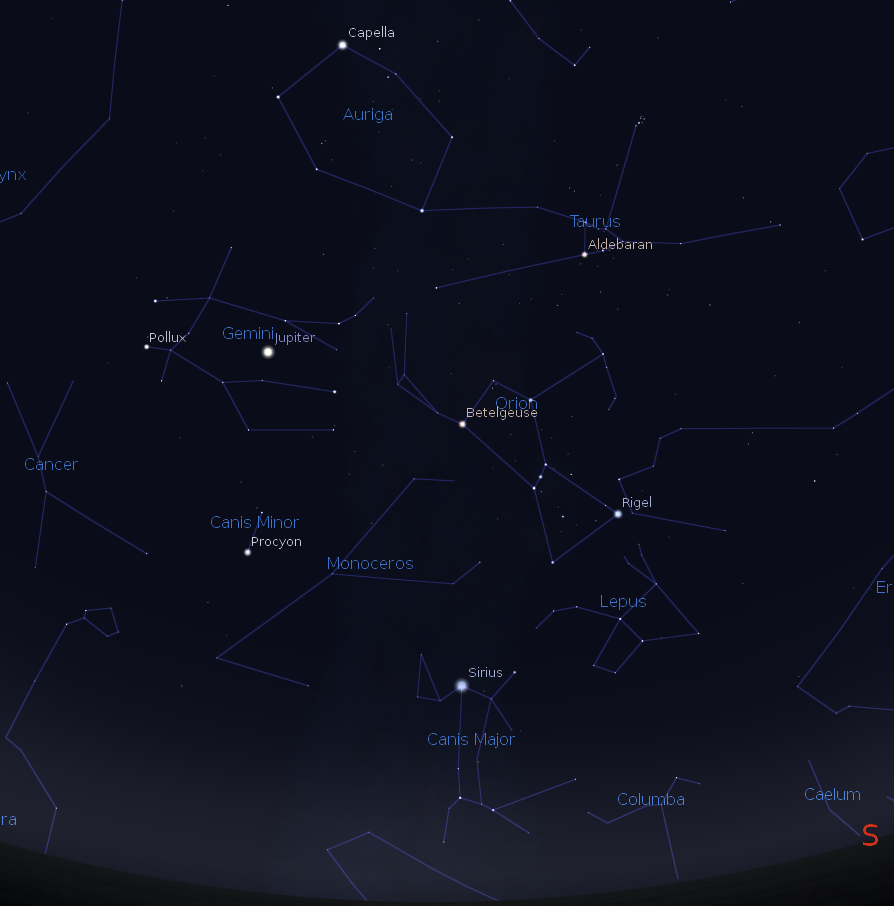
Jupiter with the winter constellations at 9 p.m. on January 22, 2014. Created using Stellarium.
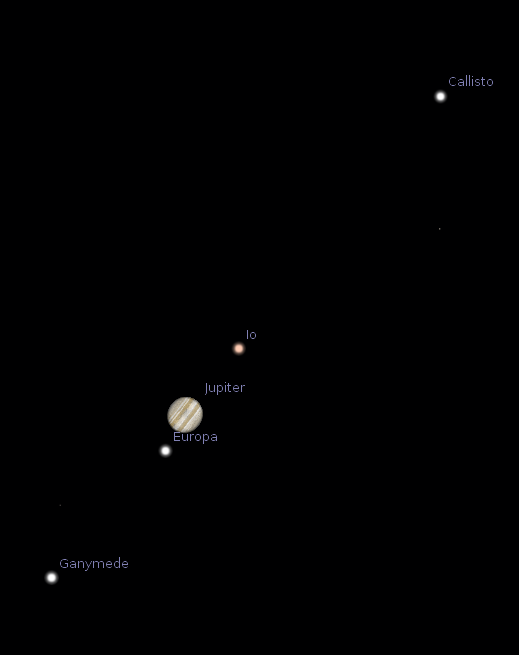
The telescopic Jupiter at 9 p.m. and January 22, 2014. Created using Stellarium.
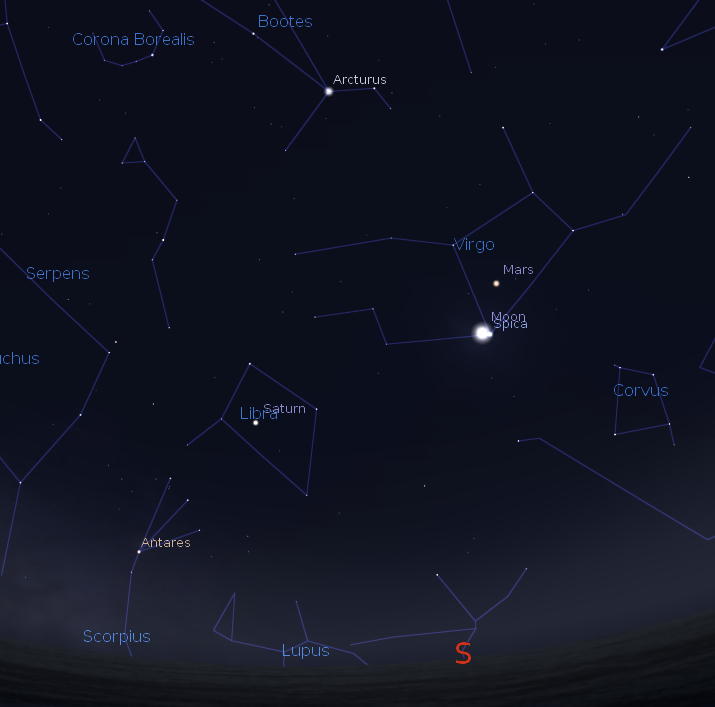
Mars, Saturn and the Moon with the spring constellations at 6:30 a.m. on January 23, 2014. Created using Stellarium.
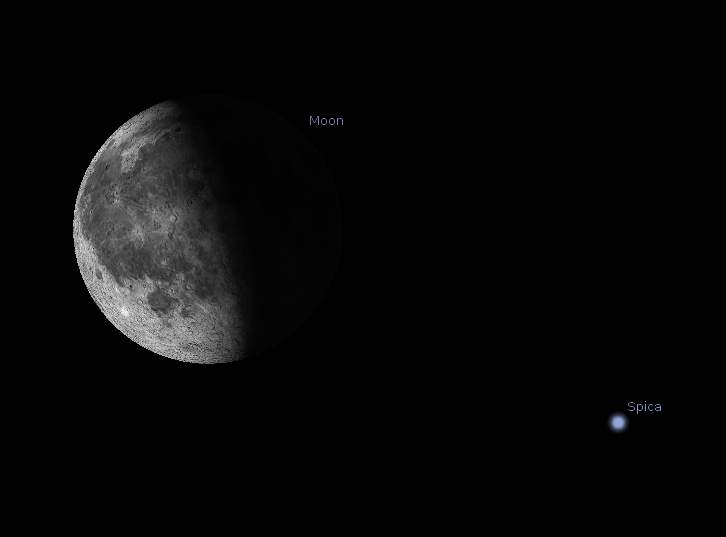
The Moon and the star Spica at 6:30 a.m. on January 23, 2014. Created using Stellarium.
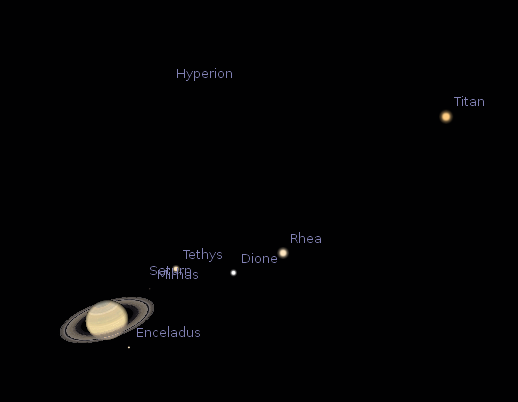
Saturn and its moons at 6:30, January 23, 2014. Of the moons, Titan will be the only one visible in small telescopes. Created using Stellarium.
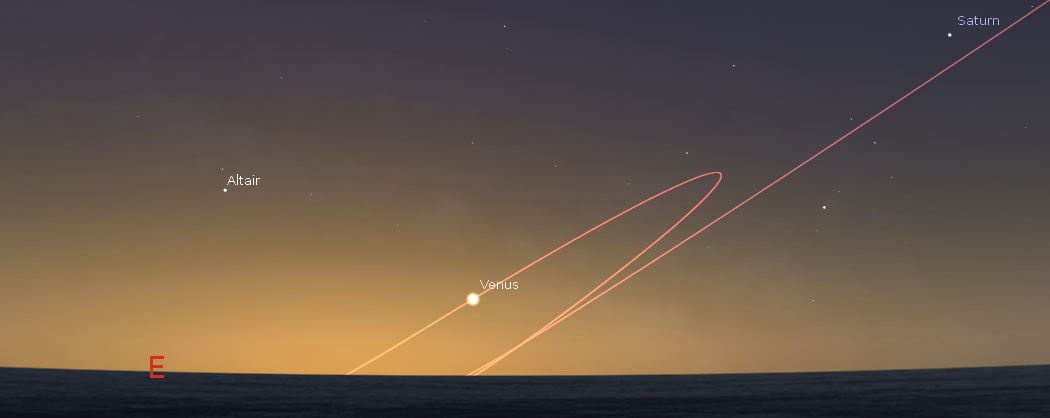
Venus in the east-southeast at 7:45 a.m. on January 23, 2014. Also displayed is Venus’ orbit, the loop, and the ecliptic, the plane of Earth. Created using Stellarium.
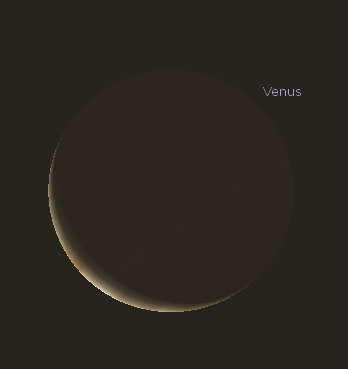
Venus as seen in a telescope at 7:45 a.m. on January 23, 2014. Created using Stellarium.
01/15/14 – Ephemeris – Where are the bright planets this week?
Ephemeris for Wednesday, January 15th. The sun will rise at 8:15. It’ll be up for 9 hours and 12 minutes, setting at 5:28. The moon, at full today, will rise at 5:28 this evening.
Let’s take our weekly look at the planets. The giant planet Jupiter is now alone in the evening sky. It will be in the eastern sky as darkness falls tonight. It’s cruising against the stars of Gemini now. It will pass due south at 12:05 a.m., and will set at 7:42 a.m. in the west northwest. Mars will rise at 12:28 a.m. in the east. Reddish Mars is in Virgo now and to the upper right of the bright star Spica by the three-quarters of the width of your fist held at arm’s length. Saturn will rise at 3:26 a.m. in the east southeast. It’s seen against Libra the scales this year. Venus will rise at 7:18 tomorrow morning, so it may become visible around 7:45 or so very low in the east southeast. It’s sudden appearance has caused come airport tower controllers to give it permission to land.
Times are for the Traverse City/Interlochen area of Michigan. They may be different for your location.
Addendum
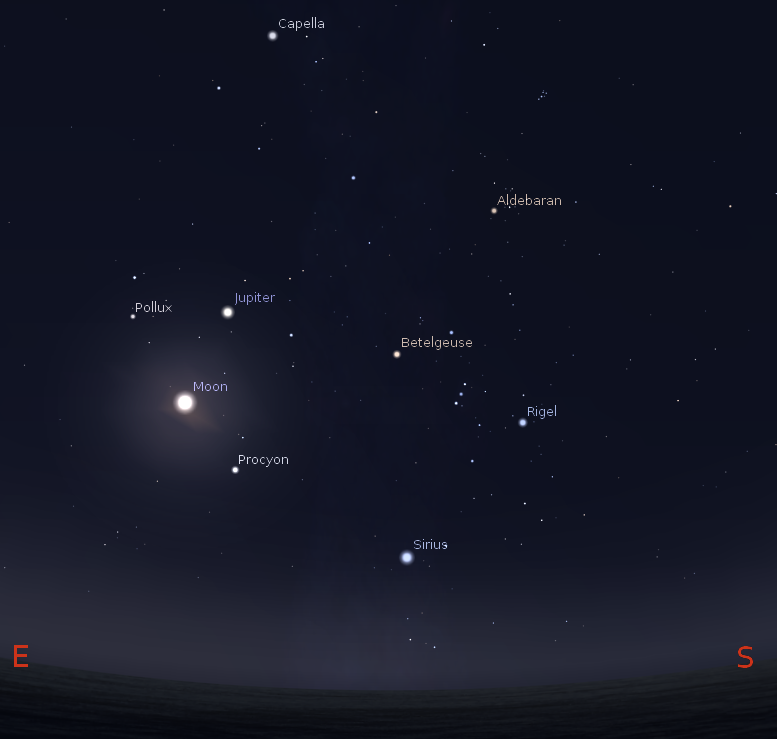
Jupiter, the Moon with the winter stars at 9 p.m. on January 15, 2014. Created using Stellarium.
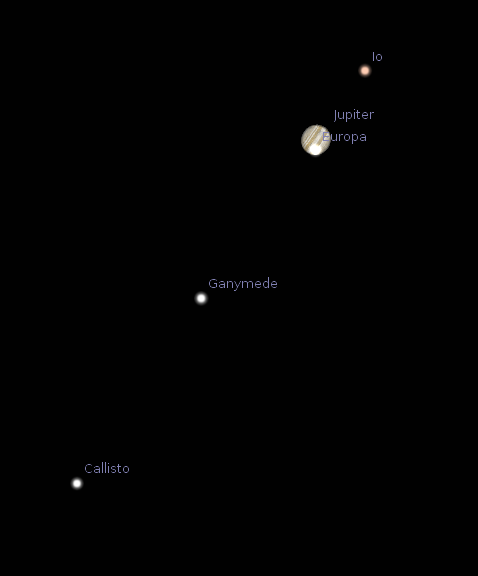
The telescopic Jupiter at 9 p.m. and January 15, 2014. The moon Europa is in front or transiting Jupiter. Created using Stellarium.
Europa, the smallest of the four Galilean satellites of Jupiter will transit the face of Jupiter tonight. It’s shadow will also cross that planet. The transit starts at 9:02 p.m. Stellarium is slightly off in that regard. Cartes du Ceil is better in that regard. Europa’s shadow starts to cross Jupiter at 9:33 p.m. Europa’s transit ends at 11:43 p.m., while it’s shadow leaves the face of Jupiter at 12:16 a.m. The source for these times is Project Pluto’s Jupiter Satellite Events page.
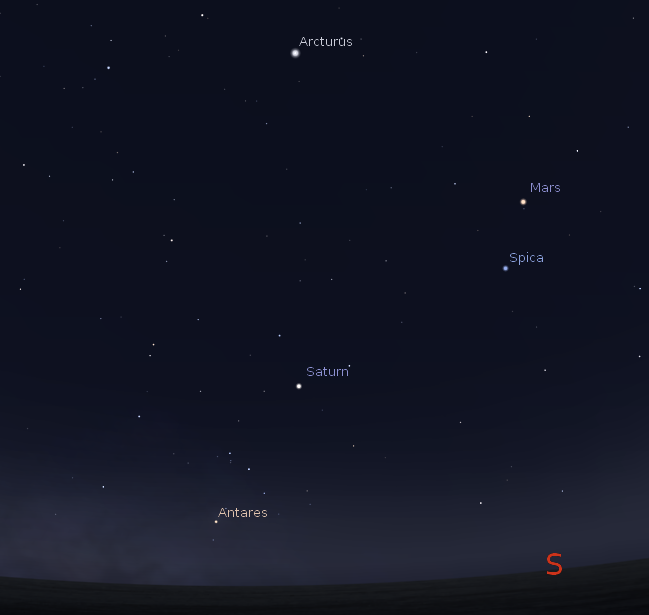
Mars and Saturn with the spring stars at 6:30 a.m. on January 16, 2014. Created using Stellarium.
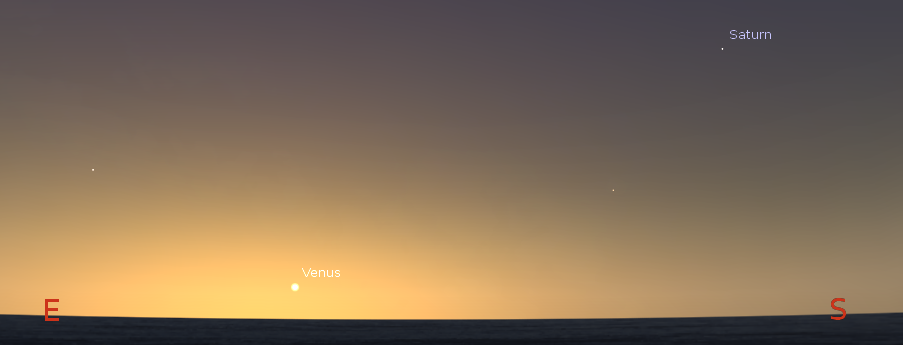
For the adventurous, Venus at 7:45 a.m. tomorrow morning January 16, 2014. Created using Stellarium.

Venus as it might appear in a telescope at 7:45 a.m. tomorrow morning January 16, 2014. You will not see its night side, just the crescent. Created using Stellarium.
Want to see Venus closer to inferior conjunction? Check out Universe Today’s Virtual Star Party for January 12, 2014.
01/08/2014 – Ephemeris – Where are the bright planets this week?
Ephemeris for Wednesday, January 8th. The sun will rise at 8:18. It’ll be up for 9 hours and 2 minutes, setting at 5:20. The moon, 1 day past first quarter, will set at 2:18 tomorrow morning.
This is our weekly look at the planets. Venus is only three days from passing between the Earth and the Sun in what astronomers call inferior conjunction. Sharp eyed observers may be able to spot it in the bright twilight glow before it sets at 5:57 p.m. tonight. It will then pass into the morning sky. The giant planet Jupiter will be in the eastern sky as darkness falls tonight. It’s cruising against the stars of Gemini now. It will pass due south at 12:32 a.m., and will set at 8:13 a.m. Mars will rise at 12:39 a.m. in the east. Reddish Mars is in Virgo now and to the upper right of the bright star Spica by the width of your fist held at arm’s length. Saturn will rise at 3:47 a.m. in the east southeast. It’s seen against Libra the scales this year.
Times are for the Traverse City/Interlochen area of Michigan. They may be different for your location.
Addendum

For diehards, Venus 15 minutes before it will set tonight January 8, 2014.

Venus at 3 days before inferior conjunction back in the late 1960’s. My photograph.
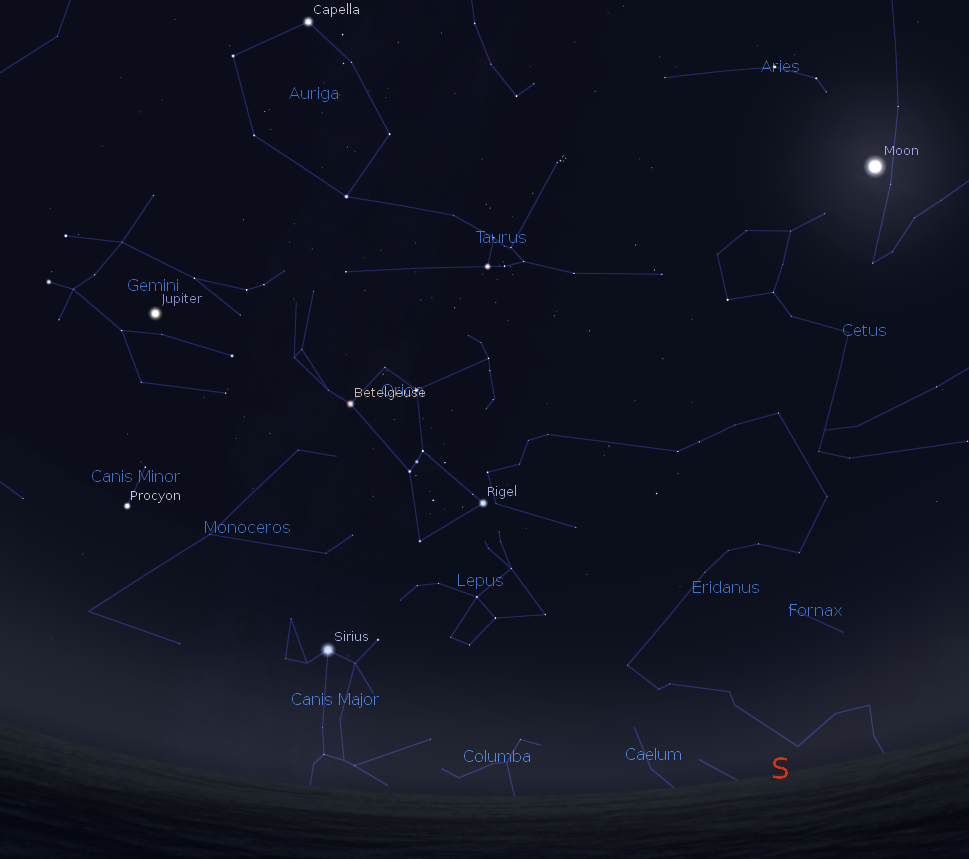
Jupiter, the Moon with the winter constellations at 9 p.m. on January 8, 2014. Created using Stellarium.
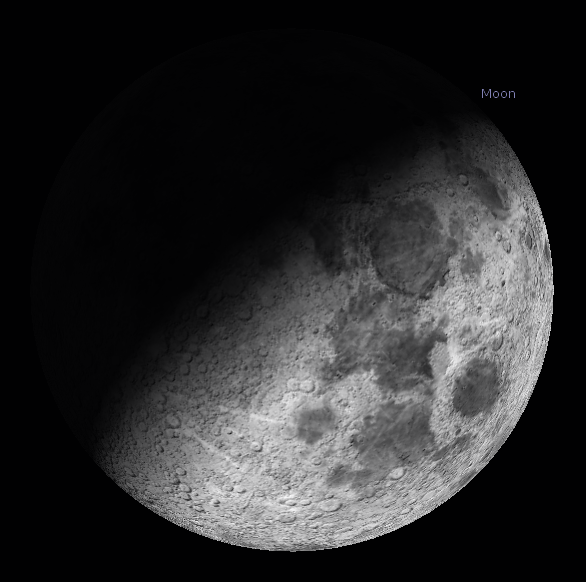
The telescopic moon at 9 p.m. January 8, 2014. Created using Stellarium.
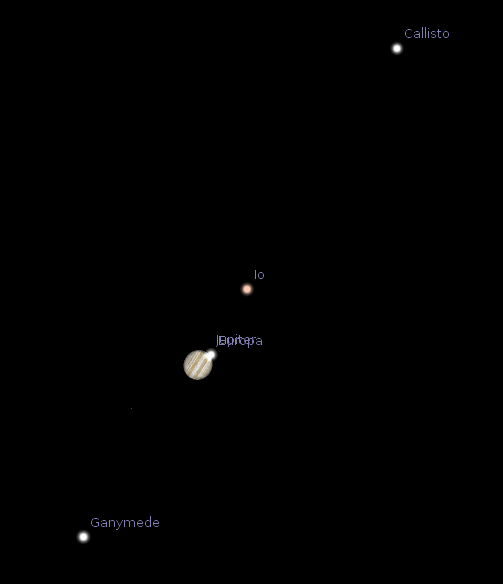
The telescopic Jupiter at 9 p.m. and January 8, 2014. The label for the moon Europa overlaps that of Jupiter. Created using Stellarium.
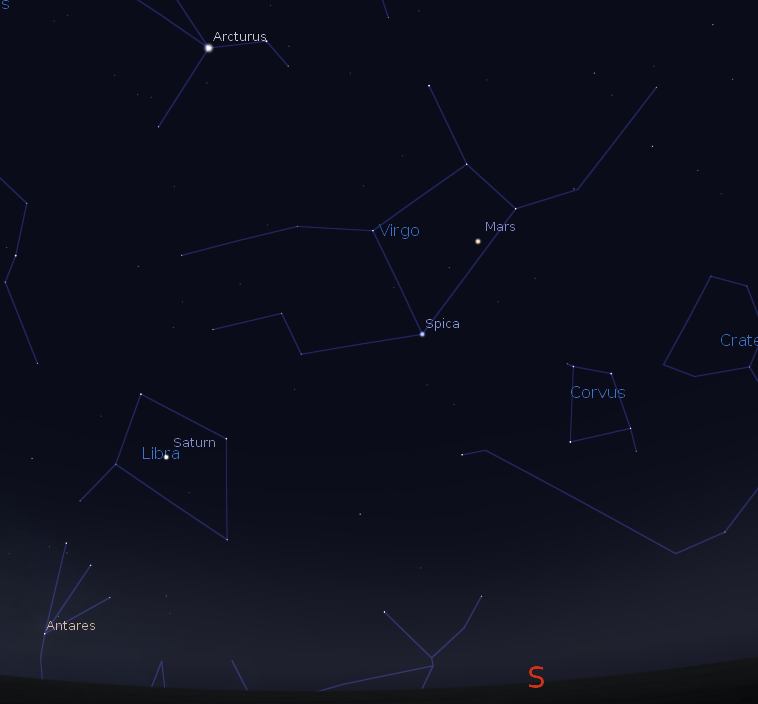
Mars and Saturn with the spring constellations at 6:30 a.m. on January 9, 2014. Created using Stellarium.

