Archive
02/13/2013 – Ephemeris – Where are the bright planets this week?
Ephemeris for Ash Wednesday, Wednesday, February 13th. The sun will rise at 7:45. It’ll be up for 10 hours and 23 minutes, setting at 6:08. The moon, 3 days past new, will set at 10:23 this evening.
Let’s check out the planets for this week. Mercury can be seen low in the southwest. Mercury will set at 7:41 p.m. This is a good apparition of Mercury for us in the northern hemisphere. Binoculars will help you locate it low in the sky. Jupiter is located in the constellation of Taurus and moves from the high southeast to the high southwest during the evening. It will transit or pass due south at 7:25 p.m, and will set at 2:56 a.m. Jupiter is a wonderful sight in telescopes with its cloud bands and its moons which change positions each night. Saturn will be the next planet to rise at 12:34 a.m. in the east southeast. It’s located in eastern Virgo. Saturn will pass due south at 5:44 a.m. It will rise before midnight by the end of the month.
Times are for the Traverse City/Interlochen area of Michigan. They may be different for your location.
Addendum
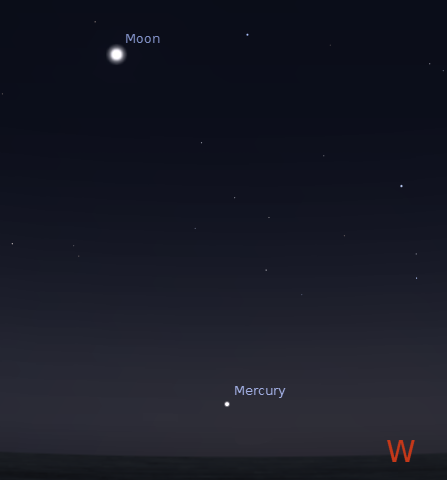
Mercury and the moon at 7:15 p.m. on February 13, 2013. Created using Stellarium.
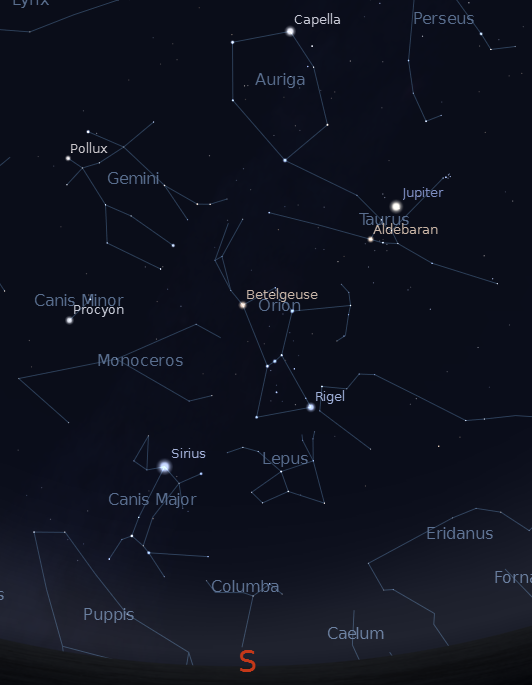
Jupiter and the winter constellations at 9 p.m. on February 13, 2013. Created using Stellarium.
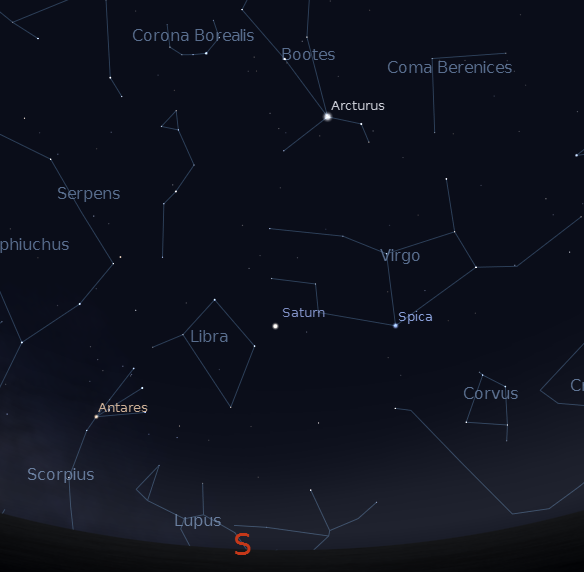
Saturn and the late spring and early summer constellations, as seen in the evening, but at 6 a.m. February 14, 2013.
02/06/2012 – Ephemeris – Where are the bright planets this week?
Ephemeris for Wednesday, February 6th. The sun will rise at 7:54. It’ll be up for 10 hours and 3 minutes, setting at 5:58. The moon, 3 days past last quarter, will rise at 5:36 tomorrow morning.
Let’s check out the planets for this week. Mars and Mercury can be seen low in the southwest. Mercury will set at 7:09, Mars 8 minutes later. Mercury will be the brighter of the two. They will be closest this Friday. I’ll talk more about that then. Jupiter is located in the constellation of Taurus and moves from the high southeast to the high southwest during the evening. It will transit or pass due south at 7:51 p.m, and will set at 3:22 a.m. Jupiter is a wonderful sight in telescopes with its cloud bands and its moons which change positions each night. Saturn will be the next planet to rise at 1:01 a.m. in the east southeast. It’s located in eastern Virgo. Saturn will pass due south at 6:11 a.m. It will rise before midnight by the end of the month.
Times are for the Traverse City/Interlochen area of Michigan. They may be different for your location.
Addendum
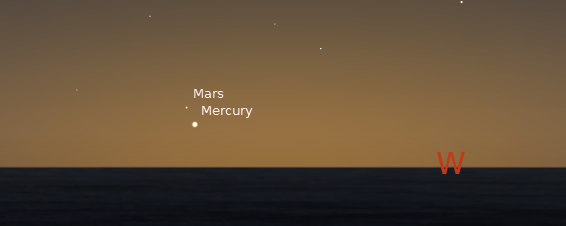
Mercury approaches Mars at 6:45 p.m. in the west on February 6, 2013. Created using Stellarium.
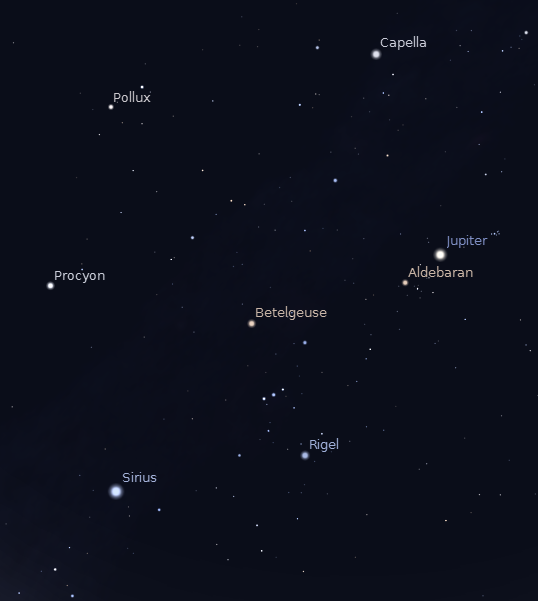
Jupiter with the winter stars at 9 p.m. on February 6, 2013. Created using Stellarium.
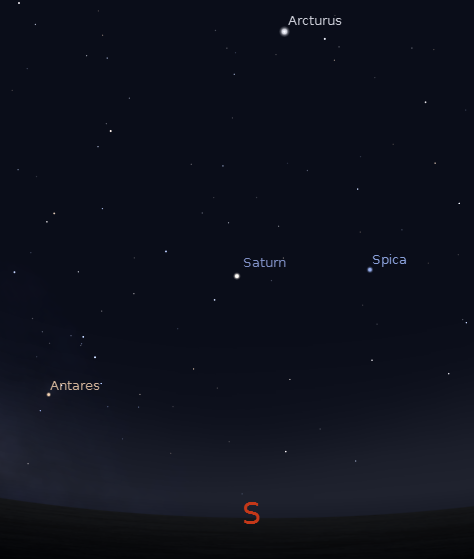
Previewing the Late spring stars with Saturn at 6 a.m. on February 7, 2013. Created using Stellarium.
Saturn will appear above the moon on the morning of February 3rd
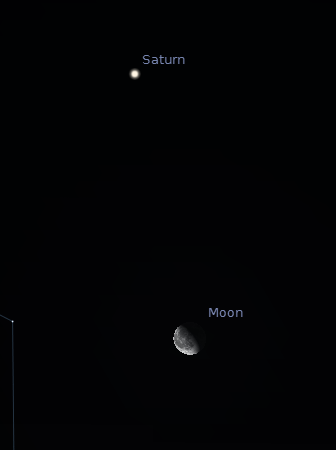
Here’s what you’ll see looking to the south at 4:55 a.m. EST. Created using Stellarium.
While you’re at it check out both with a telescopes. The two will hang out next to each other through the beginning of twilight.
01/30/2013 – Ephemeris – Where are the bright planets this week?
Ephemeris for Wednesday, January 30th. The sun will rise at 8:03. It’ll be up for 9 hours and 45 minutes, setting at 5:48. The moon, half way from full to last quarter, will rise at 9:58 this evening.
Let’s check out the planets for this week. Mars can be seen low in the west southwest. It will set at 7:15 p.m, two minutes later than last week because Mars is moving northward. The sun is gaining on it since it sets 10 minutes later each week. Jupiter will be visible in the southeast as it gets dark. Jupiter is located in the constellation of Taurus and moves from the southeast to the high south southwest during the evening. It will transit or pass due south at 8:15 p.m, and will set at 3:45 a.m. Jupiter is a wonderful sight in telescopes with its cloud bands and its moons which change positions each night. Saturn will be the next planet to rise at 1:24 a.m. in the east southeast. It’s located in eastern Virgo. Saturn will pass due south at 6:38 a.m.
Times are for the Traverse City/Interlochen area of Michigan. They may be different for your location.
Addendum
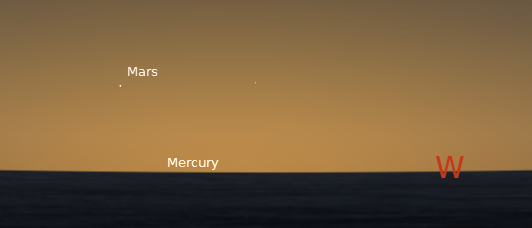
Mars low in the west southwest with Mercury just below the horizon at 6:30 p.m. on January 30, 2013. Created using Stellarium.
On February 8th Mercury will appear closest to Mars. Mercury’s greatest elongation from the sun will be on February 16th.
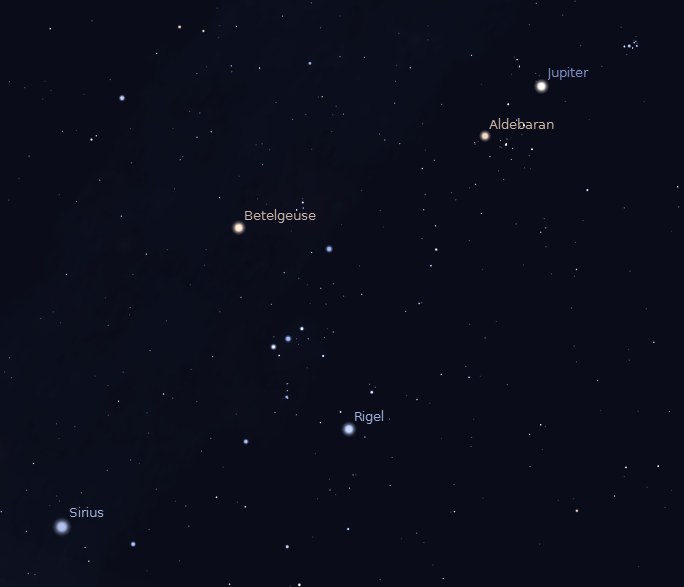
Jupiter and the stars of Taurus and Orion at 9 p.m. on January 30, 2013. Created using Stellarium.
Also see the Pleiades right and just above Jupiter.
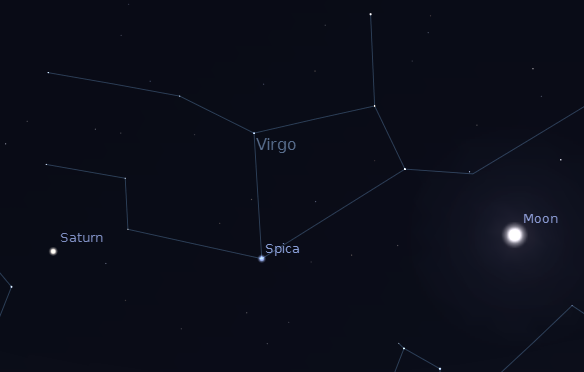
Saturn and the moon in Virgo at 6 a.m. on January 31, 2013. Created using Stellarium.
The moon will pass Saturn Sunday morning February 3rd.
01/28/2013 – Ephemeris – Jupiter the largest planet
Ephemeris for Monday, January 28th. The sun will rise at 8:05. It’ll be up for 9 hours and 40 minutes, setting at 5:46. The moon, 2 days past full, will rise at 7:47 this evening.
The planet Jupiter is the largest, most massive planet in the solar system. It contains more mass that all the other planets, asteroids, and moons twice over. As Isaac Asimov once said: “The solar system contains the sun, Jupiter and debris.” Jupiter, named after the king of the Roman gods, processes majestically through the Zodiac, spending about one year in each of the constellations. This year it’s Taurus, next year it will be Gemini. Saturn, on the other hand limps along, taking nearly 30 years to make the same circuit. It’s the god of old age. Jupiter throws its weight around. It’s responsible for the asteroid belt, keeping a planet from forming there. It deflects some comets from the inner solar system, but also sends others on in.
Times are for the Traverse City/Interlochen area of Michigan. They may be different for your location.
Addendum
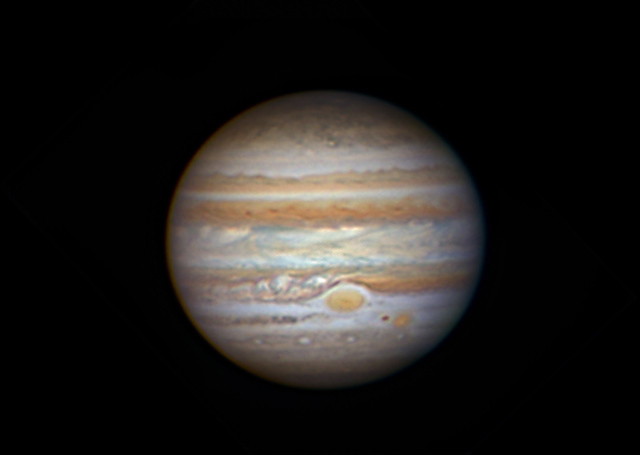
Jupiter with its Great Red Spot November 18, 2012 by Scott Anttila.
01/23/2013 – Ephemeris – Where are the bright planets this week?
Ephemeris for Wednesday, January 23rd. The sun will rise at 8:10. It’ll be up for 9 hours and 29 minutes, setting at 5:39. The moon, 3 days before full, will set at 6:08 tomorrow morning.
Let’s check out the planets for this week. Mars can be seen low in the southwest. It will set at 7:13 p.m, two minutes later than last week because Mars is moving northward. The sun will eventually catch up with it in mid April. Even before you can spot Mars, bright Jupiter will be visible in the southeast. Jupiter is located in the constellation of Taurus and moves from the southeast to the high south southwest during the evening. It will transit or pass due south at 8:46 p.m, and will set at 4:17 a.m. Jupiter is a wonderful sight in telescopes with its cloud bands and its moons which change positions each night. Saturn will be the next planet to rise at 1:54 a.m. in the east southeast. It’s located in eastern Virgo. Venus is now too close to the sun to be seen.
Times are for the Traverse City/Interlochen area of Michigan. They may be different for your location.
Addendum
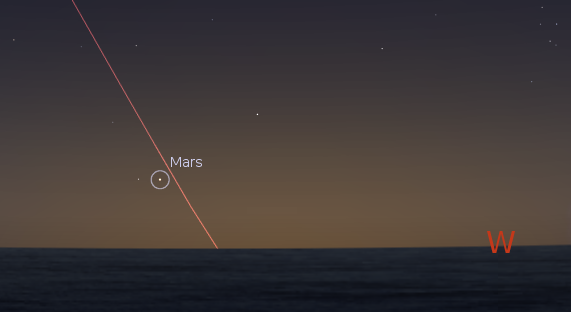
Mars at 6:30 p.m. on January 23, 2013. Note the steep angle of the ecliptic (in red) the line near which the planets are found. It’s heading northward as Mars moves to the upper left against the stars. Created using Stellarium.
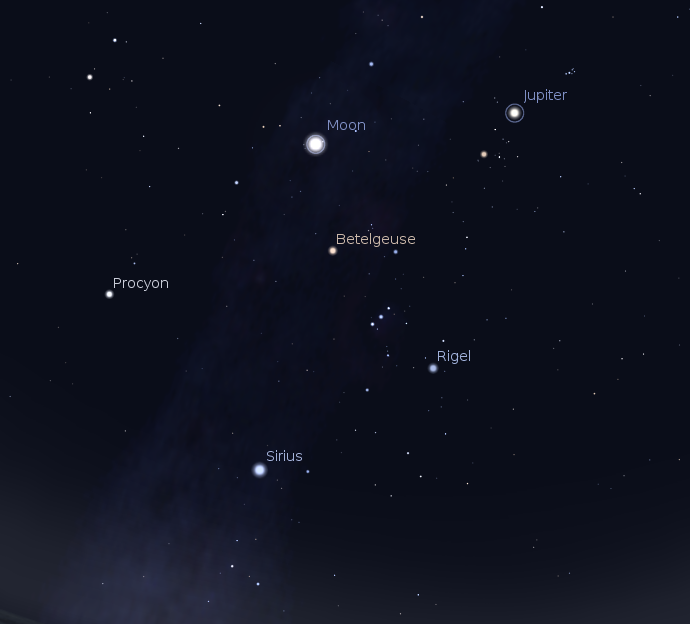
Jupiter, the moon and the winter stars at 9 p.m. on January 23, 2013. Created using Stellarium.
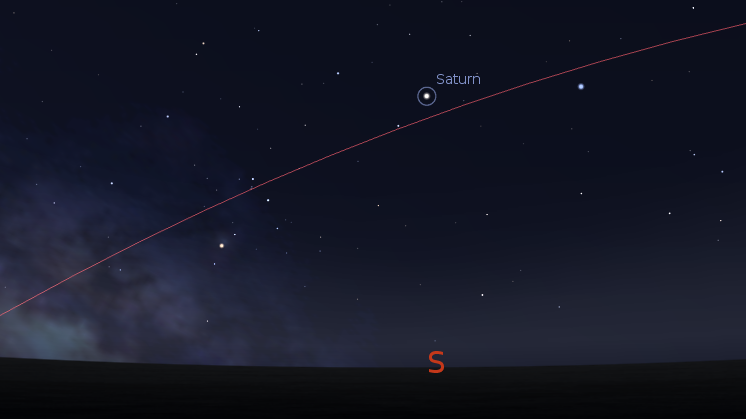
Saturn at 7 a.m. on January 24, 2013. Note the shallowness of the ecliptic compared to the evening sky in the first image. Created using Stellarium.
01/16/2013 – Ephemeris – Where are the bright planets this week?
Ephemeris for Wednesday, January 16th. The sun will rise at 8:15. It’ll be up for 9 hours and 14 minutes, setting at 5:30. The moon, 2 days before first quarter, will set at 11:37 this evening.
Let’s check out the planets for this week. Mars can be seen low in the southwest. It will set at 7:11 p.m, two minutes later than last week because Mars is moving northward. The sun will eventually catch up with it in mid April. Even before you can spot Mars, bright Jupiter will be visible in the southeast. Jupiter is located in the constellation of Taurus and moves from the southeast to the high south southwest during the evening. It will transit or pass due south at 9:15 p.m, and will set at 4:46 a.m. Jupiter is a wonderful sight in telescopes with its cloud bands and its moons which change positions each night. Saturn will be the next planet to rise at 2:20 a.m. in the east southeast. It’s located in eastern Virgo. Venus will rise at 7:15.
Times are for the Traverse City/Interlochen area of Michigan. They may be different for your location.
Addendum
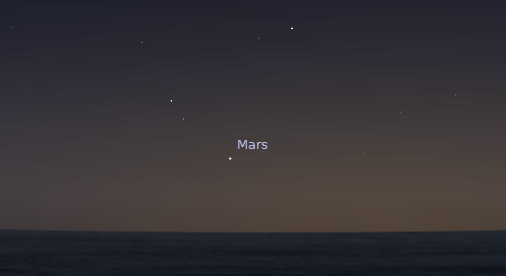
Mars, now becoming more visible as it moves northward is shown at 6:30 p.m. on January 16, 2013. Created using Stellarium.
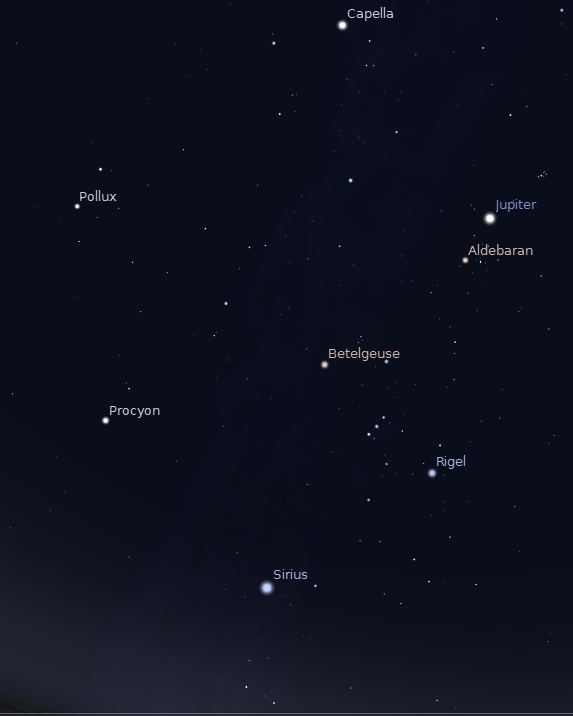
Jupiter and the winter circle of bright winter stars at 9 p.m. January 16, 2013. Created using Stellarium.
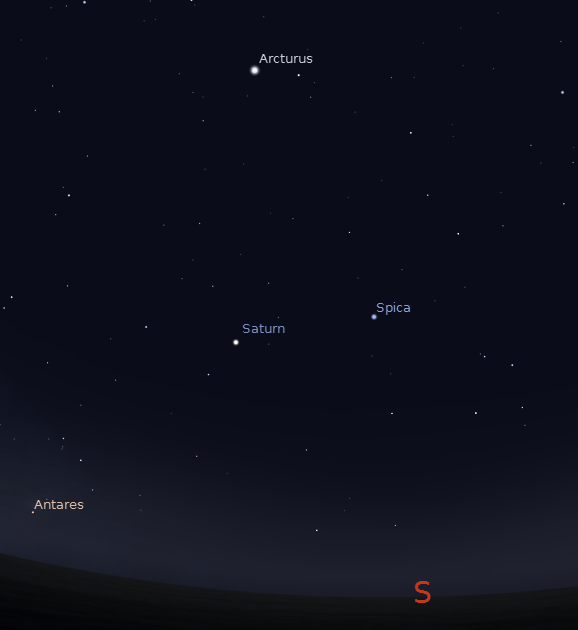
Saturn with the late spring and early summer stars at 6 a.m January 17, 2013.
01/07/2013 – Ephemeris – Saturn is near the moon this morning
Ephemeris for Monday, January 7th. The sun will rise at 8:18. It’ll be up for 9 hours and 0 minutes, setting at 5:19. The moon, 3 days past last quarter, will rise at 4:49 tomorrow morning.
This morning the planet Saturn will appear above and right of the crescent moon. They should be visible until a bit after seven a.m. The moon will be slipping eastward morning by morning, and by Thursday it will appear near the planet Venus. The moon’s movement around the earth with respect to the sun is called the synodic month, or a lunation. It is the period between one new moon to the next of about 29 and a half days. It is the basis for lunar calendars such as the Jewish and Islamic calendars. The moon’s crescent can be waxing or waning, growing fatter or thinner. It is now waning, and next week when we see the moon in the evening its phase will be waxing. The moon is just an illuminated ball in space.
Times are for the Traverse City/Interlochen area of Michigan. They may be different for your location.
Addendum
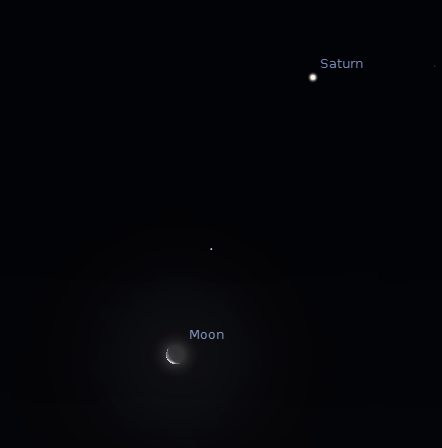
Saturn and the moon as seen at 6:30 a.m. on January 7, 2012. Created using Stellarium,
01/02/2013 – Ephemeris – Where are the bright planets this week?
Ephemeris for Wednesday, January 2nd. The sun will rise at 8:19. It’ll be up for 8 hours and 54 minutes, setting at 5:14. The moon, 2 days before last quarter, will rise at 11:00 this evening.
Let’s check out the planets for this week. Mars can be seen low in the southwest. It will set at 7:07 p.m, two minutes later than last week because sunset times are increasing and Mars is starting to move northward. The sun will eventually catch up with it. Even before you can spot Mars, bright Jupiter will be visible in the east. Jupiter is located in the constellation of Taurus in the southeast in the evening. It will transit or pass due south at 10:14 p.m, and will set at 5:45 a.m. Jupiter is a wonderful sight in telescopes with its cloud bands and its moons which change positions each night. Saturn will be the next planet to rise at 3:10 a.m. in the east southeast. It’s located in eastern Virgo. Venus will rise at 6:52.
Times are for the Traverse City/Interlochen area of Michigan. They may be different for your location.
Note: The Quadrantid meteor shower will reach peak tomorrow morning. I will release tomorrow’s program about the meteor shower at noon today.
Addendum
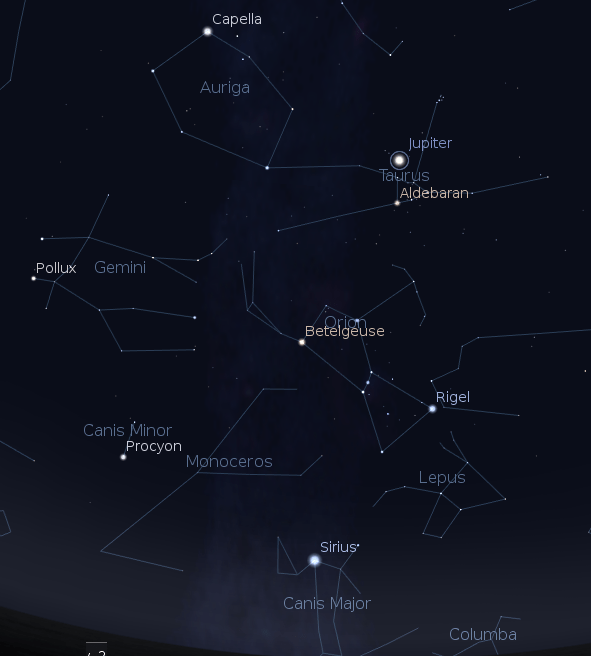
Jupiter and the winter stars and constellations as seen at 9 p.m. on January 2, 2013. Created using Stellarium.
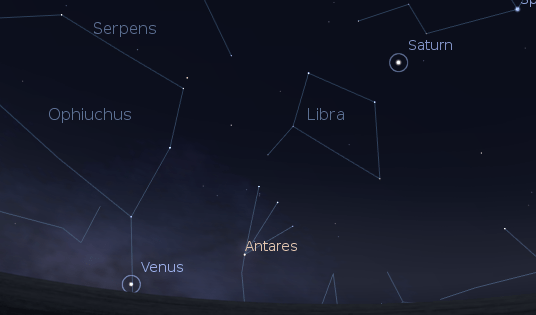
Jupiter and the winter stars and constellations at 7 a.m. on January 3, 2013. Created using Stellarium.
12/26/2012 – Ephemeris – Where are the bright planets this week?
Ephemeris for Wednesday, December 26th. The sun will rise at 8:18. It’ll be up for 8 hours and 50 minutes, setting at 5:08. The moon, 2 days before full, will set at 7:27 tomorrow morning.
Let’s check out the planets for this week. Mars can be seen low in the southwest. It will set at 7:05 p.m, one minute later than last week because sunset times are increasing and Mars is starting to move northward. The sun will eventually catch up with it. Even before you can spot Mars, bright Jupiter will be visible in the east. Jupiter is located in the constellation of Taurus in the southeast in the evening. It will transit or pass due south at 10:44 p.m, and will set at 6:16 a.m. Jupiter is a wonderful sight in telescopes with its cloud bands and its moons which change positions each night. Saturn will be the next planet to rise at 3:35 a.m. in the east southeast. It’s located in eastern Virgo. Venus will rise at 6:37 and is below and left of Saturn.
Times are for the Traverse City/Interlochen area of Michigan. They may be different for your location.
Addendum
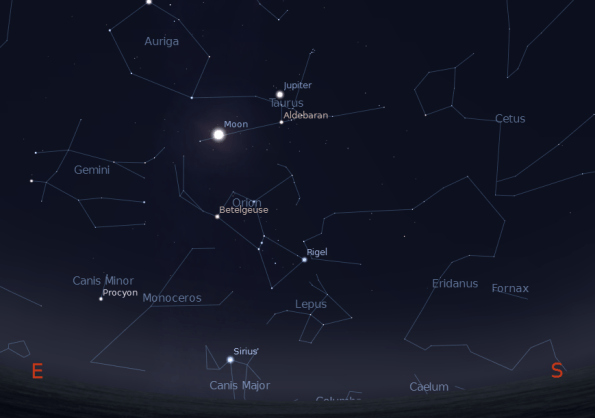
Jupiter, the bright moon and the winter stars and constellations at 9 p.m. on December 26, 2012. Created using Stellarium.
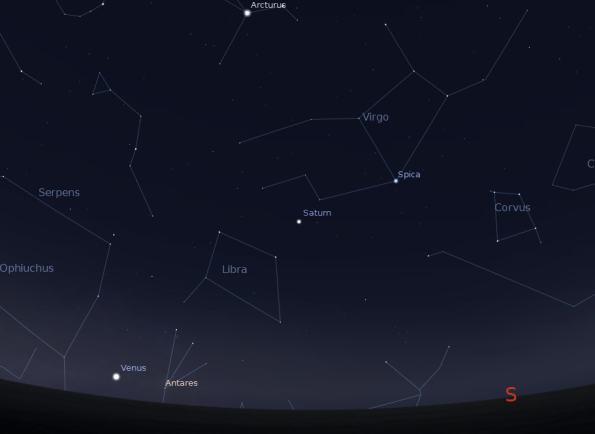
Saturn, Venus and the constellations of morning at 7 a.m. on December 27, 2012. Created using Stellarium.

