Archive
Ephemeris: 09/15/2025 – Last month to view the southern Milky Way from Michigan
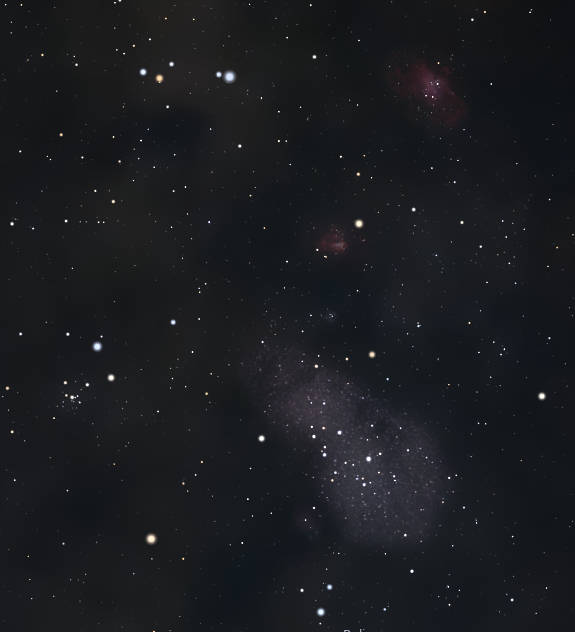
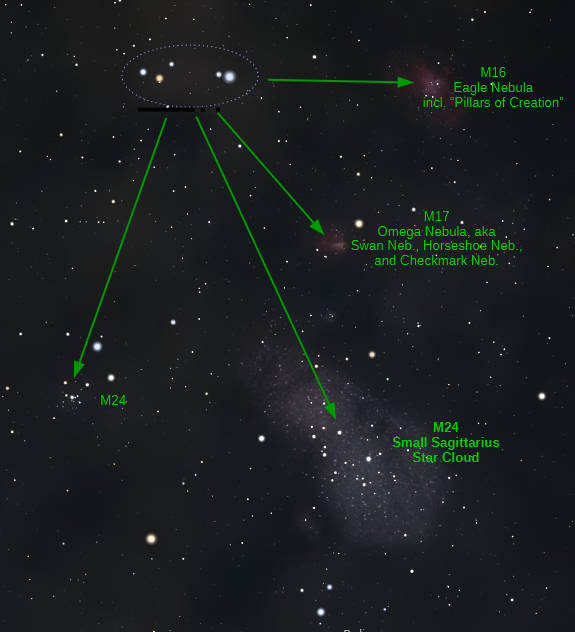
This is Bob Moler with Ephemeris for Monday, September 15th. Today the Sun will be up for 12 hours and 30 minutes, setting at 7:52, and it will rise tomorrow at 7:23. The Moon, 1 day past last quarter, will rise at 1:14 tomorrow morning.
September is the second of the two months we get to see the southern part of the Milky Way in the evening sky. At 10 PM the asterism of the Teapot of the constellation Sagittarius is pouring its tea on the southwestern horizon. It is in that direction that we look to the center of the Milky Way. Unfortunately there are clouds of dust and gas between us and the center, so we cannot see it visually, though it can be seen by radio waves and other means. There are a host of objects visible in binoculars and small telescopes. One does not need a star map to be able to find them, just point a telescope at low power or binoculars in that direction and sweep around slowly. There are treasures of star clusters and nebulae to be found.
The astronomical event times given in this blog are for the Traverse City/Interlochen area of Michigan (Lat 44.7° N, Long 85.7° W; EDT, UT – 4 hours) unless stated otherwise. Times will be different for other locations.
Addendum
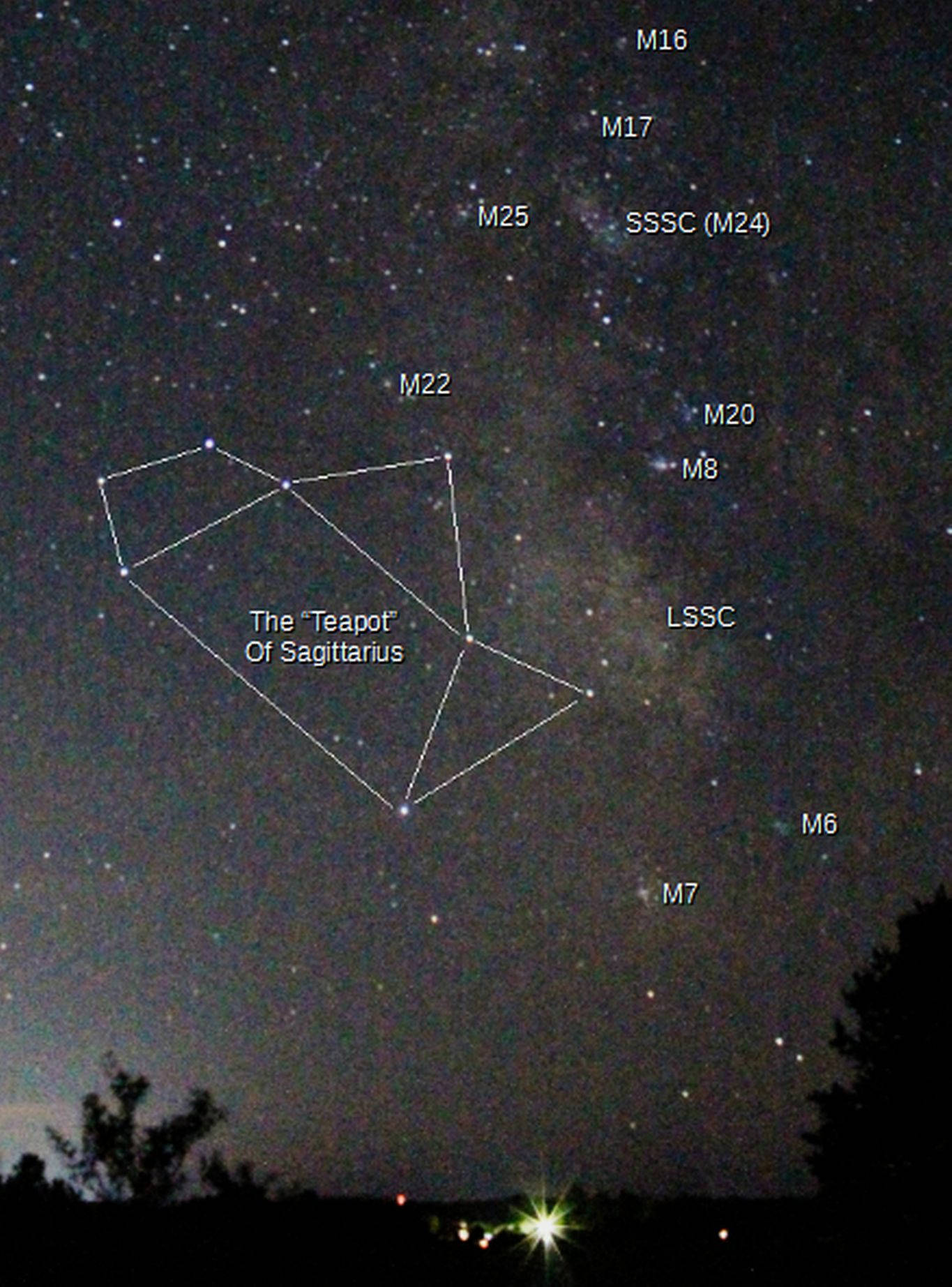
In the image above the amount of detail of the stars is approximately that of a pair of binoculars. The various nebulae and star clusters are denoted with M numbers. These are some of the brightest, what we call deep sky objects, in the catalog by Charles Messier, who is looking for comets. He numbered them as he came across them. The brightest star cluster is M7, which Claudius Ptolemy recorded in the 2nd century CE. The brightest nebula is M8, the Lagoon Nebula out of which a star cluster is being formed. In binoculars, it looks like a short horizontal gash. Next in brightness is M17, a fuzzy spot in binoculars, but appears as a glowing check mark, or swimming swan in a telescope. M20, the Trifid Nebula, is the next brightest nebula in which dark dust lanes divide it into three lobes. M16, the Eagle Nebula is very dim. Most of the time I miss the nebulosity, but its embedded star cluster is quite easily seen. The rest of the Messier objects are star clusters or a star cloud. Of these M22 is a globular star cluster and one of the easiest of these clusters to resolve, though it might take a telescope of 150 mm (6″) diameter to do it.
Ephemeris: 08/14/2025 – Centaur or Teapot, you decide
This is Bob Moler with Ephemeris for Thursday, August 14th. Today the Sun will be up for 14 hours and 5 minutes, setting at 8:49, and it will rise tomorrow at 6:45. The Moon, 2 days before last quarter, will rise at 11:11 this evening.
Low in the south at 10:30 PM shines the heart of summer Milky Way. The constellation that’s seen there is Sagittarius which is supposed to be a centaur with a bow and arrow. We modern folk haven’t seen a centaur outside a Harry Potter movie, so we see its stars looking like a teapot, a short and stout little teapot like in the children’s song. It is tipped to the West with the Milky Way like steam rising from its spout, which is about to pour its tea on the southwestern horizon later tonight. Sagittarius is just begging to be explored with binoculars or a very low power telescope to see its myriad of stars, star clusters and nebulae. As fabulous as all this appears, we cannot see into the heart of the Milky Way for all the clouds of dust in the way.
The astronomical event times given in this blog are for the Traverse City/Interlochen area of Michigan (Lat 44.7° N, Long 85.7° W; EDT, UT – 4 hours) unless stated otherwise. Times will be different for other locations.
Addendum
Ephemeris: 08/29/2024 – Centaur or Teapot, you decide!
This is Bob Moler with Ephemeris for Thursday, August 29th. Today the Sun will be up for 13 hours and 21 minutes, setting at 8:23, and it will rise tomorrow at 7:03. The Moon, 3 days past last quarter, will rise at 3:02 tomorrow morning.
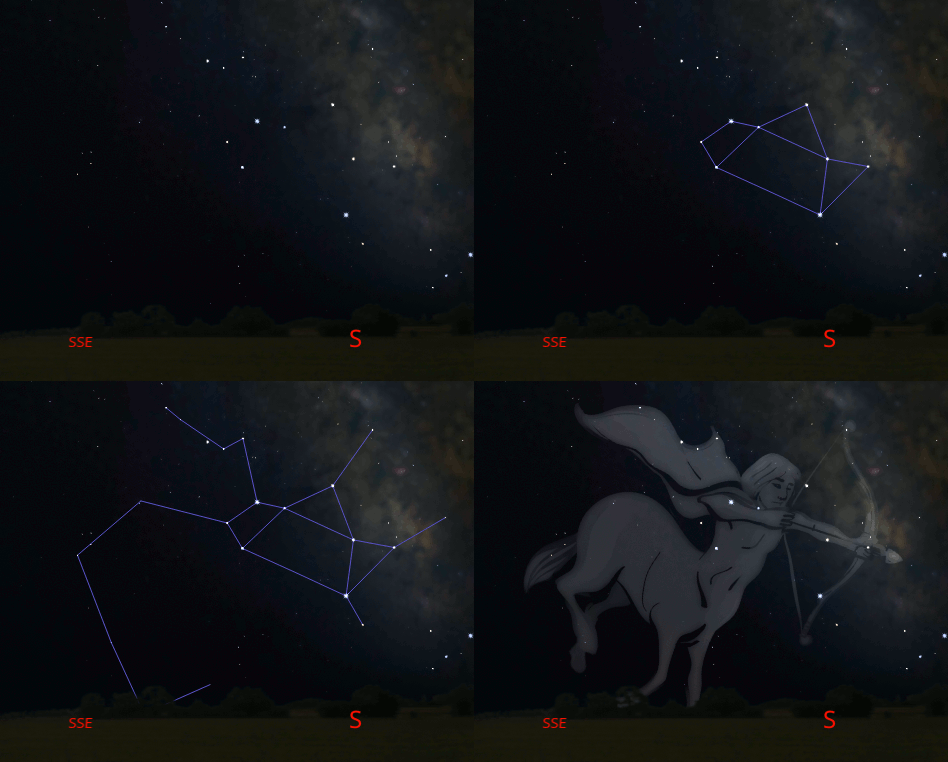
Low in the south at 10 PM shines the heart of summer Milky Way. The constellation that’s seen there is Sagittarius which is supposed to be a centaur with a bow and arrow. We modern folk haven’t seen a centaur outside a Harry Potter movie, so we see its stars looking like a teapot, a short and stout little teapot like in the children’s song. It is tipped to the West with the Milky Way like steam rising from its spout, which is about to pour its tea on the southwestern horizon later tonight. Sagittarius is just begging to be explored with binoculars or a very low power telescope to see its myriad of stars, star clusters and nebulae. As fabulous as all this appears, we cannot see into the heart of the Milky Way for all the clouds of dust and gas in the way.
The astronomical event times given are for the Traverse City/Interlochen area of Michigan (EDT, UT–4 hours). Times will be different for other locations.
Addendum
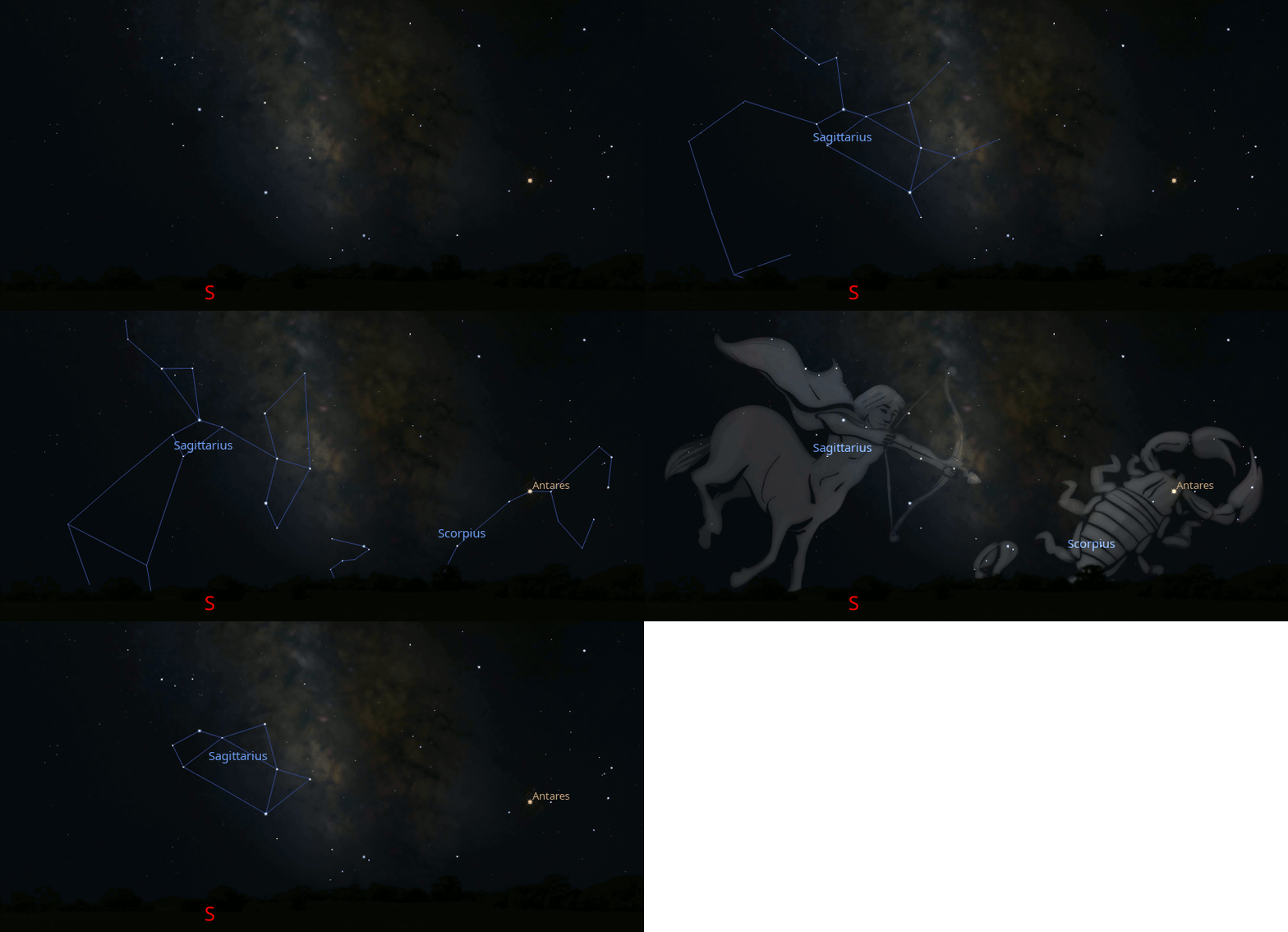
My first guide to the constellations was Stars by Zim and Baker, a Golden Guide. I checked, it has been revised and is still available. H. A. Rey’s book is also still available.
Ephemeris: 07/25/2024 – The Milky Way as it will appear tonight
This is Ephemeris for Thursday, July 25th. Today the Sun will be up for 14 hours and 54 minutes, setting at 9:16, and it will rise tomorrow at 6:23. The Moon, 2 days before last quarter, will rise at 11:43 this evening.
With the Moon out of the sky until almost 11:30 PM we get our first look at the summer Milky Way in the evening. The Milky Way will stretch from the east-northeast, high in the east to the South. The asterism of the stout little Teapot in Sagittarius, low to the south, is near the bottom end of the Milky Way. The milky stream appears as steam coming out of the spout. With more stars there, one might be able to see the Centaur with a bow and arrow. The front part of the teapot is the bow. The bottom left, and the far right star are the back and the tip of the arrow which is pointing at the heart of Scorpius the scorpion in the south-southwest. We’ll be exploring the wonders of the summer Milky Way this month and next.
The astronomical event times given are for the Traverse City/Interlochen area of Michigan (EDT, UT–4 hours). They may be different for your location.
Addendum
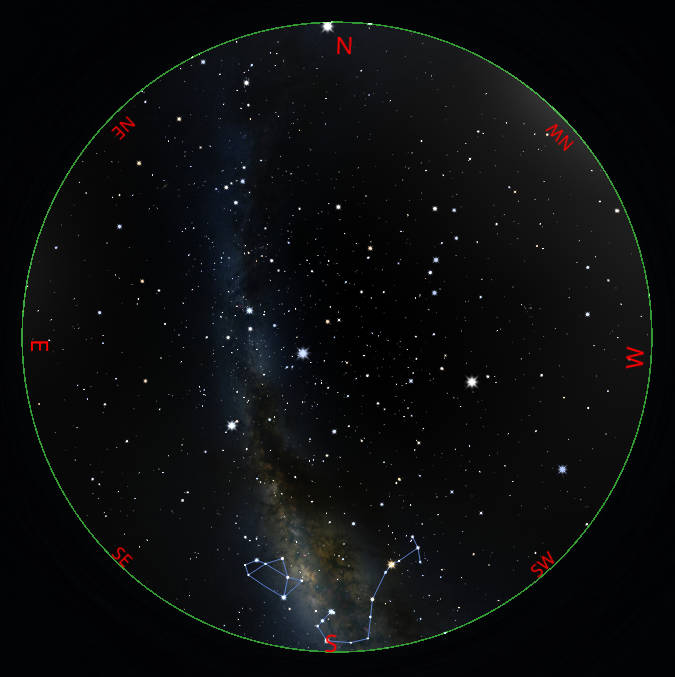
Ephemeris: 10/03/2023 – How to find Cassiopeia the queen
This is Bob Moler with Ephemeris for Tuesday, October 3rd. Today the Sun will be up for 11 hours and 36 minutes, setting at 7:19, and it will rise tomorrow at 7:44. The Moon, 3 days before last quarter, will rise at 9:35 this evening.
The stars of the autumn skies are slowly replacing the summer stars from the east. By 9 pm Scorpius the scorpion is gone, The Teapot asterism of Sagittarius is pouring its tea on the southwestern horizon. Looking halfway up in the northeastern sky these autumn the evenings one can find the letter W shaped constellation of Cassiopeia the queen. Cassiopeia is so far north that it never sets for us in Michigan. It is opposite the pole star Polaris from the handle of Big Dipper. Above and left of Cassiopeia is a dim upside down church steeple shaped constellation of Cepheus the king, her husband.
The astronomical event times given are for the Traverse City/Interlochen area of Michigan (EDT, UT –4 hours). They may be different for your location.
Addendum

Delta Cephei is the archetype for the important Cepheid variable stars that are used in distance measurement as far as the nearest galaxies. Delta itself varies its brightness from magnitude 4.37 up to 3.48. In astronomy the lower the magnitude the brighter the star. The difference of 0.89 magnitude equals a difference in brightness of 2.27 times. Delta has a pulsation period of 5.367 days. For Cepheids, the longer the period the brighter the star.
Ephemeris: 08/07/2023 – Sagittarius, centaur or teapot?
This is Bob Moler with Ephemeris for Monday, August 7th. Today the Sun will be up for 14 hours and 25 minutes, setting at 9:00, and it will rise tomorrow at 6:36. The Moon, 1 day before last quarter, will rise at 12:06 tomorrow morning.
Looking due south and low in the sky at 11 pm, now is one of my favorite asterisms, the Teapot of the constellation Sagittarius. Sagittarius, classically, represents a centaur with a bow and arrow aimed at the heart of the constellation Scorpius to its west. I can find the bow and arrow here, but the half man, half horse figure of the centaur eludes me. However, the stout little teapot of the children’s song is quite obvious, with its base, lid on top, handle to the left and the spout to the right. To make things more realistic, the bright Milky Way seems to rise like steam from its spout. The Teapot is an asterism, an informal constellation. As the night goes on, the Teapot moves westward and appears to tilt, pouring its tea on the southwestern horizon.
The astronomical event times given are for the Traverse City/Interlochen area of Michigan (EDT, UT –4 hours). They may be different for your location.
Addendum
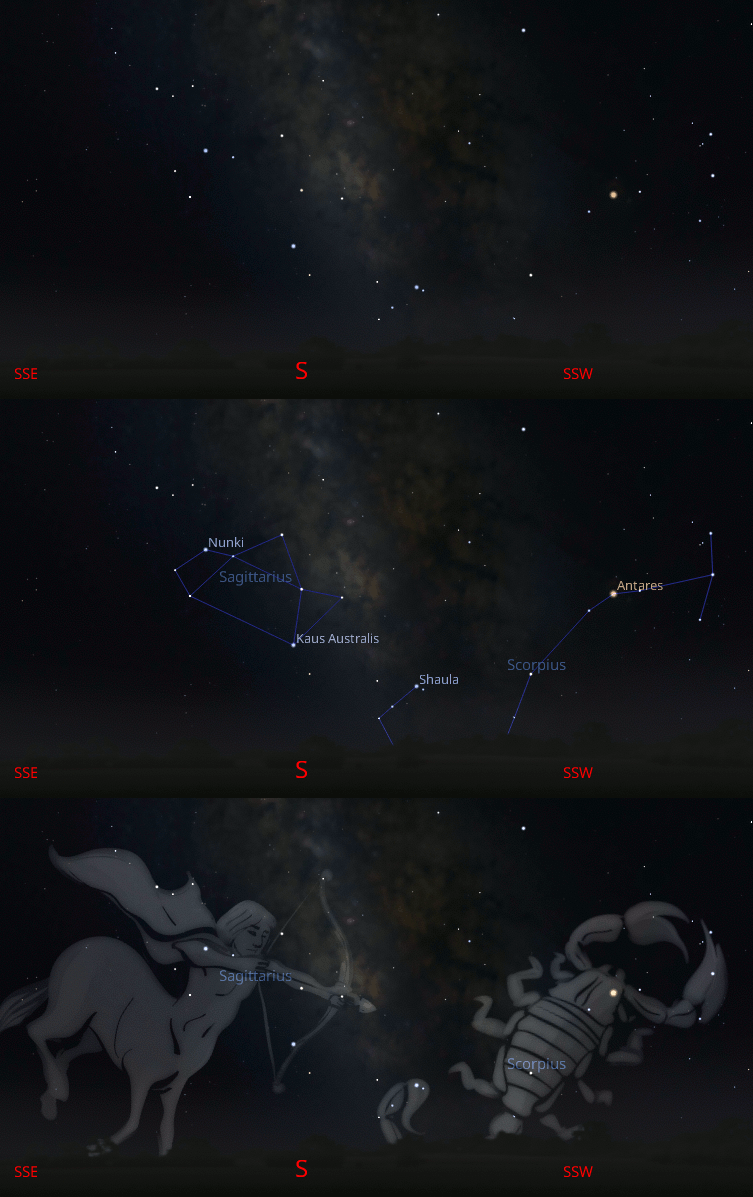
Sagittarius-Teapot finder animation for 11 pm, August 7, 2023. I’ve omitted all the lines in Sagittarius except the teapot stars from Stellarium, so there are more lines connecting the stars, most too far south to really spot easily from our latitude (45 degrees north). Click or tap on the image to enlarge it. Created using Stellarium and GIMP.
Named stars that are shown in the image above are Nunki, from an ancient tablet of thirty stars – The proclaimer of the sea. This is because the next four constellations to the east are water constellations: Capricornus, the sea goat; Aquarius, the water bearer; Pisces the fish; and Piscis Australis, the southern fish. Antares, in Scorpius, is of course the Rival of Mars, due to its reddish hue, and Mars passes Antares regularly on its journey through the Zodiac. An archer has to have his bow. Kaus Australis is the southern bow star. The star above that is Kaus Media, the middle bow star. And the star above and left of that is Kaus Borealis, the northern bow star. The constellation art that comes with Stellarium doesn’t match up with the stars of the bow.
The five stars on the left side of the Teapot is another asterism called the Milk Dipper.
Sagittarius in a short time exposure with added annotations. This would be later in the evening, around midnight. The “M” designations are objects in Charles Messier’s catalog created in the latter half of the 18th century. LSSC is the Large Sagittarius Star Cloud, SSSC is the Small Sagittarius Star Cloud. These will be easily visible in binoculars. Credit Bob Moler.
08/16/2022 – Ephemeris – Scanning Sagittarius with binoculars
This is Bob Moler with Ephemeris for Tuesday, August 16th. Today the Sun will be up for 14 hours to the minute, setting at 8:46, and it will rise tomorrow at 6:47. The Moon, 3 days before last quarter, will rise at 11:15 this evening.
The Moon has left the evening sky, so let’s take another look at the constellation of Sagittarius. Its bright stars make a follow the dots image of a stout little teapot. In, around and above the teapot is a wealth of nebulae, which are clouds of gas and dust and clusters of stars. Stars are born in bunches from a cloud of gas. When enough stars are born, their stellar winds blow away the nebulosity leaving a star cluster. Use a pair of binoculars or a very low power telescope and just wander around and above the teapot, including and especially the spout on the right side. In binoculars, star clusters appear fuzzy like nebulae, however a small telescope with magnification of 20 times should resolve most of them.
The astronomical event times given are for the Traverse City/Interlochen area of Michigan (EDT, UT – 4 hours). They may be different for your location.
Addendum
Sagittarius in a short time exposure with added annotations. The “M” designations are objects in Charles Messier’s catalog created in the latter half of the 18th century. LSSC is the Large Sagittarius Star Cloud, SSSC is the Small Sagittarius Star Cloud. Labels are to the right of the objects they name. Credit Bob Moler.
This is the short radio program version of the August 8, 2022, Ephemeris Extra post Wandering through Sagittarius
08/05/2021 – Ephemeris – Looking toward the center of the Milky Way in Sagittarius
This is Ephemeris for Thursday, August 5th. Today the Sun will be up for 14 hours and 29 minutes, setting at 9:02, and it will rise tomorrow at 6:35. The Moon, 3 days before new, will rise at 4:09 tomorrow morning.
Let’s look around the Teapot shape of stars that is the constellation of Sagittarius. A pair of binoculars or a telescope with a very low magnifying power is all that’s needed. The purpose here is not so much to make things bigger, but make them brighter. Right off the tip of the teapot’s spout is a large and bright patch of light. This is the farthest we can see, in visible light that is, toward the center of our galaxy, part of the central bulge. Astronomer Walter Baade discovered that fact in the mid 1940s. The center of the galaxy is 4 moon-widths or 2 degrees to the right of it, but obscured by a cloud of interstellar dust. It is called the Large Sagittarius Star Cloud or Baade’s Window. The glow there comes from 25 thousand light years away.
The astronomical event times given are for the Traverse City/Interlochen area of Michigan (EDT, UT – 4 hr). They may be different for your location.
Addendum
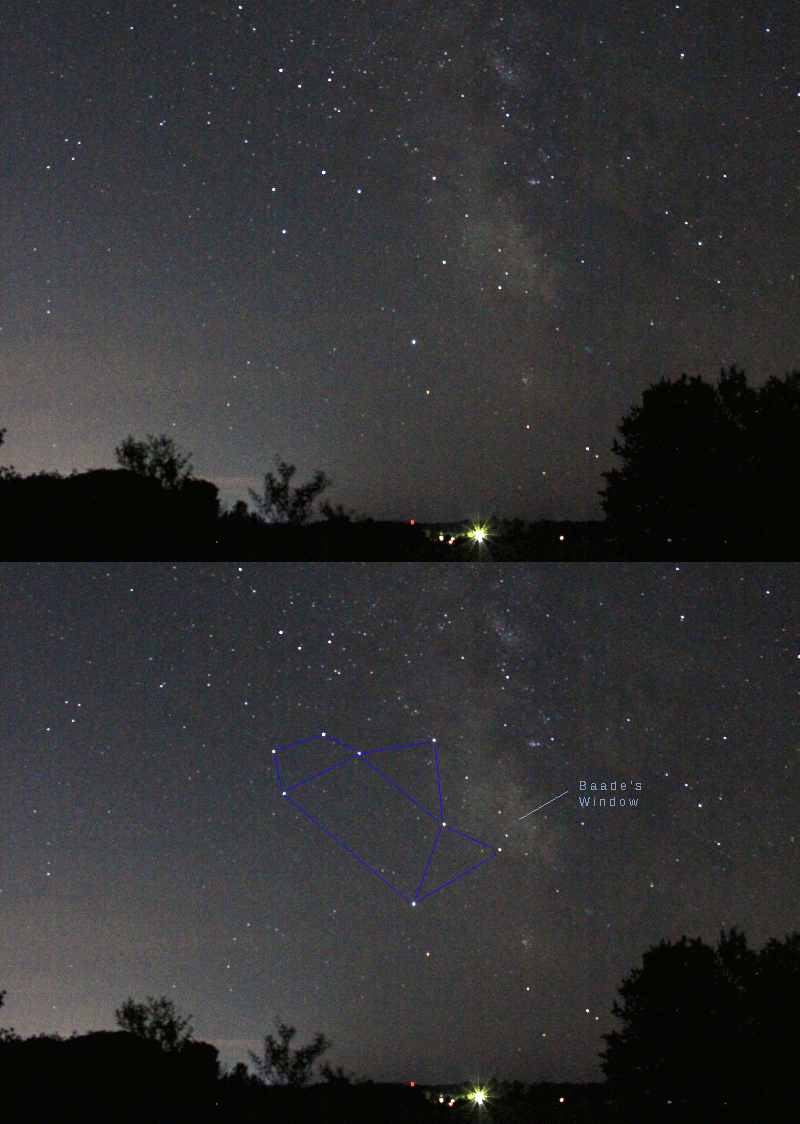
Baade’s Window, aka Large Sagittarius Star Cloud. A finder animation created from my photograph taken August 23, 2016, at 11:23 pm. Click on the image to enlarge it.
08/03/2021 – Ephemeris – Centaur or Teapot?
This is Ephemeris for Tuesday, August 3rd. Today the Sun will be up for 14 hours and 33 minutes, setting at 9:05, and it will rise tomorrow at 6:32. The Moon, 3 days past last quarter, will rise at 2:31 tomorrow morning.
In the south and low in the sky at 10:30 p.m. is one of my favorite asterisms the Teapot of the constellation Sagittarius. Sagittarius classically represents a centaur with a bow and arrow aimed at the heart of the constellation Scorpius to its west. I can find the bow and arrow here, but the half man, half horse figure of the centaur eludes me. However, the stout little teapot of the children’s song is quite obvious, with its base, lid on top, handle to the left and the spout to the right. To make things more realistic, the bright Milky Way seems to rise like steam from its spout. As the night goes on, the Teapot slides westward and appears to tilt, pouring its tea on the southwestern horizon. Its appearance in the south is an invitation to explore the milky band with binoculars.
The astronomical event times given are for the Traverse City/Interlochen area of Michigan (EDT, UT – 4 hr). They may be different for your location.
Addendum
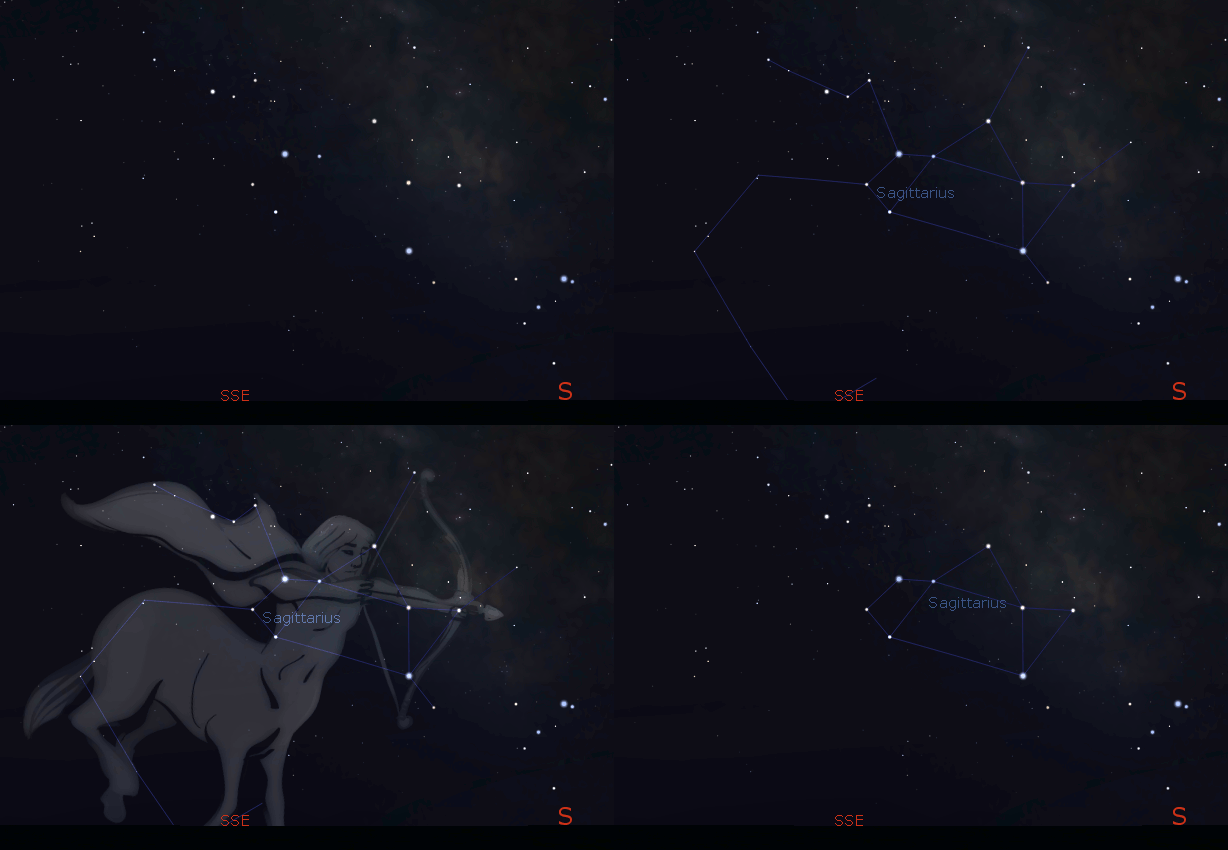
Sagittarius and the Teapot finder animation for tonight, August 3rd. Created using Stellarium.
08/13/2020 – Ephemeris – Sagittarius the archer, morphs into a teapot
This is Bob Moler with Ephemeris for Thursday, August 13th. Today the Sun will be up for 14 hours and 7 minutes, setting at 8:50, and it will rise tomorrow at 6:44. The Moon, 2 days past last quarter, will rise at 1:53 tomorrow morning.
Due south and low in the sky at 10:30 p.m. now is one of my favorite asterisms the Teapot of the constellation Sagittarius. Sagittarius classically represents a centaur with a bow and arrow aimed at the heart of the constellation Scorpius to its west. I can find the bow and arrow here, but the half man half horse figure of the centaur eludes me. However the stout little teapot of the children’s song is quite obvious, with its base, lid on top, handle to the left and the spout to the right. To make things more realistic the bright Milky Way seems to rise like steam from its spout. As the night goes on the Teapot slides westward and appears to tilt, pouring its tea on the southwestern horizon. Jupiter and Saturn are just to the left of it now.
The event times given are for the Traverse City/Interlochen area of Michigan. They may be different for your location.
Addendum
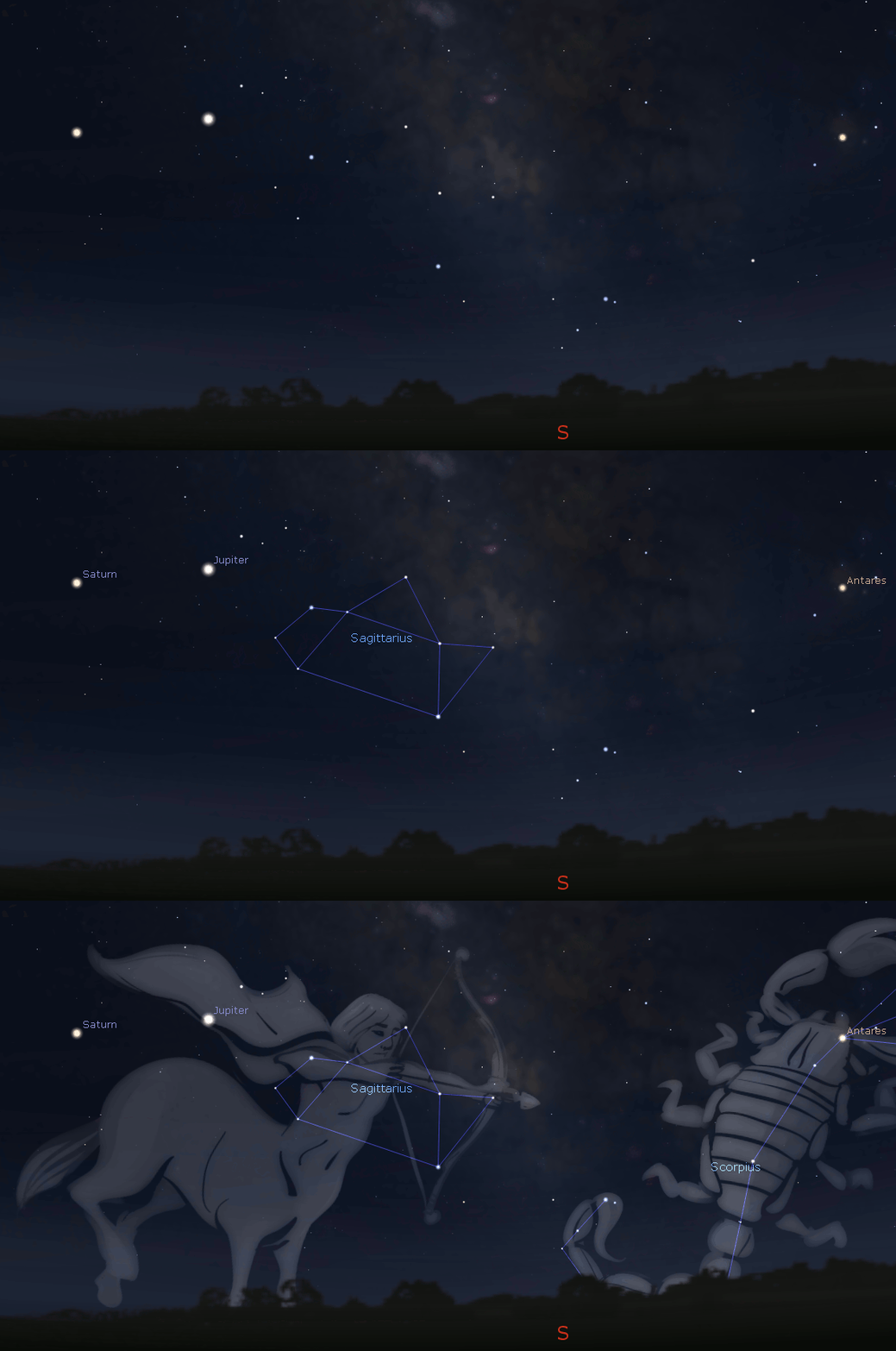
Sagittarius-Teapot finder animation for 10 pm August 13, 2020. Click on the image to enlarge. Created using Stellarium and GIMP.
 Bob Moler's Ephemeris Blog