Archive
04/10/2015 – Ephemeris – Venus will pass the Pleiades tomorrow evening
Ephemeris for Friday, April 10th. The Sun will rise at 7:07. It’ll be up for 13 hours and 13 minutes, setting at 8:21. The Moon, 1 day before last quarter, will rise at 2:22 tomorrow morning.
Tomorrow evening, that’s Saturday the 11th, Venus will pass the Pleiades. Venus will appear below and left of that famous Seven Sisters star cluster by about 5 moon widths, or about a quarter of the width of your fist held at arm’s length. Venus is moving rapidly eastward against the stars and will be approaching Jupiter for the next two and a half months. It will catch up with Jupiter and on June 30th it will be only half of a degree away, the width of the full moon. Jupiter look really bright when seen away from Venus, but to compare them close together, Jupiter can’t hold a candle to Venus. This also the part of the sky, in Leo that one of the planetary events between these two planets occurred that could have been part of the Star of Bethlehem.
Times are for the Traverse City/Interlochen area of Michigan. They may be different for your location.
Addendum
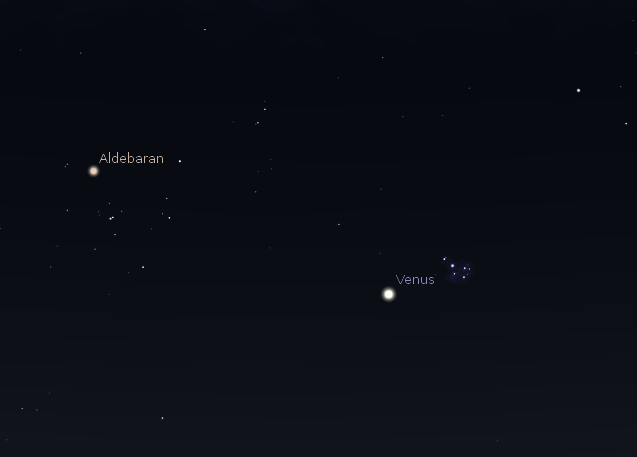
Venus passing the Pleiades at 10 p.m. on April 10, 2015. The Hyades, head of the constellation Taurus the bull, is to the left. Created using Stellarium.
04/08/2015 – Ephemeris – It’s bright planet night on Ephemeris
Ephemeris for Wednesday, April 8th. The Sun will rise at 7:11. It’ll be up for 13 hours and 7 minutes, setting at 8:18. The Moon, 3 days before last quarter, will rise at 12:34 tomorrow morning.
Lets take a look at the bright planets for this week. Our brilliant evening star Venus is high in the west by 9 p.m. It will set at 11:43 p.m. Mars appears much lower and to the right of it. The Red Planet will set tonight at 9:48. Jupiter will appear high in the southeastern sky in the evening. It will set at 4:52 a.m. It’s near the sickle-shaped head of Leo the lion, and it’s the second brightest star-like object in the sky after Venus. Three of the four moons will be visible in telescopes tonight, Callisto is behind Jupiter and will reappear at 4:42 a.m., shortly before Jupiter sets. Early risers will be able to spot Saturn which will rise in the east-southeast at 12:01 a.m. It will be low in the south at 5 to 6 a.m.
Times are for the Traverse City/Interlochen area of Michigan. They may be different for your location.
Addendum
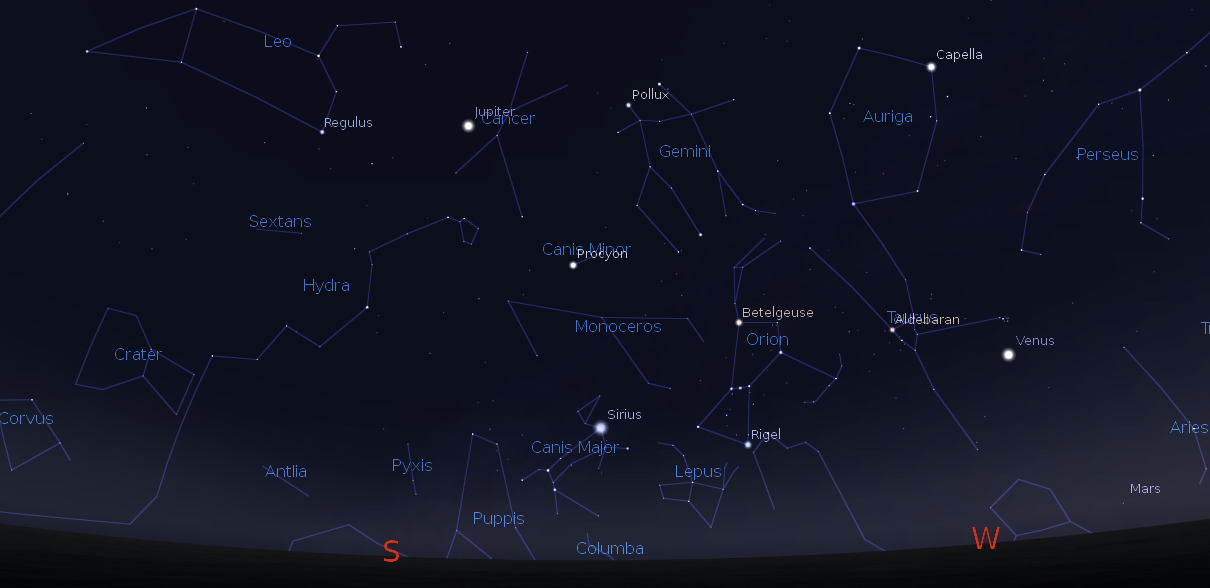
The Moon, Jupiter, Venus and Mars and remaining winter constellations at 9:30 p.m. April 8, 2015. Created using Stellarium.
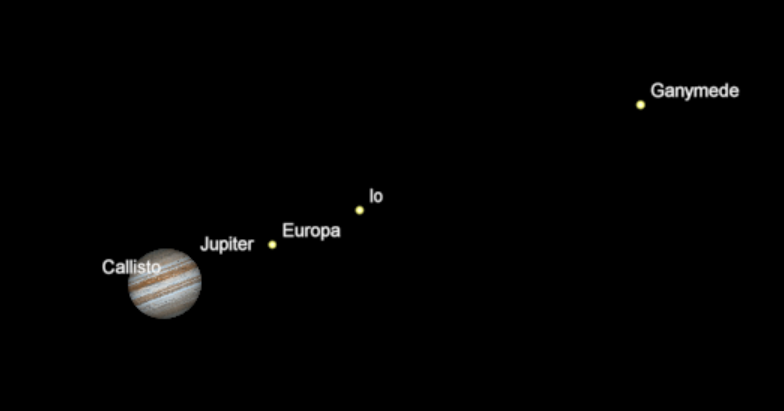
Jupiter and three of its moons. Callisto is tagged, but is behind the planet at 9:30 p.m. April 8, 2015. Created using Cartes du Ceil (Sky Charts).
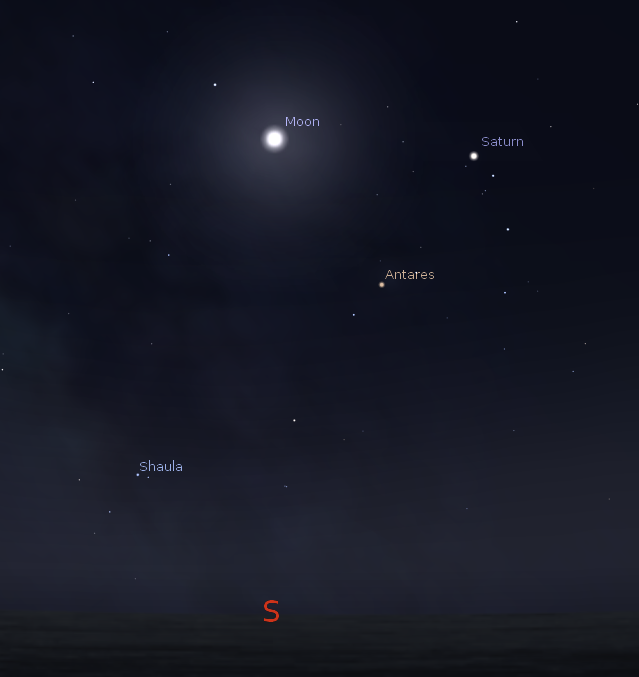
Saturn and the Moon above Scorpius at 5:30 a.m. April 9, 2015. Created using Stellarium.
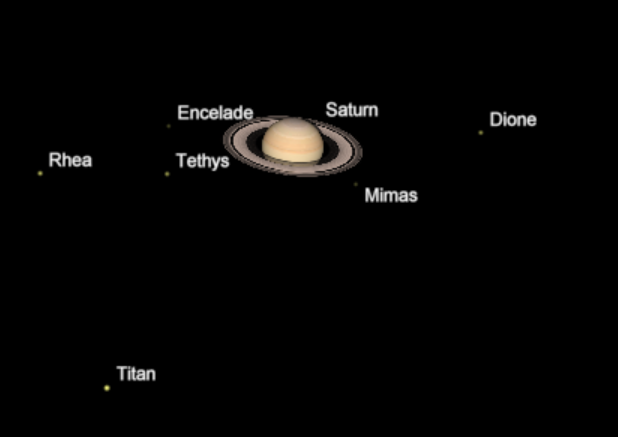
What Saturn and its moons might appear like in a telescope at 5:30 a.m., April 9, 2015. Small telescopes will show only the moon Titan. Created using Cartes du Ceil (Sky Charts).
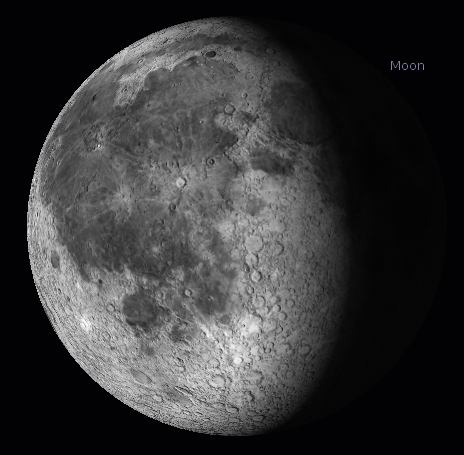
The Moon at 5:30 a.m. April 9, 2015. Created using Cartes du Ceil (Sky Charts).
04/01/2015 – Ephemeris – No fooling, it’s time to look at the bright planets for this week
Ephemeris for April Fools Day, Wednesday, April 1st. The Sun will rise at 7:24. It’ll be up for 12 hours and 45 minutes, setting at 8:10. The Moon, 3 days before full, will set at 6:29 tomorrow morning.
Lets take a look at the bright planets for this week. Brilliant Venus is in the west by 8:40 p.m. It will set at 11:23 p.m. Mars appears much lower and to the right of it. The Red Planet will set tonight at 9:48. Jupiter will appear In the southeastern sky in the evening. It will set at 5:20 a.m. It’s near the sickle-shaped head of Leo the lion, and it’s the second brightest star-like object in the sky after Venus. All four moons will be visible in telescopes tonight, but tomorrow morning the moon Io will duck behind Jupiter at 2:55, but will not pop into sunlight until after Jupiter sets. Early risers will be able to spot Saturn which will rise in the east-southeast at 12:30 a.m. It will be low in the south at 5 to 6 a.m.
Times are for the Traverse City/Interlochen area of Michigan. They may be different for your location.
Addendum
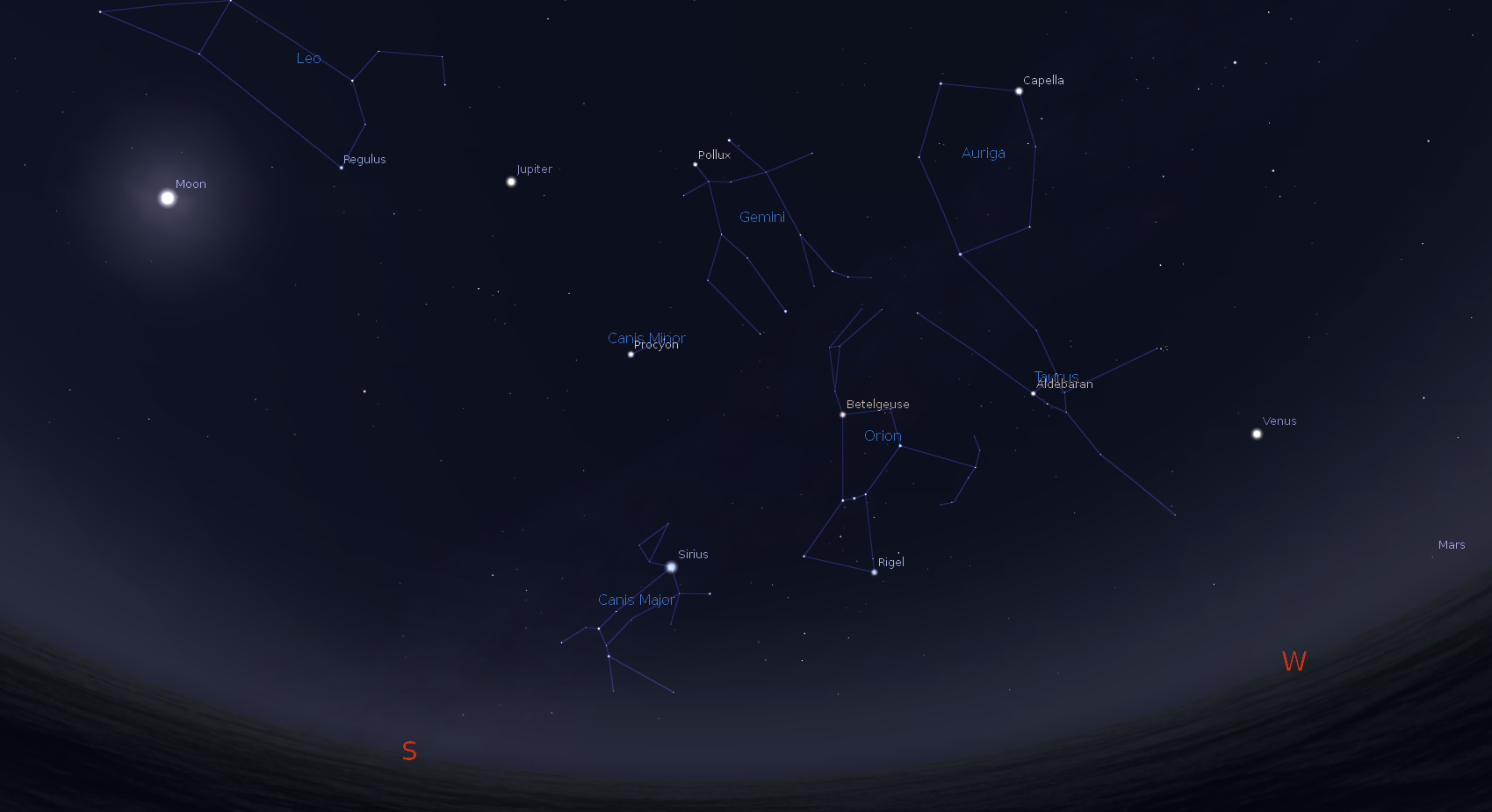
The Moon, evening planets and bright constellations at 9:30 p.m. April 1, 2015. Created using Stellarium.
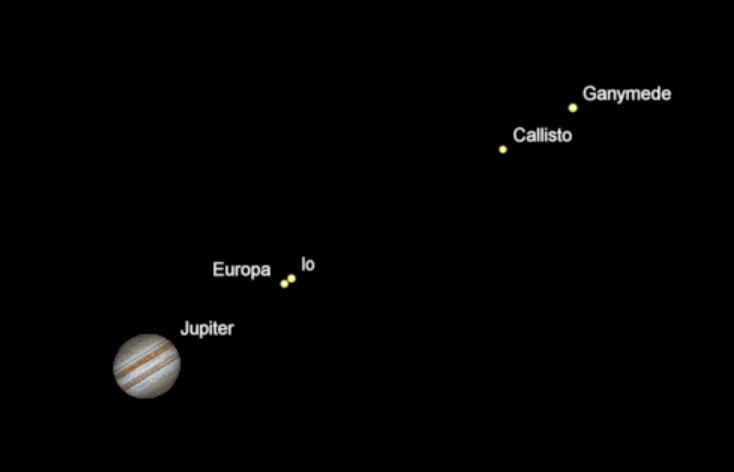
Jupiter as seen in a telescope at 9:30 p.m. April 1, 2014. Europa will partially occult Io starting at 9:41 p.m. for 4 minutes. They will appear to merge. Later at 11:21 p.m. Io will be partially eclipsed in Europa’s shadow for about 4 minutes. Europa will dim slightly. Created using Cartes du Ceil (Sky Charts).
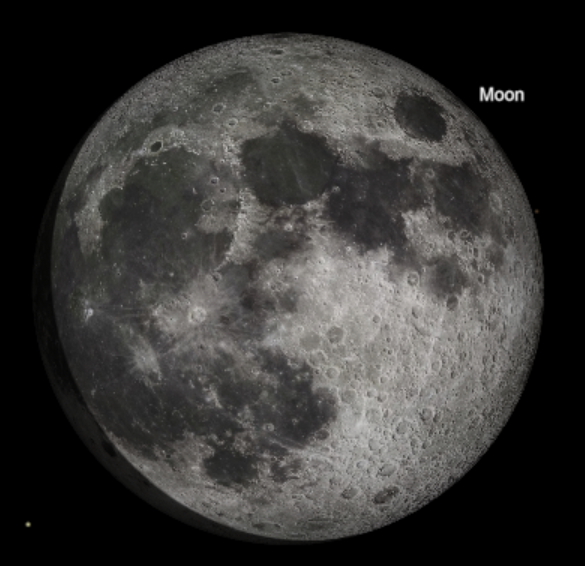
The Moon at 9:30 p.m. April 1, 2015. Created using Cartes du Ceil (Sky Charts).
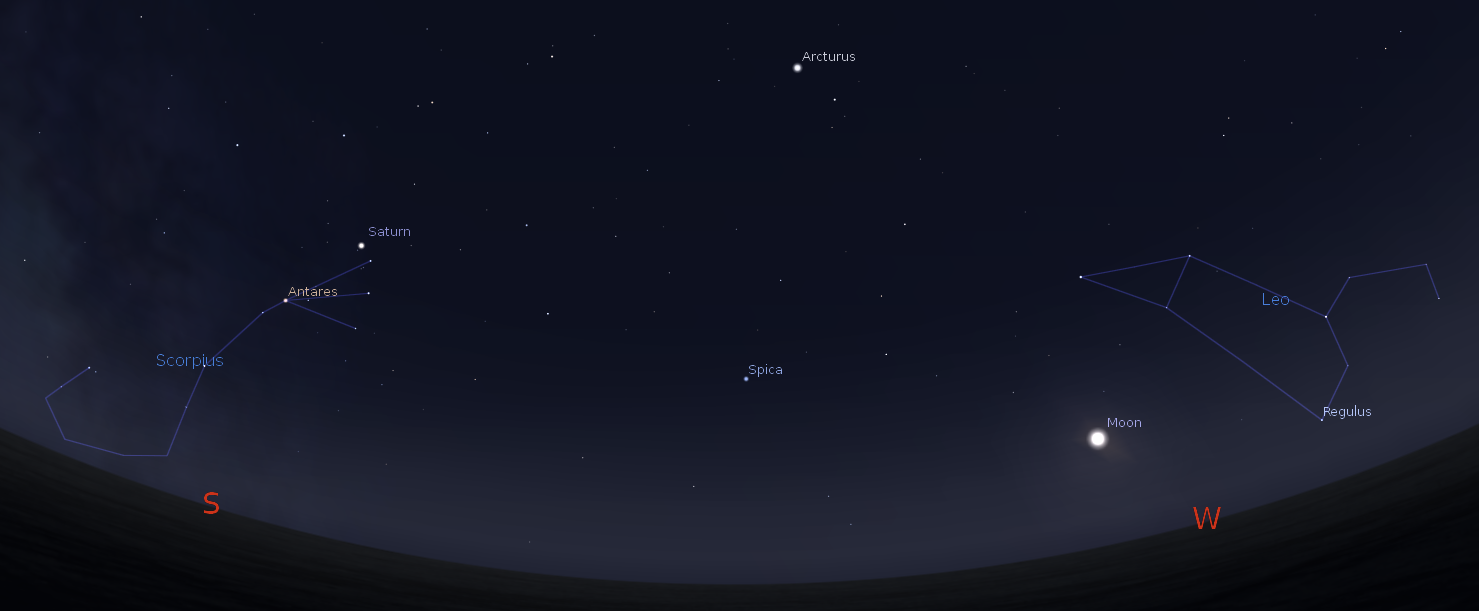
Saturn, the Moon with Scorpius and Leo at 5:30 a.m. April 2, 2015. Created using Stellarium.
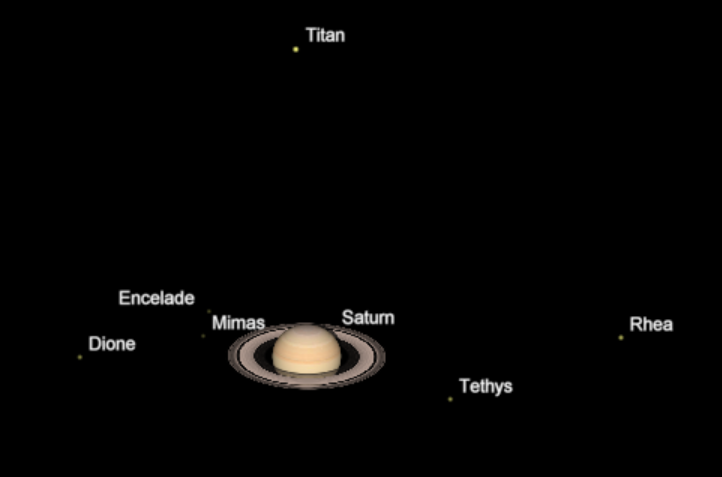
What Saturn and its moons might appear like in a telescope at 5:30 a.m., April 2, 2015. Small telescopes will show only the moon Titan. Created using Cartes du Ceil (Sky Charts).
03/25/2015 – Ephemeris – Where are the bright planets tonight?
Ephemeris for Wednesday, March 25th. The Sun will rise at 7:37. It’ll be up for 12 hours and 24 minutes, setting at 8:01. The Moon, 2 days before first quarter, will set at 2:13 tomorrow morning.
Lets take a look at the bright planets for this week. Brilliant Venus is in the west by 8:30 p.m. It will set at 11:07 p.m. Mars appears much lower and to the right of it. The Red Planet will set tonight at 9:48. Jupiter will appear In the southeastern sky in the evening. It will set at 5:48 a.m. It’s near the sickle-shaped head of Leo the lion, and it’s the second brightest star-like object in the sky after Venus. In telescopes tomorrow morning the moon Io will duck behind Jupiter at 1:05, but will pop into sunlight a bit away from the planet on the other side at 4:23 a.m. because it also will be hidden in Jupiter’s shadow. Early risers will be able to spot Saturn which will rise in the east-southeast at 12:59 a.m. It will be low in the south at 6 to 7 a.m.
Times are for the Traverse City/Interlochen area of Michigan. They may be different for your location.
Addendum
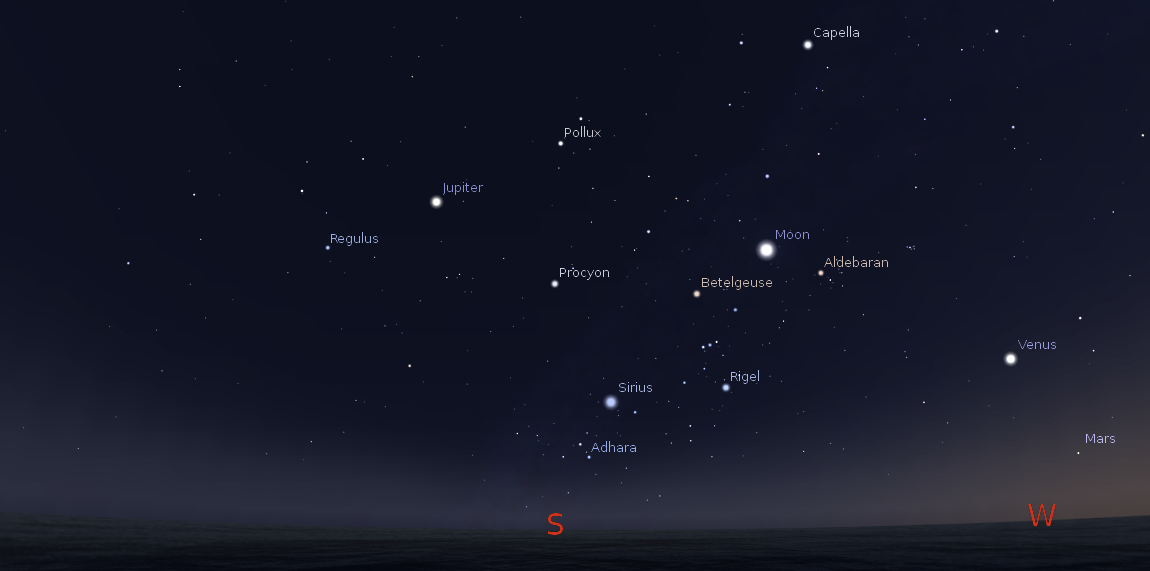
The evening planets of Mars, Venus and Jupiter with the Moon and winter stars. Created using Stellarium.
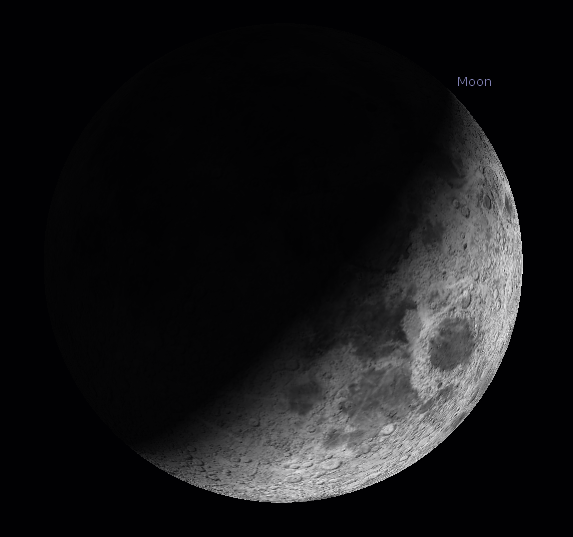
The Moon as it would appear in binoculars at 9 p.m. March 25, 2015. Created using Stellarium.
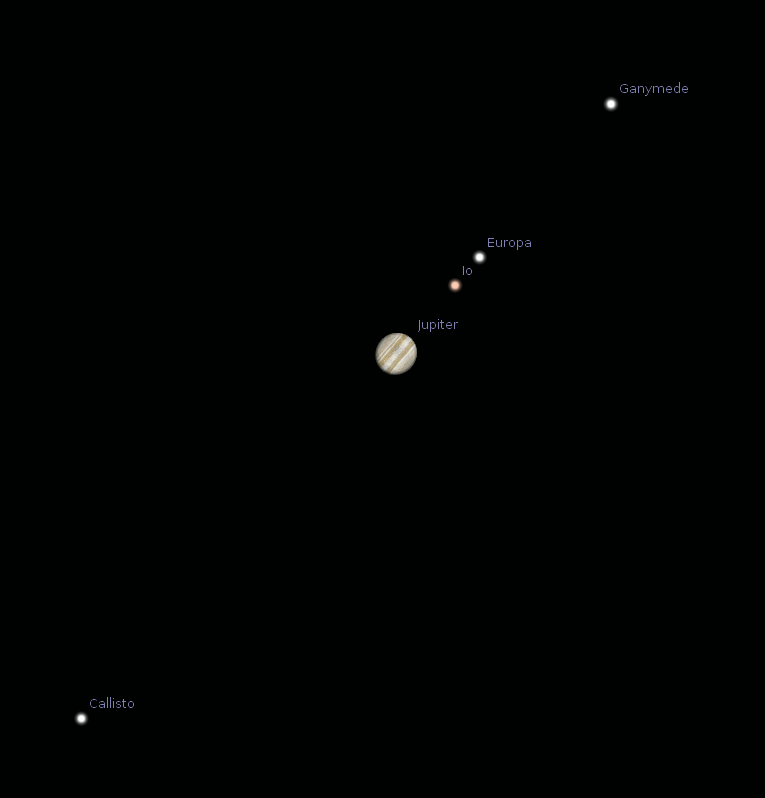
Jupiter and its moons at 9 p.m. March 25, 2015. Created using Stellarium.
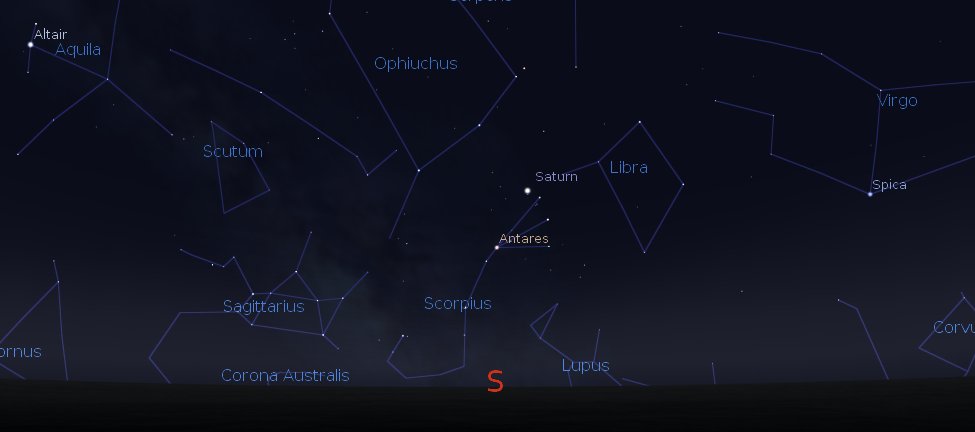
Saturn and the southern summer constellations at 6 a.m. on March 26, 2015. Created using Stellarium.
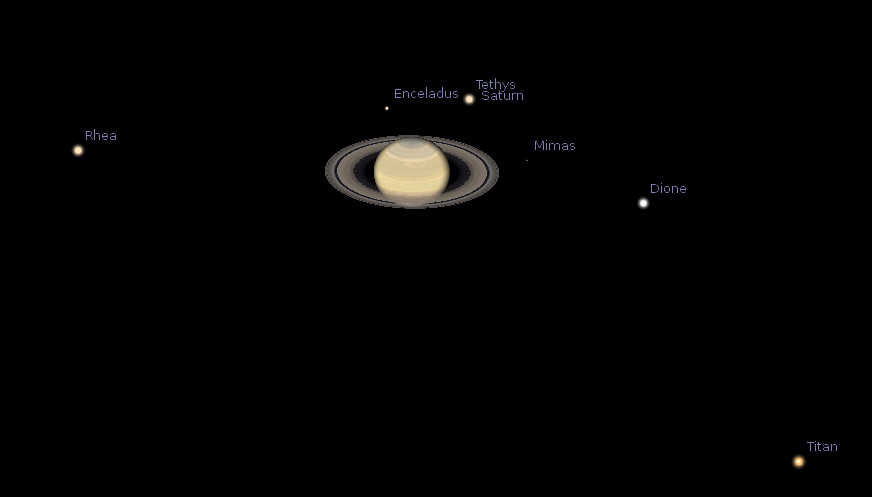
What Saturn and its moons might appear like in a telescope at 6 a.m., March 26, 2015. Small telescopes will show only the moon Titan. Created using Stellarium.
03/18/2015 Ephemeris – It’s Wednesday, so where are all the bright planets?
Ephemeris for Wednesday, March 18th. The Sun will rise at 7:50. It’ll be up for 12 hours and 2 minutes, setting at 7:52. The Moon, 2 days before new, will rise at 7:14 tomorrow morning.
Lets take a look at the bright planets for this week. Brilliant Venus is in the west by 8:30 p.m. It will set at 10:49 p.m. Mars appears below and right of it. The Red Planet will set tonight at 9:47. Jupiter will appear In the southeastern sky in the evening. It will set at 6:41 a.m. It’s near the sickle-shaped head of Leo the lion, and it’s the brightest star-like object in the sky after Venus sets. In telescopes tonight the moon Io will duck behind Jupiter at 11:17, but will pop into sunlight a bit away from the planet on the other side at 2:28 a.m. because it also will be hidden in Jupiter’s shadow. Early risers will be able to spot Saturn which will rise in the east-southeast at 1:27 a.m. It will be low in the south at 6 to 7 a.m.
Times are for the Traverse City/Interlochen area of Michigan. They may be different for your location.
Addendum
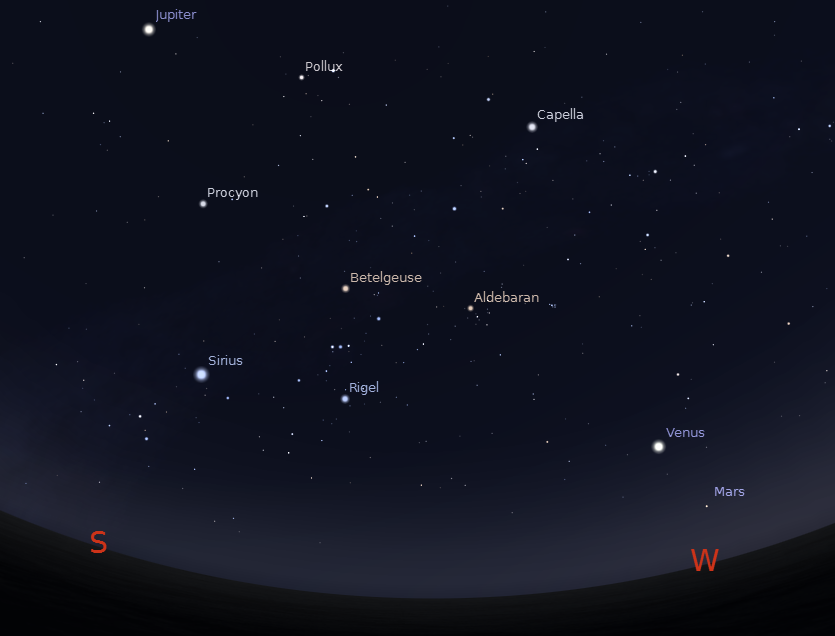
Jupiter, Venus and Mars at 9 p.m. March 18, 2015. Created using Stellarium.
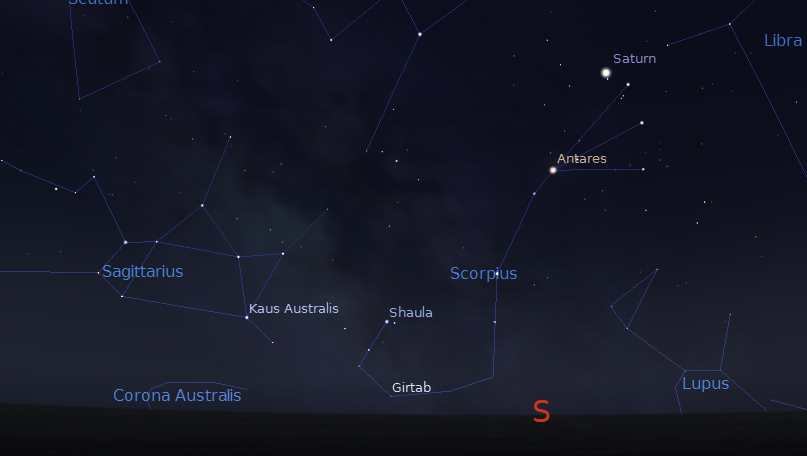
Saturn and the summer constellations of Scorpius and Sagittarius at 6:30 a.m. March 19, 2015. Created using Stellarium.
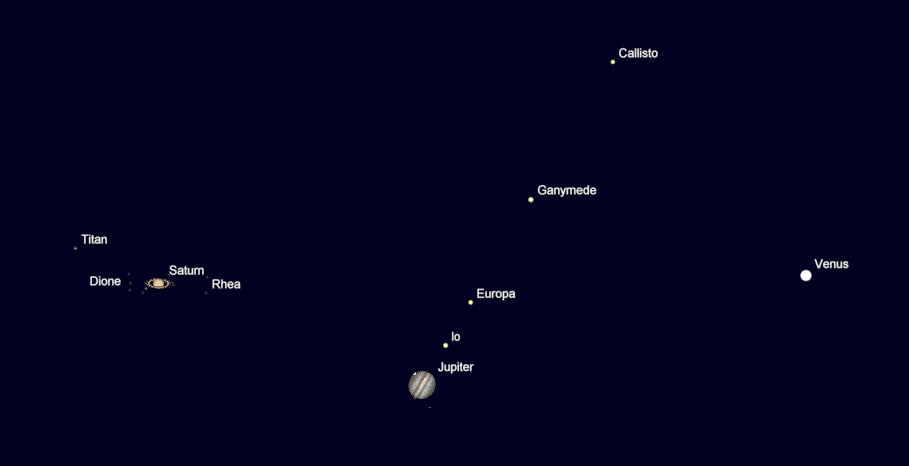
Planets to the same scale as viewed in a telescope of the same power. Venus and Jupiter at 8:30 p.m. on March 18, 2015. Saturn at 6:30 a.m. on March 19. 2015. Created using Cartes du Ceil (Sky Charts).
03/11/2015 – Ephemeris – On Wednesday we look at the bright planets
Ephemeris for Wednesday, March 11th. The Sun will rise at 8:02. It’ll be up for 11 hours and 40 minutes, setting at 7:43. The Moon, 2 days before last quarter, will rise at 1:42 tomorrow morning.
Lets take a look at the bright planets for this week. Brilliant Venus is in the west by 8:30 p.m. It will set at 10:31 p.m. Mars appears below and right of it. The Red Planet will set tonight at 9:47. Jupiter will appear In the southeastern sky in the evening. It will set at 6:41 a.m. It’s near the sickle-shaped head of Leo the lion, and it’s the brightest star-like object in the sky after Venus sets. In telescopes tonight the moon Io duck behind Jupiter at 9:29 early, but will pop into sunlight a bit away from the planet on the other side at 12:33 a.m. because it also will be hidden in Jupiter’s shadow. Early risers will be able to spot Saturn which will rise in the east-southeast at 1:54 a.m. It will appear below the Moon tomorrow morning.
Times are for the Traverse City/Interlochen area of Michigan. They may be different for your location.
Addendum
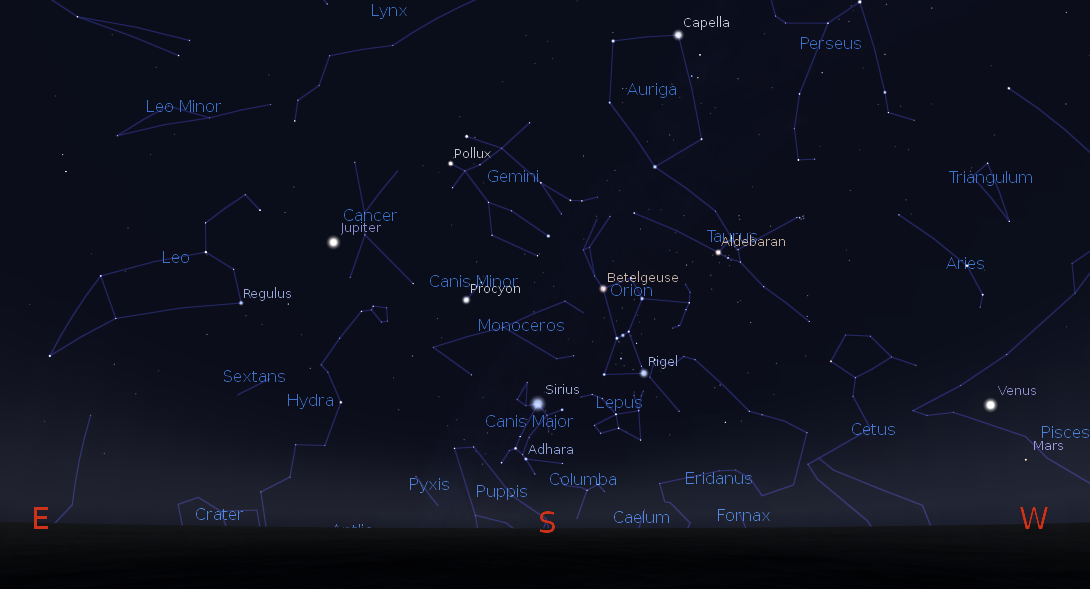
The evening planets Mars, Venus, and Jupiter with the winter constellations at 9 p.m. March 11, 2015. Created using Stellarium.
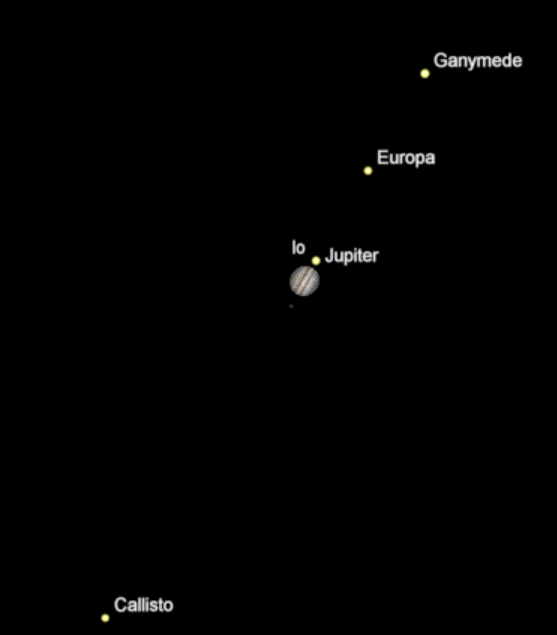
Jupiter and moons at 9 p.m. March 11, 2015, about 29 minutes before Io moves behind Jupiter. Created using Cartes du Ceil (Sky Charts).
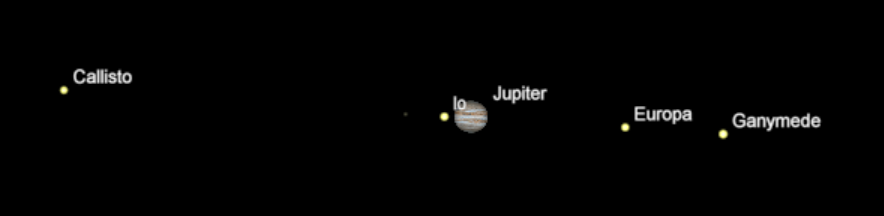
Jupiter and moons at 12:33 a.m. March 12, 2015, about when Io emerges into sunlight from Jupiter’s shadow. Created using Cartes du Ceil (Sky Charts).
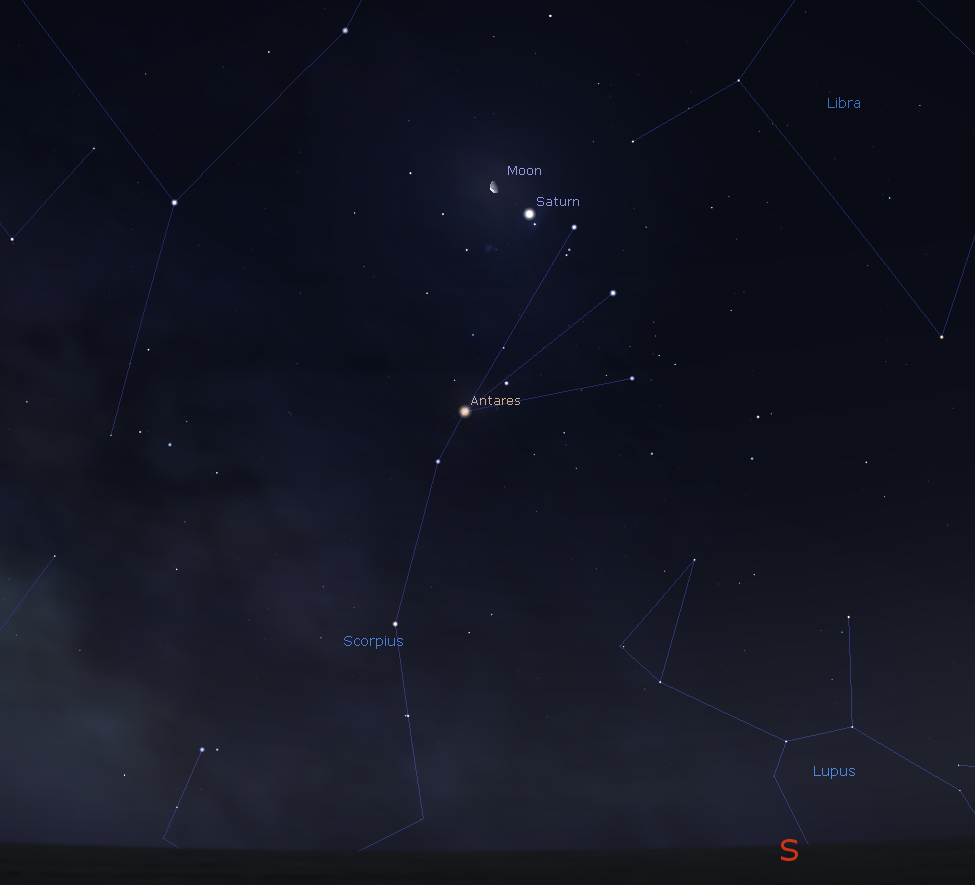
Saturn and the Moon in Scorpius in the south at 6 a.m. March 12, 2015. Created using Stellarium.
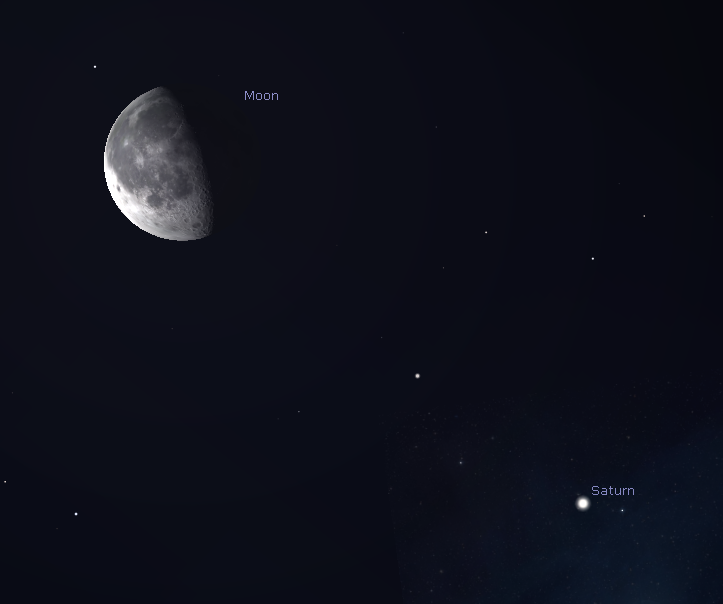
Closeup of Saturn and the Moon at 6 a.m. March 12, 2015. Created using Stellarium.
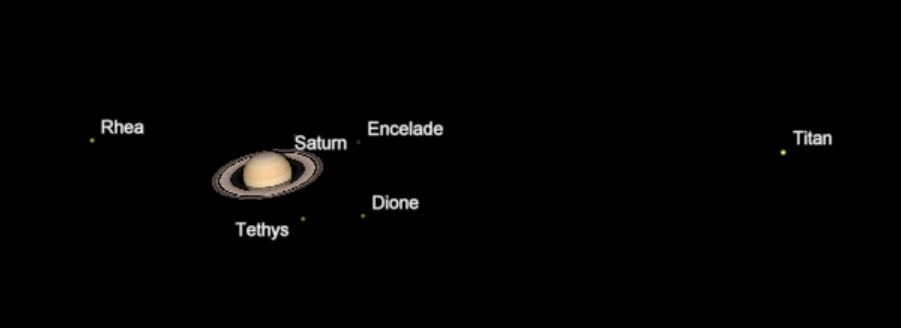
What Saturn and its moons might appear like in a telescope at 6 a.m., March 12, 2015. Small telescopes will show only the moon Titan. Created using Cartes du Ceil (Sky Charts).
03/04/2015 – Ephemeris – Our weekly look at the bright planets
Ephemeris for Wednesday, March 4th. The Sun will rise at 7:15. It’ll be up for 11 hours and 18 minutes, setting at 6:34. The Moon, 1 day before full, will set at 6:59 tomorrow morning.
Lets take a look at the bright planets for this week. Brilliant Venus is in the west by 7:30 p.m. It will set at 9:13 p.m. It’s separating from Mars which appears below and right of it. The Red Planet will set tonight at 8:47 p.m. Jupiter will appear In the southeastern sky in the evening. It will be up just about all night, and will set at 6:16 a.m. It’s near the sickle-shaped head of Leo the lion, and it’s the brightest star-like object in the sky. In telescopes tonight the moon Io will be behind Jupiter and will pop into sunlight a bit away from the planet at 9:39 p.m. Tomorrow night the 5th the moon Europa will duck behind Jupiter at 8:48 p.m. After that only 3 of the moons will be visible, until 12:57 a.m. when Europa will appear on the other side.* Early risers will be able to spot Saturn which will rise in the east-southeast at 1:25 a.m. It’s in the south at 6 a.m.
Times are for the Traverse City/Interlochen area of Michigan. They may be different for your location.
* Due to a date mix up the radio program may be incorrect. The occultation of Europa on the 5th being set on the 4th. The Io occultation is since added.
Addendum
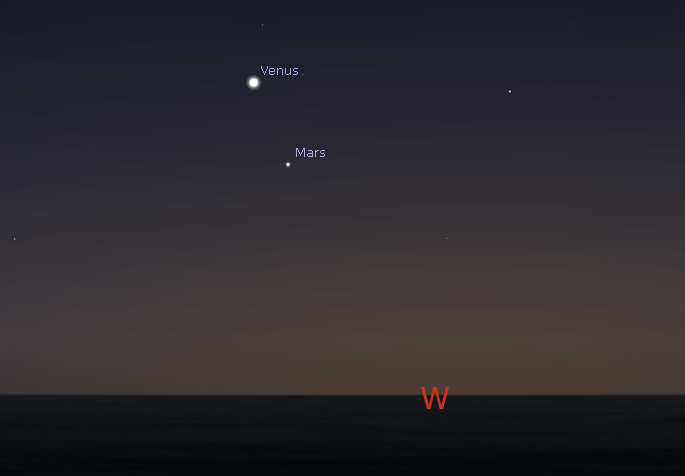
Venus and Mars in the west at 7:30 p.m. on March 4, 2015. Created using Stellarium.
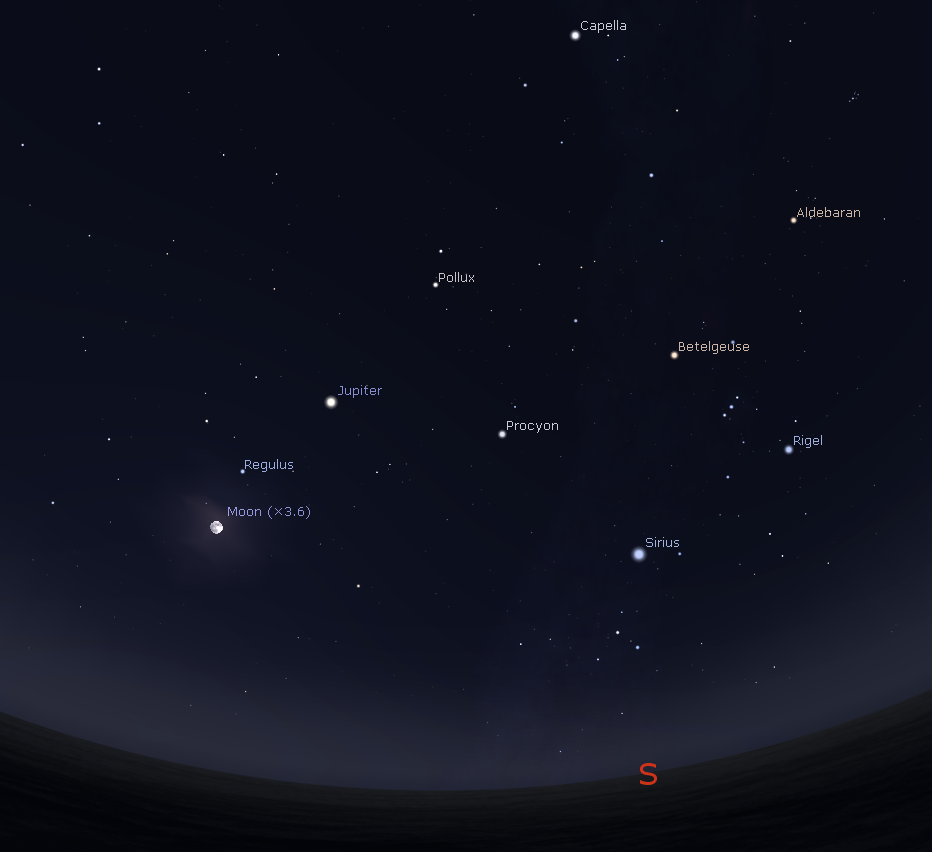
Jupiter, the full Moon and the winter stars at 9 p.m. on March 4, 2014. Created using Stellarium.
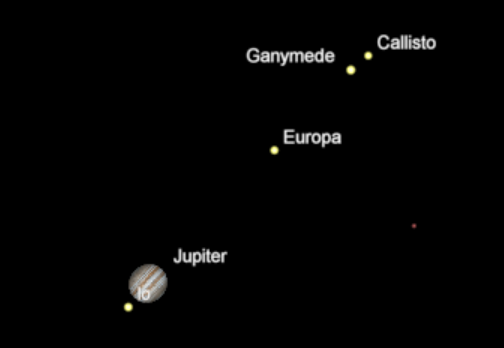
Jupiter and moons at 9:39 p.m., when Io leaves Jupiter’s shadow on March 4, 2015. Created using Cartes du Ceil (Sky Charts).
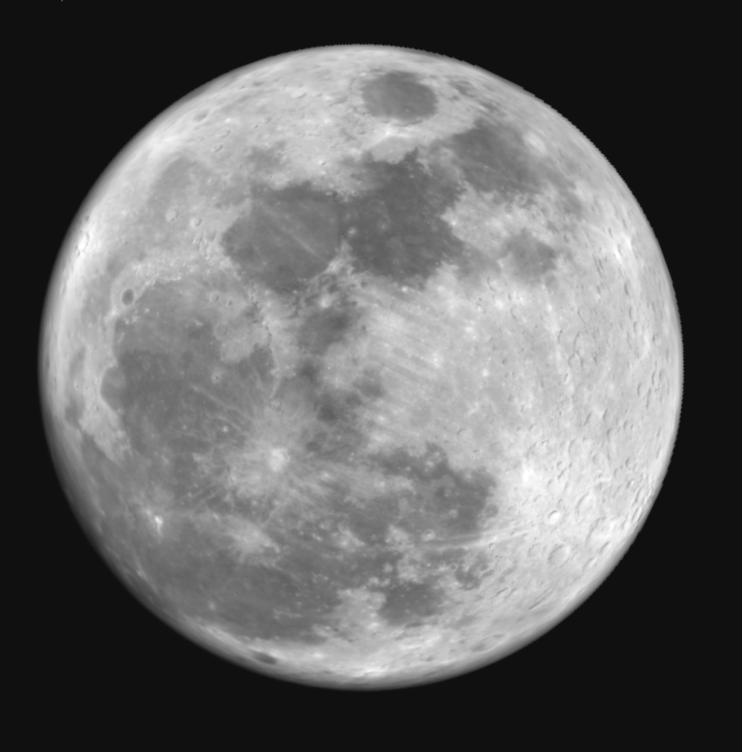
The nearly full moon at 9 p.m. on March 4, 2015. Created using Virtual Moon Atlas.
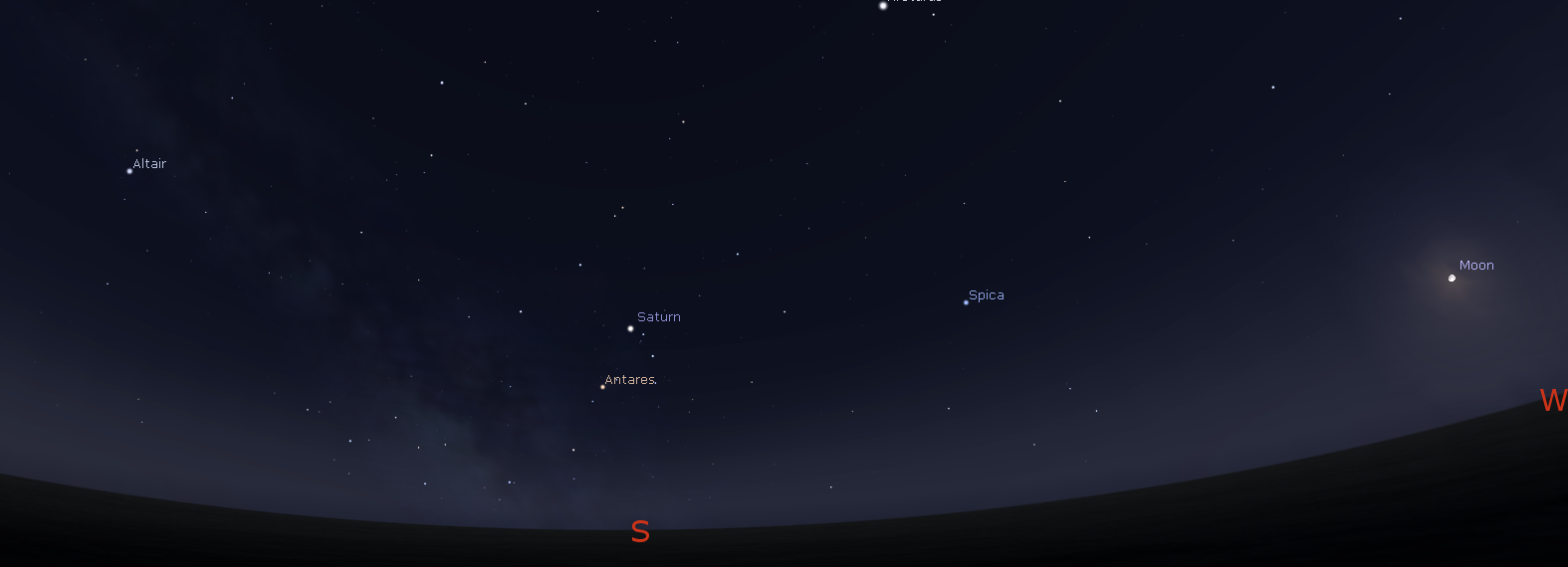
Looking south toward Saturn along with the summer stars and the setting Moon in the west at 6 a.m. March 5, 2015. Created using Stellarium.
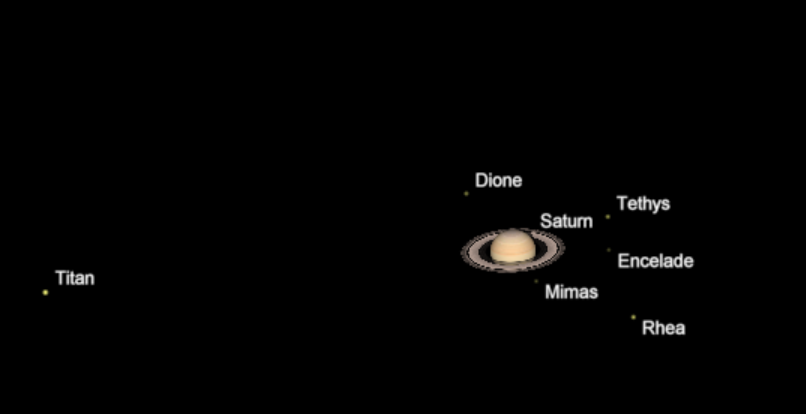
What Saturn and its moons might appear like in a telescope at 6 a.m., March 5, 2015. Small telescopes will show only the moon Titan. Created using Cartes du Ceil (Sky Charts).
02/25/2015 – Ephemeris – It’s planet day on Ephemeris
Ephemeris for Wednesday, February 25th. The sun will rise at 7:27. It’ll be up for 10 hours and 57 minutes, setting at 6:24. The moon, at first quarter today, will set at 2:28 tomorrow morning.
Lets take a look at the bright planets and a fading binocular comet for this week. Brilliant Venus is in the west-southwest by 7 p.m. It will set at 8:55 p.m. It’s separating from Mars which appears below and right of it. The Red Planet will set tonight at 8:46 p.m. Jupiter will appear In the southeastern sky in the evening. It will be up just about all night, and will set at 6:44 a.m. It’s near the sickle-shaped head of Leo the lion, and it’s the brightest star-like object in the sky. Early risers will be able to spot Saturn which will rise in the east-southeast at 1:48 a.m. It’s in the south at 6 a.m. Comet Lovejoy, visible in binoculars, is about half way from the star at the end of Andromeda, called Almaak and the “W” of Cassiopeia.
Times are for the Traverse City/Interlochen area of Michigan. They may be different for your location.
Addendum
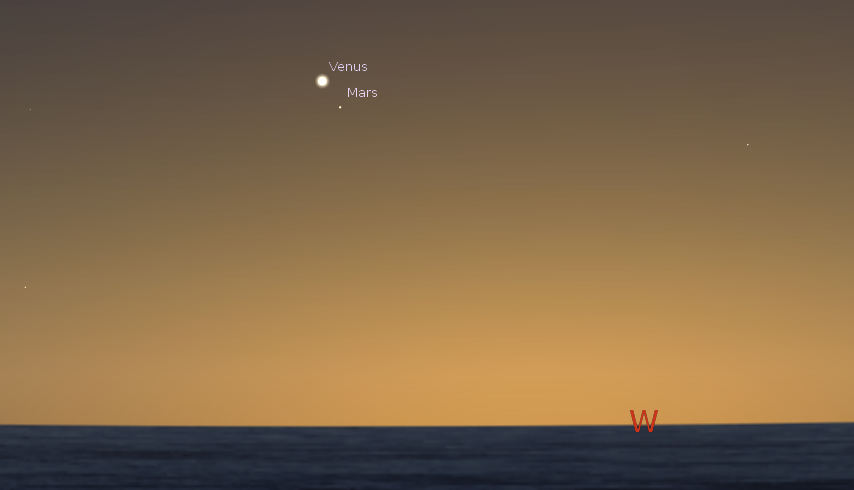
Venus and Mars low in the west after sunset. This is 7 p.m., February 25, 2015. Created using Stellarium.
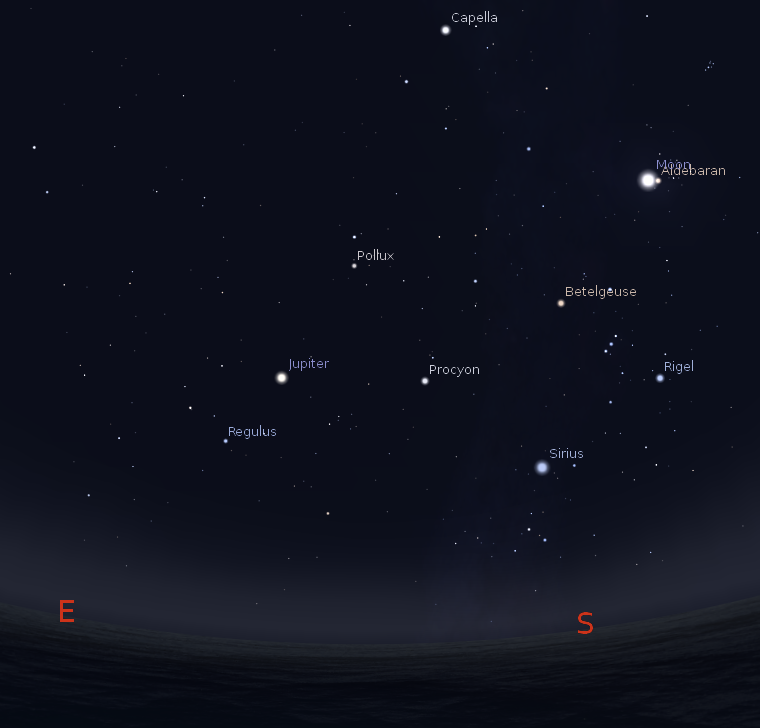
Jupiter with the first quarter moon and the winter stars at 9 p.m., February 25, 2015. Created using Stellarium.
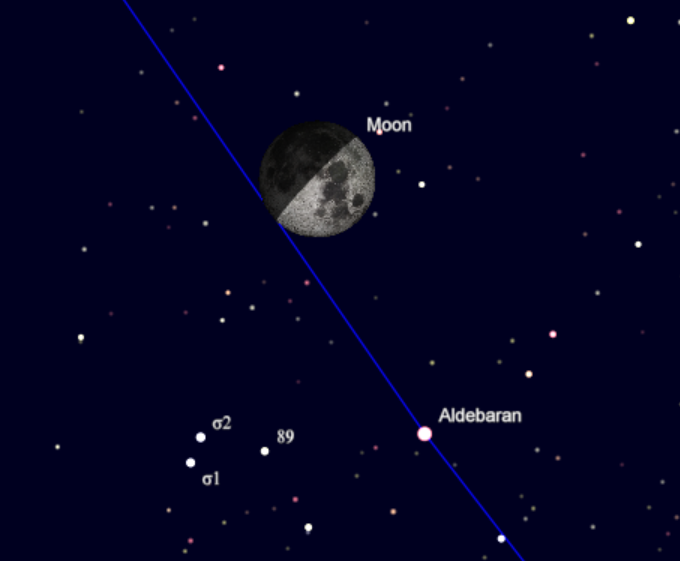
Closeup of the Moon and Aldebaran at 9 p.m. on February 25, 2015. They appeared their closest at 6 p.m. They might be glimpsed with binoculars or a small telescope at that time.
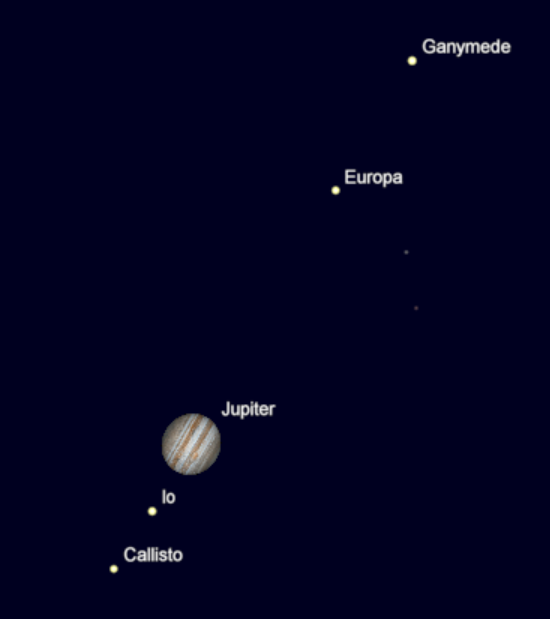
Jupiter and it’s moons at 9 p.m. February 25, 2015. Note that at this time the Great Red Spot is on the face if Jupiter. Created using Cartes du Ciel (Sky Charts).
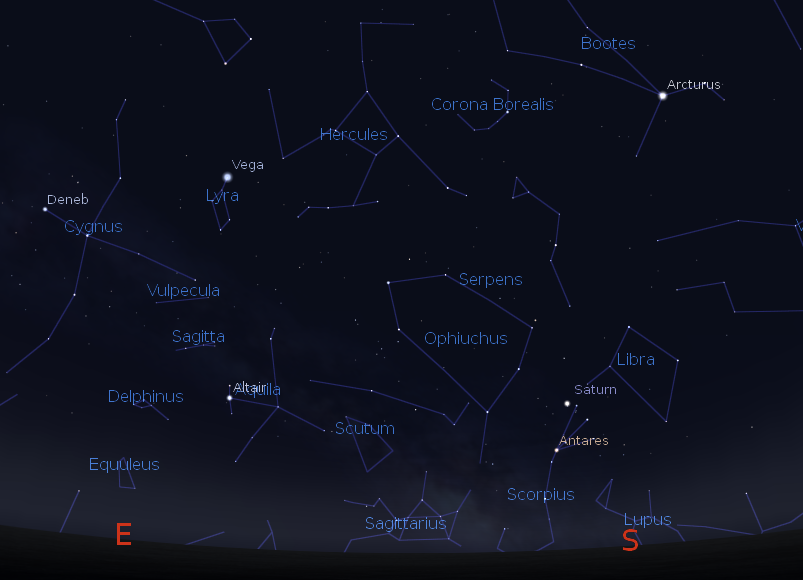
Looking southward at Saturn and a preview of the summer constellations at 6 a.m. February 26, 2015. Created using Stellarium.
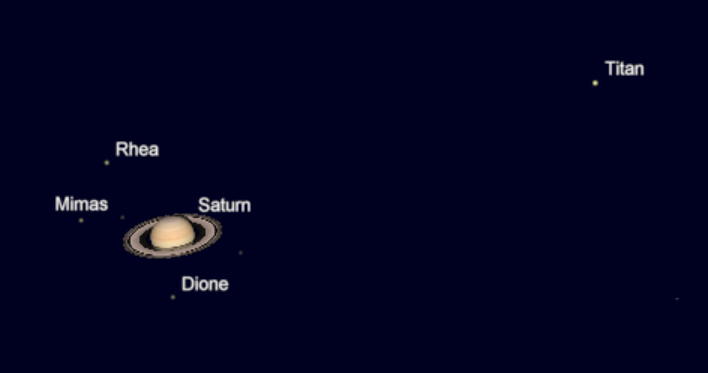
What Saturn and its moons might appear like in a telescope at 6 a.m., February 26, 2015. Small telescopes will show only the moon Titan. Created using Cartes du Ceil (Sky Charts).
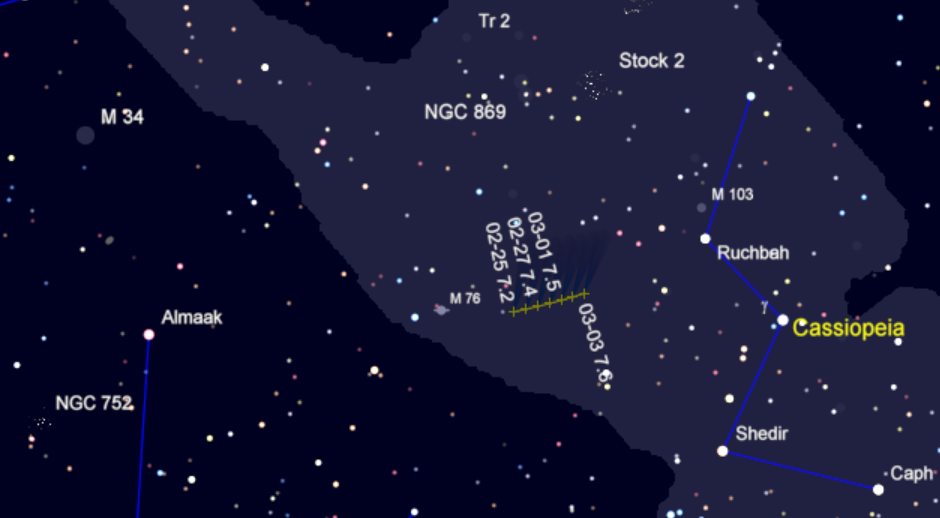
The track of Comet 2014 Q2 (Lovejoy) from 2/25/15 to 03/03/15 which will appear high in the west at 9 p.m. The comet is approaching Cassiopeia. The comet is dropping below binocular visibility, so this is the last time I will cover it on this blog. Created using Cartes du Ceil (Sky Charts).
02/20/2015 – Ephemeris – The Moon joins Venus and Mars in the west tonight
Ephemeris for Friday, February 20th. The sun will rise at 7:35. It’ll be up for 10 hours and 42 minutes, setting at 6:17. The moon, 2 days past new, will set at 8:49 this evening.
Tonight the two day old moon will be seen in the west in a tight triangle with Venus and Mars. They will become visible about 7 o’clock. The planets will be to the left of the Moon with much dimmer Mars above Venus. The formation is tight enough that the motion of the moon will be evident between 7 and when the Moon sets at 8:49. The moon moves its own diameter in about an hour. The moon will also exhibit earthshine, the reflection of the bright earth in the moon’s sky on the night side of the Moon itself. The earthshine lit part of the moon shows a ghostly man in the moon image we are familiar with at full moon. This earthshine is visible on the Moon for a few days before new moon to a few days after new moon.
Times are for the Traverse City/Interlochen area of Michigan. They may be different for your location.
Addendum
Views of the Venus, Mars, Moon grouping from three locations.
Appearance of the grouping from northern Michigan, US
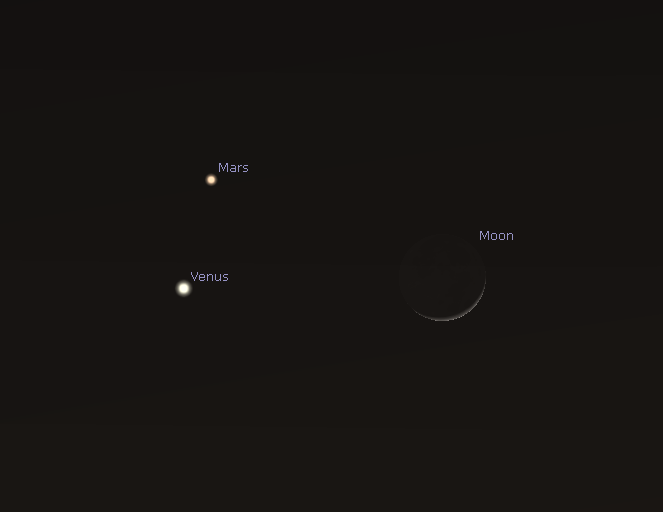
Venus and Mars with the Moon at 7 p.m. EST on February 20, 2015. This is for northern Michigan. Created using Stellarium.
Appearance of the grouping from Los Angeles, CA
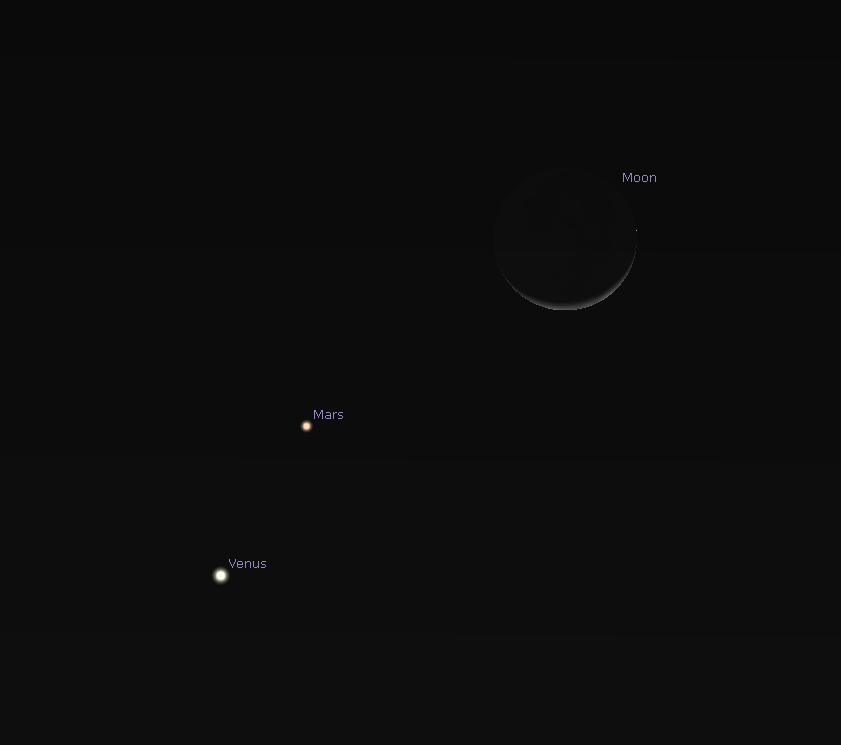
Venus and Mars with the Moon at 8 p.m. PST on February 20, 2015. This is for Los Angeles, CA. Created using Stellarium.
Appearance of the grouping from London, UK
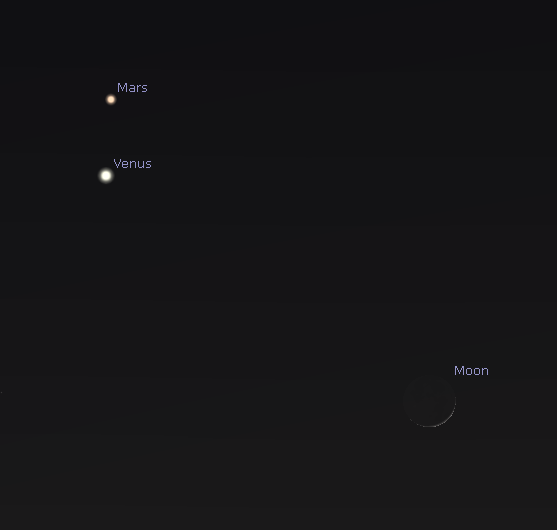
Venus and Mars with the Moon at 20:28 GMT on February 20, 2015. This is for London, UK. Created using Stellarium.
02/19/2015 – Ephemeris – What’s a conjunction?
Ephemeris for Thursday, February 19th. The sun will rise at 7:37. It’ll be up for 10 hours and 39 minutes, setting at 6:16. The moon, 1 day past new, will set at 7:32 this evening.
Saturday night* Venus will be in conjunction with Mars. To me the best sight will be tomorrow night when the thin crescent moon will join the two planets in a very picturesque triangle. Conjunctions are terms shared between astronomers and astrologers and why shouldn’t they be, astrology is, in my opinion, astronomy’s illegitimate parent. To astronomers conjunctions are when two solar system objects are directly north and south of each other (the same right ascension). Astrologers have the conjunction on the same date, but most will say it’s occurring in Aries. Astronomers in the other hand can see that the two planets are now seen against the stars of western Pisces. Most astrologers don’t recognize the precession of the earth’s axis, it’s 26,000 year wobble in their calculations.
Times are for the Traverse City/Interlochen area of Michigan. They may be different for your location.
* As reported in the radio program it was Sunday. However the two planets appear closest Saturday night. 7 p.m. EST ( UT – 5 hr) on the 21st is actually 0 hr UT on the 22nd (Sunday).
Addendum
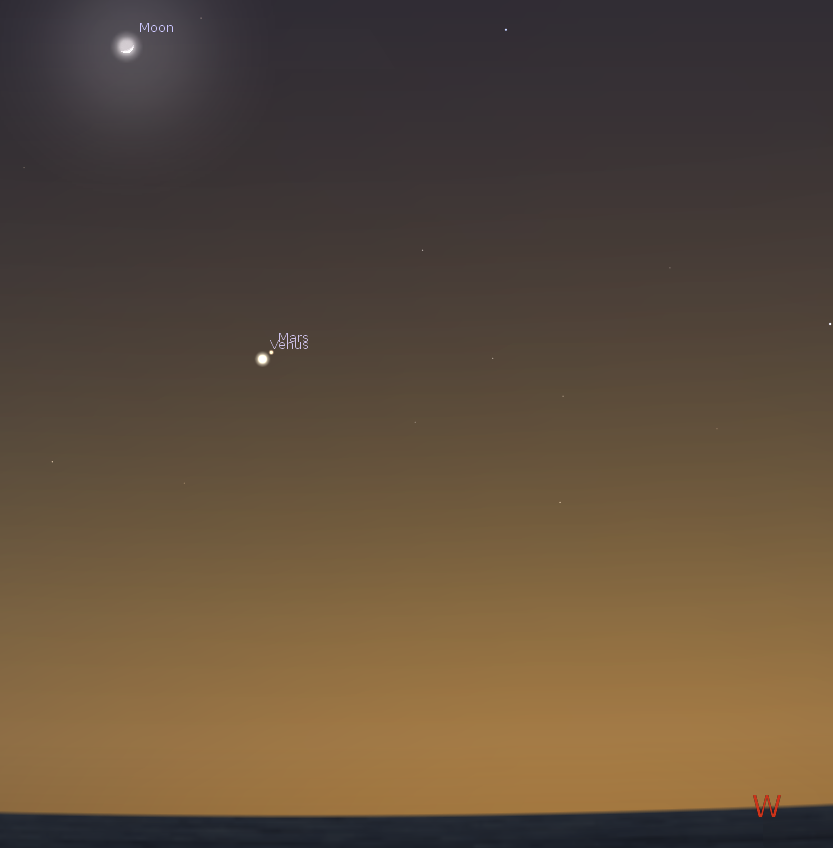
Venus and Mars in conjunction at 7 p.m. EST February 21, 2015. Created using Stellarium.
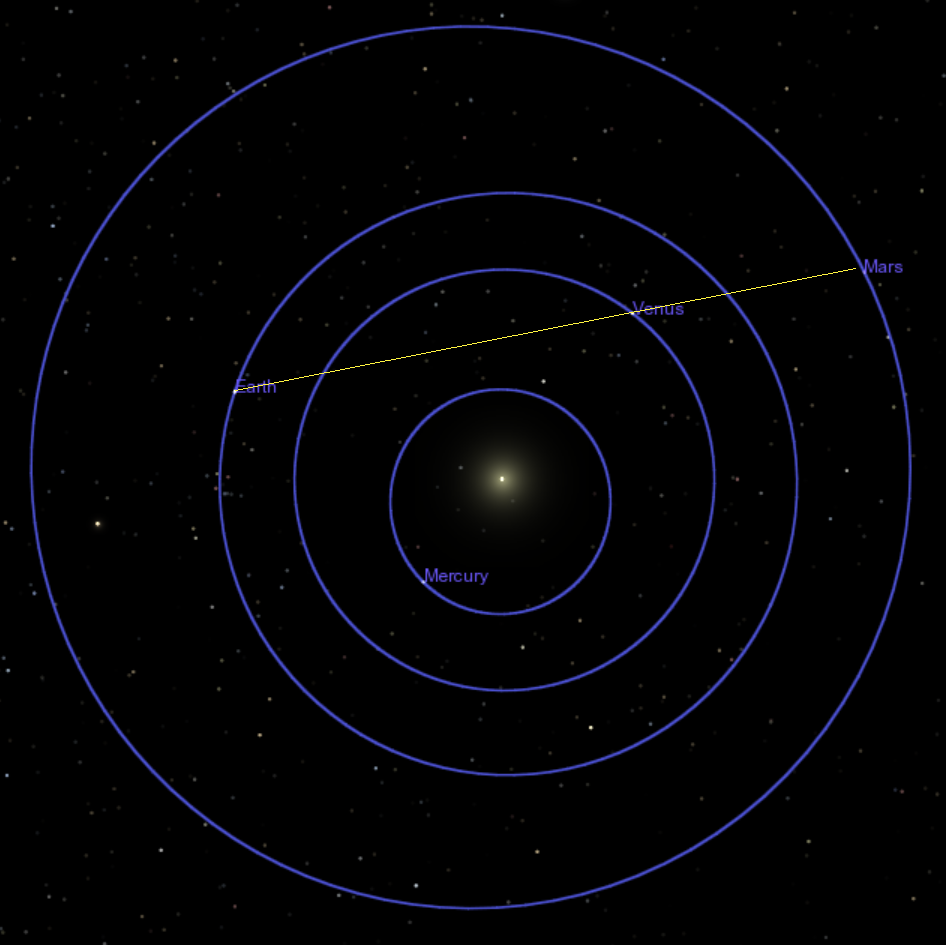
The big picture: In a conjunction planets simply happen to appear along a line of sight from the Earth. They have nothing to do with each other. This is the location of the planets Earth, Venus and Mars on February 22, 2015. Created using Celestia.
Below see the shift of the vernal equinox or first point of Aries, as it’s sometimes called has shifted from 150 CE in Ptolemy’s day to today.
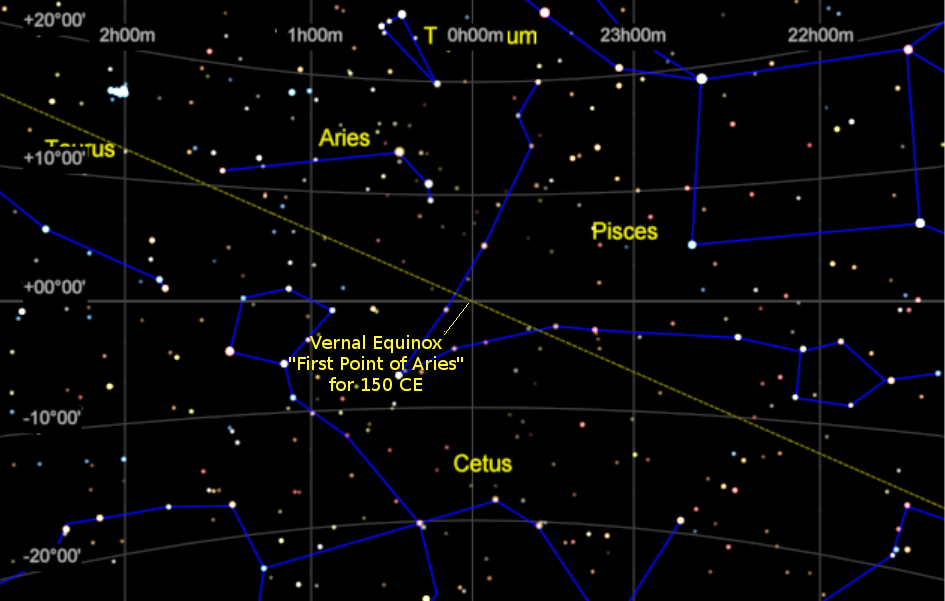
The vernal equinox in 150 CE. Note that Aries to the left. The Sun travels on the ecliptic line (The diagonal line) from right to left. Created using Cartes du Ciel (Sky Charts).
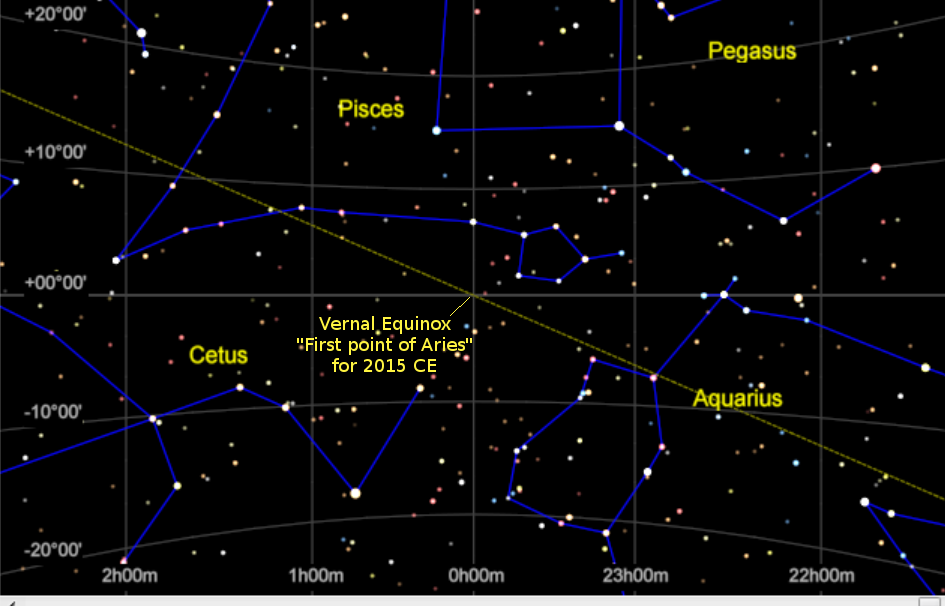
The vernal equinox today, in 2015 CE. Note that Aries has slid off to the left. The Sun travels on the ecliptic line (The diagonal line) from right to left. Created using Cartes du Ciel (Sky Charts).

