Archive
05/20/2015 – Ephemeris – Evening bright planet lineup
Ephemeris for Wednesday, May 20th. Today the Sun will be up for 14 hours and 59 minutes, setting at 9:09. The Moon, 2 days past new, will set at 11:35 this evening, and tomorrow the Sun will rise at 6:08.
Lets take a look at the bright planets for this week. Mercury is now too close to the Sun to really be spotted in the evening twilight. It’s at a 13 degree angle from the sun and will set at 10:47. Mercury is getting dimmer as its phase becomes a decreasingly thin crescent. Our brilliant evening star Venus is in the west by 9:30 p.m. It will set at 12:47 a.m. Jupiter will appear high in the west-southwestern sky before 10 p.m. It will set at 2:14 a.m. It’s near the sickle-shaped head of Leo the lion, and it’s the second brightest star-like object in the sky after Venus. Saturn will rise in the east-southeast at 9:03 p.m. It will be low in the southwest as morning twilight brightens. It’s rings and the moon Titan can be seen in small telescopes.
Times are for the Traverse City/Interlochen area of Michigan. They may be different for your location.
Addendum
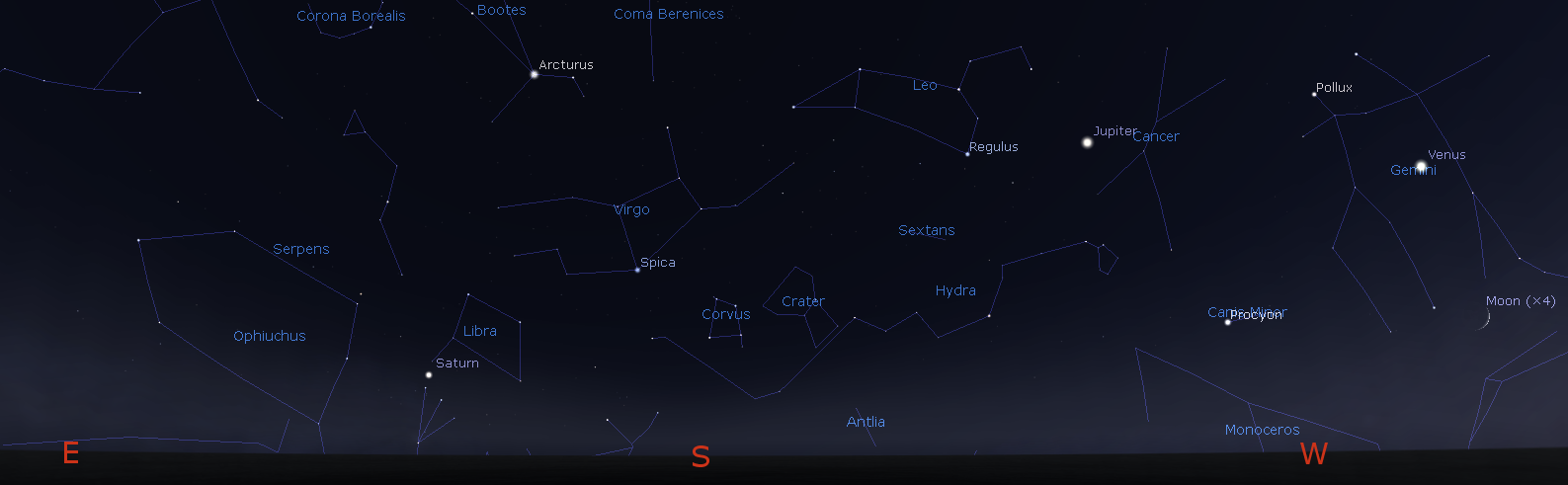
The evening planets from west to east at 10:30 p.m. on May 20, 2015. Created using Stellarium.
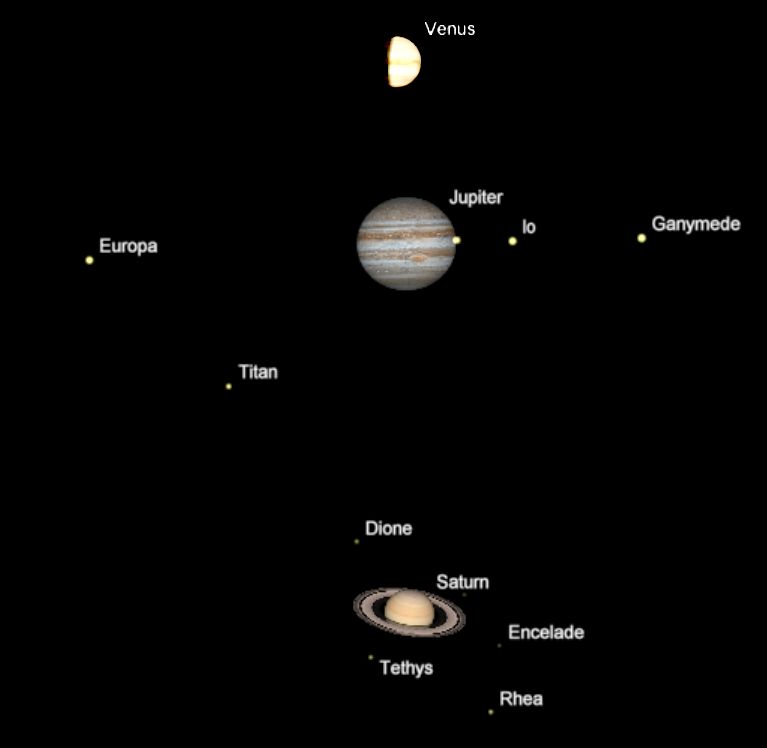
Telescopic views of the evening planets showing their relative sizes at 10:30 p.m. on May 20, 2015. Created using Cartes du Ceil (Sky Charts).
Note: The unnamed satellite of Jupiter is Callisto, which ended its transit of Jupiter at 10:27 p.m.
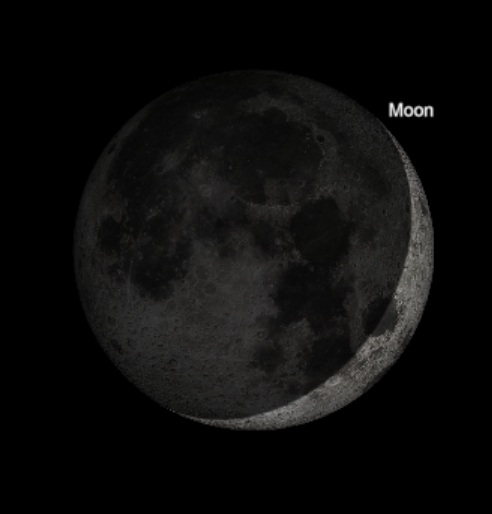
Binocular-like view of the Moon at 10:30 p.m. on May 20,2015. Created using Cartes du Ceil (Sky Charts).
05/19/2015 – Ephemeris – The crescent Moon reappears in the west
Ephemeris for Tuesday, May 19th. Today the Sun will be up for 14 hours and 57 minutes, setting at 9:08. The Moon, 1 day past new, will set at 10:42 this evening, and tomorrow the Sun will rise at 6:09.
The Moon is again making its appearance in the evening sky as a thin crescent. The crescent appearance is because the moon is mostly between the Earth and the Sun. , so we are looking at just a sliver of it is sunlit, and most is unlit by the sun. But the Moon has the Earth in its sky, which is quite bright, and when the moon’s phase is thin, the Earth illuminates its night side with Earth light. We call it Earthshine, when the whole Moon appears faintly inside the crescent. It’s also known more poetically as the “Old moon in the new moon’s arms.” The planets Venus and Mercury also exhibit crescent phases because they can be positioned between the Earth and the Sun, as Mercury is now and Venus will be next month.
Times are for the Traverse City/Interlochen area of Michigan. They may be different for your location.
Addendum
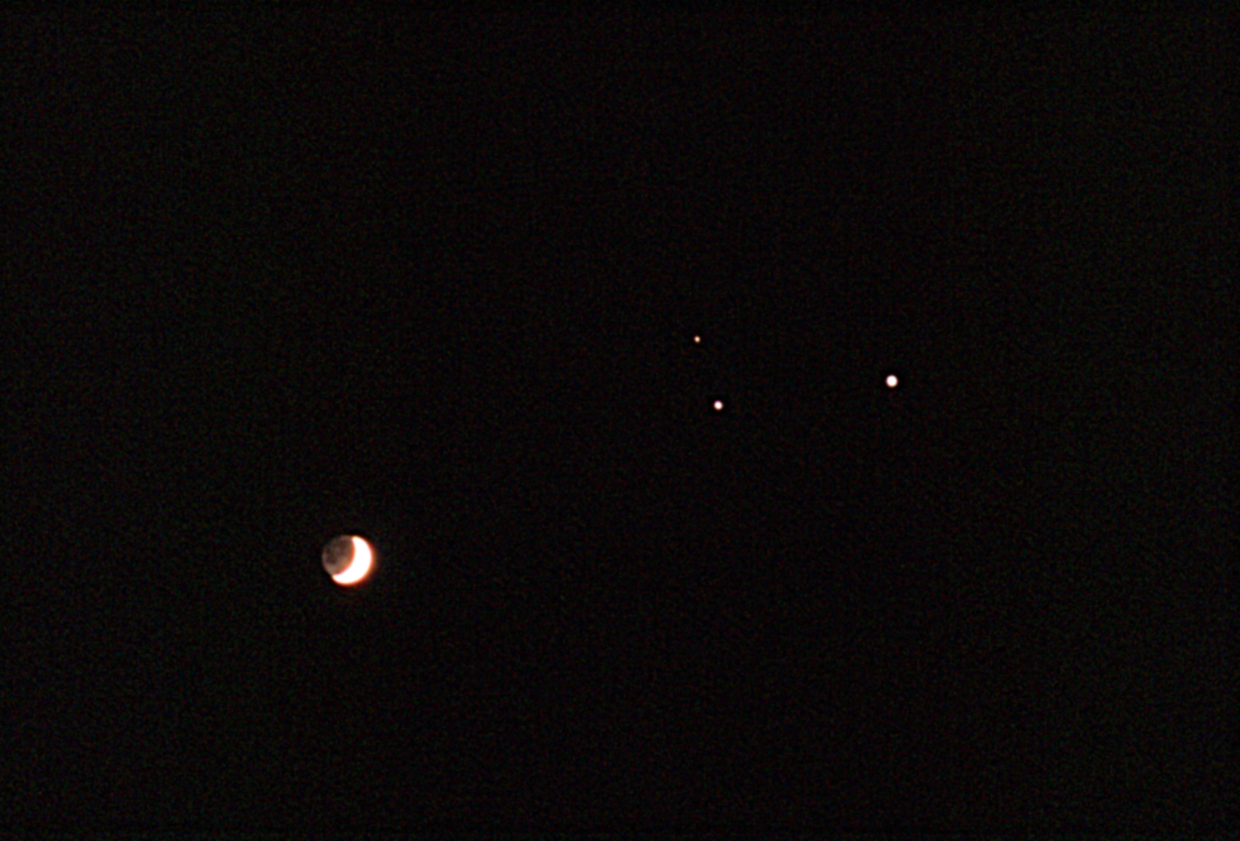
Close grouping of, from right to left, Venus, Jupiter, Venus and the overexposed crescent Moon showing Earthshine on June 15, 1991. Credit: Bob Moler.
05/18/2015 – Ephemeris – Venus, beautiful Evening Star or Earth’s evil twin?
Ephemeris for Monday, May 18th. Today the Sun will be up for 14 hours and 55 minutes, setting at 9:07. The Moon is new today, and won’t be visible and tomorrow the Sun will rise at 6:10.
Venus has been called the Earth’s twin because it is 95 percent the size of the Earth. It is 72 percent of the Earth’s distance from the Sun, and that seems to be the thing that turned a planet, perhaps as endowed with the same amounts of water and other minerals as the Earth, into Earth’s evil twin. Those nice shiny white clouds are not the water vapor clouds of Earth, but poisonous corrosive clouds of sulfuric acid droplets. The air which is mostly carbon dioxide is dense, some 90 times the Earth’s atmospheric pressure at sea level. The carbon dioxide atmosphere creates a runaway green house effect, giving a surface temperature of over 800 degrees Fahrenheit. Hotter, even than Mercury, the closest planet to the Sun.
Times are for the Traverse City/Interlochen area of Michigan. They may be different for your location.
Addendum
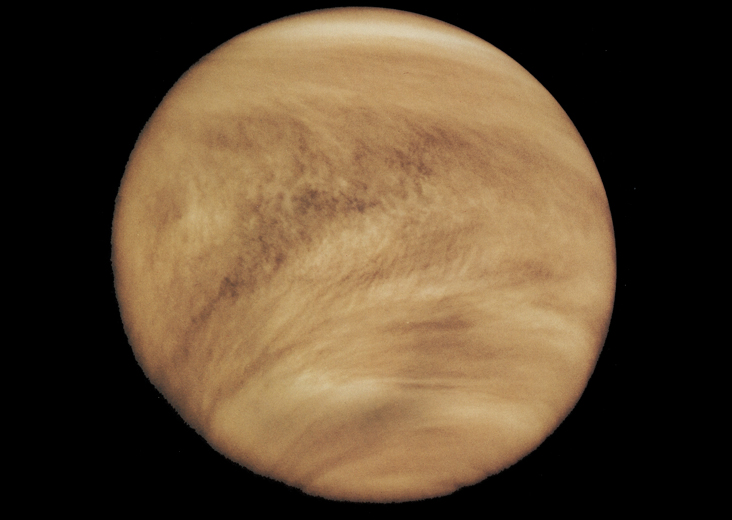
The clouds of Venus in ultraviolet light as seen by Pioneer Venus in 1979. Venus’ clouds provide a blank face in visible light. Credit: NASA.
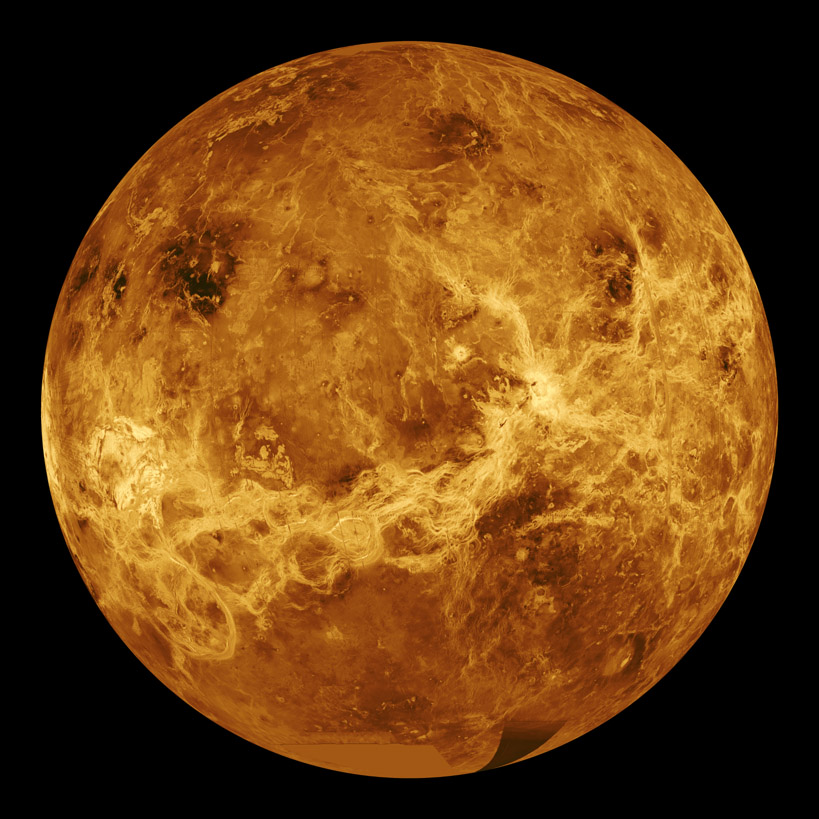
A map of Venus surface produced by NASA’s Magellan spacecraft using radar: 1990-1994. Credit NASA
05/15/2015 – Ephemeris – The Grand Traverse Astronomical Society will be at the NMC Barbecue Sunday
Ephemeris for Friday, May 15th. Today the Sun will be up for 14 hours and 49 minutes, setting at 9:04. The Moon, 3 days before new, will rise at 5:27 tomorrow morning. Tomorrow the Sun will rise at 6:13.
The Grand Traverse Astronomical Society will participate in the Northwestern Michigan College Barbecue. The society will be in front of and inside the Health and Science Building, viewing the Sun outside and inside with displays and a program about meteorites. In the evening sky, Venus is getting to be an interesting sight in telescopes. It is still way too bright, so the earlier it can be spotted the better. Magnification helps with the brightness, but as Venus sinks in the sky its image will deteriorate, undulate with the upper air currents and develop color fringes due to the prismatic effects of the thick atmosphere down low. Venus will continue to grow larger, and its phase gets thinner until it’s too close to the Sun to spot.
Times are for the Traverse City/Interlochen area of Michigan. They may be different for your location.
Addendum
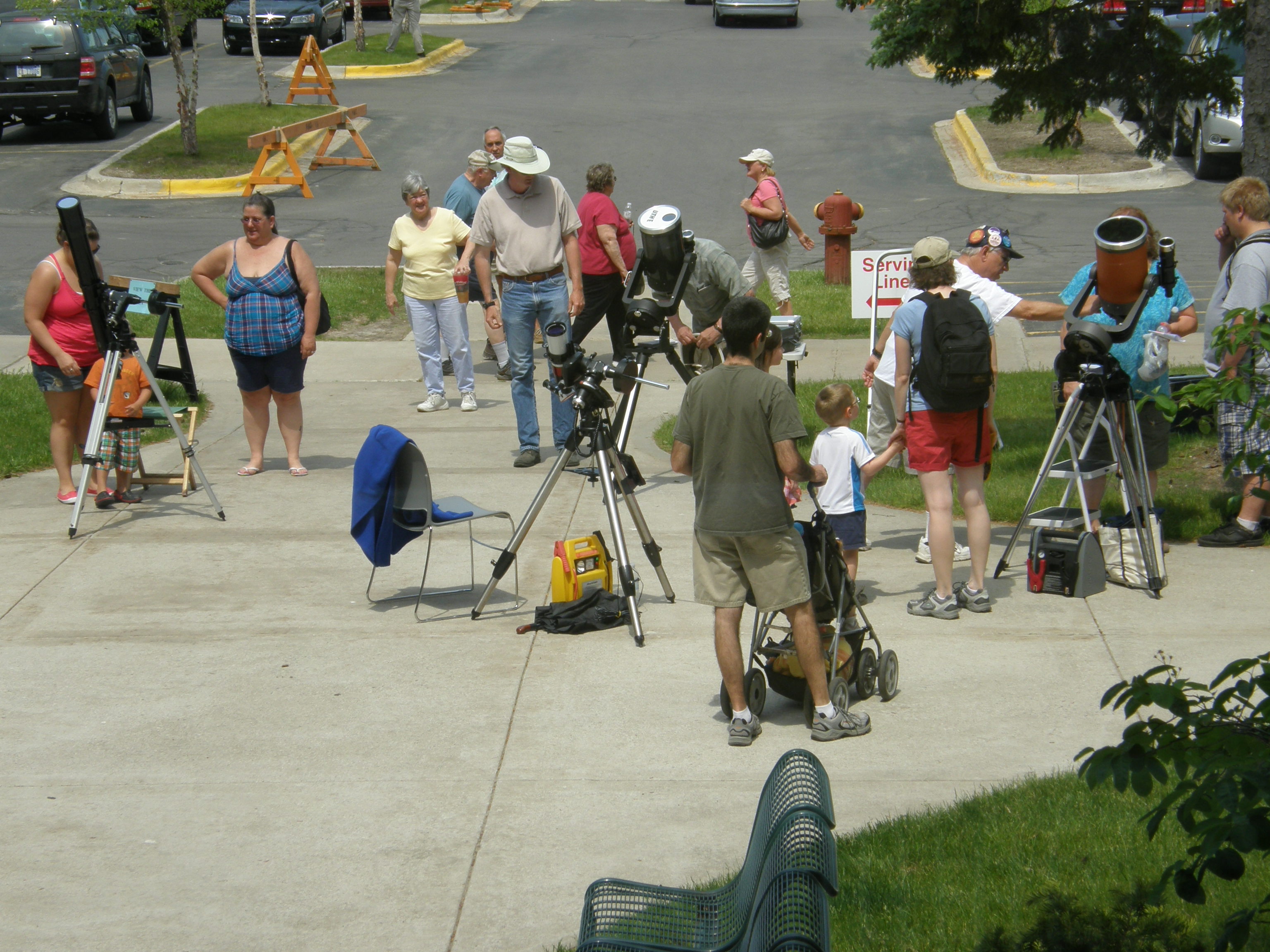
Observing the sun through GTAS members telescopes at the NMC Barbecue in 2012. Credit; Eileen Carlisle.
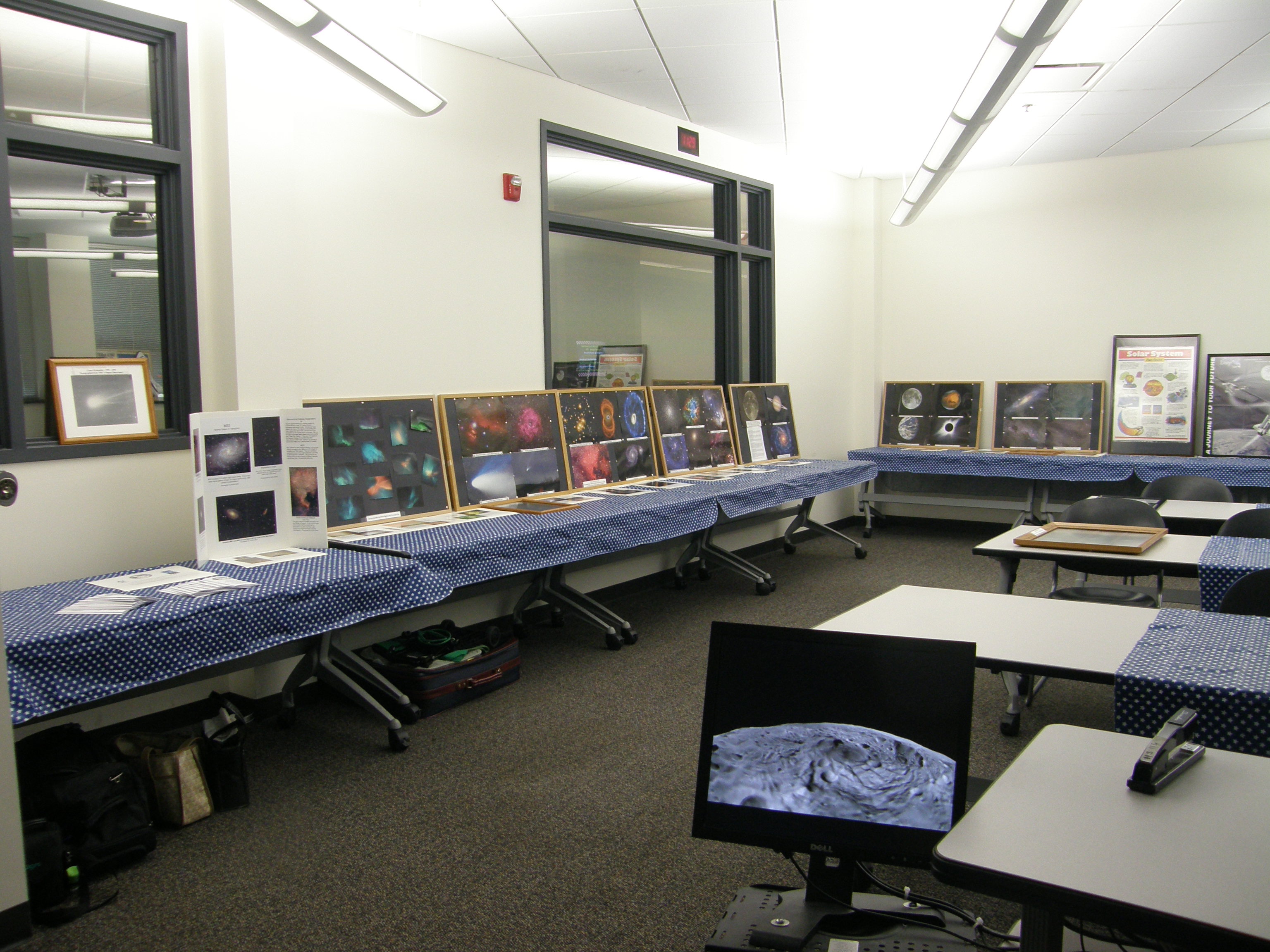
Astronomical photographs line the walls and tables of a classroom plus a series of astronomy videos are displayed at the NMC Barbecue. Credit: Eileen Carlisle.
05/13/2015 – Ephemeris – The bright planets including a last look at Mercury for a while
Ephemeris for Wednesday, May 13th. Today the Sun will be up for 14 hours and 44 minutes, setting at 9:01. The Moon, 2 days past last quarter, will rise at 4:17 tomorrow morning. Tomorrow the Sun will rise at 6:16.
Lets take a look at the bright planets for this week. Mercury is low in the west-northwestern sky after sunset. It’s at a 19 degrees angle from the sun and will set at 10:47. Mercury is getting dimmer as its phase becomes a decreasingly thin crescent. Our brilliant evening star Venus is in the west by 9:30 p.m. It will set at 12:44 a.m. Jupiter will appear high in the west-southwestern sky before 10 p.m. It will set at 2:43 a.m. It’s near the sickle-shaped head of Leo the lion, and it’s the second brightest star-like object in the sky after Venus. Saturn will rise in the east-southeast at 9:33 p.m. It will be low in the southwest as morning twilight brightens. It’s rings and the moon Titan can be seen in small telescopes.
Times are for the Traverse City/Interlochen area of Michigan. They may be different for your location.
Addendum
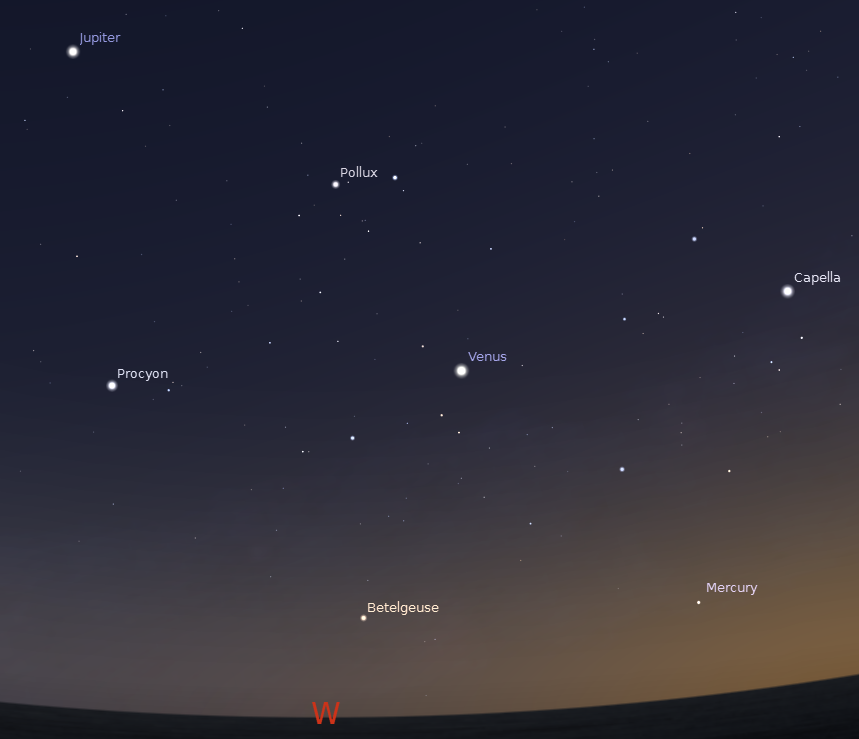
Mercury, Venus, Jupiter and the setting stars of winter at 10 p.m., May 13, 2015. Created using Stellarium.
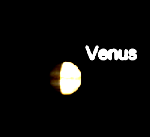
Venus through a telescope, over exposed to match the brilliant orb of Venus, on May 13, 2015. Created using Carted du Ceil (Sky Charts).
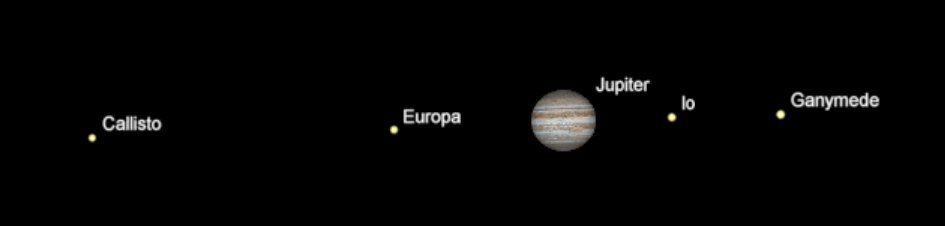
Jupiter and its moons at 10 p.m. May 13, 2015. Created using Cartes du Ciel (Sky Charts).
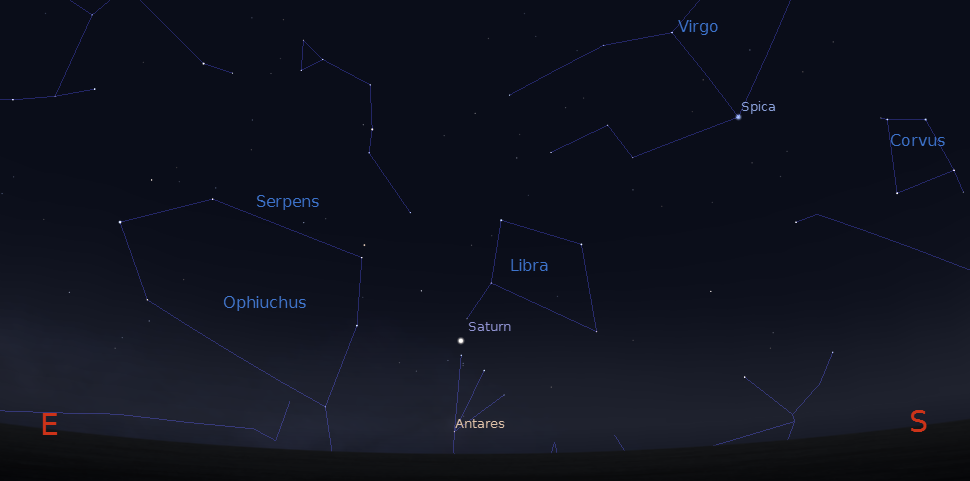
Saturn above the southeastern horizon with the stars of late spring at 11 p.m. May 13, 2015. Created using Stellarium.
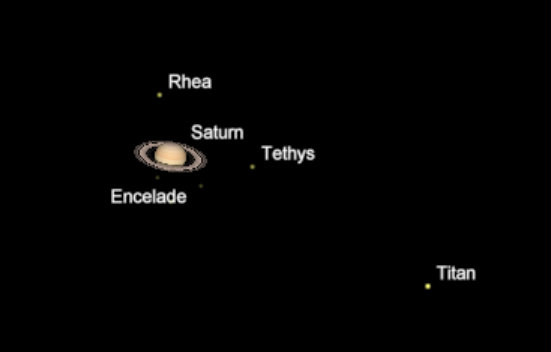
What Saturn and its moons might appear like in a telescope the night of May 6-7, 2015. Small telescopes will show only the moon Titan. Same scale/magnification as Jupiter and Venus. Created using Cartes du Ceil (Sky Charts).
05/06/2015 – Ephemeris – Wednesday is planet day or night on Ephemeris
Ephemeris for Wednesday, May 6th. Today the Sun will be up for 14 hours and 27 minutes, setting at 8:53. The Moon, 3 days past full, will rise at 11:26 this evening. Tomorrow the Sun will rise at 6:24.
Lets take a look at the bright planets for this week. Mercury is low in the west-northwestern sky after sunset. It’s at a 21 degrees angle from the sun and will set at 10:52. Our brilliant evening star Venus is high in the west by 9:30 p.m. It will set at 12:37 a.m. Jupiter will appear high in the west-southwestern sky before 10 p.m. It will set at 3:05 a.m. It’s near the sickle-shaped head of Leo the lion, and it’s the second brightest star-like object in the sky after Venus. In telescopes, Jupiter’s moon Europa will pass in front of Jupiter starting at 1:43 a.m. Saturn will rise in the east-southeast at 10:33 p.m. It will be low in the south as morning twilight brightens. It’s rings and the moon Titan can be seen in small telescopes.
Times are for the Traverse City/Interlochen area of Michigan. They may be different for your location.
Addendum
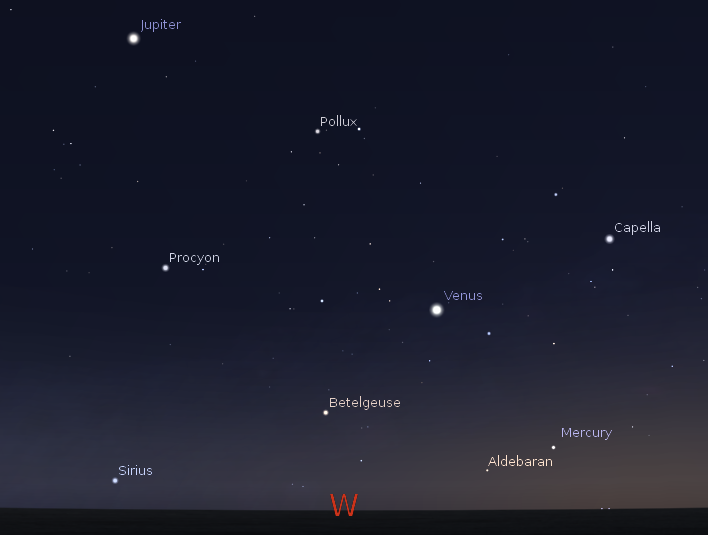
Mercury, Venus, Jupiter and the setting stars of winter at 10 p.m., May 6, 2015. Created using Stellarium.
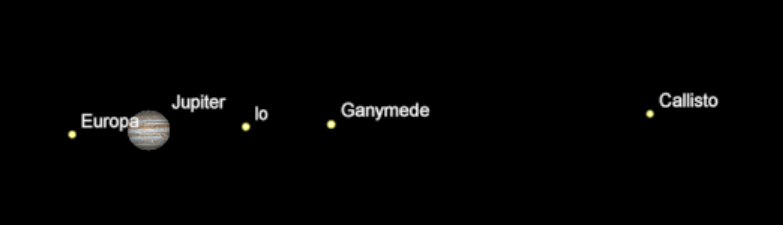
Jupiter and its moons at 10 p.m. May 6, 2015. Created using Cartes du Ciel (Sky Charts).
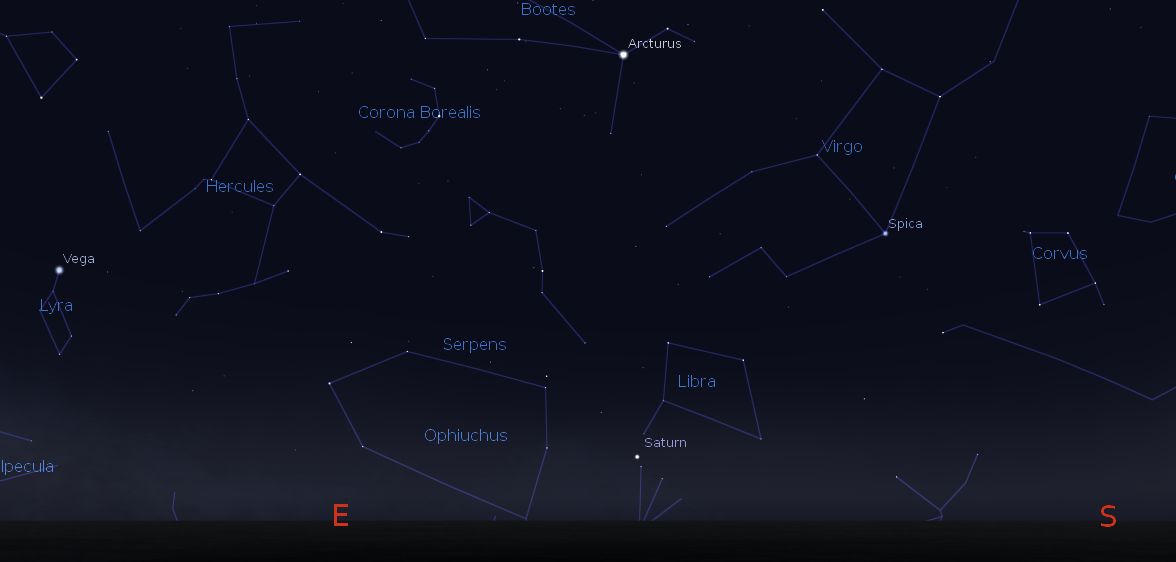
Saturn above the southeastern horizon with the stars of late spring at 11 p.m. May 6, 2015. Created using Stellarium.
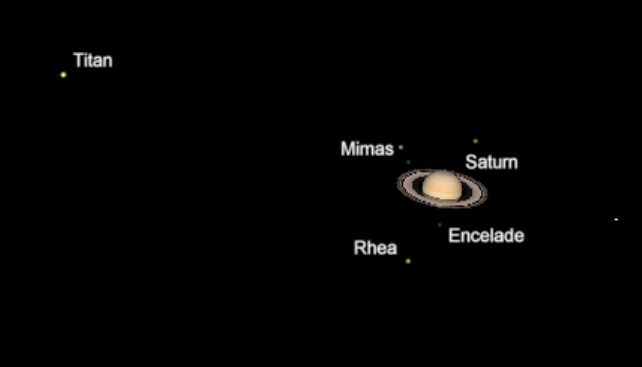
What Saturn and its moons might appear like in a telescope the night of May 6-7, 2015. Small telescopes will show only the moon Titan. Created using Cartes du Ceil (Sky Charts).
04/29/2015 – Ephemeris – Last look at the bright planets for April
Ephemeris for Wednesday, April 29th. Today the Sun will be up for 14 hours and 8 minutes, setting at 8:45. The Moon, half way from first quarter to full, will set at 4:59 tomorrow morning. Tomorrow the Sun will rise at 6:34.
Lets take a look at the bright planets for this week. Mercury is low in the western sky after sunset. It’s 19 degrees angle from the sun and will set at 10:32. Our brilliant evening star Venus is high in the west by 9:30 p.m. It will set at 12:27 a.m. Jupiter will appear high in the southwestern sky in the evening. It will set at 3:31 a.m. It’s near the sickle-shaped head of Leo the lion, and it’s the second brightest star-like object in the sky after Venus. In telescopes, Jupiter’s moon Europa will pass in front of Jupiter starting at 11:07 p.m. and its shadow will start across at 1:40 a.m.Saturn will rise in the east-southeast at 10:33 p.m. It will be low in the south as morning twilight brightens.
Times are for the Traverse City/Interlochen area of Michigan. They may be different for your location.
Addendum
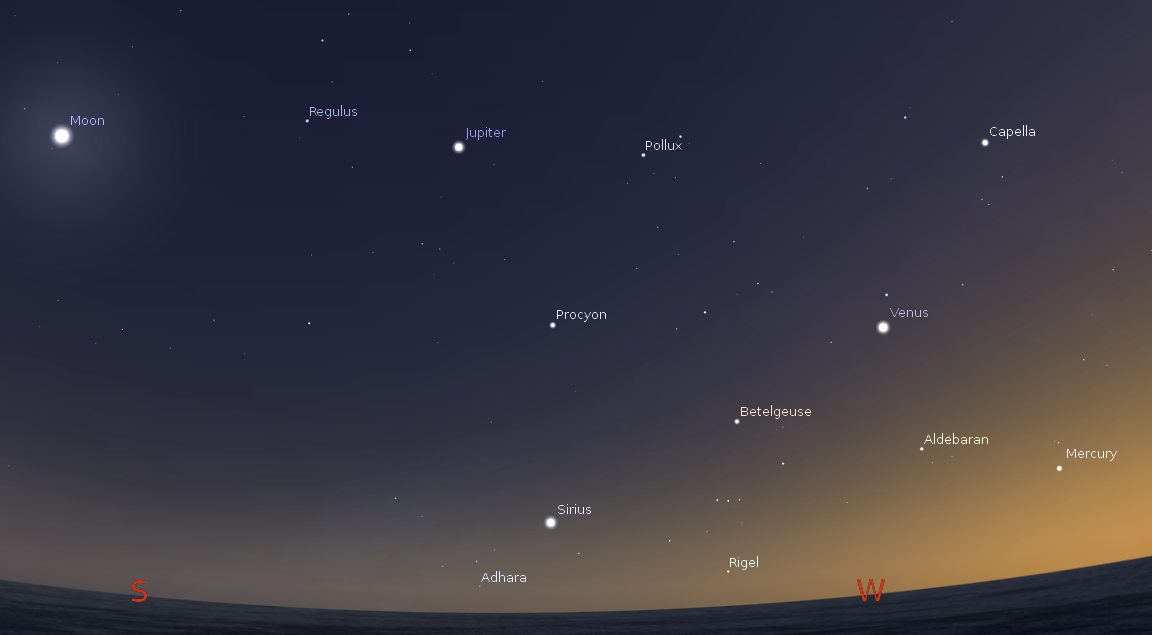
Mercury, Venus, Jupiter and the Moon at 9:30 p.m. April 29, 2015. Created using Stellarium.
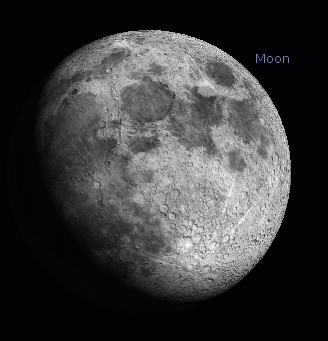
The Moon as it might be seen in binoculars at 10 p.m., April 29, 2015. Created using Stellarium.
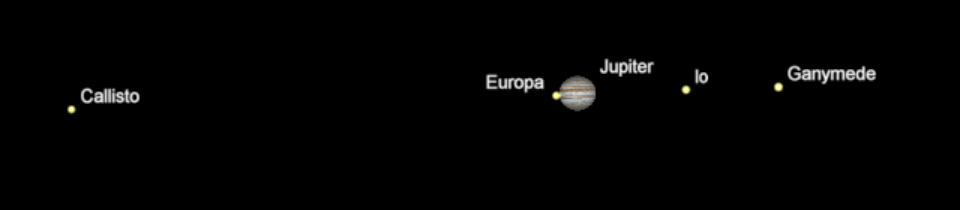
Jupiter at 10:58 p.m. April 29, 2015 with Europa about to transit the planet. Created using Cartes du Ciel (Sky Charts).
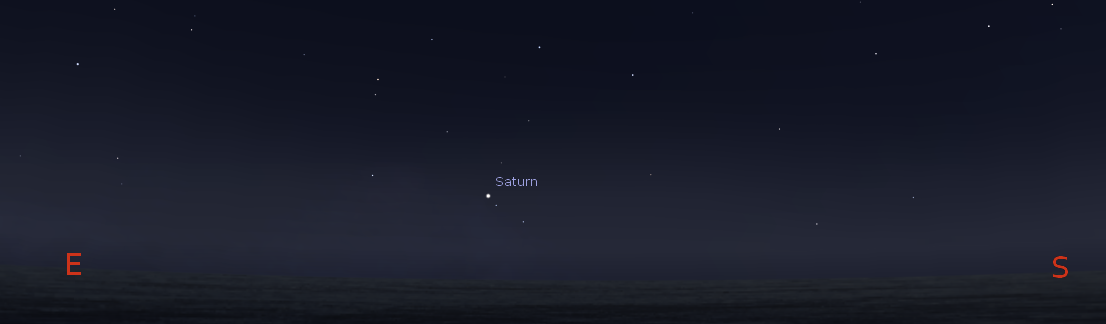
Saturn alone above the southeastern horizon at 11:30 p.m. April 29, 2015. Created using Stellarium.
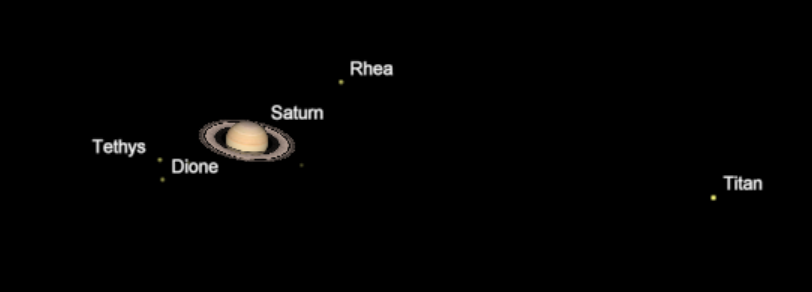
What Saturn and its moons might appear like in a telescope the night of April 29-30, 2015. Small telescopes will show only the moon Titan. Created using Cartes du Ceil (Sky Charts).
04/22/2015 – Ephemeris – All the bright planets are back now
Ephemeris for Earth Day, Wednesday, April 22nd. Today the Sun will be up for 13 hours and 49 minutes, setting at 8:36. The Moon, 3 days before first quarter, will set at 12:55 tomorrow morning. Tomorrow the Sun will rise at 6:45.
Lets take a look at the bright planets for this week. Mars and Mercury are in conjunction, that is close to each other low in the west just after sunset. Mars appears a bit lower and left of the brighter Mercury. Mars will set tonight at 9:47 with Mercury 5 minutes later. Our brilliant evening star Venus is high in the west by 9 p.m. It will set at 12:15 a.m. Jupiter will appear high in the southwestern sky in the evening. It will set at 3:58 a.m. It’s near the sickle-shaped head of Leo the lion, and it’s the second brightest star-like object in the sky after Venus. Saturn will rise in the east-southeast at 11:03 p.m. It will be low in the south at 5 to 6 a.m.
Times are for the Traverse City/Interlochen area of Michigan. They may be different for your location.
Addendum
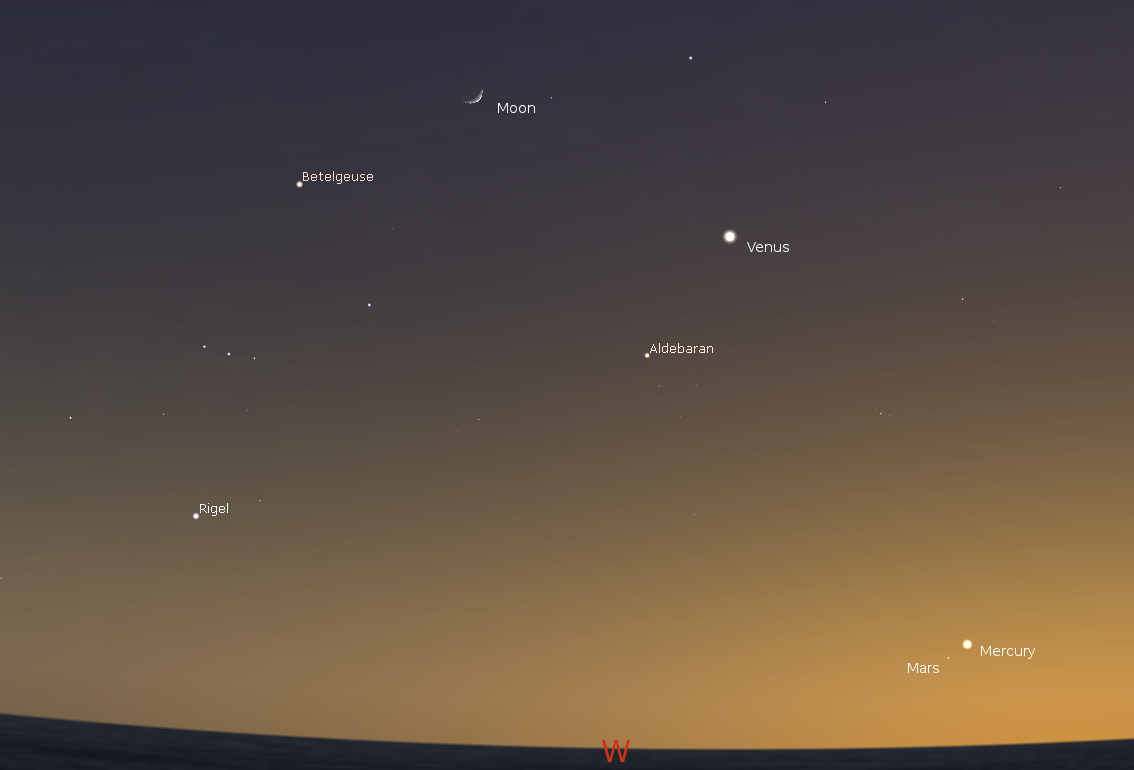
View to the west with Mars, Mercury, Venus and the Moon at 9:15 p.m. April 22, 2015. Created using Stellarium.
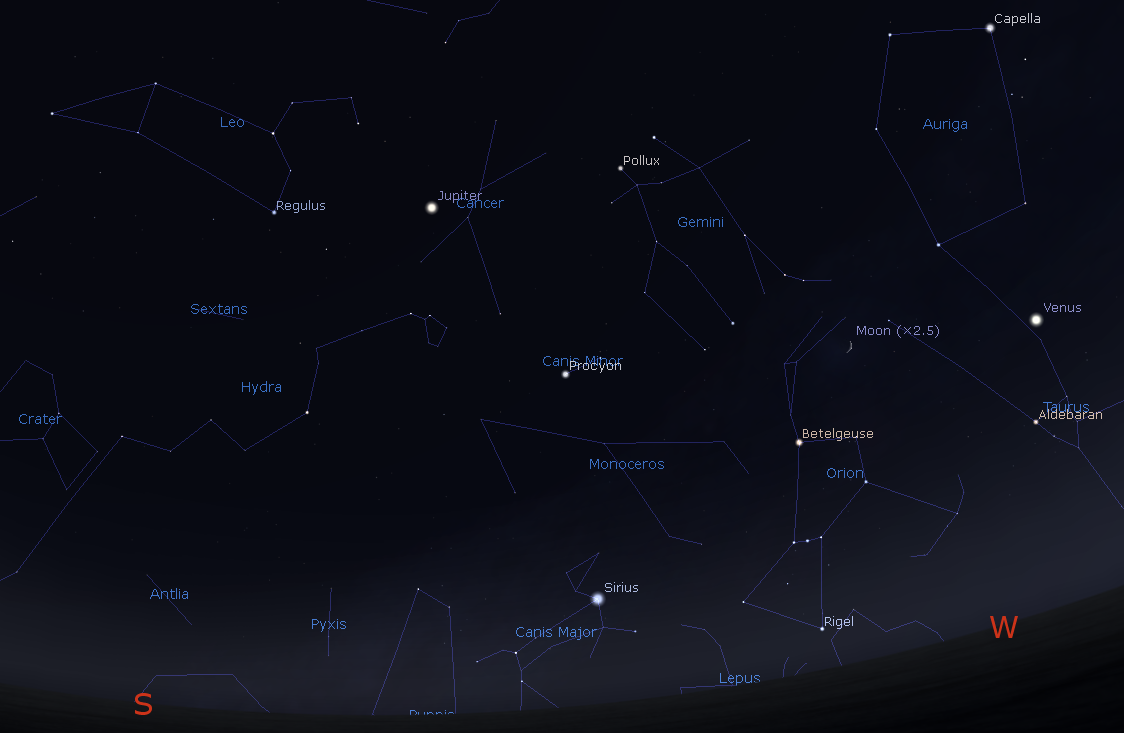
Jupiter, the Moon and the setting winter constellations at 10 p.m. April 22, 2015. Created using Stellarium.
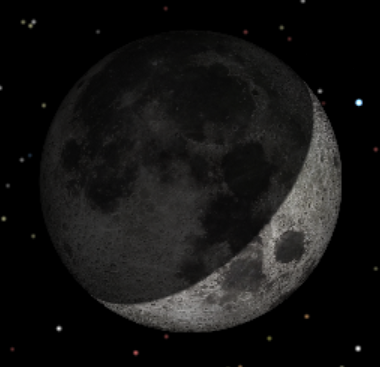
The visibility of the Moon at 10 p.m. on April 22, 2015. Created using Cartes du Ciel (Sky Charts).
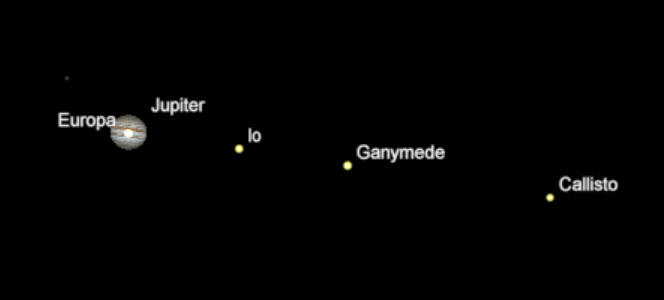
Jupiter and its moons at 10 p.m. Europa will be transiting the face of Jupiter. It’s shadow will start to cross the face of Jupiter at 11:04 p.m.. The transit will end at 11:27 p.m. and the shadow will leave the face of Jupiter at 1:58 a.m. Created using Cartes du Ciel (Sky Charts).
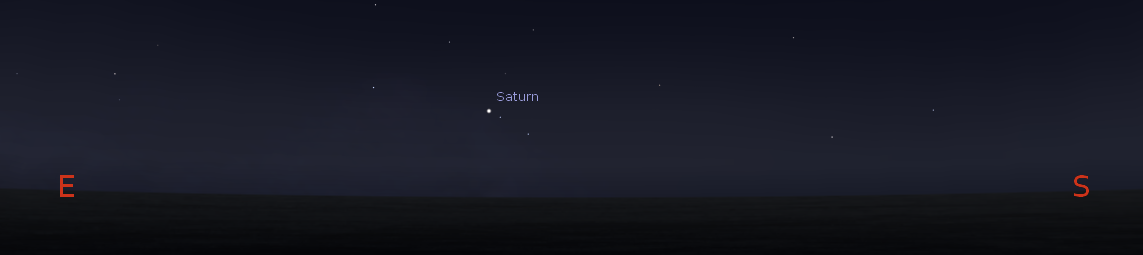
Saturn rising. Shown at midnight, April 22-23 2015. Created using Stellarium.
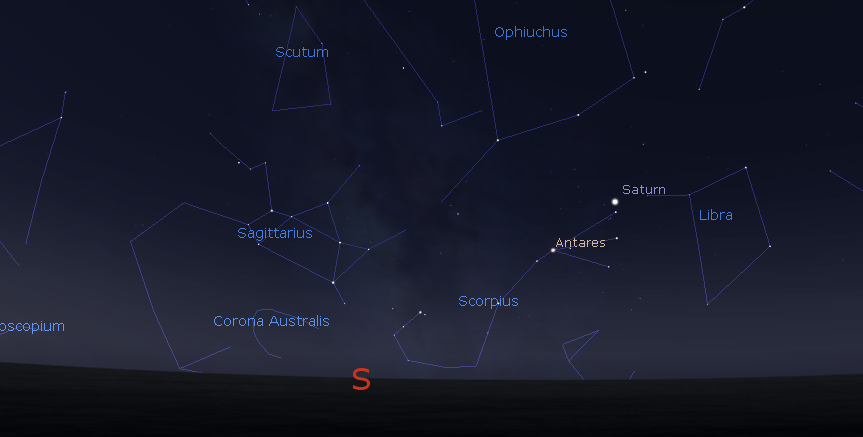
Saturn and the summer constellations at 5:45 a.m. April 23, 2015. Created using Stellarium.
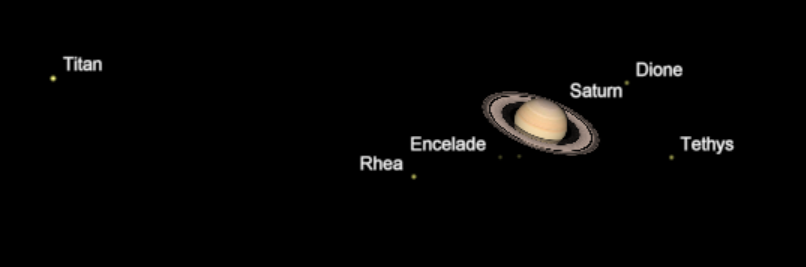
What Saturn and its moons might appear like in a telescope at 5:45 a.m., April 23, 2015. Small telescopes will show only the moon Titan. Created using Cartes du Ceil (Sky Charts).
04/21/2015 – Ephemeris – The Moon will pass the Hyades star cluster today to pass near Venus tonight
Apr 21. This is Bob Moler with Ephemeris for Tuesday, April 21st. Today the Sun will be up for 13 hours and 46 minutes, setting at 8:35. The Moon, 3 days past new, will set at midnight. Tomorrow the Sun will rise at 6:47.
The moon, which was new last Saturday passed the face of the constellation Taurus the bull earlier today. The face of Taurus is a letter V shape of stars which is the star cluster called the Hyades. There’s a bright orange star that appears at the left tip of the V called Aldebaran, which actually doesn’t belong to the cluster. At 9:30 the crescent Moon will have also just passed the brilliant planet Venus. By then they will be nearly 8 degrees apart, which is a bit less than the width of a fist held at arm’s length. The Moon, Venus and all the planets move very close along the path of the Sun in the sky, called the ecliptic. Even so the Moon is now about 5 degrees south of the ecliptic and Venus about 2 degrees north of it.
Times are for the Traverse City/Interlochen area of Michigan. They may be different for your location.
Addendum
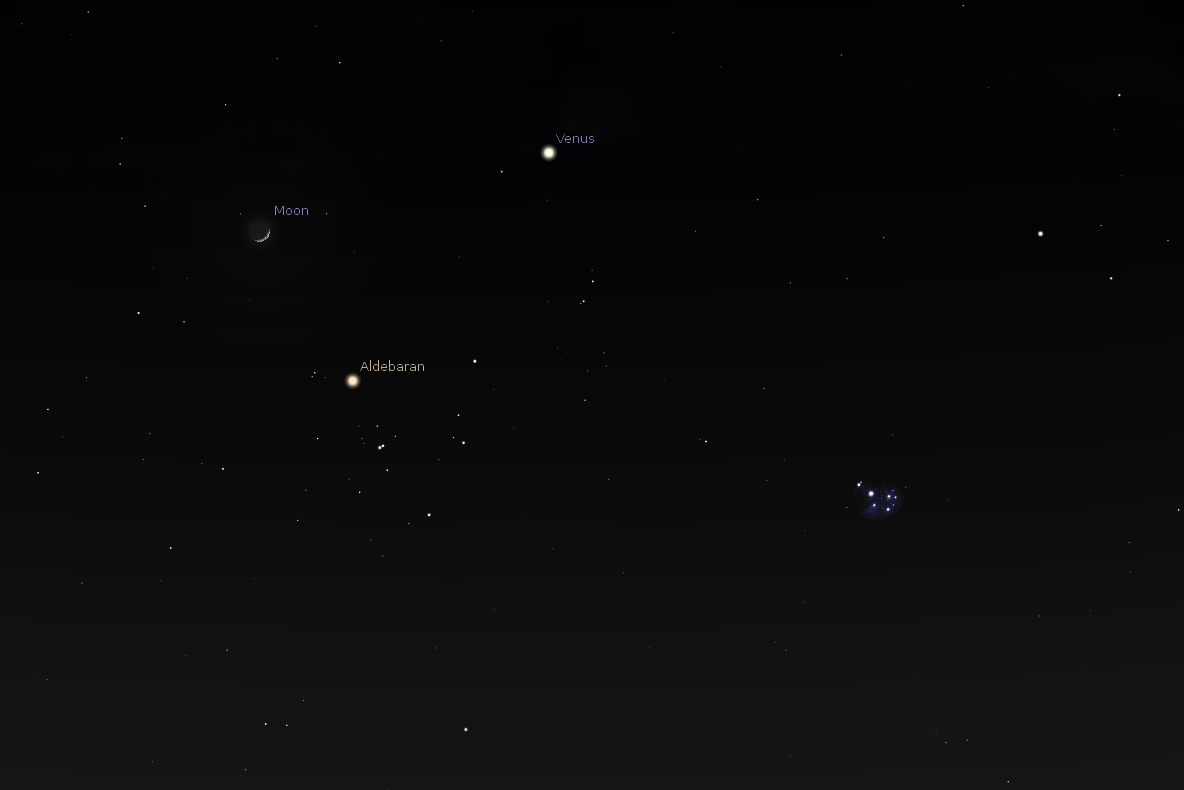
The Moon with Venus and the Hyades at 9:30 p.m. April 21, 2015. Note the Pleiades on the right. Created using Stellarium.
04/15/2015 – Ephemeris – Besides Tax Day, it’s planets day on Ephemeris
Wednesday, April 15th, Tax Day. The Sun rises at 6:58. It’ll be up for 13 hours and 28 minutes, setting at 8:27. The Moon, 3 days before new, will rise at 5:44 tomorrow morning.
Lets take a look at the bright planets for this week. Our brilliant evening star Venus is high in the west by 9 p.m. It will set at 12:06 a.m. Mars appears much lower and to the right of it. The Red Planet will set tonight at 9:48. Jupiter will appear high in the southern sky in the evening. It will set at 4:25 a.m. It’s near the sickle-shaped head of Leo the lion, and it’s the second brightest star-like object in the sky after Venus. All four moons will be visible in telescopes tonight, Europa will be on the western side of Jupiter casting it’s shadow on the planet in the evening. Saturn will rise in the east-southeast at 11:32 p.m. It will be low in the south at 5 to 6 a.m.
Times are for the Traverse City/Interlochen area of Michigan. They may be different for your location.
Note: Due to some incorrect calculations the Jupiter moon phenomena in the broadcast program was in error. This transcript corrects that.
Addendum
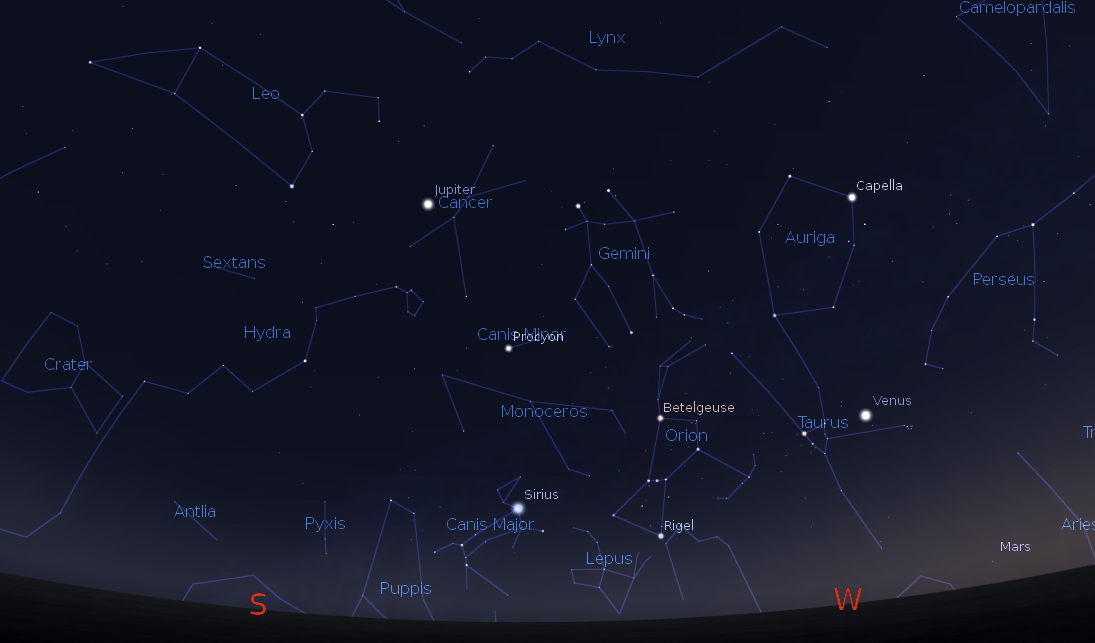
Jupiter, Venus and Mars and remaining winter constellations at 9:30 p.m. April 15, 2015. Created using Stellarium.
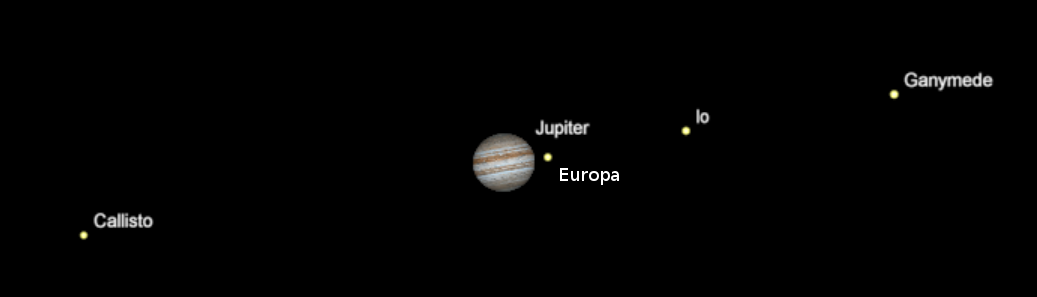
Jupiter and moons as they would appear in a telescope at 9:30 p.m. April 15, 2015. Created using Cartes du Ceil (Sky Charts).
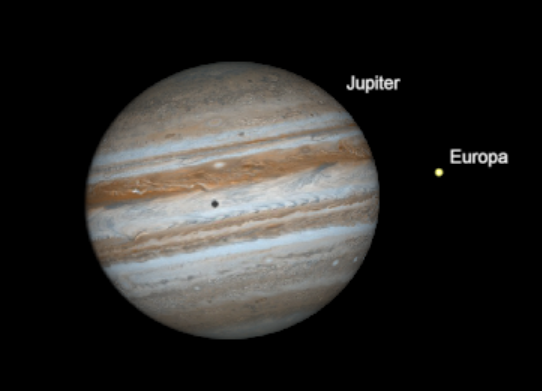
Closeup of Jupiter and Europa with its shadow cast on Jupiter at 9:30 p.m. April 15, 2015. Created using Cartes du Ceil (Sky Charts).
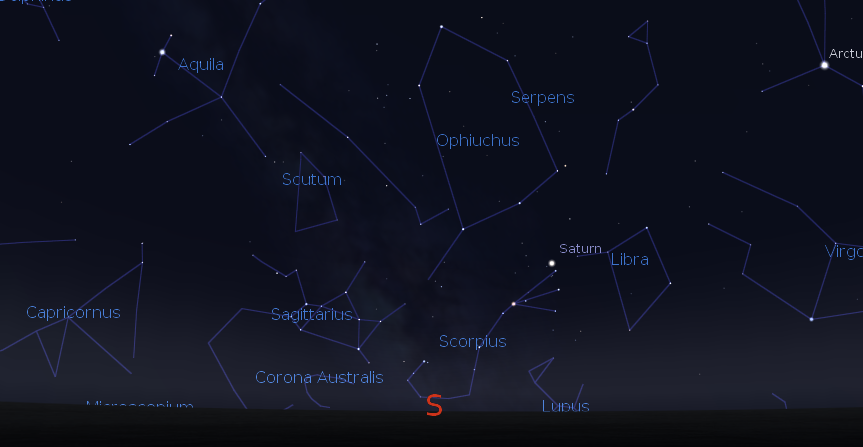
Saturn and the evening stars of summer at 5:30 a.m. April 16, 2015. Created using Stellarium.
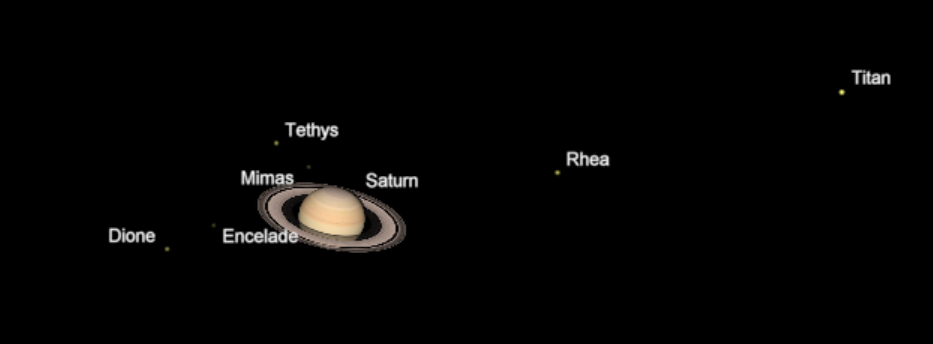
What Saturn and its moons might appear like in a telescope at 5:30 a.m., April 16, 2015. Small telescopes will show only the moon Titan. Created using Cartes du Ceil (Sky Charts).

