Archive
12/17/2012 – Ephemeris – Were the planetary conjunctions of 3 and 2 BC the Star of Bethlehem?
Ephemeris for Tuesday, December 18th. The sun will rise at 8:14. It’ll be up for 8 hours and 49 minutes, setting at 5:03. The moon, 2 days before first quarter, will set at 11:43 this evening. | For over 400 years astronomers have wondered and looked through ancient Chinese records, ran the positions of planets back 2000 years, and still no one knows for sure what the Star of Bethlehem really was, but here’s my favorite scenario. On August 13th of 3 BC Jupiter and Venus briefly merged in the pre-dawn skies against the constellation of Leo the lion. A month later Jupiter was in conjunction with Regulus the bright star in Leo, the little king star. Then 9 months later, after sunset on June 16th of 2 BC the two planets again joined as one in Leo. The king of the planets twice mating with Venus as Ishtar, the Babylonian goddess of fertility, against the constellation of the lion signifying Judah from Genesis? The Magi not being Jewish might have found meaning in all that.
Times are for the Traverse City/Interlochen area of Michigan. They may be different for your location.
Addendum
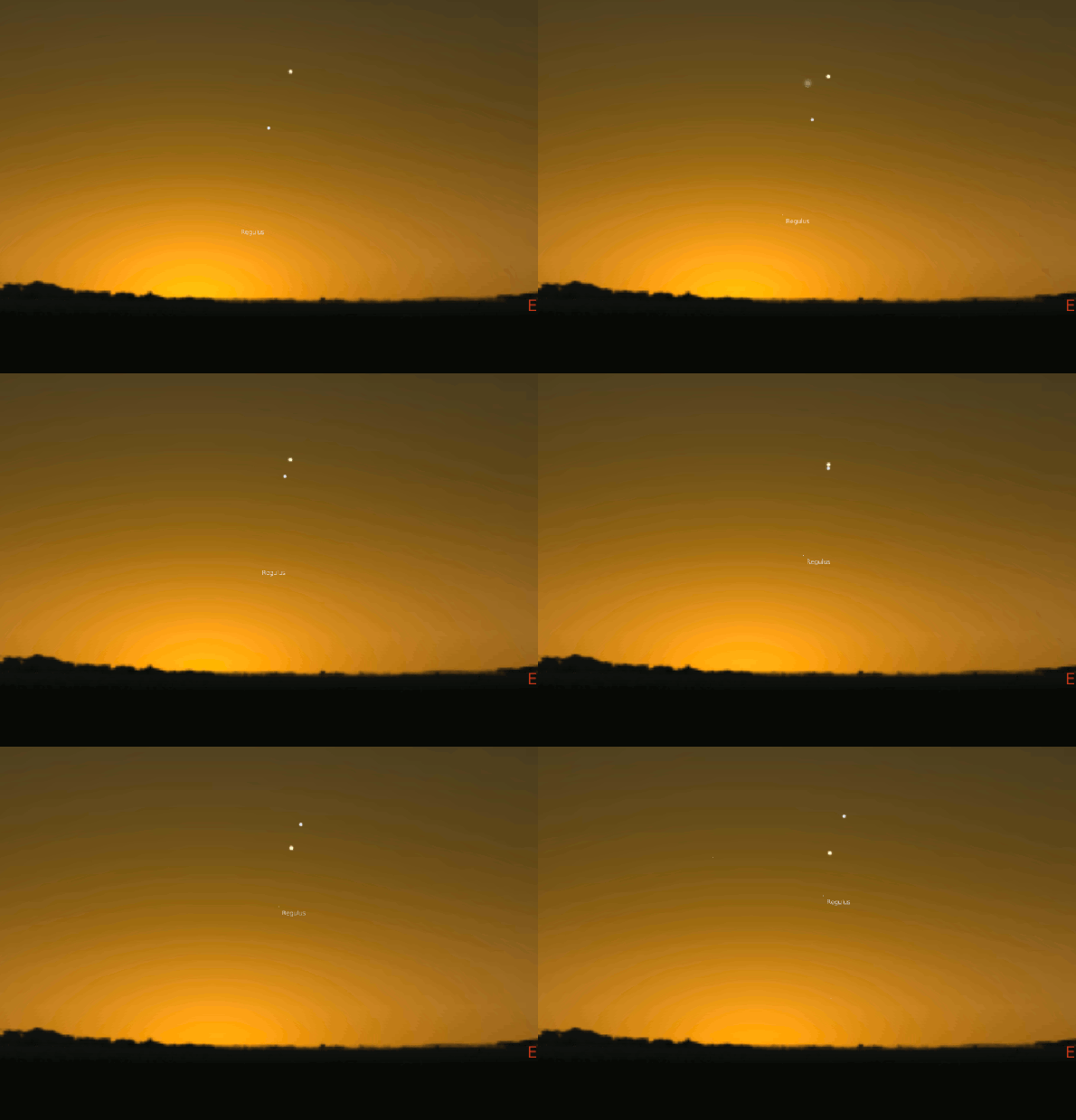
Animation of the Jupiter-Venus conjunction of August 3, 3 BC. in the morning twilight. Created using Stellarium.
Click on the image to enlarge and show the animation. Jupiter is rising while Venus, the brighter one, is heading back to the sun. Jupiter will seem to mate with Venus. 9 months later, the human gestation period their paths seem to cross again.
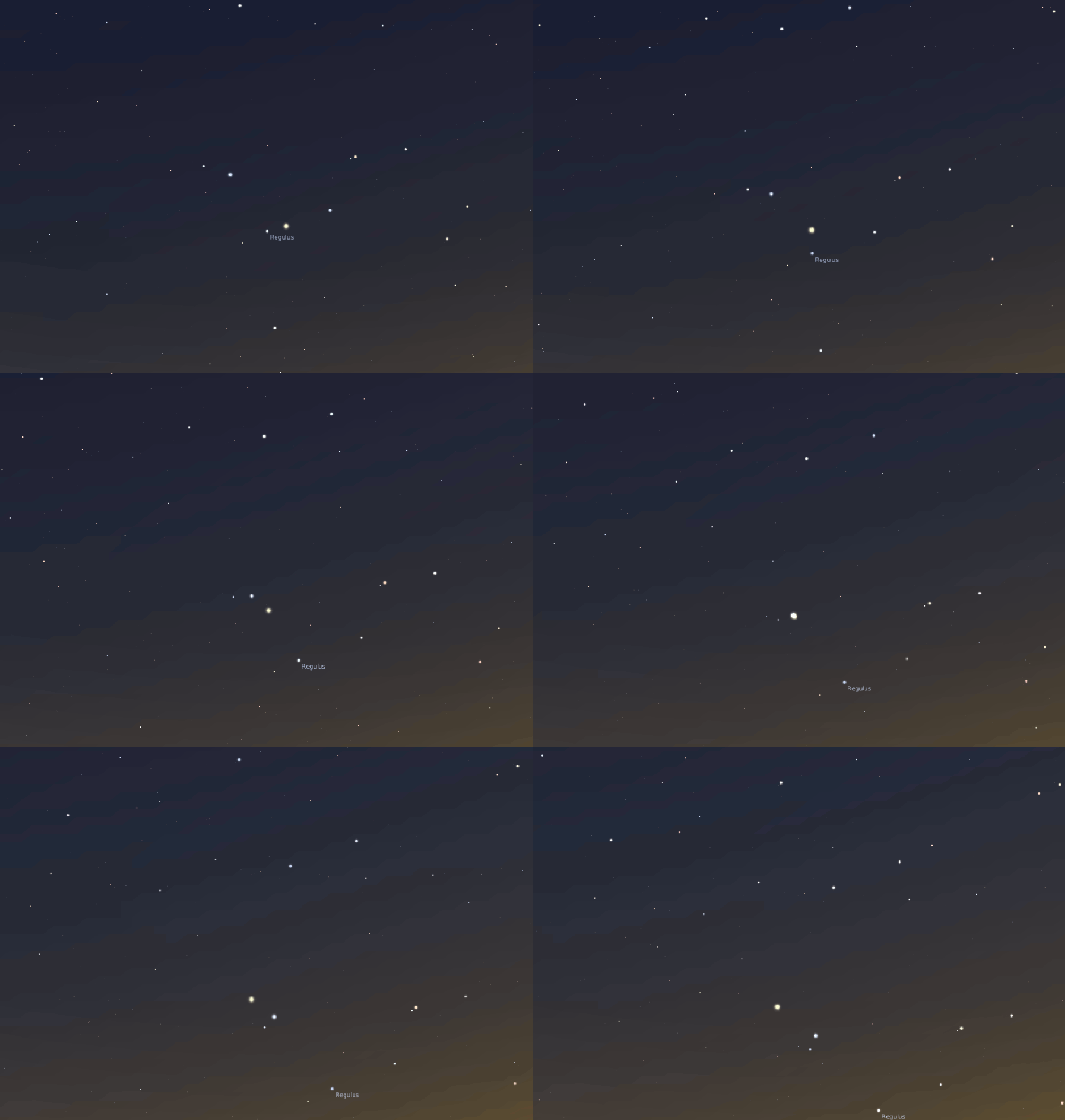
June of 2 BC just after sunset Jupiter and Venus again cross paths. Created using Stellarium.
Click on the image to enlarge and show the animation.
The Death of Herod the Great – Dating of the Star of Bethlehem
Note: This is from an article I wrote for the Grand Traverse Astronomical Society’s December 2012 newsletter The Stellar Sentinel.
I’m preparing for my biennial talk In Search of the Star of Bethlehem. In recent years I’ve been intrigued with the date of King Herod the Great’s death. Because it constrains the time of Christ’s birth since he was born near the end of King Herod’s reign according to the Gospel of Luke.
Late first century Jewish historian Flavius is the only source we have for the date of Herod’s death. Josephus was an interesting fellow. He was born Yosef ben Matityahu, a Jew. He fought against the Romans in A.D. 67, and was captured. He served as an interpreter for the Romans and was given Roman Citizenship.
In the 17th volume of his Antiquities of the Jews Josephus relates the events between a lunar eclipse and Passover the period in which Herod the Great died.
The favorite lunar eclipse over the years for this was a slight partial eclipse in March 13th of 4 B.C. The reason for this date is probably the possible discrepancy in the start of our current calendar numbering A.D. or C.E. This calendar numbering was promulgated by Dennis the Short in what would become the 6th century. There was a common thought that old Dennis was 8 years off, and that A.D. 1 was 8 years earlier than he thought. The hard thing about calculating the chronological eras was that there wasn’t just one. There were many. Trying to synchronize these is a daunting task.
The problem with the 4 B.C. eclipse is that there was only one lunar month between that eclipse and Passover which begins on the day of the full moon. And Josephus records many events between that eclipse and Passover.
If we believe many ancient sources writing close to the to the time of Christ’s birth, his date of birth would have been around 3 or 2 BC., which puts the 4 B.C. Death of Herod too soon. I was never wild about the 4 B.C. Eclipse for another reason, the eclipse was a slight partial eclipse occurring in the morning. Eclipse calculations were capable of predicting that eclipse, but it would have not have been very noticeable to the population.
The next lunar eclipse occurred on January 10 of 1 B.C. It was a total lunar eclipse that was seen most of the night. There were 3 lunar months between that eclipse and Passover that year. Plenty of time for all of Herod’s final activities.
According to Josephus the Eclipse was mentioned in connection with the burning alive of a fellow named Matthias and his companions for sedition.
Herod became very ill, as described in rather excessive detail by Josephus. His doctors suggested that he go to the baths at Callirrhoe. He took their advise and crossed the Jordan river. Note at this tome Herod resided in Jericho. As of this writing, I have not been able to find the location of Callirrhoe. It’s in present day Jordan near the Dead Sea. It could have been 20 or so miles from Jericho. There is a current day hot springs at Hammamat Ma’een which is a tourist attraction, but I so far haven’t found Callirrhoe whose waters run into the Dead Sea or Lake Asphaltites. The trips to and from Callirrhoe would have been slow carrying the sick King.
Knowing he was close to death he decreed a bonus of 50 Drachmas to his soldiers and another bonus to his commanders and friends. He then returned to Jericho. He had his minions draft and send letters to all the important Jewish men to come to Jericho under pain of death. He calculated, perhaps rightly that they would not mourn him when he died, so he would keep them at the hippodrome (racetrack) and when word of his passing be made known, have his archers slay all that were gathered there.
Herod then received a message from Caesar as to the verdict on son Antipater’s trial for plotting to kill Herod. It was left to Herod to decide what was to be done with him, until then Herod had him under arrest. Herod was feeling very ill and while paring an apple for himself, which he normally did, decided to commit suicide but was prevented at the last instant by his cousin who let out a loud scream. Those outside thought that Herod had died. Antipater heard and tried to convince his jailer to let him out to claim the throne. The jailer refused and told Herod. Upon the news Herod had Antipater executed immediately.
Herod then changed his will, giving his kingdom to his son Archclaus and died five days after having Antipater executed. Herod’s sister Salome and her husband Alexas allowed those kept at the Hippodrome to be released to return to their own lands before the news of Herod’s death became known. Herod was prepared for burial and a large funeral procession of soldiers, followed by 500 domestics carrying spices moved out two miles to Herodium, where he was buried.
Archclaus, though greeted with great acclaim at first angered the people. Archclaus then wanted to plead his case before Caesar and have himself made king. Sometime after this Josephus mentions the feast of Passover.
In my perusals of sources mentioning the people in the above recounting, 4 B.C. appears to be the generally accepted year of Herod and Antipater’s deaths. This gives only 29 days for the drama above to take place. The better eclipse of 1 B.C. Has nearly 90 days for it to take place.
This is why I have come to accept the January 10, 1 B.C. lunar eclipse mentioned by Josephus, and that the two conjunctions of Venus and Jupiter in 3 and 2 B.C. were the Star of Bethlehem that the Magi saw.
12/17/2012 – Ephemeris – The Star of Bethlehem: Who were the Magi?
Ephemeris for Monday, December 17th. The sun will rise at 8:14. It’ll be up for 8 hours and 49 minutes, setting at 5:03. The moon, 3 days before first quarter, will set at 10:36 this evening.
The Star of Bethlehem is one of the great mysteries of Christmas. The Chinese of that time were the only ones that recorded the happenings in the heavens. There were no bright stars that appeared near the time of Christ’s birth. That leads us to the Magi themselves, if that’s who they were. Magi were astrologer priests of the Zoroastrian religion in Persia. They saw signs in the positions of the planets that would go unnoticed to the Jews to which astrology was forbidden. Conjunctions where two or more planets gathered together were the most powerful of these configurations. There was a triple conjunction of Jupiter and Saturn in seven BC that’s the most famous, but I have another set of conjunctions in mind to tell you about tomorrow.
Times are for the Traverse City/Interlochen area of Michigan. They may be different for your location.
12/14/2012 – Ephemeris – The constellation of the river Eridanus
Ephemeris for Friday, December 14th. The sun will rise at 8:12. It’ll be up for 8 hours and 50 minutes, setting at 5:02. The moon, 1 day past new, will set at 6:58 this evening.
There is a long and sinuous constellation that’s part of the winter sky. It is Eridanus, which depicts a river. The river starts near the lower right corner of Orion, near the bright star Rigel and flows to the right then down near the southern horizon, then it meanders below the horizon. One has to travel to the far southern United States or even farther south to see the southern terminus of the river, the bright star Achernar. Writers over the ages have seen here the Nile and the earth circling river Ocean of the flat earth days. One of its stars is close to us and famous. It’s Epsilon Eridani host to at least two large planets and the home to the fictional Mr. Spock and other Vulcans of the Star Trek franchise. Trouble is the star is too young and any earth-like planets would be in unstable orbits.
Times are for the Traverse City/Interlochen area of Michigan. They may be different for your location.
Addendum
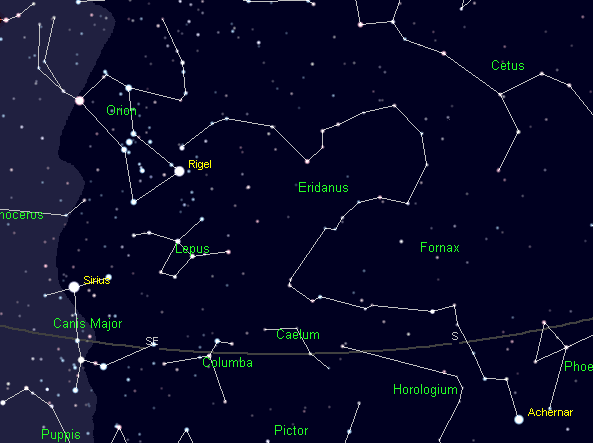
The constellation Eridanus the river, both above and below the horizon. Created using Cartes du Ciel.
12/13/2012 – Ephemeris – The Geminid meteor shower reaches its peak tonight.
Ephemeris for Thursday, December 13th. The sun will rise at 8:11. It’ll be up for 8 hours and 51 minutes, setting at 5:02. The moon is new today, and won’t be visible.
Tonight will be the peak of the Geminid meteor shower. This is one of the most active showers of the year. Some say it’s even more active than the Perseid meteor shower of August with up to 100 meteors or shooting stars visible an hour. They will seem to come from near the star Castor in the constellation Gemini which is rising high towards midnight. The moon will not interfere because it’s new. The radiant point is highest at 2 a.m. But will be in the sky from 8 p.m. on All you’ll need then is clear skies. If it does clear up, make sure you dress warmly. It will take up to 10 minutes or even more for your eyes to get accustomed to the darkness to be able to see the meteors. The meteors are related to a body called Phaethon, a dead comet nucleus.
Times are for the Traverse City/Interlochen area of Michigan. They may be different for your location.
Addendum
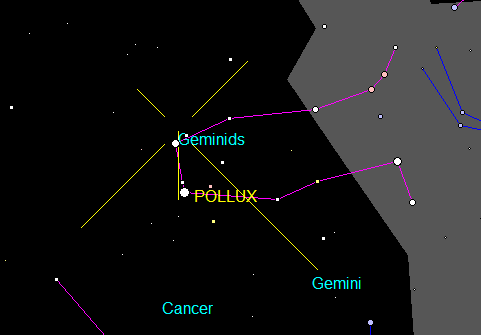
Geminid Radiant
12/12/2012 – Ephemeris – Where are the bright planets this week?
Ephemeris for Wednesday, December 12th. The sun will rise at 8:10. It’ll be up for 8 hours and 51 minutes, setting at 5:02. The moon, 1 day before new, will rise at 8:18 tomorrow morning.
Let’s check out the planets for this week. Mars can be seen low in the southwest. It will set at 7:04 p.m. The planetary action will have already picked up on the other side of the sky. Jupiter is located in the constellation of Taurus on the southeast in the evening. It will transit or pass due south at 11:47 p.m, and will set at 7:19 a.m. Saturn will be the next planet to rise at 4:24 a.m. in the east southeast. Venus will rise at 6:02 and is below and left of Saturn. Mercury will rise at 6:36 a.m. Below and left of Venus. A half an hour later it should be high enough to spot. The three planets will appear in a straight line and nearly equally spaced. After a few days Mercury will not be visible again until next February.
Times are for the Traverse City/Interlochen area of Michigan. They may be different for your location.
Addendum
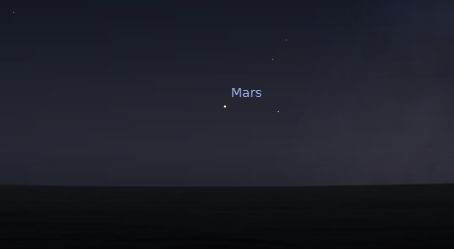
Mars low in the southwest at 6:15 p.m. on December 12, 2012. Created using Stellarium.
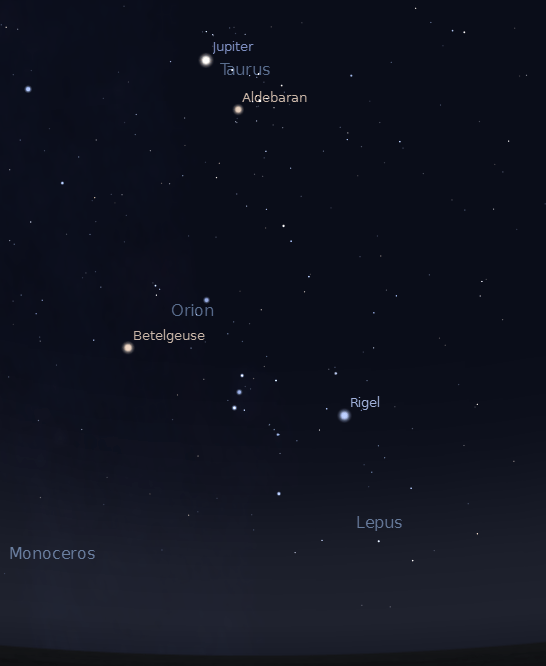
Jupiter and the winter stars at 9 p.m. December 12, 2012. Created using Stellarium.
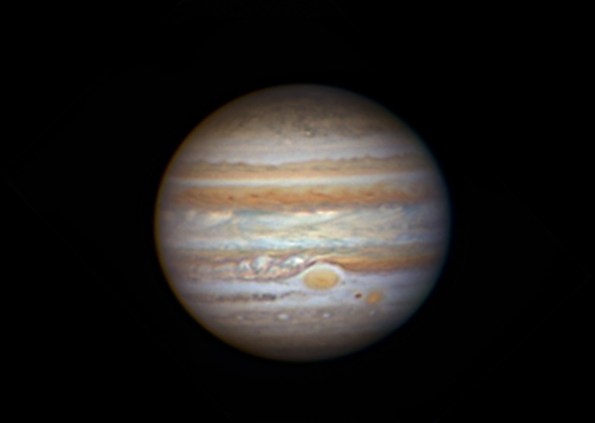
Jupiter with its Great Red Spot November 18, 2012 by Scott Anttila.
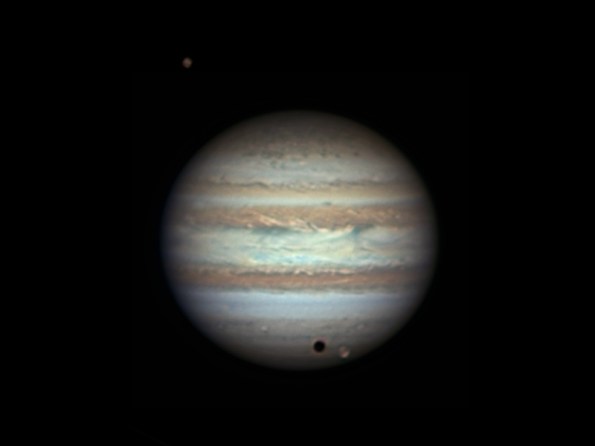
Jupiter with Callisto above, Ganymede and its shadow below on December 6, 2012 by Scott Anttila, Click to enlarge.
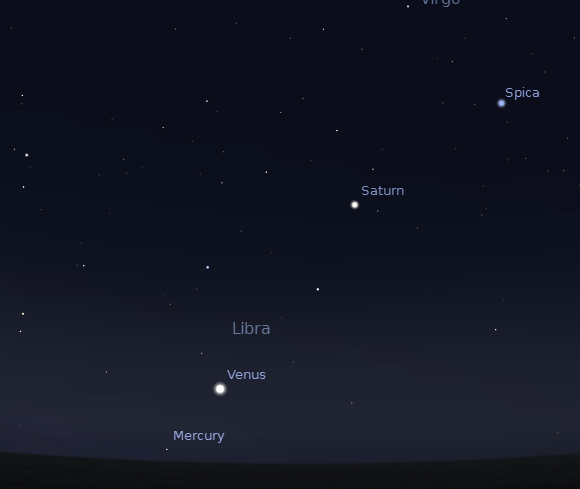
Saturn, Venus and Mercury at 6:45 a.m. ay December 13, 2012. Created using Stellarium.
12/11/2012 – Ephemeris – The Pleiades and Hyades star clusters
Ephemeris for Tuesday, December 11th. The sun will rise at 8:09. It’ll be up for 8 hours and 52 minutes, setting at 5:02. The moon, 2 days before new, will rise at 7:13 tomorrow morning.
At 8 to 9 p.m. The constellation of Taurus the bull rises higher in the east to southeast. Taurus contains two bright clusters of stars. The most famous of these is the Pleiades, also known as the Seven Sisters. The other is a letter V shape that is the face of Taurus, the Hyades. In the Greek mythology they are half-sisters of each other, all fathered by the Titan Atlas. They are apparently fleeing from the giant Orion rising in the east. The Pleiades are the younger of the two star clusters, and there has been some problem in estimating their distance. They could be from 390 to 460 light years away. The distance to Hyades is much better known at 153 light years. It was the star cluster upon which greater distances could be measured.
Times are for the Traverse City/Interlochen area of Michigan. They may be different for your location.
Addendum
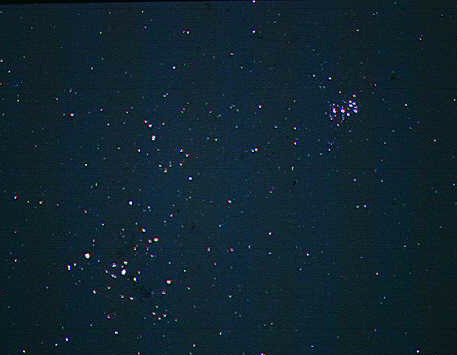
The Hyades (lower left) and the Pleiades (upper right). My photograph from many years ago.
12/10/2012 – Ephemeris – Saturn will be above the moon this morning.
Ephemeris for Monday, December 10th. The sun will rise at 8:08. It’ll be up for 8 hours and 53 minutes, setting at 5:02. The moon, 3 days before new, will rise at 6:01 tomorrow morning.
This morning, if it’s clear look eastward at the moon and planets. The planet just above the moon is the planet Saturn. Farther below and to the left is the brilliant planet Venus. Those with good eyesight or binoculars might spot tiny Mercury. In the morning we get a preview in the stars of a season or two ahead from what we see in the evening. Orion, which is rising in the east in the early evening is seen setting in the west at 7 in the morning. The spring stars are now reigning in the morning sky, and a few summer are peeking above the eastern horizon, pretty much drowned out by the morning twilight. Next spring Saturn will be little moved from its current position, It takes it a bit less than 30 years to orbit the sun.
Times are for the Traverse City/Interlochen area of Michigan. They may be different for your location.
Addendum
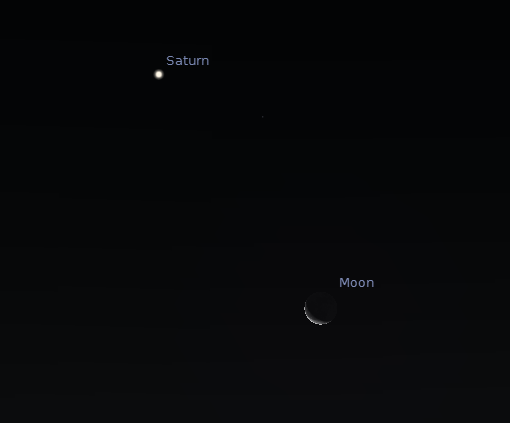
Saturn and the moon low in the southeast at 6:30 a.m. on December 10, 2012. Created using Stellarium.
Tomorrow morning the moon will pass below Venus. See this animation below.
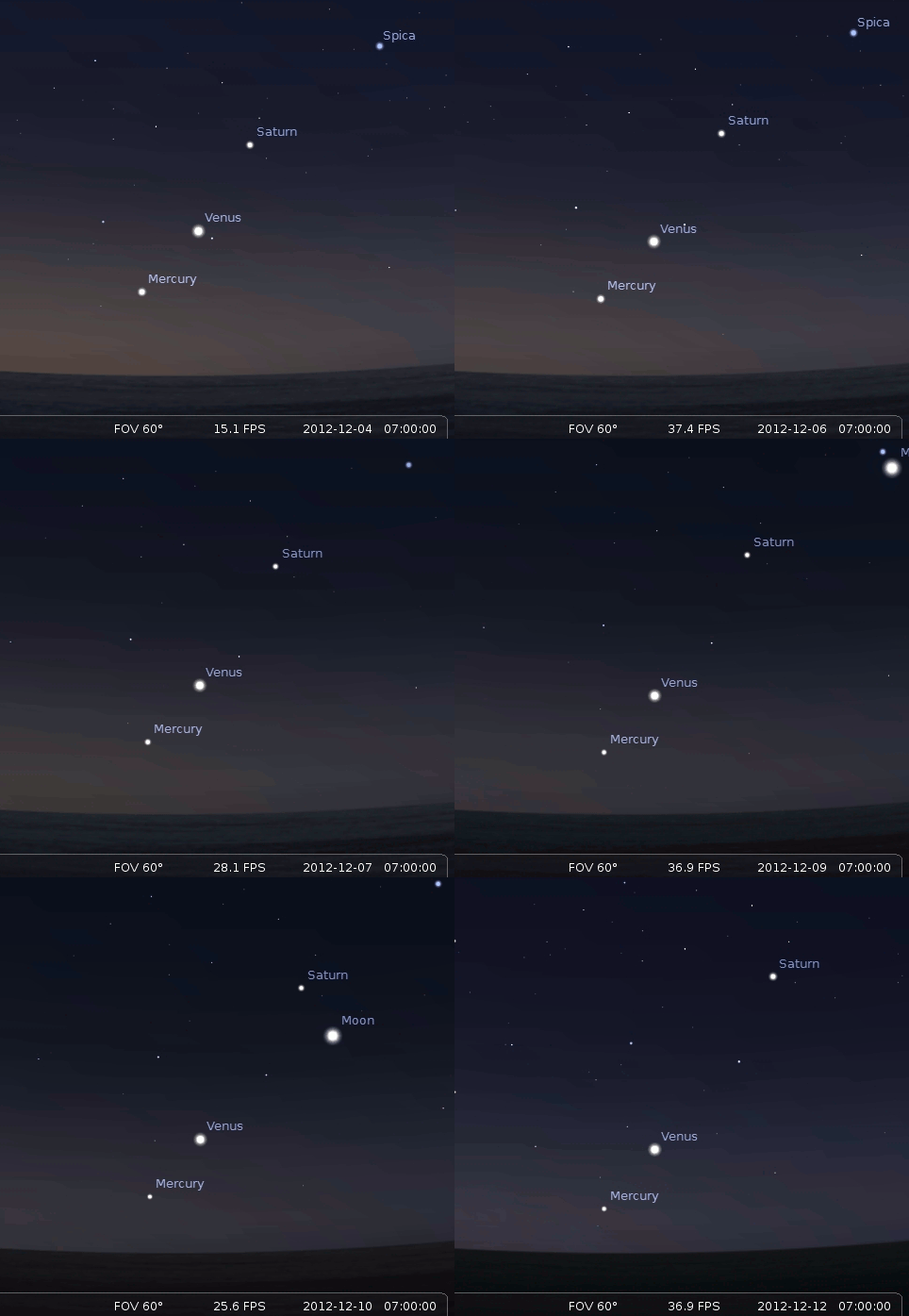
Mercury animation from December 4 to thru 12, 2012. Created using Stellarium
12/07/2012 – Ephemeris – Search for the Star of Bethlehem tonight!
Ephemeris for Friday, December 7th. The sun will rise at 8:06. It’ll be up for 8 hours and 56 minutes, setting at 5:02. The moon, 1 day past last quarter, will rise at 2:19 tomorrow morning.
The Search for the Star of Bethlehem, will be presented at this evening’s meeting of the Grand Traverse Astronomical Society at Northwestern Michigan College’s Rogers Observatory starting at 8 p.m. This is my biennial presentation. We’ll check out the Biblical passages that mention the star, Johannes Kepler’s discovery that started the search some 1600 years later, ancient Chinese records, ancient writers all contribute to the quest. Thanks to Kepler, Newton, Einstein and others plus the power of computers we can go back and see the skies, and computer generated recreations of planet positions to see what the star might have been. Starting at 9 p.m. Is our December star party at the observatory. All are welcome.
Times are for the Traverse City/Interlochen area of Michigan. They may be different for your location.
Addendum
Title slide for the program.
12/06/2012 – Ephemeris – The constellation Taurus the bull
Ephemeris for Thursday, December 6th. The sun will rise at 8:05. It’ll be up for 8 hours and 57 minutes, setting at 5:02. The moon, at last quarter today, will rise at 1:10 tomorrow morning.
Low in the east southeast at 9 p.m. is the constellation of the giant hunter Orion. Above him is Taurus the bull. His face is a letter V shape of stars lying on its side, the star cluster Hyades, with the bright orange-red star Aldebaran at one tip of the V as its angry blood-shot eye, but actually about half way between us and the cluster. Jupiter is complicating this this year, appearing in Taurus. Orion is depicted in the sky facing, with club in one hand and a shield in the other, the approaching and in some depictions charging Taurus. The Pleiades star cluster is in his shoulder. Taurus in Greek mythology was the guise the god Zeus when he carried off the maiden Europa. Europa’s still with him as the intriguing satellite orbiting Zeus’ Roman equivalent the planet Jupiter.
Times are for the Traverse City/Interlochen area of Michigan. They may be different for your location.
Addendum
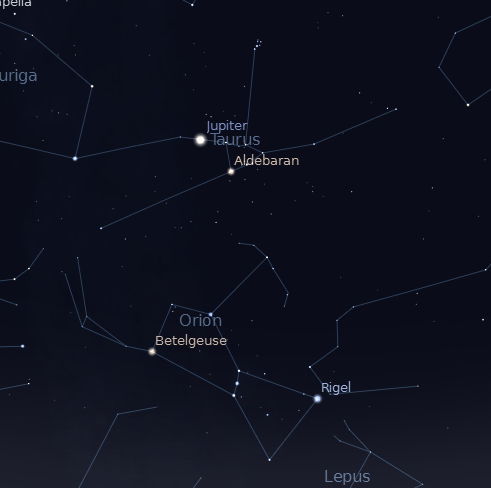
Taurus and Orion in the east at 9 p.m. December 6, 2012. Created using Stellarium.
 Bob Moler's Ephemeris Blog