Archive
06/19/2018 – Ephemeris – The Mars rover Opportunity is facing its greatest challenge
Ephemeris for Tuesday, June 19th. Today the Sun will be up for 15 hours and 34 minutes, setting at 9:31, and it will rise tomorrow at 5:57. The Moon, 1 day before first quarter, will set at 2:01 tomorrow morning.
The Mars Exploration Rover-B, named Opportunity landed on the Red Planet on January 25, 2004 for a mission hoping to last 90 Martian days or sols. It has been going strong for over 5,000 sols, or nearly 14 ½ Earth years, and has driven over 28 miles. Now Oppy, as its controllers affectionately call it, is meeting it’s greatest challenge. A huge dust storm, threatening to engulf the entire planet is building up. It has cut off the sunlight that power’s Oppy’s solar panels. Day has become night. The Jet Propulsion Laboratory controllers have put Oppy in deep sleep mode, powering only its clock to wait out the storm. They are awaiting Oppy’s phone home call scheduled for 11 a.m. at its local time each sol.
The times given are for the Traverse City/Interlochen area of Michigan. They may be different for your location.
Addendum
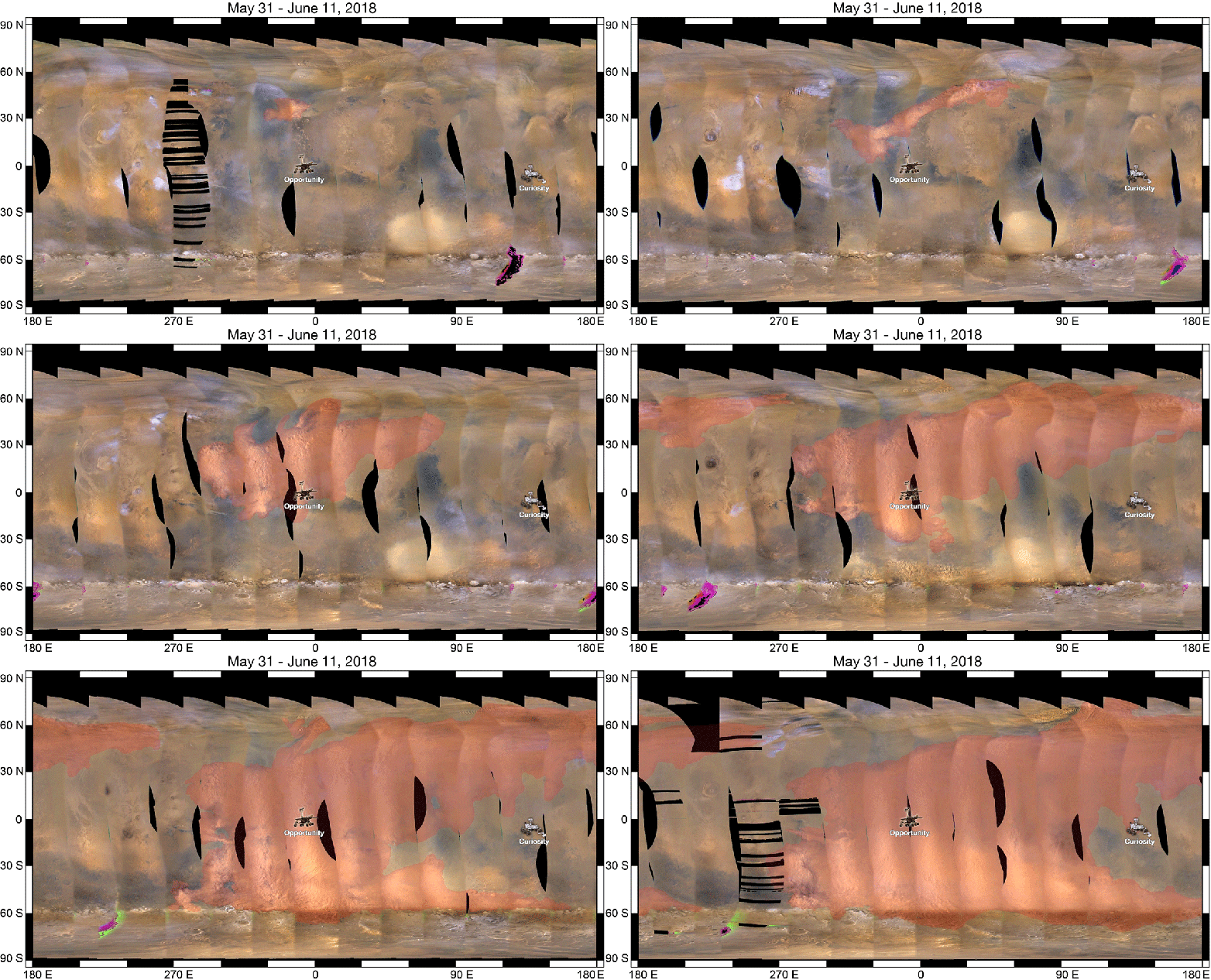
An animation of Mars global scans by the Mars Reconnaissance Orbiter over the period of May 31 to June 11, 2018. Two dust storms, one from the north, and another from the south converge and threaten to go global. Click on the image to enlarge. Credit: NASA/JPL-Caltech/MSSS.
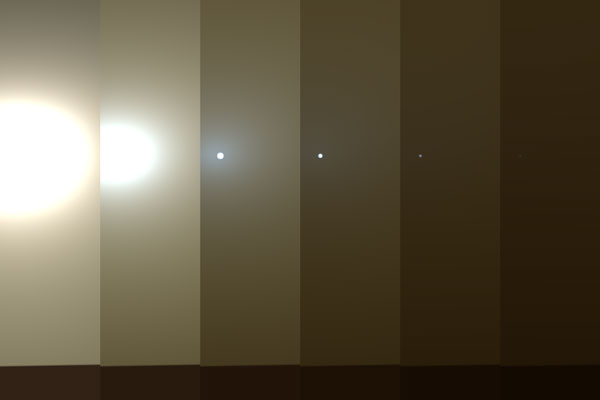
Lights out for Oppy. The Sun photographed by Opportunity over several sols. Credit NASA/JPL-Caltech.
Below, the News Conference about Opportunity and the dust storm, recorded June 13, 2018.
06/08/2018 – Ephemeris – A second Moon race?
Ephemeris for Monday, June 18th. Today the Sun will be up for 15 hours and 34 minutes, setting at 9:31, and it will rise tomorrow at 5:56. The Moon, 2 days before first quarter, will set at 1:30 tomorrow morning.
The Moon as a destination is becoming a hot topic among the space faring nations. Who will land humans first in this second wave since the United States landed there in the late 1960s and early 1970s: The Chinese, Russians, us? Or maybe someone else? Next year July 20th will be the 50th anniversary of Neil Armstrong’s first step onto the lunar surface. The goal this time is not to just visit, but to stay. The lunar surface is a harsh environment of extremes in temperatures and radiation from the Sun, and from the universe beyond. There is shelter beneath the surface, in lava tubes. There is one lava tube with a collapsed roof, a skylight, which could provide access in a place called the Marius Hills.
The times given are for the Traverse City/Interlochen area of Michigan. They may be different for your location.
Addendum
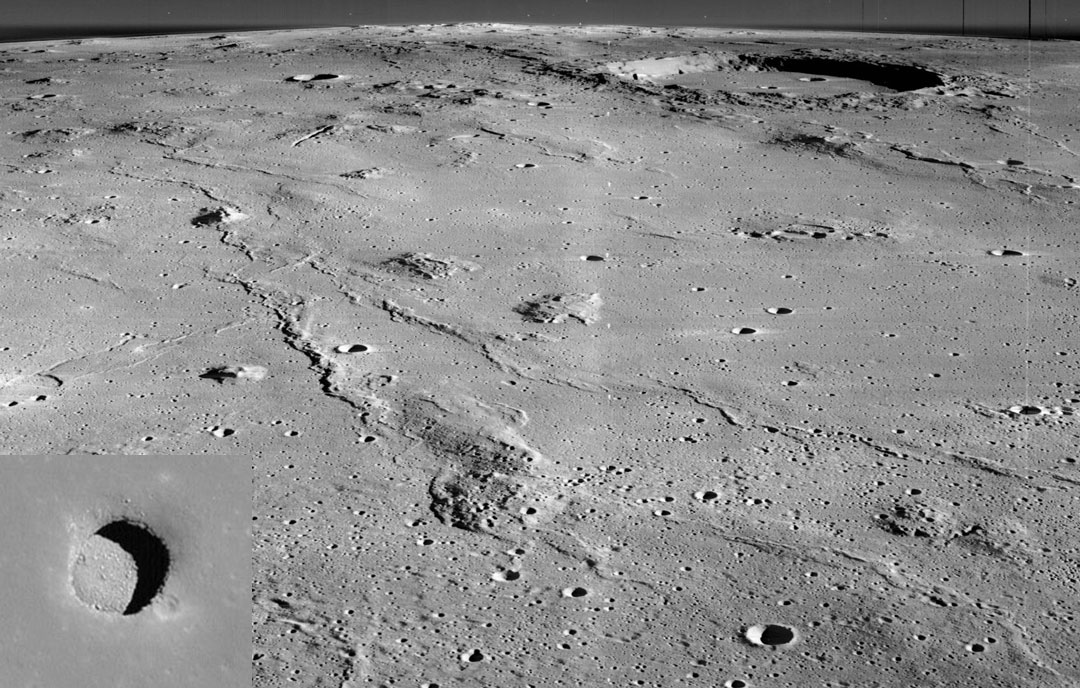
An oblique view of the Marius Hills from the Lunar Orbiter 2, with an inset look into a skylight into a lava tube from the Lunar Reconnaissance Orbiter at the lower left. Click on image to enlarge. Credit NASA, Lunar Orbiter 2, Lunar Reconnaissance Orbiter.
The picture above was posted on Astronomy Picture of the Day (APOD) 2017 October 2017: https://apod.nasa.gov/apod/ap171025.html, where there is more information.
06/15/2018 – Ephemeris – Earliest sunrise and a look at Venus
Ephemeris for Friday, June 15th. Today the Sun will be up for 15 hours and 33 minutes, setting at 9:30, and it will rise tomorrow at 5:56. The Moon, 2 days past new, will set at 11:25 this evening.
Today saw the earliest sunrise of the year at 5:56 a.m. We’re 6 days from the summer solstice.
The two day old Moon tonight will appear below and to the right of Venus. Tomorrow night it will have moved to be left and above Venus. This weekend it will be fun to look at Venus and the Moon in binoculars or a small telescope. In a small telescope Venus, though small is definitely not round. It has a gibbous phase and appears 75% illuminated by the Sun. It’s still a bit farther than the Sun, at 109 million miles (175 million km). By the end of October it will come to less than a quarter that distance from us and be invisible in the Sun’s glare. Its phase will get skinnier as its size grows in our telescopes until then.
The times given are for the Traverse City/Interlochen area of Michigan. They may be different for your location.
Addendum
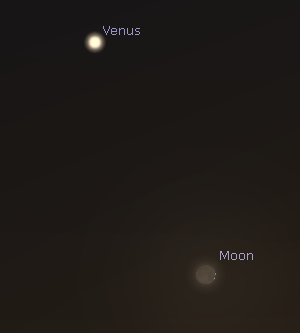
Venus and the Moon tonight June 15, 2018 at 10:30 p.m. Created using Stellarium.
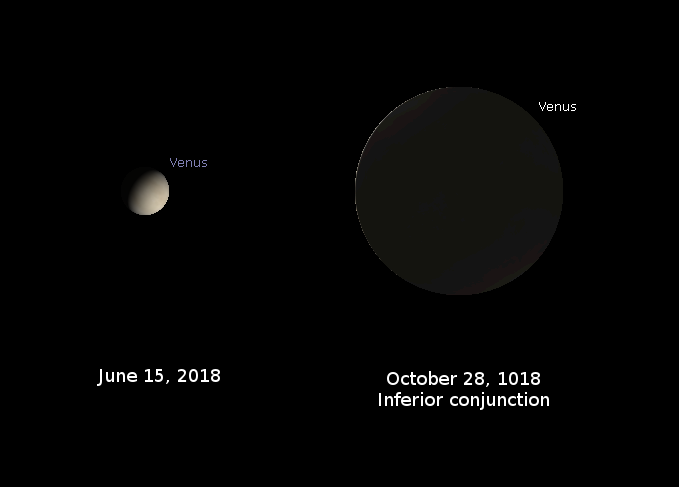
Comparison of apparent sizes of the planet Venus, tonight June 15 and near Inferior conjunction. I was 2 days late using my memory. The date will be October 26th. Created using Stellarium.
06/14/2018 – Ephemeris – The mighty hero Hercules in the sky
Ephemeris for Flag Day, Thursday, June 14th. Today the Sun will be up for 15 hours and 33 minutes, setting at 9:29, and it will rise tomorrow at 5:56. The Moon, 1 day past new, will set at 10:27 this evening.
Orion, the hard luck Greek hunter gets a splashy constellation in the winter sky, but the greatest hero of all, Hercules, gets a dim group of stars on the border between the spring and summer stars. At 11 p.m. Hercules is high in the southeast. It is located above and right of the bright star, Vega in the east. Hercules’ central feature is a keystone shaped box of stars, called the Keystone, which represents the old boy’s shorts. From each top corner extend lines of stars that are his legs, from the bottom stars, the rest of his torso and arms extend. So in one final indignity he’s upside down in our sky. Some see him crouched down, club upraised holding the Hydra about to throttle it. For those with a telescope it contains the beautiful globular star cluster M13.
The times given are for the Traverse City/Interlochen area of Michigan. They may be different for your location.
Addendum
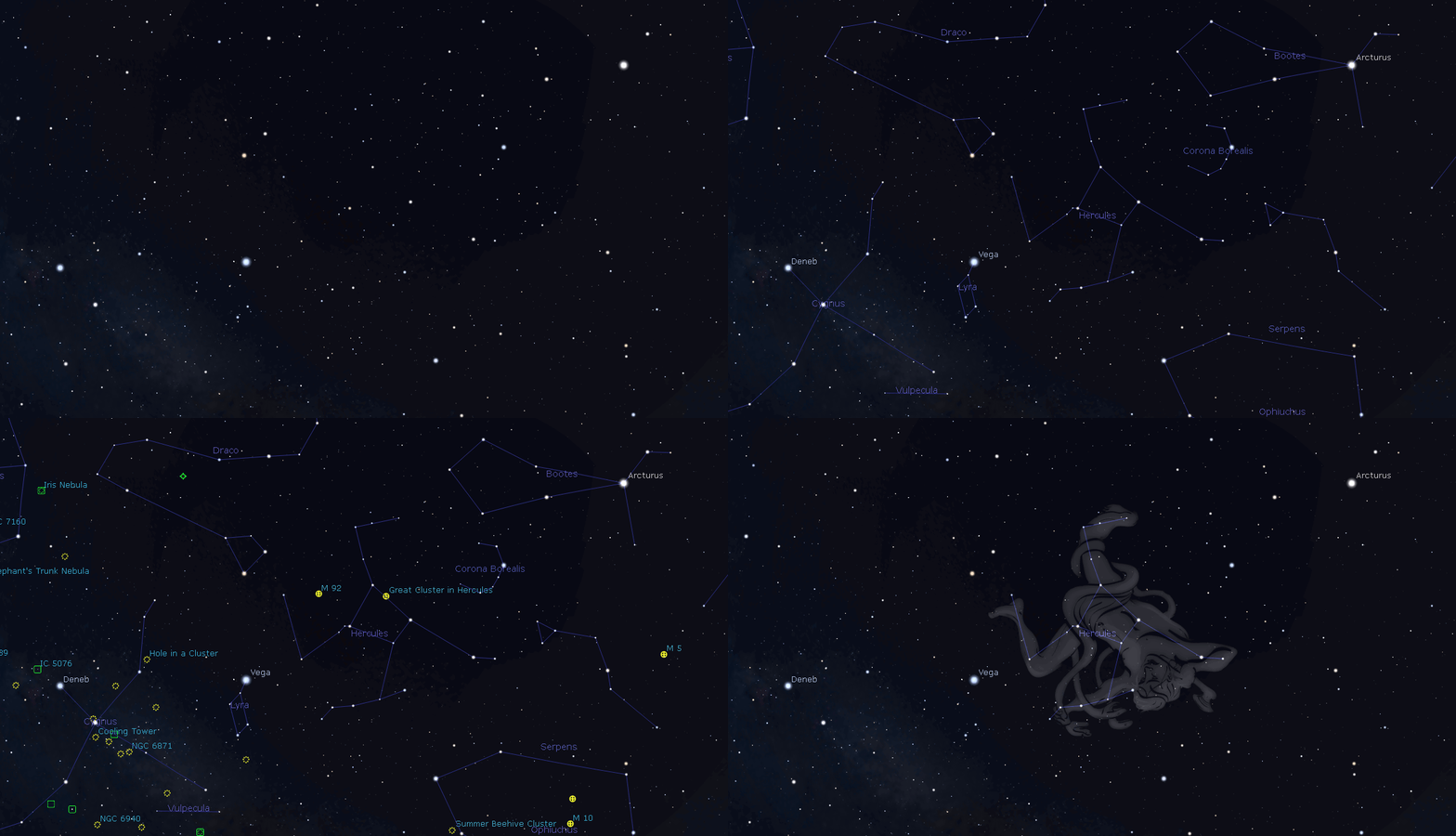
Hercules animation showing neighboring stars, constellation outlines, deep sky objects, and constellation art for Hercules. Created using Stellarium. Click on image to enlarge.
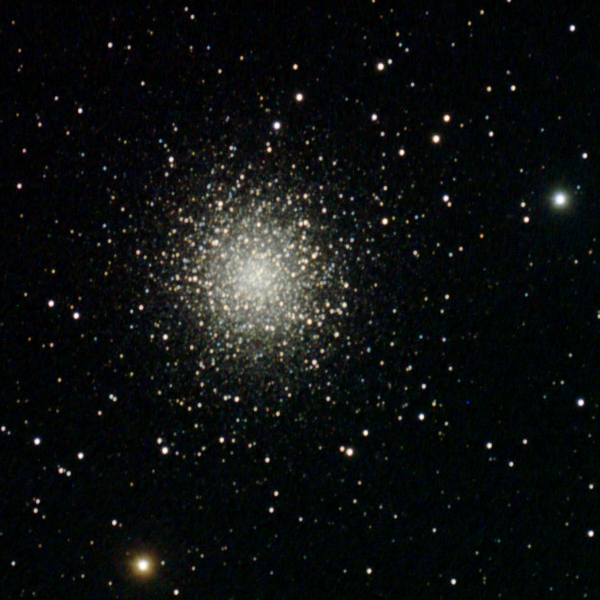
M13, the Great Globular Star Cluster in Hercules. Credit: Scott Anttila
06/13/2018 -Ephemeris – Time to check out the bright planets
Ephemeris for Wednesday, June 13th. Today the Sun will be up for 15 hours and 32 minutes, setting at 9:29, and it will rise tomorrow at 5:56. The Moon is new today, and won’t be visible.
It’s Wednesday again and time to look for and at the bright planets. Two of them are visible in the evening sky. The brilliant beacon of Venus will be visible in the western twilight from about 9:50 p.m. until it sets at 11:59 p.m. Jupiter will be in the south-southeast as it gets dark. Jupiter is only outshone by Venus and the Moon. And after Venus sets will have the night to itself as the brightest star-like object until it sets at 4:03 a.m. Binoculars will show it to be bigger than star-like in size flanked by several little star-like moons to either side. Saturn will rise at 10:16 p.m. in the east-southeast. Mars will rise at 12:29 a.m. and is now outshining Saturn, and in July and August will even outshine Jupiter.
The times given are for the Traverse City/Interlochen area of Michigan. They may be different for your location.
Addendum
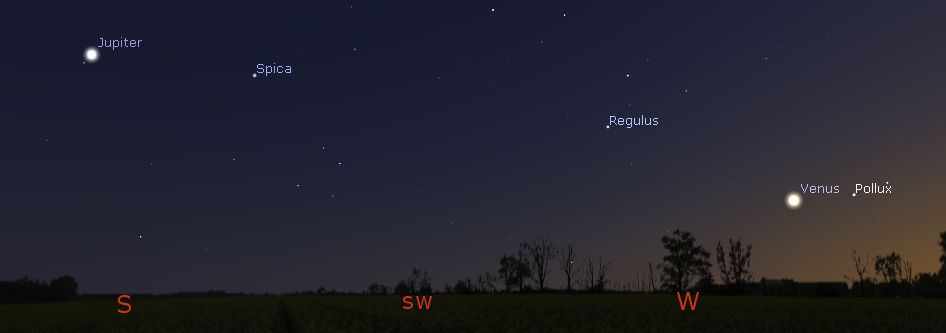
Venus and Jupiter at 10:30 p.m. June 13, 2018. Click on image to enlarge. Created using Stellarium.
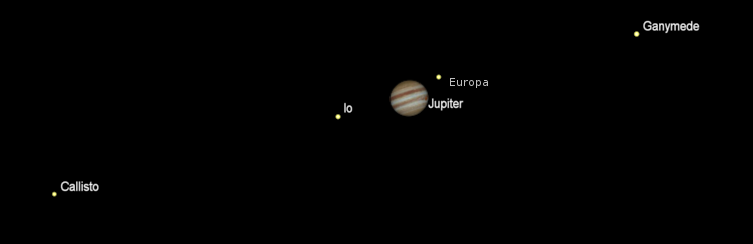
Jupiter and moons at 10:30 p.m. June 13, 2018. Created using Cartes du Ciel (Sky Charts).
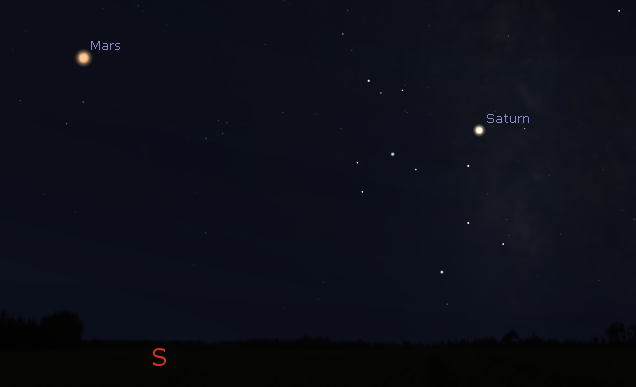
Morning planets at 4:30 a.m. June 14, 2018. Click on image to enlarge. Created using Stellarium.
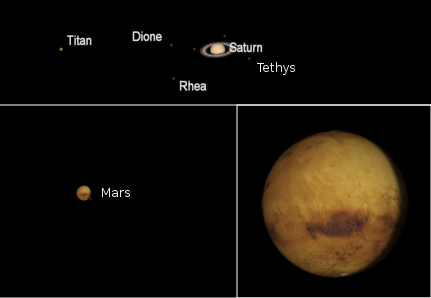
Saturn and Mars with the same magnification with an inset of Mars at higher magnification at 4:30 a.m. June 14, 2018. Created using Cartes du Ciel (Sky Charts).
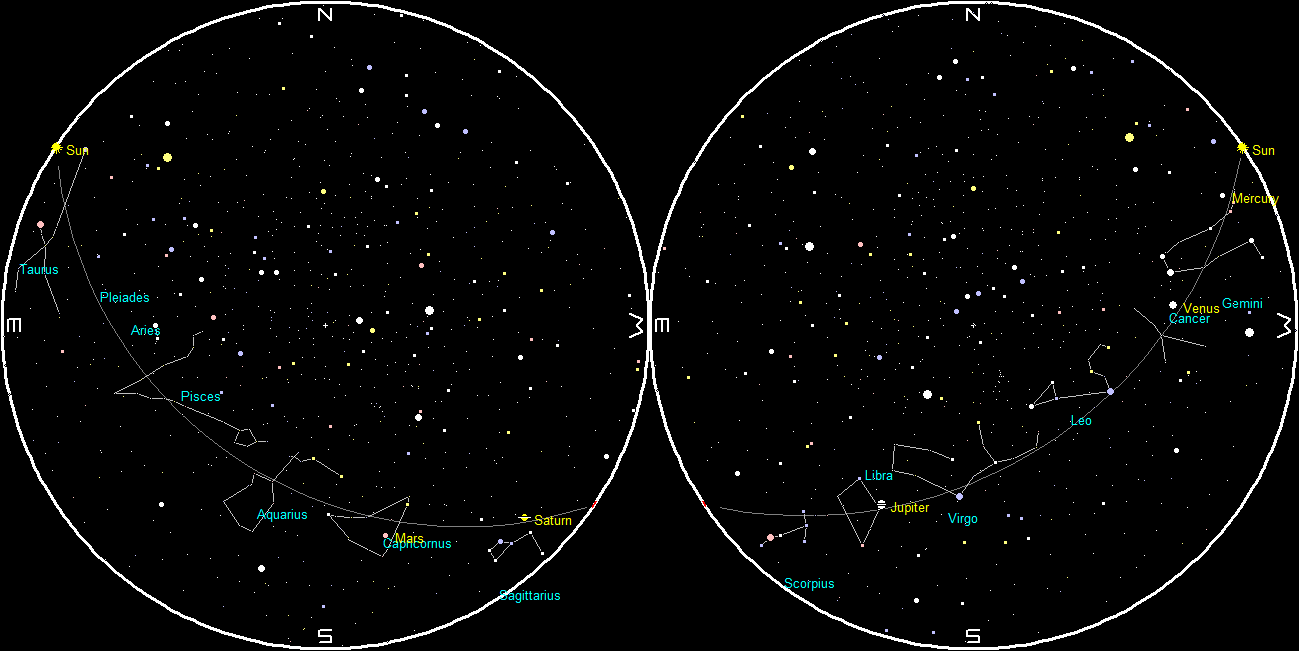
Planets and the Moon at sunset and sunrise of a single night starting with sunset on the right on June 13, 2018. The night ends on the left with sunrise on the 14th. Click on the image to enlarge. Created using my LookingUp program.
06/12/2018 – Ephemeris – Virgo the virgin
Ephemeris for Tuesday, June 12th. Today the Sun will be up for 15 hours and 32 minutes, setting at 9:28, and it will rise tomorrow at 5:56. The Moon, 1 day before new, will rise at 6:02 tomorrow morning.
Tonight in the sky: to the south, is bright Jupiter. The brightest star to the right of Jupiter is Spica. It is in the constellation and member of the of the zodiac: Virgo the virgin. Virgo is a large constellation of a reclining woman holding a stalk of wheat. The bright star in the center of the constellation, Spica, is the head of that spike of wheat; and as such it ruled over the harvest in two of Virgo’s guises as the goddesses Persephone and Ceres. Ceres is now a dwarf planet and the root of the word cereal. Virgo is also identified as Astraea the goddess of justice. The constellation of Libra, the scales of justice, which she is associated with, is found just east of her low in the southeast.
The times given are for the Traverse City/Interlochen area of Michigan. They may be different for your location.
Addendum
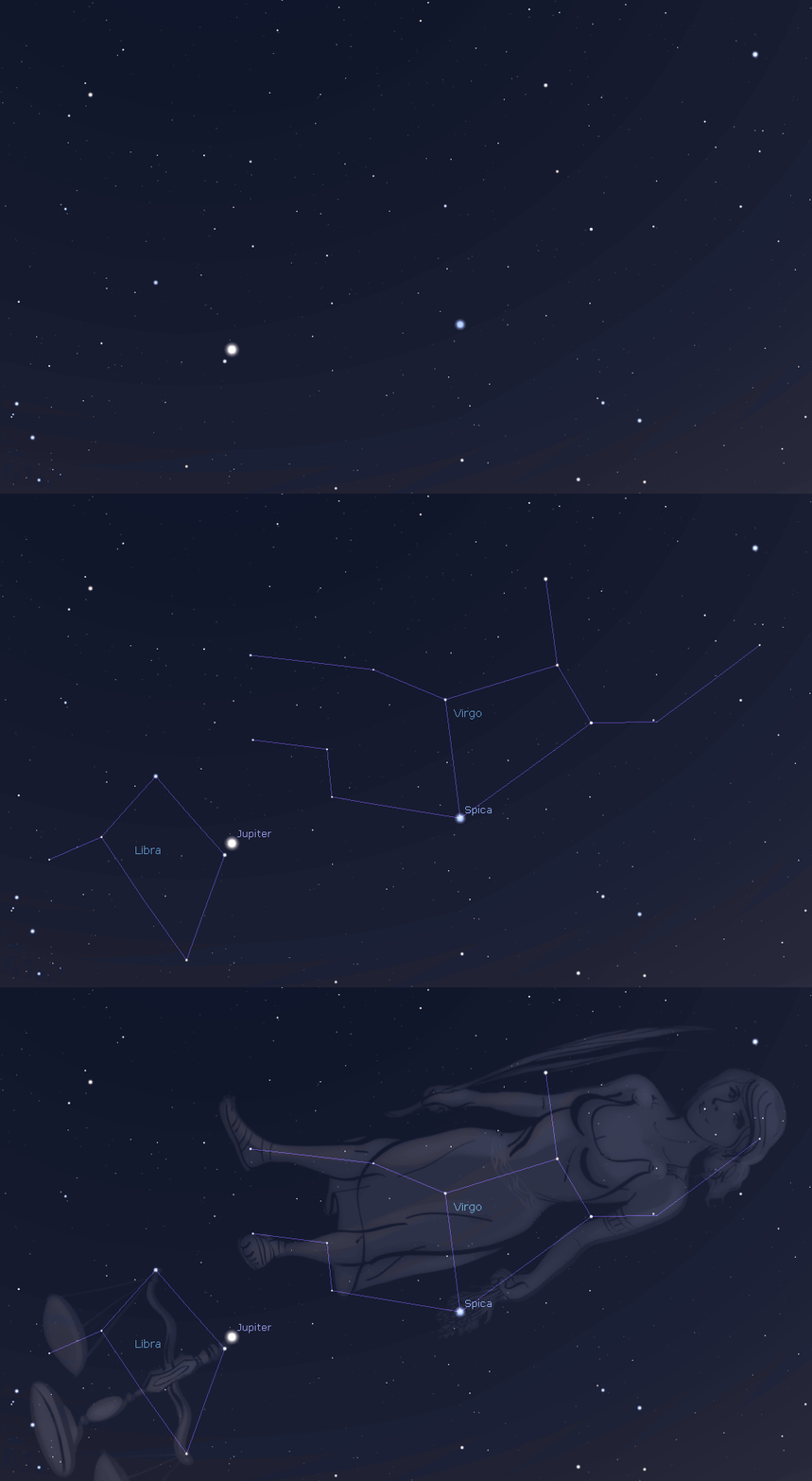
Virgo finder animation for 10:30 p.m. June 12, 2018. Click on image to enlarge. Created using Stellarium and GIMP.
06/11/2018 – Ephemeris – Jupiter and the claws of the scorpion
Ephemeris for Monday, June 11th. Today the Sun will be up for 15 hours and 31 minutes, setting at 9:28, and it will rise tomorrow at 5:56. The Moon, 2 days before new, will rise at 5:17 tomorrow morning.
Right now the bright planet Jupiter is seen in the south as it gets dark. There is a star visible below Jupiter now. The name of that star is my favorite star name: Zubenelgenubi. It roughly translates from the Arabic, and most star names are Arabic, as “Southern Claw”. This star, also known as Alpha Librae, is in the zodiacal constellation of Libra the scales or balance, a roughly square constellation standing on one corner. The name relates to Scorpius the scorpion to the east who in the Arab’s imagination extended farther to the west. The star farther to the upper left of Jupiter tonight is Zubeneschamali, you guessed it, the northern claw, also part of Libra. It’s the longest star name at 14 letters.
The times given are for the Traverse City/Interlochen area of Michigan. They may be different for your location.
Addendum
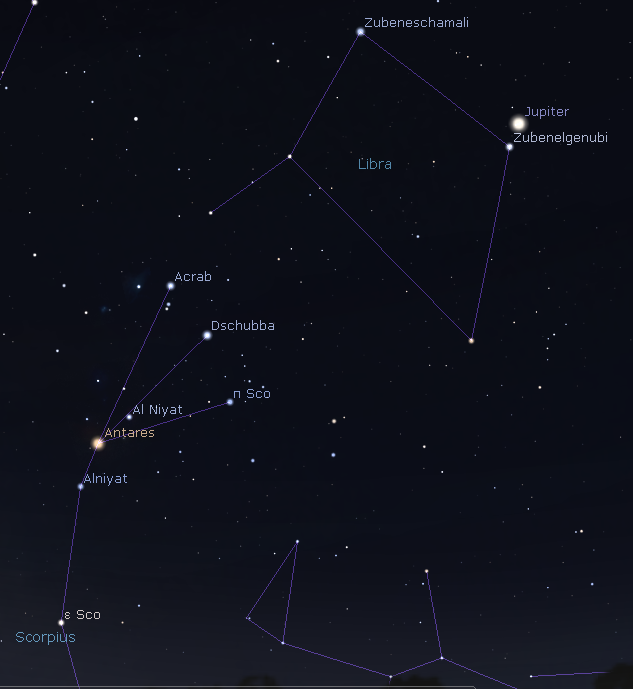
Jupiter with Zubenelgenubi, the South Claw and with nearby Zubeneschamali, the North Claw of Scorpius, still rising at 11 p.m. June 11, 2018. Created using Stellarium.
06/08/2018 – Ephemeris – Anishinaabek constellation of the Sweat Lodge
Ephemeris for Friday, June 8th. Today the Sun will be up for 15 hours and 29 minutes, setting at 9:26, and it will rise tomorrow at 5:57. The Moon, 2 days past last quarter, will rise at 3:37 tomorrow morning.
This past Monday I talked about the constellation of Corona Borealis, high in the southeast at 10:30 in the evening and the Greek mythology that surrounds it. It’s a small three-quarters of a circle of stars sandwiched between the larger constellations of Boötes to the west or right and Hercules on left or east. To the Anishinaabek people, who are natives of our region of which the Ottawa or Odawa, Chippewa and Ojibwe tribes are a part it is the Sweat Lodge. A section of what we call Hercules next to it is the Exhausted Bather, who is a participant lying on the ground after the ceremony. The seven stones that are heated for the Sweat Lodge ceremony are the Pleiades, now too close to the Sun to be seen.
The times given are for the Traverse City/Interlochen area of Michigan. They may be different for your location.
Addendum
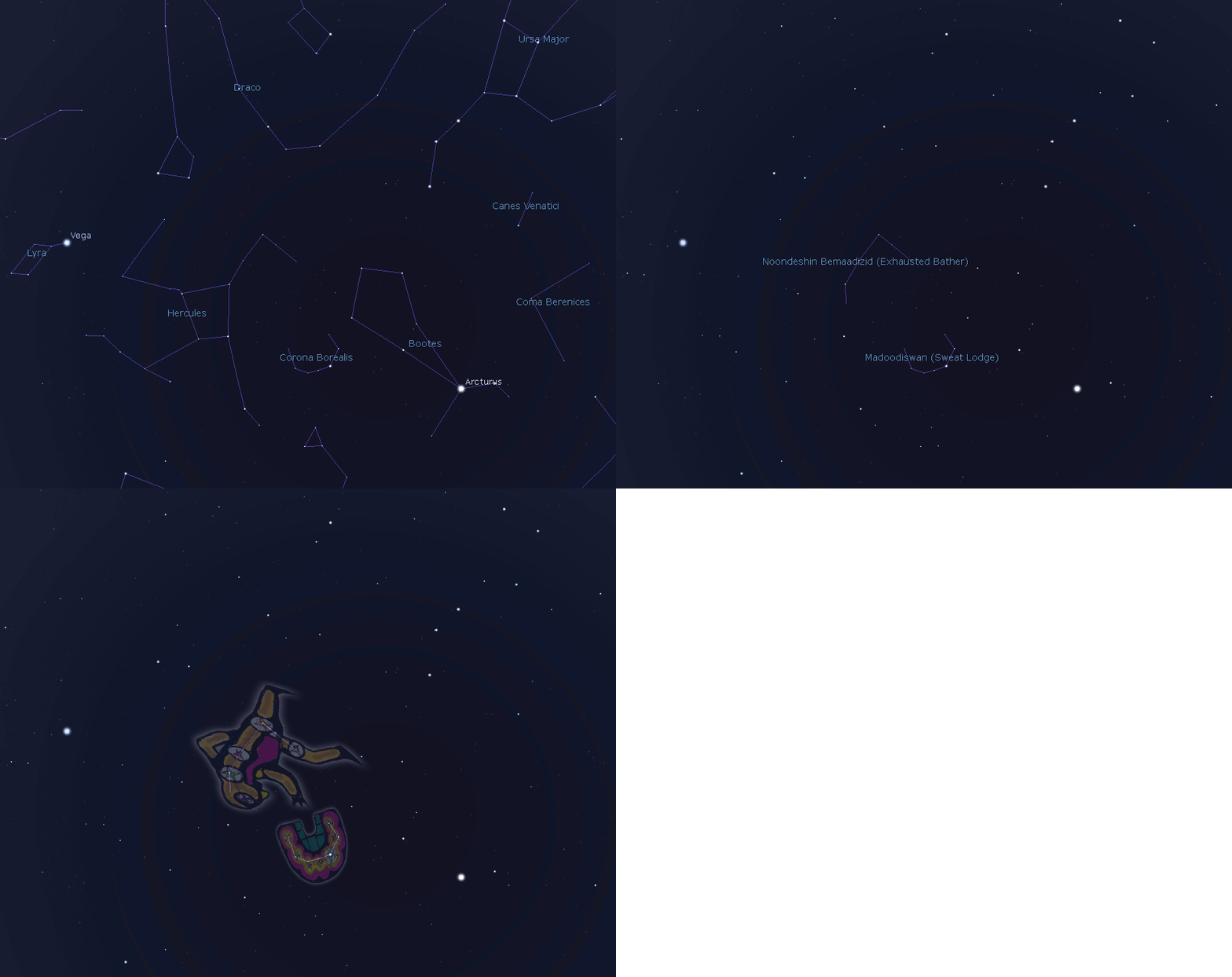
The Anishinaabek constellations of the Sweat Lodge and the Exhausted Bather looking high in the southeast at 10:30 p.m., Click on image to enlarge. June 8, 2018. Created using Stellarium and GIMP.
The constellation art is part of the latest versions of Stellarium. Ojibwe (Anishinaabek) constellation art by Annette S Lee and William Wilson from Ojibwe Sky Star Map Constellation Guide, ISBN 978-0-615-98678-4.
06/07/2018 – Ephemeris- Venus passes Pollux tonight
Ephemeris for Thursday, June 7th. Today the Sun will be up for 15 hours and 28 minutes, setting at 9:25, and it will rise tomorrow at 5:57. The Moon, 1 day past last quarter, will rise at 3:10 tomorrow morning.
The planet Venus will be passing the last of the bright winter stars tonight. That star is Pollux in Gemini the twins, which will appear below and to the left of the much brighter Venus. As Venus moves about the Sun in our evening sky it will pass other bright first magnitude stars that are near the ecliptic, the path of the Sun and also near the paths of the Moon and planets. On July 9th it will pass Regulus in Leo the Lion. Then on September 1st it will pass Spica in Virgo the Virgin. That will be the last of the first magnitude stars it will pass during its evening appearance this year. Venus will pass between the Earth and the Sun on October 26th, leaving the evening sky and entering the morning sky.
The times given are for the Traverse City/Interlochen area of Michigan. They may be different for your location.
Addendum
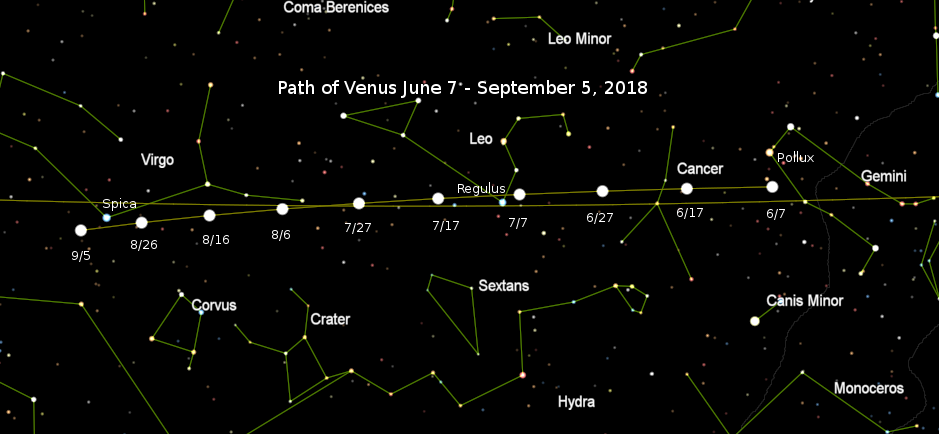
The path of Venus against the stars and constellations. This image ignores the Sun, Moon and other planets. Click on image to enlarge. Created using Cartes du Ciel (Sky Charts).
06/06/2018 – Ephemeris – Our weekly look at the bright planets
Ephemeris for Wednesday, June 6th. Today the Sun will be up for 15 hours and 27 minutes, setting at 9:25, and it will rise tomorrow at 5:57. The Moon, at last quarter today, will rise at 2:43 tomorrow morning.
It’s Wednesday again and time to look for and at the bright planets. Two of them are visible in the evening sky. The brilliant beacon of Venus will be visible in the western twilight from about 9:45 p.m. until it sets at 12:07 a.m. Jupiter will be in the south-southeast as it gets dark. Jupiter is only outshone by Venus and the Moon. And after Venus sets will have the night to itself as the brightest star-like object until it sets at 4:32 a.m. Binoculars will show it to be bigger than star-like in size flanked by little star-like moons. Saturn will rise at 10:45 p.m. in the east-southeast. Mars will rise at 12:50 a.m. and is now outshining Saturn, and will, in July and August even outshine Jupiter.
The times given are for the Traverse City/Interlochen area of Michigan. They may be different for your location.
Addendum
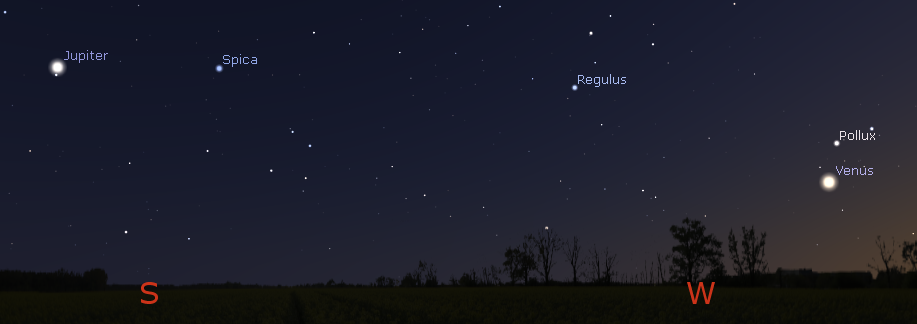
Venus and Jupiter at 10:30 p.m. June 6, 2018. Click on image to enlarge. Created using Stellarium.
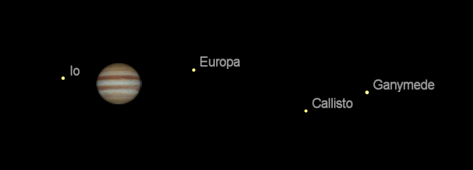
Jupiter and moons at 10:30 p.m. June 6, 2018. Created using Cartes du Ciel (Sky Charts).
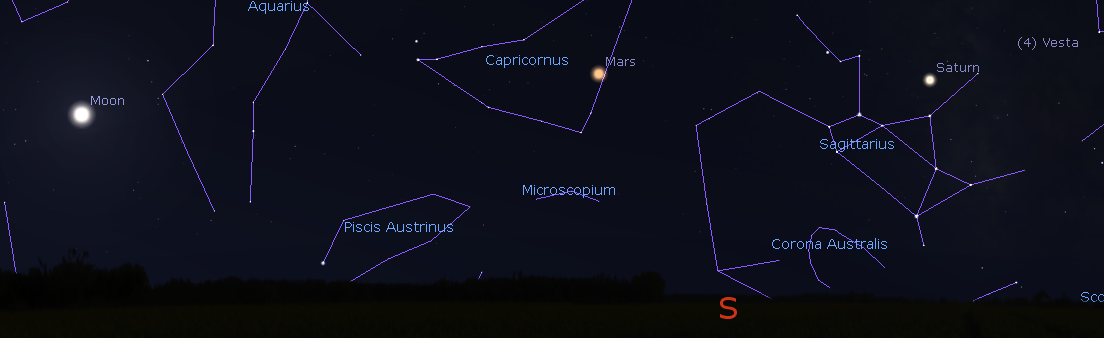
Morning planets and the Moon at 4:30 a.m. June 7, 2018. Click on image to enlarge. Created using Stellarium.
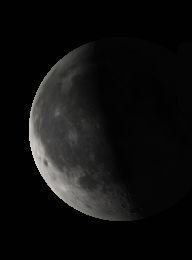
The moon as it might be seen in binoculars at 4:30 a.m. June 7, 2018. Created using Stellarium.
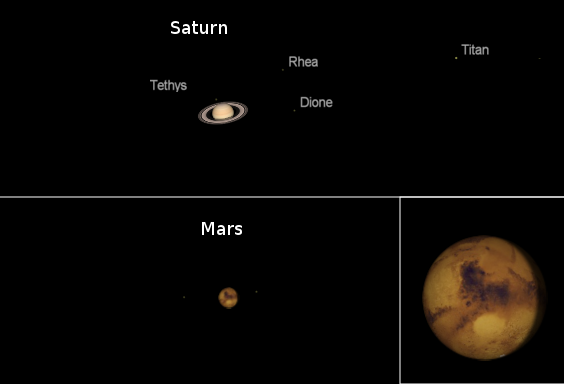
Saturn and Mars with the same magnification with an inset of Mars at higher magnification at 4:30 a.m. June 7, 2018. Created using Cartes du Ciel (Sky Charts).
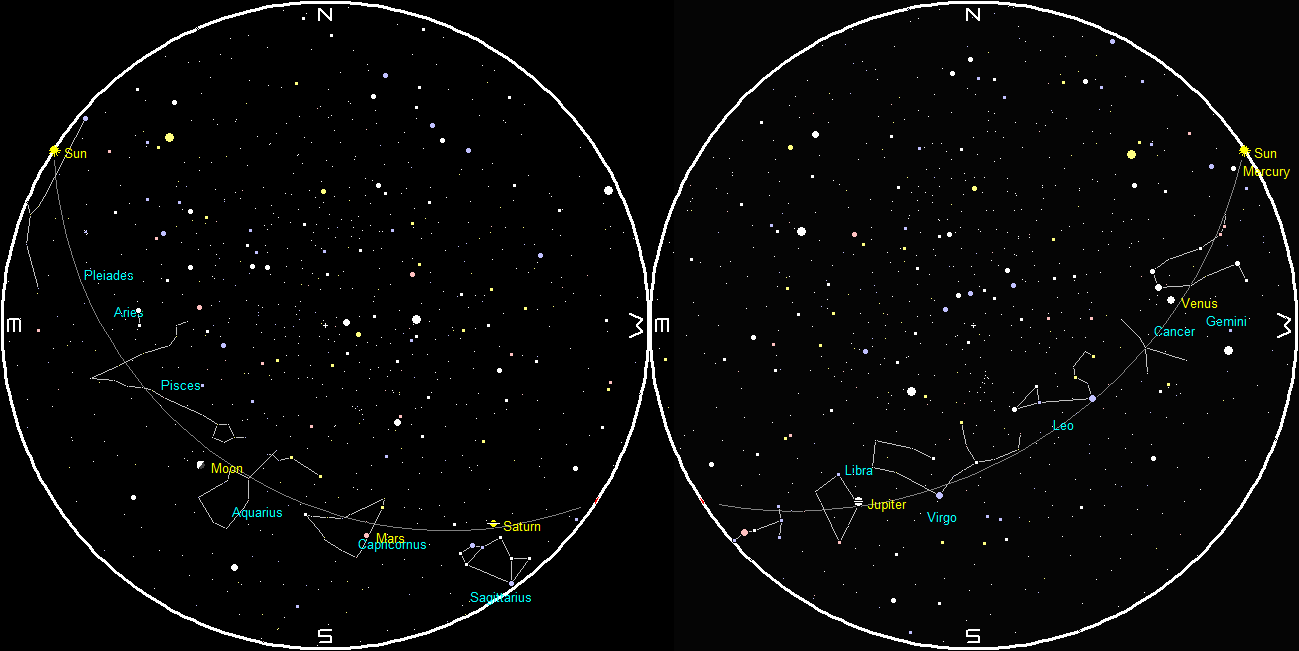
Planets and the Moon at sunset and sunrise of a single night starting with sunset on the right on June 6, 2018. The night ends on the left with sunrise on the 7th. Click on the image to enlarge. Created using my LookingUp program.
 Bob Moler's Ephemeris Blog