Archive
07/17/2019 – Ephemeris – Only two bright planets are visible
Ephemeris for Wednesday, July 17th. Today the Sun will be up for 15 hours and 11 minutes, setting at 9:24, and it will rise tomorrow at 6:14. The Moon, 1 day past full, will rise at 10:10 this evening.
Let’s look at the planets for this Apollo 11 anniversary week. Both Mercury and Mars are too close to the Sun to be seen. They’re still on the evening or east side of the Sun. Venus is on the west or morning side of the Sun and also too close to it to be visible. Bright Jupiter will be in the south-southeastern as it gets dark. It will pass the meridian, due south at 10:57 p.m. With steadily held binoculars a few of the 4 largest satellites of Jupiter can be seen. All four of Jupiter’s largest satellites can be spotted in telescopes. Jupiter will set at 3:29 a.m. Saturn will be lower down in the southeast in the evening, the brightest star-like object in that direction, but significantly dimmer than Jupiter.
The times given are for the Traverse City/Interlochen area of Michigan. They may be different for your location.
Addendum
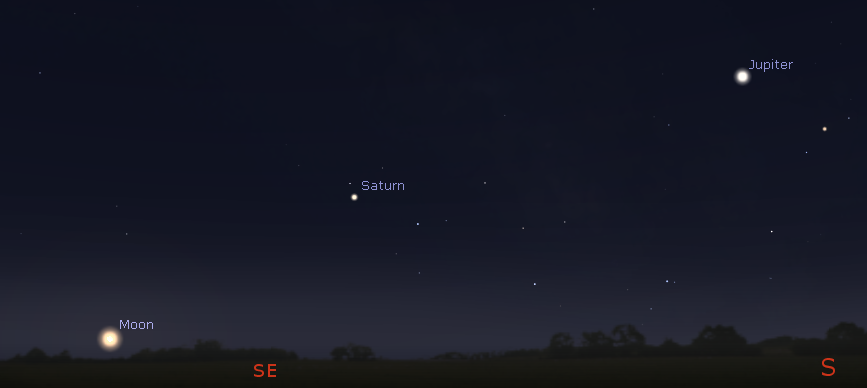
The evening planets and the Moon at 10:30 p.m. July 17, 2019. Click on the image to enlarge. Created using Stellarium.
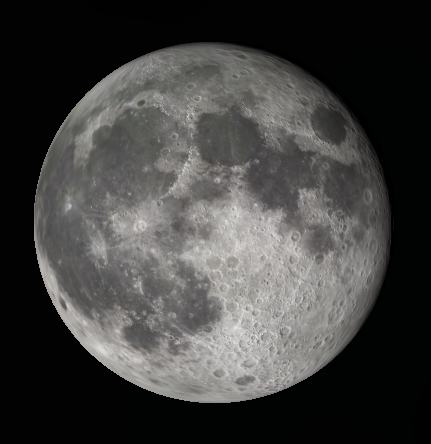
The Moon as it might appear in binoculars or a small telescope at 11 p.m. July Created using Stellarium.Stellarium.
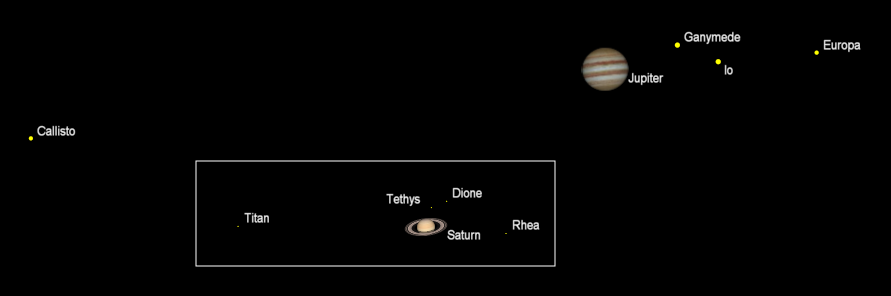
Jupiter and Saturn with the same magnification at 11p.m. July 17, 2019. Created using Cartes du Ciel (Sky Charts).
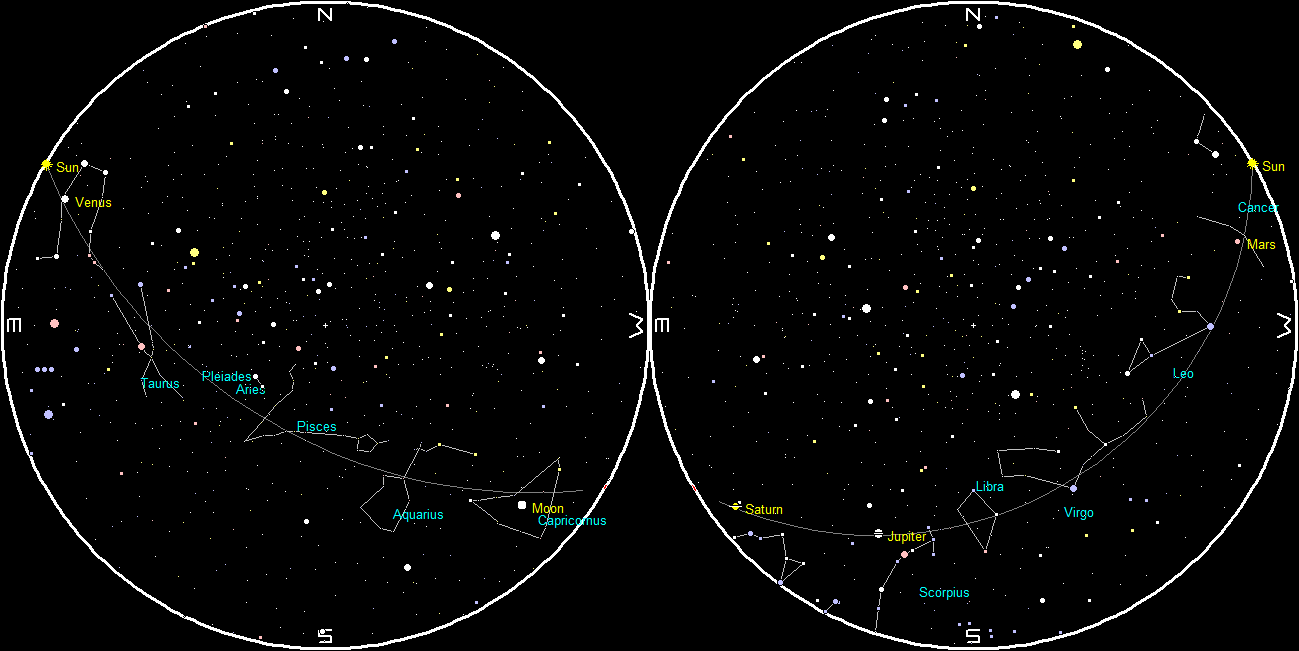
Planets and the Moon at sunset and sunrise of a single night starting with sunset on the right on July 17, 2019. The night ends on the left with sunrise on the 18th. Click on the image to enlarge. Created using my LookingUp program.
Mercury is not visible on the above chart. It will pass inferior conjunction of the Sun on the 21st, and is too far south of the Sun to be above the horizon at either sunrise or sunset.
07/16/2019 – Ephemeris – 50 years ago today the Apollo mission left for the Moon
Ephemeris for Tuesday, July 16th. Today the Sun will be up for 15 hours and 12 minutes, setting at 9:25, and it will rise tomorrow at 6:13. The Moon, at full today, will rise at 9:30 this evening.
50 years ago today at 11:32 a.m. Eastern Daylight Time the most powerful rocket ever built roared into life. The Saturn V, a three stage rocket, 363 feet tall, which in turn launched two spacecraft, the Command and Service modules, and the Lunar Module, and three astronauts on their journey to destiny, Neil Armstrong, Edwin (Buzz) Aldrin, and Michael Collins. It was the start of the Apollo 11 mission. It happens that tonight the namesake of the rocket, the planet Saturn is to the right of the Moon. At launch the Moon was two days old, a thin crescent in the west that evening. Four days later they would be orbiting the Moon, and Armstrong and Aldrin would be descending to the Moon’s surface.
The times given are for the Traverse City/Interlochen area of Michigan. They may be different for your location.
Addenda
Apollo 11
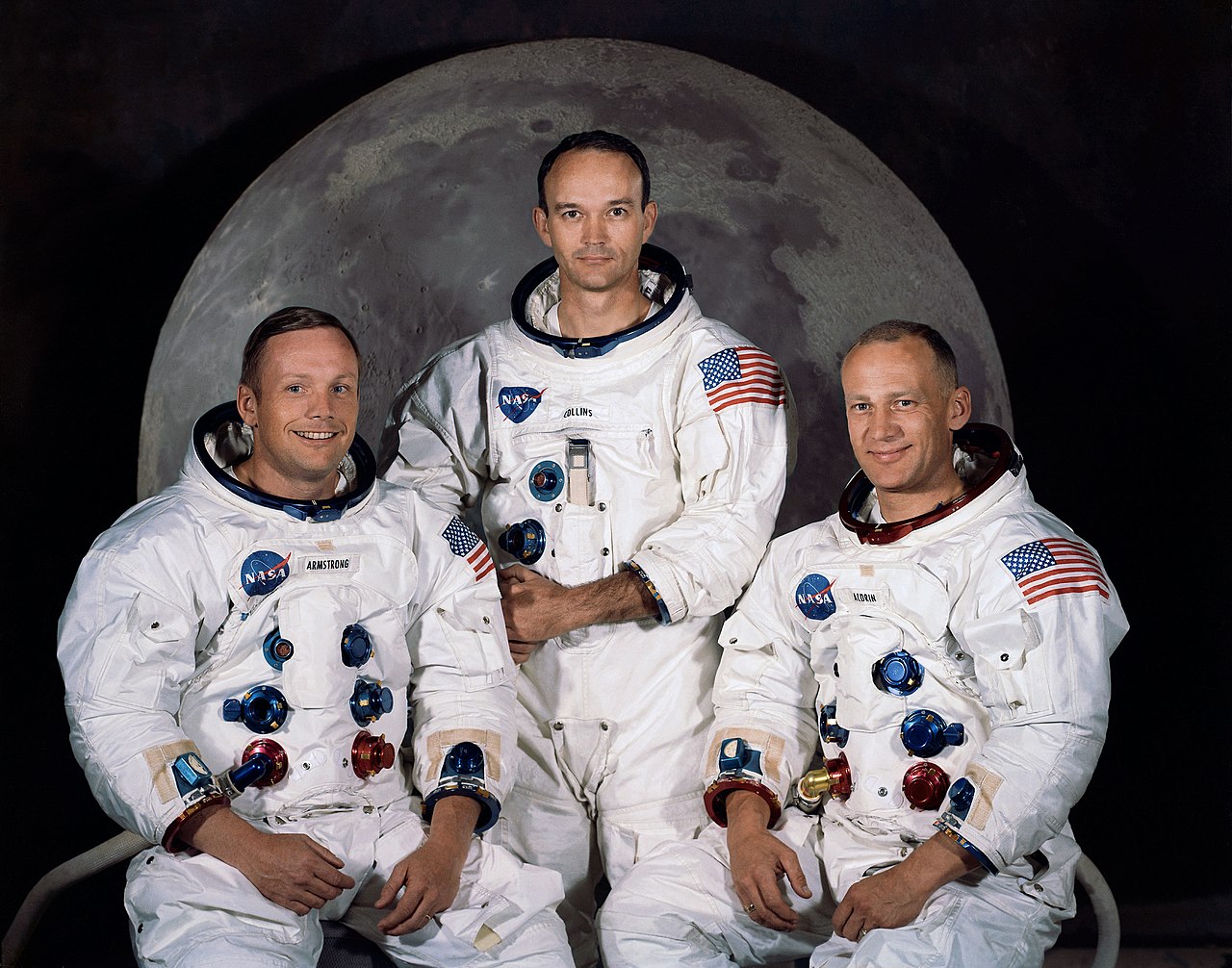
Left to right Neil Armstrong, Mission Commander; Michael Collins, Command Module Pilot; and Buzz Aldrin, Lunar Module Pilot. Credit: NASA.
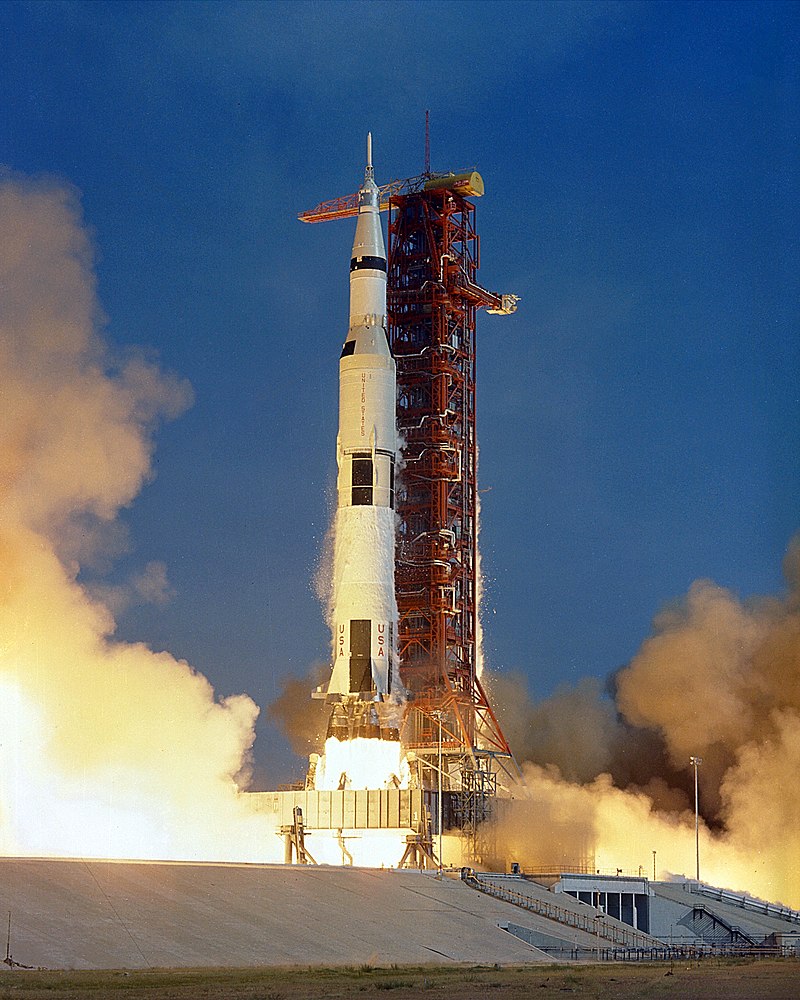
The Saturn V for the Apollo 11 mission lifts of from Pad 39A. Credit: NASA.
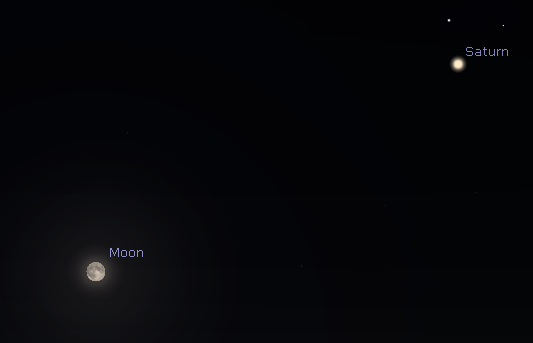
The Moon and Saturn tonight, 11 p.m. July 16, 2019. In reality the Moon will be so bright that Saturn will be almost overwhelmed. Created using Stellarium.
Here’s an excellent podcast series from the BBC: 13 Minutes to the Moon.
Partial Lunar Eclipse
The partial lunar eclipse today is not mentioned in the program because it is not visible locally.
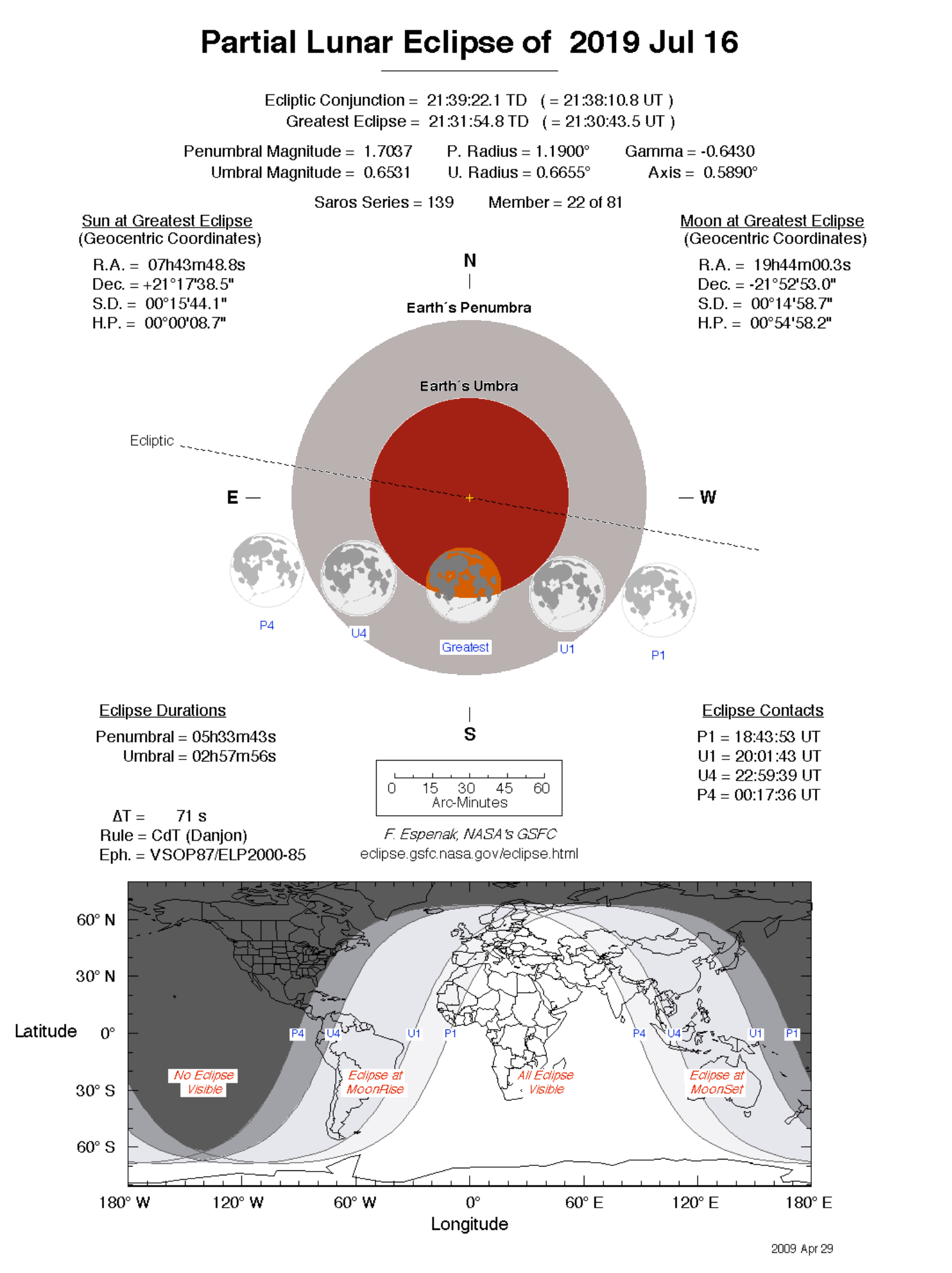
Partial Lunar Eclipse of July 16, 2019. Click on image to enlarge. Credit NASA/GSFC/F. Espenak.
07/15/2019 – Ephemeris – The Apollo 1 tragedy
Ephemeris for Monday, July 15th. Today the Sun will be up for 15 hours and 14 minutes, setting at 9:25, and it will rise tomorrow at 6:12. The Moon, 1 day before full, will set at 5:48 tomorrow morning.
On January 27th, 1967 the crew of Apollo 1 were running a dress rehearsal of their upcoming launch. On board were Gus Grissom, veteran of the Mercury and Gemini programs, Ed White the first American to walk in space on Gemini 4, and rookie astronaut Roger Chaffee from my home town of Grand Rapids, Michigan. Five and a half hours after the test started one of the crew called out “Fire in the cockpit”. In a very few minutes the astronauts were dead. They were running in a pure oxygen atmosphere at a bit above atmospheric pressure and a spark may have ignited the flammable materials in the spacecraft. The accident delayed the program nearly 2 years as the capsule was redesigned.
The times given are for the Traverse City/Interlochen area of Michigan. They may be different for your location.
Addendum
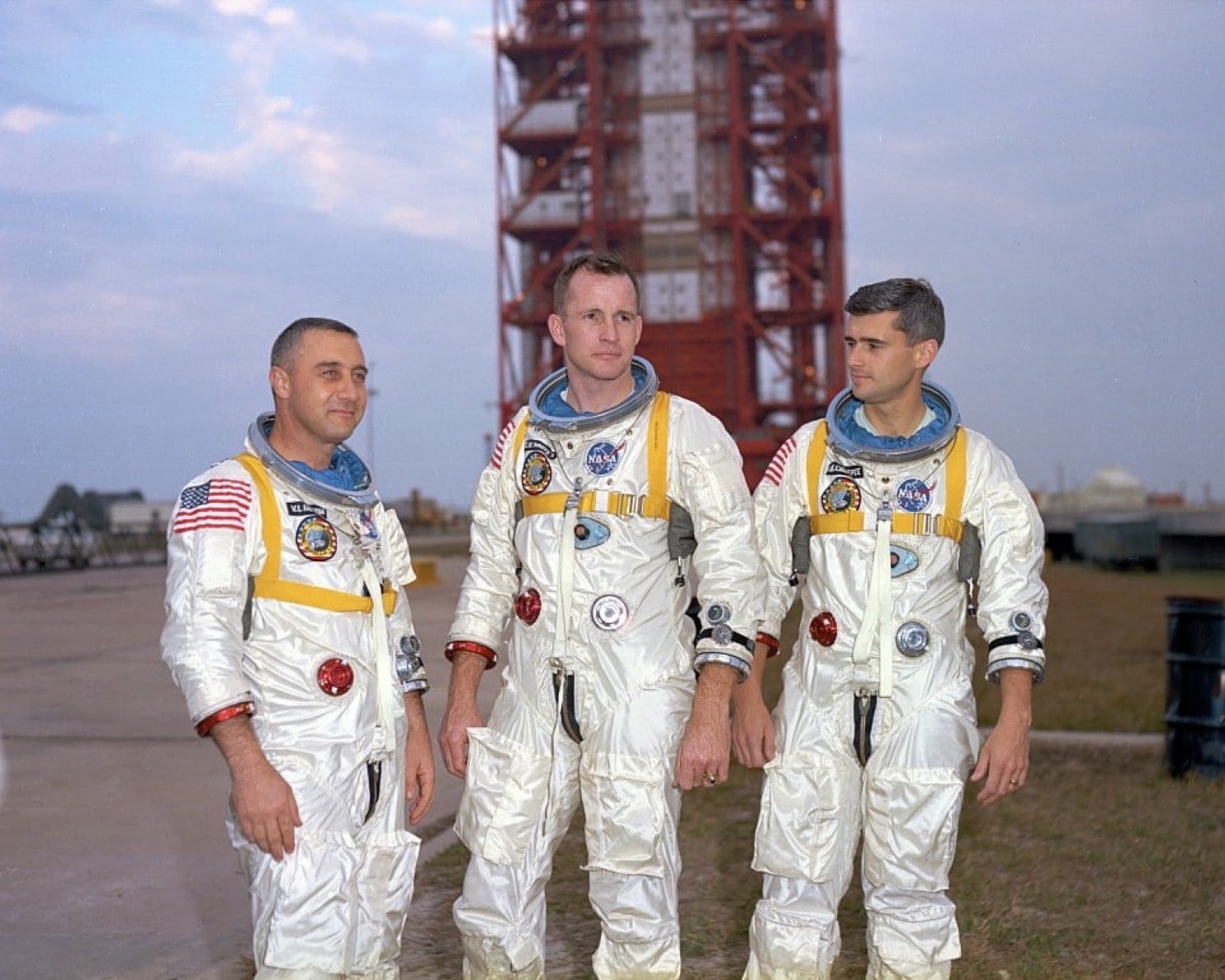
Left to right: Virgil I. (Gus) Grissom, veteran of the second Mercury flight and Gemini 3, the first manned Gemini flight; Edward H. White first American space walker on Gemini 4, and rookie Roger B. Chaffee. Credit: NASA.

The outside of the Apollo 1 capsule after thr fire that took the three astronaut’s lives. Credit: NASA.
07/12/2019 – Ephemeris – Traverse Area District Library Family Night tonight
Ephemeris for Friday, July 12th. Today the Sun will be up for 15 hours and 19 minutes, setting at 9:27, and it will rise tomorrow at 6:09. The Moon, 3 days past first quarter, will set at 3:32 tomorrow morning.
The Traverse Area District Library (TADL) Summer Reading Club will have Family Night at the Northwestern Michigan College’s Joseph Rogers Observatory tonight starting at 8 p.m. This is part of their “A Universe of Stories” theme for this summer. It will be a grand night with the Moon and Jupiter. Speaking of Jupiter and the Moon, The Moon will be passing Jupiter tomorrow afternoon. So tonight the Moon will be to the right of Jupiter, and tomorrow night it will be just to the left of Jupiter. The Moon is in its waxing gibbous phase now, between first quarter and full. The word gibbous to describe the shape of the Moon means hump backed. The library will have a story time at the observatory next Thursday at 11 a.m.
Addendum
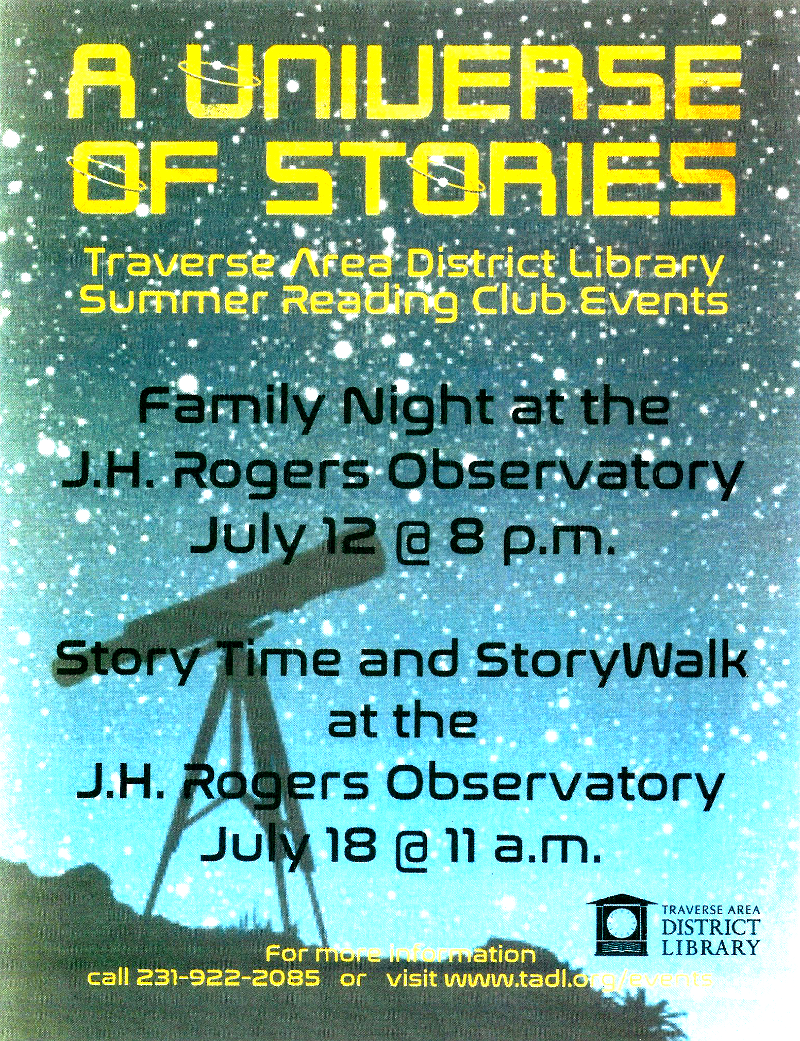
A Univrese of Stories Poster. There’s an event next Thursday at the Observatory during the day. There is another event at the Kingsley branch of TADL at the same time next Thursday.
07/11/2019 – Ephemeris – Road to the Moon: Project Gemini
Ephemeris for Thursday, July 11th. Today the Sun will be up for 15 hours and 20 minutes, setting at 9:28, and it will rise tomorrow at 6:08. The Moon, 2 days past first quarter, will set at 2:57 tomorrow morning.
In the steps to the Moon in the 1960’s The United States proved that humans could work in space for at least a day and a half with Project Mercury. Following that was Project Gemini to prove that humans could work and survive in space for the time it takes to get to the Moon and back, up to two weeks; to practice the techniques of rendezvous and docking of two spacecraft; and to learn how to work in space outside the spacecraft: Extravehicular Activities (EVAs), better known as space walks. Each took multiple flights to perfect. One of the hardest to perfect was working with Newton’s third law: For every action there is an equal and opposite reaction, especially when trying to tighten a bolt with a wrench.
The times given are for the Traverse City/Interlochen area of Michigan. They may be different for your location.
Addendum
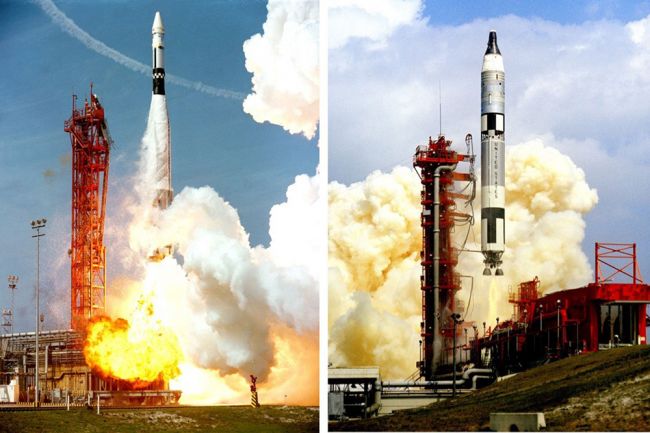
Rendezvous and docking practice. Atlas launches an Agena target vehicle first then one orbit later the Titan II launches the Gemini spacecraft. Credit NASA.
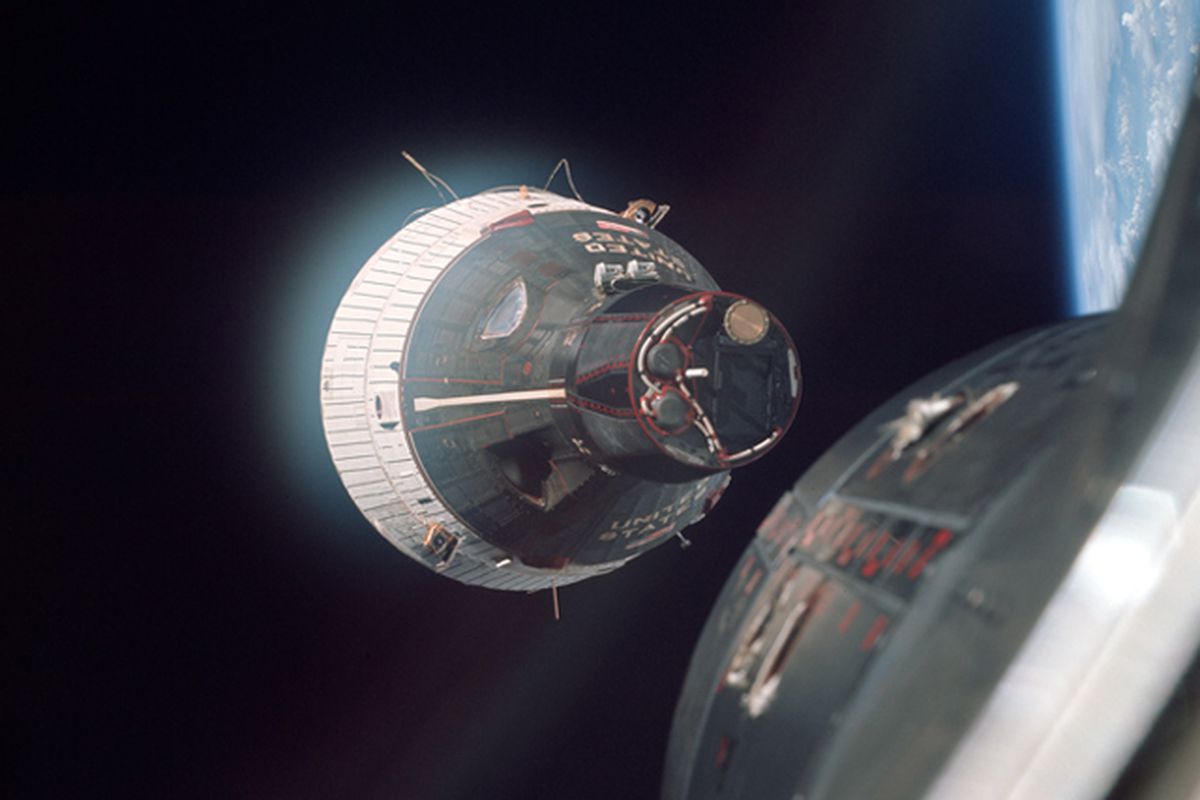
Gemini 6 rendezvous with Gemini 7 after the Agena for Gemini 6 failed to orbit. Gemini 7 was a two week endurance flight. Then Gemini 6 was sent up to meet it. Credit NASA.

Ed White in America’s first space walk on Gemini 4. Floating around was easy. but performing work was hard. Credit NASA.
07/10/2019 – Ephemeris – A look at the bright planets for this week
Ephemeris for Wednesday, July 10th. Today the Sun will be up for 15 hours and 21 minutes, setting at 9:28, and it will rise tomorrow at 6:07. The Moon, 1 day past first quarter, will set at 2:26 tomorrow morning.
Let’s look at the planets for this week. Mercury is now too close to the Sun to be seen. Mars itself is difficult to spot low in the west-northwest, setting at 10:29 p.m. Bright Jupiter will be in the southern sky by 10:30 p.m. With steadily held binoculars a few of the 4 largest satellites of Jupiter can be seen. All four of Jupiter’s largest satellites can be spotted in telescopes. Tonight they will be all arrayed on one side of the planet. Also at 10:30 Saturn will be lower down in the southeast, the brightest star-like object in that direction, but significantly dimmer than Jupiter. The only bright planet left in the morning sky is Venus, which is too close to the Sun to be spotted.
The times given are for the Traverse City/Interlochen area of Michigan. They may be different for your location.
Addendum
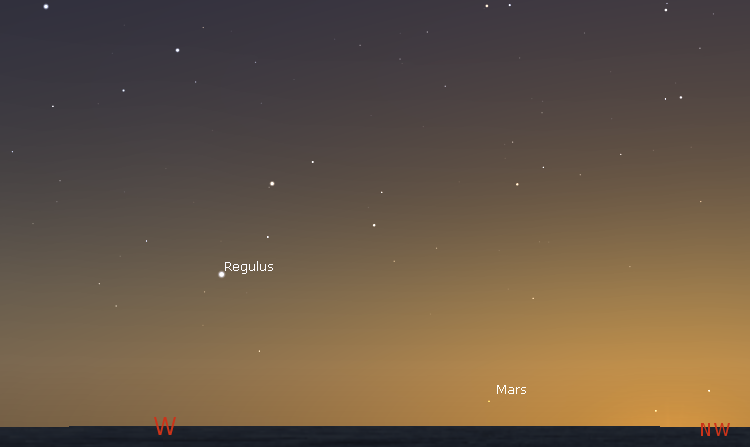
Mars about to set, seen at 10:15 p.m. July 10, 2019. Mars and the stars have been brightened. Created by Stellarium.
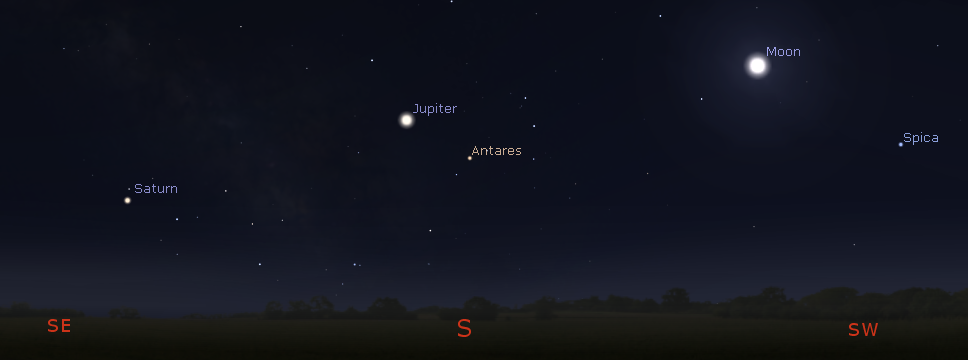
The Moon, Jupiter and Saturn in the southern sky at 11 p.m., July 10, 2019. Click on the image to enlarge. Created using Stellarium.
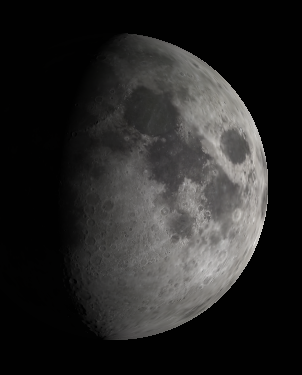
The gibbous Moon as it might appear in binoculars or a small telescope tonight at 11 p.m. July 10, 2019. Created using Stellarium.
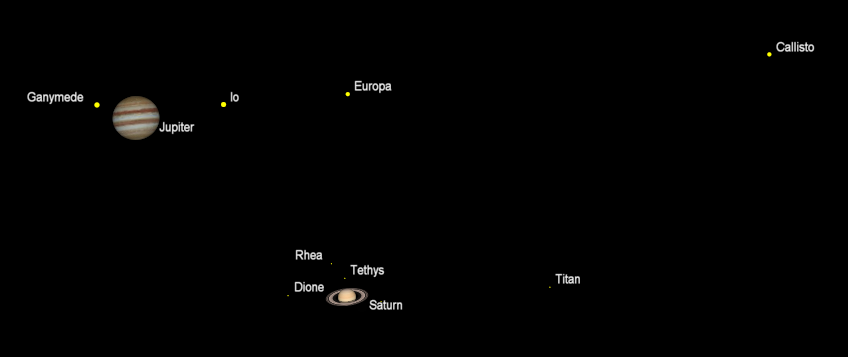
Jupiter and Saturn with the same magnification at 11p.m. July 10, 2019. Created using Cartes du Ciel (Sky Charts).
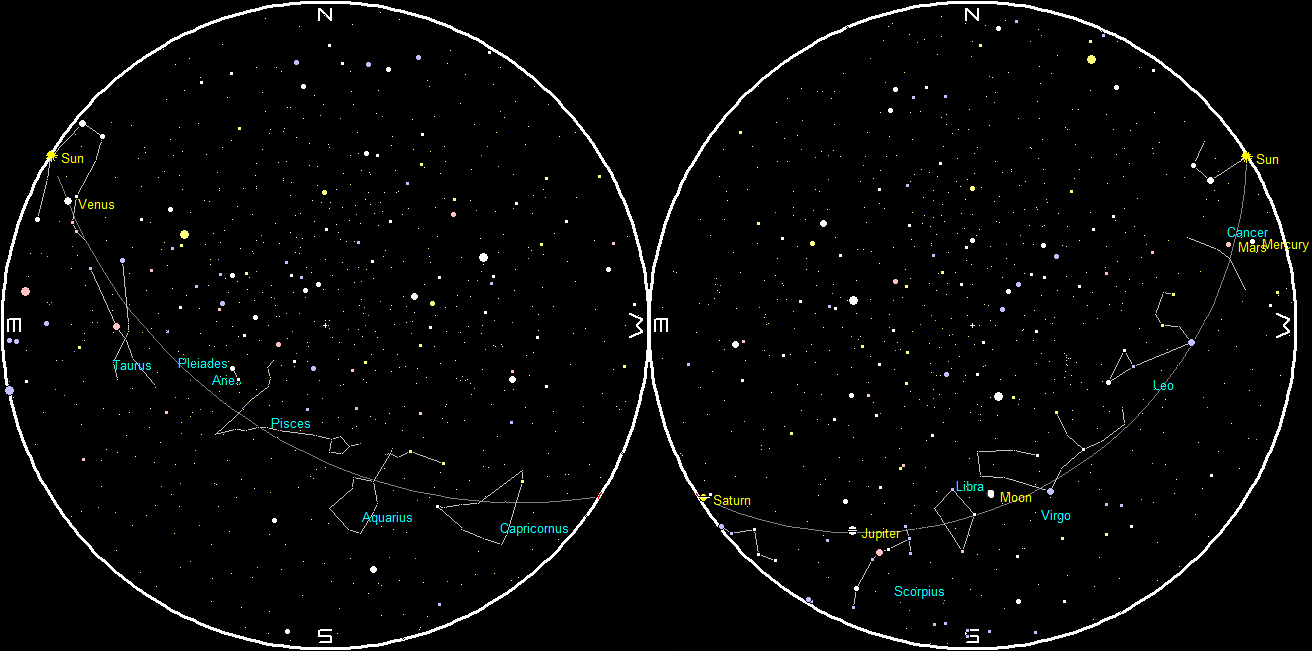
Planets and the Moon at sunset and sunrise of a single night starting with sunset on the right on July 10, 2019. The night ends on the left with sunrise on the 11th. Click on the image to enlarge. Created using my LookingUp program.
07/09/2019 – Ephemeris – Saturn is opposite the Sun in the sky today
Ephemeris for Tuesday, July 9th. Today the Sun will be up for 15 hours and 23 minutes, setting at 9:29, and it will rise tomorrow at 6:07. The Moon, at first quarter today, will set at 1:58 tomorrow morning.
Today Saturn will pass in opposition from the Sun at 12:12 p.m. It’s a time when Saturn will rise as the Sun sets, being opposite the Sun in the sky, and a time near its closest to the Earth at 841 million miles (1.354 billion km). Saturn orbits the Sun at a distance of 10 times the Earth’s distance, so Saturn’s distance from the Earth varies from 9 times to 11 times the Earth’s distance from the Sun. So it doesn’t change much in size in telescopes. This is unlike Mars which has a greater range of distances from the Earth. In telescopes the rings are the first one sees, with the planet nestled in the center. In small telescopes, it is a tiny but magnificent sight. It’s largest moon Titan is visible nearby.
The times given are for the Traverse City/Interlochen area of Michigan. They may be different for your location.
Addendum
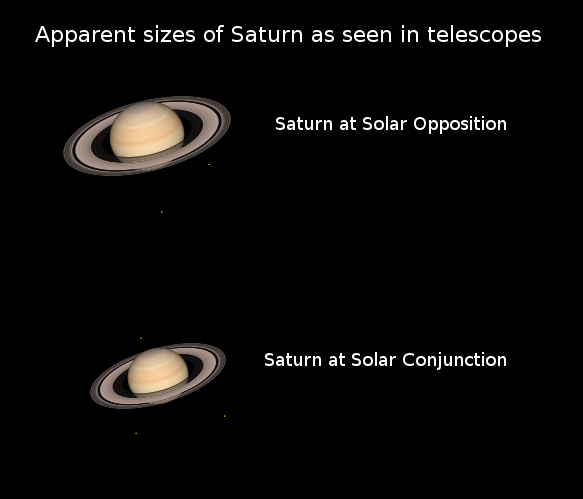
Here’s the extremes in the apparent size of Saturn from solar opposition to conjunction. Created using Cartes du Ciel.
07/08/2019 – Ephemeris – The bright star Vega
Ephemeris for Monday, July 8th. Today the Sun will be up for 15 hours and 24 minutes, setting at 9:29, and it will rise tomorrow at 6:06. The Moon, 1 day before first quarter, will set at 1:31 tomorrow morning.
The bright star high in the east is Vega, one of the stars of the Summer Triangle an informal constellation called an asterism. Vega belongs to the official constellation Lyra the harp, which includes a narrow parallelogram of stars to its south. Vega is regarded by astronomers as a standard calibration star. Though a first magnitude star, its actual magnitude is 0.03. It is a type A0 a pure white star, and is 25 light years away. Astronomers however got a shock in 1983 when calibrating the Infrared Astronomy Satellite (IRAS) on it: Vega showed an excess of Infrared radiation which means the star is orbited by a disk of dust, perhaps a Kuiper belt of its own. Due to the slow wobble of the earth’s axis Vega will become our pole star in about 14 thousand years.
The times given are for the Traverse City/Interlochen area of Michigan. They may be different for your location.
Addendum
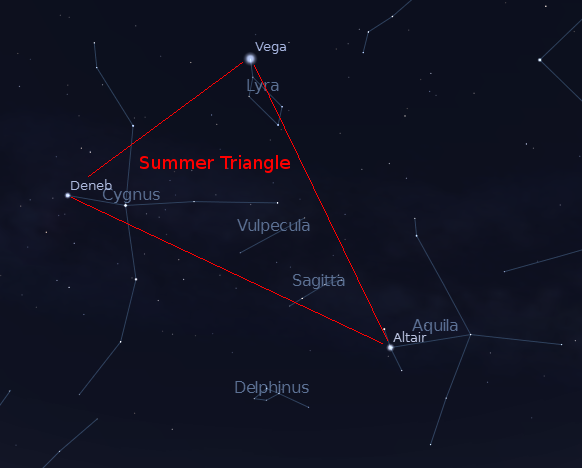
The Summer Triangle. Created using Stellarium.
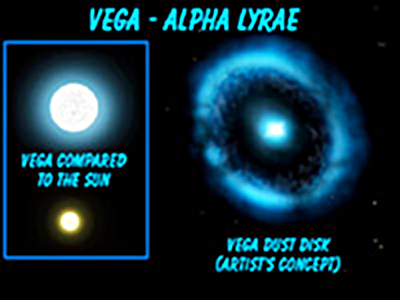
Vega: Comparison to the Sun and its dust ring. Credit Orange County Astronomers.
07/05/2019 – Ephemeris – Apollo 11 memories tonight and a Sun ‘n Star Party tomorrow
Ephemeris for Friday, July 5th. Today the Sun will be up for 15 hours and 27 minutes, setting at 9:31, and it will rise tomorrow at 6:04. The Moon, 3 days past new, will set at 11:59 this evening.
Tonight the Grand Traverse Astronomical Society will invite all those who are old enough to have seen the Apollo 11 launch and Moon landing as it happened to relate their experiences at the NMC Rogers Observatory at 8 p.m. Tomorrow afternoon and evening will be what we call a Sun & Star Party at the Sleeping Bear Dunes National Lakeshore Dune Climb hosted by the society and the rangers and volunteers of the park. From 4 to 6 p.m., the Sun will be featured with special solar telescopes. Starting at 9 p.m. will be a star party, actually mostly a planet party, viewing the planets Jupiter and Saturn, plus the Moon. There will be other celestial wonders visible in the deepening twilight. If cloudy one or both Dunes events can be canceled.
The times given are for the Traverse City/Interlochen area of Michigan. They may be different for your location.
Addendum
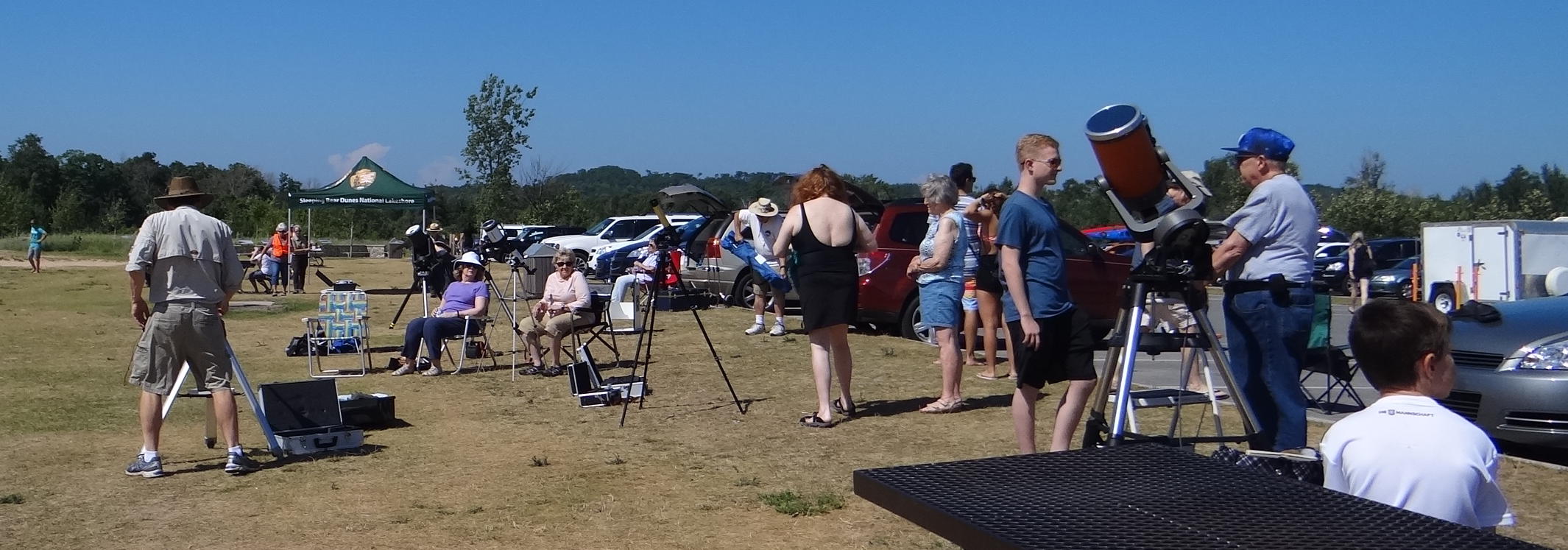
A Sun Party at the Dune Climb. Credit: Eileen Carlisle.

See the Stars from Sleeping Bear Dunes National Lakeshore Poster by Tyler Nordgren.
07/04/2019 – Ephemeris – Happy Independence Day, at our farthest from the Sun
Ephemeris for Independence Day, Thursday, July 4th. Today the Sun will be up for 15 hours and 28 minutes, setting at 9:31, and it will rise tomorrow at 6:03. The Moon, 2 days past new, will set at 11:20 this evening.
Today, Independence Day the Earth is at its greatest distance, aphelion, from the sun or about 94.5 million miles (152.2 million km) from the Sun. It doesn’t do much to weaken the strength of sunlight, as you will find out when you go to the beach. But, occurring in summer, it makes summer the longest season by a several days over winter. Our calendar tries to keep up with the seasonal or tropical year, while the Earth’s revolution from its farthest or aphelion point to the next is slightly longer. Back in 1776, at the founding of our nation, the Earth was farthest from the Sun on June 30th. As we go more centuries into the future our summer will even get a bit longer. But remember the poor Australians, and others in the southern hemisphere, whose winter will also get longer.
The times given are for the Traverse City/Interlochen area of Michigan. They may be different for your location.
Addendum
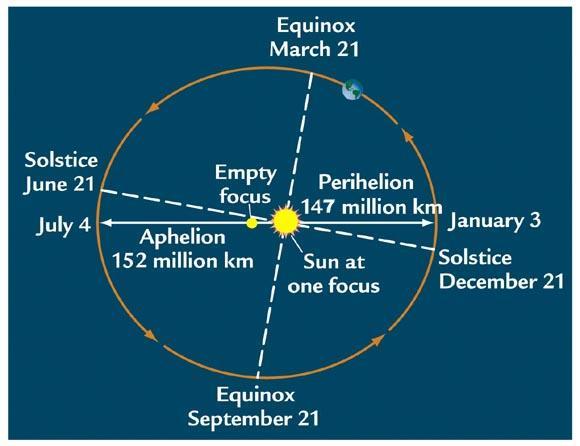
The Earth’s elliptical orbit, somewhat exaggerated, showing perihelion, aphelion and the seasons. Credit “Starts with a Bang” blog by Ethan Siegel.
 Bob Moler's Ephemeris Blog