Archive
Ephemeris: 12/29/2023 – Two great celestial events for 2024
This is Ephemeris for Friday, December 29th. Today the Sun will be up for 8 hours and 50 minutes, setting at 5:10, and it will rise tomorrow at 8:19. The Moon, 3 days past full, will rise at 7:43 this evening.
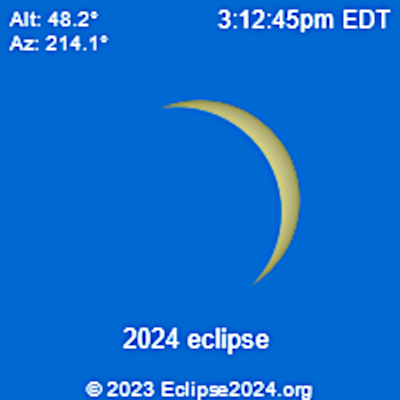
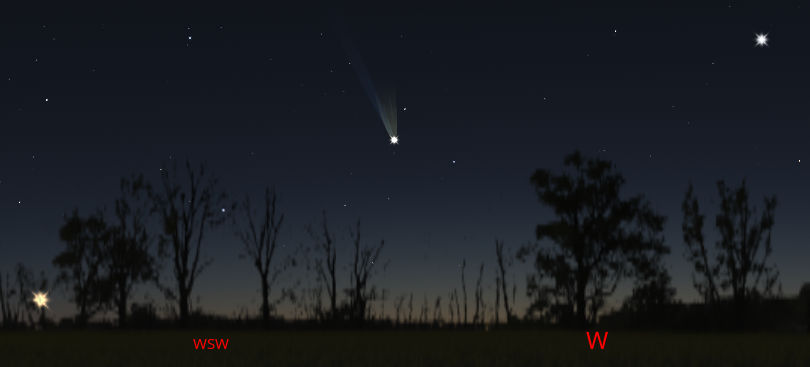
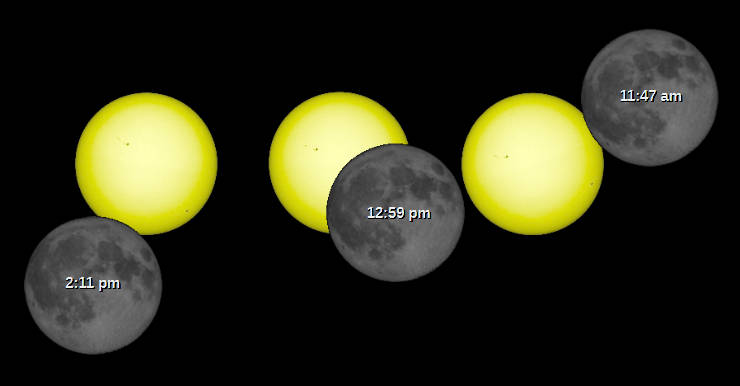
The year 2024 should give us two great events. The first is a total solar eclipse whose path will pass close to Michigan. It actually clip it by a few miles in the southeast corner of our state on April 8th. The eclipse will be even better here than the August 21st, 2017 eclipse by several percent. About 87% of the Sun will be covered by the Moon in Northern Michigan. In the US the path of totality will run from Texas to Maine, and will pass over the cities of Indianapolis and Cleveland. Then in October a new comet will be in our evening sky, and it might be quite bright. It’s Comet Tsuchinshan-ATLAS. If, and it’s a big IF, its brightness tracks as it has been since its discovery, nearly a year ago, it will rival the average first magnitude star, like Betelgeuse by October, and be easily visible in the west after sunset by mid-month. It won’t be as bright as Comet Hale-Bopp, for those old enough to have seen it in 1997, but hopefully brighter than Comet NEOWISE in the summer of 2020.
The astronomical event times given are for the Traverse City/Interlochen area of Michigan (EST, UT –5 hours). They may be different for your location.
Addendum
Ephemeris: 12/28/2023 – Next year in rockets and space
This is Ephemeris for Thursday, December 28th. Today the Sun will be up for 8 hours and 49 minutes, setting at 5:09, and it will rise tomorrow at 8:19. The Moon, 2 days past full, will rise at 6:35 this evening.
Let’s take a look at 2024 in space exploration. The Artemis 2 mission of sending a crew of four around the Moon and back will take place no earlier than November, so it could be pushed back into 2025 if there are any difficulties. SpaceX early next year will attempt the third flight of their gigantic Starship rocket. Hopefully this time it will reach near orbit. Blue Origin, sort of in competition to SpaceX, but have never put anything into orbit yet, is expected to launch their New Glenn rocket, which uses 7 BE4 engines next year. Also United Launch Alliance will be expected to launch their new Vulcan Centaur rocket, perhaps as early as January next year. It uses two Blue Origin BE4 engines as its main engines plus solid rocket boosters.
The astronomical event times given are for the Traverse City/Interlochen area of Michigan (EST, UT –5 hours). They may be different for your location.
Ephemeris: 12/27/2023 – Our last look at the naked-eye planets for 2023
This is Ephemeris for Wednesday, December 27th. Today the Sun will be up for 8 hours and 49 minutes, setting at 5:08, and it will rise tomorrow at 8:19. The Moon, 1 day past full, will rise at 5:30 this evening.
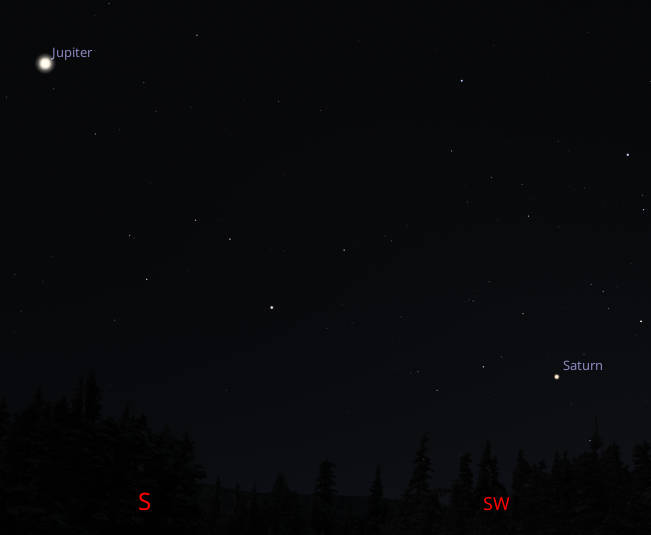
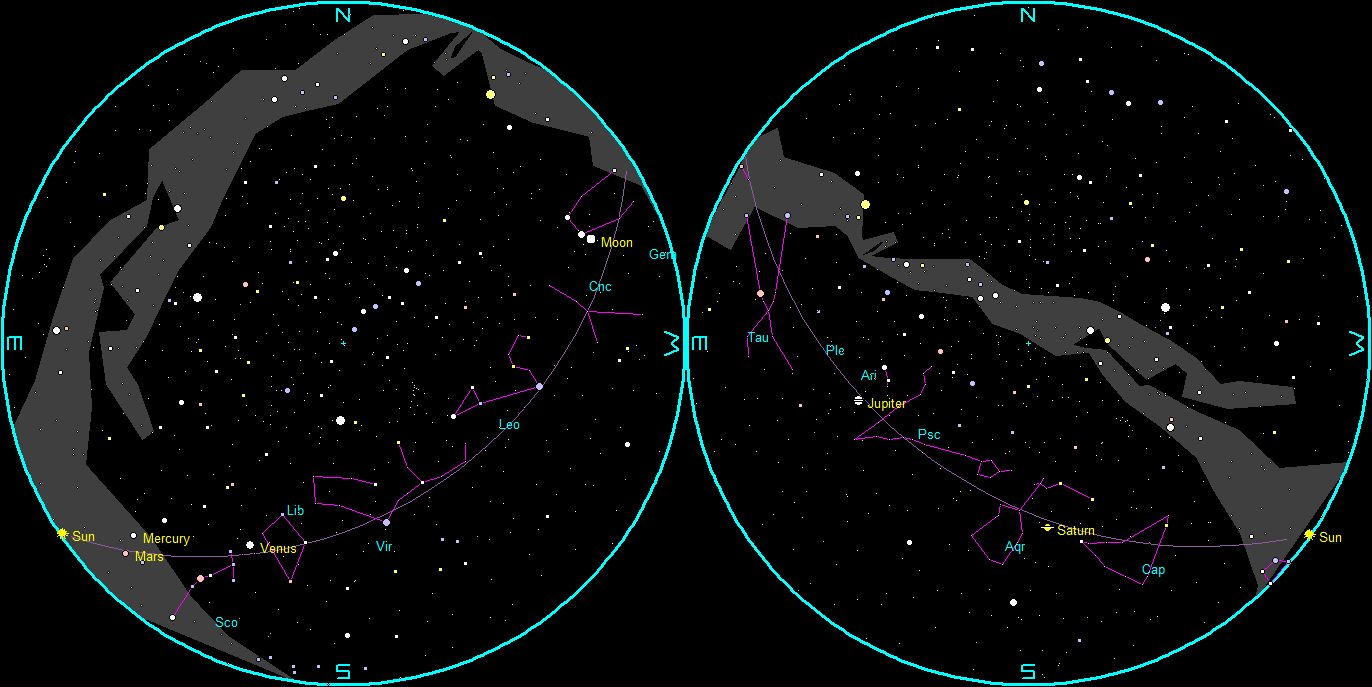
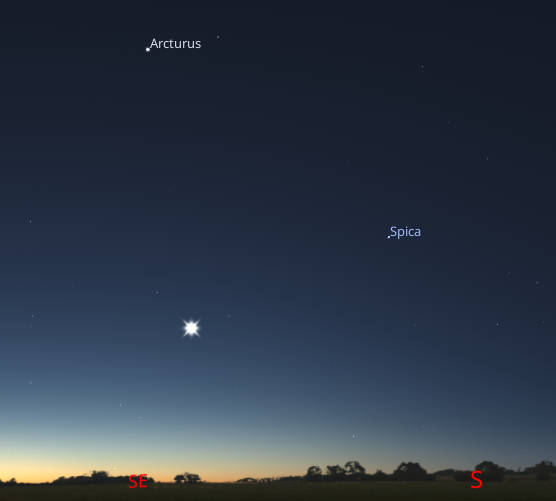
Let’s find out where the naked-eye planets have wandered off to this week. Three of those five planets are now visible. Mercury and Mars rise too close to sunrise to be seen. Saturn and Jupiter are the only evening planets. Saturn can be seen moving from low in the southwest to setting in the west-southwest at 9:54 pm. Jupiter will be moving from the high in the southeast to the west-southwest, by midnight and will set at 3:24 am. The Moon, the night after it being full, will be in Gemini tonight, not that any of its stars will be visible, making the sky bright. Venus, the brilliant morning star, will rise in the east-southeast at 4:56, am, and be a brilliant beacon in the morning, shining in the southeast by before the bright morning twilight claims it around 8 am.
The astronomical event times given are for the Traverse City/Interlochen area of Michigan (EST, UT –5 hours). They may be different for your location.
Addendum
Ephemeris: 12/26/2023 Some astronomical/space events of 2023
This is Ephemeris for Tuesday, December 26th. Today the Sun will be up for 8 hours and 48 minutes, setting at 5:07, and it will rise tomorrow at 8:19. The Moon, at full today, will rise at 4:30 this evening.
Looking back at 2023 in astronomy: an important event that was visible locally was the partial eclipse of the Sun on October 14th. For most of us it was mostly cloudy. I happened to be in Thompsonville at the Betsie Valley District Library to talk about eclipses and to view that one. We got about 15 minutes of clear skies to see the Sun near the middle of the eclipse, so it wasn’t a total washout. Of course the big event is next year on April 8th, a total solar eclipse whose path is going to be passing quite close to us. The James Webb Space Telescope astronomers have reported their first year findings, some of which have contradicted previous assumptions, or seem to have. The second of SpaceX’s Starship launches came within 4,000 kilometers an hour of achieving orbit.
The astronomical event times given are for the Traverse City/Interlochen area of Michigan (EST, UT –5 hours). They may be different for your location.
Addendum
Ephemeris: 12/25/2023 – This year’s Christmas Stars
Merry Christmas! This is Ephemeris for Christmas Day, Monday, December 25th. Today the Sun will be up for 8 hours and 48 minutes, setting at 5:07, and it will rise tomorrow at 8:18. The Moon, 1 day before full, will set at 8:25 tomorrow morning.
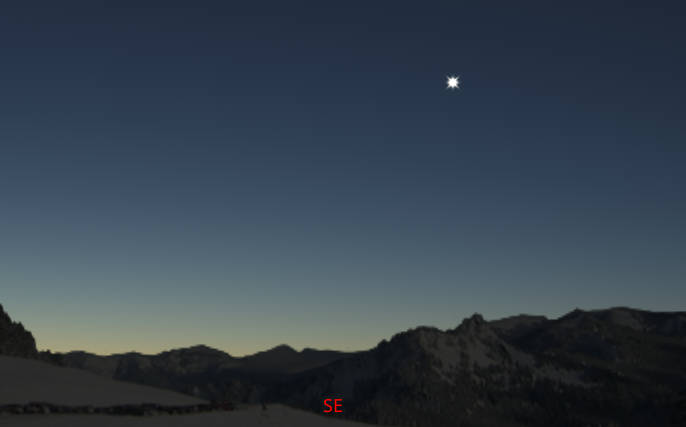
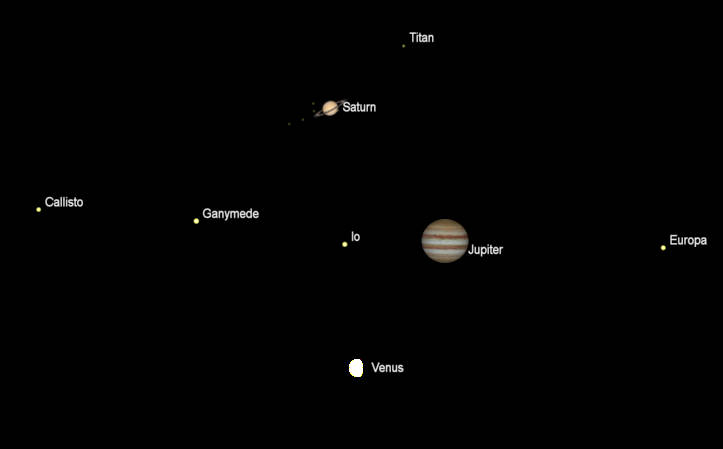
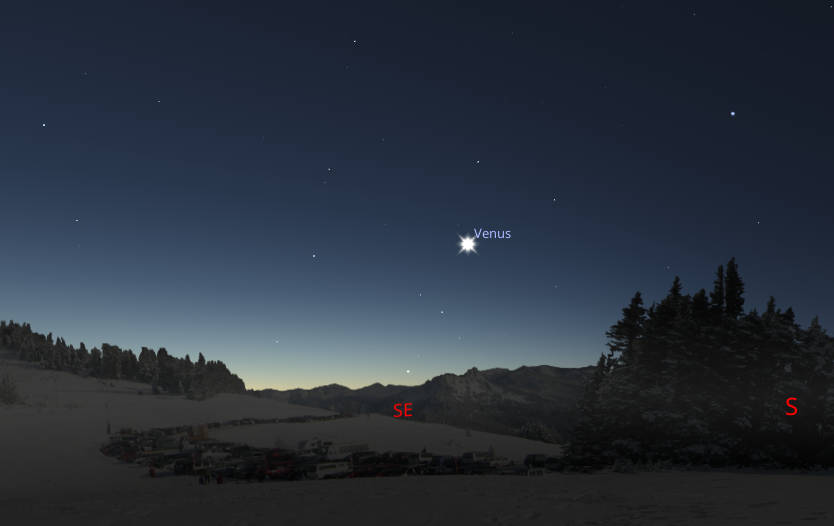
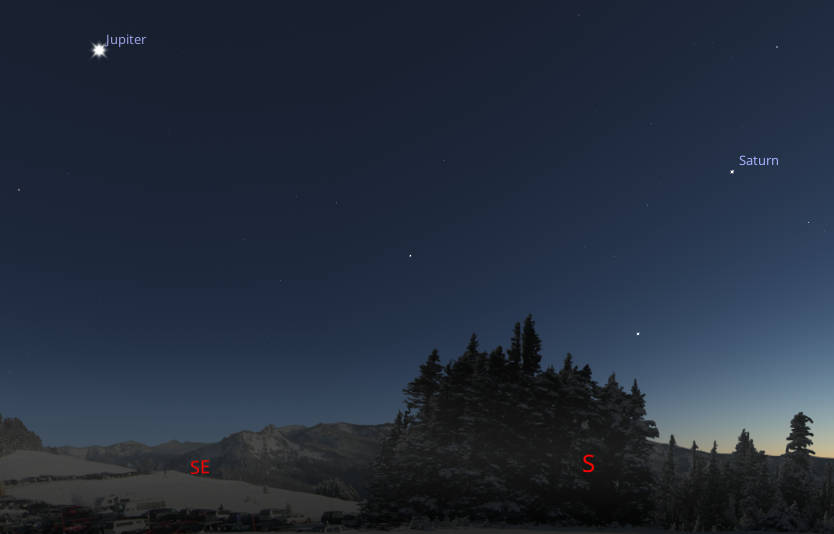
The real star of Bethlehem is probably not what is popularly depicted as a bright star in the sky, rather it was something subtle, only noticed by some astrologers. However, gracing our skies tonight we do have, in the morning and again in the evening, two bright star-like objects. I call them star-like objects because they’re planets. In the morning we have brilliant Venus off in the southeast at 7:30 in the morning, and early in the evening we have bright Jupiter in the south. Jupiter is bright enough that when Venus is not in the sky it is sometimes mistaken for it, although Venus would never be seen in the south* in the evening, it’s always too close to the Sun. Again have a Merry Christmas!
The astronomical event times given are for the Traverse City/Interlochen area of Michigan (EST, UT –5 hours). They may be different for your location.
* Except from the North Pole. From there all directions are south.
Addendum
Ephemeris: 12/22/2023 – Jupiter and Venus as the Star of Bethlehem
This is Ephemeris for Friday, December 22nd. Today the Sun will be up for 8 hours and 48 minutes, setting at 5:05, and it will rise tomorrow at 8:17. The Moon, 3 days past first quarter, will set at 4:53 tomorrow morning.
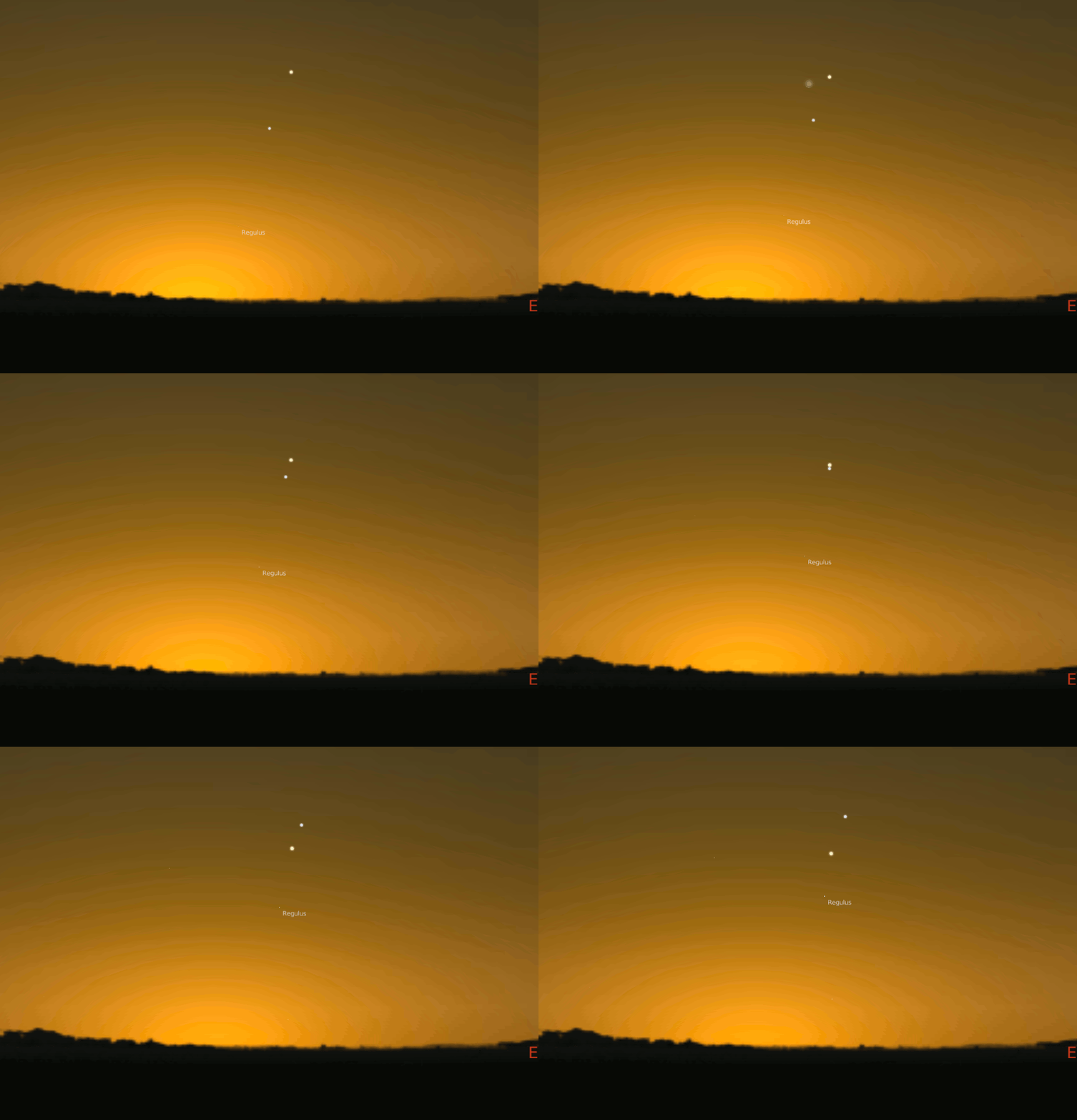
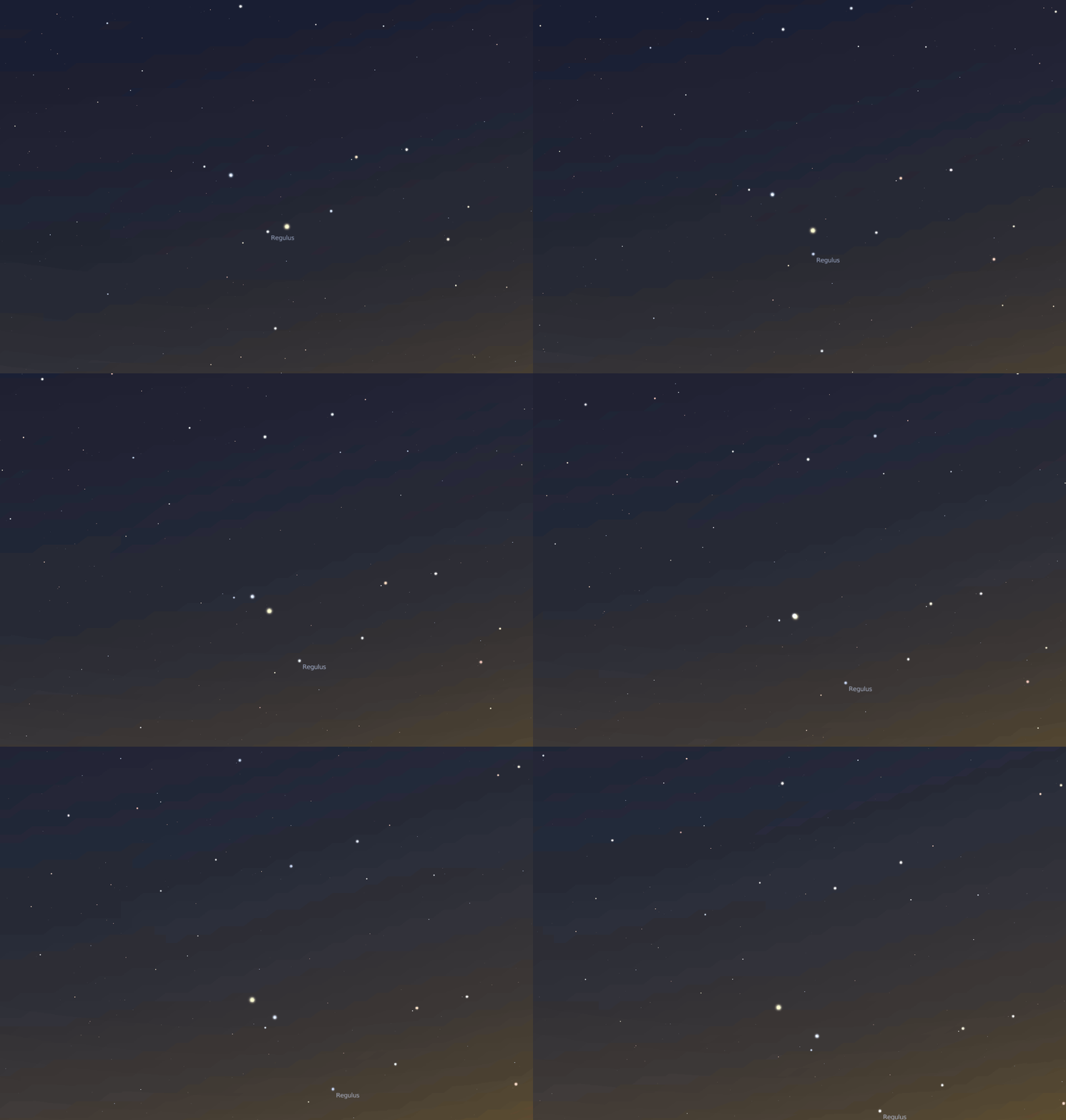
Many writers of the 2nd and 3rd centuries AD place Jesus’ birth around 2 BC, which had to be before Herod the Great’s death, which I suggest was in 1 BC marked by a total lunar eclipse. So the Star of Bethlehem could appear several years later than the triple conjunction of Jupiter and Saturn in 7 BC that’s been popular. In 3 and again in 2 BC there were star-like conjunctions or apparent joining of the planets Jupiter and Venus against the backdrop of the constellation of Leo the Lion. A lion is related to Judah, son of Jacob by a blessing the latter gave his 12 sons in Genesis. The first conjunction occurred in August of 3 BC in the morning sky. On June 16th of the next year the two planets got together again, this time in the evening sky, a month or more after Jesus would have been born in the lambing season of spring.
The astronomical event times given are for the Traverse City/Interlochen area of Michigan (EST, UT –5 hours). They may be different for your location.
Addendum
Ephemeris: 12/21/2023 – Winter comes late this evening
This is Bob Moler with Ephemeris for Thursday, December 21st. Today the Sun will be up for 8 hours and 48 minutes, setting at 5:04, and it will rise tomorrow at 8:17. The Moon, 2 days past first quarter, will set at 3:37 tomorrow morning.
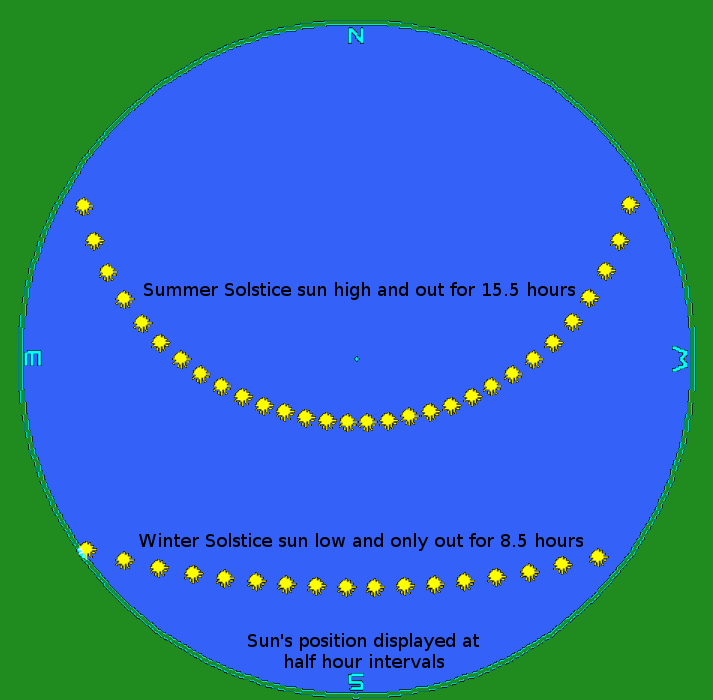
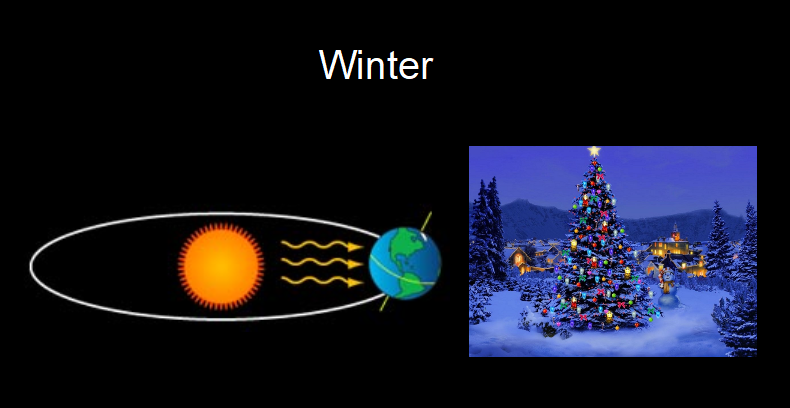
Today is mostly the last day of Fall, since the moment of solstice will arrive at 10:28 pm (03:28 on the 22nd UTC). If you’re south of the equator this is the first day of summer. The Earth reaches a point in its orbit where its North Pole is tipped its furthest away from the Sun, and is in shadow in the middle of its six-month night. The Sun for us is up only 8 hours, 48 minutes, and to boot the Sun only rises 22 degrees above the horizon giving us the least amount of energy of any day of the year. Why did the ancients celebrate this time of year? That’s because the Sun had slowed and stopped its drift southward and was beginning to come back higher in the sky. Spring and summer would eventually return!
The astronomical event times given are for the Traverse City/Interlochen area of Michigan (EST, UT –5 hours). They may be different for your location.
Addendum
Ephemeris: 12/20/2023 – Where are the naked-eye planets this week?
This is Bob Moler with Ephemeris for Wednesday, December 20th. Today the Sun will be up for 8 hours and 48 minutes, setting at 5:04, and it will rise tomorrow at 8:16. The Moon, 1 day past first quarter, will set at 2:21 tomorrow morning.
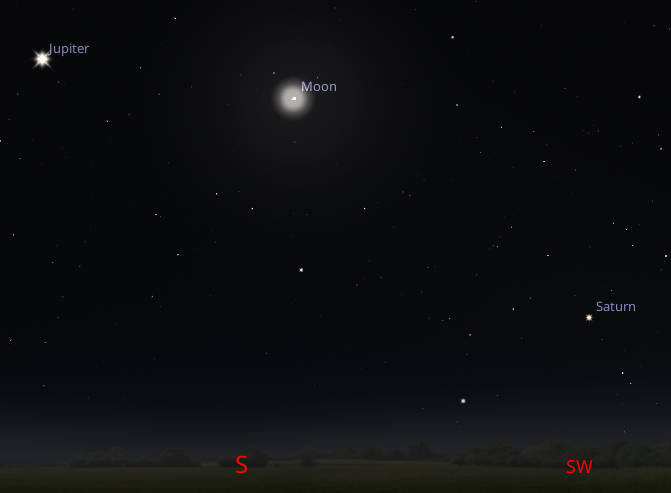
Let’s find out where the naked-eye planets have wandered off to this week. Three of those five planets are now visible, but Mercury sets too close to sunset to be seen. And Mars rises too close to sunrise. Saturn and Jupiter are the only evening planets visible. Saturn can be seen moving from low in the south-southwest to setting in the west-southwest at 10:19 pm. Jupiter will be moving from the high in the southeast to the west-southwest, and will be up most of the night until 3:53 am. The slightly waxing gibbous Moon will be seen to the right of Jupiter tonight. Venus, the brilliant morning star, will rise in the east-southeast at 4:56, am, and be a brilliant beacon in the morning, shining in the southeast by 7 am.
The astronomical event times given are for the Traverse City/Interlochen area of Michigan (EST, UT –5 hours). They may be different for your location.
Addendum
Ephemeris: 12/19/2024 – Jupiter is our bright evening Christmas star but what about 7 BC?
This is Bob Moler with Ephemeris for Tuesday, December 19th. Today the Sun will be up for 8 hours and 48 minutes, setting at 5:04, and it will rise tomorrow at 8:16. The Moon, at first quarter today, will set at 1:06 tomorrow morning.
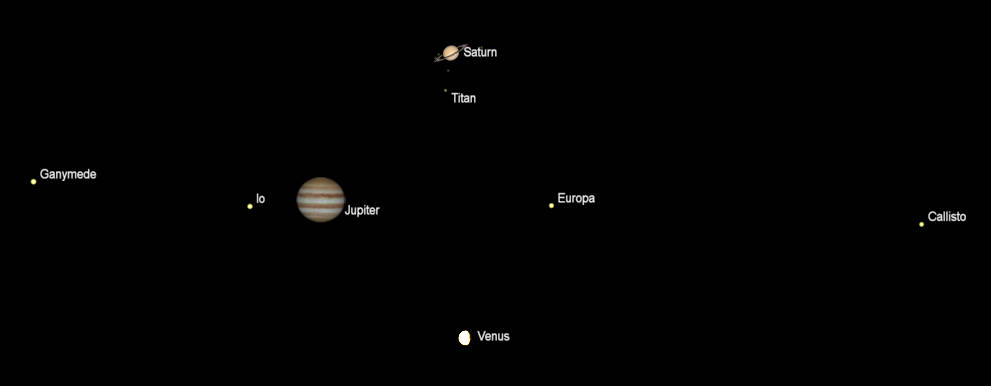
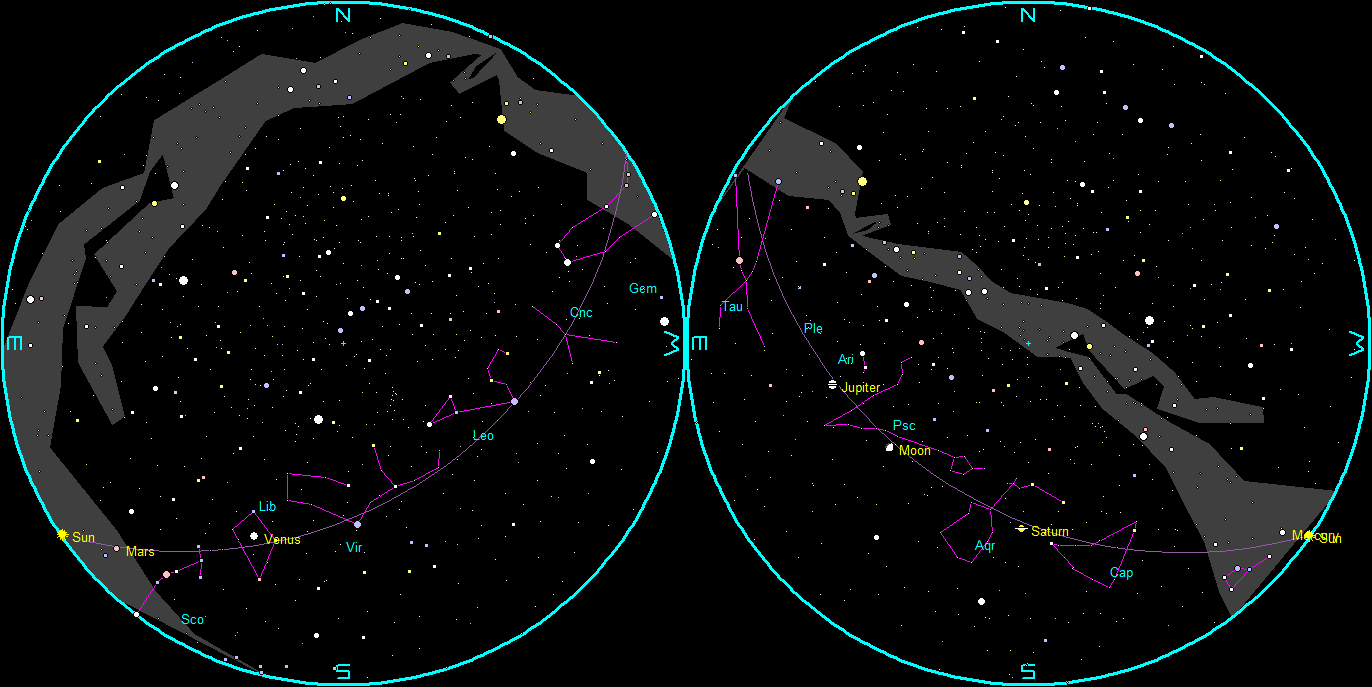
This year Jupiter is our bright evening Christmas star. But what about the one described in the Bible, in the Gospel of Matthew? We will look today at the first of two events that may have been recorded as the Star of Bethlehem. In 7 BC there was a rare event over 8 months when three times the planet Jupiter passed Saturn against the stars of the constellation Pisces. Could the Persian astrologer priests called Magi, have read into the event enough significance to start the journey to Jerusalem in search of the newborn King of the Jews? It was the scribe’s readings that then sent them to Bethlehem. It is thought that Pisces was associated with the Hebrews, Jupiter with the Messiah or world ruler, and Saturn with the peoples of Palestine.
The astronomical event times given are for the Traverse City/Interlochen area of Michigan (EST, UT –5 hours). They may be different for your location.
Addendum
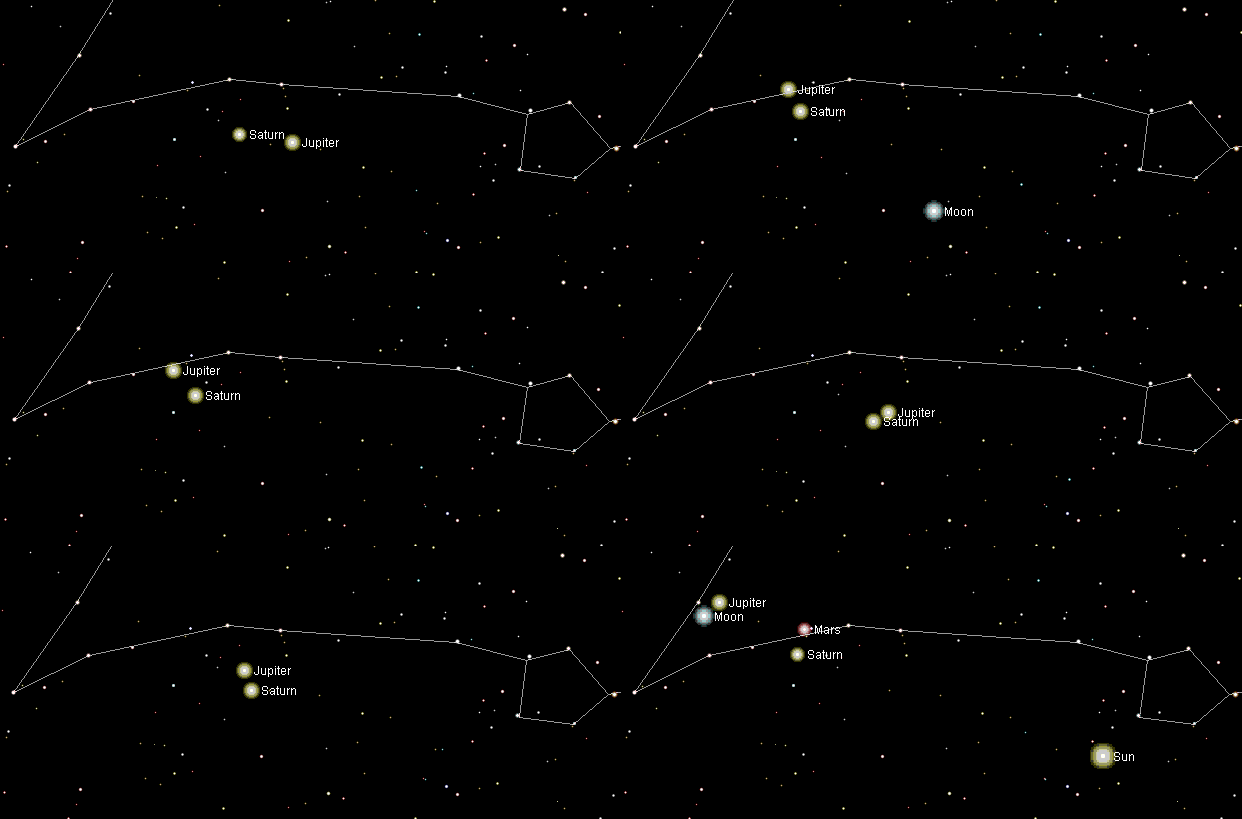
The normal motion of the sun, moon and planets in the sky is to the east, or to the left in this diagram. Jupiter takes a bit less than 12 years to orbit the sun while Saturn takes a bit less than 30 years, so Jupiter will pass Saturn about every 20 years. However, when they are both at opposition of the sun when they do that and closest to the earth, they will appear to move backwards for a time. This is called retrograde motion from their normal eastward motion. Jupiter being closest to us and closer to the Earth’s speed makes a bigger retrograde loop than Saturn does. So when they’re both at opposition when they cross paths we get a triple conjunction like this.
Ephemeris: 12/18/2023 – The Moon tonight
This is Bob Moler with Ephemeris for Monday, December 18th. Today the Sun will be up for 8 hours and 48 minutes, setting at 5:03, and it will rise tomorrow at 8:15. The Moon, 1 day before first quarter, will set at 11:50 this evening.
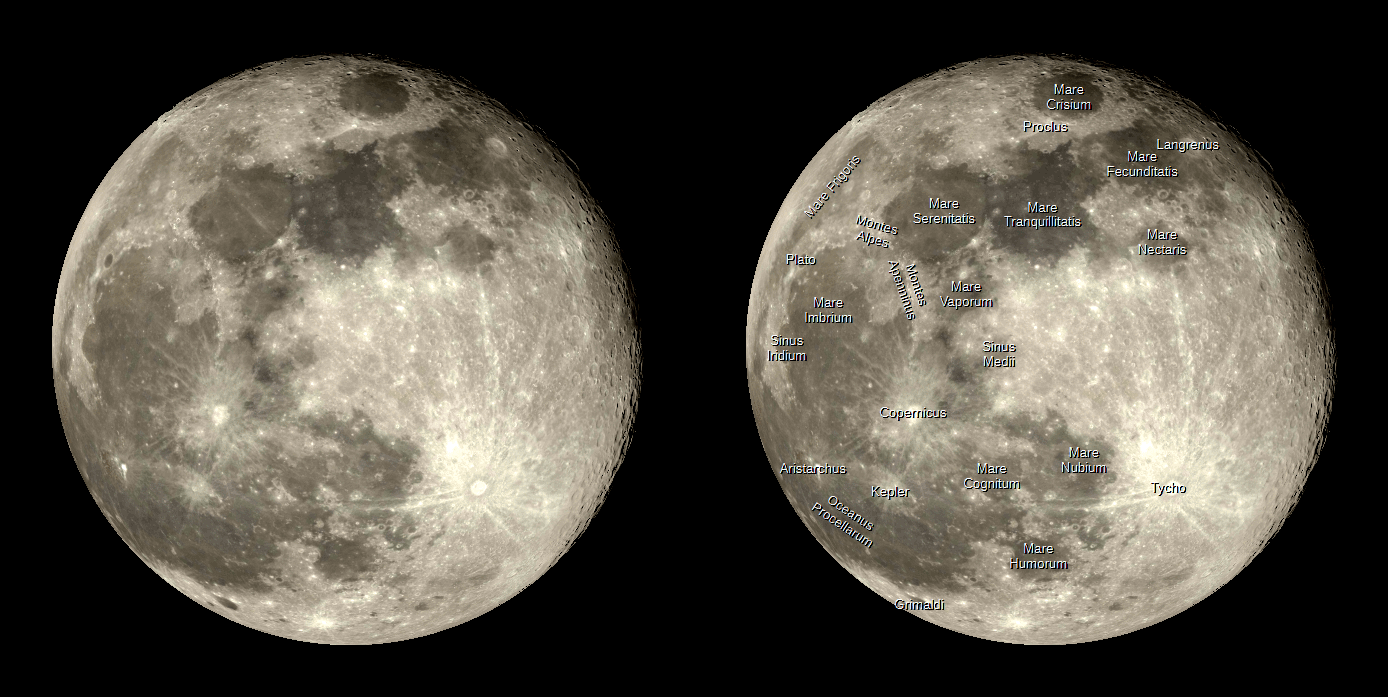
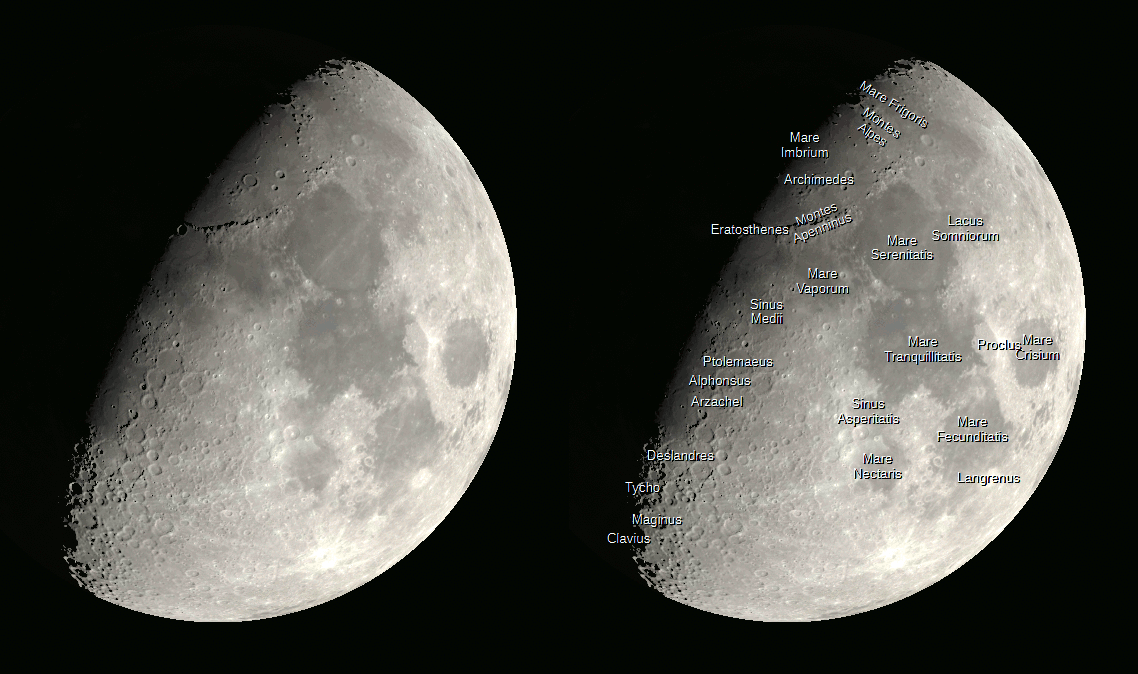
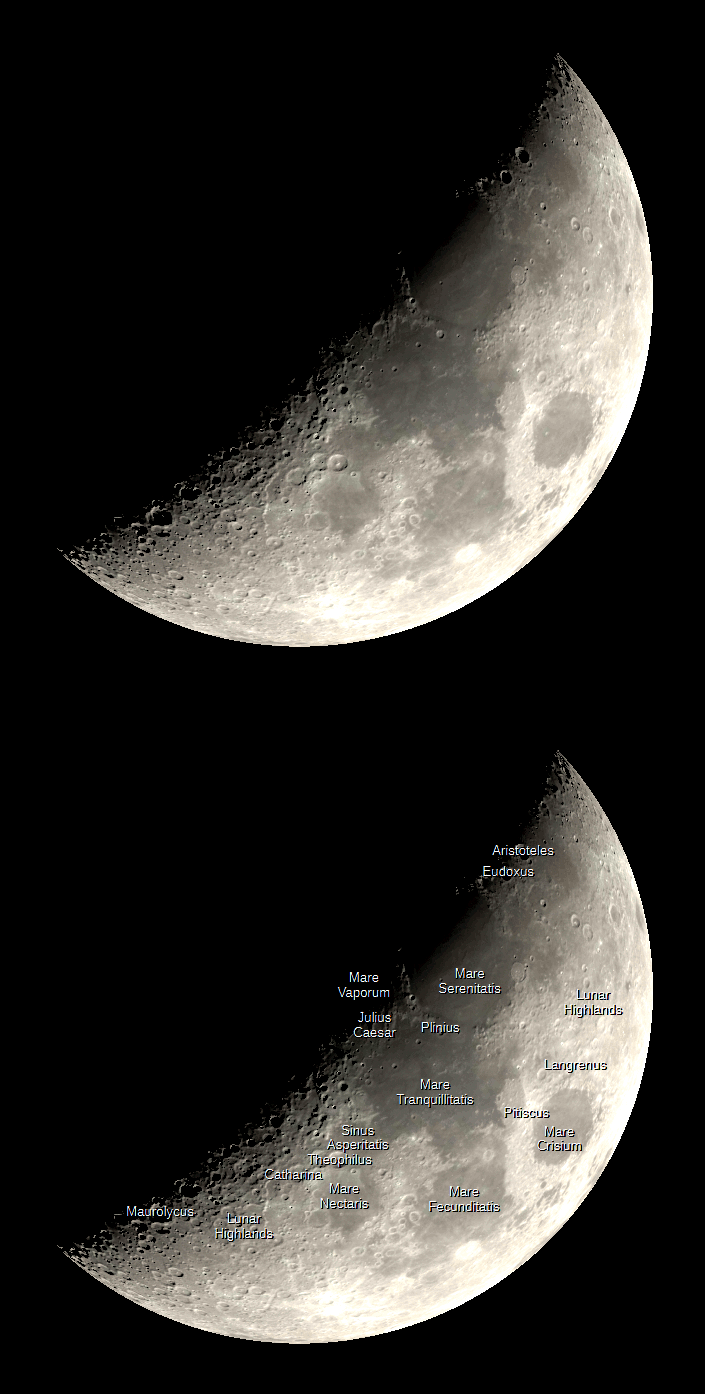
Tonight’s Moon is just about exactly one day before first quarter it’s a six-day-old Moon. Each quarter of the revolution of the moon is just about one week. A lunar month comes out to 29 1/2 days which is a little bit more than 28 days which should be four weeks. That’s pretty close. The illuminated part of the moon that we’re looking at first quarter I consider the most interesting half of the Moon with a good mixture of lowlands which are the seas which are the dark grayer parts of the Moon and the highlands which are very roughly cratered, and are actually higher than the lowlands, or the seas. So if you could put water on the Moon without evaporating it, this is where the water would be. Early telescopic astronomers did think that’s where the water was. Of course the Moon has no atmosphere and the water would just evaporate.
The astronomical event times given are for the Traverse City/Interlochen area of Michigan (EST, UT –5 hours). They may be different for your location.
Addendum
 Bob Moler's Ephemeris Blog