Archive
Ephemeris: 06/14/2024 – Star Party at the Sleeping Bear Dunes tomorrow night*
* if it’s clear or mostly clear.
This is Bob Moler with Ephemeris for Flag Day, Friday, June 14th. Today the Sun will be up for 15 hours and 33 minutes, setting at 9:30, and it will rise tomorrow at 5:56. The Moon, at first quarter today, will set at 2:22 tomorrow morning.
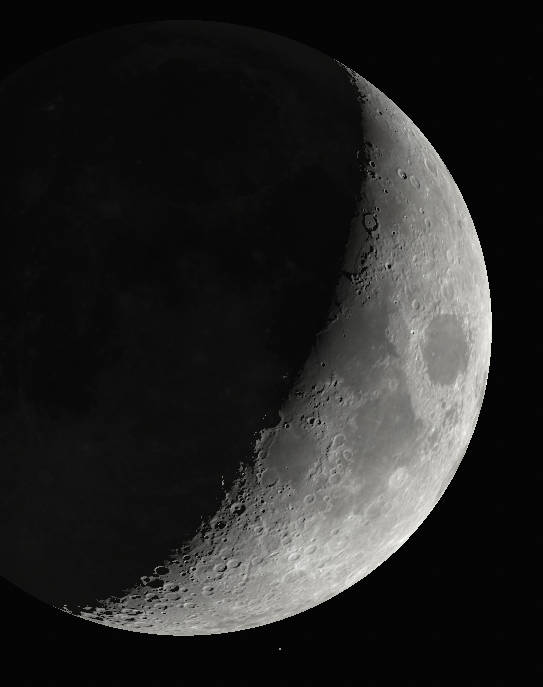
Tomorrow night, Saturday, June 15th, the Sleeping Bear Dunes National Lakeshore will team up with the Grand Traverse Astronomical Society to host a star party at the Dune Climb from 9 to 11 PM. It won’t be a star party exactly, because the featured attraction will be the Moon, nearly two days after first quarter. To my mind, this is about the best time to view the Moon showing its craters with deep shadows near the terminator or sunrise line which crosses the moon slowly over the month. There are no planets out in the evening, but we do have some interesting stars to look at besides the Moon. The fairly bright Chinese Tiangong Space Station will pass below the position of the Moon at 10:22 that evening.**
The astronomical event times given are for the Traverse City/Interlochen area of Michigan (EDT, UT–4 hours). They may be different for your location.
Addendum
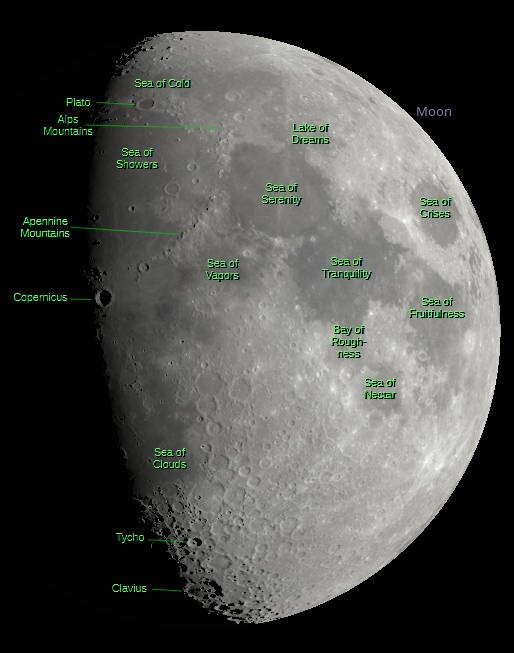
** The information of the Tiangong space station pass came from heavens-above.com. The space station was also displayed in Stellarium when set to the proper time. Tiangong was predicted to be first magnitude by both sources, but Heavens-Above predicted a magnitude twice as bright as Stellarium.
Ephemeris: 06/13/2024 – The Apollo 11 flag
This is Ephemeris for Thursday, June 13th. Today the Sun will be up for 15 hours and 32 minutes, setting at 9:29, and it will rise tomorrow at 5:56. The Moon, 1 day before first quarter, will set at 2:06 tomorrow morning.
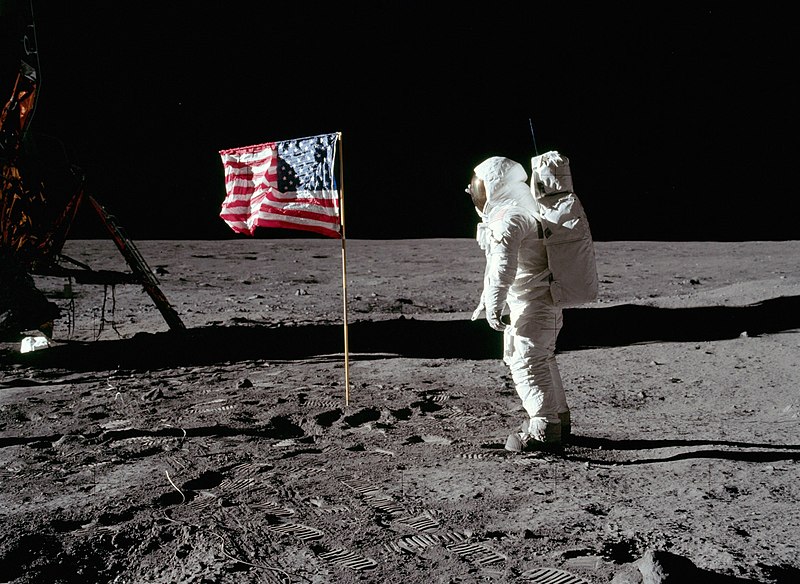
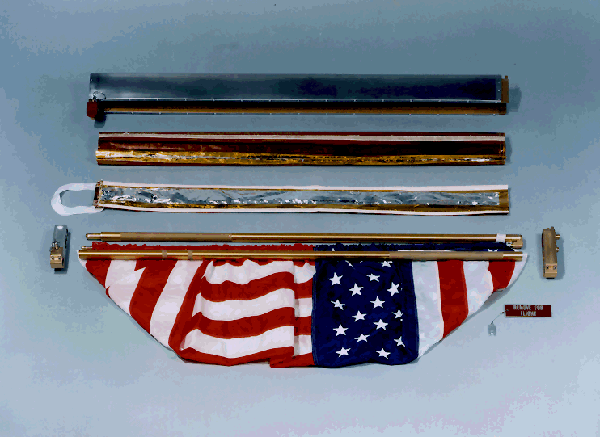
Tomorrow is Flag Day. That got me to thinking about the flags that the Apollo astronauts planted on the Moon and what state they are in. We know the Apollo 11 flag was blown down by the blast of the ascent stage engine when they left the Moon because it was planted too close to the lunar module. The other five flags are still standing. However, there’s some speculation as to what color they are. Are the colors bleached out by the ultraviolet of the sun’s light, which is unimpeded on the Moon? The flags may be bleached completely white. There was nothing really special about the flags that NASA used for the Apollo mission so they weren’t especially prepared to withstand the rigors of being out and undiluted sunlight.
The astronomical event times given are for the Traverse City/Interlochen area of Michigan (EDT, UT–4 hours). They may be different for your location.
Addendum
Ephemeris: 06/12/2024 – Where are the naked-eye planets this week?
This is Ephemeris for Wednesday, June 12th. Today the Sun will be up for 15 hours and 32 minutes, setting at 9:29, and it will rise tomorrow at 5:56. The Moon, 2 days before first quarter, will set at 1:49 tomorrow morning.
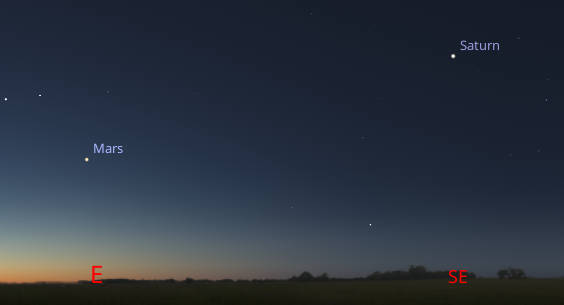
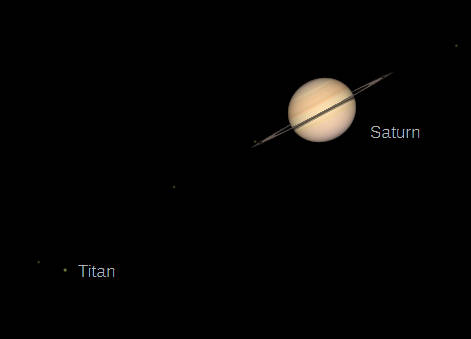
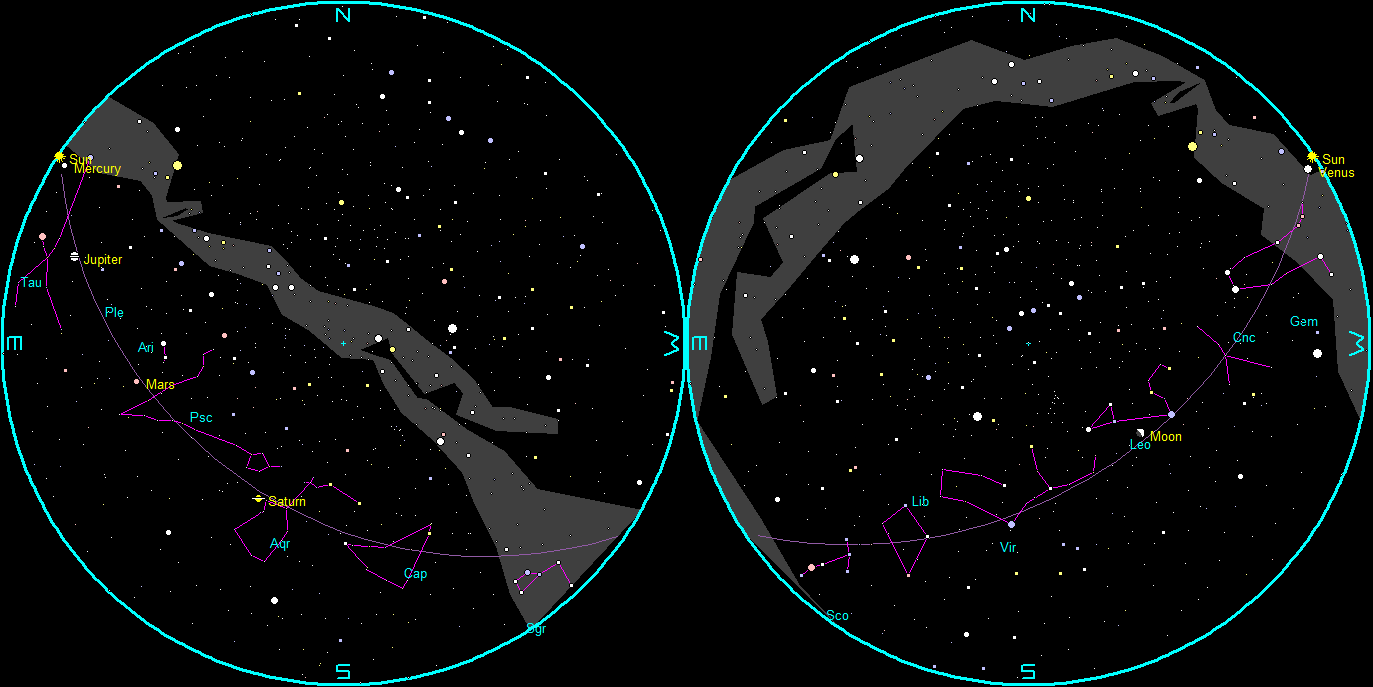
Let’s find out where the naked-eye planets have wandered off to this week, and see what planets are left. Venus and Mercury are too close to the direction of the Sun to be seen. Venus just entered the evening sky last week when it passed behind the Sun in conjunction. It will appear in the evening sky next month. Jupiter, the second-brightest planet still is a week or so from being spotted in the morning, since it rises about an hour before the Sun. By 5 tomorrow morning, or about an hour before sunrise, Saturn will be in the southeast and Mars will be lower in the east. In telescopes, Saturn will look fairly different this year and next with its rings nearly edge on to us. They will open up a bit through October before closing again. They are only 2 degrees from being edge on to us.
The astronomical event times given are for the Traverse City/Interlochen area of Michigan (EDT, UT–4 hours). They may be different for your location.
Addendum
Ephemeris: 06/11/2024 – The man who first mapped the Moon
This is Bob Moler with Ephemeris for Tuesday, June 11th. Today the Sun will be up for 15 hours and 31 minutes, setting at 9:28, and it will rise tomorrow at 5:56. The Moon, 3 days before first quarter, will set at 1:31 tomorrow morning.
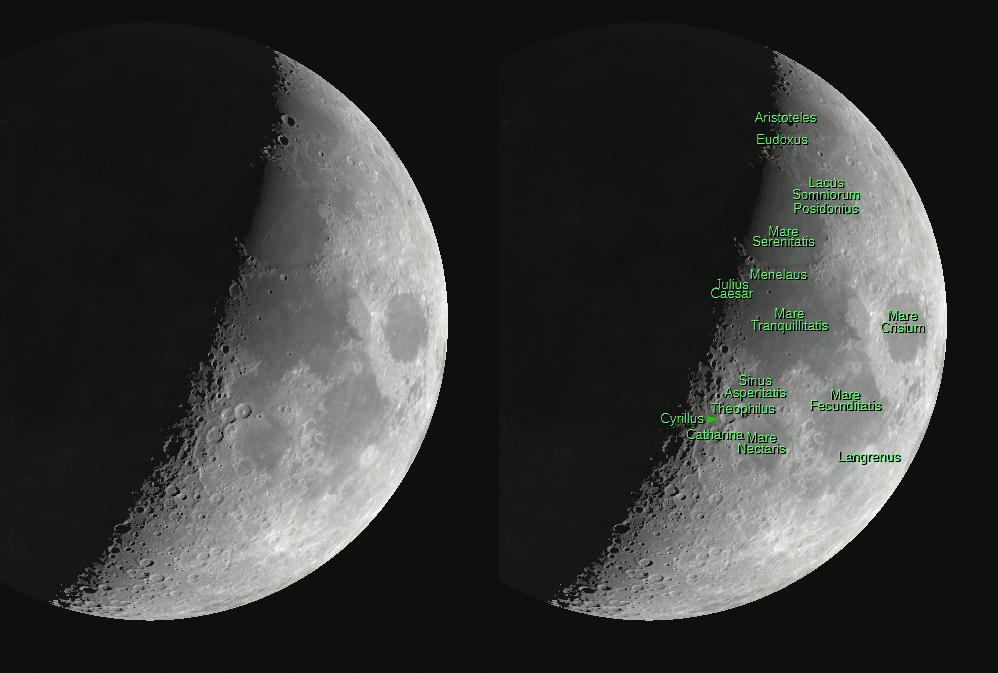
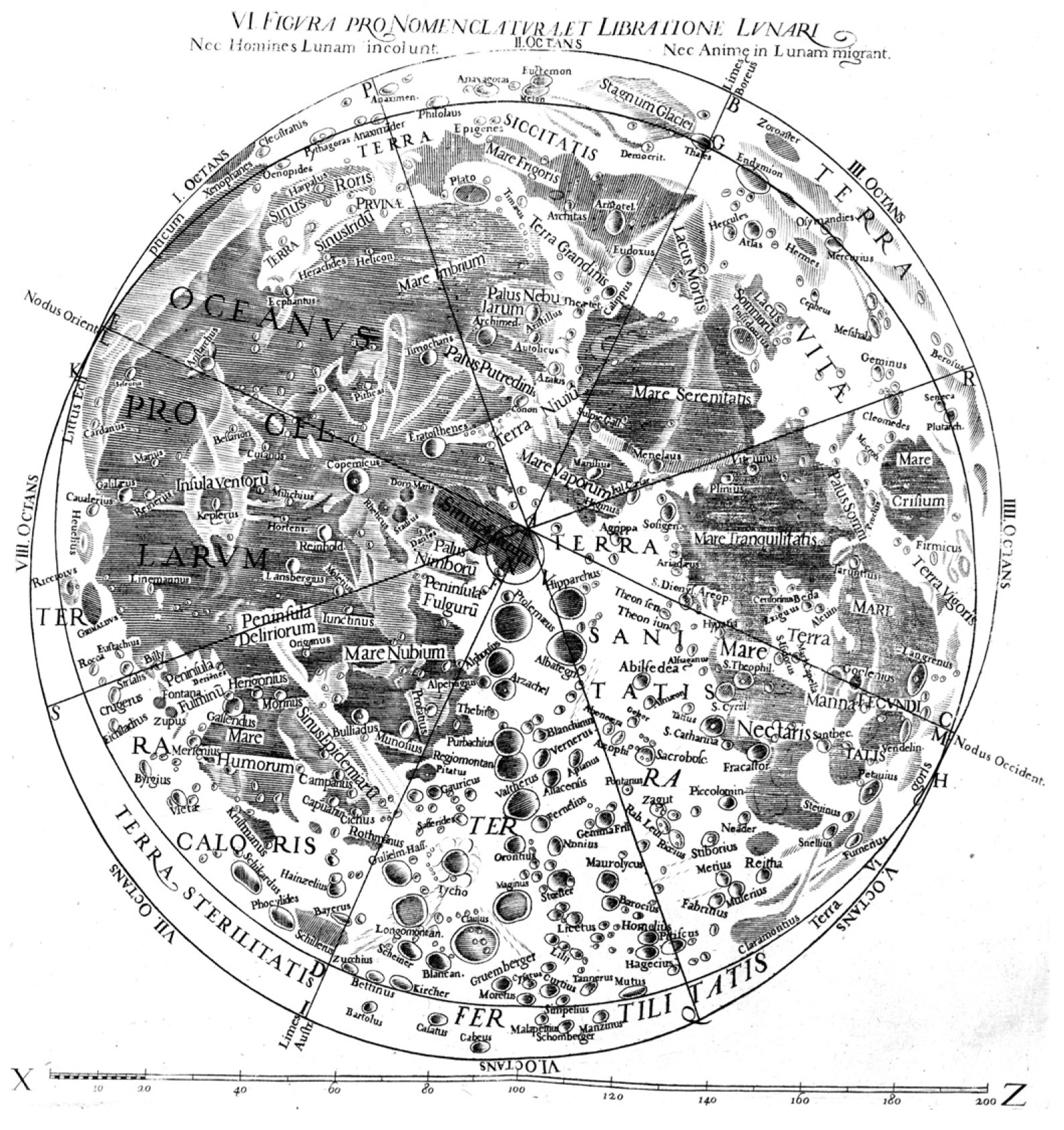
Ever wonder where the names of the features of the Moon come from? Most of the large features on the Moon were named by Giovanni Battista Riccioli, a Jesuit priest of the 17th century. He created the first accurate map of the Moon in 1651, and he named the features he drew including the Sea of Tranquility (Mare Tranquillitatis), the craters Tycho, Plato, Clavius and many others that I talk about. Even though he professed the Earth centered universe, he gave the heliocentrists Copernicus, Kepler and Aristarchus prominent craters, but in the Ocean of Storms, Oceanus Procellarum, denoting the controversy of the day. Riccioli’s nomenclature became the standard for the Moon and other planets and moons.
The astronomical event times given are for the Traverse City/Interlochen area of Michigan (EDT, UT–4 hours). They may be different for your location.
Addendum

Ephemeris: 06/10/2024 – Finding Draco the Dragon
This is Ephemeris for Monday, June 10th. Today the Sun will be up for 15 hours and 31 minutes, setting at 9:28, and it will rise tomorrow at 5:56. The Moon, halfway from new to first quarter, will set at 1:09 tomorrow morning.
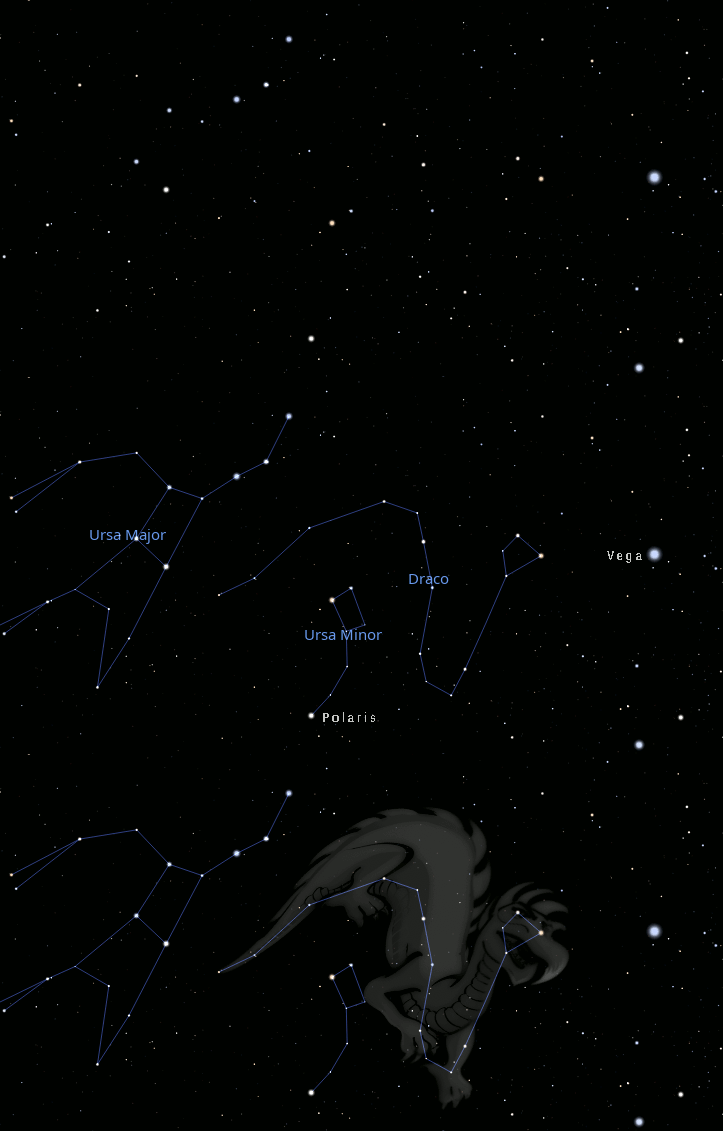
High in the northern sky at 11 p.m. lies the twisted constellation, that of Draco the dragon. This dragon is more like the snakelike Chinese dragon than the dinosaur-like dragon of European legend. I find it better to start at the tail of Draco, to trace him out in the stars. Draco’s tail starts, or ends, between the bowl of the Big Dipper and the Little Dipper high in the north-northwest. The Dragon is seen in a line of stars that extends parallel to the handle of the Big Dipper before curving around the bowl of the Little Dipper then bends back down to the level of Polaris in the north-northeast before turning toward the east. The head of Draco is an odd box of stars near the bright star Vega, high in the east. Though not made up of very bright stars, Draco has an easy shape to trace.
The astronomical event times given are for the Traverse City/Interlochen area of Michigan (EDT, UT–4 hours). They may be different for your location.
Addendum
Ephemeris: 06/07/2024 – GTAS hears from NASA engineer tonight
This is Ephemeris for Friday, June 7th. Today the Sun will be up for 15 hours and 28 minutes, setting at 9:26, and it will rise tomorrow at 5:57. The Moon, 1 day past new, will set at 11:19 this evening.
Tonight’s meeting of the Grand Traverse Astronomical Society will start at 9 pm, at Northwestern Michigan College’s Rogers Observatory. The later start time in June and July will allow the following star party, which will start at the end of the meeting, around 10 pm, to start after sunset. The sky will still be in bright twilight. We are pleased to have Joe Gibson, Principal Flight Software Engineer, from NASA’s Goddard Space Flight Center to speak to us. After the program, at about 10 pm, if it’s clear will be viewing of the skies as it gets dark. The public is always welcome. This meeting also marks the Society’s 42nd anniversary. The observatory is located south of Traverse City on Birmley Road between Garfield and Keystone roads.
The astronomical event times given are for the Traverse City/Interlochen area of Michigan (EDT, UT–4 hours). They may be different for your location.
Addendum

Ephemeris: 06/06/2024 – 80 years ago, D-Day’s astronomical connection
This is Ephemeris for Thursday, June 6th. Today the Sun will be up for 15 hours and 27 minutes, setting at 9:25, and it will rise tomorrow at 5:57. The Moon is new today, and won’t be visible.
Today is the 80th anniversary of the greatest battle of World War II was the Allied invasion of Mainland Europe at Normandy on D-Day, a date governed by the phase of the Moon. The full moon on June the 6th, 1944 gave light for the gliders and paratroopers to carry out their operations at midnight. Plus the high tides were near noon and midnight and the low tides near dawn. The idea was to hit the beach at low tide to enable the landing craft to operate without hitting the obstacles the Germans had planted in the tidal zone. It was great for the landing craft, but the troops had a lot of open beach to run through to get to any sort of shelter. The best days for the invasion were the 5th, 6th and 7th of June. Bad weather on the 5th caused a one day postponement.
The astronomical event times given are for the Traverse City/Interlochen area of Michigan (EDT, UT–4 hours). They may be different for your location.
Addendum

Ephemeris: 06/05/2024 – Where have the naked-eye planets wandered off to this week?
Wonder why I use the term wander? Planets, definitely don’t wander. They do not move aimlessly, but their motions behave by the action of gravitation discovered by Newton and Einstein. However, we do call these bodies planets, from the Greek “Planetes” which means wanderer. By the time of Aristotle circa 4th century BCE, they realized there was a method to their motions. Except for Aristarchus, they all got it wrong. But they did realize that the planet’s motions were predictable.
This is Ephemeris for Wednesday, June 5th. Today the Sun will be up for 15 hours and 26 minutes, setting at 9:24, and it will rise tomorrow at 5:57. The Moon, 1 day before new, will rise at 5:32 tomorrow morning.
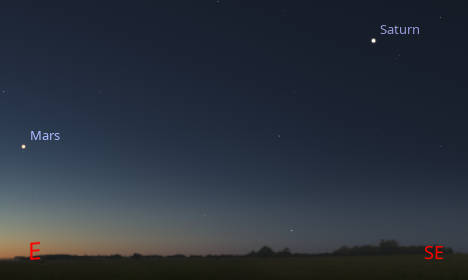
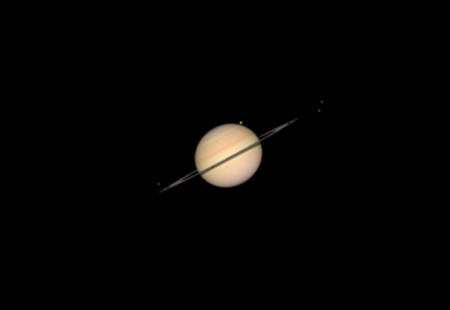
Let’s find out where the naked-eye planets have wandered off to this week, and see what planets are left. Venus, Mercury and Jupiter are now too close to the direction of the Sun to be seen. Venus just entered the evening sky yesterday when it passed behind the Sun in conjunction. It will appear in the evening sky next month, while Jupiter may be visible in the morning later this month. By 5 tomorrow morning, or about an hour before sunrise, Saturn will be low in the southeast and Mars will be lower in the east. In telescopes, Saturn will look fairly different this year and next with its rings nearly edge on to us. They will open up a bit through October before closing again. They are only 2 degrees from being edge on to us.
The astronomical event times given are for the Traverse City/Interlochen area of Michigan (EDT, UT–4 hours). They may be different for your location.
Addendum
Ephemeris: 06/04/2024 – Finding the Little Dipper
This is Ephemeris for Tuesday, June 4th. Today the Sun will be up for 15 hours and 25 minutes, setting at 9:24, and it will rise tomorrow at 5:58. The Moon, 2 days before new, will rise at 4:51 tomorrow morning.
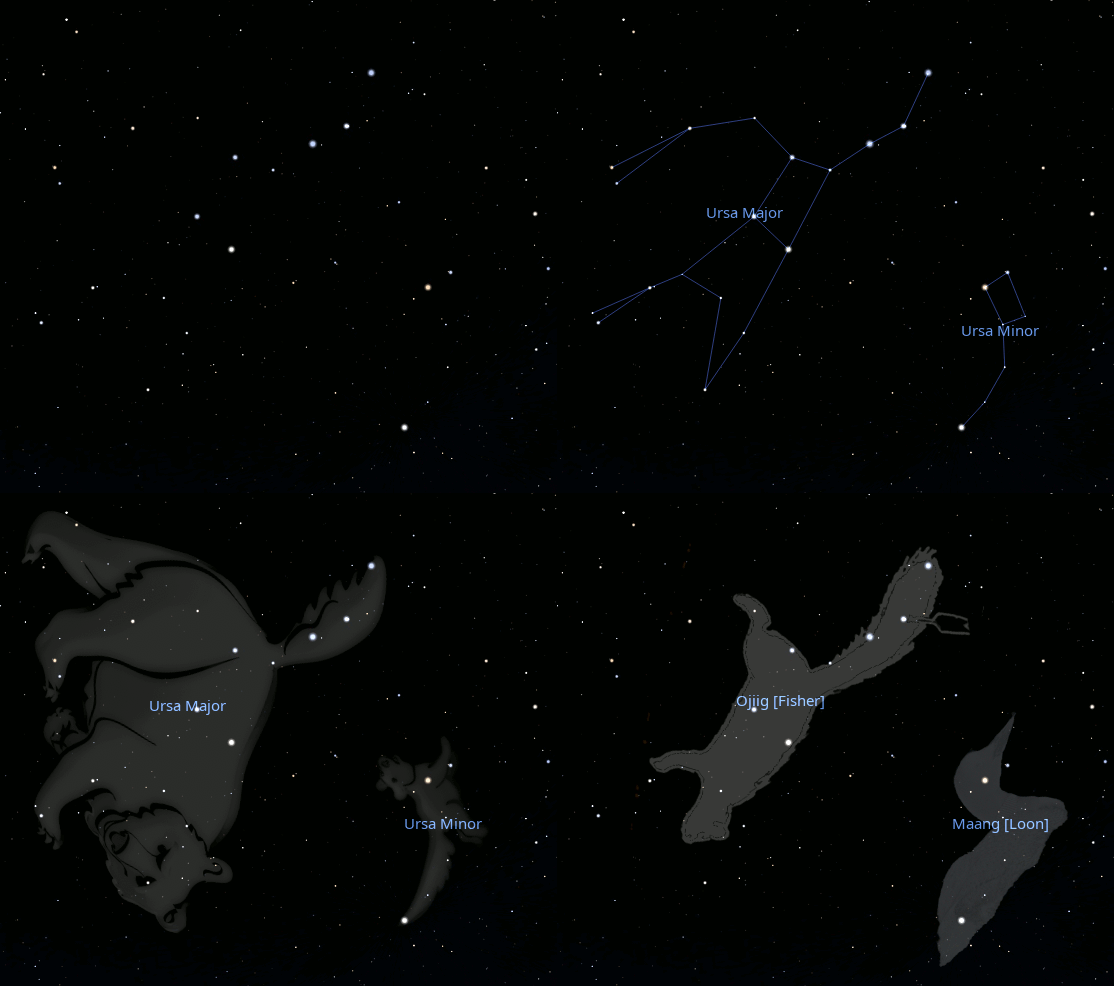
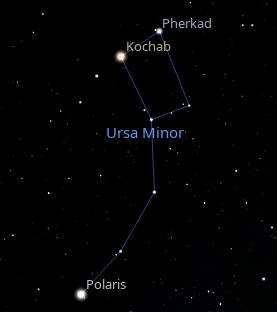
One of the constellations I don’t talk about much, except in passing is Ursa Minor, the Little Bear with an impossibly long tail. It is better known as the Little Dipper. As a dipper goes, its handle is bent the wrong way, like someone stepped on it. Anyway, this time of year in the evening, it’s standing on the tip of it’s handle, which is the North Star, Polaris. Polaris is pointed to by the front two stars of the Big Dipper. As dippers go they pour their contents into each other. The second and third-brightest stars of the Little Dipper are at the front of the bowl, and are Kochab and Pherkad, the Guard Stars, that is, Guardians of the Pole. To the Anishinaabe native peoples of our area the Little Dipper is Maang, the Loon.
The astronomical event times given are for the Traverse City/Interlochen area of Michigan (EDT, UT–4 hours). They may be different for your location.
Addendum
Ephemeris: 06/03/2024 – We begin our 50th orbit of the Sun
This is Ephemeris for Monday, June 3rd. Today the Sun will be up for 15 hours and 24 minutes, setting at 9:23, and it will rise tomorrow at 5:58. The Moon, 3 days before new, will rise at 4:20 tomorrow morning.
Today begins Ephemeris’ 50th circuit of the Sun having completed 49 last Friday. Next month will be the 50th anniversary of my stint as a volunteer program producer for IPR, but that’s another story. So already having produced a weekly program for Interlochen Public Radio, which back then was simply, to me anyway, WIAA. I was asked to come up with a week daily program giving out the sunrise and sunset times. Well I really didn’t want to do just that. Back then I had to come into the station to record them. So what I did was add the Moon rise or set times and a little bit of astronomical trivia. By the way an Ephemeris is a table of celestial body positions over time.
The astronomical event times given are for the Traverse City/Interlochen area of Michigan (EDT, UT–4 hours). They may be different for your location.
Addendum
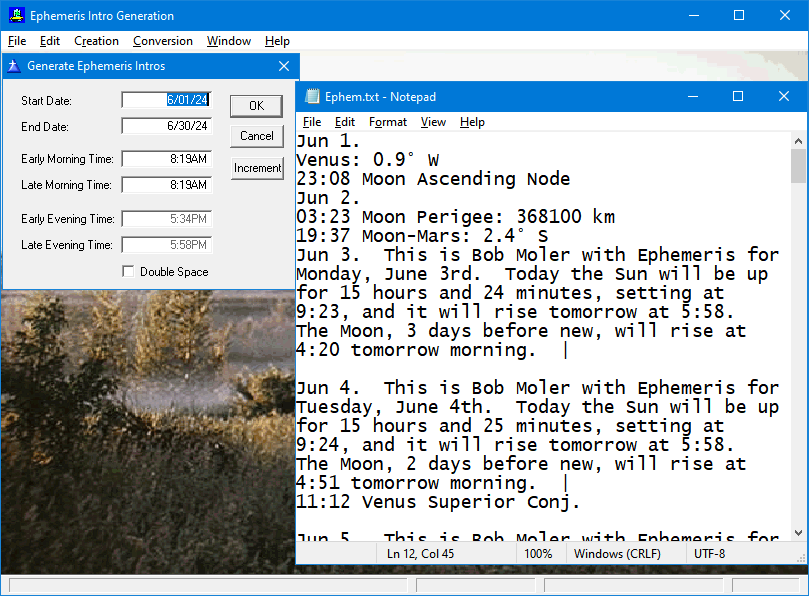
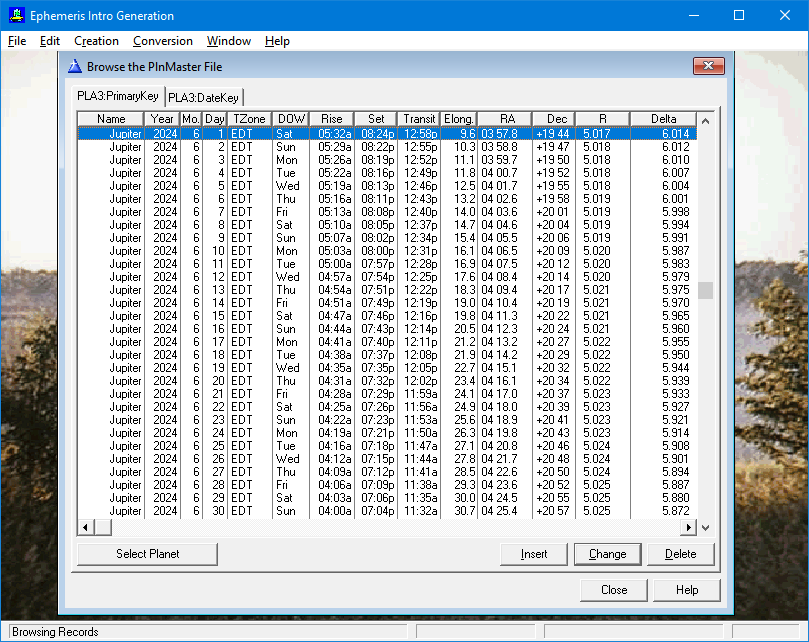
My programming background is not that of scientific coding, but that of the financial industry which is completely different. So I had to pretty much learn on my own and use references for the coding and algorithms for the calculation of astronomical positions, times, and events.
 Bob Moler's Ephemeris Blog