Archive
Ephemeris: 11/06/2026 – How some Native Americans saw the Pleiades
This is Ephemeris for Friday, November 6th. Today the Sun will be up for 9 hours and 57 minutes, setting at 5:24, and it will rise tomorrow at 7:29. The Moon, 3 days before new, will rise at 5:51 tomorrow morning.
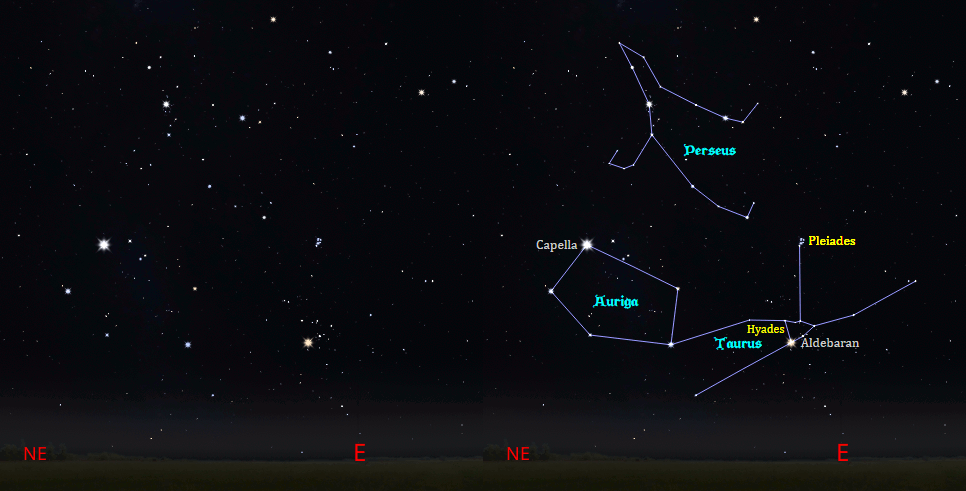
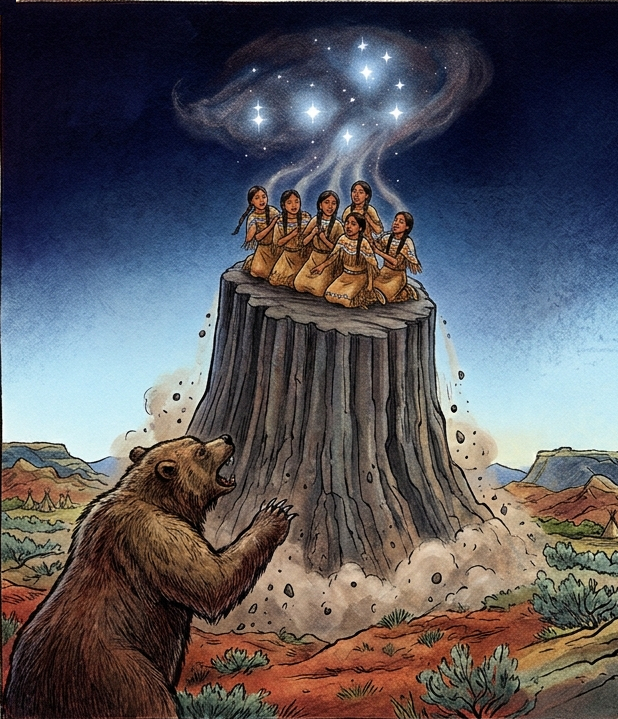
Let’s look at how some native cultures saw the Pleiades, the star cluster that is seen in the eastern sky these evenings. To the Anishinaabe native peoples around here, the Pleiades is the “Hole in the Sky”. As the Hole in the Sky it iss that passage between the Earth and the sky. It was through this that the Sky Mother broght humanity to the Earth. It is also the passage through which the souls of the dead enter the sky to journey along the Milky Way to the hereafter. The Pleiades also represents the stones that are heated for the Sweat Lodge ceremony. To the Kiowa, the Pleiades were seven maidens chased to the top of Devils Tower, Wyoming by a giant bear. They were drawn up into the sky, where they remain as the Pleiades.
The astronomical event times given in this blog are for the Traverse City/Interlochen area of Michigan (Lat 44.7° N, Long 85.7° W; EST, UT – 5 hours) unless stated otherwise. Times will be different for other locations.
Addendum
Ephemeris: 11/05/2026 – Why is the Pleiades called the Seven Sisters when only 6 stars can be seen?
This is Ephemeris for Thursday, November 5th. Today the Sun will be up for 9 hours and 59 minutes, setting at 5:25, and it will rise tomorrow at 7:27. The Moon, half way from last quarter to new, will rise at 4:42 tomorrow morning.
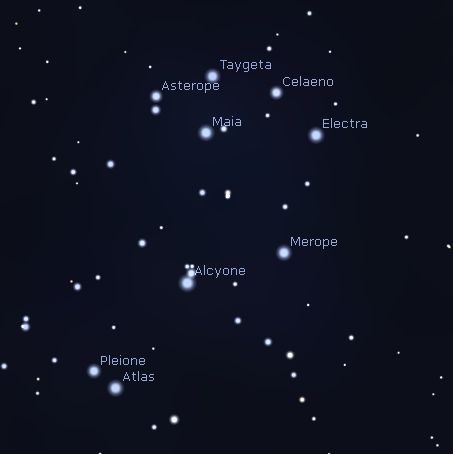
Many cultures around the world have looked at the Pleiades star cluster that’s off in the eastern sky these autumn nights as having seven stars and many as seven sisters or 7 maidens. However, the most people can see with their naked eye is 6 stars. There’s several theories about this. There are 9 named stars in the Pleiades the seven sisters themselves plus Atlas and Pleione the parents. Atlas and Pleione are the one or two stars seen at bottom as one looks at the Pleiades in the autumn sky, the end of the handle the tiny dipper. Normally only one can be seen. That’s Atlas. Pleione is a little bit off to the left of Atlas. It is thought that Pleione was farther away from Atlas in the distant past, or possibly brighter so it could be seen as a separate star.
The astronomical event times given in this blog are for the Traverse City/Interlochen area of Michigan (Lat 44.7° N, Long 85.7° W; EST, UT – 5 hours) unless stated otherwise. Times will be different for other locations.
Addendum
Ephemeris: 11/04/2026 – Taking our weekly look at the whereabouts of the naked-eye planets
This is Ephemeris for Wednesday, November 4th. Today the Sun will be up for 10 hours and 2 minutes, setting at 5:27, and it will rise tomorrow at 7:26. The Moon, 3 days past last quarter, will rise at 3:32 tomorrow morning.
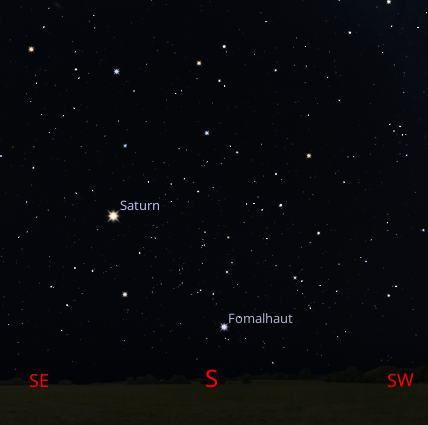
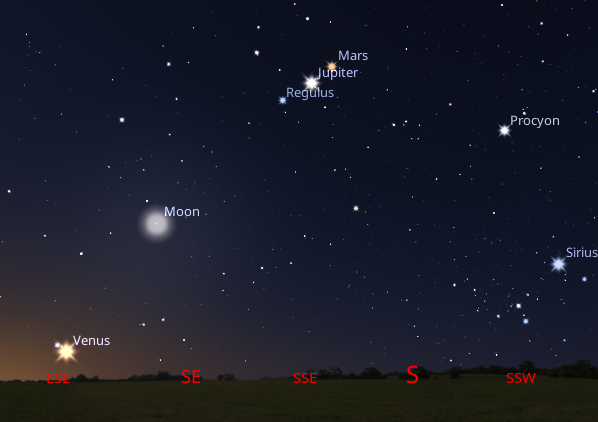
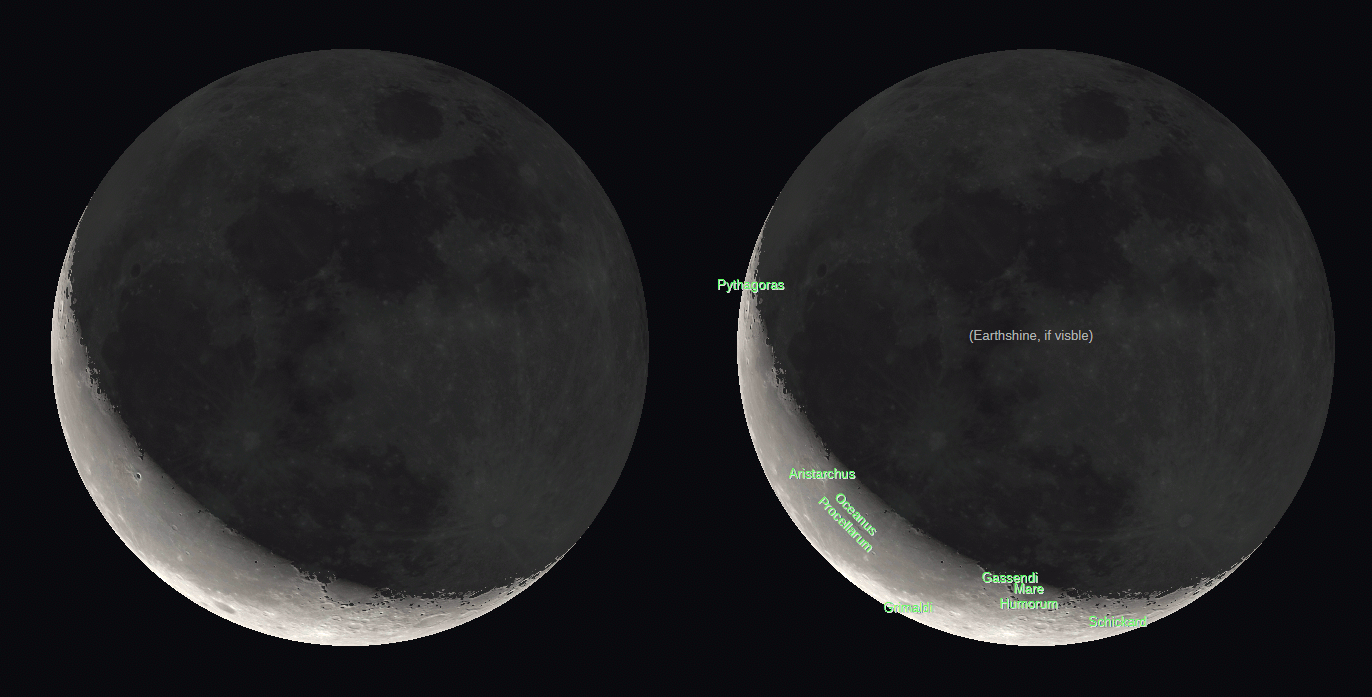
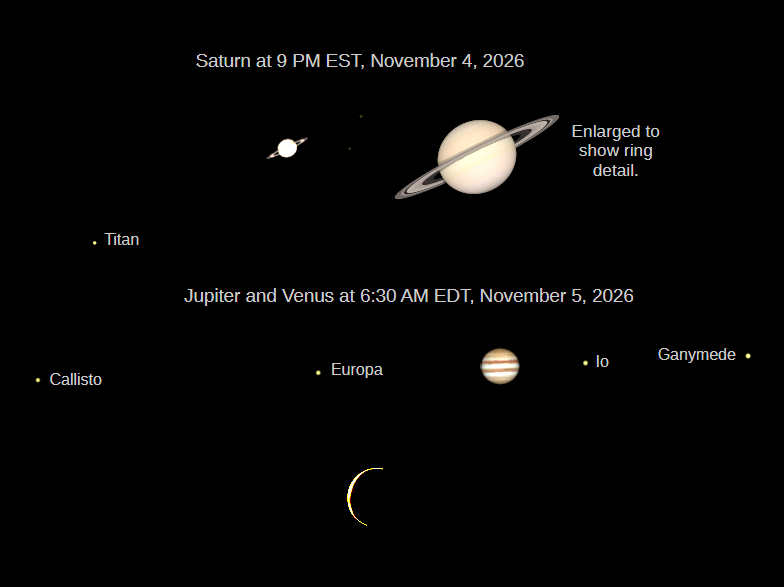
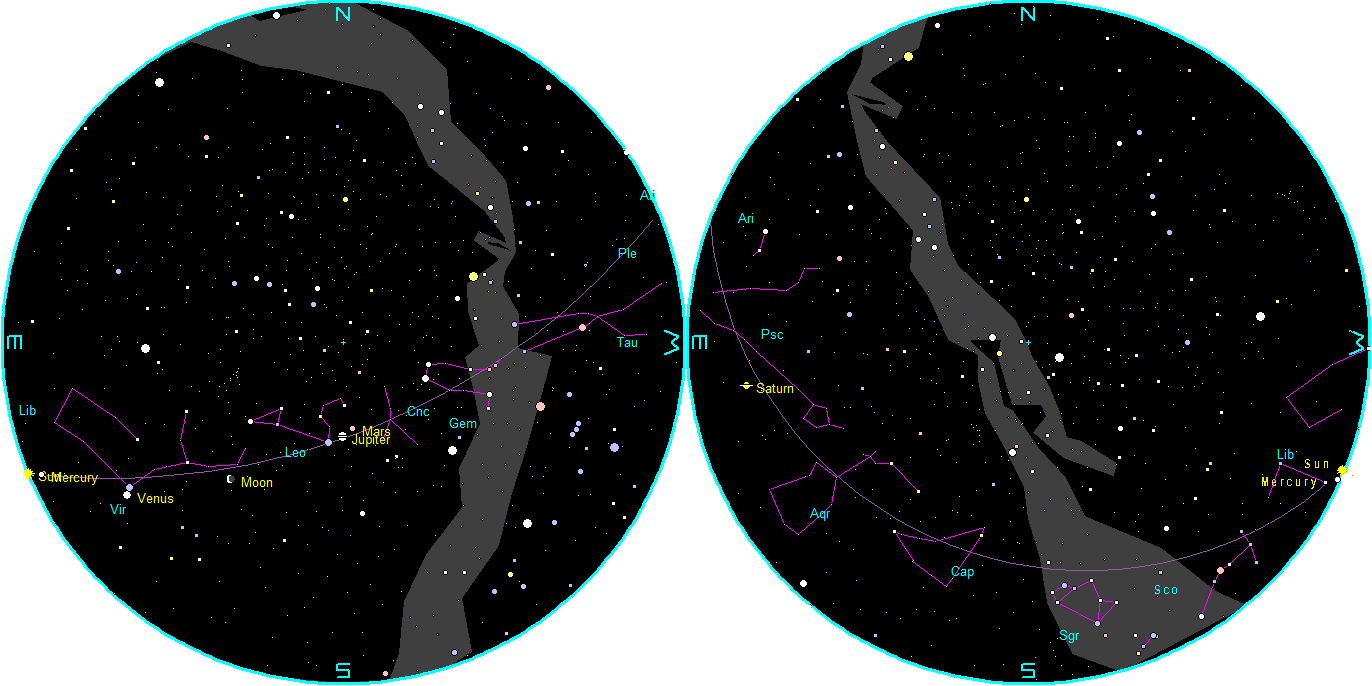
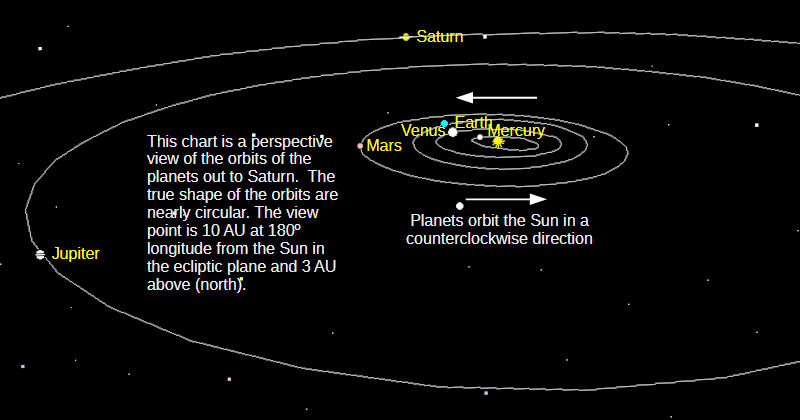
Let’s take our weekly look at the whereabouts of the naked-eye planets. Three of the naked-eye planets are visible in the night sky. Mercury moves throuigh inferior conjunction with the Sun today. Tonight, Saturn will be in the east-southeastern sky as it gets dark. It is the brightest starlike object low in that direction. Venus passed between the Earth and the Sun in inferior conjunction 12 days ago, and might be seen in the morning sky for sharp-eyed observers by 6:30 AM low in the east southeast. Jupiter and Mars will be in the southern sky by then with the waning crescent moon about halfway between them and Venus. Red Mars will be above and to the right of Jupiter and slowly closing. Mars will pass just above Jupiter on the 15th.
The astronomical event times given in this blog are for the Traverse City/Interlochen area of Michigan (Lat 44.7° N, Long 85.7° W; EST, UT – 5 hours) unless stated otherwise. Times will be different for other locations.
Addendum
Ephemeris: 11/03/2026 – Taurus contains two bright star clusters
This is Ephemeris for Election Day, Tuesday, November 3rd. Today the Sun will be up for 10 hours and 5 minutes, setting at 5:28, and it will rise tomorrow at 7:24. The Moon, 2 days past last quarter, will rise at 2:21 tomorrow morning.
At 8 to 9 p.m. The constellation of Taurus the bull rises higher in the east to southeast. Taurus contains two bright clusters of stars. The most famous of these is the Pleiades, also known as the Seven Sisters. The other is a letter V shape that is the face of Taurus the bull, and called the Hyades located below them as they rise in the autumn sky. In the Greek mythology they are half-sisters of each other, all fathered by the Titan Atlas with Aethra. They are apparently fleeing, as are the Pleiades, from the giant Orion, soon to rise in the east. The bright orange star, Aldebaran, a first magnitude star at one end of the V, is not part of the cluster. It is about half as far. Aldebaran means Follower, because it follows the Pleiades, as they move east to west in the sky as the Earth rotates.
The astronomical event times given in this blog are for the Traverse City/Interlochen area of Michigan (Lat 44.7° N, Long 85.7° W; EST, UT – 5 hours) unless stated otherwise. Times will be different for other locations.
Addendum
Ephemeris: 11/02/2026 – Finding the Pleiades, the Seven Sisters
This is Ephemeris for Monday, November 2nd. Today the Sun will be up for 10 hours and 7 minutes, setting at 5:29, and it will rise tomorrow at 7:23. The Moon, 1 day past last quarter, will rise at 1:08 tomorrow morning.
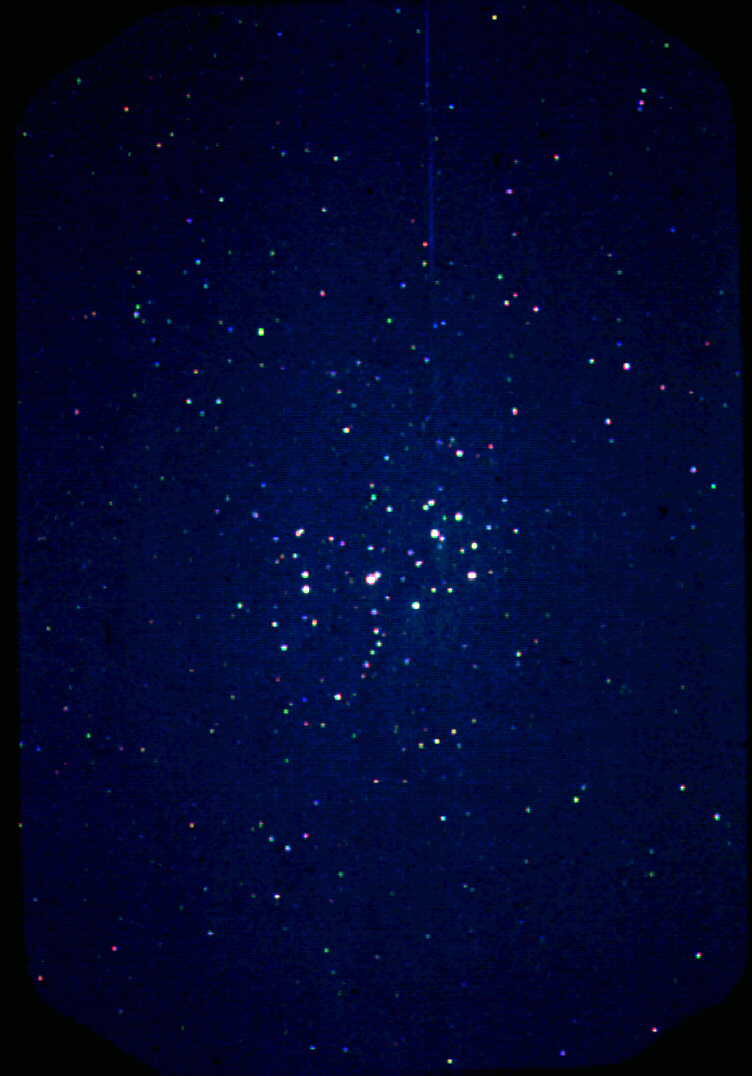
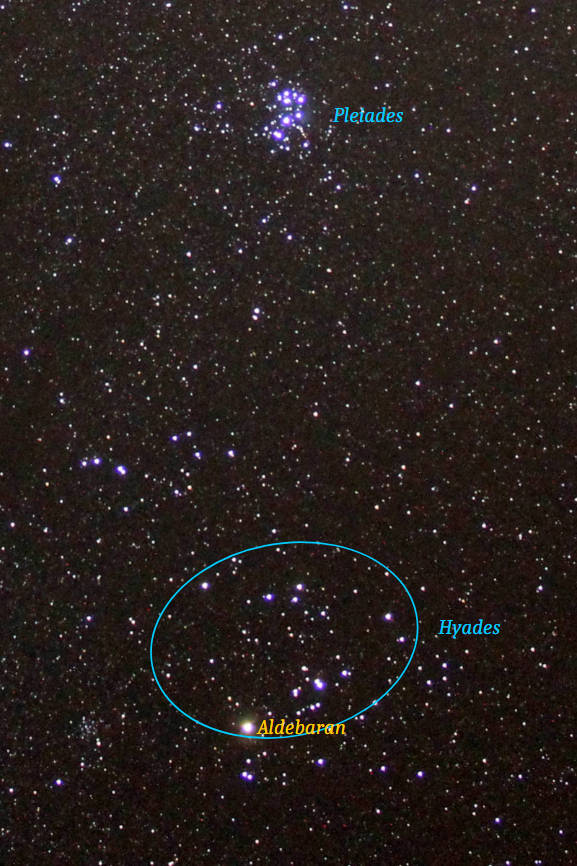
A marvelous member of the autumn skies can be found low in the east around 8 in the evening. It is the famous star cluster called the Pleiades or the Seven Sisters. I might also add the ‘Tiny Dipper’. Many people can spot a tiny dipper shape in its six or seven stars, and mistake it for the Little Dipper. With binoculars, one can see over a hundred stars that appear, along with the dipper shape of the brightest. In photographs, the Pleiades actually illuminate wisps of the dust that surround them. In Greek mythology, the sisters were daughters of the god Atlas and Pleione. Most people can only see six stars. The reason, according to mythology, is that one of the sisters married a mortal, dimming her star in shame.
The astronomical event times given in this blog are for the Traverse City/Interlochen area of Michigan (Lat 44.7° N, Long 85.7° W; EST, UT – 5 hours) unless stated otherwise. Times will be different for other locations.
Addendum