Archive
05/14/2019 – Ephemeris – The Apollo 11 crew weren’t alone at the Moon
Ephemeris for Tuesday, May 14th. Today the Sun will be up for 14 hours and 47 minutes, setting at 9:03, and it will rise tomorrow at 6:14. The Moon, 3 days past first quarter, will set at 4:54 tomorrow morning.
By the time Apollo 11 launched on July 16th, 1969 the Soviet union had its two launch failures of their massive lunar rocket the N-1 that year. In a last ditch attempt to scoop the United States, literally, the Soviet Union launched their Lunar 15 spacecraft that was to return a sample of the lunar surface material before Apollo 11 could return from the Moon with theirs. The Soviets launched Luna 15 on July 13th, and entered lunar orbit on the 17th. It descended to the lunar surface while Armstrong and Aldrin were still on the Moon. However communication was lost during descent and it crashed into the Sea of Crises several hundred miles northeast of where the Eagle had landed. The US was kept apprised of the Lunar 15 mission by the Soviets.
The times given are for the Traverse City/Interlochen area of Michigan. They may be different for your location.
Addendum
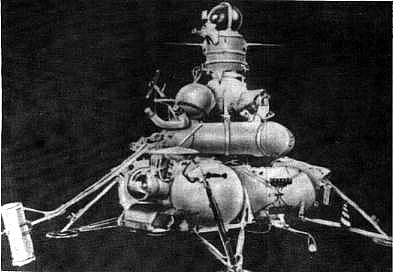
Luna-15 type vehicle the Soviets sent to the Moon to bring back surface samples. Credit NASA.
05/13/2019 – Ephemeris – The Moon Rockets
Ephemeris for Monday, May 13th. Today the Sun will be up for 14 hours and 44 minutes, setting at 9:01, and it will rise tomorrow at 6:15. The Moon, 2 days past first quarter, will set at 4:26 tomorrow morning.
In the race to the Moon in the 1960s we never really knew what the Soviet Union was doing, or of how far they progressed. We knew that we seemed to be behind because we would get glimpses of their progress when they pulled off some first, some long duration record, or the first woman in space. We never heard of their failures until after the Soviet Union fell in 1991. Their answer to the Saturn V rocket was the N-1, the first test of which was several months before Apollo 11 was launched. In all four N-1 launch attempts were made, none successful. However their counterpart to the Apollo Command and Service Modules still lives after 5 decades, it’s call the Soyuz, used to carry cosmonauts and astronauts to the International Space Station.
The times given are for the Traverse City/Interlochen area of Michigan. They may be different for your location.
Addendum
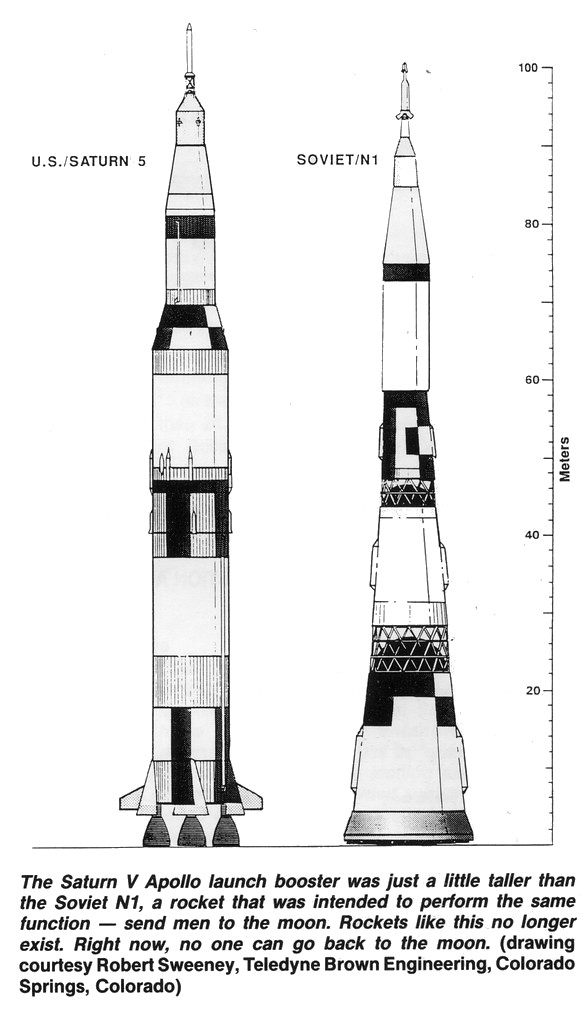
Comparison between The United States Saturn V and the Soviet N-1. Credit: Griffith Observer, the magazine of Griffith Observatory.
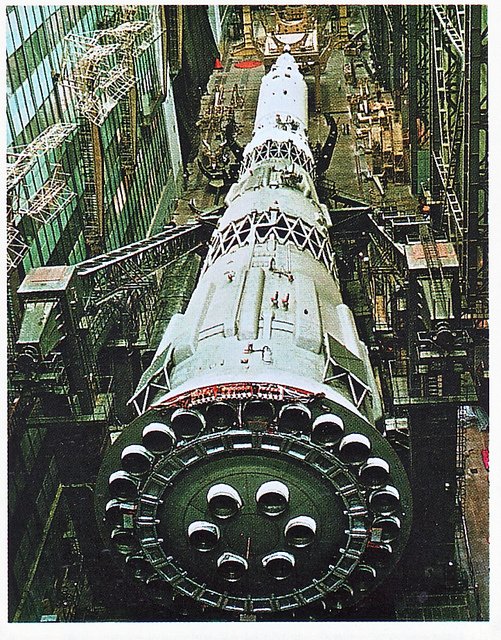
Base of the N-1 and its 36 rocket engines. The N-1 is assembled horizontally while the Saturn V was assembled vertically.
05/09/2019 – Ephemeris – The USA: Step by step to the Moon
Ephemeris for Thursday, May 9th. Today the Sun will be up for 14 hours and 35 minutes, setting at 8:57, and it will rise tomorrow at 6:20. The Moon, 2 days before first quarter, will set at 1:54 tomorrow morning.
The Apollo 11 manned landing on the Moon 50 years ago was the culmination of a series of incremental steps. The Mercury program was in progress when President Kennedy announce the goal to land on the Moon. Following that was Gemini a two man capsule to test long duration flight, rendezvous and docking of two spacecraft, and EVA’s or spacewalks. There was the Ranger program attempted to photograph the Moon close up by sending probes to crash into the Moon. The Lunar Orbiter program to map the entire Moon, the Surveyor program to soft land on the Moon and test its surface. All this leading up to the three man Apollo program to test out the strategy and equipment and to land humans on the Moon.
The times given are for the Traverse City/Interlochen area of Michigan. They may be different for your location.
Addendum
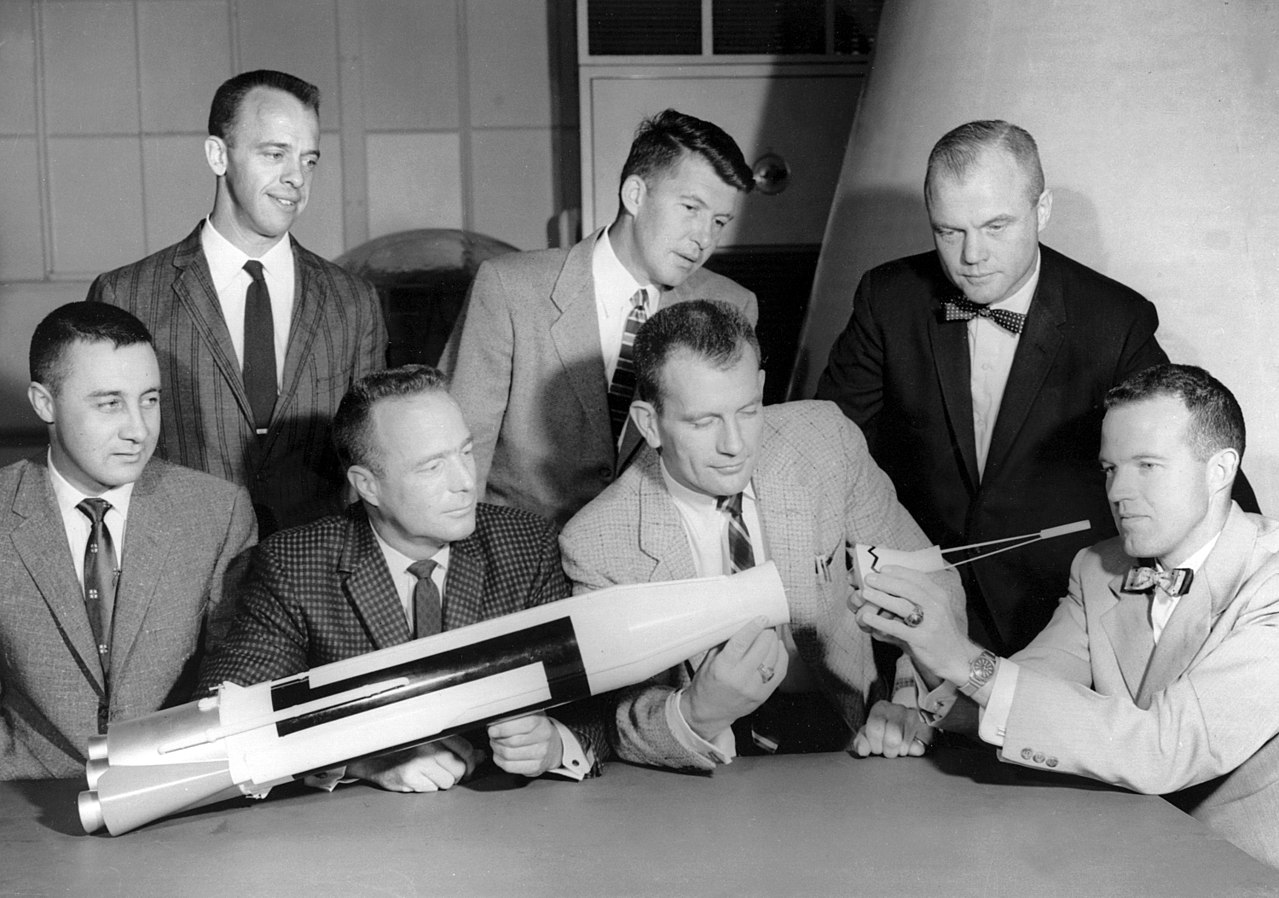
Project Mercury astronauts and a model of the Mercury-Atlas rocket and capsule. Left to right: Grissom, Shepard, Carpenter, Schirra, Slayton, Glenn and Cooper, in 1962. Click on the image to enlarge. Credit NASA.
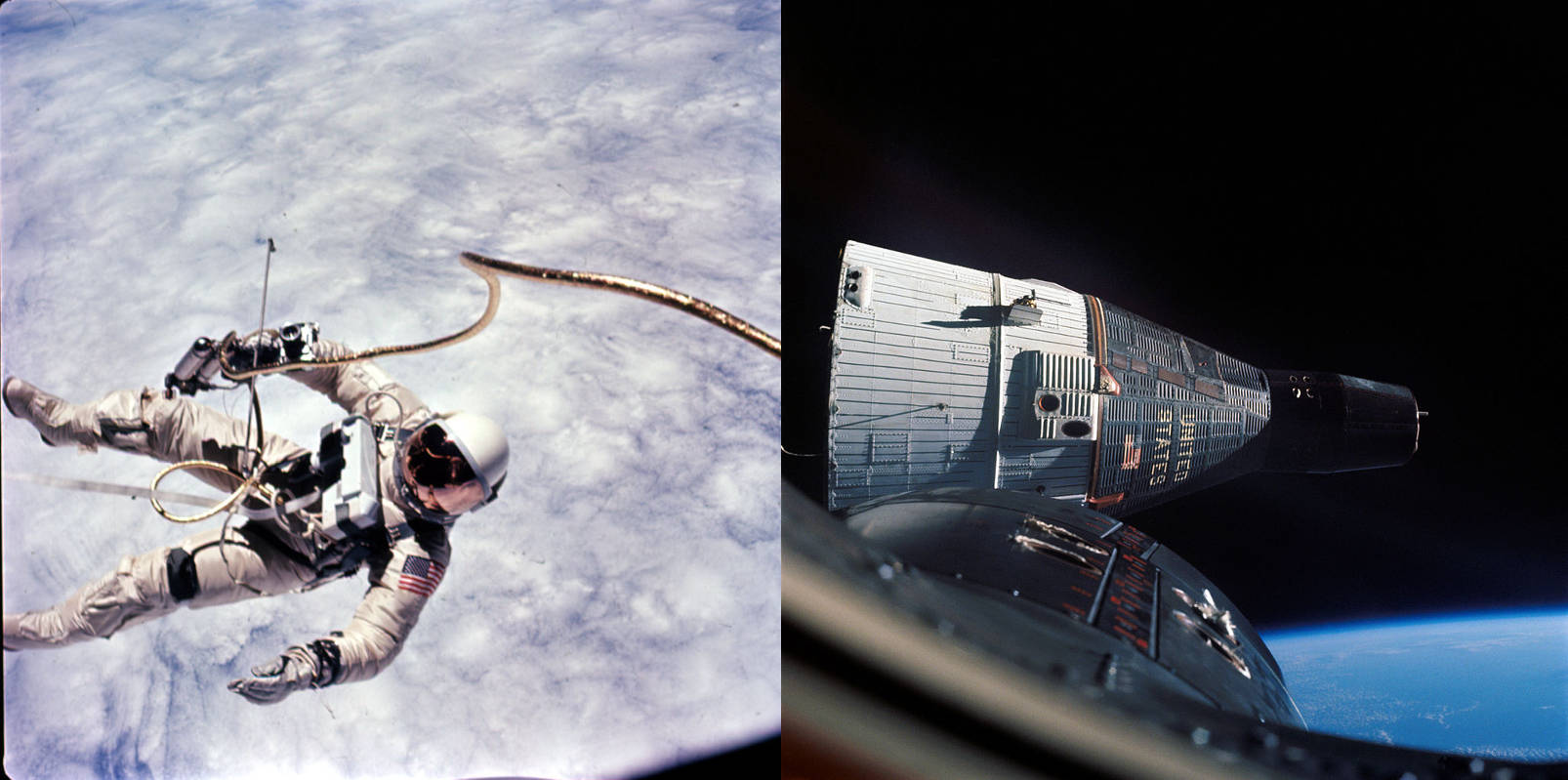
Project Gemini: Left Ed White during the US first space walk during Gemini 4 in June of 1965. Right The rendezvous of Gemini 6 & 7 in December of 1965. Click on the image to enlarge. Credit NASA.
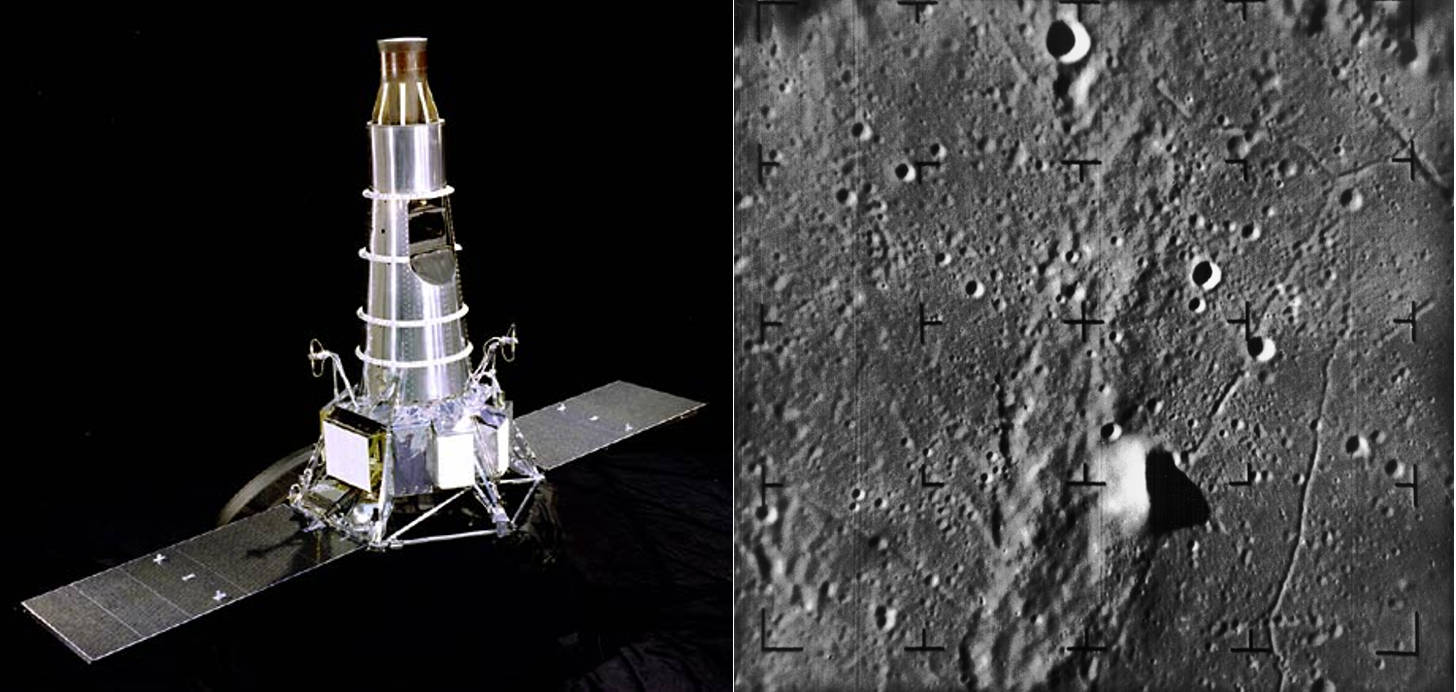
Left: The Ranger spacecraft. Right: The floor of the crater Alphonsus from Ranger 9. Only the last 3 spacecraft were successful. They transmitted images all the way down as they crashed into the Moon. Click on the image to enlarge. Credit NASA.
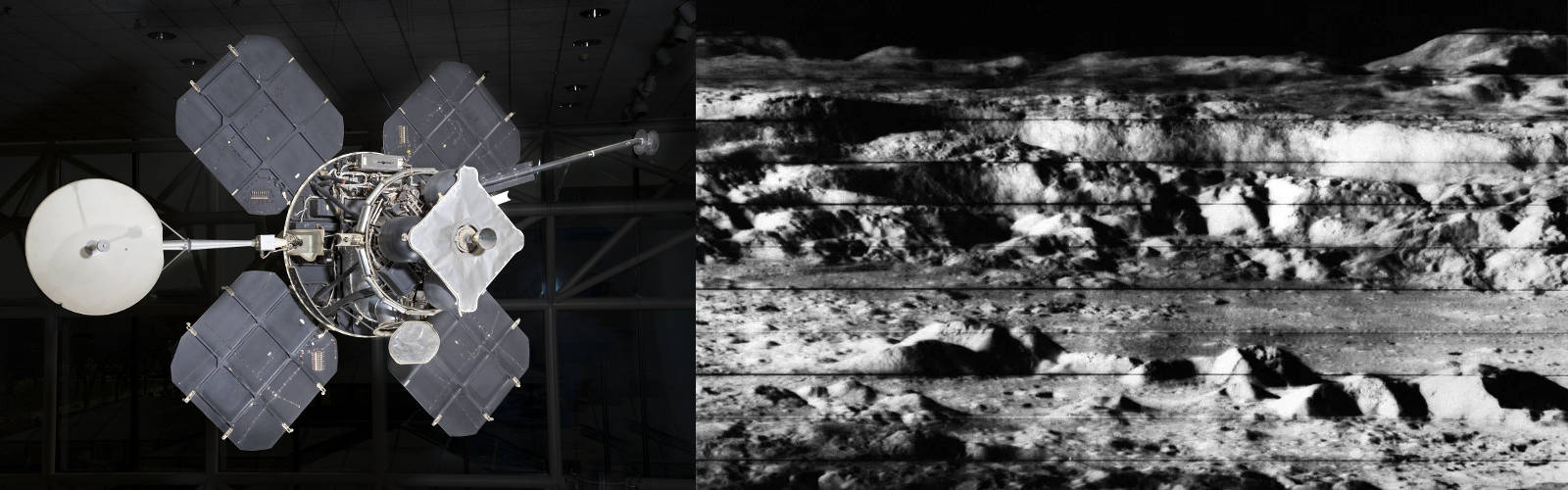
In the most unheralded of the lunar programs the 5 successful Lunar Orbiter satellites photographed 99% of the Moon. from 1966 to 1967. The Moon was photographed on film in strips, developed and the images scanned and transmitted back to Earth. Right: The oblique view of the crater Copernicus was dubbed at the time “The Picture of the Century”. Click on the image to enlarge. Credit NASA.
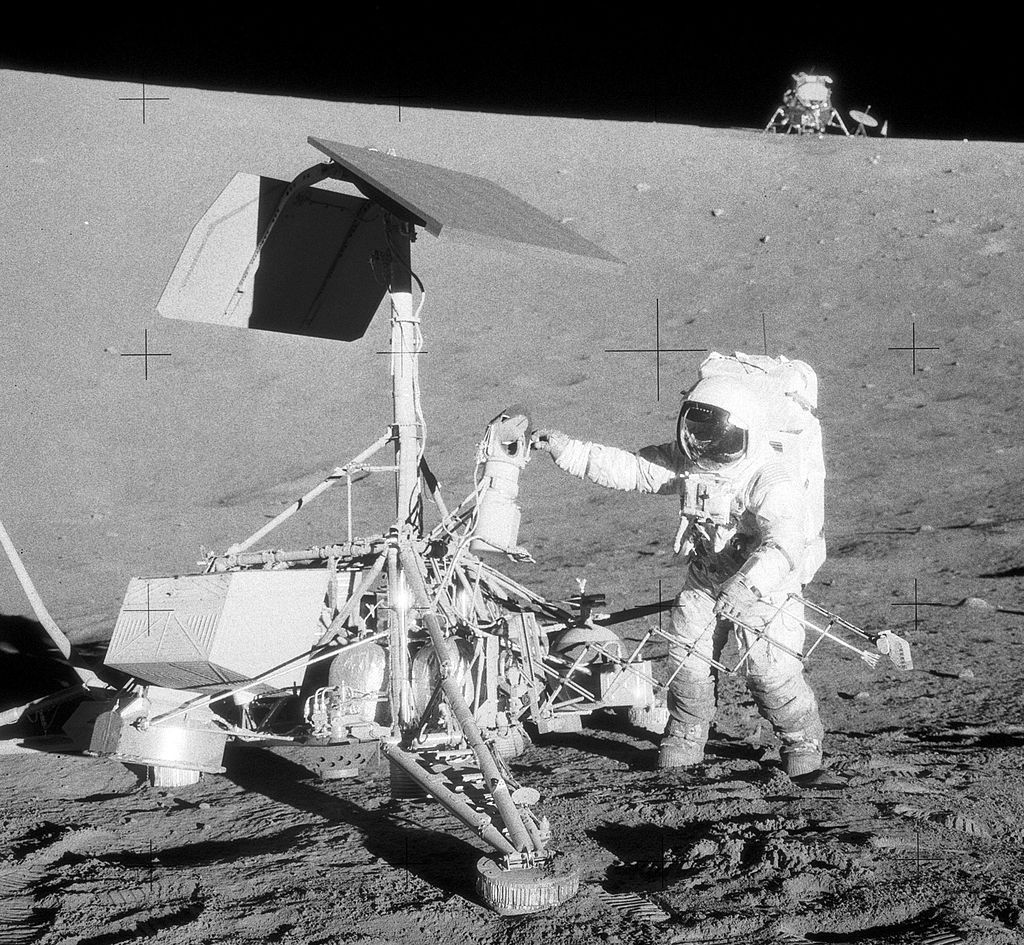
Surveyor 3, visited by astronaut Pete Conrad during the Apollo 12 mission. Click on the image to enlarge. Credit: NASA / Alan Bean.
05/07/2019 – Ephemeris – We’re starting to look at the race to the Moon that culminated 50 years ago
Ephemeris for Tuesday, May 7th. Today the Sun will be up for 14 hours and 30 minutes, setting at 8:54, and it will rise tomorrow at 6:23. The Moon, 3 days past new, will set at 11:58 this evening.
As we look at the Moon near the planet Mars tonight, we recall that fifty years ago today the United States was one week from launching Apollo 10, the penultimate lunar mission to test out the Lunar Module shortened to LM pronounced “Lem” in the vicinity of the Moon. President Kennedy announced the goal in 1961 to send a man to the Moon and return him safely by the end of the decade. This required a lot of learning steps and in the end a huge rocket, the Saturn V. That rocket’s chief designer was Wernher von Braun an ex-Nazi officer who designed the German V-2 during World War II. His counterpart on the Soviet side was Sergei Korolev, though we didn’t know his name until after he died in 1966. His death hampered the development of the Soviet’s N-1 moon rocket.
The times given are for the Traverse City/Interlochen area of Michigan. They may be different for your location.
Addendum
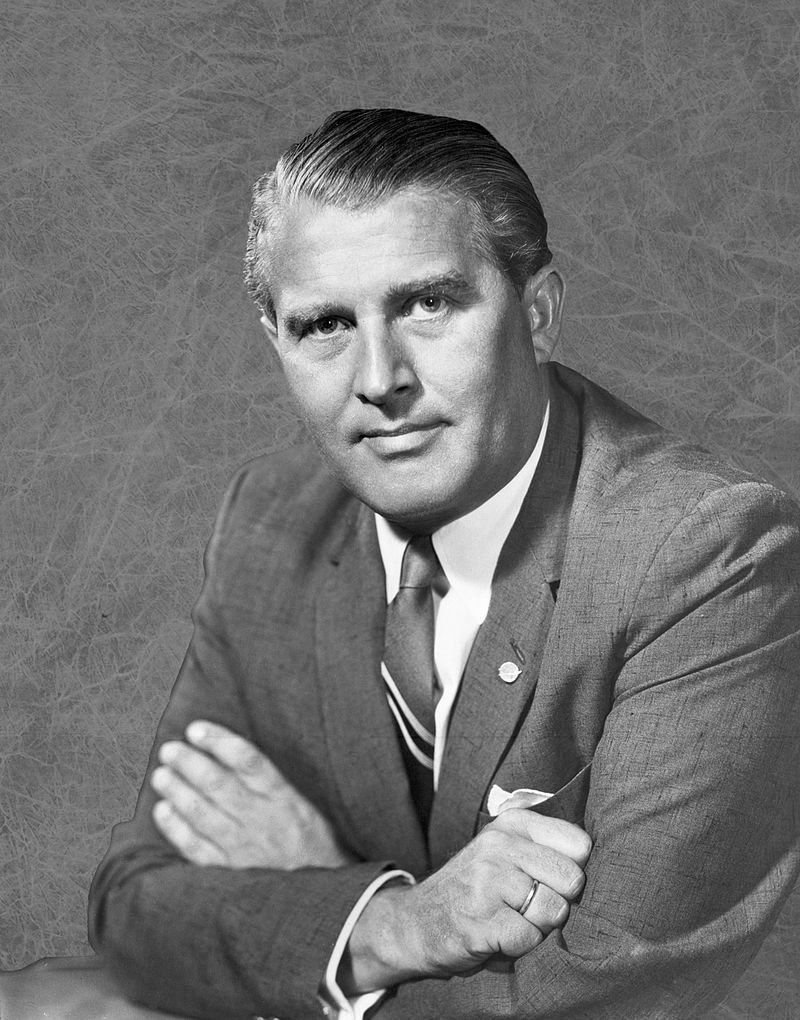
Wernher von Braun around 1960. Image is in the public domain.
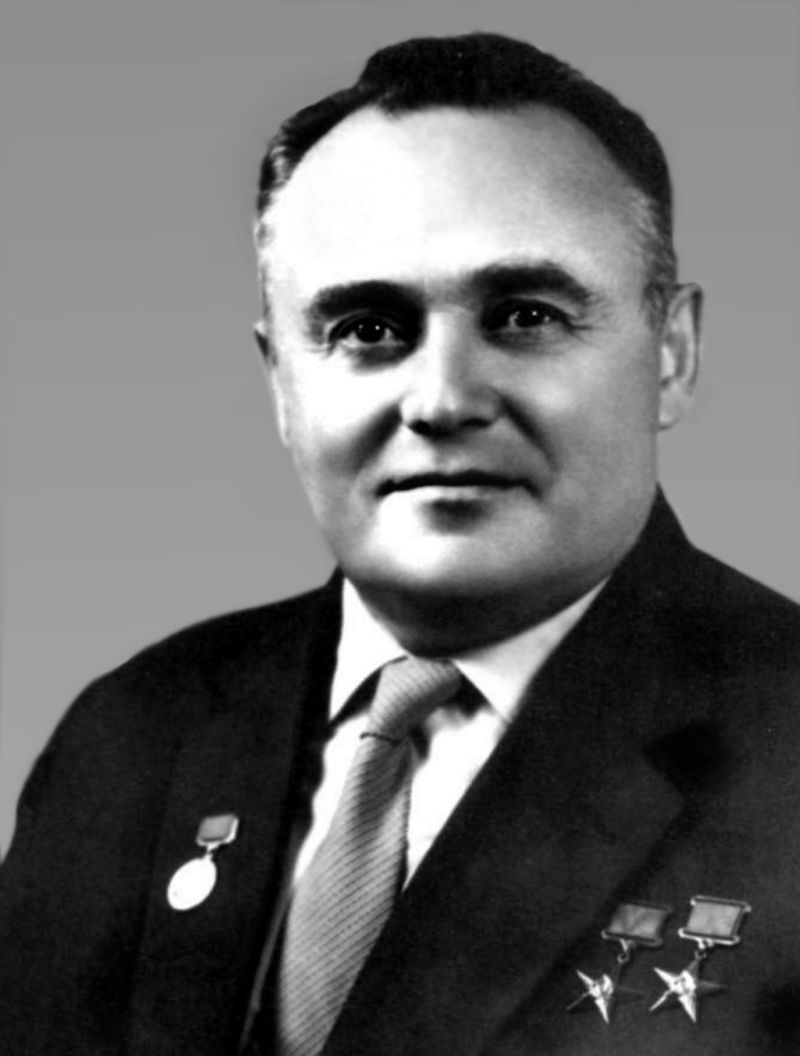
Sergei Korolev, undated image published after his death. Image is in the public domain.
A fascinating look of the Soviet side of the moon race can be found here: https://www.nasa.gov/connect/ebooks/rockets_people_vol4_detail.html. The ebook Rockets and People Volume IV, The Moon Race by Korolev’s deputy Boris Chertok. It’s available in epub, mobi and pdf formats. Volume 3 covers from 1961 to 1967. There are links to all the other volumes from that page.
04/16/2019 – Ephemeris – Last week was quite a week in astronomy and space
Ephemeris for Tuesday, April 16th. Today the Sun will be up for 13 hours and 31 minutes, setting at 8:28, and it will rise tomorrow at 6:55. The Moon, 3 days before full, will set at 6:23 tomorrow morning.
Last week was quite a week in astronomy and space. Wednesday was the announcement that the Event Horizon Telescope team had actually imaged the supermassive black hole in the galaxy M87, using eight sub-millimeter radio telescopes observing from five continents simultaneously. We’ll have to wait a bit to get an image of the Milky Way’s supermassive black hole. Later that Day SpaceX launched their Falcon Heavy rocket to loft an Arab communications satellite into orbit. The three boosters landed safely. Thursday the Israeli privately financed Beresheet lunar lander almost landed safely on the Moon. Unfortunately its rocket engines failed during its landing attempt. They will build another and try again.
The times given are for the Traverse City/Interlochen area of Michigan. They may be different for your location.
Addendum
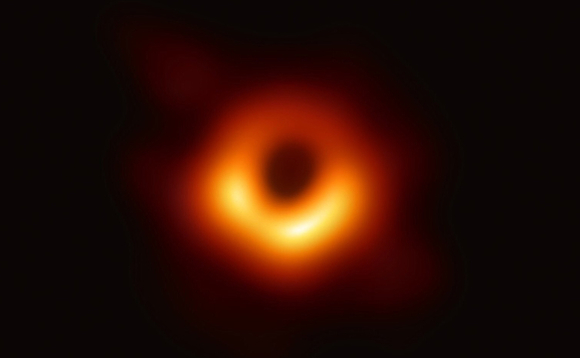
The first image of the black hole in M87. Credit Event Horizon Telescope.
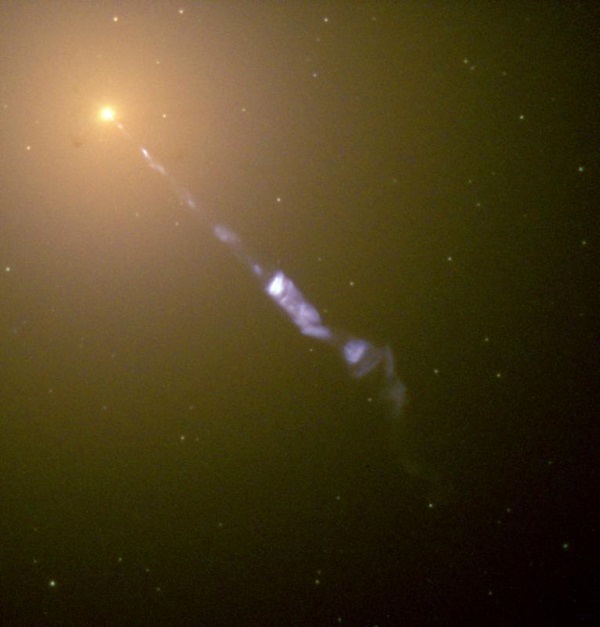
A 5,000 light year long jet from the black hole M87* that’s actually aimed mostly toward us. So the accretion disk in the black hole image is like a halo around the event horizon seen from near the pole of rotation. Credit: NASA/The Hubble Heritage Team (STScI/AURA).
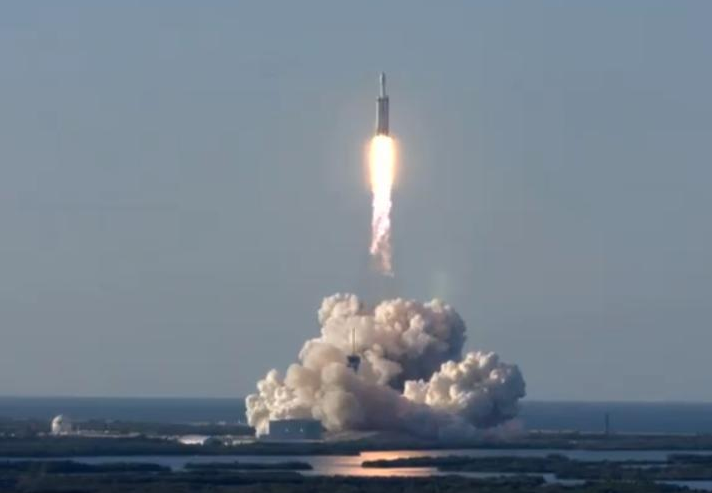
Falcon Heavy leaves the pad. April 10, 2019. Credit SpaceX.
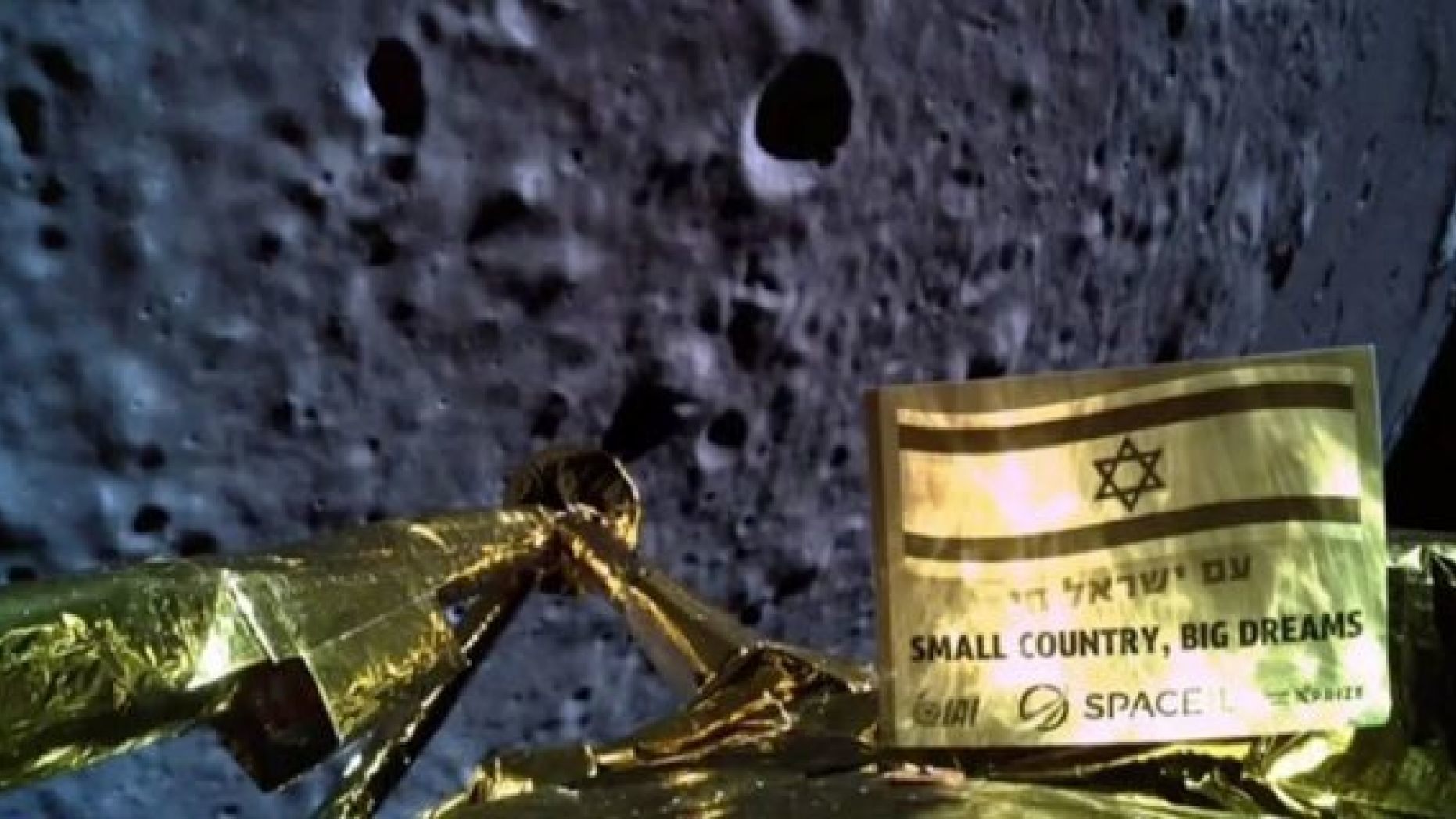
A selfie image of part of the Beresheet lander moments before contact was lost from the Beresheet spacecraft during its descent to the Moon. Credit: SpaceIL/Israel Aerospace Industries.
03/08/2019 – Ephemeris – International Women’s Day
Ephemeris for International Women’s Day, Friday, March 8th. Today the Sun will be up for 11 hours and 31 minutes, setting at 6:39, and it will rise tomorrow at 7:06. The Moon, 2 days past new, will set at 8:43 this evening.
On this International Women’s Day let’s take a look in my favorite fields of astronomy and space. There’s Hypatia of Alexandria who was murdered by an ignorant mob in 415 AD, Caroline Herschel sister to William Herschel and among other things discovered 8 comets, Maria Mitchell, whose comet discovery rocketed her to fame in the United States in the 1800s, Annie Jump Cannon, who classified stars, Henrietta Leavitt who found how to find distances to far away galaxies, and Vera Rubin who helped discover dark matter. In space there’s Sally Ride, Mae Jamison, and Peggy Whitson, who holds the American space flight time, and EVA time records regardless of gender. And that’s just scratching the surface.
The times given are for the Traverse City/Interlochen area of Michigan. They may be different for your location.
Addendum
Ten female astronomers everyone should know: https://www.mnn.com/leaderboard/stories/10-female-astronomers-everyone-should-know.
My favorite astronomer on Twitter is astrophysicist Dr. Katherine J Mack @AstroKatie.
12/20/2019 – Ephemeris – The Star of Bethlehem, the problem of when
Ephemeris for Thursday, December 20th. The Sun will rise at 8:16. It’ll be up for 8 hours and 48 minutes, setting at 5:04. The Moon, 2 days before full, will set at 6:46 tomorrow morning.
In looking at the possible origin of the Star of Bethlehem, the latest Jesus could have been born is before the death of Herod the Great. The Jewish historian Josephus says that Herod died between a lunar eclipse and Passover, with most Star investigators pointing to the partial eclipse of March 13, 4 BC, one month before Passover that year. Problem is that Josephus devotes 4 chapters of the 17th book of Jewish Antiquities to the events in that span. I think they chose that eclipse to fit in with the triple conjunction of Jupiter and Saturn in 7 BC that was the big favorite for the star. There is another, better total lunar eclipse on January 10, 1 BC that is 3 months before Passover that would better fit Josephus’ narrative and a different Star possibility. More Monday.
The times given are for the Traverse City/Interlochen area of Michigan. They may be different for your location.
Addendum
The passage about Herod’s death from the eclipse of the Moon to Passover is in Josephus’ Antiquities of the Jews is in Book 17, Chapter 6, Paragraph 4 through Chapter 9, paragraph 3.
In doing some additional research since recording the program, the footnotes in William Whiston’s translation suggests a period between the eclipse and Passover at 13 months. Antiquities of the Jews can be found here: https://www.gutenberg.org/files/2848/2848-h/2848-h.htm. Of course I could extend the time frame of Herod’s death for the 1 BC eclipse to the Passover 16 months later. That would solve one of the problems I had with the timing of the visit of the Magi. But you’ll have to wait until Monday to find out what that is.
07/24/2018 – Ephemeris – What about those martian canals
Ephemeris for Tuesday, July 24th. The Sun rises at 6:20. It’ll be up for 14 hours and 57 minutes, setting at 9:17. The Moon, 3 days before full, will set at 4:25 tomorrow morning.
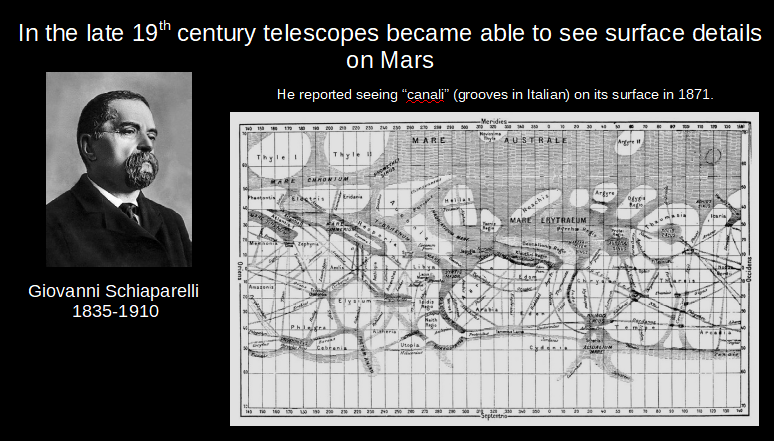
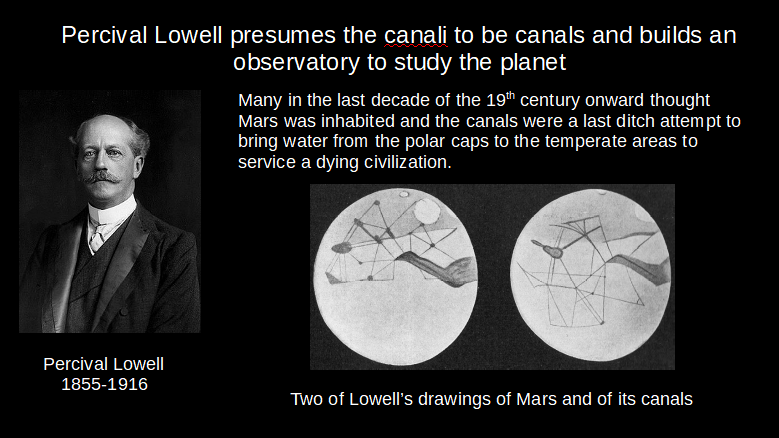
The greatest mystery of the late 19th and early 20th century of Mars was the discovery of fine linear marking seen by visual observers of Mars. They were first reported by an Italian astronomer Giovanni Schiaparelli in 1871 as grooves, canali in Italian. It was turned into canals by the English language newspapers of the day. Canals are artificial constructions. Thus one Percival Lowell of Massachusetts built an observatory in Flagstaff Arizona to observe and map Mars for himself, dying in 1916 still believing in an ancient martian civilization bringing water from the polar caps to the equatorial region by canals in order to survive. Alas, there are no canals. Mars is a barren world, whose secrets we now probe below its red dust.
The times given are for the Traverse City/Interlochen area of Michigan. They may be different for your location.
Addendum
The source if the images below is the talk “Mars 2018” I gave at the Betsie Valley District Library, July, 20, 2018.
***
07/23/2018 – Ephemeris – The importance of Mars in determining the nature of the solar system
Monday, July 23rd. The Sun rises at 6:19. It’ll be up for 14 hours and 59 minutes, setting at 9:18. The Moon, half way from first quarter to full, will set at 3:41 tomorrow morning.
The accurate observational positions of Mars by Tycho Brahe allowed Johannes Kepler in the early 17th century to discover his three laws of planetary motion. Tycho was the last and greatest of the naked eye astronomers. Kepler befriended Tycho who jealously guarded his observations. It was only after his death in 1601 that Kepler took possession of Tycho’s data. Until then it was believed that planets moved with uniform circular motion, even though they didn’t look like it. Astronomers added circle after circle, called epicycles, to attempt to make their system work. Mars was the worst case. Kepler finally determined that Mars, and indeed all the planets, orbited the Sun in elliptical orbits. That was his first law of planetary motion.
The times given are for the Traverse City/Interlochen area of Michigan. They may be different for your location.
Addendum
The source if the images below is the talk “Mars 2018” I gave at the Betsie Valley District Library, July, 20, 2018.
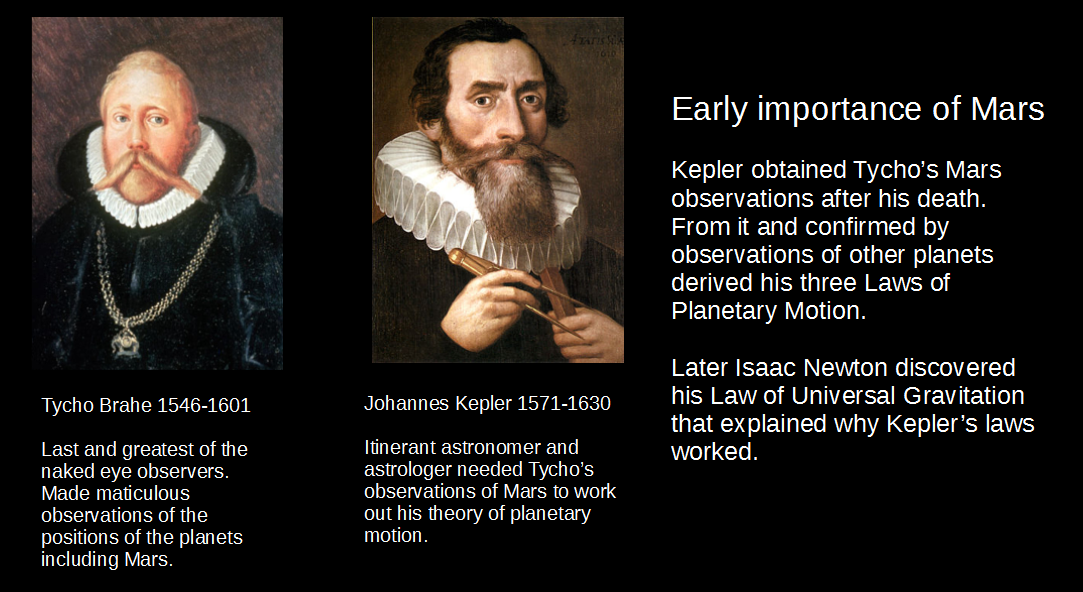
Tycho and Kepler. Artist for Tycho: Eduard Ender (1822-1883). Artist for Kepler, unknown. Source: Wikipedia.
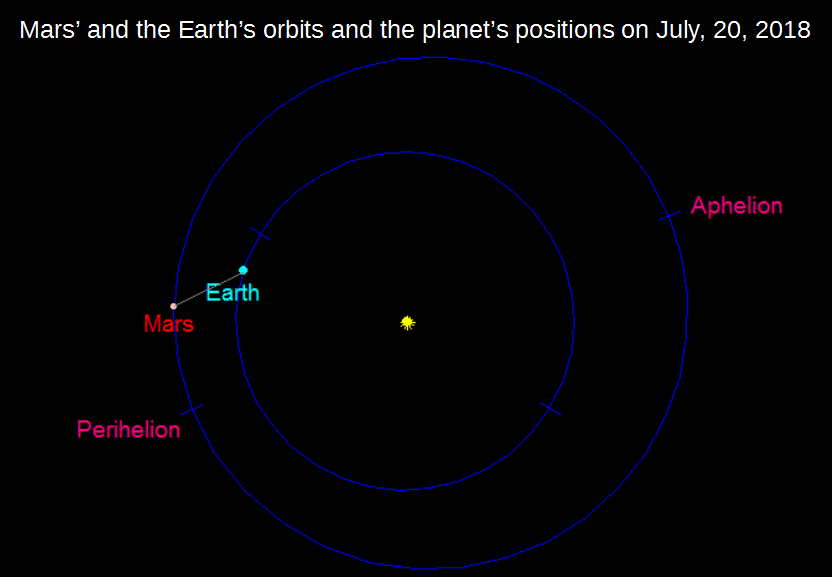
Mars’ and Earth’s orbits to scale and positions of the Earth and Mars July 20, 2018, one week before opposition. Note that Mars’ orbit is decidedly not circular. Credit my LookingUp program.
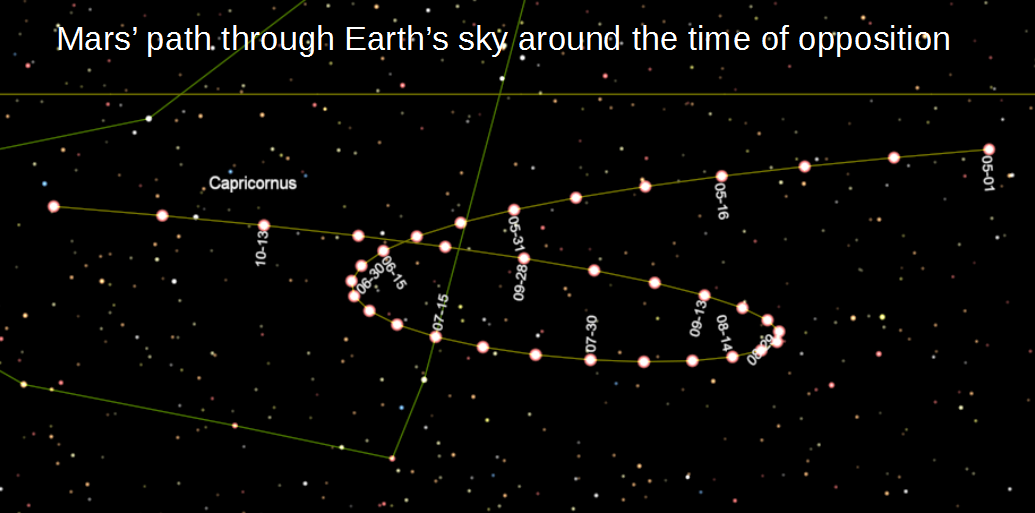
Created using Cartes du Ciel (Sky Charts).
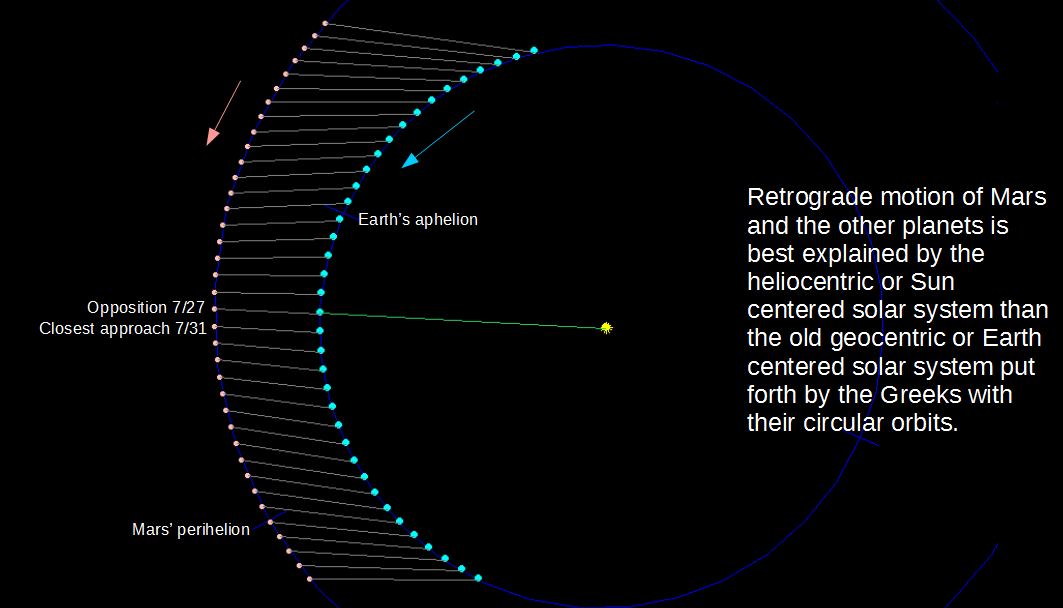
Created using Cartes du Ciel (Sky Charts).
06/24/2018 – Ephemeris Extra – Mars Summers
This is a reprint of “Mars Summer” which I wrote for the Grand Traverse Astronomical Society newsletter Stellar Sentinel’s June 2018 issue.
The planet Mars has oppositions from the Sun about every 26 months more or less. These oppositions are a time when Mars is closest to the Earth for its position in orbit. It’s distance at these times range from 34.6 to almost 63 million miles, a range of almost 2 to 1. This is because Mars has a very elliptical orbit as can be seen below.
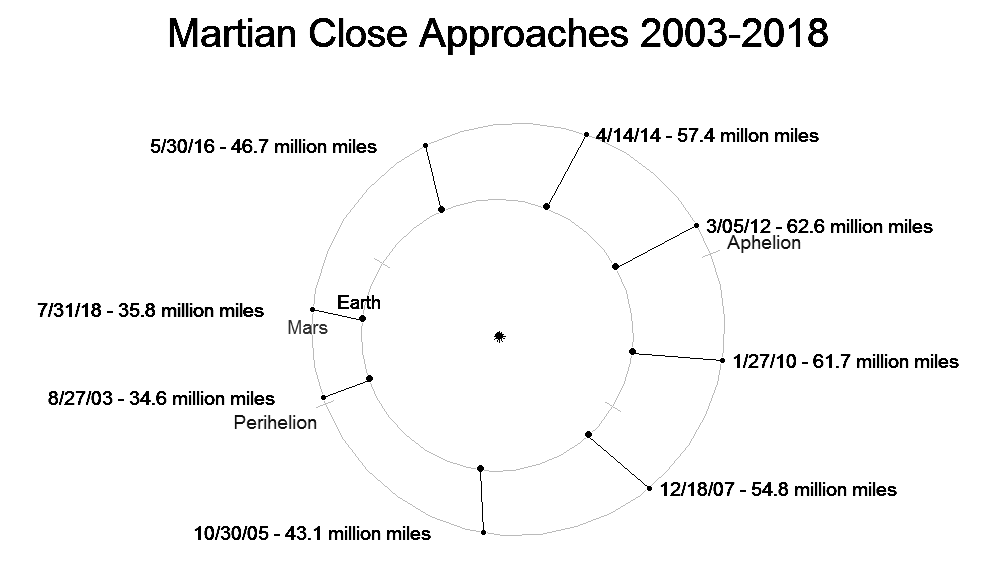
Mars closest approaches to the Earth from August 27, 2003 to July 31, 2018. Diagram created using Bob Moler’s LookingUp program.
Especially close approaches to the Earth occur every 15 or 17 years in the latter half of summer in those years. My first close approach was September 7, 1956. It was a famous one for the time. Professional astronomers of that time were pretty sure that Mars didn’t have canals, features that were ‘discovered’ by Giovanni Schiaparelli in 1877. To him the features were grooves or channels. Unfortunately the Italian word for them was canali. The world press proclaimed that there were “canals” on Mars. Canals by definition are artificial and require canal builders, Martians by inference.
Like I said, professional astronomers had discounted them by 1956. But science fiction read by young impressionable amateur astronomers like myself talked about old races of Martians hoarding every last drop of water. So maybe we believed. With my 5 inch reflector I observed the polar cap and the large dark feature Syrtis Major.
My next close approach of Mars was August 12, 1971. That summer I was working out of town and in the midst of a move from Grand Rapids to Traverse City, so was unable to observe Mars properly.
In the summer and autumn of 1973 I was able to do an observing program of Mars when it was almost as close as in 1971, drawing its features. I found out that to really observe a planet it takes time to educate the eye and brain to see faint, fuzzy detail. And since I didn’t believe in canals by this time, I didn’t see them.
The next close approach was September 22, 1988. The first “Mars Night” held by the society. We had a great turnout. But Mars was tiny as seen in telescopes. At best it was 23.81 seconds of arc in diameter. The Moon and Sun are about 1,800 seconds in diameter. It would be a bit larger than half the apparent diameter of Jupiter at average distance.
On August 27, 2003 Mars came closer than at any time in 50,000 years some astronomers said. The society held its second “Mars Night” at the Rogers Observatory, and wow, the lines of people ran down the drive and onto the shoulder of the road. As in 1988, I was stationed on the lawn at the front of the observatory with the portable Celestron 11 telescope, which actually gave clearer views than the 14 inch telescope in the dome. (Hot bodies in dome make for lousy seeing.)
2003 is also memorable or rather infamous for the “Mars Hoax” email. Proclaiming that Mars would appear as large as the Moon on August 27th. This hoax has been propagated every two years since. I expect 2018 to be a banner year for the resurrection of the hoax.
We come to this year, 2018, 15 years after the 2003 closest approach. Mars will reach opposition on July 27th. It’s closest approach to the Earth will be on July 31st, at the distance of 35,784,000 miles. The reason the dates aren’t the same is that Mars will still be a month before reaching perihelion, its closest to the Sun, so it’s getting even closer than at the time of opposition.
The Mars oppositions of October 2020, December 2022, January 2025 and February 2027 will be of increasing distances up to 63.0 million miles. This will be followed by oppositions of decreasing distances in March 2029, May 2031, and July 2033 leading to another close approach on September 11, 3035 at 35.4 million miles.
However by 2035 there may be humans on Mars waving back at us. It’s odd that anyone on Mars at the time probably wouldn’t be able to see the Earth at that time. Martian oppositions for us, are the time of inferior conjunctions of Earth with the Sun. We’d be lost in the Sun’s glare.
For the very closest views of Mars get on the Internet and search for Mars Curiosity, Mars Opportunity and Mars Hirise. No telescope required.
 Bob Moler's Ephemeris Blog