Archive
Ephemeris: 01/25/2024 – Where is the full moon in winter?
This is Ephemeris for Thursday, January 25th. Today the Sun will be up for 9 hours and 31 minutes, setting at 5:41, and it will rise tomorrow at 8:08. The Moon, at full today, will rise at 5:30 this evening.
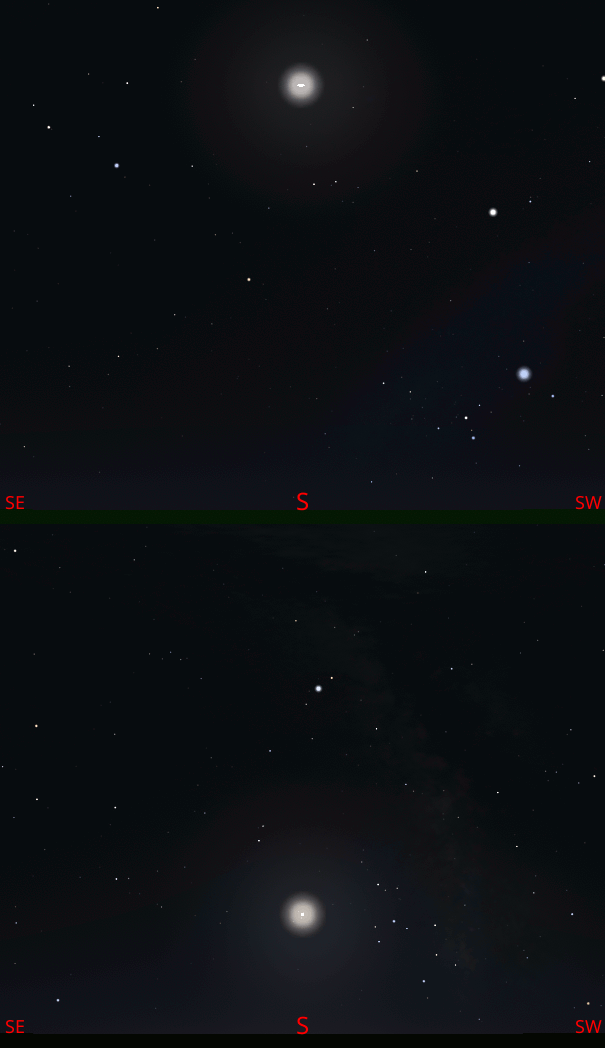
The exact time that the Moon will be full, at least to the nearest minute is 12:54 this afternoon. Have you ever noticed the placement of the full moon in the sky between winter and summer? The full moon near the winter solstice moves very high at midnight, while the full moon near the summer solstice is seen quite low in the south. For the Moon to be full, it must be nearly opposite the Sun in the sky, so we see it fully illuminated as the Sun does. The Moon’s orbit is close to the Sun’s apparent path in the sky, the ecliptic, which is the projection of the Earth’s orbit of the Sun. So the Moon now is near, and actually a bit north of, where the Sun will be 6 months from now in mid to late July.
The astronomical event times given are for the Traverse City/Interlochen area of Michigan (EST, UT –5 hours). They may be different for your location.
Addendum
Ephemeris: 12/21/2023 – Winter comes late this evening
This is Bob Moler with Ephemeris for Thursday, December 21st. Today the Sun will be up for 8 hours and 48 minutes, setting at 5:04, and it will rise tomorrow at 8:17. The Moon, 2 days past first quarter, will set at 3:37 tomorrow morning.
Today is mostly the last day of Fall, since the moment of solstice will arrive at 10:28 pm (03:28 on the 22nd UTC). If you’re south of the equator this is the first day of summer. The Earth reaches a point in its orbit where its North Pole is tipped its furthest away from the Sun, and is in shadow in the middle of its six-month night. The Sun for us is up only 8 hours, 48 minutes, and to boot the Sun only rises 22 degrees above the horizon giving us the least amount of energy of any day of the year. Why did the ancients celebrate this time of year? That’s because the Sun had slowed and stopped its drift southward and was beginning to come back higher in the sky. Spring and summer would eventually return!
The astronomical event times given are for the Traverse City/Interlochen area of Michigan (EST, UT –5 hours). They may be different for your location.
Addendum
Ephemeris: 12/08/2023 – Tomorrow has the earliest sunset of the year
This is Ephemeris for Friday, December 8th. Today the Sun will be up for 8 hours and 55 minutes, setting at 5:02, and it will rise tomorrow at 8:08. The Moon, 3 days past last quarter, will rise at 4:28 tomorrow morning.
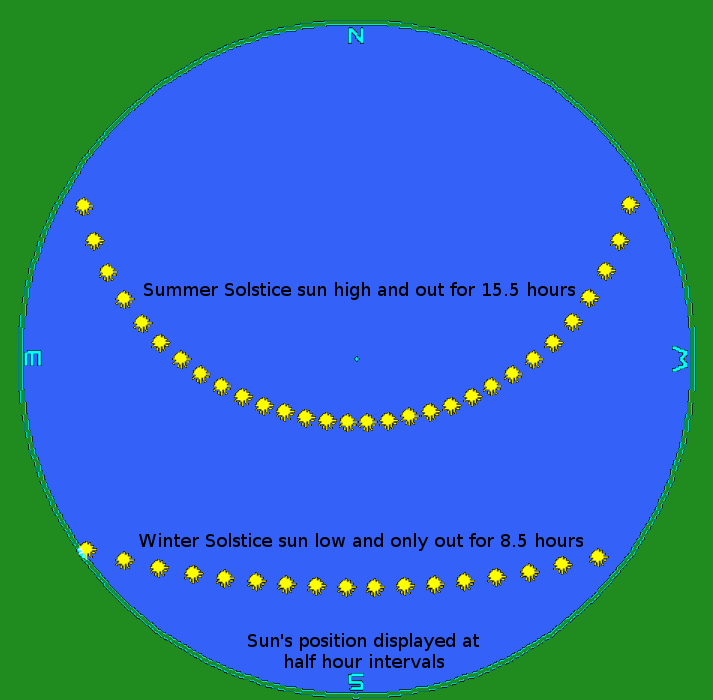
Tomorrow is the date of the earliest sunset, in the middle of a 12-day stretch where the Sun sets within the same minute. We are still 13 days from the winter solstice, the day of the shortest daylight hours, on the 21st. The reason is twofold. The Sun is near its farthest position south of the equator, where the longitude lines are closer together, so it takes less time to cross them. 15 degrees in longitude equals one hour in Earth’s rotation. Add to that we are less than a month from Earth’s perihelion in its orbit of the Sun, that is at its closest, and is moving faster than average. The combined effects delay sunrise and sunset, from what they’d be if the Sun was on the equator and the Earth’s orbit was circular. We will have our latest sunrise on January 2nd.
The astronomical event times given are for the Traverse City/Interlochen area of Michigan (EST, UT –5 hours). They may be different for your location.
Addendum
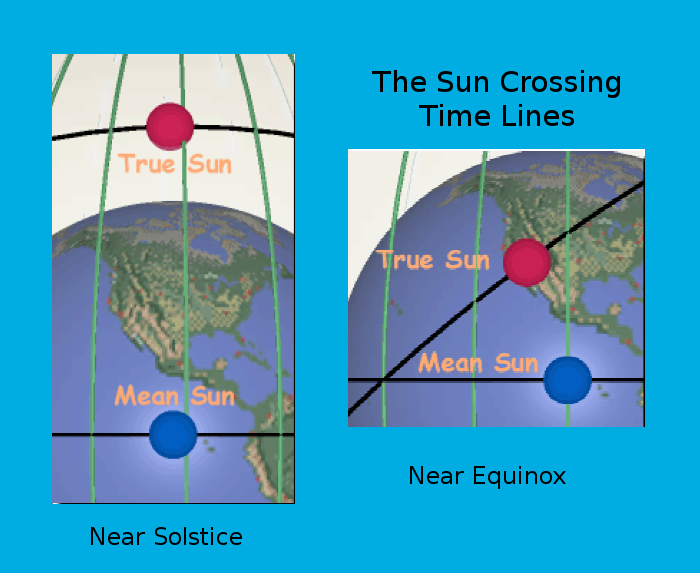
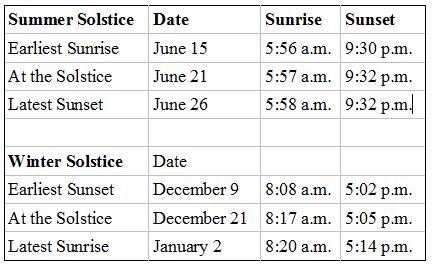
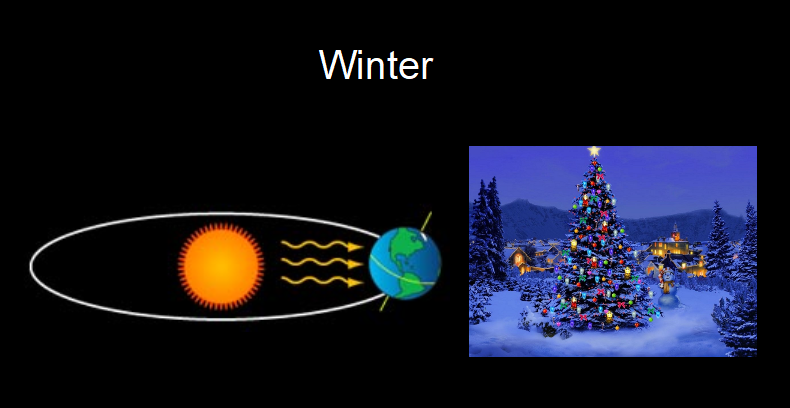
In December the Earth is approaching perihelion, its closest to the Sun, so it moves faster than average. This makes the Sun to appear to move faster eastward against the stars in our sky, and tends to make our sunrises, apparent local noons and sunsets later than they would otherwise be. Sunset bottoms out early and extends the date of the latest sunrise
For the June or summer solstice around here, the Earth is near aphelion, it’s farthest from the Sun where the Earth is at its slowest in its orbit. By reflection, the Sun appears to move its slowest against the stars in our sky. This effect works against the high latitude effect, making the effect smaller. Looking at the table above, the days between the earliest and latest times is shorter for the summer solstice than for the winter solstice.
Ephemeris: 11/27/2023 – Seeing in low light levels
This is Bob Moler with Ephemeris for Monday, November 27th. Today the Sun will be up for 9 hours and 10 minutes, setting at 5:05, and it will rise tomorrow at 7:56. The Moon, at full today, will rise at 5:01 this evening.
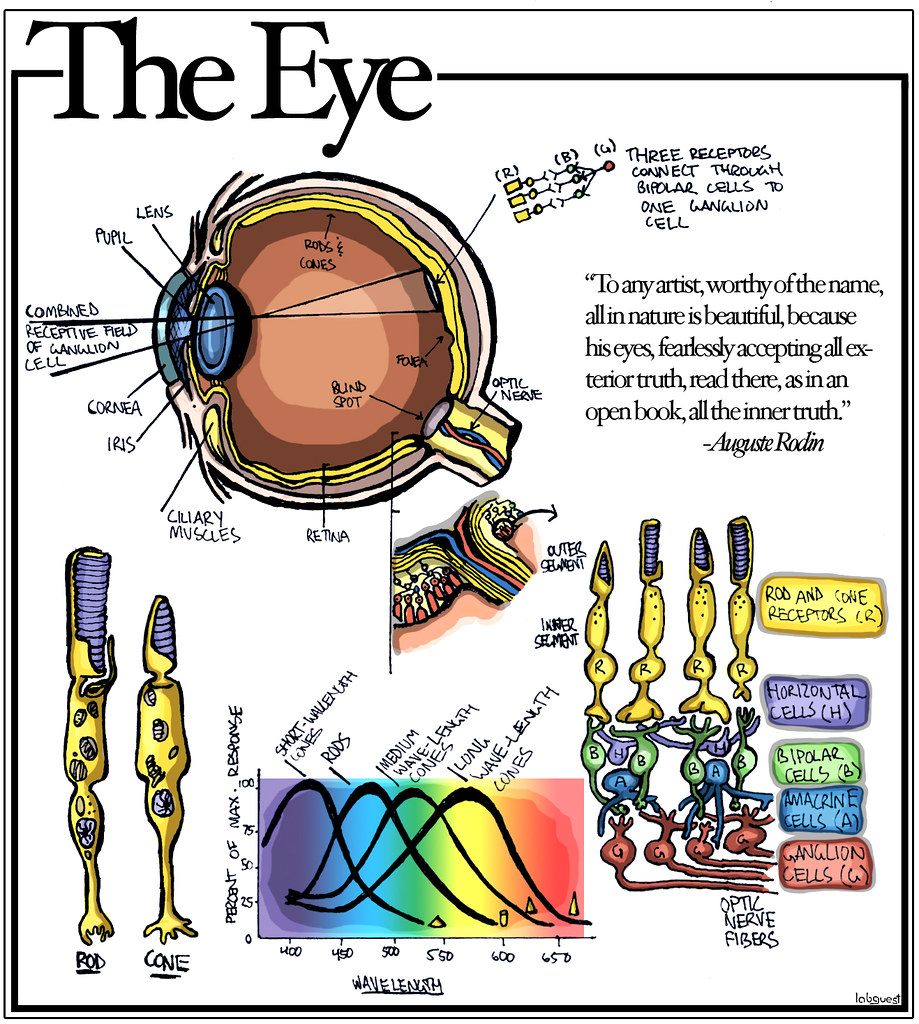
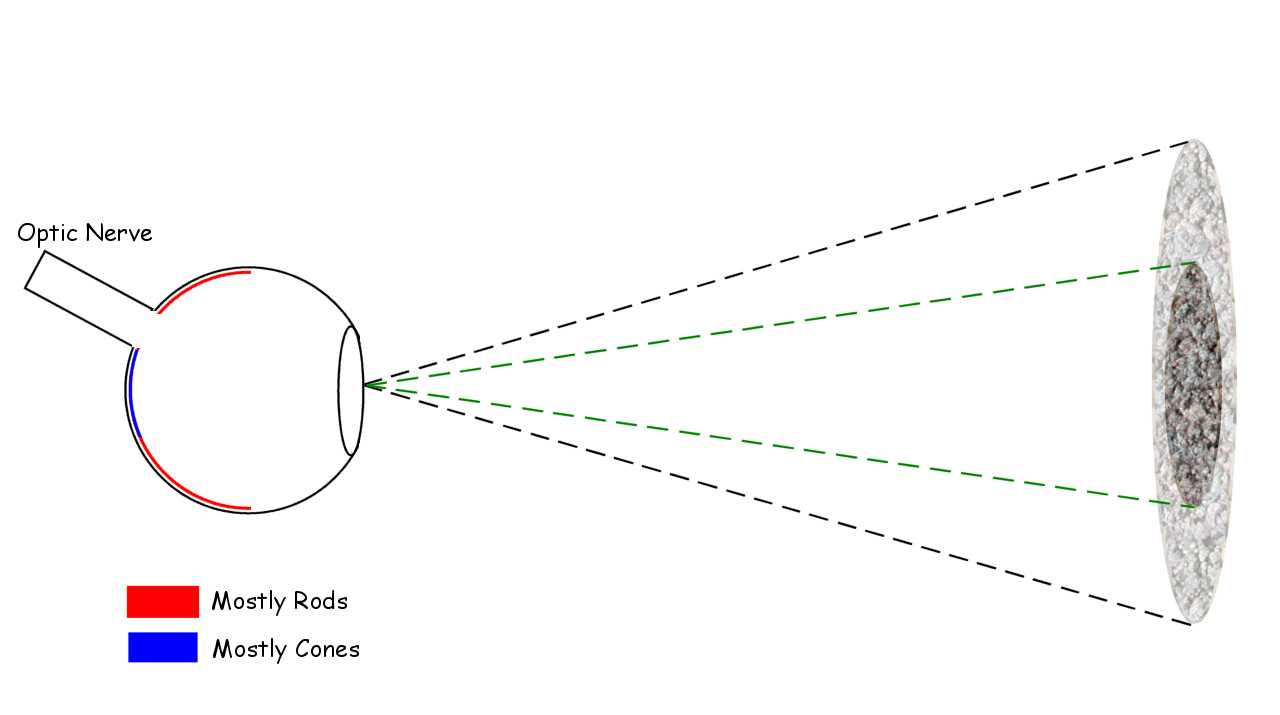
Today’s full moon is called the Beaver full moon actually the moon was exactly full at 4:16 this morning, so last night it was actually closer to full moon than it will be tonight. The bright full moon fills the sky with light so most of the fainter stars disappear. The sky looks gray when the moon is full, but it is just as blue as the daytime sky. It’s just that our eyes cannot discern color at low light levels. We sacrifice our color vision for night vision. Other animals can see in the dark much better than we can, though some of them do not have quite the color vision we have so viewing the skies and viewing the world around us is a compromise. We were evolved from creatures that were most active in the daytime and hid at night. My cats can see much better in the dark than I can. However, the other animals do not have the abilities we have to create tools and instruments to allow us to see better in the dark than they can.
The astronomical event times given are for the Traverse City/Interlochen area of Michigan (EST, UT –5 hours). They may be different for your location.
Addendum
Ephemeris: 09/28/2023 – Tomorrow night’s full moon is the Harvest Moon
This is Ephemeris for Thursday, September 28th. Today the Sun will be up for 11 hours and 52 minutes, setting at 7:29, and it will rise tomorrow at 7:38. The Moon, 1 day before full, will set at 7:43 tomorrow morning.
Tomorrow night’s full moon is the Harvest Moon. It is the most famous of the named full moons, and was very useful in the days before electric lights. The reason is that the Moon, around the time it is full, doesn’t advance its rising time very much from night to night, effectively adding its light to twilight to allow more time to gather in crops. This is because the Moon is moving north as well as eastward. The farther north it is, the longer it stays up and retards the advance in rise times. On average, the Moon rises 50 minutes later each night. This week, the interval is down near 22 minutes advance in moonrise times per day, extending twilight and the amount of time each day to harvest the crops for a few more days.
The astronomical event times given are for the Traverse City/Interlochen area of Michigan (EDT, UT –4 hours). They may be different for your location.
Addendum
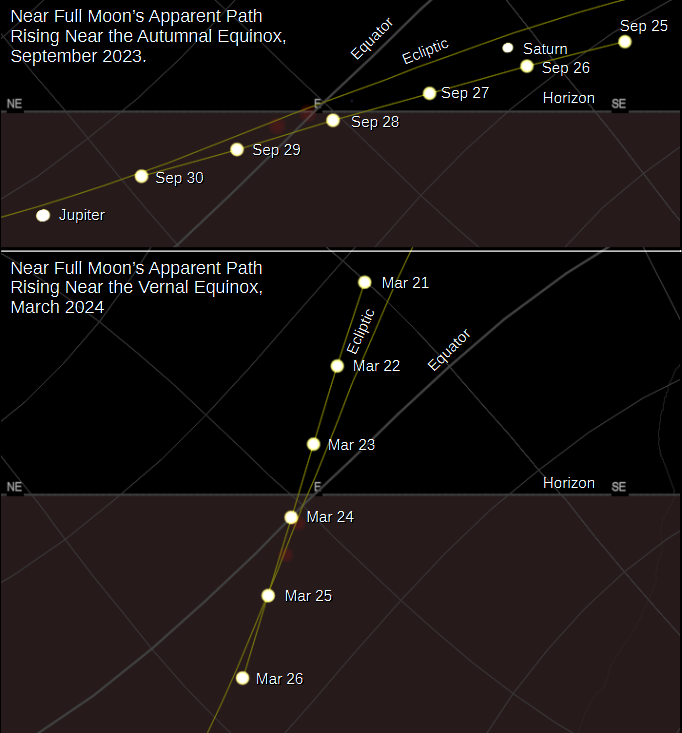
My interest in the Harvest Moon is not in harvesting the crops. I just have a little garden, so it doesn’t take that long to pick tomatoes or whatever. But as an amateur astronomer I’m more interested in deep sky objects than I am in planets. Deep sky objects or DSOs are objects beyond the solar system and are usually very dim, which requires dark skies to view them. Near the Harvest Moon and even in August near the full moon it takes nearly a week for that @#$%^&* Moon to get the heck out of the evening sky, so I don’t have to stay up till after midnight to see anything. That’s I why have this interest in the Harvest Moon. Know your enemy!
Ephemeris: 07/25/2023 – Is the universe twice as old as we think?
This is Ephemeris for Tuesday, July 25th. Today the Sun will be up for 14 hours and 55 minutes, setting at 9:16, and it will rise tomorrow at 6:22. The Moon, at first quarter today, will set at 12:44 tomorrow morning.
Is the universe twice as old as we thought? That’s a conclusion of a study printed in the monthly notices of the Royal Astronomical Society by Rajendra Gupta from the University of Ottawa, in which he postulates that the structure and chemical composition of very early galaxies found by the James Webb Space Telescope turn out to be more developed than one would expect for objects so soon after The Big Bang. The problem with hypothesizing an older universe is to explain what we see currently that have shown that the universe is 13.8 billion years old. One of the things he hypothesized was something called tired light, where light loses energy and is red-shifted not just because of the expansion of the universe but over time and distance. Stay tuned.
The astronomical event times given are for the Traverse City/Interlochen area of Michigan (EDT, UT –4 hours). They may be different for your location.
Addendum
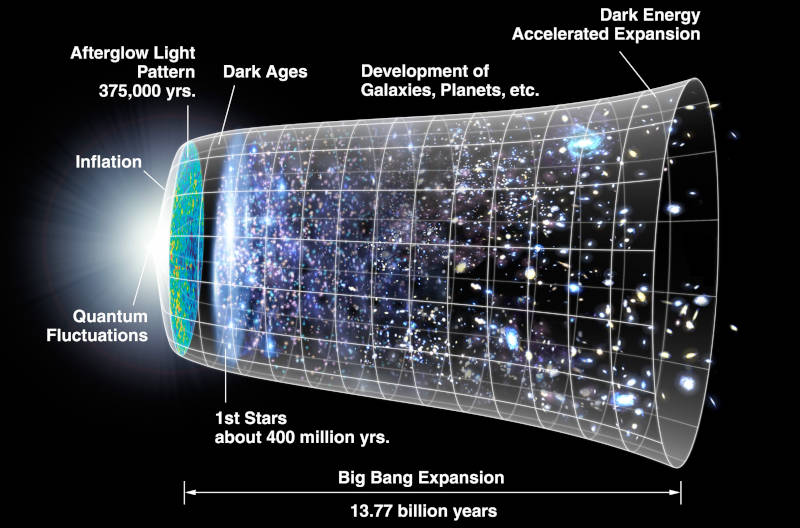
Timeline of the universe. A representation of the evolution of the universe over 13.77 billion years. The far left depicts the earliest moment we can now probe, when a period of “inflation” produced a burst of exponential growth in the universe. (Size is depicted by the vertical extent of the grid in this graphic.) For the next several billion years, the expansion of the universe gradually slowed down as the matter in the universe pulled on itself via gravity. More recently, the expansion has begun to speed up again as the repulsive effects of dark energy have come to dominate the expansion of the universe. The afterglow light seen by WMAP was emitted about 375,000 years after inflation and has traversed the universe largely unimpeded since then. The conditions of earlier times are imprinted on this light; it also forms a backlight for later developments of the universe. Public Domain.
Diagram is from Wikipedia. Above is the expansion of the universe as commonly understood. Not mentioned in the program script above, is the requirement, according to Gupta’s hypothesis, that the basic constants of the universe change over time. As Carl Sagan explained, “Extraordinary claims require extraordinary evidence.” So more evidence is needed. His hypothesis won’t be the only explanation put forth, so there will be more to test. That’s job security for astrophysicists and cosmologists.
Ephemeris: 07/24/2023 – The Moon appears to wobble a bit
This is Ephemeris for Monday, July 24th. Today the Sun will be up for 14 hours and 57 minutes, setting at 9:17, and it will rise tomorrow at 6:21. The Moon, 1 day before first quarter, will set at 12:24 tomorrow morning.
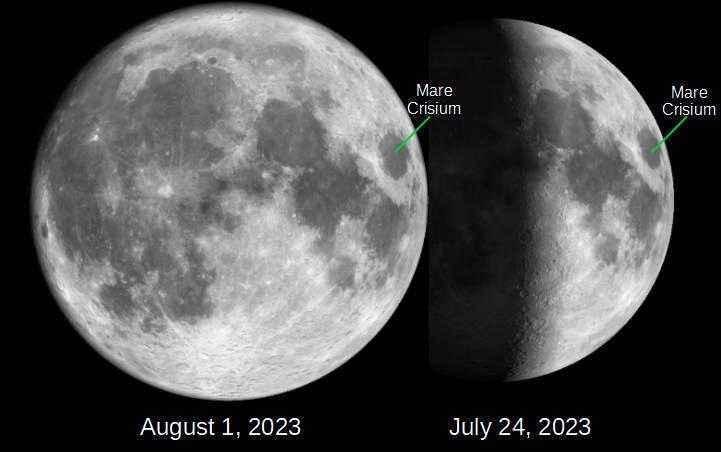
The Moon tonight is nearly half illuminated. In binoculars the dark oval spot visible on the Moon’s right edge is the Sea of Crises or Mare Crisium a small dark lava plain. The Moon’s rotation is quite uniform, however its orbit isn’t circular, so the Moon’s motion in its orbit slows as it moves farthest from the Earth, called apogee, and is sped up when closest, at perigee, So its face seems to rock a bit back and forth over the month. It’s an effect called libration. And one way to track that is to note how close the Mare Crisium (Sea of Crises) is to the edge of the Moon. It appears close to the right edge now. A week from now, that sea will appear to move away from the edge. Unfortunately, by then the Moon will be full, and night will soon fall on that little sea.
The astronomical event times given are for the Traverse City/Interlochen area of Michigan (EDT, UT –4 hours). They may be different for your location.
Addendum
07/14/2023 – Ephemeris – Finding Polaris and why it’s important
This is Bob Moler with Ephemeris for Friday, July 14th. Today the Sun will be up for 15 hours and 16 minutes, setting at 9:26, and it will rise tomorrow at 6:11. The Moon, 3 days before new, will rise at 3:46 tomorrow morning.
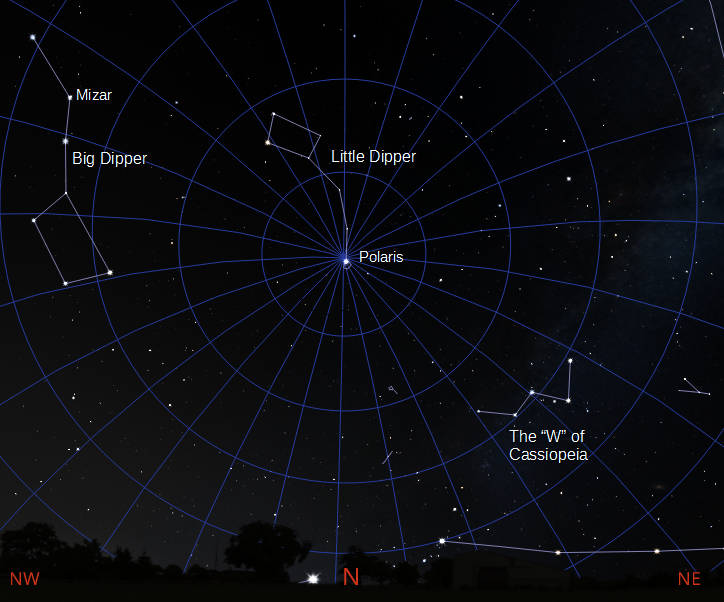
The most important star in the night sky, especially if you are lost, is Polaris, also called the North Star or Pole Star. Face Polaris and North is in front of you, East is to the right, west to the left and south will be behind you. To find Polaris, first find the Big Dipper. In the evening. This time of year, it’s hanging by its handle in the northwest, the direction that the sun set at. The two stars at the front of the bowl point to Polaris, which is to the right of it, now. Throughout the night, as the Earth rotates. Polaris will hold its position as all the other stars go around it in a counterclockwise direction. Polaris is at the end of the handle of the Little Dipper. That handle start’s vertically but curves to the left and is made of faint stars.
The astronomical event times given are for the Traverse City/Interlochen area of Michigan (EDT, UT –4 hours). They may be different for your location.
Addendum
07/06/2023 – Ephemeris – Today the Earth is farther from the Sun than anytime this year
This is Ephemeris for Thursday, July 6th. Today the Sun will be up for 15 hours and 26 minutes, setting at 9:30, and it will rise tomorrow at 6:04. The Moon, halfway from full to last quarter, will rise at 12:16 tomorrow morning.
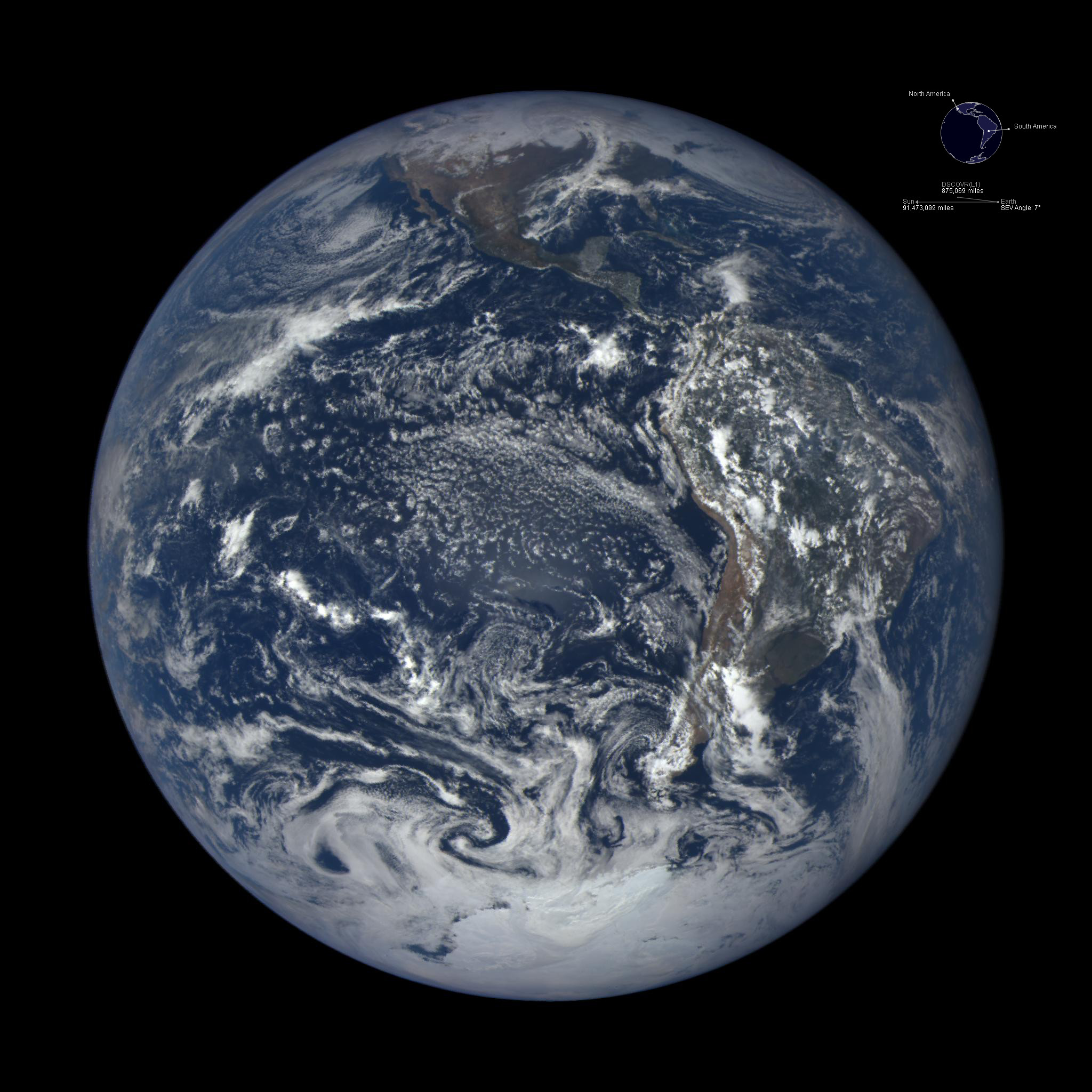
Today, the Sun is at its farthest distance from the Earth. It’s called aphelion. The exact time actually occurred at 4:59 this morning at a distance of 94 and a half million miles away. Because of the gravitational pull of the Moon and planets on the Earth, especially Jupiter and Venus and gravitational pull of the planets, especially Jupiter on the Sun, the aphelion and perihelion, the closest date in January don’t occur on the same date or same distance every year. The date wanders by a day or two each year. The entire distance variation of the Earth from the Sun is plus or minus 1.5 million miles (2.4 million kilometers) over the year, makes summer the longest season by a few days because the Earth moves slower when farther from the Sun, than when it is nearer.
The astronomical event times given are for the Traverse City/Interlochen area of Michigan (EDT, UT –4 hours). They may be different for your location.
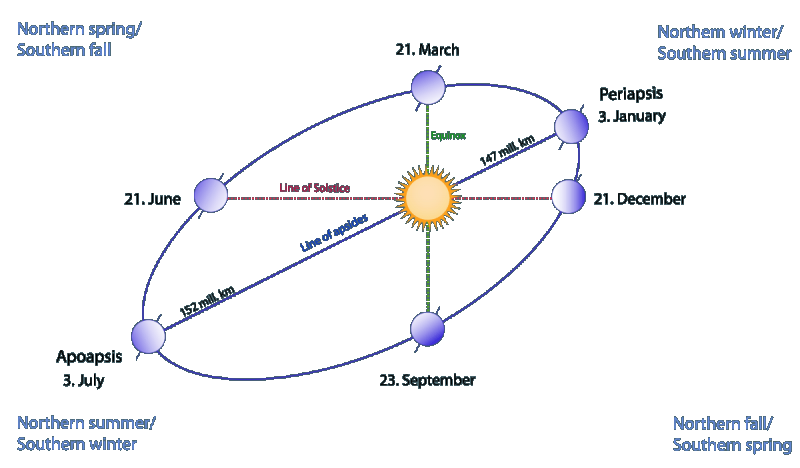
Note: Apoapsis and Periapsis are generic terms for the farthest and nearest points in an orbit to the central body. For a body orbiting the Sun, it’s aphelion and perihelion. For a satellite of the Earth, it’s apogee and perigee.
06/26/2023 – Ephemeris – After the latest sunset, a look at the Moon
This is Ephemeris for Monday, June 26th. Today the Sun will be up for 15 hours and 33 minutes, setting at 9:32, and it will rise tomorrow at 5:59. The Moon, at first quarter today, will set at 2:02 tomorrow morning.
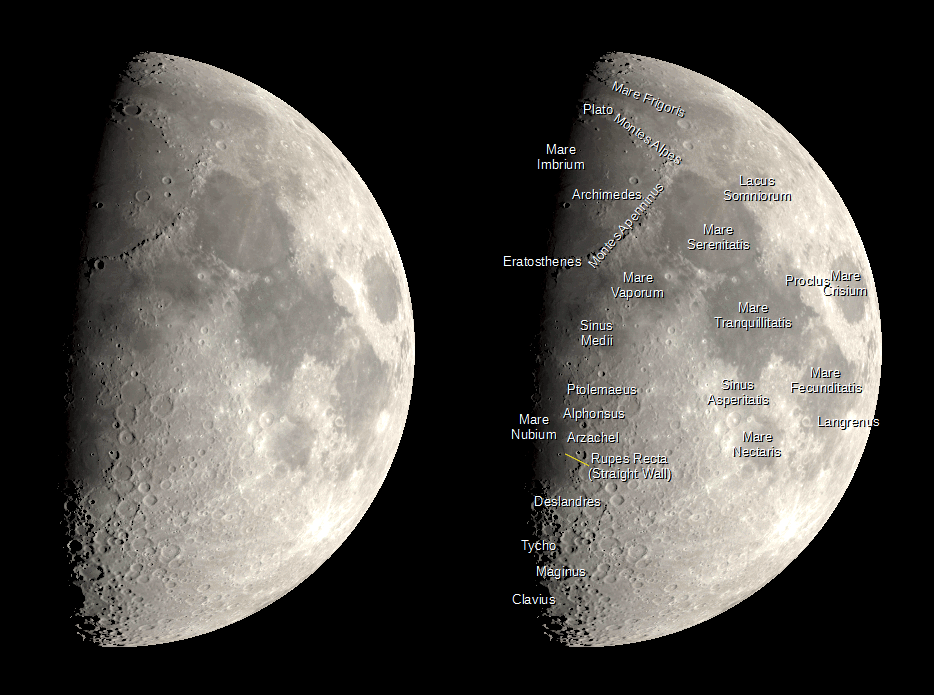
Tonight is the night of the latest sunset. From now to December 10th the Sun will be setting earlier than the night before. It won’t be noticeable at first, but the change will increase throughout the summer. The Moon actually arrived at first quarter phase early this morning, so by tonight it will appear slightly gibbous. The term gibbous actually means hump-backed, and the Moon will appear more so as it advances toward being fully illuminated a week from now. For me personally, I find that the best time to view the Moon with a telescope is within three or four days from its quarter phase, unless I’m looking at a specific feature. That’s when shadows are front and center on the moon. The Moon being gray on gray, shadows keep the Moon from appearing flat.
The astronomical event times given are for the Traverse City/Interlochen area of Michigan (EDT, UT –4 hours). They may be different for your location.
Addendum
 Bob Moler's Ephemeris Blog