Archive
Ephemeris: 07/17/2025 – Finding the celestial eagle, Aquila
This is Ephemeris for Thursday, July 17th. Today the Sun will be up for 15 hours and 10 minutes, setting at 9:23, and it will rise tomorrow at 6:14. The Moon, at last quarter today, will rise at 12:42 tomorrow morning.
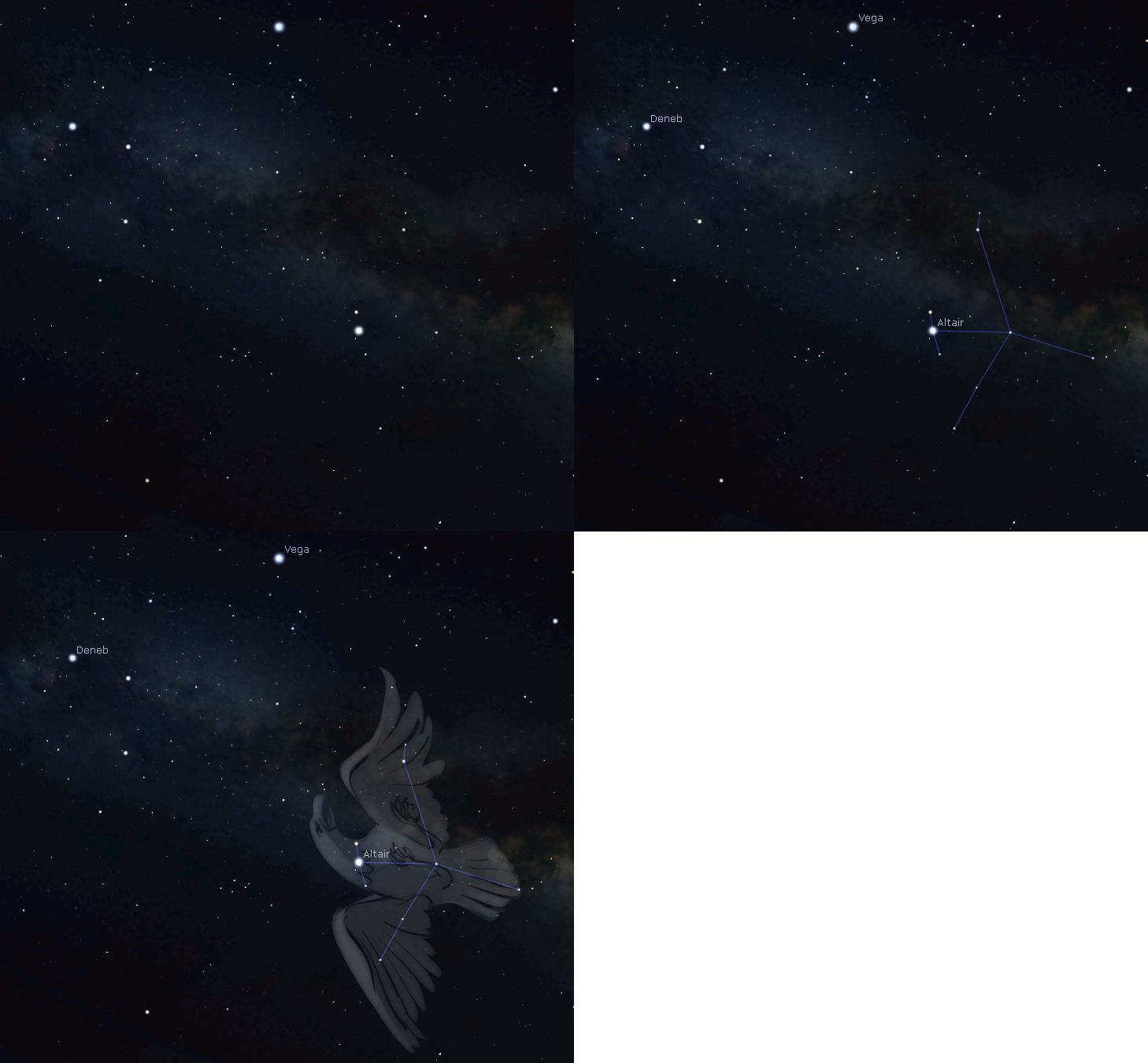
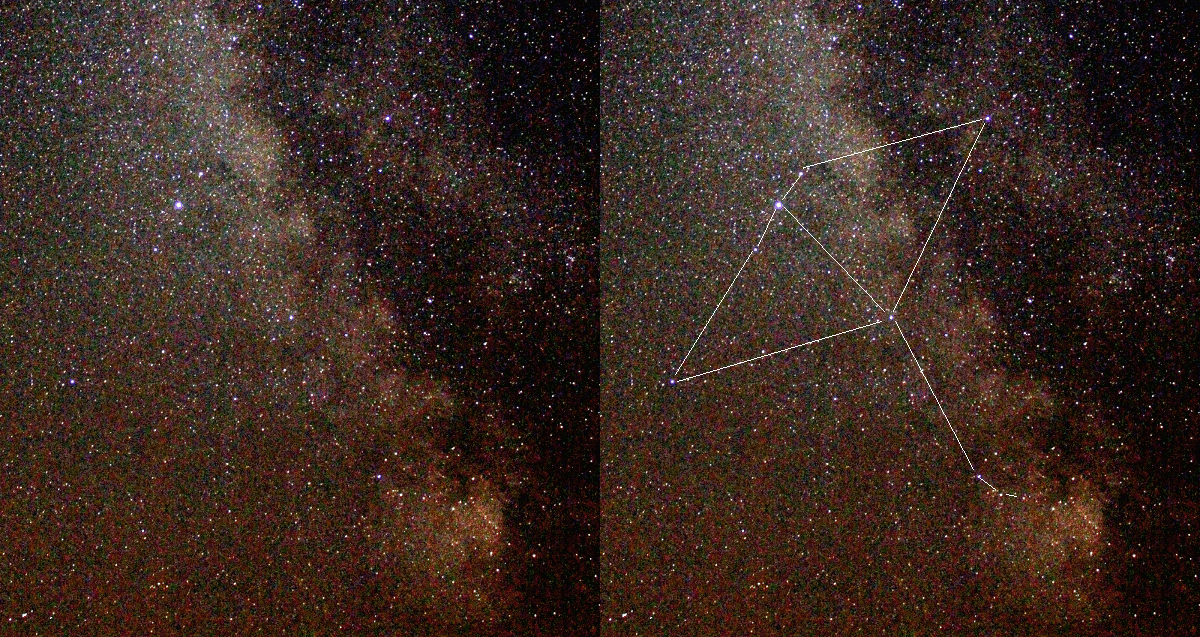
Aquila the eagle is a constellation that lies in the Milky Way. It’s in the southeastern sky as it gets dark. Its brightest star, Altair, is one of the stars of the Summer Triangle, a group of three bright stars dominating the eastern sky in the evening now. Altair, in the head of the eagle, is flanked by two slightly dimmer stars, the shoulders of the eagle. The eagle is flying northeastward through the Milky Way. Its wings are seen in the wing tip stars. A curved group of stars to the lower right of Altair is its tail. Within Aquila, the Milky Way shows many dark clouds as part of the Great Rift that splits it here. The other summer bird is Cygnus the swan above and left of Aquila, flying in the opposite direction. It was said this was the eagle that attended the god Jupiter.
The astronomical event times given in this blog are for the Traverse City/Interlochen area of Michigan (Lat 44.7° N, Long 85.7° W; EDT, UT – 4 hours) unless stated otherwise. Times will be different for other locations.
Addendum
Ephemeris: 6/24/2025 – Lyra, the heavenly harp
This is Ephemeris for Tuesday, June 24th. Today the Sun will be up for 15 hours and 34 minutes, setting at 9:32, and it will rise tomorrow at 5:58. The Moon, 1 day before new, will rise at 5:36 tomorrow morning.
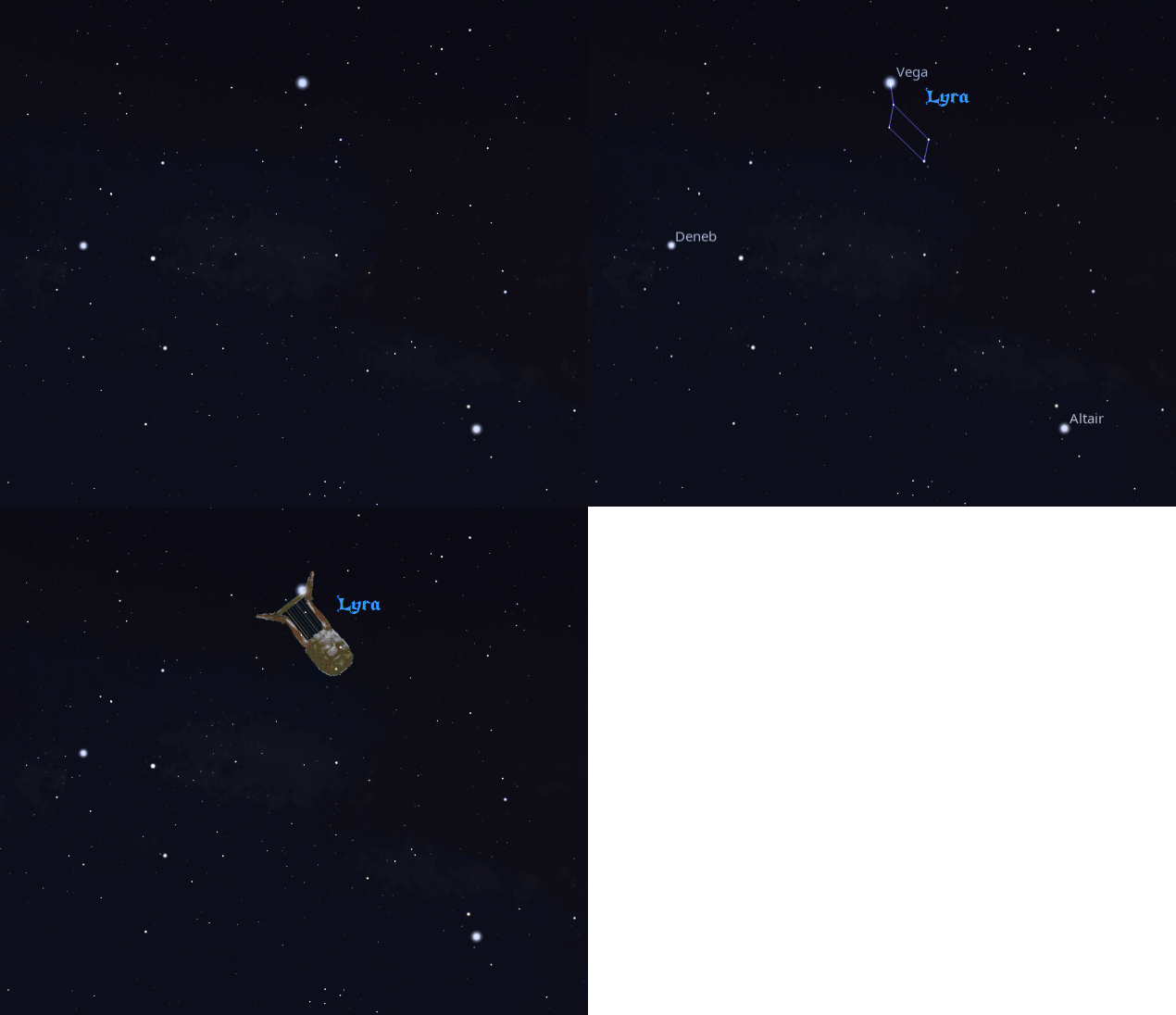
Fairly high in the east at 11 p.m. can be found a bright star just above a small, narrow, but very distinctive parallelogram of stars. They are the stars of the constellation Lyra the harp. The bright star is Vega, the 5th brightest nighttime star. To the Romans, the star Vega represented a falling eagle or vulture. Apparently they never made the distinction between the two species. It is a pure white star and serves as a calibration star for color and brightness. In the evening, it is the top-most star of the Summer Triangle. The harp, according to Greek mythology, was invented by the god Hermes. The form of the harp, in the sky, is as he had invented it: by stretching strings across a tortoise shell. Hermes gave it to his half-brother Apollo, who in turn gave it to the legendary musician Orpheus.
The astronomical event times given in this blog are for the Traverse City/Interlochen area of Michigan (Lat 44.7° N, Long 85.7° W; EDT, UT – 4 hours) unless stated otherwise. Times will be different for other locations.
Addendum
Ephemeris: 06/19/2025 – Finding the Serpent Bearer in the heavens
This is Ephemeris for Juneteenth, Thursday, June 19th. Today the Sun will be up for 15 hours and 34 minutes, setting at 9:31, and it will rise tomorrow at 5:57. The Moon, 1 day past last quarter, will rise at 2:15 tomorrow morning.
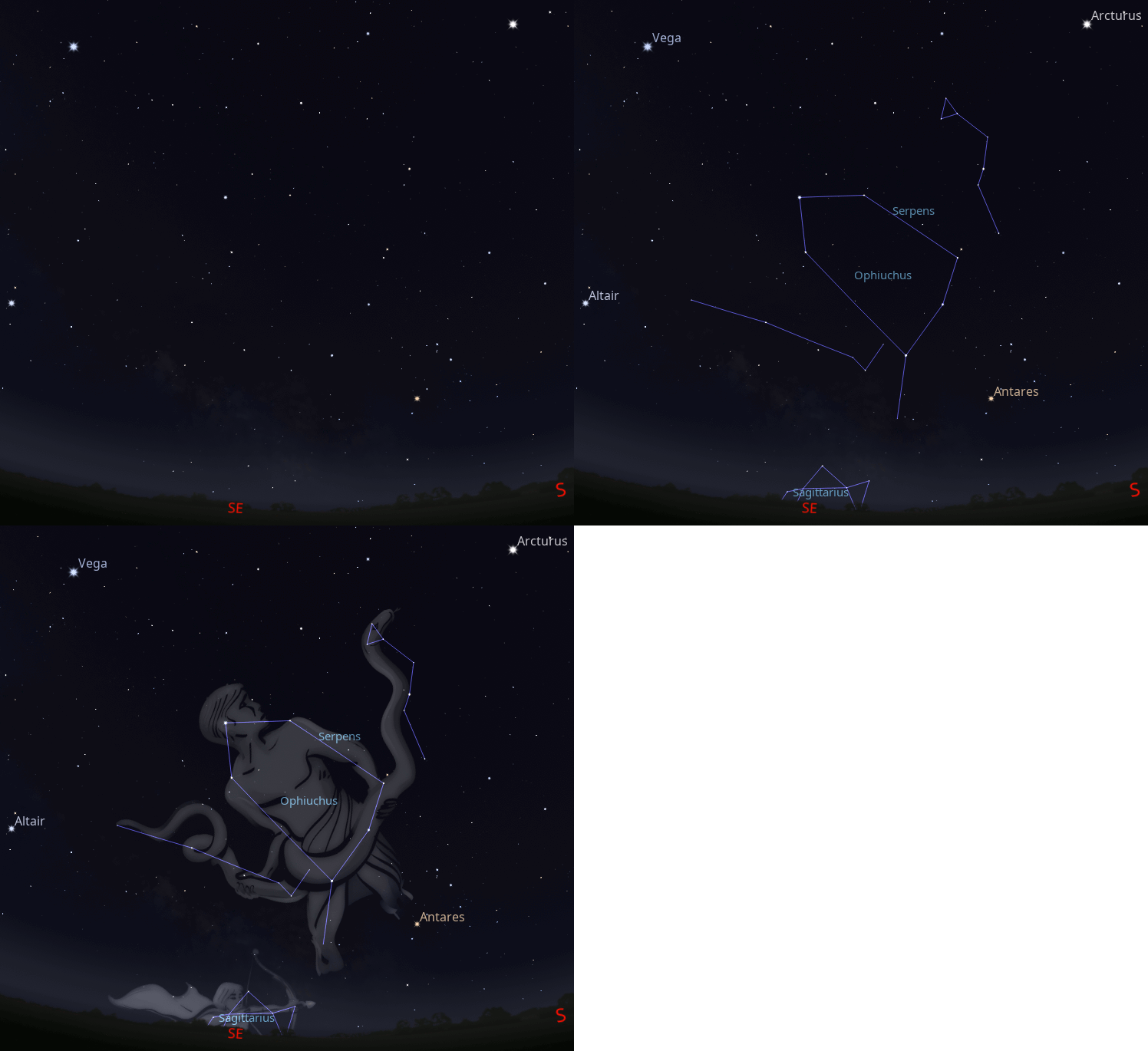
The red star Antares shines low in the south-southeast at 11 PM in the constellation of Scorpius. In the area of sky above and to the left lies a large constellation of faint stars called Ophiuchus, the serpent bearer. The constellation shape is like a large bell, which reminds me of the head, shoulders and arms of a fellow that’s holding the snake stretched out across his body. The serpent he’s holding is Serpens, the only two-part constellation in the heavens. The head rises to Ophiuchus’ right, and the tail extends up to the left. In Greek myth, Ophiuchus represents the great physician Aesculapius, educated by the god Apollo, and the centaur Chiron, who is found in the stars as Sagittarius, just rising below him.
The astronomical event times given in this blog are for the Traverse City/Interlochen area of Michigan (Lat 44.7° N, Long 85.7° W; EDT, UT – 4 hours) unless stated otherwise. Times will be different for other locations.
Addendum
Ephemeris: 05/29/2025 – Finding the celestial dragon
This is Ephemeris for Thursday, May 29th. Today the Sun will be up for 15 hours and 17 minutes, setting at 9:19, and it will rise tomorrow at 6:01. The Moon, 3 days past new, will set at 12:40 tomorrow morning.
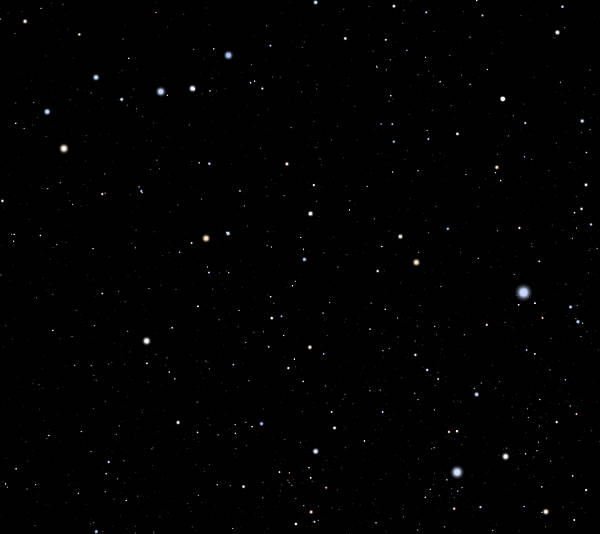
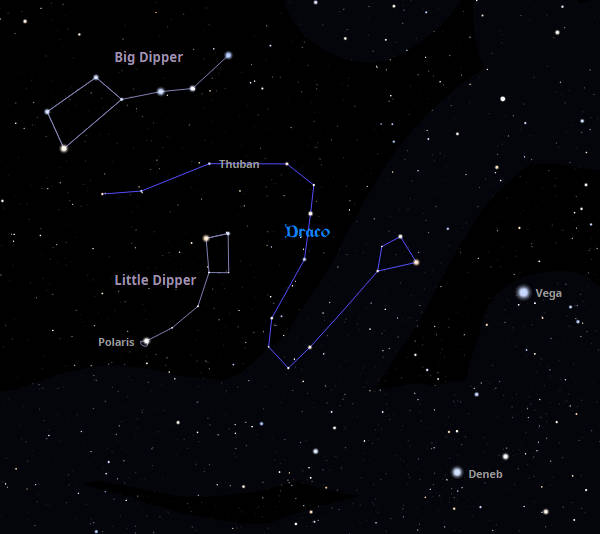
High in the northern sky at 11 p.m. lies the twisted constellation of Draco the dragon. This dragon is more like the snakelike dragon of the Chinese New Year parades than the dinosaur-like dragon of European legend. I find it better to start at the tail of Draco, to trace him out in the stars. Draco’s tail ends between the Big and Little Dippers high in the north-northwest. The Dragon is seen in a line of stars that extends parallel to the handle of the Big Dipper before curving around the bowl of the Little Dipper then bends back down to the level of Polaris in the north-northeast before turning toward the east. The head of Draco is an odd box of stars near the bright star Vega, in the east. Though not made up of very bright stars, Draco has an easy shape to trace.
The astronomical event times given in this blog are for the Traverse City/Interlochen area of Michigan (Lat 44.7° N, Long 85.7° W; EDT, UT – 4 hours) unless stated otherwise. Times will be different for other locations.
Addendum
Ephemeris: 05/22/2025 – Finding Hercules among the spring stars
This is Bob Moler with Ephemeris for Thursday, May 22nd. Today the Sun will be up for 15 hours and 5 minutes, setting at 9:12, and it will rise tomorrow at 6:06. The Moon, 2 days past last quarter, will rise at 3:51 tomorrow morning.
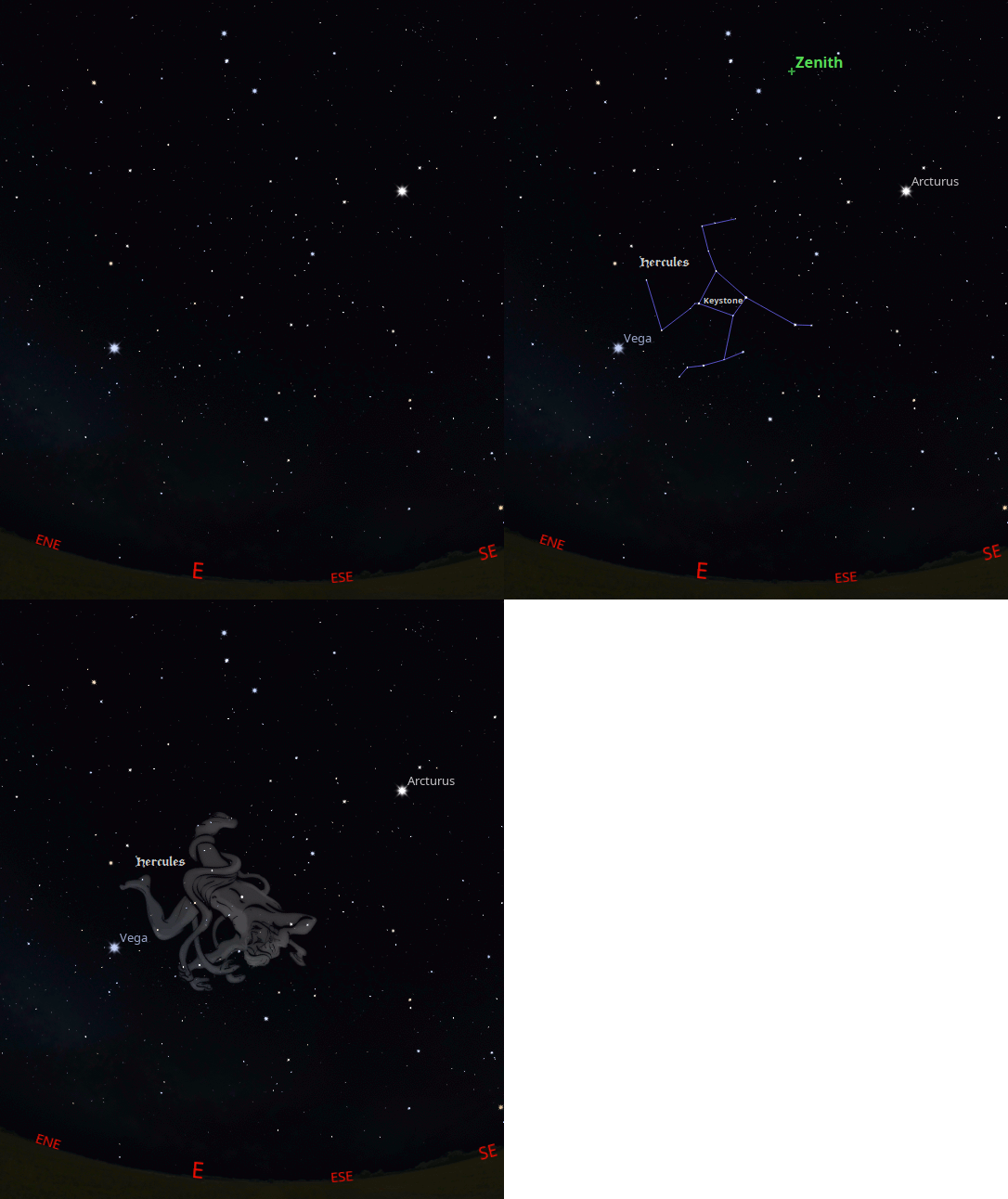
In the eastern sky at 11 PM about a third of the way along the line from the bright star Vega in the east northeast and Arcturus high in the southeast is the constellation of Hercules the hero. It’s kind of hard to spot, although it’s one distinctive feature is the box of four stars called the Keystone of Hercules which means it’s wider at the top than at the bottom. That is his body. He’s upside down in the sky according to how they draw the picture of Hercules. Most of his stars are reasonably dim. This is the great hero of Greek myth. While in the winter sky the bright and splashy constellation of Orion the hunter, was kind of a hard luck hero, with no real accomplishments. Hercules has an astronomical jewel that I’ll talk about tomorrow.
The astronomical event times given in this blog are for the Traverse City/Interlochen area of Michigan (Lat 44.7° N, Long 85.7° W; EDT, UT – 4 hours) unless stated otherwise. Times will be different for other locations.
Addendum
Ephemeris: 05/20/2025 – Corona Borealis, Ariadne’s Crown
This is Ephemeris for Tuesday, May 20th. Today the Sun will be up for 15 hours and 1 minute, setting at 9:10, and it will rise tomorrow at 6:08. The Moon, at last quarter today, will rise at 3:12 tomorrow morning.
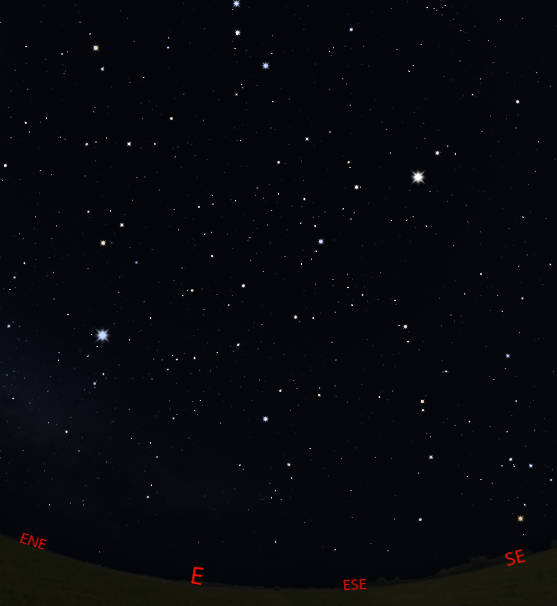
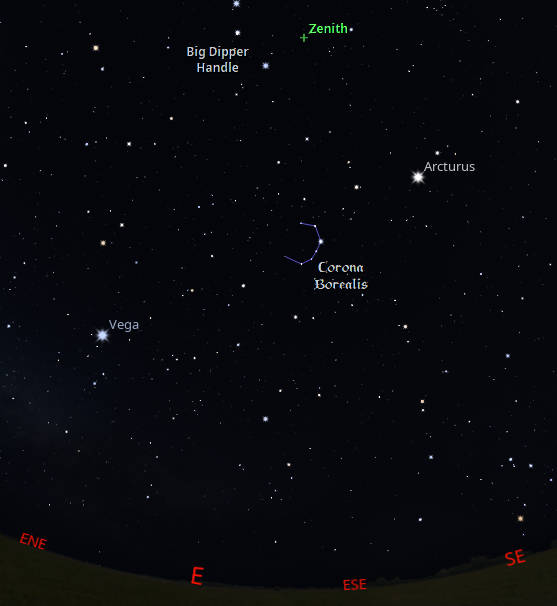
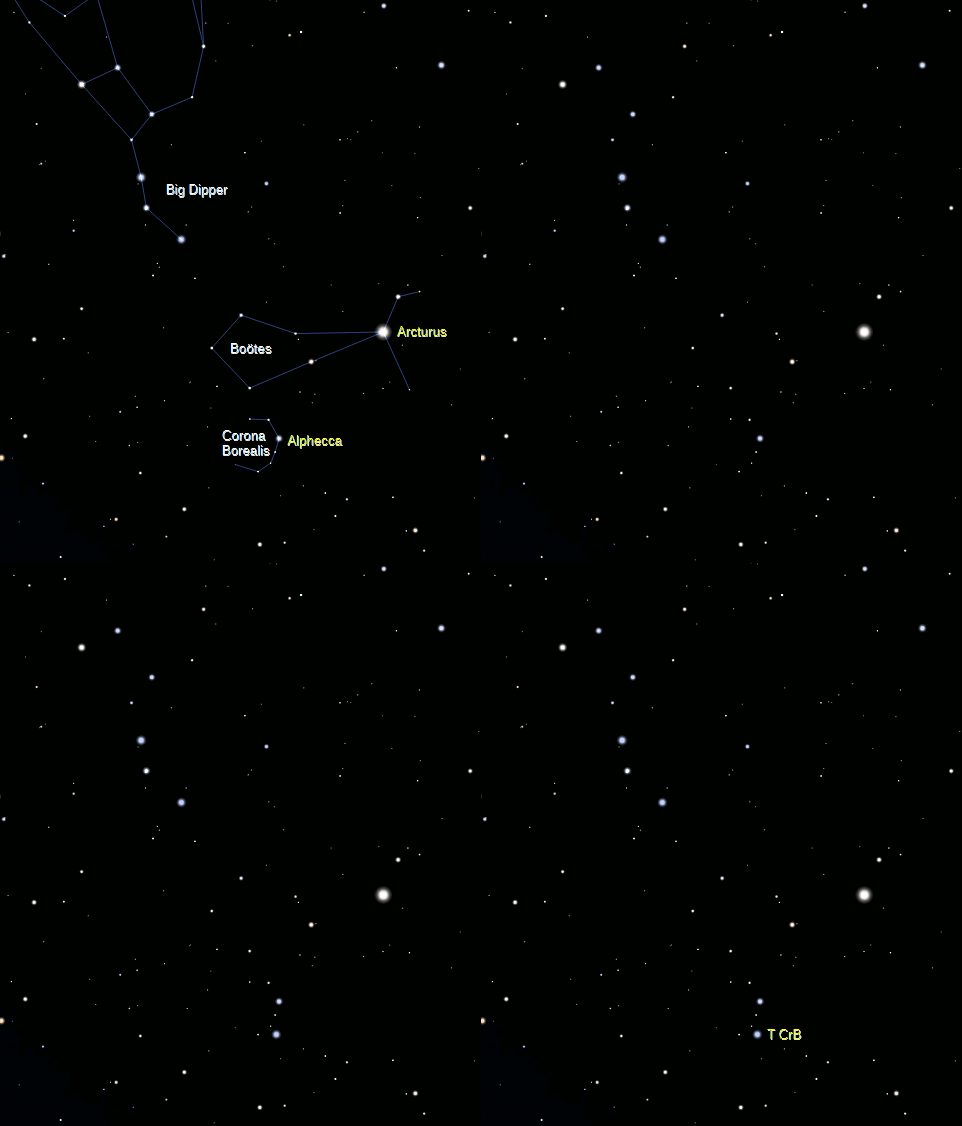
There are two bright stars in the eastern part of the sky. High in the southeast at 11 PM is Arcturus, and in the east northeast, lower down is the star Vega. A third of the way between Arcturus and Vega is a small arc of stars called Corona Borealis, the northern crown. It is a small constellation. The brightest star in it is called Alphecca. According to Greek mythology it is the crown given to Princess Ariadne, daughter of King Minos of Crete. Of interest in the next year or so is a possibility of a nova or bright star appearing just south of that arc of stars for about a week. It is a recurrent nova, which explodes about every 80 years. The last time was in 1946, so the next time would be within the next year or so. And astronomers are breathlessly waiting for that to happen.
The astronomical event times given in this blog are for the Traverse City/Interlochen area of Michigan (Lat 44.7° N, Long 85.7° W; EDT, UT – 4 hours) unless stated otherwise. Times will be different for other locations.
Addendum
Ephemeris: 05/19/2025 – Finding Libra the scales
This is Ephemeris for Monday, May 19th. Today the Sun will be up for 14 hours and 59 minutes, setting at 9:09, and it will rise tomorrow at 6:09. The Moon, 1 day before last quarter, will rise at 2:51 tomorrow morning.
Libra the scales or balance is a dim constellation which is seen low in the southeast in the evening now. It is one of the constellations of the Zodiac. The term Zodiac means circle of animals, so Libra doesn’t exactly fit. The ancient Babylonians recognized it. Back then it may have represented the equality of day and night because the Sun would have been at the autumnal equinox in Libra at that time. The early Greeks, and possibly the Arabs, did not see Libra as being separate from the constellation of Scorpius the scorpion, which is rising to its lower left. Its two brightest stars have Arabic names meaning north claw and south claw. Scorpions have claws, and last I’ve checked, balances do not.
The astronomical event times given in this blog are for the Traverse City/Interlochen area of Michigan (Lat 44.7° N, Long 85.7° W; EDT, UT – 4 hours) unless stated otherwise. Times will be different for other locations.
Addendum
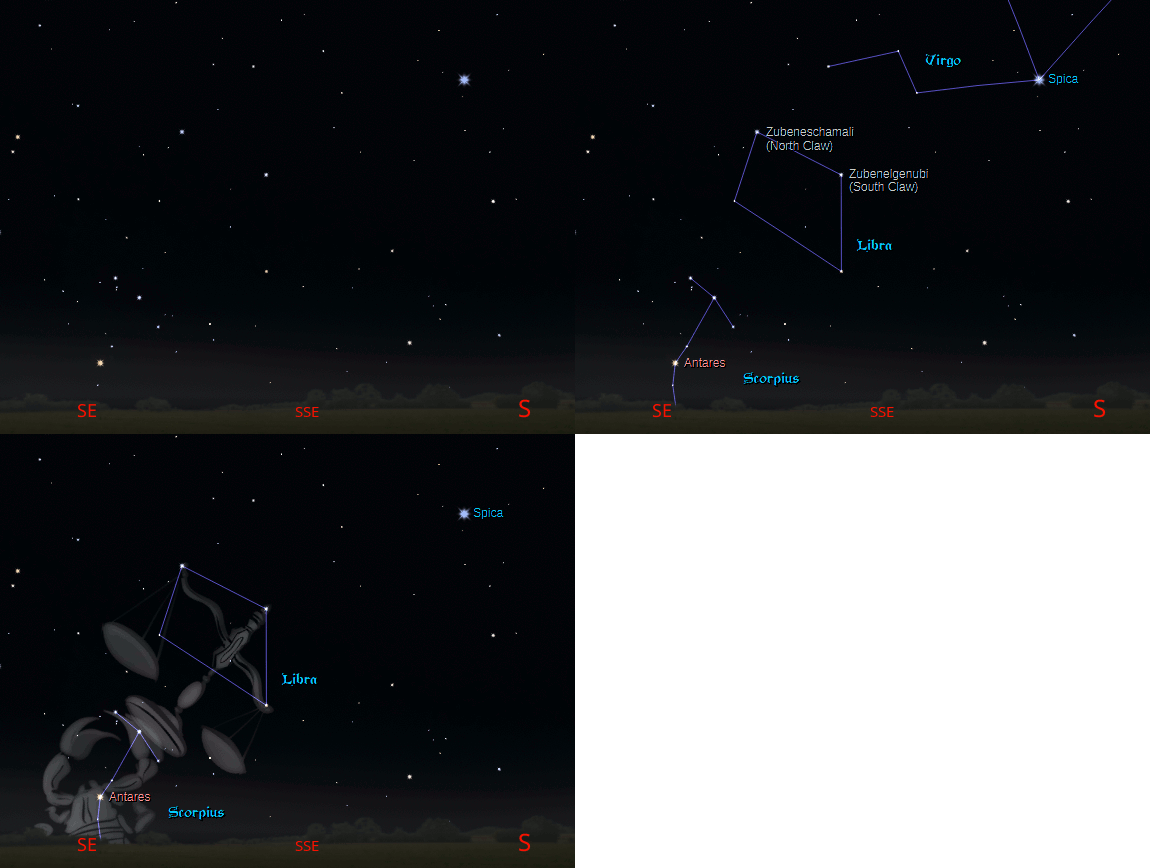
A bit of trivia: At 14 letters Zubeneschamali is the longest star name.
In a previous post I noted that Libra was associated with Virgo which also represents Astraea the goddess of Justice, with Libra, being her Scales of Justice.
Ephemeris: 05/15/2025 – Finding Virgo the virgin in the spring sky
This is Ephemeris for Thursday, May 15th. Today the Sun will be up for 14 hours and 50 minutes, setting at 9:04, and it will rise tomorrow at 6:13. The Moon, 3 days past full, will rise at 12:36 tomorrow morning.
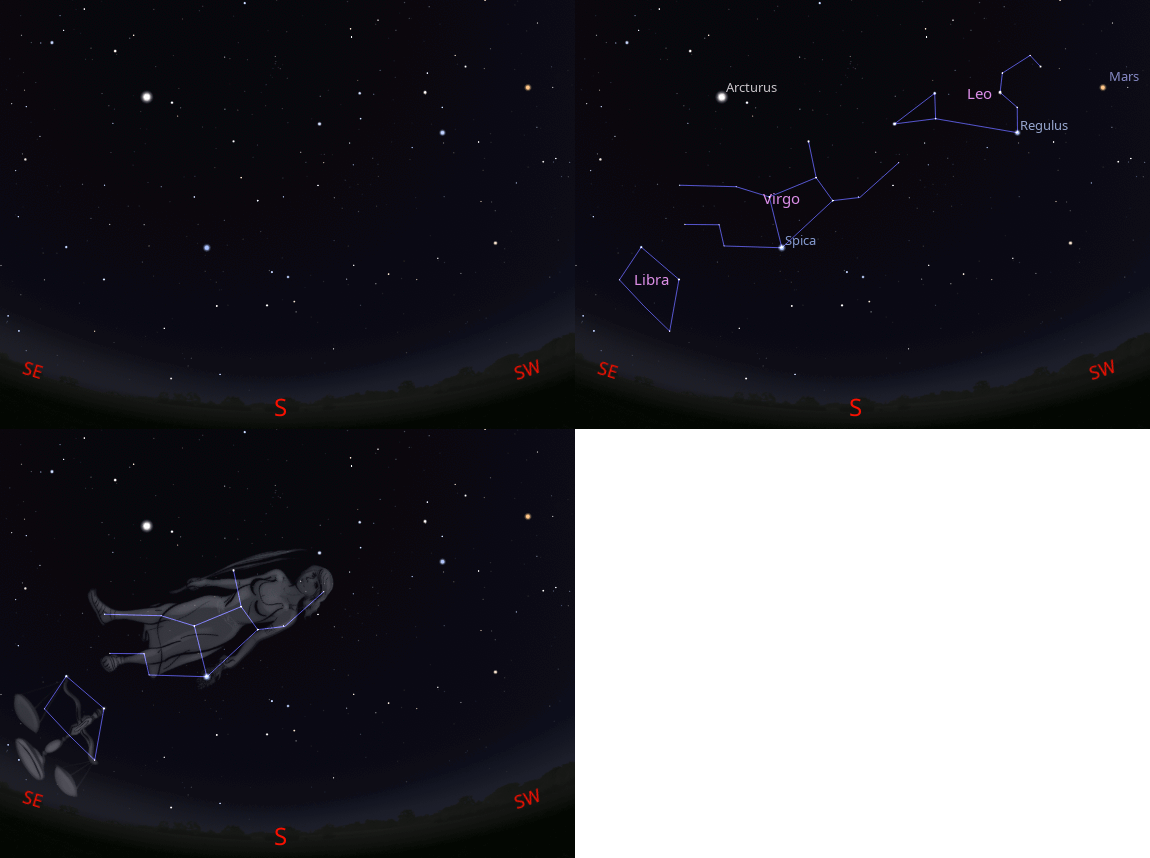
Located below the bright star Arcturus, high in the southeast, and below and left of Leo the lion, which is high in the south, lies the constellation of Virgo the virgin with its bright star Spica. Other than Spica, Virgo contains only dim stars. It’s quite large, extending to the upper right, and to the left of Spica. Virgo represents several goddesses. The Greek harvest goddess Persephone, whose Roman name is Ceres, which is the root of our word cereal, is one. The bright star Spica is the ear of wheat that she’s holding in her hand. Some see her standing at an odd angle, I see her reclining. Virgo also represents Astraea the goddess of Justice, with her scales, the constellation Libra, at her feet low in the southeast.
The astronomical event times given in this blog are for the Traverse City/Interlochen area of Michigan (Lat 44.7° N, Long 85.7° W; EDT, UT – 4 hours) unless stated otherwise. Times will be different for other locations.
Addendum
Ephemeris: 02/25/2025 – Eridanus, a river in the sky
This is Ephemeris for Tuesday, February 25th. Today the Sun will be up for 10 hours and 59 minutes, setting at 6:25, and it will rise tomorrow at 7:24. The Moon, 2 days before new, will rise at 7:00 tomorrow morning.
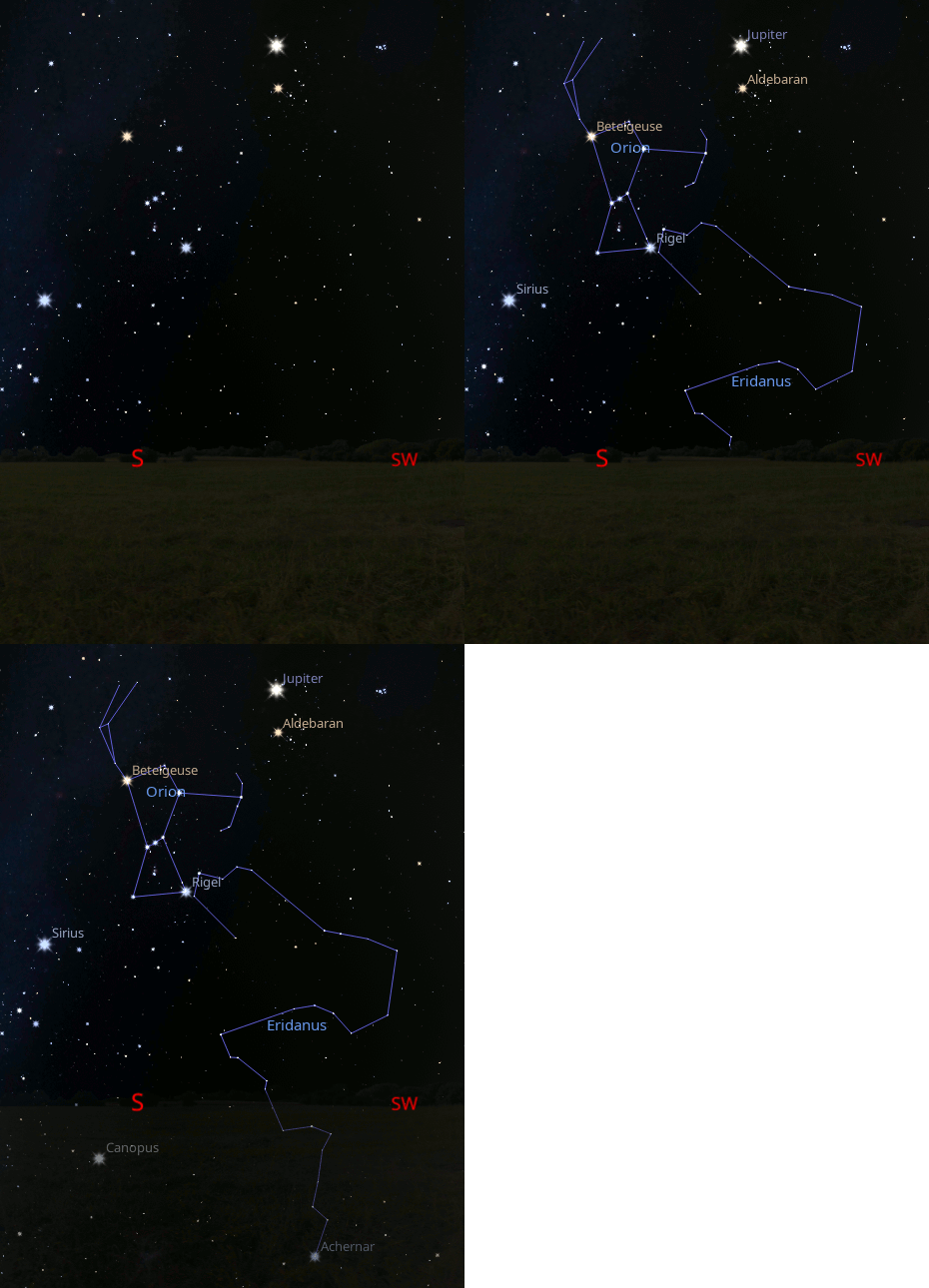
One of the more obscure constellations around is Eridanus, which depicts a river. At 8 PM the river starts near the lower right corner of Orion, near the bright star Rigel and flows to the lower right then zigzags back down to the south-southwestern horizon, it then heads below the horizon. One has to travel to the far south to see the southern terminus of the river, the bright star Achernar. Writers over the ages have seen here the Nile and the Earth circling river Ocean of the ancient flat earth days. Achernar is actually two stars, the brightest was discovered to be the flattest star known, due to its rapid spin. The dimensions of Achernar A has been determined to be twice as wide across its equator than from pole to pole. It’s 139 light years away.
The astronomical event times given are for the Traverse City/Interlochen area of Michigan (EST, UT – 5 hours). Times will be different for other locations.
Addendum
Ephemeris: 01/27/2025 – Gemini the twins with Mars this year
This is Ephemeris for Monday, January 27th. Today the Sun will be up for 9 hours and 38 minutes, setting at 5:44, and it will rise tomorrow at 8:05. The Moon, 2 days before new, will rise at 8:00 tomorrow morning.
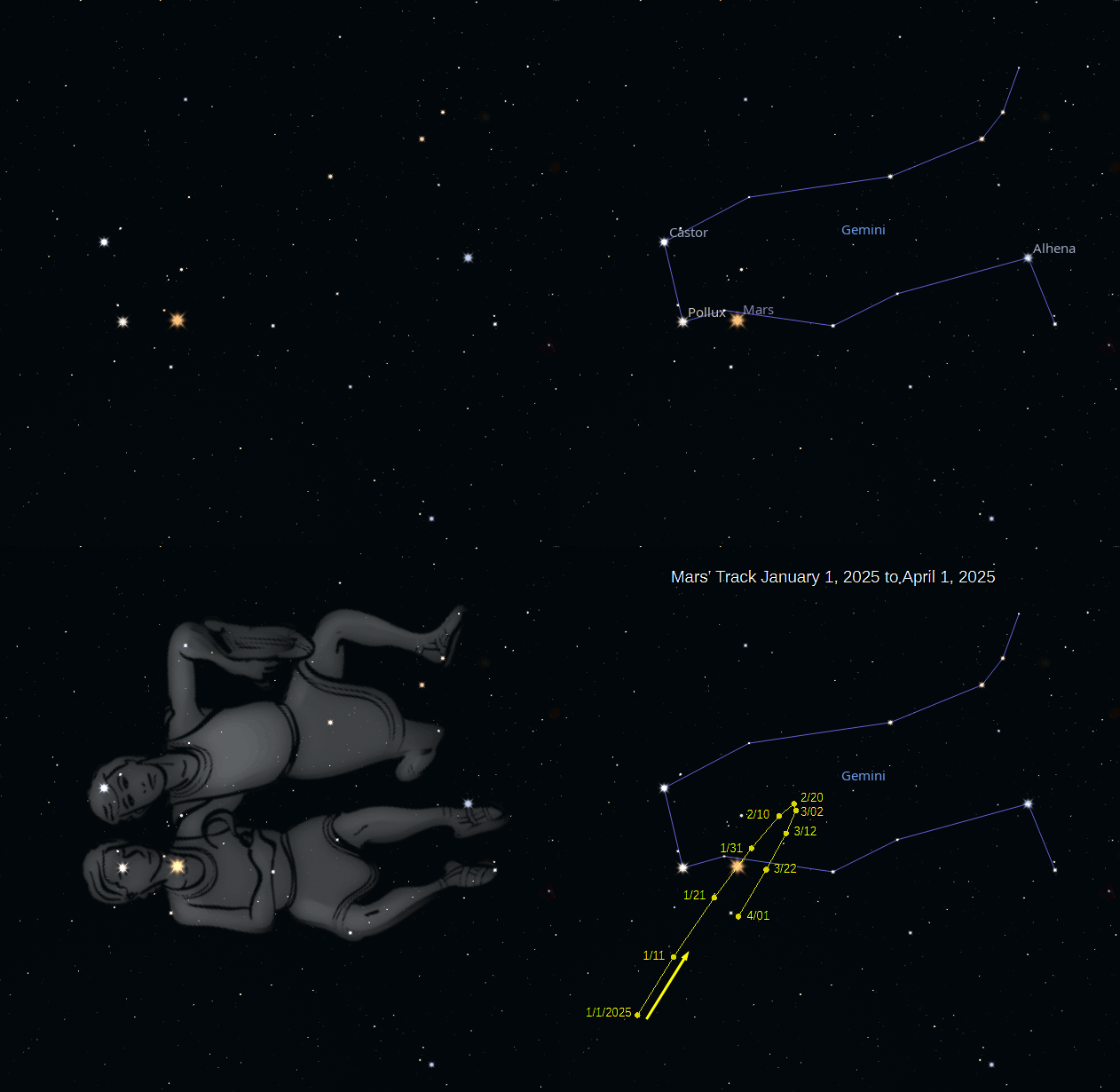
Another famous winter constellation is Gemini. The constellation of Gemini the Twins is visible halfway to the zenith in the east, at the top and left of Orion the hunter, at 9 pm. The namesake stars of the two lads, are the two bright stars at the left end of Gemini, and are high and are due east. Castor is on top, while Pollux is below. From them come two lines of stars that outline the two, extending horizontally toward Orion. Mars is passing in front of the stars of Gemini during the first quarter of this year, reaching the western end of its retrograde loop and doubling back to the east. In Greek mythology the Gemini twins were half brothers, Castor was fathered by a mere mortal, while Pollux was fathered by Zeus, but were born together as twins. When Castor was killed during the quest for the Golden Fleece, Pollux pleaded with Zeus to let him die also, so Zeus placed them together in the sky.
The astronomical event times given are for the Traverse City/Interlochen area of Michigan (EST, UT – 5 hours). Times will be different for other locations.
Addendum
 Bob Moler's Ephemeris Blog