Archive
11/04/2021 – Ephemeris – Myths of the Pleiades from some other cultures
This is Ephemeris for Thursday, November 4th. The Sun will rise at 8:25. It’ll be up for 10 hours and 1 minute, setting at 6:26. The Moon is new today, and won’t be visible.
Let’s look at how some other cultures saw the Pleiades, the star cluster that is seen in the eastern sky these evenings. To the Anishinaabe native peoples around here, the Pleiades is the “Hole in the Sky” or the seven stones that are heated for the sweat lodge ceremony. To the Kiowa, these were sister stars that had been whisked into the sky from the top of Devil’s Tower in Wyoming, where they were threatened by a huge bear. In Norse mythology, these were the goddess Freya’s hens. The name we know them by has rather misty origins. Some think the Greek name is from the mother of the seven sisters, Pleione. The Greek word for sail is similar to Pleiades, and it seems the appearance of the Pleiades in the morning sky saw the best sailing weather in the Mediterranean.
The astronomical event times given are for the Traverse City/Interlochen area of Michigan (EDT, UT – 4 hours). They may be different for your location.
Addendum
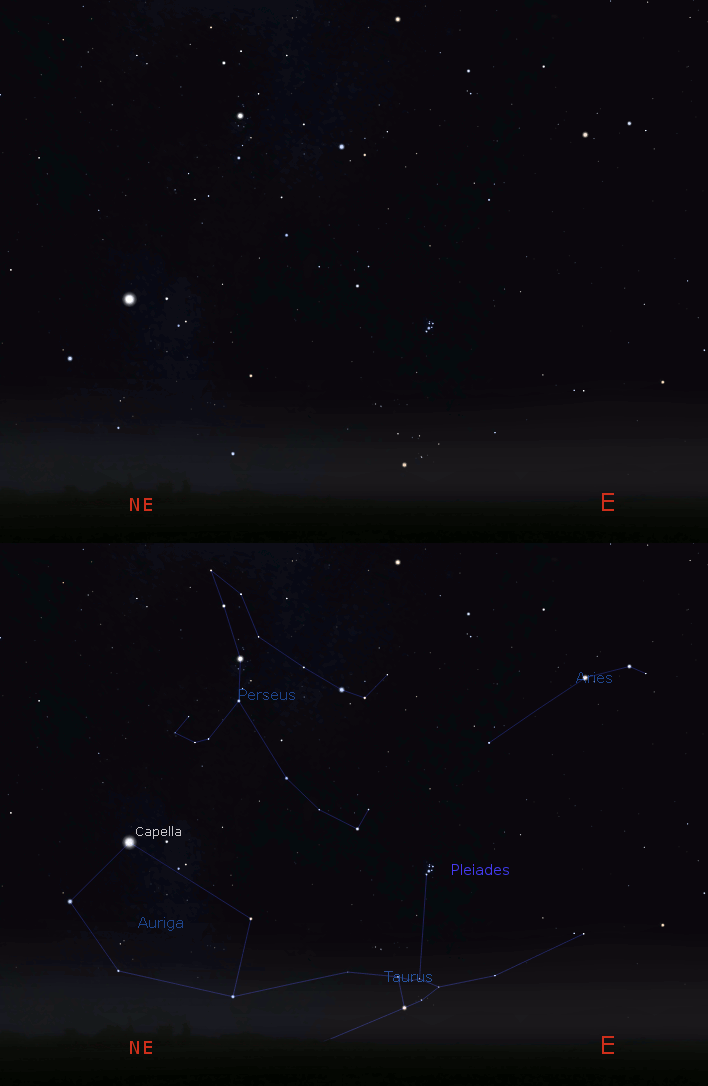
Finding the Pleiades animation for 9 p.m. October 29, 2019. Created using Stellarium and GIMP.

Seven maidens being attacked by a giant bear, having fled to the top of Devil’s Tower in Wyoming. Painting by Herbert Collins, http://www.nps.gov/deto.

They are also the Seven Daughters of the Moon and Sun. They loved to dance and play, and when their father, the Moon was low in the sky, would descend to the Earth in a basket to do their thing. On one of their trips to the earth, one of them was captured by a human, and she ended up falling in love with him, and married him. When father Moon found out he permanently dimmed her star, so now most people now only can spot 6 of the stars. This last bit seems to parallel the Greek story of the lost Pleiad.
10/28/2021 – Ephemeris – The spookiest star in the sky
This is Ephemeris for Thursday, October 28th. Today the Sun will be up for 10 hours and 21 minutes, setting at 6:36, and it will rise tomorrow at 8:17. The Moon, at last quarter today, will rise at 12:31 tomorrow morning.
We are getting down to the spookiest time of the year, with Halloween on Sunday, so it’s time to talk about the spookiest star in the sky, Algol the Ghoul or Demon Star. It’s in the constellation of Perseus the hero, now rising in the northeastern sky. The constellation itself looks like the Greek letter pi, or like the cartoon Roadrunner with its long legs. Algol is the second brightest star in the constellation, near the Roadrunner’s leading foot. That’s where the eye of the severed head of Medusa, that Perseus is carrying. It’s still winking, once every 2 days and 21 hours*. Tonight it will be in the deepest part of its wink at 8:43 pm. It will take about three hours to recover its usual brightness. I recall that the ancient Chinese weren’t fond of that star either.
The astronomical event times given are for the Traverse City/Interlochen area of Michigan (EDT, UT – 4 hours). They may be different for your location.
* More specifically, 2 days, 20 hours, 49 minutes on average and altered by Earth’s changing distance from the star due to its orbit of the Sun.
Addendum
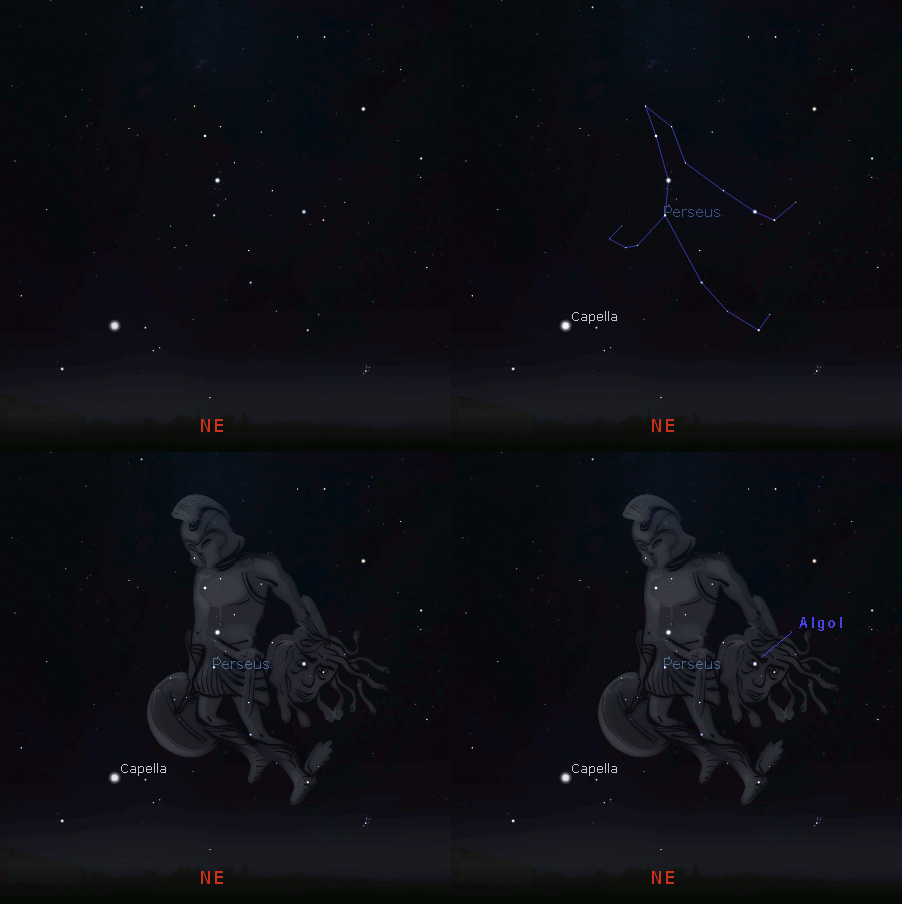
Algol Finder Animation for around 8 pm in the later part of October and early November (7 pm after the EST time change on the first Sunday in November). Created using Stellarium and GIMP.
Algol is an eclipsing binary star, where one star eclipses the other.
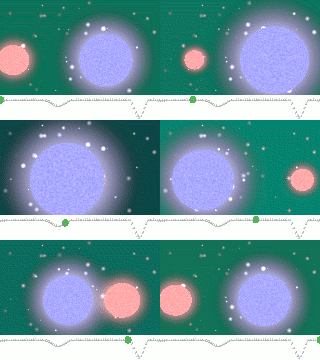
Animation of an eclipsing binary star like Algol. Credit: Wikimedia Commons h/t Earth and Sky
09/28/2021 – Ephemeris – Andromeda, a damsel in distress
This is Bob Moler with Ephemeris for Tuesday, September 28th. Today the Sun will be up for 11 hours and 50 minutes, setting at 7:28, and it will rise tomorrow at 7:38. The Moon, at last quarter today, will rise at 11:46 this evening.
In the east at 9 this evening can be found a large square of stars, the Great Square of Pegasus the flying horse. The square is standing on one corner. What looks like its hind legs stretching to the left from the left corner star is another constellation, Andromeda the chained princess. She is seen in the sky as two diverging curved strings of stars that curve upward. She was doomed due to her mother, Queen Cassiopeia’s boasting, which angered the god Poseidon. She was rescued by the hero Perseus, a nearby constellation, riding his steed Pegasus. Andromeda’s claim to astronomical fame is the large galaxy seen with the naked-eye just above the upper line of stars. The Great Andromeda Galaxy is two and a half million light years away.
The astronomical event times given are for the Traverse City/Interlochen area of Michigan (EDT, UT-4 hours). They may be different for your location.
Addendum
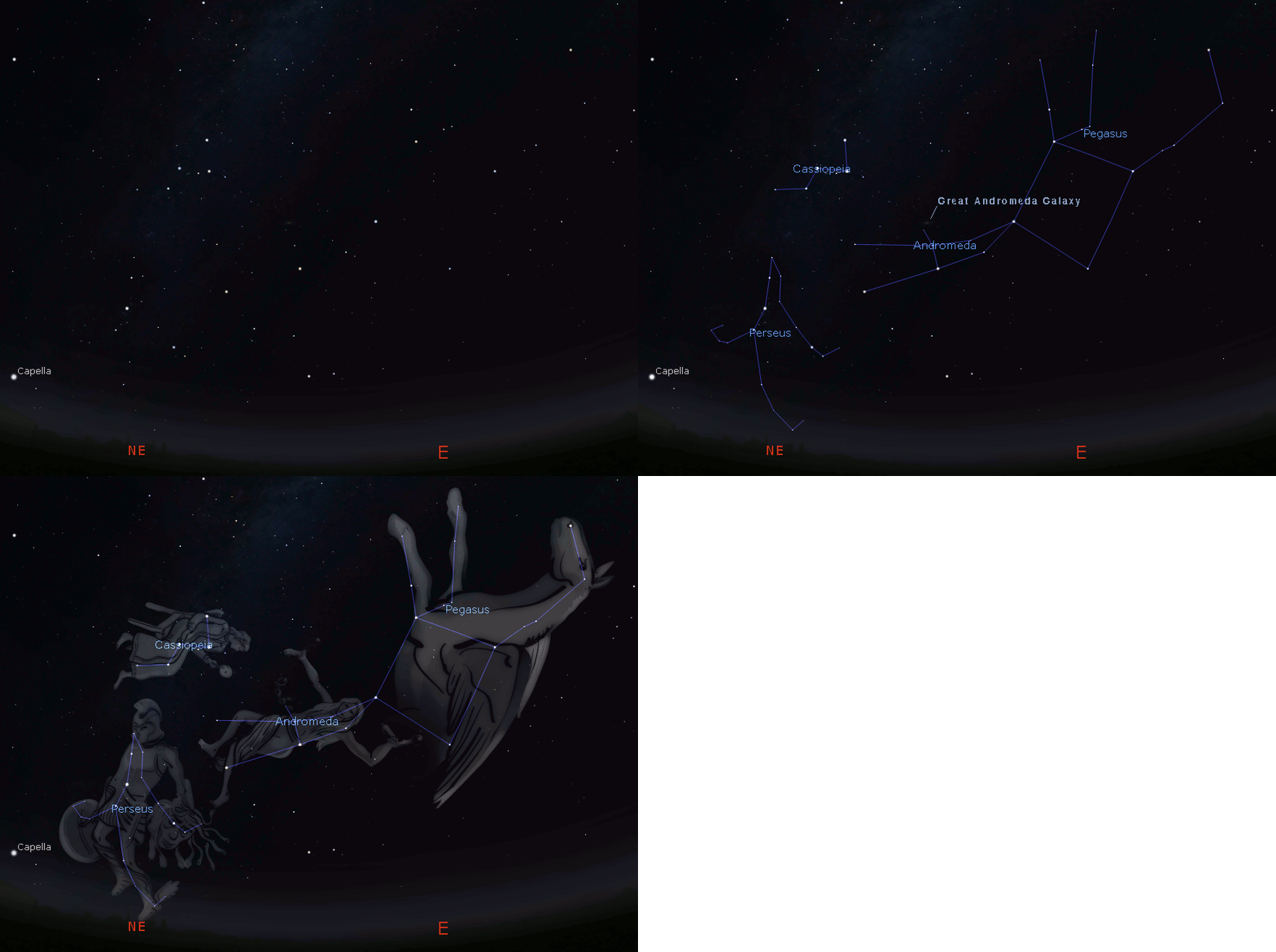
Andromeda finder animation surrounded by the other constellations in her story, except the monster, which will rise later. Click on the image to enlarge it. Created using Stellarium and GIMP.
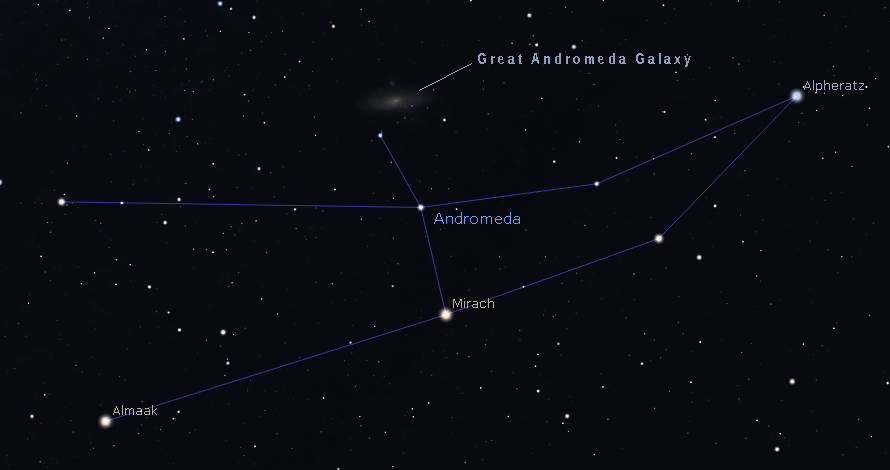
Great Andromeda Galaxy finder chart. This image shows the galaxy almost to its fullest extent. In the finder animation above, the galaxy looks pretty much as it would to the naked eye. Click on the image to enlarge it. Created using Stellarium.
Astronomers often refer to this galaxy as M 31 for short. It was the 31st entry in Charles Messier’s catalog of objects that could be confused as being comets by comet hunters like himself. It was added in 1764. He didn’t care what these fuzzy objects were, just that they didn’t move against the background stars. Actually, M 31 is in the background. The stars are in the foreground, in our Milky Way Galaxy.
09/09/2021 – Ephemeris – The constellation of Cassiopeia the Queen
This is Ephemeris for Thursday, September 9th. Today the Sun will be up for 12 hours and 49 minutes, setting at 8:04, and it will rise tomorrow at 7:16. The Moon, 3 days past new, will set at 9:40 this evening.
Tonight, check out the crescent Moon, with Venus below left of it. Cassiopeia is a constellation shaped like the letter W seen in the northeast these evenings. In Greek mythology, she was the queen of Ethiopia. She was very beautiful and very boastful of that fact. She even compared her beauty with that of the sea nymphs, daughters of the sea god Poseidon. Papa was not amused. So Cassiopeia’s daughter, the Princess Andromeda, was made to suffer for it. Poseidon sent a sea monster, Cetus, to ravage the coastal cities of the country. The only way to stop it was to sacrifice Andromeda to the monster. Andromeda and Cetus are constellations we’ll meet in the coming weeks. We’ve already met Pegasus, the flying horse, rising in the east. And we are yet to meet the hero, Perseus.
The astronomical event times given are for the Traverse City/Interlochen area of Michigan (EDT, UT – 4 hr). They may be different for your location.
Addendum
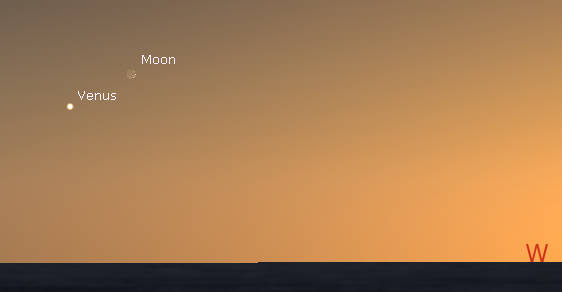
Venus and the Moon in evening twilight, about a half hour after sunset tonight, September 9, 2021. Created using Stellarium.
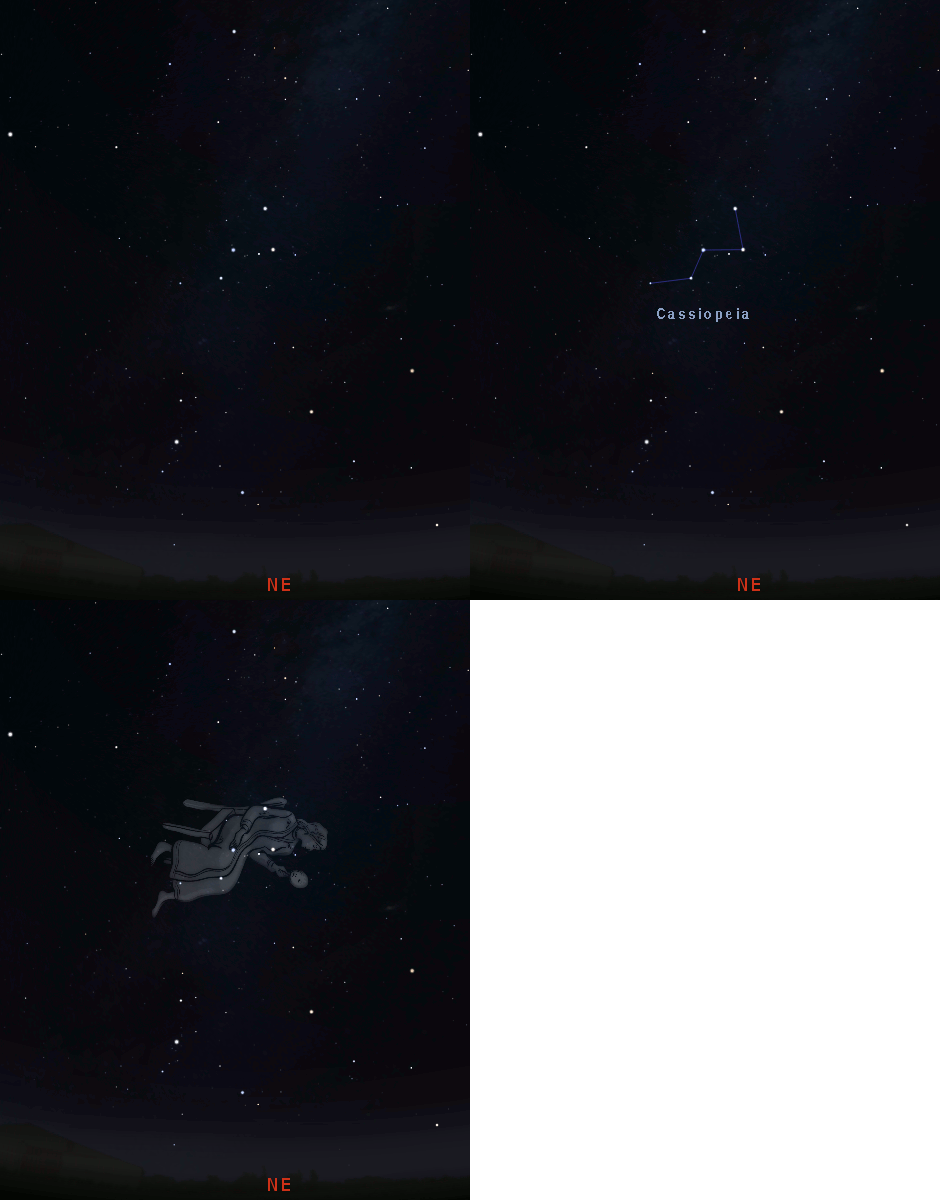
Cassiopeia finder animation looking northeast in mid-September, an hour and a half after sunset. Created using Stellarium.
09/07/2021 – Ephemeris – The constellation of Cepheus the king
This is Bob Moler with Ephemeris for Tuesday, September 7th. Today the Sun will be up for 12 hours and 55 minutes, setting at 8:07, and it will rise tomorrow at 7:13. The Moon, 1 day past new, will set at 8:53 this evening.
There’s a faint constellation in the northeast above the W shaped constellation of Cassiopeia. It’s a nearly upside down church steeple of a constellation called Cepheus the king, and husband of queen Cassiopeia. Cepheus’ claim to modern astronomical fame is that one of its stars, Delta (δ) Cephei, is the archetype for the important Cepheid variable stars. Delta is the bottom most of a trio of stars at the right corner of the constellation. In the early 20th century, Henrietta Leavitt discovered that Cepheids in the nearby galaxy the Large Magellanic Cloud varied in brightness with a period that was related to their average brightness. This meant that Cepheids could be used as standard candles to measure the great distances to other galaxies.
The astronomical event times given are for the Traverse City/Interlochen area of Michigan (EDT, UT – 4 hr). They may be different for your location.
Addendum
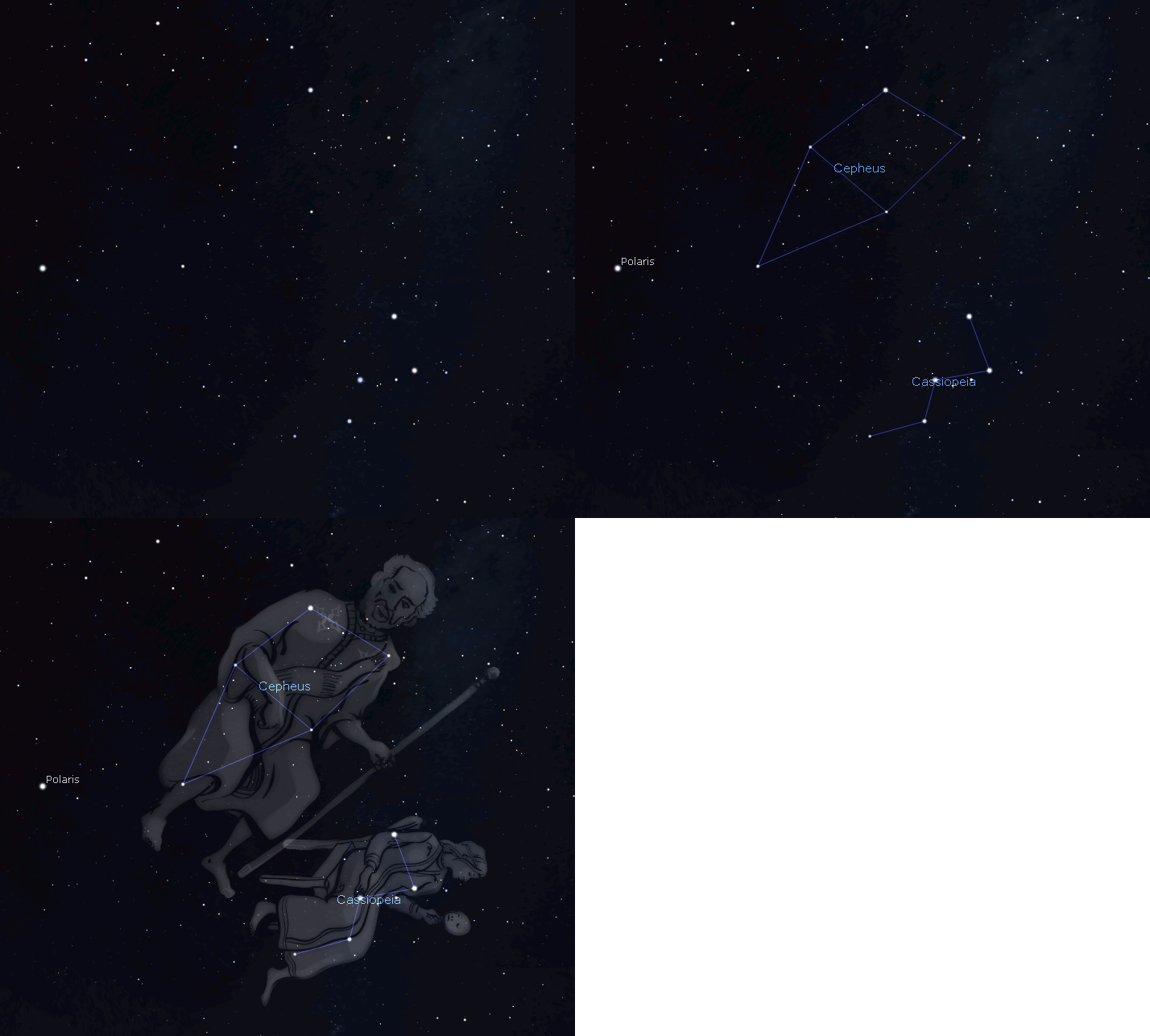
Cassiopeia and Cepheus finder animation looking in the northeast at 9-10 pm or about an hour after sunset. Created using Stellarium and GIMP.
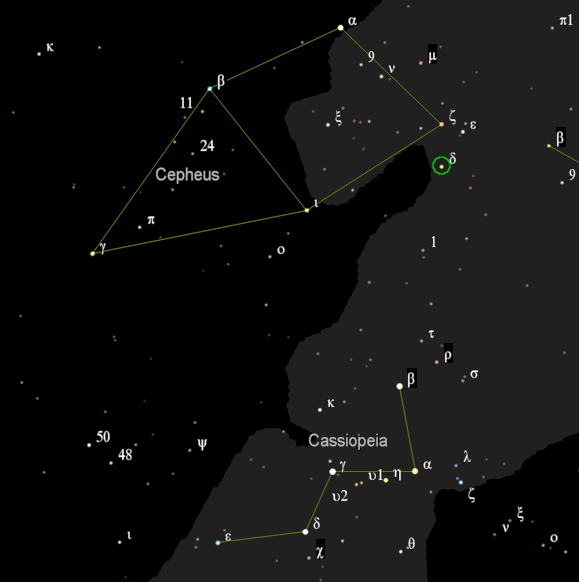
Delta Cephei finder for September at 9-10 pm, looking northeast. Created using Cartes du Ciel (Sky Chart).
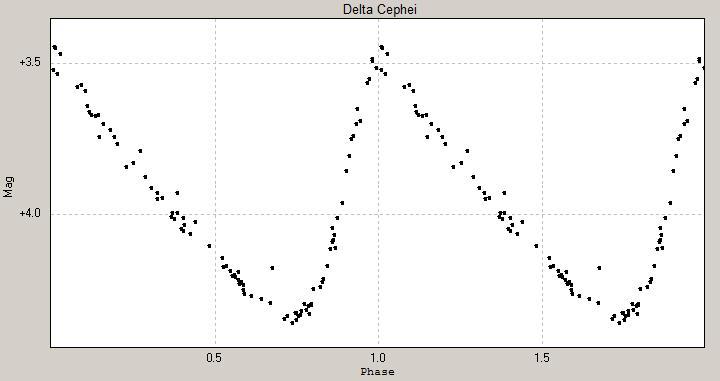
Light Curve of Delta Cephei. The pulsation period is 5.367 days. Note the Magnitude vertical axis, the lower the magnitude the brighter the star is. Blame that on the Greek astronomer Hipparchus, 2nd century BC. It’s like golf scores, the lower the score, the better the golfer. Credit: Thomas K Vbg – Own work, CC BY-SA 3.0, https://commons.wikimedia.org/w/index.php?curid=13887639.
07/15/2021 – Ephemeris – What the Chinese saw in the face of the Moon
This is Bob Moler with Ephemeris for Thursday, July 15th. Today the Sun will be up for 15 hours and 13 minutes, setting at 9:25, and it will rise tomorrow at 6:12. The Moon, 2 days before first quarter, will set at 12:45 tomorrow morning.
Looking at the Moon tonight with the naked eye or binoculars, the dark patches called seas, which are really lava filled plains, make out the ears, head, and top part of the body of a rabbit that appears upside down. It’s the Chinese Jade Rabbit, Yutu. The seas involved, with their English names are: Serenity, the top of its body; Tranquility, its head; the more prominent ear is Fertility; while the other ear is a combination of the Bay of Roughness and Sea of Nectar. Yutu is the pet rabbit of the Moon goddess Chang’e, who flew to the Moon to escape her pursuers. The Chinese space agency has named all their moon landers Chang’e and their lunar rovers Yutu in their honor.
The astronomical event times given are for the Traverse City/Interlochen area of Michigan (EDT, UT – 4 hr). They may be different for your location.
Addendum
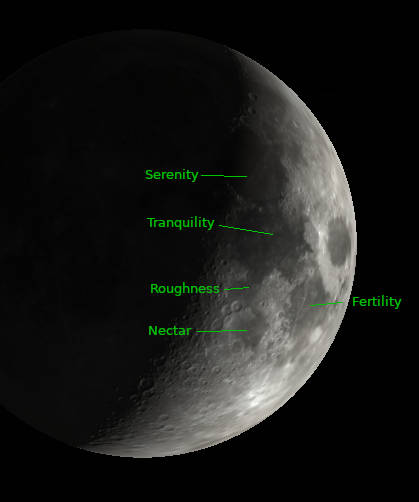
The Moon tonight with the Jade Rabbit delineated in the seas and one bay the dark lava covered plains of the Moon. Created using Stellarium.
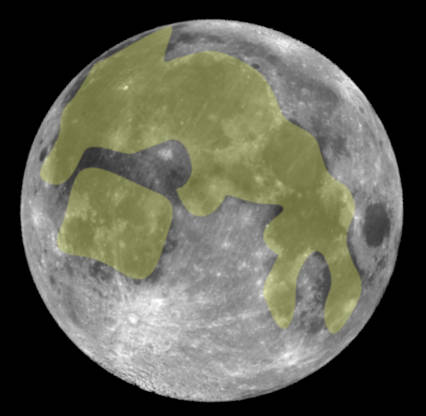
The Jade Rabbit seen on a full moon rotated close to what tonight’s Moon is. Actually, the ancient Chinese saw the rabbit pounding medicine.
07/06/2021 – Ephemeris – Looking at the constellation of Lyra the harp
This is Ephemeris for Tuesday, July 6th. Today the Sun will be up for 15 hours and 26 minutes, setting at 9:30, and it will rise tomorrow at 6:05. The Moon, 3 days before new, will rise at 3:56 tomorrow morning.
High in the east at 11 p.m. can be found a bright star just above a small, narrow, but very distinctive parallelogram of stars. They are the stars of the constellation Lyra the harp. The bright star is Vega, the 5th brightest night-time star. To the Romans, the star Vega represented a falling eagle or vulture. Apparently they never made the distinction between the two species. It is a pure white star and serves as a calibration star for color and brightness. In the evening, it is the top-most star of the Summer Triangle. The harp, according to Greek mythology, was invented by the god Hermes. The form of the harp, in the sky, is as he had invented it: by stretching strings across a tortoise shell. Hermes gave it to his half-brother Apollo, who in turn gave it to the legendary musician Orpheus.
The astronomical event times given are for the Traverse City/Interlochen area of Michigan (EDT, UT-4). They may be different for your location.
Addendum
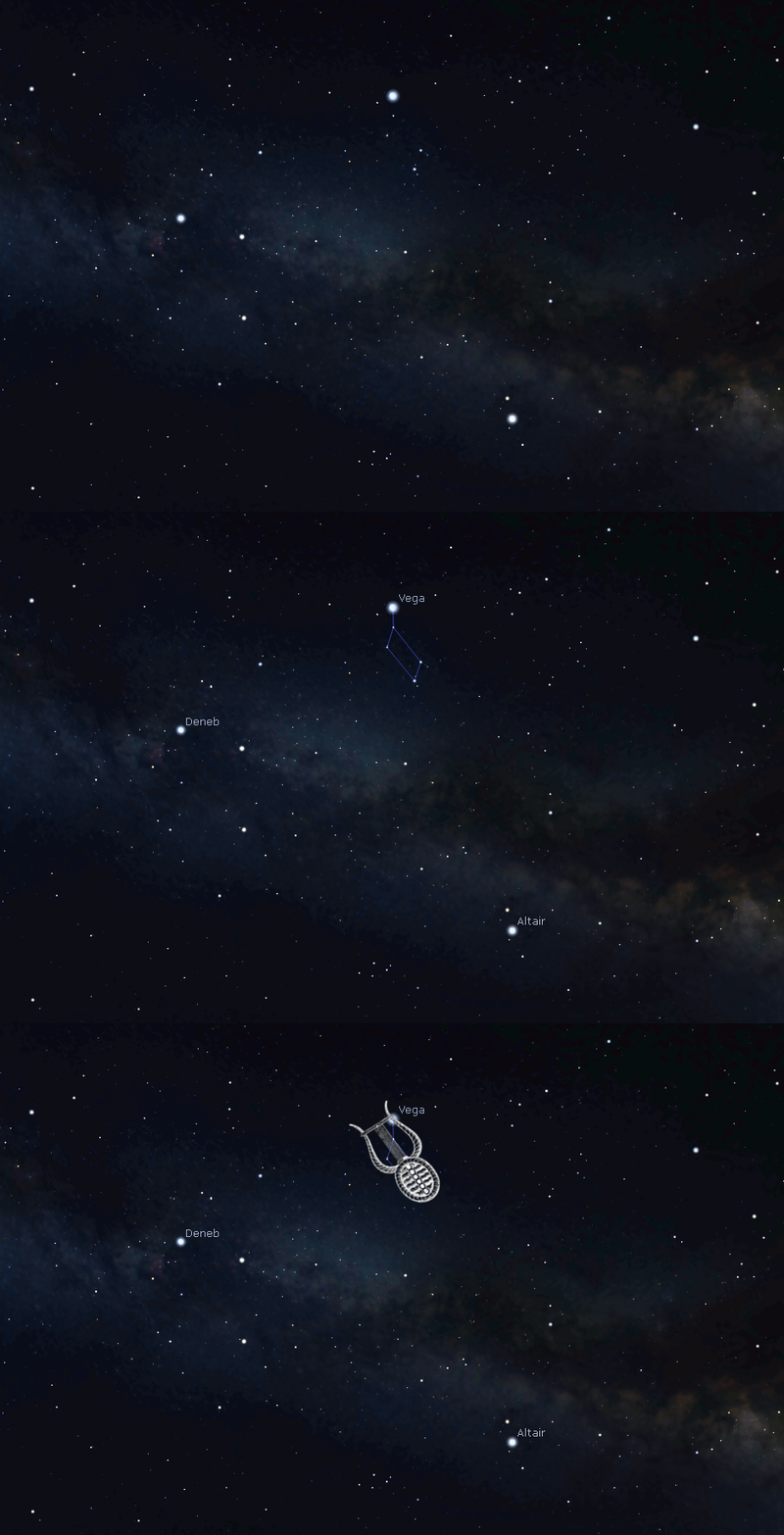
Animated Lyra finder chart. The lyre image not supplied by Stellarium but is from The World’s Earliest Music by Hermann Smith, Figure 60, A Project Gutenberg E-Book, and captioned “The Chelys or Greek Tortoiseshell Lyre”. Click on the image to enlarge it. Created using Stellarium and GIMP.
05/31/2021 – Ephemeris – Hercules the constellation
This is Bob Moler with Ephemeris for Memorial Day, Monday, May 31st. Today the Sun will be up for 15 hours and 19 minutes, setting at 9:20, and it will rise tomorrow at 6:00. The Moon, 2 days before last quarter, will rise at 2:23 tomorrow morning.
Orion, the hard luck mythological Greek hunter gets a splashy constellation in the winter sky, but the greatest hero of all, Hercules, gets a dim group of stars on the border between the spring and summer stars. At 11 p.m. Hercules is fairly high in the east. It is located above and a bit right of the bright star, Vega east-northeast. Hercules’ central feature is a keystone shaped box of stars, called the Keystone laying on its side, which represents the old boy’s shorts. From each left corner stars extend lines of stars that are his legs, from the right stars, the rest of his torso and arms extend. So in one final indignity he’s upside down in our sky. For those with a telescope, Hercules contains the beautiful globular star cluster Messier 13.
The astronomical event times given are for the Traverse City/Interlochen area of Michigan. They may be different for your location.
Addendum
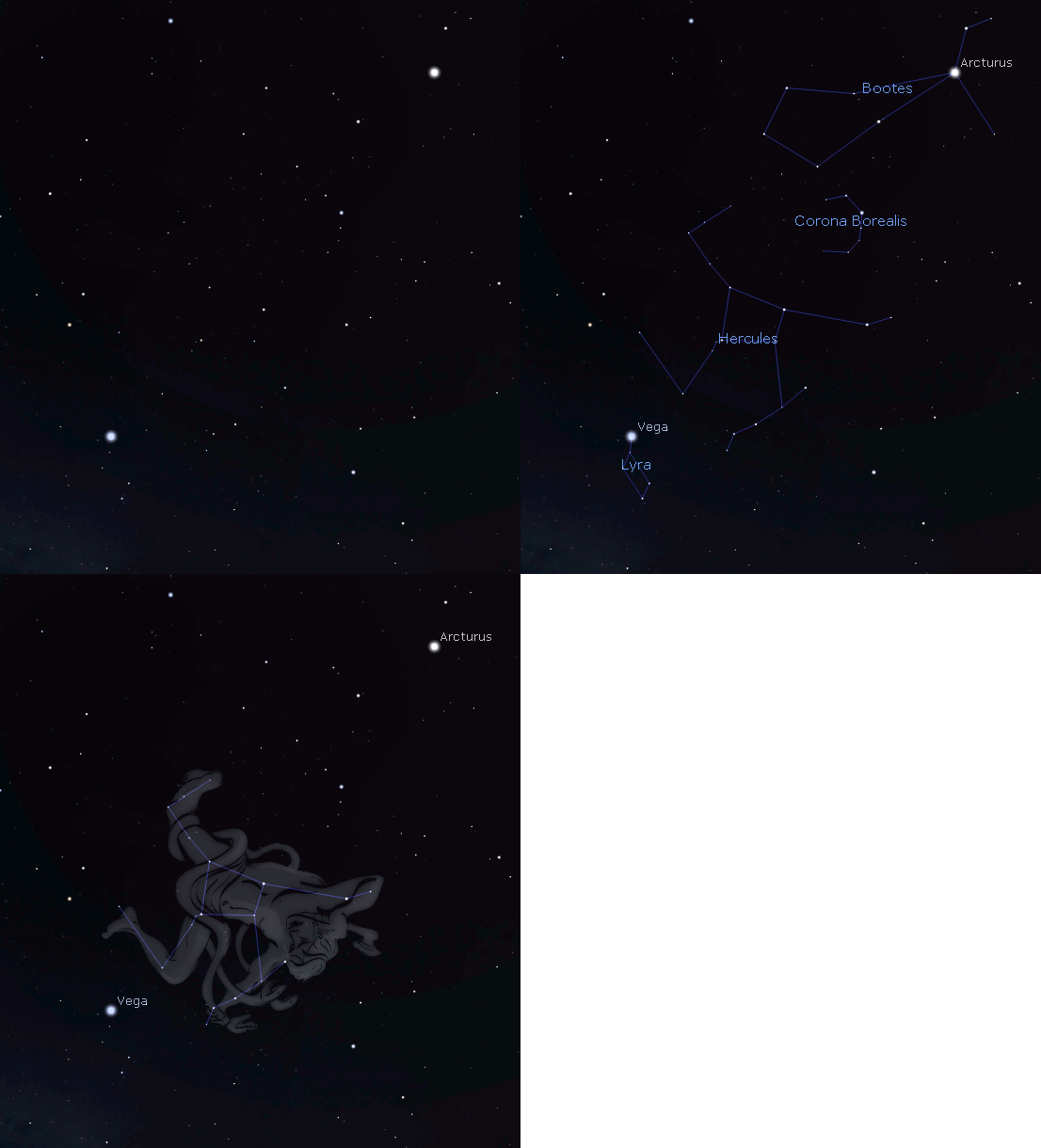
Hercules can be found in the east among the line of constellations at around 11 pm in late May or early June between the bright stars Arcturus and Vega. Created using Stellarium and GIMP.
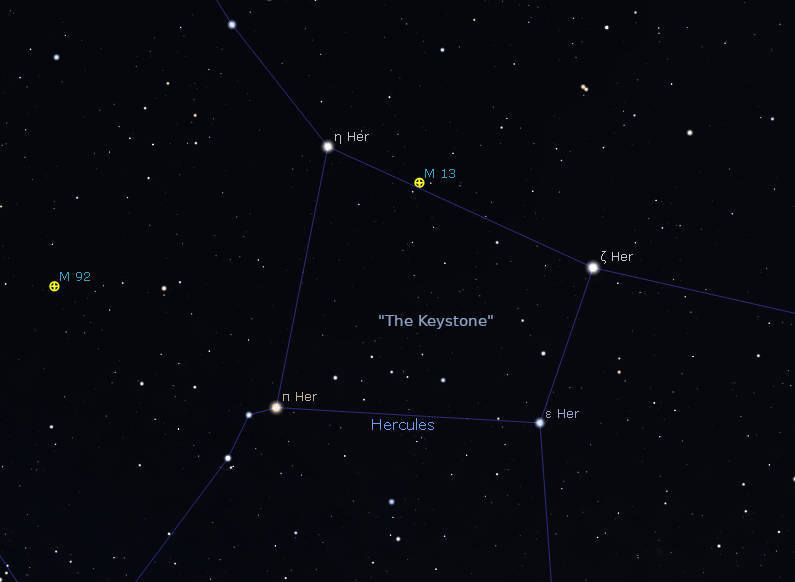
M 13 is found on the western side of the Keystone. In this orientation when Hercules is in the east, it is the top side. Created using Stellarium with an annotation.
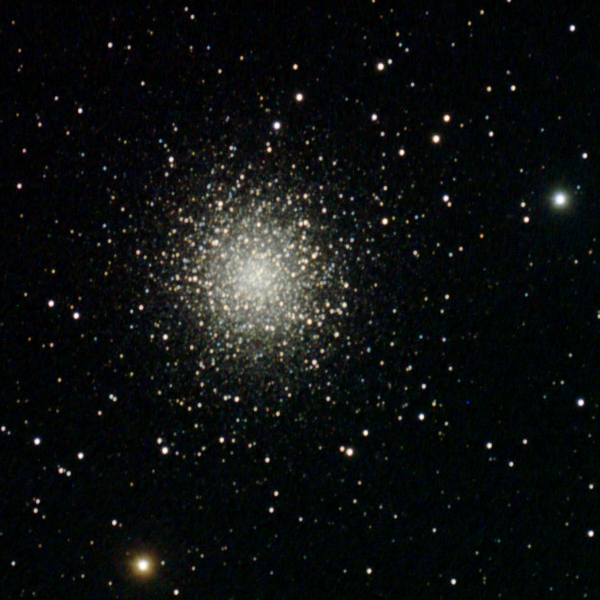
M 13, the Great Globular Star Cluster in Hercules. Credit: Scott Anttila.
M 13 is the brightest and finest globular star cluster in the northern hemisphere of the sky. It’s at a distance of 25 thousand light years. Some amateur astronomers can spot M 13 with the naked eye. It is a fuzzy spot in binoculars. I can barely resolve some of its stars in an 8-inch (200 mm) telescope. It’s a wonderful sight in anything bigger! The slightly dimmer M 92 is also slightly farther away at nearly 27 thousand light years.
Click on any of the images above to enlarge them.
05/28/2021 – Ephemeris – The Northern Crown
This is Bob Moler with Ephemeris for Friday, May 28th. Today the Sun will be up for 15 hours and 15 minutes, setting at 9:18, and it will rise tomorrow at 6:01. The Moon, 2 days past full, will rise at 12:19 tomorrow morning.
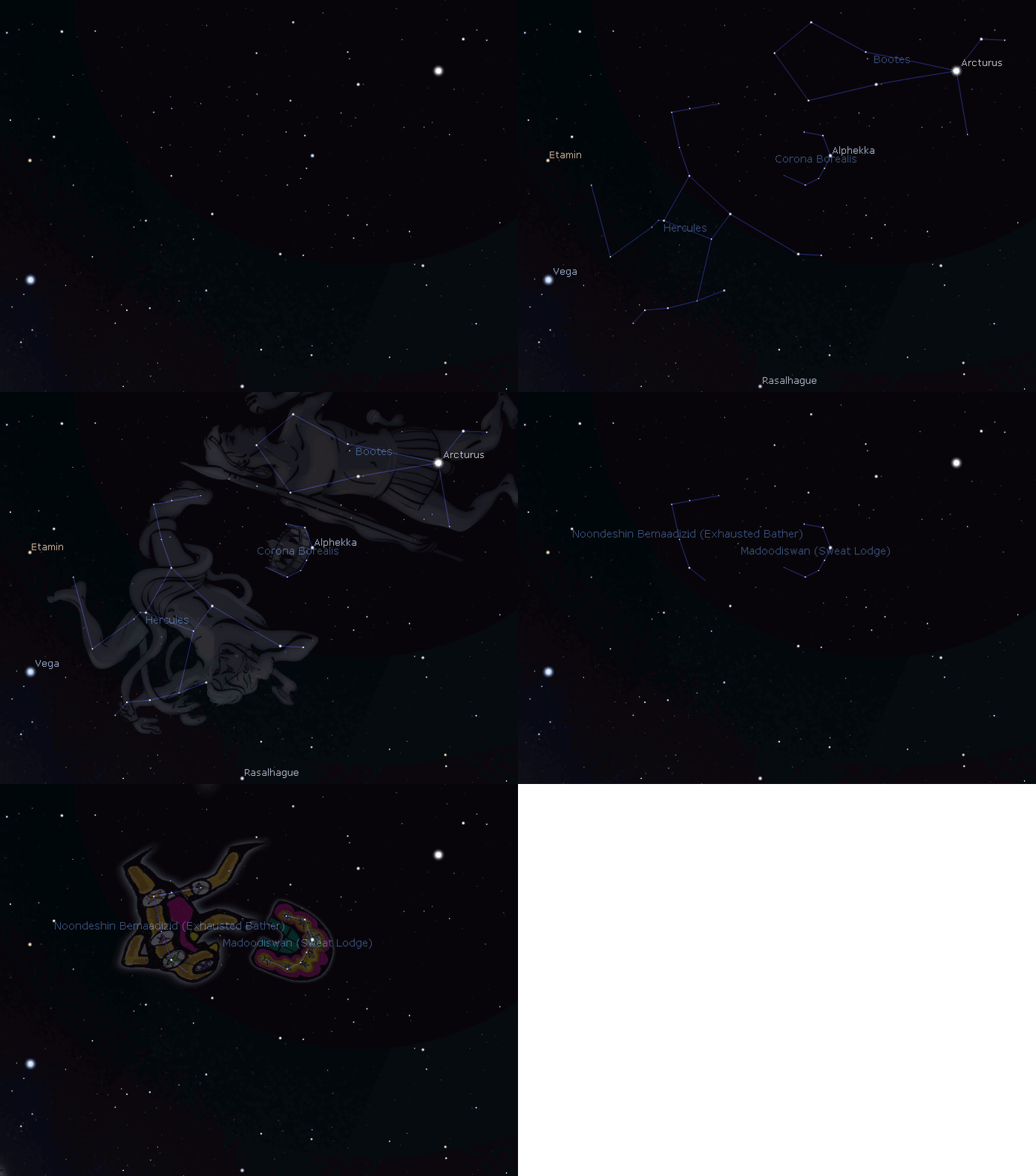
High in the east-southeast at 11 this evening can be seen a small nearly circular constellation of Corona Borealis, the Northern Crown. It is just below Boötes, the kite shaped constellation off the handle of the Big Dipper. According to Greek myth the crown was given by the gods to the princess Ariadne, daughter of King Minos of Crete. The crown is more like a tiara with the bright star Alphecca at the front. To the Anishinaabe people, who are natives of our region, it is the Sweat Lodge. Part of what we call Hercules next to it is the Exhausted Bather, who is lying on the ground after the ceremony. The seven stones that are heated for the Sweat Lodge are the Pleiades, now too close to the Sun to be seen.
The astronomical event times given are for the Traverse City/Interlochen area of Michigan. They may be different for your location.
Addendum
05/10/2021 – Ephemeris – The story of the constellations Boötes and Ursa Major
This is Bob Moler with Ephemeris for Monday, May 10th. Today the Sun will be up for 14 hours and 38 minutes, setting at 8:58, and it will rise tomorrow at 6:18. The Moon, 1 day before new, will rise at 6:25 tomorrow morning.
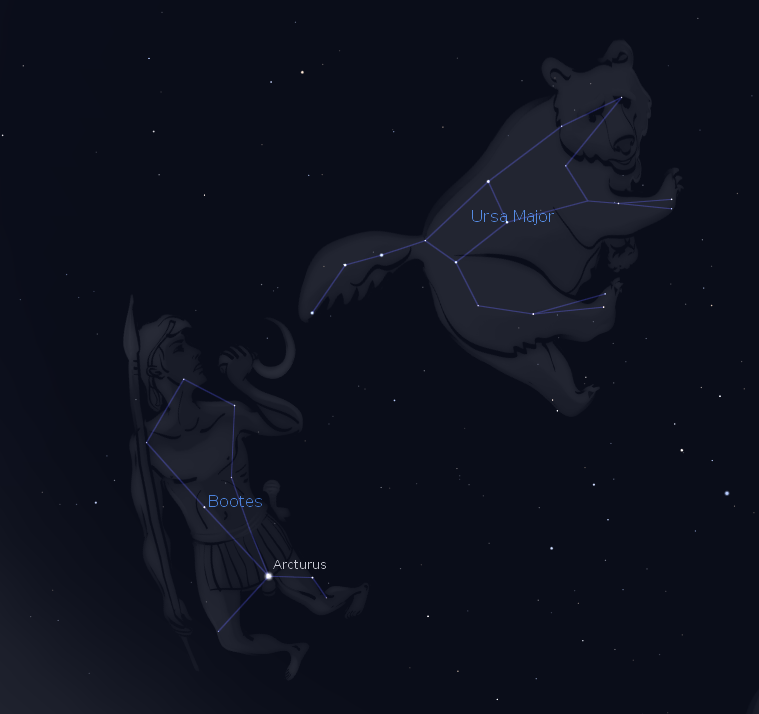
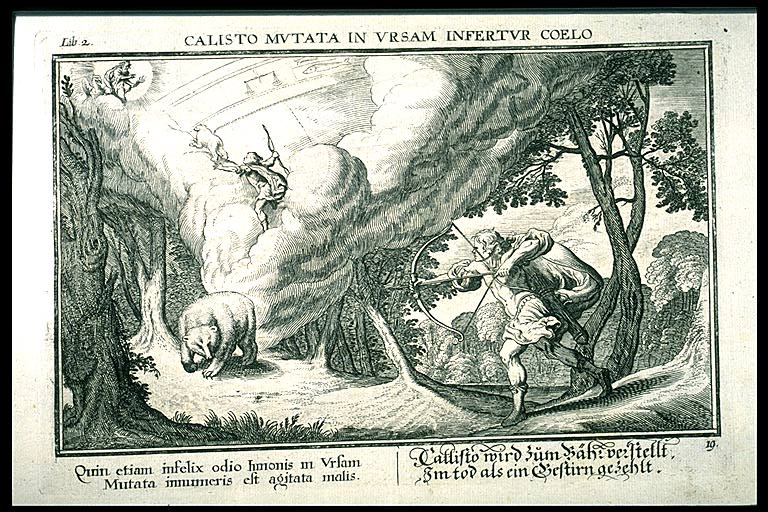
Seen in the east at 10 p.m. tonight is the kite shaped constellation of Boötes the herdsman. The bright star Arcturus is at the bottom of the kite to the right. It is pointed to by the arc of the handle of the Big Dipper, higher in the east. Boötes represents a young hunter named Arcas, son of Callisto, a beautiful young lady who had the misfortune of being loved by Zeus the chief of the Greek gods. Zeus’ wife Hera, found out about it, and since she couldn’t punish Zeus, turned the poor woman into a bear. Arcas, many years later, unaware of the events surrounding his mother’s disappearance was about to kill the bear when Zeus intervened and placed them both in the sky to save her, as Arcas still pursues her across the sky nightly.
The astronomical event times given are for the Traverse City/Interlochen area of Michigan. They may be different for your location.
Addendum
 Bob Moler's Ephemeris Blog