Archive
Ephemeris: 11/06/2023 – The Pleiades or Seven Sisters
This is Ephemeris for Monday, November 6th. Today the Sun will be up for 9 hours and 57 minutes, setting at 5:25, and it will rise tomorrow at 7:28. The Moon, 1 day past last quarter, will rise at 1:18 tomorrow morning.
A marvelous member of the autumn skies can be found low in the east after 8 in the evening. It is the famous star cluster called the Pleiades or the Seven Sisters. I might also add the ‘Tiny Dipper’. Many people can spot a tiny dipper shape in its six or seven stars, and mistake it for the Little Dipper. With binoculars, one can see over a hundred stars appear, along with the dipper shape of the brightest. In photographs, the Pleiades actually contain wisps of the dust they are currently passing through. In Greek mythology, the sisters were daughters of the god Atlas and Pleione.
The astronomical event times given are for the Traverse City/Interlochen area of Michigan (EST, UT –5 hours). They may be different for your location.
Addendum
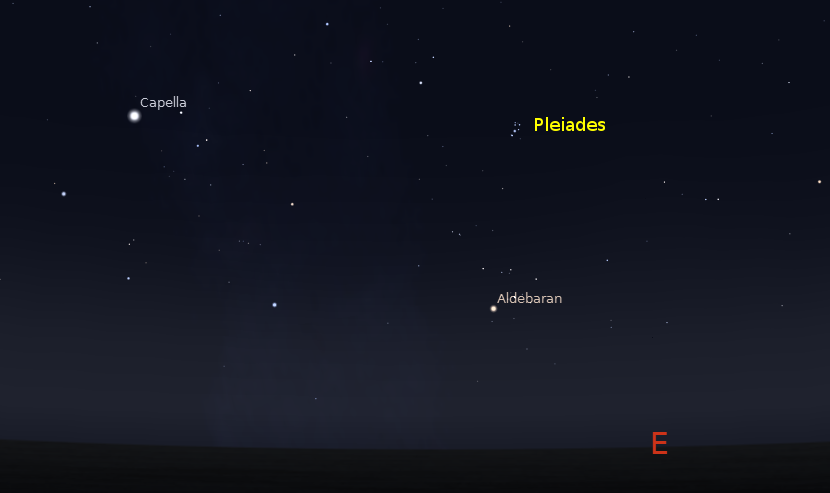
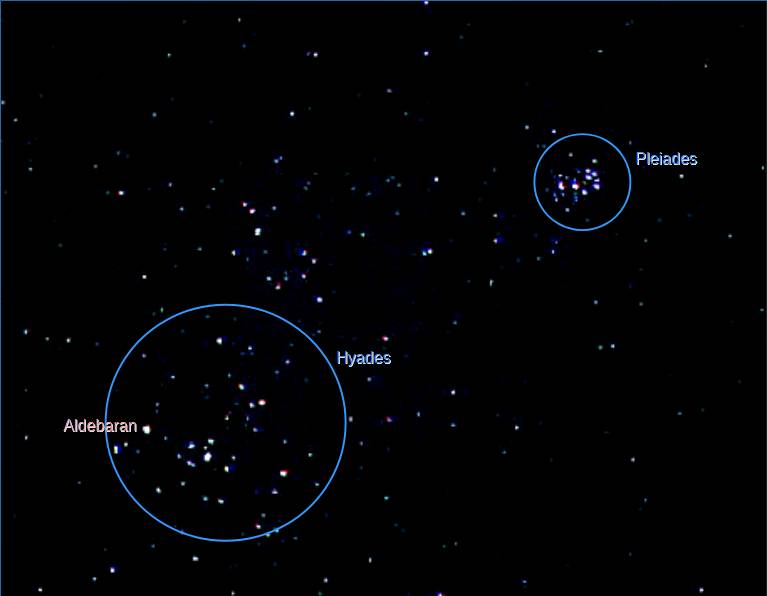
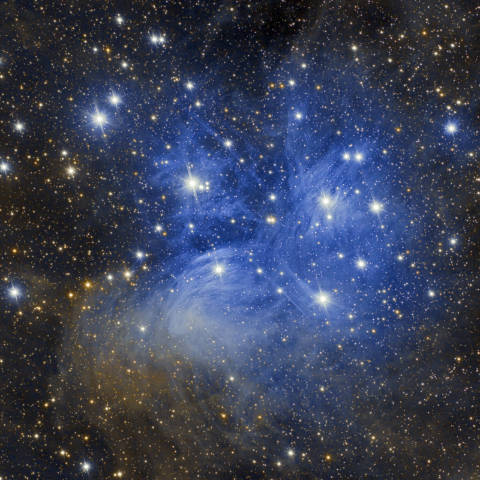
I’ll be coming back to the Pleiades from time to time over the autumn and winter months to cover, especially, the mythology of the Pleiades from different cultures.
Ephemeris: 10/30/2023 – Just in time for Halloween – Algol the Demon Star
This is Ephemeris for Monday, October 30th. Today the Sun will be up for 10 hours and 16 minutes, setting at 6:34, and it will rise tomorrow at 8:19. The Moon, 2 days past full, will rise at 7:29 this evening.
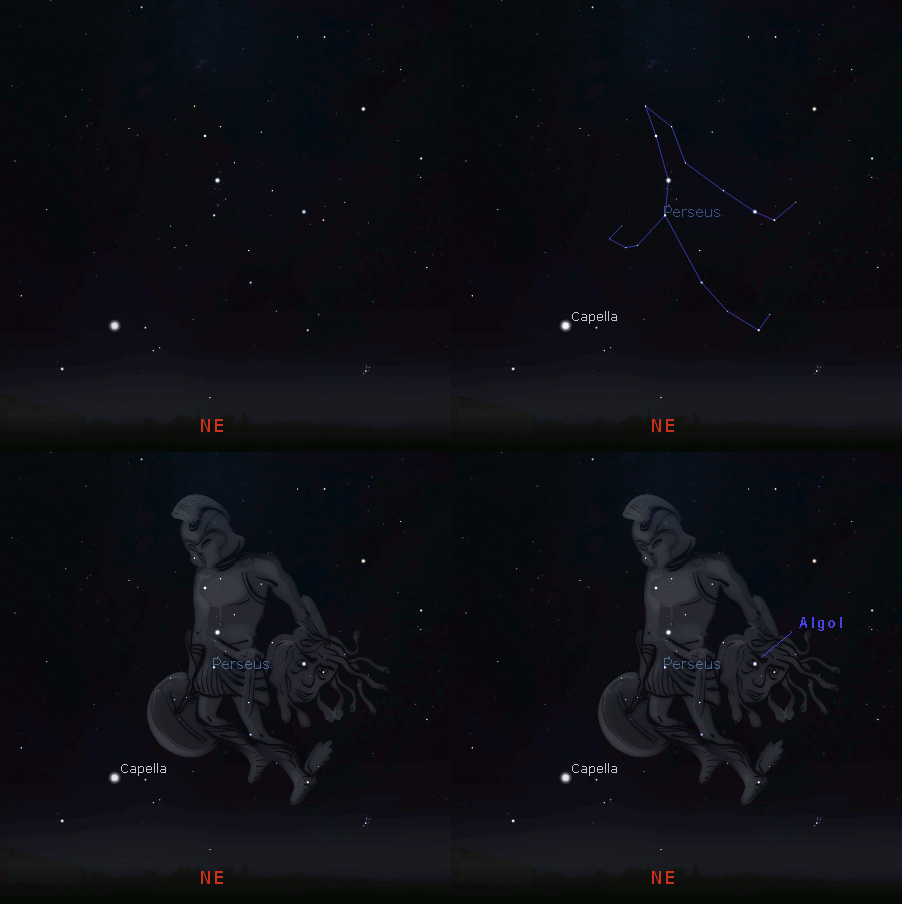
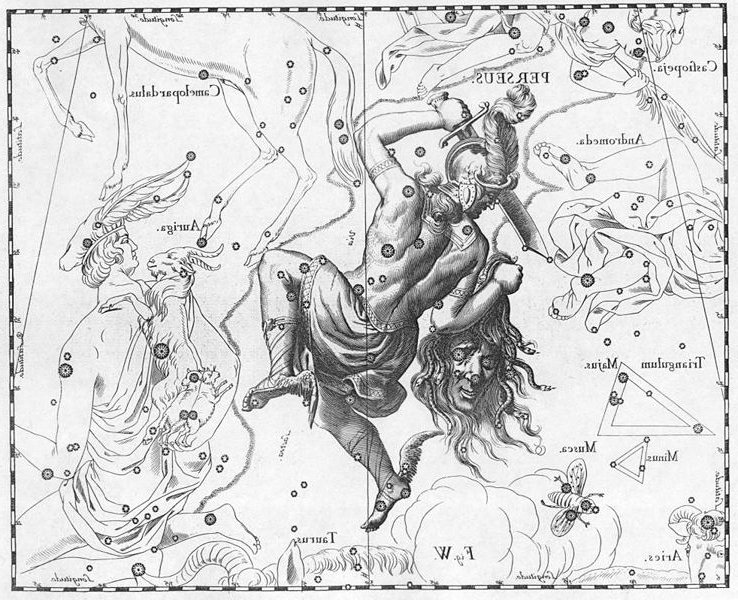
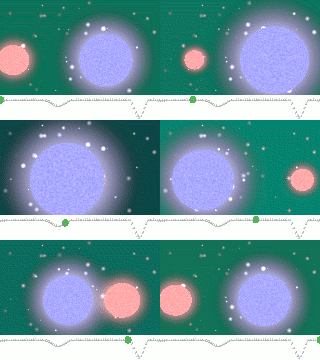
Not all the ghosts and goblins out tomorrow night will be children. One will be out every night because it’s a star. Its name is Algol, from the Arabic for Ghoul Star or Demon Star. It’s normally the second brightest star in the constellation Perseus the hero, visible in the northeast this evening. The star is located where artists have drawn the severed head of Medusa, whom he had slain. Medusa was so ugly that she turned all who gazed upon her to stone. Algol is her still glittering eye. The star got these names before astronomers found out what was wrong with it. They found out that it does a slow wink every two days, 21 hours. That’s because Algol is two stars that eclipse each other. Her next evening wink will be its dimmest at 10:12 p.m. this Wednesday, November 1st.
The astronomical event times given are for the Traverse City/Interlochen area of Michigan (EDT, UT –4 hours). They may be different for your location.
Addendum
For predictions of the minima of Algol for your time zone and for Universal Time (UT) go here: http://www.astropical.space/algol.php
Ephemeris: 10/19/2023 – The southern star of autumn – Fomalhaut
This is Bob Moler with Ephemeris for Thursday, October 19th. Today the Sun will be up for 10 hours and 48 minutes, setting at 6:51, and it will rise tomorrow at 8:04. The Moon, 2 days before first quarter, will set at 9:39 this evening.
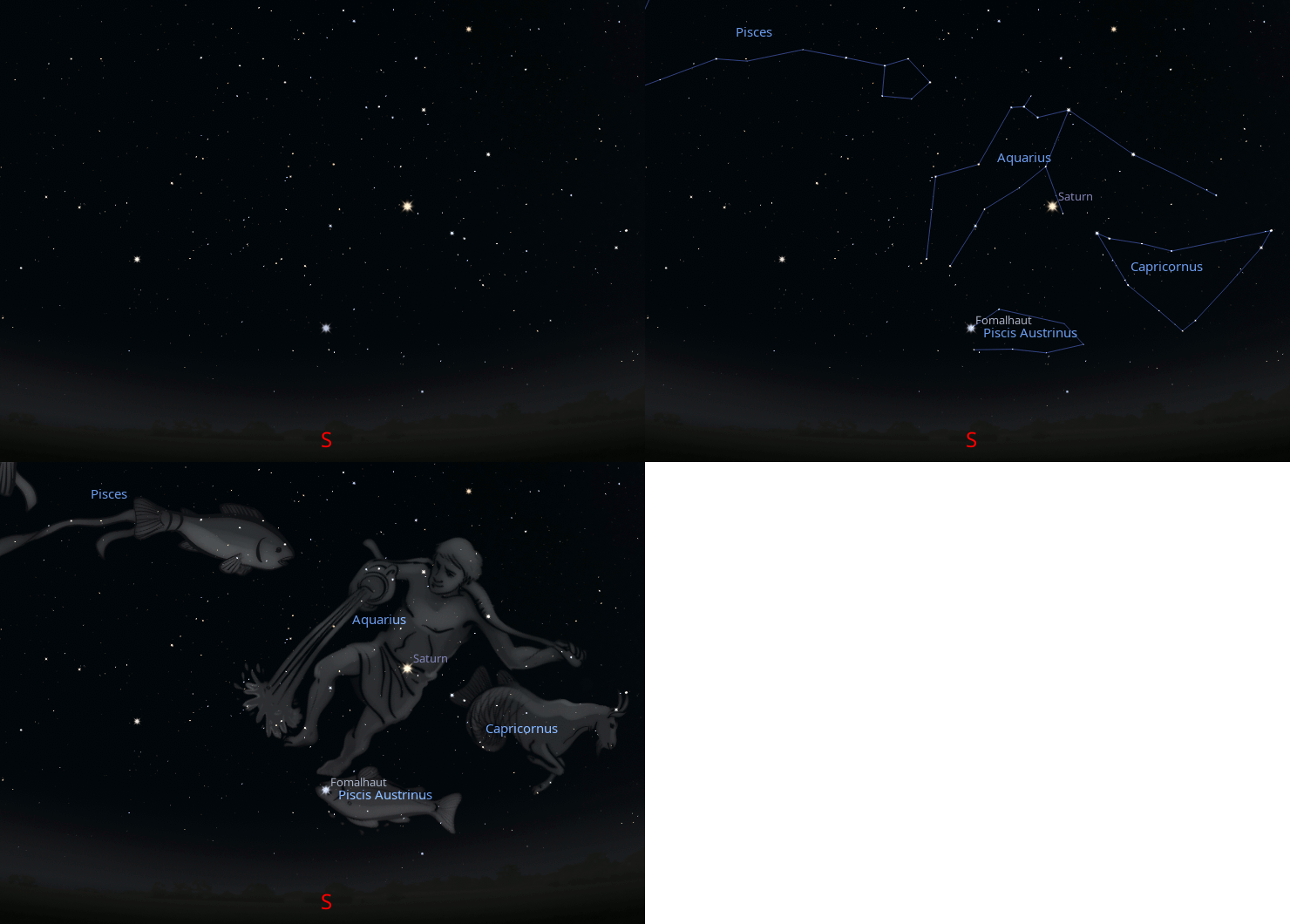
There’s a bright star that appears for only seven and a half hours on autumn evenings. Its appearance, low in the south-southeast at 9 p.m., is a clear indication of the autumn season. It is currently below the much brighter Saturn. The star’s name is Fomalhaut, which means fish’s mouth. That’s fitting because it’s in the constellation of Piscis Austrinus, the southern fish. At our latitude it’s kind of the fish that got away, because usually Fomalhaut appears to be quite alone low in the sky. For the last few years Jupiter and then Saturn have kept it company. In a couple of years Saturn will have moved on leaving Fomalhaut to its lonely vigil in the south.
The astronomical event times given are for the Traverse City/Interlochen area of Michigan (EDT, UT –4 hours). They may be different for your location.
Addendum
Ephemeris: 10/16/2023 – Finding the constellation of Andromeda
This is Ephemeris for Monday, October 16th. Today the Sun will be up for 10 hours and 57 minutes, setting at 6:56, and it will rise tomorrow at 8:00. The Moon, 2 days past new, will set at 7:43 this evening.
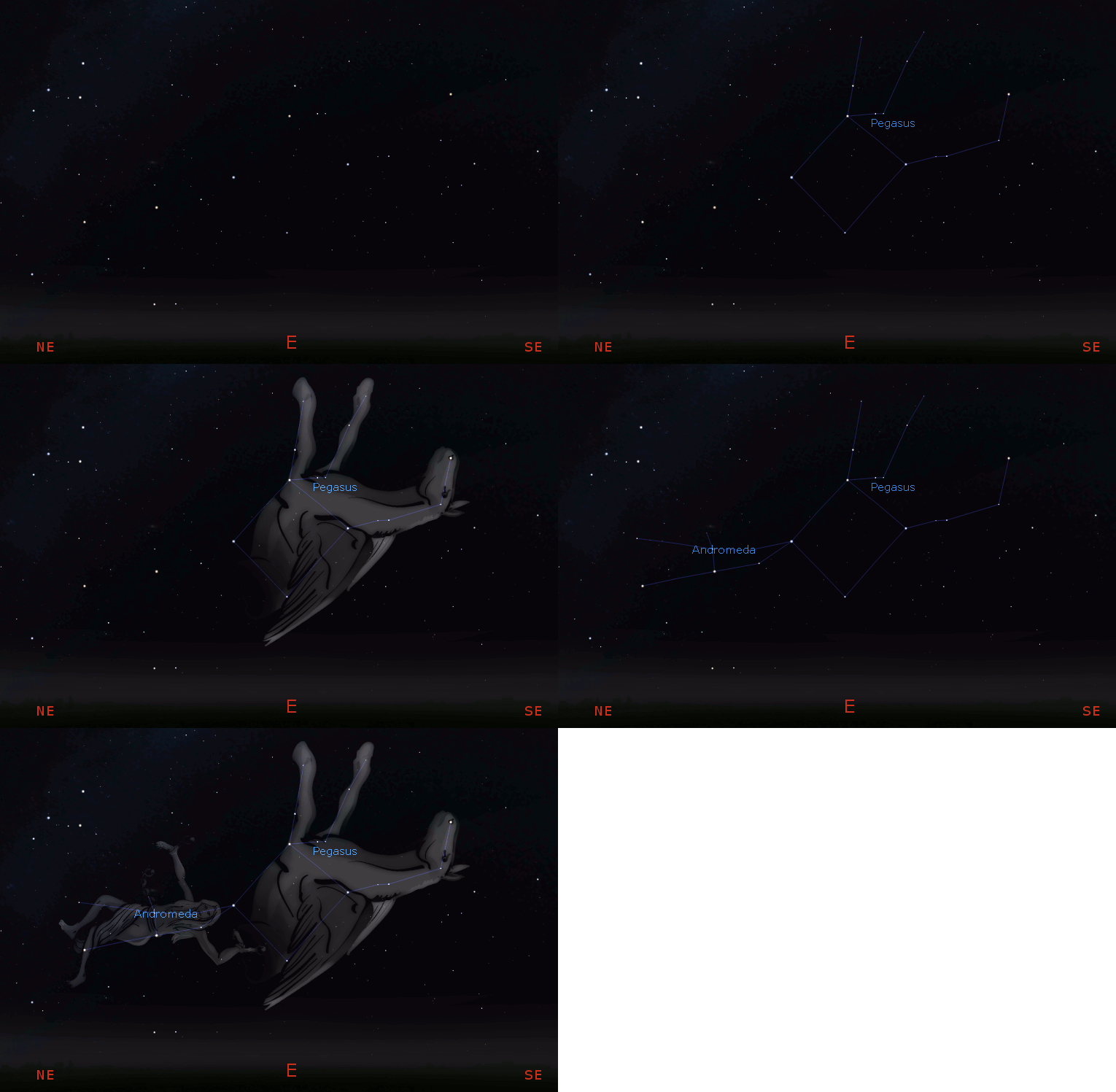
In the east at 9 this evening can be found a large square of stars, the Great Square of Pegasus the upside down flying horse. The square is standing on one corner. What looks like its hind legs stretching away from the left corner star is another constellation, Andromeda the chained princess. She is seen in the sky as two nearly horizontal but diverging curved strings of stars that curve upward. She was doomed to be devoured by a sea monster that was ravaging the coast due to her mother, Queen Cassiopeia’s boasting, which angered the god Poseidon. She was rescued by the hero Perseus, a nearby constellation, riding his steed Pegasus.
The astronomical event times given are for the Traverse City/Interlochen area of Michigan (EDT, UT –4 hours). They may be different for your location.
Addendum

Ephemeris: 10/03/2023 – How to find Cassiopeia the queen
This is Bob Moler with Ephemeris for Tuesday, October 3rd. Today the Sun will be up for 11 hours and 36 minutes, setting at 7:19, and it will rise tomorrow at 7:44. The Moon, 3 days before last quarter, will rise at 9:35 this evening.
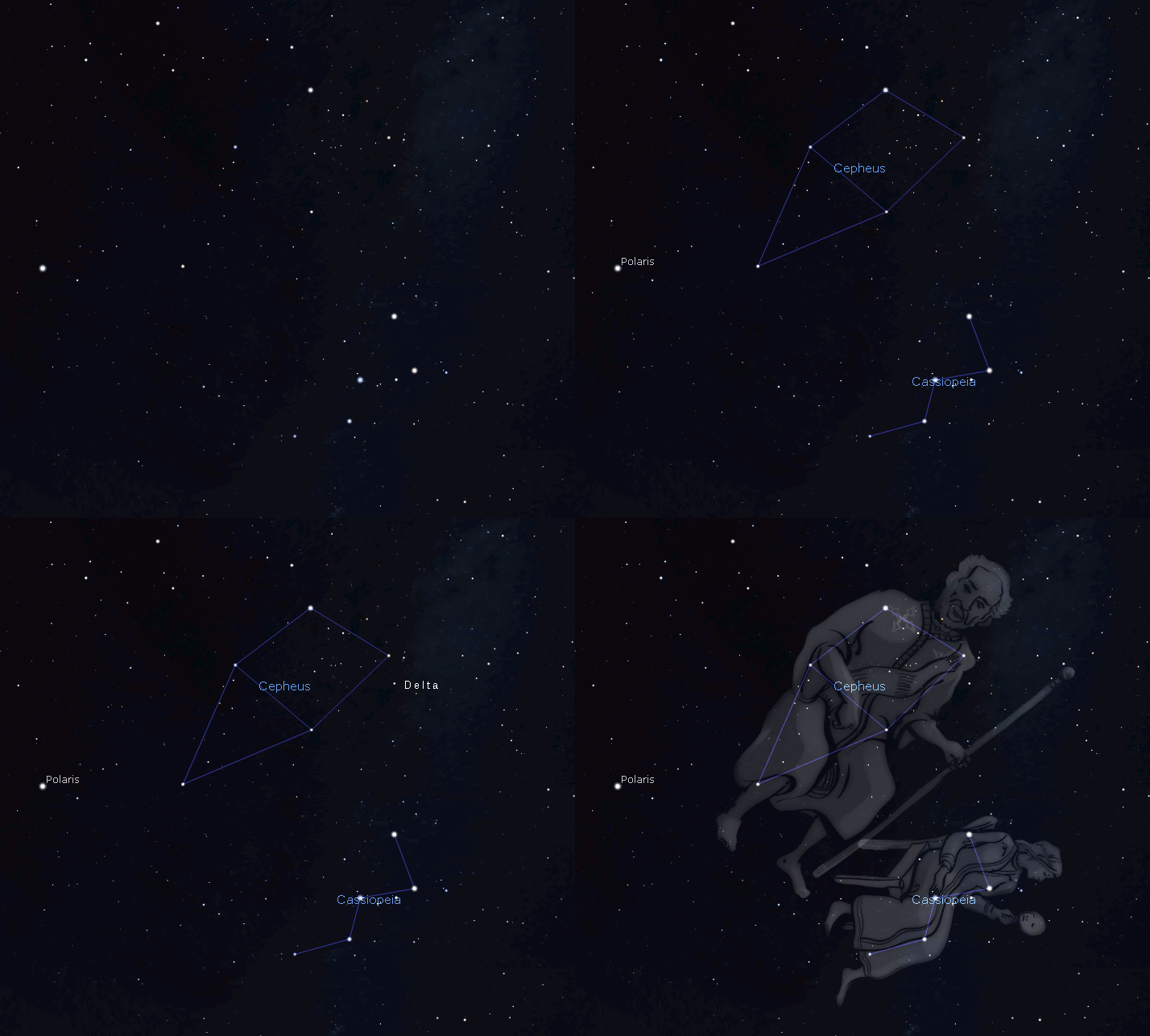
The stars of the autumn skies are slowly replacing the summer stars from the east. By 9 pm Scorpius the scorpion is gone, The Teapot asterism of Sagittarius is pouring its tea on the southwestern horizon. Looking halfway up in the northeastern sky these autumn the evenings one can find the letter W shaped constellation of Cassiopeia the queen. Cassiopeia is so far north that it never sets for us in Michigan. It is opposite the pole star Polaris from the handle of Big Dipper. Above and left of Cassiopeia is a dim upside down church steeple shaped constellation of Cepheus the king, her husband.
The astronomical event times given are for the Traverse City/Interlochen area of Michigan (EDT, UT –4 hours). They may be different for your location.
Addendum
Delta Cephei is the archetype for the important Cepheid variable stars that are used in distance measurement as far as the nearest galaxies. Delta itself varies its brightness from magnitude 4.37 up to 3.48. In astronomy the lower the magnitude the brighter the star. The difference of 0.89 magnitude equals a difference in brightness of 2.27 times. Delta has a pulsation period of 5.367 days. For Cepheids, the longer the period the brighter the star.
Ephemeris: 09/19/23 – How to find Pegasus in the sky
This is Ephemeris for Tuesday, September 19th. Today the Sun will be up for 12 hours and 20 minutes, setting at 7:46, and it will rise tomorrow at 7:27. The Moon, 3 days before first quarter, will set at 9:39 this evening.
Looking eastward at around 9 pm, one of the great constellations of autumn. A season that will start in four days. It is Pegasus the flying horse of Greek myth. Its most visible feature is a large square of four stars, now standing on one corner. This feature, called the Great Square of Pegasus, represents the front part of the horse’s body. The horse is quite aerobatic, because it is seen flying upside down. Remembering that fact, the neck and head is a bent line of stars emanating from the right corner star of the square. Its front legs can be seen in a gallop extending to the upper right from the top star of the square. From the left star extend, not hind legs but the constellation of Andromeda, the princess rescued with the help of Pegasus.
The astronomical event times given are for the Traverse City/Interlochen area of Michigan (EDT, UT –4 hours). They may be different for your location.
Ephemeris: 09/18/2023 – Saturn the planet and the god of old age
This is Bob Moler with Ephemeris for Monday, September 18th. Today the Sun will be up for 12 hours and 23 minutes, setting at 7:48, and it will rise tomorrow at 7:26. The Moon, halfway from new to first quarter, will set at 9:14 this evening.
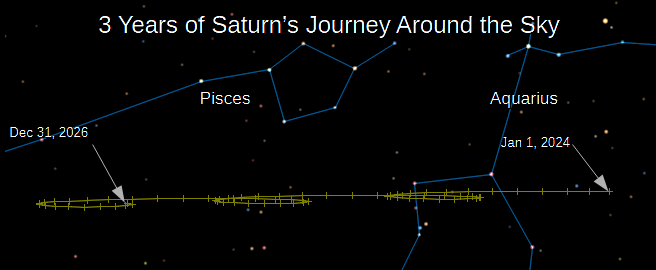
The planet Saturn is named after the Roman God of agriculture. He is often depicted as an old man with a scythe. It happens that Saturn is the most distant of the naked eye planets and as such takes nearly 30 years to totter its way around the Zodiac signifying his old age. Saturn is also depicted as Father Time at New Year’s Eve being replaced by the New Year’s baby. Saturn is the Roman Equivalent of the Greek god Cronus, where we get time related words like chronology, chronometer. The planet that is Saturn, appears to be the only planet referred to specifically in the Bible as being the closest planet to heaven. The goddess Ishtar, an equivalent of Venus, is mentioned as the “Queen of Heaven” in Jeremiah (Jer 7:18; 44:19), but not as a planet. The only mention of Venus is in its morning apparition as Lucifer, the Son of Morning, who is also equated with Satan.
The astronomical event times given are for the Traverse City/Interlochen area of Michigan (EDT, UT –4 hours). They may be different for your location.
Addendum
Ephemeris: 09/14/2023 – The stars of Cygnus the swan represent a few different figures
This is Ephemeris for Thursday, September 14th. Today the Sun will be up for 12 hours and 35 minutes, setting at 7:55, and it will rise tomorrow at 7:21. The Moon is new today, and won’t be visible.
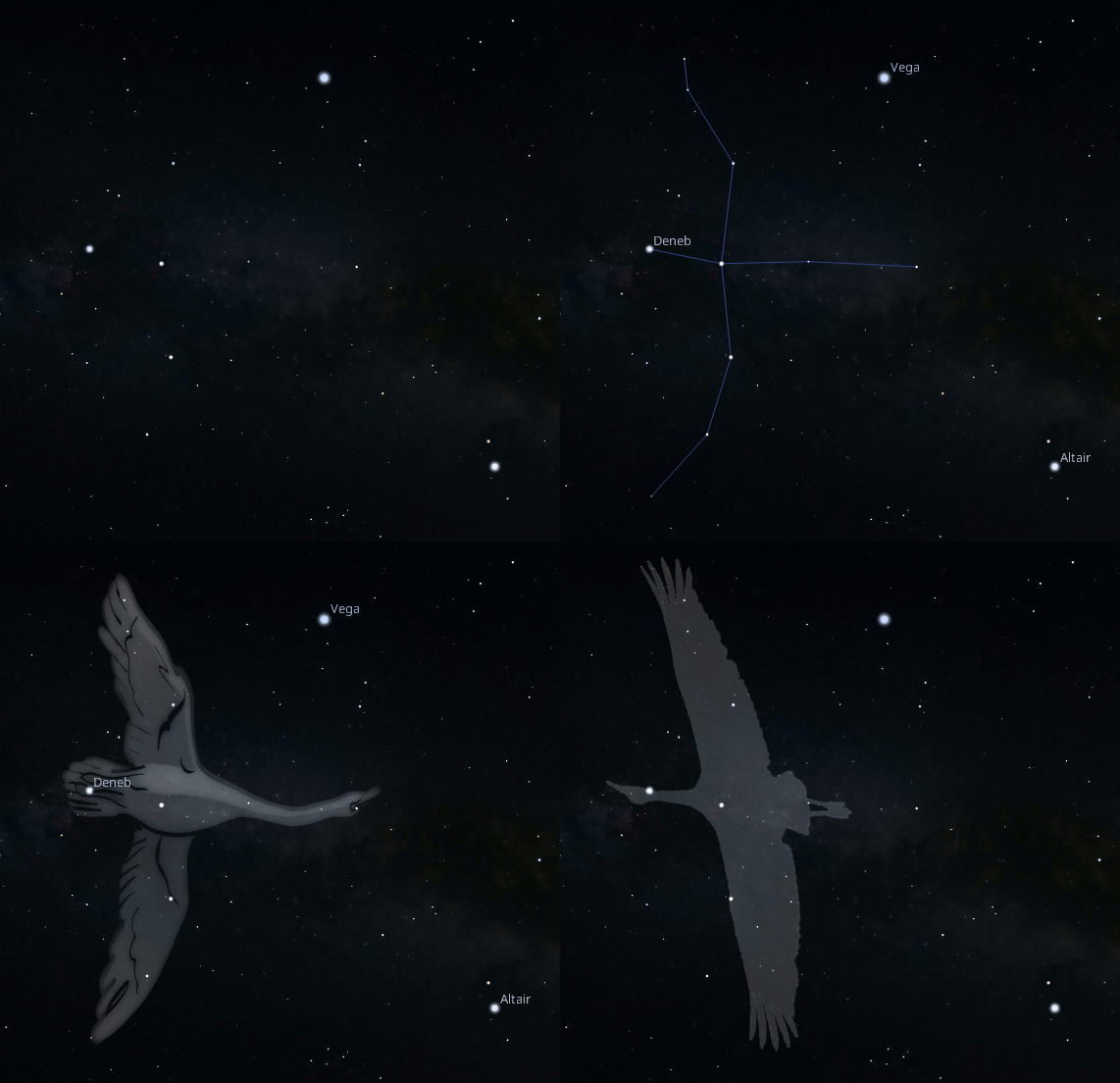
Nearly directly overhead in the evening is the bright star Deneb, part of the Summer Triangle of bright stars It’s at the top of the Northern Cross, an informal constellation or asterism. It makes a perfectly proportioned Christian cross. Deneb is also the tail of Cygnus the swan, seen flying southward through the Milky Way with its neck outstretched. Extra stars added to the Northern Cross extend the wings nicely. To the Anishinaabe native peoples of our area the stars here also represent two constellations, both are birds. The first is Ajijaak, the Sand Hill crane, The other is Bineshi Okanin, the Skeleton Bird, so named probably because the stars make a stick figure of a bird rather than an outline of one.
The astronomical event times given are for the Traverse City/Interlochen area of Michigan (EDT, UT –4 hours). They may be different for your location.
Addendum
Ephemeris: 09/12/2023 – Two small but distinctive constellations by the Summer Triangle
this is Ephemeris for Tuesday, September 12th. Today the Sun will be up for 12 hours and 41 minutes, setting at 7:59, and it will rise tomorrow at 7:19. The Moon, 2 days before new, will rise at 5:37 tomorrow morning.
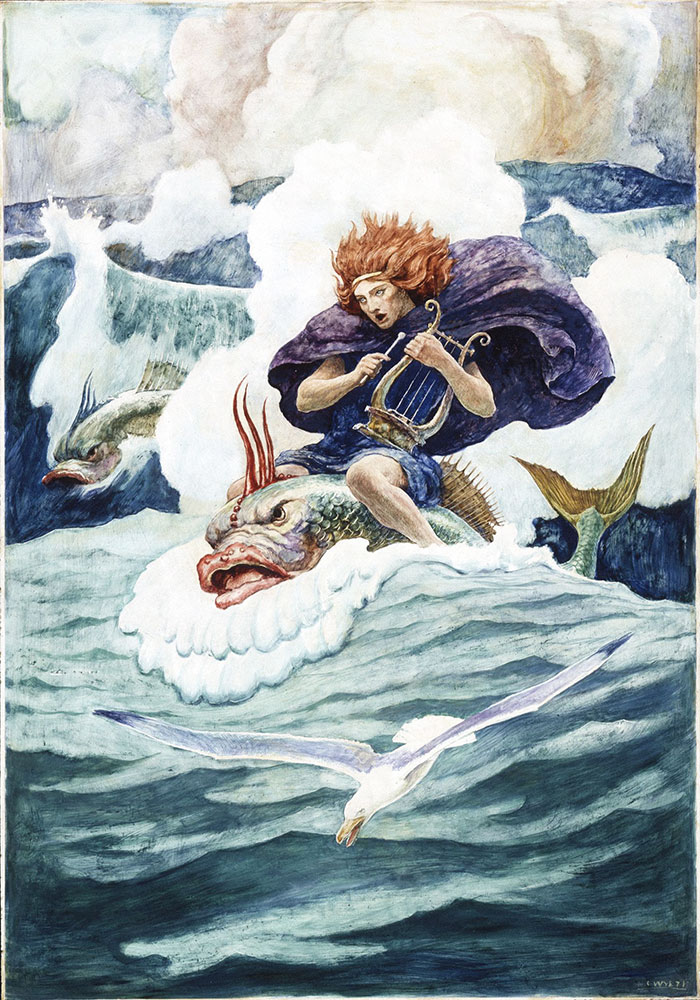
There are two small constellations in and near the Summer Triangle of bright stars. Both are near Altair the bottom star of the triangle in the southeast. The first is Delphinus the dolphin to the left of Altair. Delphinus is made-up of a small squished box of stars with another star below. It does look a dolphin leaping out of the water. The legendary Greek poet Arion, according to myth, was rescued by a dolphin. Also the little squished box is an asterism called Job’s Coffin, though no one knows the origin of that name. The second constellation is above Altair, and within the Summer Triangle. It is called Sagitta the arrow. The stars do line up to look like a short arrow. It’s supposed to represent Cupid’s dart.
The astronomical event times given are for the Traverse City/Interlochen area of Michigan (EDT, UT –4 hours). They may be different for your location.
Addendum

Painting circa 1938.
Ephemeris: 09/11/2023 – Scutum, an almost invisible constellation in the Milky Way
This is Ephemeris for Monday, September 11th. Today the Sun will be up for 12 hours and 44 minutes, setting at 8:01, and it will rise tomorrow at 7:17. The Moon, 3 days before new, will rise at 4:32 tomorrow morning.
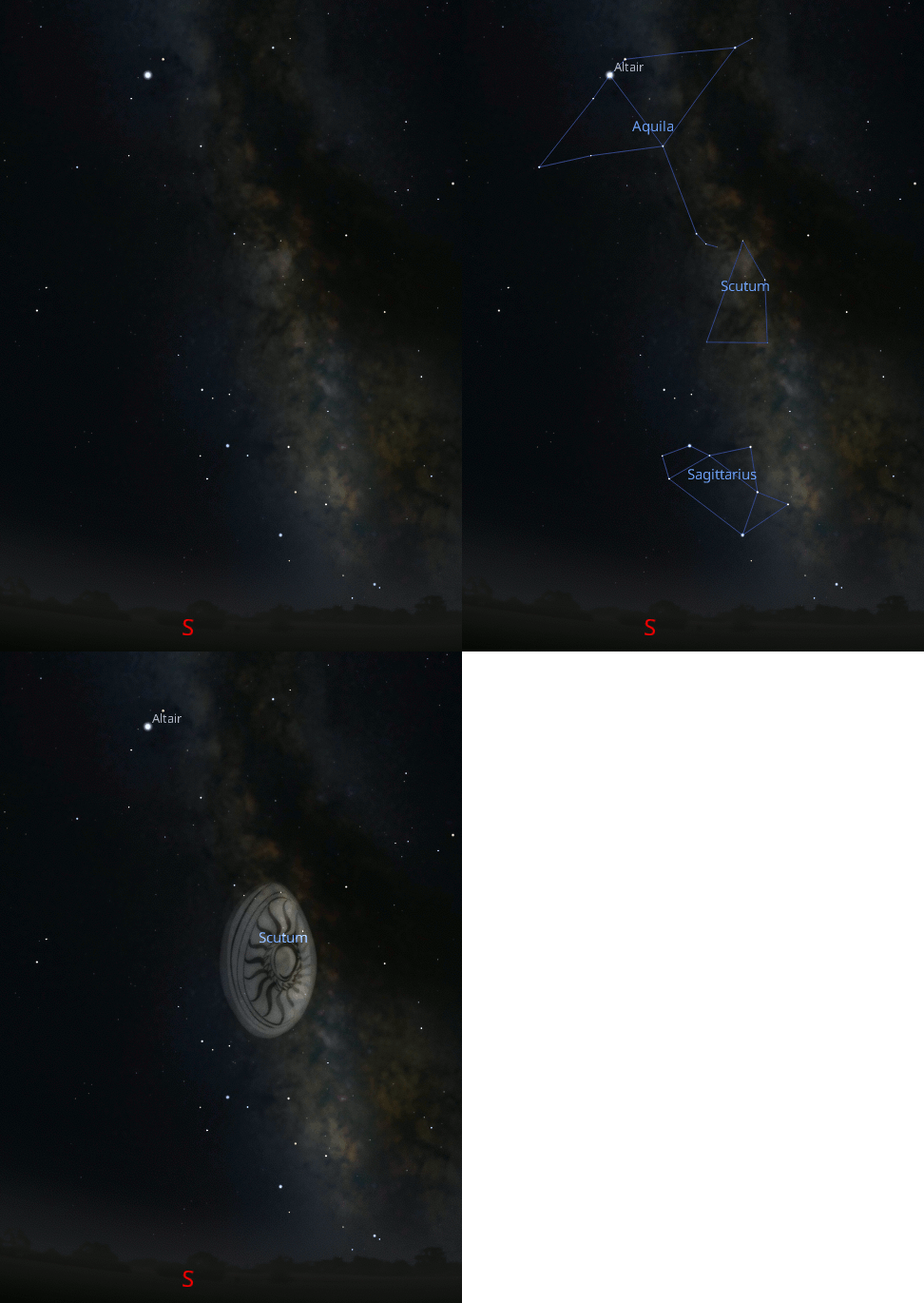
In the southern sky between the Teapot of Sagittarius below and Aquila the Eagle above, with Altair the southernmost star of the Summer Triangle, lies Scutum the shield of John Sobieski the Polish king who stopped the advance of the Turks at Kalenberg in 1683. The Polish half of me is very proud. Scutum is one of two official constellations which are related to real persons. The other one is Coma Berenices, a hank of the Egyptian Queen Berenice’s hair. However, the stars here are so dim and embedded in the glow of the Milky Way as to be nearly impossible to discern. Scutum lies in one of the richest portions of the Milky Way, wonderful to scan with binoculars and telescopes for star clusters and nebulae, clouds of dust and gas.
The astronomical event times given are for the Traverse City/Interlochen area of Michigan (EDT, UT –4 hours). They may be different for your location.
Addendum
 Bob Moler's Ephemeris Blog