Archive
Ephemeris: 08/17/2023 – Finding Aquila the eagle
This is Bob Moler with Ephemeris for Thursday, August 17th. Today the Sun will be up for 13 hours and 58 minutes, setting at 8:45, and it will rise tomorrow at 6:48. The Moon, 1 day past new, will set at 9:40 this evening.
Aquila the eagle is a constellation that lies in the Milky Way. It’s in the southeastern sky as it gets dark. Its brightest star, Altair, is one of the stars of the Summer Triangle, the group of three bright stars high in the east to southeastern sky in the evening now. Altair, in the head of the eagle, is flanked by two slightly dimmer stars, the shoulders of the eagle. The eagle is flying northeastward through the Milky Way. Its wings are seen in the wing tip stars. A curved group of stars to the lower right of Altair is its tail. Within Aquila, the Milky Way shows many dark clouds as part of the Great Rift that splits it here. The other summer bird is Cygnus the swan above and left of Aquila, flying in the opposite direction. It was said this was the eagle that attended the Roman god Jupiter.
The astronomical event times given are for the Traverse City/Interlochen area of Michigan (EDT, UT –4 hours). They may be different for your location.
Addendum

Animated Cygnus finder chart. Two small constellations are found near the head of Aquila. Created using Stellarium. Near the beak of the image of Aquila is Sagitta the arrow. A bit further left of Altair are the distinctive six stars of Delphinus the dolphin, as if it is jumping out of the water. Created using Stellarium and GIMP.
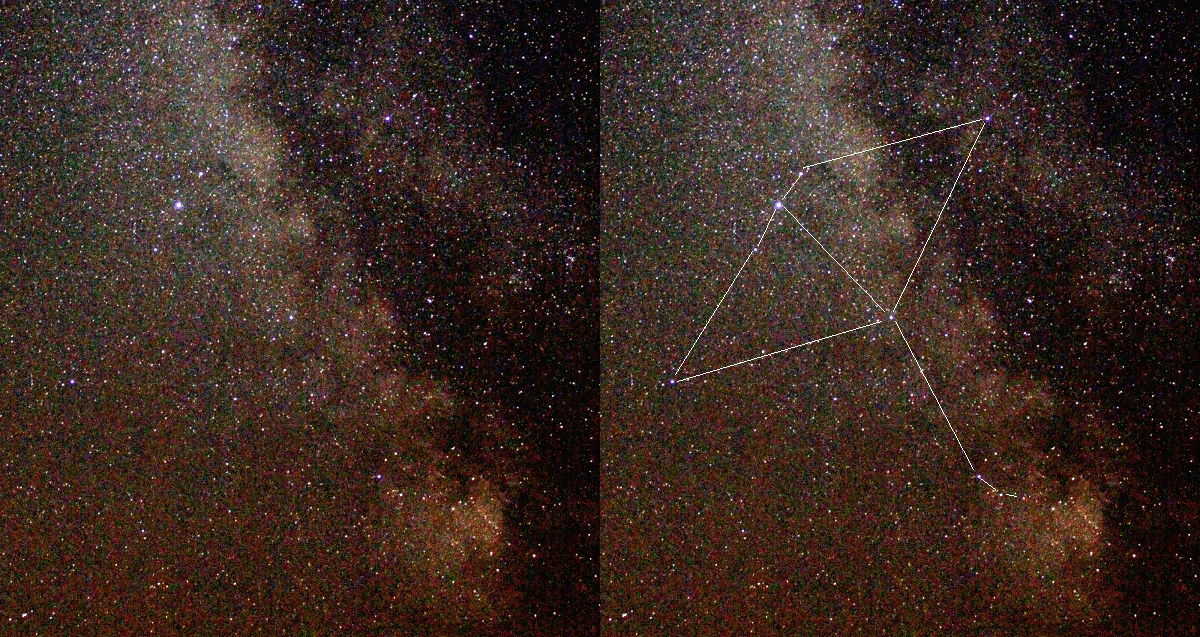
Animated photograph of Aquila the eagle with constellation lines taken on August 13, 2018, during the Perseid meteor shower. Alas, there are no Perseids in this photograph. The reddening of the image was in part due to the smoke and haze if the western states wildfires that year. Taken by me and processed using Registax and GIMP.
Ephemeris: 08/08/2023 – What the indigenous peoples of the northern Great Lakes thought of Scorpius
This is Ephemeris for Tuesday, August 8th. Today the Sun will be up for 14 hours and 22 minutes, setting at 8:59, and it will rise tomorrow at 6:37. The Moon, at last quarter today, will rise at 12:32 tomorrow morning.
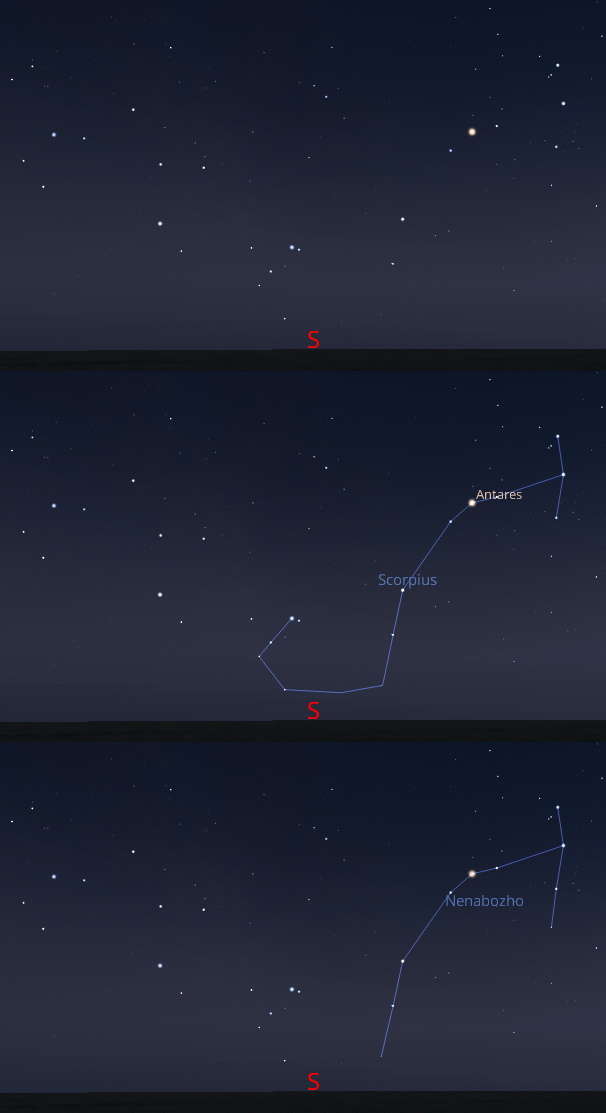
Scorpius the scorpion is now seen low in the southern sky in the at 10 pm. To me, the stars here make a very good scorpion. Scorpius was invented by the people of the Middle East, where scorpions are plentiful. The Anishinaabek native peoples of our area, however, saw here one of their legendary hero figures, Nenabozho. In the sky, the arc of four stars at the front of the scorpion and to the right of the bright star Antares is his bow. He is shooting an arrow toward the receding Great Panther or Curly Tail a constellation of spring whose curl of a tail is the head of the constellation Leo, now lost in the evening twilight in the west. Nenabozho was a hero in their creation stories, and a trickster who was sometimes seen as a rabbit.
The astronomical event times given are for the Traverse City/Interlochen area of Michigan (EDT, UT –4 hours). They may be different for your location.
Ephemeris: 08/07/2023 – Sagittarius, centaur or teapot?
This is Bob Moler with Ephemeris for Monday, August 7th. Today the Sun will be up for 14 hours and 25 minutes, setting at 9:00, and it will rise tomorrow at 6:36. The Moon, 1 day before last quarter, will rise at 12:06 tomorrow morning.
Looking due south and low in the sky at 11 pm, now is one of my favorite asterisms, the Teapot of the constellation Sagittarius. Sagittarius, classically, represents a centaur with a bow and arrow aimed at the heart of the constellation Scorpius to its west. I can find the bow and arrow here, but the half man, half horse figure of the centaur eludes me. However, the stout little teapot of the children’s song is quite obvious, with its base, lid on top, handle to the left and the spout to the right. To make things more realistic, the bright Milky Way seems to rise like steam from its spout. The Teapot is an asterism, an informal constellation. As the night goes on, the Teapot moves westward and appears to tilt, pouring its tea on the southwestern horizon.
The astronomical event times given are for the Traverse City/Interlochen area of Michigan (EDT, UT –4 hours). They may be different for your location.
Addendum
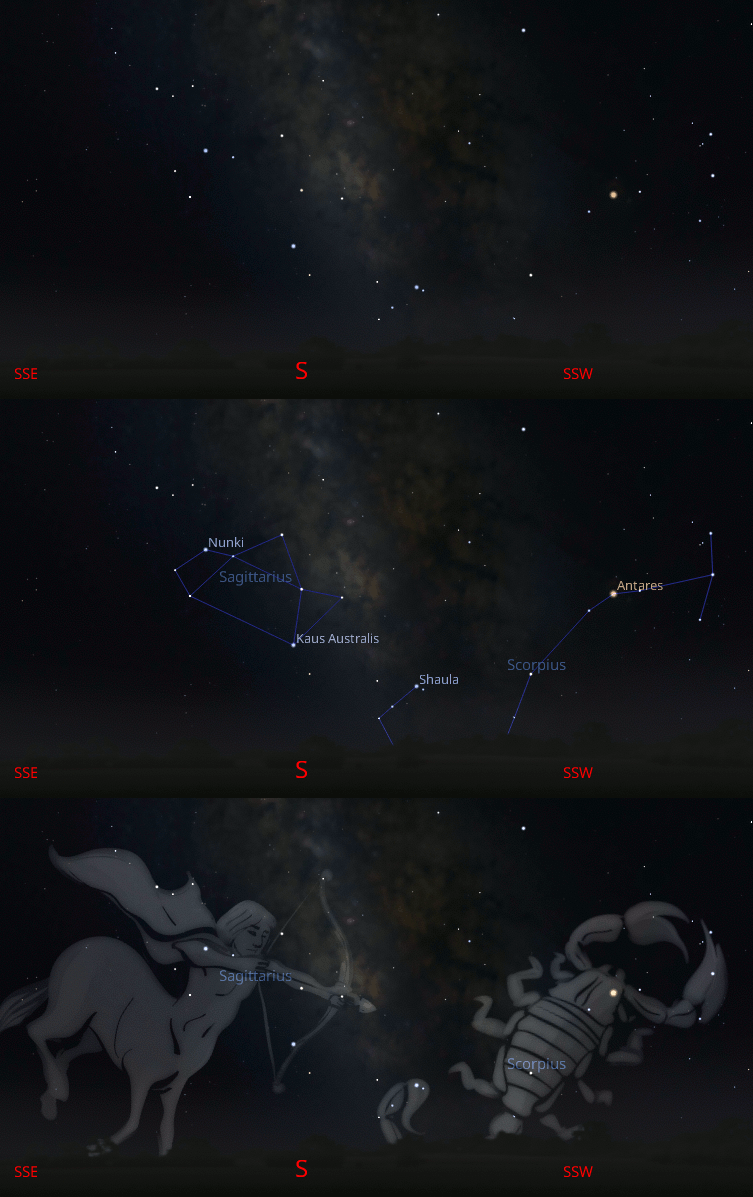
Sagittarius-Teapot finder animation for 11 pm, August 7, 2023. I’ve omitted all the lines in Sagittarius except the teapot stars from Stellarium, so there are more lines connecting the stars, most too far south to really spot easily from our latitude (45 degrees north). Click or tap on the image to enlarge it. Created using Stellarium and GIMP.
Named stars that are shown in the image above are Nunki, from an ancient tablet of thirty stars – The proclaimer of the sea. This is because the next four constellations to the east are water constellations: Capricornus, the sea goat; Aquarius, the water bearer; Pisces the fish; and Piscis Australis, the southern fish. Antares, in Scorpius, is of course the Rival of Mars, due to its reddish hue, and Mars passes Antares regularly on its journey through the Zodiac. An archer has to have his bow. Kaus Australis is the southern bow star. The star above that is Kaus Media, the middle bow star. And the star above and left of that is Kaus Borealis, the northern bow star. The constellation art that comes with Stellarium doesn’t match up with the stars of the bow.
The five stars on the left side of the Teapot is another asterism called the Milk Dipper.
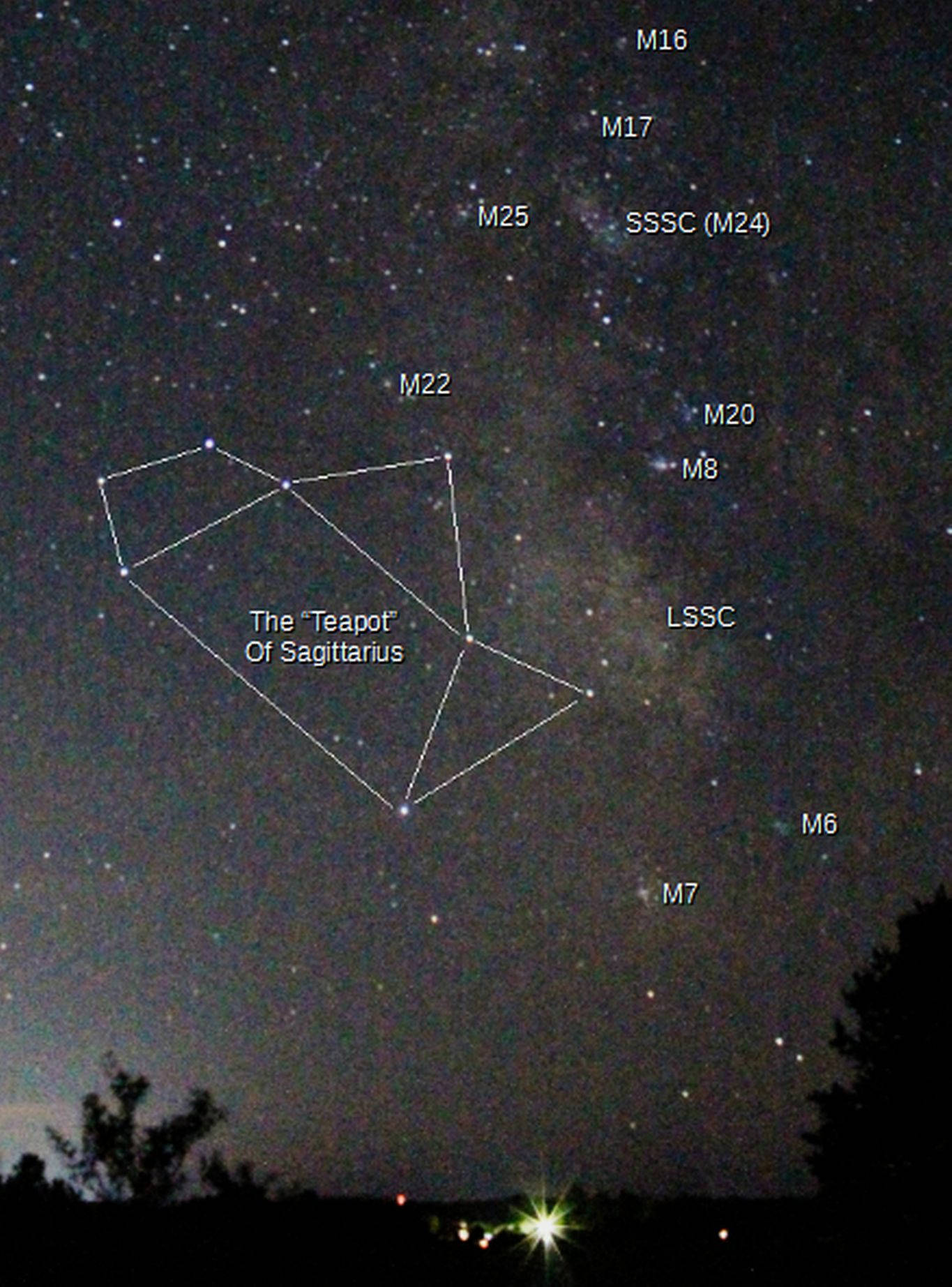
Sagittarius in a short time exposure with added annotations. This would be later in the evening, around midnight. The “M” designations are objects in Charles Messier’s catalog created in the latter half of the 18th century. LSSC is the Large Sagittarius Star Cloud, SSSC is the Small Sagittarius Star Cloud. These will be easily visible in binoculars. Credit Bob Moler.
Ephemeris: 07/21/2023 – Antares just looks weird
This is Ephemeris for Friday, July 21st. Today the Sun will be up for 15 hours and 3 minutes, setting at 9:20, and it will rise tomorrow at 6:18. The Moon, halfway from new to first quarter, will set at 11:34 this evening.
We’ve had our Fourth of July fireworks over two weeks ago, but there’s one star still celebrating as a sparkler. That’s Antares in Scorpius the scorpion low in the south tonight. We in Michigan always see Antares low in the south. It’s a bright red giant star which twinkles mightily, and since it’s low in the sky, it spits and sputters all kinds of colors due to our atmosphere’s turbulence, and the fact that we’re looking through so much of it at Antares. At it’s highest, due south, we are seeing it though 3 times more atmosphere than we would be if it was overhead. The more magnification one uses with binoculars or a telescope, the greater the sparkler effect. It is even called in sometimes as a UFO.
The astronomical event times given are for the Traverse City/Interlochen area of Michigan (EDT, UT –4 hours). They may be different for your location.
Addendum
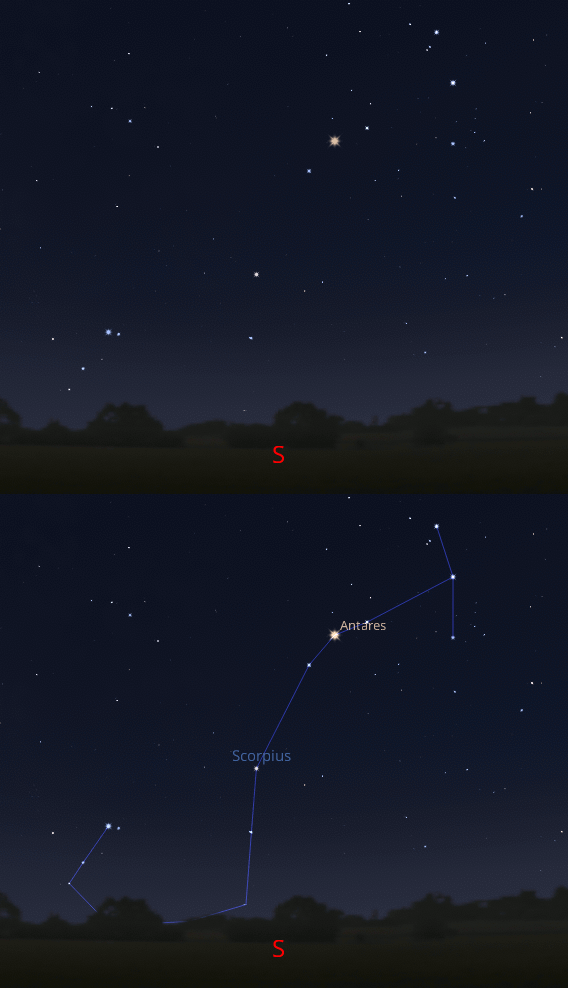
The name of the star Antares means “Rival of Mars”. “Ant” meaning anti, “Ares”, the Greek equivalent to the Roman god Mars. The reason is their similar reddish color. Antares is red because it is a cool star, a red giant. Mars is red due to its red dust, colored by iron rust. The planet passes Antares about every 23 1/2 months. Mars will next pass Antares on December 8th, 2023. However, the event will not be visible, because both the star and the planet will be too close to the Sun in the morning sky then. Their next meeting, or conjunction, after that, on November 17th, 2025 will be in the evening sky, but still too close to the Sun to be spotted. The conjunction after that will be in the evening sky, again rather close to the Sun, on October 28, 2027. For these three encounters, Mars will be north or above Antares, and dimmer than the star.
Ephemeris: 07/20/2023 – How Boötes and Ursa Major got into the sky
This is Ephemeris for Thursday, July 20th. Today the Sun will be up for 15 hours and 5 minutes, setting at 9:21, and it will rise tomorrow at 6:17. The Moon, 3 days past new, will set at 11:16 this evening.
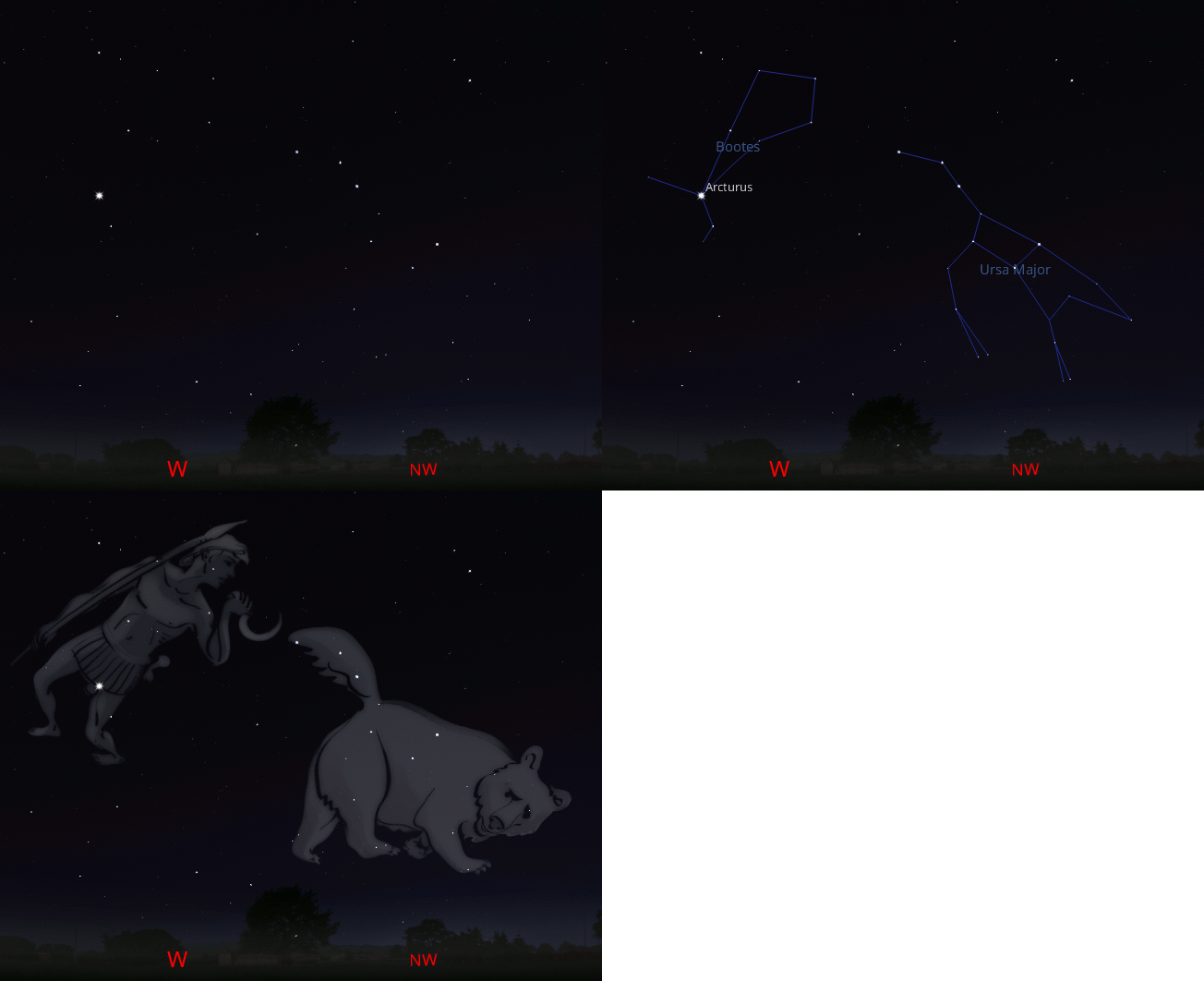
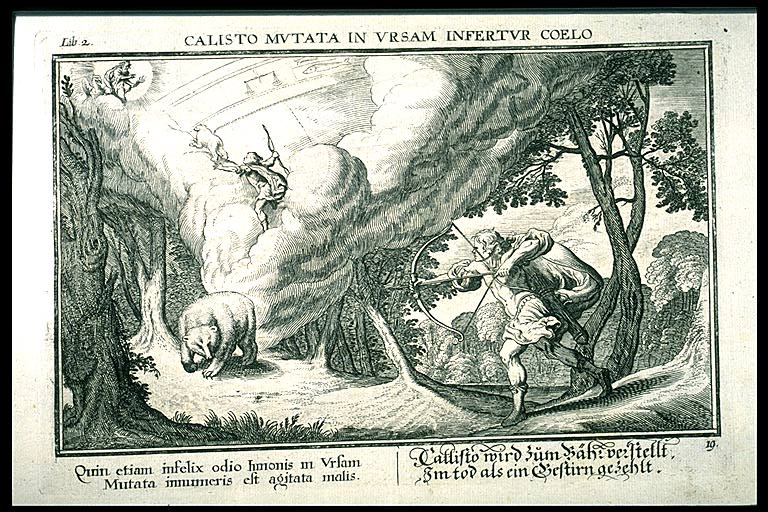
Seen in high in the west-southwest at 10:30 this evening is the kite shaped constellation of Boötes (pronounced Bo-o-tees) the herdsman. The bright star Arcturus is at the bottom of the kite. It is pointed to by the arc of the handle of the Big Dipper, part of Ursa Major, the Great Bear, over toward the northwest. Boötes represents a young hunter named Arcas, son of Callisto, a beautiful young lady who had the misfortune of being loved by Zeus, the chief of the Greek gods. Zeus’ wife, Hera, found out about it, and since she couldn’t punish Zeus, turned the poor woman into a bear. Arcas, many years later, unaware of the events surrounding his mother’s disappearance, was about to kill the bear when Jupiter intervened and placed them both in the sky to save her. Arcas still pursues her across the sky nightly.
The astronomical event times given are for the Traverse City/Interlochen area of Michigan (EDT, UT –4 hours). They may be different for your location.
Addendum
07/13/2023 – Ephemeris – How to find Ophiuchus the serpent bearer
This is Ephemeris for Thursday, July 13th. Today the Sun will be up for 15 hours and 17 minutes, setting at 9:27, and it will rise tomorrow at 6:10. The Moon, halfway from last quarter to new, will rise at 3:04 tomorrow morning.
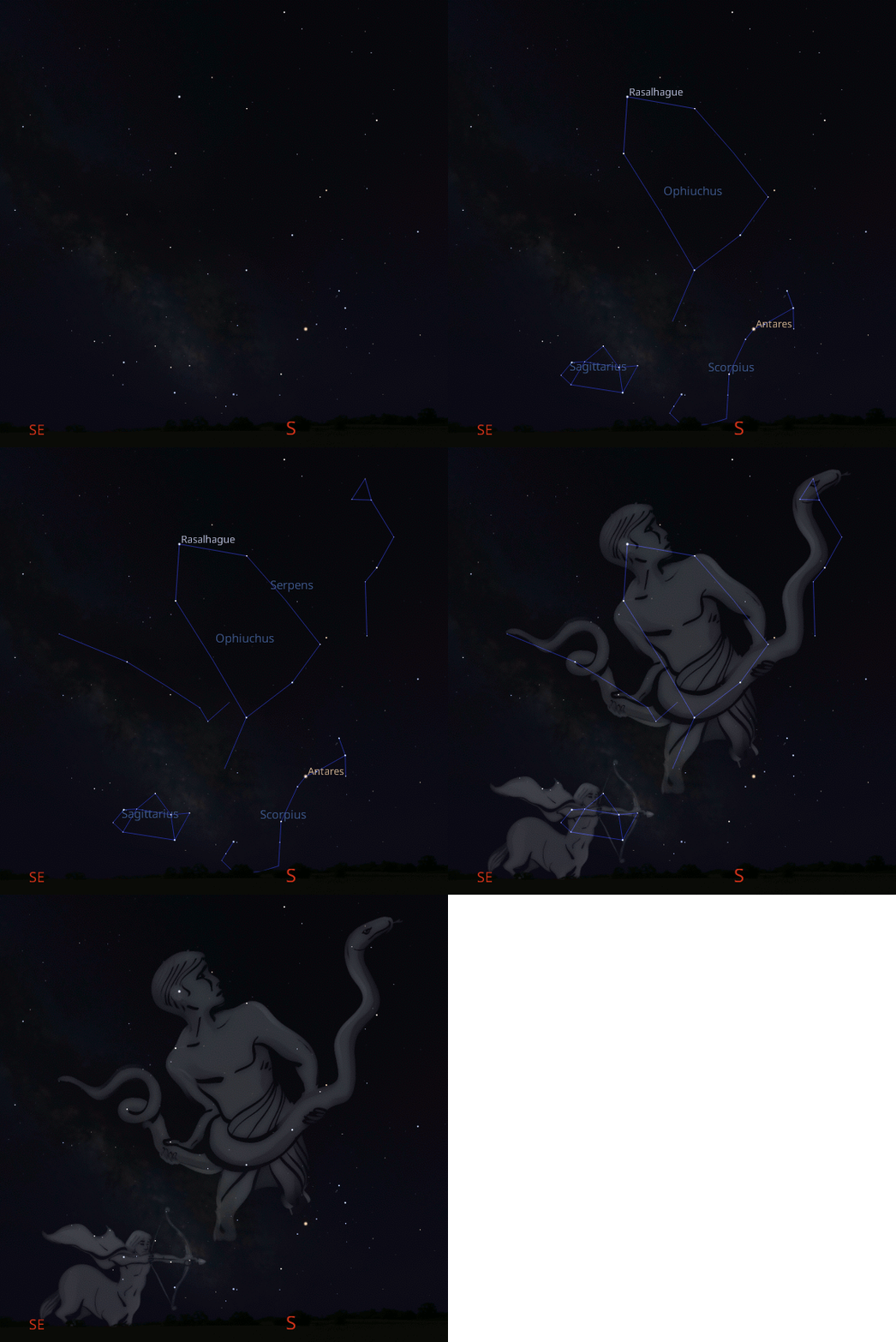
The red star Antares shines in the south at 11 p.m. In the constellation of Scorpius. In the area of sky above and a little to the left lies a large constellation of faint stars called Ophiuchus, the serpent bearer. The constellation shape is like a large bell, which reminds me of the head, shoulders and arms of a fellow that’s holding the snake-like a weight lifter pulling up a heavy barbell. The serpent he’s holding is Serpens, the only two-part constellation in the heavens. The head rises to Ophiuchus’ right, and the tail extends up to the left. In Greek myth, Ophiuchus represents the great physician Aesculapius, educated by the god Apollo, and the centaur Chiron, who is found in the stars as Sagittarius, now rising below and left of him.
The astronomical event times given are for the Traverse City/Interlochen area of Michigan (EDT, UT –4 hours). They may be different for your location.
Addendum
06/19/2023 – Ephemeris – Juneteenth and the flight to freedom
This is Bob Moler with Ephemeris for Juneteenth, Monday, June 19th. Today the Sun will be up for 15 hours and 34 minutes, setting at 9:31, and it will rise tomorrow at 5:56. The Moon, 1 day past new, will set at 11:22 this evening.
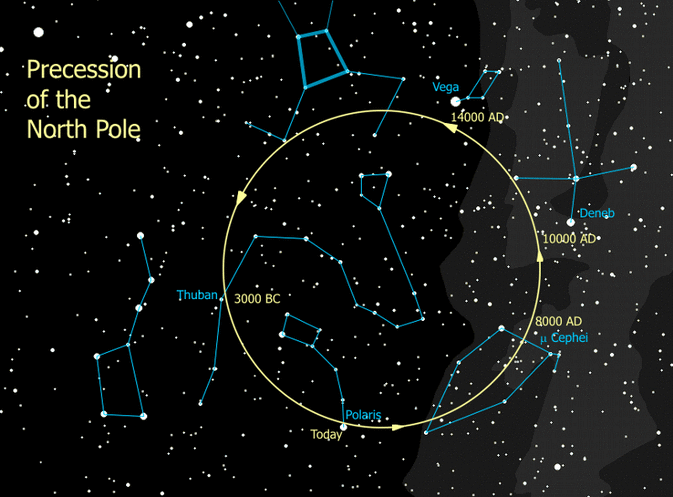
In 1865, it was on June 19th that the Union soldiers, led by Major General Gordon Granger, landed at Galveston, Texas with news that the war had ended and that the slaves were now free. Until then about the only path to freedom for the slaves was “To follow the Drinking Gourd”, or the Big Dipper, northward. The Big Dipper and the Great Bear, Ursa Major, has, for the last few millennia been the constellation of the north, being closer to the North Pole of the sky than it is now. The Earth’s axis has a slow wobble, called precession, caused by the gravitational pull of the Moon and Sun on Earth’s slight equatorial bulge of 30 miles wider than the pole to pole distance. That wobble period is nearly 26 thousand years.
The astronomical event times given are for the Traverse City/Interlochen area of Michigan (EDT, UT –4 hours). They may be different for your location.
Addendum

06/12/2023 – Ephemeris -Finding Hercules among the stars
This is Ephemeris for Monday, June 12th. Today the Sun will be up for 15 hours and 31 minutes, setting at 9:28, and it will rise tomorrow at 5:56. The Moon, 2 days past last quarter, will rise at 3:13 tomorrow morning.
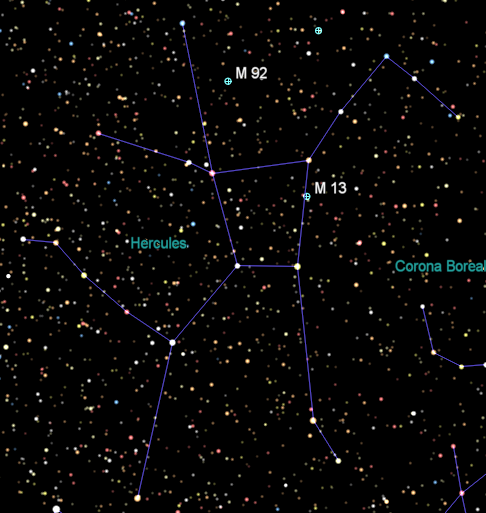
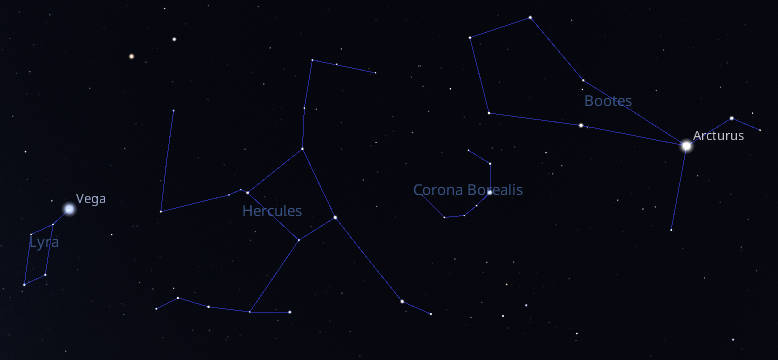
Orion, the hard luck mythical Greek hunter, gets a splashy constellation in the winter sky, but the greatest hero of all, Hercules, gets a dim group of stars on the border between the spring and summer stars. At 11 p.m. Hercules is high in the east-southeast. It is located above and right of the bright star Vega, in the east. Hercules’ central feature is a keystone shaped box of stars, called, of course, the Keystone of Hercules tilted to the left, which represents the old boy’s shorts. From the top and left corner stars extend lines of stars that are his legs, from the bottom and right stars, the rest of his torso and arms extend. So in one final indignity, he’s upside down in our sky. For those with a telescope, Hercules contains the beautiful globular star cluster Messier 13.
The astronomical event times given are for the Traverse City/Interlochen area of Michigan (EDT, UT –4 hours). They may be different for your location.
Addendum


06/09/2023 – Ephemeris – How to find Corona Borealis, the Northern Crown
This is Bob Moler with Ephemeris for Friday, June 9th. Today the Sun will be up for 15 hours and 29 minutes, setting at 9:27, and it will rise tomorrow at 5:57. The Moon, 1 day before last quarter, will rise at 2:13 tomorrow morning.
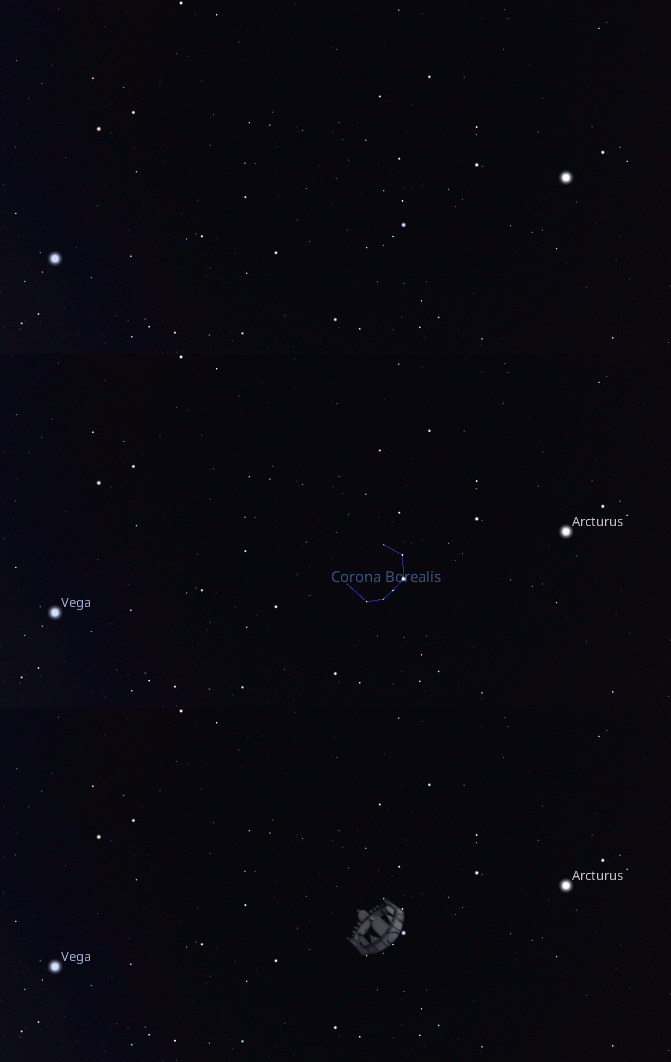
High in the southeast at 11 p.m. can be found a small but easily spotted constellation of Corona Borealis, the Northern Crown. It is located just east or left of the kite shaped constellation of Boötes, with its bright star Arcturus at the bottom. The Northern Crown is a three-quarters circle of stars, like a tiara, with a brighter star Alphecca at the bottom. Alphecca in Arabic means “Bright star of the broken ring of stars”. According to Greek mythology it belonged to Princess Ariadne, daughter of King Minos of Crete who helped Theseus escape from the Labyrinth of the Minotaur, only to be abandoned by him on an island. To the Native Chippewa and Ottawa of our area it is the Sweat Lodge.
The astronomical event times given are for the Traverse City/Interlochen area of Michigan (EDT, UT –4 hours). They may be different for your location.
Addendum
Next Monday I will post about Hercules.
05/16/2023 – Ephemeris – Regulus, the Little King Star
This is Ephemeris for Tuesday, May 16th. Today the Sun will be up for 14 hours and 51 minutes, setting at 9:05, and it will rise tomorrow at 6:12. The Moon, 3 days before new, will rise at 5:08 tomorrow morning.
Regulus is the brightest star in the constellation of Leo, the lion at the bottom of the backward question mark that is the head and mane of Leo. It’s in the southwest at 10 pm. Alluding to the lion’s status in the animal kingdom, Regulus is the little king star. It is dead last in order of brightness of the 21 brightest first magnitude stars, 1/13th the brightness of Sirius the brightest nighttime star, now lost in the evening twilight glow. To the Babylonians it was the king, the 15th of their constellations, that marked the passage of the Sun. Regulus is about 79 light years away, and 288 times the brightness of the sun. It is a rapidly spinning ellipsoid 3 times the sun’s diameter, rotating in just under 16 hours.
The astronomical event times given are for the Traverse City/Interlochen area of Michigan (EDT, UT –4 hours). They may be different for your location.
Addendum
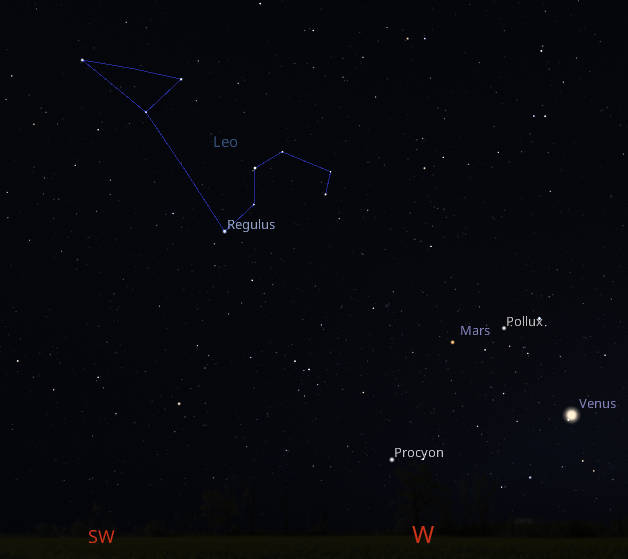
Regulus and Leo and the other stars and planets in the western sky at 11 pm, May 16, 2023. Created using Stellarium.
 Bob Moler's Ephemeris Blog