Archive
07/30/2019 – Ephemeris – Finding the Little Dipper
Ephemeris for Tuesday, July 30th. Today the Sun will be up for 14 hours and 44 minutes, setting at 9:11, and it will rise tomorrow at 6:27. The Moon, 1 day before new, will rise at 5:37 tomorrow morning.
11 p.m. is the best time now to spot the Little Dipper. It is difficult to spot, being much smaller and dimmer than the Big Dipper. However it is the Big Dipper that points to it, by the two stars at the front of the bowl of the Big Dipper to point to the North Star, Polaris, the star that doesn’t appear to move. That is the tip of the handle of the Little Dipper. The handle is seen in a curve of the stars upwards and a bit to the left to a small box of stars that is its bowl. The two brighter stars at the front of the bowl are called the Guard Stars because they guard the pole. The Little Dipper is not an official constellation, but is Ursa Minor the lesser bear. To the Anishinaabe native peoples of this area it represents a loon.
The times given are for the Traverse City/Interlochen area of Michigan. They may be different for your location.
Addendum

Little Dipper finder animation. The Little Dipper is also Ursa Minor and the Loon. Polaris is the Pole Star and North Star. The Guard Stars are Kochab and Pherkad. Except for the named stars, the Little Dipper stars are quite faint and require moonless skies away from the city to spot. Chick on the image to enlarge. Created using Stellarium and GIMP.
The loon image constellation art is part of the latest versions of Stellarium. Ojibwe (Anishinaabe) constellation art by Annette S Lee and William Wilson from Ojibwe Sky Star Map Constellation Guide, by A. Lee, W Wilson, C Gawboy, J. Tibbetts. ISBN 978-0-615-98678-4.
07/26/2019 – Ephemeris – Scorpius the starry scorpion crawls over the southern horizon
Ephemeris for Friday, July 26th. Today the Sun will be up for 14 hours and 53 minutes, setting at 9:15, and it will rise tomorrow at 6:23. The Moon, 2 days past last quarter, will rise at 2:11 tomorrow morning.
There’s a large constellation located low in the south at about about 11 tonight. It’s Scorpius the scorpion. Its brightest star is Antares in its heart, a red giant star, that I get calls about from time to time as being a UFO. With bright Jupiter above and left of it, it won’t be as noticeable. From Antares to the right is a star then a vertical arc of three stars that is its head. The Scorpion’s tail is a line of stars running down to the left of Antares swooping to the horizon before coming back up and ending in a pair of stars that portray his poisonous stinger. There is a beautiful star cluster seen in binoculars at that first bend in the tail that is unfortunately too low to appreciate from this far north. I was very impressed with it when spotting it from the Florida Keys when I was down there in 1986 observing Halley’s Comet.
The times given are for the Traverse City/Interlochen area of Michigan. They may be different for your location.
Addendum
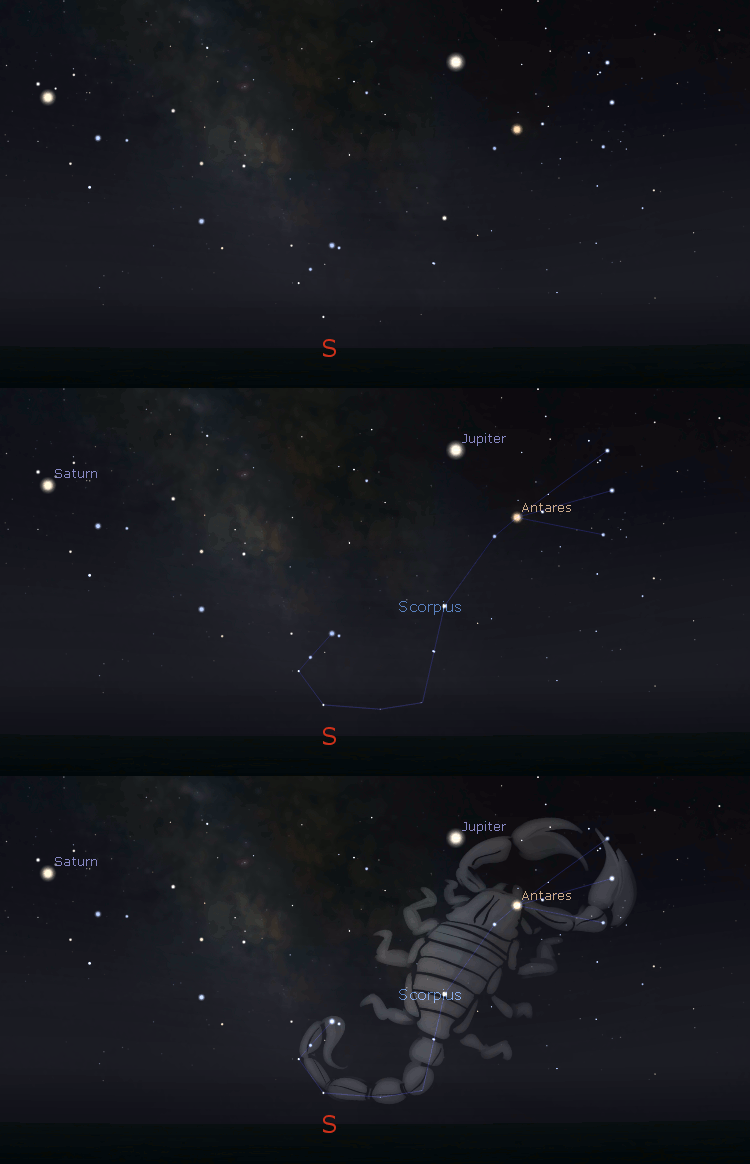
Animated finder chart for Scorpius the scorpion for 11 p.m. July 26, 2019. A year from now Jupiter will be just pass where Saturn is, and Saturn will be just off the frame of this image. Also note the “Teapot” asterism of Sagittarius just left of the scorpion with the Milky Way as steam rising from its spout.
07/25/2019 – Ephemeris – Finding the second bird in the summer sky: Aquila the eagle
Ephemeris for Thursday, July 25th. Today the Sun will be up for 14 hours and 55 minutes, setting at 9:16, and it will rise tomorrow at 6:22. The Moon, 1 day past last quarter, will rise at 1:40 tomorrow morning.
Aquila the eagle is a constellation that lies in the Milky Way. It’s in the southeastern sky as it gets dark. Its brightest star, Altair is one of the stars of the Summer Triangle, a group of three bright stars dominating the eastern sky in the evening now. Altair, in the head of the eagle, is flanked by two slightly dimmer stars, the shoulders of the eagle. The eagle is flying northeastward through the Milky Way. Its wings are seen in the wing tip stars. A curved group of stars to the lower right of Altair is its tail. Within Aquila the Milky Way shows many dark clouds as part of the Great Rift that splits it here. The other summer bird is Cygnus the swan above and left of Aquila, flying in the opposite direction.
The times given are for the Traverse City/Interlochen area of Michigan. They may be different for your location.
Addendum
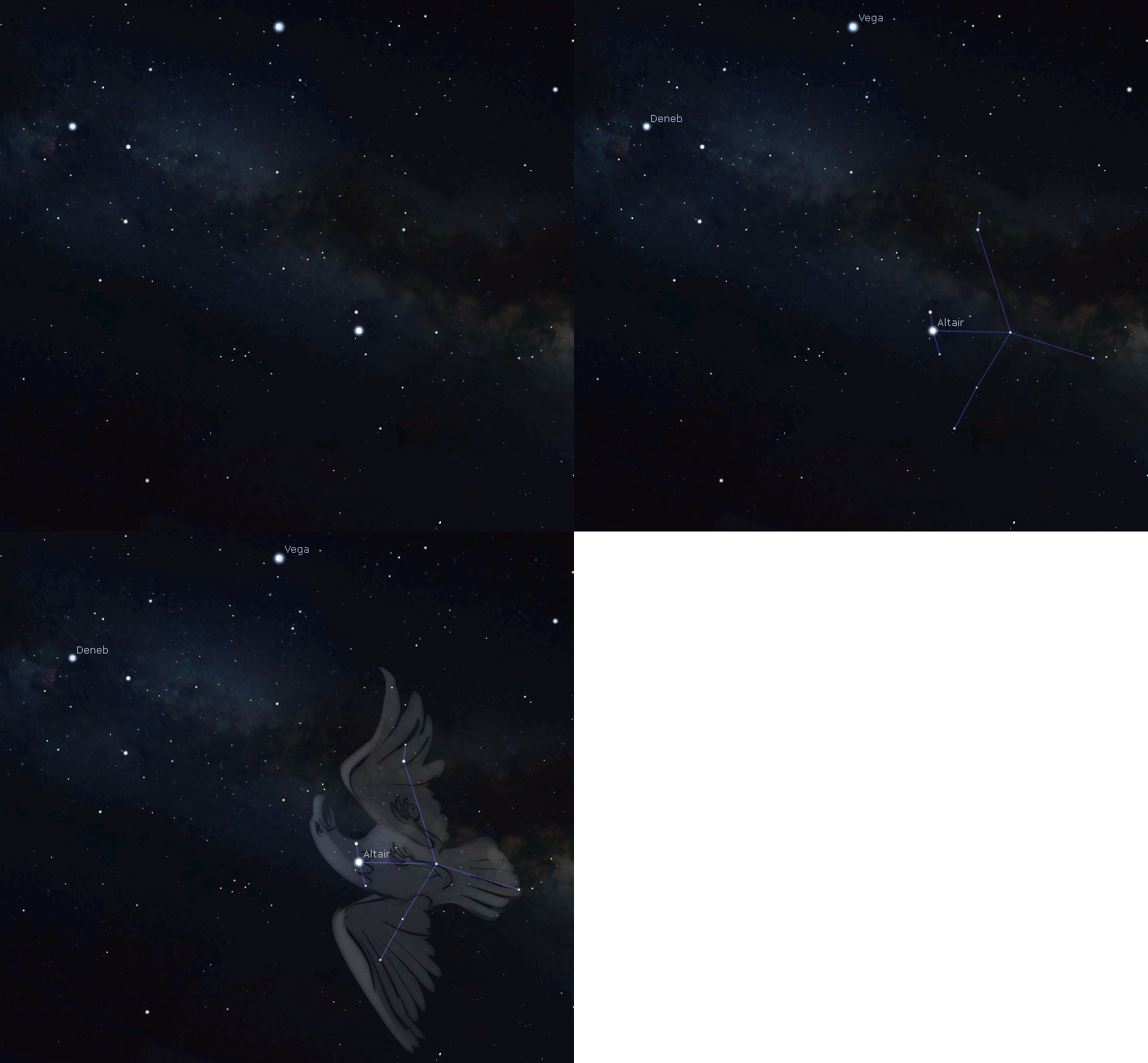
Animated Cygnus finder chart. Created using Stellarium.
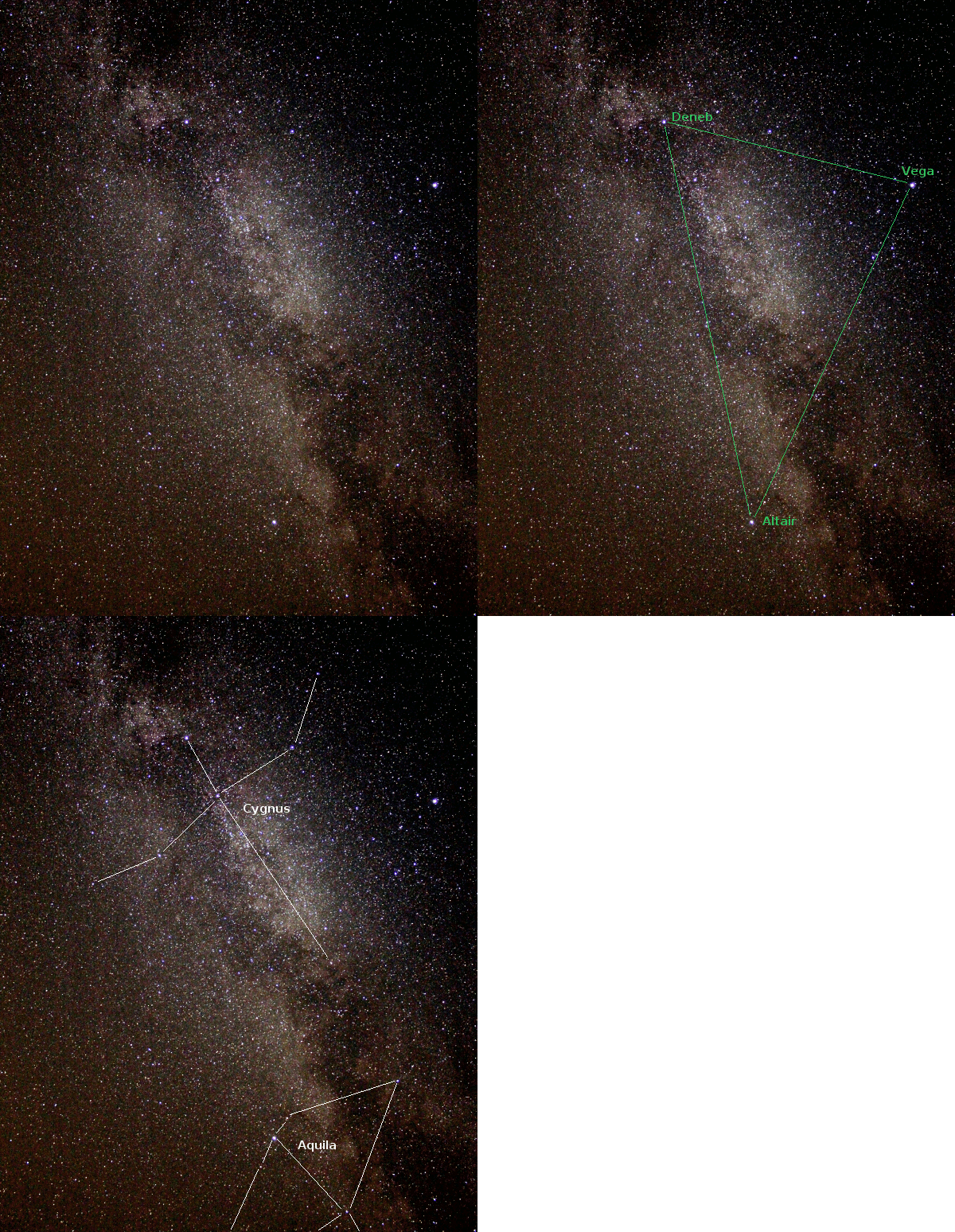
The Great Rift finder animation as seen in the Summer Triangle, also showing the constellations of Cygnus the swan and the the northern part of Aquila the Eagle. This image a stack of 5 30 second exposures taken the morning of the Perseid meteor shower last year in a vain attempt to capture some meteors.
07/23/2019 – Ephemeris – Finding Cygnus the swan in the stars
Ephemeris for Tuesday, July 23rd. Today the Sun will be up for 14 hours and 59 minutes, setting at 9:18, and it will rise tomorrow at 6:20. The Moon, 1 day before last quarter, will rise at 12:50 tomorrow morning.
High in the east at 11 p.m. Is the constellation of Cygnus the swan, flying south through the Milky Way. It is also called the Northern Cross. At the left, the tail of the swan or the head of the cross is the bright star Deneb, one of the stars of the Summer Triangle. The next star right is Sadr the intersection of the body and the wings of the swan seen in flight, or the intersection of the two pieces of the cross. There are two or three stars farther to the right that delineate the swan’s long neck or upright of the cross, that ends with the star Alberio in the beak of the swan or foot of the cross. The wings of the swan span a couple of more stars on each side than the crosspiece of the cross.
The times given are for the Traverse City/Interlochen area of Michigan. They may be different for your location.
Addendum
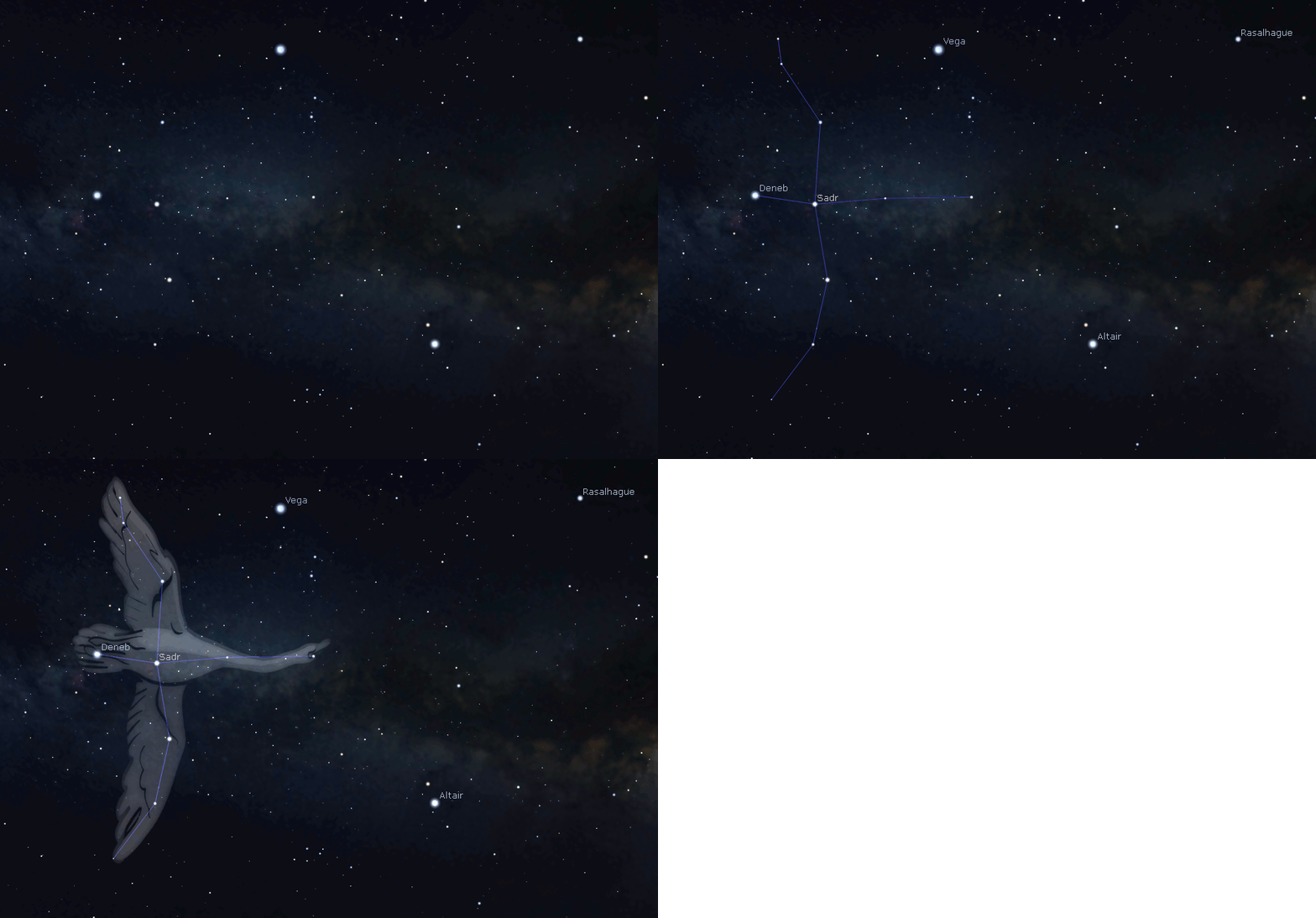
Animated Cygnus finder chart. Included also are, beside Deneb, the other stars of the Summer Triangle: Vega and Altair and their constellations Lyra the harp and Aquila. See if you can find them. Click on the image to enlarge. Created using Stellarium.
07/02/2019 – Ephemeris – Looking for Draco the Dragon
Ephemeris for Tuesday, July 2nd. Today the Sun will be up for 15 hours and 30 minutes, setting at 9:31, and it will rise tomorrow at 6:02. The Moon is new today, and won’t be visible.
Later today Chile and Argentina will experience a total solar eclipse. High in the northern sky at 11 p.m. lies the twisted constellation, that of Draco the dragon. This dragon is more like the snakelike Chinese dragon than the dinosaur-like dragon of European legend. I find it better to start at the tail of Draco, to trace him out in the stars. Draco’s tail starts between the bowl of the Big Dipper and the Little Dipper. The Dragon is seen in a line of stars that extends parallel to the handle of the Big Dipper before curving around the bowl of the Little Dipper then bends back toward the southeast. The head of Draco is an odd box of stars above the bright star Vega, high in the east. Though not made up of very bright stars, Draco has an easy shape to trace.
The times given are for the Traverse City/Interlochen area of Michigan. They may be different for your location.
Addendum

Draco finder animation for 11 p.m. July 2. Click on the image to enlarge. Created using Stellarium and GIMP.
06/27/2019 – Ephemeris – The constellation of Lyra the lyre or harp
Ephemeris for Thursday, June 27th. Today the Sun will be up for 15 hours and 33 minutes, setting at 9:32, and it will rise tomorrow at 5:59. The Moon, 2 days past last quarter, will rise at 3:13 tomorrow morning.
High up in the eastern sky at 11 p.m. can be found a bright star just north of a small, narrow, but very distinctive parallelogram of stars. They are the stars of the constellation Lyra the harp. The bright star is Vega, one of the twenty one brightest first magnitude stars. Vega is actually the 4th brightest night-time star. The harp, according to Greek mythology, was invented by the Greek god Hermes. The form of the harp in the sky, is as he had invented it: by stretching strings across a tortoise shell. Hermes gave it to his half-brother Apollo, who in turn gave it to the great musician Orpheus. The Sun has a motion with respect to most stars around it. Its direction is towards the vicinity of Lyra.
The times given are for the Traverse City/Interlochen area of Michigan. They may be different for your location.
Addendum
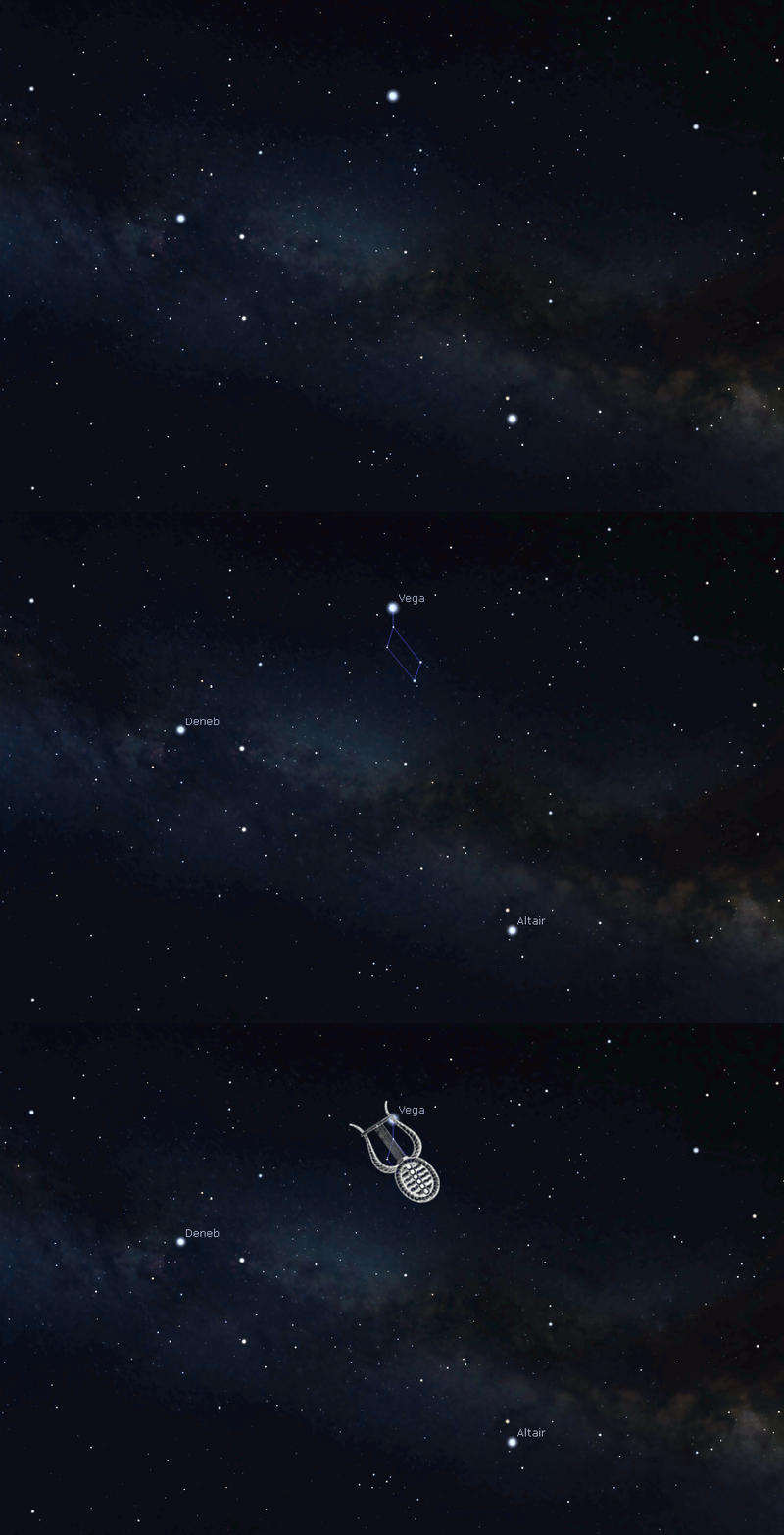
Animated Lyra finder chart. The lyre image not supplied by Stellarium but is from The World’s Earliest Music by Hermann Smith, Figure 60, A Project Gutenberg eBook, and captioned “The Chelys or Greek Tortoiseshell Lyre”. Click on the image to enlarge. Created using Stellarium.
06/24/2019 – Ephemeris – Ophiuchus the serpent bearer
Ephemeris for Monday, June 24th. Today the Sun will be up for 15 hours and 34 minutes, setting at 9:32, and it will rise tomorrow at 5:58. The Moon, 1 day before last quarter, will rise at 2 tomorrow morning.
The planet Jupiter shines brightly in the south-southeast at 11 p.m. In the area of sky above it lies a large constellation of faint stars called Ophiuchus, the serpent bearer. Ophiuchus represents the legendary physician Aesculapius. The constellation shape is like a large bell, which reminds me of the head, shoulders and arms of a fellow that’s holding the snake like a weight lifter struggling to pull up a heavy barbell. Serpens, the constellation of the serpent is in the sky in two sections. The front end lies to the right as Serpens Caput, and wends its way up towards Corona Borealis, the Northern Crown. Serpens Cauda, the tail rises to the left of Ophiuchus. It’s a rewarding sight, and not that hard to spot.
The times given are for the Traverse City/Interlochen area of Michigan. They may be different for your location.
Addendum
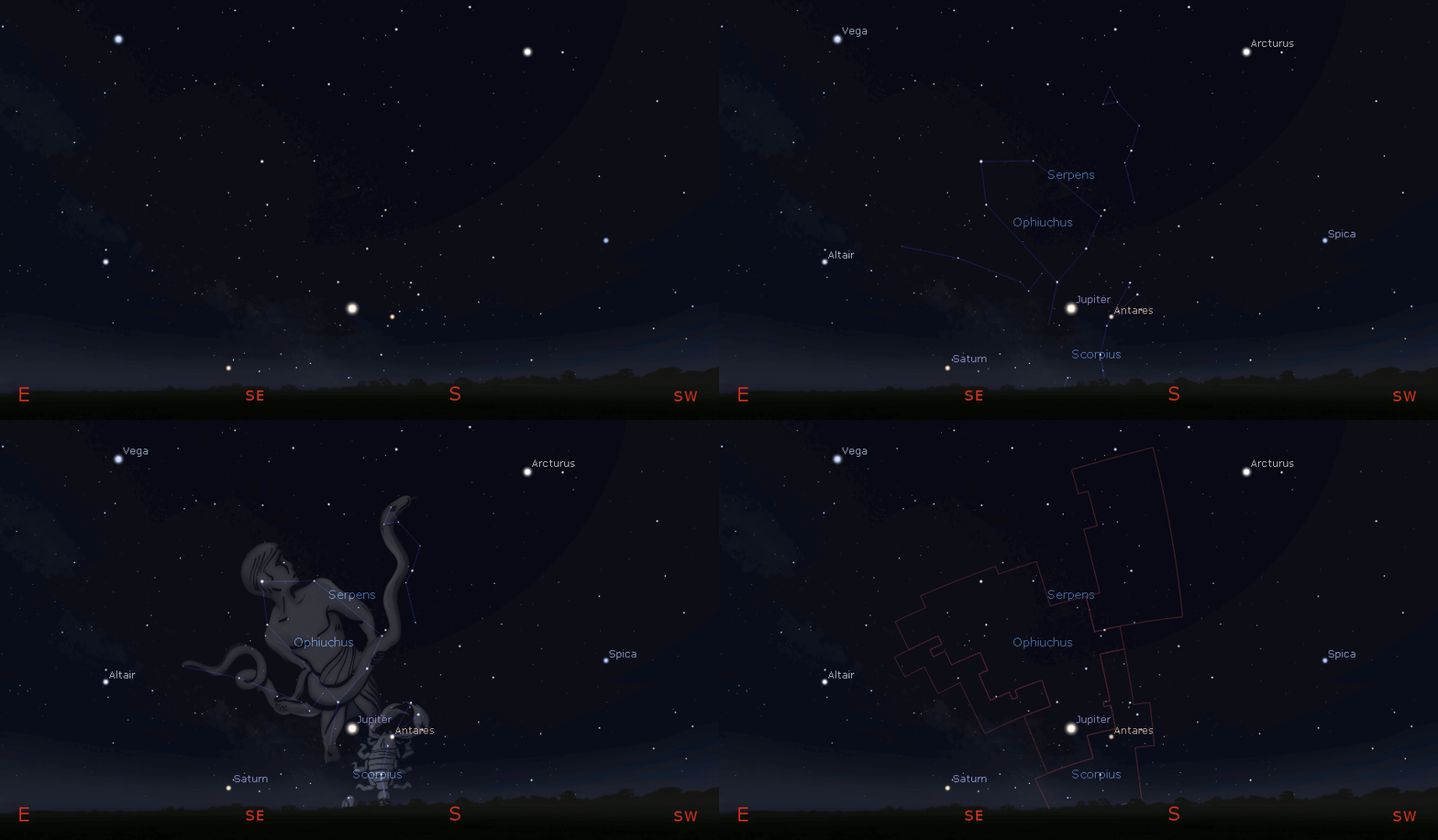
Ophiuchus finder animation for 11 p.m. June 24, 2019. Also showing the constellation boundaries. Click on the image to enlarge. Created using Stellarium and GIMP.
06/20/2019 – Ephemeris – Hercules wuz robbed!
Ephemeris for Thursday, June 20th. Today the Sun will be up for 15 hours and 34 minutes, setting at 9:31, and it will rise tomorrow at 5:57. The Moon, 3 days past full, will rise at 12:12 tomorrow morning.
Orion, the hard luck mythological Greek hunter gets a splashy constellation in the winter sky, but the greatest hero of all, Hercules, gets a dim group of stars on the border between the spring and summer stars. At 11 p.m. Hercules is high in the southeast. It is located above and right of the bright star, Vega in the east. Hercules’ central feature is a keystone shaped box of stars, called the Keystone, which represents the old boy’s shorts. From each top corner extend lines of stars that are his legs, from the bottom stars, the rest of his torso and arms extend. So in one final indignity he’s upside down in our sky. Some see him crouched down, club upraised holding the Hydra about to throttle it. For those with a telescope it contains the beautiful globular star cluster M13.
The times given are for the Traverse City/Interlochen area of Michigan. They may be different for your location.
Addendum

Hercules animation showing neighboring stars at 11 p.m. for mid June, Click on image to enlarge. Created using Stellarium and GIMP.
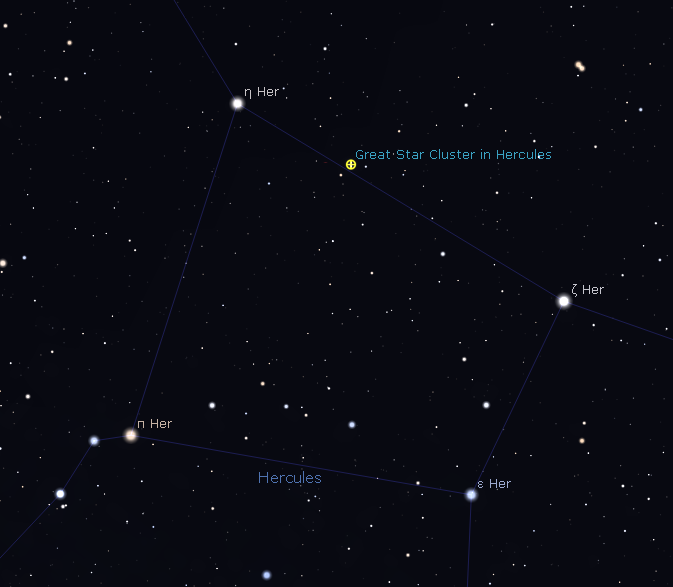
Stars and M13 (Great Star Cluster in Hercules) visible in binoculars in the Keystone of Hercules. Click in the image to enlarge. Created using Stellarium.
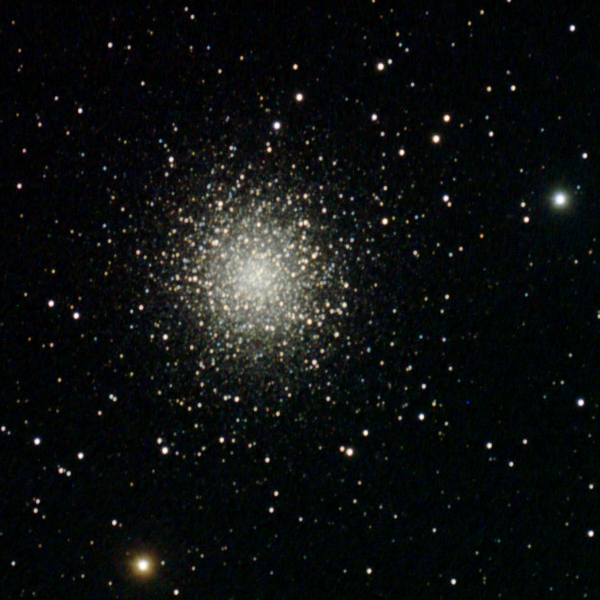
M13, the Great Globular Star Cluster in Hercules. It takes a telescope with an aperture (diameter) of 6 inches (150 mm) to begin the resolve the stars in it. Credit: Scott Anttila
05/23/2019 – Ephemeris – A look at the constellation of Corona Borealis
Ephemeris for Thursday, May 23rd. Today the Sun will be up for 15 hours and 5 minutes, setting at 9:12, and it will rise tomorrow at 6:06. The Moon, 3 days before last quarter, will rise at 1:37 tomorrow morning.
High in the east-southeast at 11 this evening can be seen a small nearly circular constellation of Corona Borealis, the Northern Crown. It is just below Boötes, the kite shaped constellation off the handle of the Big Dipper. According to Greek myth the crown was given by the gods to the princess Ariadne, daughter of King Minos of Crete. The crown is more like a tiara with the bright star Alphecca at the front. To the Anishinaabe people, who are natives of our region it is the Sweat Lodge. Part of what we call Hercules next to it is the Exhausted Bather, who is lying on the ground after the ceremony. The seven stones that are heated for the Sweat Lodge are the Pleiades, now too close to the Sun to be seen.
The times given are for the Traverse City/Interlochen area of Michigan. They may be different for your location.
Addendum

Animated Corona Borealis Finder Chart looking to the east-southeast at 11 p.m. May 23rd Click on the image to enlarge. Created using Stellarium and GIMP.
05/20/2019 – Ephemeris – Dark evening skies again and a look at Virgo
Ephemeris for Monday, May 20th. Today the Sun will be up for 15 hours even, setting at 9:09, and it will rise tomorrow at 6:08. The Moon, 2 days past full, will rise at 11:10 this evening.
One of the large constellations we see in the south at 11 p.m. can be found using the Big Dipper overhead, follow the arc of the handle to the bright star Arcturus, the straighten the arc to a spike to reach Spica, a bright blue-white star in the south. Spica is the brightest star in the constellation Virgo the virgin. She represents the goddess of the harvest, Virgo is holding a sheaf of wheat in depictions of her, and Spica is placed at the head of the sheaf. In the space between Spica and Leo the lion to her upper right is, a great cluster just below naked eye visibility. The Virgo cluster of galaxies. Inside that cluster is galaxy M87 in whose center lies a black hole with the mass of 6.5 billion suns that was imaged last month.
The times given are for the Traverse City/Interlochen area of Michigan. They may be different for your location.
Addendum
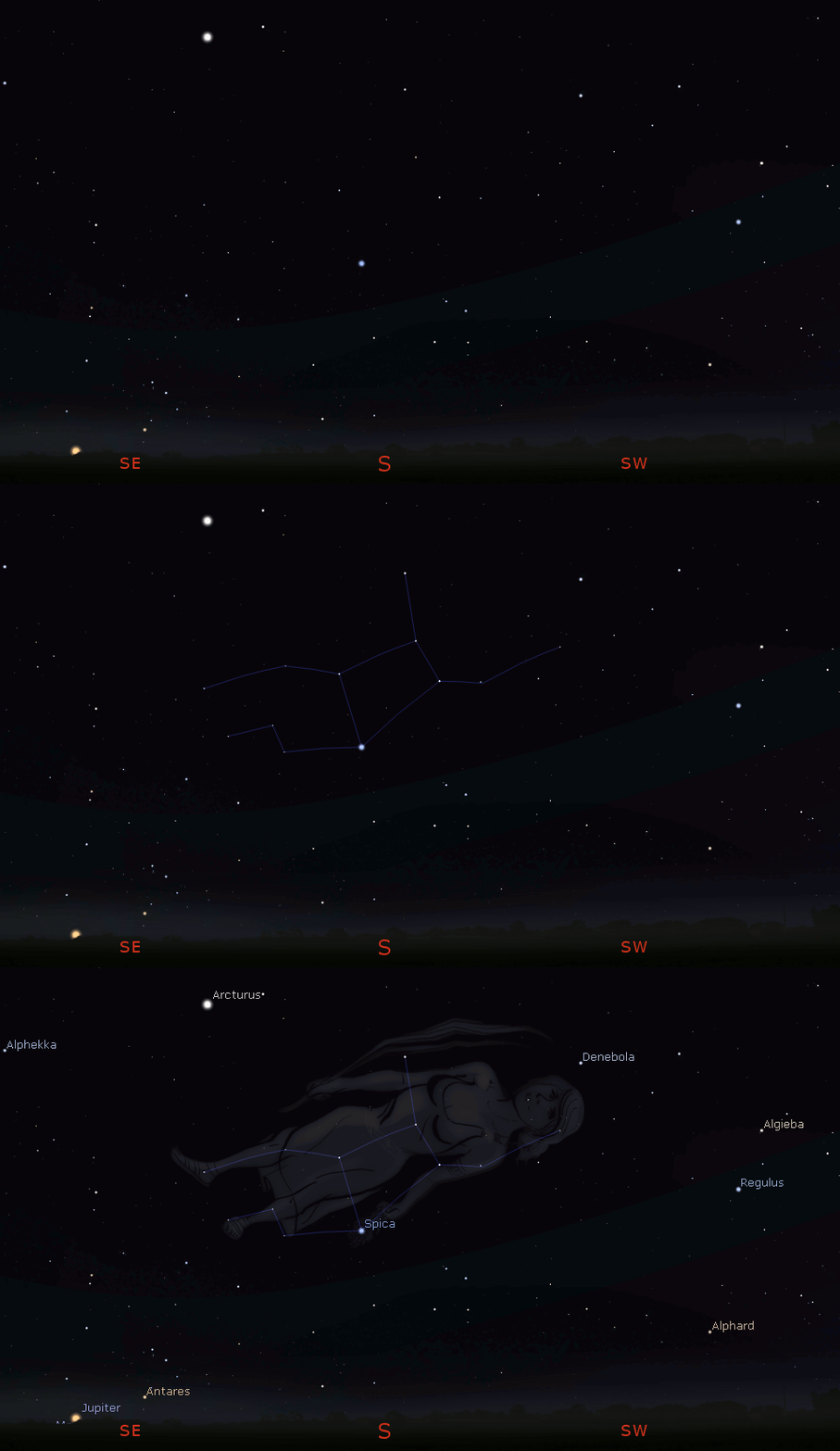
Virgo finder animation for 11 p.m. May 20, 2019. Click on the image to enlarge. Created using Stellarium.
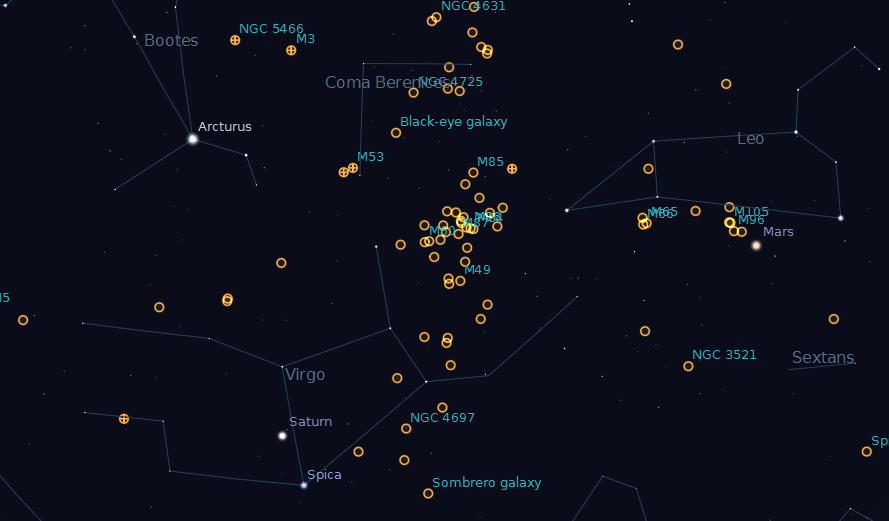
Brighter members of the Virgo Cluster. Created using Stellarium. Open circles are galaxies, circles with crosses are globular star clusters, outlying members of our Milky Way galaxy. M87 is just above center in that knot of galaxies. Created using Stellarium.
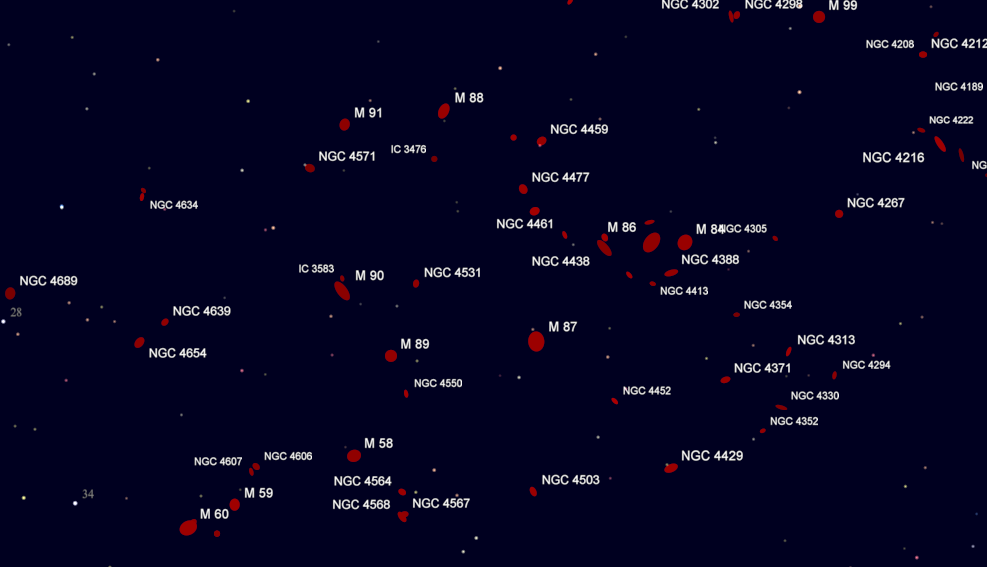
A closer look at some of the galaxies in the heart of the Virgo Cluster. M87 is near the center. Created with Cartes du Ciel (Sky Charts).
 Bob Moler's Ephemeris Blog