Archive
Ephemeris: 08/22/2025 – Star Party tomorrow night the 23rd
This is Ephemeris for Friday, August 22nd. Today the Sun will be up for 13 hours and 42 minutes, setting at 8:36, and it will rise tomorrow at 6:55. The Moon, 1 day before new, will rise at 7:10 tomorrow morning.
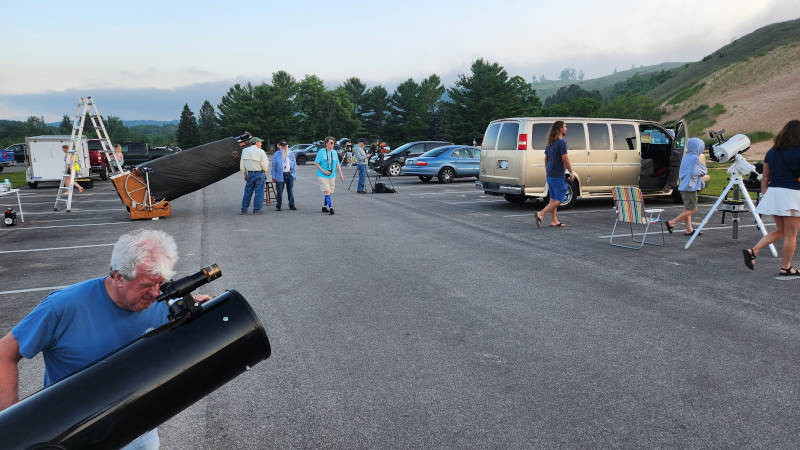
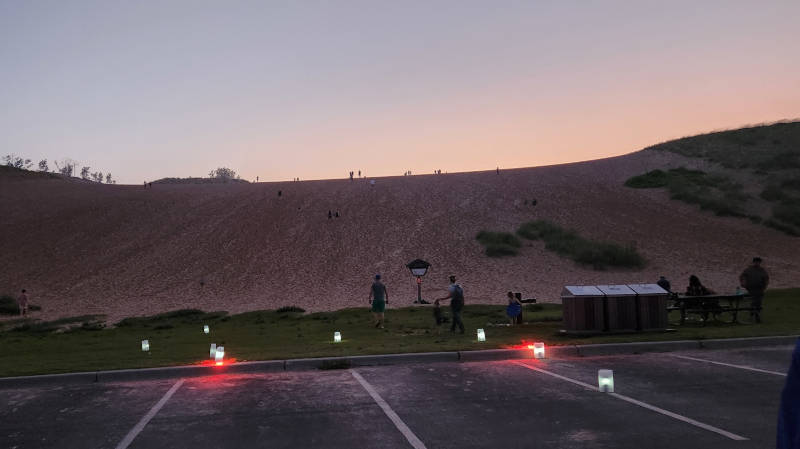
Weather permitting, the Grand Traverse Astronomical Society and the Park Rangers will host a star party at Sleeping Bear Dunes National Lakeshore, at the Dune Climb tomorrow night, starting around 9 PM. The parking lane closest to the dune will be blocked off for telescopes. The start time is after sunset, and the brighter stars will be visible by 9:15. As it gets darker some of the brighter interstellar wonders of our Milky Way galaxy, will appear, with many star clusters and nebulae, including a peek at the Great Andromeda Galaxy next door. The Rangers will leave around 11 PM however if it stays clear and there’s enough interest, society members with their telescopes will stay longer. This is the last Sleeping Bear Dunes star party this year.
The astronomical event times given in this blog are for the Traverse City/Interlochen area of Michigan (Lat 44.7° N, Long 85.7° W; EDT, UT – 4 hours) unless stated otherwise. Times will be different for other locations.
Addendum

Ephemeris: 08/21/2025 – The Milky Way’s Great Rift
This is Ephemeris for Thursday, August 21st. Today the Sun will be up for 13 hours and 45 minutes, setting at 8:38, and it will rise tomorrow at 6:53. The Moon, 2 days before new, will rise at 5:57 tomorrow morning.
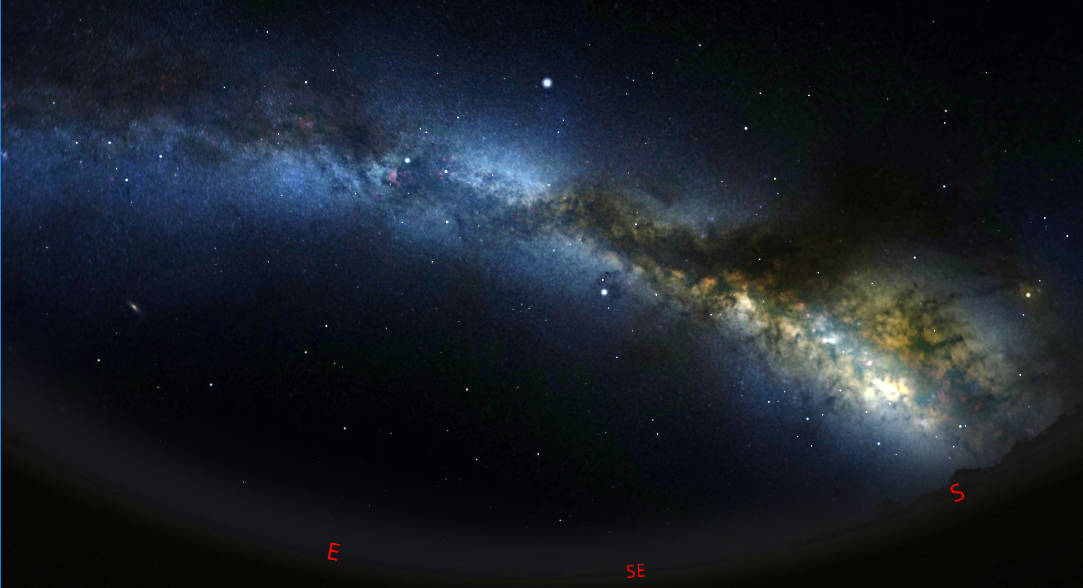
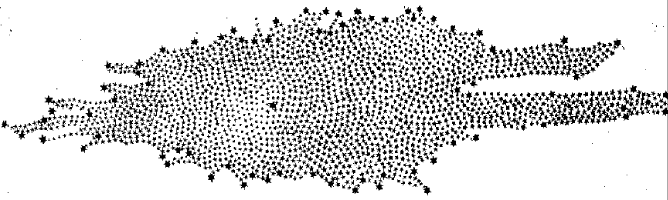
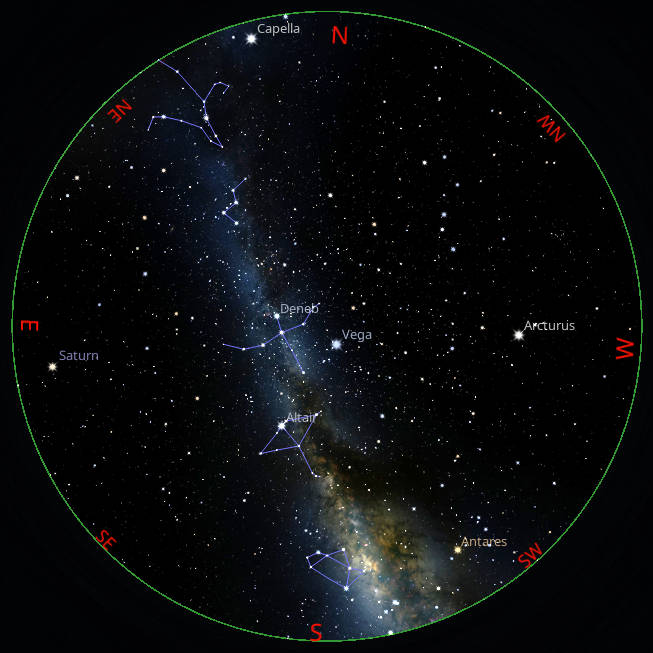
Once one finds the Milky Way which is pretty hard to miss this month, it becomes obvious that the Milky Way is split lengthwise starting near Deneb, the northernmost star of the Summer Triangle, almost all the way to the Teapot of Sagittarius low in the south. That dark split is called the Great Rift. Galileo first discovered that the hazy clouds of the Milky Way were actually made of faint stars, so it was thought the dark areas were due to a lack of stars. The great 18th century astronomer William Herschel did star counts all over the sky with his telescope. A map his sister drew of the flattened shape of his universe shows the lack of distant stars in one direction. It’s not really fewer stars, but interstellar clouds of dust blocking the light of the stars behind them.
The astronomical event times given in this blog are for the Traverse City/Interlochen area of Michigan (Lat 44.7° N, Long 85.7° W; EDT, UT – 4 hours) unless stated otherwise. Times will be different for other locations.
Addendum
Ephemeris: 08/20/2025 – Taking our weekly look at the whereabouts of the naked-eye planets
This is Ephemeris for Wednesday, August 20th. Today the Sun will be up for 13 hours and 48 minutes, setting at 8:39, and it will rise tomorrow at 6:52. The Moon, 3 days before new, will rise at 4:41 tomorrow morning.
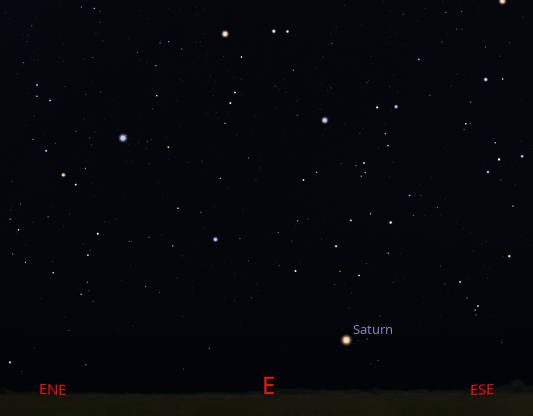
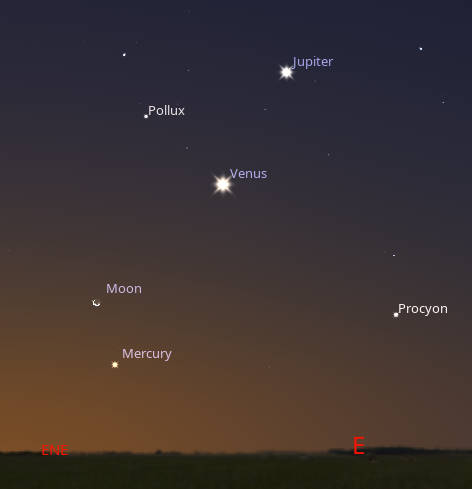
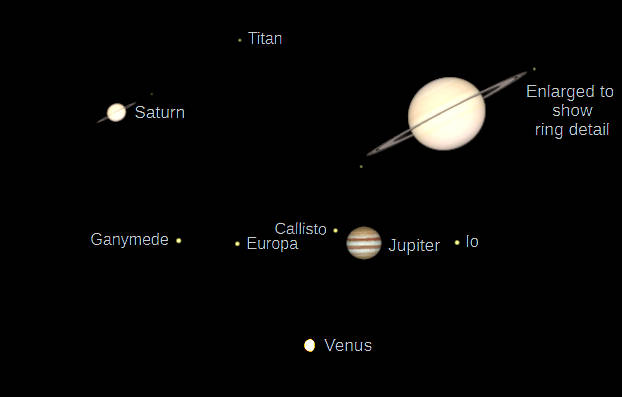
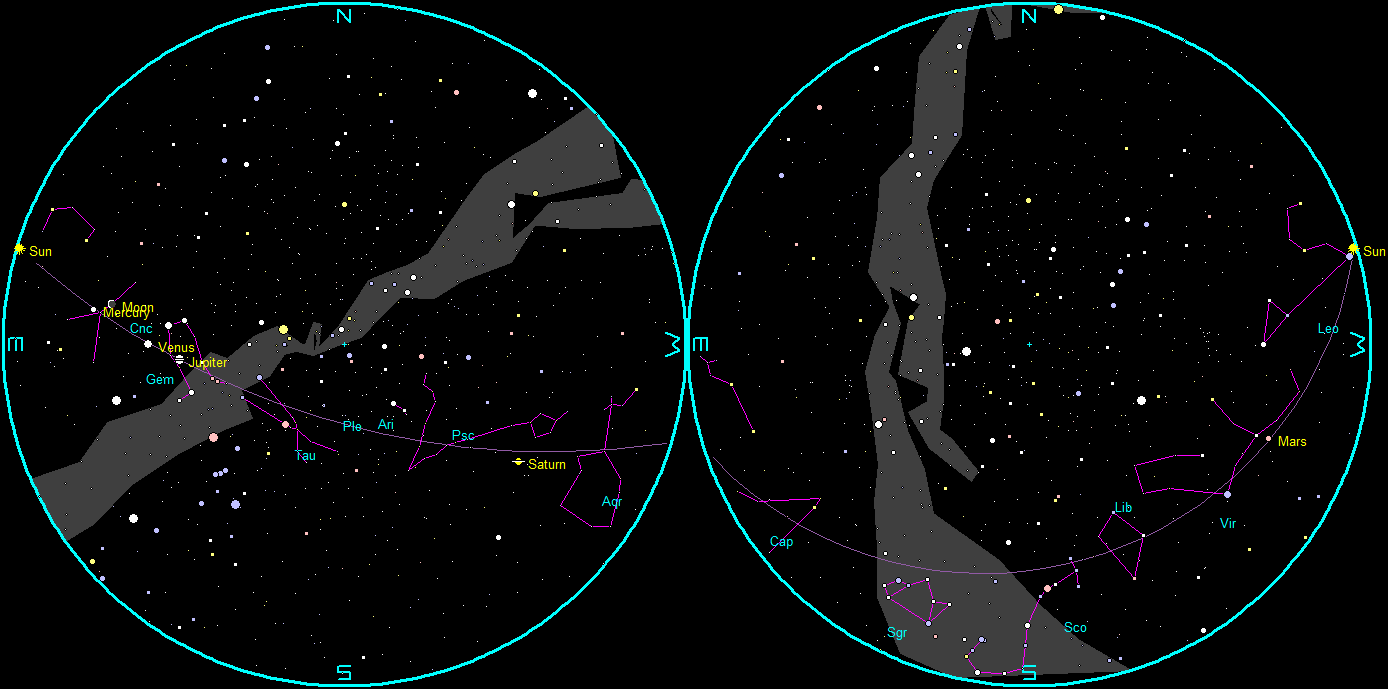
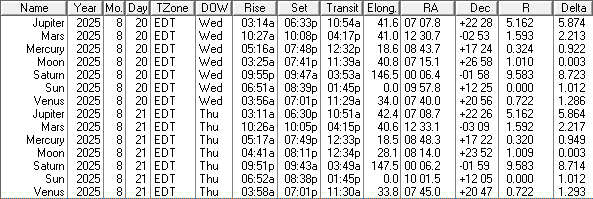
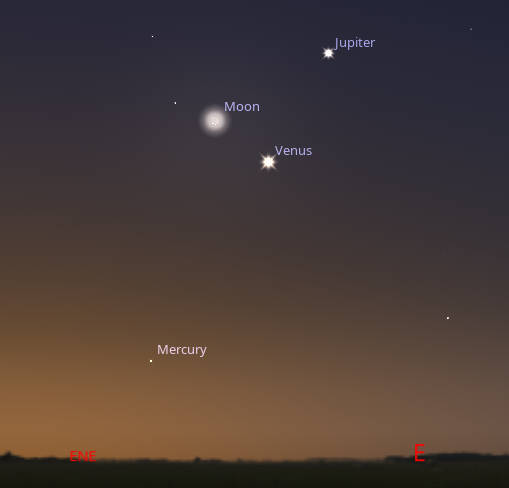
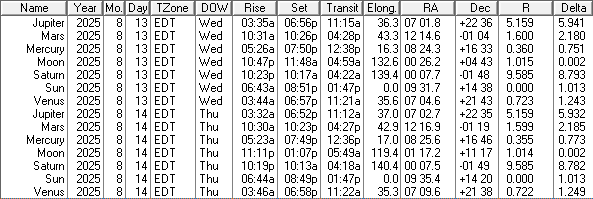
Let’s take our weekly look at the whereabouts of the naked-eye planets. The Red Planet Mars is too close to the direction of the Sun to spot. This is the curse of trying to view evening planets, which are near the direction of the Sun in late summer and early fall, for us at higher latitudes. Saturn now rises at 9:55 PM in the east. In a telescope Saturn sports a very thin ring, a bit less than 3° from being edge on. By 6 AM Saturn will be in the southwest. Jupiter will appear above the brighter Venus in the Eastern sky And among the brighter winter stars. Venus is by far the brighter of the two planets. Mercury will be below the crescent Moon tomorrow morning.
The astronomical event times given in this blog are for the Traverse City/Interlochen area of Michigan (Lat 44.7° N, Long 85.7° W; EDT, UT – 4 hours) unless stated otherwise. Times will be different for other locations.
Addendum
Ephemeris: 08/19/2025 – Mercury makes its morning appearance
This is Ephemeris for Tuesday, August 19th. Today the Sun will be up for 13 hours and 51 minutes, setting at 8:41, and it will rise tomorrow at 6:51. The Moon, 3 days past last quarter, will rise at 3:25 tomorrow morning.
The tiny planet Mercury is making an appearance in the morning sky now. For the next week or so it will be visible around 6 AM. At least it’s time to start looking for it. Once found, it might be followed for another 20 minutes or so. This morning Mercury was at its greatest angular separation or elongation from the Sun of 18.6°. We have two periods where Mercury is easier to spot: on late winter and early spring evenings, and in the morning sky in late summer and early autumn. Of course Mercury must be at the proper elongation point at the time. Mercury is the smallest of the planets, being only 50% larger in diameter than our moon. In closeup, it looks much like our Moon, gray and cratered.
The astronomical event times given in this blog are for the Traverse City/Interlochen area of Michigan (Lat 44.7° N, Long 85.7° W; EDT, UT – 4 hours) unless stated otherwise. Times will be different for other locations.
Addendum
Ephemeris: 08/18/2025 – Wandering through Sagittarius with binoculars
This is Ephemeris for Monday, August 18th. Today the Sun will be up for 13 hours and 54 minutes, setting at 8:43, and it will rise tomorrow at 6:50. The Moon, 2 days past last quarter, will rise at 2:12 tomorrow morning.
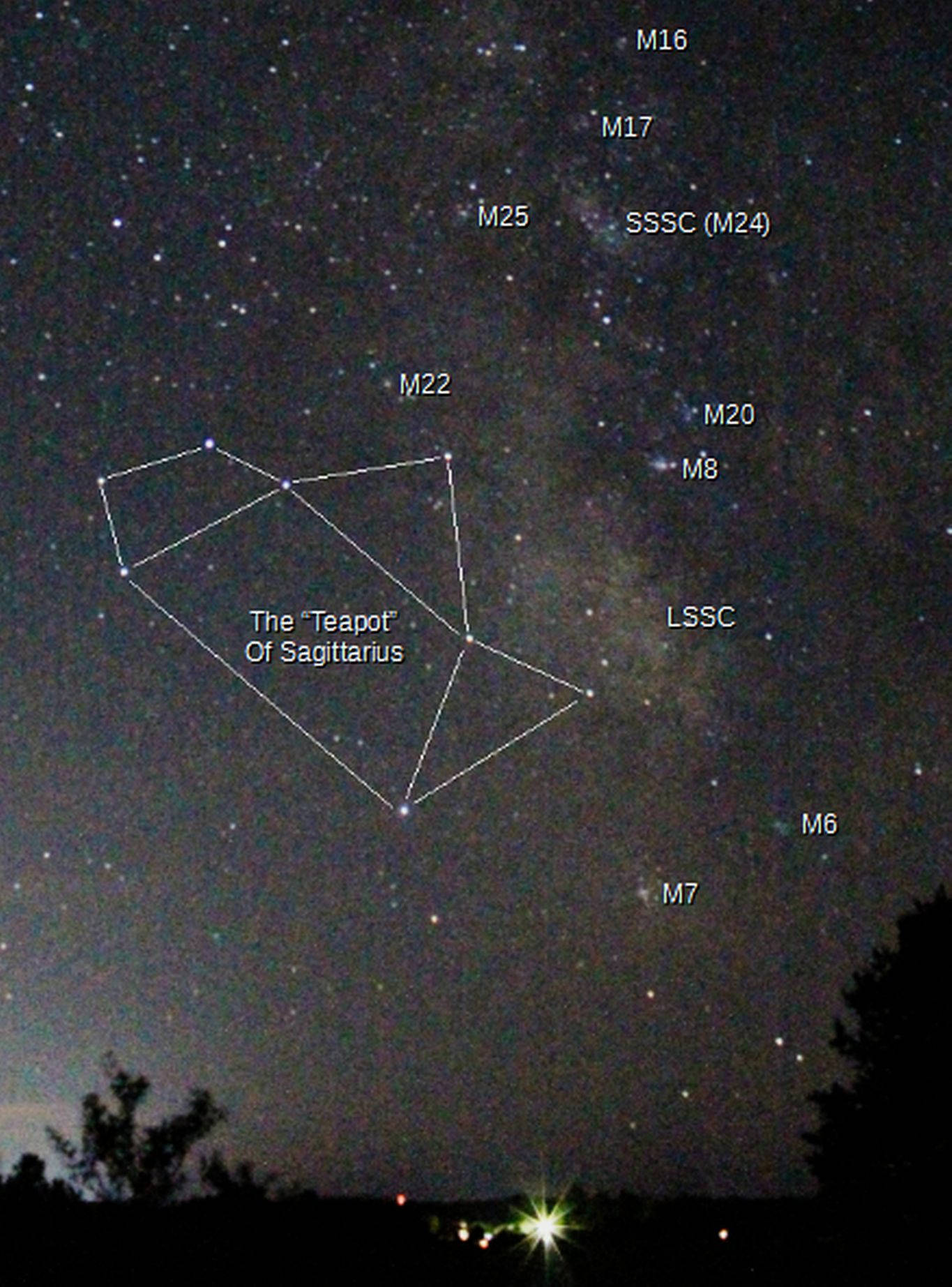
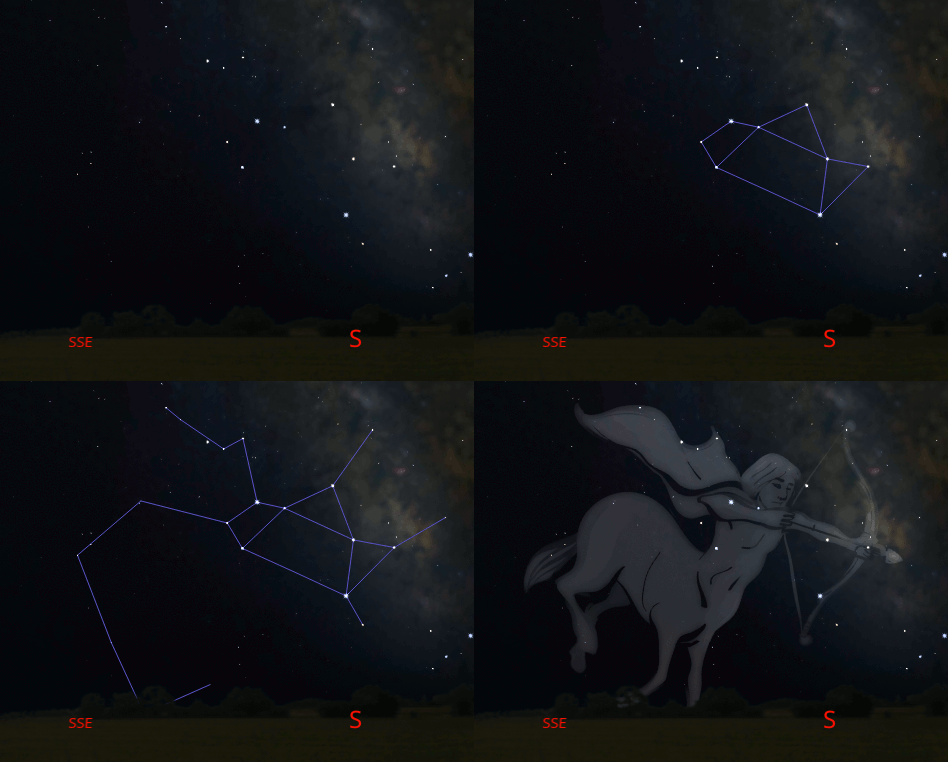
Let’s look around the Teapot shape of stars that is the constellation of Sagittarius. A pair of binoculars or a telescope with a very low magnifying power is all that’s needed. The purpose here is not so much to make things bigger, but make them brighter. Right off the tip of the teapot’s spout is a large and bright patch of light. This is the farthest we can see, in visible light that is, toward the center of our galaxy, part of the central bulge. Astronomer Walter Baade discovered that fact in the mid 1940s. The center of the galaxy is 4 moon-widths or 2 degrees to the right of it, but obscured by a cloud of interstellar dust. It is called the Large Sagittarius Star Cloud or Baade’s Window, peering out 25 thousand light years away.
The astronomical event times given in this blog are for the Traverse City/Interlochen area of Michigan (Lat 44.7° N, Long 85.7° W; EDT, UT – 4 hours) unless stated otherwise. Times will be different for other locations.
Addendum
Ephemeris: 08/15/2025 – The Milky Way on August evenings
This is Ephemeris for Friday, August 15th. Today the Sun will be up for 14 hours and 2 minutes, setting at 8:48, and it will rise tomorrow at 6:46. The Moon, 1 day before last quarter, will rise at 11:41 this evening.
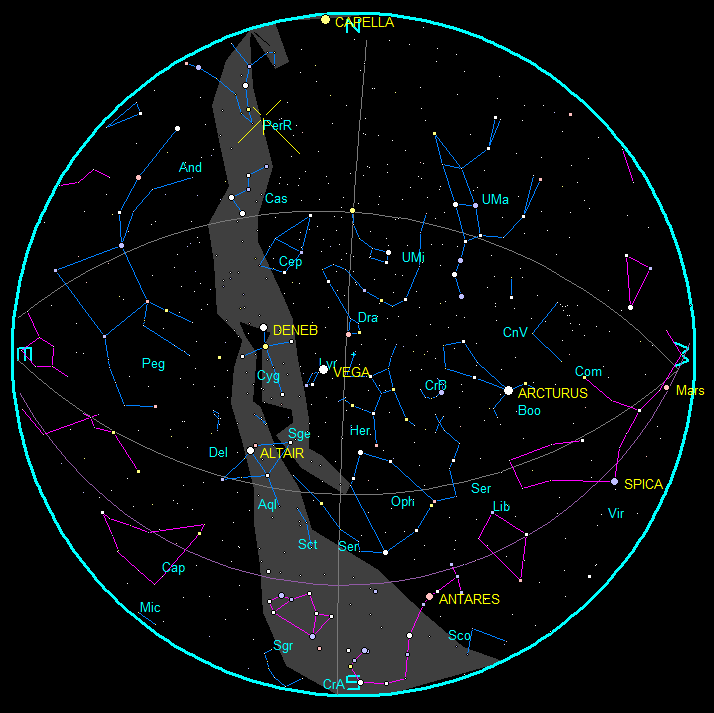
August is the best time to see the most southern part of the Milky Way. The constellation of Sagittarius the Archer or for us moderns a Teapot is due South at 10:30 this evening . The Milky Way runs up from the South moving high in the east and ends up in the northeast and the constellation of Cassiopeia the queen which looks like the letter W. We will have to wait several months or stay up for several hours tonight to see the Milky Way cross overhead, but by then the southern part of the Milky Way will have begun to set in the southwest. So this is the time to enjoy looking towards the center our Galaxy which is located right above the tip of the spout of Sagittarius, but behind a cloud of dust.
The astronomical event times given in this blog are for the Traverse City/Interlochen area of Michigan (Lat 44.7° N, Long 85.7° W; EDT, UT – 4 hours) unless stated otherwise. Times will be different for other locations.
Addendum
Ephemeris: 08/14/2025 – Centaur or Teapot, you decide
This is Bob Moler with Ephemeris for Thursday, August 14th. Today the Sun will be up for 14 hours and 5 minutes, setting at 8:49, and it will rise tomorrow at 6:45. The Moon, 2 days before last quarter, will rise at 11:11 this evening.
Low in the south at 10:30 PM shines the heart of summer Milky Way. The constellation that’s seen there is Sagittarius which is supposed to be a centaur with a bow and arrow. We modern folk haven’t seen a centaur outside a Harry Potter movie, so we see its stars looking like a teapot, a short and stout little teapot like in the children’s song. It is tipped to the West with the Milky Way like steam rising from its spout, which is about to pour its tea on the southwestern horizon later tonight. Sagittarius is just begging to be explored with binoculars or a very low power telescope to see its myriad of stars, star clusters and nebulae. As fabulous as all this appears, we cannot see into the heart of the Milky Way for all the clouds of dust in the way.
The astronomical event times given in this blog are for the Traverse City/Interlochen area of Michigan (Lat 44.7° N, Long 85.7° W; EDT, UT – 4 hours) unless stated otherwise. Times will be different for other locations.
Addendum
Ephemeris: 08/13/2025 – Taking our weekly look at the whereabouts of the naked-eye planets
This is Bob Moler with Ephemeris for International Left-handers Day, Wednesday, August 13th. Today the Sun will be up for 14 hours and 7 minutes, setting at 8:51, and it will rise tomorrow at 6:44. The Moon, 3 days before last quarter, will rise at 10:47 this evening.
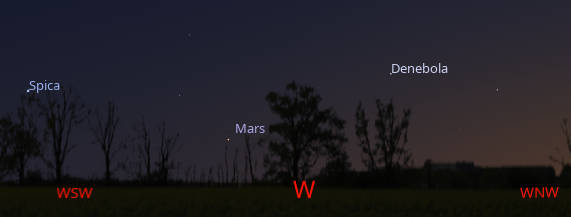
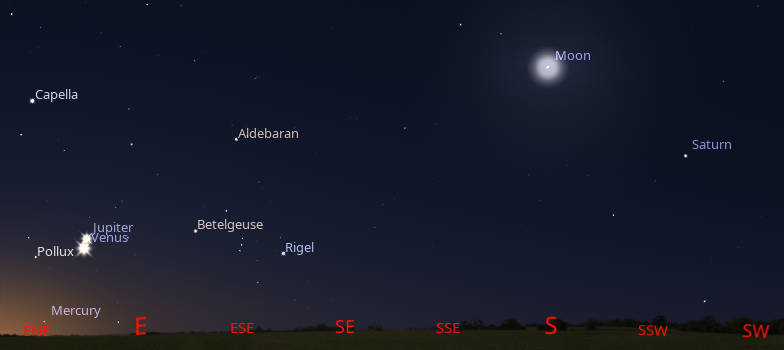
Let’s take our weekly look at the whereabouts of the naked-eye planets. The Red Planet Mars is getting so low in the western sky in evening twilight that I’ve given up on trying to spot it. This is the curse of trying to view evening planets, which are near the direction of the Sun in late summer and early fall, for us at higher latitudes. Mars won’t pass behind the Sun and enter the morning sky until January 9th. Saturn now rises at 10:23 PM in the east. In a telescope Saturn sports a very thin ring, less than 4° from being edge on. By 5:30 AM Saturn will be high in the south, when our winter pal Orion will be rising. Venus and Jupiter will appear very close. Venus is by far the brighter of the two.
The astronomical event times given in this blog are for the Traverse City/Interlochen area of Michigan (Lat 44.7° N, Long 85.7° W; EDT, UT – 4 hours) unless stated otherwise. Times will be different for other locations.
Addendum
Ephemeris: 08/12/2025 – A brief shot at viewing the Perseid meteors under darkened, but not dark skies
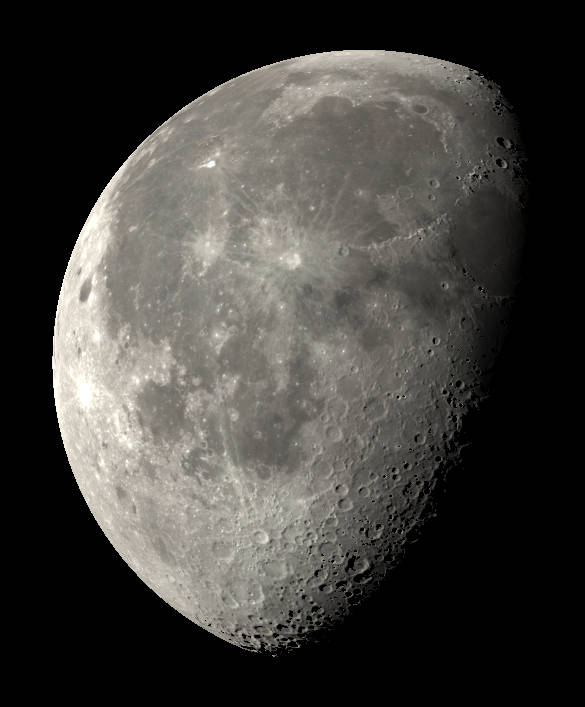
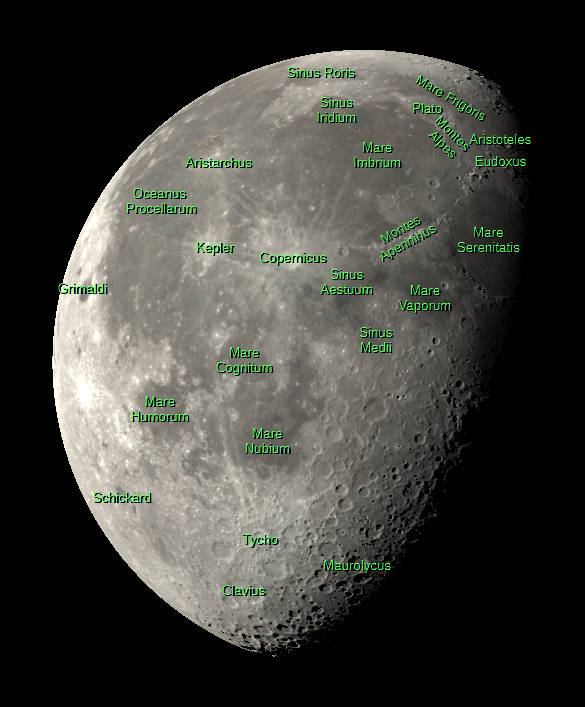
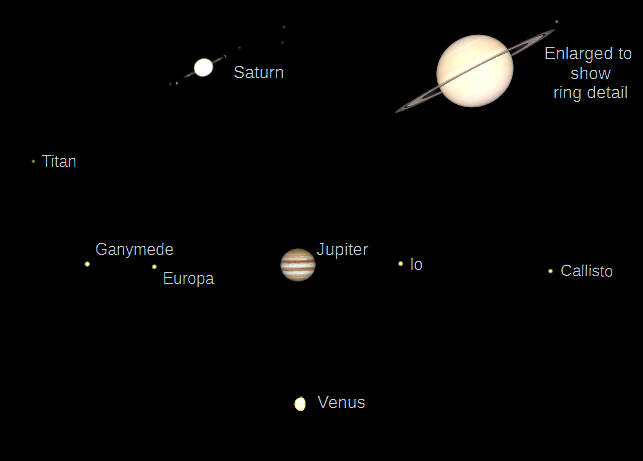
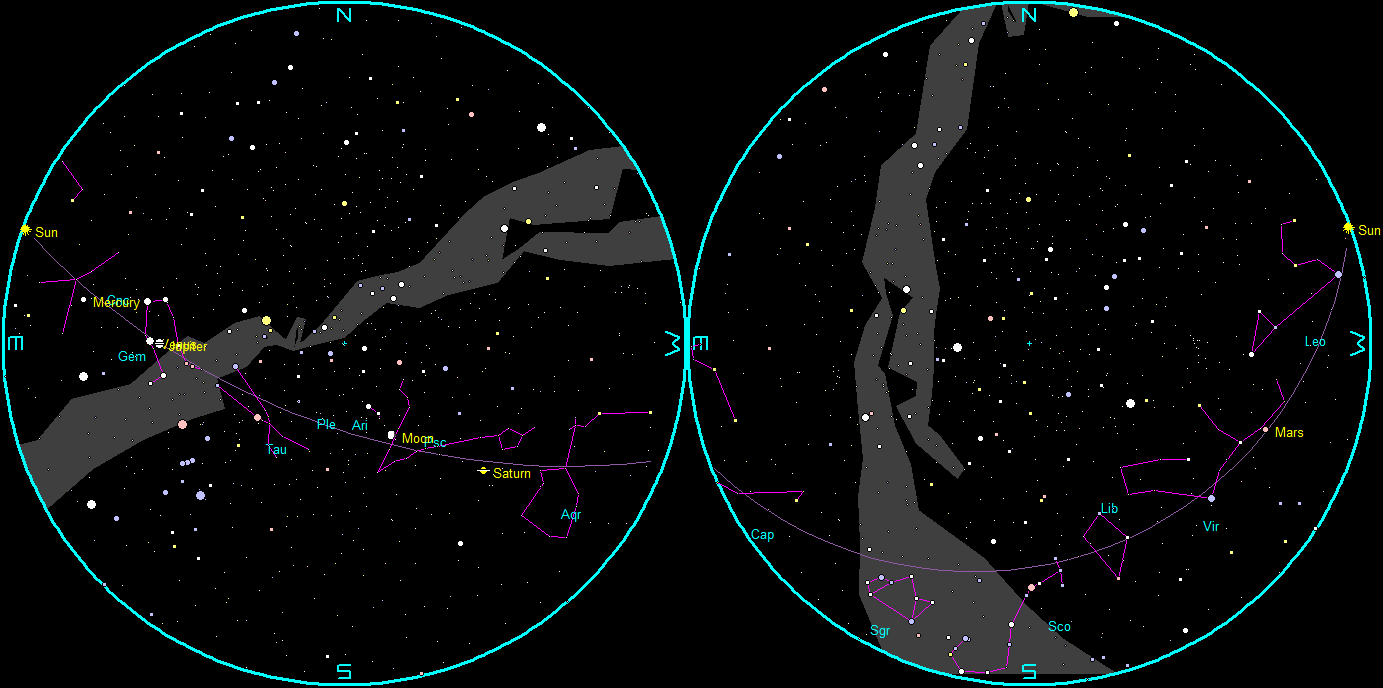
This is Ephemeris for Tuesday, August 12th. Today the Sun will be up for 14 hours and 10 minutes, setting at 8:52, and it will rise tomorrow at 6:43. The Moon, 3 days past full, will rise at 10:26 this evening.
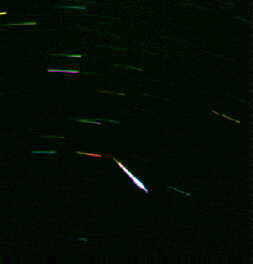
Tonight we get a second chance to see some of the Perseid meteor shower. As I said yesterday, the Moon is going to interfere with this year’s display. But, there is a small interval during twilight this evening, before the moon rises, where the sky could be dark enough to see more than a few Perseids. For nearly half an hour after 10 PM, it might be dark enough to see the Perseids under reasonably dark skies. The radiant where the meteors appear to come from will be low in the north northeast, about 17° above the horizon which means the expected number of meteors one would see in a half hour would be about 15 and with a not quite dark skies probably be a little less than that. But it is a chance to see the Perseids this year.
The astronomical event times given in this blog are for the Traverse City/Interlochen area of Michigan (Lat 44.7° N, Long 85.7° W; EDT, UT – 4 hours) unless stated otherwise. Times will be different for other locations.
Addendum
Ephemeris: 08/11/2025 – The best times to see the Perseid meteor shower
This is Ephemeris for Monday, August 11th. Today the Sun will be up for 14 hours and 13 minutes, setting at 8:54, and it will rise tomorrow at 6:42. The Moon, 2 days past full, will rise at 10:06 this evening.
Tonight’s most interesting astronomical events will occur tomorrow morning. The Perseid meteor shower will reach its peak tomorrow afternoon, so tomorrow morning and Wednesday morning will be about the best times to see the meteors, except that the bright Moon is going to interfere. So only the brightest meteors will be visible. Bonus: in morning twilight tomorrow the planets Venus and Jupiter will be in conjunction, meaning they’ll be at their closest appearance to each other by a little bit less than twice the width of the Moon apart. Early risers may have been noticing that Venus and Jupiter will have been slowly approaching each other, with Jupiter below and left of Venus. Tomorrow morning, Jupiter will pass just above Venus.
The astronomical event times given in this blog are for the Traverse City/Interlochen area of Michigan (Lat 44.7° N, Long 85.7° W; EDT, UT – 4 hours) unless stated otherwise. Times will be different for other locations.
Addendum