Archive
Ephemeris: 09/06/2024 – Grand Traverse Astronomical Meeting Tonight
This is Bob Moler with Ephemeris for Friday, September 6th. Today the Sun will be up for 12 hours and 57 minutes, setting at 8:09, and it will rise tomorrow at 7:12. The Moon, 4 days past new, will set at 9:26 this evening.
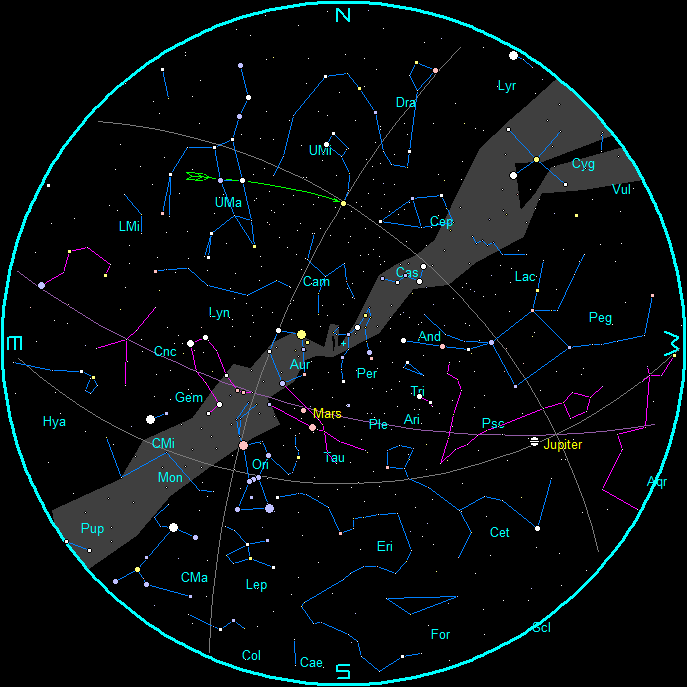
The Grand Traverse Astronomical Society will host its September meeting tonight at 8:00 PM at Northwestern Michigan College’s Joseph H Rogers Observatory, which is located on Birmley Rd. South of Traverse City between Garfield and Keystone roads. The program topic will be a surprise, at least to me. After the meeting about 9:00 PM if it’s clear there will be viewing of the heavens through the observatory’s telescopes, featuring possibly the Moon and Saturn, the first of which may be too low or be obstructed, and when it’s darker the wonders of the Milky Way will be visible including nebulae, open star clusters, and my favorite globular star clusters, spherical masses of hundreds of thousands of stars, as old as the Milky Way itself.
The astronomical event times given are for the Traverse City/Interlochen area of Michigan (EDT, UT–4 hours). Times will be different for other locations.
Addendum
Ephemeris: 09/04/2024 – Where are the naked-eye planets this week?
This is Ephemeris for Wednesday, September 4th. Today the Sun will be up for 13 hours and 3 minutes, setting at 8:12, and it will rise tomorrow at 7:10. The Moon, 2 days past new, will set at 8:53 this evening.
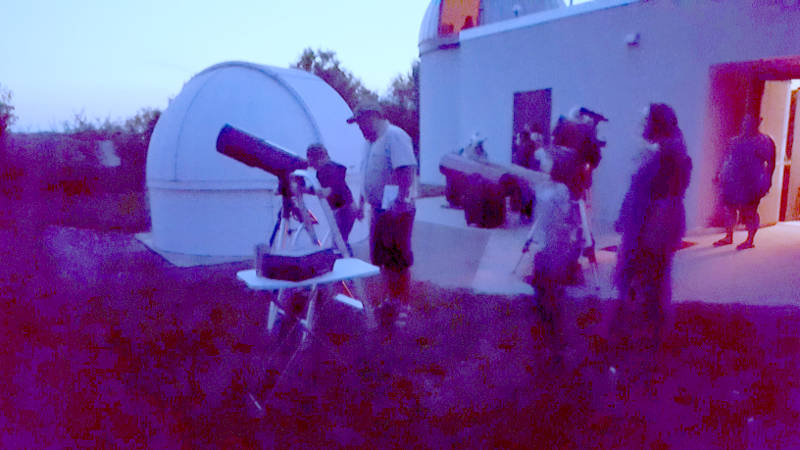
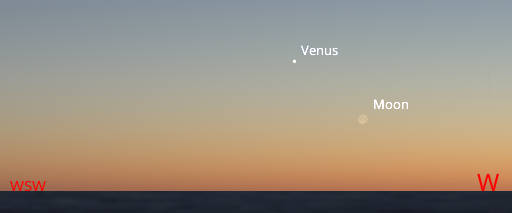
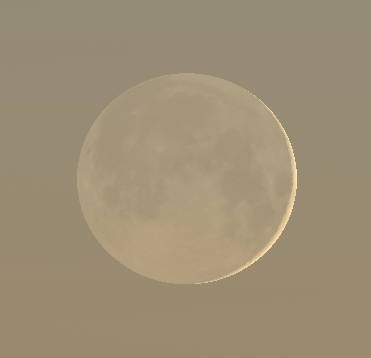
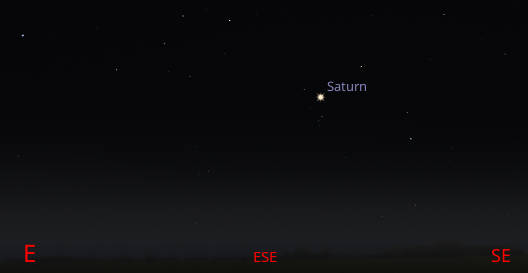
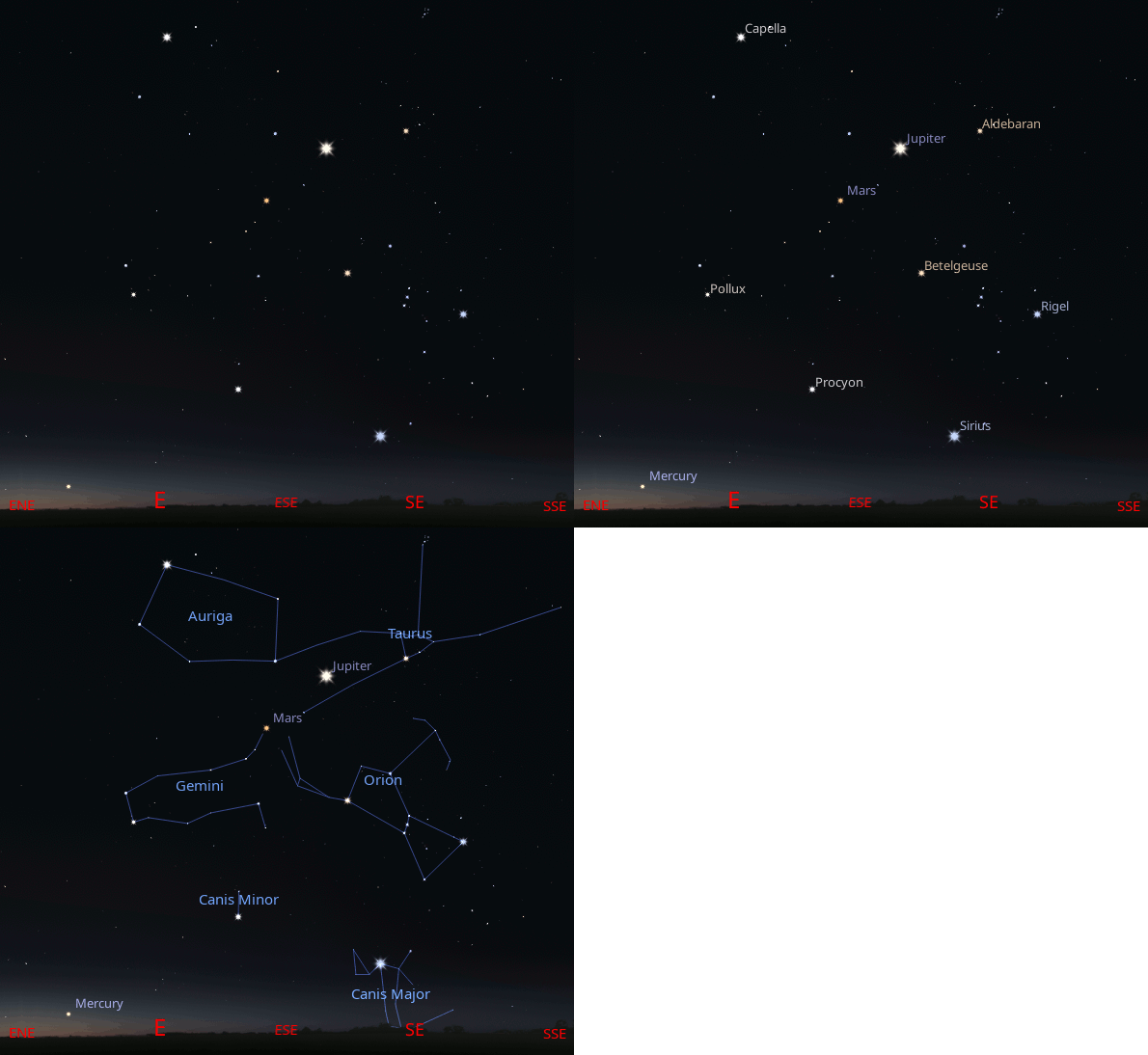
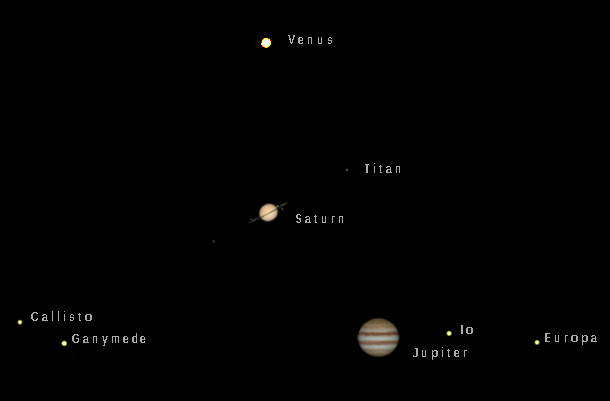
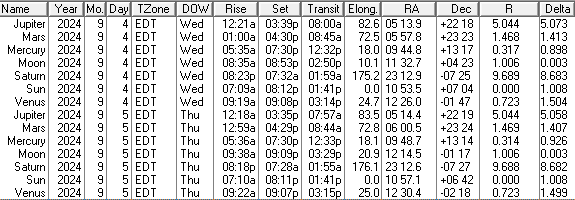
Let’s take our weekly look at the whereabouts of the naked-eye planets. Venus might be glimpsed low in the west around 8:30 PM. It will set at 9:08. It is best seen over a very low or lake horizon. The thin sliver of the Moon might be seen below and to the right. Saturn will rise shortly after sunset, and by 9 PM will be low in the east-southeast, pretty much by itself. Saturn may look disappointing in telescopes this year since its rings are nearly edge on and appearing as a line through the planet. Jupiter and Mars will be up in the east in the morning, and by 6 am tomorrow, Jupiter will be the brightest starlike object in the sky among the winter stars. Mars will be just below it to the left. Mercury might be spotted near the horizon in the east, now and for the next week.
The astronomical event times given are for the Traverse City/Interlochen area of Michigan (EDT, UT– 4 hours). Times will be different for other locations.
Addendum
Ephemeris: 09/03/2024 – The constellation of Scutum the shield
This is Ephemeris for Tuesday, September 3rd. Today the Sun will be up for 13 hours and 6 minutes, setting at 8:14, and it will rise tomorrow at 7:09. The Moon, 1 day past new, will set at 8:38 this evening.
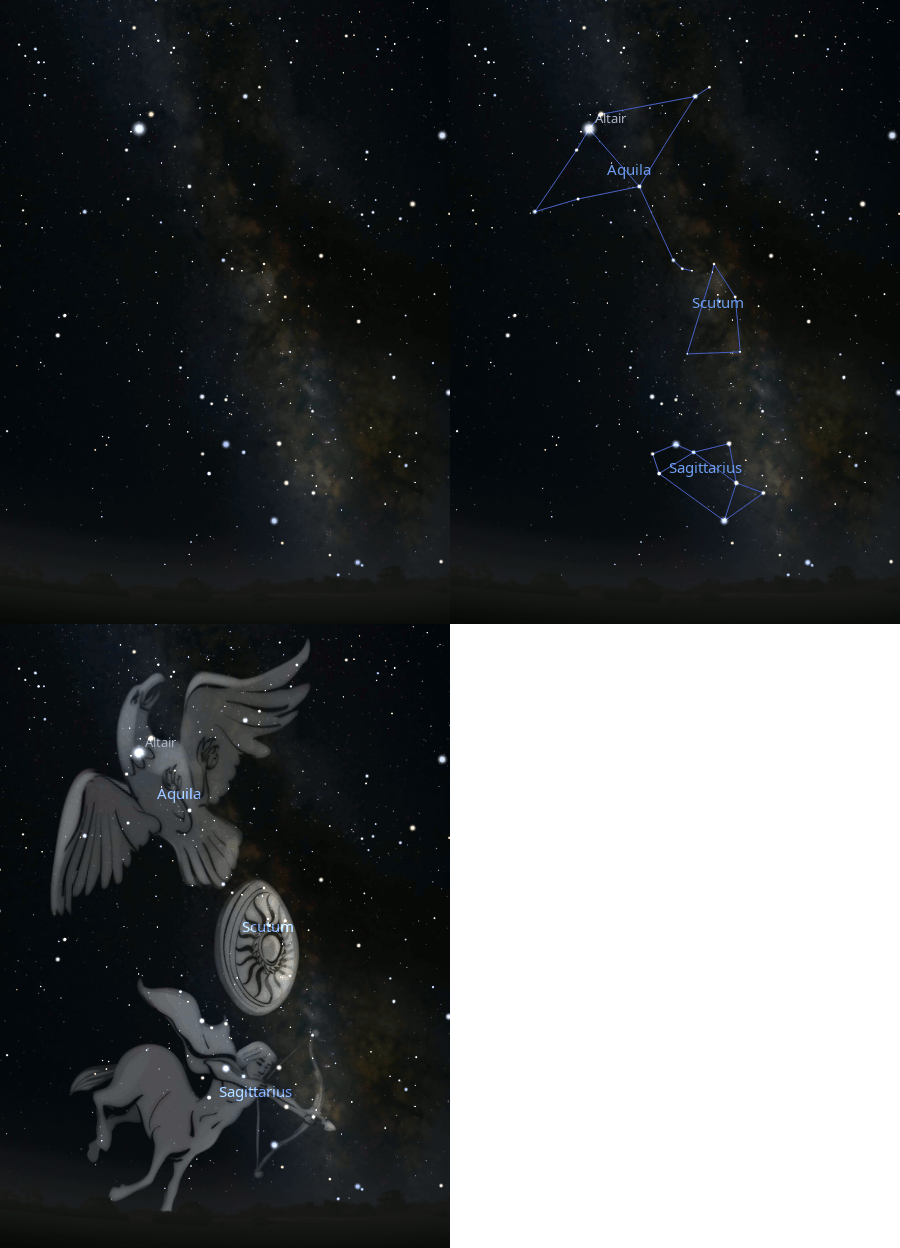
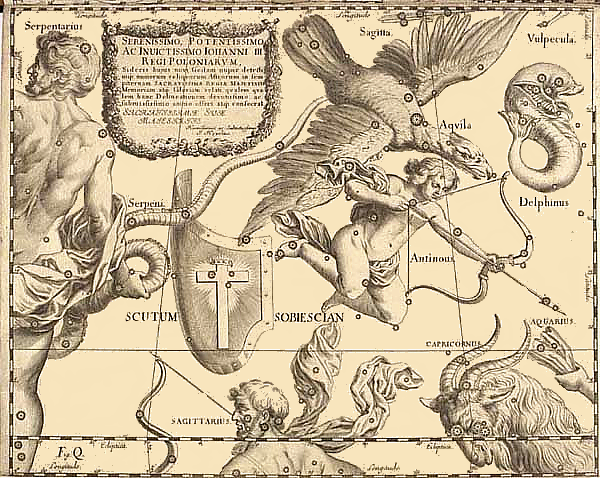
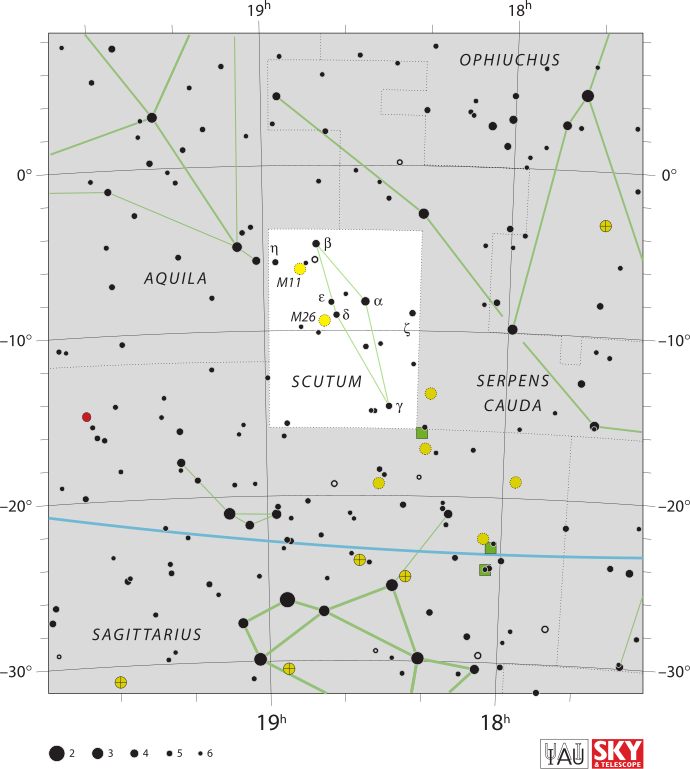
In the southern sky between the Teapot of Sagittarius below and Aquila the Eagle above, with Altair the southernmost star of the Summer Triangle, lies Scutum the shield of John Sobieski the Polish king who stopped the advance of the Turks at Kahlenberg, which lies on a hill overlooking Vienna, in 1683. The Polish half of me is very proud. Scutum is one of two official constellations which are related to real persons. The other one is Coma Berenices, a hank of Egyptian Queen Berenice’s hair. It’s recent as constellations go, to fill up a section of the sky that the ancients couldn’t make out anything, because the stars here are so dim and embedded in the glow of the Milky Way as to be nearly impossible to discern. Scutum lies in one of the richest portions of the Milky Way, wonderful to scan with binoculars and telescopes.
The astronomical event times given are for the Traverse City/Interlochen area of Michigan (EDT, UT–4 hours). Times will be different for other locations.
Addendum

Ephemeris: 09/02/2024 – Previewing September Skies
This is Ephemeris for Labor Day, Monday, September 2nd. Today the Sun will be up for 13 hours and 9 minutes, setting at 8:16, and it will rise tomorrow at 7:08. The Moon is new today, and won’t be visible.
Let’s look at the skies for September. Daylight hours in the Interlochen/Traverse City area and will drop from 13 hours and 9 minutes today to 11 hours 43 minutes on the 30th. The altitude of the sun above the southern horizon at local noon will be 53 degrees today, and will descend to 42 degrees on the 30th. The official season of summer is getting short too, so enjoy it while you can. Summer will end and autumn will begin at 8:44 a.m. on the 22nd as the Sun will pass overhead at the equator heading southward. It will also mark sunset at the North Pole and sunrise at the South Pole. Southern Hemisphere dwellers will see the start of spring. The summer Milky Way is still visible to explore with binoculars or telescope.
The astronomical event times given are for the Traverse City/Interlochen area of Michigan (EDT, UT–4 hours). Times will be different for other locations.
Addendum
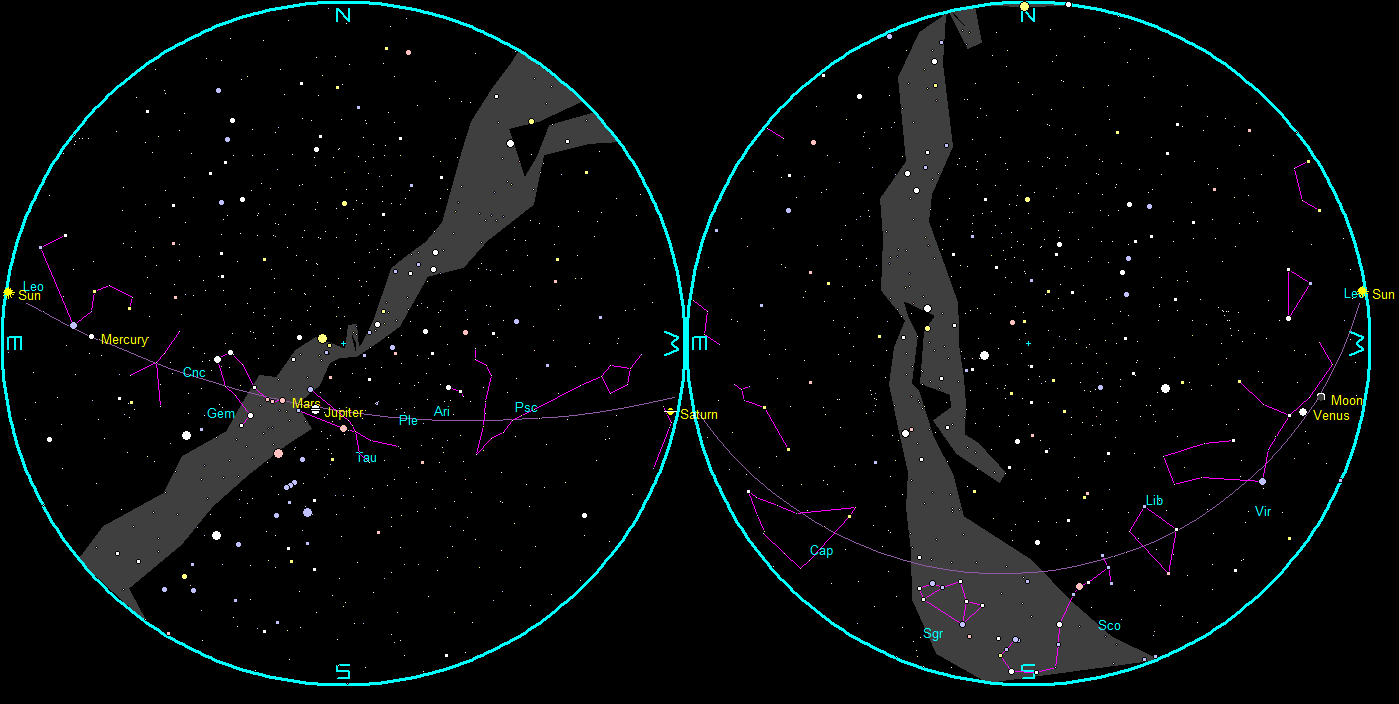
September Evening Star Chart
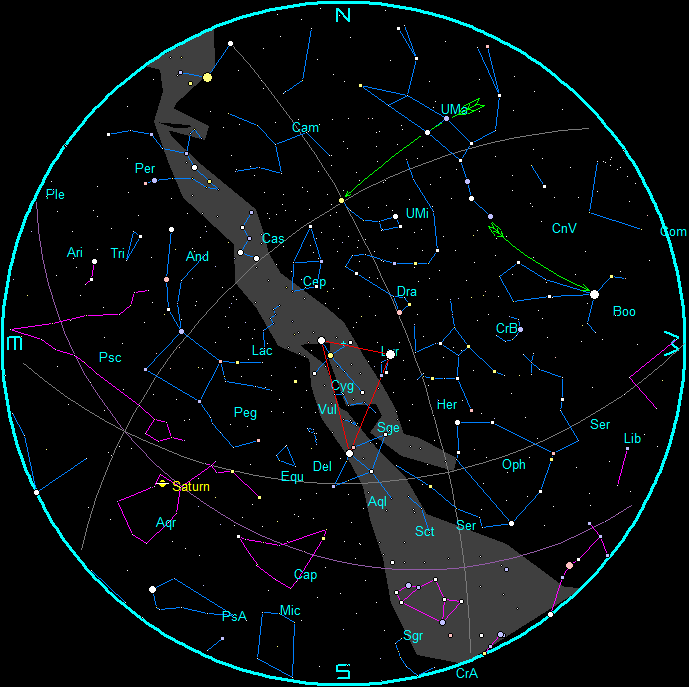
The planets and stars are plotted for the 15th at 10 p.m. EDT in the evening and 6 a.m. for the morning chart. These are the chart times. Note that Traverse City is located approximately 45 minutes behind our time meridian, West 75° longitude. (An hour 45 minutes behind our daylight saving time meridian during EDT). To duplicate the star positions on a planisphere you may have to set it to 1 hour 45 minutes earlier than the current time.
September Morning Star Chart
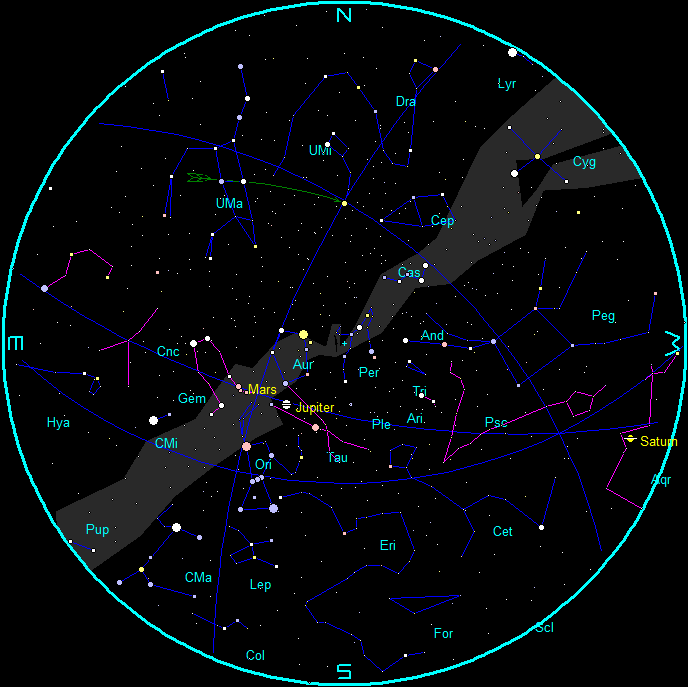
For a list of constellation names to go with the abbreviations, click here.
- Pointer stars at the front of the bowl of the Big Dipper point to Polaris, the North Star.
- Leaky dipper drips on Leo.
- Follow the arc of the handle of the Big Dipper to the star Arcturus.
- The Summer Triangle is in red.
Twilight Limits, Nautical and Astronomical
| EDT | |||||||
| Morning | Twilight | Evening | Twilight | Dark | Night | Moon | |
| Date | Astro. | Nautical | Nautical | Astro. | Start | End | Illum. |
| 2024-09-01 | 5h23m | 6h01m | 21h28m | 22h06m | 22h06m | 5h21m | 0.01 |
| 2024-09-02 | 5h25m | 6h02m | 21h26m | 22h04m | 22h04m | 5h25m | 0.00 |
| 2024-09-03 | 5h26m | 6h04m | 21h24m | 22h01m | 22h01m | 5h26m | 0.01 |
| 2024-09-04 | 5h28m | 6h05m | 21h22m | 21h59m | 21h59m | 5h28m | 0.04 |
| 2024-09-05 | 5h29m | 6h07m | 21h20m | 21h57m | 21h57m | 5h29m | 0.09 |
| 2024-09-06 | 5h31m | 6h08m | 21h18m | 21h55m | 21h55m | 5h31m | 0.15 |
| 2024-09-07 | 5h32m | 6h09m | 21h16m | 21h53m | 21h53m | 5h32m | 0.22 |
| 2024-09-08 | 5h34m | 6h11m | 21h14m | 21h50m | 22h09m | 5h34m | 0.30 |
| 2024-09-09 | 5h35m | 6h12m | 21h12m | 21h48m | 22h39m | 5h35m | 0.40 |
| 2024-09-10 | 5h37m | 6h13m | 21h10m | 21h46m | 23h17m | 5h37m | 0.50 |
| 2024-09-11 | 5h38m | 6h15m | 21h08m | 21h44m | – | 5h38m | 0.60 |
| 2024-09-12 | 5h40m | 6h16m | 21h06m | 21h42m | 0h08m | 5h40m | 0.70 |
| 2024-09-13 | 5h41m | 6h17m | 21h04m | 21h40m | 1h12m | 5h41m | 0.80 |
| 2024-09-14 | 5h43m | 6h18m | 21h02m | 21h37m | 2h26m | 5h43m | 0.88 |
| 2024-09-15 | 5h44m | 6h20m | 21h00m | 21h35m | 3h47m | 5h44m | 0.95 |
| 2024-09-16 | 5h45m | 6h21m | 20h58m | 21h33m | 5h11m | 5h45m | 0.99 |
| 2024-09-17 | 5h47m | 6h22m | 20h56m | 21h31m | – | – | 1.00 |
| 2024-09-18 | 5h48m | 6h24m | 20h54m | 21h29m | – | – | 0.98 |
| 2024-09-19 | 5h50m | 6h25m | 20h52m | 21h27m | – | – | 0.94 |
| 2024-09-20 | 5h51m | 6h26m | 20h50m | 21h25m | – | – | 0.86 |
| 2024-09-21 | 5h52m | 6h27m | 20h48m | 21h23m | 21h23m | 21h25m | 0.77 |
| 2024-09-22 | 5h54m | 6h29m | 20h46m | 21h21m | 21h21m | 22h03m | 0.67 |
| 2024-09-23 | 5h55m | 6h30m | 20h44m | 21h19m | 21h19m | 22h50m | 0.56 |
| 2024-09-24 | 5h56m | 6h31m | 20h42m | 21h17m | 21h17m | 23h48m | 0.46 |
| 2024-09-25 | 5h58m | 6h32m | 20h40m | 21h15m | 21h15m | – | 0.35 |
| 2024-09-26 | 5h59m | 6h34m | 20h38m | 21h13m | 21h13m | 0h53m | 0.26 |
| 2024-09-27 | 6h00m | 6h35m | 20h36m | 21h11m | 21h11m | 2h02m | 0.18 |
| 2024-09-28 | 6h02m | 6h36m | 20h34m | 21h09m | 21h09m | 3h12m | 0.11 |
| 2024-09-29 | 6h03m | 6h37m | 20h32m | 21h07m | 21h07m | 4h19m | 0.06 |
| 2024-09-30 | 6h04m | 6h39m | 20h30m | 21h05m | 21h05m | 5h24m | 0.02 |
Twilight calendar was generated using Cartes du Ciel (Sky Charts).
See my blog post: Twilight Zone for the definitions of the different periods of twilight here: https://bobmoler.wordpress.com/2018/09/27/.
NASA Calendar of Planetary Events
Sep  1  Su            Venus: 24.1° E
     2  Mo   9:55 pm  New Moon
     4  We   9:59 pm  Mercury Elongation: 18.1° W
     5  Th   1:43 am  Moon Descending Node
     5  Th   6:13 am  Moon-Venus: 1.3° N
     5  Th  10:55 am  Moon Apogee: 406200 km
     6  Fr  12:22 pm  Moon-Spica:  .6° S
     7  Sa  11:54 pm  Saturn Opposition
     8  Su  10:52 pm  Mercury-Regulus:  .4° N
    10  Tu   8:29 am  Moon-Antares:  .1° N
    11  We   2:06 am  First Quarter
    12  Th  12:51 am  Moon South Dec.: 28.7° S
    17  Tu   6:14 am  Moon-Saturn:  .3° S
    17  Tu  10:34 pm  Full Moon (Harvest Moon)
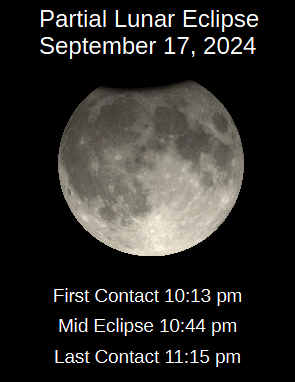
    17  Tu  10:45 pm  Partial Lunar Eclipse (See below)
    17  Tu  10:59 pm  Venus-Spica: 2.4° N
    18  We   9:26 am  Moon Perigee: 357300 km
    18  We   3:51 pm  Moon Ascending Node
    20  Fr   6:43 pm  Neptune Opposition
    22  Su   6:16 am  Moon-Pleiades:  .2° S
    22  Su   8:44 am  Autumnal Equinox
    24  Tu   1:04 pm  Moon North Dec.: 28.7° N
    24  Tu   2:50 pm  Last Quarter
    26  Th   6:25 am  Moon-Pollux: 1.8° N
    27  Fr   7:08 am  Moon-Beehive: 3.4° S
    30  Mo   4:59 pm  Mercury Superior Conj.
Oct  1  Tu            Venus: 31.4° E
All event times are given for UTC-4 hr: Eastern Daylight Saving Time.
Sky Events Calendar by Fred Espenak and Sumit Dutta (NASA’s GSFC), with modifications by the author.
http://eclipse.gsfc.nasa.gov/SKYCAL/SKYCAL.html.
If you go to the above site, you can print out a list like the above for the entire year or calendar pages for your time zone.
Sun and Moon Rising and Setting Events
LU                  Ephemeris of Sky Events for Interlochen/TC
September, 2024    Local time zone: EDT
+-----------------------------------------------------------------------+
| DATE |  SUN     SUN  DAYLIGHT|   TWILIGHT*    |MOON  RISE OR    ILLUM |
|      |  RISE    SET    HOURS |  END    START  |PHASE SET** TIME FRACTN|
+=======================================================================+
|Sun  1| 07:05a  08:18p  13:12 | 09:24p  05:59a |      Rise 06:27a    1%|
|Mon  2| 07:07a  08:16p  13:09 | 09:22p  06:00a |New   Set  08:22p    0%|
|Tue  3| 07:08a  08:14p  13:06 | 09:20p  06:02a |      Set  08:38p    1%|
|Wed  4| 07:09a  08:12p  13:03 | 09:18p  06:03a |      Set  08:53p    3%|
|Thu  5| 07:10a  08:11p  13:00 | 09:16p  06:05a |      Set  09:09p    7%|
|Fri  6| 07:11a  08:09p  12:57 | 09:14p  06:06a |      Set  09:26p   13%|
|Sat  7| 07:12a  08:07p  12:54 | 09:12p  06:07a |      Set  09:45p   20%|
+------+-----------------------+----------------+-----------------------+
|Sun  8| 07:14a  08:05p  12:51 | 09:10p  06:09a |      Set  10:08p   28%|
|Mon  9| 07:15a  08:03p  12:48 | 09:08p  06:10a |      Set  10:38p   38%|
|Tue 10| 07:16a  08:01p  12:45 | 09:06p  06:11a |      Set  11:17p   47%|
|Wed 11| 07:17a  07:59p  12:42 | 09:04p  06:13a |F Qtr Set  12:07a   58%|
|Thu 12| 07:18a  07:58p  12:39 | 09:02p  06:14a |      Set  01:11a   68%|
|Fri 13| 07:19a  07:56p  12:36 | 09:00p  06:15a |      Set  02:25a   78%|
|Sat 14| 07:21a  07:54p  12:33 | 08:58p  06:16a |      Set  03:47a   86%|
+------+-----------------------+----------------+-----------------------+
|Sun 15| 07:22a  07:52p  12:30 | 08:56p  06:18a |      Set  05:10a   93%|
|Mon 16| 07:23a  07:50p  12:26 | 08:54p  06:19a |      Set  06:34a   98%|
|Tue 17| 07:24a  07:48p  12:23 | 08:52p  06:20a |Full  Rise 07:47p  100%|
|Wed 18| 07:25a  07:46p  12:20 | 08:50p  06:22a |      Rise 08:08p   99%|
|Thu 19| 07:27a  07:44p  12:17 | 08:48p  06:23a |      Rise 08:30p   95%|
|Fri 20| 07:28a  07:42p  12:14 | 08:46p  06:24a |      Rise 08:55p   88%|
|Sat 21| 07:29a  07:41p  12:11 | 08:44p  06:25a |      Rise 09:25p   79%|
+------+-----------------------+----------------+-----------------------+
|Sun 22| 07:30a  07:39p  12:08 | 08:42p  06:27a |      Rise 10:02p   69%|
|Mon 23| 07:31a  07:37p  12:05 | 08:40p  06:28a |      Rise 10:50p   58%|
|Tue 24| 07:33a  07:35p  12:02 | 08:38p  06:29a |L Qtr Rise 11:47p   48%|
|Wed 25| 07:34a  07:33p  11:59 | 08:36p  06:30a |      Rise 12:53a   37%|
|Thu 26| 07:35a  07:31p  11:56 | 08:34p  06:32a |      Rise 02:02a   28%|
|Fri 27| 07:36a  07:29p  11:53 | 08:32p  06:33a |      Rise 03:11a   20%|
|Sat 28| 07:37a  07:27p  11:50 | 08:30p  06:34a |      Rise 04:18a   12%|
+------+-----------------------+----------------+-----------------------+
|Sun 29| 07:39a  07:25p  11:46 | 08:28p  06:35a |      Rise 05:24a    7%|
|Mon 30| 07:40a  07:24p  11:43 | 08:27p  06:37a |      Rise 06:27a    3%|
+-----------------------------------------------------------------------+
* Nautical Twilight
** Moonrise or moonset, whichever occurs between sunset and sunrise
Generated using my LookingUp for DOS app.
Ephemeris: 08/30/2024 – Star party tomorrow night
This is Ephemeris for Friday, August 30th. Today the Sun will be up for 13 hours and 18 minutes, setting at 8:22, and it will rise tomorrow at 7:04. The Moon, 3 days before new, will rise at 4:11 tomorrow morning.
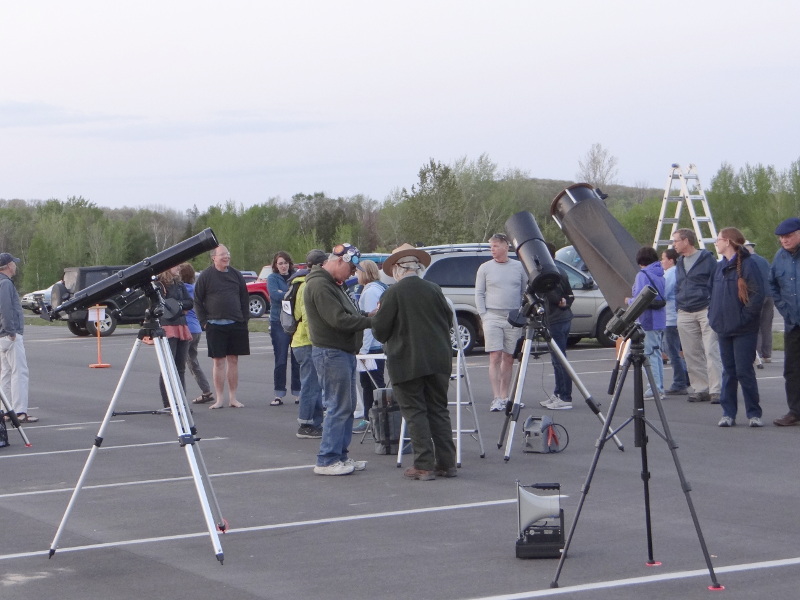
Weather permitting, a Star Party will be held tomorrow night at the Sleeping Bear Dunes National Lakeshore at the Dune Climb. The viewing will start at 9 pm. These events will be hosted by the park rangers and the Grand Traverse Astronomical Society, who will bring their telescopes to view the heavens, including the planet Saturn and the wonders of the summer Milky Way. The telescopes will be setup in the parking area closest to the dune. While twilight fades Saturn will be about the only object to view in the east-southeast. As it gets darker more and more wonders of the Milky Way will be seen. They include star clusters and nebulae, clouds of gas and dust that lie in abundance in the Milky Way.
The astronomical event times given are for the Traverse City/Interlochen area of Michigan (EDT, UT–4 hours). Times will be different for other locations.
Addendum
Ephemeris: 08/29/2024 – Centaur or Teapot, you decide!
This is Bob Moler with Ephemeris for Thursday, August 29th. Today the Sun will be up for 13 hours and 21 minutes, setting at 8:23, and it will rise tomorrow at 7:03. The Moon, 3 days past last quarter, will rise at 3:02 tomorrow morning.
Low in the south at 10 PM shines the heart of summer Milky Way. The constellation that’s seen there is Sagittarius which is supposed to be a centaur with a bow and arrow. We modern folk haven’t seen a centaur outside a Harry Potter movie, so we see its stars looking like a teapot, a short and stout little teapot like in the children’s song. It is tipped to the West with the Milky Way like steam rising from its spout, which is about to pour its tea on the southwestern horizon later tonight. Sagittarius is just begging to be explored with binoculars or a very low power telescope to see its myriad of stars, star clusters and nebulae. As fabulous as all this appears, we cannot see into the heart of the Milky Way for all the clouds of dust and gas in the way.
The astronomical event times given are for the Traverse City/Interlochen area of Michigan (EDT, UT–4 hours). Times will be different for other locations.
Addendum
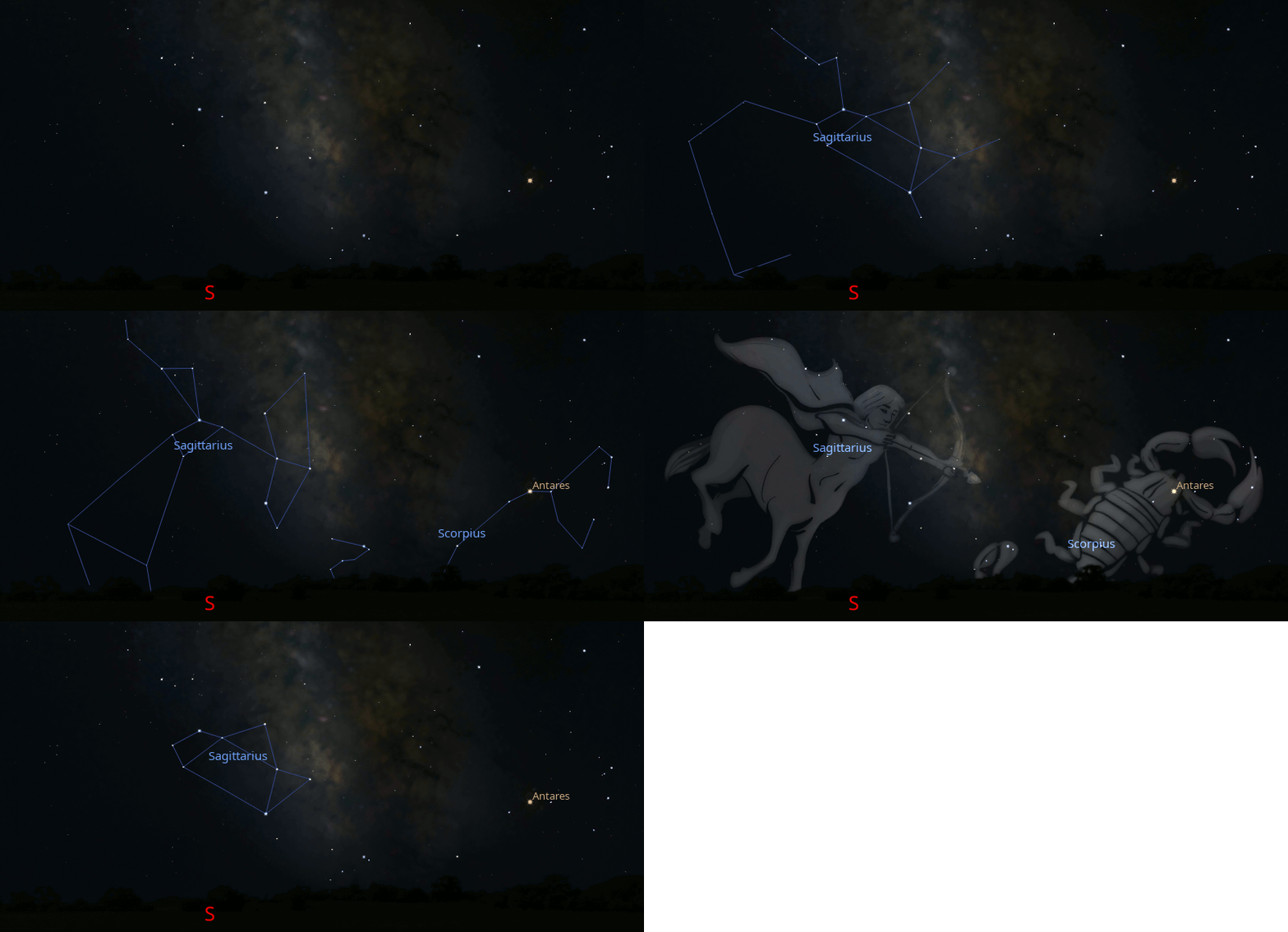
My first guide to the constellations was Stars by Zim and Baker, a Golden Guide. I checked, it has been revised and is still available. H. A. Rey’s book is also still available.
Ephemeris: 08/28/2024 – Where are the naked-eye planets this week?
This is Ephemeris for Wednesday, August 28th. Today the Sun will be up for 13 hours and 24 minutes, setting at 8:25, and it will rise tomorrow at 7:02. The Moon, 2 days past last quarter, will rise at 1:55 tomorrow morning.
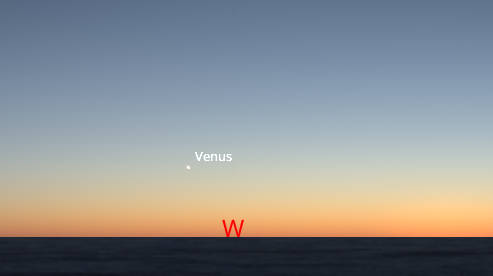
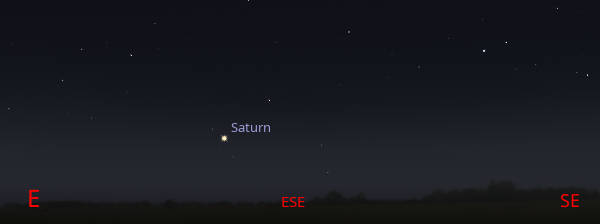
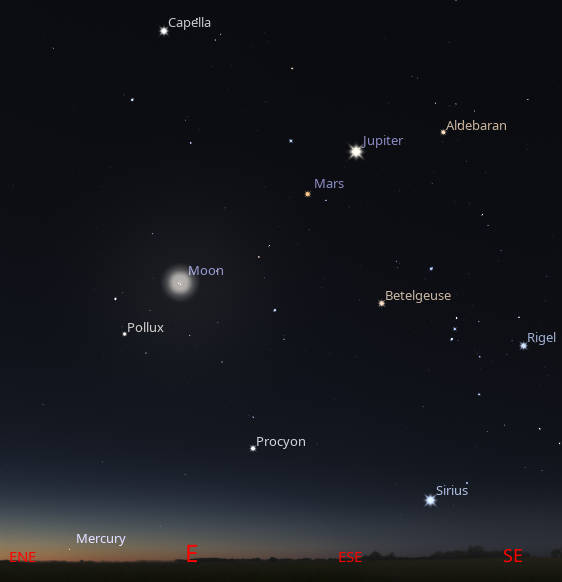
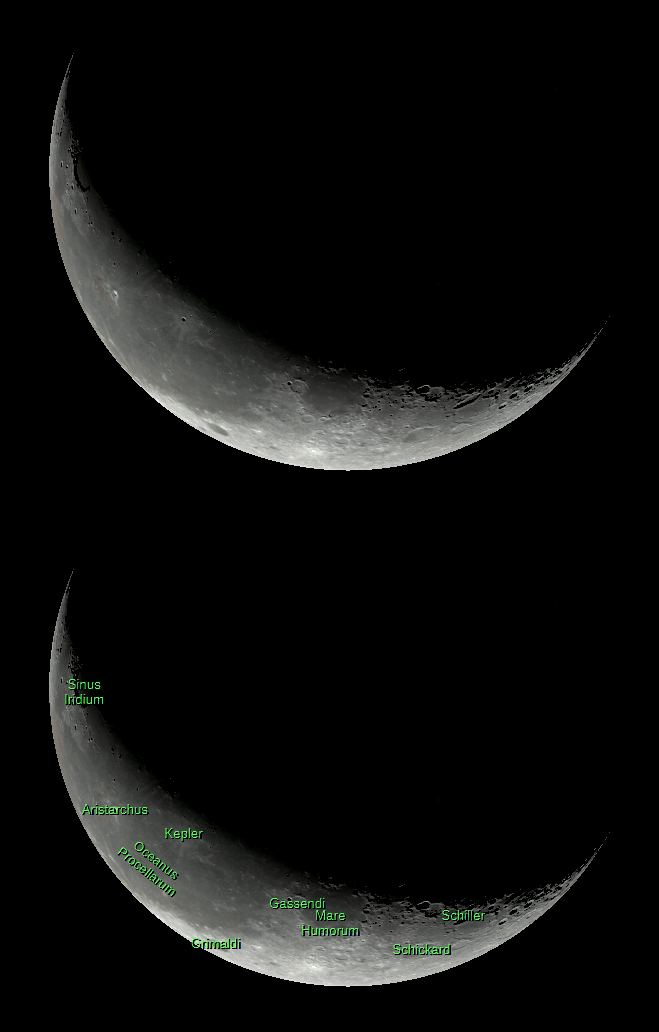
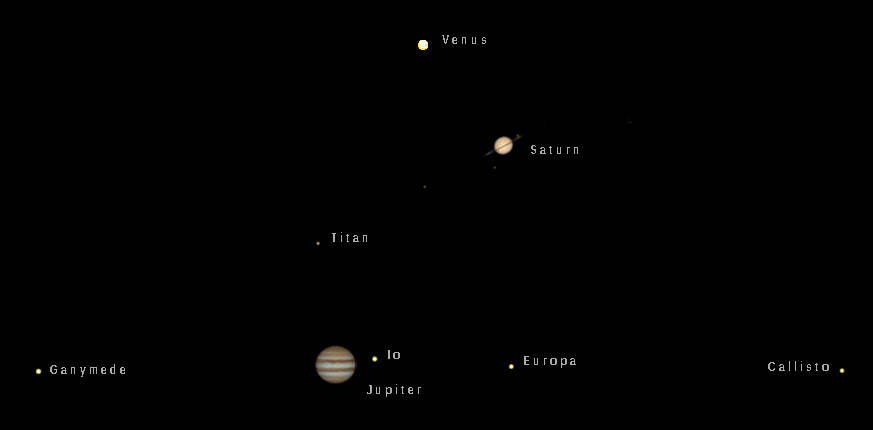
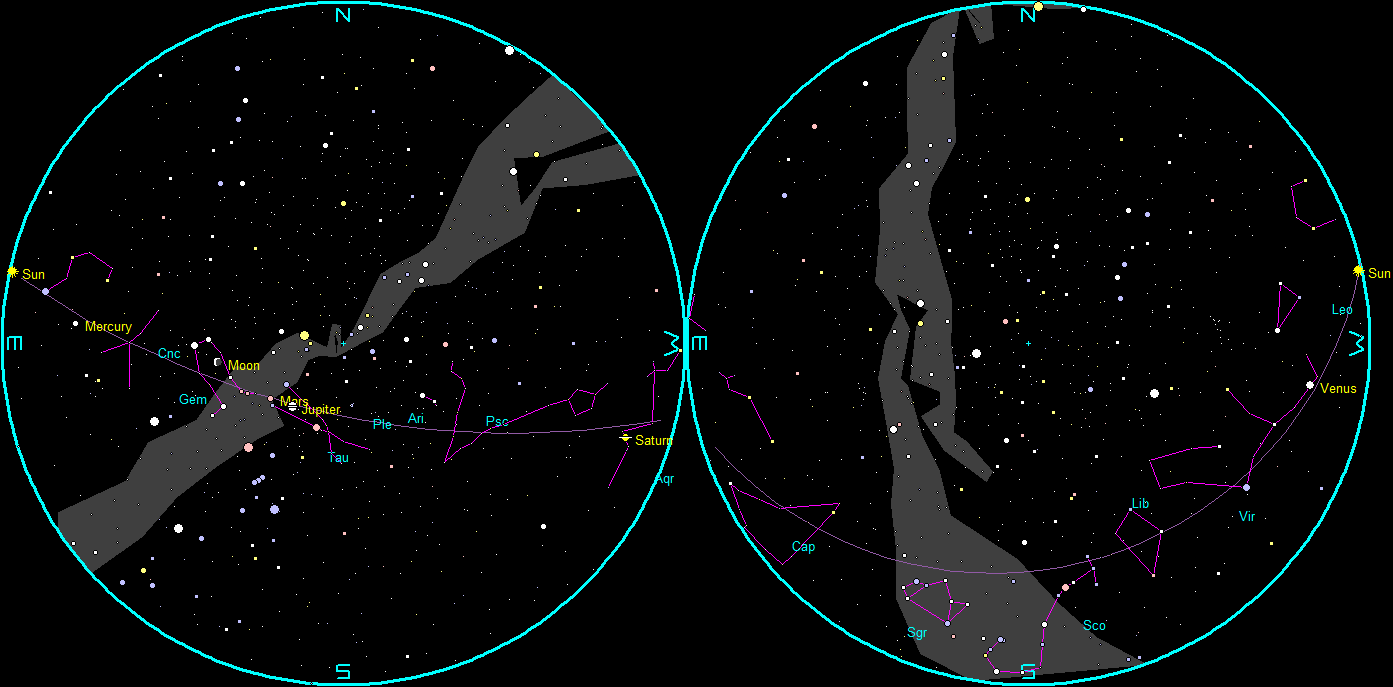
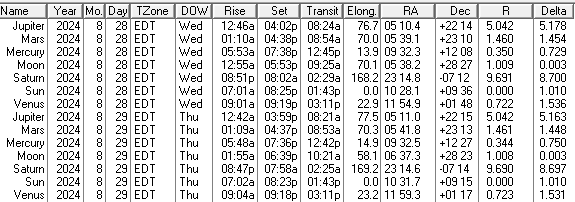
Let’s take our weekly look at the whereabouts of the naked-eye planets. Venus might be glimpsed low in the west around 8:45 PM. It will set at 9:19. It is best seen over a very low or lake horizon. Saturn will rise at 8:52 pm, and by 10 pm will be low in the east-southeast, pretty much by itself. Saturn may look disappointing in telescopes this year since its rings are nearly edge on and appear almost as a line through the planet. Jupiter and Mars will be up in the east in the morning, and by 6 am tomorrow, Jupiter will be the brightest starlike object in the sky among the winter stars. Mars will be just below it to the left. And the waning crescent Moon below left of Mars. Jupiter will rise at 12:42 AM, with Mars rising at 1:09 AM.
The astronomical event times given are for the Traverse City/Interlochen area of Michigan (EDT, UT–4 hours). Times will be different for other locations.
Addendum
Ephemeris: 08/27/2024 – Space news
Sorry, about posting this late. I was working on our astronomical society article and newsletter. The article will be posted as an Ephemeris Extra in a couple of weeks. For a preview see my August 22nd post.
This is Ephemeris for Tuesday, August 27th. Today the Sun will be up for 13 hours and 27 minutes, setting at 8:27, and it will rise tomorrow at 7:01. The Moon, 1 day past last quarter, will rise at 12:55 tomorrow morning.
Let’s take a look at some space news. Today is the first day of the launch window for the SpaceX commercial mission Polaris Dawn where 4 private astronauts will ride a SpaceX Dragon capsule to the highest point astronauts have been since the Apollo days, some 1400 kilometers or 870 miles above the Earth. They will also perform the first commercial EVA or space walk. Two of the astronauts will take turns poking their body out the hatch capsule for a short period of time. They will not be free floating, but they will be connected to the capsule by foot or hand restraints.
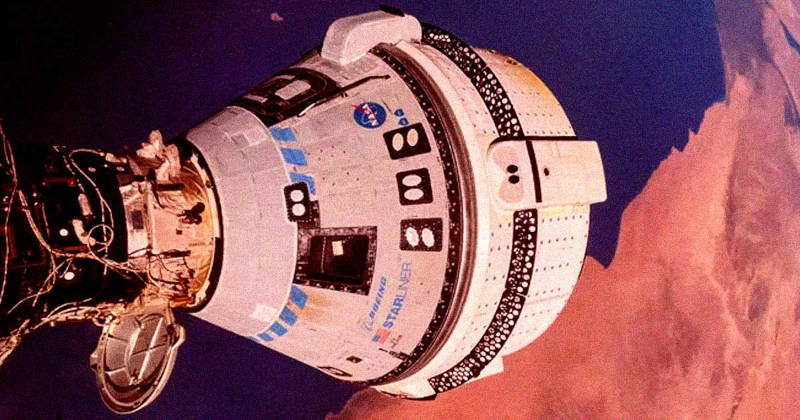
In other news NASA has decided to bring Suni Williams and Butch Wilmore, the Boeing Starliner test astronauts, back to Earth on a Dragon capsule in February due to safety concerns.
The astronomical event times given are for the Traverse City/Interlochen area of Michigan (EDT, UT–4 hours). Times will be different for other locations.
Addendum

Ephemeris: 08/26/2024 – Scanning the Milky Way with binoculars
This is Ephemeris for Monday, August 26th. Today the Sun will be up for 13 hours and 30 minutes, setting at 8:29, and it will rise tomorrow at 6:59. The Moon, at last quarter today, will rise at 12:06 tomorrow morning.
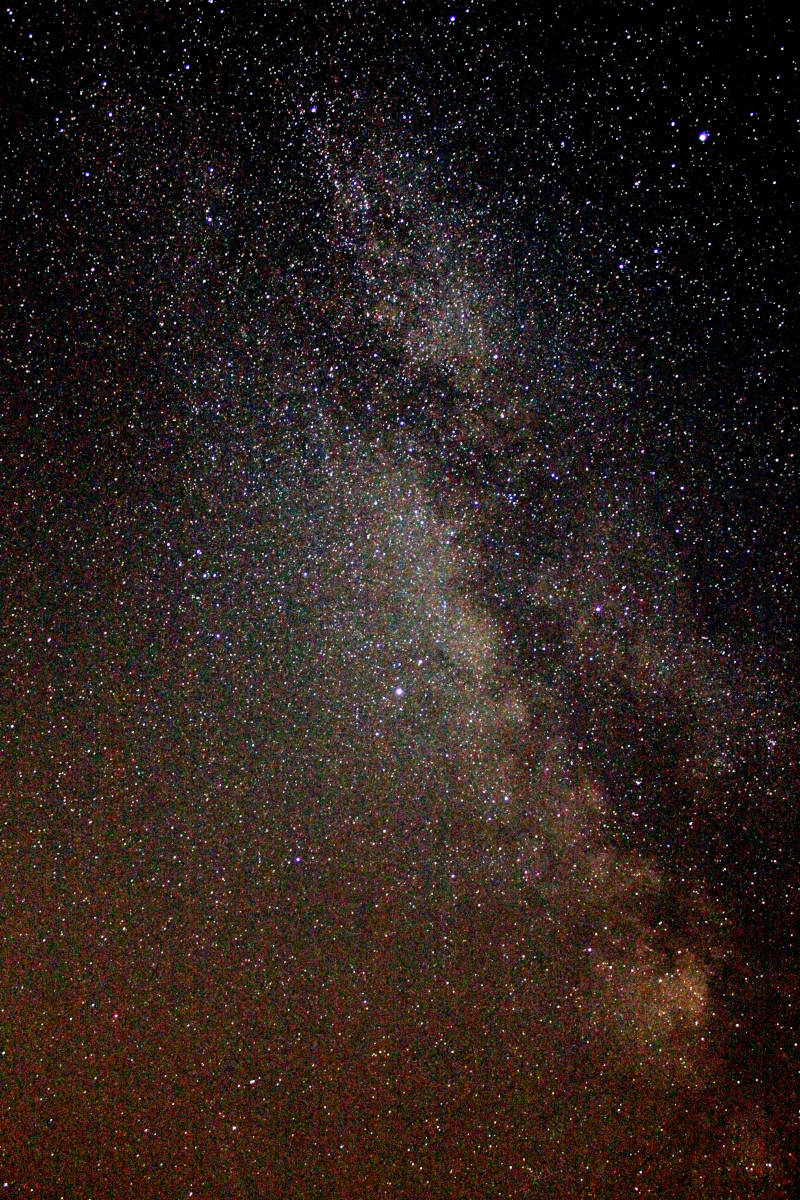
Now that the Moon has left the evening sky the Milky Way dominates the sky from northeast to south-southwest. The best way to appreciate the Milky Way is with binoculars and just scan through the Milky Way as Galileo did with this primitive telescope. What he found was that the glow of the Milky Way resolved itself into individual stars, thousands upon thousands of stars, each too faint to be perceived with the naked eye. At many places in the Milky Way there are fuzzy spots. These could be nebulae, clouds of gas lit up by the stars within them, or clusters of stars not quite resolvable by binoculars, that can be studied in more detail with a larger telescope. Wandering through the Milky Way with binoculars can give hours of enjoyment.
The astronomical event times given are for the Traverse City/Interlochen area of Michigan (EDT, UT–4 hours). Times will be different for other locations.
Addendum
Ephemeris: 08/23/2024 – The dimmest star of the Summer Triangle is really the brightest
This is Ephemeris for Friday, August 23rd. Today the Sun will be up for 13 hours and 39 minutes, setting at 8:34, and it will rise tomorrow at 6:56. The Moon, 3 days before last quarter, will rise at 10:29 this evening.
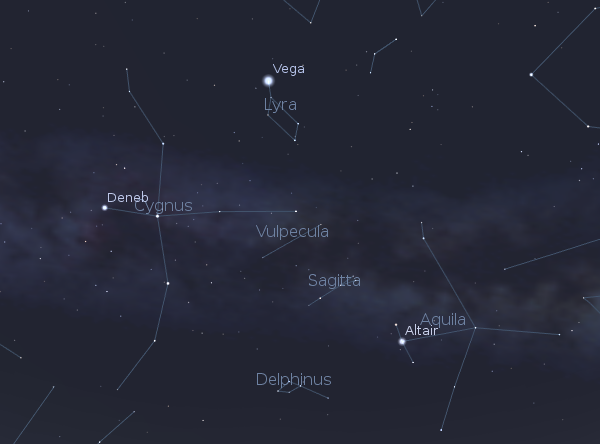
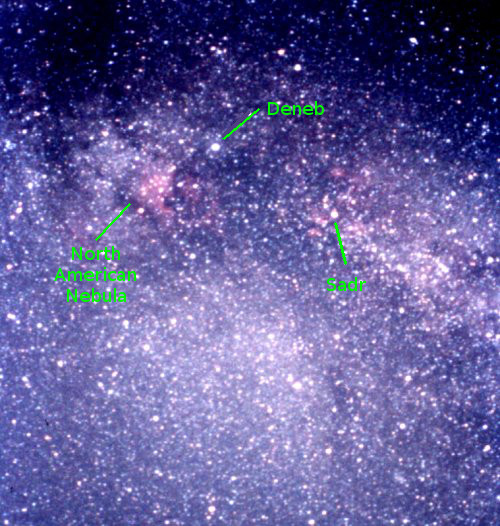
This evening when it gets dark enough the bright star Deneb in Cygnus the swan will be very high in the east. Deneb is the dimmest star of the Summer Triangle. Of the other stars of the triangle, Vega is nearly overhead, while Altair is lower in the south-southeast. Deneb’s apparent magnitude, or brightness as seen from Earth, makes it the dimmest of the three bright stars. Its vast distance of possibly 2,600 light years is over 100 times the distance of Vega. If brought as close as Vega, Deneb would be as at least as bright as the quarter moon. It is possibly as bright as 200 thousand Suns; and a huge star, possibly as large in diameter as the orbit of the Earth. For all this it is only 19 or so times the mass of the Sun.
The astronomical event times given are for the Traverse City/Interlochen area of Michigan (EDT, UT–4 hours). Times will be different for other locations.
Addendum
 Bob Moler's Ephemeris Blog