Archive
Ephemeris: 08/22/2024 – Saturn’s ring aspect is changing in the next nine months
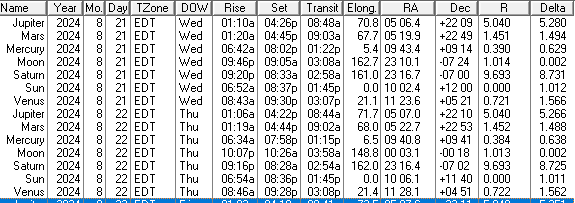
This is Ephemeris for Thursday, August 22nd. Today the Sun will be up for 13 hours and 41 minutes, setting at 8:36, and it will rise tomorrow at 6:55. The Moon, 3 days past full, will rise at 10:07 this evening.
Saturn graces our evening skies now, but it’s not yet in the evening planet. It will rise tonight at 9:16 PM. However, will set after sunrise, thus still being a morning planet. It will become an evening planet on September 7th, when it reaches opposition from the Sun. It will rise approximately the same time the Sun sets and thereafter will rise before sunset. Saturn’s rings are nearly edge on to us now. Currently, about 2 1/4° from being edge on. They will open up slightly over the next few months to five degrees on November 11th before closing up and becoming edge-on on March 23rd of next year. On that day the rings will disappear for us. However, their presence will only be seen by the thin shadow they cast on the planet.
The astronomical event times given are for the Traverse City/Interlochen area of Michigan (EDT, UT–4 hours). Times will be different for other locations.
Addendum
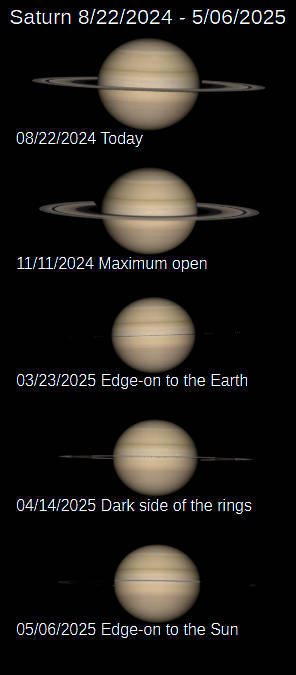
The image shows Saturn and its rings on five dates. The first is today, August 22nd 2024. On this date the rings are a little over three degrees from being edge on to us. They will actually open up a bit for nearly three months. On November 11th they will open up to nearly 6°. On March 23rd next year they will be exactly edge on to us and be invisible. The only sign of their presence will be a very thin shadow the rings cast on the planet. The bad part of this is that early next year Saturn will be too close to the Sun to be easily seen from Earth. That includes the Hubble and James Webb space telescopes. It will appear only 10 degrees west of the Sun on that date. It will increase over the next 44 days to 48 degrees on May 6th, when the rings will be edge on to the Sun. In that period the Earth will be looking at the unlit side of the rings. So the rings will be very dim. Only the light filtering through the rings will be seen, and the B ring which is the brightest normally will be just about completely dark due to the density of ring particles in it. After that the rings will open up for the next 7 1/2 years.
Ephemeris: 08/21/2024 – What naked-eye planets are now visible?
This is Ephemeris for Wednesday, August 21st. Today the Sun will be up for 13 hours and 44 minutes, setting at 8:37, and it will rise tomorrow at 6:54. The Moon, 2 days past full, will rise at 9:46 this evening.
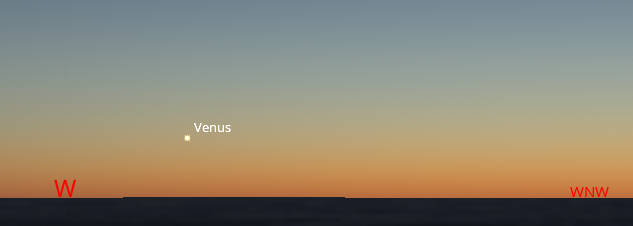
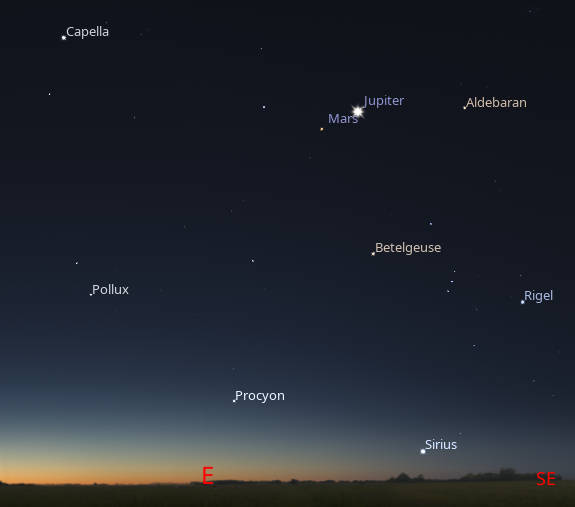
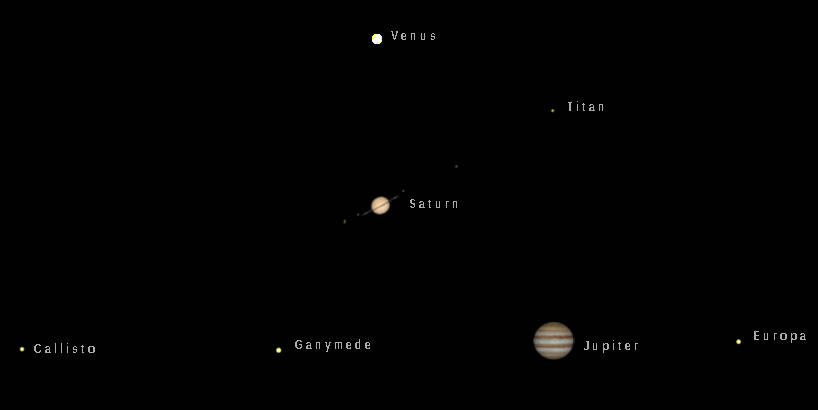
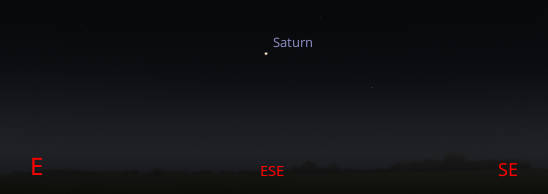
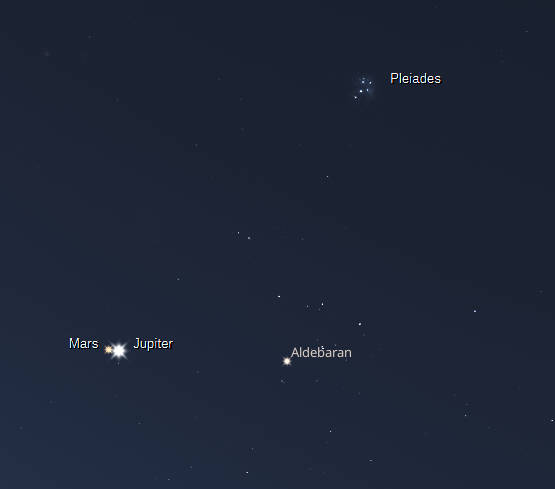
Let’s take our weekly look at the whereabouts of the naked-eye planets. Venus might be glimpsed low in the west with Venus lower in the west around 9:15 pm. It will set at 9:31. It is best seen over a very low or lake horizon. Saturn will rise at 9:21 pm, and by 10:30 pm will be low in the east southeast, pretty much by itself. Saturn may look disappointing in telescopes this year since rings are nearly edge on and appear almost as a line through the planet. Jupiter and Mars will be up in the east in the morning, and by 6 am tomorrow, Jupiter will be the brightest starlike object in the sky among the winter stars. Mars will be just below it to the left. Jupiter will rise at 1:06 am, with Mars rising 13 minutes later.
The astronomical event times given are for the Traverse City/Interlochen area of Michigan (EDT, UT–4 hours). Times will be different for other locations.
Addendum
Ephemeris: 08/20/2024 – The Moon will pass Saturn tonight
This is Ephemeris for Tuesday, August 20th. Today the Sun will be up for 13 hours and 47 minutes, setting at 8:39, and it will rise tomorrow at 6:52. The Moon, 1 day past full, will rise at 9:25 this evening.
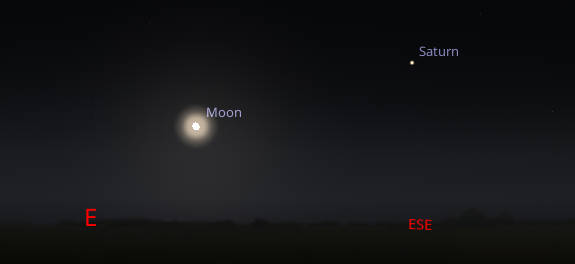
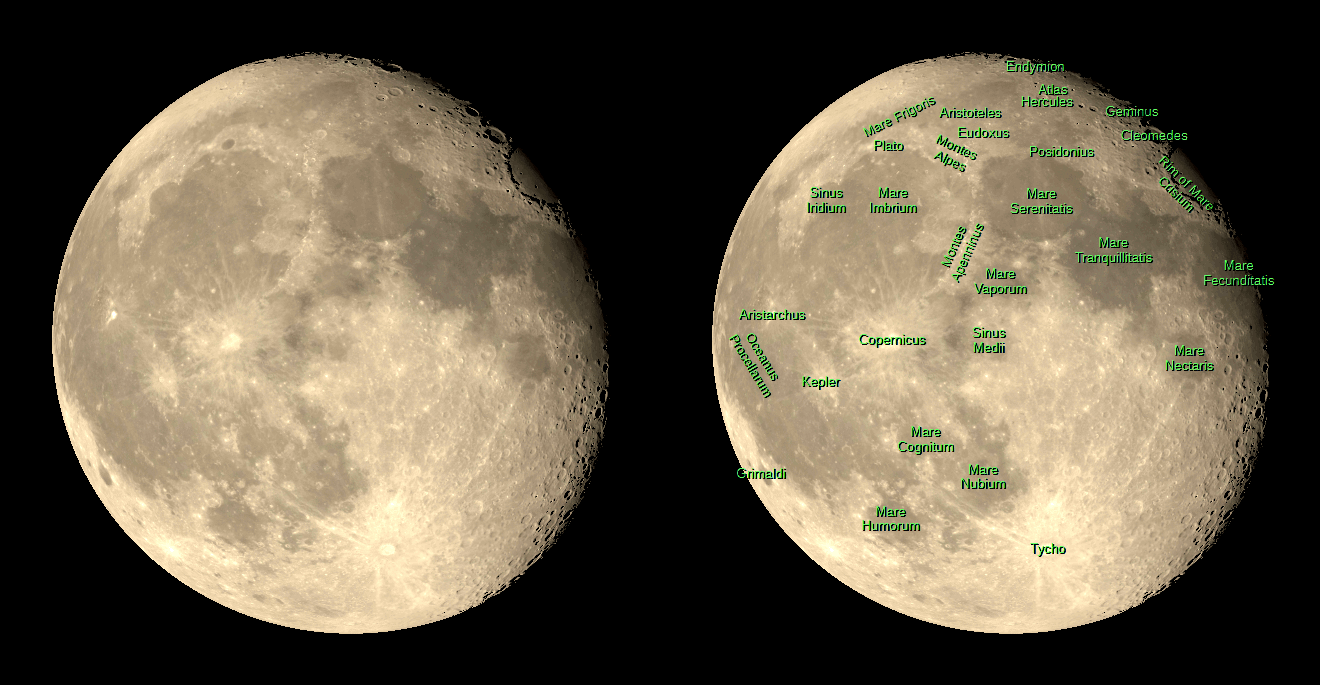
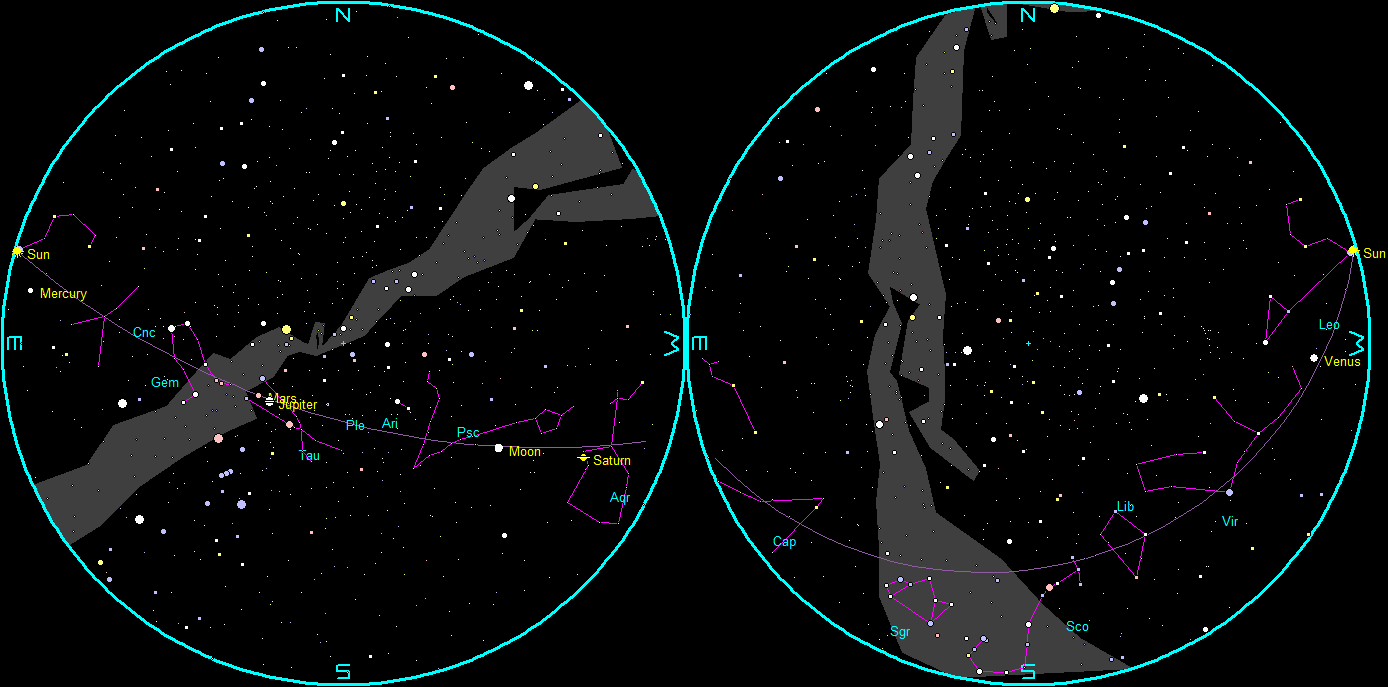
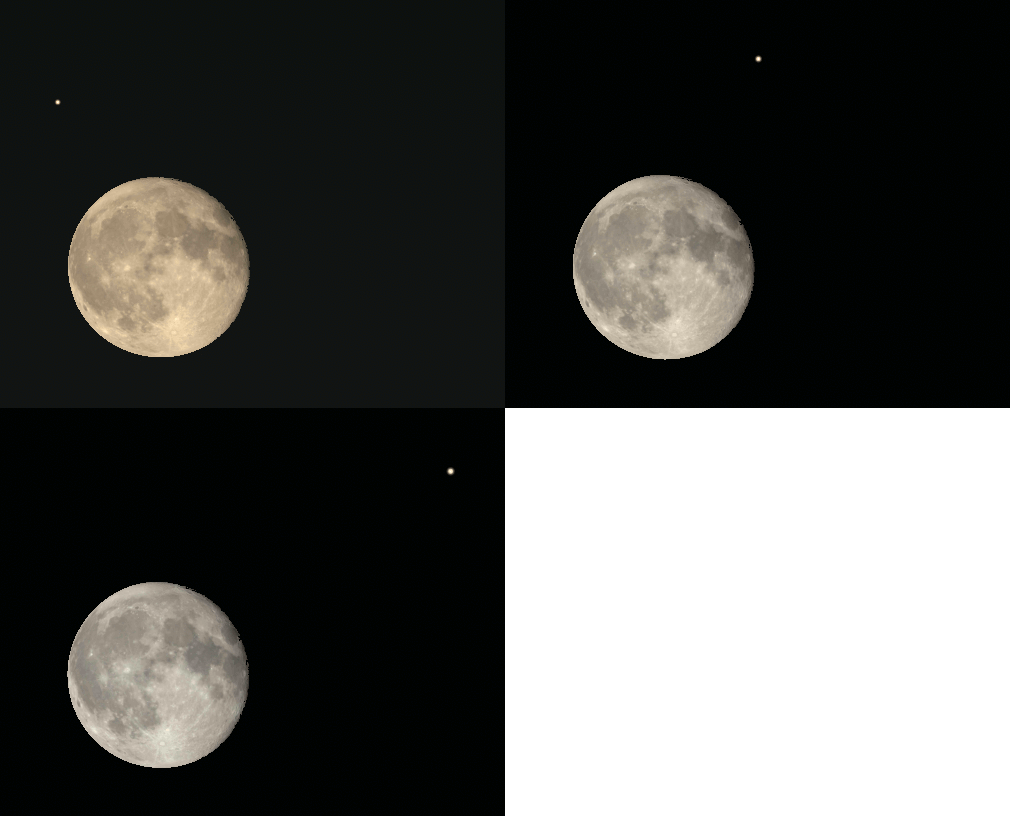
The bright Moon tonight will have a companion. It will be the planet Saturn, which the Moon will pass below this evening. The Moon being very bright will make it difficult to spot Saturn. So it will seem that Saturn is moving above the Moon, not the other way around. It may take a pair of binoculars to spot Saturn because it will be less than the diameter of the Moon above and to the left of the Moon early in the evening. Moving to the upper right of the Moon towards midnight. Our next full moon will be the Harvest Moon. We’re already seeing the harvest moon effect, that is the Moon rises at nearly the same time on consecutive nights, or almost so. Tomorrow’s Moon will rise only 21 minutes later than tonight’s Moon, at much less than the 50 minutes per night average.
The astronomical event times given are for the Traverse City/Interlochen area of Michigan (EDT, UT–4 hours). Times will be different for other locations.
Addendum
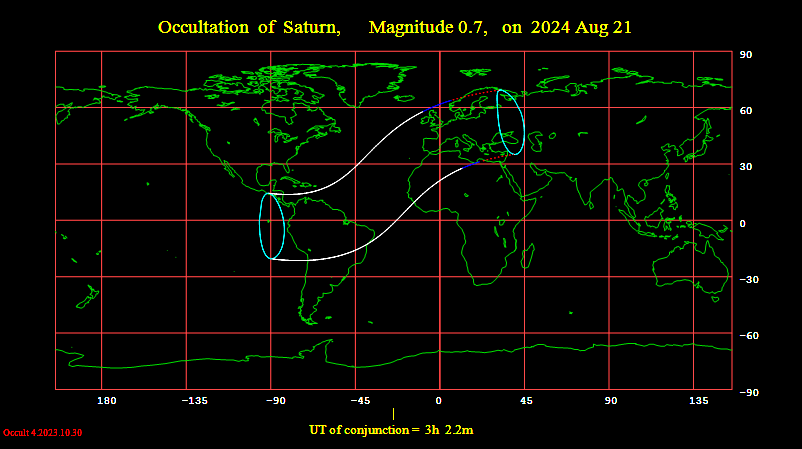
Saturn will be occulted (covered up) by the Moon tonight for portions of the Earth
Ephemeris: 08/19/24 – Dark Energy
This is Ephemeris for Monday, August 19th. Today the Sun will be up for 13 hours and 50 minutes, setting at 8:41, and it will rise tomorrow at 6:51. The Moon, at full today, will rise at 9:02 this evening.
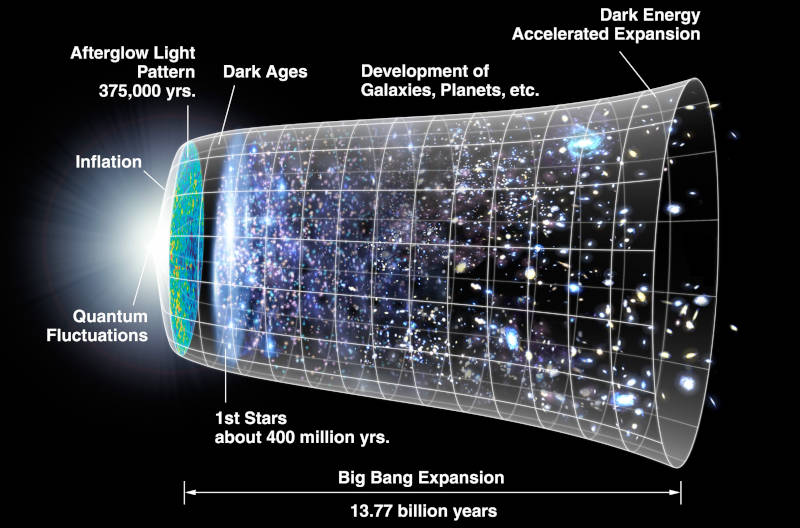
The Big Bang, nearly 14 billion years ago set the universe to be expanding. All the mass of ordinary matter and the dark matter I talked about last week should be slowing that expansion. However, it was discovered, about 20 years ago, that the universal expansion is not slowing down. It is increasing its expansion rate. Astronomers do not really know why. Since expansion requires energy. This new property is called dark energy. It is actually the expansion of space itself. The galaxies are not fleeing by their own motion through space. They are carried by the expanding space around them. It turns out that objects with mass cannot exceed the speed of light, but the expansion of space itself has no speed limit. At least that’s how I understand it.
The astronomical event times given are for the Traverse City/Interlochen area of Michigan (EDT, UT–4 hours). Times will be different for other locations.
Addendum
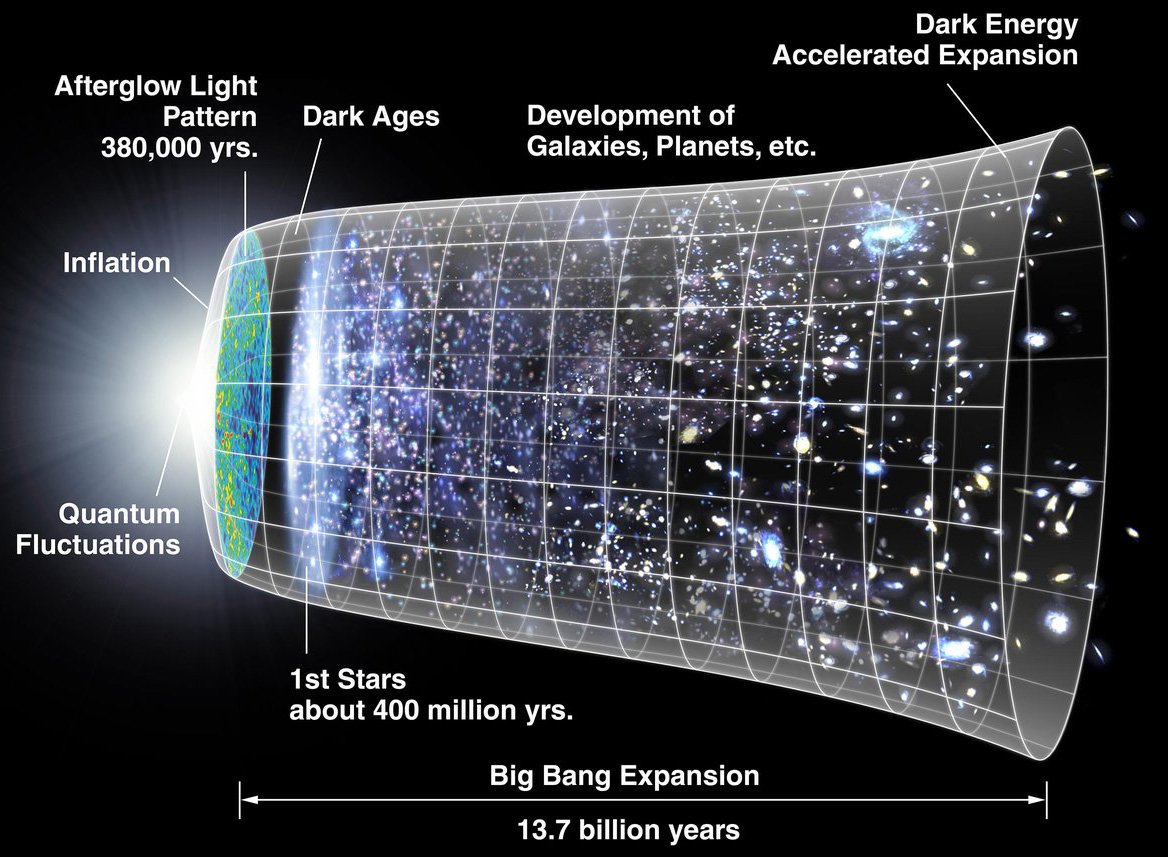
Timeline of the universe. A representation of the evolution of the universe over 13.77 billion years. The far left depicts the earliest moment we can now probe, when a period of “inflation” produced a burst of exponential growth in the universe. (Size is depicted by the vertical extent of the grid in this graphic.) For the next several billion years, the expansion of the universe gradually slowed down as the matter in the universe pulled on itself via gravity. More recently, the expansion has begun to speed up again as the repulsive effects of dark energy have come to dominate the expansion of the universe. The afterglow light seen by WMAP was emitted about 375,000 years after inflation and has traversed the universe largely unimpeded since then. The conditions of earlier times are imprinted on this light; it also forms a backlight for later developments of the universe. Public Domain.
Ephemeris: 08/16/2024 – WIMPs and MACHOs
This is Ephemeris for Friday, August 16th. Today the Sun will be up for 13 hours and 58 minutes, setting at 8:46, and it will rise tomorrow at 6:48. The Moon, 3 days before full, will set at 3:34 tomorrow morning.
The dark matter that holds the clusters of galaxies together in the universe may be made of weakly interacting massive particles which astronomers have dubbed WIMPs. These particles would be more massive than the particles that ordinary matter is made of, but do not interact with ordinary matter or give off or absorb light. They are detected by the influence of their gravitational force alone. An alternative idea is Massive Compact Halo Objects or MACHOs. These may be made-up of ordinary matter. Since there are many more low mass stars, like red dwarfs, than there are high mass stars, perhaps there’s the creation of planet sized bodies like brown dwarfs. These are planets more massive than Jupiter, but not massive enough to become stars. As such, they should be practicably invisible.
The astronomical event times given are for the Traverse City/Interlochen area of Michigan (EDT, UT–4 hours). Times will be different for other locations.
Addendum
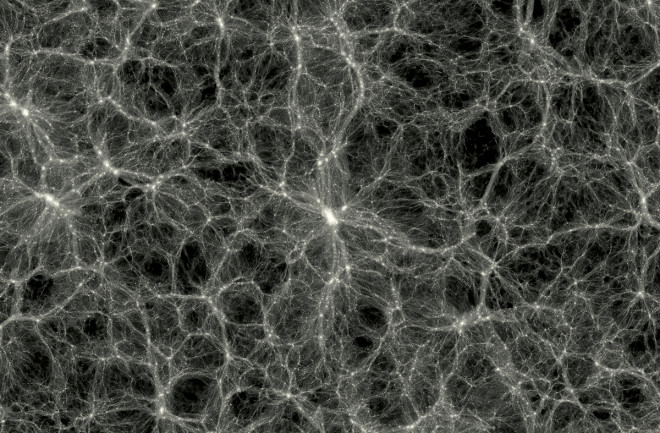
For more information on Dark Matter search for it on the internet. One Article I found is here: https://sciencenotes.org/what-is-dark-matter/. They dismiss MACHOs by not mentioning them at all, concentrating on the much more likely WIMPs.
Ephemeris: 08/15/2024 – What’s the matter with dark matter?
This is Bob Moler with Ephemeris for Thursday, August 15th. Today the Sun will be up for 14 hours and 1 minute, setting at 8:47, and it will rise tomorrow at 6:47. The Moon, 3 days past first quarter, will set at 2:23 tomorrow morning.
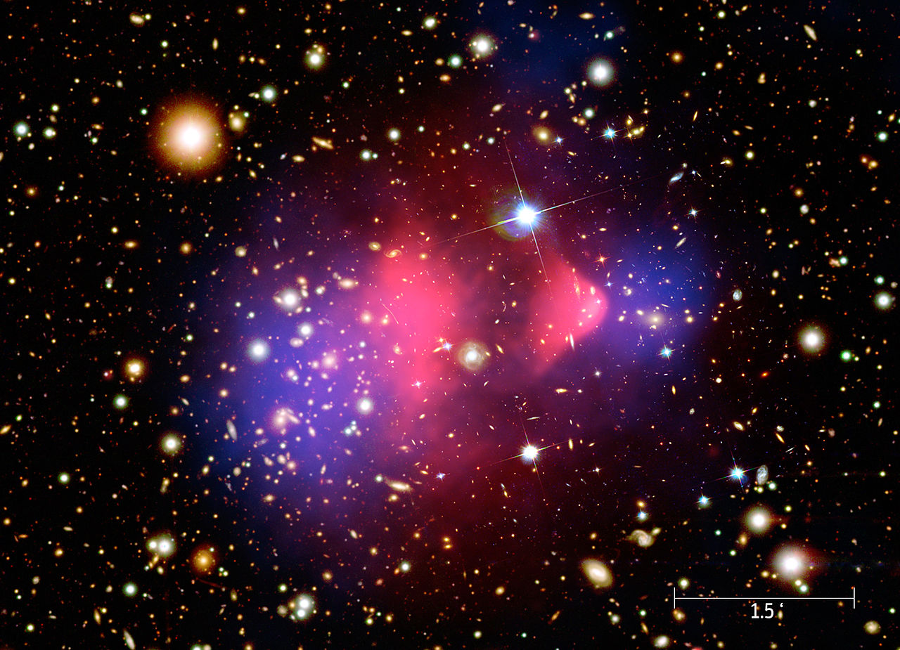
Over the past century astronomers have come to the realization that we are seeing only about 5% of the mass and energy of the universe. Galaxies in clusters seemed to move too fast to not escape, dissipating the cluster, yet after billions of years they still exist. Also, the stars in galaxies revolve about their centers much faster than expected revealing missing mass. So astronomers have come up with the idea that either there is missing matter that we can’t see, what’s called dark matter or there is something wrong with Newton’s and Einstein’s theories of gravity. Astronomers have come up with up two possible types of dark matter, which they humorously dub WIMPs and MACHOs. More about them tomorrow.
The astronomical event times given are for the Traverse City/Interlochen area of Michigan (EDT, UT–4 hours). Times will be different for other locations.
Addendum
Ephemeris: 08/14/2024 – Which of the naked-eye planets can be seen tonight?
This is Ephemeris for Wednesday, August 14th. Today the Sun will be up for 14 hours and 4 minutes, setting at 8:49, and it will rise tomorrow at 6:45. The Moon, 2 days past first quarter, will set at 1:25 tomorrow morning.
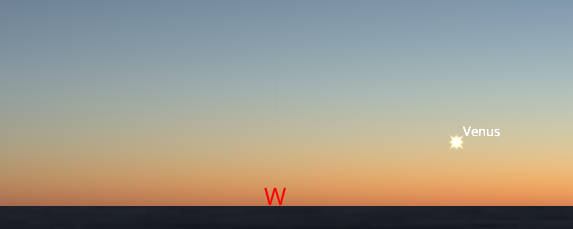
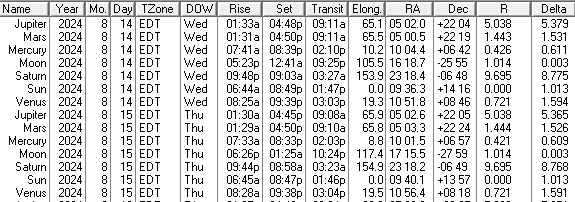
Let’s take our weekly look at the whereabouts of the naked-eye planets. Venus might be glimpsed low in the west with Venus lower in the west around 9:15 pm. It will set at 9:40. It is best seen over a very low or lake horizon. Saturn will rise at 9:49 pm, and by 11 pm will be low in the east southeast, pretty much by itself. Saturn may look disappointing in telescopes this year since rings are nearly edge on and appear almost as a line through the planet. Jupiter and Mars will be up in the east by 5:30 am tomorrow, with Mars one moon-width left of the much brighter Jupiter. They were a bit closer this morning with Mars two thirds of a moon-width to the upper left of Jupiter. That giant planet outshines all the bright stars around it. Jupiter will rise at 1:30 am, with Mars a couple of minutes later.
The astronomical event times given are for the Traverse City/Interlochen area of Michigan (EDT, UT–4 hours). Times will be different for other locations.
Addendum
Ephemeris: 08/13/2024 – Antares and the Moon
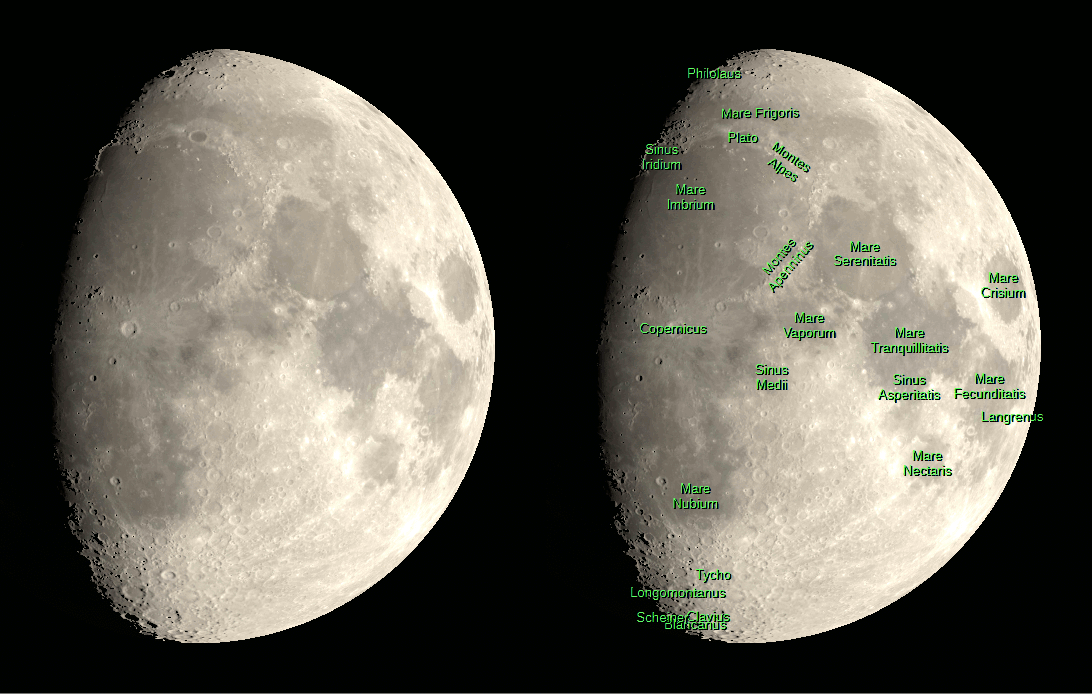
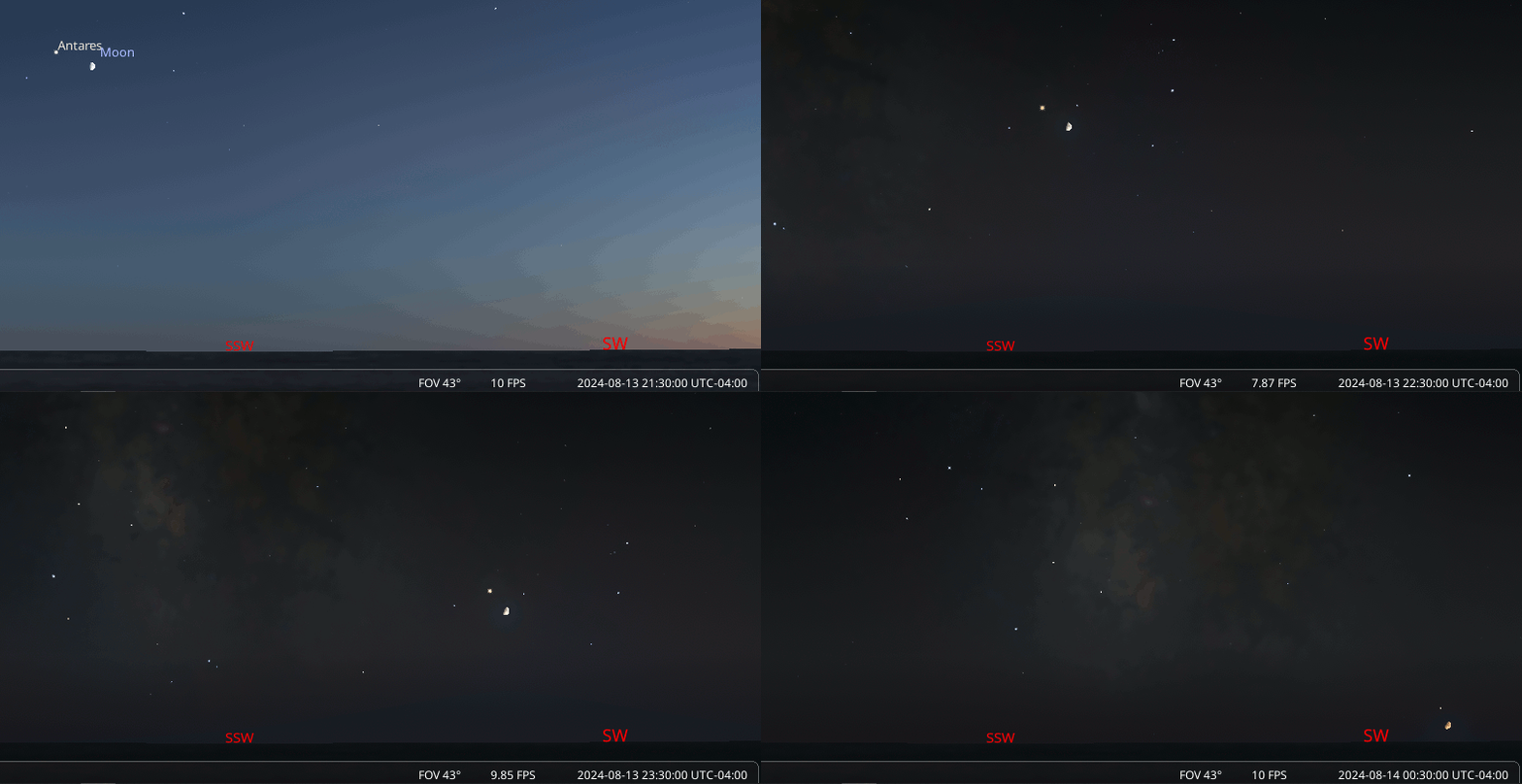
This is Ephemeris for Tuesday, August 13th. Today the Sun will be up for 14 hours and 7 minutes, setting at 8:50, and it will rise tomorrow at 6:44. The Moon, 1 day past first quarter, will set at 12:41 tomorrow morning.
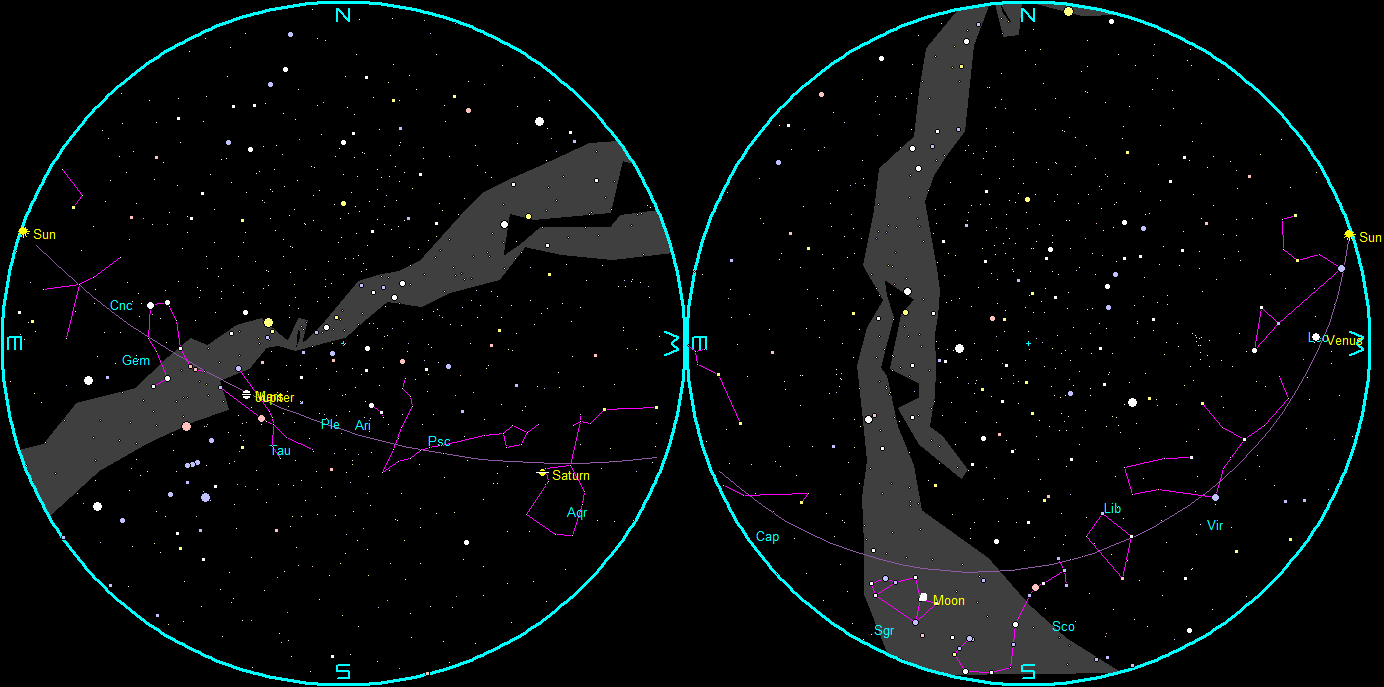
The Moon tonight will have a companion. Just to the left of it will be a star. That star may not look very bright because it is overpowered by moonlight, but it is one of the brightest stars of the sky. It is Antares in Scorpius the scorpion, a red giant star. Every month for the last several years and for the next several years the moon will pass in front of that star. Unfortunately due to the timing and to the path of the Moon it doesn’t happen for any particular spot on the Earth very often. Tonight, as the Moon sets it will be approaching Antares but will appear about to pass below it at the time it sets. We will not be able to see the Moon actually cover or occult Antares from Northern Michigan until May 2028, nearly four years from now.
The astronomical event times given are for the Traverse City/Interlochen area of Michigan (EDT, UT–4 hours). Times will be different for other locations.
Addendum
Ephemeris: 08/12/2024 – Expect a stellar explosion soon
This is Ephemeris for Monday, August 12th. Today the Sun will be up for 14 hours and 9 minutes, setting at 8:52, and it will rise tomorrow at 6:43. The Moon, at first quarter today, will set at 12:07 tomorrow morning.
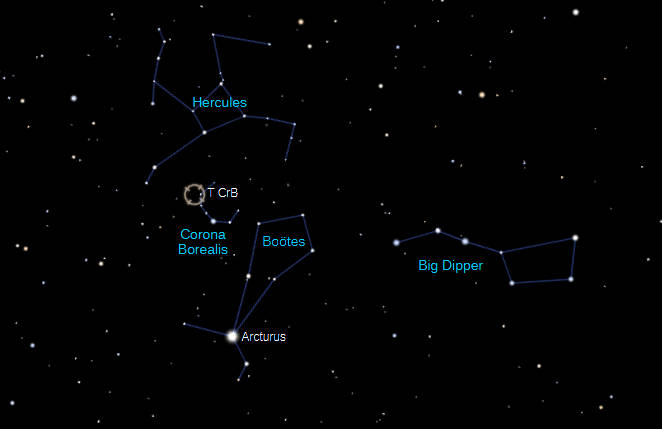
This is a reminder that we are expecting a once in a lifetime nova or exploding star in our skies fairly soon, maybe in a month or two. At least we’re hoping. Unlike many reoccurring events in astronomy this one cannot be predicted exactly since we’re not really sure what is happening. We have a general idea. The star is T Coronae Borealis which is in the Northern Crown constellation, which is a small semicircular stellar group near the star Arcturus which is a bright star found off the end of the handle of the Big Dipper. It is to the upper left of that star and the kite shaped constellation of Boötes of which Arcturus is at the base. The nova will appear as bright as Corona’s brightest star, but will fade in about 8 days below naked eye visibility. So it will be easy to miss.
The astronomical event times given are for the Traverse City/Interlochen area of Michigan (EDT, UT–4 hours). Times will be different for other locations.
Addendum
Ephemeris: 08/09/2024 – Star Party tomorrow night!
This is Ephemeris for Friday, August 9th. Today the Sun will be up for 14 hours and 17 minutes, setting at 8:56, and it will rise tomorrow at 6:40. The Moon, 3 days before first quarter, will set at 11:03 this evening.
Tomorrow The Grand Traverse Astronomical Society will be part of the Port Oneida Rural Arts and Culture Fair, an event sponsored by the Sleeping Bear Dunes National Lakeshore. The society will bring their telescopes to the Thoreson Farm on South Thoreson Road off M22 North of Glen Arbor for a Star Party beginning at 9 p.m. South Thoreson Road is a loop off M22. On tap will be the fat waxing crescent Moon and some of the brighter wonders of the summer sky. Even though the moonlit skies will be bright, there are plenty of wonders still visible in the telescopes. We might have a shot at Saturn later in the evening along with a few bright Perseid meteors to wow the viewer. The peak of the Perseid meteor shower will be Monday morning after the Moon sets.
The astronomical event times given are for the Traverse City/Interlochen area of Michigan (EDT, UT–4 hours). Times will be different for other locations.
Addendum

 Bob Moler's Ephemeris Blog