Archive
Ephemeris: 04/25/2024 – Finding Hydra, the longest constellation
This is Ephemeris for Thursday, April 25th. Today the Sun will be up for 14 hours exactly, setting at 8:41, and it will rise tomorrow at 6:39. The Moon, 2 days past full, will rise at 11:00 this evening.
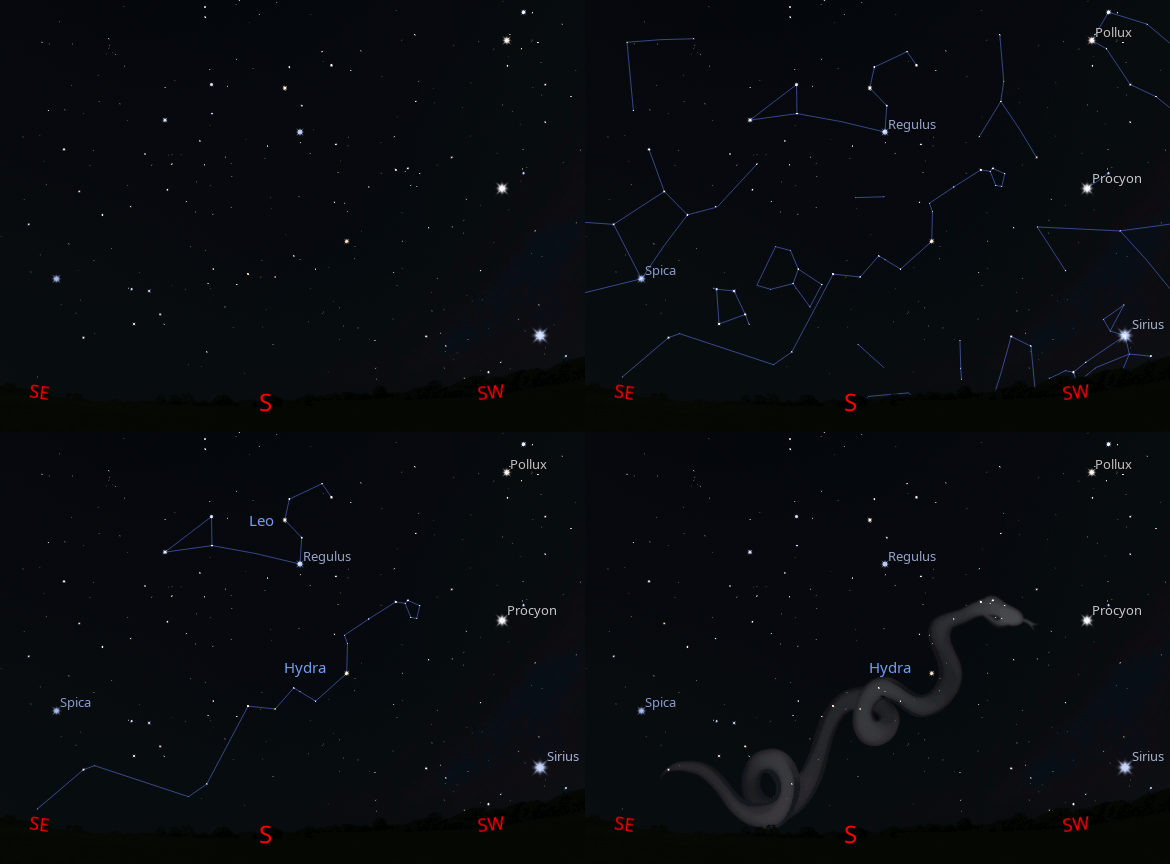
Stretching from midway up the sky in the southwest to low in the southeast at 10 p.m. can be found the constellation of Hydra the water snake, the longest constellation of all. Unlike the monster of the same name that Hercules slew, this Hydra has but one head, which is its most distinctive part. The head of Hydra is located between the bright stars Procyon in the southwest. Which is above the brighter star Sirius low in the sky, and Regulus in Leo the lion, higher in the south. Hydra’s head is a small but distinctive group of 6 stars that make a drooping loop to the right. The rest of Hydra wends its way in a reasonably straight line down to the southeastern horizon.
The astronomical event times given are for the Traverse City/Interlochen area of Michigan (EDT, UT–4 hours). They may be different for your location.
Addendum
Ephemeris: 04/24/2024 – Where have the naked-eye planets wandered off to this week?
This is Bob Moler with Ephemeris for Wednesday, April 24th. Today the Sun will be up for 13 hours and 57 minutes, setting at 8:39, and it will rise tomorrow at 6:41. The Moon, 1 day past full, will rise at 9:49 this evening.
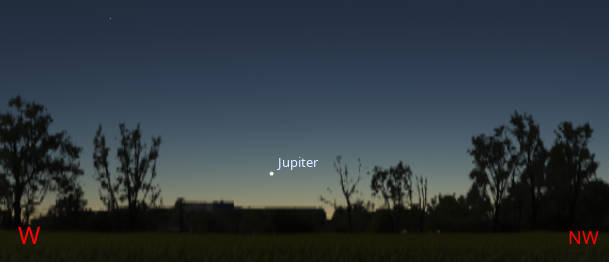
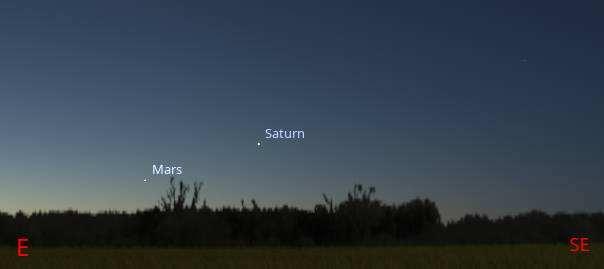
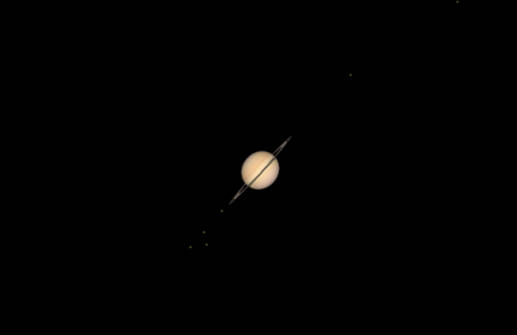
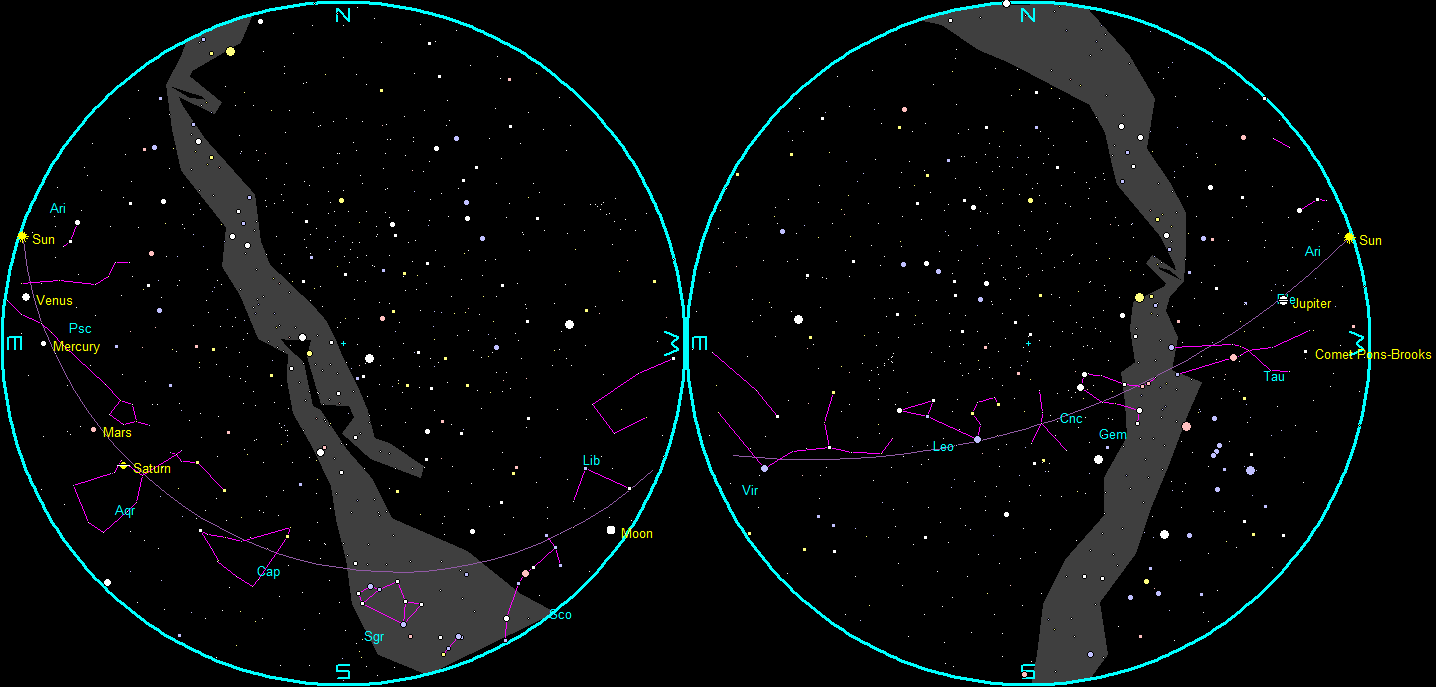
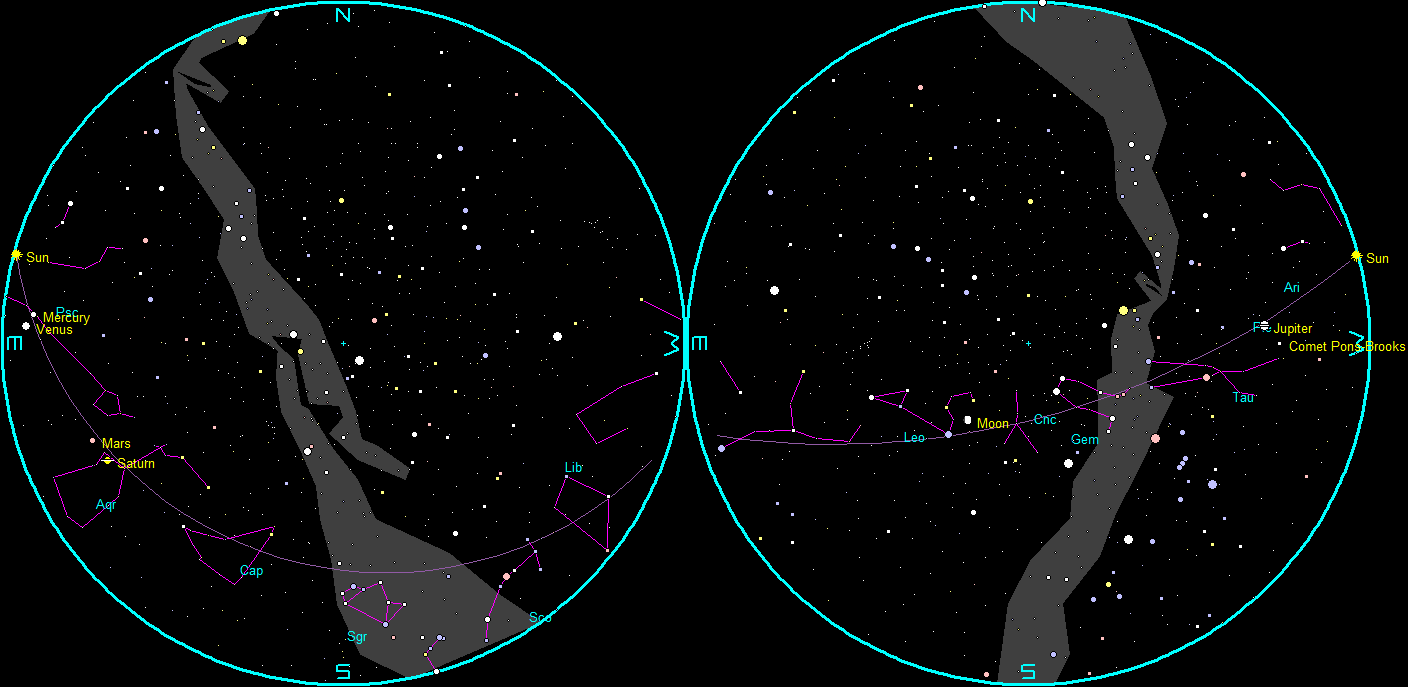
Let’s find out where the naked-eye planets have wandered off to this week, and see what planets are left. Jupiter, looking not-so bright in twilight is very low and in the west. It will set at 10:23 pm. I’m giving Jupiter another week of evening visibility. Comet 12P/Pons-Brooks now only visible to observers south of the equator. In the morning, Mars and Saturn will be close together in the east southeastern sky at 6 am. They will be fighting the bright morning twilight and low altitude then. Saturn will be difficult to see right now in the twilight. Mars will be harder to spot. Saturn will look fairly different this year and next with its rings nearly edge on to us. They will look more like a line through the planet.
The astronomical event times given are for the Traverse City/Interlochen area of Michigan (EDT, UT–4 hours). They may be different for your location.
Addendum
Ephemeris: 04/23/2024 – We are awaiting a bright nova
This is Bob Moler with Ephemeris for Tuesday, April 23rd. Today the Sun will be up for 13 hours and 54 minutes, setting at 8:38, and it will rise tomorrow at 6:42. The Moon, at full today, will rise at 8:40 this evening.
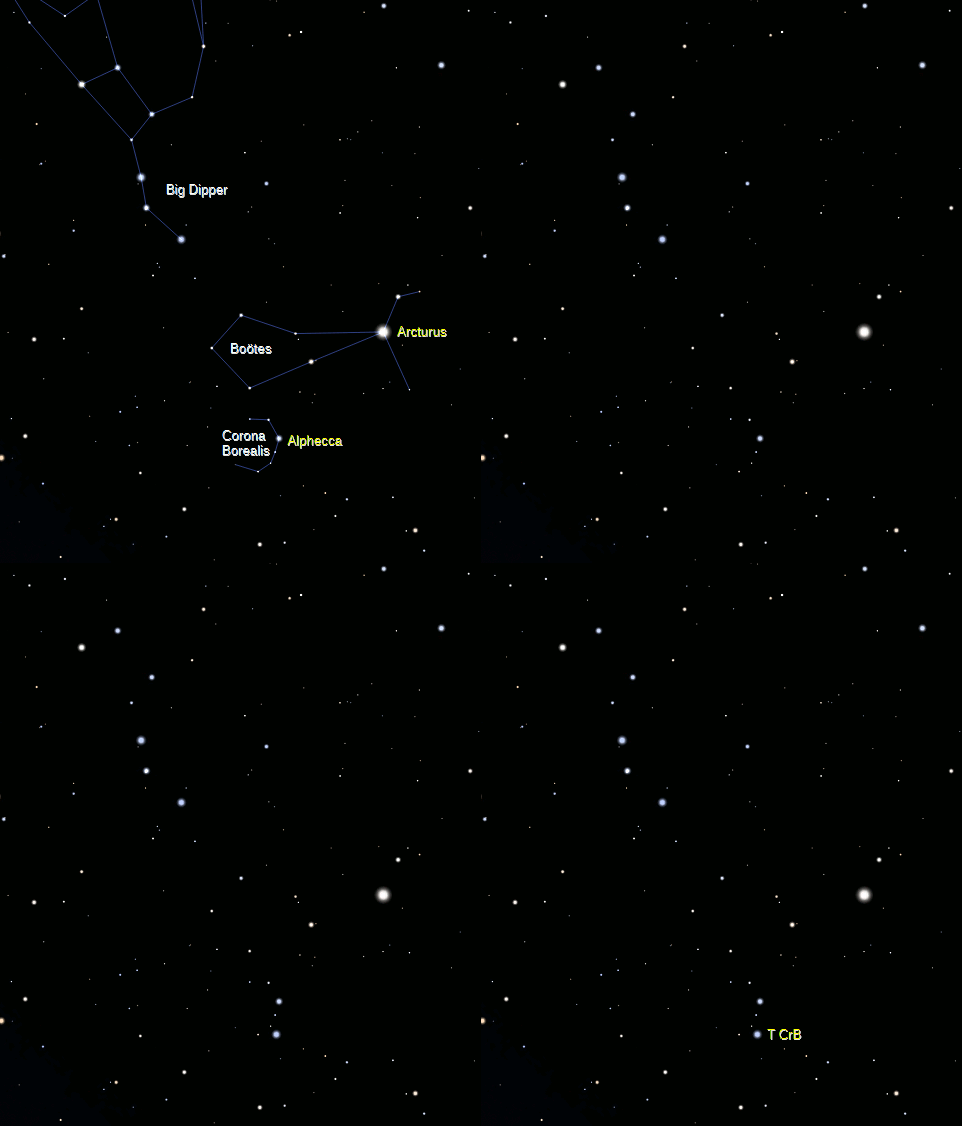
There is an event rarer than the appearance of Halley’s Comet. It’s an explosion of a star called T Coronae Borealis which means it’s in the constellation of the Northern Crown. Corona is a semicircle of stars located left of the bright star Arcturus, pointed to by the handle of the Big Dipper. The letter T means that it’s a variable star. It is something called a cataclysmic variable, or recurrent nova, and it blows up about every 80 years. The last time it did this was in 1946. Its brightness dips about 11 months before it goes kablooey. That dip has already happened. The star doesn’t destroy itself. It’s actually a white dwarf that’s siphoning off gases from a red giant star that it’s orbiting. When enough hydrogen gets accumulated, it ignites.
The astronomical event times given are for the Traverse City/Interlochen area of Michigan (EDT, UT–4 hours). They may be different for your location.
Addendum
Ephemeris: 04/22/2024 – Earth Day, support your local planet!
This is Bob Moler with Ephemeris for Earth Day, Monday, April 22nd. Today the Sun will be up for 13 hours and 51 minutes, setting at 8:37, and it will rise tomorrow at 6:44. The Moon, 1 day before full, will set at 6:28 tomorrow morning.
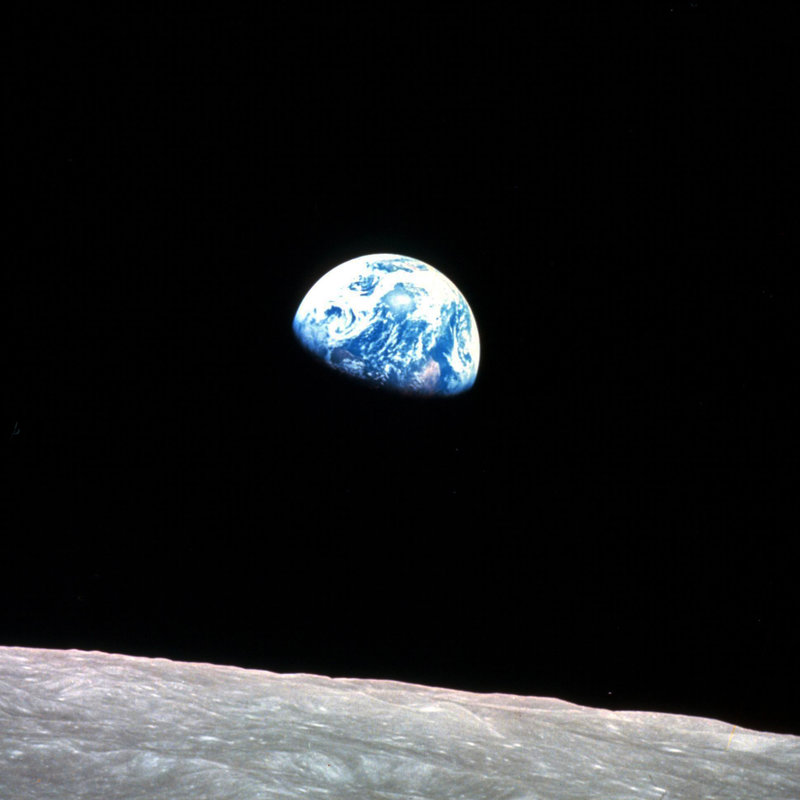
Earth Day was established in 1970, 2 years after William Anders in Apollo 8 took a picture of the Earth rising over the desolate moon, the Earth, a blue white oasis, in a hostile universe. I say support your local planet, there is no Planet B in case you messed this one up. Elon Musk wants to make the human race multi-planetary, which is a fine idea over time. It may take over a century to make any kind of Mars Base self-sustaining, if ever. I can’t see how we can terraform Mars, that is make Mars earth-like, because of lack of material. Mars probably was earth-like in its early days, but it has no magnetic field. Any large atmosphere it had when it had oceans has long been stripped away by the solar wind. It is here that we must make our stand!*
* Paraphrasing Carl Sagan “Pale Blue Dot”.
The astronomical event times given are for the Traverse City/Interlochen area of Michigan (EDT, UT–4 hours). They may be different for your location.
Addendum
Ephemeris: 04/19/2024 – Moon bases
This is Ephemeris for Friday, April 19th. Today the Sun will be up for 13 hours and 42 minutes, setting at 8:33, and it will rise tomorrow at 6:49. The Moon, halfway from first quarter to full, will set at 5:39 tomorrow morning.
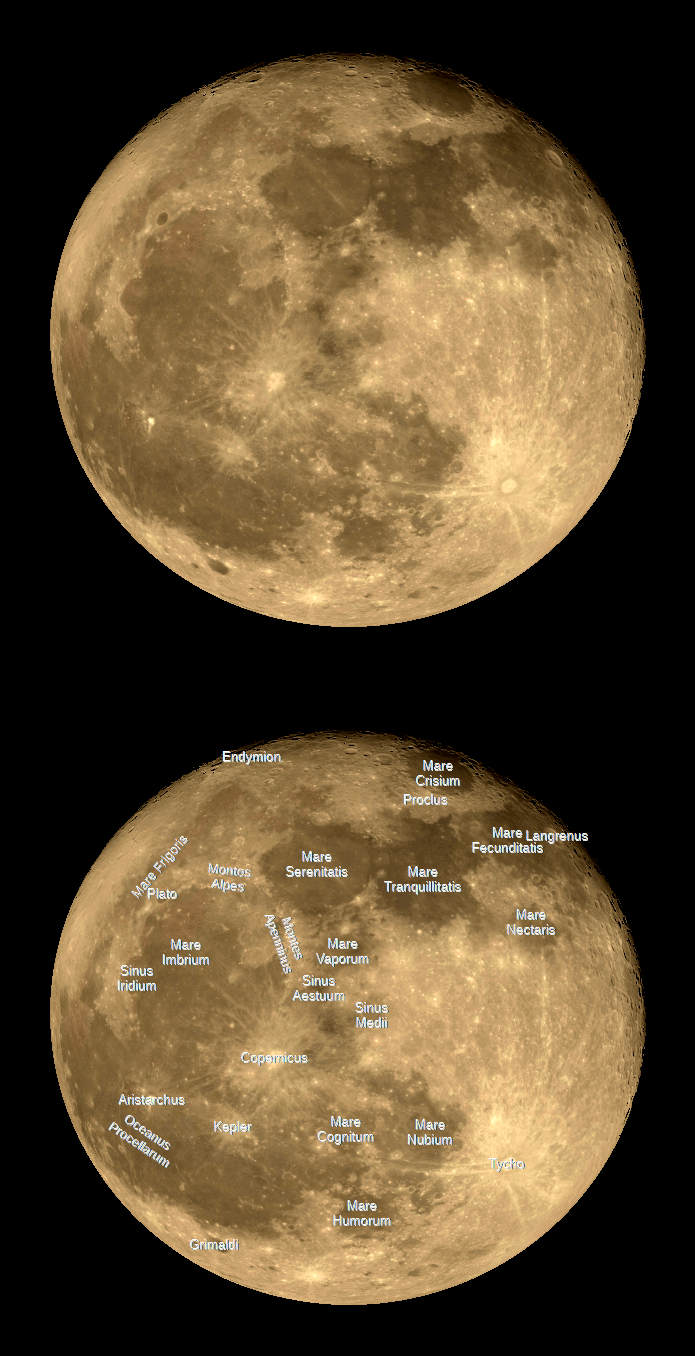
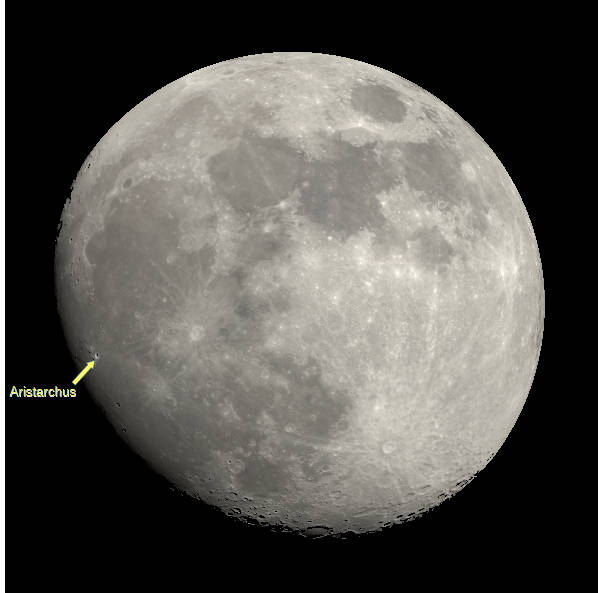
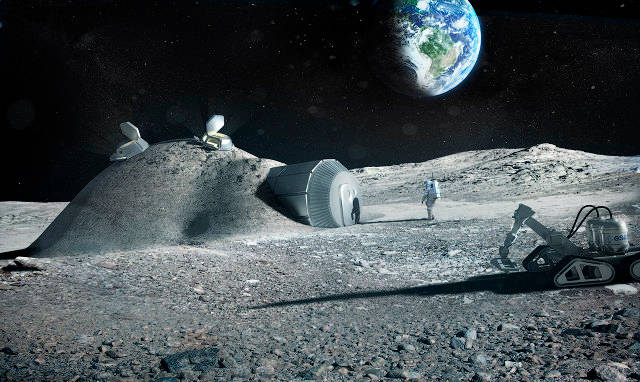
Tomorrow night’s gibbous moon will reveal perhaps the brightest spot on the Moon, the crater Aristarchus. It is left the center of the Moon near the terminator which is the sunrise line. It now doesn’t look so bright, but when the Moon becomes full it will be the brightest spot visible. The problem that astronauts will face in making a Moon base will be to survive the two week long days and two week long nights, because the Moon rotates once in its orbit of the Earth. Perhaps the best way to insulate from the very extremes of temperature, of maybe 200°F in the daytime and minus 200° at night, is to bury the Moon Base structures. The regolith should make a very good insulator and keep the base at a fairly constant temperature.
The astronomical event times given are for the Traverse City/Interlochen area of Michigan (EDT, UT–4 hours). They may be different for your location.
Addendum
Ephemeris: 04/18/2024 – Looking at the gibbous Moon tonight
This is Ephemeris for Thursday, April 18th. Today the Sun will be up for 13 hours and 39 minutes, setting at 8:32, and it will rise tomorrow at 6:50. The Moon, 3 days past first quarter, will set at 5:23 tomorrow morning.
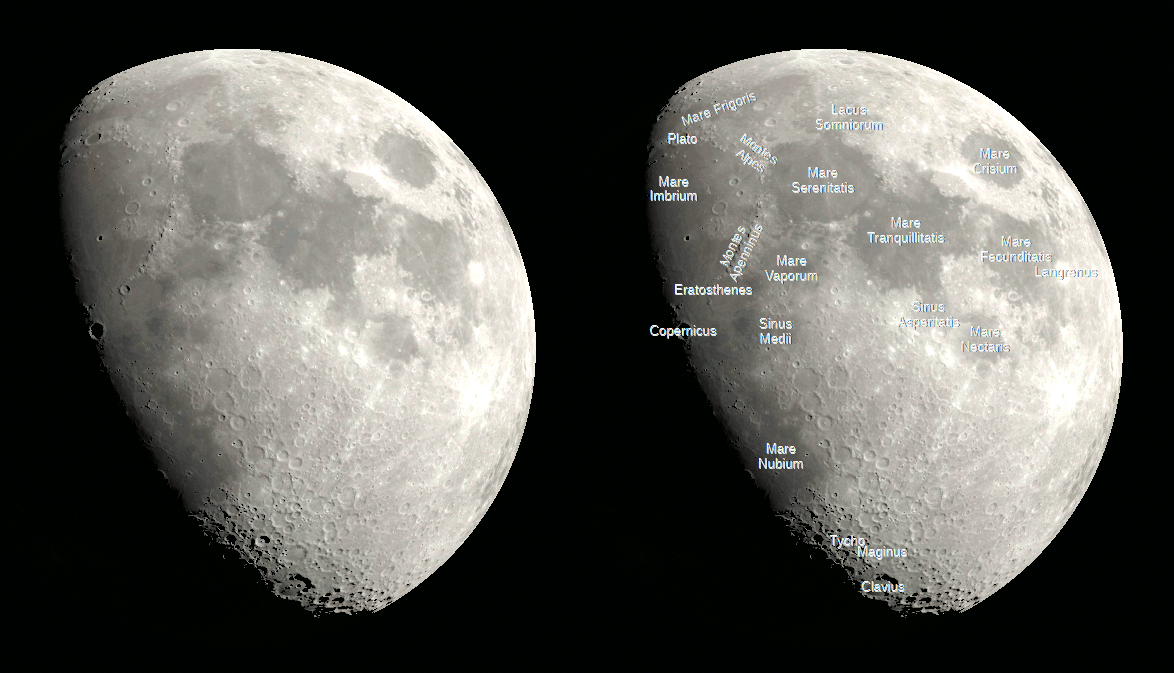
At 10 tonight the gibbous moon will be bright. At the moon’s left edge, just coming into sunlight will be what looks like a large half crater at the edge of the lunar sea called Mare Imbrium, the Sea of Showers. That feature is Sinus Iridium, or Bay of Rainbows. The arc of its mountainous edge is rainbow shaped, but it is as colorless as the rest of the Moon. The crater Copernicus, left of the Moon’s center sports few shadows and appears mostly as a bright spot surrounded by its ray system of ejecta craters that appear bright when the sun is high in their sky. At the south end of the Moon are the lunar highlands, bright, rugged and covered by large, mostly very old craters. The largest of these craters is Clavius, named for Christophorus Clavius who helped establish our Gregorian Calendar.
The astronomical event times given are for the Traverse City/Interlochen area of Michigan (EDT, UT–4 hours). They may be different for your location.
Addendum
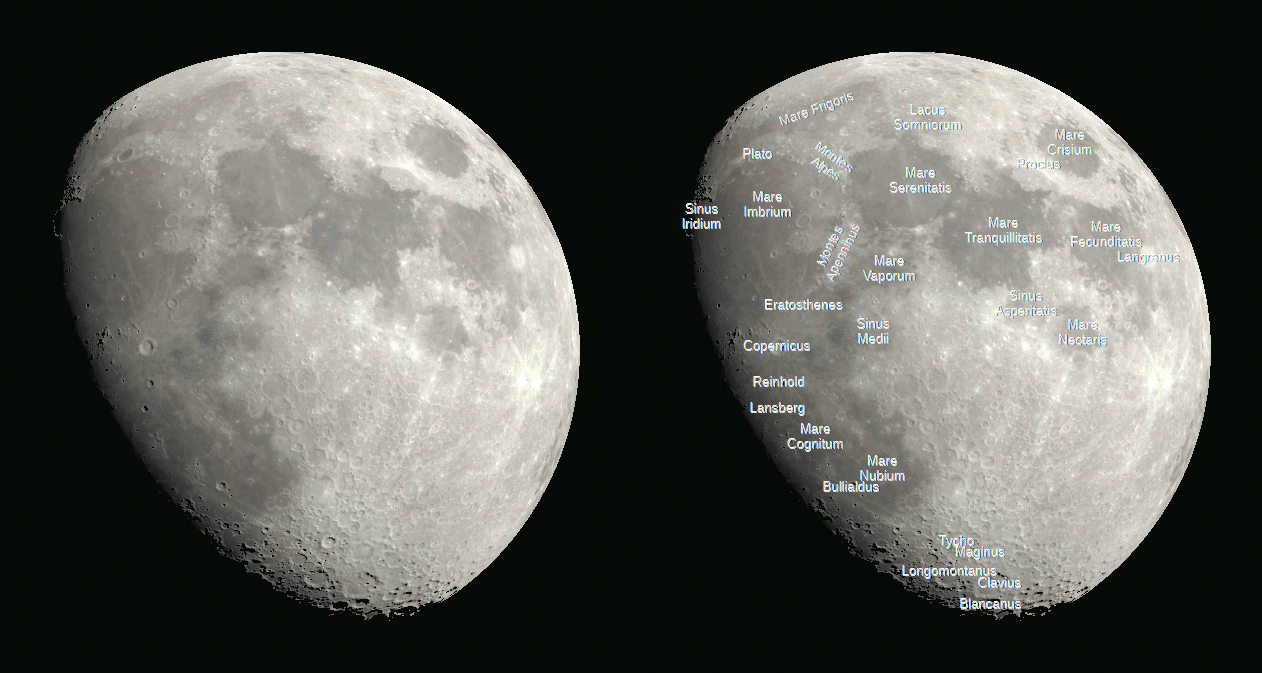
Translations of some lunar feature names according to Virtual Moon Atlas
Lacus Somniorum – Lake of Dreams
Mare Crisium – Sea of Crises
Mare Fecunditatis – Sea of Fertility
Mare Frigoris – Sea of Cold
Mare Imbrium – Sea of Showers
Mare Nectaris – Sea of Nectar
Mare Nubium – Sea of Clouds
Mare Serenitatis – Sea of Serenity
Mare Tranquillitatis – Sea of Tranquility
Mare Vaporum – Sea of Vapors
Montes Alpes – Alps Mountains
Montes Apenninus – Apennines Mountains
Sinus Asperitatis – Bay of Roughness
Sinus Iridium – Bay of Rainbows
Sinus Medii – Bay of the Center
Craters are generally named after astronomers, people of science, or explorers and are often Latinized.
Note that Mare is pronounced Mar-é.
Ephemeris: 04/17/2024 – Where have all the planets gone?
This is Ephemeris for Wednesday, April 17th. Today the Sun will be up for 13 hours and 36 minutes, setting at 8:31, and it will rise tomorrow at 6:52. The Moon, 2 days past first quarter, will set at 5:04 tomorrow morning.
Let’s find out where the naked-eye planets have wandered off to this week, and see what planets are left. Bright Jupiter is very low and in the west. It will set at 10:23 pm. We are getting close to losing Jupiter in the evening sky. Comet 12P/Pons-Brooks is just below-left of it. Observers in the Southern Hemisphere might now get a chance to spot it, but I believe it’s too far gone for us. In the morning, Mars and Saturn will be very close together in the east southeastern sky at 6:30. They will be fighting the bright morning twilight and low altitude then. Saturn will be difficult to see right now in the twilight . It will look fairly different this year and next with its rings nearly edge on to us. They will look more like a line through the planet.
The astronomical event times given are for the Traverse City/Interlochen area of Michigan (EDT, UT–4 hours). They may be different for your location.
Addendum
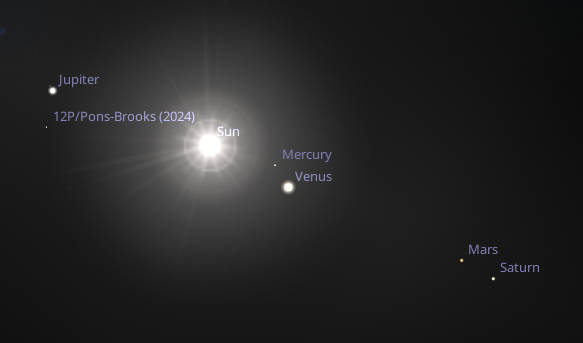
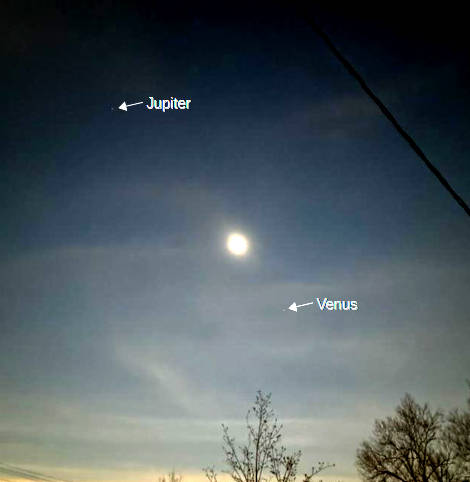
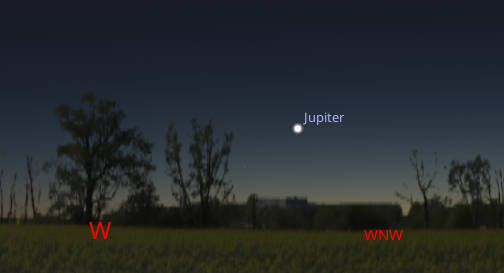
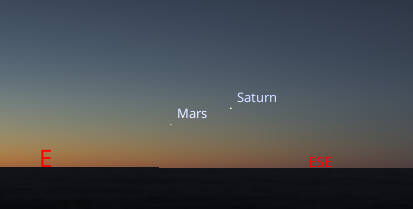
None of the planets are good telescopic objects now, due to their low position in the sky, and twilight.
Ephemeris: 04/16/2024 – A quick look at the April 8th 2024, total solar eclipse
This is Ephemeris for Tuesday, April 16th. Today the Sun will be up for 13 hours and 34 minutes, setting at 8:29, and it will rise tomorrow at 6:54. The Moon, 1 day past first quarter, will set at 4:42 tomorrow morning.
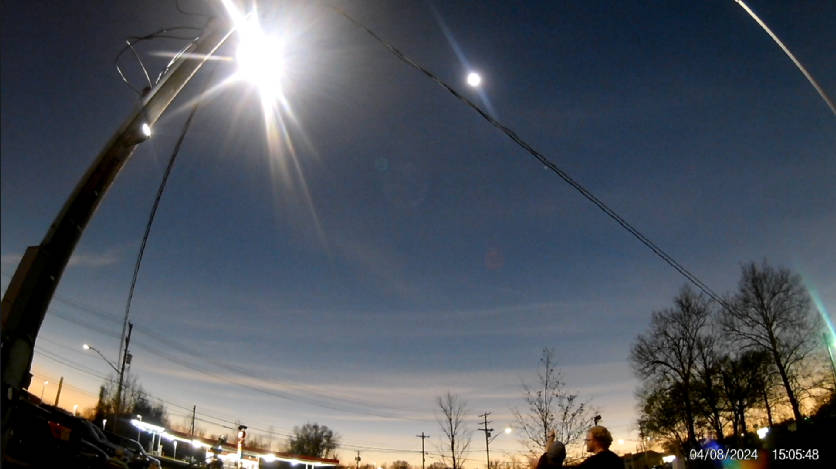
I saw the total solar eclipse last week Monday. This is the first chance I have to report on it. My target area ran from southwestern Indiana to Northern Ohio and decided early to stay in Lafayette IN overnight to give us a shot at going in either direction. We ended up going to southwestern Indiana to a little town called Linton, about 7 miles from the center line of the eclipse. There was relatively mild traffic going down and relatively few folks there at Humphrey’s park. Totality was glorious and the Sun’s corona was silvery and there was a red prominence sticking out of the bottom of the dark moon’s silhouette. Venus and Jupiter were also visible in the dark blue sky. I’ll have a fuller account on my blog in a few days.
The astronomical event times given are for the Traverse City/Interlochen area of Michigan (EDT, UT–4 hours). They may be different for your location.
Addendum
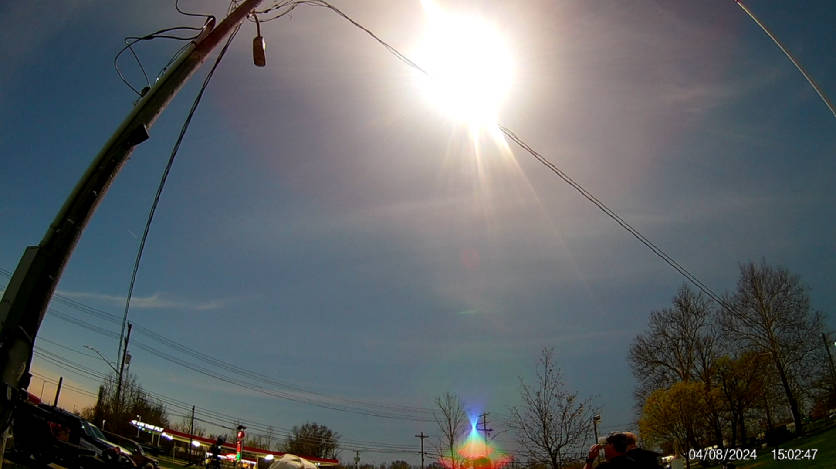
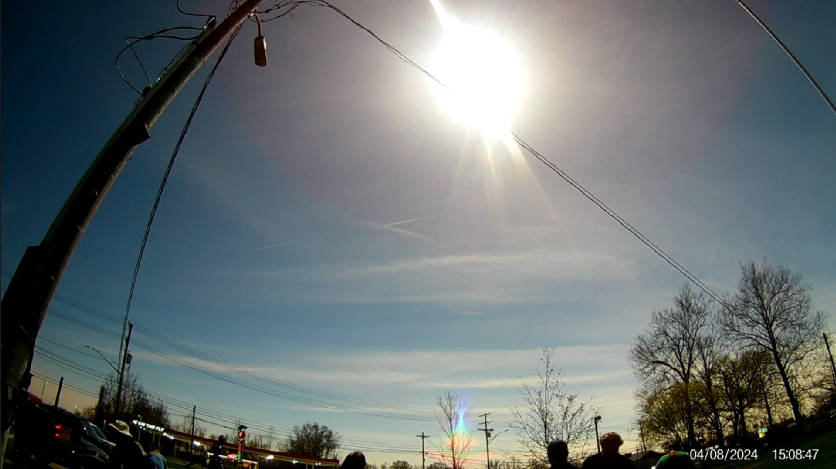
The following are three frames from the video I made with a GoPro-like camera around totality to get a view of the sky conditions. In 61 years and six total solar eclipses I spent the first four just looking at the Sun. The latter two I’ve tried to soak in the ambiance of the world around me during totality. I’ve been extremely lucky in total solar eclipses in that I was never completely clouded out. The main reason for that is mobility, and not going where everyone else is going. With these six 6 eclipses I have accumulated a total of 15 minutes basking in the shade of the Moon.
Ephemeris: 04/15/2024 – How the Ancient Greeks tried to measure the distance to the Sun
This is Bob Moler with Ephemeris for Monday, April 15th. Today the Sun will be up for 13 hours and 31 minutes, setting at 8:28, and it will rise tomorrow at 6:55. The Moon, at first quarter today, will set at 4:15 tomorrow morning.
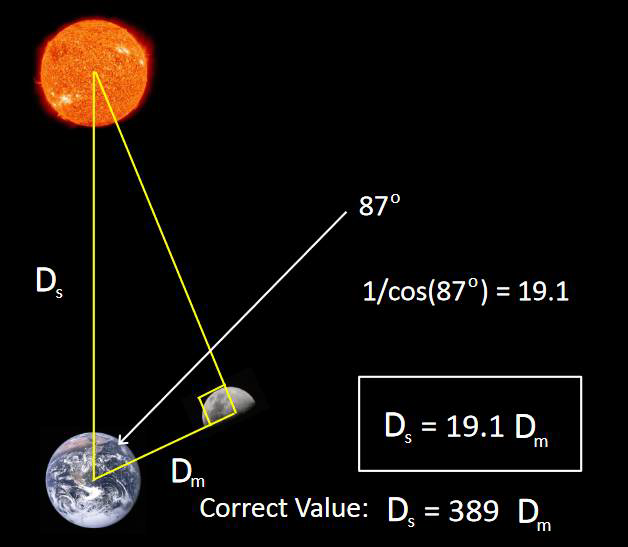
The first quarter Moon tonight reminds me of how the Greeks used the quarter Moon to attempt to determine the distance to the Sun. The idea was to determine when the Moon was exactly at first or last quarter, so the angle of the Sun-Moon-Earth was exactly 90°. The next thing to do was to measure the actual angle between the Sun and the Moon at that instant. It’s a difficult observation. Aristarchus tried and got a result that the Sun was about 19 times the distance of the Moon. The Sun-Earth-Moon angle he got was 87°. Hipparchus measured the Moon to be 60 earth radii away which is near the Moon’s actual distance from the Earth. In actuality the Sun is about 400 times the distance to the Moon.
The astronomical event times given are for the Traverse City/Interlochen area of Michigan (EDT, UT–4 hours). They may be different for your location.
Addendum
Ephemeris: 04/12/2024 – GTAS Meeting tonight: Hidden Figures
This is Ephemeris for Friday, April 12th. Today the Sun will be up for 13 hours and 22 minutes, setting at 8:24, and it will rise tomorrow at 7:01. The Moon, 3 days before first quarter, will set at 1:52 tomorrow morning.
Tonight’s meeting of the Grand Traverse Astronomical Society at 8 pm, at Northwestern Michigan College’s Rogers Observatory, will feature the student astronomy group’s movie night with a presentation of Hidden Figures. How female African American “Computers”, made the space program possible. Many of NASA’s facilities were in the segregated South. Back then computers were also people with tremendous math skills, who could work out problems of orbital mechanics by hand and with mechanical calculators. Plus we’ll see if anyone has made it back to report on Monday’s total solar eclipse. The observatory is located south of Traverse City on Birmley Road between Garfield and Keystone roads.
The astronomical event times given are for the Traverse City/Interlochen area of Michigan (EDT, UT–4 hours). They may be different for your location.
Addendum


 Bob Moler's Ephemeris Blog