Archive
08/20/2020 – Ephemeris – Where are we in the Milky Way Galaxy?
This is Bob Moler with Ephemeris for Thursday, August 20th. Today the Sun will be up for 13 hours and 47 minutes, setting at 8:39, and it will rise tomorrow at 6:52. The Moon, 2 days past new, will set at 9:59 this evening.
If we are in the Milky Way galaxy, where are we, and where’s the center of this vast spiral? Astronomers have found that the Sun is located in an offshoot of a spiral arm called the Orion Spur and the naked eye stars in the sky are also in it. In the winter constellation of Orion we are looking away from the center of the galaxy. This time of year, looking to the south in the evening at the Teapot of stars that is Sagittarius we look toward the center, which we can’t see due to the gas and dust in the way. It’s there, just above the spout of the Teapot. It can be seen, but not in visible light. It was the first thing detected with a radio telescope and it can be seen in the infrared. But there, 27,000 light years away is a 4 million solar mass black hole at the center.
The event times given are for the Traverse City/Interlochen area of Michigan. They may be different for your location.
Addendum
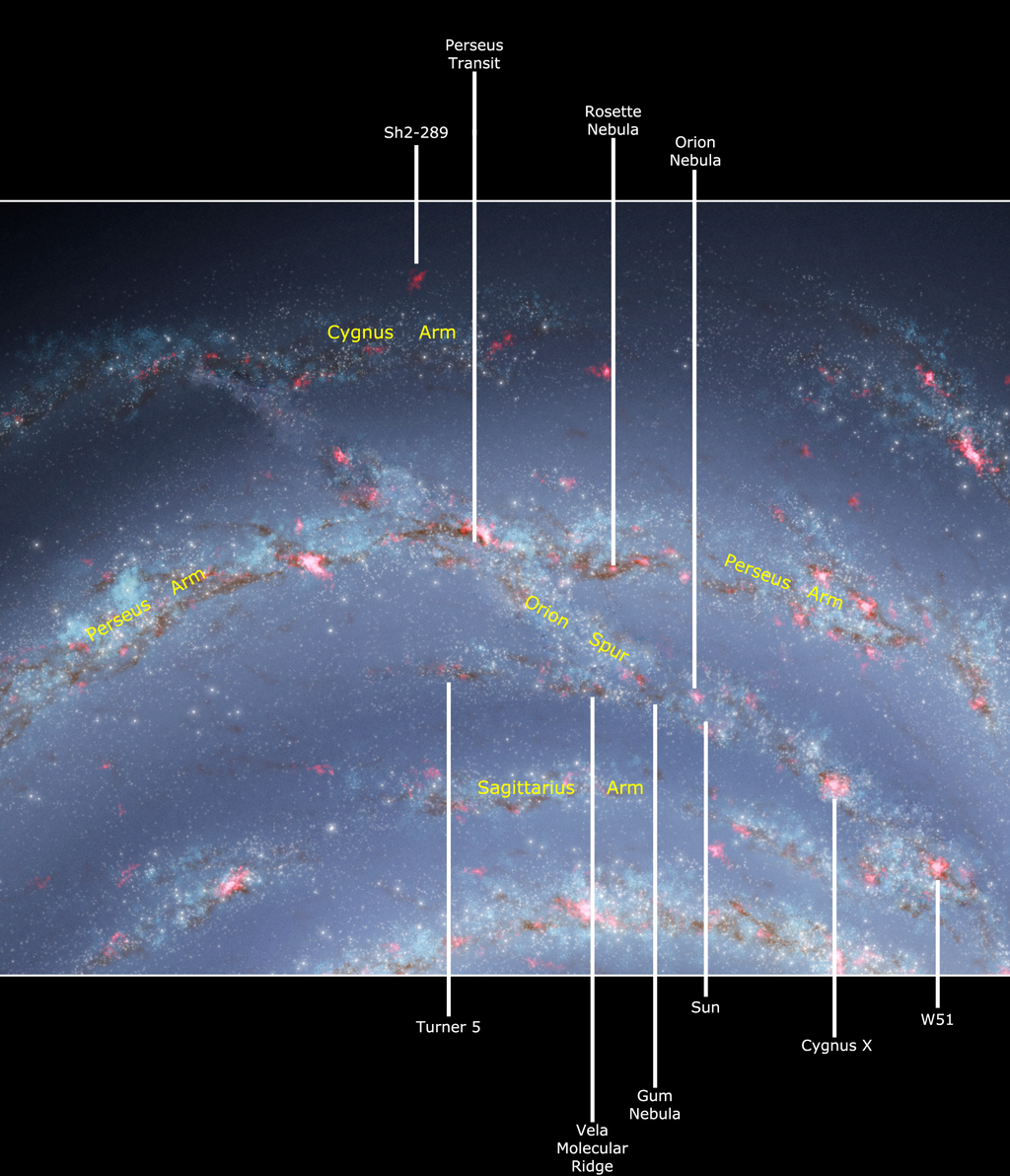
The Sun in the Orion Spur and the nearby spiral arms of the Milky Way Galaxy. The direction to the center of the galaxy is down. Click on the image to enlarge. Public Domain, Wikimedia.
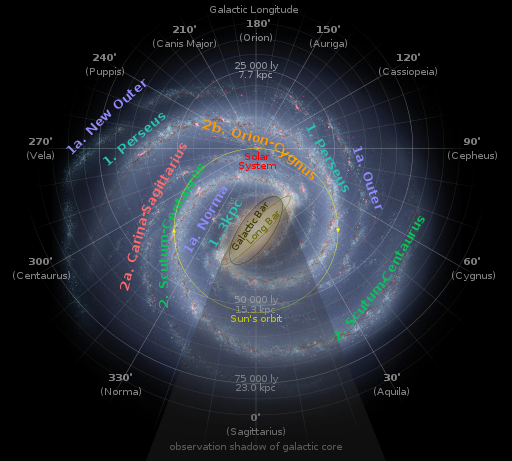
Our place in the Milky Way. Note that we appear to be in a barred spiral galaxy. The arms are numbered and named. 3kpc is the 3 kiloparsec arm. 3kpc = 9,780 light years. The Sun is about 27,000 light years from the center. Credit NASA and Wikimedia Commons, via EarthSky.org.
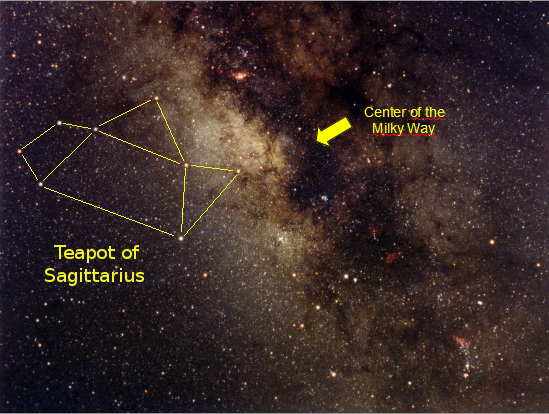
Location of the center of the Milky Way and the Teapot of Sagittarius. It is blocked by gas and dust in visible light.
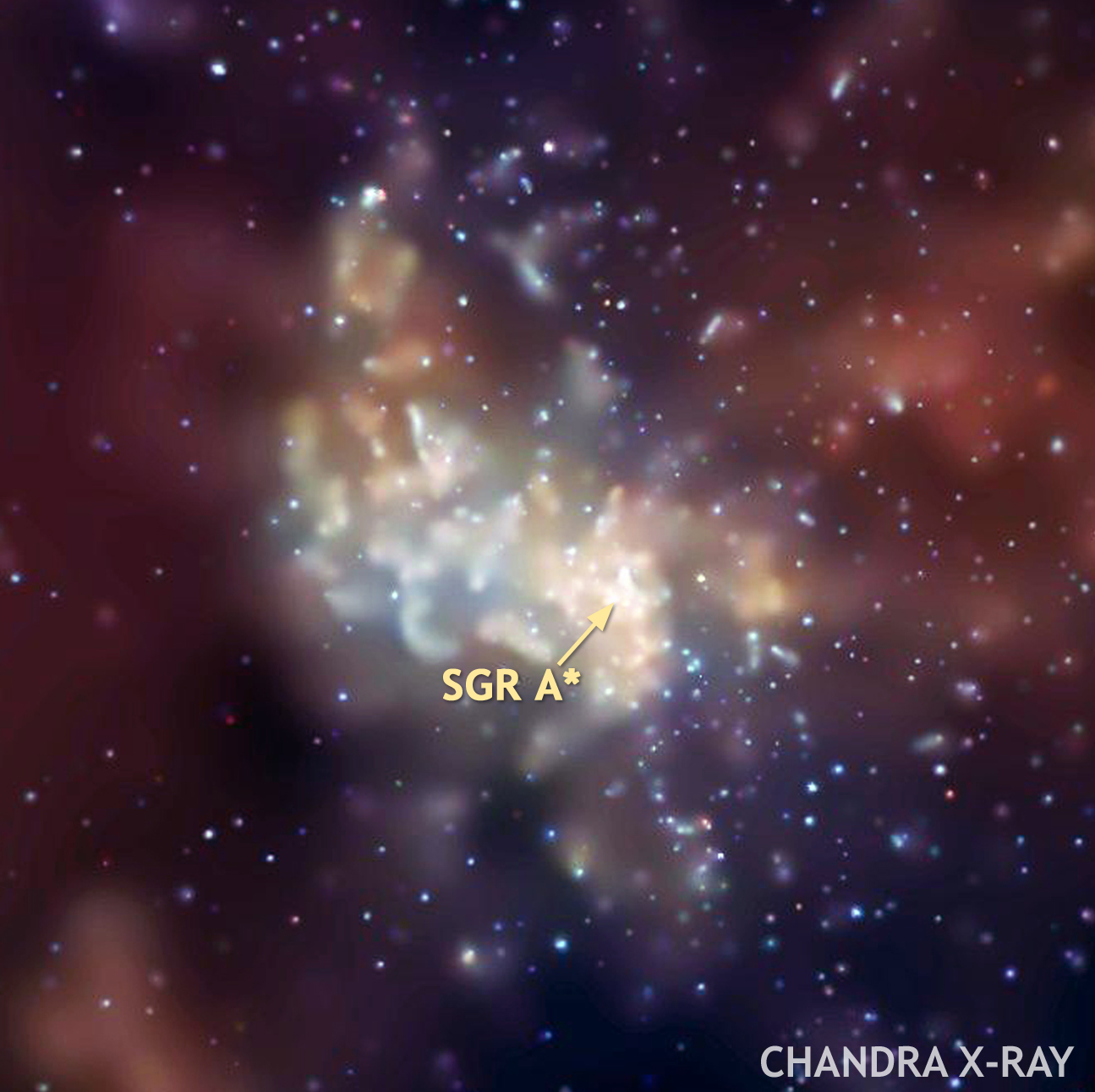
An image from the Chandra X-ray Telescope of the center of the Milky Way. SGR A or Sagittarius A is a radio source. SGR A*, pronounced Sagittarius A Star, is the 4 million solar mass black hole in the center of the Milky Way Galaxy. Credit NASA.
08/18/2020 – Ephemeris – What is the Milky Way really like?
This is Ephemeris for Tuesday, August 18th. Today the Sun will be up for 13 hours and 53 minutes, setting at 8:42, and it will rise tomorrow at 6:50. The Moon is new today, and won’t be visible.
Last Friday and yesterday we looked at what the Milky Way looked like, but what is the Milky Way really like. It’s hard to tell, being inside it. In the 1920s astronomers gradually learned that the Milky Way was similar to the great number of spiral nebulae seen outside of the milky band. It was a flattened pinwheel of stars, gas and dust. At first they and the Milky Way were called island universes because until then it was thought that the Milky Way was the entire universe. The word for the Milky Way and those other structures is galaxy. The word galaxy is related to the Greek word for milk. Astronomers in the latter half of the 20th century using radio telescopes were able to trace out the clouds of gas that give our galaxy its spiral structure.
The event times given are for the Traverse City/Interlochen area of Michigan. They may be different for your location.
Addendum
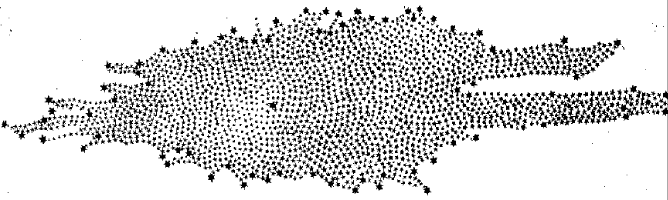
The shape of the universe (Milky Way) as measured by William Herschel by counting stars in the eyepiece fields of his telescope pointed in various directions. The large indent on the right is caused by the Great Rift, clouds of gas and dust that block the light of the stars behind it, not the lack of stars in that direction that he thought. The Great Rift is easily seen in the summer sky running through the Milky Way.
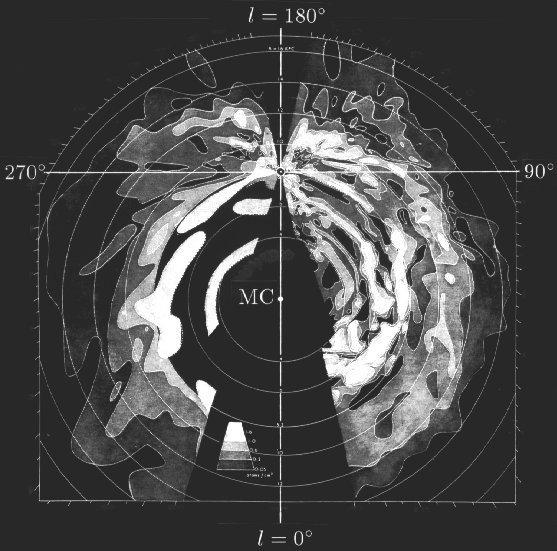
1950’s radio map of the Milky Way Galaxy. The original source is for the map is The galactic system as a spiral nebula Oort, J. H.; Kerr, F. J.; Westerhout, G. MNRAS 118, (1958) p. 379.
Our place in the Milky Way. Note that we appear to be in a barred spiral galaxy. The arms are numbered and named. 3kpc is the 3 kiloparsec arm. 3kpc = 9,780 light years. The Sun is about 27,000 light years from the center. Credit NASA and Wikimedia Commons, via EarthSky.org.
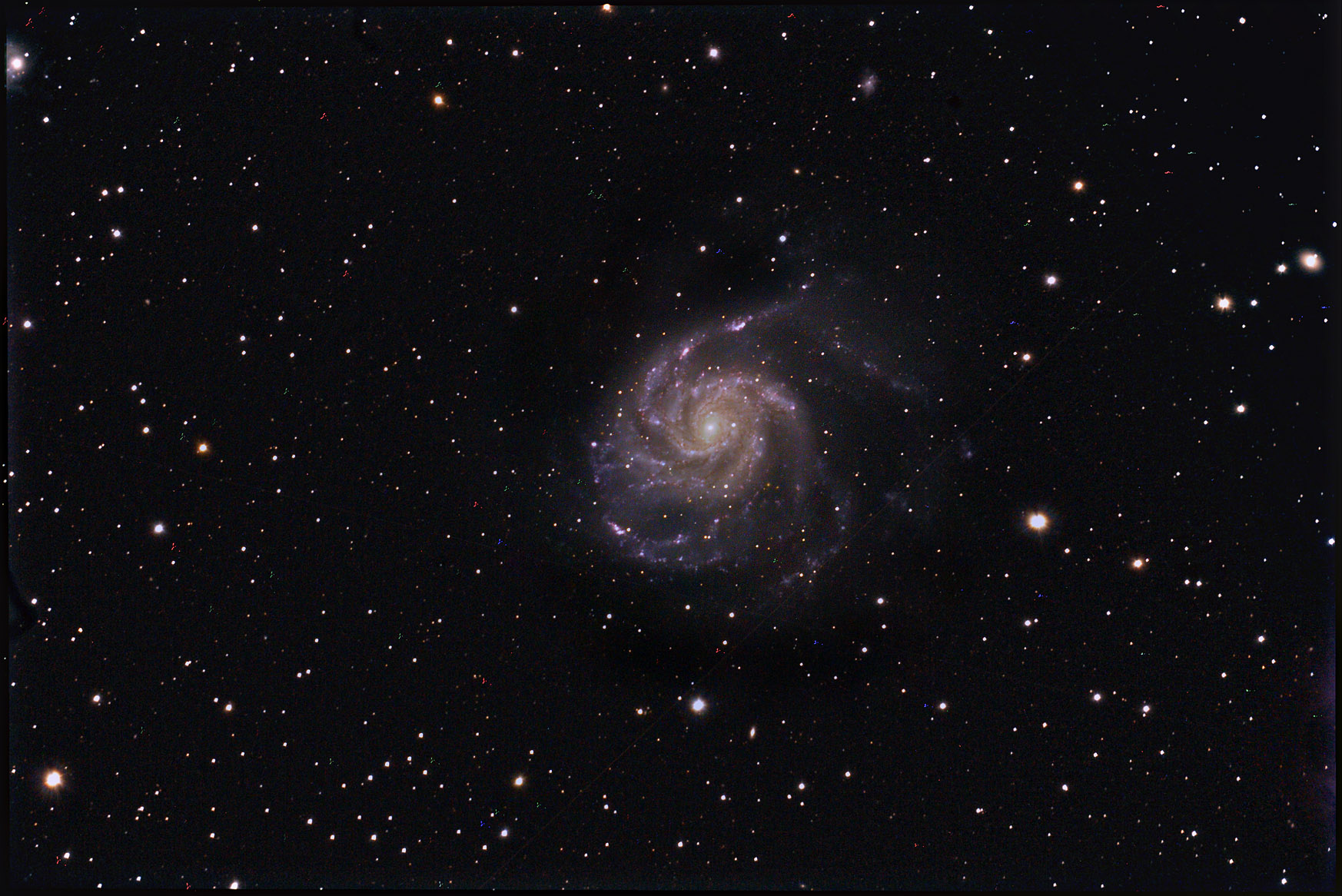
One of the many spiral nebulae visible, namely the Pinwheel Galaxy, M101 near the handle of the Big Dipper. Credit Scott Anttila.
08/17/2020 – Ephemeris – The Milky Way’s Great Rift.
This is Ephemeris for Monday, August 17th. Today the Sun will be up for 13 hours and 56 minutes, setting at 8:44, and it will rise tomorrow at 6:49. The Moon, 1 day before new, will rise at 5:53 tomorrow morning.
High overhead the Milky Way is seen passing through the Summer Triangle of three bright stars. Here we find the Milky Way splits into two sections. The split starts in the constellation of Cygnus the Swan or Northern Cross very high in the east. The western part of the Milky Way ends southwest of Aquila the eagle. This dark dividing feature is called the Great Rift. Despite the lack of stars seen there, it doesn’t mean that there are fewer stars there than in the brighter patches of the Milky Way. The rift is a great dark cloud that obscures the light of the stars behind it. Sometimes binoculars can be used to find the edges of the clouds of the rift, as stars numbers drop off suddenly. This is especially easily seen in Aquila.
The event times given are for the Traverse City/Interlochen area of Michigan. They may be different for your location.
Addendum
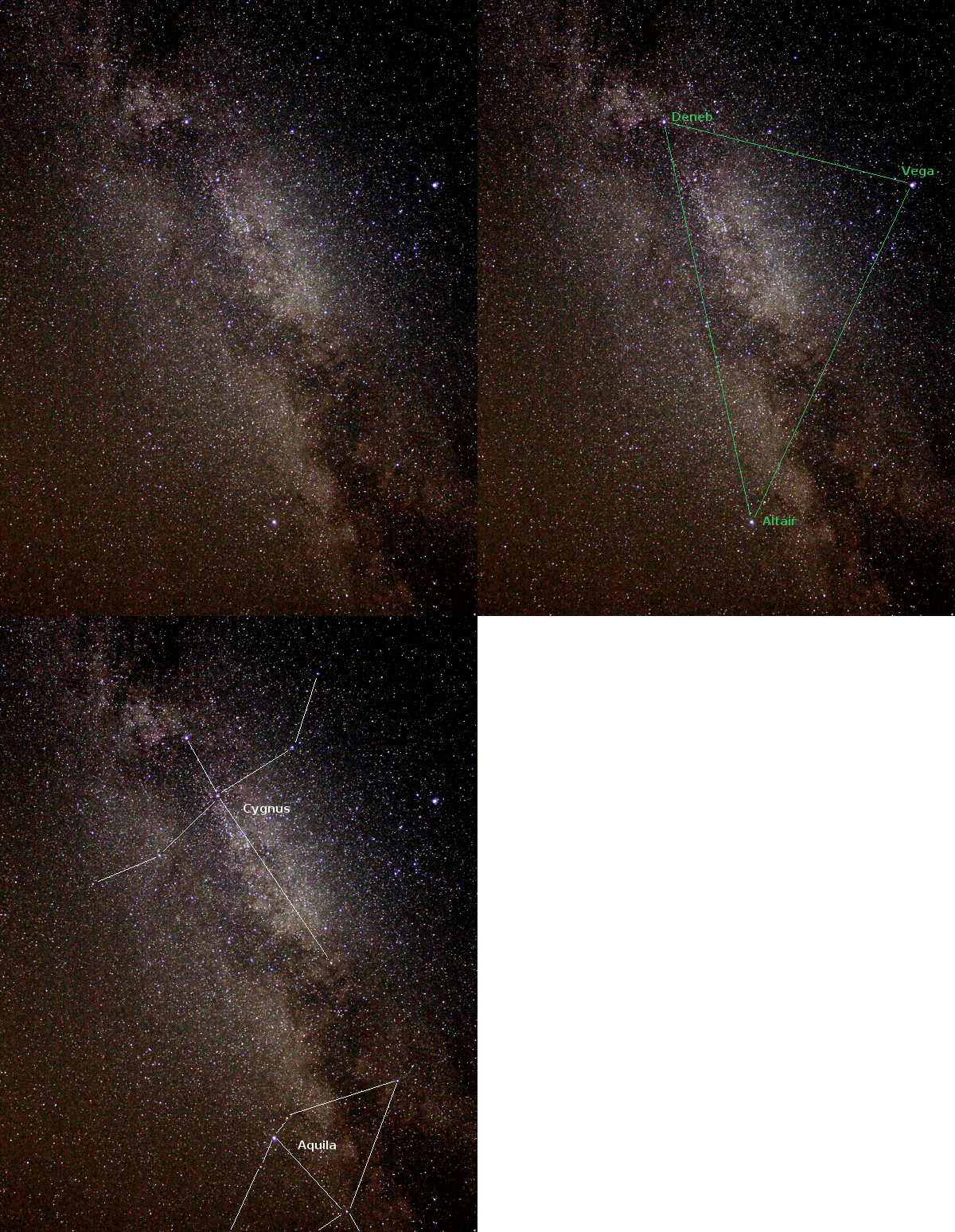
The Great Rift finder animation as seen in the Summer Triangle, also showing the constellations of Cygnus the swan and the the northern part of Aquila the Eagle. This image a stack of 5 30 second exposures taken the morning of the Perseid meteor shower in a vain attempt to capture some meteors.
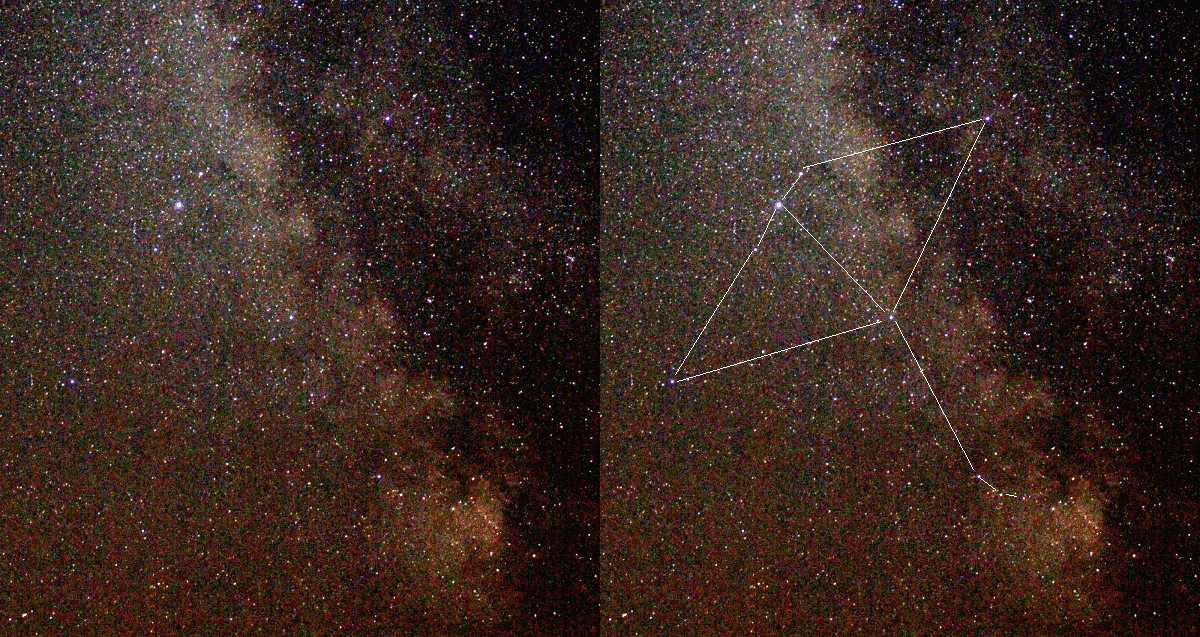
Annotated and animated photograph taken of Aquila August 13, 2018 during the Perseid meteor shower, the same night the image above. Taken by me and processed using Registax and GIMP.
08/14/2020 – Ephemeris – Seeing the summer Milky Way
This is Bob Moler with Ephemeris for Friday, August 14th. Today the Sun will be up for 14 hours and 4 minutes, setting at 8:49, and it will rise tomorrow at 6:45. The Moon, 3 days past last quarter, will rise at 2:39 tomorrow morning.
Now is the time the summer Milky Way is displayed to its fullest to the southern horizon. We have a week before the Moon begins to encroach on our dark skies after 10 pm. City folk come to our area and are sometimes fooled by the brightness and expanse of the Milky Way and think it’s a cloud. Yes those are clouds indeed, but they are star clouds. Binoculars will begin to show them to be millions of stars, each too faint to be seen individually to the eye, but whose combined glow give the impression of a luminous cloud. Binoculars are the ideal tool to explore the Milky Way. Objects still too fuzzy can be checked out with a telescope to reveal their true nature. The dark nights of August and September are my favorites.
The event times given are for the Traverse City/Interlochen area of Michigan. They may be different for your location.
Addendum
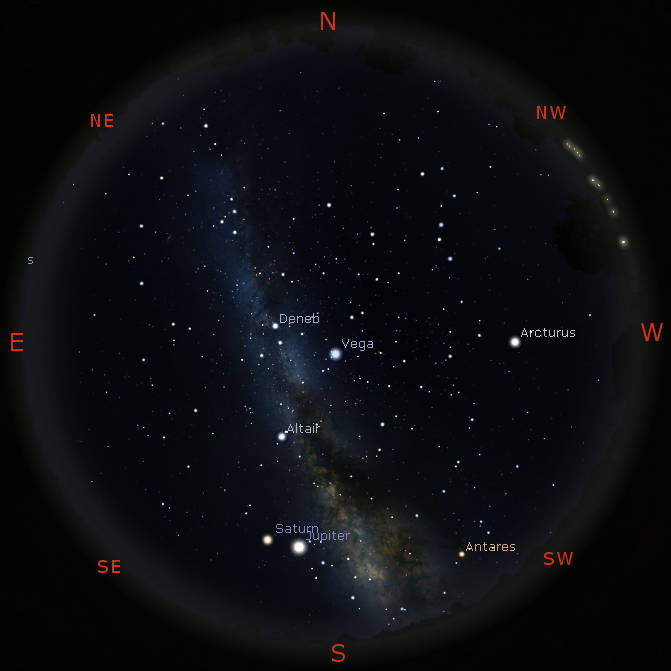
The summer Milky Way spans the sky dome at 11 pm tonight, August 14, 2020. Created using Stellarium.
05/11/2020 – Ephemeris – Looking out of the Milky Way in May
This is Ephemeris for Monday, May 11th. Today the Sun will be up for 14 hours and 41 minutes, setting at 9:00, and it will rise tomorrow at 6:17. The Moon, 3 days before last quarter, will rise at 1:51 tomorrow morning.
When it’s finally dark enough to see the stars in a dark sky at the end of astronomical twilight at 11 p.m. the question might be: “Where did the Milky Way go?” The band of the Milky Way is actually nearly ringing the horizon. Part of it runs through the W shaped constellation of Cassiopeia, just above the northern horizon. But the great amount of the Earth’s atmosphere we have to look through that low in the sky dims it to invisibility. The Milky Way is what we see of our galaxy, or more accurately our part of our galaxy whose shape has the rough proportions of a pancake. Remember, we’re in it. In spring we’re mostly looking through the thin side past relatively nearby stars to the intergalactic space beyond.
The event times given are for the Traverse City/Interlochen area of Michigan. They may be different for your location.
Addendum
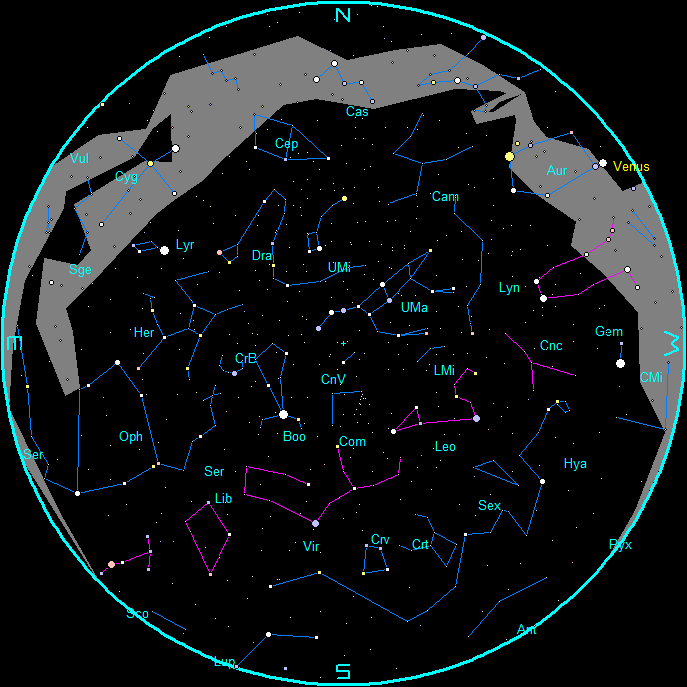
The Dome of the sky on May 15, 2020 at 11 pm with the Milky Way at its lowest in the sky. Credit my LookingUp program.
Our place in the Milky Way. Note that we appear to be in a barred spiral galaxy. The arms are numbered and named. 3kpc is the 3 kiloparsec arm. 3kpc = 9,780 light years. The Sun is about 27,000 light years from the center. Credit NASA and Wikimedia Commons, via EarthSky.org.
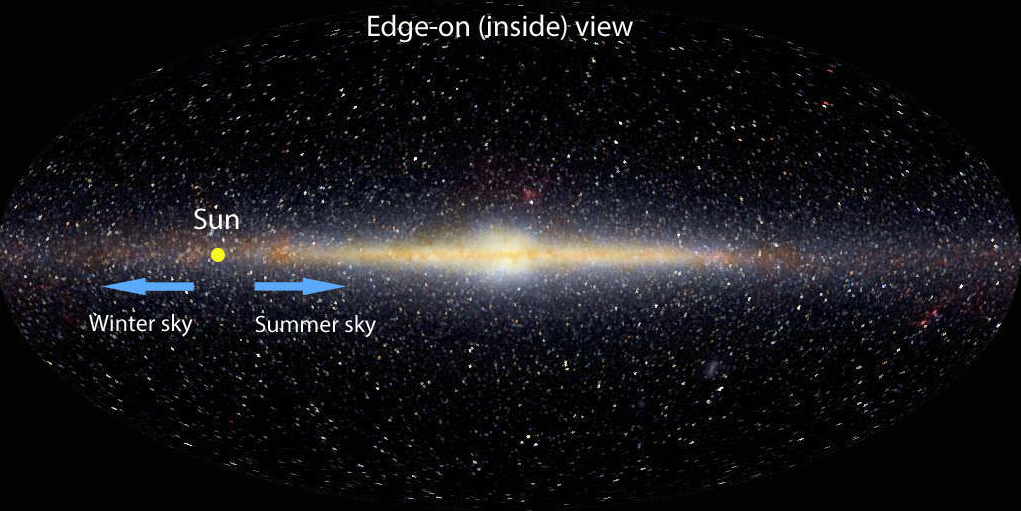
The summer and winter Milky Way viewing directions. During Spring and Autumn, we look out the sides to the universe beyond. Credit Credit: NASA with annotations by Bob King at Universe Today.
08/02/2019 – Ephemeris – The Milky Way
Ephemeris for Friday, August 2nd. Today the Sun will be up for 14 hours and 37 minutes, setting at 9:07, and it will rise tomorrow at 6:31. The Moon, 2 days past new, will set at 10:31 this evening.
We’ll get darkness tonight, but that will erode night by night as the Moon waxes in our evening sky. At mid month this month and September will be the start of about two weeks of the best evening sky viewing of the year. This is the period the summer Milky Way is displayed to its fullest to the southern horizon. City folk come to our area and are sometimes fooled by the brightness and expanse of the Milky Way and think it’s clouding up. Yes those are indeed clouds, but they are star clouds. Binoculars will begin to show them to be millions of stars, each too faint to be seen by themselves to the naked eye, but whose combined glow give the impression of a luminous cloud. Binoculars are the ideal tool to begin to explore the Milky Way. Objects still too fuzzy can be checked out with a telescope to reveal their true nature.
The times given are for the Traverse City/Interlochen area of Michigan. They may be different for your location.
Addendum
The Milky Way in the Summer Triangle, also showing the constellations of Cygnus the swan and the the northern part of Aquila the Eagle. This image a stack of 5 30 second exposures taken the morning of the Perseid meteor shower the is year in a vain attempt to capture some meteors. I was hampered by a smoky haze blown in all the way from the West Coast from forest files out there.
07/25/2019 – Ephemeris – Finding the second bird in the summer sky: Aquila the eagle
Ephemeris for Thursday, July 25th. Today the Sun will be up for 14 hours and 55 minutes, setting at 9:16, and it will rise tomorrow at 6:22. The Moon, 1 day past last quarter, will rise at 1:40 tomorrow morning.
Aquila the eagle is a constellation that lies in the Milky Way. It’s in the southeastern sky as it gets dark. Its brightest star, Altair is one of the stars of the Summer Triangle, a group of three bright stars dominating the eastern sky in the evening now. Altair, in the head of the eagle, is flanked by two slightly dimmer stars, the shoulders of the eagle. The eagle is flying northeastward through the Milky Way. Its wings are seen in the wing tip stars. A curved group of stars to the lower right of Altair is its tail. Within Aquila the Milky Way shows many dark clouds as part of the Great Rift that splits it here. The other summer bird is Cygnus the swan above and left of Aquila, flying in the opposite direction.
The times given are for the Traverse City/Interlochen area of Michigan. They may be different for your location.
Addendum
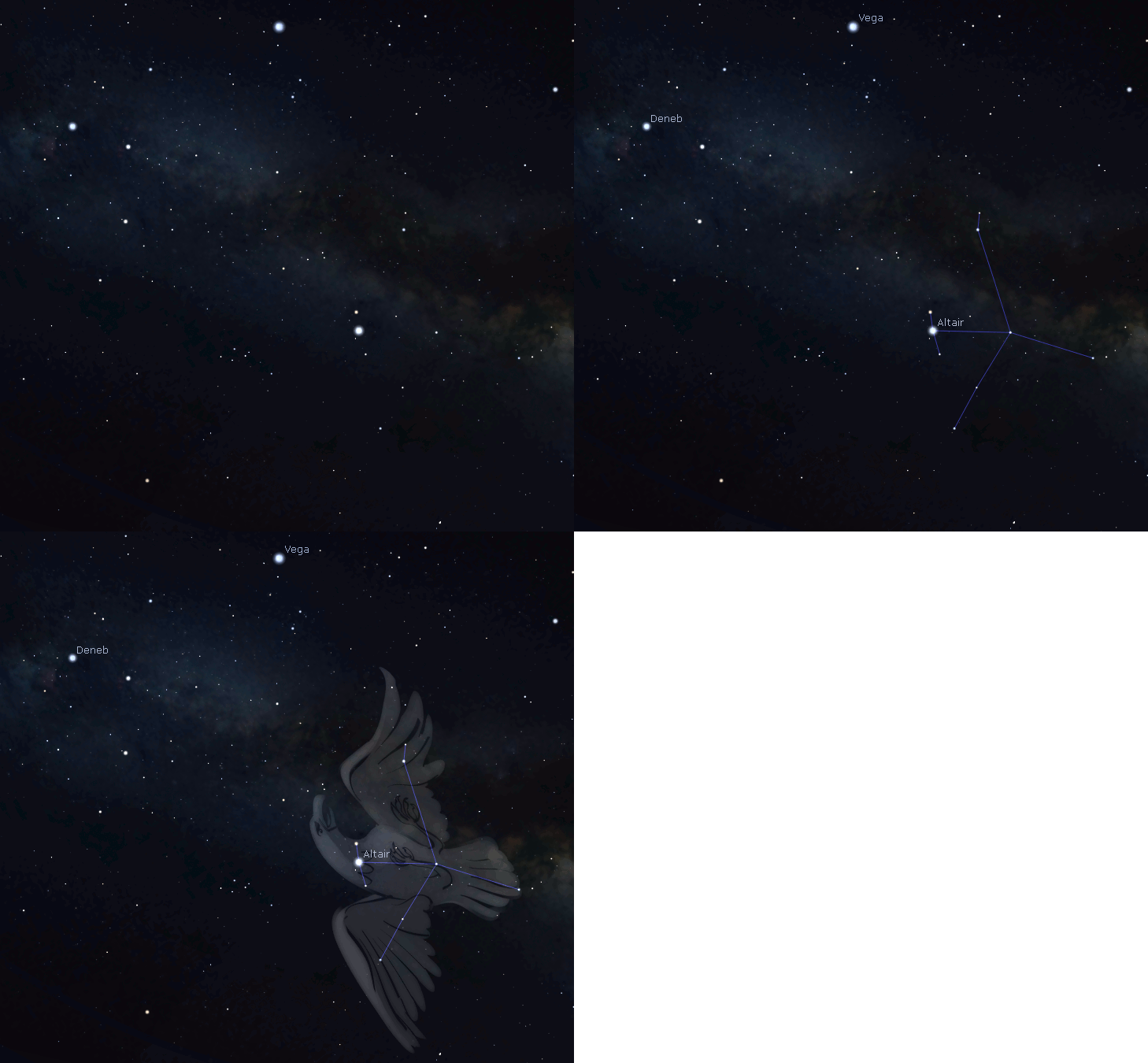
Animated Cygnus finder chart. Created using Stellarium.
The Great Rift finder animation as seen in the Summer Triangle, also showing the constellations of Cygnus the swan and the the northern part of Aquila the Eagle. This image a stack of 5 30 second exposures taken the morning of the Perseid meteor shower last year in a vain attempt to capture some meteors.
09/04/2018 – Ephemeris – The Great Rift
Ephemeris for Tuesday, September 4th. The Sun will rise at 7:08. It’ll be up for 13 hours and 5 minutes, setting at 8:13. The Moon, 2 days past last quarter, will rise at 2:03 tomorrow morning.
High overhead the Milky Way is seen passing through the Summer Triangle of three bright stars. Here we find the Milky Way splits into two sections. The split starts in the constellation of Cygnus the Swan or Northern Cross very high in the east. The western part of the Milky Way ends southwest of the Aquila the eagle. This dark dividing feature is called the Great Rift. Despite the lack of stars seen there, it doesn’t mean that there are fewer stars there than in the brighter patches of the Milky Way. The rift is a great dark cloud that obscures the light of the stars behind it. Sometimes binoculars can be used to find the edges of the clouds of the rift, as stars numbers drop off suddenly. This is especially easily seen in Aquila.
The times given are for the Traverse City/Interlochen area of Michigan. They may be different for your location.
Addendum
The Great Rift finder animation as seen in the Summer Triangle, also showing the constellations of Cygnus the swan and the northern part of Aquila the eagle. This image a stack of 5 30 second exposures taken the morning of the Perseid meteor shower the is year in a vain attempt to capture some meteors.
Annotated and animated photograph taken of Aquila August 13, 2018 during the Perseid meteor shower. Alas, no Perseids in this photograph. Taken by me and processed using Registax and GIMP.
08/13/2018 – Ephemeris – The Milky Way
Ephemeris for Monday, August 13th. The Sun rises at 6:42. It’ll be up for 14 hours and 8 minutes, setting at 8:51. The Moon, 2 days past new, will set at 10:30 this evening.
Now is the time the summer Milky Way is displayed to its fullest to the southern horizon. We have a couple of nights before the Moon begins to interfere before 11 p.m. City folk come to our area and are sometimes fooled by the brightness and expanse of the Milky Way and think it’s clouding up. Yes those are clouds indeed, but they are star clouds of our galaxy. Binoculars will begin to show them to be millions of stars, each too faint to be seen individually to the eye, but whose combined glow give the impression of a luminous cloud. Binoculars are the ideal tool to explore the Milky Way. Objects still too fuzzy can be checked out with a telescope to reveal their true nature. The dark nights of August and September are my favorites.
The times given are for the Traverse City/Interlochen area of Michigan. They may be different for your location.
Addendum
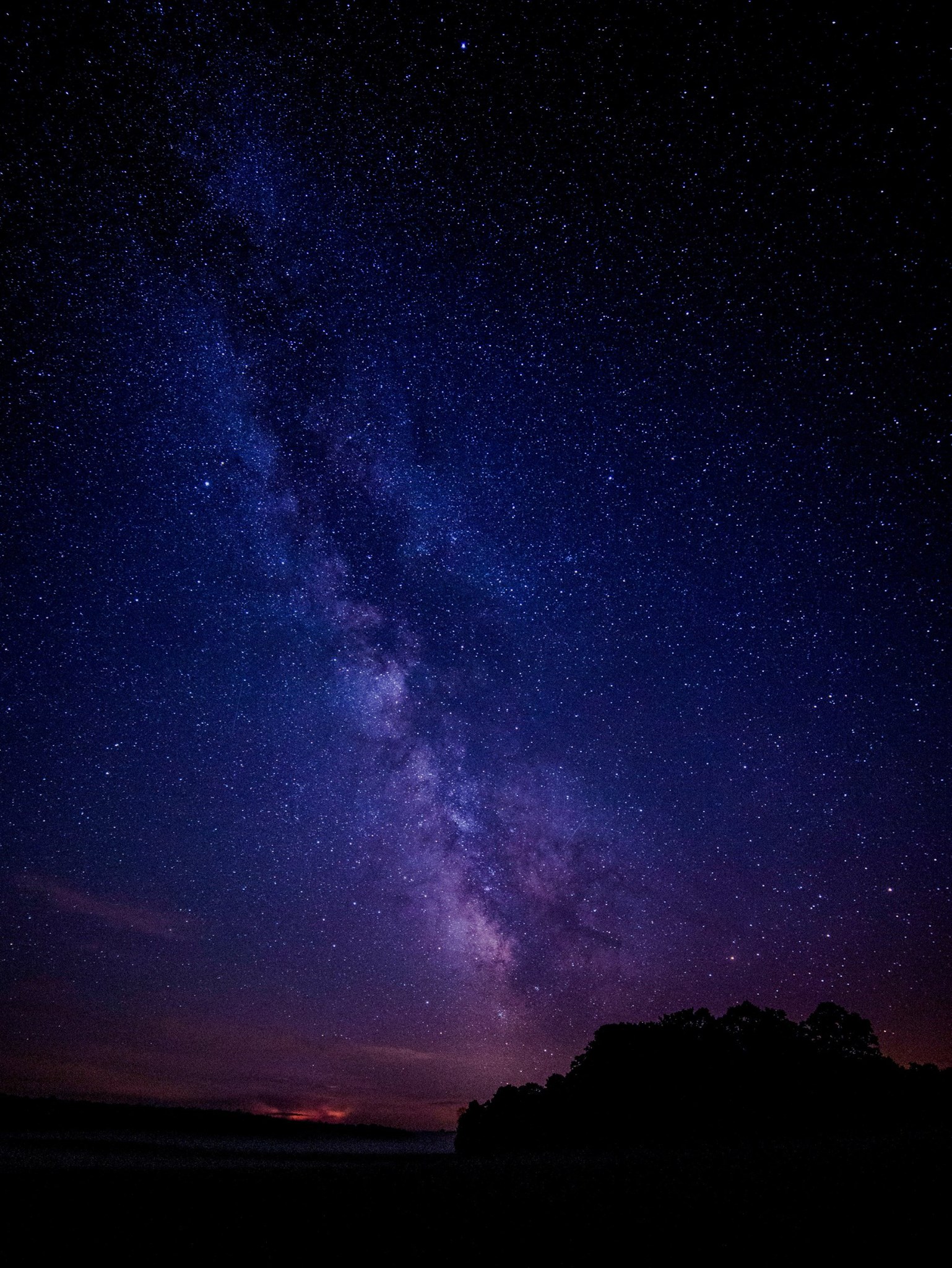
The Milky Way from the Sleeping Bear Dunes in August, 2015 by Mark Stewart.
04/12/2018 – Ephemeris – Where did the Milky Way go in the spring?
Ephemeris for Thursday, April 12th. The Sun will rise at 7:03. It’ll be up for 13 hours and 20 minutes, setting at 8:24. The Moon, 3 days before new, will rise at 6:14 tomorrow morning.
The Bright stars of winter are sliding into the western twilight in the evening. Taking their place in the south and east are the much more sparse stars of spring. The Milky Way passes through the winter and summer skies as well as the northern autumn sky. In the spring it runs below our southern horizon. Way back 200 years ago William Herschel realized that the stars around us lie in a flattened disk, that it was deeper in the direction of the milky glow than 90 degrees from it. It wasn’t until a bit less than 100 years ago that astronomers realized that there was anything outside this disk of stars. Today we call the fuzzy objects we find out there galaxies after the Greek word for Milky Way. They were seen in the 18th and 19th centuries, but were not recognized as such.
The times given are for the Traverse City/Interlochen area of Michigan. They may be different for your location.
Addendum
The shape of the universe (Milky Way) as measured by William Herschel by counting stars in the eyepiece fields of his telescope pointed in various directions. The large indent on the right is caused by the Great Rift, clouds of gas and dust the block the light of the stars behind it, not the lack of stars in that direction. The Great Rift is easily seen in the summer sky running through the Milky Way.
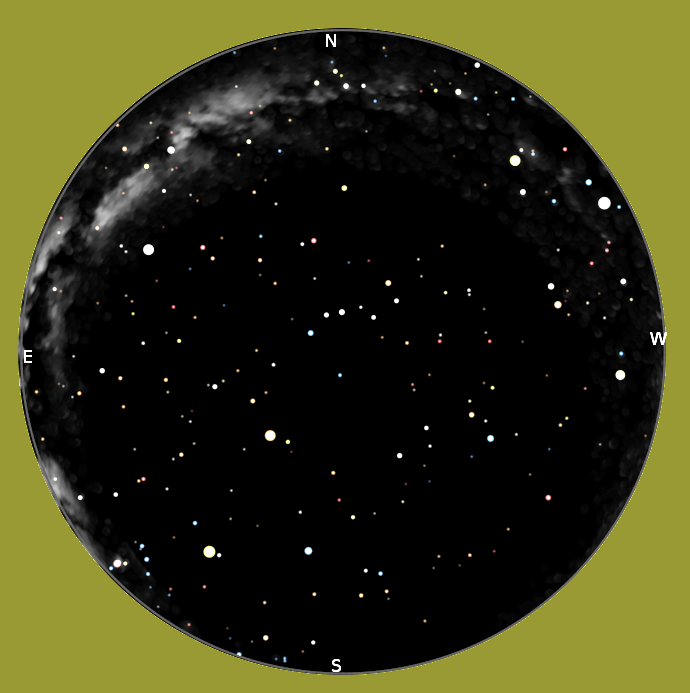
The dome of the spring sky showing the Milky Way visible mostly on the northeastern sky. In spring, we are looking out the thin side of the Milky Way. Created using Cartes du Ciel (Sky Charts).
Some Spring Galaxies
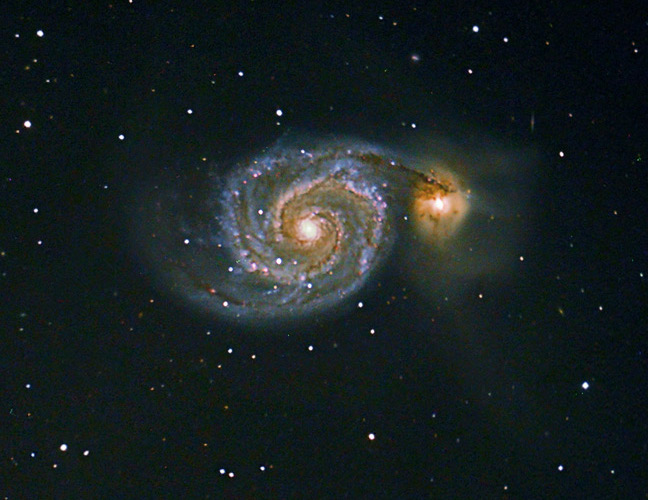
The Whirlpool Galaxy, M51 in Canes Venatici. Credit Scott Anttila.
The Pinwheel Galaxy, M101 near the star Mizar in the handle of the Big Dipper. Credit Scott Anttila.
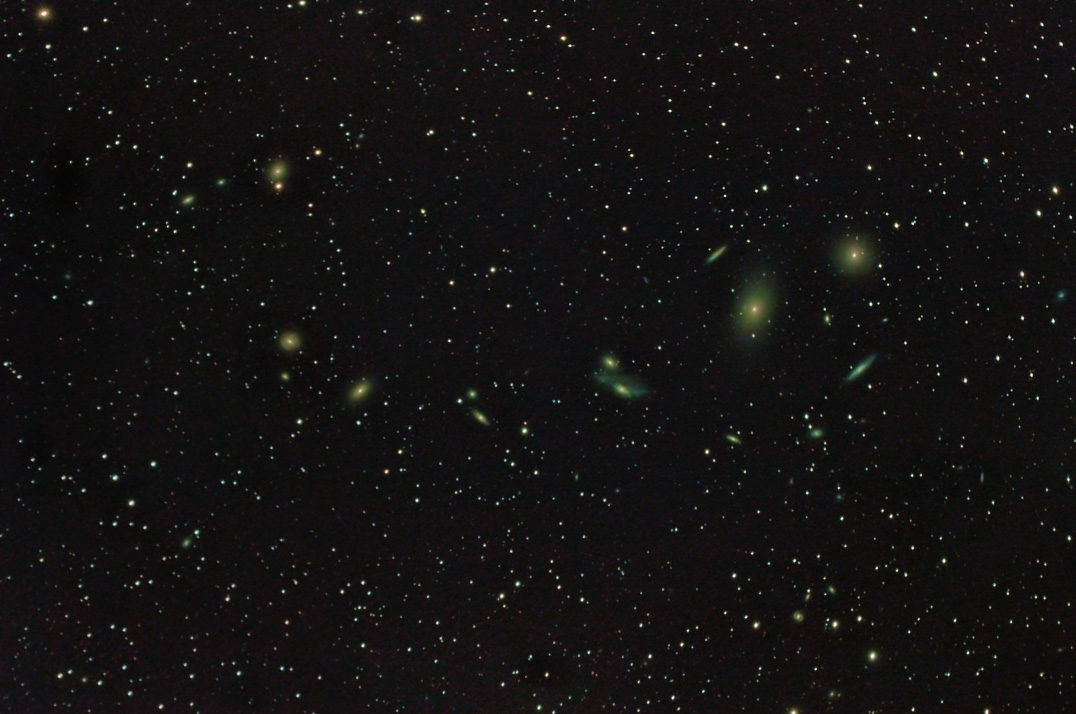
Markarian Chain of galaxies in Virgo. Credit Scott Anttila.
 Bob Moler's Ephemeris Blog