Archive
Ephemeris: 08/12/2025 – A brief shot at viewing the Perseid meteors under darkened, but not dark skies
This is Ephemeris for Tuesday, August 12th. Today the Sun will be up for 14 hours and 10 minutes, setting at 8:52, and it will rise tomorrow at 6:43. The Moon, 3 days past full, will rise at 10:26 this evening.
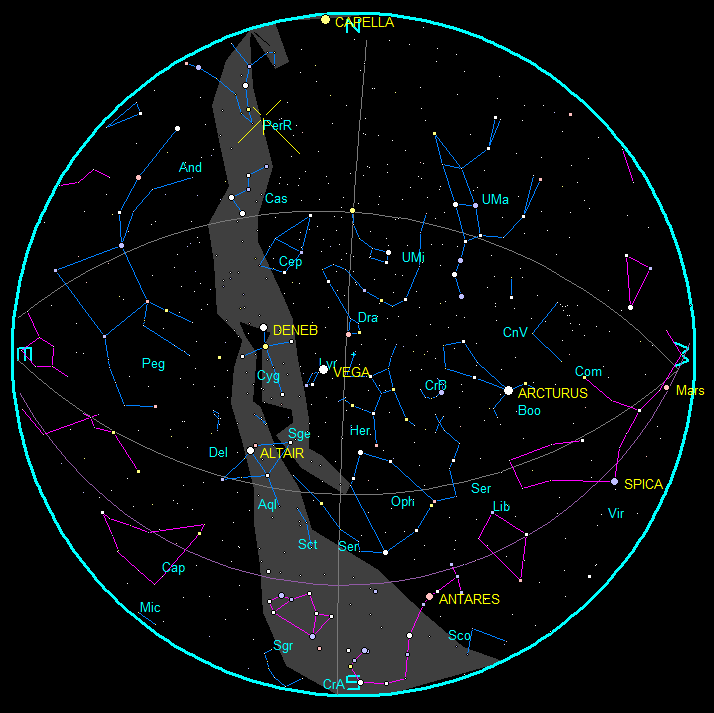
Tonight we get a second chance to see some of the Perseid meteor shower. As I said yesterday, the Moon is going to interfere with this year’s display. But, there is a small interval during twilight this evening, before the moon rises, where the sky could be dark enough to see more than a few Perseids. For nearly half an hour after 10 PM, it might be dark enough to see the Perseids under reasonably dark skies. The radiant where the meteors appear to come from will be low in the north northeast, about 17° above the horizon which means the expected number of meteors one would see in a half hour would be about 15 and with a not quite dark skies probably be a little less than that. But it is a chance to see the Perseids this year.
The astronomical event times given in this blog are for the Traverse City/Interlochen area of Michigan (Lat 44.7° N, Long 85.7° W; EDT, UT – 4 hours) unless stated otherwise. Times will be different for other locations.
Addendum
Ephemeris: 08/11/2025 – The best times to see the Perseid meteor shower
This is Ephemeris for Monday, August 11th. Today the Sun will be up for 14 hours and 13 minutes, setting at 8:54, and it will rise tomorrow at 6:42. The Moon, 2 days past full, will rise at 10:06 this evening.
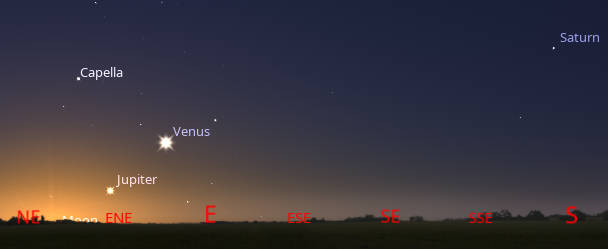
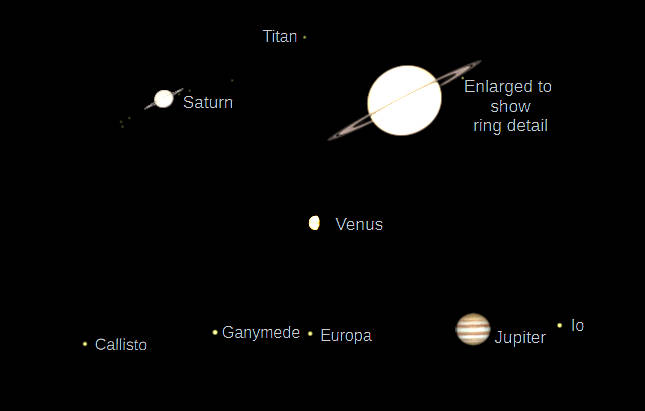
Tonight’s most interesting astronomical events will occur tomorrow morning. The Perseid meteor shower will reach its peak tomorrow afternoon, so tomorrow morning and Wednesday morning will be about the best times to see the meteors, except that the bright Moon is going to interfere. So only the brightest meteors will be visible. Bonus: in morning twilight tomorrow the planets Venus and Jupiter will be in conjunction, meaning they’ll be at their closest appearance to each other by a little bit less than twice the width of the Moon apart. Early risers may have been noticing that Venus and Jupiter will have been slowly approaching each other, with Jupiter below and left of Venus. Tomorrow morning, Jupiter will pass just above Venus.
The astronomical event times given in this blog are for the Traverse City/Interlochen area of Michigan (Lat 44.7° N, Long 85.7° W; EDT, UT – 4 hours) unless stated otherwise. Times will be different for other locations.
Addendum
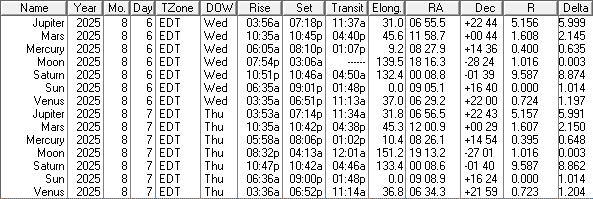
Ephemeris: 08/06/2025 – Taking our weekly look at the whereabouts of the naked-eye planets
This is Ephemeris for Wednesday, August 6th. Today the Sun will be up for 14 hours and 26 minutes, setting at 9:01, and it will rise tomorrow at 6:36. The Moon, 3 days before full, will set at 4:13 tomorrow morning.
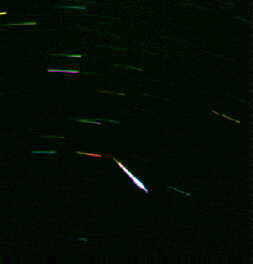
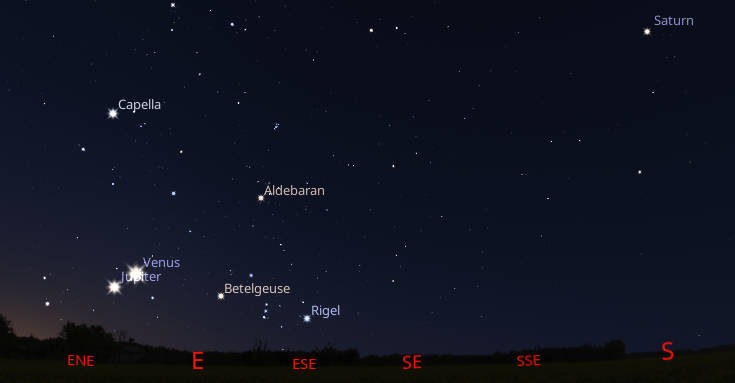
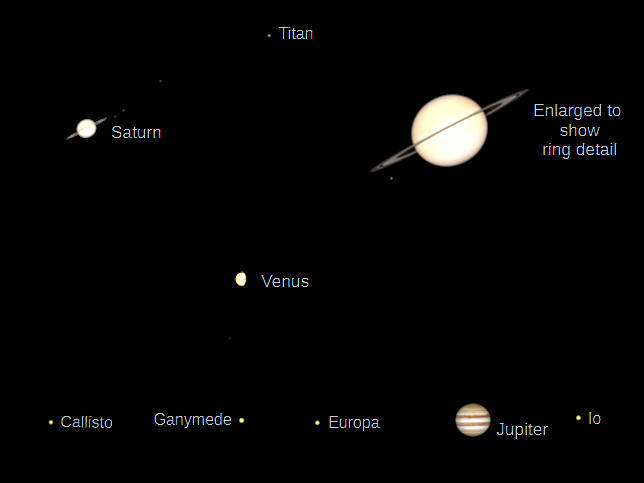
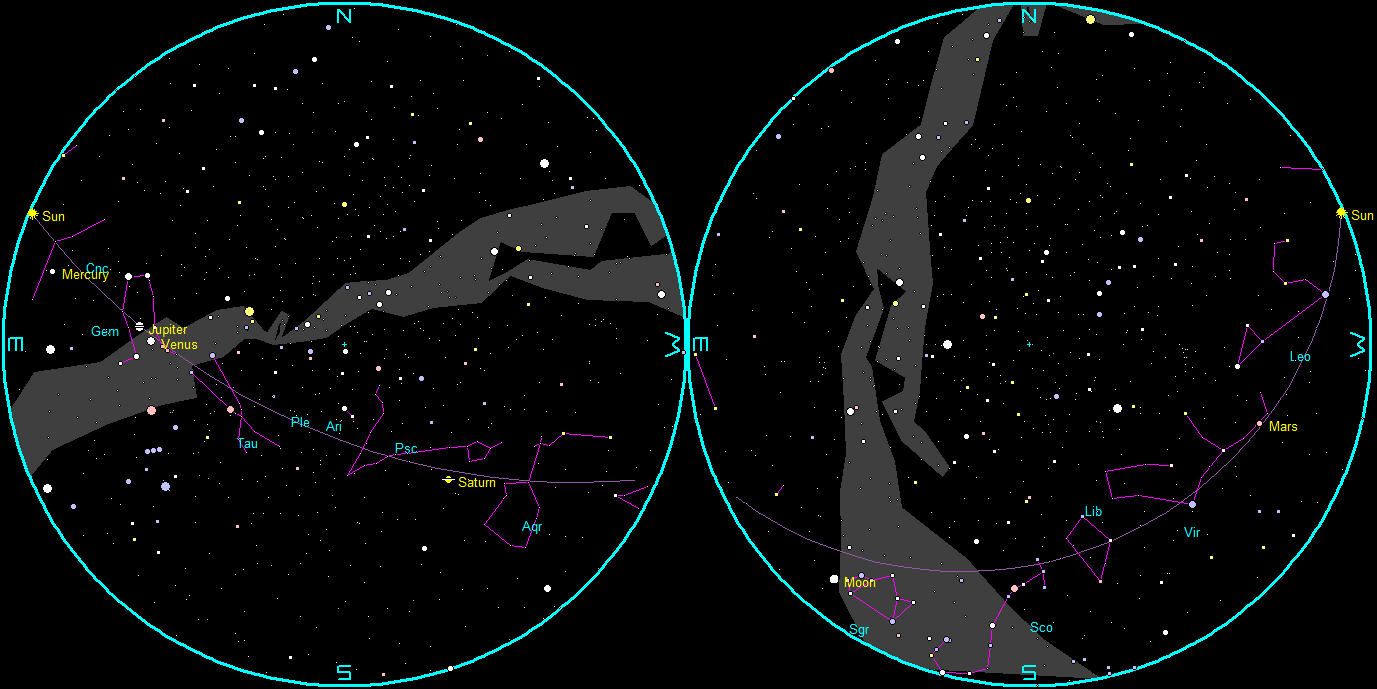
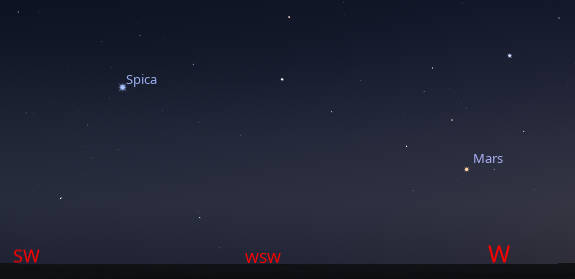
Let’s take our weekly look at the whereabouts of the naked-eye planets. The Red Planet Mars, May be seen very low in the western sky at 10 PM. Mars is moving toward Spica, a bit higher in the west-southwest. Mars will pass Spica on September 12th. By then they will be too low in the sky to be seen in twilight. Mars will leave the evening sky on January 9th. Saturn now rises at 10:50 PM in the east. In a telescope Saturn sports a very thin ring, less than 4° from being edge on. By 5:30 AM Saturn will be high in the south, when our winter pal Orion will be rising. Venus and Jupiter will appear very close. Venus is by far the brighter of the two. Their paths will cross on the morning of the 12th, where they will appear less than 2 moon-widths apart.
The astronomical event times given in this blog are for the Traverse City/Interlochen area of Michigan (Lat 44.7° N, Long 85.7° W; EDT, UT – 4 hours) unless stated otherwise. Times will be different for other locations.
Addendum
Ephemeris: 08/04/2025 – Mars’ twin
This is Bob Moler with Ephemeris for Monday, August 4th. Today the Sun will be up for 14 hours and 31 minutes, setting at 9:04, and it will rise tomorrow at 6:33. The Moon, 3 days past first quarter, will set at 2:10 tomorrow morning.
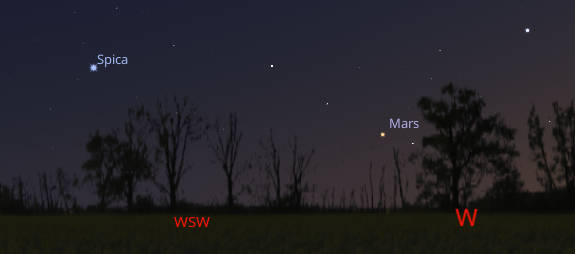
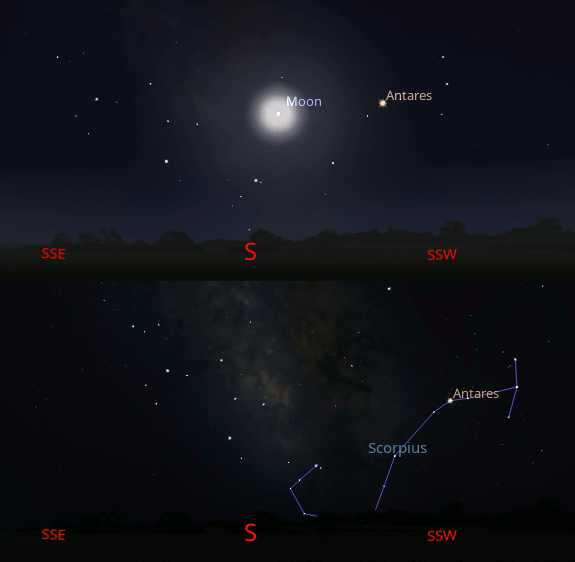
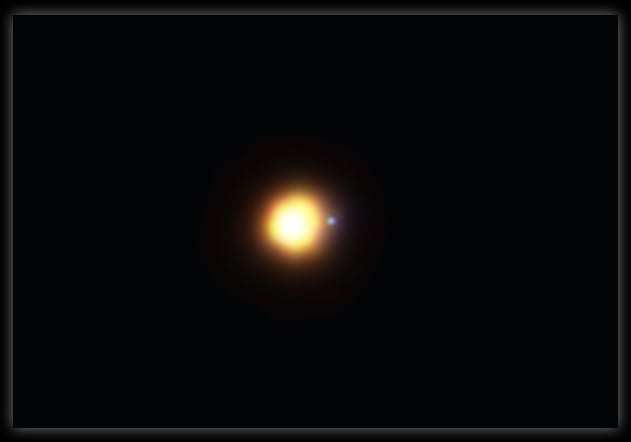
Low in the south as it gets dark is the red giant star Antares. It lies at the heart of Scorpius the scorpion. Its name means Rival of Mars, because it has the same hue as the red planet. In Mars case the color comes from iron oxide, rust. In Antares case it has a cool surface temperature, relatively speaking, of 7,000 degrees Fahrenheit (3,660 K). As a red giant star Antares is near the end of its life, though compared to the Sun it is young – possibly 12 million years old. At that age the Sun was just getting started. Antares, with around 13 to 16 times the Sun’s mass, has already run out of fusible hydrogen in its core and has bloated out to double Mars’ orbit in size. Antares is 550 light years away and has a companion star in its system that looks greenish in contrast to Antares red. But, when Antares A, the red giant’s light is blocked, the companion looks bluish.
The astronomical event times given in this blog are for the Traverse City/Interlochen area of Michigan (Lat 44.7° N, Long 85.7° W; EDT, UT – 4 hours) unless stated otherwise. Times will be different for other locations.
Addendum
Ephemeris: 07/31/2025 – The Perseids are coming
This is Bob Moler with Ephemeris for Thursday, July 31st. Today the Sun will be up for 14 hours and 41 minutes, setting at 9:09, and it will rise tomorrow at 6:29. The Moon, 1 day before first quarter, will set at 11:59 this evening.
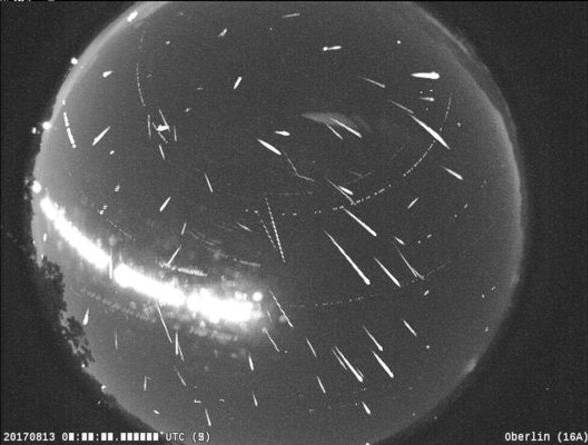
Over the past couple of weeks folks who are outdoors after the Moon sets in the morning might have been seeing some shooting stars or meteors appearing to zip through the sky. The ones I’m talking about seem to come from the northeast. These are the precursors of the Perseid meteor shower which will reach its peak on the mornings of August 12 and 13 this year with the interference of a bright Moon. Over the millennia the meteoroid stream that feeds the meteors to our skies has spread out to last over a month from the latter half of July to three-quarters of August. I try to use the proper terminology for all this. A meteoroid is the tiny body in space. In the Perseid’s case the size of a grain of sand to a pea. Meteor is the streak we see in the sky as it burns up. A meteorite is the body that makes it to the ground. To my knowledge no Perseid has made it that far.
The astronomical event times given in this blog are for the Traverse City/Interlochen area of Michigan (Lat 44.7° N, Long 85.7° W; EDT, UT – 4 hours) unless stated otherwise. Times will be different for other locations.
Addendum
Ephemeris: 07/30/2025 – Taking our weekly look at the Moon and the naked-eye planets
This is Ephemeris for Wednesday, July 30th. Today the Sun will be up for 14 hours and 43 minutes, setting at 9:10, and it will rise tomorrow at 6:28. The Moon, 2 days before first quarter, will set at 11:40 this evening.
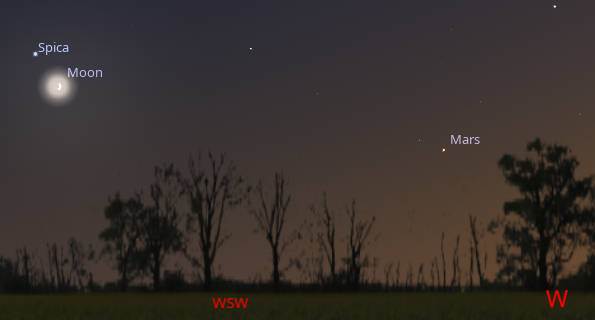
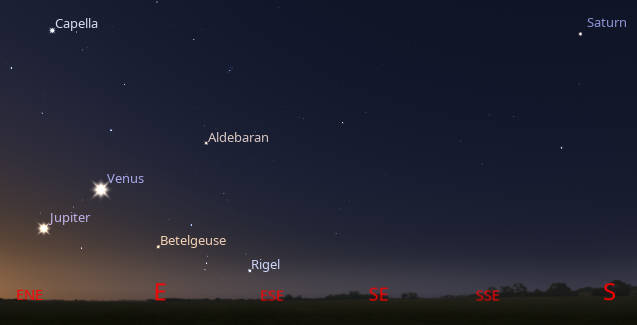
Let’s take our weekly look at the whereabouts of the naked-eye planets. The Red Planet Mars, will be seen low in the western sky at 10:15 PM. Mars is moving toward Spica, higher in the west-southwest, which will be above the Moon tonight. Mars will pass Spica on September 12th. By then they will be too low in the sky to be seen in twilight. Saturn now rises at 11:15 PM in the east. When I had my first telescope, eagerly waiting for Saturn to rise, I had to wait more than a half hour to get a sharp image of it. By 5:30 AM Saturn will be high in the south, when our winter pal Orion will be rising. Venus will rise at 3:29 AM in the east-northeast and will be higher in the east by 5:30. Jupiter will be below and left of Venus.
The astronomical event times given in this blog are for the Traverse City/Interlochen area of Michigan (Lat 44.7° N, Long 85.7° W; EDT, UT – 4 hours) unless stated otherwise. Times will be different for other locations.
Addendum
Ephemeris: 07/28/2025 – Deneb, a truly brilliant star
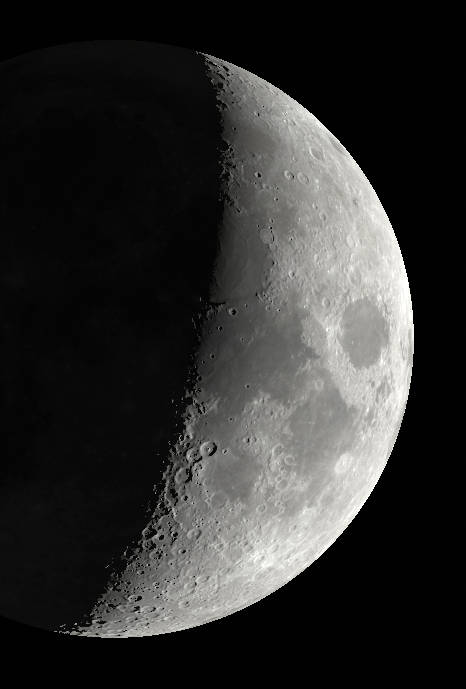
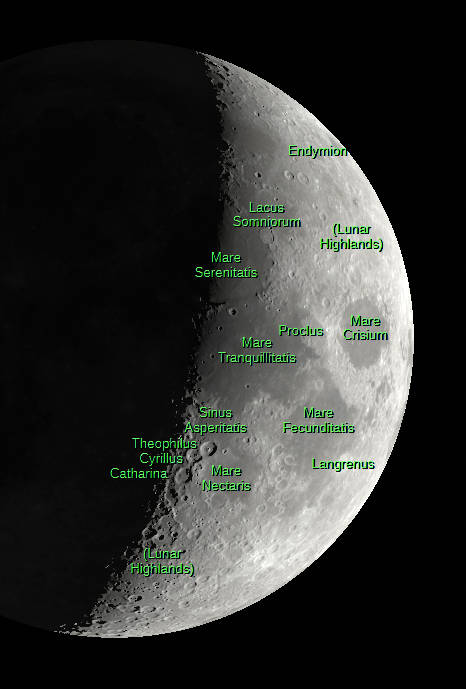
This is Ephemeris for Monday, July 28th. Today the Sun will be up for 14 hours and 48 minutes, setting at 9:12, and it will rise tomorrow at 6:26. The Moon, halfway from new to first quarter, will set at 11:06 this evening.
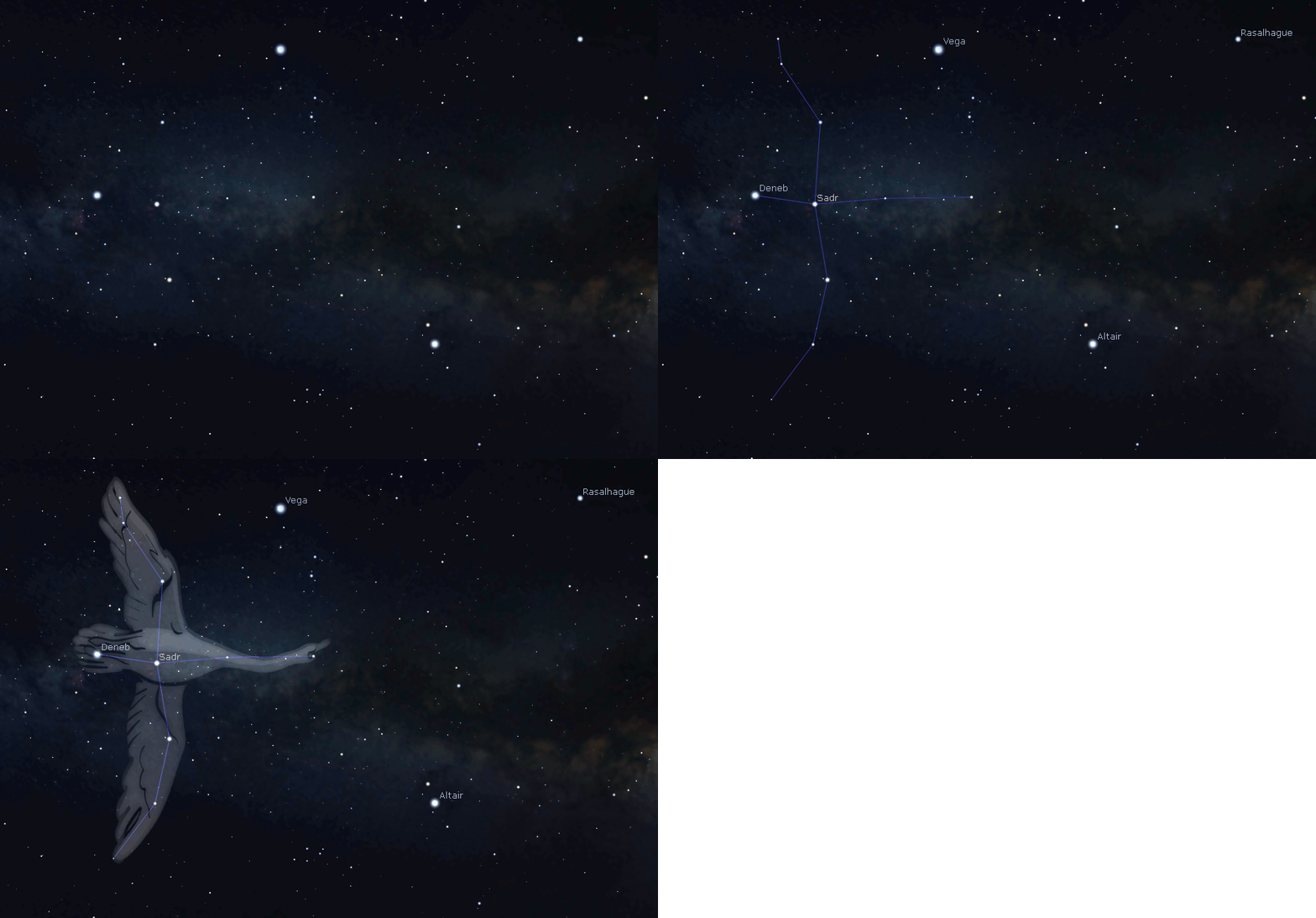
This evening when it gets dark enough the bright star Deneb in Cygnus the swan will be high in the east-northeast. Deneb is the dimmest star of the summer triangle. Of the other stars of the triangle, Vega is higher in the east, while Altair is lower in the southeast. Deneb’s apparent magnitude, or brightness as seen from Earth, is deceptive. Its vast distance of possibly 2,600 light years is over 100 times the distance of Vega. If brought as close as Vega, Deneb would be almost as bright as the quarter moon. It is possibly as bright as 200 thousand Suns; and a huge star, possibly as large as half the diameter of Earth’s orbit. For all this, it is only 19 to 25 times the mass of the Sun.
The astronomical event times given in this blog are for the Traverse City/Interlochen area of Michigan (Lat 44.7° N, Long 85.7° W; EDT, UT – 4 hours) unless stated otherwise. Times will be different for other locations.
Addendum
Ephemeris: 07/23/2025 – Our weekly look at the whereabouts of the naked-eye planets
This is Ephemeris for Wednesday, July 23rd. Today the Sun will be up for 14 hours and 58 minutes, setting at 9:18, and it will rise tomorrow at 6:20. The Moon, 1 day before new, will rise at 5:43 tomorrow morning.
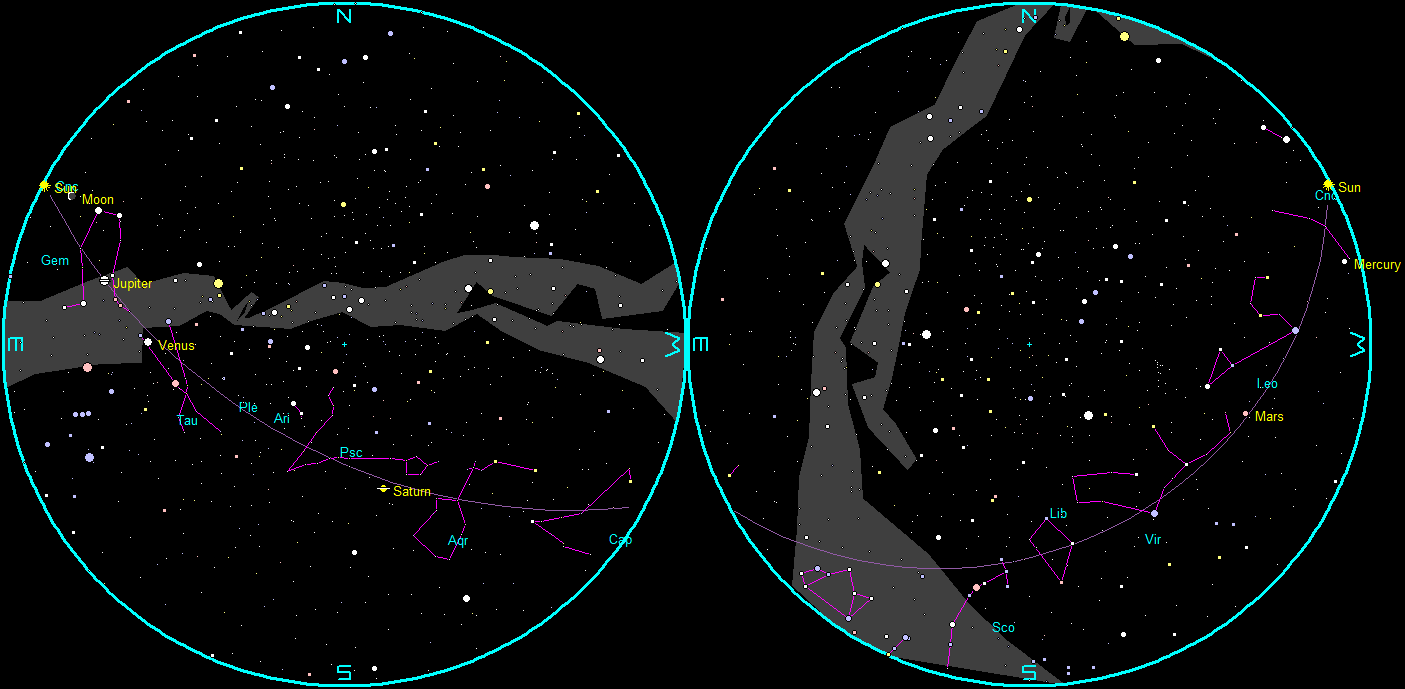
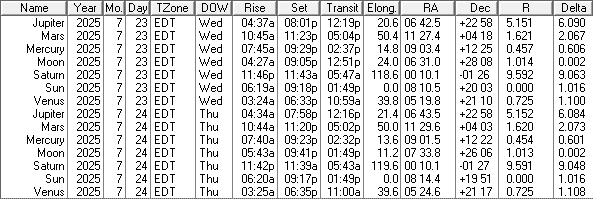
Let’s take our weekly look at the whereabouts of the naked-eye planets. The Red Planet Mars, will be seen low in the western sky at 10:30 PM. Mars is moving toward Spica, higher in the southwest. It will pass above Spica on September 12th. Mars moves much faster against the background stars than the more distant Jupiter and Saturn. Speaking of Saturn, it now rises just before midnight at just about due east, and by 5:30 AM will be high in the south. Venus will rise at 3:25 AM in the east-northeast and will be higher in that general direction by 5:30. Jupiter will be below and left of it then. That they will appear among the winter stars will become more apparent in the next few weeks.
The astronomical event times given in this blog are for the Traverse City/Interlochen area of Michigan (Lat 44.7° N, Long 85.7° W; EDT, UT – 4 hours) unless stated otherwise. Times will be different for other locations.
Addendum
Ephemeris: 07/18/2025 – The summer Milky Way is beginning to make itself seen
This is Ephemeris for Friday, July 18th. Today the Sun will be up for 15 hours and 8 minutes, setting at 9:23, and it will rise tomorrow at 6:15. The Moon, 1 day past last quarter, will rise at 1:07 tomorrow morning.
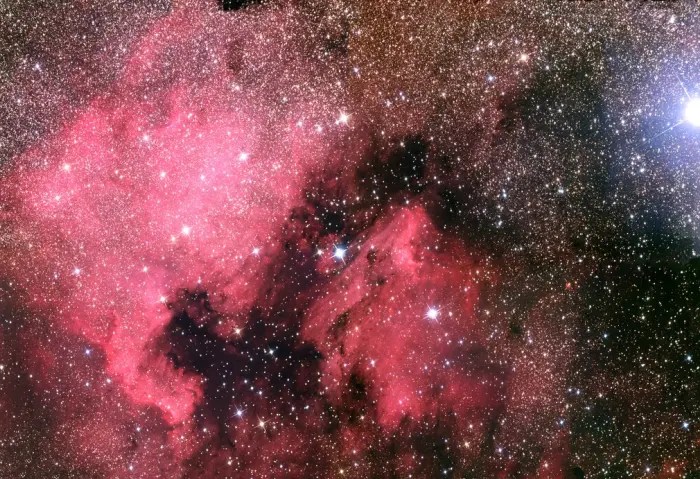
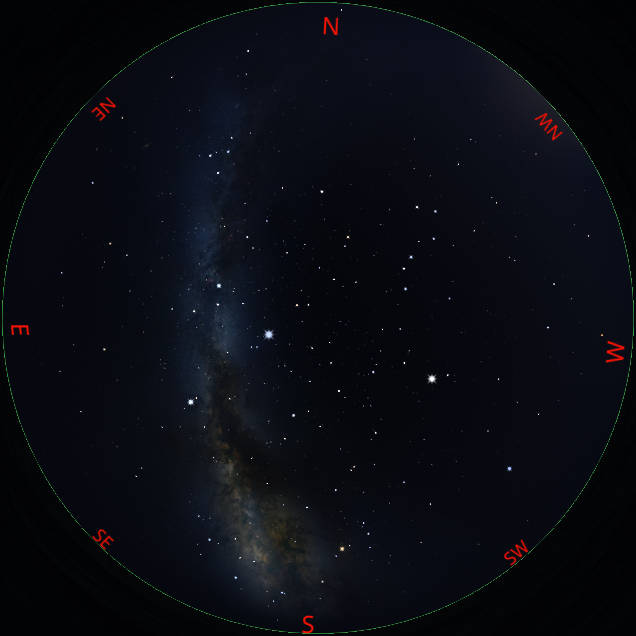
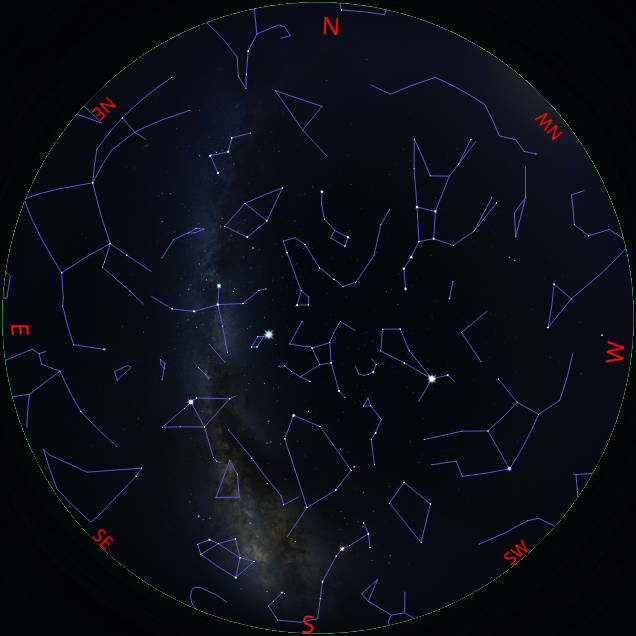
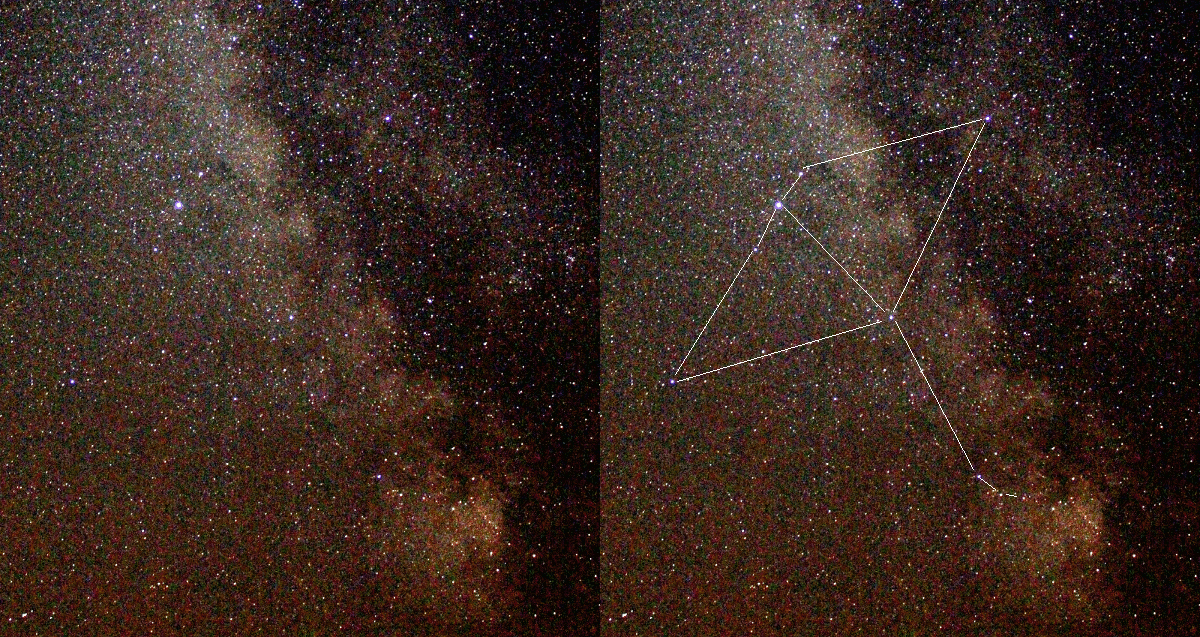
The summer Milky Way is beginning to make itself seen. It runs from the north northeast through the sky in the east, and through the stars Deneb and Altair of the Summer Triangle down to the south-southeastern horizon. One has to stay up to 11 PM or later to actually enjoy it. Another prerequisite is that one has to be away from the city lights. Here in Northern Michigan we have a lot of dark skies and only small towns, so it is easy to get away from city lights. To the ancients and relatively primitive cultures without the curse of the electric illumination, it was a wonder. In Greece, Rome and Egypt it was a milky stream, from which we get the term Milky Way. Some cultures considered it the path that souls took after death on their journey to the hereafter.
The astronomical event times given in this blog are for the Traverse City/Interlochen area of Michigan (Lat 44.7° N, Long 85.7° W; EDT, UT – 4 hours) unless stated otherwise. Times will be different for other locations.
Addendum
Ephemeris: 07/17/2025 – Finding the celestial eagle, Aquila
This is Ephemeris for Thursday, July 17th. Today the Sun will be up for 15 hours and 10 minutes, setting at 9:23, and it will rise tomorrow at 6:14. The Moon, at last quarter today, will rise at 12:42 tomorrow morning.
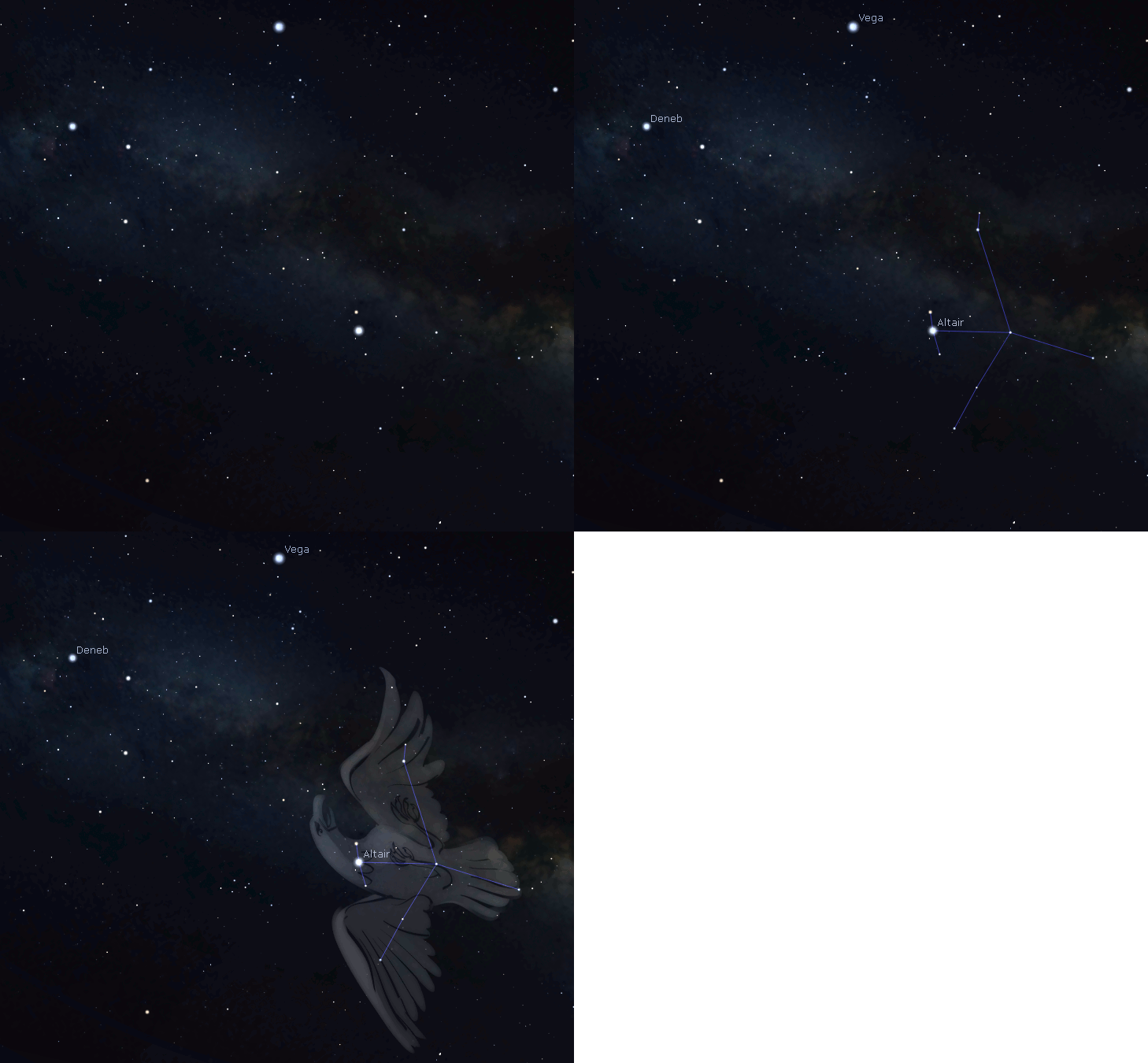
Aquila the eagle is a constellation that lies in the Milky Way. It’s in the southeastern sky as it gets dark. Its brightest star, Altair, is one of the stars of the Summer Triangle, a group of three bright stars dominating the eastern sky in the evening now. Altair, in the head of the eagle, is flanked by two slightly dimmer stars, the shoulders of the eagle. The eagle is flying northeastward through the Milky Way. Its wings are seen in the wing tip stars. A curved group of stars to the lower right of Altair is its tail. Within Aquila, the Milky Way shows many dark clouds as part of the Great Rift that splits it here. The other summer bird is Cygnus the swan above and left of Aquila, flying in the opposite direction. It was said this was the eagle that attended the god Jupiter.
The astronomical event times given in this blog are for the Traverse City/Interlochen area of Michigan (Lat 44.7° N, Long 85.7° W; EDT, UT – 4 hours) unless stated otherwise. Times will be different for other locations.
Addendum
 Bob Moler's Ephemeris Blog