Archive
Ephemeris: 06/16/2026 – More pointers to help you find Mercury tonight
This is Bob Moler with Ephemeris for Tuesday, June 16th. Today the Sun will be up for 15 hours and 34 minutes, setting at 9:30, and it will rise tomorrow at 5:56. The Moon, 2 days past new, will set at 11:34 this evening.
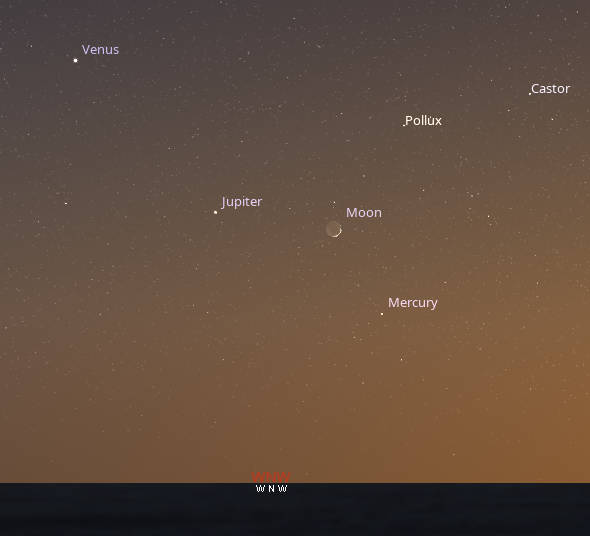
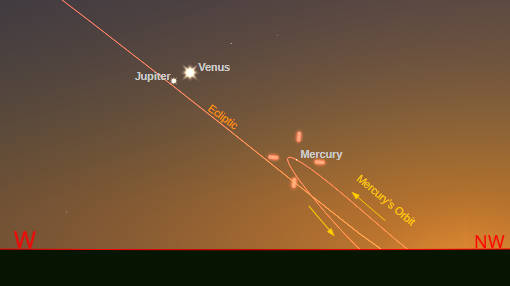
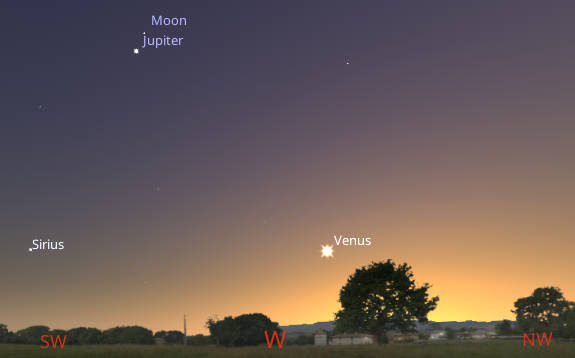
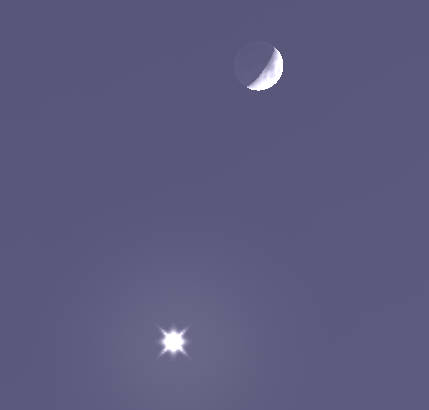
The planet Mercury, which had its greatest elongation or separation east of the sun yesterday, is still visible in line with Venus and Jupiter down to the lower right. It is also below the thin crescent moon tonight. There are a couple of other stars which you might mistake for Mercury. They’re higher in the sky, above the Moon and to the upper right of Jupiter. These are some of our leftover winter stars, Castor and Pollux of Gemini. Pollux is the slightly brighter one and closer to Jupiter of the two. Mercury is below them. A pair of binoculars is really helpful in picking Mercury out from the twilight.It seems to increase the contrast between star-like objects from the background. Actually, binoculars make a great first telescope.
The astronomical event times given in this blog are for the Traverse City/Interlochen area of Michigan (Lat 44.7° N, Long 85.7° W; EDT, UT – 4 hours) unless stated otherwise. Times will be different for other locations.
Addendum
Ephemeris: 06/10/2026 – Where are the naked-eye planets this week?
This is Ephemeris for Wednesday, June 10th. Today the Sun will be up for 15 hours and 30 minutes, setting at 9:27, and it will rise tomorrow at 5:56. The Moon, 2 days past last quarter, will rise at 3 o’clock tomorrow morning.
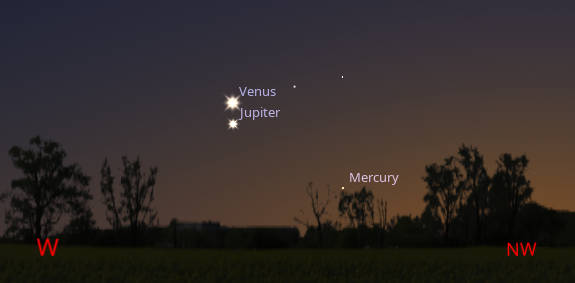
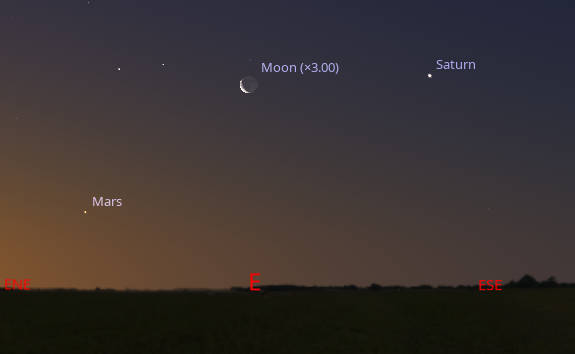
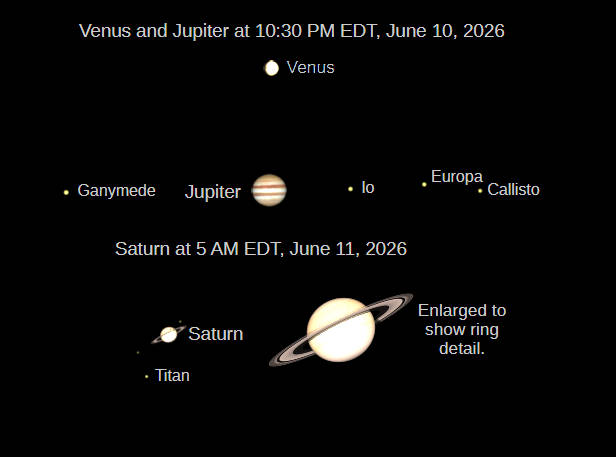
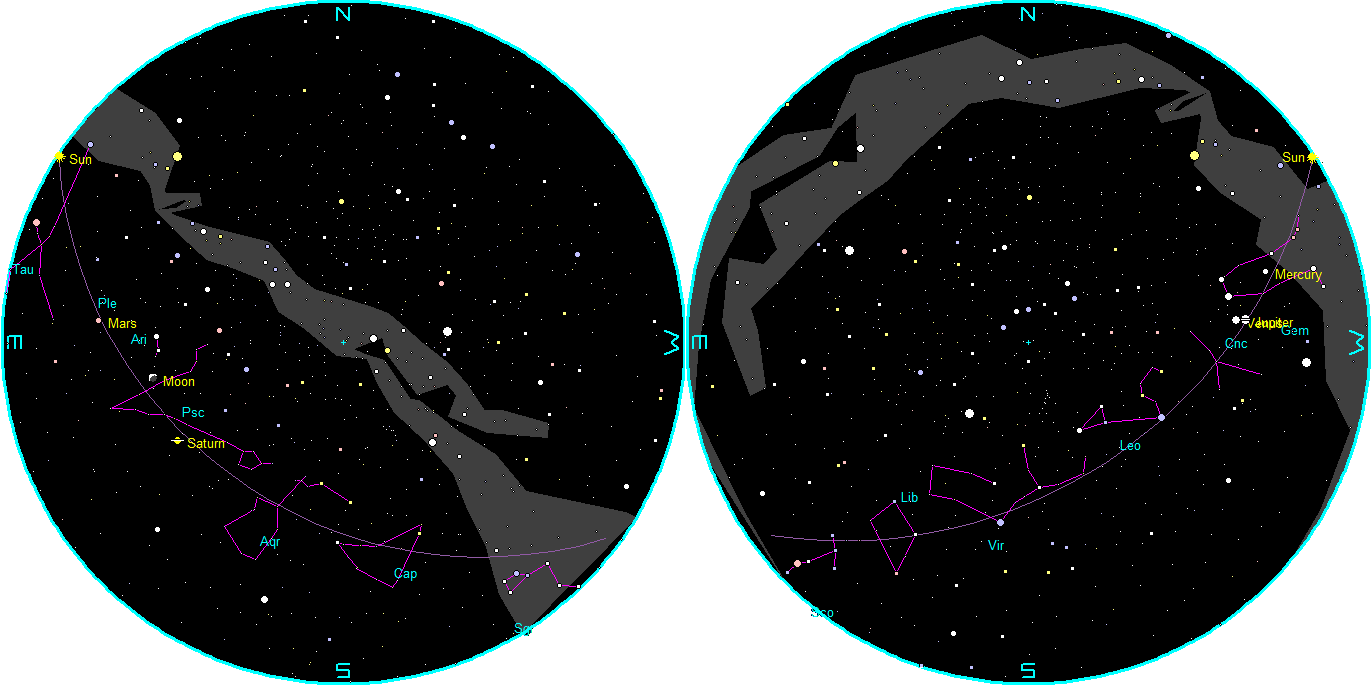
Let’s take our weekly look at the whereabouts of the naked-eye planets. By 10:15 PM tonight, nearly an hour after sunset, Venus and Jupiter may be seen in the western sky, with the brighter Venus above Jupiter. A telescope will show a very tiny disc on Venus, because it is still pretty much beyond the Sun, 111 million miles (179 million kilometers) away from us. Over the next 4 1/2 months it will be moving closer to us and becoming much larger. Mercury is marginally visible below and right of Venus and Jupiter. Jupiter now sets at 11:52 PM, with Venus setting ten minutes later. Saturn will rise into the eastern sky at 3:04 AM, followed by dimmer Mars an hour later.
The astronomical event times given in this blog are for the Traverse City/Interlochen area of Michigan (Lat 44.7° N, Long 85.7° W; EDT, UT – 4 hours) unless stated otherwise. Times will be different for other locations.
Addendum
Ephemeris: 06//08/2026 – Observing Mercury in the evening
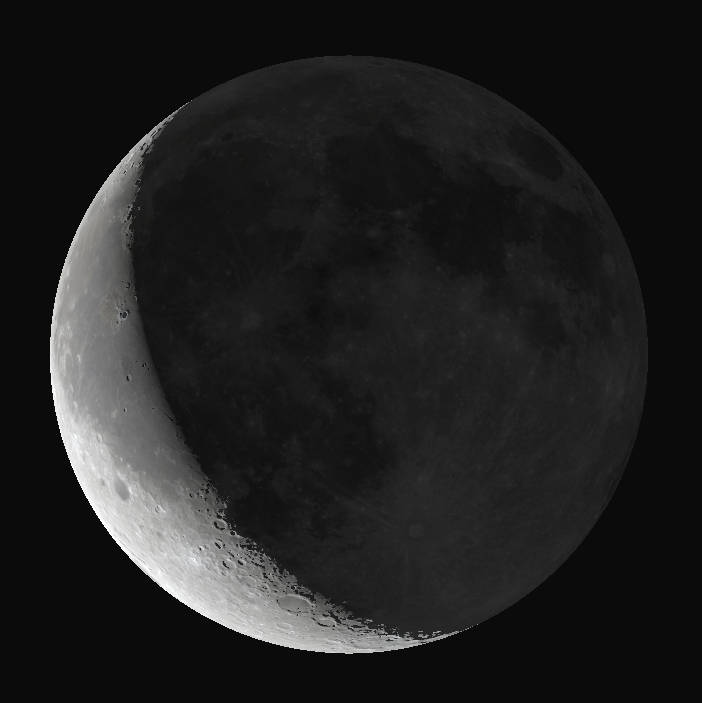
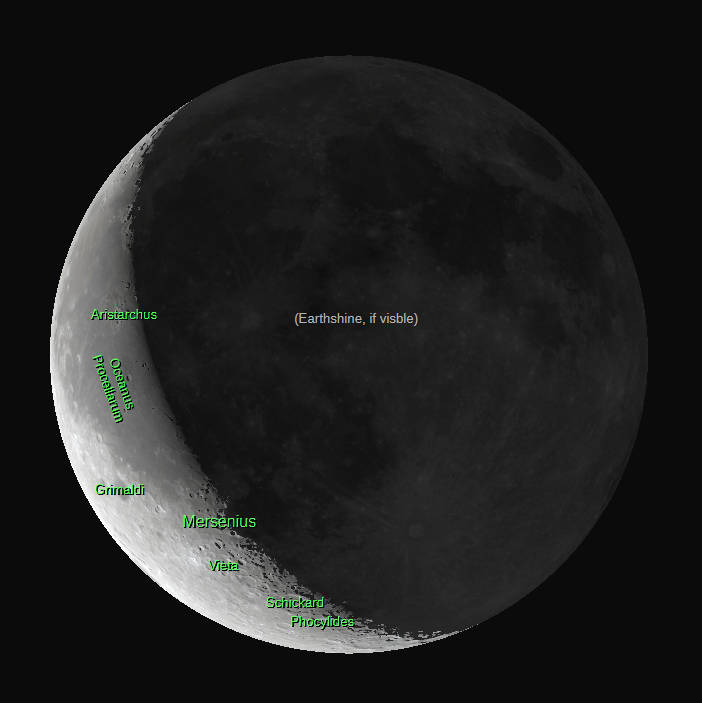
This is Bob Moler with Ephemeris for Monday, June 8th. Today the Sun will be up for 15 hours and 29 minutes, setting at 9:26, and it will rise tomorrow at 5:57. The Moon, at last quarter today, will rise at 2:18 tomorrow morning.
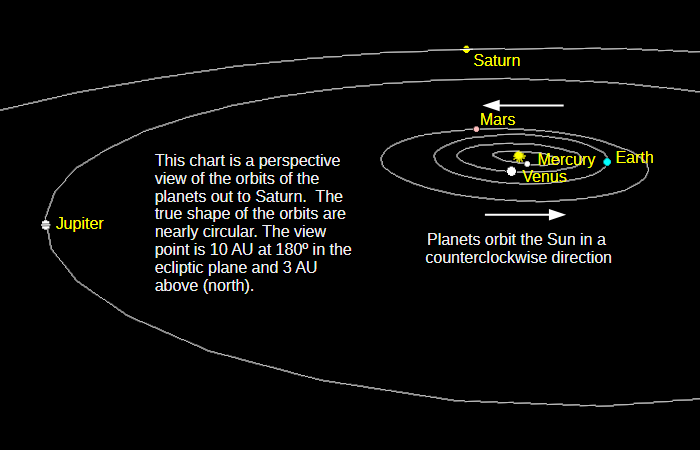
We have a little more than a week to observe Mercury in the western sky after sunset. Mercury’s greatest eastern elongation or separation from the sun will occur on the 15th. It will get as far as a 24° angle from the sun. That separation is tilted a bit less than 45° to the horizon. Mercury’s greatest eastern elongations, occur about 116 days, more or less apart, because Mercury has the most elliptical orbit of any other planet. This is longer than Mercury’s orbital period of 88 days because we’re viewing it from a planet that is also orbiting the sun. Mercury is easier to observe the week before greatest eastern elongation then the week after. Part of the reason is that the phase of Mercury is waning from gibbous to a crescent and getting dimmer.
The astronomical event times given in this blog are for the Traverse City/Interlochen area of Michigan (Lat 44.7° N, Long 85.7° W; EDT, UT – 4 hours) unless stated otherwise. Times will be different for other locations.
Addendum
Ephemeris: 06/03/2026 – Where are the naked-eye planets this week?
This is Ephemeris for Wednesday, June 3rd. Today the Sun will be up for 15 hours and 23 minutes, setting at 9:23, and it will rise tomorrow at 5:58. The Moon, 3 days past full, will rise at 12:29 tomorrow morning.
Let’s take our weekly look at the whereabouts of the naked-eye planets. By 10:15 PM tonight, nearly an hour after sunset, Venus and Jupiter may be seen in the western sky. A telescope will show a very tiny disc on Venus, because it is still pretty much beyond the Sun, 115 million miles (186 million kilometers) away from us. Over the next 4½ months it will be moving closer to us and becoming much larger. Jupiter is to the upper left of Venus, and the second-brightest star-like object in the sky. Venus will set at 12:05 AM, while Jupiter will hold out ten minutes longer. Venus will pass Jupiter on the afternoon of the 9th. Saturn rises into the eastern sky at 3:27 AM, followed by dimmer Mars an hour later.
The astronomical event times given in this blog are for the Traverse City/Interlochen area of Michigan (Lat 44.7° N, Long 85.7° W; EDT, UT – 4 hours) unless stated otherwise. Times will be different for other locations.
Addendum
Ephemeris: 05/27/2026 – Taking our weekly look at the whereabouts of the naked-eye planets
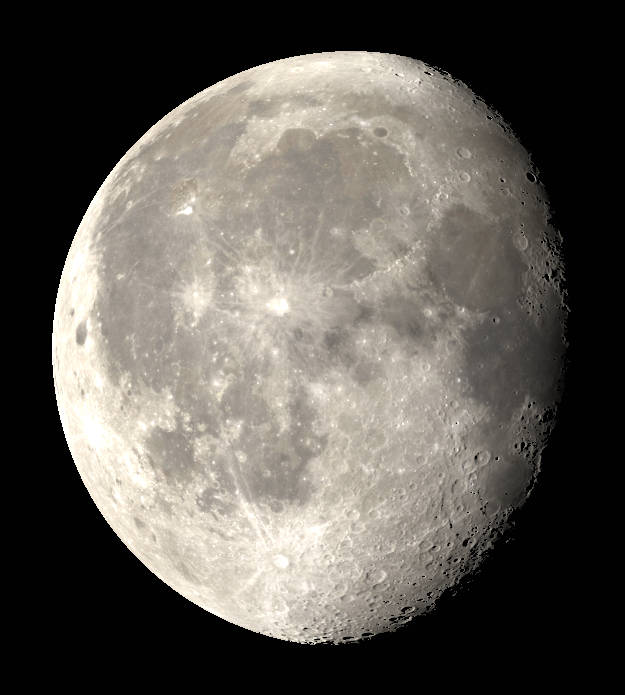
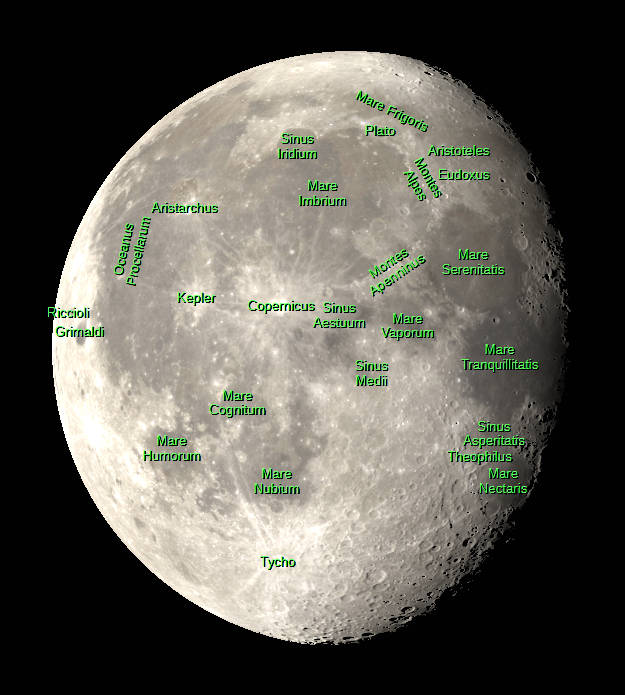
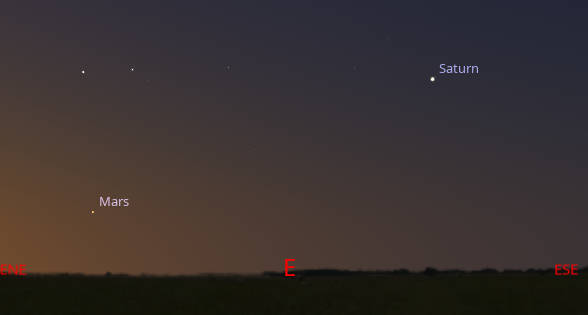
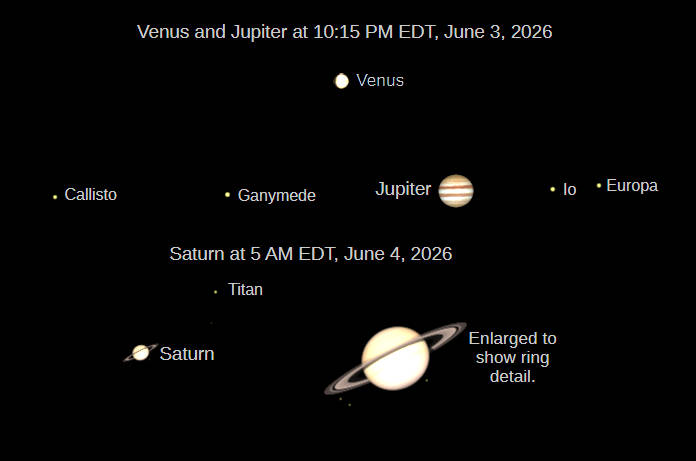
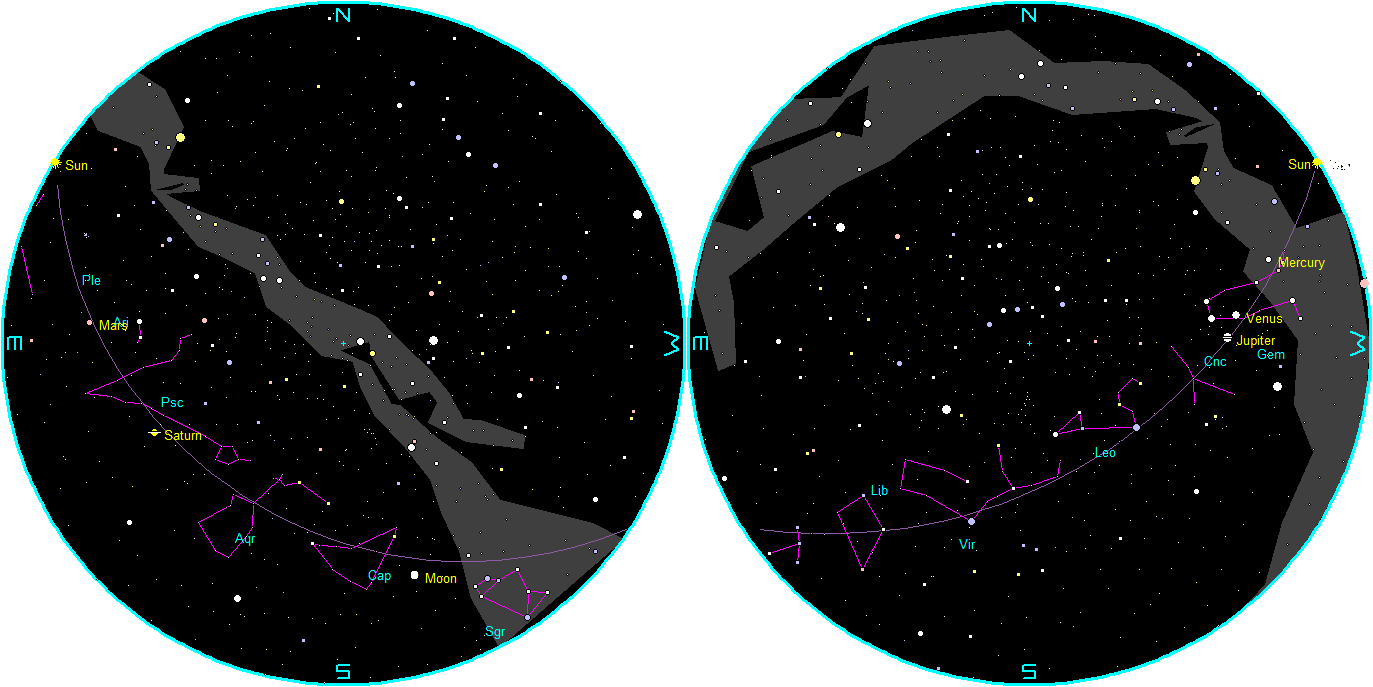
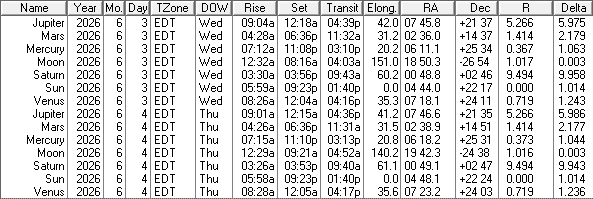
This is Bob Moler with Ephemeris for Wednesday, May 27th. Today the Sun will be up for 15 hours and 13 minutes, setting at 9:17, and it will rise tomorrow at 6:02. The Moon, halfway from first quarter to full, will set at 4:08 tomorrow morning.
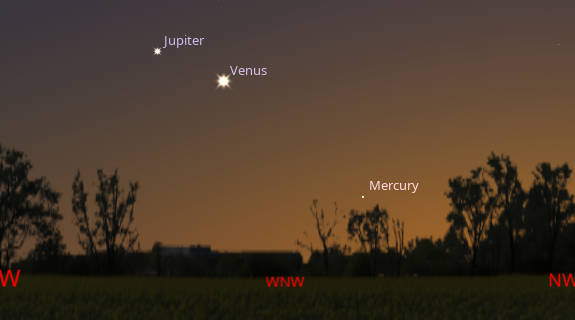
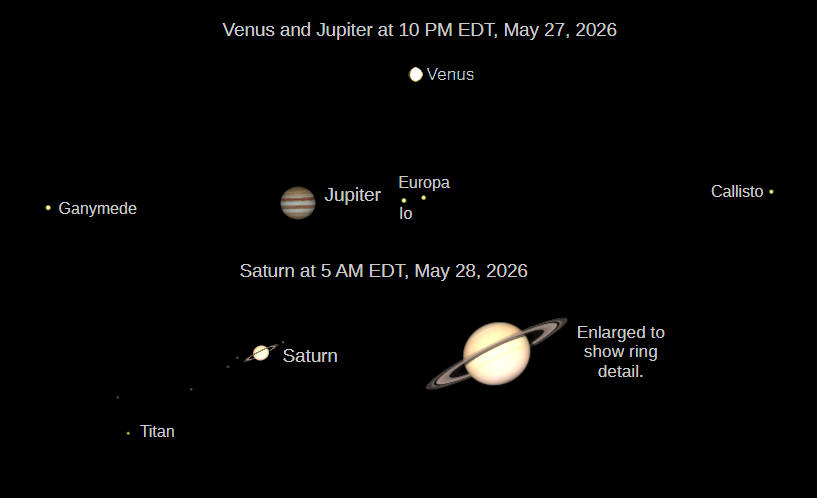
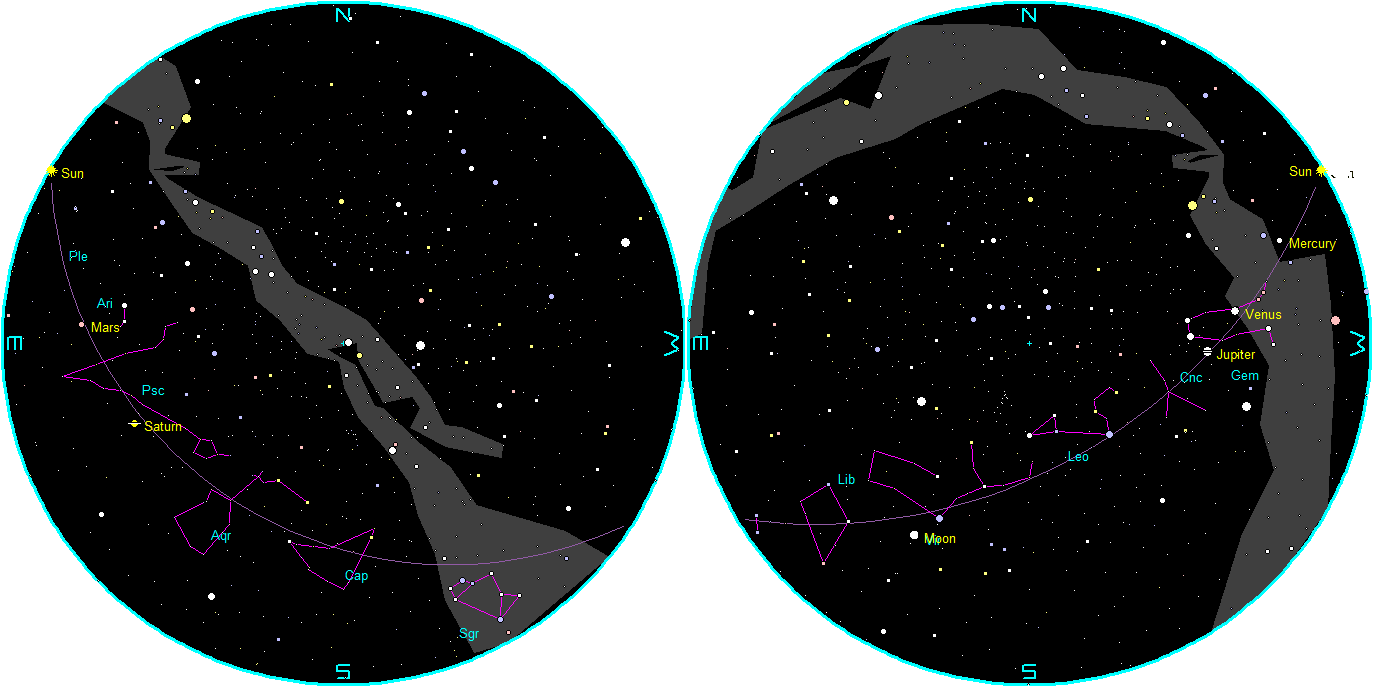
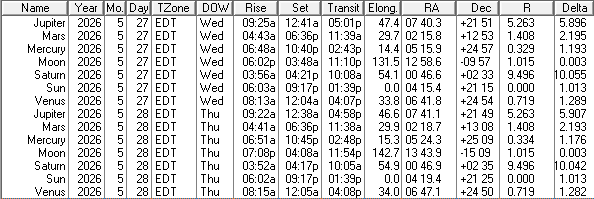
Let’s take our weekly look at the whereabouts of the naked-eye planets. By 10 PM tonight, about 40 minutes after sunset, Venus may be seen in the western sky. A telescope will show a very tiny disc on Venus, because it is still pretty much beyond the Sun, 120 million miles (193 million km) away from us. Over the next 5 months it will be moving closer to us and becoming much larger. Jupiter is the second-brightest star-like object in the western sky seen before 10 PM. It is above and left of Venus tonight. Venus will set at 12:04 AM, while Jupiter will hold out until 12:41 AM. Saturn rises in the east at 3:52 AM, followed by dimmer Mars at 4:42 AM.
The astronomical event times given in this blog are for the Traverse City/Interlochen area of Michigan (Lat 44.7° N, Long 85.7° W; EDT, UT – 4 hours) unless stated otherwise. Times will be different for other locations.
Addendum
Ephemeris: 05/20/2026 – Taking our weekly look at the whereabouts of the naked-eye planets
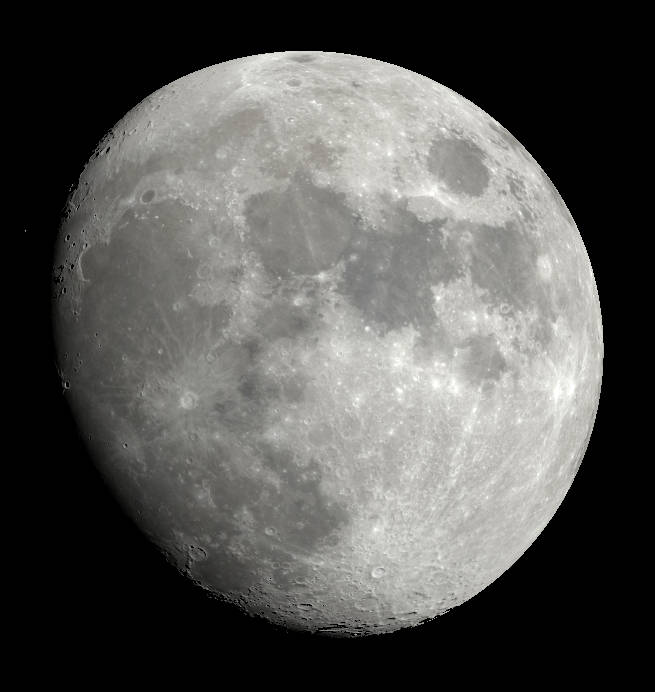
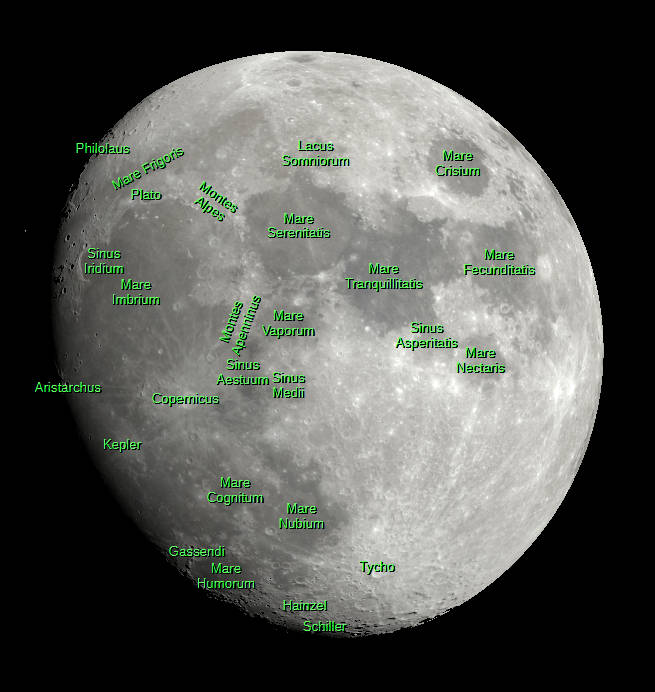
This is Ephemeris for Wednesday, May 20th. Today the Sun will be up for 15 hours exactly, setting at 9:09, and it will rise tomorrow at 6:08. The Moon, 3 days before first quarter, will set at 1:41 tomorrow morning.
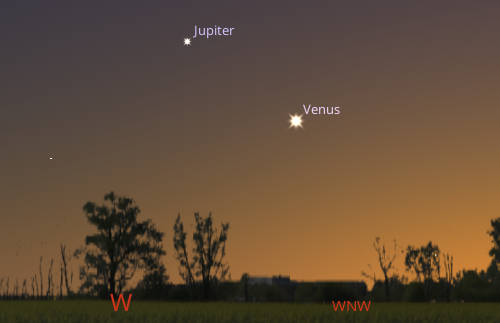
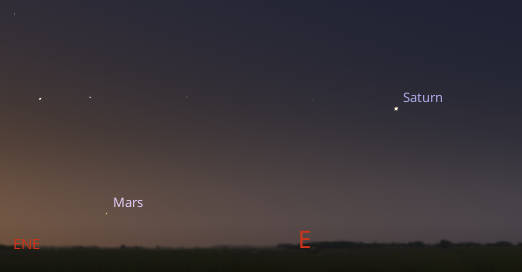
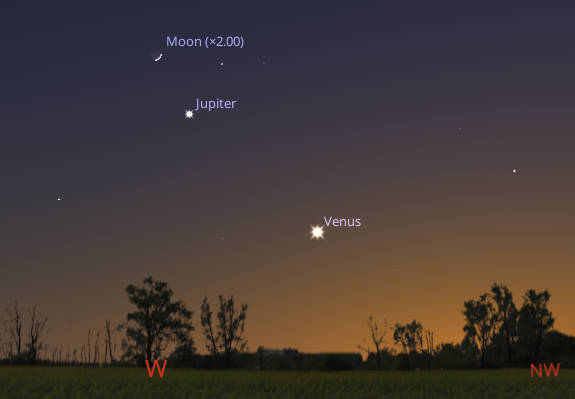
Let’s take our weekly look at the whereabouts of the naked-eye planets. By 9:30 PM tonight, about 20 minutes after sunset, Venus may be seen in the western sky. A telescope will show a very tiny disc on Venus, because it is still pretty much beyond the Sun, 124 million miles (199 million kilometers) away from us. Over the next 5 months it will be moving closer to us and becoming much larger. Jupiter is the second-brightest star-like object in the western sky seen before 10 PM. It is below and right of the Moon tonight. Venus will set at 11:53 PM, while Jupiter will hold out until 1:01 AM. Saturn may be first glimpsed just after it rises in the east at 4:18 AM, before morning twilight overwhelms it later on.
The astronomical event times given in this blog are for the Traverse City/Interlochen area of Michigan (Lat 44.7° N, Long 85.7° W; EDT, UT – 4 hours) unless stated otherwise. Times will be different for other locations.
Addendum
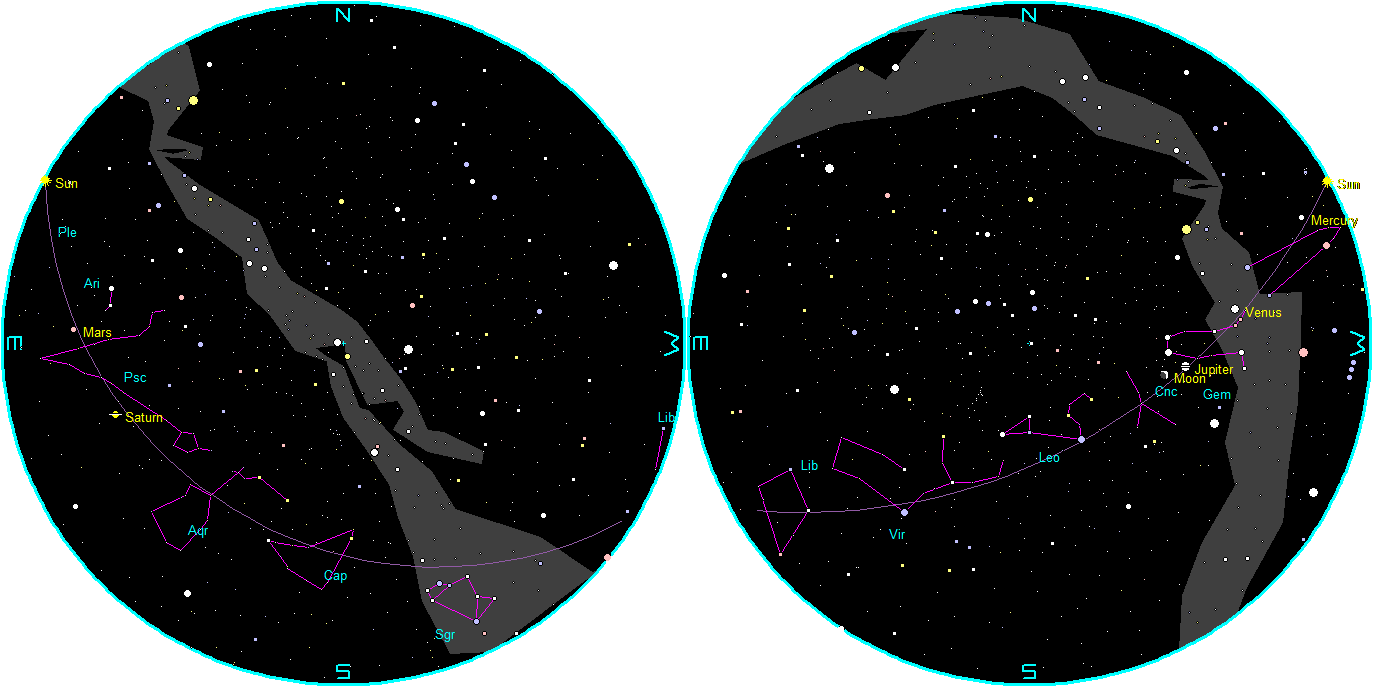
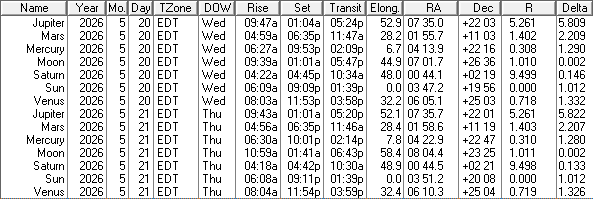
Ephemeris: 05/13/2026 – Where are the naked-eye planets this week?
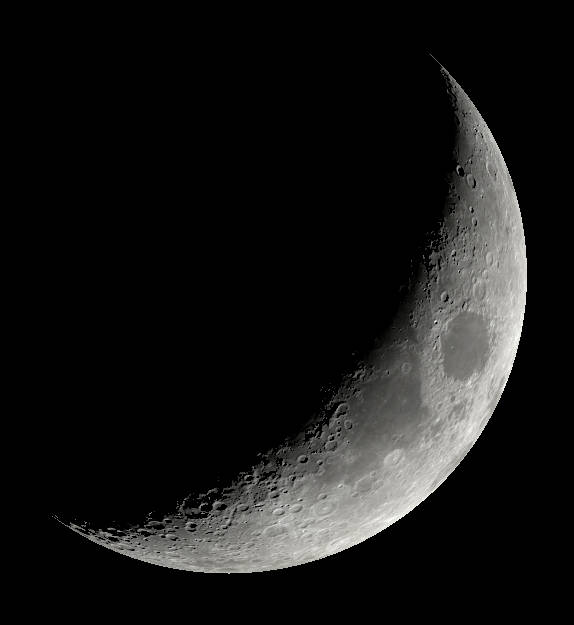
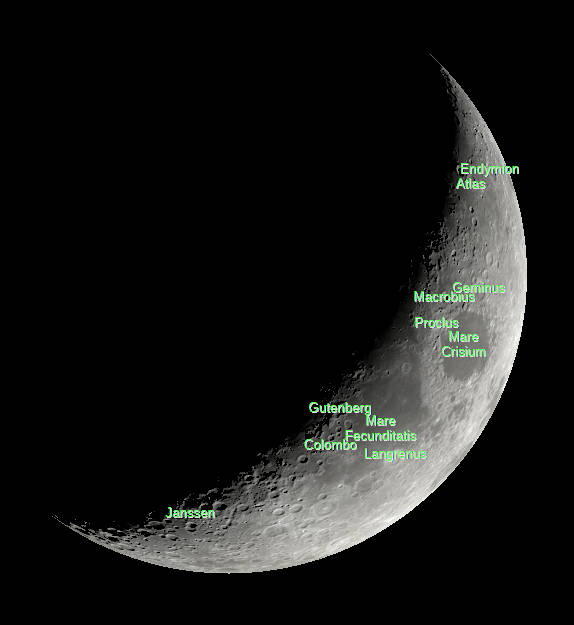
This is Ephemeris for Wednesday, May 13th. Today the Sun will be up for 14 hours and 45 minutes, setting at 9:02, and it will rise tomorrow at 6:15. The Moon, 3 days before new, will rise at 4:37 tomorrow morning.
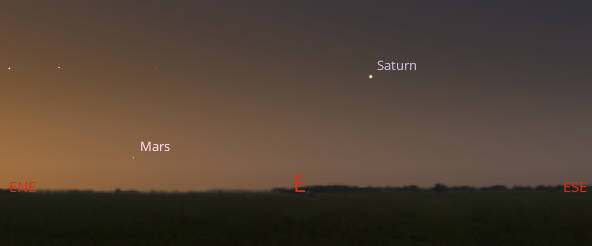
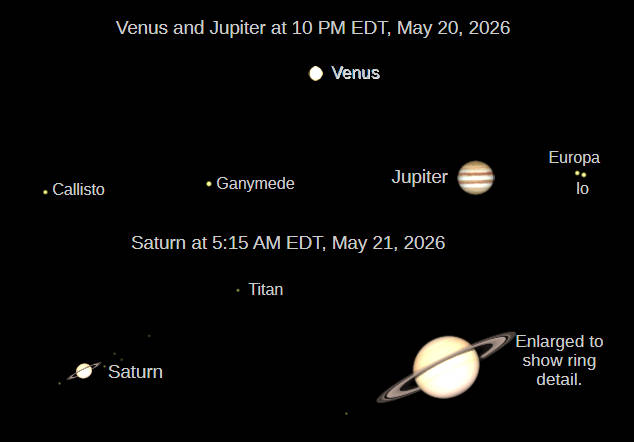
Let’s take our weekly look at the whereabouts of the naked-eye planets. By 9:30 PM tonight, about a half hour after sunset, Venus may be seen in the western sky. A telescope will show a very tiny disc on Venus, because it is still pretty much beyond the Sun, 128 million miles (205 million kilometers) away from us. Over the next 5 months it will be moving closer to us and becoming much larger. Jupiter is the second-brightest star-like object in the western sky seen before 10 PM. It is above and left of the brighter Venus. Venus will set at 11:38 PM, while Jupiter will hold out until 1:21 AM. Saturn may be glimpsed just after it rises in the east at 4:48 AM, before morning twilight overwhelms it sometime later.
The astronomical event times given in this blog are for the Traverse City/Interlochen area of Michigan (Lat 44.7° N, Long 85.7° W; EDT, UT – 4 hours) unless stated otherwise. Times will be different for other locations.
Addendum
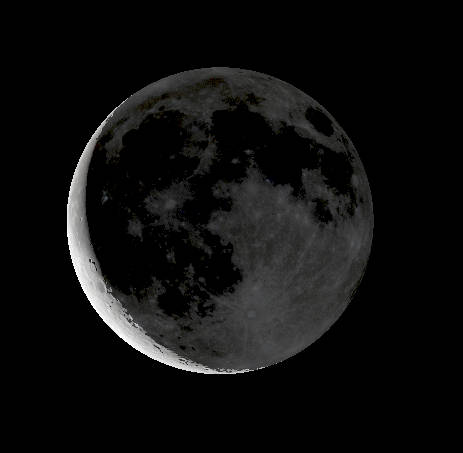
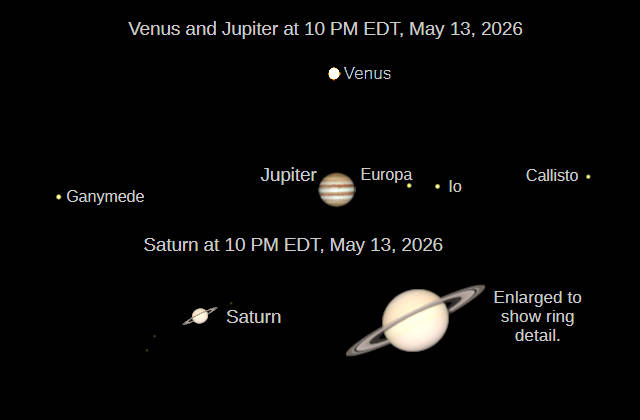
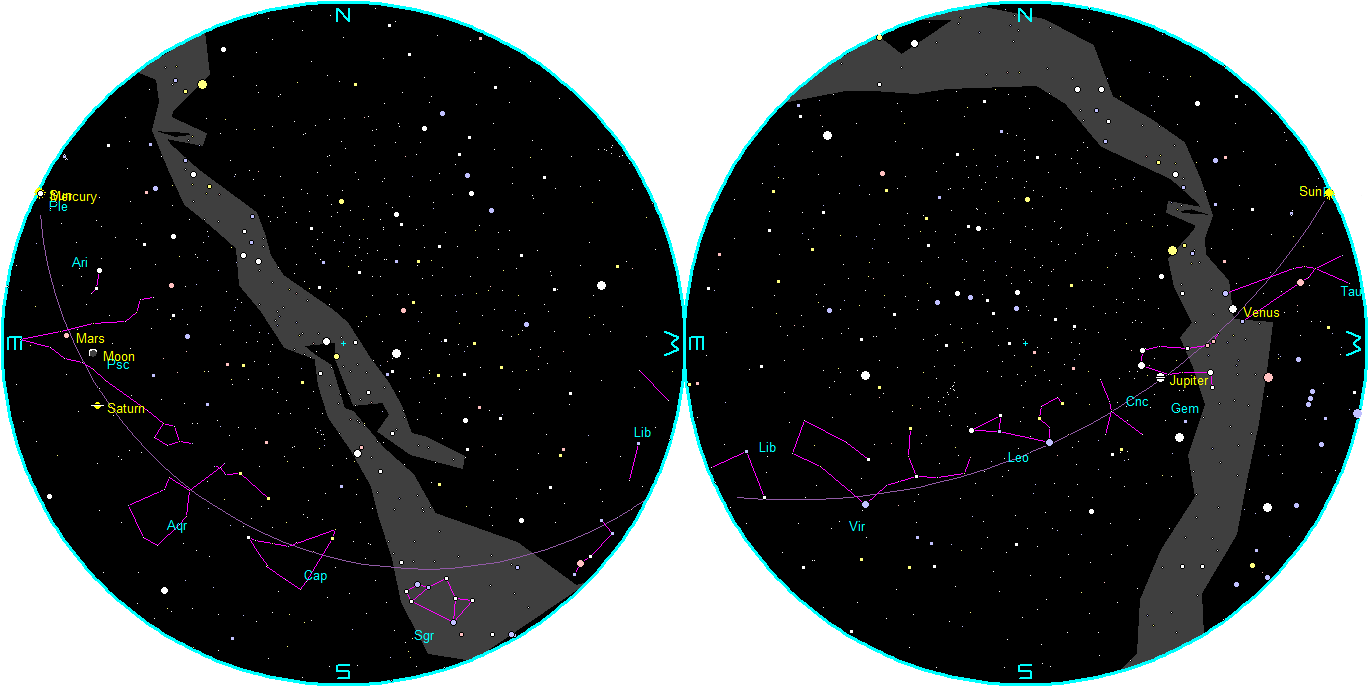
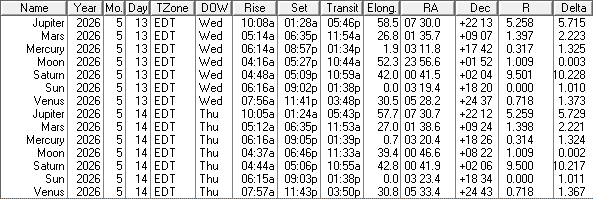
Ephemeris: 05/06/2026 – Taking our weekly look at the whereabouts of the naked-eye planets
This is Ephemeris for Wednesday, May 6th. Today the Sun will be up for 14 hours and 28 minutes, setting at 8:53, and it will rise tomorrow at 6:24. The Moon, 3 days before last quarter, will rise at 1:55 tomorrow morning.
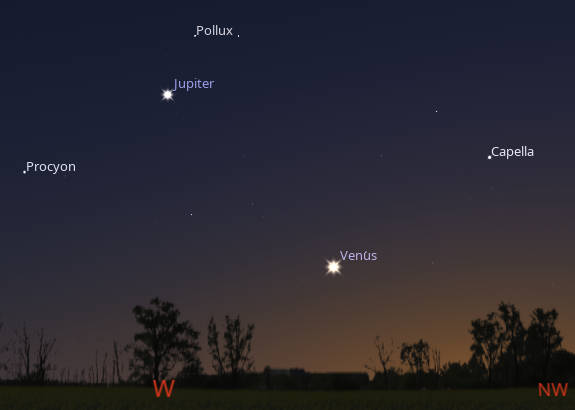
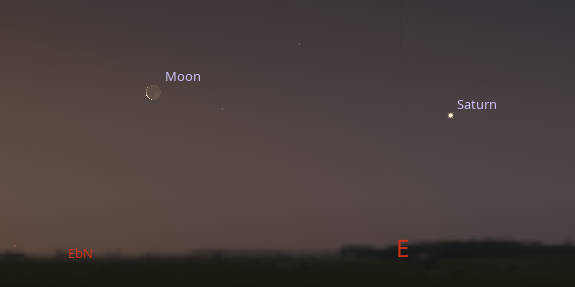
Let’s take our weekly look at the whereabouts of the naked-eye planets. By 9:30 PM tonight or about 35 minutes or so after sunset, Venus may be seen very low in the West. A telescope will show a very tiny disc on Venus, because it is still pretty much beyond the Sun, 131 million miles (211 million kilometers) away from us. Over the next 5½ months it will be moving closer to us and becoming much larger. Jupiter is the brilliant star-like object in the western before 10 PM. It is above and left of the brighter Venus. Venus will set at 11:26 PM, while Jupiter will hold out until 1:40 AM. Saturn may be glimpsed starting about next Monday just after it rises in the east around 5:15 AM, and before morning twilight overwhelms it sometime later.
The astronomical event times given in this blog are for the Traverse City/Interlochen area of Michigan (Lat 44.7° N, Long 85.7° W; EDT, UT – 4 hours) unless stated otherwise. Times will be different for other locations.
Addendum
Ephemeris: 04/29/2026 – Taking our weekly look at the whereabouts of the naked-eye planets
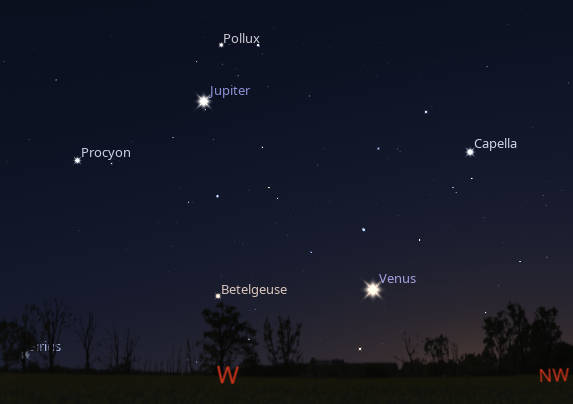
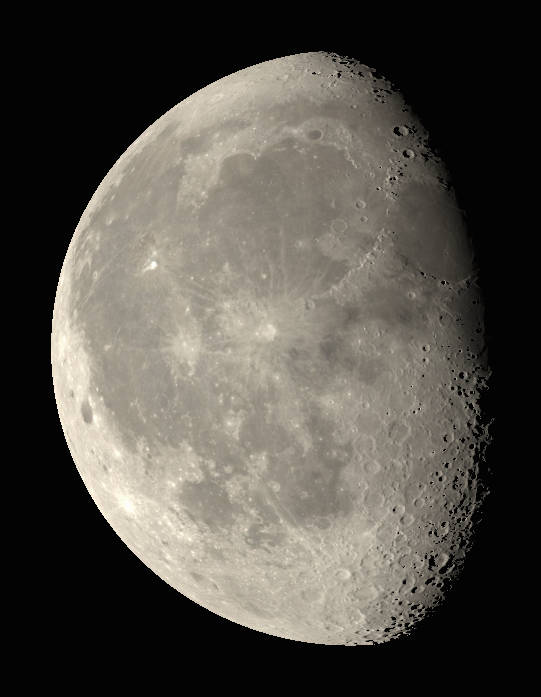
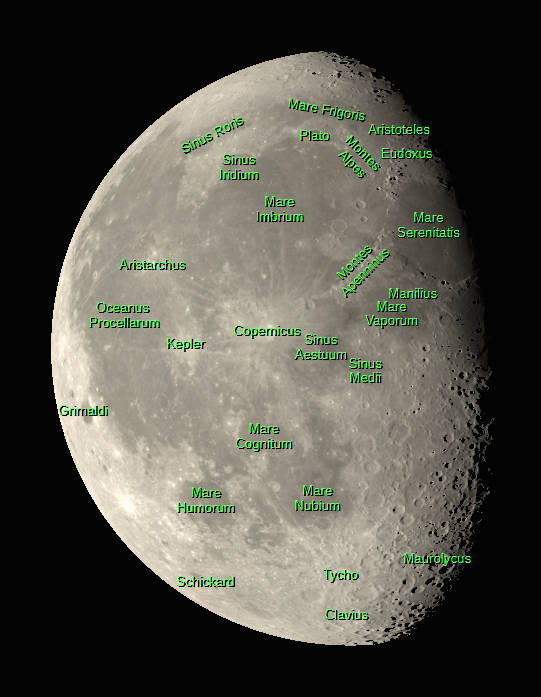
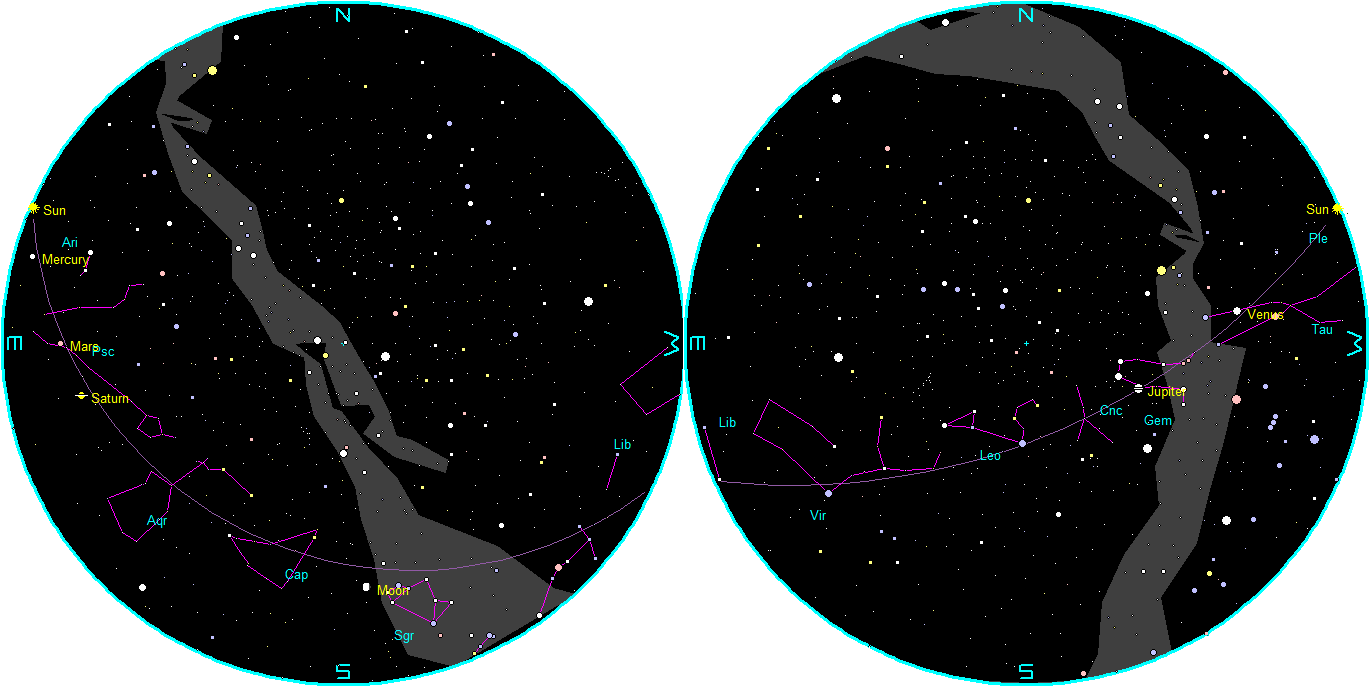
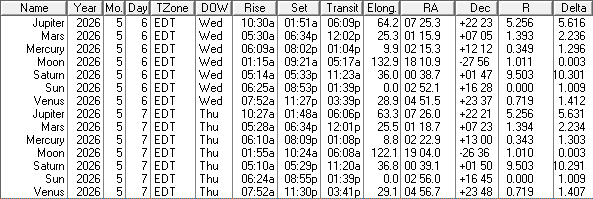
This is Ephemeris for Wednesday, April 29th. Today the Sun will be up for 14 hours and 9 minutes, setting at 8:45, and it will rise tomorrow at 6:34. The Moon, 2 days before full, will set at 5:42 tomorrow morning.
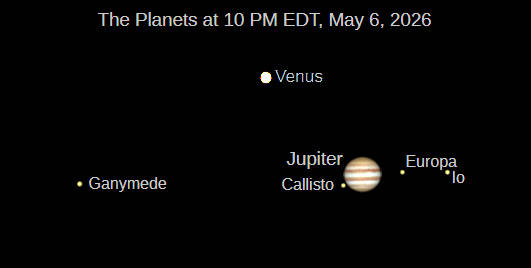
Let’s take our weekly look at the whereabouts of the naked-eye planets. By 9:30 PM tonight or about 45 minutes or so after sunset, Venus may be seen very low in the West. A telescope will show a very tiny disc on Venus, because it is still pretty much beyond the Sun, 136 million miles (217 million kilometers) away from us. Over the next 6 months it will be moving closer to us and becoming much larger. Jupiter is the brilliant star-like object in the western before 10 PM. It is above and left of the brighter Venus. Venus will set at 11:11 PM, while Jupiter will hold out until 2:12 AM. Meanwhile, Mercury, Mars and Saturn are breaking up just west of the Sun, but are still overwhelmed by bright morning twilight.
The astronomical event times given in this blog are for the Traverse City/Interlochen area of Michigan (Lat 44.7° N, Long 85.7° W; EDT, UT – 4 hours) unless stated otherwise. Times will be different for other locations.
Addendum
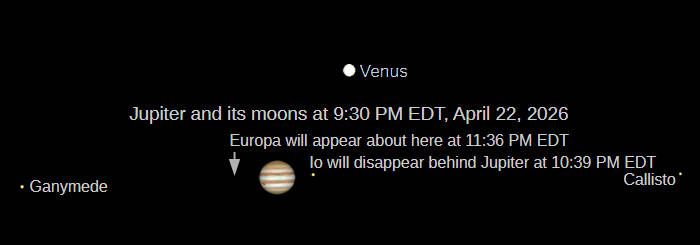
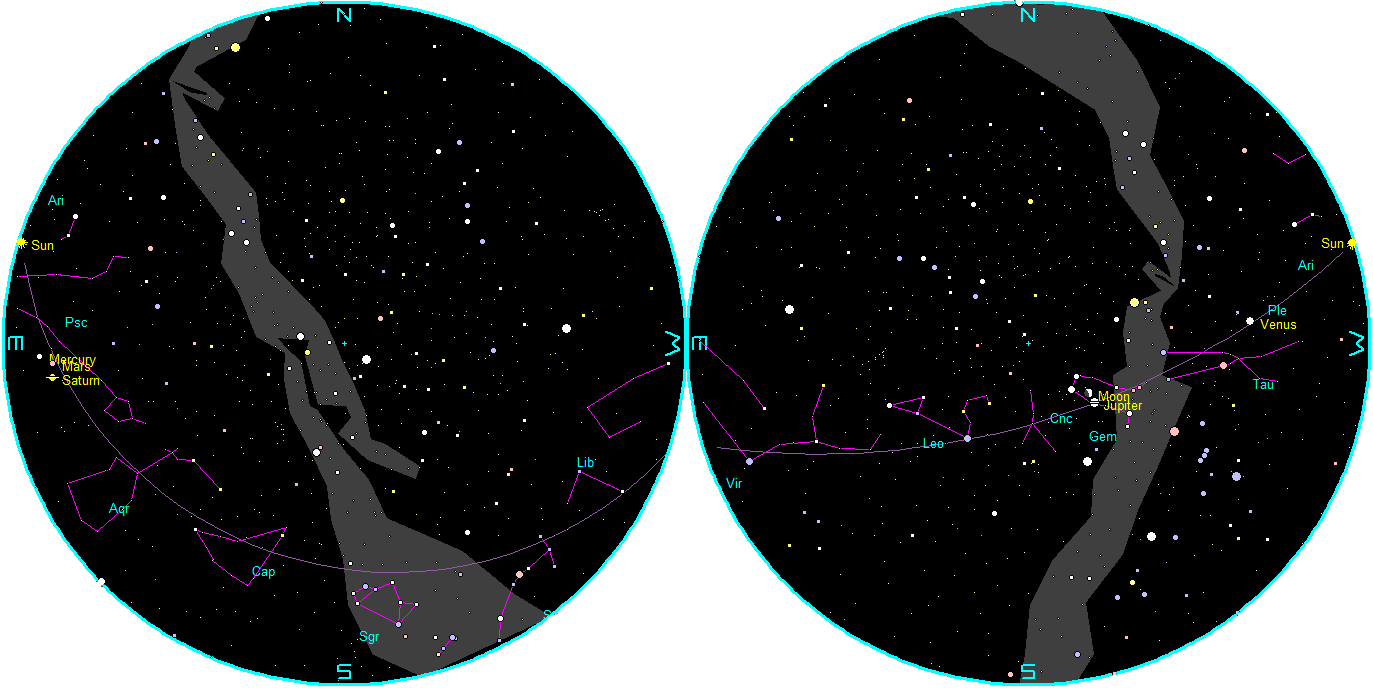
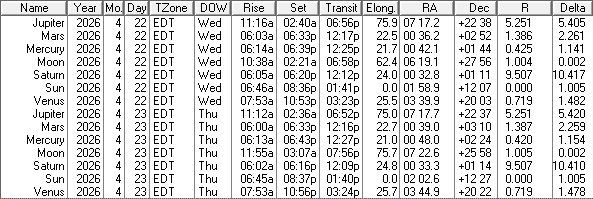
Ephemeris: 04/22/2026 – Taking our weekly look at the whereabouts of the naked-eye planets
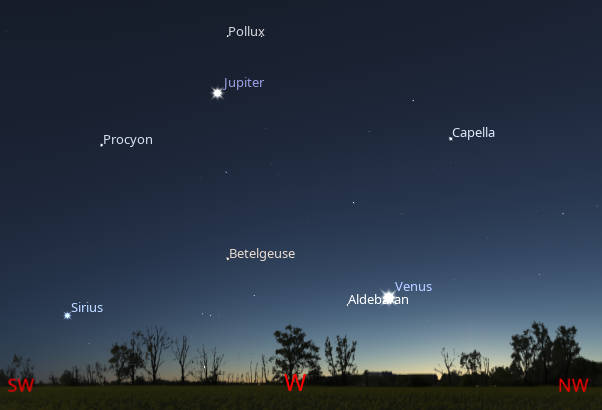
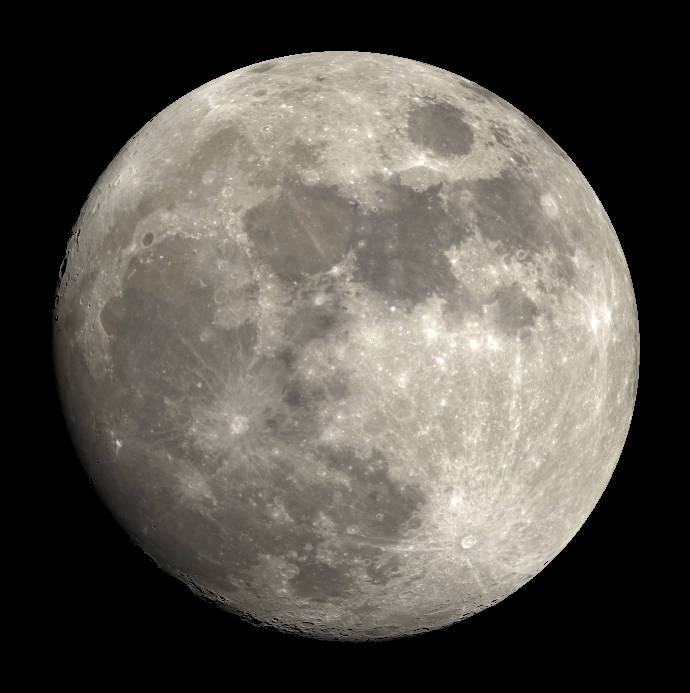
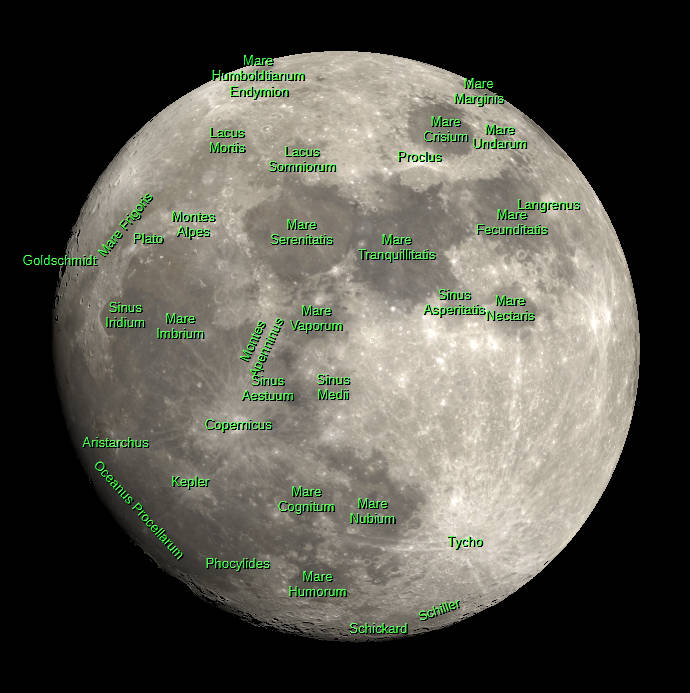
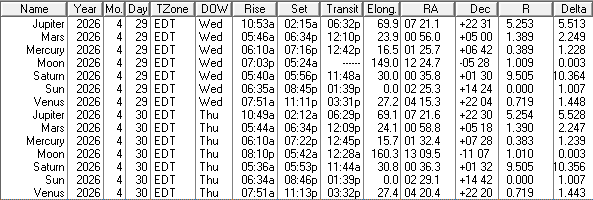
This is Ephemeris for Earth Day, Wednesday, April 22nd. Today the Sun will be up for 13 hours and 50 minutes, setting at 8:36, and it will rise tomorrow at 6:45. The Moon, 1 day before first quarter, will set at 3:07 tomorrow morning.
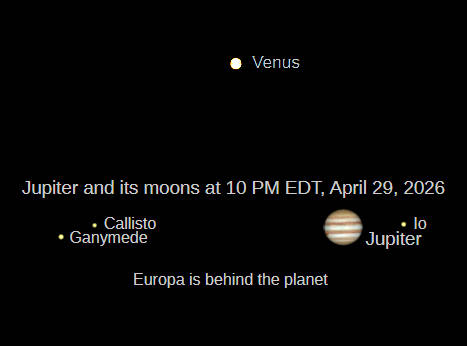
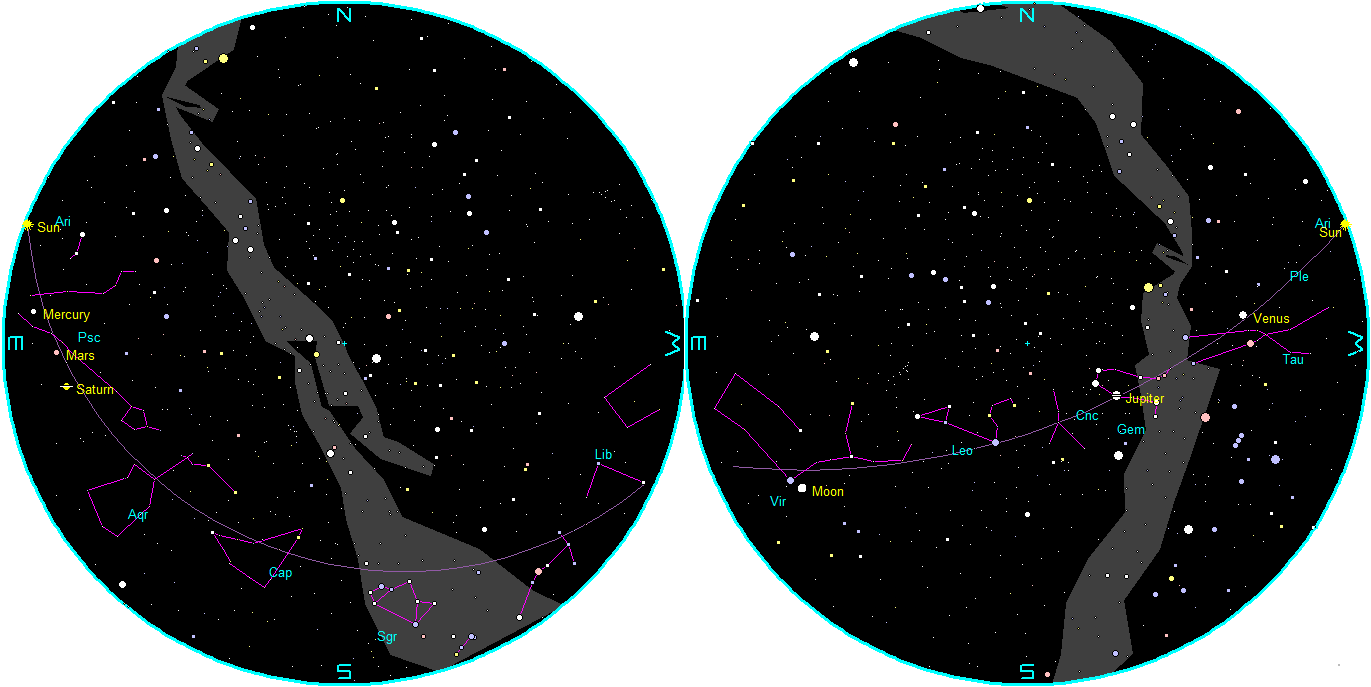
Let’s take our weekly look at the whereabouts of the naked-eye planets. By 9 PM tonight or about 30 minutes or so after sunset, Venus may be seen very low in the West. A telescope will show a very tiny disc on Venus, because it is still pretty much beyond the Sun, 138 million miles (222 million kilometers) away from us. Over the next 6 months it will be moving closer to us and becoming much larger. Jupiter is the brilliant star-like object high in the west-southwestern sky before 10 PM. It will appear just below the crescent Moon tonight. Venus will set at 10:54, while Jupiter will hold out until 2:30 AM. Meanwhile, Mercury, Mars and Saturn are still bunched up just west of the Sun, but are overwhelmed by bright morning twilight.
The astronomical event times given in this blog are for the Traverse City/Interlochen area of Michigan (Lat 44.7° N, Long 85.7° W; EDT, UT – 4 hours) unless stated otherwise. Times will be different for other locations.
Addendum
 Bob Moler's Ephemeris Blog