Archive
Ephemeris: 03/12/2026 – Cancer the crab used to welcome summer
This is Ephemeris for Thursday, March 12th. Today the Sun will be up for 11 hours and 44 minutes, setting at 7:45, and it will rise tomorrow at 7:58. The Moon, 1 day past last quarter, will rise at 5:25 tomorrow morning.
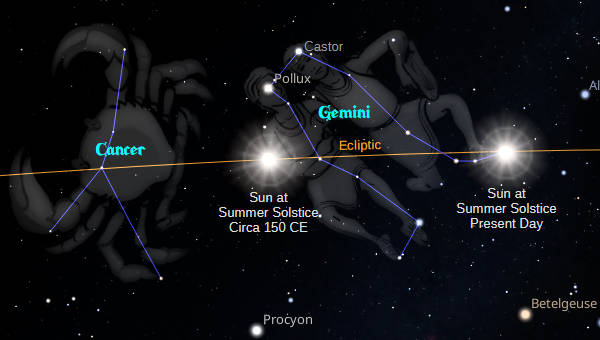
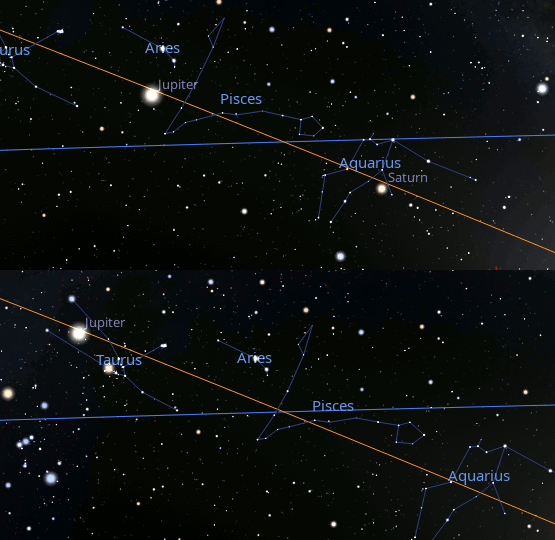
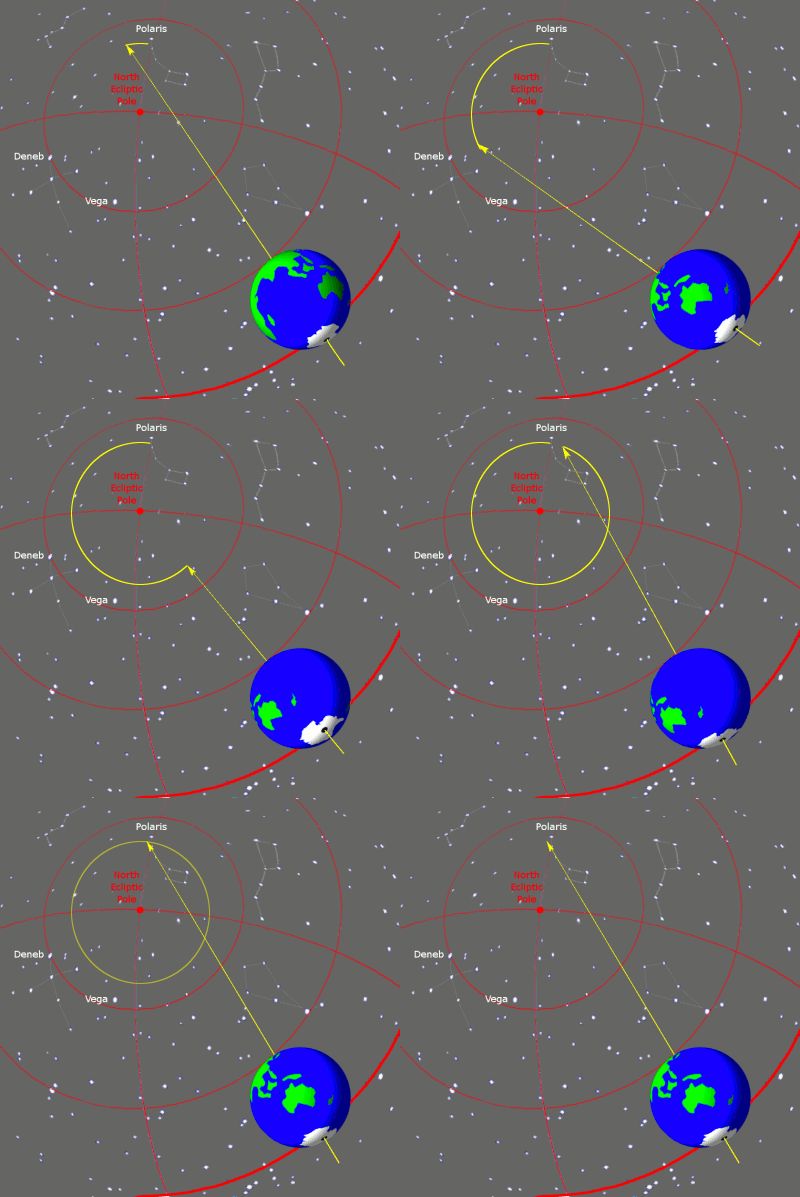
There’s a line on some globes and maps at approximately 23 1/2° north latitude called the Tropic of Cancer. It’s related to the constellation Cancer the crab. However, Cancer no longer fits that role that it was named to a couple of thousand years ago, when the sun entered the constellation of Cancer on the first day of summer. That’s the latitude on the Earth where the Sun was directly overhead on the first day of summer. Now that an honor goes to Gemini. The way we draw the figure of that constellation, the Sun is right near Castor’s big toe on the first day of summer. But I don’t think they’re going to change the name anytime soon. The reason for the change is that the Earth’s axis slowly wobbles like a top or gyroscope as they slow down. The effect is called precession.
The astronomical event times given in this blog are for the Traverse City/Interlochen area of Michigan (Lat 44.7° N, Long 85.7° W; EST, UT – 5 hours) unless stated otherwise. Times will be different for other locations.
Addendum
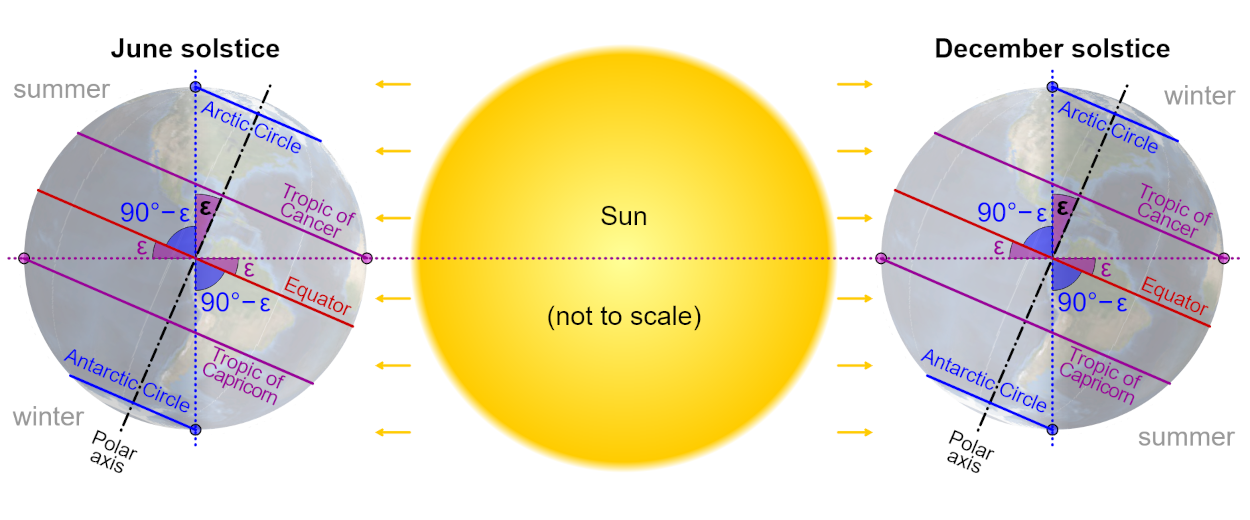
The Greek letter epsilon in the image above represents the tilt of the Earth’s axis of around 23.5°. Astronomers call it the obliquity of the ecliptic, the angle between the ecliptic and the celestial equator as seen in the illustration below.
Ephemeris Extra: 03/06/2026 – GTAS meeting tonight, Dr. Jerry Dobek returns to the dark side.
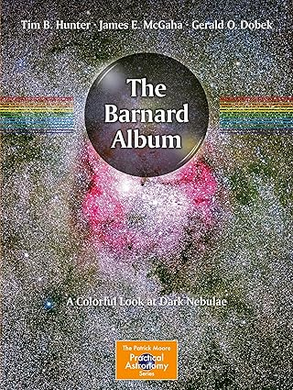
Tonight at 8 p.m. at the meeting of the Grand Traverse Astronomical Society at Northwestern Michigan College’s Rogers Observatory, and on Zoom. Observatory Director Dr. Jerry Dobek will be giving a talk on what he calls dark material. This is from a new book he collaborated on: Barnard Album: A Colorful Look at Dark Nebulae. A new look at the nebulae from E. E. Barnard’s black and white photographic plates with modern color digital photography, including objects that were captured but not cataloged. Dark nebulae are clouds of gas and dust seen in the summer Milky Way. After the meeting, at 9 PM, if it’s clear there will be viewing of the skies. The observatory is located south of Traverse City on Birmley Road between Garfield and Keystone roads. Zoom instructions will be at gtastro.org.
Ephemeris: 10/17/2025 – Fomalhaut, lonely again
This is Ephemeris for Friday, October 17th. Today the Sun will be up for 10 hours and 52 minutes, setting at 6:54, and it will rise tomorrow at 8:02. The Moon, halfway from last quarter to new, will rise at 5:04 tomorrow morning.
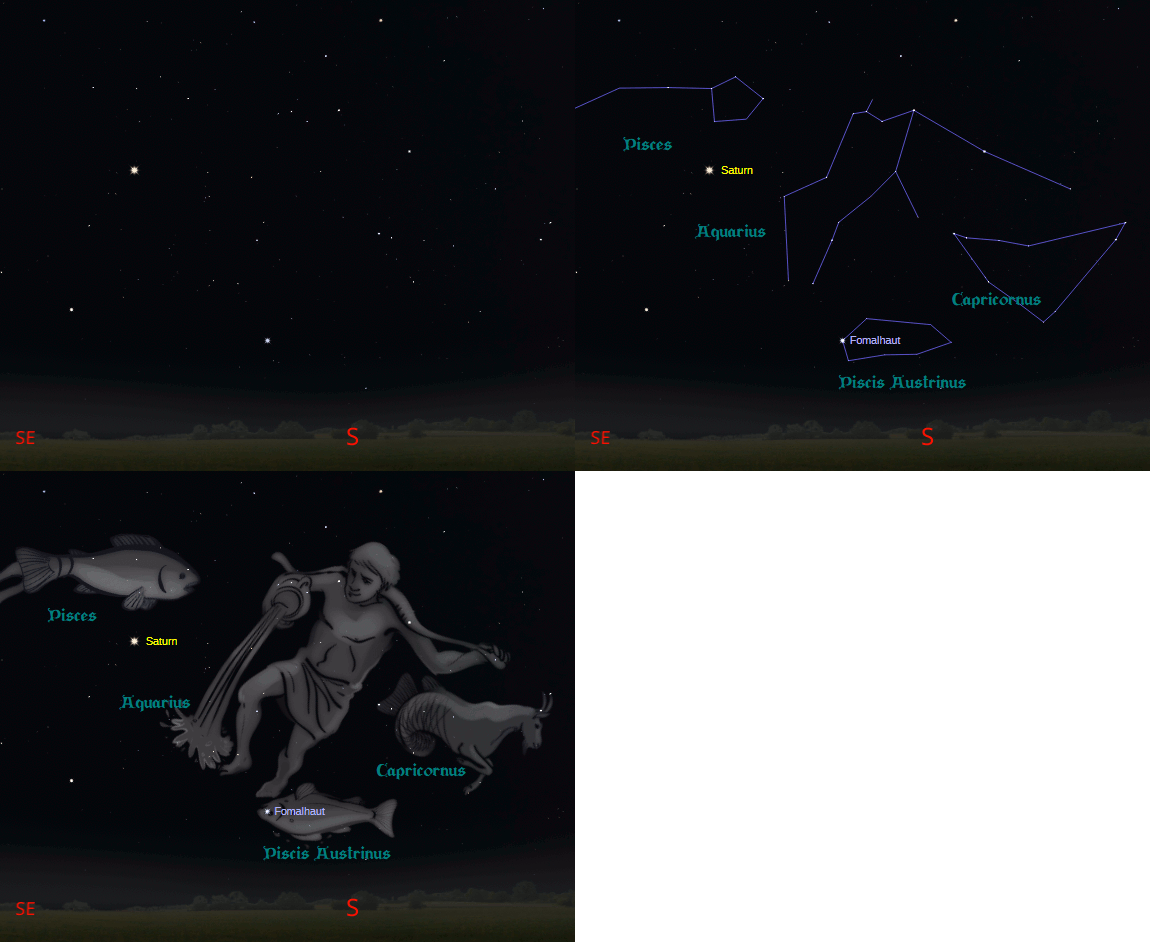
There’s a bright star that appears for only seven and a half hours on autumn evenings. Its appearance, low in the south in the evening, is a clear indication of autumn. It is currently below and right of the much brighter Saturn. The star’s name is Fomalhaut, which means fish’s mouth. That’s fitting because it’s in the constellation of Piscis Austrinus, the southern fish. At our latitude it’s kind of the fish that got away, because Fomalhaut is low in our skies where stars lose more than half their brightness. For the last few years Jupiter, then Saturn have kept it company. However, Saturn is moving on, having shifted into Pisces, leaving Fomalhaut to its lonely vigil in the south.
The astronomical event times given in this blog are for the Traverse City/Interlochen area of Michigan (Lat 44.7° N, Long 85.7° W; EDT, UT – 4 hours) unless stated otherwise. Times will be different for other locations.
Addendum
Ephemeris: 08/22/2025 – Star Party tomorrow night the 23rd
This is Ephemeris for Friday, August 22nd. Today the Sun will be up for 13 hours and 42 minutes, setting at 8:36, and it will rise tomorrow at 6:55. The Moon, 1 day before new, will rise at 7:10 tomorrow morning.
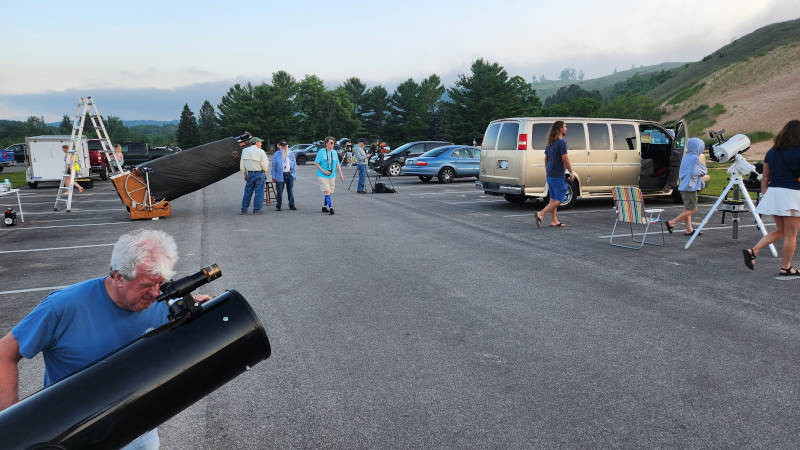
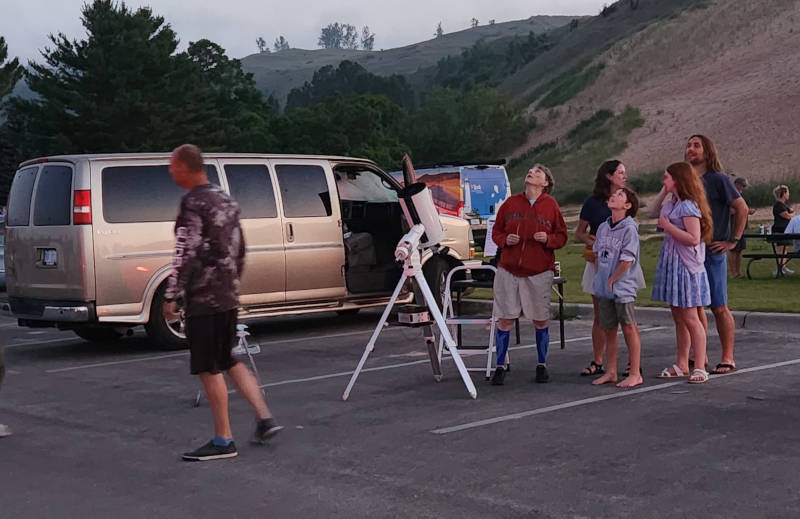
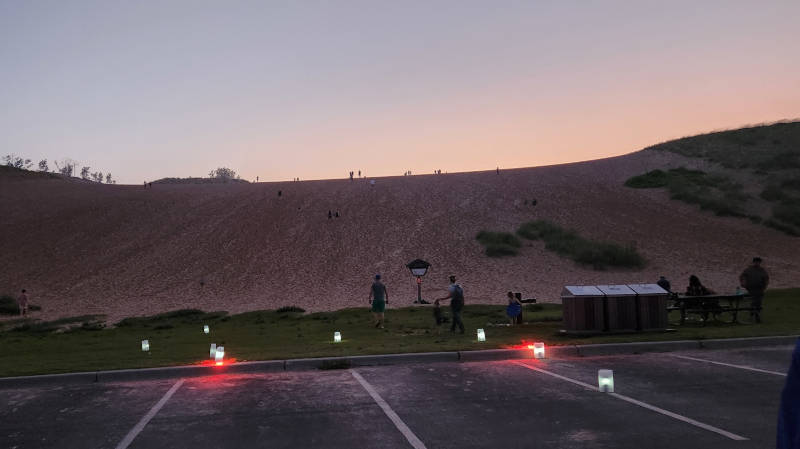
Weather permitting, the Grand Traverse Astronomical Society and the Park Rangers will host a star party at Sleeping Bear Dunes National Lakeshore, at the Dune Climb tomorrow night, starting around 9 PM. The parking lane closest to the dune will be blocked off for telescopes. The start time is after sunset, and the brighter stars will be visible by 9:15. As it gets darker some of the brighter interstellar wonders of our Milky Way galaxy, will appear, with many star clusters and nebulae, including a peek at the Great Andromeda Galaxy next door. The Rangers will leave around 11 PM however if it stays clear and there’s enough interest, society members with their telescopes will stay longer. This is the last Sleeping Bear Dunes star party this year.
The astronomical event times given in this blog are for the Traverse City/Interlochen area of Michigan (Lat 44.7° N, Long 85.7° W; EDT, UT – 4 hours) unless stated otherwise. Times will be different for other locations.
Addendum
Ephemeris: 07/16/2025 – Our weekly look at the whereabouts of the naked-eye planets
This is Ephemeris for Wednesday, July 16th. Today the Sun will be up for 15 hours and 11 minutes, setting at 9:24, and it will rise tomorrow at 6:13. The Moon, 1 day before last quarter, will rise at 12:20 tomorrow morning.
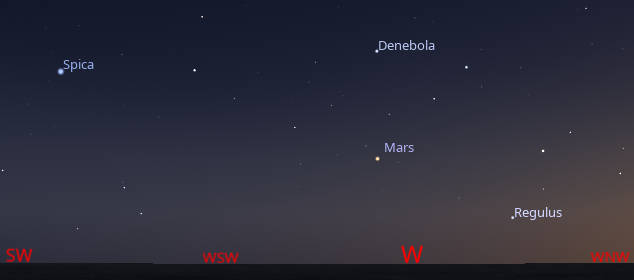
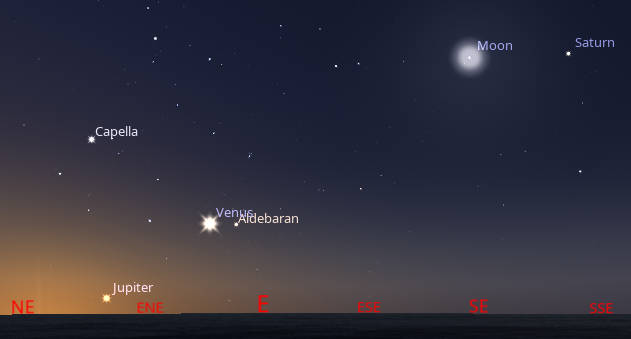
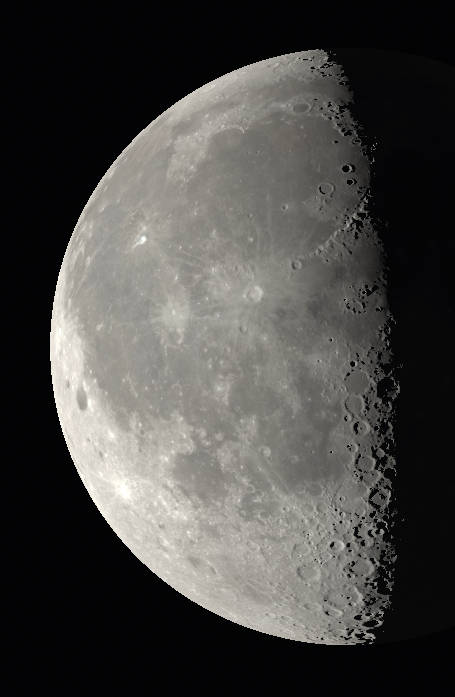
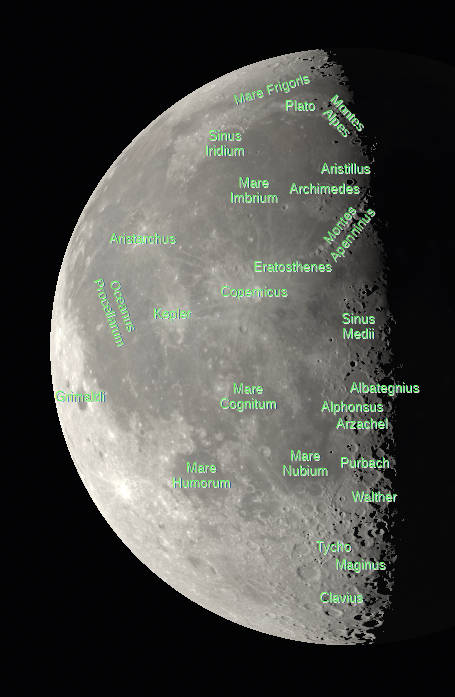
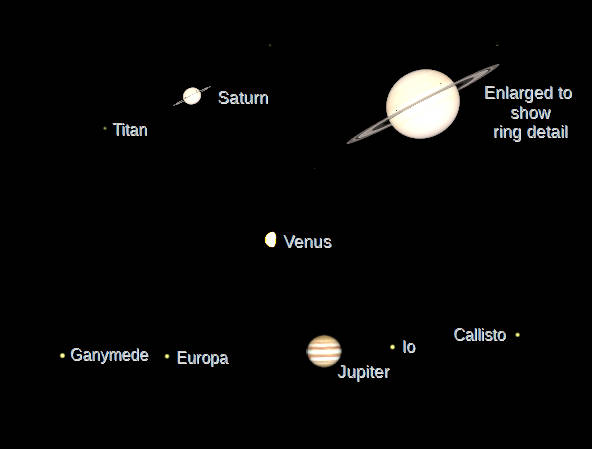
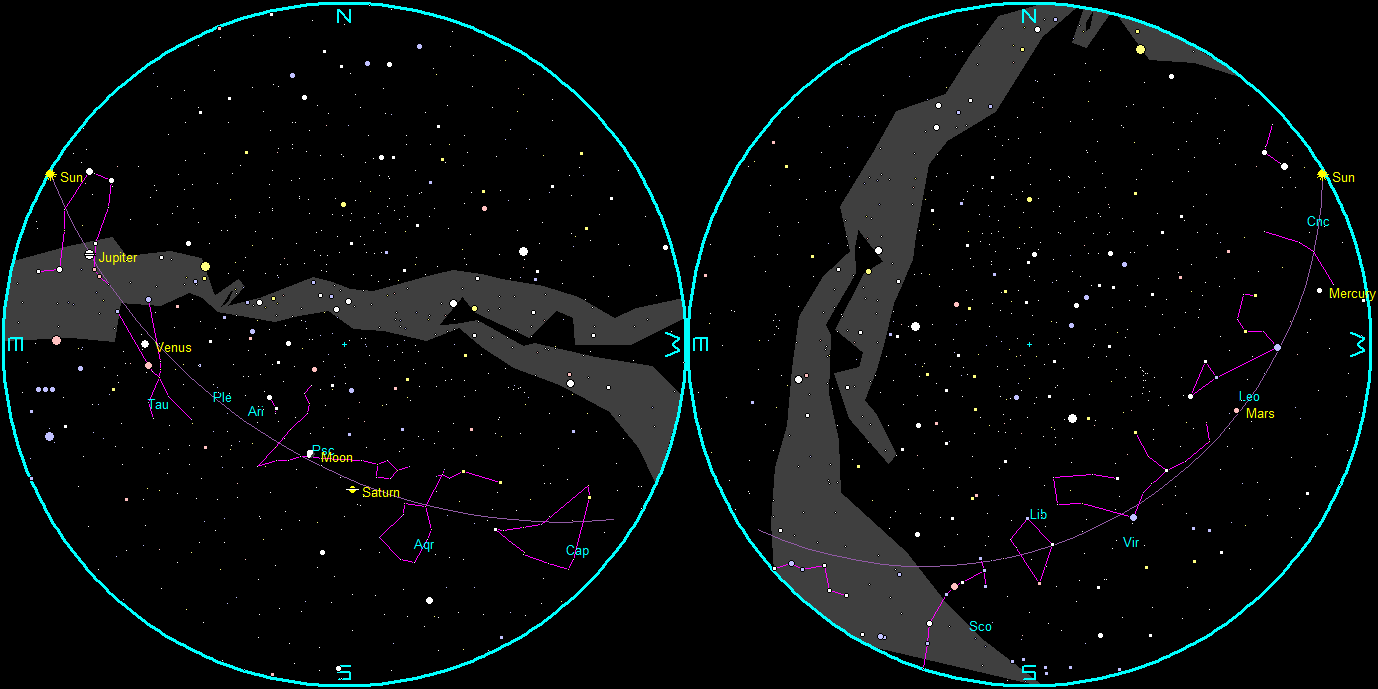
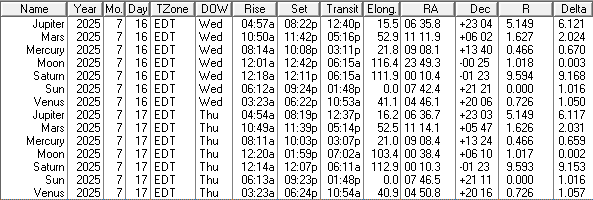
Let’s take our weekly look at the whereabouts of the naked-eye planets. The Red Planet Mars, will be seen to the upper left of the bright star Regulus in the constellation Leo the lion. Both are seen low in the western sky by 10:30 PM at least. Mars is moving away from Regulus, close to the horizon in the west-northwest toward Spica, higher in the southwest. Mars moves much faster against the background stars than the more distant Jupiter and Saturn. Jupiter is in the morning sky now very low in the east-northeast by 5:15 AM. Venus will rise at 3:23 AM in the east-northeast, and by 5 AM will be seen in the east, as the Morning Star. By then Saturn will be in the south-southeast, and below the last quarter Moon tomorrow morning.
The astronomical event times given in this blog are for the Traverse City/Interlochen area of Michigan (Lat 44.7° N, Long 85.7° W; EDT, UT – 4 hours) unless stated otherwise. Times will be different for other locations.
Addendum
Ephemeris: 07/02/2025 – Taking our weekly look at the naked-eye planets
This is Ephemeris for Wednesday, July 2nd. Today the Sun will be up for 15 hours and 29 minutes, setting at 9:31, and it will rise tomorrow at 6:02. The Moon, at first quarter today, will set at 1:18 tomorrow morning.
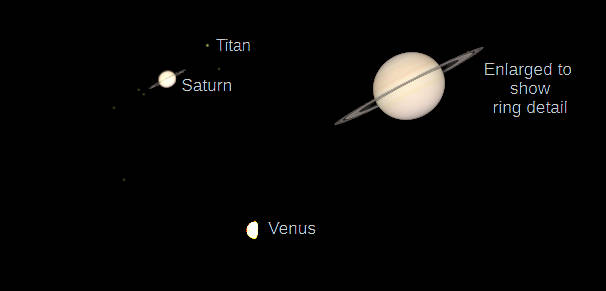
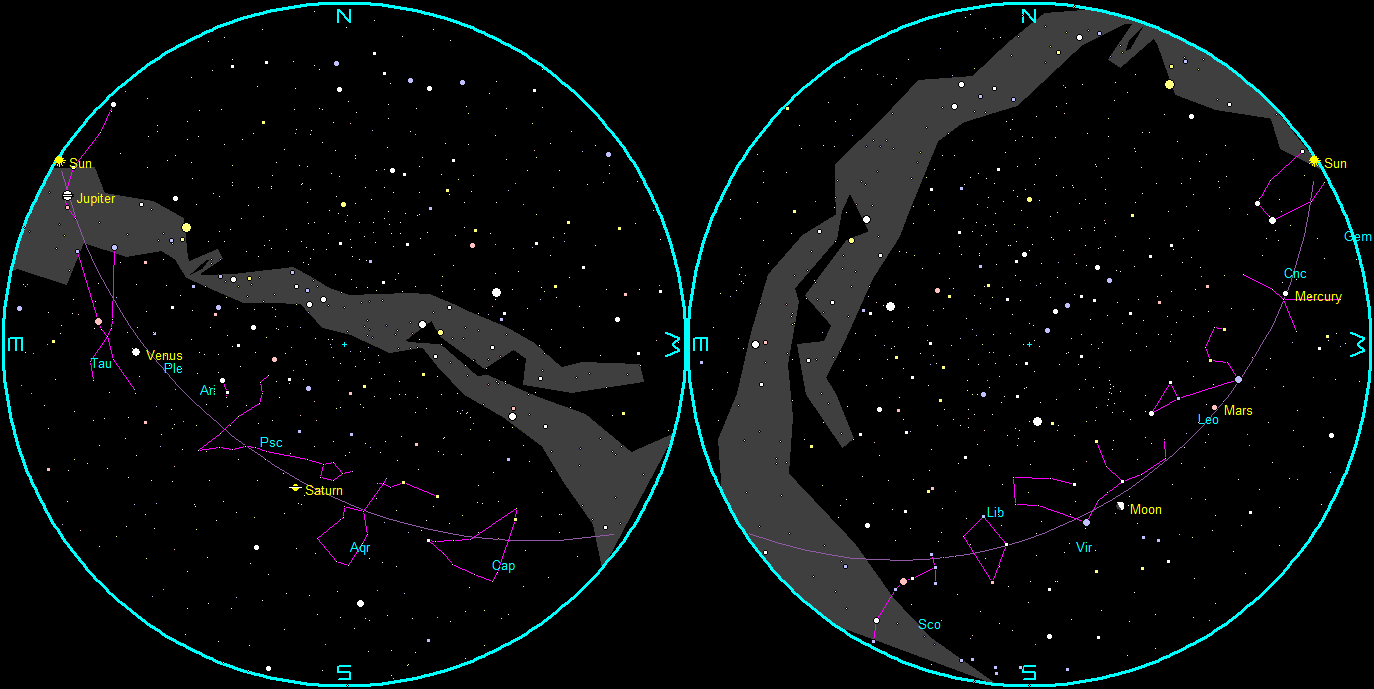
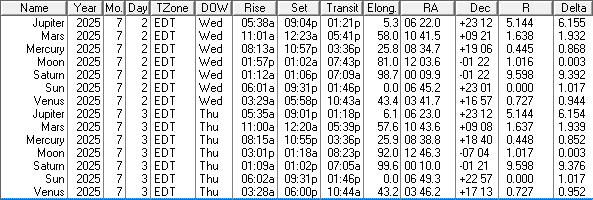
Let’s take our weekly look at the whereabouts of the naked-eye planets. The Red Planet Mars, will be seen to the upper left of the bright star Regulus in the constellation Leo the lion. Both are seen in the western sky by 10:30 PM at least. At that time Mercury might be spotted low on the west-northwestern Lake Michigan horizon. This is not a favorable appearance of Mercury. Jupiter passed conjunction with the Sun last week, but it will be nearly a month before it will appear in our morning sky. Venus will rise at 3:28 AM in the east northeast, and by 5 AM will be seen low in the east, as the Morning Star. By then Saturn will be in the southeast, having risen nearly 2½ hours earlier.
The astronomical event times given in this blog are for the Traverse City/Interlochen area of Michigan (Lat 44.7° N, Long 85.7° W; EDT, UT – 4 hours) unless stated otherwise. Times will be different for other locations.
Addendum
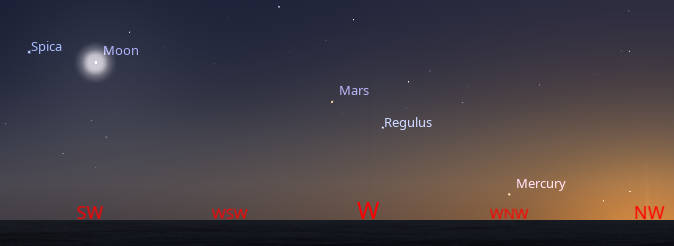
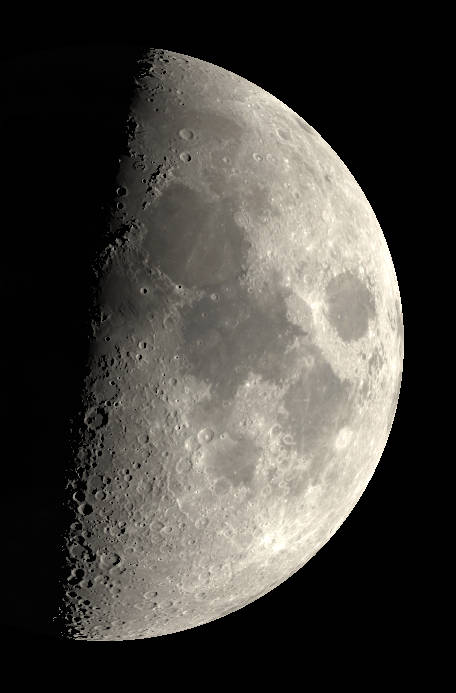
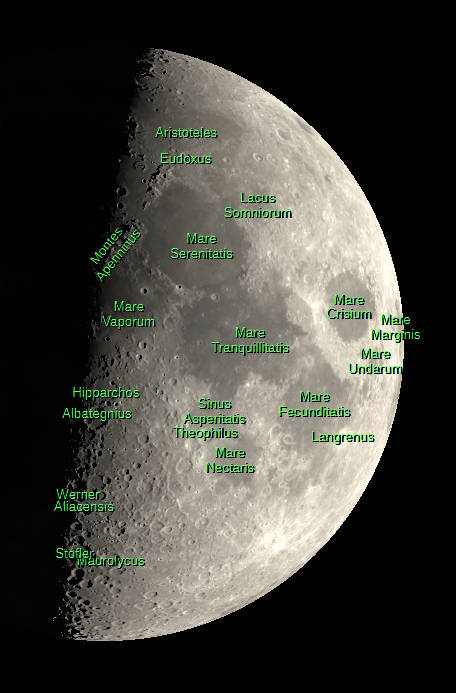
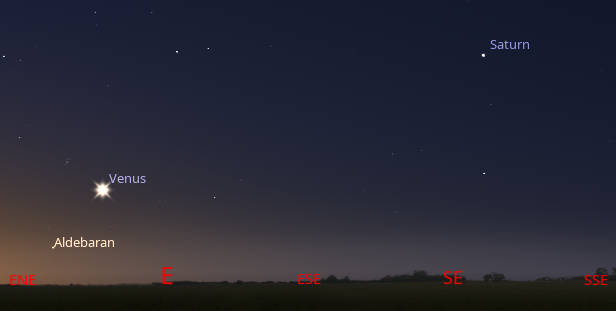
Ephemeris: 05/01/2025 – Previewing May Skies
This is Ephemeris for Thursday, May 1st. Today the Sun will be up for 14 hours and 15 minutes, setting at 8:48, and it will rise tomorrow at 6:30. The Moon, 3 days before first quarter, will set at 2:05 tomorrow morning.
May is here, when the promise made on Groundhog Day is finally fulfilled. Daylight hours in the Interlochen/Traverse City area will increase from 14 hours and 15 minutes today to 15 hours 20 minutes on the 31st. The altitude, or angle, of the Sun above the southern horizon at local noon will ascend from 61 degrees now to 67 degrees at month’s end. The altitude of the Sun in the Straits area will be a degree lower than that, but your daylight hours will be a few minutes longer. Local apparent noon this month, when the Sun passes due south, will be about 1:38 p.m. This is the month of the Eta Aquariid meteor shower which will reach its peak next week Tuesday morning. There will be less than an hour of prime viewing after the Moon sets at 4:03 AM.
The astronomical event times given in this blog are for the Traverse City/Interlochen area of Michigan (Lat 44.7° N, Long 85.7° W; EDT, UT – 4 hours) unless stated otherwise. Times will be different for other locations.
Addendum
May Evening Star Chart
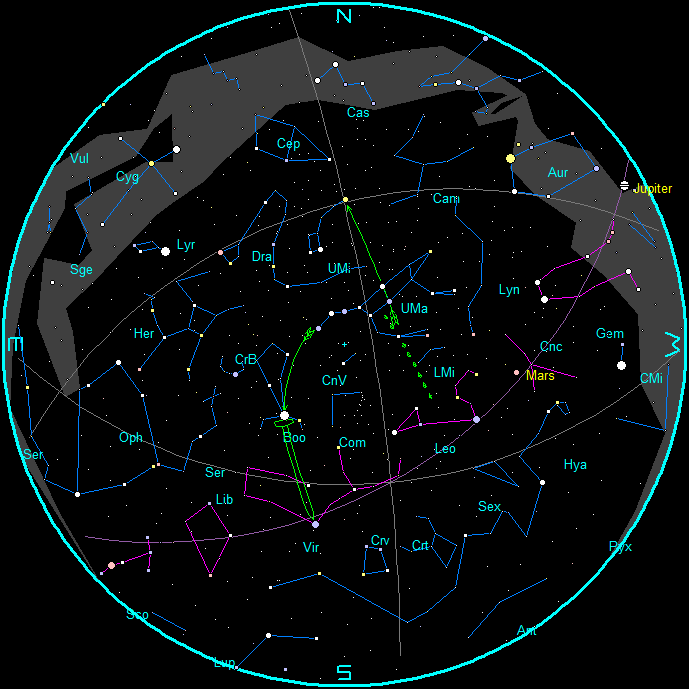
The planets and stars are plotted for the 15th at 11 p.m. EDT in the evening and 4 a.m. on the 16th for the morning chart. These are the chart times. Note that Traverse City is located approximately 45 minutes behind our time meridian, West 75° longitude. (An hour 45 minutes behind our daylight saving time meridian during EDT). To duplicate the star positions on a planisphere you may have to set it to 1 hour 45 minutes earlier than the current time.
Note, the chart times of 11 p.m. and 4 a.m. are for the night of the15/16th. For each week before then add ½ hour (28 minutes if you’re picky). For each week after then, subtract ½ hour or 28 minutes. The planet positions are updated each Wednesday on this blog. For planet positions on dates other than the 15th, check the Wednesday planet posts on this blog for their weekly locations.
May Morning Star Chart
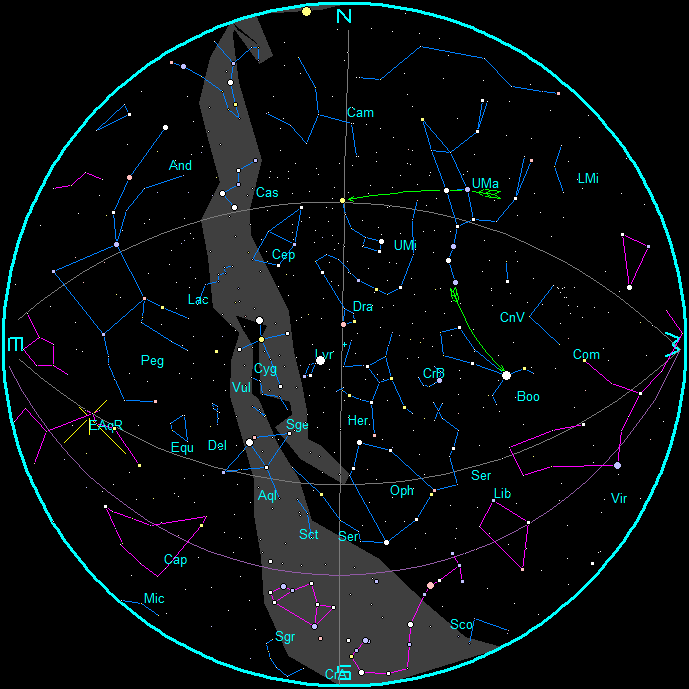
For a list of constellation names to go with the abbreviations, click here.
- Pointer stars at the front of the bowl of the Big Dipper point to Polaris, the North Star.
- Leaky dipper drips on Leo
- Follow the arc of the handle of the Big Dipper to the star Arcturus, and
- Extend like a spike to Spica,
- EaqR is the radiant of the Eta Aquariid meteor shower that peaks on the 5th.
Twilight Limits, Nautical and Astronomical
| EDT | |||||||
| Morning | Twilight | Evening | Twilight | Dark | Night | Moon | |
| Date | Astro. | Nautical | Nautical | Astro. | Start | End | Illum. |
| 2025-05-01 | 4h36m | 5h21m | 22h02m | 22h47m | 1h09m | 4h36m | 0.26 |
| 2025-05-02 | 4h34m | 5h19m | 22h04m | 22h49m | 2h06m | 4h34m | 0.36 |
| 2025-05-03 | 4h32m | 5h17m | 22h06m | 22h51m | 2h48m | 4h32m | 0.46 |
| 2025-05-04 | 4h30m | 5h16m | 22h07m | 22h53m | 3h19m | 4h30m | 0.57 |
| 2025-05-05 | 4h28m | 5h14m | 22h09m | 22h55m | 3h44m | 4h28m | 0.66 |
| 2025-05-06 | 4h26m | 5h12m | 22h10m | 22h57m | 4h03m | 4h26m | 0.75 |
| 2025-05-07 | 4h24m | 5h11m | 22h12m | 22h59m | 4h20m | 4h24m | 0.83 |
| 2025-05-08 | 4h22m | 5h09m | 22h13m | 23h01m | – | – | 0.89 |
| 2025-05-09 | 4h19m | 5h07m | 22h15m | 23h03m | – | – | 0.94 |
| 2025-05-10 | 4h17m | 5h06m | 22h16m | 23h05m | – | – | 0.98 |
| 2025-05-11 | 4h15m | 5h04m | 22h18m | 23h07m | – | – | 1.00 |
| 2025-05-12 | 4h13m | 5h02m | 22h20m | 23h09m | – | – | 1.00 |
| 2025-05-13 | 4h11m | 5h01m | 22h21m | 23h11m | – | – | 0.98 |
| 2025-05-14 | 4h09m | 4h59m | 22h23m | 23h13m | 23h13m | 23h42m | 0.94 |
| 2025-05-15 | 4h07m | 4h58m | 22h24m | 23h15m | 23h15m | – | 0.89 |
| 2025-05-16 | 4h05m | 4h56m | 22h26m | 23h17m | 23h17m | 0h36m | 0.82 |
| 2025-05-17 | 4h04m | 4h55m | 22h27m | 23h19m | 23h19m | 1h21m | 0.74 |
| 2025-05-18 | 4h02m | 4h54m | 22h29m | 23h21m | 23h21m | 1h58m | 0.64 |
| 2025-05-19 | 4h00m | 4h52m | 22h30m | 23h22m | 23h22m | 2h27m | 0.53 |
| 2025-05-20 | 3h58m | 4h51m | 22h31m | 23h24m | 23h24m | 2h51m | 0.42 |
| 2025-05-21 | 3h56m | 4h50m | 22h33m | 23h26m | 23h26m | 3h12m | 0.31 |
| 2025-05-22 | 3h54m | 4h48m | 22h34m | 23h28m | 23h28m | 3h32m | 0.21 |
| 2025-05-23 | 3h53m | 4h47m | 22h36m | 23h30m | 23h30m | 3h52m | 0.12 |
| 2025-05-24 | 3h51m | 4h46m | 22h37m | 23h32m | 23h32m | 3h51m | 0.05 |
| 2025-05-25 | 3h49m | 4h45m | 22h38m | 23h34m | 23h34m | 3h49m | 0.01 |
| 2025-05-26 | 3h48m | 4h44m | 22h40m | 23h36m | 23h36m | 3h48m | 0.00 |
| 2025-05-27 | 3h46m | 4h43m | 22h41m | 23h37m | 23h37m | 3h46m | 0.02 |
| 2025-05-28 | 3h45m | 4h42m | 22h42m | 23h39m | 23h51m | 3h45m | 0.06 |
| 2025-05-29 | 3h43m | 4h41m | 22h43m | 23h41m | – | 3h43m | 0.13 |
| 2025-05-30 | 3h42m | 4h40m | 22h45m | 23h43m | 0h41m | 3h42m | 0.21 |
| 2025-05-31 | 3h41m | 4h39m | 22h46m | 23h44m | 1h18m | 3h41m | 0.31 |
The twilight calendar was generated using Cartes du Ciel (Sky Charts), with some corrections.
See my blog post: Twilight Zone for the definitions of the different periods of twilight here: https://bobmoler.wordpress.com/2018/09/27/.
NASA Calendar of Planetary Events
   Date       Time    Event
May  1  Th            Venus: 40.9° W
     1  Th   2:35 AM  Moon North Dec.: 28.6° N
     2  Fr   8:02 PM  Moon-Pollux: 2.2° N
     3  Sa   7:12 PM  Moon-Mars: 2.2° S
     3  Sa   7:27 PM  Moon-Beehive: 2.6° S
     4  Su   7:59 AM  Mars-Beehive: 0.4° N
     4  Su   9:52 AM  First Quarter
     4  Su  10:07 PM  Eta Aquariid Shower: ZHR = 60
     5  Mo   1:58 PM  Moon-Regulus: 2.2° S
     7  We   7:44 PM  Moon Descending Node
    10  Sa   3:43 AM  Moon-Spica: 0.4° N
    10  Sa   8:49 PM  Moon Apogee: 406200 km
    12  Mo  12:56 PM  Full Moon
    14  We  12:10 AM  Moon-Antares: 0.3° N
    15  Th   2:44 PM  Moon South Dec.: 28.5° S
    17  Sa   8:55 PM  Uranus Conjunction
    20  Tu   7:59 AM  Last Quarter
    22  Th   4:05 AM  Moon Ascending Node
    22  Th   1:51 PM  Moon-Saturn: 2.8° S
    23  Fr   7:52 PM  Moon-Venus: 4° S
    25  Su   9:37 PM  Moon Perigee: 359000 km
    26  Mo  11:02 PM  New Moon
    28  We  12:16 PM  Moon North Dec.: 28.4° N
    30  Fr  12:07 AM  Mercury Superior Conjunction
    30  Fr   5:13 AM  Moon-Pollux: 2.4° N
    31  Sa   4:00 AM  Moon-Beehive: 2.3° S
    31  Sa   9:59 PM  Venus Elongation: 45.9° W
Jun  1  Su            Venus: 45.9° W
Sky Events Calendar by Fred Espenak and Sumit Dutta (NASA’s GSFC),
http://eclipse.gsfc.nasa.gov/SKYCAL/SKYCAL.html.
Sun and Moon Rising and Setting Events
LU              Ephemeris of Sky Events for Interlochen/TC
May, 2025    Local time zone: EDT
+-----------------------------------------------------------------------+
| DATE |  SUN     SUN  DAYLIGHT|   TWILIGHT*    |MOON  RISE OR    ILLUM |
|      |  RISE    SET    HOURS |  END    START  |PHASE SET** TIME FRACTN|
+=======================================================================+
|Thu  1| 06:32a  08:48p  14:15 | 10:00p  05:20a |      Set  02:05a   24%|
|Fri  2| 06:30a  08:49p  14:18 | 10:02p  05:18a |      Set  02:47a   34%|
|Sat  3| 06:29a  08:50p  14:21 | 10:03p  05:16a |      Set  03:19a   44%|
+------+-----------------------+----------------+-----------------------+
|Sun  4| 06:28a  08:51p  14:23 | 10:05p  05:14a |F Qtr Set  03:43a   54%|
|Mon  5| 06:26a  08:53p  14:26 | 10:06p  05:13a |      Set  04:03a   64%|
|Tue  6| 06:25a  08:54p  14:28 | 10:08p  05:11a |      Set  04:20a   73%|
|Wed  7| 06:23a  08:55p  14:31 | 10:10p  05:09a |      Set  04:36a   81%|
|Thu  8| 06:22a  08:56p  14:33 | 10:11p  05:08a |      Set  04:51a   88%|
|Fri  9| 06:21a  08:57p  14:36 | 10:13p  05:06a |      Set  05:08a   94%|
|Sat 10| 06:20a  08:59p  14:38 | 10:14p  05:04a |      Set  05:27a   97%|
+------+-----------------------+----------------+-----------------------+
|Sun 11| 06:18a  09:00p  14:41 | 10:16p  05:03a |      Set  05:50a   99%|
|Mon 12| 06:17a  09:01p  14:43 | 10:17p  05:01a |Full  Rise 09:34p  100%|
|Tue 13| 06:16a  09:02p  14:45 | 10:19p  05:00a |      Rise 10:39p   98%|
|Wed 14| 06:15a  09:03p  14:48 | 10:20p  04:58a |      Rise 11:41p   95%|
|Thu 15| 06:14a  09:04p  14:50 | 10:22p  04:57a |      Rise 12:36a   90%|
|Fri 16| 06:13a  09:05p  14:52 | 10:23p  04:55a |      Rise 01:21a   83%|
|Sat 17| 06:12a  09:06p  14:54 | 10:25p  04:54a |      Rise 01:57a   75%|
+------+-----------------------+----------------+-----------------------+
|Sun 18| 06:11a  09:08p  14:57 | 10:26p  04:52a |      Rise 02:27a   66%|
|Mon 19| 06:10a  09:09p  14:59 | 10:28p  04:51a |      Rise 02:51a   55%|
|Tue 20| 06:09a  09:10p  15:01 | 10:29p  04:50a |L Qtr Rise 03:12a   45%|
|Wed 21| 06:08a  09:11p  15:03 | 10:31p  04:48a |      Rise 03:32a   34%|
|Thu 22| 06:07a  09:12p  15:05 | 10:32p  04:47a |      Rise 03:51a   23%|
|Fri 23| 06:06a  09:13p  15:06 | 10:33p  04:46a |      Rise 04:13a   14%|
|Sat 24| 06:05a  09:14p  15:08 | 10:35p  04:45a |      Rise 04:39a    7%|
+------+-----------------------+----------------+-----------------------+
|Sun 25| 06:04a  09:15p  15:10 | 10:36p  04:44a |      Rise 05:12a    2%|
|Mon 26| 06:04a  09:16p  15:12 | 10:37p  04:42a |New   Set  09:25p    0%|
|Tue 27| 06:03a  09:17p  15:13 | 10:39p  04:41a |      Set  10:44p    1%|
|Wed 28| 06:02a  09:18p  15:15 | 10:40p  04:40a |      Set  11:50p    5%|
|Thu 29| 06:01a  09:19p  15:17 | 10:41p  04:39a |      Set  12:40a   11%|
|Fri 30| 06:01a  09:19p  15:18 | 10:42p  04:38a |      Set  01:17a   19%|
|Sat 31| 06:00a  09:20p  15:20 | 10:43p  04:37a |      Set  01:45a   29%|
+-----------------------------------------------------------------------+
* Nautical Twilight
** Moonrise or moonset, whichever occurs between sunset and sunrise
Created using my LookingUp for DOS app.
Ephemeris: 04/22/2025 – Earth Day
This is Ephemeris for Earth Day, Tuesday, April 22nd. Today the Sun will be up for 13 hours and 50 minutes, setting at 8:37, and it will rise tomorrow at 6:44. The Moon, 2 days past last quarter, will rise at 4:48 tomorrow morning.
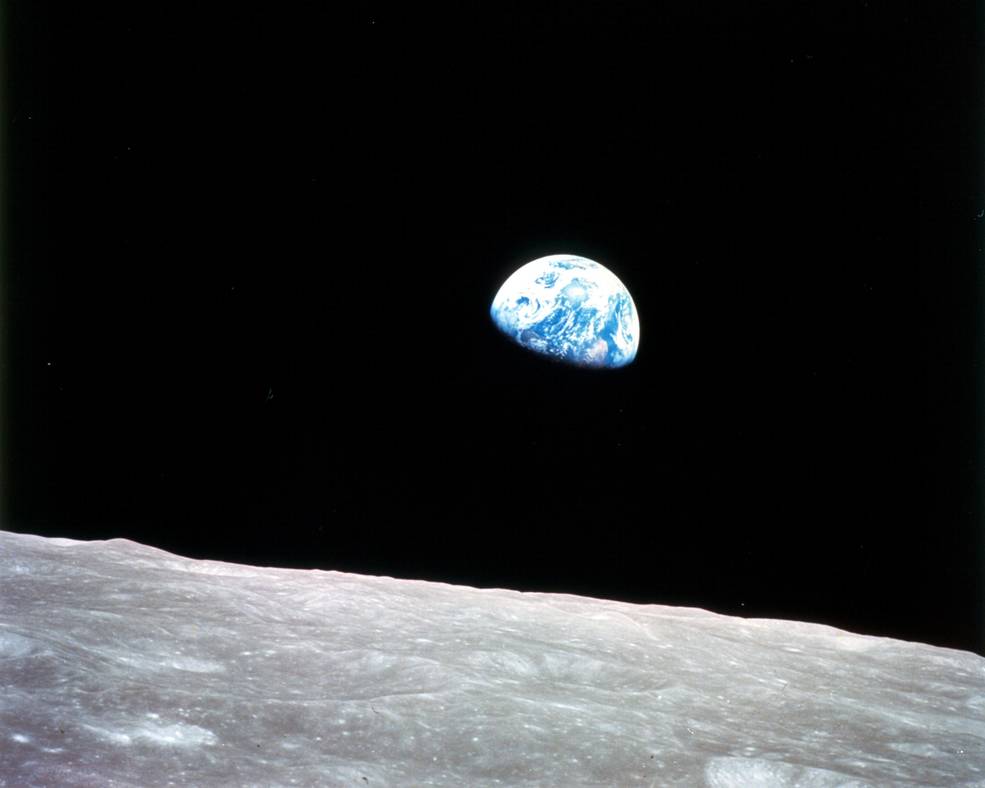
Earth Day was established in 1970, 2 years after William Anders in Apollo 8 took a picture of the Earth rising over the desolate moon, the Earth, a blue white oasis, in a hostile universe. I say support your local planet, there is no Planet B in case you messed this one up. Elon Musk wants to make the human race multi-planetary, which is a fine idea over time. It may take over a century to make any kind of Mars Base self-sustaining, if ever. I can’t see how we can terraform Mars, that is make Mars earth-like, because of lack of material. Mars was more earth-like in its first billion years, but it has no magnetic field. Any large atmosphere it had when it had oceans has long been stripped away by the solar wind.
The astronomical event times given are for the Traverse City/Interlochen area of Michigan (EDT, UT – 4 hours). Times will be different for other locations.
Addendum
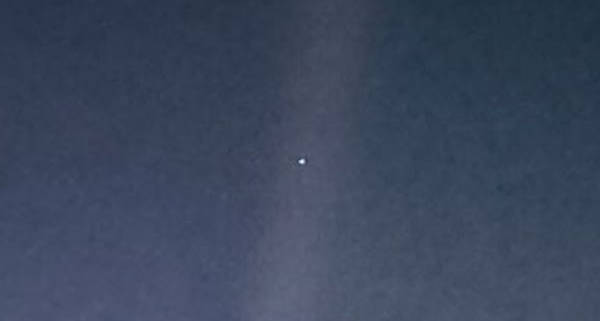
Look again at that dot. That’s here. That’s home. That’s us. On it everyone you love, everyone you know, everyone you ever heard of, every human being who ever was, lived out their lives. The aggregate of our joy and suffering, thousands of confident religions, ideologies, and economic doctrines, every hunter and forager, every hero and coward, every creator and destroyer of civilization, every king and peasant, every young couple in love, every mother and father, hopeful child, inventor and explorer, every teacher of morals, every corrupt politician, every “superstar,” every “supreme leader,” every saint and sinner in the history of our species lived there-on a mote of dust suspended in a sunbeam.
― Carl Sagan, Pale Blue Dot: A Vision of the Human Future in Space
The Earth is a very small stage in a vast cosmic arena. Think of the endless cruelties visited by the inhabitants of one corner of this pixel on the scarcely distinguishable inhabitants of some other corner, how frequent their misunderstandings, how eager they are to kill one another, how fervent their hatreds. Think of the rivers of blood spilled by all those generals and emperors so that, in glory and triumph, they could become the momentary masters of a fraction of a dot.
Our posturings, our imagined self-importance, the delusion that we have some privileged position in the Universe, are challenged by this point of pale light. Our planet is a lonely speck in the great enveloping cosmic dark. In our obscurity, in all this vastness, there is no hint that help will come from elsewhere to save us from ourselves.
The Earth is the only world known so far to harbor life. There is nowhere else, at least in the near future, to which our species could migrate. Visit, yes. Settle, not yet. Like it or not, for the moment the Earth is where we make our stand.
It has been said that astronomy is a humbling and character-building experience. There is perhaps no better demonstration of the folly of human conceits than this distant image of our tiny world. To me, it underscores our responsibility to deal more kindly with one another, and to preserve and cherish the pale blue dot, the only home we’ve ever known.
Ephemeris: 03/31/2025 – Finding Leo, the celestial lion
This is Ephemeris for Monday, March 31st. Today the Sun will be up for 12 hours and 44 minutes, setting at 8:09, and it will rise tomorrow at 7:23. The Moon, 2 days past new, will set at 11:39 this evening.
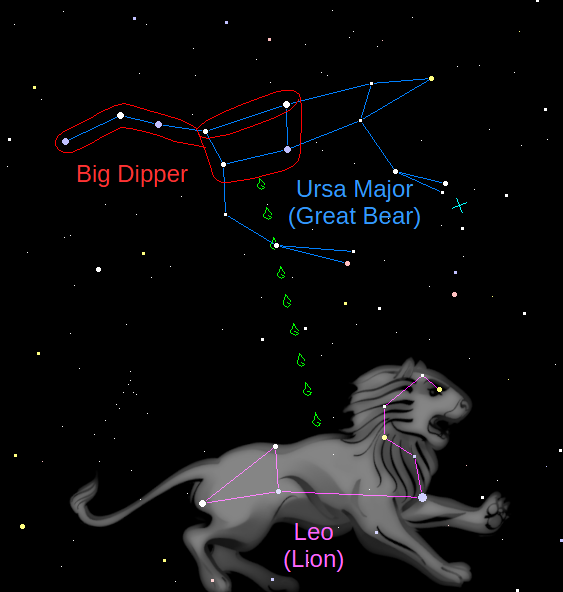
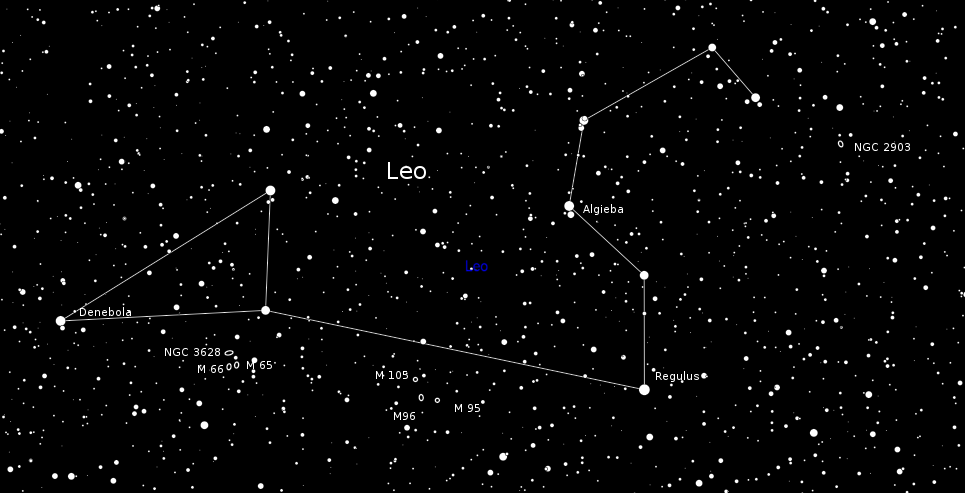
At 10 p.m. the spring constellation of Leo the lion will be high in the south-southeast. It can be found by locating the Big Dipper high in the northeast and imagining that a hole were drilled in the bowl to let the water leak out. It would drip on the back of this giant cat. The Lion is standing or lying facing westward. His head and mane are seen in the stars as a backwards question mark. This group of stars is also called the sickle. The bright star Regulus is at the bottom, the dot at the bottom of the question mark. A triangle of stars, to the left of Regulus, is the lion’s haunches. Leo contains some nice galaxies visible in moderate sized telescopes. The stars in Leo’s part of the sky are fewer than those in the winter sky.
The astronomical event times given are for the Traverse City/Interlochen area of Michigan (EDT, UT – 4 hours). Times will be different for other locations.
Addendum
Ephemeris: 08/16/2024 – WIMPs and MACHOs
This is Ephemeris for Friday, August 16th. Today the Sun will be up for 13 hours and 58 minutes, setting at 8:46, and it will rise tomorrow at 6:48. The Moon, 3 days before full, will set at 3:34 tomorrow morning.
The dark matter that holds the clusters of galaxies together in the universe may be made of weakly interacting massive particles which astronomers have dubbed WIMPs. These particles would be more massive than the particles that ordinary matter is made of, but do not interact with ordinary matter or give off or absorb light. They are detected by the influence of their gravitational force alone. An alternative idea is Massive Compact Halo Objects or MACHOs. These may be made-up of ordinary matter. Since there are many more low mass stars, like red dwarfs, than there are high mass stars, perhaps there’s the creation of planet sized bodies like brown dwarfs. These are planets more massive than Jupiter, but not massive enough to become stars. As such, they should be practicably invisible.
The astronomical event times given are for the Traverse City/Interlochen area of Michigan (EDT, UT–4 hours). Times will be different for other locations.
Addendum
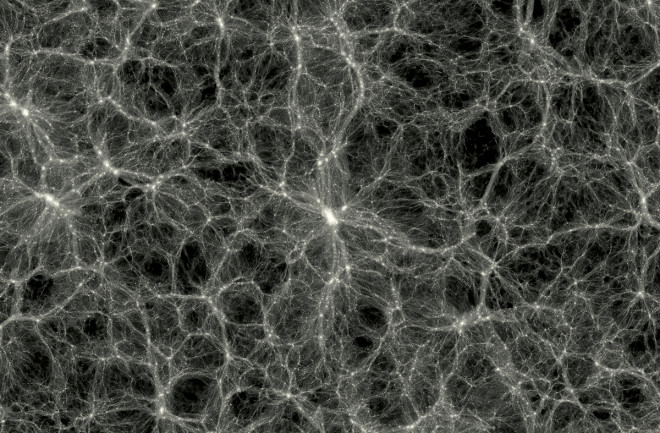
For more information on Dark Matter search for it on the internet. One Article I found is here: https://sciencenotes.org/what-is-dark-matter/. They dismiss MACHOs by not mentioning them at all, concentrating on the much more likely WIMPs.
 Bob Moler's Ephemeris Blog