01/04/2022 – Ephemeris – Planet show in the evening twilight tonight
This is Bob Moler with Ephemeris for Tuesday, January 4th. The Sun will rise at 8:20. It’ll be up for 8 hours and 55 minutes, setting at 5:15. The Moon, 2 days past new, will set at 7:34 this evening.
Tonight, if it’s clear, there’s a chance that one could spot four planets, plus the Moon, in the southwestern evening twilight. However, not all at the same time. Venus should make an appearance at about 5:45 very low in the west-southwest, only 3 degrees or 6 moon-widths above a lake horizon. Jupiter might be visible then or in a few more minutes much higher in the southwest. The two-day-old Moon might be visible then, about halfway between Jupiter and Venus. By 6 pm, Mercury might be visible halfway between the Moon and where Venus was, because Venus will be setting at that time. By this time, too, Saturn will appear just above right of the Moon. This is the last chance to spot Venus in the evening sky until the last months of this year.
The astronomical event times given are for the Traverse City/Interlochen area of Michigan (EST, UT – 5 hours). They may be different for your location.
Addendum
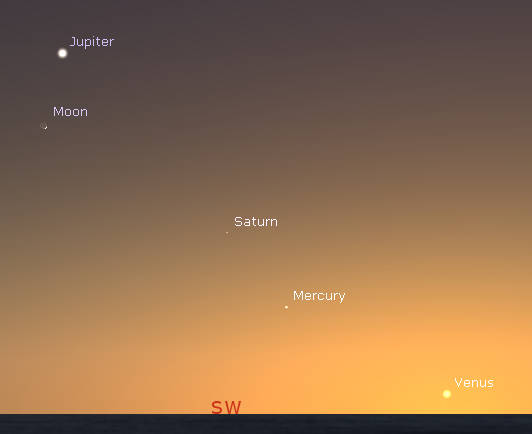
Four Evening planets and the Moon at 5:45 pm on a flat horizon at 5:45 pm tonight, January 4, 2022. Venus, because it is so low on the horizon, and Saturn, the dimmest of the four planets, may not be visible. Created using Stellarium.
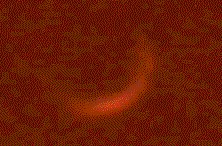
Venus is only 4 days away from inferior conjunction. Back in 1969 I took this photo of Venus then only 4 days from inferior conjunction from the Grand Rapids Amateur Astronomical Society’s Veen Observatory outside of Lowell, MI.
Venus was low in the sky, and the atmosphere made it very fuzzy.
01/03/2022 – Ephemeris – We’re the closest we get to the Sun of the whole year today
This is Bob Moler with Ephemeris for Monday, January 3rd, 2022. The Sun will rise at 8:20. It’ll be up for 8 hours and 54 minutes, setting at 5:14. The Moon, 1 day past new, will set at 6:14 this evening.
Today we are as close to the Sun as we’ll get for the rest of the year. The Earth will reach the perihelion point in its orbit at 7:59 this evening, at only 91.4 million miles. Since this is only a million and a half miles closer than average, it doesn’t affect the amount of heat the Earth as a whole gets from the Sun. But, since the Earth moves faster at perihelion than at any other time of the year, it makes winter the shortest season. Winter at 89 days is nearly 4 days shorter than the longest season, summer. I know, it doesn’t seem like it, but we live in Northern Michigan, and seemingly long winters come with the territory. January’s only major meteor shower, the Quadrantids, reaches peak at about 4 pm today. It reaches and falls off-peak rapidly, so we won’t have an impressive Quadrantid meteor shower this year.
The astronomical event times given are for the Traverse City/Interlochen area of Michigan (EST, UT – 5 hours). They may be different for your location.
Addendum
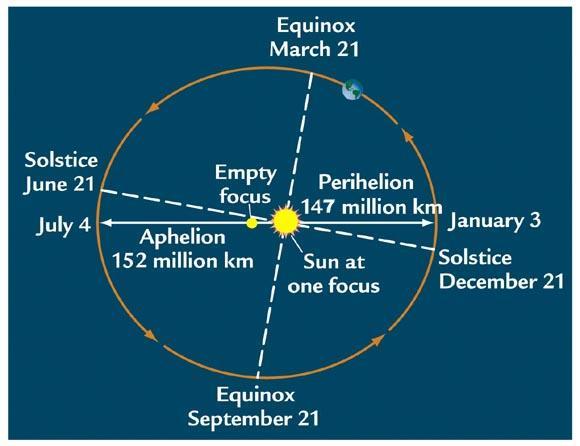
The Earth’s orbit, somewhat exaggerated, showing perihelion and the seasons. Credit: “Starts with a Bang” blog by Ethan Siegel.
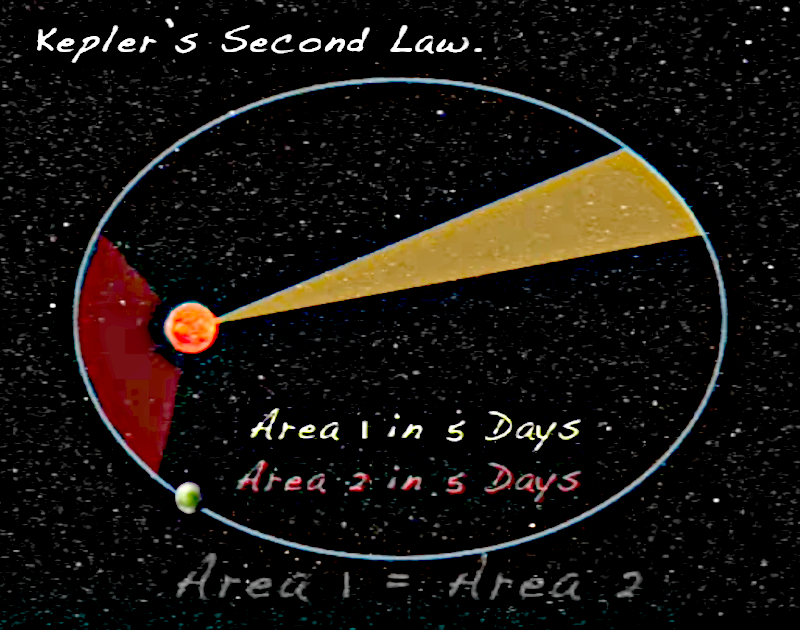
Kepler’s Second Law of Planetary Motion: the imaginary line joining a planet and the Sun sweeps equal areas of space during equal time intervals as the planet orbits. Credit: NASA, a screen capture from a video Solar Systems Dynamics-Orbits and Kepler’s Laws.
A note on the naming of the Quadrantid meteor shower. Meteor showers get their names from the constellation or nearby star where the meteor seem to come from at their peak. That point is called the radiant. The Quadrantids were named because they came from a constellation called the Mural Quadrant, back when the shower was discovered. The Mural Quadrant didn’t make the modern list of 88 constellations. The area where the Mural Quadrant resided is an area between northern Boötes, Draco and the handle of the Big Dipper.
12/31/2021 – Ephemeris – January 2022 preview
This is Ephemeris for New Year’s Eve, Friday, December 31st. The Sun will rise at 8:20. It’ll be up for 8 hours and 52 minutes, setting at 5:12. The Moon, 1 day before new, will rise at 7:20 tomorrow morning.
Tomorrow starts the new year of 2022. The daylight hours are slowly getting longer and will accelerate during the month. Daylight hours will increase from 8 hours and 52 minutes tomorrow to 9 hours and 47 minutes on the 31st. The sunrise time will decrease from 8:20 tomorrow to 8:02 at month’s end. The sunset times will increase from 5:13 tomorrow to 5:50 on the 31st. Along with that, the altitude of the sun at noon will increase from 22 degrees tomorrow to nearly 28 degrees at month’s end. It will be a degree lower for folks in the Straits area because they are a degree of latitude farther north. Local noon, by the way, for Interlochen and Traverse City is about 12:51 p.m. in January. Here’s wishing you a Happy New Year.
The astronomical event times given are for the Traverse City/Interlochen area of Michigan (EST, UT – 5 hours). They may be different for your location.
Addendum
Updated to replace twilight table at 5:07 pm.
January Evening Star Chart
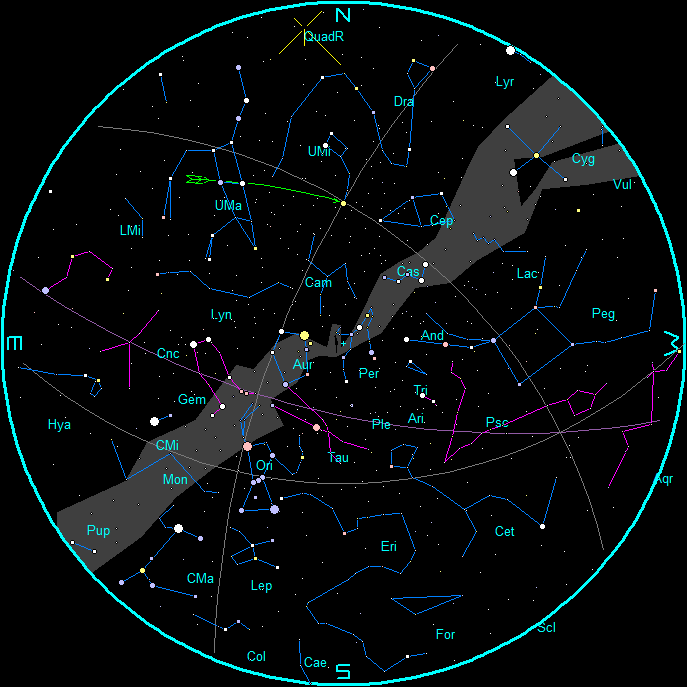
Star Chart for January 2022 evenings, based on 9 p.m. EST, January 15, 2022. Click on image to enlarge. Created using my LookingUp program.
January Morning Star Chart
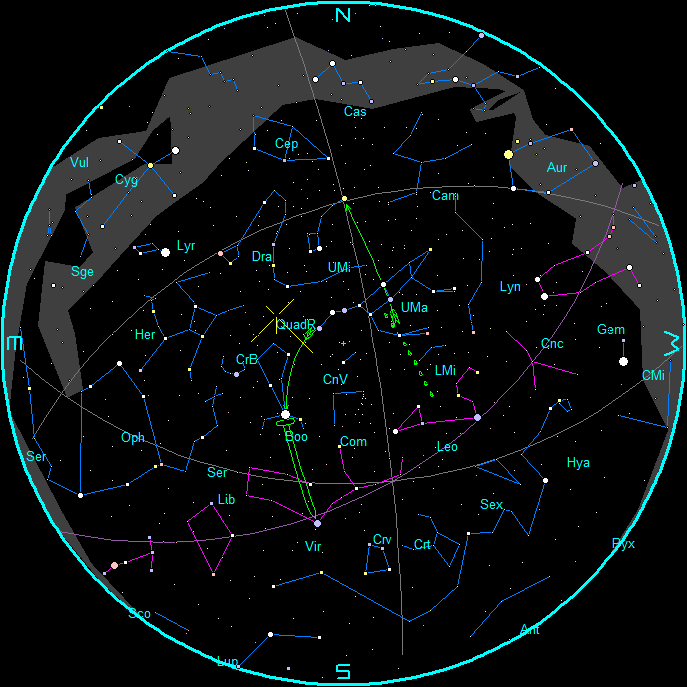
Star Chart for January 2022 mornings, based on 6 a.m. EST, January 15, 2022. Click on image to enlarge. Created using my LookingUp program.
Note that Traverse City is located approximately 45 minutes behind our time meridian, West 75° longitude. (An hour 45 minutes behind our daylight saving time meridian during EDT). For a list of constellation names to go with the abbreviations, click here.
The planets are also plotted for the 15th. For a check on the current whereabouts of the five naked eye planets, see the Wednesday post most weeks.
- Pointer stars at the front of the bowl of the Big Dipper point to Polaris, the North Star.
- The leaky bowl of the Big Dipper drips on Leo.
- Follow the arc of the handle of the Big Dipper to the star Arcturus, then
- Follow the spike to Spica.
- QuadR on the star charts is the radiant of the Quadrantid meteor shower, which peaks on the 3rd, but is best seen in the early morning hours of the 3rd or 4th.
Twilight Limits, Nautical and Astronomical
| EST | |||||||
| Morning | Twilight | Evening | Twilight | Dark | Night | Moon | |
| Date | Astro. | Nautical | Nautical | Astro. | Start | End | Illum. |
| 2022-01-01 | 6h35m | 7h11m | 18h22m | 18h57m | 18h57m | 6h35m | 0 |
| 2022-01-02 | 6h35m | 7h11m | 18h23m | 18h58m | 18h58m | 6h35m | 0 |
| 2022-01-03 | 6h35m | 7h11m | 18h24m | 18h59m | 18h59m | 6h35m | 0.03 |
| 2022-01-04 | 6h35m | 7h11m | 18h25m | 19h00m | 19h35m | 6h35m | 0.08 |
| 2022-01-05 | 6h35m | 7h11m | 18h26m | 19h01m | 20h53m | 6h35m | 0.16 |
| 2022-01-06 | 6h35m | 7h11m | 18h26m | 19h02m | 22h08m | 6h35m | 0.25 |
| 2022-01-07 | 6h35m | 7h11m | 18h27m | 19h03m | 23h19m | 6h35m | 0.35 |
| 2022-01-08 | 6h35m | 7h10m | 18h28m | 19h04m | – | 6h35m | 0.45 |
| 2022-01-09 | 6h35m | 7h10m | 18h29m | 19h05m | 0h27m | 6h35m | 0.55 |
| 2022-01-10 | 6h35m | 7h10m | 18h30m | 19h06m | 1h32m | 6h35m | 0.64 |
| 2022-01-11 | 6h35m | 7h10m | 18h31m | 19h07m | 2h37m | 6h35m | 0.73 |
| 2022-01-12 | 6h35m | 7h10m | 18h33m | 19h08m | 3h41m | 6h35m | 0.81 |
| 2022-01-13 | 6h34m | 7h09m | 18h34m | 19h09m | 4h45m | 6h34m | 0.88 |
| 2022-01-14 | 6h34m | 7h09m | 18h35m | 19h10m | 5h48m | 6h34m | 0.93 |
| 2022-01-15 | 6h34m | 7h08m | 18h36m | 19h11m | – | – | 0.97 |
| 2022-01-16 | 6h33m | 7h08m | 18h37m | 19h12m | – | – | 0.99 |
| 2022-01-17 | 6h33m | 7h08m | 18h38m | 19h13m | – | – | 1 |
| 2022-01-18 | 6h32m | 7h07m | 18h39m | 19h14m | – | – | 0.99 |
| 2022-01-19 | 6h32m | 7h07m | 18h40m | 19h15m | 19h15m | 19h15m | 0.95 |
| 2022-01-20 | 6h31m | 7h06m | 18h41m | 19h16m | 19h16m | 20h23m | 0.9 |
| 2022-01-21 | 6h31m | 7h05m | 18h43m | 19h17m | 19h17m | 21h32m | 0.83 |
| 2022-01-22 | 6h30m | 7h05m | 18h44m | 19h18m | 19h18m | 22h41m | 0.75 |
| 2022-01-23 | 6h29m | 7h04m | 18h45m | 19h20m | 19h20m | 23h51m | 0.65 |
| 2022-01-24 | 6h29m | 7h03m | 18h46m | 19h21m | 19h21m | – | 0.54 |
| 2022-01-25 | 6h28m | 7h03m | 18h47m | 19h22m | 19h22m | 1h04m | 0.43 |
| 2022-01-26 | 6h27m | 7h02m | 18h49m | 19h23m | 19h23m | 2h19m | 0.32 |
| 2022-01-27 | 6h27m | 7h01m | 18h50m | 19h24m | 19h24m | 3h37m | 0.21 |
| 2022-01-28 | 6h26m | 7h00m | 18h51m | 19h25m | 19h25m | 4h56m | 0.13 |
| 2022-01-29 | 6h25m | 6h59m | 18h52m | 19h27m | 19h27m | 6h11m | 0.06 |
| 2022-01-30 | 6h24m | 6h58m | 18h54m | 19h28m | 19h28m | 6h24m | 0.01 |
| 2022-01-31 | 6h23m | 6h57m | 18h55m | 19h29m | 19h29m | 6h23m | 0 |
Twilight calendar was generated using Cartes du Ciel (Sky Charts).
See my blog post: Twilight Zone for the definitions of the different periods of twilight here: https://bobmoler.wordpress.com/2018/09/27/.
NASA Calendar of Planetary Events
    Date     Time     Event
Jan  1  Sa            Venus: 12.4° E
     1  Sa   6:00 pm  Moon Perigee: 358000 km
     2  Su   8:35 am  Moon South Dec.: 26.3° S
     2  Su   1:33 pm  New Moon
     3  Mo   3:56 pm  Quadrantid Shower: ZHR = 120
     3  Mo   7:59 pm  Perihelion: 0.9833 AU
     4  Tu  11:50 am  Moon-Saturn: 4.2° N
     5  We   7:09 pm  Moon-Jupiter: 4.5° N
     7  Fr   5:59 am  Mercury Elongation: 19.2° E
     8  Sa   7:50 pm  Venus Inferior Conj.
     9  Su   1:11 pm  First Quarter
    12  We  11:17 pm  Mercury-Saturn: 3.4° N
    12  We  11:19 pm  Moon Ascending Node
    14  Fr   4:27 am  Moon Apogee: 405800 km
    16  Su   5:16 am  Moon North Dec.: 26.3° N
    17  Mo  10:37 am  Moon-Pollux: 2.9° N
    17  Mo   6:48 pm  Full Moon
    18  Tu  11:33 am  Moon-Beehive: 3.5° S
    23  Su   5:25 am  Mercury Inferior Conj.
    25  Tu   8:41 am  Last Quarter
    27  Th   1:14 am  Moon Descending Node
    29  Sa  10:05 am  Moon-Mars: 2.4° N
    29  Sa   6:26 pm  Moon South Dec.: 26.4° S
    30  Su   2:09 am  Moon Perigee: 362300 km
Feb  1  Tu            Venus: 32° W
All event times are given for UTC-5 Eastern Standard Time.
Sky Events Calendar by Fred Espenak and Sumit Dutta (NASA’s GSFC),
http://eclipse.gsfc.nasa.gov/SKYCAL/SKYCAL.html.
If you go to the above site you can print out a list like the above for the entire year or calendar pages for your time zone.
Sun and Moon Rising and Setting Events
LU                  Ephemeris of Sky Events for Interlochen/TC
January, 2022    Local time zone: EST
+-----------------------------------------------------------------------+
| DATE |  SUN     SUN  DAYLIGHT|   TWILIGHT*    |MOON  RISE OR    ILLUM |
|      |  RISE    SET    HOURS |  END    START  |PHASE SET** TIME FRACTN|
+=======================================================================+
|Sat  1| 08:20a  05:13p  08:52 | 06:23p  07:09a |      Rise 08:33a    1%|
+------+-----------------------+----------------+-----------------------+
|Sun  2| 08:20a  05:13p  08:53 | 06:24p  07:09a |New   Set  04:59p    0%|
|Mon  3| 08:20a  05:14p  08:54 | 06:25p  07:09a |      Set  06:14p    2%|
|Tue  4| 08:20a  05:15p  08:55 | 06:25p  07:10a |      Set  07:34p    7%|
|Wed  5| 08:19a  05:16p  08:57 | 06:26p  07:10a |      Set  08:53p   14%|
|Thu  6| 08:19a  05:18p  08:58 | 06:27p  07:09a |      Set  10:07p   23%|
|Fri  7| 08:19a  05:19p  08:59 | 06:28p  07:09a |      Set  11:18p   32%|
|Sat  8| 08:19a  05:20p  09:00 | 06:29p  07:09a |      Set  12:26a   42%|
+------+-----------------------+----------------+-----------------------+
|Sun  9| 08:19a  05:21p  09:02 | 06:30p  07:09a |F Qtr Set  01:32a   52%|
|Mon 10| 08:18a  05:22p  09:03 | 06:31p  07:09a |      Set  02:36a   62%|
|Tue 11| 08:18a  05:23p  09:05 | 06:32p  07:09a |      Set  03:41a   71%|
|Wed 12| 08:17a  05:24p  09:06 | 06:33p  07:08a |      Set  04:45a   79%|
|Thu 13| 08:17a  05:26p  09:08 | 06:34p  07:08a |      Set  05:47a   86%|
|Fri 14| 08:17a  05:27p  09:10 | 06:36p  07:08a |      Set  06:47a   92%|
|Sat 15| 08:16a  05:28p  09:11 | 06:37p  07:07a |      Set  07:41a   96%|
+------+-----------------------+----------------+-----------------------+
|Sun 16| 08:15a  05:29p  09:13 | 06:38p  07:07a |      Set  08:27a   99%|
|Mon 17| 08:15a  05:31p  09:15 | 06:39p  07:06a |Full  Rise 05:04p  100%|
|Tue 18| 08:14a  05:32p  09:17 | 06:40p  07:06a |      Rise 06:07p   99%|
|Wed 19| 08:13a  05:33p  09:19 | 06:41p  07:05a |      Rise 07:15p   96%|
|Thu 20| 08:13a  05:34p  09:21 | 06:42p  07:05a |      Rise 08:23p   91%|
|Fri 21| 08:12a  05:36p  09:23 | 06:44p  07:04a |      Rise 09:31p   85%|
|Sat 22| 08:11a  05:37p  09:25 | 06:45p  07:04a |      Rise 10:41p   76%|
+------+-----------------------+----------------+-----------------------+
|Sun 23| 08:10a  05:39p  09:28 | 06:46p  07:03a |      Rise 11:51p   67%|
|Mon 24| 08:09a  05:40p  09:30 | 06:47p  07:02a |      Rise 01:03a   56%|
|Tue 25| 08:09a  05:41p  09:32 | 06:48p  07:01a |L Qtr Rise 02:19a   45%|
|Wed 26| 08:08a  05:43p  09:35 | 06:50p  07:01a |      Rise 03:37a   34%|
|Thu 27| 08:07a  05:44p  09:37 | 06:51p  07:00a |      Rise 04:56a   24%|
|Fri 28| 08:06a  05:45p  09:39 | 06:52p  06:59a |      Rise 06:10a   14%|
|Sat 29| 08:05a  05:47p  09:42 | 06:53p  06:58a |      Rise 07:15a    7%|
+------+-----------------------+----------------+-----------------------+
|Sun 30| 08:04a  05:48p  09:44 | 06:55p  06:57a |      Rise 08:07a    2%|
|Mon 31| 08:02a  05:50p  09:47 | 06:56p  06:56a |      Rise 08:48a    0%|
+-----------------------------------------------------------------------+
* Nautical Twilight
** Moonrise or moonset, whichever occurs between sunrise and sunset
Generated using my LookingUp for DOS program.
12/30/2021 – Ephemeris – Looking forward to some space events in 2022
This is Ephemeris for Thursday, December 30th. Today the Sun will be up for 8 hours and 51 minutes, setting at 5:11, and it will rise tomorrow at 8:20. The Moon, 2 days before new, will rise at 6 tomorrow morning.
If you thought 2021 was an active one in space, 2022 looks to be as exciting. The James Webb Space Telescope will continue to deploy itself as it journeys to reach it’s L2 halo orbit. It should become operational by mid-year. The launch of the uncrewed Artemis-1 mission to, and around the Moon, has been pushed back a month to no earlier than March 12th, because of having to swap out a control computer for one of its main engines. The launch of the Psyche probe to the mostly metallic asteroid of the same name will occur in August by a SpaceX Falcon Heavy rocket on a four-year journey to orbit this unique asteroid. And NASA’s DART spacecraft is scheduled to crash into the tiny Dimorphos asteroid to test a deflection method in late September.
The astronomical event times given are for the Traverse City/Interlochen area of Michigan (EST, UT – 5 hours). They may be different for your location.
Addendum
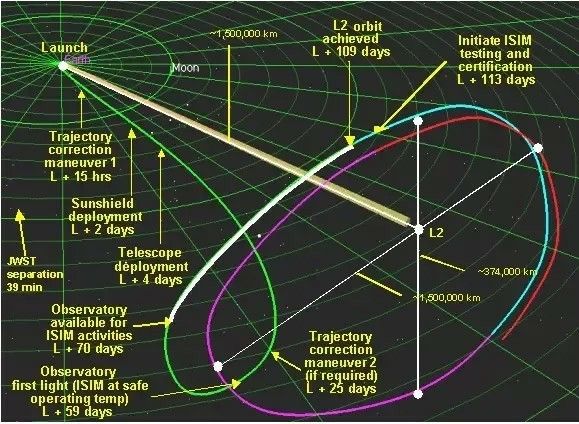
James Webb Space Telescope trajectory to L2 with some milestones of deployment. “ISIM” stands for Integrated Scientific Instruments Module. Credit: Space Telescope Science Institute (STScI).
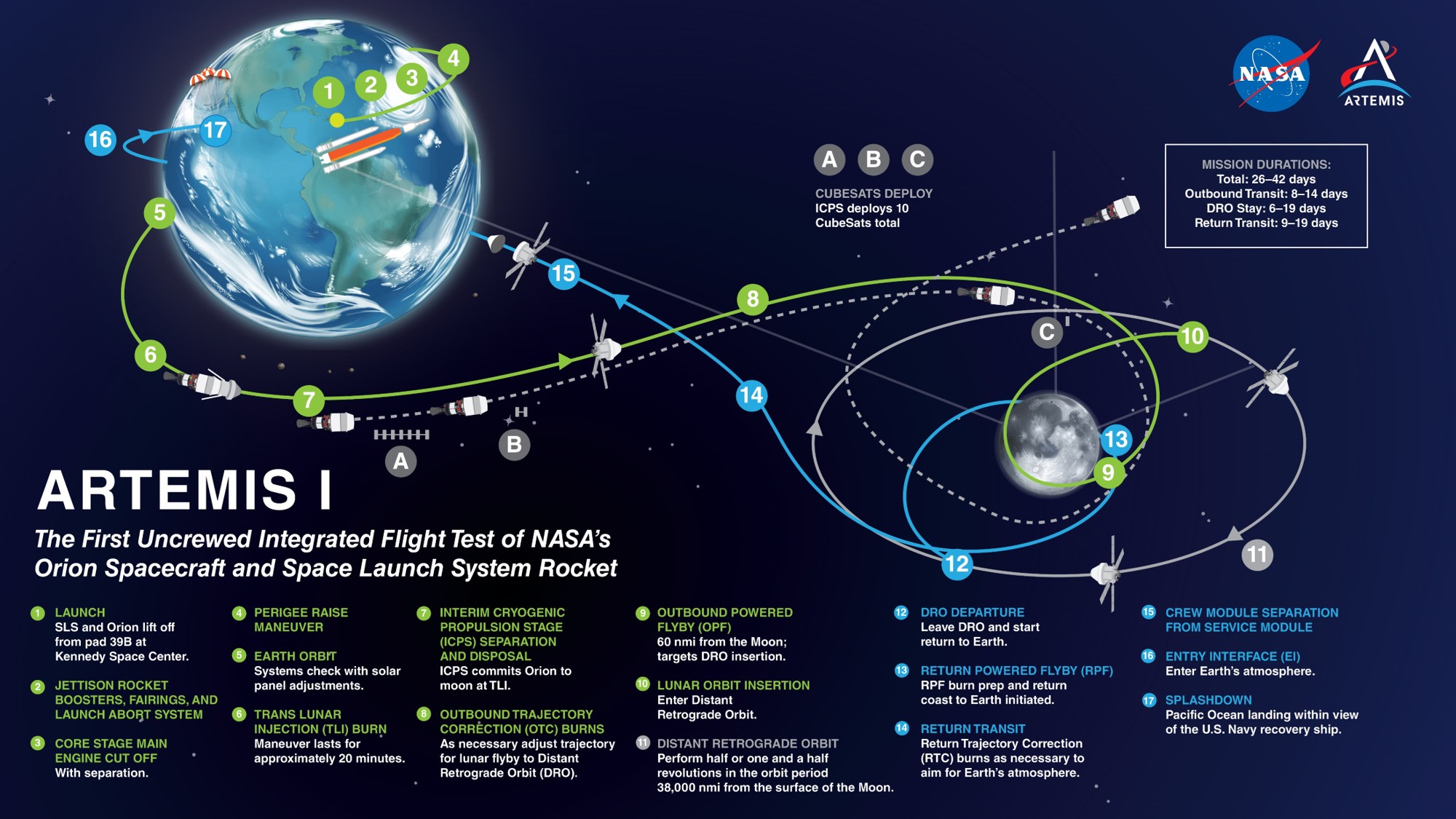
Artemis-1 orbital plan. Click on the image to enlarge it. Credit NASA.
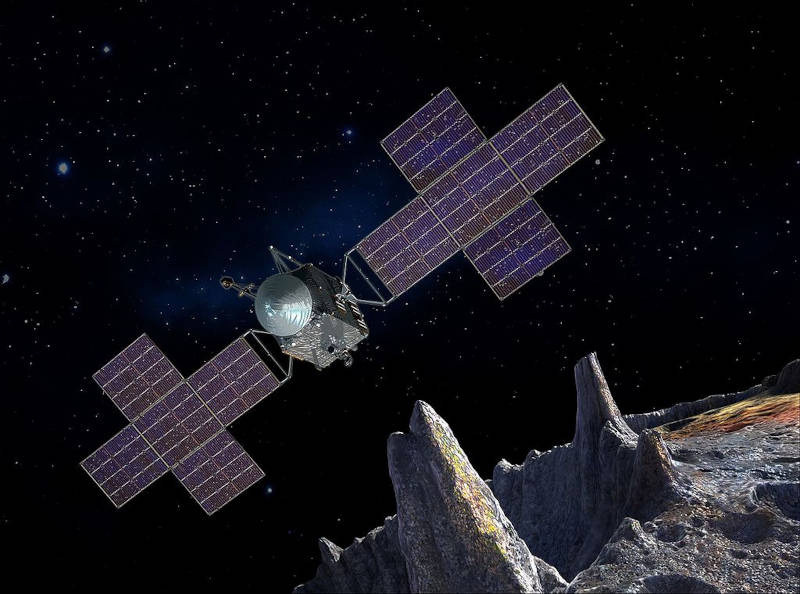
Psyche spacecraft at the asteroid Psyche. Credit: NASA.
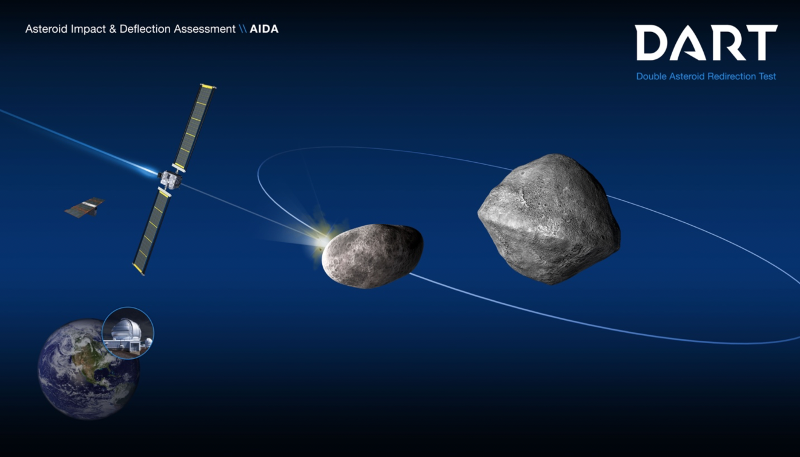
Schematic of the DART mission shows the impact on the moonlet of asteroid (65803) Didymos. Post-impact observations from Earth-based optical telescopes and planetary radar would, in turn, measure the change in the moonlet’s orbit about the parent body.
Credits: NASA/Johns Hopkins Applied Physics Lab
12/29/2021 – Ephemeris – Let’s search for the naked-eye planets for this week
This is Bob Moler with Ephemeris for Wednesday, December 29th. Today the Sun will be up for 8 hours and 50 minutes, setting at 5:10, and it will rise tomorrow at 8:19. The Moon, halfway from last quarter to new, will rise at 4:37 tomorrow morning.
Let’s search for the naked-eye planets for this week. Venus will be visible in the southwestern evening twilight by 6:00 tonight. It’s a crescent in telescopes, and even binoculars now. It is moving closer to us, and now appears larger than Jupiter in telescopes. Venus will set at 6:35 pm, 31 minutes earlier than it set a week ago, which means that the Sun is catching up with it faster and faster. It has only 10 days left in the evening sky, Mercury might be spotted just below left of Venus. By 5:45 pm, both Jupiter and Saturn should be able to be spotted in the southwestern sky. Saturn will be dimmer, and to its lower right, halfway between Jupiter and Venus. Saturn will set at 7:35 pm, with Jupiter setting later at 9:31 pm.
The astronomical event times given are for the Traverse City/Interlochen area of Michigan (EST, UT – 5 hours). They may be different for your location.
Addendum
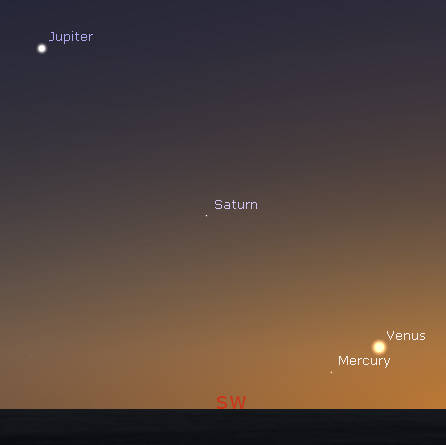
The evening planets in the southwest at 6 pm tonight, December 29, 2021. Created using Stellarium.
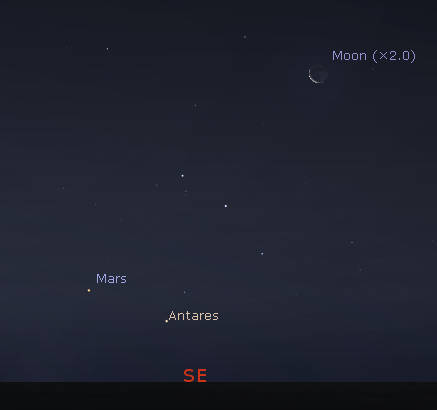
Mars and the Moon in the southeast at 7 am, tomorrow morning, December 30, 2021. Note that Mars is near its rival in color, the red giant star Antares in Scorpius the scorpion. Sometimes Mars is dimmer than Antares, sometime it’s brighter. It depends on Mars’s distance. Currently, it’s quite far away, at 218 million miles (352 million kilometers). The Moon is shown at twice its actual size to better show its thin crescent phase. Created using Stellarium.
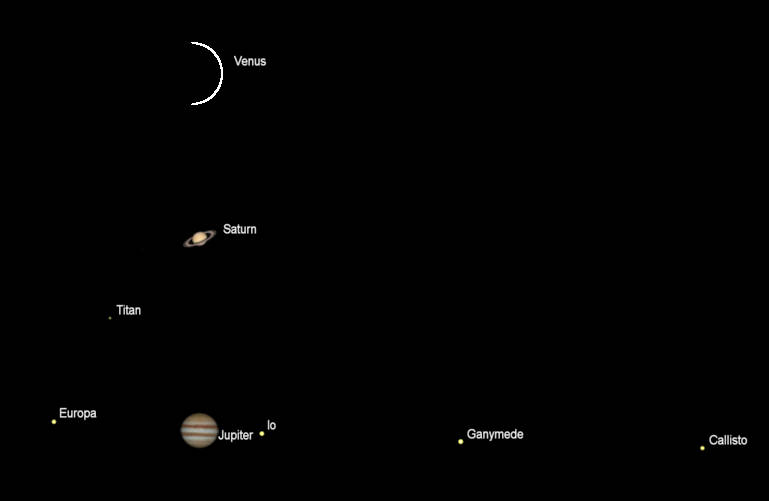
Telescopic views of the bright planets and their brighter moons (north up) as they would be seen in a small telescope, with the same magnification, this evening at 7 pm, December 29, 2021. Apparent diameters: Venus, 59.89″, 3.7% illuminated; Saturn 15.49″, its rings 36.09″; Jupiter, 35.57″. Mercury is not shown, its apparent diameter is 5.68″ and is 82.4% illuminated. Mars also is not shown, its apparent diameter is 3.99″. The ” symbol means seconds of arc (1/3600th of a degree.) Created using Cartes du Ciel (Sky Charts).
In the above chart, I don’t show any planet that’s less than 10 seconds of arc in diameter due to the limitations of scale of what I can show that would be appropriate or small telescopes.
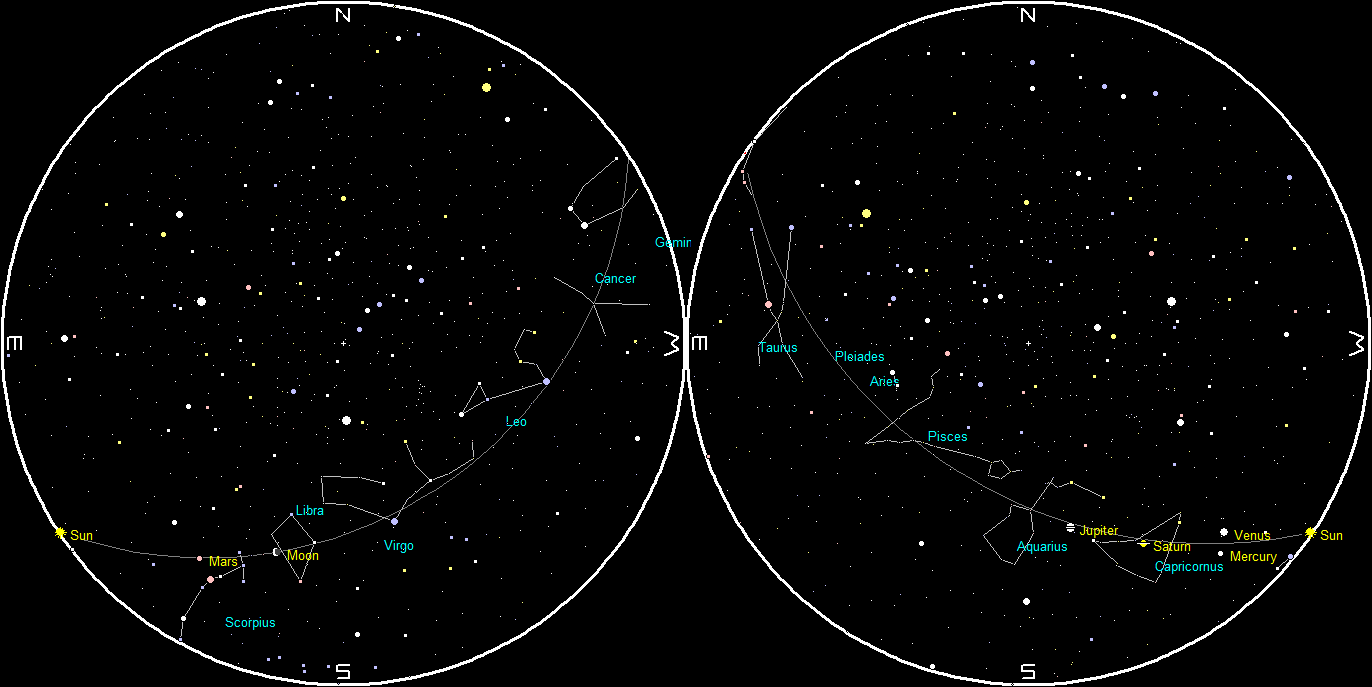
The naked-eye planets and the Moon at sunset and sunrise on a single night, starting with sunset on the right on December 29, 2021. The night ends on the left with sunrise on the 30th. Click on the image to enlarge it. Created using my LookingUp program.
12/28/2021 – Ephemeris – The James Webb Telescope is on its way to L2
This is Ephemeris for Tuesday, December 28th. Today the Sun will be up for 8 hours and 50 minutes, setting at 5:09, and it will rise tomorrow at 8:19. The Moon, 2 days past last quarter, will rise at 3:18 tomorrow morning.
The James Webb Space Telescope was launched Christmas morning and is heading out past the Moon’s orbit. It was launched from the European Space Agency’s Spaceport in Kourou, French Guiana on the northeast coast of South America, as part of their contribution to the project. It will orbit a point called Lagrange Point 2, or L2 for short, over four times the Moon’s distance in a direction opposite of the Sun. It will take the telescope 29 days to unfold itself. First order of business was to unfold the solar panels to obtain power, then to deploy its high gain antenna for communications with the Earth. Next to begin to deploy a 5 layer, tennis court sized sun shield. After that, the telescope will be unfolded.
The astronomical event times given are for the Traverse City/Interlochen area of Michigan (EST, UT – 5 hours). They may be different for your location.
Addendum
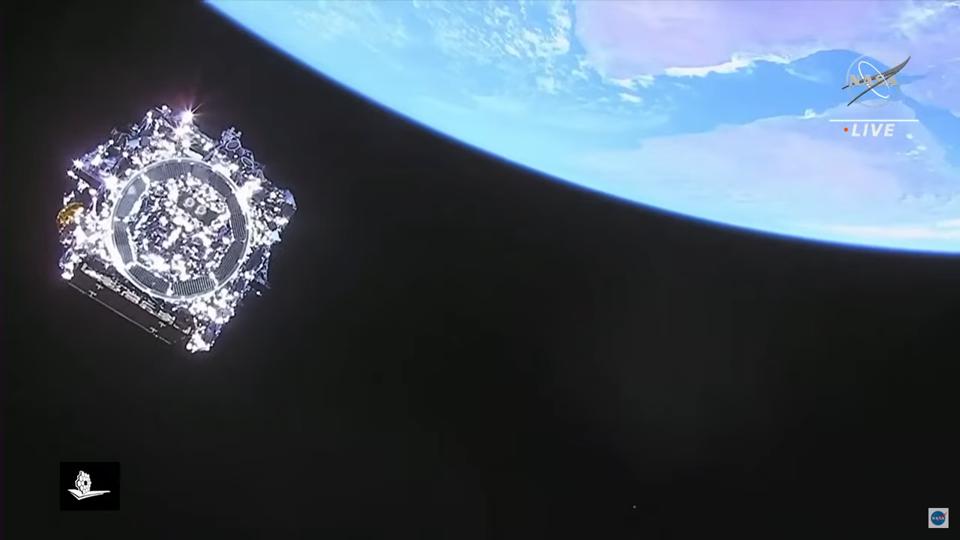
The last view of Webb as it separated from the Ariane 5 launch vehicle. Credit: NASA.
12/27/2021 – Ephemeris – Where did Earth’s water come from?
This is Ephemeris for Monday, December 27th. Today the Sun will be up for 8 hours and 49 minutes, setting at 5:08, and it will rise tomorrow at 8:19. The Moon, 1 day past last quarter, will rise at 2:02 tomorrow morning.
The element hydrogen has two stable forms: Ordinary hydrogen with a single proton as its nucleus, and deuterium with a proton and a neutron as its nucleus. Both can combine with oxygen to form water. Deuterium and oxygen make heavy water. Water of any kind would not have survived Earth’s formation. Astronomers have long thought that collisions of asteroids and comet brought water to the Earth. Comets, however, have an overabundance of deuterium. Asteroids are close, also dust particles exposed to the solar wind have an under abundance of deuterium. Apparently, about a 50-50 mixture of dust and asteroids appear the right combination to fill the Earth’s with the right ratio of normal and heavy water.
The astronomical event times given are for the Traverse City/Interlochen area of Michigan (EST, UT – 5 hours). They may be different for your location.
Addendum
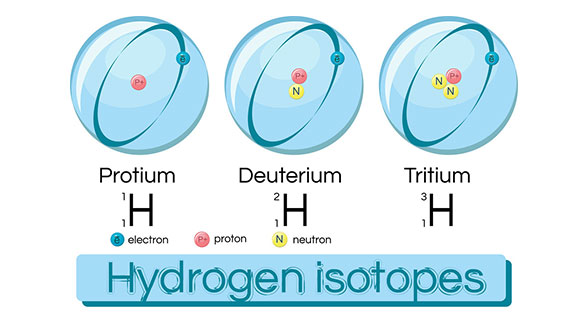
The three isotopes of hydrogen: protium, or ordinary hydrogen; deuterium; and tritium. Protium and deuterium are stable, while tritium is unstable and decays into helium 3 and an electron. Tritium has a half-life of 12.32 years.
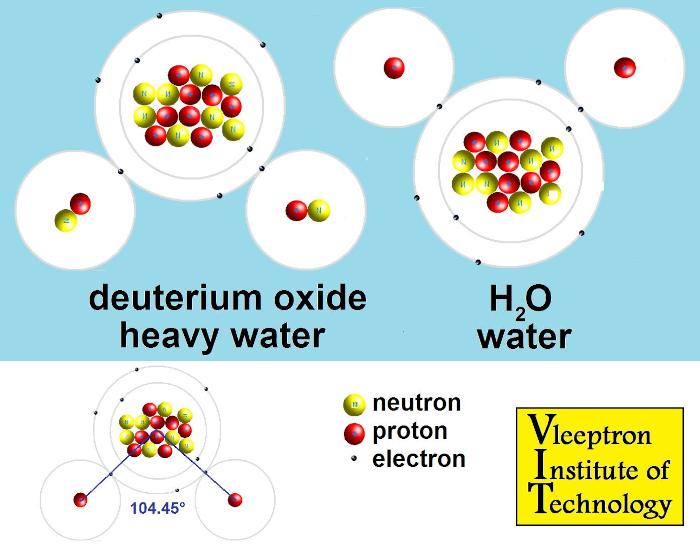
Heavy water D2O vs. normal water H2O. Heavy water is about 11% heavier than water. A heavy water ice cube would sink in a glass of water.
12/24-25/2021 – Ephemeris – Another possible solution of the mystery of the Star of Bethlehem
This is Ephemeris for Christmas Eve and Christmas Day, December 24th & 25th. The Sun will be up for 8 hours and 48 minutes, setting at 5:06, and it will rise tomorrow at 8:18. The Moon, 2 days before last quarter, will rise at 10:31 this evening.
The brilliant planets Venus and Jupiter are our Christmas Stars in the evening sky now. And perhaps they were part of the Star of Bethlehem. Back in August of 3 BCE, the planet Jupiter and Venus appeared to come very close to one another. The term for such an apparent close approach is called a conjunction. Astrologers make a big deal out of such a chance alignment. It’s like a trick photo of someone in the foreground appearing to hold up or leaning on a more distant object. Anyway, 10 months later in June of 2 BCE, Jupiter again appeared to join Venus, this time so close they could not be separated by the human eye. This all occurred against the constellation of Leo the lion which, in Genesis, was the symbol of Judah.
The astronomical event times given are for the Traverse City/Interlochen area of Michigan (EST, UT – 5 hours). They may be different for your location.
Merry Christmas!
Addendum
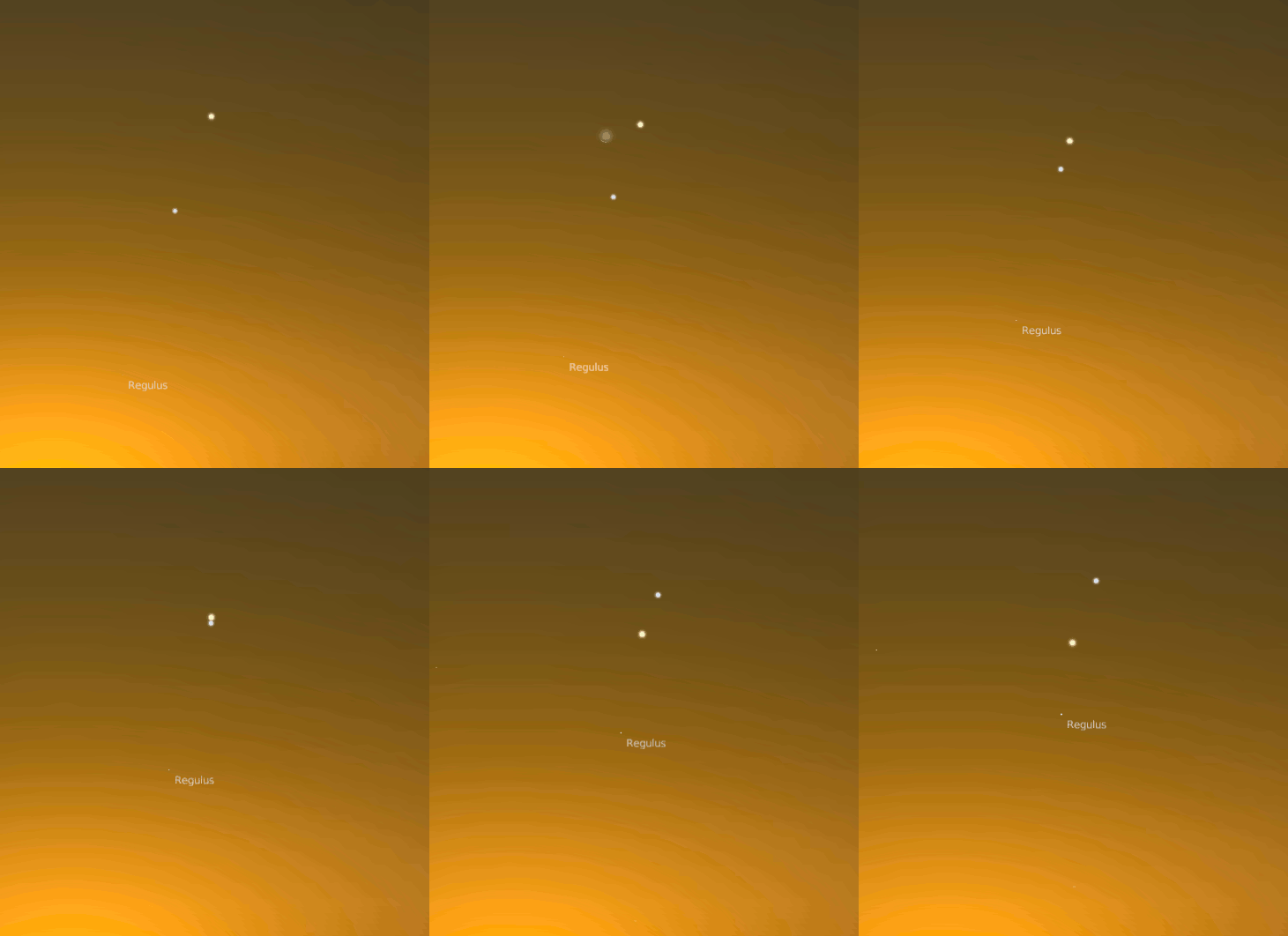
Here is an animation created using Stellarium of Jupiter and Venus, the brighter of the two seeming to coalesce on August 12, 3 BCE in the early morning twilight.
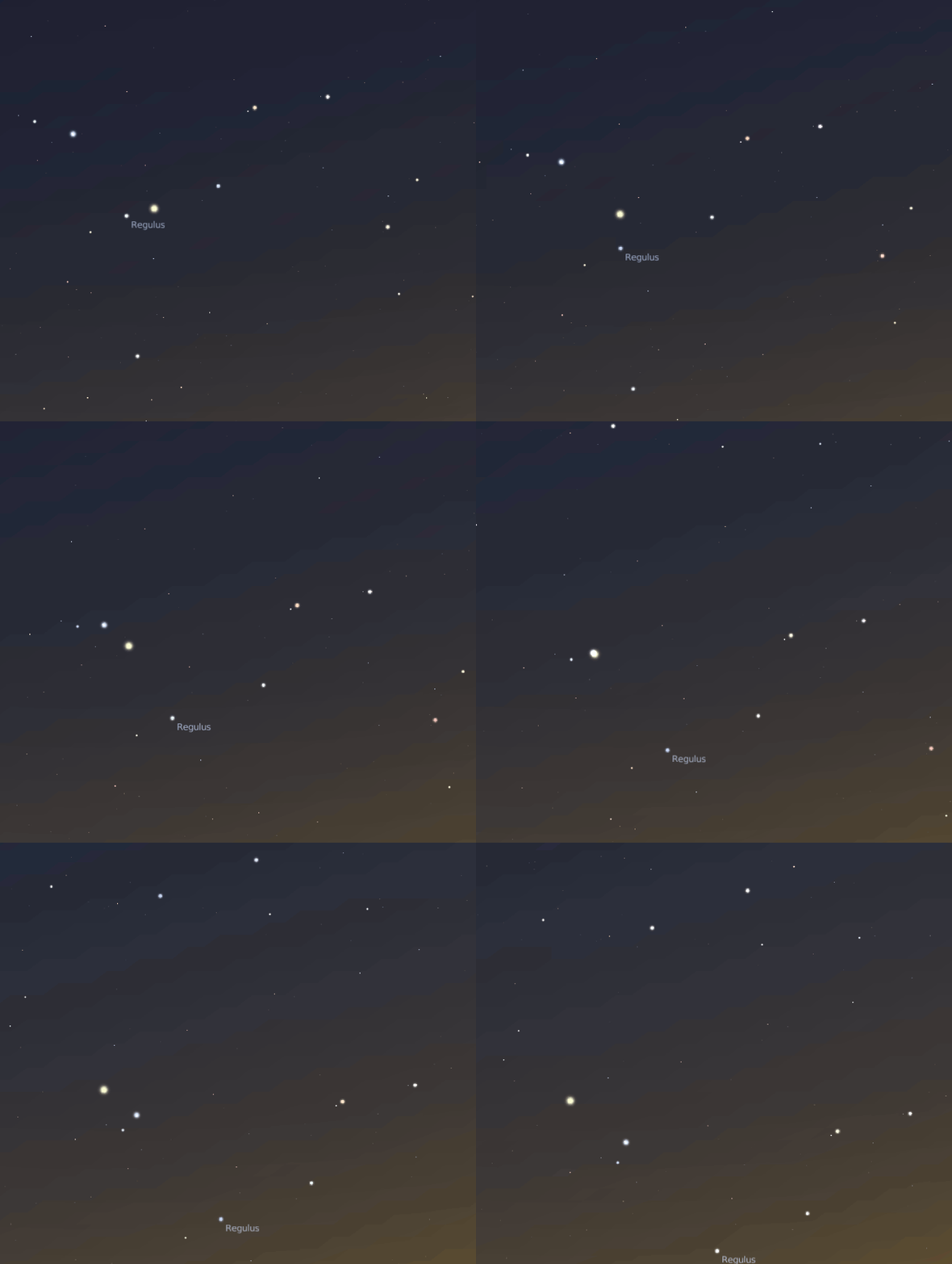
On June 16th 2 BCE, this time in the evening, Venus and Jupiter seem to coalesce as one, at least to the naked eye.
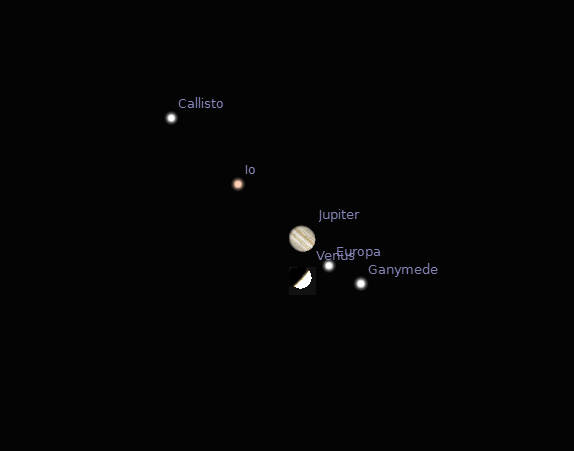
Venus appeared among Jupiter’s moons on June 16, 2 BCE. Of course, no one had a telescope back then. The telescope wouldn’t be invented for another 1,600 years. Stellarium cannot create the real brightness difference between Jupiter and Venus. Venus would be simply dazzling compared to Jupiter. Created using Stellarium.
12/23/2021 – Ephemeris – The James Webb Space Telescope to launch Real Soon Now
This is Ephemeris for Thursday, December 23rd. Today the Sun will be up for 8 hours and 48 minutes, setting at 5:06, and it will rise tomorrow at 8:18. The Moon, 3 days before last quarter, will rise at 9:23 this evening.
One of the problems in recording a week’s worth of programs at once is: one, not having the freshest news; and two, talking about an imminent space launch that gets canceled a day or two before scheduled launch. As of Sunday night, when I’m recording this, the often delayed James Webb Space Telescope is scheduled to be launched at 7:20 (am EST) tomorrow morning* from the European Space Agency’s Spaceport in Kourou, French Guiana on the northeast coast of South America. It will be launched on an Ariane 5 rocket into an orbit that will take the telescope a million miles away, opposite of the direction of the Sun to a gravitational somewhat stable L2 Lagrange point, which it will lazily orbit.
The astronomical event times given are for the Traverse City/Interlochen area of Michigan (EST, UT – 5 hours). They may be different for your location.
* See? Delayed again, this time for bad weather. The launch is rescheduled for not earlier than 7:20 am EST Christmas Day. This is why I hate to talk about spacecraft launches before they happen, except in a general way.
Addendum
James Webb Space Telescope trajectory to L2 with some milestones of deployment. “ISIM” stands for Integrated Scientific Instruments Module. Credit: Space Telescope Science Institute (STScI).
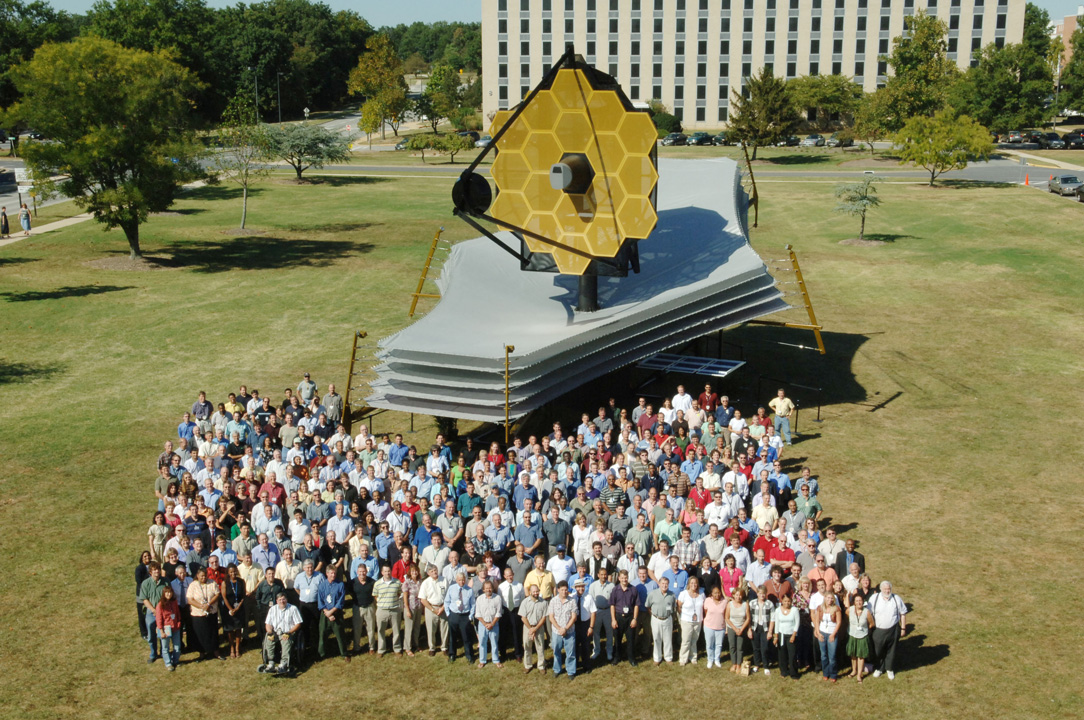
Full scale model of the James Webb Space Telescope at Goddard Space Flight Center. Note its scale, with the people who worked on it the foreground.
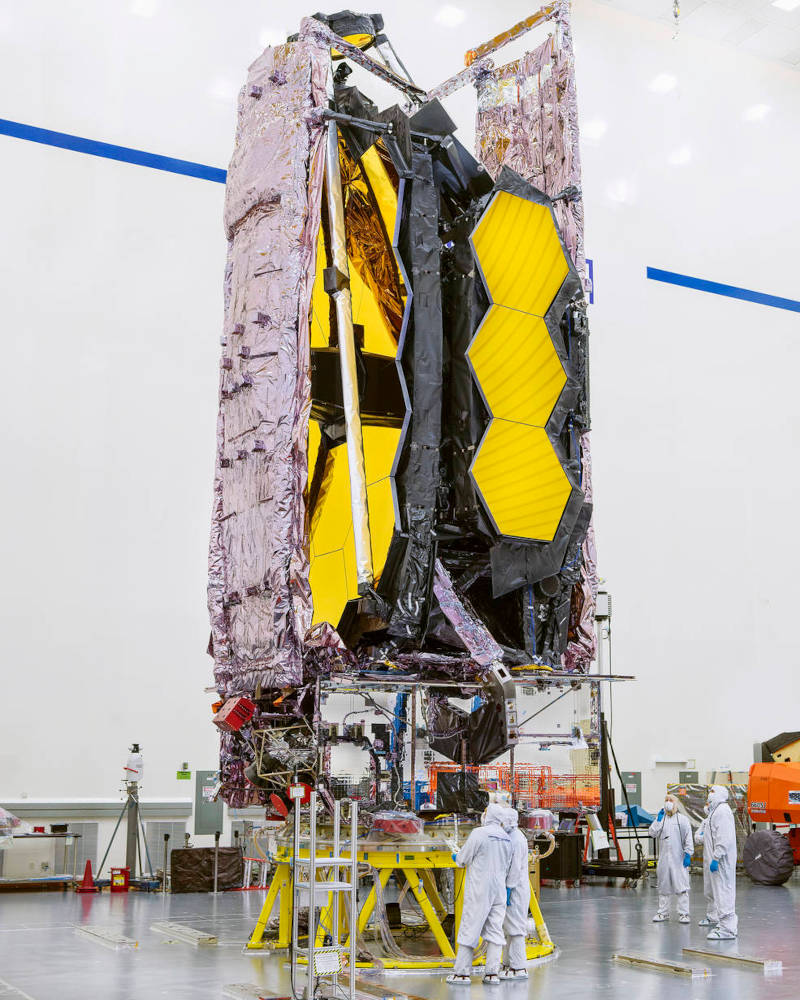
James Webb Space Telescope, folded and ready to be placed atop the Ariane 5 Rocket. After launch and on its way to L2 begins “29 Days of Terror” as various parts of the telescope deploy, including the five layer, tennis court sized, sun shade. Any failure could doom the 10 billion dollar telescope.
12/22/2021 – Ephemeris – Let’s search for the naked-eye planets for this week
This is Ephemeris for Wednesday, December 22nd. Today the Sun will be up for 8 hours and 48 minutes, setting at 5:05, and it will rise tomorrow at 8:18. The Moon, halfway from full to last quarter, will rise at 8:16 this evening.
Let’s search for the naked-eye planets for this week. Venus will be visible in the southwestern evening twilight by 5:30 tonight. It’s a crescent in telescopes, and even binoculars now. It is moving closer to us, and now appears larger than Jupiter in telescopes. Venus will set at 7:06 pm, 21 minutes earlier than it set a week ago, which means that the Sun is catching up with it faster and faster. It has only 17 days left in the evening sky, It’s now pulling away from Jupiter and Saturn. By 5:45 pm, both Jupiter and Saturn should be able to be spotted in the southwestern sky. Saturn will be dimmer, and to its lower right, halfway between it and Venus. Saturn will set at 8:17 pm, with Jupiter following an hour and a half later at 9:51 pm.
The astronomical event times given are for the Traverse City/Interlochen area of Michigan (EST, UT – 5 hours). They may be different for your location.
Addendum
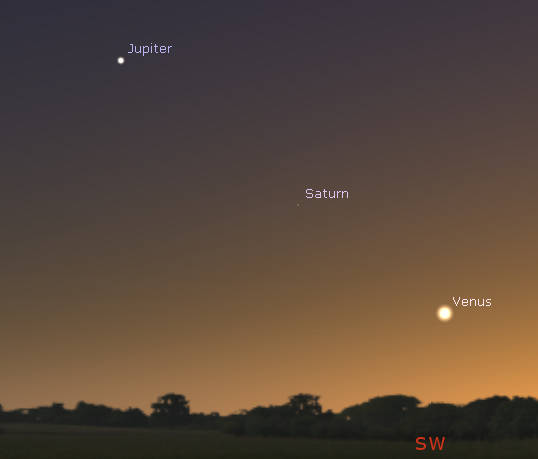
The evening planets, Venus, Saturn and Jupiter in the southwestern at 5:45 pm Tonight, December 22, 2021. Created using Stellarium.
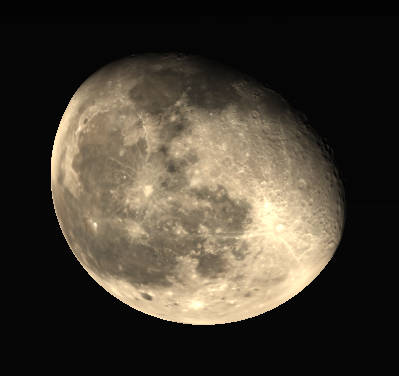
The Moon as it might appear in binoculars or small telescope low in the east northeast, tonight at 9 pm, December 22, 2021. Created using Stellarium.
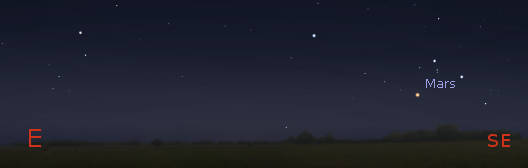
Mars, low in the southeast at 7 am tomorrow morning, December 22, 2021. Created using Stellarium.
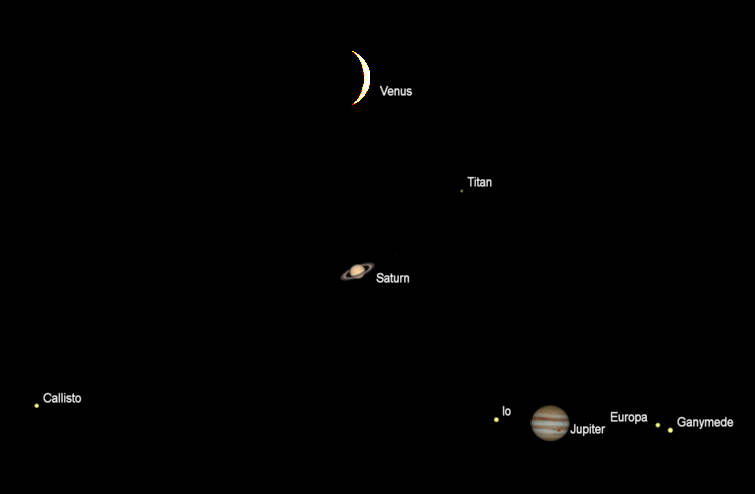
Telescopic views of the bright planets and their brighter moons (north up) as they would be seen in a small telescope, with the same magnification, this evening at 7 pm, December 22, 2021. Apparent diameters: Venus, 55.10″, 9.1% illuminated; Saturn 15.59″, its rings 36.32″; Jupiter, 36.16″. Mars is not shown, its apparent diameter is 3.93″. The ” symbol means seconds of arc (1/3600th of a degree.) Created using Cartes du Ciel (Sky Charts).
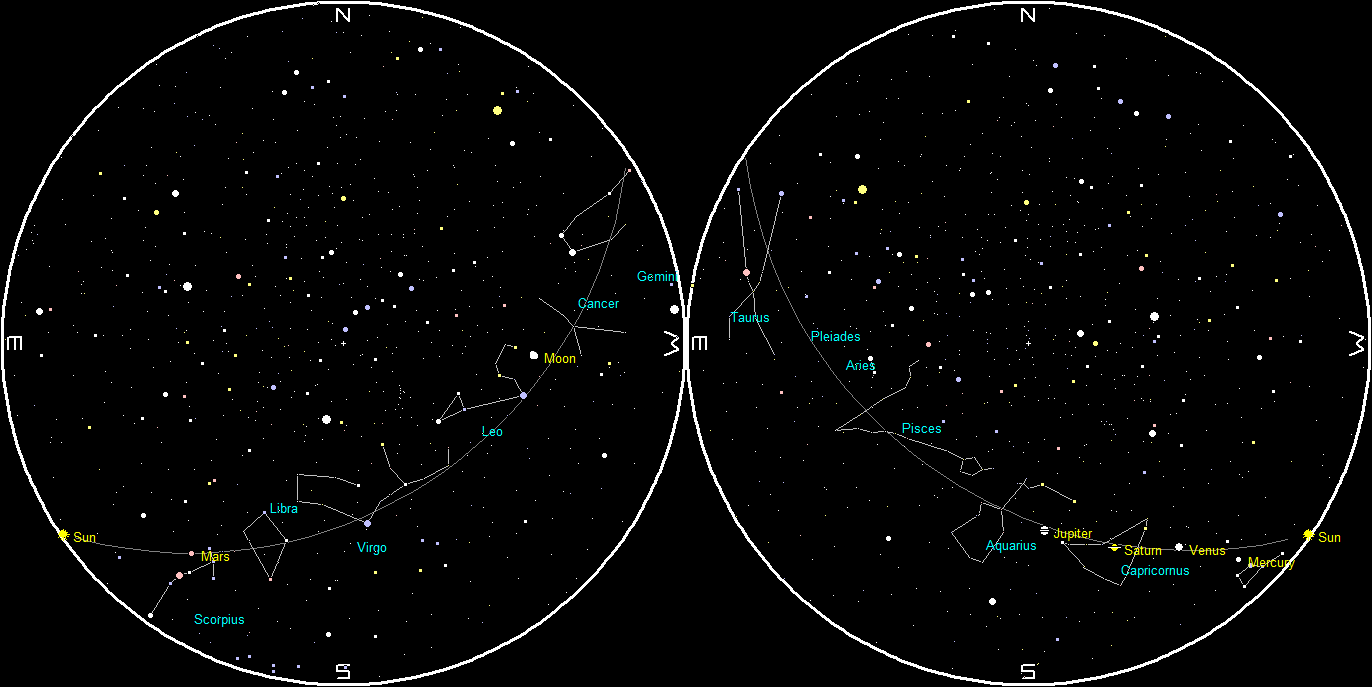
The naked-eye planets and the Moon at sunset and sunrise on a single night, starting with sunset on the right on December 22, 2021. The night ends on the left with sunrise on the 23rd. Click on the image to enlarge it. Created using my LookingUp program.

