Ephemeris: 10/21/2025 – Finding Andromeda
This is Ephemeris for Tuesday, October 21st. Today the Sun will be up for 10 hours and 41 minutes, setting at 6:47, and it will rise tomorrow at 8:07. The Moon is new today, and won’t be visible.
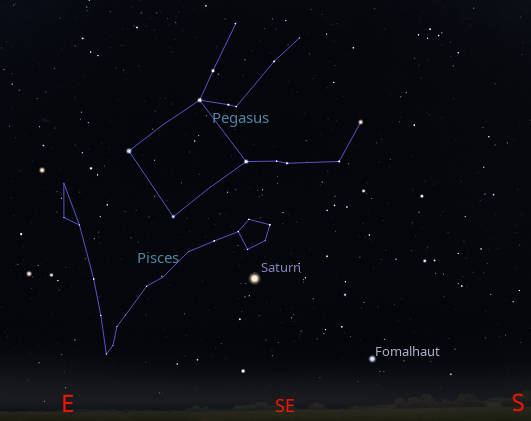
Tonight at 9:00 PM Saturn is in the southeast, with the Great Square of Pegasus above and to the left. Off the leftmost star of the Great Square, called Alpheratz, are two curved lines of stars to the left and a bit below, and slightly diverging. They might be mistaken for the hind legs of the horse, which is flying upside down. It’s another constellation, that of Andromeda the Princess, daughter of Cassiopeia, the W shaped constellation to the upper left. Andromeda was rescued by hero Perseus which is another constellation left of her, which we’ll get to later on this week. Andromeda’s claim to scientific fame is the large galaxy located there, the Great Andromeda Galaxy, probably the farthest thing one can spot with the naked eye.
The astronomical event times given in this blog are for the Traverse City/Interlochen area of Michigan (Lat 44.7° N, Long 85.7° W; EDT, UT – 4 hours) unless stated otherwise. Times will be different for other locations.
Addendum
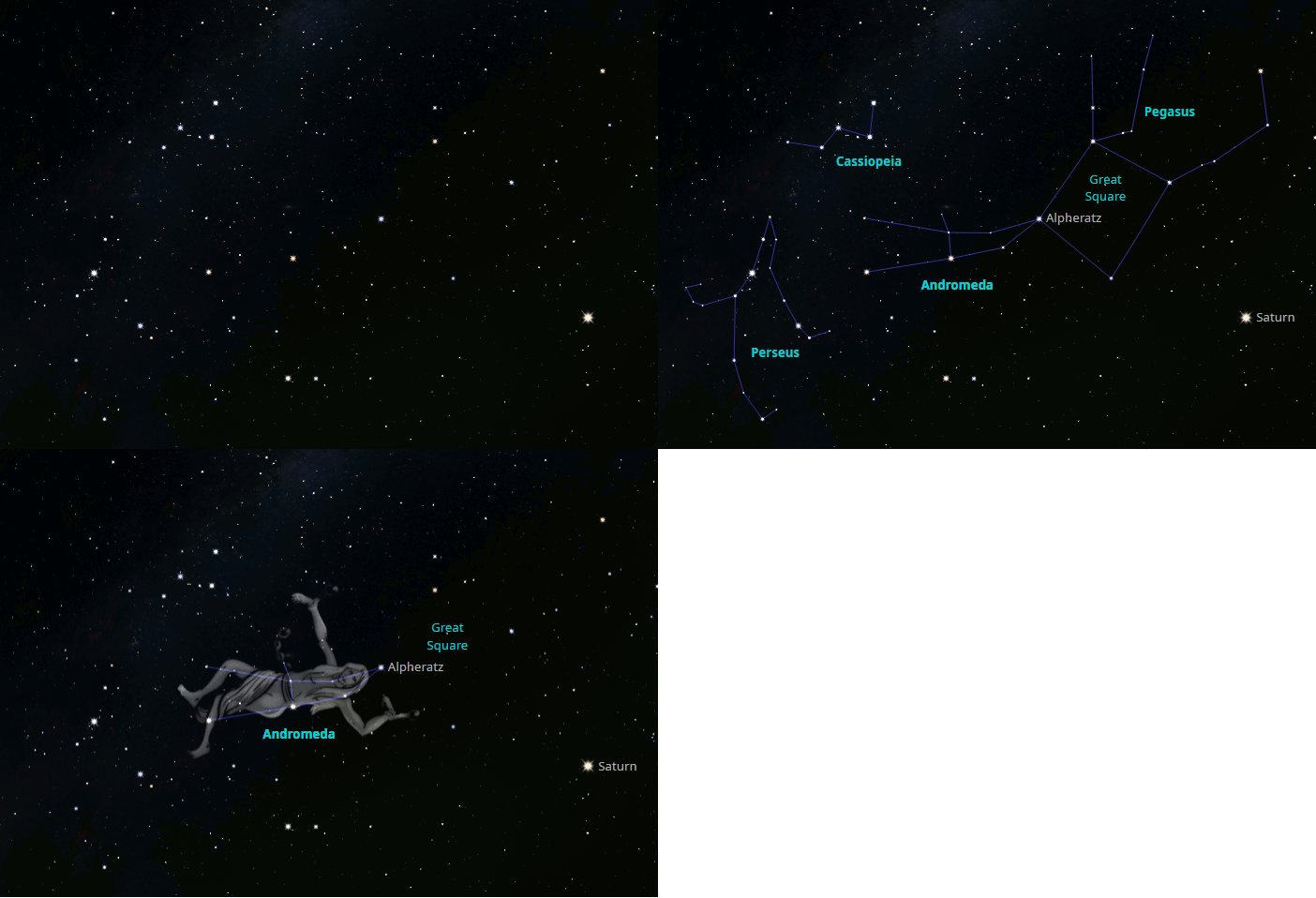
Andromeda is part of the Great Star Story of Autumn. My take on it is linked Here.
Ephemeris: 10/20/2025 – The Fisher paints the autumn colors
This is Ephemeris for Monday, October 20th. Today the Sun will be up for 10 hours and 44 minutes, setting at 6:49, and it will rise tomorrow at 8:06. The Moon, 1 day before new, will rise at 8:19 tomorrow morning.
The leaves on the trees are beginning to turn to reds and yellows as we advance through autumn. The native Anishinaabe peoples, whose homeland we share, have a story about how that came to be. Of how a magical weasel-like creature called the Fisher or, in their native language, Ojiig Anung (Fisher Star), brought summer to the Earth from Skyland. For his trouble, he was shot with an arrow in his only vulnerable spot, the tip of his tail. As he fell to Earth Gichi Manitou, the Great Spirit, caught him and placed him in the sky where we see the Great Bear and the Big Dipper. Every late autumn night we see his tail, the handle of the dipper, slowly swooping down to the horizon in the north, where his bloody tail paints the trees with their autumn colors.
The astronomical event times given in this blog are for the Traverse City/Interlochen area of Michigan (Lat 44.7° N, Long 85.7° W; EDT, UT – 4 hours) unless stated otherwise. Times will be different for other locations.
Addendum
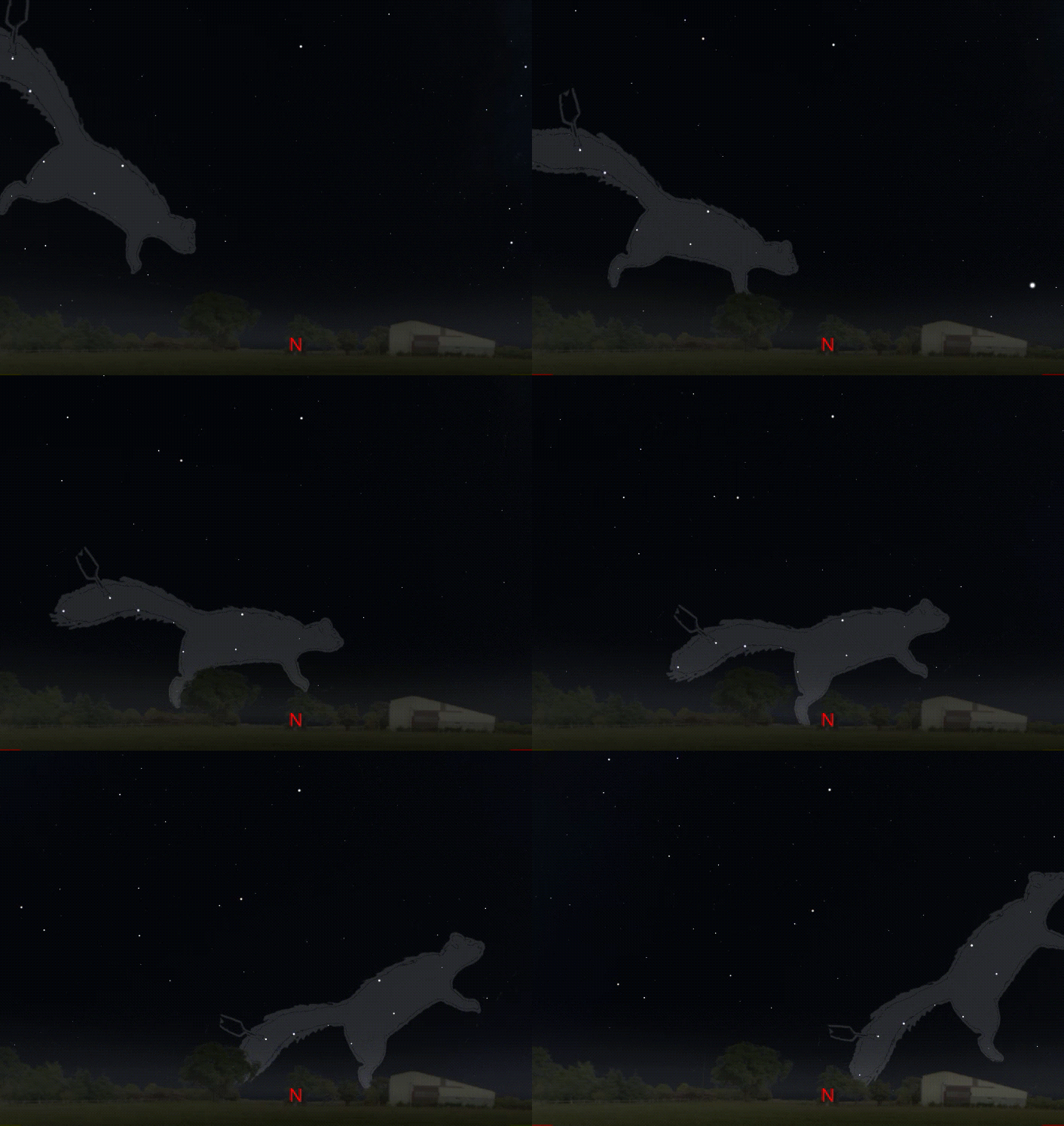
For my take on the story of how the Fisher brought summer to the Earth, click here.
Ephemeris: 10/17/2025 – Fomalhaut, lonely again
This is Ephemeris for Friday, October 17th. Today the Sun will be up for 10 hours and 52 minutes, setting at 6:54, and it will rise tomorrow at 8:02. The Moon, halfway from last quarter to new, will rise at 5:04 tomorrow morning.
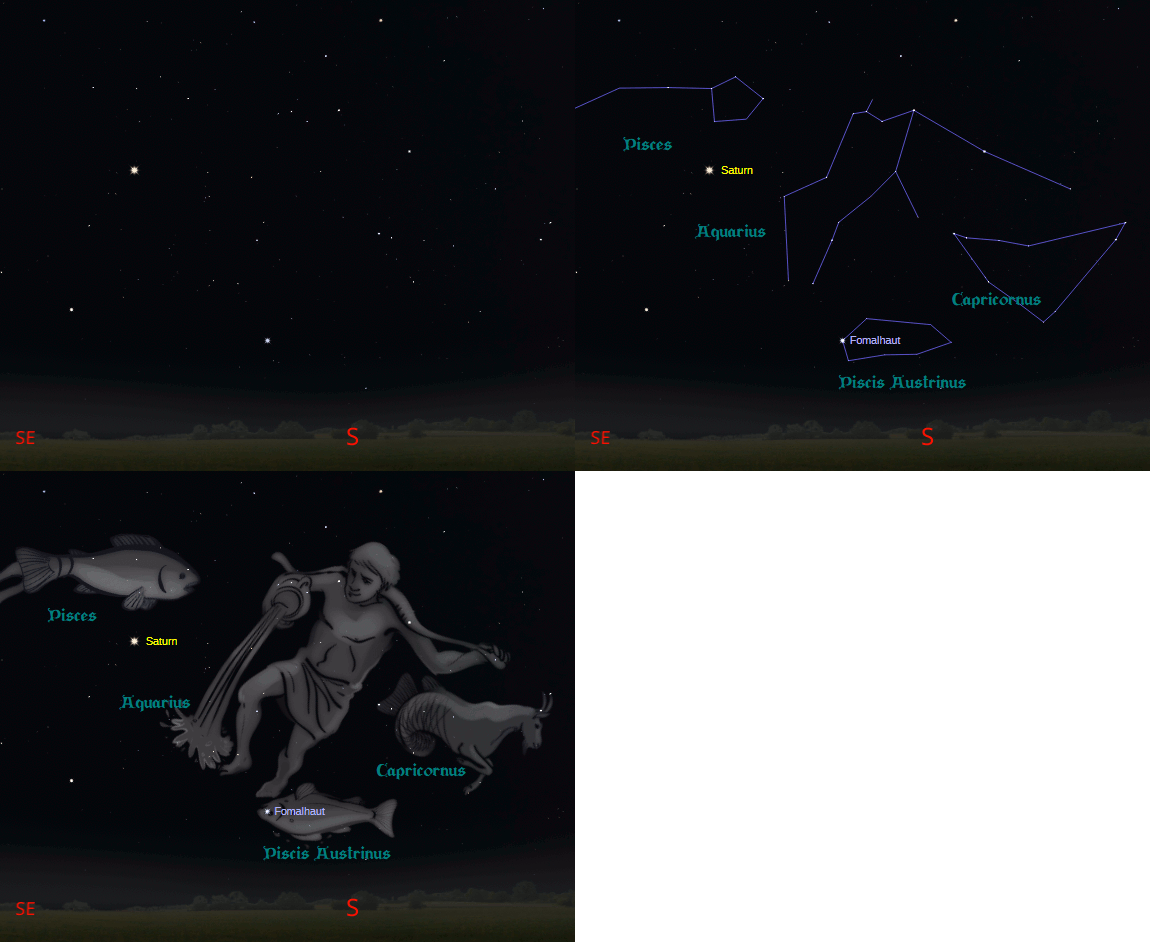
There’s a bright star that appears for only seven and a half hours on autumn evenings. Its appearance, low in the south in the evening, is a clear indication of autumn. It is currently below and right of the much brighter Saturn. The star’s name is Fomalhaut, which means fish’s mouth. That’s fitting because it’s in the constellation of Piscis Austrinus, the southern fish. At our latitude it’s kind of the fish that got away, because Fomalhaut is low in our skies where stars lose more than half their brightness. For the last few years Jupiter, then Saturn have kept it company. However, Saturn is moving on, having shifted into Pisces, leaving Fomalhaut to its lonely vigil in the south.
The astronomical event times given in this blog are for the Traverse City/Interlochen area of Michigan (Lat 44.7° N, Long 85.7° W; EDT, UT – 4 hours) unless stated otherwise. Times will be different for other locations.
Addendum
Ephemeris: 10/16/2025 – The Anishinaabe saw a Moose where Pegasus is
This is Ephemeris for Thursday, October 16th. Today the Sun will be up for 10 hours and 55 minutes, setting at 6:55, and it will rise tomorrow at 8:01. The Moon, 3 days past last quarter, will rise at 3:57 tomorrow morning.
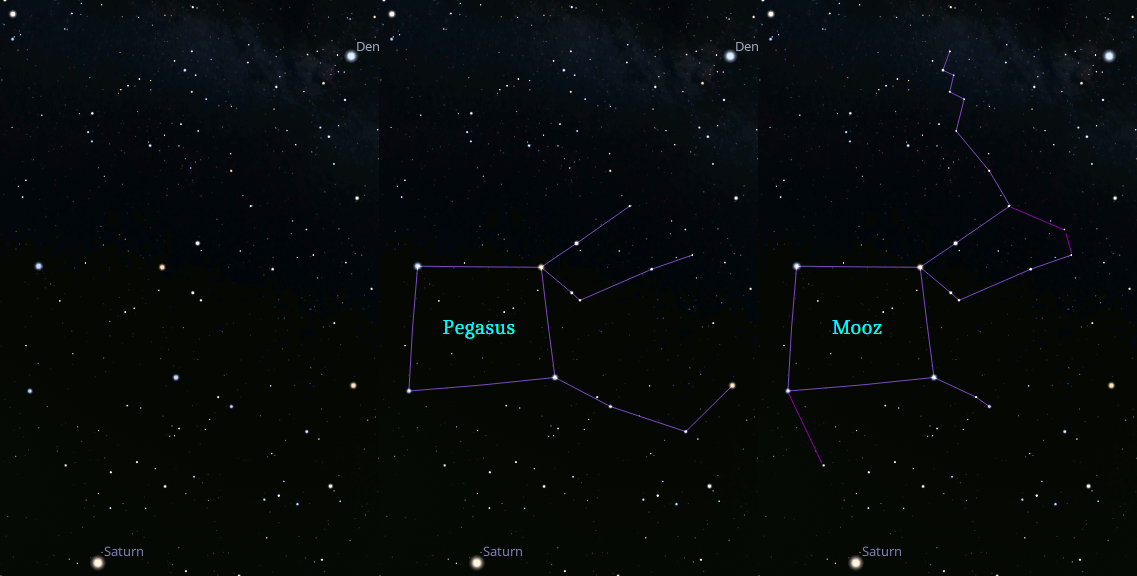
High in the southeast at 10 PM is the constellation officially called Pegasus the flying horse. The front part of his body is a pattern of stars we call the Great Square of Pegasus, and he’s flying upside down, quite an aerobatic horse. His wings are not seen in the stars, however his neck and head, up to his nose is, along with his front legs. The Anishinaabe peoples of this area call it Mooz, from which we get our word moose. He’s right side up, facing the west. His head is where we see the front legs of Pegasus, and his antlers are above it where there is another official constellation made of faint stars called Lacerta, which is a lizard. Not everyone sees the same figure in the stars.
The astronomical event times given in this blog are for the Traverse City/Interlochen area of Michigan (Lat 44.7° N, Long 85.7° W; EDT, UT – 4 hours) unless stated otherwise. Times will be different for other locations.
Addendum
Ephemeris: 10/15/2025 – Taking our weekly look at the whereabouts of the naked-eye planets
This is Ephemeris for Wednesday, October 15th. Today the Sun will be up for 10 hours and 58 minutes, setting at 6:57, and it will rise tomorrow at 7:59. The Moon, 2 days past last quarter, will rise at 2:47 tomorrow morning.
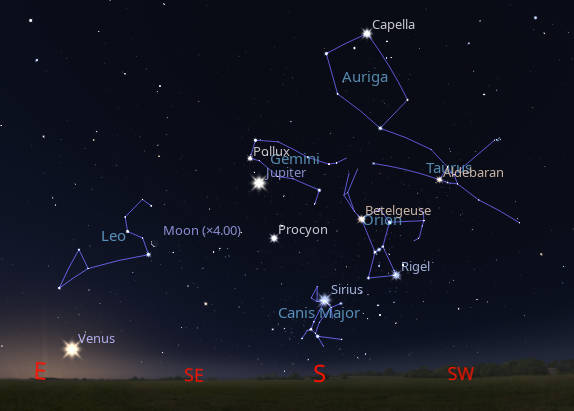
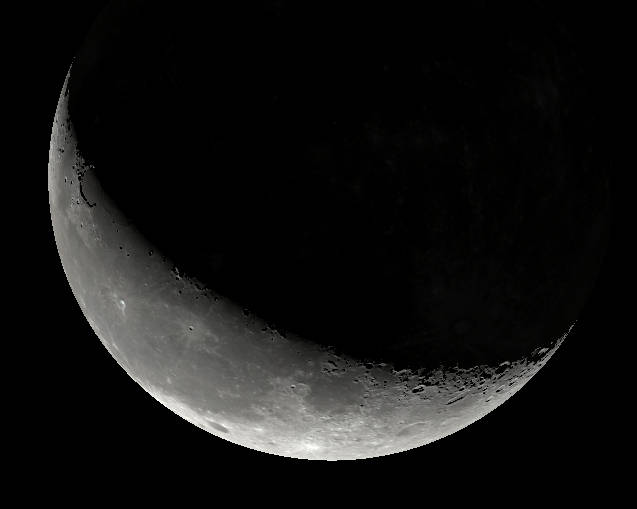
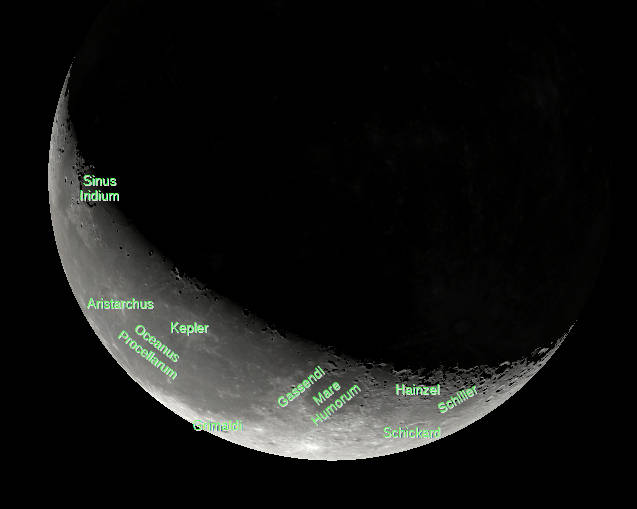
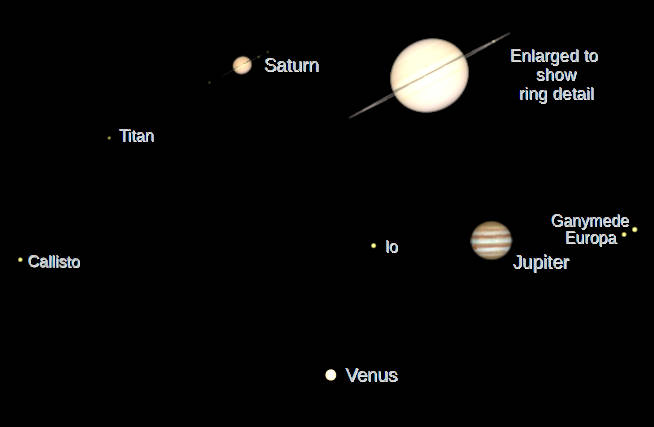
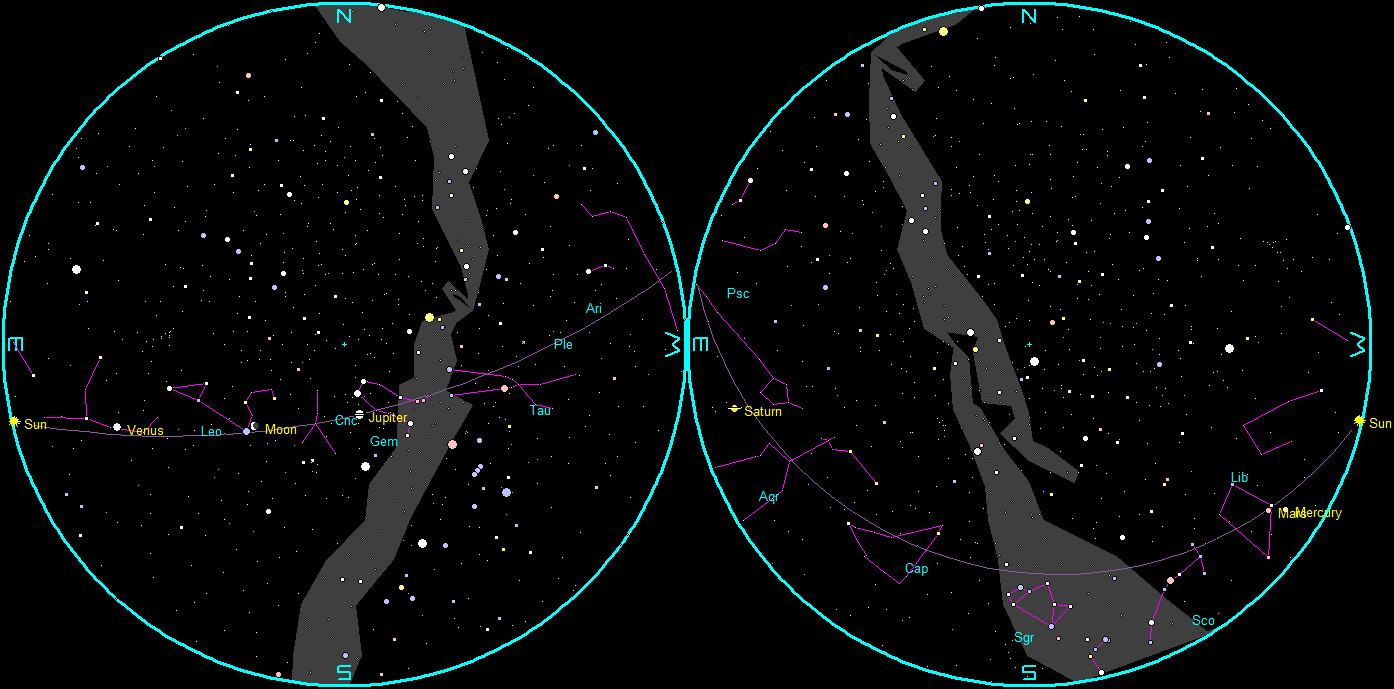
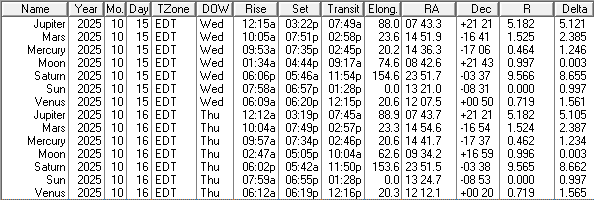
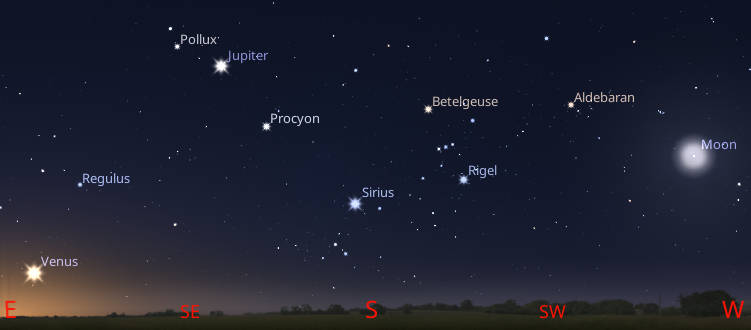
Let’s take our weekly look at the whereabouts of the naked-eye planets. Saturn is the brightest star like object in the east southeastern sky at 8 PM. In a telescope Saturn sports a very thin ring, 1° from being edge on in telescopes. Many times I’ve been asked whether they can see Saturn’s rings in their telescope. Normally I’d say yes. Currently, the rings appear very thin and can be difficult to pick up. Jupiter will rise at 12:11 AM. By 7 AM, it will appear high in the south-southeast, below the stars of Gemini, with Orion and the other bright stars of Winter in the south. Brilliant Venus, which will rise at 6:12 AM will be low in the east at 7 AM. Tomorrow morning the waning crescent of the Moon will appear between the two planets.
The astronomical event times given in this blog are for the Traverse City/Interlochen area of Michigan (Lat 44.7° N, Long 85.7° W; EDT, UT – 4 hours) unless stated otherwise. Times will be different for other locations.
Addendum
Ephemeris: 10/14/2025 – Ada Lovelace Day
This is Ephemeris for Ada Lovelace Day, Tuesday, October 14th. Today the Sun will be up for 11 hours and 1 minute, setting at 6:59, and it will rise tomorrow at 7:58. The Moon, 1 day past last quarter, will rise at 1:34 tomorrow morning.
Ada Lovelace (1815-1852), or more properly Augusta Ada King, Countess of Lovelace, was the daughter of Lord Byron and worked for Charles Babbage, a brilliant mechanical engineer and mathematician in the early 19th century. She is considered the first computer programmer. She devised a way to use the same punch cards that were used on the Jacquard loom to store and run her programs, even though Babbage was unable to complete his mechanical computer the Analytical Engine in the mid 1800s. This day is set aside to celebrate the accomplishments of all the women of Science, Technology, Engineering and Math, (STEM). The computer language, Ada, was named after her, and was created for the US Department of Defense or whatever they call it this week.
The astronomical event times given in this blog are for the Traverse City/Interlochen area of Michigan (Lat 44.7° N, Long 85.7° W; EDT, UT – 4 hours) unless stated otherwise. Times will be different for other locations.
Addendum


The reason I’m interested in Ada Lovelace and her story is that I spent 45 years as a systems analyst, creating and coding computer applications for small businesses and banks. I ended up heading the IT department for a local bank, from which I retired 12 years ago. Astronomy is my hobby, though I’ve made a few bucks at it in my earlier years as a planetarium technician and lecturer.
Ephemeris: 10/13/2025 – Celebrating Indigenous Peoples Day
This is Ephemeris for Indigenous Peoples Day, Monday, October 13th. Today the Sun will be up for 11 hours and 4 minutes, setting at 7:01, and it will rise tomorrow at 7:57. The Moon, at last quarter today, will rise at 12:19 tomorrow morning.
This is, according to the current U.S. administration, Columbus Day and only Columbus Day. Some of us commemorate it as Indigenous Peoples Day because they discovered this place first. Columbus never set foot on the continental United States, however he did visit Puerto Rico. The indigenous people beat him to it by more than 1000 years. The reason that Columbus is celebrated because he unleashed the giant migration of Europeans and others, what the indigenous people might just think of a flood of illegal aliens into what they called Turtle Island. It being named after one of their creation stories, which we call North America. No, it’s not “Turtles all the way down”. That’s a Hindu thing.
The astronomical event times given in this blog are for the Traverse City/Interlochen area of Michigan (Lat 44.7° N, Long 85.7° W; EDT, UT – 4 hours) unless stated otherwise. Times will be different for other locations.
Addendum

Ephemeris: 10/10/2025 – Could radio noisy galaxies harbor many advanced civilizations?
This is Ephemeris for Friday, October 10th. Today the Sun will be up for 11 hours and 14 minutes, setting at 7:06, and it will rise tomorrow at 7:53. The Moon, 3 days before last quarter, will rise at 9:00 this evening.
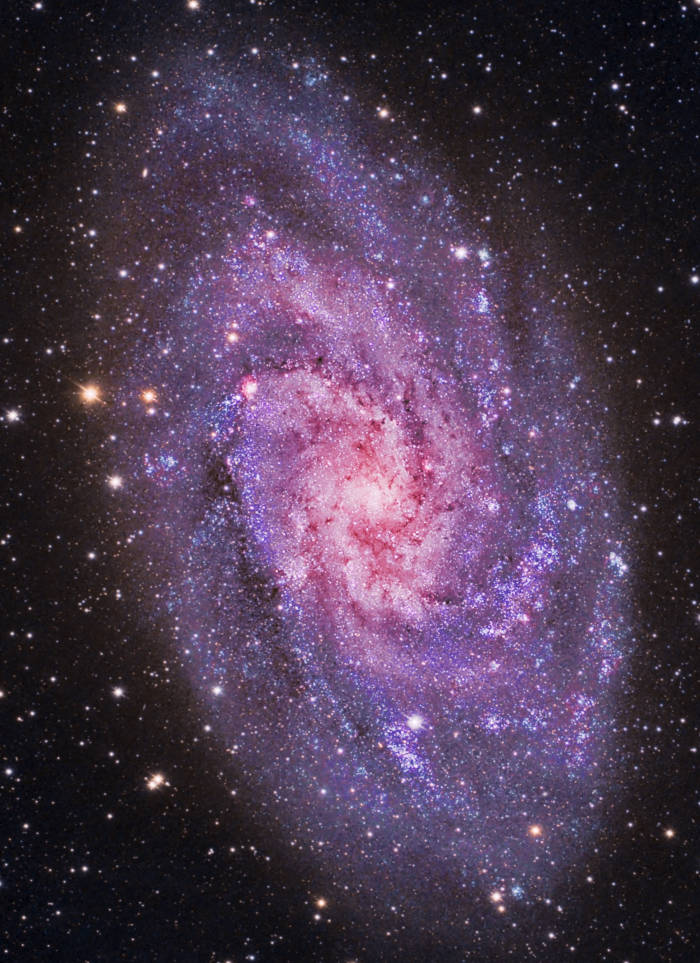
I ran across an article on the Universe Today website a few days ago about galaxies with high radio emissions, that could be home to many advanced civilizations. Some galaxies do emit a lot of radio emissions, mainly because they have a black hole in the center that it was, in the past, active throwing out material from the galaxy that didn’t make it into the black hole. But this would be emissions from the actual disk of the Galaxy, inside which would be the cacophony of many advanced civilizations and their normal transmissions of their version of I Love Lucy. When combined, it enhances the general radio noise, so it can be detected as being out of ordinary. And there are a few galaxies like that. It would make the universe less lonely.
The astronomical event times given in this blog are for the Traverse City/Interlochen area of Michigan (Lat 44.7° N, Long 85.7° W; EDT, UT – 4 hours) unless stated otherwise. Times will be different for other locations.
Addendum
Here’s a link to the Universe Today article: https://www.universetoday.com/articles/galaxies-with-high-radio-emissions-could-be-home-to-many-advanced-civilizations
Ephemeris: 10/09/2025 – Eclipses and occultations of Jupiter’s satellites by each other
This is Ephemeris for Thursday, October 9th. Today the Sun will be up for 11 hours and 17 minutes, setting at 7:08, and it will rise tomorrow at 7:52. The Moon, 3 days past full, will rise at 8:16 this evening.
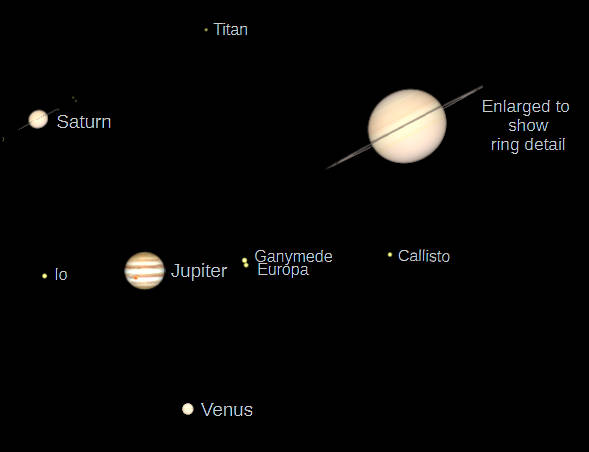
To astronomers the word occult doesn’t mean what you think it means. It’s not a mysterious thing, but the word occult simply means hidden, when one body hides behind another. For example, a solar eclipse isn’t really an eclipse by astronomical standards it is an occultation: the Sun hides behind the Moon. But, a lunar eclipse is really an eclipse where the Moon enters the Earth’s shadow. There is a period for the next 2½ years when Jupiter’s satellites will be both occulting and eclipsing each other. This can easily be seen in a small telescope or even binoculars. Satellites will slowly seem to merge in occultations and disappear, for some minutes, being eclipsed in another satellite’s shadow. The main show starts in May next year and ends in August 2028.
The astronomical event times given in this blog are for the Traverse City/Interlochen area of Michigan (Lat 44.7° N, Long 85.7° W; EDT, UT – 4 hours) unless stated otherwise. Times will be different for other locations.
Addendum


IOTA’s website is occultations.org. Occult is free software. Besides occultations, it can be used to investigate historical and future solar and lunar eclipses, and transits of Mercury and Venus across the face of the Sun. And more.
Ephemeris: 10/08/2025 – Weekly look at the whereabouts of the naked-eye planets
This is Ephemeris for Wednesday, October 8th. Today the Sun will be up for 11 hours and 20 minutes, setting at 7:09, and it will rise tomorrow at 7:51. The Moon, 2 days past full, will rise at 7:42 this evening.
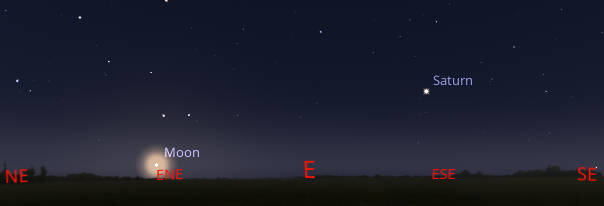
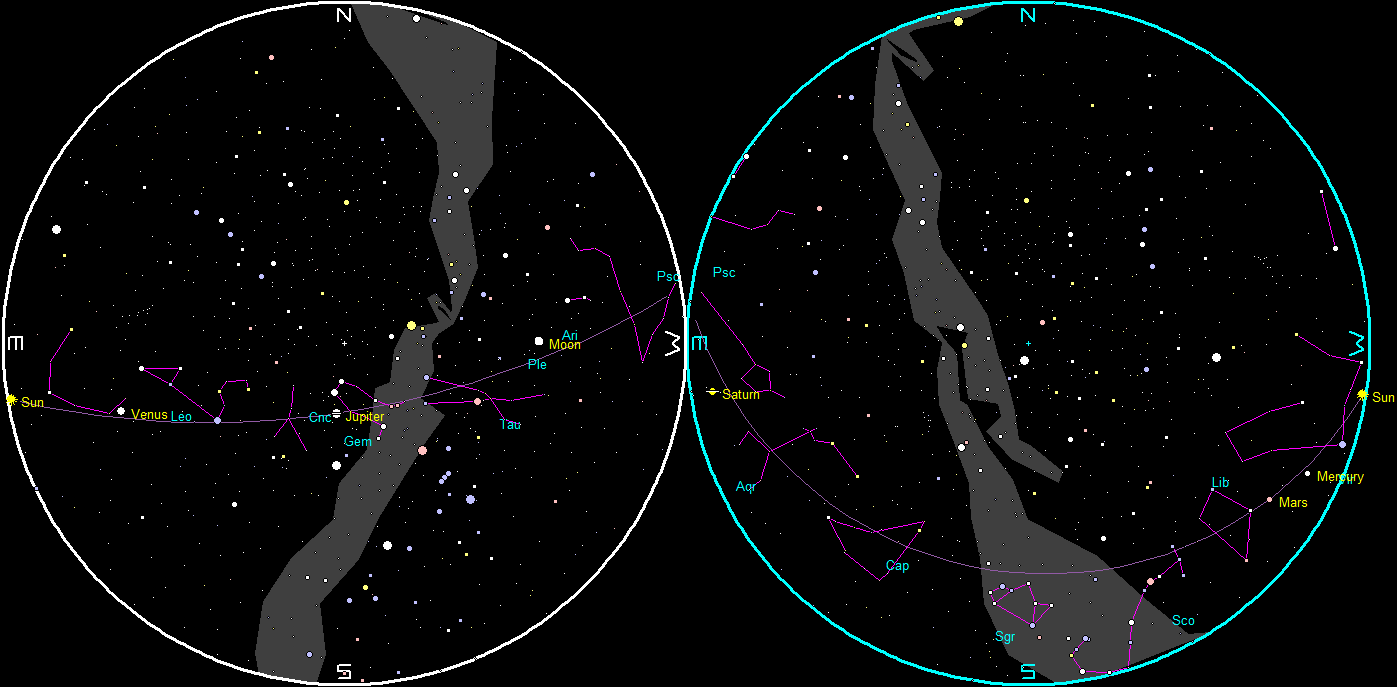
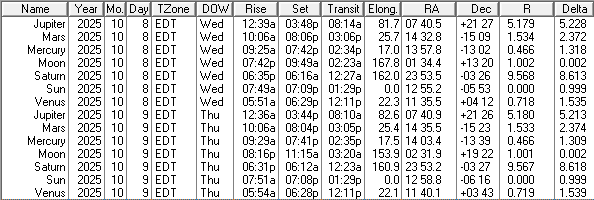
Let’s take our weekly look at the whereabouts of the naked-eye planets. Saturn rises before sunset in the east. It is the brightest star like object in the east southeastern sky at 8 PM not long after the Moon rises. In a telescope Saturn sports a very thin ring, 1.2° from being edge on in telescopes. Saturn has an axial tilt of about 27°, so it has seasons like the Earth and since its rings are over its equator, when they go edge on to the Sun, it is an equinox for it, which happened this past May. Earth, being close to the Sun, sees nearly the same thing. Now the ring angle for us will decrease to about a third of a degree by November 23rd before increasing. By 7 AM, Jupiter will appear high in the southeast, under the stars of Gemini. With brighter Venus low in the east.
The astronomical event times given in this blog are for the Traverse City/Interlochen area of Michigan (Lat 44.7° N, Long 85.7° W; EDT, UT – 4 hours) unless stated otherwise. Times will be different for other locations.
Addendum
 Bob Moler's Ephemeris Blog