Ephemeris: 01/10/2025 – Venus’ split personality
This is Ephemeris for Friday, January 10th. Today the Sun will be up for 9 hours and 4 minutes, setting at 5:22, and it will rise tomorrow at 8:18. The Moon, 3 days before full, will set at 6:40 tomorrow morning.
In very ancient times the Greeks thought that Venus in the evening as we see it now and Venus in the morning sky were two separate planets. The evening appearance was Aphrodite the goddess of love, and in the morning sky it was Phosphorus, the bringer of light, that being dawn. In Roman times Aphrodite became Venus and Phosphorus became Lucifer. It is interesting that Venus and Aphrodite are female while Phosphorus and Lucifer are male. Another term for Venus which I even use colloquially, is Evening Star for its current location and Morning Star in the morning sky, even though it’s a planet not a star. Venus is a beautiful planet in our sky, but a hellish planet in reality. No wonder Elon Musk would rather go to Mars than the much closer Venus.
The astronomical event times given are for the Traverse City/Interlochen area of Michigan (EST, UT – 5 hours). Times will be different for other locations.
Addendum
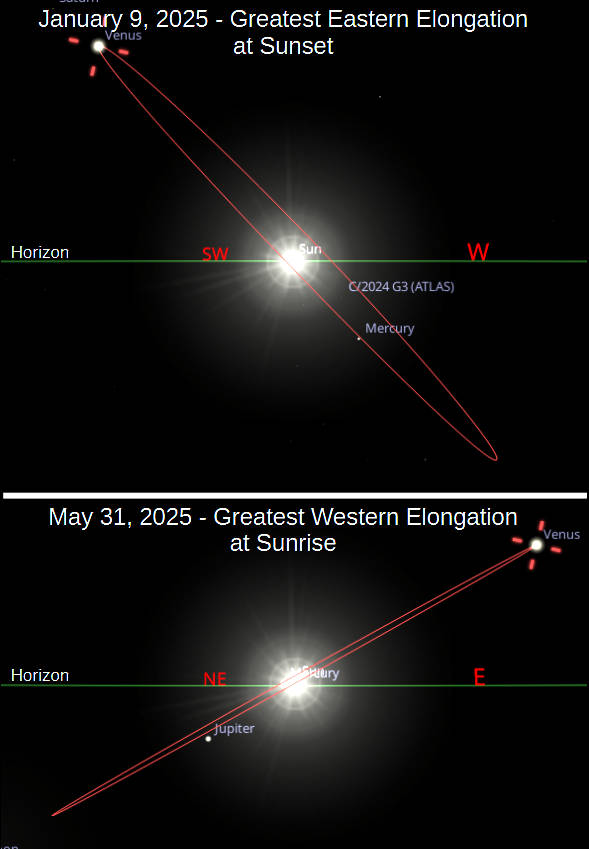
Ephemeris: 01/09/2025 – Venus is at its greatest separation from the Sun today
This is Ephemeris for Thursday, January 9th. Today the Sun will be up for 9 hours and 2 minutes, setting at 5:21, and it will rise tomorrow at 8:18. The Moon, 3 days past first quarter, will set at 5:25 tomorrow morning.
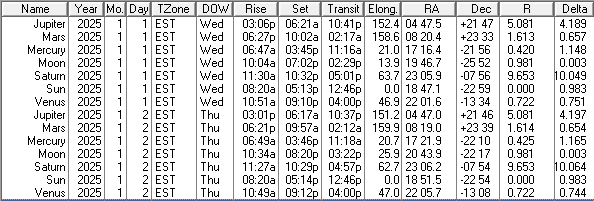
Tonight, Venus will be at its greatest separation from the Sun in the sky at a little bit more than a 47° angle. Venus, being inside the Earth’s orbit, can ever stray far from the Sun. So today it is at its greatest eastern elongation from the Sun. For the rest of winter it will be moving closer to the Sun from our perspective. Crossing between the Earth and the Sun on March 22nd. During this period of time Venus will be a great object for the telescope, as it moves closer to the Earth and gets larger in telescopes and its phase, moving from being like a quarter moon to a very thin crescent near the end of winter. At inferior conjunction with the Sun, Venus will be only 26 million miles away from us, but quite invisible in the Sun’s glare.
The astronomical event times given are for the Traverse City/Interlochen area of Michigan (EST, UT – 5 hours). Times will be different for other locations.
Addendum
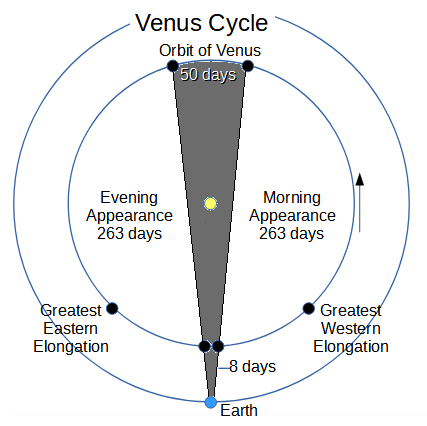
The Mayan civilization of Central America had several calendars. One of them was based on the planet Venus. They discovered that Venus repeated its positions in the sky with respect with the seasonal calendar over a period of eight years, which they called a Venus Sequence. They paid close attention to Venus and discovered it appeared to go around the Sun in the sky in 584 days, which they called a Venus Cycle. We call it Venus’ synodic period, which is the number of days between inferior conjunction, when Venus passes between the Earth and the Sun, then moves through the morning sky, and disappears behind the Sun at superior conjunction, then appears in the evening sky and back to inferior conjunction again. The gray area in the diagram is where Venus is not visible because it’s too close to the sun. However, at our latitude the number of days that Venus is invisible varies with the season. The Mayans, being in the tropics, didn’t have as much variation as we do. The Mayans discovered that Venus completed 5 cycles in almost exactly 8 years.
Today, Venus is at its greatest eastern elongation. On March 22nd Venus will pass inferior conjunction. That is 72 days from today. So it spends most of its time, 7 months, moving from around behind the Sun to the greatest elongation and only a short time, about 2 1/2 months moving from there to inferior conjunction. These 2 1/2 months are the best time to view Venus with a telescope, since Venus will grow in size and become an ever thinning crescent.
Check out my Wednesday posts showing the ever-growing and thinning Venus crescent until March 22nd. Or better yet, see it for yourself with a small telescope.
Ephemeris: 01/08/2025 – A weekly look at the whereabouts of the naked-eye planets
This is Ephemeris for Wednesday, January 8th. Today the Sun will be up for 9 hours and 1 minute, setting at 5:20, and it will rise tomorrow at 8:18. The Moon, 2 days past first quarter, will set at 4:05 tomorrow morning.
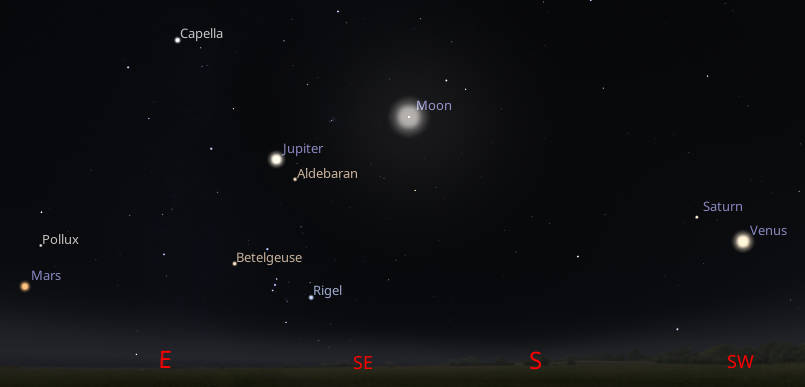
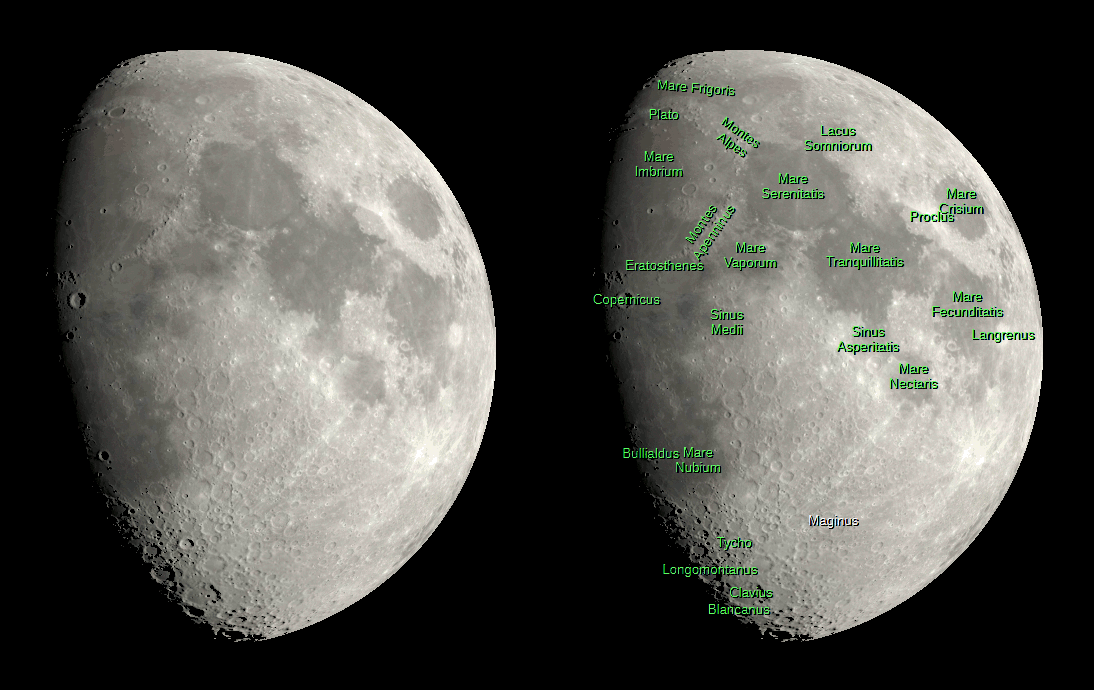
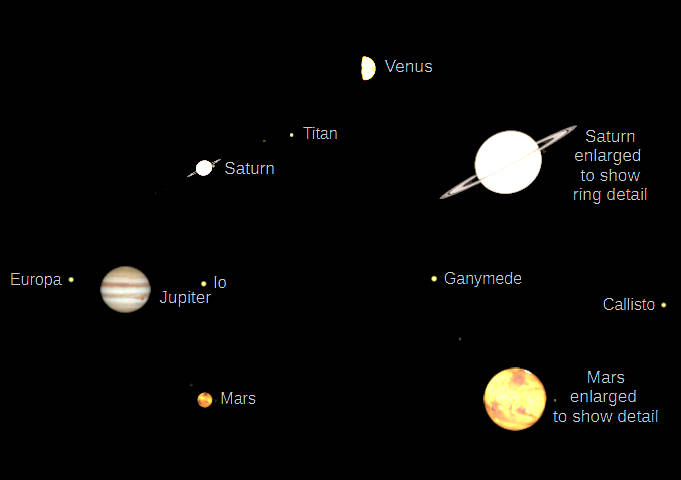
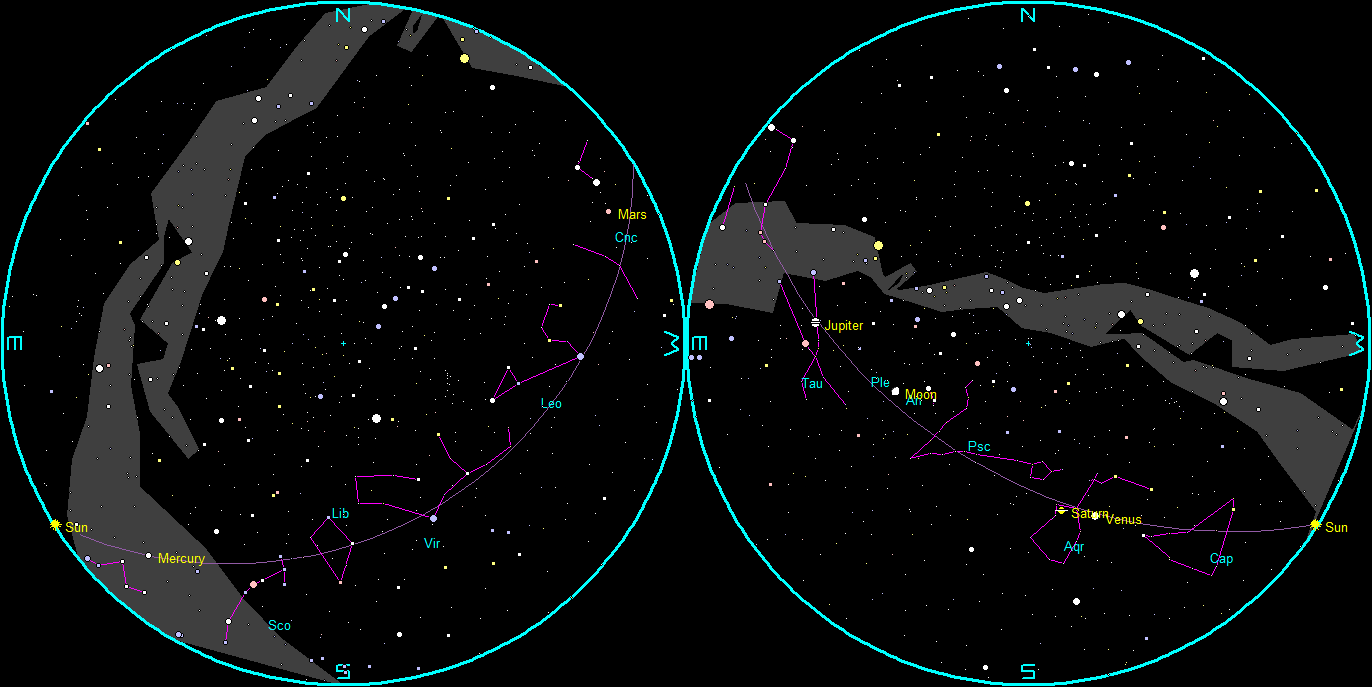
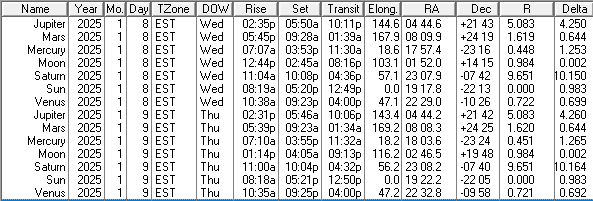
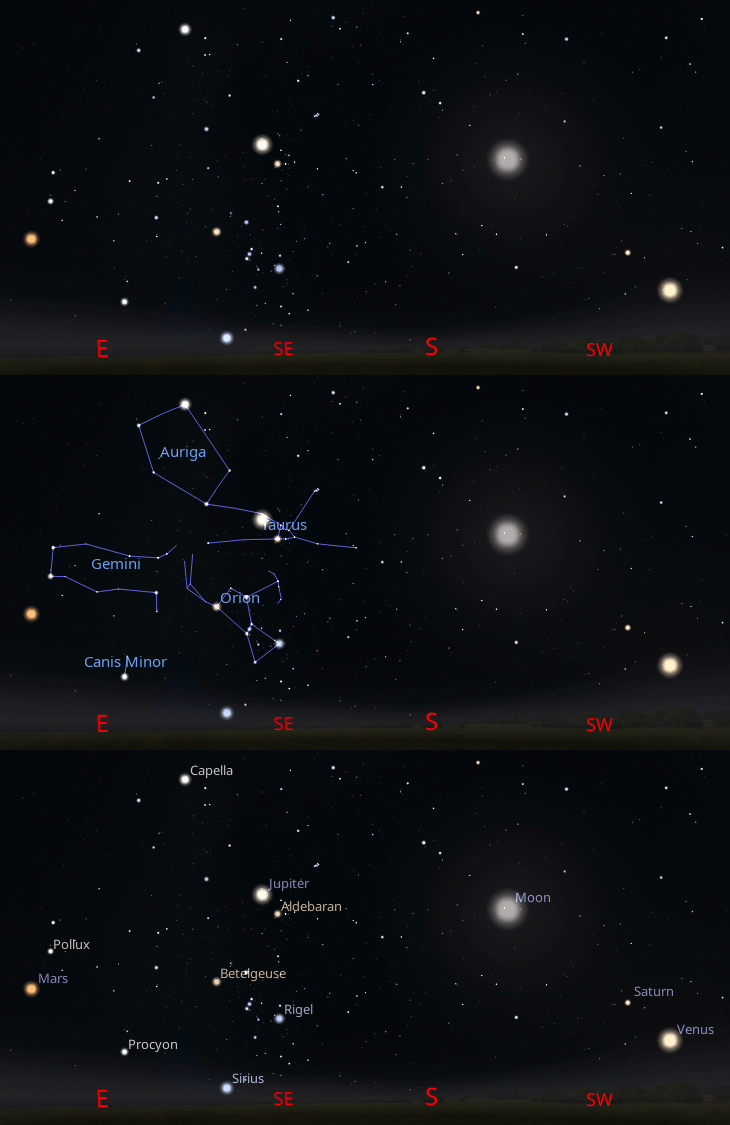
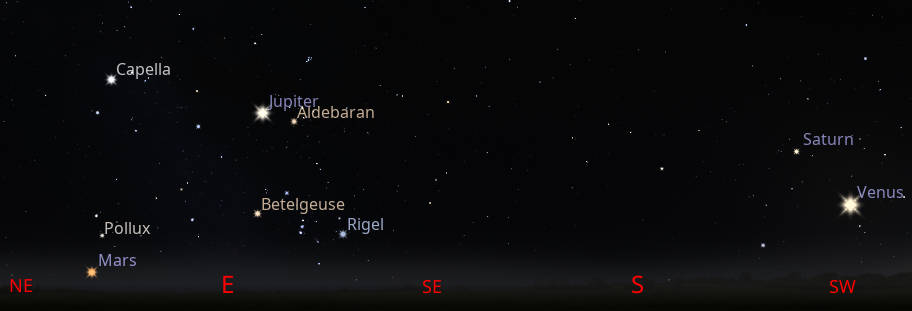
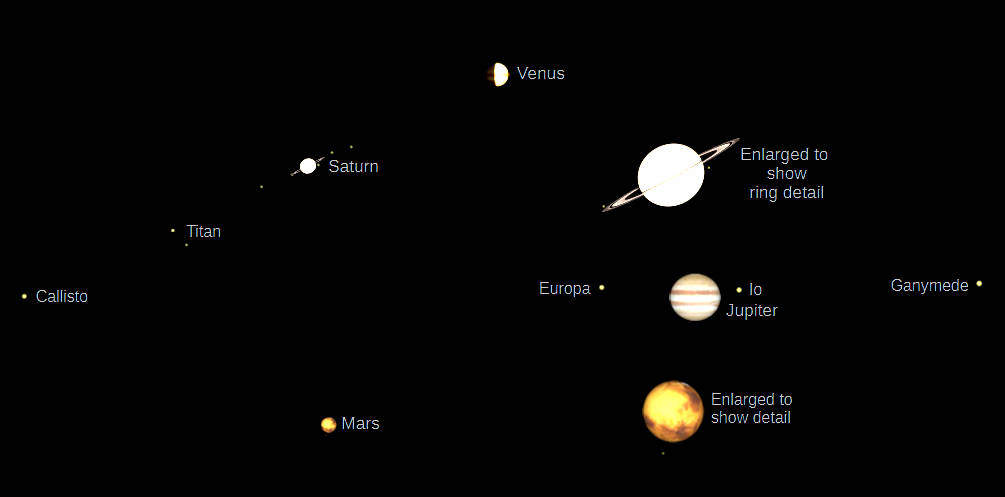
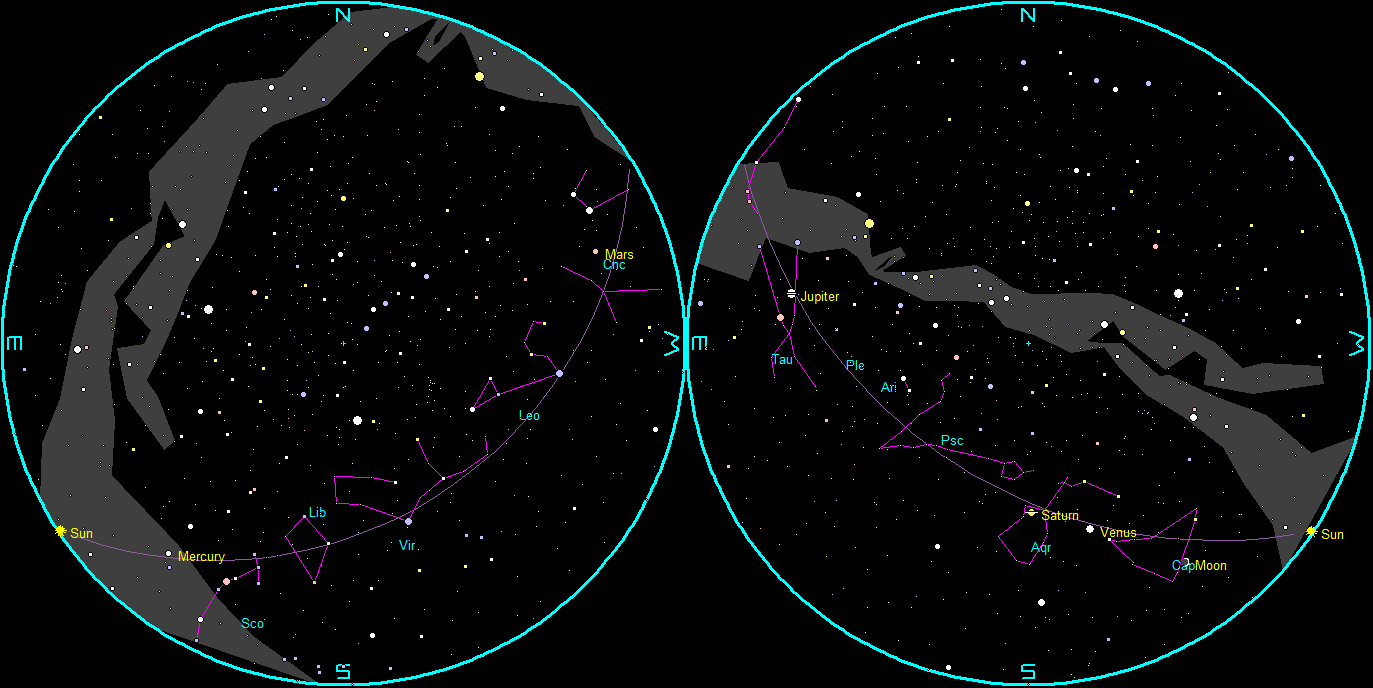
Let’s take our weekly look at the whereabouts of the naked-eye planets. At 8:00 PM this evening four of the five naked eye planets will be out. Starting from the West we have Venus the brightest of all low in the west southwest. Above and left of that is Saturn. The waxing gibbous moon is high in the South at that time. Jupiter, the second-brightest planet will be high in the southeast. The 4th planet out is Mars which is low in the east northeast with its reddish hue giving it away. Next Monday the Moon will pass directly over the planet Mars in our evening sky. The fifth naked eye planet, Mercury, is too close to the Sun on it morning side to be visible.
The astronomical event times given are for the Traverse City/Interlochen area of Michigan (EST, UT – 5 hours). Times will be different for other locations.
Addendum
Ephemeris: 01/07/25 – Lights in the sky: Sirius, the brightest star
This is Bob Moler with Ephemeris for Tuesday, January 7th. Today the Sun will be up for 8 hours and 59 minutes, setting at 5:19, and it will rise tomorrow at 8:19. The Moon, 1 day past first quarter, will set at 2:45 tomorrow morning.
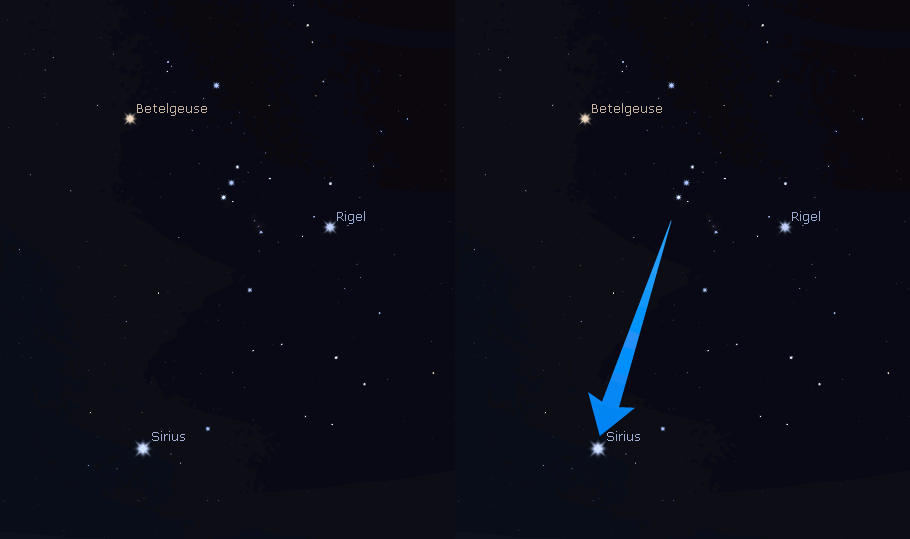
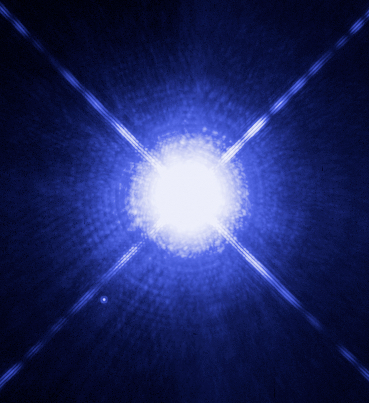
The brightest star in the nighttime sky, Sirius, will rise about 7:30 this evening in the east-southeast. By 9 PM it will be low in the southeast. It is also known as the Dog Star because it’s located in Orion’s greater hunting dog, Canis Major. However, its name Sirius means Dazzling One, or Scorcher, alluding to its great brightness. Sirius is about twice as massive as the Sun, but 25 times brighter, It is one of the nearer stars, being about 8.7 light years away, about twice the distance of Alpha Centauri. Sirius is a pure white star as opposed to the sun’s somewhat yellowish cast. It seems to really sparkle in a pair of binoculars. The sparkling or the twinkling of Sirius or of any star is not due to the star itself but by turbulence in Earth’s atmosphere.
The astronomical event times given are for the Traverse City/Interlochen area of Michigan (EST, UT – 5 hours). Times will be different for other locations.
Addendum
Ephemeris: 01/06/2025 – Things that go blink in the night
This is Ephemeris for Monday, January 6th. Today the Sun will be up for 8 hours and 58 minutes, setting at 5:18, and it will rise tomorrow at 8:19. The Moon, at first quarter today, will set at 1:26 tomorrow morning.
Lately there’s been a lot of reported observations of drones or various things in the sky at night, especially, for some reason, in New Jersey. If it’s something that’s moving in the sky other than satellites, meteors and aurorae, they’re out of my wheelhouse. I generally concern myself with the sidereal universe, the universe beyond the atmosphere. Things that don’t seem to move that rapidly. There are a lot of bright lights in the sky, that are things that I can and do talk about this time of year and this particular year. We have a lot of bright lights in the sky now, foremost Venus in the southwest in the early evening, and Jupiter in the east and the south. Mars is also up, but it’s not in competition with Jupiter this year. These plus the bright winter stars.
The astronomical event times given are for the Traverse City/Interlochen area of Michigan (EST, UT – 5 hours). Times will be different for other locations.
Addendum
Ephemeris: 01/03/2025 – GTAS Telescope Clinic tonight
This is Ephemeris for Friday, January 3rd. The Sun will rise at 8:20. It’ll be up for 8 hours and 55 minutes, setting at 5:15. The Moon, 3 days before first quarter, will set at 9:37 this evening.
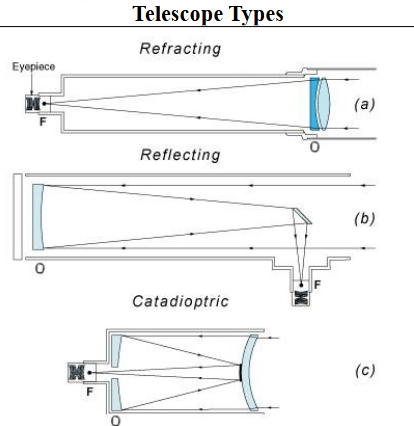
Did you or someone in your family get a telescope for Christmas, or have one in a closet or attic because you don’t know how to put it together or how to operate it? Or maybe you are trying to figure out which one to buy. Well, tonight’s your night. The Grand Traverse Astronomical Society (GTAS) will host the annual Telescope Clinic starting at 8 pm at Northwestern Michigan College’s Rogers Observatory. Professor Jerry Dobek will demonstrate the types of telescopes and how to use them. He and other members may be able to help particular problems by seeing participants telescopes, so “bring ‘em if you’ve got ‘em.” This is interesting to say the least. Go to gtastro.org for information and a Zoom link for the meeting.
The astronomical event times given are for the Traverse City/Interlochen area of Michigan (EST, UT – 5 hours). Times will be different for other locations.
Addendum
Ephemeris: 01/02/2025 – Today we have the latest sunrise
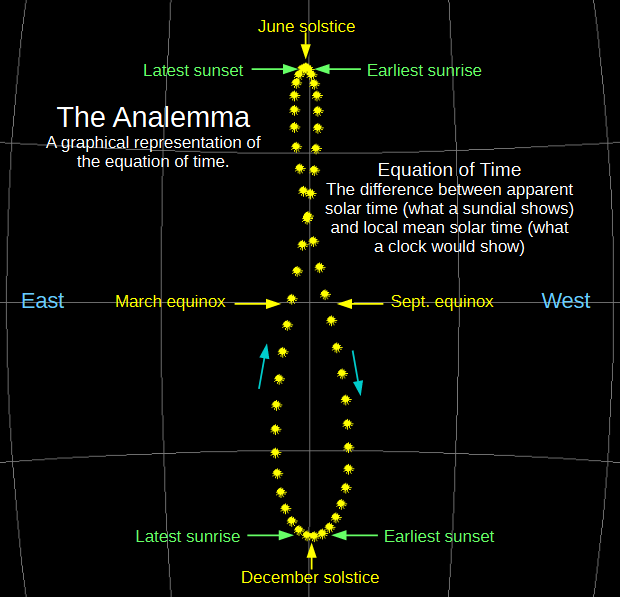
This is Bob Moler with Ephemeris for Thursday, January 2nd. The Sun will rise at 8:20. It’ll be up for 8 hours and 54 minutes, setting at 5:14. The Moon, 3 days past new, will set at 8:20 this evening. | As an amateur astronomer I am fascinated by time, the so-called 4th dimension. For example, being at the right place at the right time such as to view a total solar eclipse. The universe isn’t going to wait for you if you’re off in the three dimensions of location or of the time. But today is a different story. Today is the day of the latest sunrise, which is at 8:20 AM. From today to June 15th, the day of the earliest sunrise, is on average about 165 days. That’s about 5 ½ months. We had our earliest sunset back on December 9th. That was 24 days ago so it’s got a head start from there to the latest sunset that it will need because the latest sunset will be on June 26th. So the sunrise times will decrease faster than the sunset times will increase into the June summer solstice period.
The astronomical event times given are for the Traverse City/Interlochen area of Michigan (EST, UT – 5 hours). Times will be different for other locations.
Addendum:
Ephemeris: 01/01/2025 – A New Year’s Day look at the naked-eye planets
This is Ephemeris for New Year’s Day, Wednesday, January 1st, 2025. The Sun will rise at 8:20. It’ll be up for 8 hours and 53 minutes, setting at 5:13. The Moon, 2 days past new, will set at 7:02 this evening.
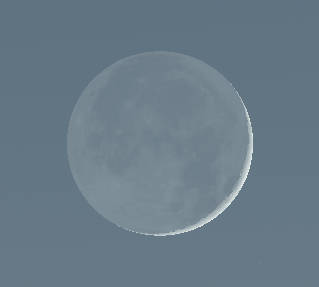
Let’s take our weekly look at the whereabouts of the naked-eye planets. Venus can be spotted in the south-southwestern sky by 5:45 PM, about 30 minutes after sunset, and will also be above and left of the thin crescent Moon. Venus will set at 9:10 PM. Saturn will be in the south-southwestern sky at 6 PM, above and left of Venus, which will be seen to cross paths with it on the 18th of this month. Jupiter is low in the east, about the same time Venus is first spotted. It will be a good object for the small telescope. Mars, rises tonight at 6:31. Mars is still considered a morning planet since it is still up at sunrise. But that will end on the 15th of this month, when Mars reaches opposition from the Sun.
The astronomical event times given are for the Traverse City/Interlochen area of Michigan (EST, UT – 5 hours). Times will be different for other locations.
Happy New Year! I do really hope it will be happy…
Addendum
Ephemeris: 12/31/2024 – Previewing January’s skies
This is Ephemeris for New Year’s Eve, Tuesday, December 31st. The Sun will rise at 8:20. It’ll be up for 8 hours and 52 minutes, setting at 5:12. The Moon, 1 day past new, will set at 5:46 this evening.
Let’s look ahead at the month of January 2025. Thursday we will have our latest sunrise at 8:20. That time will drop to 8:02 by the 31st. Sunset times are already increasing. On the 1st at 5:13, will extend to 5:50 at month’s end, which will push the daylight hours to 9 hours 47 minutes by then. The altitude of the Sun at local noon will increase from under 23 degrees tomorrow to 28 degrees at month’s end. Tomorrow we will reach our closest distance from the Sun of the year at 91.4 million miles. Friday morning will see the peak of the Quadrantid meteor shower. They will be best seen in the early morning and seem to come from near the handle of the Big Dipper, where possibly more than 60 meteors an hour might be seen.
The astronomical event times given are for the Traverse City/Interlochen area of Michigan (EST, UT – 5 hours). Times will be different for other locations.
Addendum
January Evening Star Chart
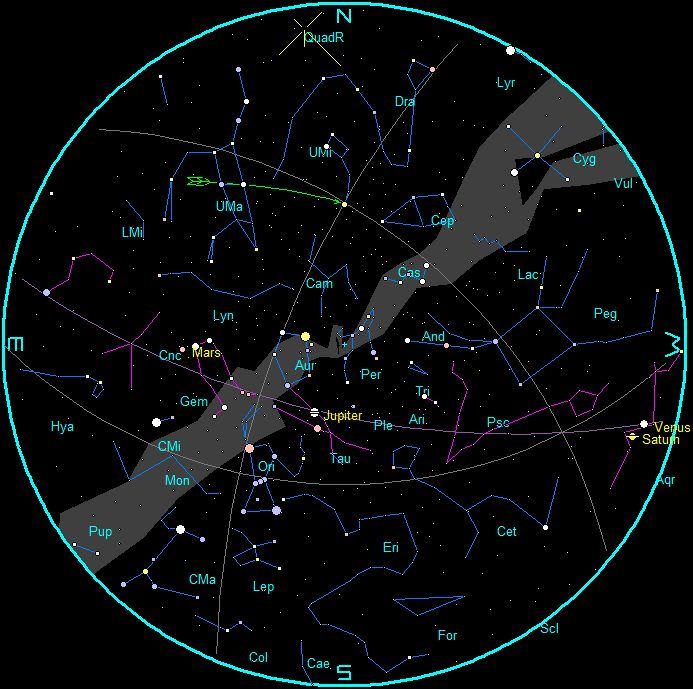
The planets and stars are plotted for the 15th at 9 PM EST in the evening and 6 AM on the 16th for the morning chart. These are the chart times. Note that Traverse City is located approximately 45 minutes behind our time meridian, West 75° longitude. (An hour 45 minutes behind our daylight saving time meridian during EDT), so the skies may not exactly match as seen from other locations.
January Morning Star Chart
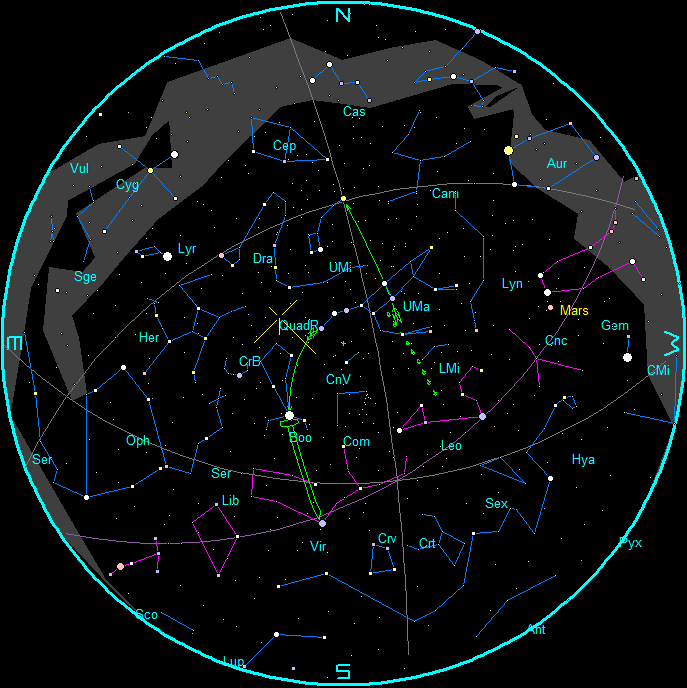
For a list of constellation names to go with the abbreviations click here.
- Pointer stars at the front of the bowl of the Big Dipper point to Polaris the North Star.
- The leaky bowl of the Big Dipper drips on Leo.
- Follow the arc of the handle of the Big Dipper to the star Arcturus, then
- Follow the spike to Spica.
- QuadR on the star charts is the radiant of the Quadrantid meteor shower which peaks on the 4th at 4:14 a.m. EST (9:14 UT).
Twilight Limits, Nautical and Astronomical
| EST | |||||||
| Morning | Twilight | Evening | Twilight | Dark | Night | Moon | |
| Date | Astro. | Nautical | Nautical | Astro. | Start | End | Illum. |
| 2025-01-01 | 6h35m | 7h11m | 18h22m | 19h02m | 19h03m | 6h35m | 0.06 |
| 2025-01-02 | 6h35m | 7h11m | 18h23m | 19h02m | 20h21m | 6h35m | 0.12 |
| 2025-01-03 | 6h35m | 7h11m | 18h24m | 19h03m | 21h38m | 6h35m | 0.2 |
| 2025-01-04 | 6h35m | 7h11m | 18h25m | 19h04m | 22h54m | 6h35m | 0.3 |
| 2025-01-05 | 6h35m | 7h11m | 18h26m | 19h05m | – | 6h35m | 0.41 |
| 2025-01-06 | 6h35m | 7h11m | 18h27m | 19h06m | 0h10m | 6h35m | 0.53 |
| 2025-01-07 | 6h35m | 7h11m | 18h28m | 19h07m | 1h27m | 6h35m | 0.64 |
| 2025-01-08 | 6h35m | 7h10m | 18h29m | 19h08m | 2h45m | 6h35m | 0.74 |
| 2025-01-09 | 6h35m | 7h10m | 18h30m | 19h09m | 4h06m | 6h35m | 0.84 |
| 2025-01-10 | 6h35m | 7h10m | 18h31m | 19h10m | 5h26m | 6h35m | 0.91 |
| 2025-01-11 | 6h35m | 7h10m | 18h32m | 19h11m | – | – | 0.96 |
| 2025-01-12 | 6h34m | 7h09m | 18h33m | 19h12m | – | – | 0.99 |
| 2025-01-13 | 6h34m | 7h09m | 18h34m | 19h13m | – | – | 1 |
| 2025-01-14 | 6h34m | 7h09m | 18h35m | 19h14m | – | – | 0.98 |
| 2025-01-15 | 6h34m | 7h08m | 18h36m | 19h15m | 19h15m | 19h28m | 0.94 |
| 2025-01-16 | 6h33m | 7h08m | 18h37m | 19h16m | 19h16m | 20h38m | 0.89 |
| 2025-01-17 | 6h33m | 7h07m | 18h38m | 19h17m | 19h17m | 21h45m | 0.82 |
| 2025-01-18 | 6h32m | 7h07m | 18h39m | 19h18m | 19h18m | 22h49m | 0.74 |
| 2025-01-19 | 6h32m | 7h06m | 18h41m | 19h19m | 19h19m | 23h52m | 0.65 |
| 2025-01-20 | 6h31m | 7h06m | 18h42m | 19h20m | 19h20m | – | 0.56 |
| 2025-01-21 | 6h31m | 7h05m | 18h43m | 19h21m | 19h21m | 0h56m | 0.47 |
| 2025-01-22 | 6h30m | 7h05m | 18h44m | 19h23m | 19h23m | 2h01m | 0.37 |
| 2025-01-23 | 6h29m | 7h04m | 18h45m | 19h24m | 19h24m | 3h08m | 0.28 |
| 2025-01-24 | 6h29m | 7h03m | 18h47m | 19h25m | 19h25m | 4h16m | 0.2 |
| 2025-01-25 | 6h28m | 7h02m | 18h48m | 19h26m | 19h26m | 5h22m | 0.12 |
| 2025-01-26 | 6h27m | 7h02m | 18h49m | 19h27m | 19h27m | 6h24m | 0.06 |
| 2025-01-27 | 6h26m | 7h01m | 18h50m | 19h28m | 19h28m | 6h26m | 0.02 |
| 2025-01-28 | 6h26m | 7h00m | 18h51m | 19h30m | 19h30m | 6h26m | 0 |
| 2025-01-29 | 6h25m | 6h59m | 18h53m | 19h31m | 19h31m | 6h25m | 0.01 |
| 2025-01-30 | 6h24m | 6h58m | 18h54m | 19h32m | 19h32m | 6h24m | 0.04 |
| 2025-01-31 | 6h23m | 6h57m | 18h55m | 19h33m | 20h40m | 6h23m | 0.09 |
Twilight calendar was generated using Cartes du Ciel (Sky Charts).
See my blog post: Twilight Zone for the definitions of the different periods of twilight here: https://bobmoler.wordpress.com/2018/09/27/.
NASA Calendar of Planetary Events
    Date      Time    Event
Jan  1  We            Venus: 47° E
     3  Fr  10:24 AM  Moon-Venus: 1.5° N
     3  Fr  10:24 AM  Quadrantid Shower: ZHR = 120
     4  Sa   2:59 AM  Perihelion: 0.9833 AU
     4  Sa  12:18 PM  Moon-Saturn: 0.7° S
     5  Su   2:46 PM  Moon Ascending Node
     6  Mo   6:56 PM  First Quarter
     7  Tu   6:35 PM  Moon Perigee: 370200 km
     9  Th   8:01 PM  Moon-Pleiades: 0.3° S
     9  Th  10:59 PM  Venus Greatest Elongation: 47.2° E
    11  Sa  11:30 PM  Moon North Dec.: 28.5° N
    13  Mo   4:45 PM  Moon-Pollux: 2.2° N
    13  Mo   5:27 PM  Full Moon
    13  Mo  10:42 PM  Moon-Mars: 0.2° S Occultation!
    14  Tu   4:03 PM  Moon-Beehive: 2.7° S
    15  We   8:17 PM  Mars Opposition
    16  Th   9:57 AM  Moon-Regulus: 2.4° S
    18  Sa  10:53 AM  Venus-Saturn: 2.2° N
    18  Sa   8:48 PM  Moon Descending Node
    20  Mo  10:53 PM  Moon-Spica: 0.1° N
    20  Mo  11:55 PM  Moon Apogee: 404300 km
    21  Tu   3:31 PM  Last Quarter
    23  Th  12:05 PM  Mars-Pollux: 2.4° S
    24  Fr   6:34 PM  Moon-Antares: 0.3° N
    26  Su   8:27 AM  Moon South Dec.: 28.5° S
    29  We   7:36 AM  New Moon
    31  Fr   5:02 PM  Jupiter-Aldebaran: 5.2° N
    31  Fr  11:46 PM  Moon-Saturn: 1.1° S
Feb  1  Sa            Venus: 45° E
All event times are given for UTC-5 Eastern Standard Time.
Sky Events Calendar by Fred Espenak and Sumit Dutta (NASA’s GSFC),
http://eclipse.gsfc.nasa.gov/SKYCAL/SKYCAL.html.
If you go to the above site you can print out a list like the above for the entire year or calendar pages for your time zone.
Sun and Moon Rising and Setting Events
     LU              Ephemeris of Sky Events for Interlochen/TC
     January, 2025    Local time zone: EST
     +-----------------------------------------------------------------------+
     | DATE |  SUN     SUN  DAYLIGHT|   TWILIGHT*    |MOON  RISE OR    ILLUM |
     |      |  RISE    SET    HOURS |  END    START  |PHASE SET** TIME FRACTN|
     +=======================================================================+
     |Wed  1| 08:20a  05:13p  08:53 | 06:23p  07:09a |      Set  07:02p    5%|
     |Thu  2| 08:20a  05:14p  08:54 | 06:24p  07:09a |      Set  08:20p   11%|
     |Fri  3| 08:20a  05:15p  08:55 | 06:25p  07:10a |      Set  09:37p   19%|
     |Sat  4| 08:20a  05:16p  08:56 | 06:26p  07:10a |      Set  10:54p   28%|
     +------+-----------------------+----------------+-----------------------+
     |Sun  5| 08:19a  05:17p  08:57 | 06:27p  07:10a |      Set  12:09a   39%|
     |Mon  6| 08:19a  05:18p  08:58 | 06:28p  07:09a |F Qtr Set  01:26a   50%|
     |Tue  7| 08:19a  05:19p  08:59 | 06:29p  07:09a |      Set  02:45a   61%|
     |Wed  8| 08:19a  05:20p  09:01 | 06:30p  07:09a |      Set  04:05a   72%|
     |Thu  9| 08:18a  05:21p  09:02 | 06:31p  07:09a |      Set  05:25a   82%|
     |Fri 10| 08:18a  05:22p  09:04 | 06:32p  07:09a |      Set  06:40a   89%|
     |Sat 11| 08:18a  05:23p  09:05 | 06:33p  07:09a |      Set  07:43a   95%|
     +------+-----------------------+----------------+-----------------------+
     |Sun 12| 08:17a  05:25p  09:07 | 06:34p  07:08a |      Set  08:34a   99%|
     |Mon 13| 08:17a  05:26p  09:08 | 06:35p  07:08a |Full  Rise 05:00p  100%|
     |Tue 14| 08:16a  05:27p  09:10 | 06:36p  07:08a |      Rise 06:14p   99%|
     |Wed 15| 08:16a  05:28p  09:12 | 06:37p  07:07a |      Rise 07:27p   95%|
     |Thu 16| 08:15a  05:30p  09:14 | 06:38p  07:07a |      Rise 08:37p   90%|
     |Fri 17| 08:15a  05:31p  09:16 | 06:39p  07:06a |      Rise 09:44p   83%|
     |Sat 18| 08:14a  05:32p  09:18 | 06:40p  07:06a |      Rise 10:48p   76%|
     +------+-----------------------+----------------+-----------------------+
     |Sun 19| 08:13a  05:34p  09:20 | 06:42p  07:05a |      Rise 11:52p   67%|
     |Mon 20| 08:13a  05:35p  09:22 | 06:43p  07:05a |      Rise 12:56a   58%|
     |Tue 21| 08:12a  05:36p  09:24 | 06:44p  07:04a |L Qtr Rise 02:01a   49%|
     |Wed 22| 08:11a  05:38p  09:26 | 06:45p  07:03a |      Rise 03:07a   39%|
     |Thu 23| 08:10a  05:39p  09:28 | 06:46p  07:03a |      Rise 04:15a   30%|
     |Fri 24| 08:09a  05:40p  09:31 | 06:48p  07:02a |      Rise 05:22a   22%|
     |Sat 25| 08:08a  05:42p  09:33 | 06:49p  07:01a |      Rise 06:24a   14%|
     +------+-----------------------+----------------+-----------------------+
     |Sun 26| 08:07a  05:43p  09:35 | 06:50p  07:00a |      Rise 07:17a    8%|
     |Mon 27| 08:06a  05:44p  09:38 | 06:51p  07:00a |      Rise 08:00a    3%|
     |Tue 28| 08:05a  05:46p  09:40 | 06:52p  06:59a |      Rise 08:34a    0%|
     |Wed 29| 08:04a  05:47p  09:42 | 06:54p  06:58a |New   Set  06:00p    0%|
     |Thu 30| 08:03a  05:49p  09:45 | 06:55p  06:57a |      Set  07:20p    3%|
     |Fri 31| 08:02a  05:50p  09:47 | 06:56p  06:56a |      Set  08:39p    8%|
     +-----------------------------------------------------------------------+
     * Nautical Twilight
     ** Moonrise or moonset, whichever occurs between sunset and sunrise
Generated using my LookingUp for DOS program.
Ephemeris: 12/30/2024 – Two great astronomical events of 2024
This is Ephemeris for Monday, December 30th. Today the Sun will be up for 8 hours and 51 minutes, setting at 5:11, and it will rise tomorrow at 8:20. The Moon is new today, and won’t be visible.
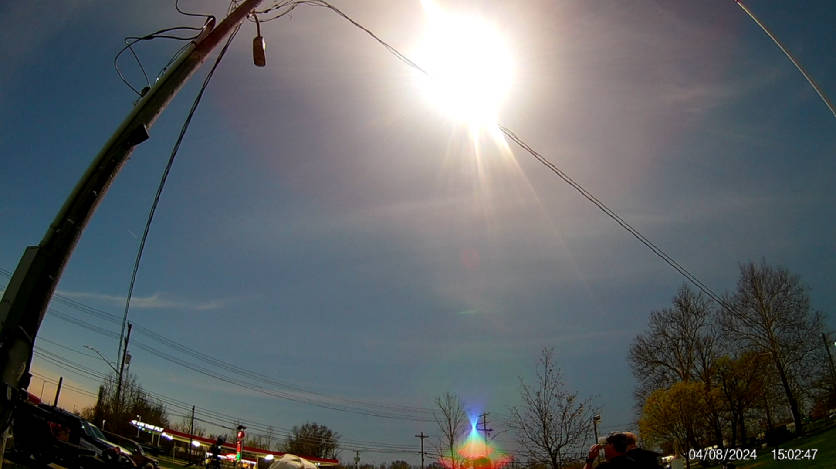
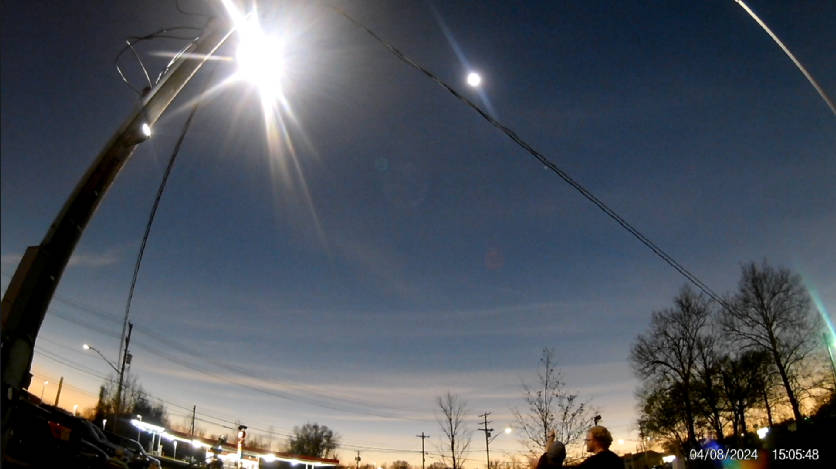
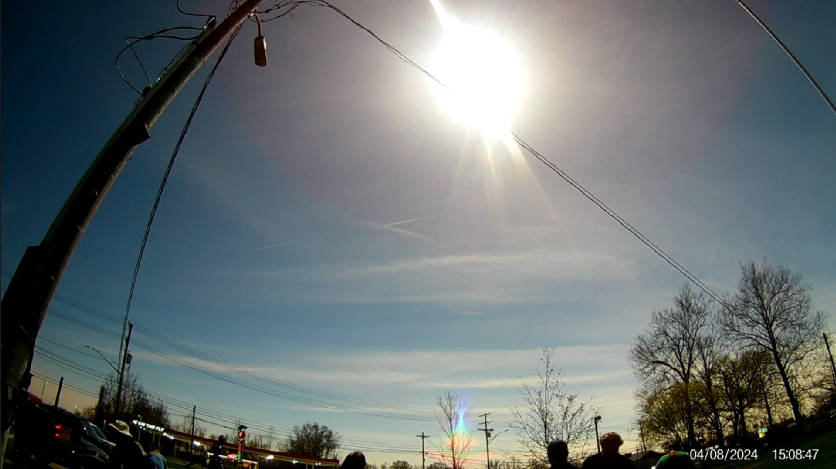
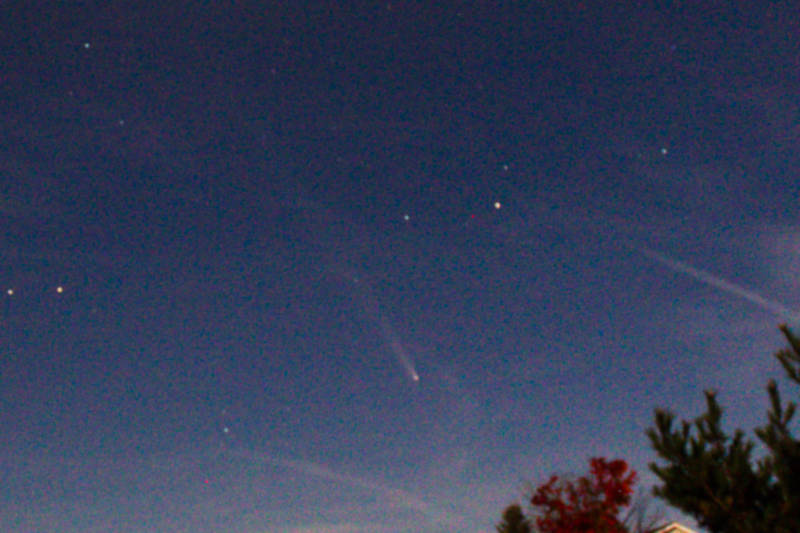
Speaking of new moons, the most spectacular astronomical event of 2024 was the total solar eclipse of April 8th. The path of totality came fairly close to us here in Northern Michigan just clipping the southeastern corner of the state. It was my sixth observation of a total solar eclipse out of six tries and probably my last, because our next total solar eclipse in the contiguous 48 states will be twenty-one years from now in 2045. The other event of 2024 was the appearance of the Comet Tsuchinshan-ATLAS which graced our skies for a few days in mid-October. I have no reports of anybody seeing it with the naked eye, however it was visible in binoculars and easily photographed with a few seconds exposure with a camera. It had a very prominent tail.
The astronomical event times given are for the Traverse City/Interlochen area of Michigan (EST, UT – 5 hours). Times will be different for other locations.
Addendum
 Bob Moler's Ephemeris Blog