Archive
Ephemeris: 11/21/2025 – Finding Taurus the bull
This is Ephemeris for Friday, November 21st. Today the Sun will be up for 9 hours and 21 minutes, setting at 5:09, and it will rise tomorrow at 7:49. The Moon, 1 day past new, will set at 5:36 this evening.
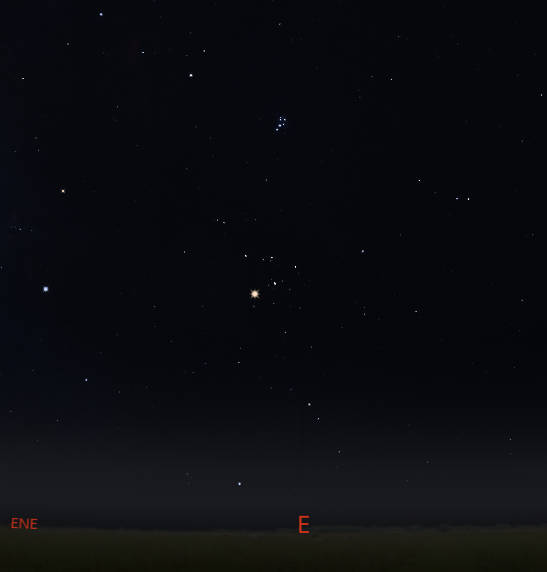
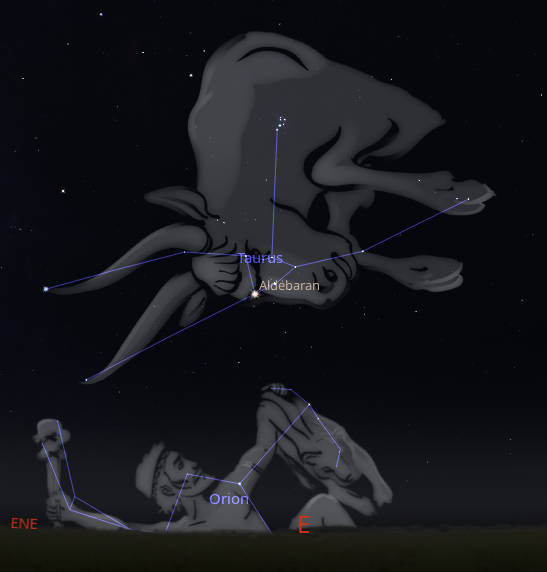
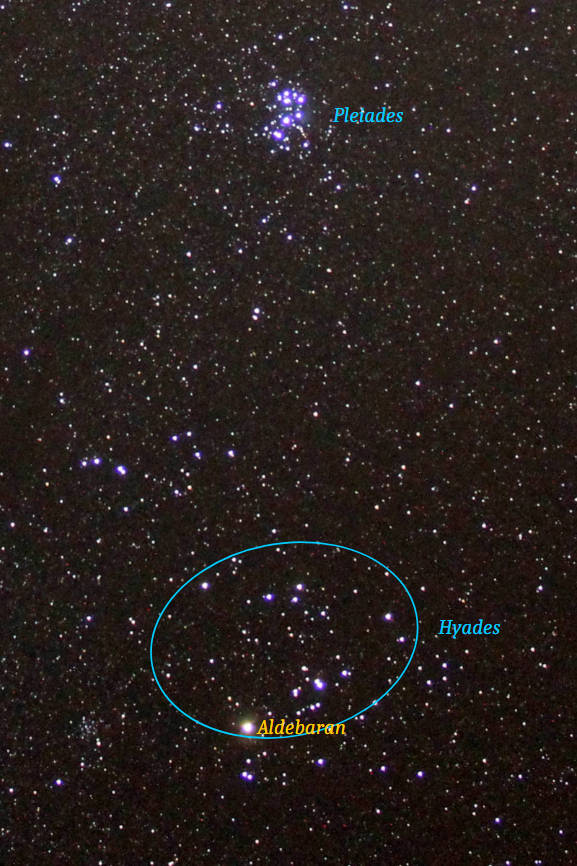
Low in the east at 8 this evening and below the beautiful Pleiades star cluster is Taurus the bull. His face is a letter V shape of stars lying on its side, the star cluster Hyades, which in Greek Mythology were the half-sisters of the Pleiades, with the bright orange-red star Aldebaran at one tip of the V as its angry bloodshot eye. Aldebaran is actually about halfway between us and the cluster. The Pleiades star cluster is in his shoulder. Taurus is seen charging downward at that hour, the rising constellation of Orion. Taurus in Greek mythology was the form the god Zeus assumed when he carried off the maiden Europa. Europa’s still with him as a moon orbiting Zeus’ Roman counterpart, the planet Jupiter.
The astronomical event times given in this blog are for the Traverse City/Interlochen area of Michigan (Lat 44.7° N, Long 85.7° W; EDT, UT – 4 hours) unless stated otherwise. Times will be different for other locations.
Addendum
Ephemeris: 12/12/2024 – Jupiter’s moon Europa
This is Bob Moler with Ephemeris for Thursday, December 12th. Today the Sun will be up for 8 hours and 51 minutes, setting at 5:02, and it will rise tomorrow at 8:12. The Moon, 3 days before full, will set at 6:24 tomorrow morning.
Jupiter’s four bright Galilean moons are nearly planet size. In fact Ganymede, the third one out, is larger than Mercury. But the most interesting moon to NASA and to scientists looking for life in the solar system, is the second moon out, Europa. When the Voyager spacecraft flew past Jupiter in the late 1970s they photographed a rather smooth surface on it with a lot of cracks and grooves, but very few craters. This meant Europa surface is quite young and has been evolving over time kind of like the Earth’s surface. The reason is that it appears Europa has a vast ocean under a thick crust of ice. Europa is heated by both radioactivity in its core and tidal forces caused by Jupiter and the other moon’s gravitational pull on it.
The astronomical event times given are for the Traverse City/Interlochen area of Michigan (EST, UT – 5 hours). Times will be different for other locations.
Addendum
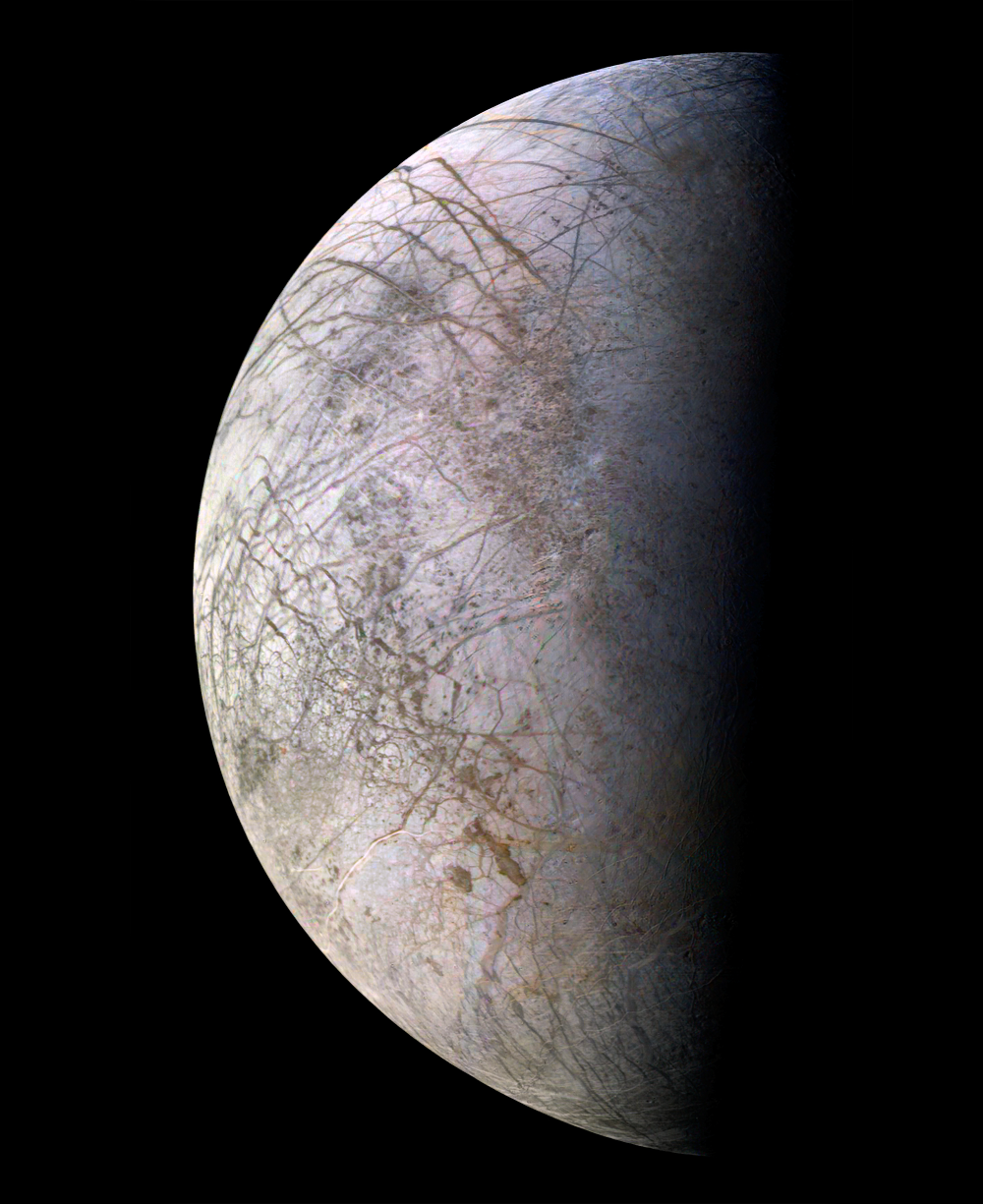
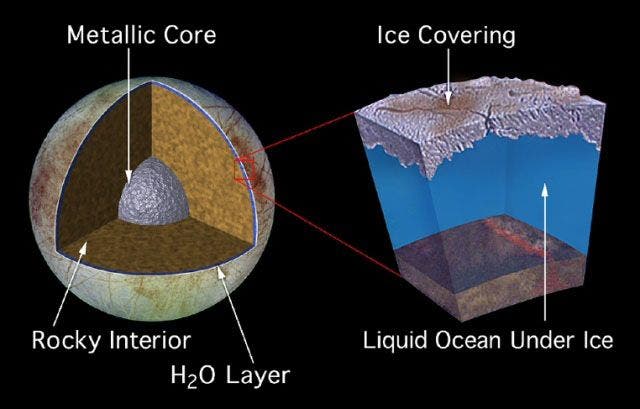
On Earth, wherever there’s water there’s life. Can the same be said of Europa?
Ephemeris: 12/10/2024 – Jupiter’s four bright moons
This is Ephemeris for Tuesday, December 10th. Today the Sun will be up for 8 hours and 52 minutes, setting at 5:02, and it will rise tomorrow at 8:10. The Moon, 2 days past first quarter, will set at 3:39 tomorrow morning.
The bright star like object in the east in the evenings is the planet Jupiter. If one were to look at Jupiter through binoculars it would appear somewhat larger than a star would look. It has several dimmer stars from one side to the other of it, and if one looked the next night those little stars would have moved. Those are not stars at all, but the four largest moons of Jupiter. This would be easily apparent in the telescope. These are the four Galilean moons. They were observed by Galileo in either late 1609 or early 1610. Another astronomer, Simon Marius discovered these moons at about the same time, but Galileo was first to publish. So he gets the honor. However, Simon Marius is the one who gave them the names we know them by today. Their names, in order of their distance from Jupiter, are: Io, Europa, Ganymede, and Callisto. Each is a fascinating world in its own right.
The astronomical event times given are for the Traverse City/Interlochen area of Michigan (EST, UT – 5 hours). Times will be different for other locations.
Addendum
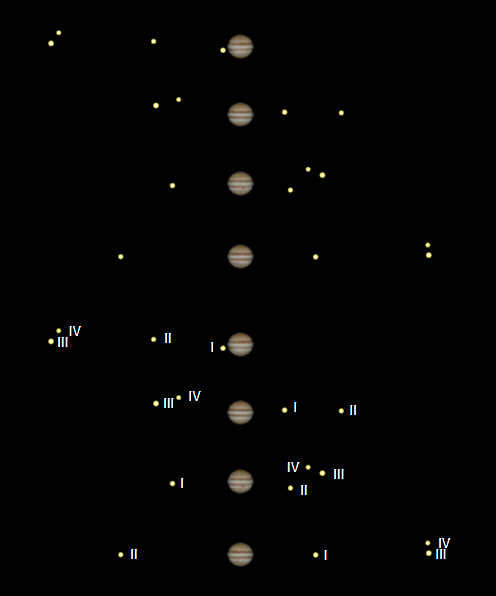
The periods of these satellites is interesting. Io orbits Jupiter in 1.8 days. Europa orbits in 3.6 days twice as long as Io. Ganymede orbits Jupiter in 7.2 days which is twice as long as Europa. Callisto takes 16.7 days to orbit Jupiter, and that is longer than twice Ganymede’s orbital period, and so is not in resonance with Ganymede. So the first three are in a 2:1orbital resonance with each other.
08/19/2021 – Ephemeris – Jupiter is at opposition today!
This is Ephemeris for Thursday, August 19th. Today the Sun will be up for 13 hours and 51 minutes, setting at 8:41, and it will rise tomorrow at 6:51. The Moon, 3 days before full, will set at 4:11 tomorrow morning.
Tonight, Jupiter will be at opposition. That’s a shortcut term for Jupiter being opposite the Sun in our sky. At that time, Jupiter rises at sunset and sets at sunrise. It is also at its closest to us. It also officially becomes an evening planet, available in the evening for those of us with daytime jobs. In even small telescopes, Jupiter shows two dark bands. There’s more, but those two are the most prominent. Its four largest moons will be visible before 9:50 pm tonight, after that the innermost of the four, Io, will start to cross the face of Jupiter. It will leave Ganymede on Jupiter’s east side. On the west side will be the moon Europa, and farther out, Callisto. At 12:08 am, Io will reappear on the west side of Jupiter, joining Europa and Callisto. The moons do put on a show.
The astronomical event times given are for the Traverse City/Interlochen area of Michigan (EDT, UT – 4 hr). They may be different for your location.
Addendum
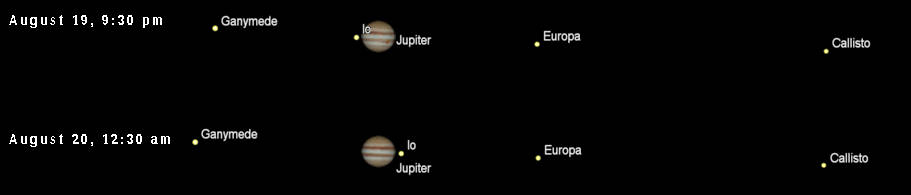
Jupiter’s Galilean moons at two times tonight, August 19th at 9:30 pm (01:30 on the 20th, UT) and 12:30 am (04:30 UT). From 9:50 pm to 12:08 am (01:50 – 04:08 UT), Io will pass in front of Jupiter and be practically invisible. Click on the image to enlarge it. Created using Cartes du Ciel (Sky Charts).
08/04/2020 – Ephemeris – Viewing Jupiter and its moons with binoculars or small telescope
This is Ephemeris for Tuesday, August 4th. Today the Sun will be up for 14 hours and 30 minutes, setting at 9:03, and it will rise tomorrow at 6:34. The Moon, 1 day past full, will rise at 10:06 this evening.
The planet Jupiter is a fine object to view with just about any optical aid be it a pair of binoculars, spotting scope or telescope. In binoculars, if held steady or mounted on a tripod Jupiter itself will no longer look star-like, but a tiny disk. Several of Jupiter’s moons can also be seen. With a telescope four of them can be seen, the same four Galileo discovered 410 years ago. At 10 pm they will be in the same order of distance from the planet that they actually are. The two nearest will be on the west side of the planet Io the closest, the Europa the next moon out. On the east side there is the third farthest Ganymede, and farthest out is Callisto. Their orbits are nearly edge on to us, so they shuttle from one side to the other of the planet.
The event times given are for the Traverse City/Interlochen area of Michigan. They may be different for your location.
Addendum
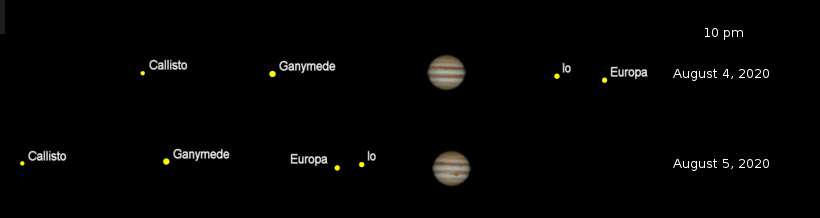
Jupiter and its Galilean moons for tonight and tomorrow night August 4 & 5, 2020. Those moons really move from night to night. This is shown north at the top, east to the left. Based on telescope design the image presented could be inverted, mirror image or both. Created using Cartes du Ciel (Sky Charts).
Due to the lack of time (59 seconds) I could only cover the moons. I’ll address Jupiter’s cloud features at another time. Can’t wait? Here’s a link: https://bobmoler.wordpress.com/2018/05/22/05-22-2018-ephemeris-seeing-detail-on-the-face-of-jupiter-with-a-small-telescope/
04/22/2019 – Ephemeris – Earth Day
Ephemeris for Earth Day, Monday, April 22nd. Today the Sun will be up for 13 hours and 49 minutes, setting at 8:36, and it will rise tomorrow at 6:45. The Moon, 3 days past full, will rise at 12:24 tomorrow morning.
A good slogan for this Earth Day or any day is “Support your local planet.” As an amateur astronomer I look around the solar system at all the habitable planets. The Earth is it. Mars may be terraformed at great expense, that is made more earth-like. There may be life in the oceans of Jupiter’s moon Europa, or Saturn’s Enceladus, but they are not habitable for us. Terraforming (stopping and reversing climate change) the Earth would be the easiest and much more practical. One look at our nearest neighbor Venus will show us our fate, hopefully in billions of years from now, a hell hole of heat and a crushing atmosphere. Our job is push-off that day as far as we can, and keep the Earth a blue-green oasis in the solar system.
The times given are for the Traverse City/Interlochen area of Michigan. They may be different for your location.
Addendum
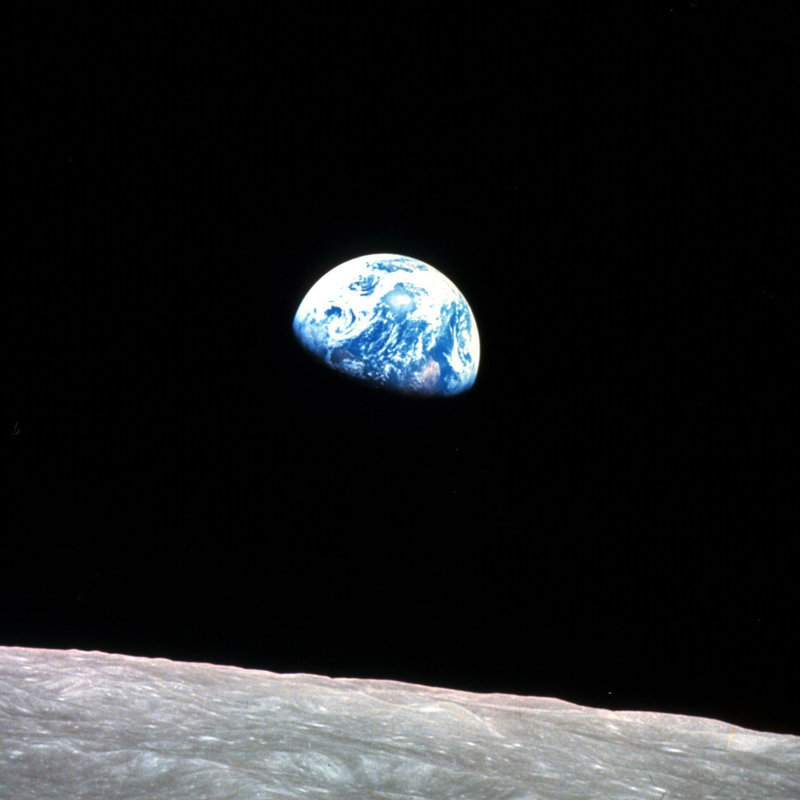
Earth rising above the Moon’s limb from Apollo 8. Credit: NASA/Apollo 8
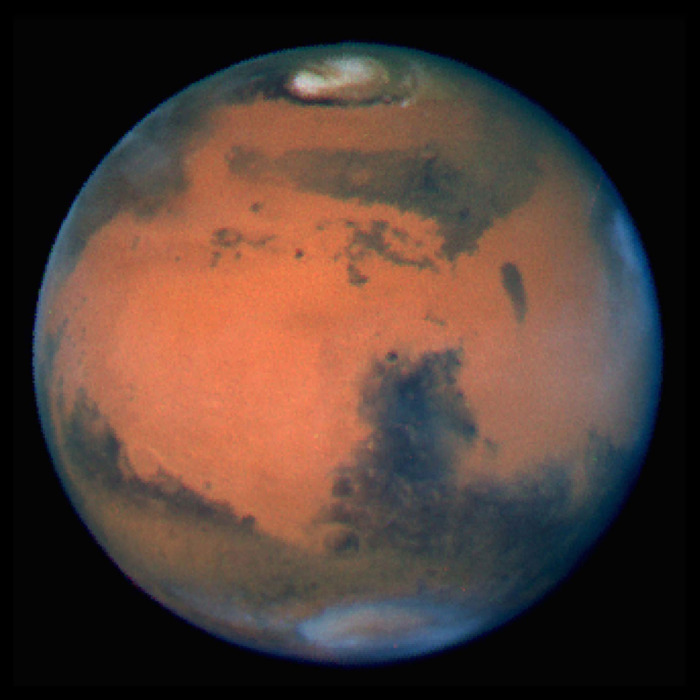
Mars had its day, but that ended about 3 billion years ago. Being half the size of the Earth, Mars cooled down, lost its magnetic field, so the solar wind stripped away most of its atmosphere and water. Credit NASA.
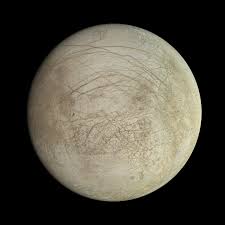
Europa, one of the four Galilean moons of Jupiter and easily seen in small telescopes, is slightly smaller than our Moon. Under that thick icy shell lurks an ocean with more water than all the Earth’s oceans. There’s probably volcanic vents like the black smokers in Earth’s oceans where a whole ecology of extremophiles could live like they do on Earth. Credit: NASA.
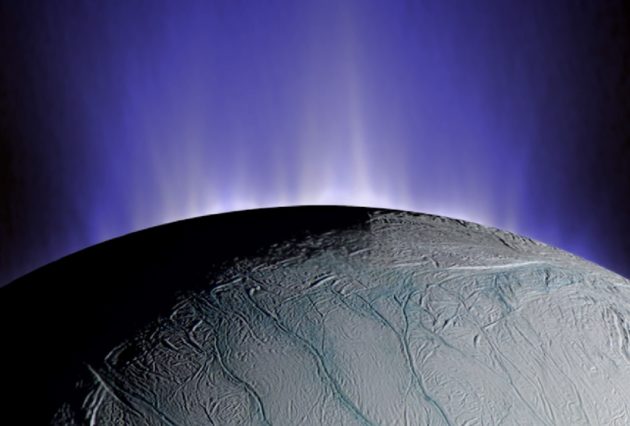
Enceladus, a small moon of Saturn spews continuous geysers of water from cracks in its south polar region indicating an ocean below its frozen icy exterior. Sampling the plumes with the right instruments may detect life on this small world without the need for drilling. Credit: NASA.
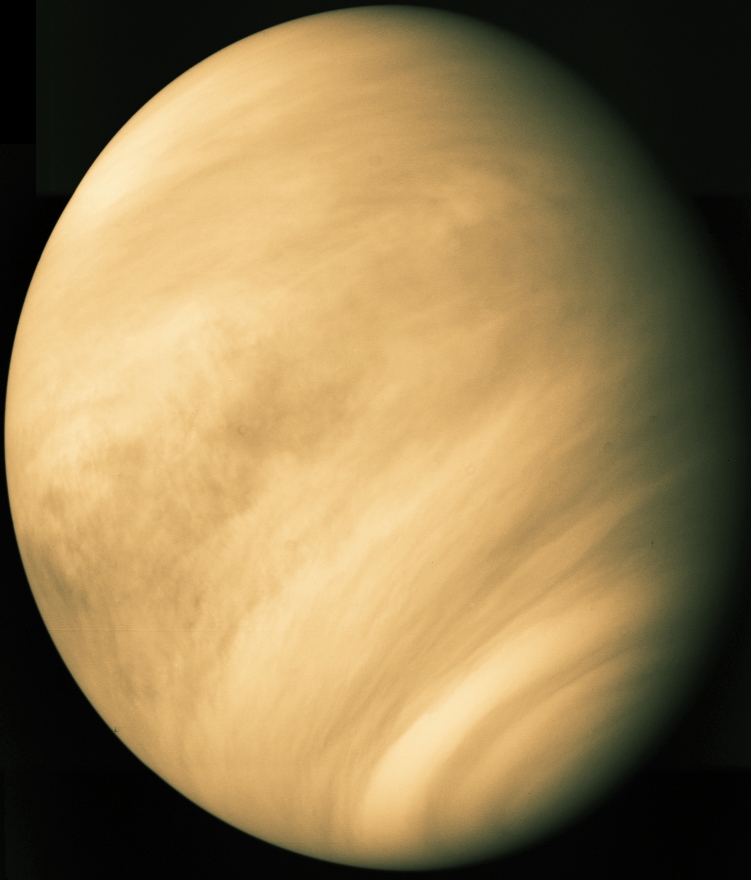
Is this our future? Venus had the misfortune of ending up too close to the Sun. It has a hellish landscape of nearly 900 degrees F, and 90 times the Earth’s atmospheric pressure. Its clouds consist of sulfuric acid. Talk about a runaway greenhouse effect and acid rain… Credit: NASA.
01/24/2019 – Ephemeris – Taurus the bull
Ephemeris for Thursday, January 24th. Today the Sun will be up for 9 hours and 29 minutes, setting at 5:40, and it will rise tomorrow at 8:09. The Moon, half way from full to last quarter, will rise at 10:14 this evening.
Midway up the sky in the southeast at 8 p.m. is the constellation of the giant hunter Orion. Above him, to the right is Taurus the bull. His face is a letter V shape of stars lying on its side, the star cluster Hyades, with the bright orange-red star Aldebaran at one tip of the V as its angry blood-shot eye, but actually about half way between us and the cluster. Orion is depicted in the sky facing, with club in one hand and a shield in the other, the charging Taurus. The Pleiades star cluster is in his shoulder. Taurus in Greek mythology was the form the god Zeus when he carried off the maiden Europa. Europa’s still with him as the intriguing satellite orbiting Zeus’ Roman equivalent the planet Jupiter.
The times given are for the Traverse City/Interlochen area of Michigan. They may be different for your location.
Addendum
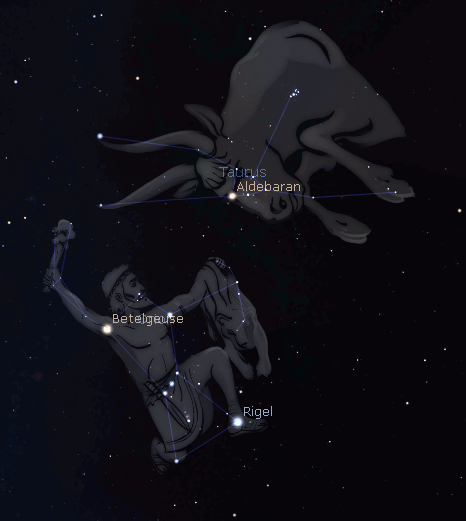
Taurus and Europa at 8 p.m. January 24, 2019. Created using Stellarium.
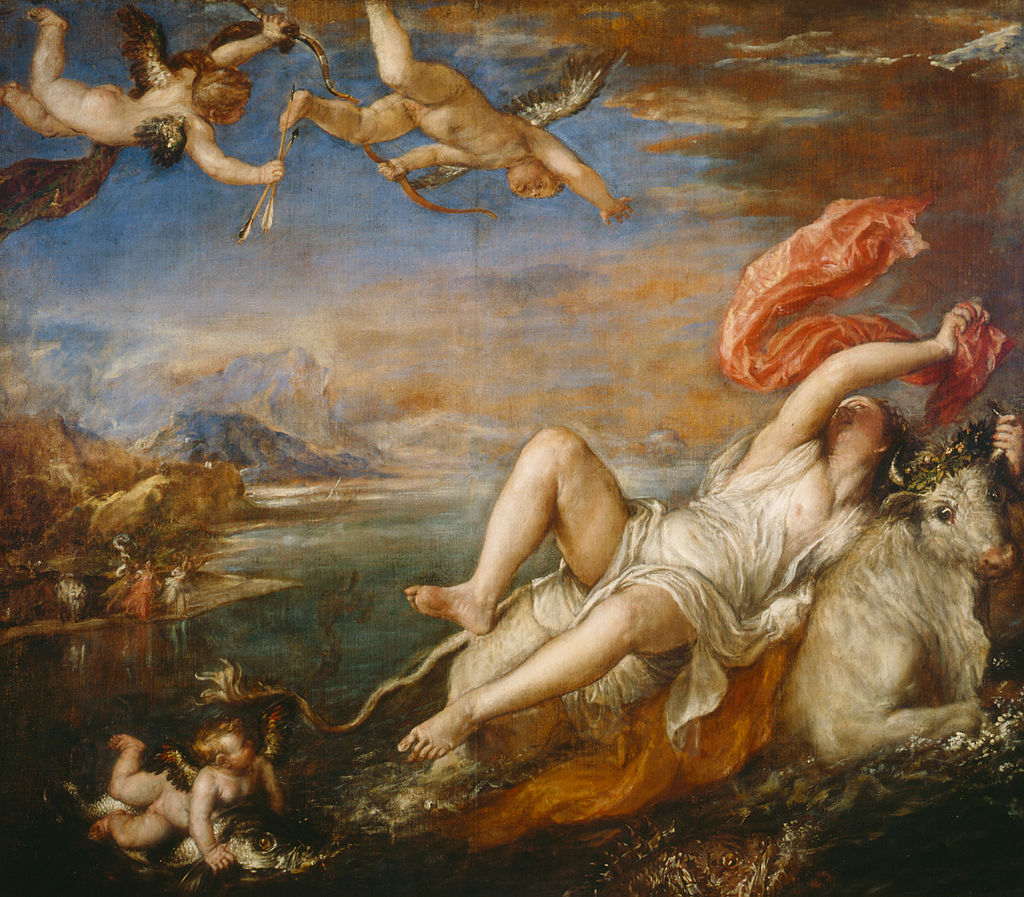
The Rape of Europa by Titian. According to the story Zeus as a bull abducted Europa and swam to Crete, where she became the first queen of that island, and bore him three sons. Other paintings of this subject are by Rembrandt and de Troy. This painting belongs to the Isabella Stewart Gardener Museum in Boston, MA. Click on the image to enlarge.
Jupiter’s satellite Europa, slightly smaller than the Earth’s moon, has a fresh ice surface with very little cratering. The ice floats on a deep water ocean supposedly containing more water than all the Earth’s oceans. Click on the image to enlarge. This is a place NASA will send a spacecraft to look for the chemistry of life. Credit NASA/JPL, Ted Stryk.
06/27/2018 – Ephemeris – Our Wednesday look at the bright planets
Wednesday, June 27th. Today the Sun will be up for 15 hours and 33 minutes, setting at 9:32, and it will rise tomorrow at 5:59. The Moon, 1 day before full, will set at 6:27 tomorrow morning.
It’s Wednesday again and time to look for and at the bright planets. Three of them are in the evening sky. The brilliant beacon of Venus will be visible in the western twilight from about 9:50 p.m. until it sets at 11:53 p.m. Mercury is far below and right of it, setting at 10:59 p.m. Jupiter will be in the south as it gets dark. Jupiter is only outshone by Venus and the Moon, though Mars will outshine it next month at its closest. Jupiter will set at 3:05 a.m. Binoculars will show it to be bigger than star-like in size. Saturn which is opposite the Sun in the sky today will rise as the Sun sets. It’s right below the Moon tonight. Mars will rise at 11:39 p.m. and is now outshining Saturn.
The times given are for the Traverse City/Interlochen area of Michigan. They may be different for your location.
Addendum
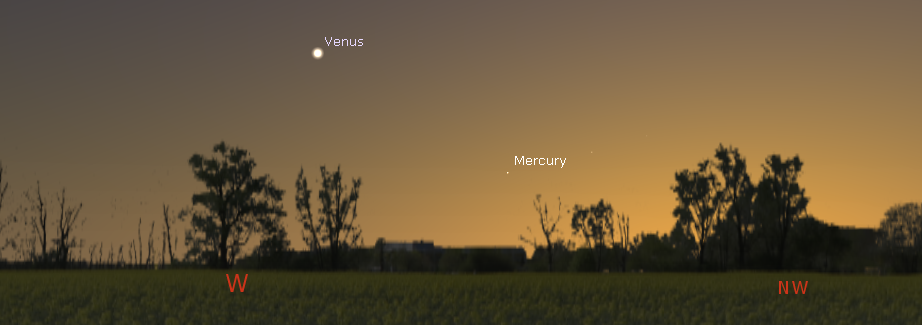
Venus and Mercury low in the western sky ay 10 p.m. June 27, 2018. Click on image to enlarge. Created using Stellarium.
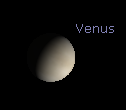
Telescopic appearance of Venus on June 27, 2018. A moon filter helps cut down the glare to be able to more easily see the phase. Created using Stellarium.
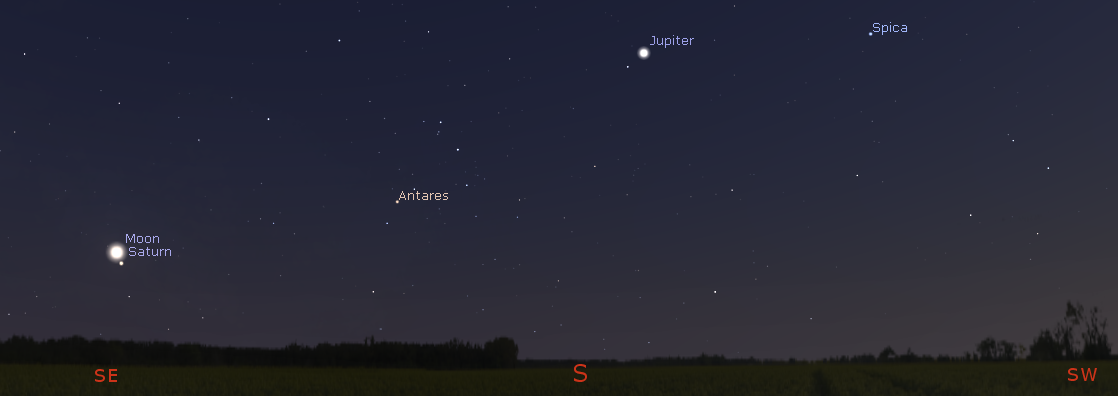
Jupiter, Saturn and the Moon tonight at 10:30 p.m. on June 27, 2018. Click on the image to enlarge. Created using Stellarium.
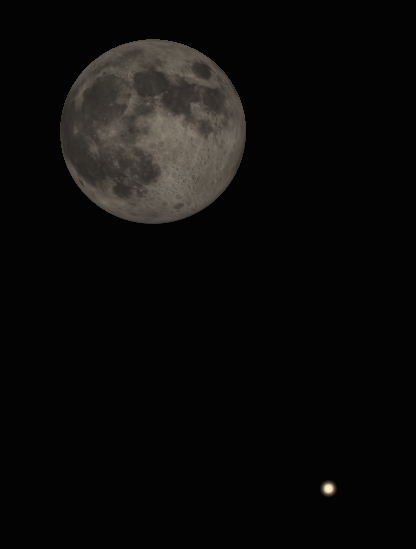
The Moon and Saturn as they might appear in binoculars at 10:30 p.m. June 27, 2018. Created using Stellarium.
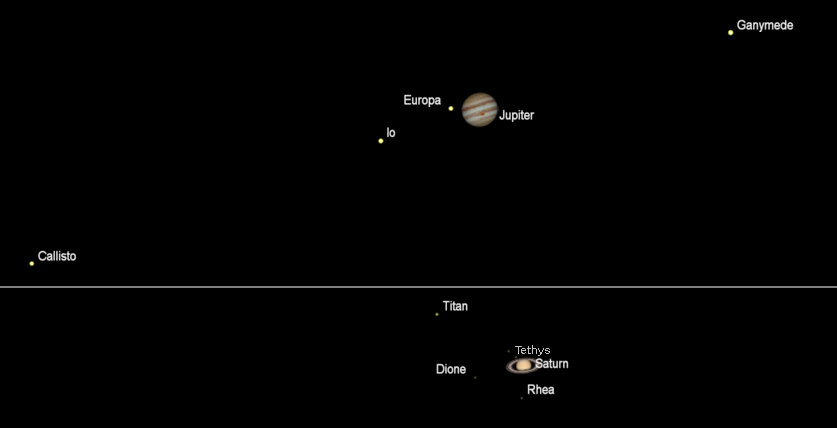
Jupiter and Saturn with the same magnification at 10:30 p.m. June 27, 2018. Information on Europa events and the Great Red Spot is below. Created using Cartes du Ciel (Sky Charts).
Moon   Event            Universal Time    Local Time
Europa Transit start    28 Jun 2018 3:30  27 Jun 2018 11:30 p.m.
Europa Shadow start     28 Jun 2018 5:34  28 Jun 2018  1:34 a.m.
Europa Transit end      28 Jun 2018 5:44  28 Jun 2018  1:44 a.m.
Europa Shadow end       28 Jun 2018 7:49  28 Jun 2018  3:49 a.m.
Great Red Spot Transit  28 Jun 2018 2:32  27 Jun 2018 10:32 p.m.
Source of Jovian events: https://www.projectpluto.com/jevent.htm
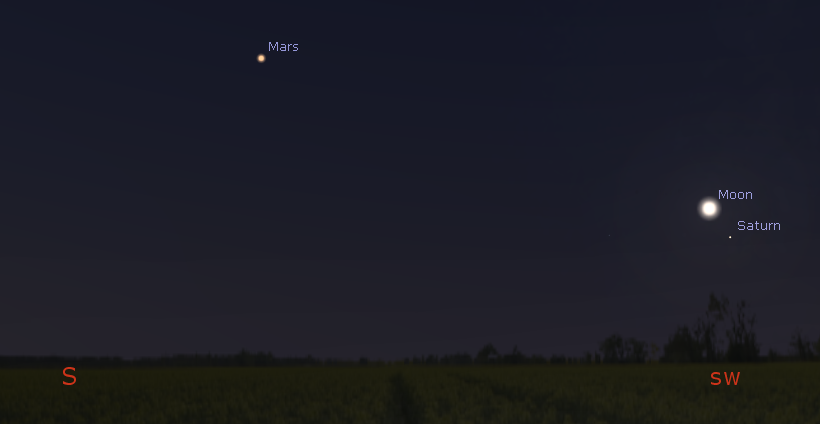
Mars, Saturn and the Moon at 5 a.m. June 28, 2018. Click on the image to enlarge. Created using Stellarium.
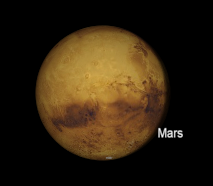
Greatly enlarged telescopic Mars at 5 a.m. June 28, 2018. Note that the dark albedo features may be covered by a global dust storm currently raging on the Red Planet. Created using Cartes du Ciel (Sky Charts).
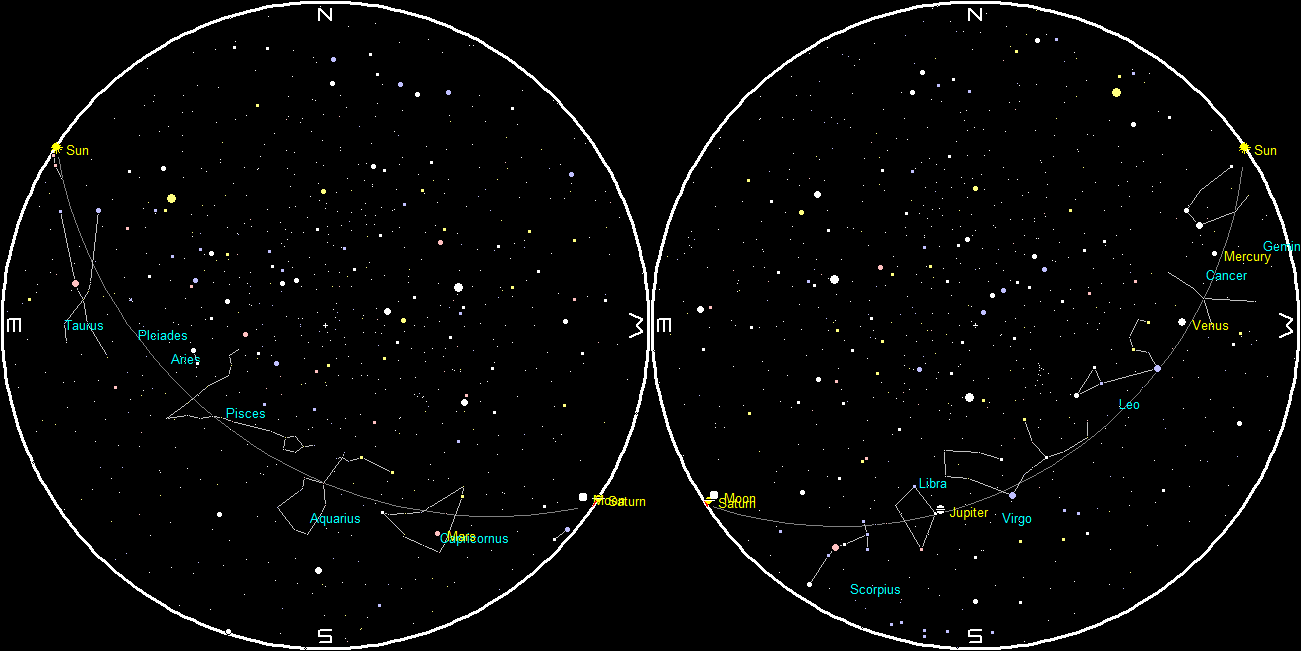
Planets and the Moon at sunset and sunrise of a single night starting with sunset on the right on June 27, 2018. The night ends on the left with sunrise on the 28th. Click on the image to enlarge. Created using my LookingUp program.
10/13/2016 – Ephemeris – Europa appears to have water geysers like Enceladus
Ephemeris for Thursday, October 13th. The Sun will rise at 7:56. It’ll be up for 11 hours and 4 minutes, setting at 7:00. The Moon, 3 days before full, will set at 5:48 tomorrow morning.
On September 26th NASA announced that the Hubble Space Telescope has confirmed earlier observations that Europa, Jupiter’s second large moon is venting water vapor. It is pretty much known that Europa has a moon girdling ocean many tens of miles below its icy surface. The surface is devoid of craters, showing that there is some interaction with the ocean below and the cracks we see on the surface. Having plumes or geysers will allow spacecraft and landers to sample the ocean below without having to drill down to the ocean. NASA has okayed a mission to Europa. This could change the mission and instruments and maybe add a lander to probe the geysers, though first the have to find them.
Times are for the Traverse City/Interlochen area of Michigan. They may be different for your location.
Addendum
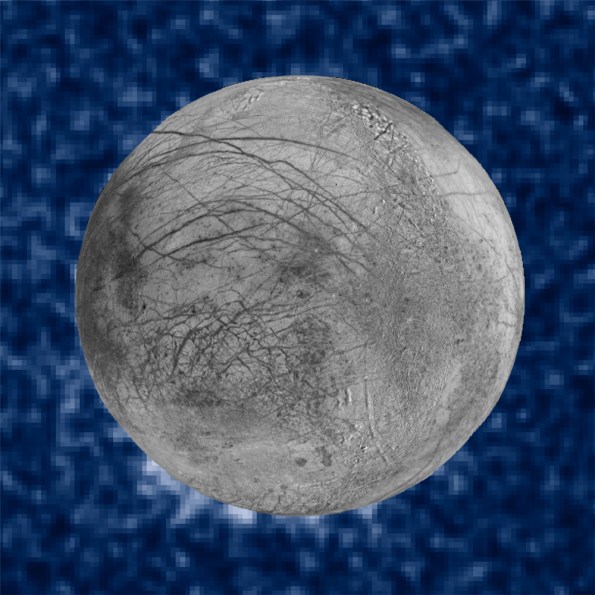
Composite photograph of plumes at the bottom of Europa with a Galileo image of Europa. Credit: NASA/Hubble/Galileo.
03/07/2016 – Ephemeris – Jupiter officially becomes an evening planet tomorrow, celebrating with a double transit of its moons.
Ephemeris for Monday, March 7th. The Sun will rise at 7:08. It’ll be up for 11 hours and 30 minutes, setting at 6:39. The Moon, 1 day before new, will rise at 6:49 tomorrow morning.
Tomorrow is a busy day astronomically speaking, Tomorrow night our time there will be a solar eclipse on the other side of the Earth that will be covered by NASA-TV. I’ll talk more about it tomorrow. However in the early morning hours Jupiter will reach opposition from the Sun tomorrow at 4:58 a.m. At opposition the Earth is placed almost directly between the Sun and Jupiter. It is the time the planet is closest to the Earth in its orbit. For Jupiter that distance will be 412 million miles (664 million km) away. It’s apparent diameter will be 44.5 seconds of arc. One second of arc is one 3,600th of a degree. The Moon and Sun are about a half a degree or 1800 seconds in diameter. Even so Jupiter appears as a tiny disk in binoculars, but a very tiny disc. A few of its 4 large Galilean moons can also be spotted in binoculars. Jupiter is over 11 times the Earth’s diameter and is twice as massive as all the other planets, asteroids and satellites combined.
Times are for the Traverse City/Interlochen area of Michigan. They may be different for your location.
Addendum
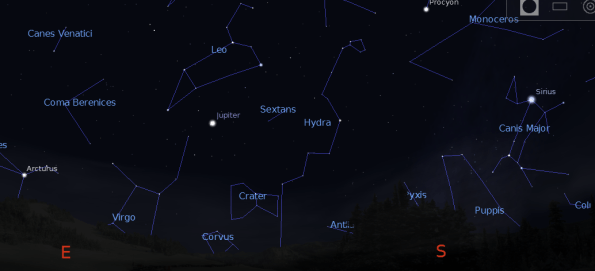
Jupiter at 10 p.m. March 8, 2016 with some of the spring constellations and Canis Major. Created using Stellarium.
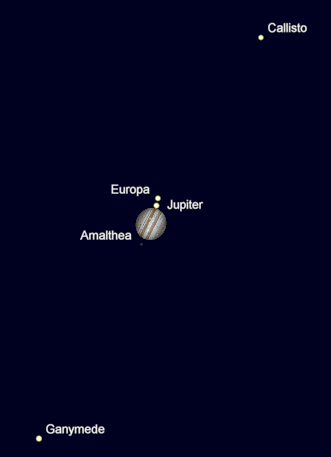
Jupiter and its moons at 10 p.m. March 7, 2016. Created using Cartes du Ciel (Sky Charts).
Io and Europa and their shadows transit the face of Jupiter
This evening there will be two satellites transiting across the face of Jupiter at the same time: Europa and Io. The start of Europa’s transit won’t be seen locally, since Jupiter will rise at 6:30 p.m. Locally, because of Jupiter being low in the sky I wouldn’t expect to spot the transiting satellites or their shadows. However observers in Europe, whose Jupiter rising has a 5 hour head start on us, will be in perfect position. In any case this takes a very good telescope to see. The appearance of Europa and Io in and out of transit can easily be seen in any telescope. In the table below I give the timing of these events for both the Eastern time zone (us) and Universal Time for others. Note the transits start on the 7th of March and end on the 8th for Universal Time.
The shadows of the moons themselves will appear very close to the moons, and may be obscured by them because we are just hours from opposition, and looking at Jupiter from nearly in line with the Sun. That should be a challenge. Watch for pictures from astrophotographer’s Twitter, Instagram and Facebook sites.
Times for this table are from Project Pluto: http://www.projectpluto.com/jevent.htm.
| Event | Eastern Time Zone | Universal Time | ||
| Date | Time | Date | Time | |
| Europa Shadow Start* | 7 | 6:08 p.m. | 7 | 23:08 |
| Europa Transit Start* | 7 | 6:11 p.m. | 7 | 23:11 |
| Io Shadow Start | 7 | 7:27 p.m. | 8 | 00:27 |
| Io Transit Start | 7 | 7:28 p.m. | 8 | 00:28 |
| Europa Transit End | 7 | 8:56 p.m. | 8 | 01:56 |
| Europa Shadow End | 7 | 8:56 p.m. | 8 | 01:56 |
| Io Transit End | 7 | 9:42 p.m. | 8 | 02:42 |
| Io Transit End | 7 | 9:42 p.m. | 8 | 02:42 |
| * The Europa Shadow and Transit Start Events cannot be seen in Michigan because they will occur before Jupiter will rise. |
||||
 Bob Moler's Ephemeris Blog