Archive
05/14/2014 – Ephemeris – All 5 bright planets are visible this week
Ephemeris for Wednesday, May 14th. Today the sun will be up for 14 hours and 46 minutes, setting at 9:02. The moon, at full today, will rise at 9:05 this evening. Tomorrow the sun will rise at 6:14.
It’s Wednesday and once again time to locate the bright planets for this week. Mercury is beginning to show up in the west shortly after sunset, It will be at its farthest from the Sun on the 25th. It will set at 10:51. Brilliant Jupiter will be in the western sky as darkness falls tonight. It will set at 1:07 a.m. Reddish Mars is in Virgo in the southeast as darkness falls. It will pass due south at 10:47 p.m. It’s 64.6 million miles away now, and moving away, and will set at 4:38 a.m. Saturn will be low in the southeast as darkness falls. It’s in the faint constellation of Libra the scales this year. It will pass due south at 1:23 a.m. Brilliant Venus will rise in the east at 4:46 a.m. in twilight.
Times are for the Traverse City/Interlochen area of Michigan. They may be different for your location.
Addendum
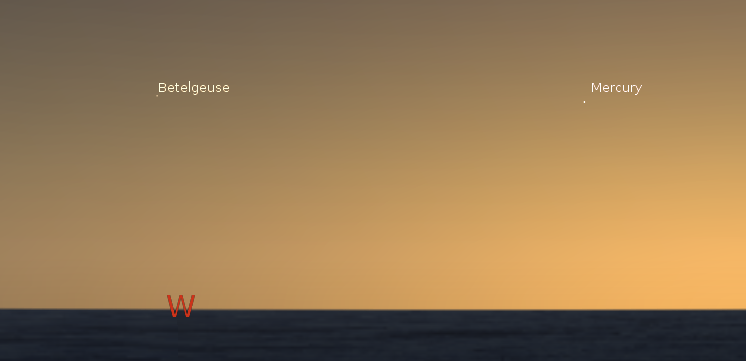
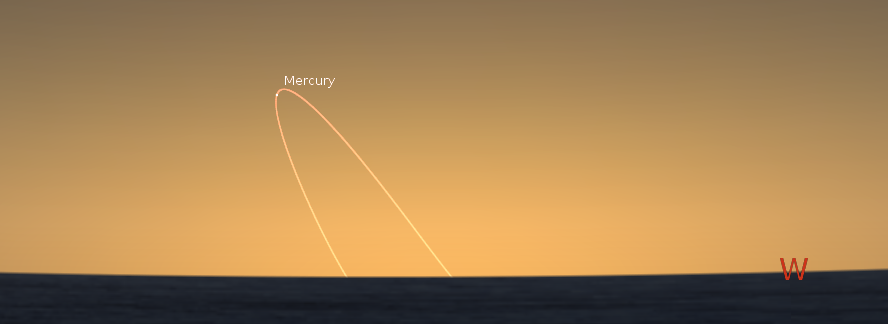
Mercury low in the west at 9:30 p.m. May 14, 2014. Created using Stellarium.
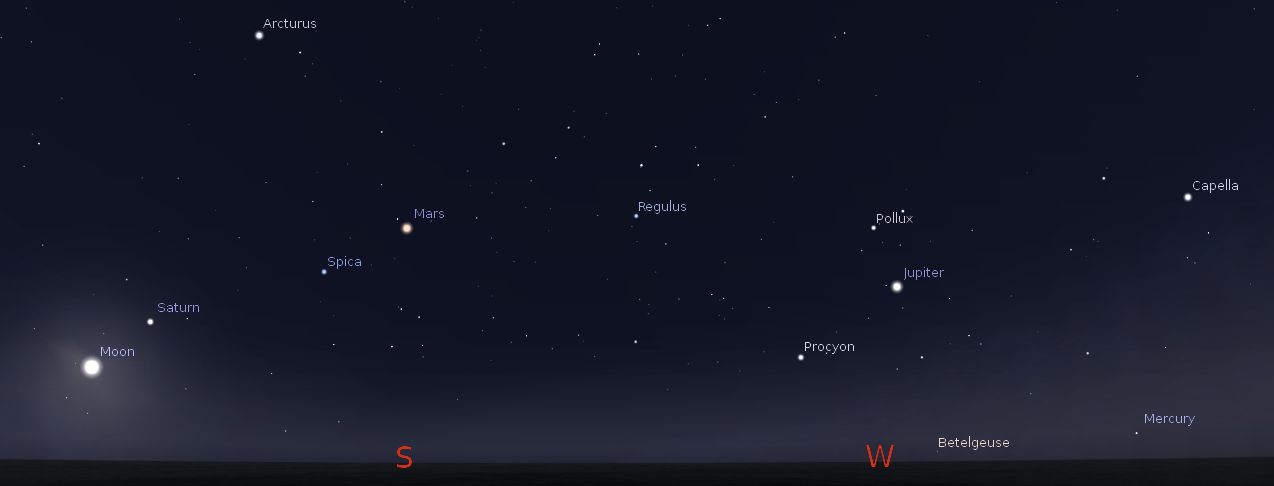
All the evening planets from Mercury to Saturn plus the moon at 10:30 p.m. May 14, 2014. Created using Stellarium.
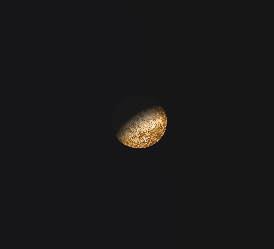
Mercury through a telescope on May 14, 2014. Created using Stellarium.
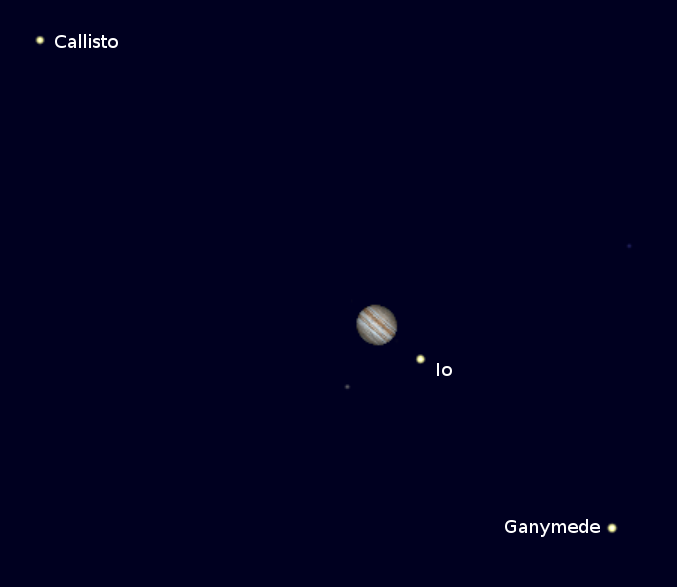
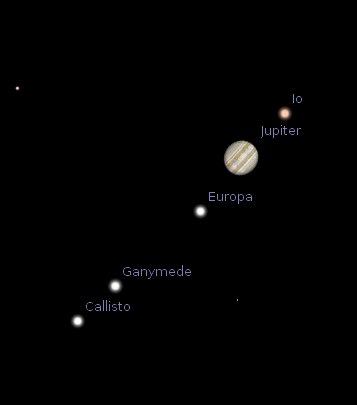
Jupiter and its moons at 10:30 p.m. May 14, 2014. Europa is being occulted by Jupiter. Created using Cartes du Ciel (Sky Charts).
Europa will disappear behind the moon at 9:48 p.m, and will reappear after Jupiter sets for northern Michigan. Places west of here will see Europa reappear before Jupiter sets.
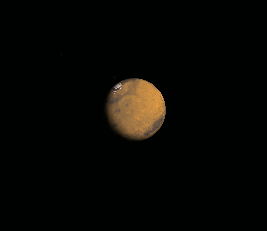
Mars through a telescope at 10:30 p.m. on May 14, 2014. Created using Stellarium.
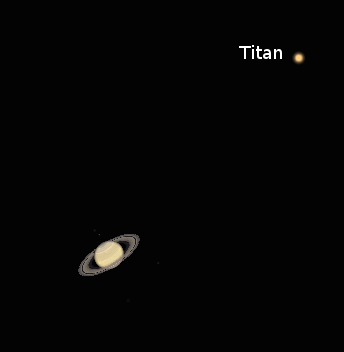
Saturn through a telescope. on May 14, 2014. Created using Stellarium.
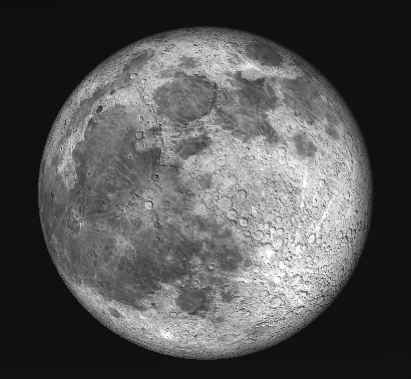
The Moon as it would appear through binoculars at 10:30 p.m. May 14, 2014. Created using Stellarium.
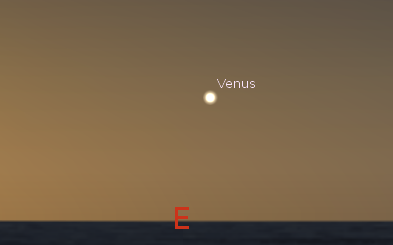
Venus in the east at 5:30 a.m. on May 15, 2014. Created using Stellarium.
Venus through a telescope on May 15, 2014. Created using Stellarium.
02/05/2014 – Ephemeris – Where are the bright planets this week?
Ephemeris for Wednesday, February 5th. The sun will rise at 7:56. It’ll be up for 10 hours and 1 minute, setting at 5:57. The moon, 1 day before first quarter, will set at 1:10 tomorrow morning.
Let’s take our weekly look at the planets. Tiny Mercury is 4 days after its greatest eastern elongation and is seen low in the west-southwest between sunset and 7:25, when it sets. After that Jupiter takes over the evening sky. It will be in the southeastern sky as darkness falls tonight. It’s cruising against the stars of Gemini now. It will pass due south at 10:28 p.m., and will set at 6:11 a.m. in the west-northwest. Mars will rise at 11:37 p.m. in the east-southeast. Reddish Mars is in Virgo now and above the bright star Spica, which it now outshines. Saturn will rise at 2:06 a.m. in the east-southeast. It’s seen against Libra the scales this year. Venus will rise at 5:38 tomorrow morning, and shines brightly in the southeast before sunrise.
Times are for the Traverse City/Interlochen area of Michigan. They may be different for your location.
Addendum

Mercury, its orbit and the ecliptic (you’ll only see Mercury) at 6:30 p.m. on February 5, 2014. Created using Stellarium.
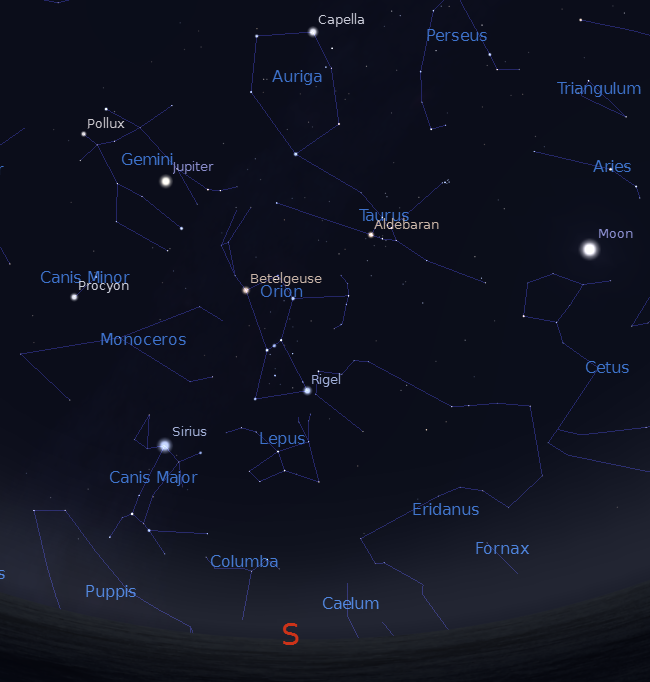
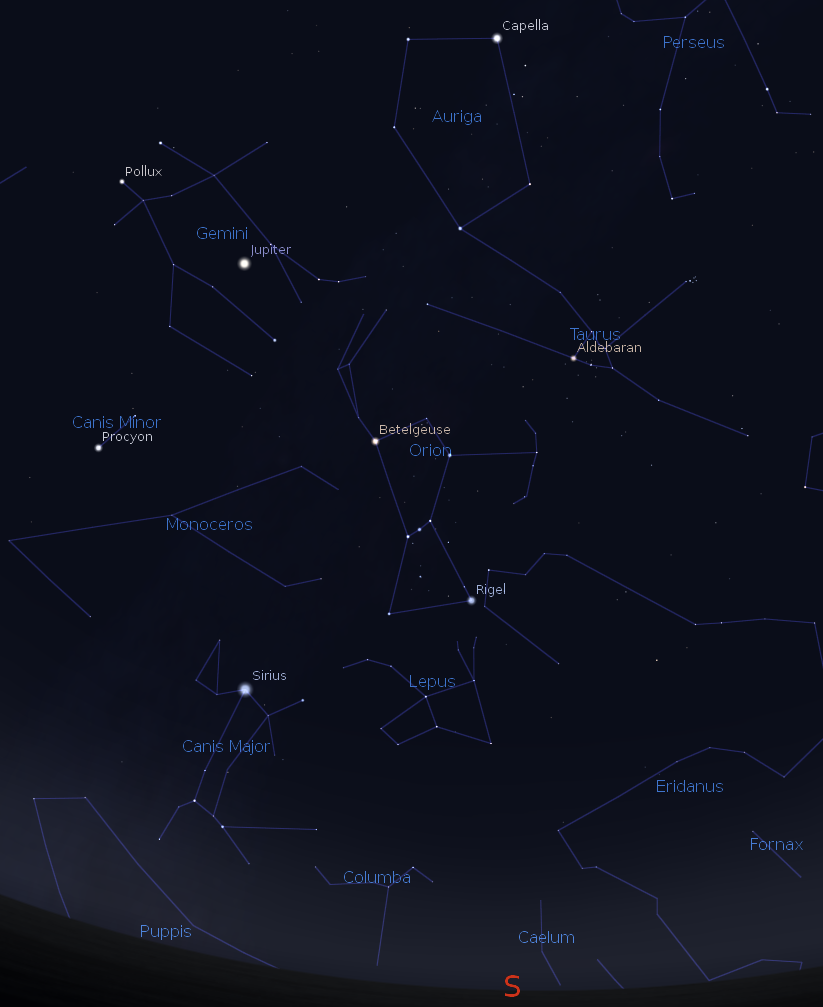
Jupiter, the Moon and the constellations of winter at 9 p.m. February 5, 2014. Created using Stellarium.
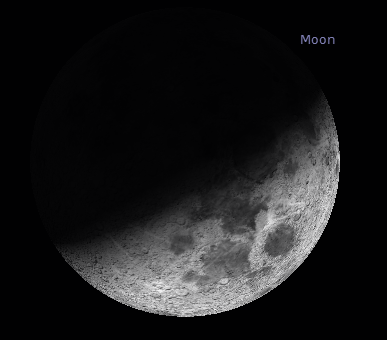
The Moon at 9 p.m. February 5, 2014. Created using Stellarium.
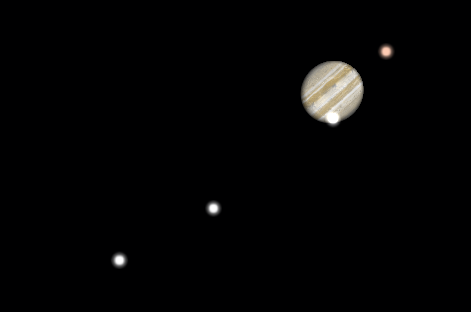
Jupiter and it’s satellites at 9 p.m. February 5, 2014. The satellites from left to right are Ganymede, Europa, Callisto and Io) Callisto may not be visible against the face of Jupiter. Created using Stellarium.
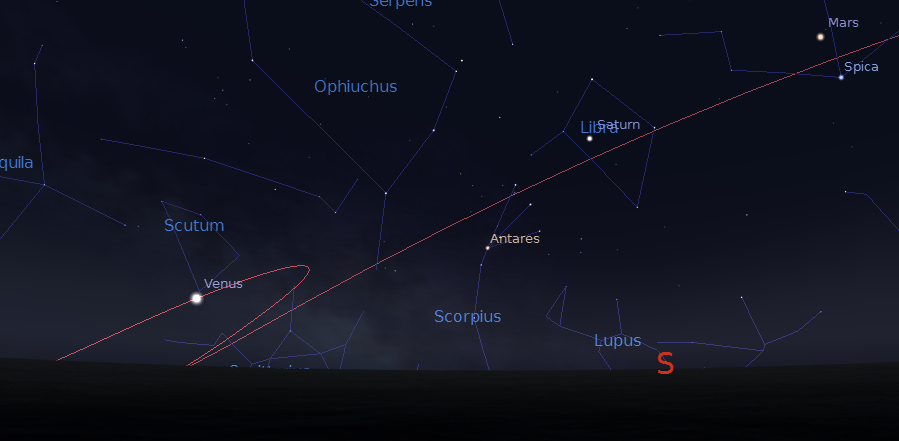
Mars, Saturn, and Venus at 6:30 a.m. February 6, 2014 along with imaginary lines of Venus’ orbit and the ecliptic. Created using Stellarium.
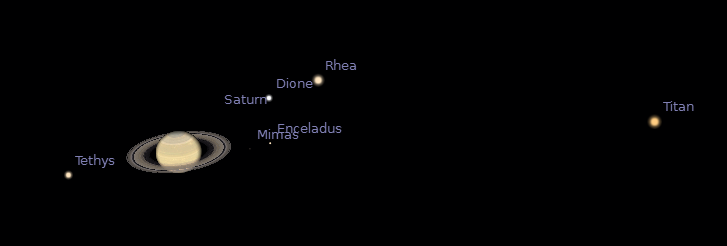
Saturn and its satellites at 6:30 a.m. February 6, 2014. You’ll need a big telescope to see any satellites other than Titan. Created using Stellarium.
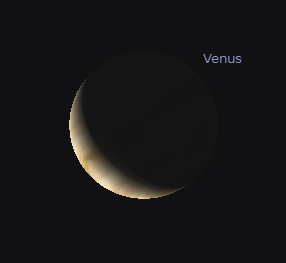
Venus through a telescope. The planet is getting smaller and its crescent is getting fatter as it moves away from the Earth. Created using Stellarium.
Sorry for the late post, but I was watching the Bill Nye – Ken Ham creationist debate last night. Bill took him apart like Inherit the Wind 2.
01/31/2014 – Ephemeris – Previewing February skies
Ephemeris for Friday, January 31st. The sun will rise at 8:02. It’ll be up for 9 hours and 47 minutes, setting at 5:50. The moon, 1 day past new, will set at 7:18 this evening.
Lets look ahead at the short month of February. It’s so short that this year it has no new moons. To make up for it both January and March have two. We’re in the depths of winter but the sun is continuing its return to northern climes. This is reflected in the increase in daylight hours, from 9 hours 50 minutes tomorrow to 11 hours 7 minutes on the 28th. These times are for the Interlochen/Traverse City area. Durations are slightly shorter in the northern part of our listening area and slightly longer to the south.. As the month goes on the weather should generally warm up, though this year who knows what will happen. Mercury is seen early for the next week or so and Jupiter are seen in the evening along with all the wonderful constellations of winter.
Times are for the Traverse City/Interlochen area of Michigan. They may be different for your location.
Addendum
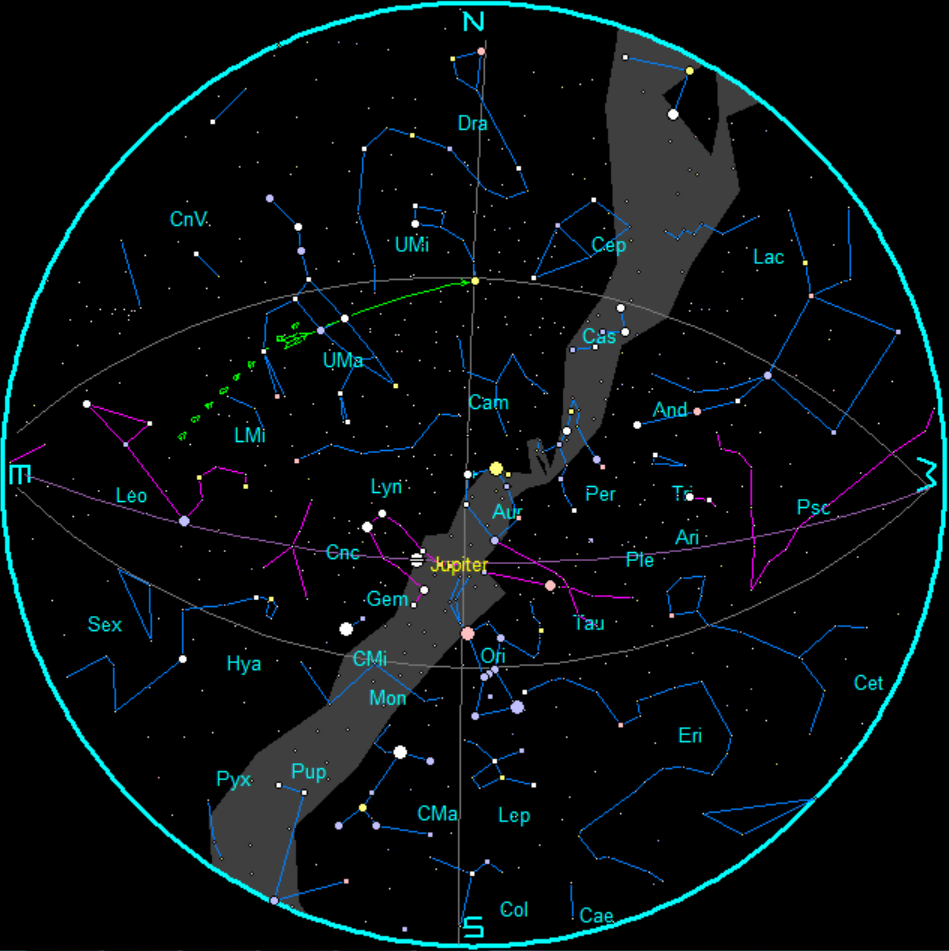
A star chart for February 15th at 9 p.m. Add a half hour to every week before the 15th and subtract and hour for every week after the 15th. Created using my LookingUp program.
For a list of constellation names to go with the abbreviations click here
01/29/2014 – Ephemeris – We could spot all the 5 naked eye planets this week
Ephemeris for Wednesday, January 29th. The sun will rise at 8:04. It’ll be up for 9 hours and 42 minutes, setting at 5:47. The moon, 1 day before new, will rise at 7:27 tomorrow morning.
Let’s take our weekly look at the planets. Tiny Mercury is 3 days from its greatest eastern elongation low in the west-southwest between sunset and 7:22, when it sets. After that Jupiter takes over the evening sky. It will be in the eastern sky as darkness falls tonight. It’s cruising against the stars of Gemini now. It will move southeast and pass due south at 10:59 p.m., and will set at 6:41 a.m. in the west-northwest. Mars will rise at 11:55 p.m. in the east-southeast. Reddish Mars is in Virgo now and above the bright star Spica. Saturn will rise at 2:32 a.m. in the east-southeast. It’s seen against Libra the scales this year. Venus will rise at 6:02 tomorrow morning, so it may become visible around 6:30 or so very low in the east-southeast.
Times are for the Traverse City/Interlochen area of Michigan. They may be different for your location.
Addendum
Mercury in the west southwest at 6:15 p.m. on January 29, 2014. Also displayed is Mercury’s orbit. It will reach the peak, its greatest eastern elongation from the Sun on Friday. Created using Stellarium.
Jupiter with the winter constellations at 9 p.m. on January 29, 2014. Created using Stellarium.
The telescopic Jupiter at 9 p.m. and January 29, 2014. Created using Stellarium.
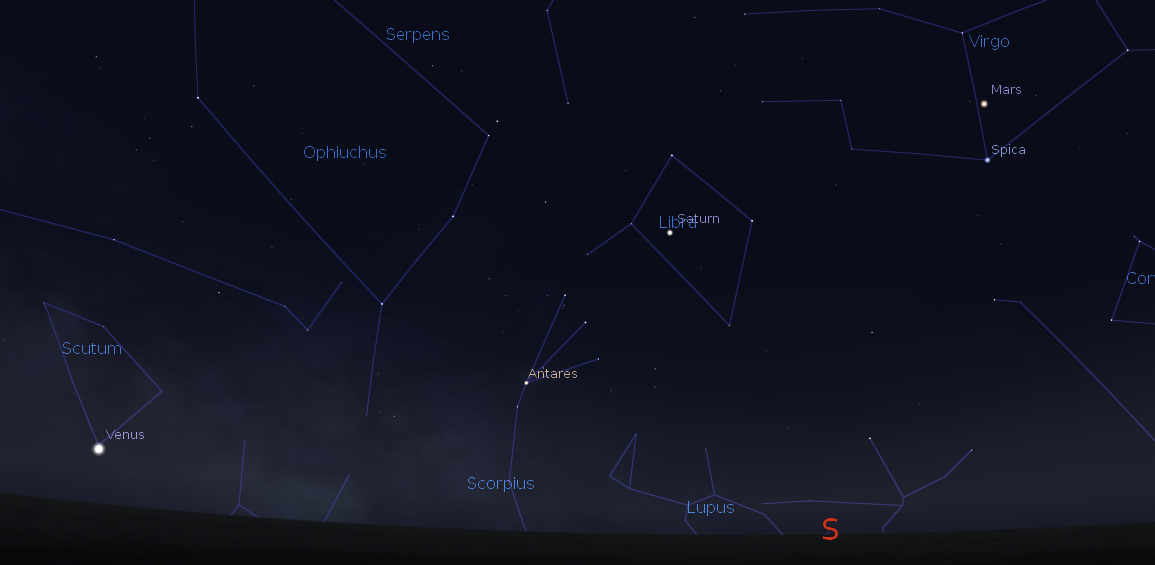
Mars, Saturn and Venus with the spring constellations at 6:30 a.m. on January 29, 2014. Created using Stellarium.
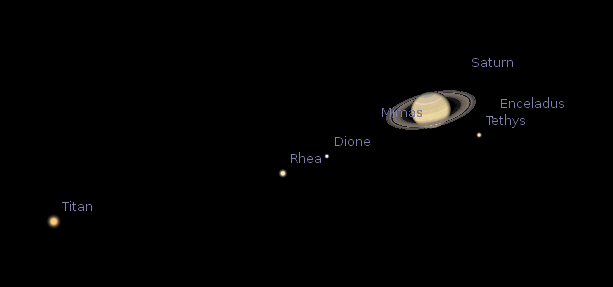
Saturn and its moons at 6:30, January 30, 2014. Of the moons, Titan will be the only one visible in small telescopes. Created using Stellarium.
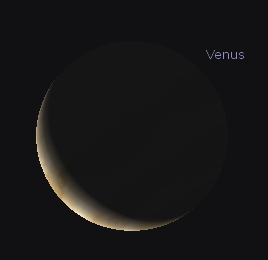
Venus as seen in a telescope at 7 a.m. on January 30, 2014. Created using Stellarium.
01/27/2014 – Ephemeris – Mercury’s back in the evening sky now
Ephemeris for Monday, January 27th. The sun will rise at 8:06. It’ll be up for 9 hours and 37 minutes, setting at 5:44. The moon, half way from last quarter to new, will rise at 5:47 tomorrow morning.
Mercury is now making an appearance in the evening sky. It will have its greatest elongation or angular separation from the sun on Friday of 18.4 degrees. Mercury has a markedly elliptical orbit. Unfortunately both the best times to view Mercury from the northern hemisphere of earth, late summer and autumn mornings and late winter and spring evenings, Mercury is near perihelion or closest point in its orbit to the sun. The southern hemisphere, which has seasons opposite from ours, has the same viewing opportunities in late summer and autumn mornings and late winter and spring evenings. Only for them Mercury is near aphelion or its farthest from the sun, so this planet can be seen just outside of twilight, where we don’t have that luxury.
Times are for the Traverse City/Interlochen area of Michigan. They may be different for your location.
Addendum
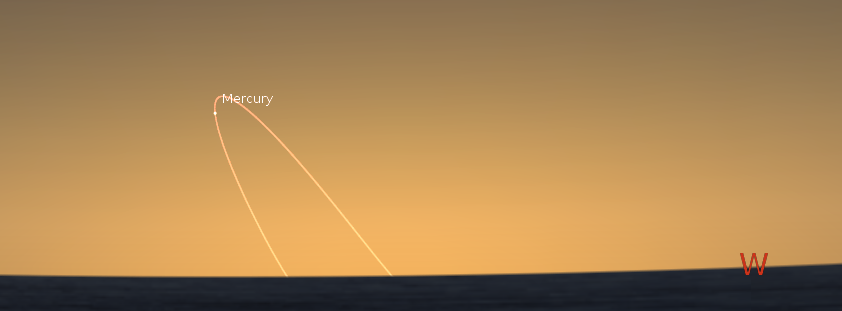
Mercury and its orbit as seen from Earth at 6:15 p.m. on January 27, 2014. Created using Stellarium.
Mercury will move to the top of the orbital loop Friday about 5 a.m. and descend to the right. The Mercury image will be posted Wednesday again.
01/22/2014 – Ephemeris – Where are the bright planets this week?
Ephemeris for Wednesday, January 22nd. The sun will rise at 8:11. It’ll be up for 9 hours and 26 minutes, setting at 5:37. The moon, 2 days before last quarter, will rise at 12:27 tomorrow morning.
Let’s take our weekly look at the planets. Tiny Mercury is starting its week and a half appearance low in the west-southwest between sunset and 6:53, when it sets. After that Jupiter takes over the evening sky. It will be in the eastern sky as darkness falls tonight. It’s cruising against the stars of Gemini now. It will rise and pass due south at 11:30 p.m., and will set at 7:11 a.m. in the west-northwest. Mars will rise at 12:11 a.m. in the east-southeast. Reddish Mars is in Virgo now and above the bright star Spica and the Moon tomorrow morning. Saturn will rise at 2:57 a.m. in the east-southeast. It’s seen against Libra the scales this year. Venus will rise at 6:35 tomorrow morning, so it may become visible around 7 or so very low in the east-southeast.
Times are for the Traverse City/Interlochen area of Michigan. They may be different for your location.
Addendum
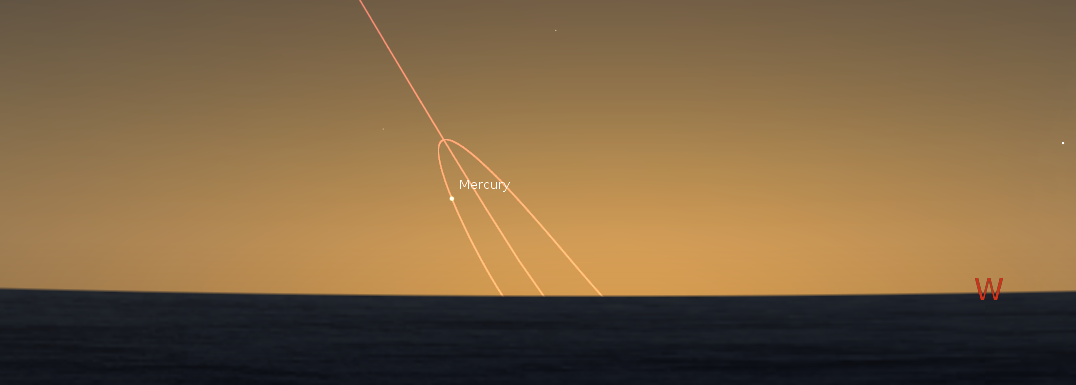
Mercury in the west-southwest at 6:15 p.m. on January 22, 2014. Also displayed is Mercury’s orbit, the loop, and the ecliptic, the plane of the Earth’s orbit. Created using Stellarium.
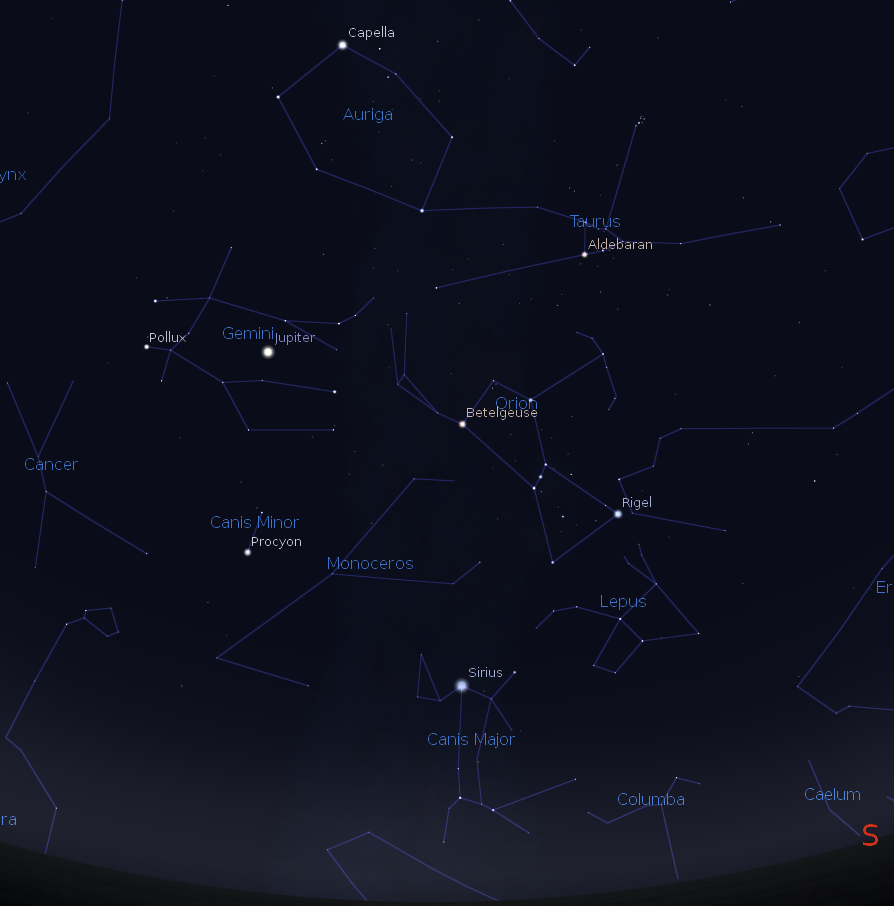
Jupiter with the winter constellations at 9 p.m. on January 22, 2014. Created using Stellarium.
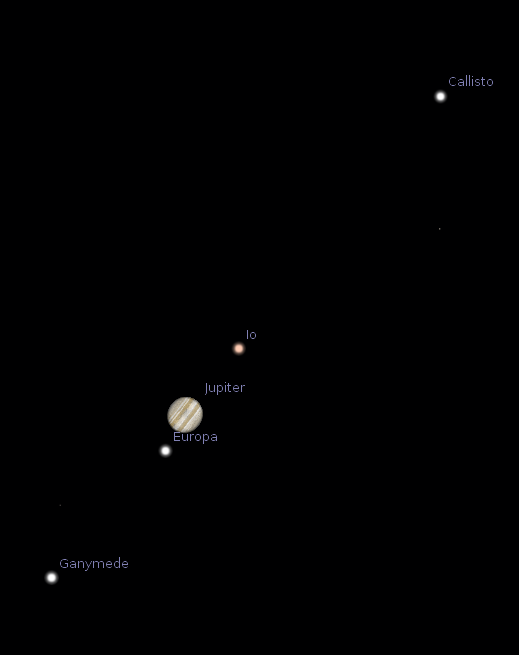
The telescopic Jupiter at 9 p.m. and January 22, 2014. Created using Stellarium.
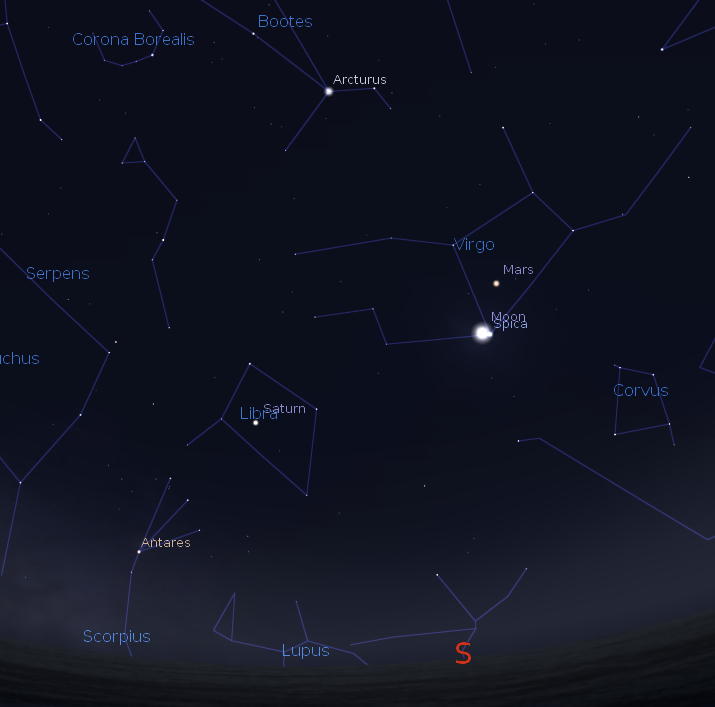
Mars, Saturn and the Moon with the spring constellations at 6:30 a.m. on January 23, 2014. Created using Stellarium.
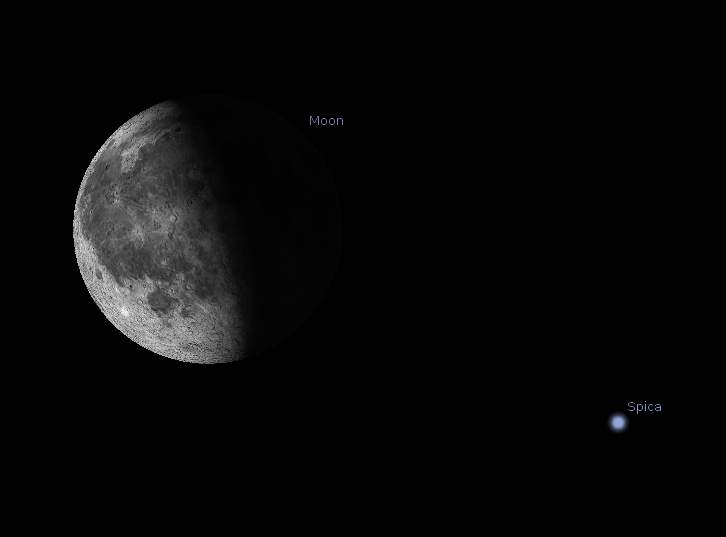
The Moon and the star Spica at 6:30 a.m. on January 23, 2014. Created using Stellarium.
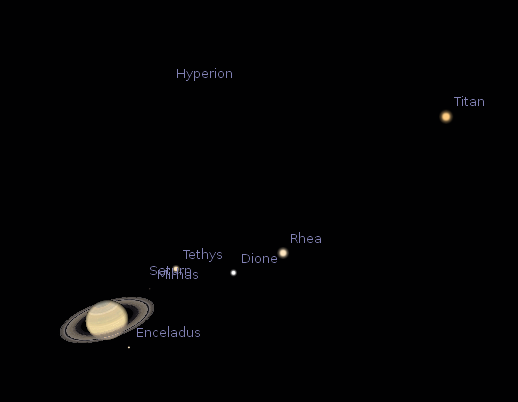
Saturn and its moons at 6:30, January 23, 2014. Of the moons, Titan will be the only one visible in small telescopes. Created using Stellarium.
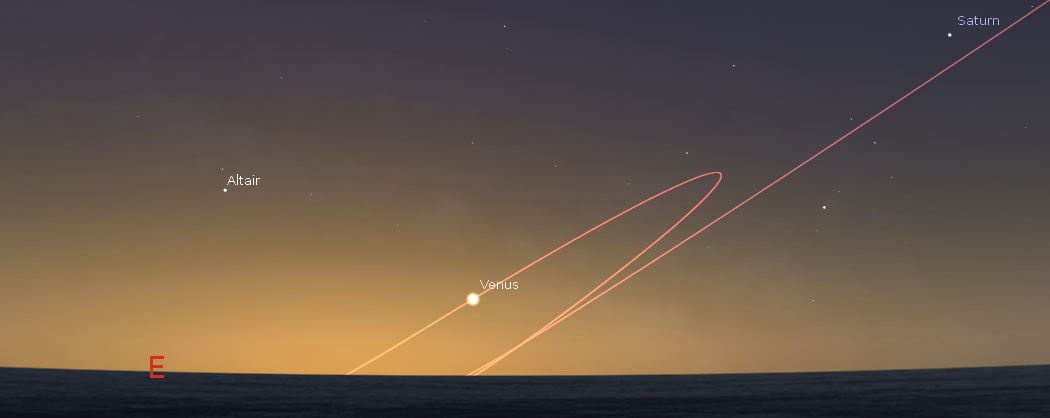
Venus in the east-southeast at 7:45 a.m. on January 23, 2014. Also displayed is Venus’ orbit, the loop, and the ecliptic, the plane of Earth. Created using Stellarium.
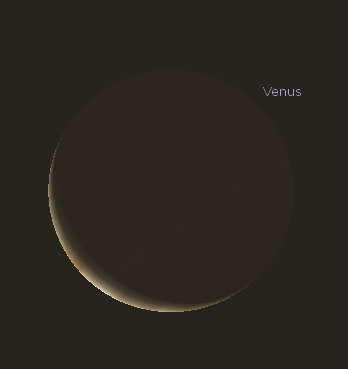
Venus as seen in a telescope at 7:45 a.m. on January 23, 2014. Created using Stellarium.
11/27/2013 – Ephemeris – Where are the bright planets and what’s up with Comet ISON?
Ephemeris for Wednesday, November 27th. The sun will rise at 7:54. It’ll be up for 9 hours and 10 minutes, setting at 5:05. The moon, 2 days past last quarter, will rise at 2:46 tomorrow morning.
Let’s see where the bright planets are this eventful week. Venus is brilliant in the southwest after sunset. It will set at 7:53 p.m. The giant planet Jupiter will rise at 8:01 p.m. in the east northeast. It’s cruising against the stars of Gemini now. It will pass due south at 3:38 a.m. Mars will rise at 1:47 a.m. also in the east northeast. Reddish Mars is midway between Regulus in Leo and Spica in Virgo and tomorrow morning will be about 12 moon diameters above left of the moon. Mercury and Saturn will be together in the east southeast by 7 a.m. Mercury is the lower and brighter of the two. Comet ISON is now too close to the sun to be seen. Check bobmoler.wordpress.com (see below) for how to view Comet ISON near the sun.
Times are for the Traverse City/Interlochen area of Michigan. They may be different for your location.
Addendum
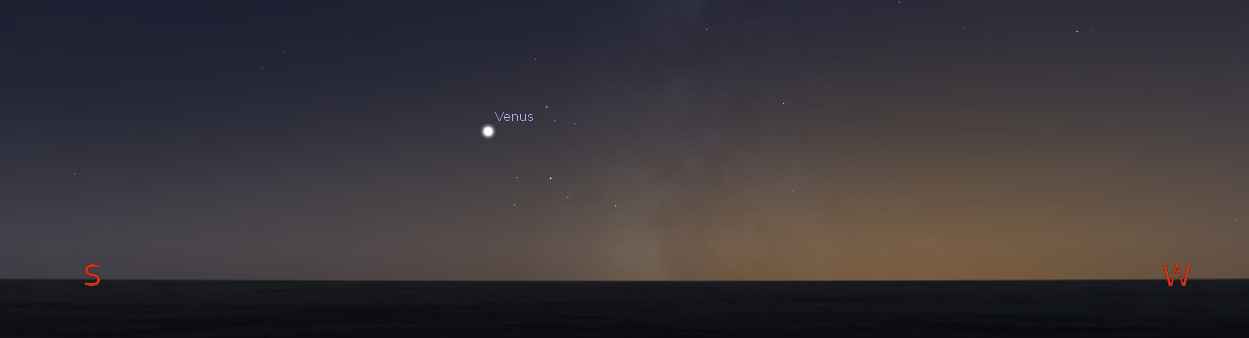
Venus as it should appear at 6 p.m. on 11/27/2013. Created using Stellarium.
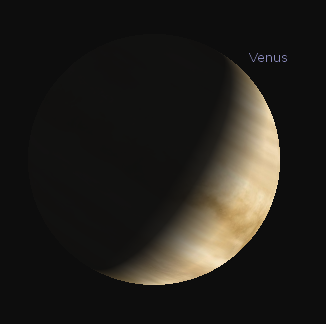
Telescopic view of Venus as it should appear at 6 p.m. on 11/27/2013. Created using Stellarium.
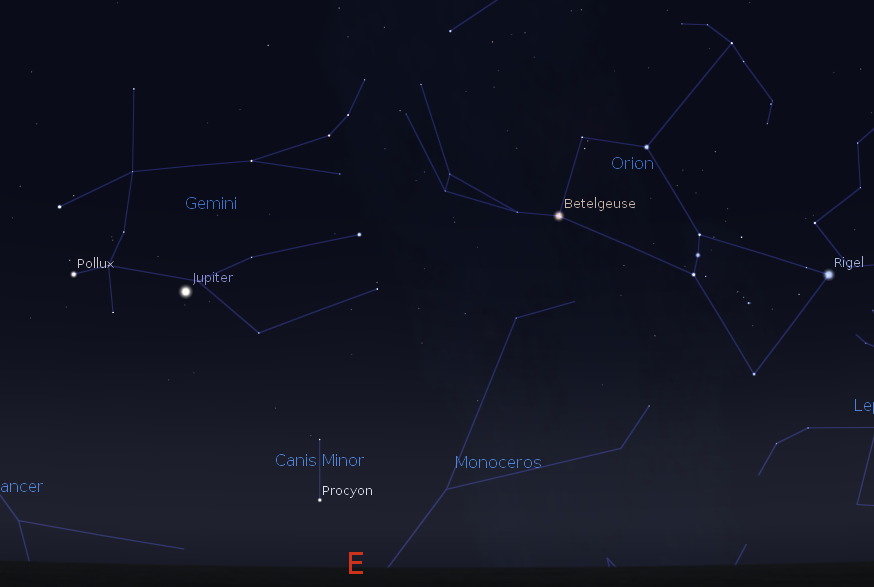
Jupiter and some winter constellations as they should appear at 10 p.m. on 11/27/2013. Created using Stellarium.
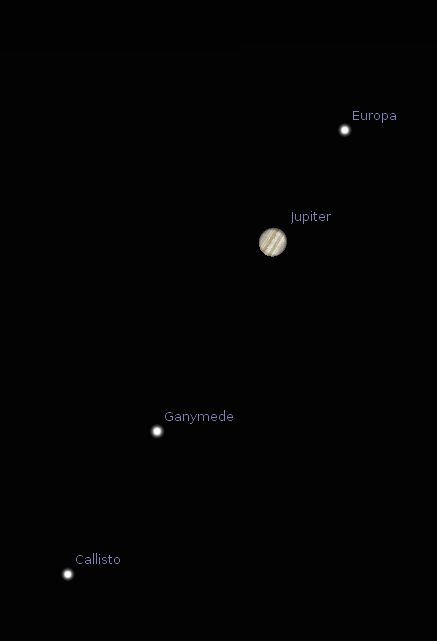
Telescopic view of Jupiter and its satellites as they should appear at 10 p.m. on 11/27/2013. The satellite Io is behind the planet and won’t appear until after midnight. Created using Stellarium.
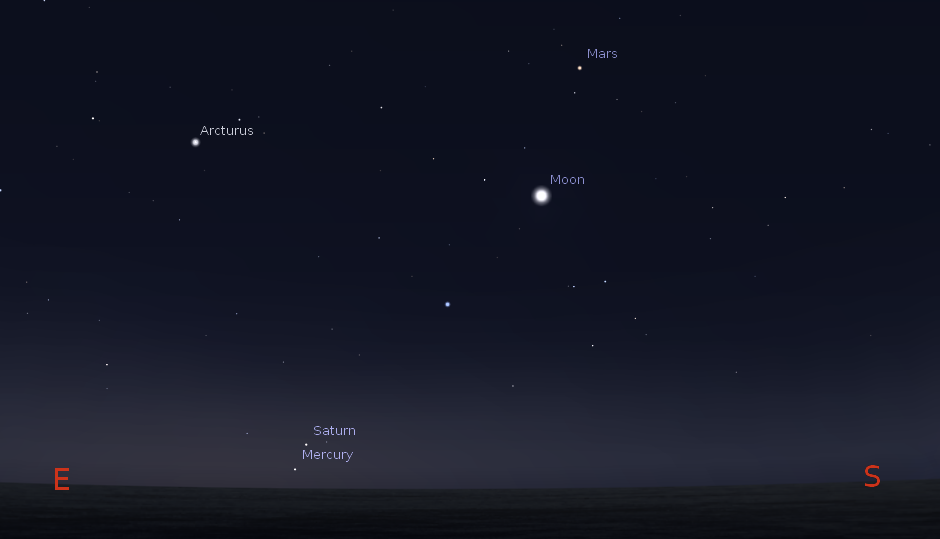
The morning planets Mars, Saturn and Mercury plus the Moon at 6:45 a.m. November 28, 2013. Created using Stellarium
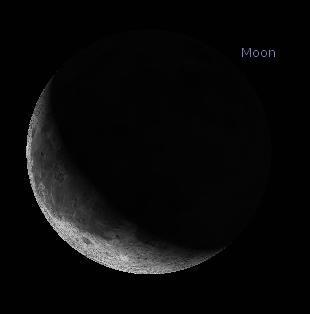
The Moon at 6:45 a.m. November 28, 2013. Created using Stellarium.
Comet ISON
Phil Plait the Bad Astronomer reported Monday that Comet ISON had suddenly decreased the amount of ices that it was emitting and pretty much simultaneously greatly increased the amount of dust it was producing. One of the possible explanations was that its nucleus had been disrupted. The comet’s nucleus is the small, maybe 2 km diameter, solid part of the comet. All the other parts of the comet are the thin ejected gas and dust from that nucleus. The head and tail of the comet is still a pretty good vacuum by earthly standards. There is still questions about it today. Here’s a YouTube video posted by the Planetary Society’s Emily Lakdawalla created by Emily from images taken by the STEREO Ahead spacecraft. It seems to be holding its own:
Here is the Planetary Society Blog entry that discusses Comet ISON’s then current status.
At the time of this posting (10 p.m. 11/26) the STEREO Behind COR 2 image shows Comet ISON entering on the lower left. Also SOHO’s LASCO C3 imager shows Comet ISON entering the view from the lower right. There’s also a coronal mass ejection (CME) erupting toward the comet. It could pass behind it, in front of it or actually toward it. It should be interesting.
Live programming of NASA-TV Thanksgiving Day
November 28, Thursday
1 – 3:30 p.m. – NASA Google+ Hangout: Comet ISON – GSFC (All Channels)
Here’s a link to NASA-TV: http://www.nasa.gov/multimedia/nasatv/
11/22/2013 – Ephemeris – President Kennedy and the quest for the Moon plus Comet ISON finder charts
Ephemeris for Friday, November 22nd. The sun will rise at 7:48. It’ll be up for 9 hours and 19 minutes, setting at 5:08. The moon, 3 days before last quarter, will rise at 9:43 this evening.
Today marks the 50th anniversary of the assassination of President John F. Kennedy. Yes I remember where I was when I heard the news. Being a program about astronomy and space I’d like to think about the challenge he laid down “to send a man to the moon and return him safely to the Earth by the end of the decade”. This was in the midst of the Cold War in response to the Soviet’s triumph in sending Yuri Gagarin into orbit. It was made almost a sacred vow due to Kennedy’s assassination. No NASA program since was funded to the extent that the Gemini and Apollo programs were, so that on July 20, 1969 that promise was fulfilled. All of money spent in NASA’s 55 years is actually less than that of the recent bank bailout.
Times are for the Traverse City/Interlochen area of Michigan. They may be different for your location.
Comet ISON
Finder charts for Comet ISON for this morning, Saturday, Sunday and Monday mornings.
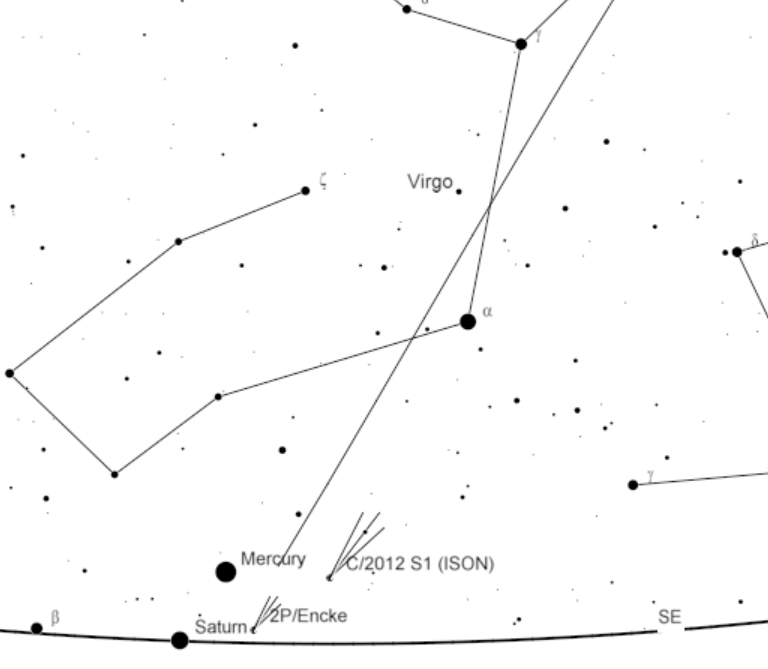
Chart for finding Comet ISON this morning (November 22, 2013 at 6:30 a.m.). Chart created using Cartes du Ciel.
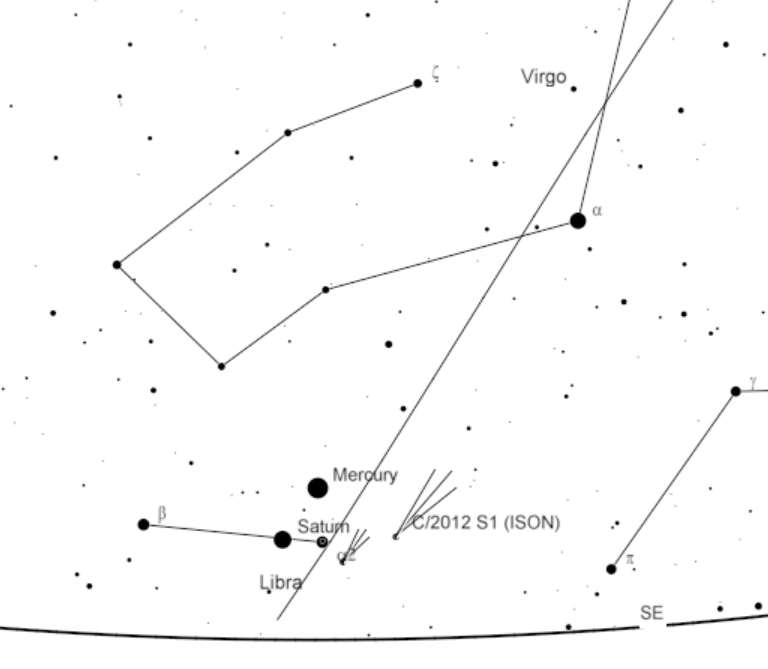
Chart for finding Comet ISON Saturday morning (November 23, 2013 at 7:00 a.m.). Chart created using Cartes du Ciel.
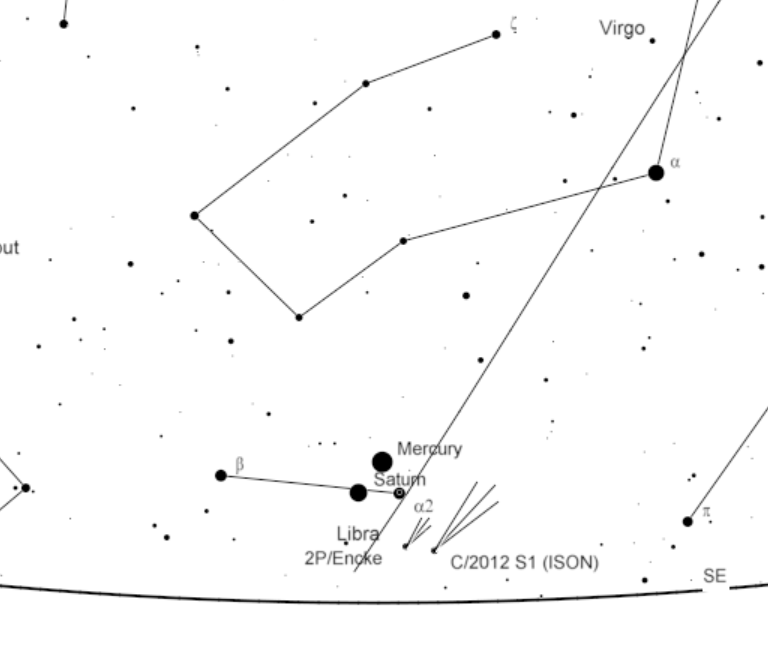
Chart for finding Comet ISON Sunday morning (November 24, 2013 at 7:00 a.m.). Chart created using Cartes du Ciel.
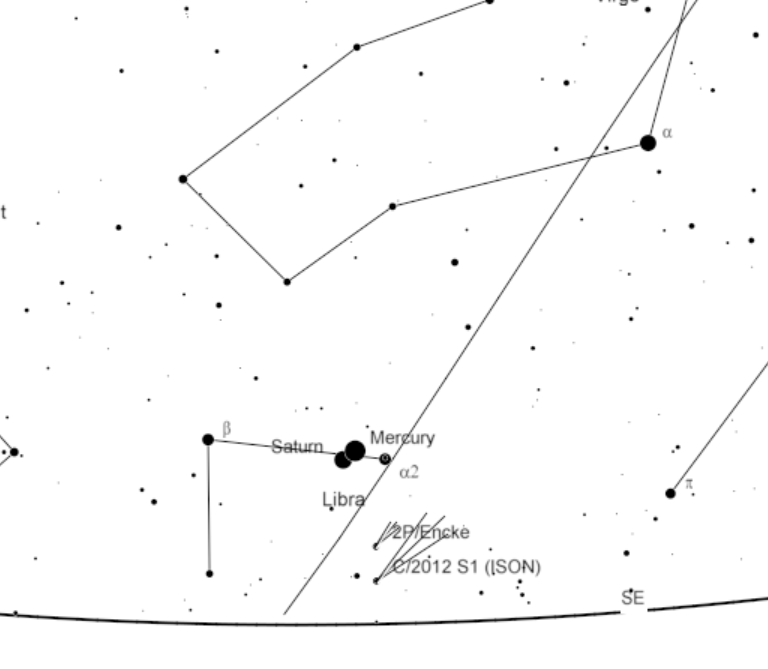
Chart for finding Comet ISON Monday morning (November 25, 2013 at 7:15 a.m.). Chart created using Cartes du Ciel.
11/20/2013 – Ephemeris – Where are the bright planets and Comet ISON this week?
Ephemeris for Wednesday, November 20th. The sun will rise at 7:46. It’ll be up for 9 hours and 23 minutes, setting at 5:09. The moon, 3 days past full, will rise at 7:52 this evening.
Let’s see where the bright planets are this week. Venus is brilliant in the southwest after sunset. It will set at 7:52 p.m. The giant planet Jupiter will rise at 8:31 p.m. in the east northeast. It’s cruising against the stars of Gemini now. It will pass due south at 7:47 a.m. Mars will rise at 1:47 a.m. also in the east northeast. Reddish Mars is two widths of a fist held at arm’s length below and left of the bright star Regulus in Leo now. Comet ISON is now about magnitude 5, now meeting current brightness predictions, Officially naked eye, you’ll probably still need binoculars to spot it. Comet ISON is below and left of the star Spica low in the east southeast and will rise about 5:50 a.m. and be visible until around 6:30 a.m. above the planet Mercury.
Times are for the Traverse City/Interlochen area of Michigan. They may be different for your location.
Addendum
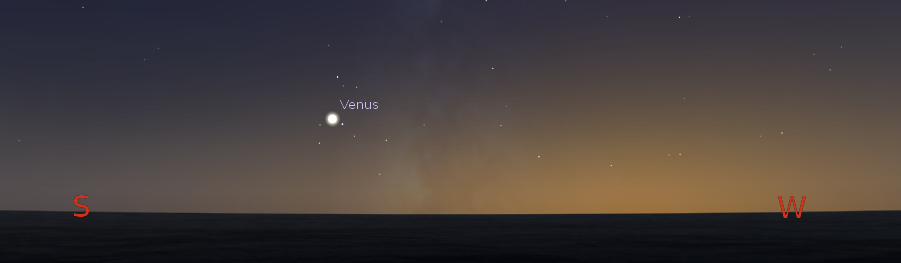
Venus low in the southwest at 6 p.m., November 20, 2013. Created using Stellarium.
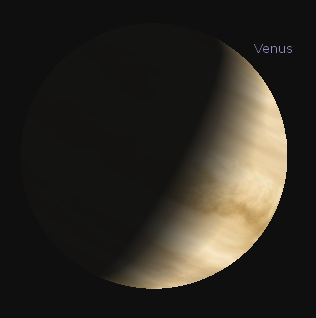
Telescopic view of Venus on November 20, 2013. The cloud banding will not be visible. Created using Stellarium.
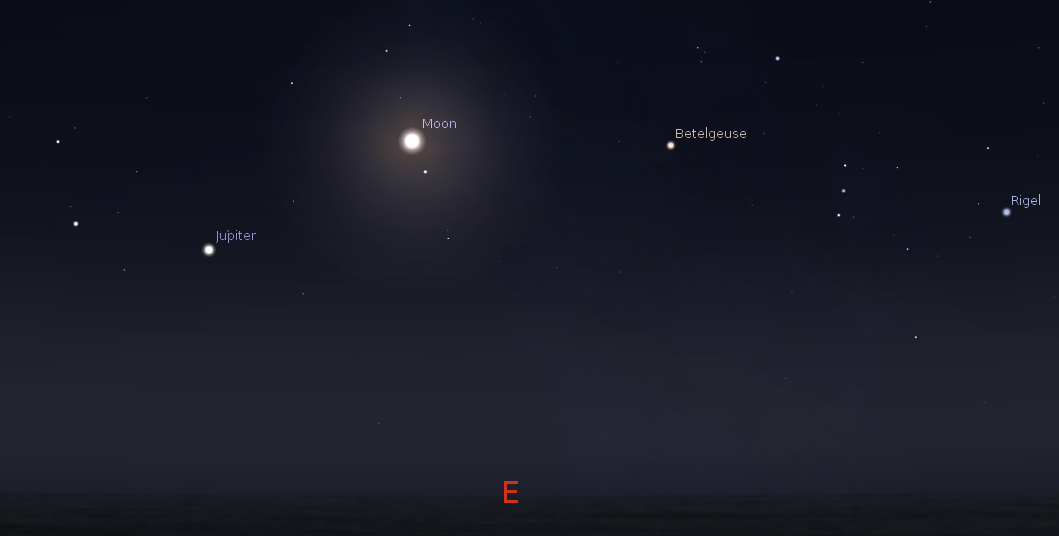
Jupiter in the east at 10 p.m. on November 20, 2013. Created using Stellarium.
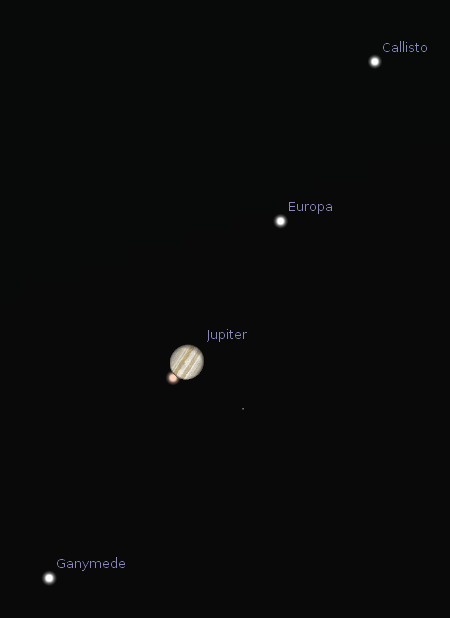
A telescopic view of Jupiter at 10 p.m. The moon Io is peeking around Jupiter. Up is to the top. The view in your telescope may vary. Created using Stellarium.
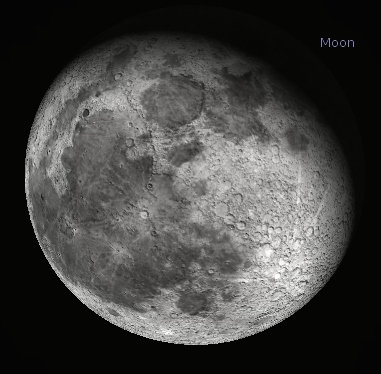
The magnified Moon. Created using Stellarium.
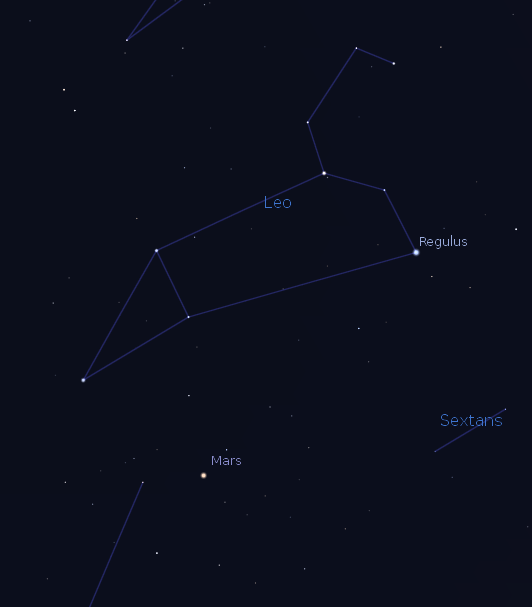
Mars and Leo at 6 a.m. November 21, 2013. Created using Stellarium.
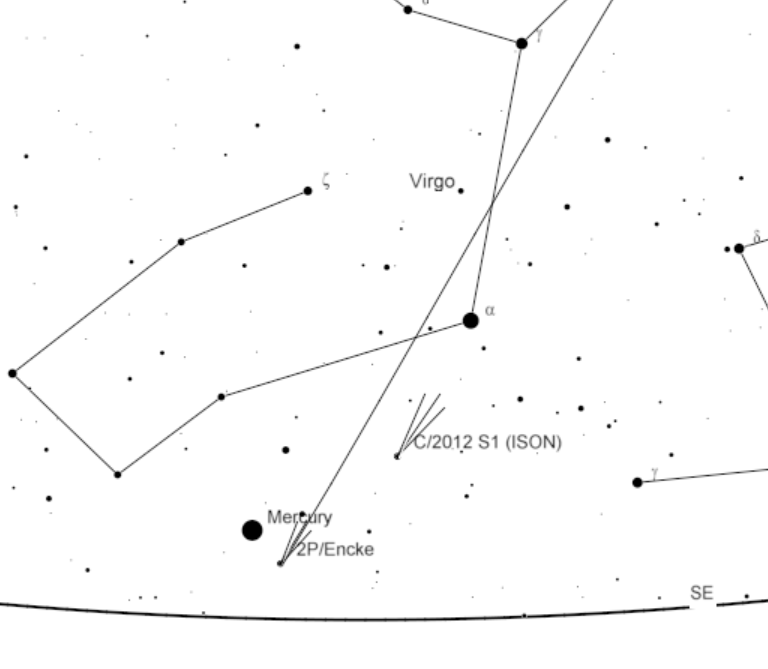
Chart for finding Comet ISON this morning (November 20, 2013 at 6:30 a.m.). Chart created using Cartes du Ciel.
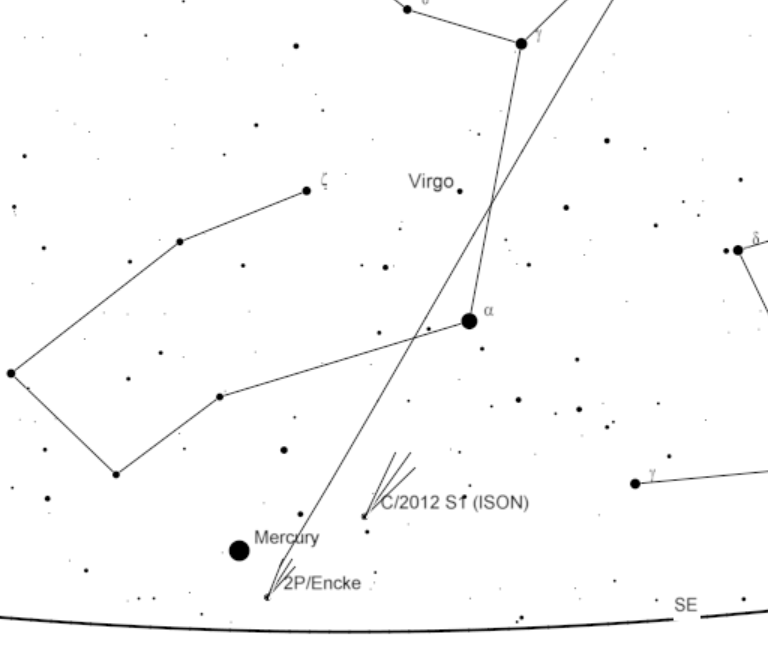
Chart for finding Comet ISON this morning (November 21, 2013 at 6:30 a.m.). Chart created using Cartes du Ciel.
08/07/2013 – Ephemeris – Where are the bright planets this week?
Ephemeris for Wednesday, August 7th. The sun rises at 6:36. It’ll be up for 14 hours and 23 minutes, setting at 8:59. The moon, 1 day past new, will set at 9:00 this evening.
Lets check out the planets visible now. Venus is now brilliant low in the western sky in evening twilight, It will set at 10:23 p.m. Holding forth in the southwest will be Saturn this evening, the brightest star-like object in the constellation Virgo appearing yellowish to the left of the extremely blue-white star Spica. It will set at 12:14 tomorrow morning. In the morning sky before sunrise Jupiter will rise at 3:33, with Mars rising shortly after at 4:06, which will appear below and left of Jupiter by four and a half degrees or half the width of your fist held at arm’s length. Mercury will rise at 5:12 a.m. tomorrow. It will nearly two widths of your fist below and left of Jupiter. For sharp-eyed observers we have 5 planets visible now.
Times are for the Traverse City/Interlochen area of Michigan. They may be different for your location.
Addendum
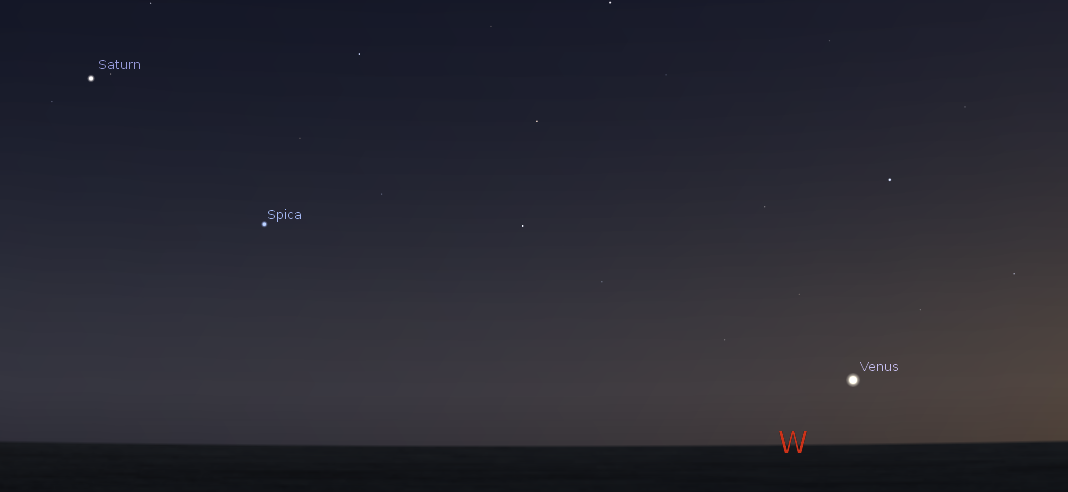
Venus and Saturn at 10 p.m. on August 7, 2013. Created using Stellarium.
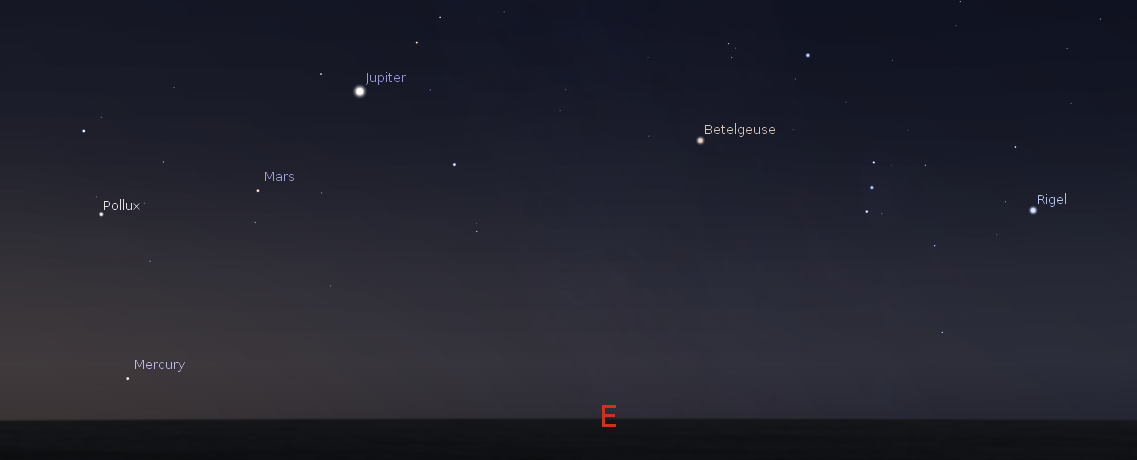
Morning planets and stars at 5:30 a.m. on August 8, 2013. Created using Stellarium.

