Archive
01/10/2018 – Ephemeris – One lone, but invisible, bright planet in the evening, the rest in the morning
Ephemeris for Wednesday, January 10th. The Sun will rise at 8:18. It’ll be up for 9 hours and 3 minutes, setting at 5:22. The Moon, 2 days past last quarter, will rise at 3:20 tomorrow morning.
Let’s take our weekly look at the bright planets. While Uranus and Neptune are evening planets, they require binoculars or a telescope to spot. All of the bright naked eye planets save one are in the morning sky now, but Venus is too close to the Sun to be seen. So is Saturn, but that’s in the morning sky along with Mercury. At 7 this morning Jupiter is in the east-southeast and is a lot brighter than Mars, just below and left of it. Jupiter will rise at 3:29 tomorrow with Mars following at 3:40. If you want to take a crack at Mercury, it will rise this morning at 6:52 And Saturn will rise at 7:07 this morning. Saturn’s rise times will increase by 3 to 4 minutes each morning. The morning sky you’ll see at 7 a.m. will be the same stars as in the late spring sky with the summer triangle just rising.
The times given are for the Traverse City/Interlochen area of Michigan. They may be different for your location.
Addendum
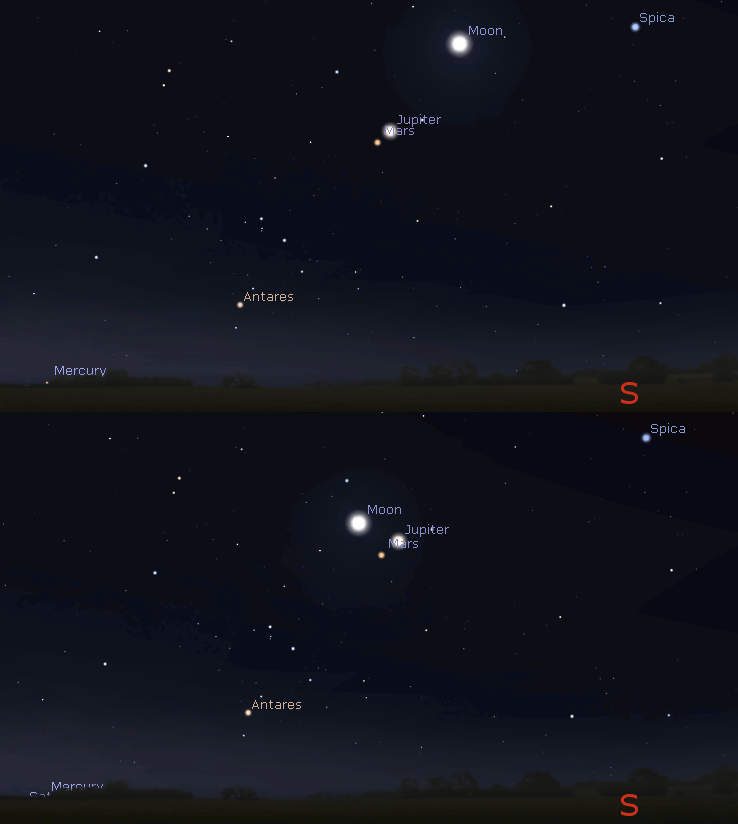
Morning planets with an animation of the Moon’s motion on the morning of the 10th & 11th. Created using Stellarium and GIMP. I’ll be covering the Moon’s apparent proximity to the planets tomorrow. Click on image to enlarge.
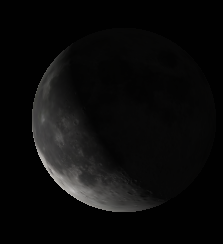
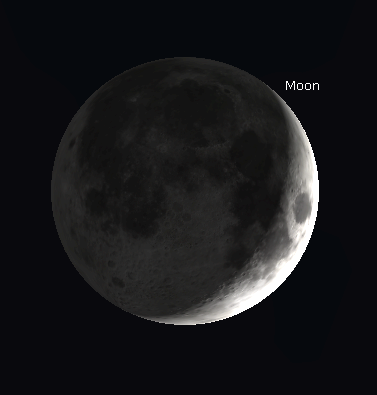
The fat waning crescent Moon as it might be seen in binoculars at 7 a.m. January 10, 2017. Created using Stellarium.
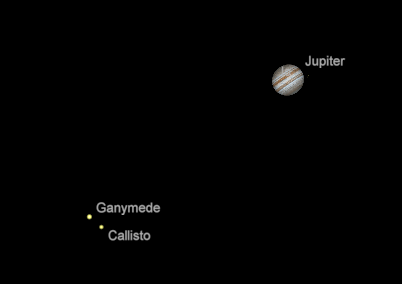
Jupiter with only two of its moons visible at 7 a.m. January 10, 2018. Io and Europa will be visible before 5:27 a.m. before ducking into Jupiter’s shadow. Created using Cartes du Ciel.
Satellite Event           Date      UT     EST
Europa Eclipse start:   10 Jan 2018 10:27  5:27 a.m.
Io Eclipse start:       10 Jan 2018 10:28  5:28 a.m.
Io Occultation end:     10 Jan 2018 13:42  Daylight
Europa Occultation end: 10 Jan 2018 14:56  Daylight
Satellite events are from the Pluto Project: https://www.projectpluto.com/jevent.htm
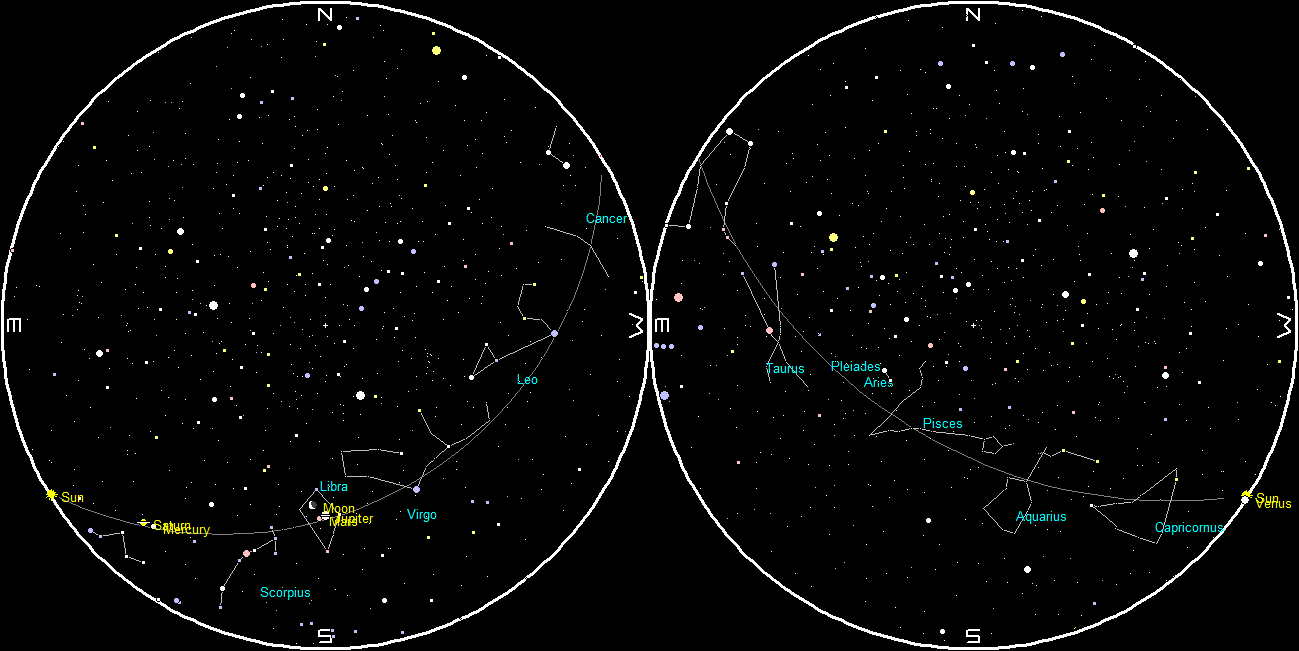
Planets at sunset and sunrise of a single night starting with sunset on the right on January 10, 2017. The night ends on the left with sunrise on the 11th. Click on the image to enlarge. Created using my LookingUp program.
01/03/2018 – Ephemeris – The year starts out with all the bright planets in the morning sky
Ephemeris for Wednesday, January 3rd. The Sun will rise at 8:20. It’ll be up for 8 hours and 54 minutes, setting at 5:14. The Moon, 2 days past full, will rise at 7:30 this evening.
Let’s take our weekly look at the bright planets. While Uranus and Neptune are evening planets, they require binoculars or a telescope to spot. All of the bright naked eye planets are in the morning sky now, However Saturn and Venus, the brightest, are too close to the Sun to be seen. At 7 this morning Mars is in the south-southeast while Jupiter is a lot brighter and below and left of it. Mars will rise tomorrow morning at 3:45. It’s approaching Jupiter which will rise 6 minutes later at 3:51. They will cross paths this weekend, I’ll have more on that tomorrow. Mercury will be a challenge to spot, rising in the east-southeast around 6:38 a.m. now. At 7 a.m. It will require a low horizon, binoculars and luck to find. In its next evening appearance in March it will be placed much higher in the sky for the same twilight conditions.
The times given are for the Traverse City/Interlochen area of Michigan. They may be different for your location.
Addendum
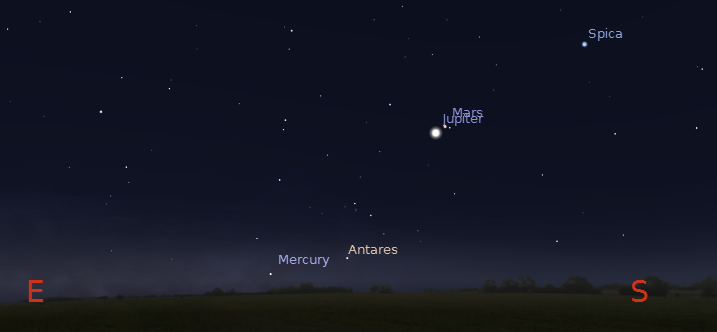
Three morning planets are visible at 7 this morning. Created using Stellarium.
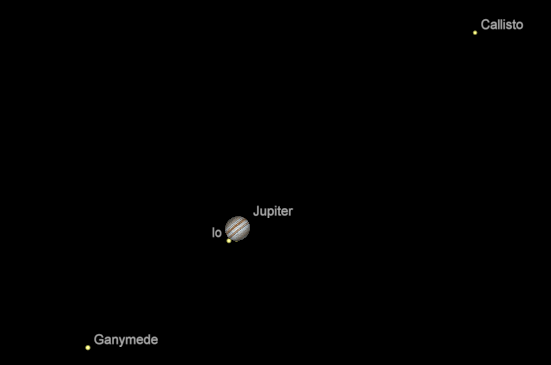
Jupiter and three of its four Galilean moons as they might be seen in a telescope at 7 a.m. this morning, January 3, 2018. Created using Cartes du Ciel (Sky Charts).
Event                      UT        EST
Europa Eclipse starts:    7:51
Io Eclipse starts:        8:35
Io Occultation ends:     11:45    6:45 a.m.
Europa Occultation ends: 12:12    7:12 a.m.
Only the last two events will be visible in the Grand Traverse area. Occultations now have the moon enter Jupiter’s shadow to the west, then unseen pass behind the planet to emerge at the east edge of the planet.
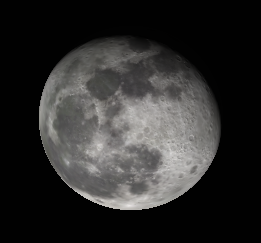
The only bright solar system object visible in the evening is the waning gibbous Moon. Binoculars will reveal several large craters. this evening January 3, 2018. Created using Stellarium.
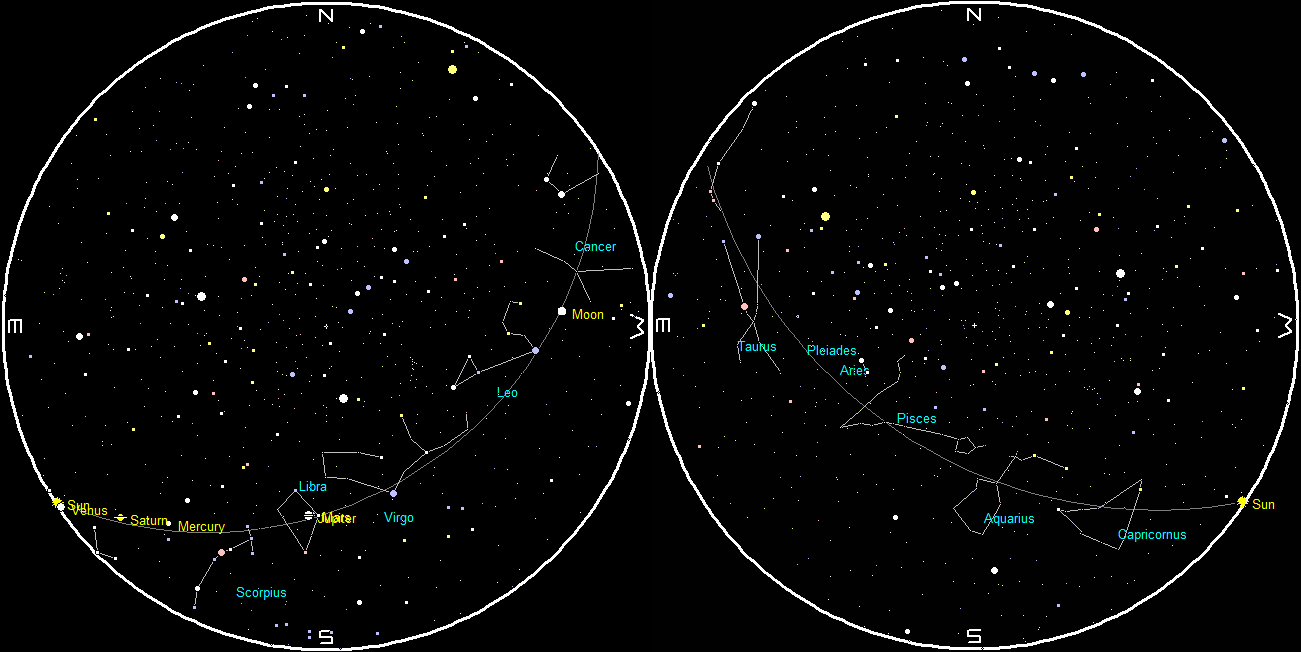
Planets at sunset and sunrise of a single night starting with sunset on the right on January 3, 2017. The night ends on the left with sunrise on the 4th. Click on the image to enlarge. Created using my LookingUp program.
12/27/2017 – Ephemeris – All the bright planets are in the morning sky. However the Moon is in the evening sky.
Ephemeris for Wednesday, December 27th. The Sun will rise at 8:18. It’ll be up for 8 hours and 50 minutes, setting at 5:08. The Moon, 1 day past first quarter, will set at 2:43 tomorrow morning.
Let’s take our weekly look at the bright planets. While Uranus and Neptune are evening planets, they require binoculars or a telescope to spot. All of the bright naked eye planets are in the morning sky now, However Saturn and Venus, the brightest are too close to the Sun to be seen. At 7 this morning Mars is in the south-southeast while Jupiter is a lot brighter and below and left of it. Mars will rise tomorrow morning at 3:49. It’s approaching Jupiter which will rise 23 minutes later at 4:12. Mercury will be a challenge to spot, rising in the east-southeast at 6:32 a.m. both today and tomorrow. At 7 a.m. It will require a low horizon, binoculars and luck to find. In its next evening appearance in March it will be placed much higher in the sky for the same twilight conditions.
The times given are for the Traverse City/Interlochen area of Michigan. They may be different for your location.
Addendum
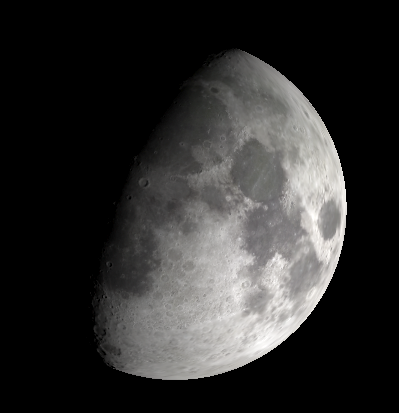
The only bright solar system object visible in the evening is the gibbous Moon. Binoculars will reveal several large craters this evening December 27, 2017. Created using Stellarium.
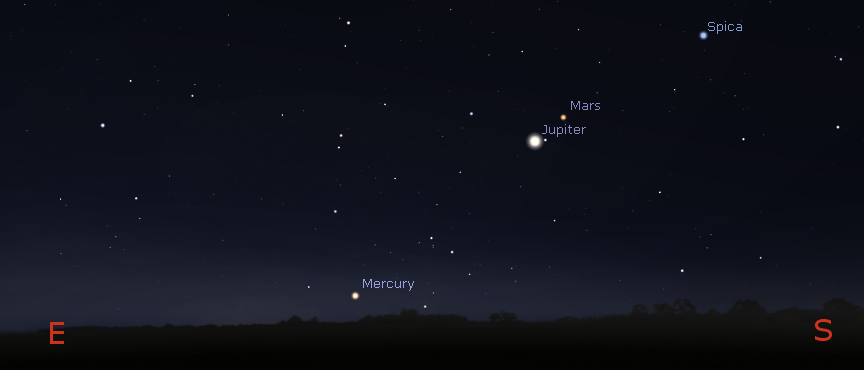
Three planets are visible at 7 in the morning. Created using Stellarium.
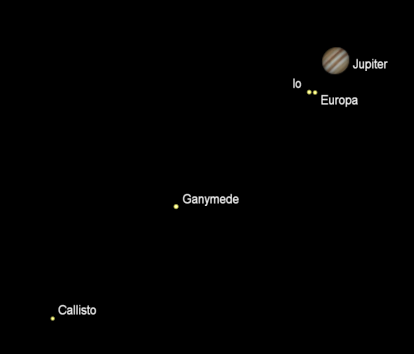
Jupiter and its four Galilean moons as they might be seen in a telescope at 7 a.m. this morning, December 27, 2017. Created using Cartes du Ciel (Sky Charts).
Earlier in the morning both Io and Europa will be eclipsed in Jupiter’s shadow and be occulted by the planet.
Moon    Event           UT       Time in Traverse Area
Europa: Eclipse start   5:15 UT
Io:     Eclipse start   6:43 UT
Europa: Occultation end 9:27 UT  4:27 a.m. EST
Io:     Occultation end 9:47 UT  4:47 a.m. EST
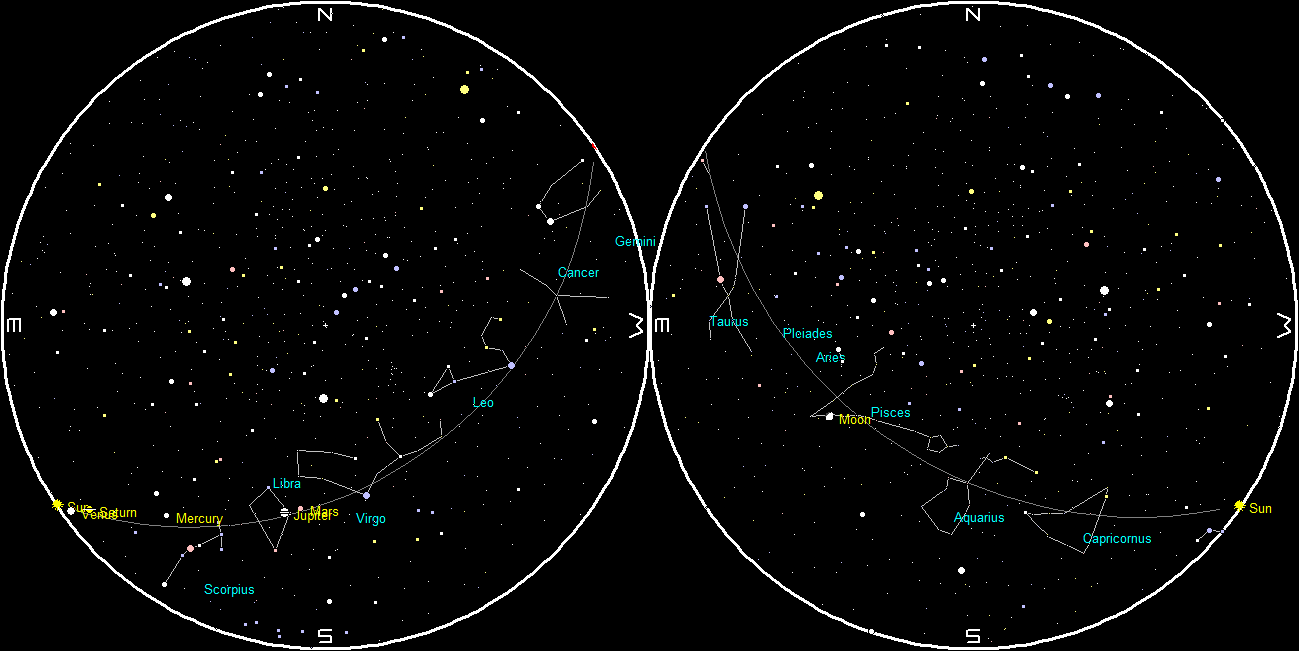
Planets at sunset and sunrise of a single night starting with sunset on the right on December 27, 2017. The night ends on the left with sunrise on the 28th. Click on the image to enlarge. Created using my LookingUp program.
12/20/2017 – Ephemeris – All the visible bright planets are in the morning sky
Ephemeris for Wednesday, December 20th. The Sun will rise at 8:15. It’ll be up for 8 hours and 48 minutes, setting at 5:04. The Moon, 2 days past new, will set at 7:27 this evening.
Let’s take our weekly look at the bright planets. There are no bright planets visible in the evening sky now. While Uranus and Neptune are evening planets, they require binoculars or a telescope to spot. The morning sky is now host to three planets, though Venus, the brightest will rise too close to the Sun to spot. It’s way on the other side of the Sun, and it will pass behind the Sun in superior conjunction January 9th. At 7 this morning Mars is in the southeast while Jupiter is a lot brighter and below and left of it. Mars will rise tomorrow morning at 3:54. It’s approaching Jupiter which will rise 39 minutes later at 4:33. Tomorrow Saturn will be in conjunction with the Sun and will officially enter the morning sky. It will be a month or more before it separates far enough from the Sun to spot in morning twilight.
The times given are for the Traverse City/Interlochen area of Michigan. They may be different for your location.
Addendum
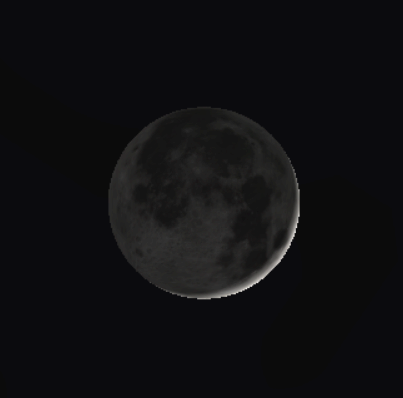
The only bright solar system object visible in the evening is the thin crescent Moon that will be exhibiting Earth shine this evening December 20, 2017. Created using Stellarium.
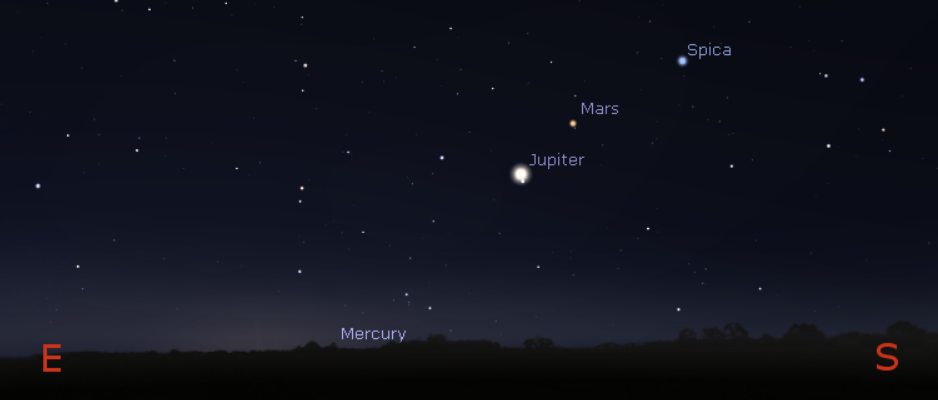
The bright morning planets visible at 7 a.m. this morning, December 20, 2017. Mercury is too close to the horizon to spot. Created using Stellarium.
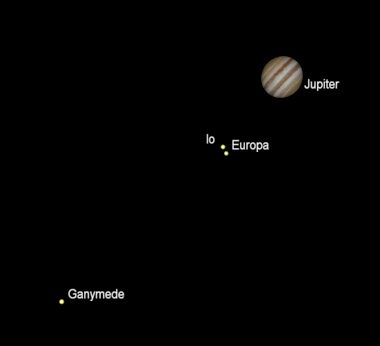
Jupiter and its four Galilean moons as they might be seen in a telescope at 7 a.m. this morning, December 20, 2017. Created using Cartes du Ciel (Sky Charts).
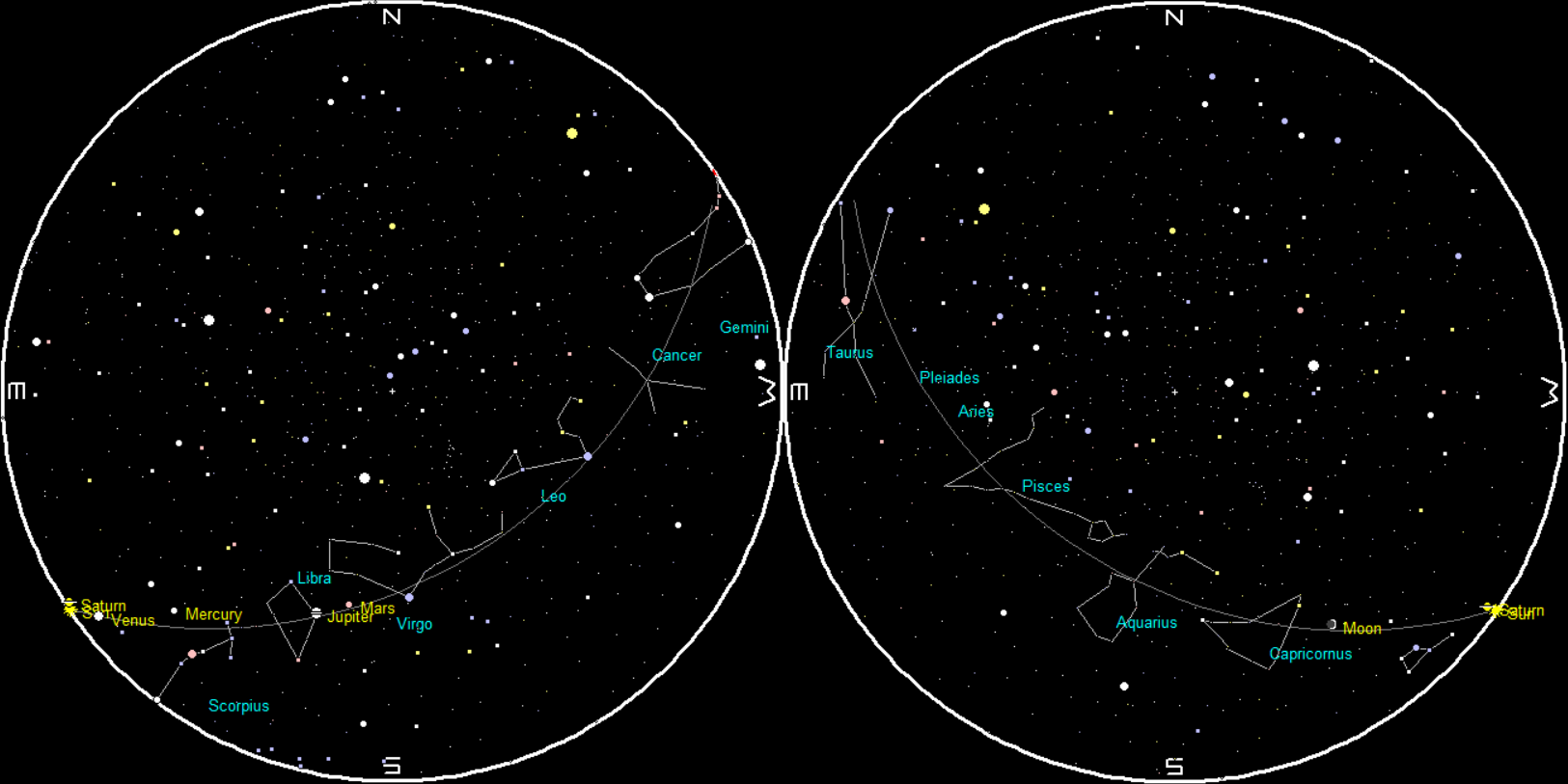
Planets at sunset and sunrise of a single night starting with sunset on the right on December 20, 2017. The night ends on the left with sunrise on the 21st. Click on the image to enlarge. Created using my LookingUp program.
12/19/2017 – Ephemeris – Were celestial events in 7 BC interpreted as the Star of Bethlehem?
Ephemeris for Tuesday, December 19th. The Sun will rise at 8:15. It’ll be up for 8 hours and 49 minutes, setting at 5:04. The Moon, 1 day past new, will set at 6:34 this evening.
This year we have no bright evening Christmas star. But what about the one described in the Bible, in the gospel of Luke? We will look today at the first of two events that may have been recorded as the Star of Bethlehem. In 7 BC there was a rare event over 6 months when three times the planet Jupiter passed Saturn against the stars of the constellation Pisces. Could the Persian astrologer priests called Magi, have read into the event enough significance to start the journey to Jerusalem in search of the new born King of the Jews? It was the scribe’s readings that then sent them to Bethlehem. It is thought that Pisces was associated with the Hebrews, Jupiter with the Messiah or world ruler, and Saturn with the peoples of Palestine.
The times given are for the Traverse City/Interlochen area of Michigan. They may be different for your location.
Addendum
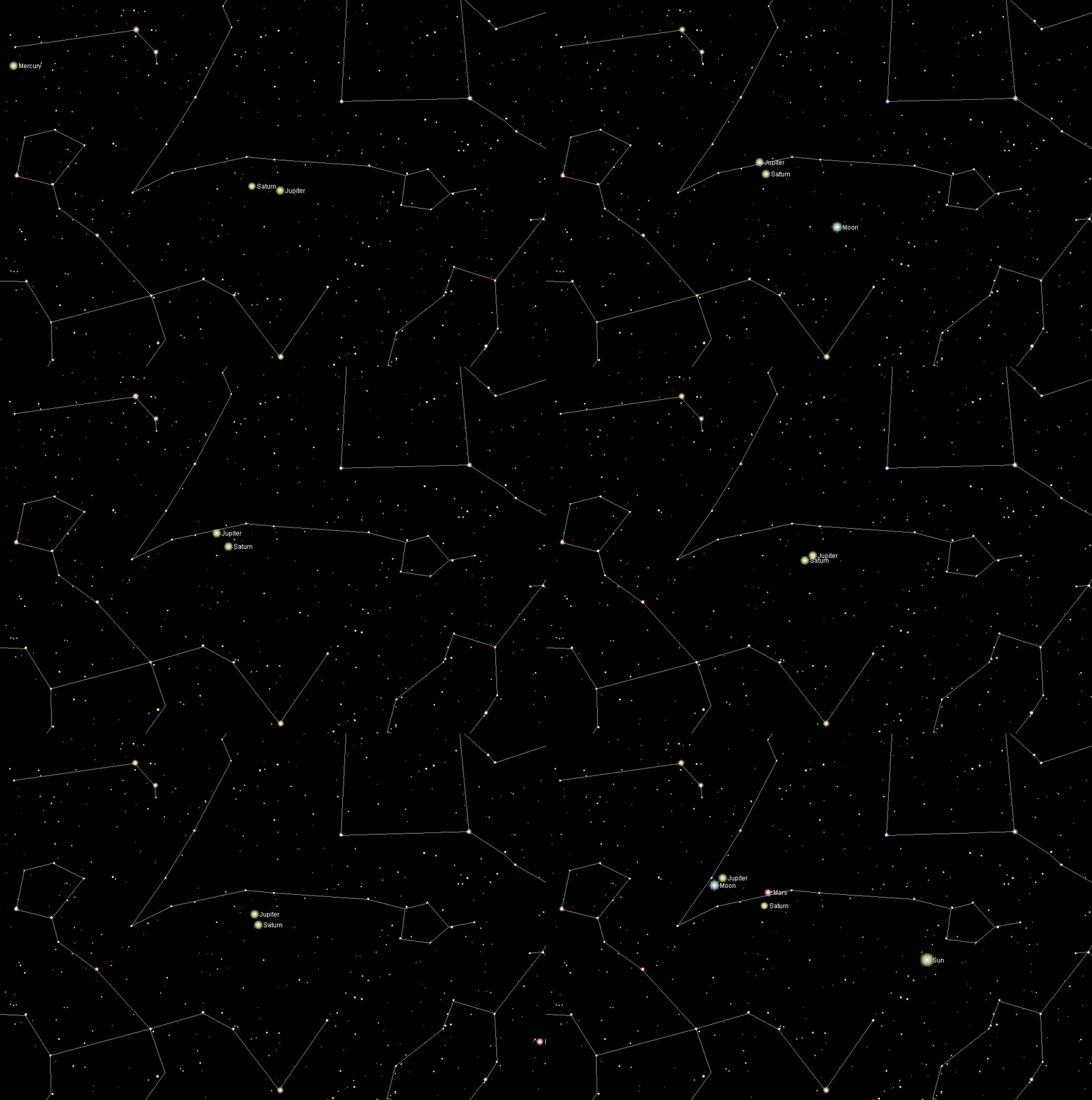
The Jupiter-Saturn triple conjunction of 7 BC. Click on the image to enlarge. Created using Cartes du Ciel.
The animation above shows the planets at 5 day intervals in 7 and a bit in 6 BC. The normal or posigrade motion is toward the east or left. When an outer planet approaches its opposition from the Sun, it seems to slow and reverse direction and head westward for a time, which is retrograde motion. After a time it reverses and heads back eastward again. That’s why the planets seem to see-saw back and forth. Jupiter passes Saturn every 20 years. The next time will be in 2020. On my Wednesday planet charts Jupiter is seen sneaking up on Saturn week by week. In order to have three conjunctions instead of one, the planets need to be near opposition from the Sun when they pass. The last time that happened was in 1980, but it wasn’t against Pisces. Triple conjunctions against a particular zodiacal constellation are much rarer.
The dates for key events in the animation above are:
- First Conjunction May 29, 7 BC
- Planets are Stationary July 6, and begin retrograde motion
- Second Conjunction October 11
- Planets are Stationary November 1 and resume posigrade motion
- Third Conjunction on December 8
- Mars joins February 26, 6 BC
Retrograde motion was difficult to explain when one thinks that the Earth is the center of the Universe and stationary, while the planets supposedly orbited in perfect uniform circular motion around it. It’s easy when the Earth is a moving planet like the rest. When an outer (superior) planet is at opposition from the Sun. The Earth is between the Sun and planet and moving faster. So we’re passing the outer planet. When you are in a car passing another, the car being passed seems to move backward with respect to your car. Since the planets orbits are like a race track, we get to lap the outer planets at regular intervals.
12/06/2017 – Ephemeris – Where did all the evening planets go?
Ephemeris for Wednesday, December 6th. The Sun will rise at 8:04. It’ll be up for 8 hours and 57 minutes, setting at 5:02. The Moon, 3 days past full, will rise at 8:43 this evening.
Let’s take our weekly look at the bright planets. Saturn and Mercury are very close together, but too low after sunset to spot from up North here. Mercury will set at 5:50, while Saturn will set 9 minutes later. While Uranus and Neptune are evening planets, they require binoculars or a telescope to spot. (This is beyond the scope of this program, which is geared to naked eye observing or easy things to find and observe with binoculars or a small telescope). The morning sky is now host to three planets, though Venus, the brightest will rise close to sun will rise at 7:24 this morning. It’s way on the other side of the Sun, and it will pass behind the Sun in superior conjunction a month from today. At 7 this morning Jupiter is bright, low in the east-southeast, while Mars, the Red Planet is just left of the brighter star Spica, which has a bluish hue. They are higher than Jupiter and to the southeast. Mars will rise tomorrow morning at 4:03. Jupiter will rise more than an hour later at 5:14.
The times given are for the Traverse City/Interlochen area of Michigan. They may be different for your location.
Addendum
Stellarium is unable to display Mercury or Saturn in twilight for tonight.
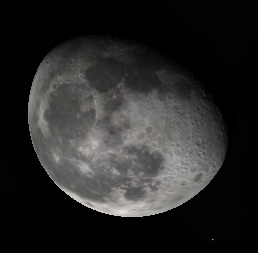
The Moon as it might be seen in binoculars at 9:30 p.m. December 6, 2017. Created using Stellarium.
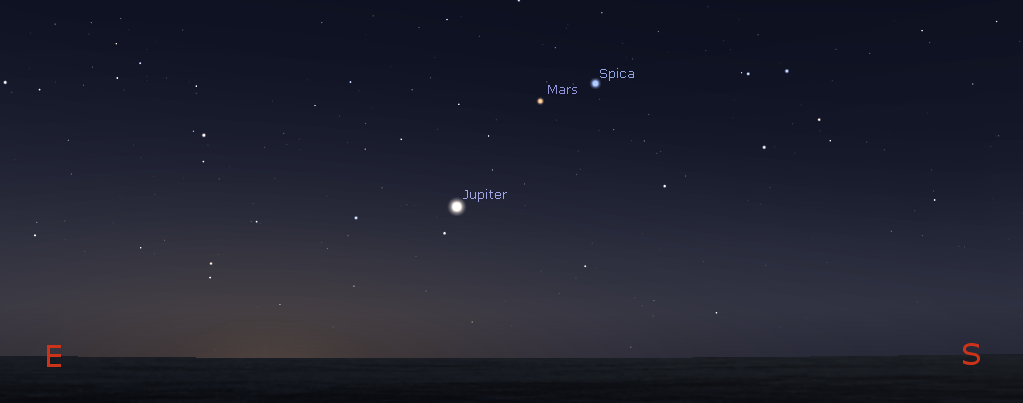
Mars and Jupiter in the morning at 7 a.m. December 7, 2017. Click on the image to enlarge. Created using Stellarium.
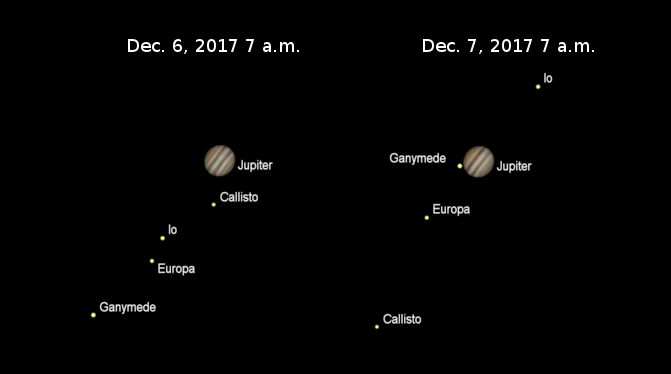
Jupiter and moons on the mornings of December 6th and 7th, 2017. Ganymede and Europa will transit the planet on the 7th later in the morning and in the afternoon to be visible for folks west of here. Created using Cartes du Ciel (Sky Charts).
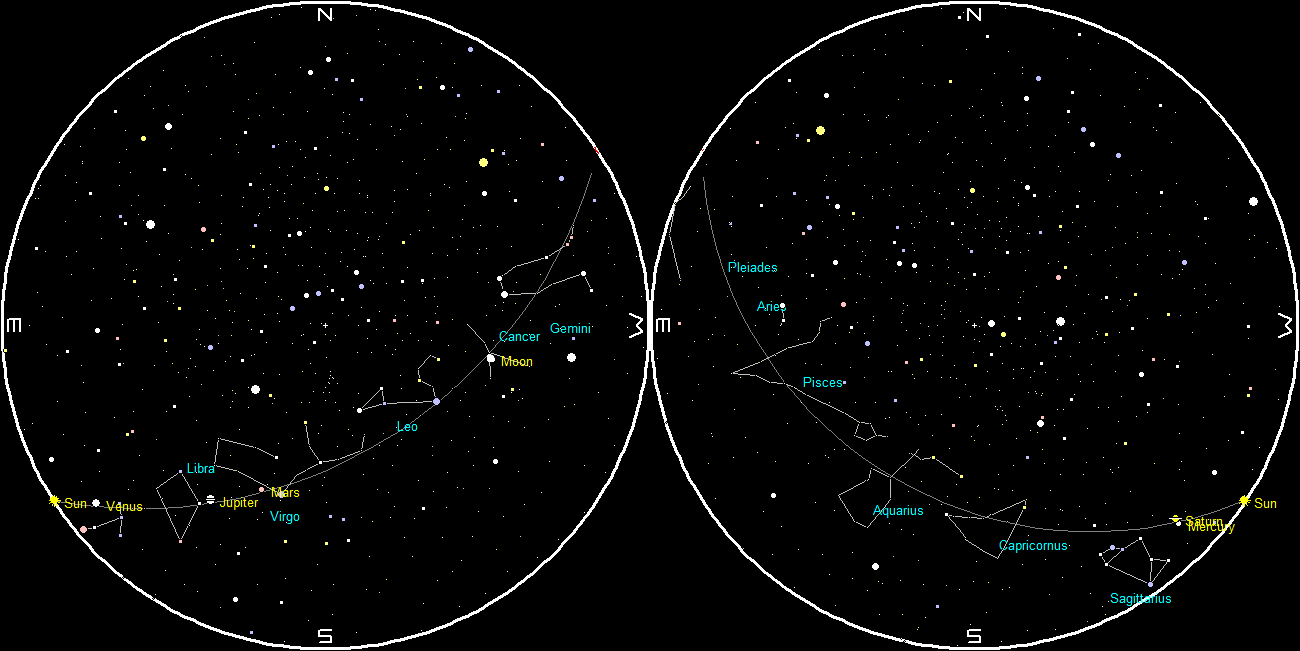
Planets at sunset and sunrise of a single night starting with sunset on the right on December 6, 2017. The night ends on the left with sunrise on the 7th. Click on the image to enlarge. Created using my LookingUp program.
11/29/2017 – Ephemeris – The Bright planets this week
Ephemeris for Wednesday, November 29th. The Sun will rise at 7:57. It’ll be up for 9 hours and 7 minutes, setting at 5:04. The Moon, 3 days past first quarter, will set at 3:54 tomorrow morning.
Let’s take our weekly look at the bright planets. Mercury is dropping back to the Sun and is fading as its phase changes to a crescent It will be below and left of Saturn tonight and actually brighter than Saturn. Saturn is sinking low in the southwestern sky. It is becoming harder to spot each evening. Tonight it will set at 6:24 p.m. The morning sky is now host to three planets, though Venus, the brightest will rise at 7:03 this morning and will be fighting twilight as it rises. It’s way on the other side of the Sun, and very tiny in telescopes, though nearly fully illuminated. It’s 156 million miles (251 million km) away. First to rise in the morning is Mars which will rise in the east at 4:07 a.m. tomorrow, Jupiter, will follow and rise at 5:34 a.m. tomorrow.
The times given are for the Traverse City/Interlochen area of Michigan. They may be different for your location.
Addendum
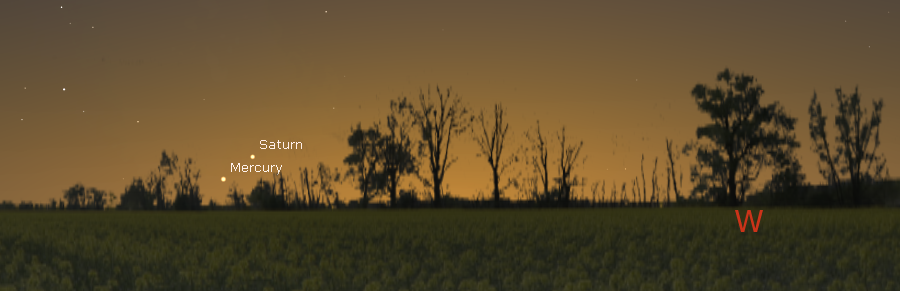
Mercury and Saturn at 5:45 p.m., about 45 minutes after sunset, November 29, 2017. Click on the image to enlarge. Created using Stellarium.
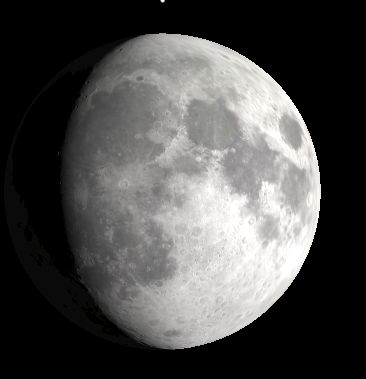
The Moon as it might be seen in binoculars at 7 p.m., November 29, 2017. Created using Stellarium.
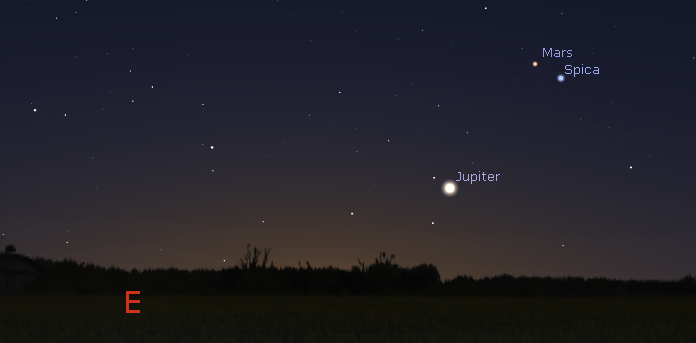
Mars and Jupiter at 7 a.m., November 30, 2017. Created using Stellarium.
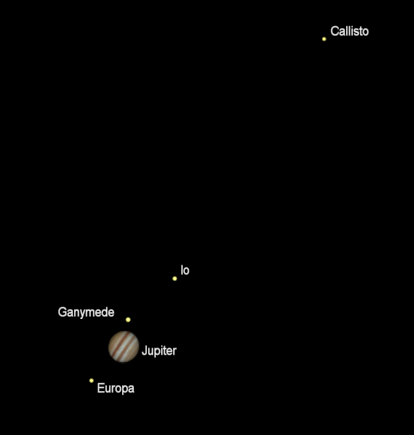
Jupiter and its 4 Galilean moons as they might be seen in a telescope at 7 a.m. November 30, 2017. Created using Cartes du Ciel (Sky Charts).
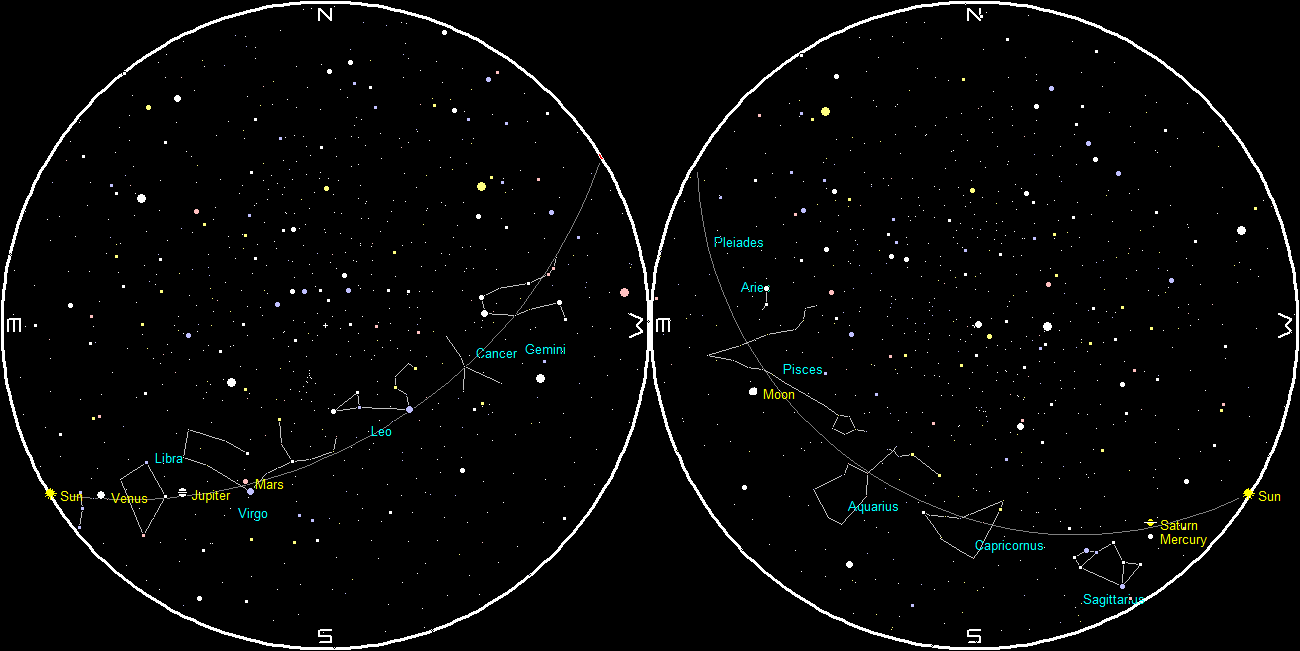
Planets at sunset and sunrise of a single night starting with sunset on the right on November 29, 2017. The night ends on the left with sunrise on the 30th. Click on the image to enlarge. Created using my LookingUp program.
11/22/2017 – Ephemeris – A look at the bright planets for Thanksgiving week
Ephemeris for Wednesday, November 22nd. The Sun will rise at 7:48. It’ll be up for 9 hours and 19 minutes, setting at 5:08. The Moon, half way from new to first quarter, will set at 8:39 this evening.
Let’s take our weekly look at the bright planets. Mercury is briefly visible in binoculars in the southwest in the evening, setting at 6:11 p.m., and will reach it’s greatest elongation from the Sun tomorrow evening. Saturn is sinking low in the southwestern sky. Saturn’s rings are still spectacular in telescopes, but since Saturn is so low in the sky the thick atmosphere makes Saturn fuzzy and seemingly to go in and out of focus. Saturn will set at 6:49 p.m. Tomorrow in the morning sky, Mars, heading away from the Sun will rise in the east at 4:11 a.m., Jupiter, also moving away from the Sun, will rise at in the east-southeast at 5:54 a.m., leaving Venus behind after their conjunction 9 days ago, which will rise at 6:47 a.m..
The times given are for the Traverse City/Interlochen area of Michigan. They may be different for your location.
Addendum
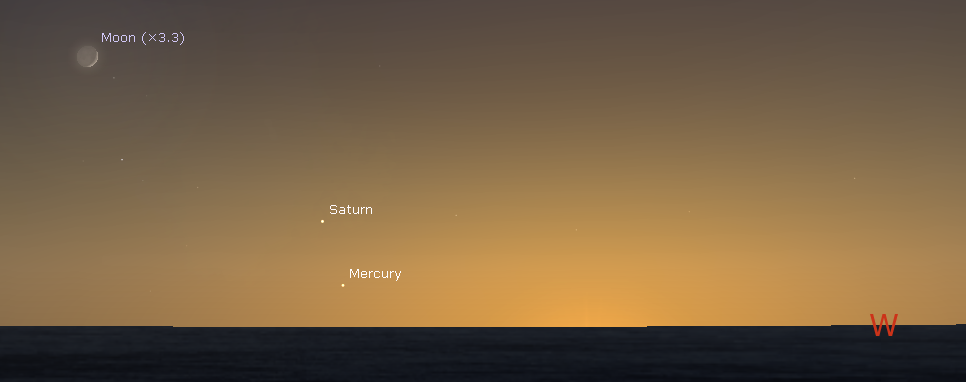
Mercury, Saturn and the Moon at 5:45 p.m., a bit more than a half hour after sunset, November 22, 2017. Click on the image to enlarge. Created using Stellarium.
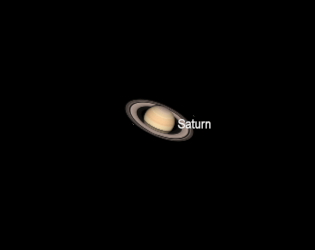
Saturn as it might be seen in a telescope tonight. Created using Cartes du Ciel (Star Charts).
The Moon as it might be seen tonight. Created using Stellarium.
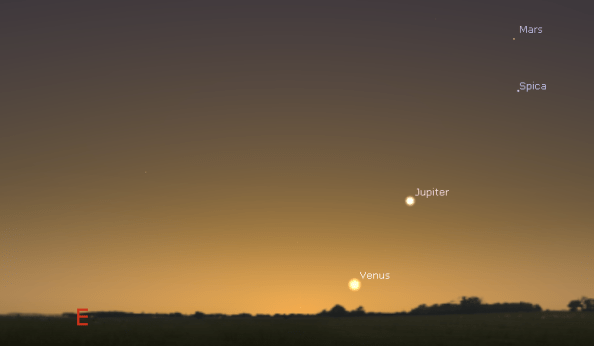
The morning planets Mars, Jupiter and Venus at 7:15 a.m. November 23, 2017, about a half hour before sunrise on a really flat horizon. Created using Stellarium.
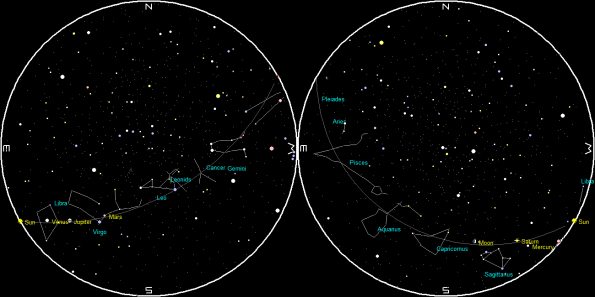
Planets at sunset and sunrise of a single night starting with sunset on the right on November 22, 2017. The night ends on the left with sunrise on the 22nd. Click on the image to enlarge. Created using my LookingUp program.
11/20/2017 – Ephemeris – The Moon is near Saturn tonight and the approaching signs of winter
Ephemeris for Monday, November 20th. The Sun will rise at 7:46. It’ll be up for 9 hours and 23 minutes, setting at 5:09. The Moon, 2 days past new, will set at 7:04 this evening.
Tonight the two day old Moon will appear near Saturn. The ringed planet will appear to the left and a bit below the thin crescent Moon before they set about an hour later. The approaching winter season and the resumption of standard time have dropped sunset to 5:09 in the Interlochen/Traverse City area. Our sunset will drop another 11 minutes before slowly recovering 19 days from now. Two to three hours later another sign of the approaching winter season will appear, as the constellation of the giant hunter Orion rises in the east. He is resplendent with his nearly vertical belt of three stars rising, framed to the left and right by the bright stars reddish Betelgeuse and bluish Rigel. He will dominate our evening skies until April.
The times given are for the Traverse City/Interlochen area of Michigan. They may be different for your location.
Addendum
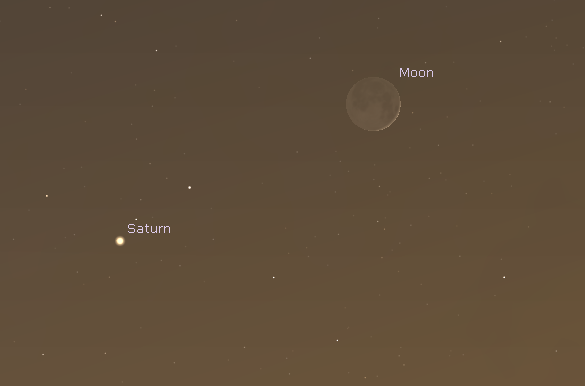
The Moon and Saturn at 6 p.m. November 20, 2017. Created using Stellarium.
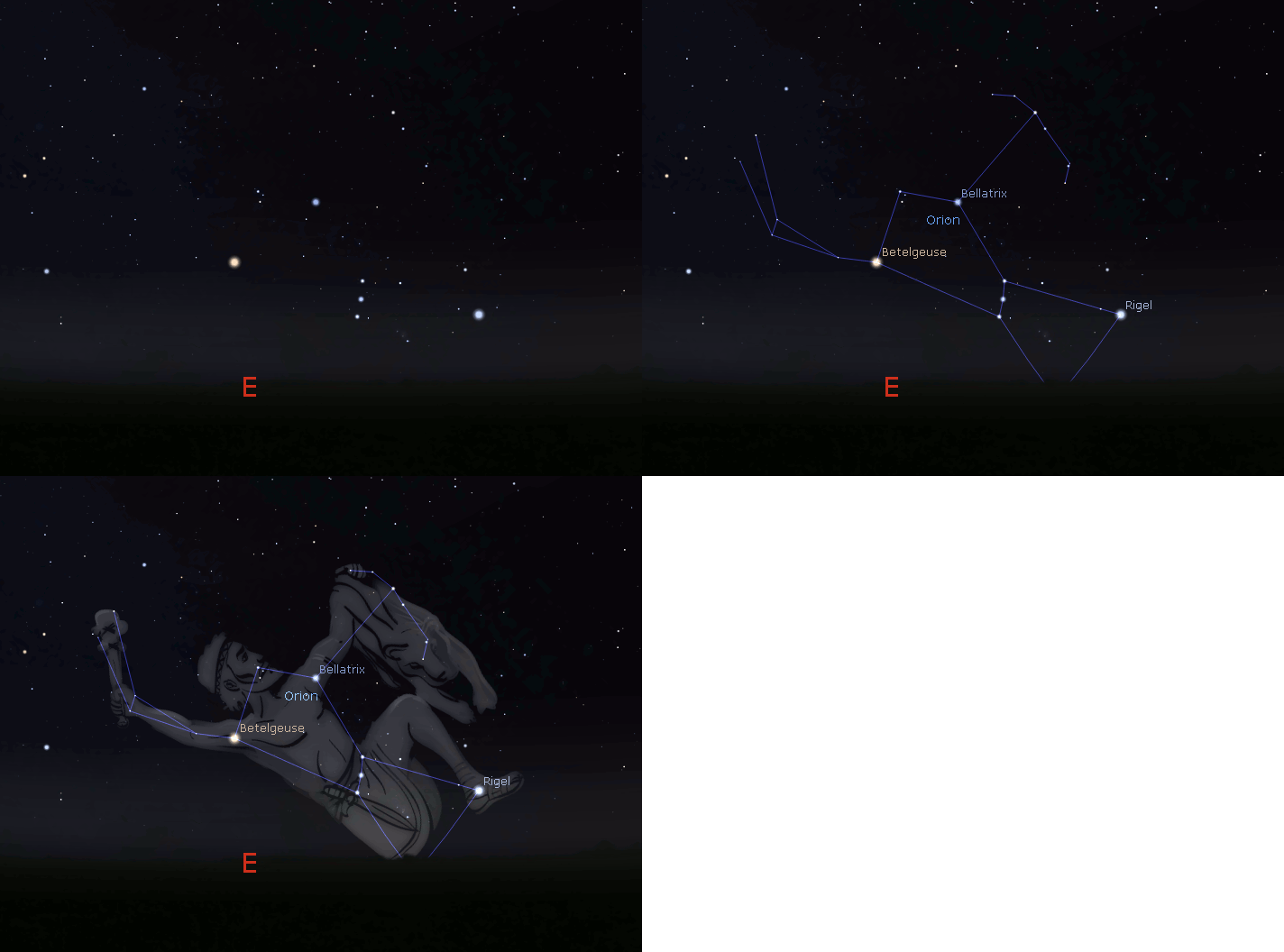
Finder chart for the rising Orion at 9 p.m., November 30, 2017. Created using Stellarium and GIMP.
11/15/2017 – Ephemeris – All the bright planets are visible for observers at both dusk and dawn
Ephemeris for Wednesday, November 15th. The Sun will rise at 7:39. It’ll be up for 9 hours and 34 minutes, setting at 5:14. The Moon, 3 days before new, will rise at 5:32 tomorrow morning.
Let’s take our weekly look at the bright planets. Mercury is briefly visible in binoculars in the southwest in the evening, setting at 6:06 p.m., and will reach it’s greatest elongation from the Sun in 8 days. Saturn is sinking low in the southwestern sky. Saturn’s rings are still spectacular in telescopes, but since Saturn is so low in the sky the thick atmosphere makes Saturn fuzzy and seemingly to go in and out of focus. Saturn will set at 7:12 p.m. Tomorrow in the morning sky, Mars, heading away from the Sun will rise in the east at 4:16 a.m., Jupiter, also moving away from the Sun, will rise at in the east-southeast at 6:14, leaving Venus behind after their conjunction two days ago, which will rise at 6:30.
The times given are for the Traverse City/Interlochen area of Michigan. They may be different for your location.
Addendum
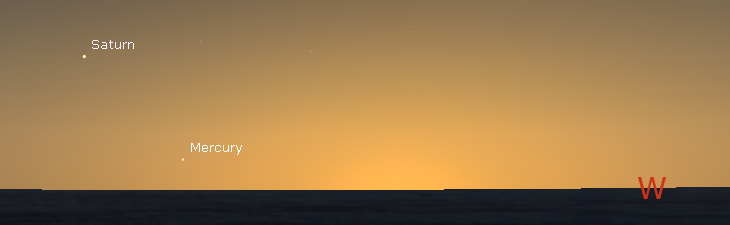
Saturn and Mercury very low in the southwest at 6:45p.m. November 15, 2017. That’s about half an hour after sunset. Click on the image to enlarge. Created using Stellarium.
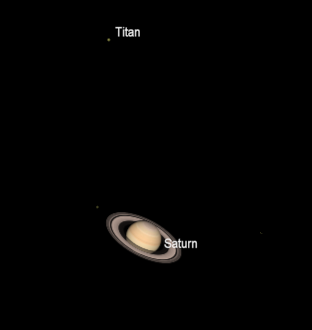
Saturn and its brightest moon Titan in the evening November 15, 2017. Created using Cartes du Ciel (Sky Charts).
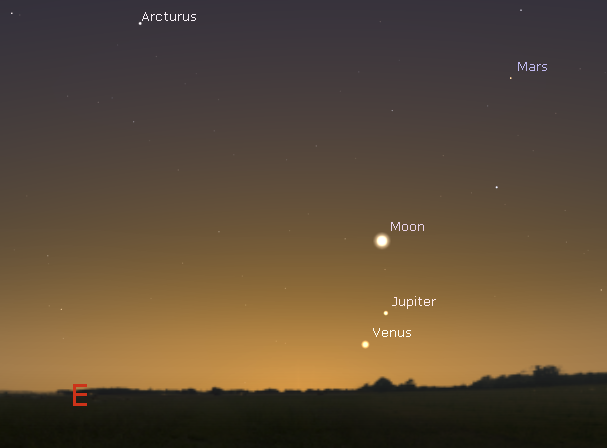
Mars Jupiter Venus and the Moon at 7 a.m., November 16, 2017. The Moon is actually a thin crescent as seen below. Created using Stellarium.
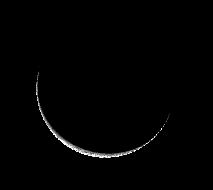
The Moon as it might be seen in binoculars. This was created using Hallo Northern Sky. However it doesn’t show earth shine that should easily be seen in binoculars.
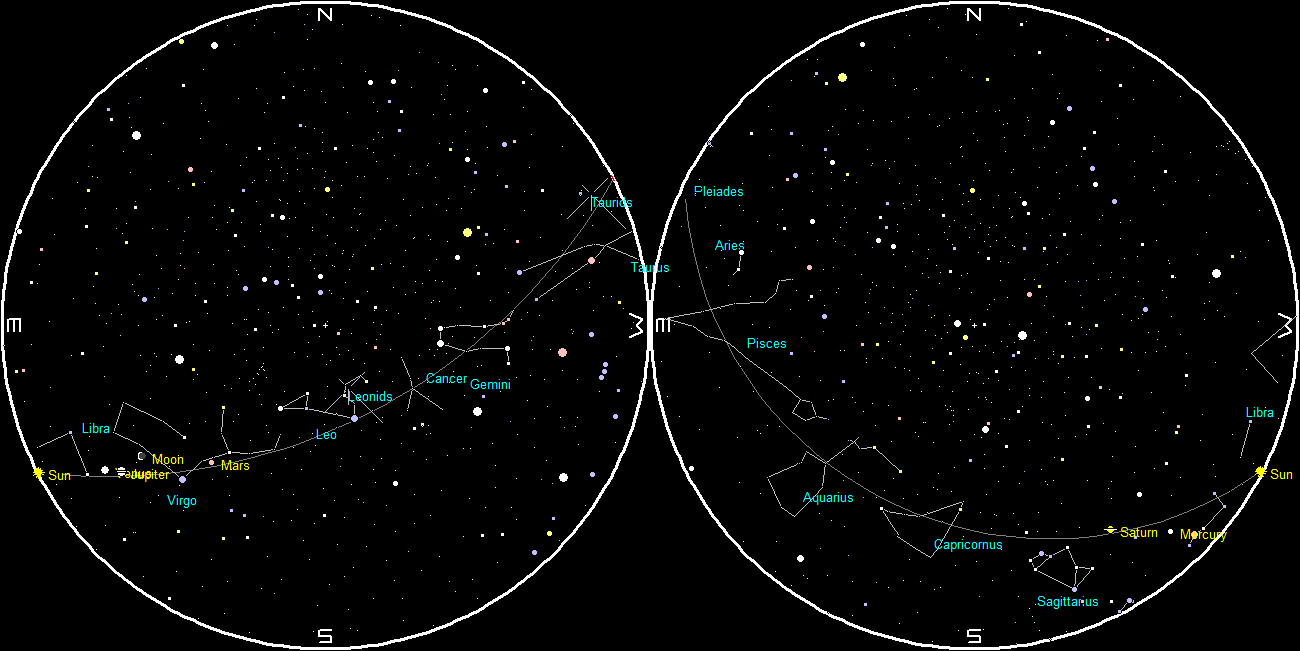
Planets at sunset and sunrise of a single night starting with sunset on the right on November 15, 2017. The night ends on the left with sunrise on the 16th. Click on the image to enlarge. Created using my LookingUp program.

