Archive
03/14/2018 – Ephemeris – A Pi Day look at the bright planets
Ephemeris for Pi Day, Wednesday, March 14th. The Sun will rise at 7:57. It’ll be up for 11 hours and 50 minutes, setting at 7:47. The Moon, 3 days before new, will rise at 7:15 tomorrow morning.
Pi day: the first three digits of the mathematical constant pi is 3-14. Let’s take our weekly look at the bright planets. All 5 of the naked eye planets are visible now. Three of them are visible this morning. Before it gets light Jupiter will be in the west-southwest, with Mars in the south and Saturn a bit left of the red planet. Jupiter will rise at 12:44 tomorrow morning. Mars will rise at 3:42. And Saturn will rise at 4:19 a.m. In the evening sky Venus will be visible low in the western twilight from about 8:15 p.m. until before it sets at 9:06. Mercury is much dimmer but above and a bit right of Venus, tonight about 8 Moon widths at 1 o’clock from Venus. It will set at 9:26. Mercury will appear higher than Venus in the sky for 6 more nights.
The times given are for the Traverse City/Interlochen area of Michigan. They may be different for your location.
Addendum
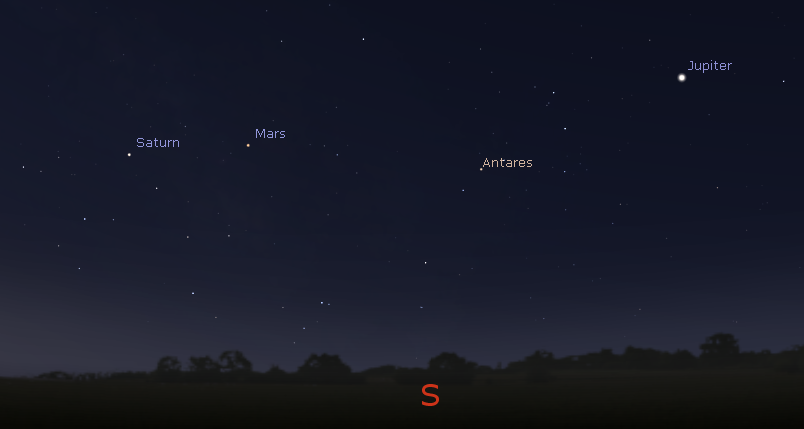
The morning planets of Jupiter, Mars and Saturn plus the Moon. Seen at 7 a.m. EDT this morning March 14, 2018. Click on image to enlarge. Created using Stellarium.
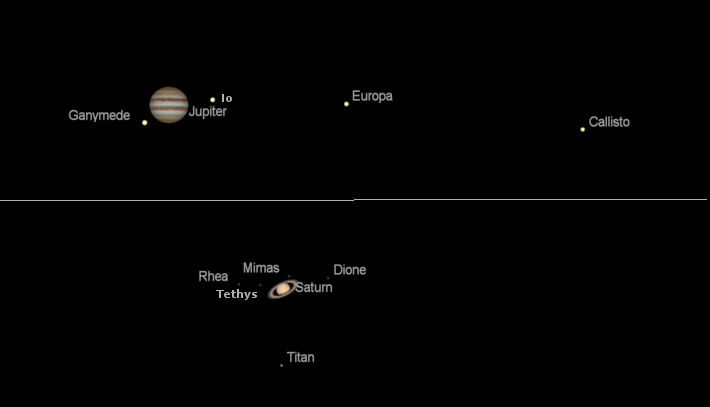
Jupiter and Saturn with their brighter satellites tomorrow morning at 6 a.m. March 8, 2018. They are displayed at the same scale. Saturn in about twice as far as Jupiter. Its disk is a bit smaller than Jupiter’s so it appears about half as large. The extent of the rings appear to be about the same as Jupiter’s diameter. Created using Cartes du Ciel (Sky Charts).

Venus and Mercury, low in the west at 8:15 p.m., March 14, 2018. Created using Stellarium.
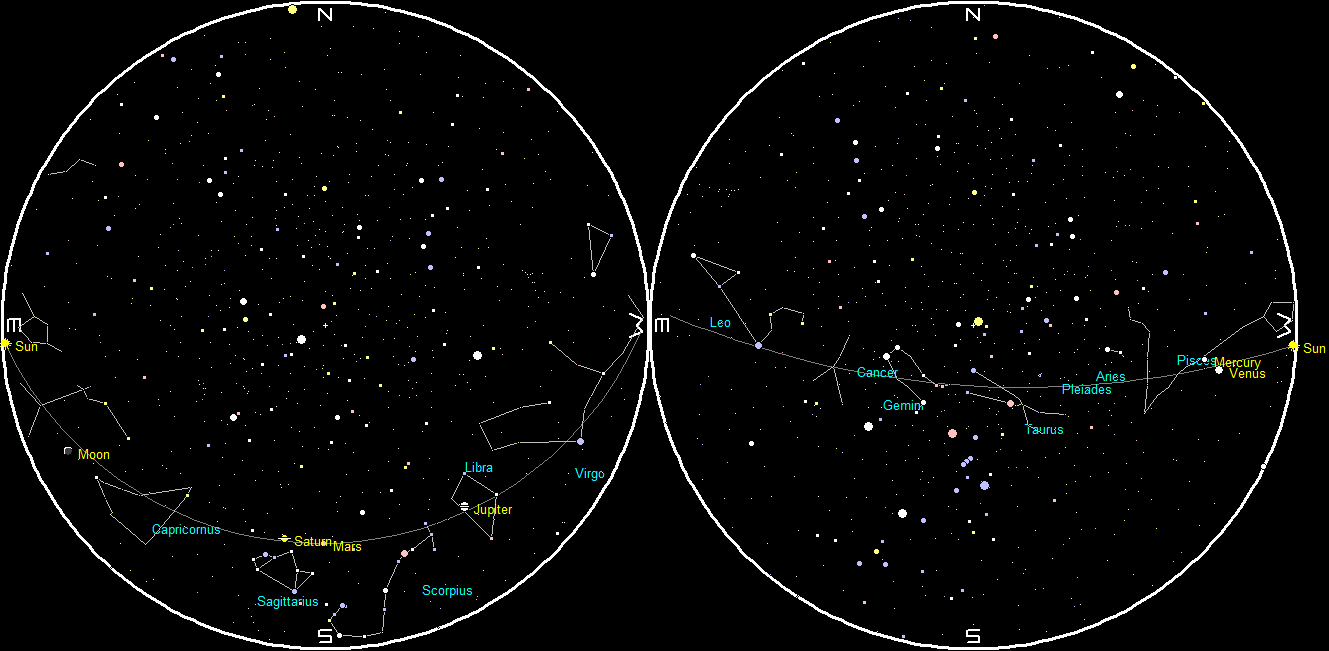
Planets at sunset and sunrise of a single night starting with sunset on the right on March 14, 2018. The night ends on the left with sunrise on the 15th. Click on the image to enlarge. Created using my LookingUp program.
03/07/2018 – Ephemeris – All 5 naked eye planets are now visible
Ephemeris for Wednesday, March 7th. The Sun will rise at 7:09. It’ll be up for 11 hours and 28 minutes, setting at 6:38. The Moon, 2 days before last quarter, will rise at 12:58 tomorrow morning.
Let’s take our weekly look at the bright planets. All 5 of the naked eye planets are visible now. Two of them are in the evening sky, but very close to the Sun. Venus will be visible low in the Western twilight from about 7 p.m. until before it sets at 7:47. Mercury is much dimmer but above and a bit right of Venus, tonight about 5 Moon widths at 1 o’clock from Venus. It will set at 7:59. Mercury will appear higher than Venus in the sky until about March 20th. In the morning Jupiter will rise at 12:12 tomorrow morning. Mars will rise at 2:51. Saturn will end the procession, rising at 3:45 a.m. At 6 tomorrow morning bright Jupiter will be in the south to the left of it is dimmer Mars. Saturn is low in the southeast.
The times given are for the Traverse City/Interlochen area of Michigan. They may be different for your location.
Addendum

Venus and Mercury, low in the west at 7 p.m., March 7, 2018. Created using Stellarium.
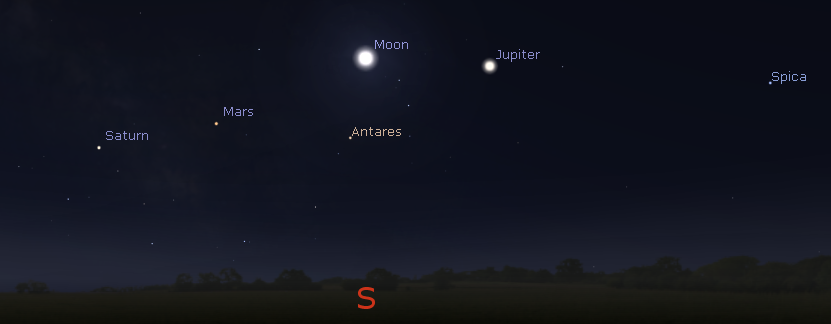
The morning planets of Jupiter, Mars and Saturn plus the Moon. Seen at 6 a.m. tomorrow morning March 8, 2018. Click on image to enlarge. Created using Stellarium.
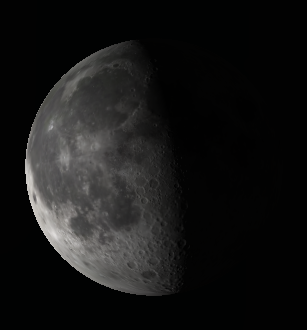
The waning gibbous Moon as it might be seen in binoculars at 6 a.m. tomorrow morning, March 8, 2018. Created using Stellarium.
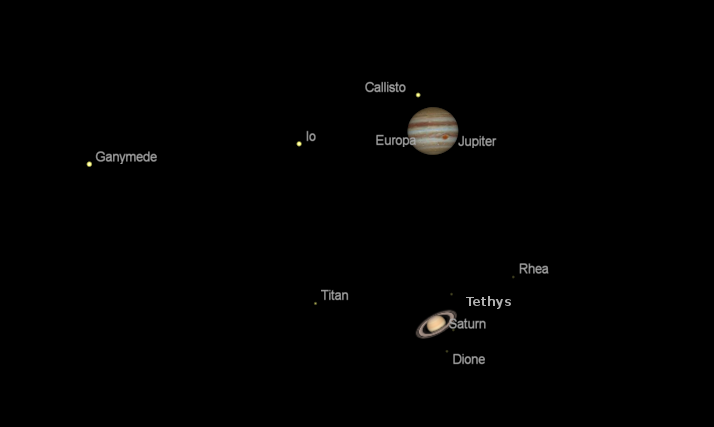
Jupiter and Saturn with their brighter satellites tomorrow morning at 6 a.m. March 8, 2018. They are displayed at the same scale. Saturn in about twice as far as Jupiter. Its disk is a bit smaller than Jupiter’s so it appears about half as large. The extent of the rings appear to be about the same as Jupiter’s diameter. Created using Cartes du Ciel (Sky Charts).
The Great Red Spot should be visible on Jupiter.
Europa is labeled but unseen at 6 a.m. EST
Here is what’s happening
Moon    Event              Date        UT       Local time
Europa: Eclipse start:     8 Mar 2018  7:12 UT  2:12 a.m. EST
Europa: Eclipse end:       8 Mar 2018  9:28 UT  4:28 a.m. EST
Europa: Occultation start: 8 Mar 2018  9:34 UT  4:34 a.m. EST
Europa: Occultation end:   8 Mar 2018 11:43 UT  6:43 a.m. EST
An eclipse is when the moon passes through Jupiter’s shadow. An occultation is when the moon is hidden behind the planet.
Note the 6 minutes between the end of the eclipse and the start of the occultation.
Timings are from https://www.projectpluto.com.
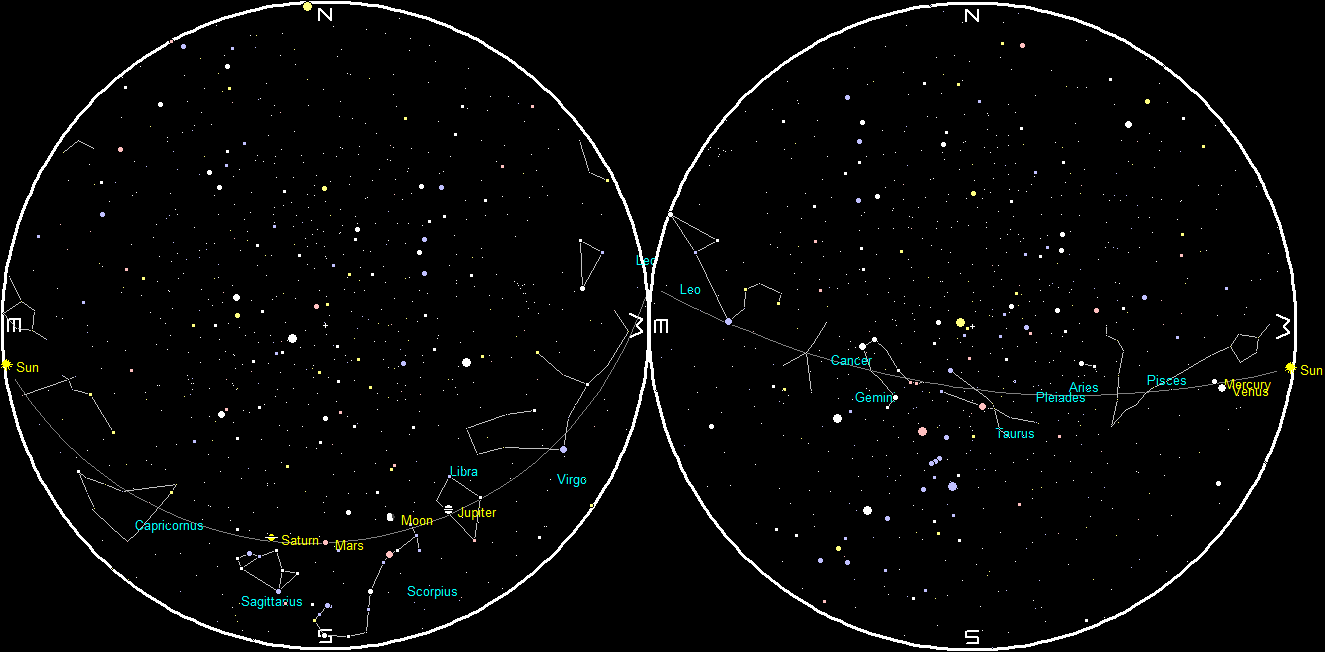
Planets at sunset and sunrise of a single night starting with sunset on the right on March 7, 2018. The night ends on the left with sunrise on the 8th. Click on the image to enlarge. Created using my LookingUp program.
03/06/2018 – Ephemeris – The Moon will pass the morning planets for the rest of the week
Ephemeris for Tuesday, March 6th. The Sun will rise at 7:11. It’ll be up for 11 hours and 25 minutes, setting at 6:37. The Moon, 3 days before last quarter, will rise at 11:57 this evening.
From tomorrow morning through the rest of the week the Moon will be passing above the morning planets one by one. Tomorrow morning the waning gibbous Moon will appear above and left of Jupiter the brightest of the morning planets in the south at 6 a.m. By Friday morning the then last quarter Moon will be approaching Mars and will be to the right and above the red planet. Saturday morning the then waning crescent Moon will appear above and right between Mars and Saturn. Sunday morning the waning crescent Moon will be left of Saturn. I love waning crescent Moons in morning twilight. In a couple of weeks, on the evening of the 19th to be exact the waxing crescent moon will pass Venus and Mercury.
The times given are for the Traverse City/Interlochen area of Michigan. They may be different for your location.
Addendum
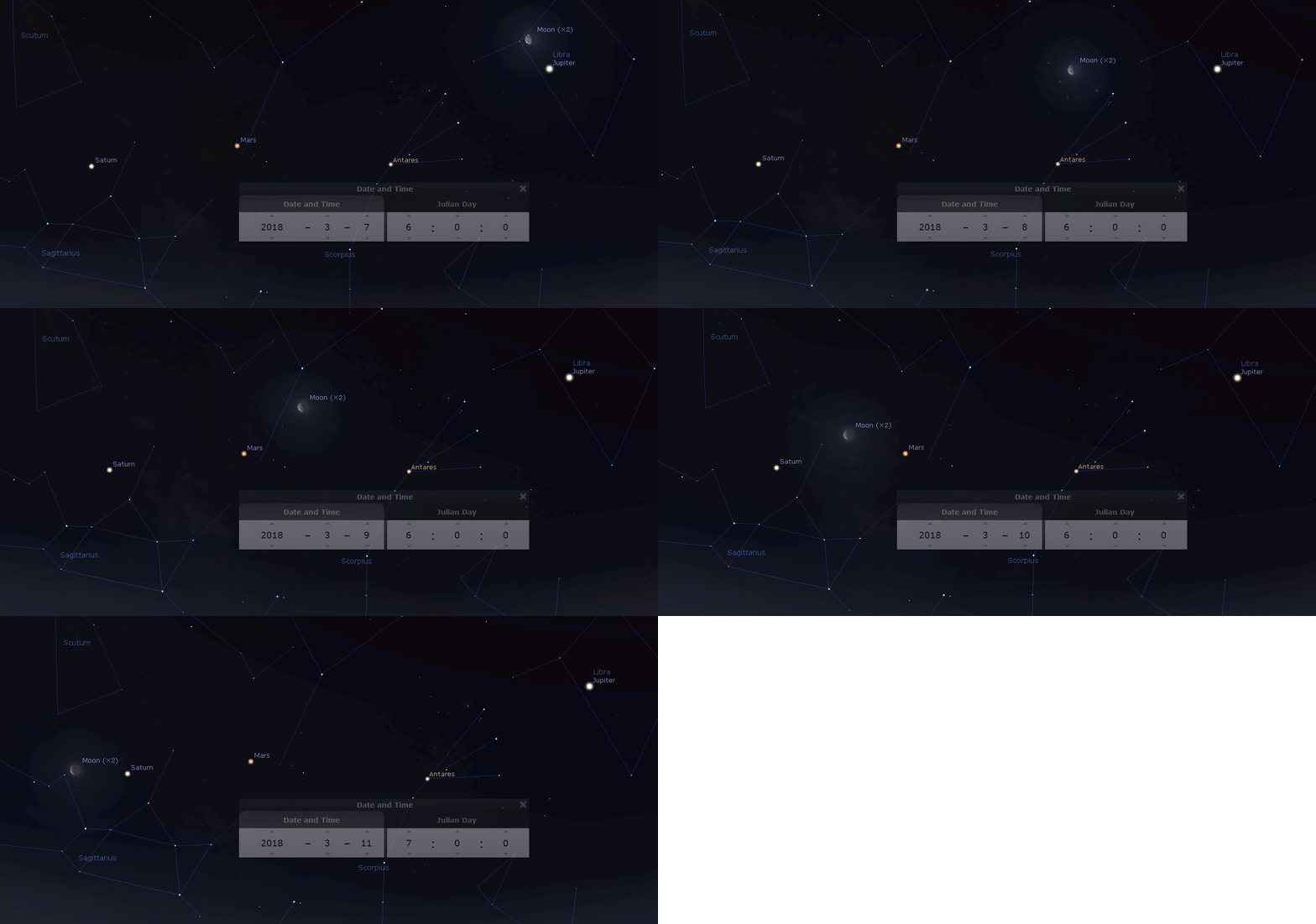
The Moon and morning planets at 6 a.m. each morning Wednesday through Sunday March 7-11, 2018. The Moon’s size has been doubled to show its phase. Note that due to Earth’s revolution of the Sun, that the sky will rotate about one degree westward per day. Click on the image to enlarge. Created using Stellarium and GIMP.
02/28/2018 – Ephemeris – Let’s take our weekly look at the bright planets
Ephemeris for Wednesday, February 28th. The Sun will rise at 7:22. It’ll be up for 11 hours and 7 minutes, setting at 6:29. The Moon, 1 day before full, will set at 7:17 tomorrow morning.
Let’s take our weekly look at the bright planets. Two of the bright naked eye planets are in the evening sky, but very close to the Sun. Venus will be visible low in the Western twilight from about 6:50 until before it sets at 7:29. Mercury is creeping up on Venus from below, tonight about 5 Moon widths at 5 o’clock down from Venus. It will set at 7:18. Mercury will appear to pass Venus Sunday night and will become higher than Venus in the sky until about March 20th. In the morning Jupiter will rise at 12:39 tomorrow morning, with Mars rising at 2:59. Saturn will end the procession, rising at 4:10 a.m. At 6 tomorrow morning bright Jupiter will be in the south to the left of it is dimmer Mars. Saturn is low in the southeast.
The times given are for the Traverse City/Interlochen area of Michigan. They may be different for your location.
Addendum
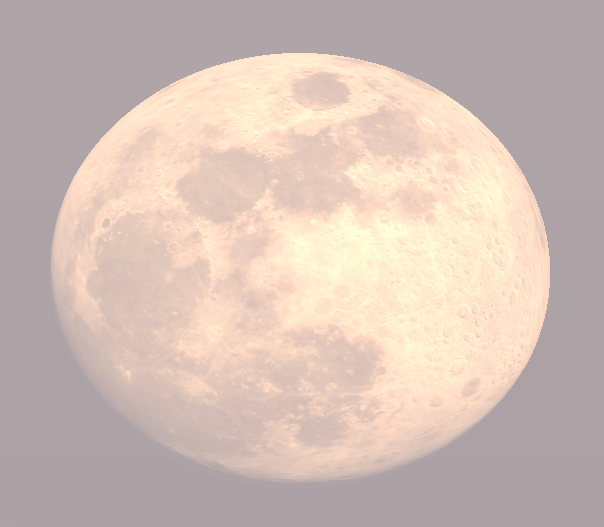
Moon rise at around 5:10 p.m. tonight February 28 2018 with daylight washing it out. Note the squished Moon due to atmospheric refraction which bends the light up. The lower in the sky it is the greater the bending of the light. This also happens to the Sun. Created using Stellarium as a built in effect.

Venus and Mercury, low in the west at 6:45 p.m., February 28, 2018. Created using Stellarium.
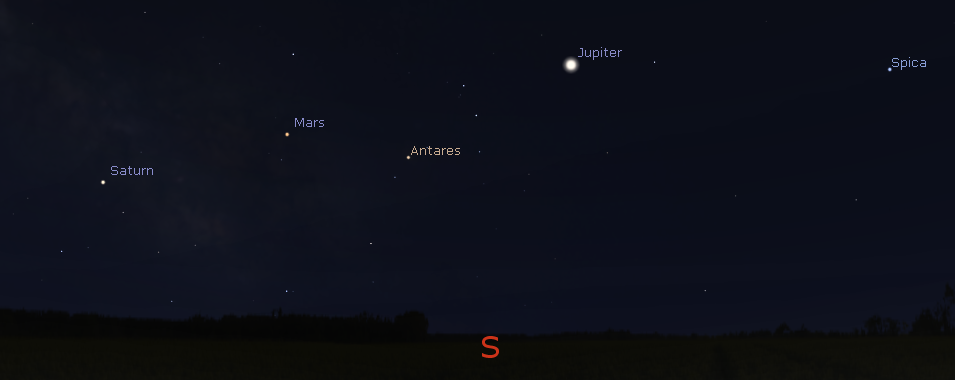
The morning planets of Jupiter, Mars and Saturn. Seen at 6 a.m. tomorrow morning March 1, 2018. Click on image to enlarge. Created using Stellarium.
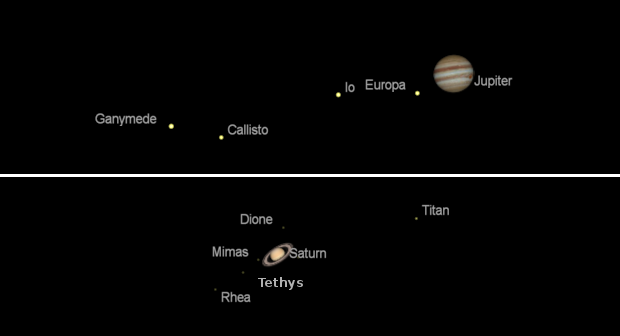
Jupiter and Saturn with heir brighter satellites tomorrow morning at 6 a.m. March 1, 2018. They are displayed at the same scale. Saturn in about twice as far as Jupiter. Its disk is a bit smaller than Jupiter’s so it appears about half as large. The extent of the rings appear to be about the same as Jupiter’s diameter. Created using Cartes du Ciel (Sky Charts). Oops, left in Mimas, which is much smaller and dimmer than the other satellites.
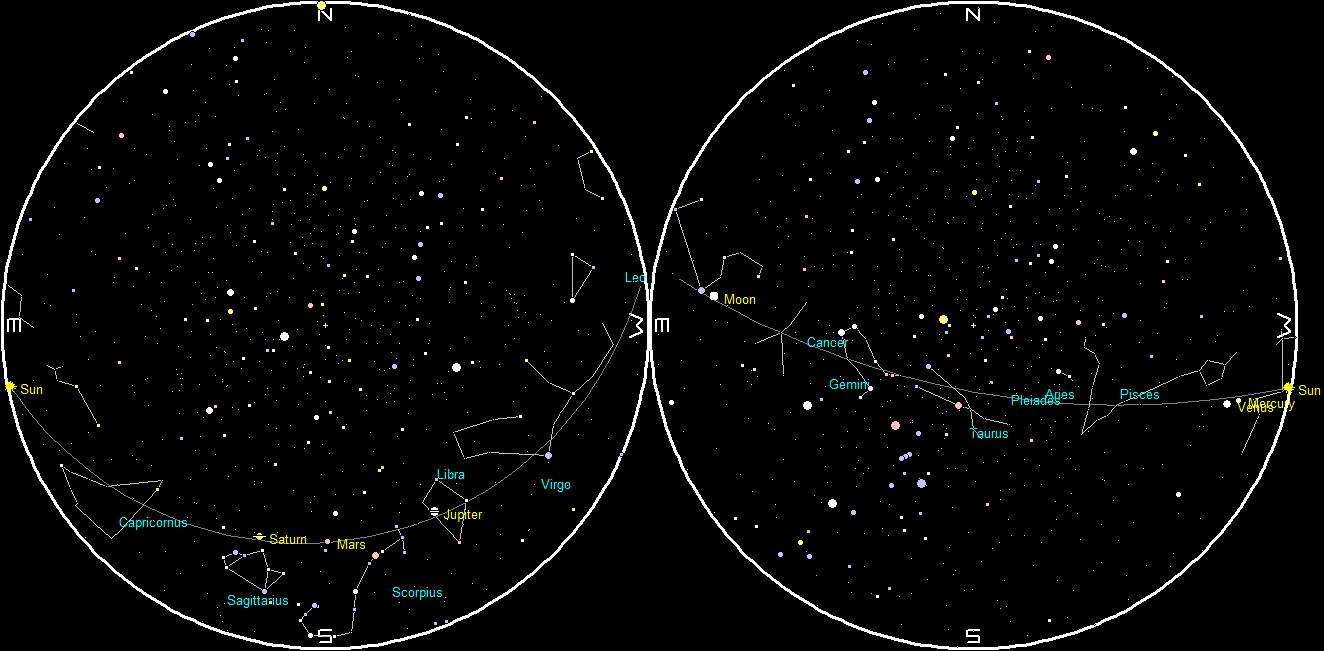
Planets at sunset and sunrise of a single night starting with sunset on the right on February 28, 2018. The night ends on the left with sunrise on March 1st. Click on the image to enlarge. Created using my LookingUp program.
02/21/2018 – Ephemeris – Let’s take our weekly look at the bright planets
Ephemeris for Wednesday, February 21st. The Sun will rise at 7:33. It’ll be up for 10 hours and 46 minutes, setting at 6:19. The Moon, 2 days before first quarter, will set at 12:38 tomorrow morning.
Let’s take our weekly look at the bright planets. All of the bright naked eye planets save two are in the morning sky now. Mercury crossed behind the Sun 4 days ago and will become visible in the evening twilight in a couple of weeks. Also heading away from the Sun after sunset is Venus which sets 51 minutes after the Sun, and might be just visible low in the west-southwest from around 6:30 to about 6:50 p.m. At 7 in this morning’s twilight bright Jupiter is in the south-southwest to the left of it is dimmer Mars and below and right of it the red star Antares. The two are about the same brightness now. Saturn is low in the southeast. Jupiter will rise at 1:06 tomorrow morning, with Mars rising at 3:06. Saturn will end the procession, rising at 4:36 a.m.
The times given are for the Traverse City/Interlochen area of Michigan. They may be different for your location.
Addendum

Venus, low in the west-southwest at 6:30 p.m., February 21, 2018. Created using Stellarium.
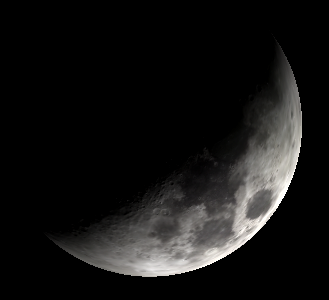
The crescent Moon as it might be seen in binoculars at 8 p.m. tonight. February 21, 2018. Created using Stellarium.
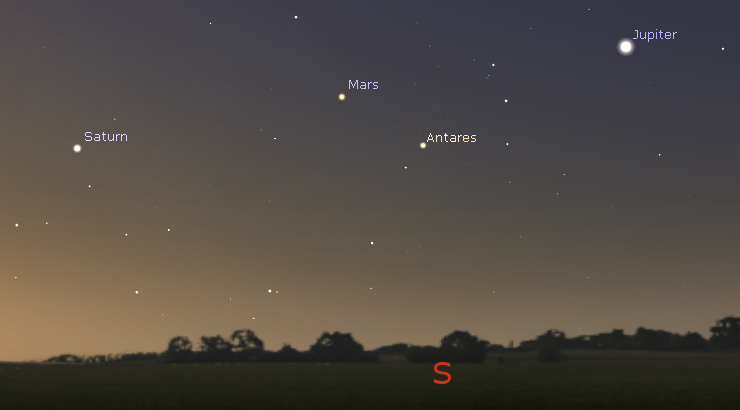
The morning planets of Jupiter, Mars and Saturn. Seen at 7 a.m. as morning twilight brightens, February 21, 2018. Created using Stellarium.
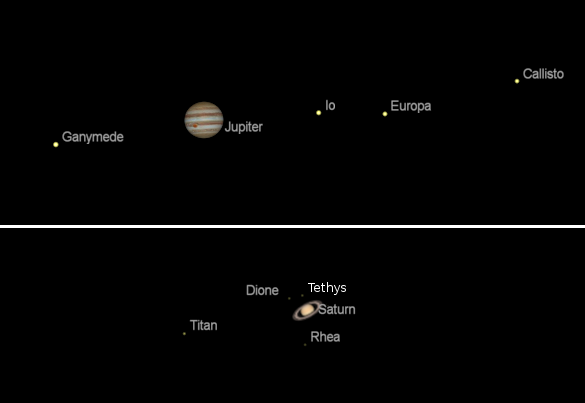
Jupiter and Saturn with heir brighter satellites this morning at 7 a.m. February 21, 2018. They are displayed at the same scale. Saturn in about twice as far as Jupiter. Its disk is a bit smaller than Jupiter’s so it appears about half as large. The extent of the rings appear to be about the same as Jupiter’s diameter. Created using Stellarium.
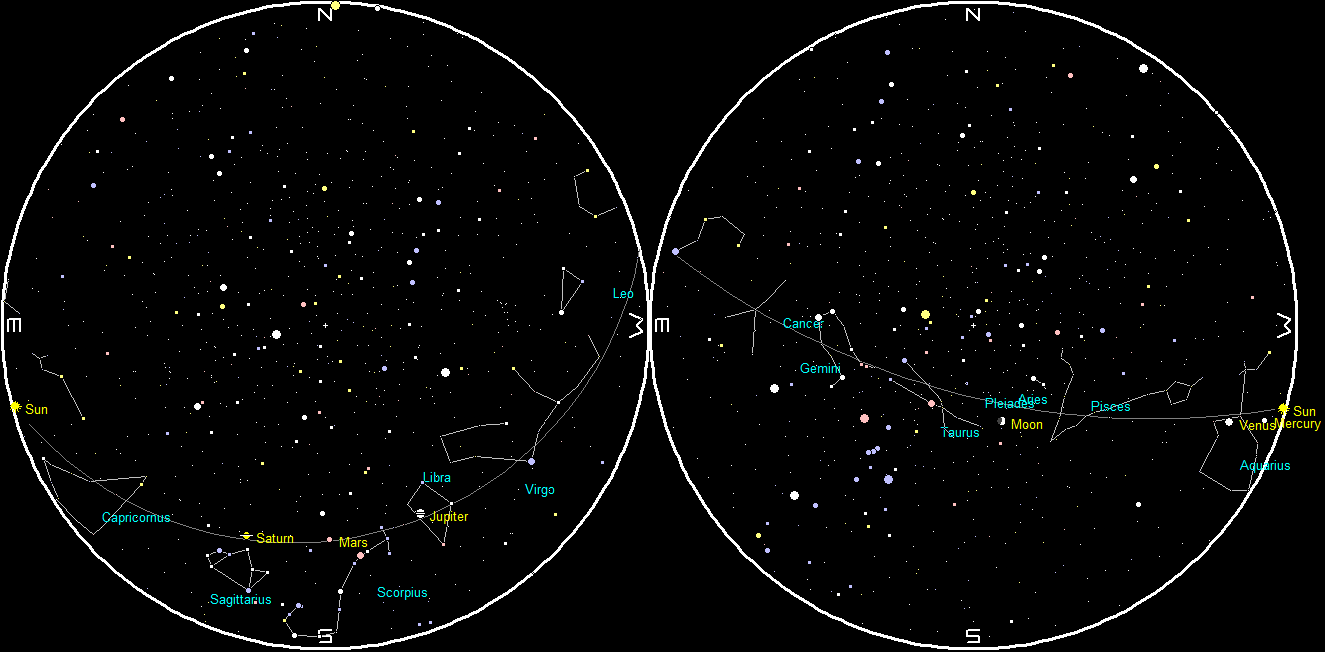
Planets at sunset and sunrise of a single night starting with sunset on the right on February 21, 2018. The night ends on the left with sunrise on February 22nd. Click on the image to enlarge. Created using my LookingUp program.
02/14/2018 – Ephemeris – Let’s take our weekly look at the bright planets
Ephemeris for St. Valentine’s Day and Ash Wednesday, February 14th. The Sun will rise at 7:44. It’ll be up for 10 hours and 25 minutes, setting at 6:09. The Moon, 1 day before new, will rise at 7:42 tomorrow morning.
Let’s take our weekly look at the bright planets. All of the bright naked eye planets save one are in the morning sky now. Heading away from the Sun after sunset is Venus which sets 42 minutes after the Sun, and probably is not visible in the bright evening twilight. That will improve in a couple of weeks. At 7 in this morning’s twilight bright Jupiter is in the south to the left of it is dimmer Mars and below it the red star Antares. The two are about the same brightness now. The name Antares means “Rival of Mars”. Saturn is very low in the southeast. Jupiter will rise at 1:31 tomorrow morning, with Mars rising at 3:13. Saturn will end the procession, rising at 5:01 a.m.
The times given are for the Traverse City/Interlochen area of Michigan. They may be different for your location.
Addendum
This morning
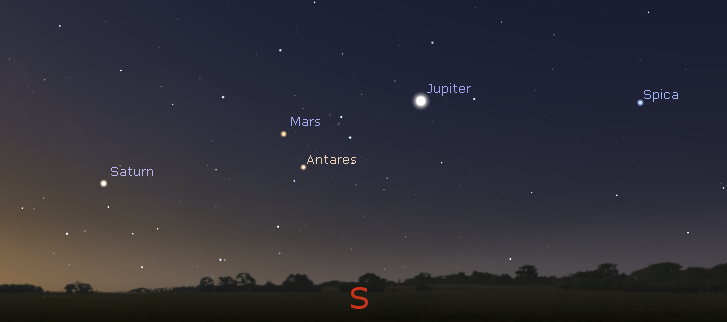
The morning planets of Jupiter, Mars and Saturn. Seen at 7 a.m. as morning twilight brightens, February 14, 2017. Created using Stellarium.
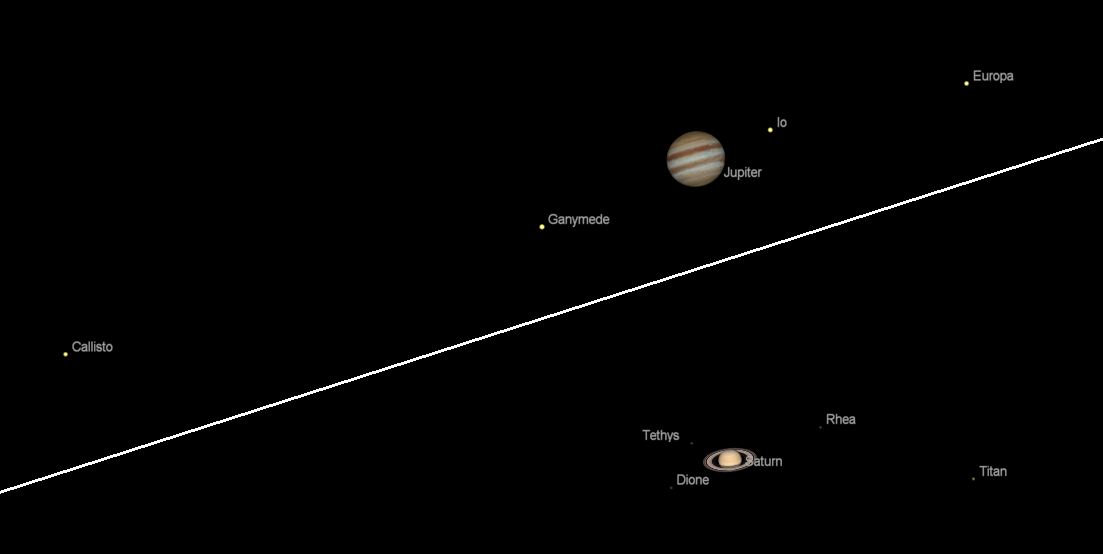
Jupiter and Saturn with their brighter satellites this morning at 7 a.m. February 14, 2018. They are displayed at the same scale. Saturn in about twice as far as Jupiter. Its disk is a bit smaller than Jupiter’s so it appears about half as large. The extent of the rings appear to be about the same as Jupiter’s diameter. Created using Stellarium.
This evening

Venus, the planet of love, about to set over Lake Michigan at 6:30 p.m., February 14, 2018. While a lovely planet in our skies, it is rather a hell hole inside it’s atmosphere. Created using Stellarium.
All night planets
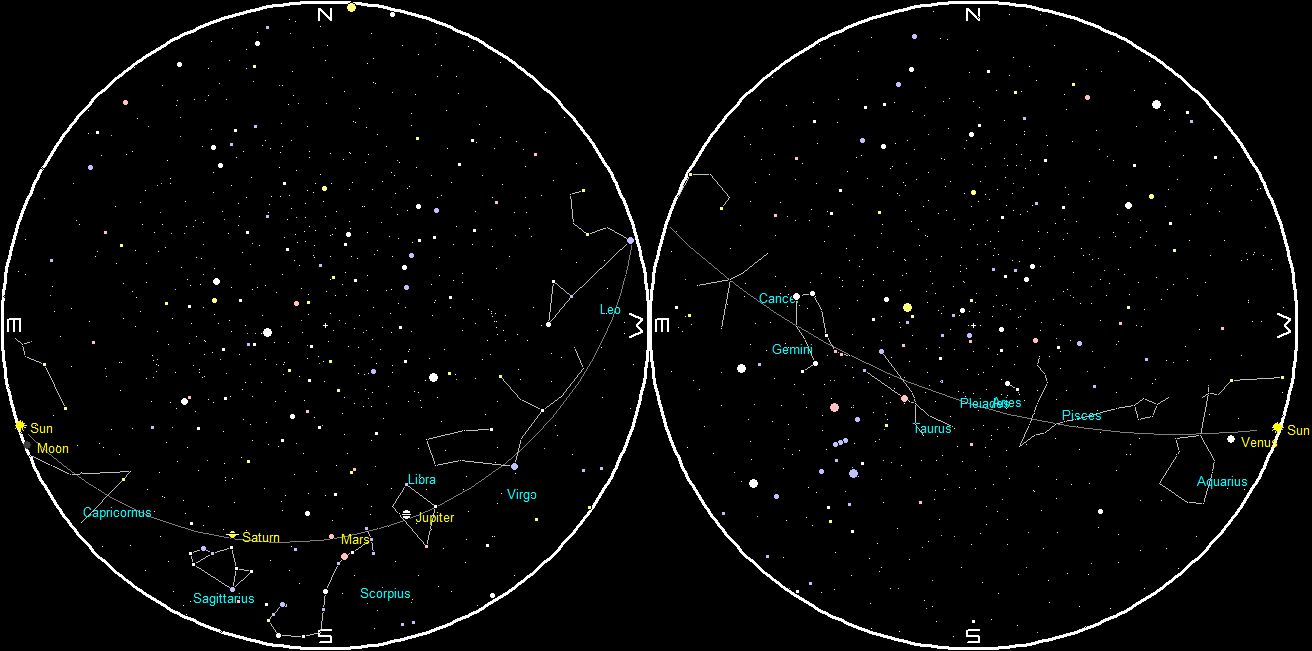
Planets at sunset and sunrise of a single night starting with sunset on the right on February 14, 2018. The night ends on the left with sunrise on February 15th. Mercury is not shown because it is mostly south of the Sun. It will be in superior conjunction on the 17th. Click on the image to enlarge. Created using my LookingUp program.
02/07/2018 – Ephemeris – Where are the bright planets today?
Ephemeris for Wednesday, February 7th. The Sun will rise at 7:54. It’ll be up for 10 hours and 5 minutes, setting at 6 p.m. The Moon, at last quarter today, will rise at 2:10 tomorrow morning.
Let’s take our weekly look at the bright planets. All of the bright naked eye planets save one are in the morning sky now, but Venus sets only 32 minutes after the Sun, and probably is not visible in the bright evening twilight. That will improve by month’s end. At 7 this morning Jupiter is in the south, below left of the Moon and is a lot brighter than Mars, below and left of it. Mars is above the red star Antares, and the two are about the same brightness now. The name Antares means “Rival of Mars”. Mars will appear to pass its closest to Antares Sunday morning. Saturn is very low in the southeast. Jupiter will rise at 1:56 a.m. tomorrow with Mars following at 3:19. Saturn will rise at 5:26 a.m.
The times given are for the Traverse City/Interlochen area of Michigan. They may be different for your location.
Addendum
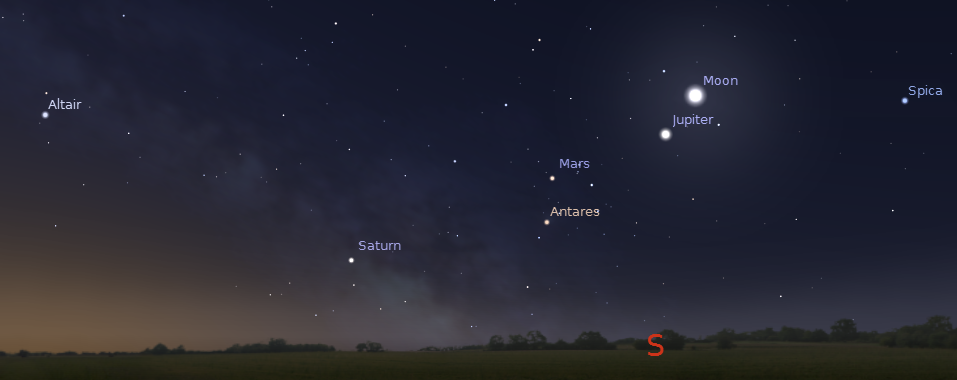
Morning planets and the Moon at 7 a.m. this morning, February 7, 2018. Click on the image to enlarge. Created using Stellarium.
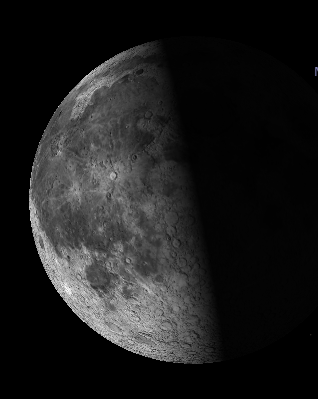
The last quarter Moon as it might be seen in binoculars at 7 a.m. this morning February 7, 2018. Created using Stellarium.
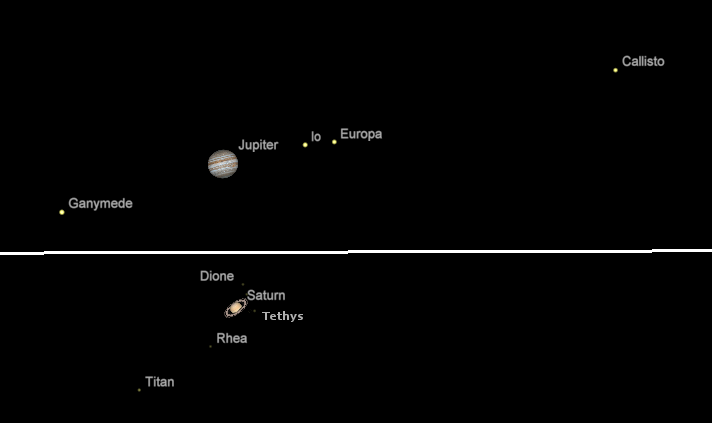
Telescopic views of Jupiter and Saturn at the same scale or power at 7 a.m. this morning, February 7, 2018. Created using Cartes du Ciel (Sky Charts).
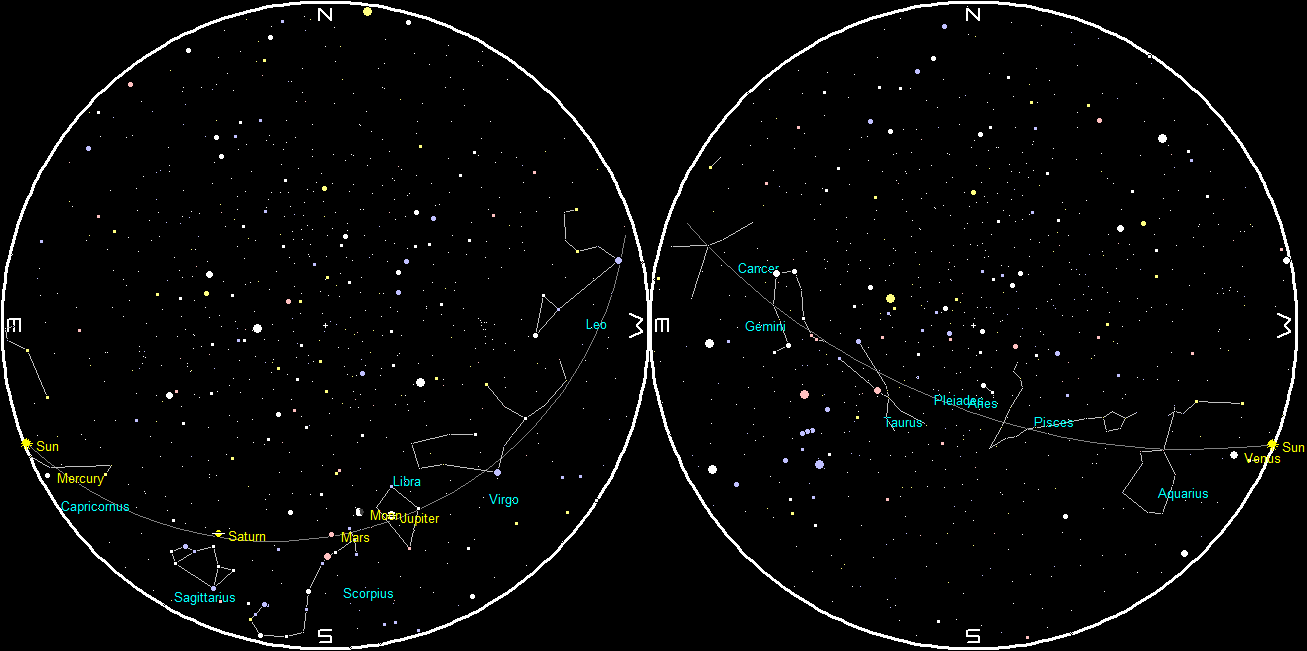
Planets at sunset and sunrise of a single night starting with sunset on the right on February 7, 2018. The night ends on the left with sunrise on February 8th. Click on the image to enlarge. Created using my LookingUp program.
01/31/2018 – Ephemeris – Lunar Eclipse happening now* and the bright planets for this week
* The Ephemeris radio program run at 6:19 a.m. and 7 a.m. EST will run during the lunar eclipse.
Ephemeris for Wednesday, January 31st. The Sun will rise at 8:02. It’ll be up for 9 hours and 47 minutes, setting at 5:50. The Moon, at full today, will rise at 6:15 this evening.
We have a lunar eclipse in progress this morning. Before the partial phase starts the Moon will have a dusky appearance because the Moon will be in the Earth’s outer penumbra shadow. The partial phase starts at 6:48 a.m. (11:48 UT), when the upper left part of the Moon will enter the Earth’s inner shadow, called the umbra. The Moon will be fully immersed in the shadow beginning at 7:51 a.m. (12:51 UT). It will probably disappear by then because the Sun will rise just after 8 a.m. and the Moon will set, at least in the Interlochen/Traverse City area at, 8:04.
Venus is our evening planet, but too close to the Sun to spot. At 7 a.m. Jupiter and Mars below left of it are in the south while Saturn is low in the southeast. Tomorrow morning Jupiter will rise at 2:20 a.m., Mars will follow at 3:25. Last of all Saturn will rise at 5:50 a.m.
The times given are for the Traverse City/Interlochen area of Michigan. They may be different for your location.
Addendum
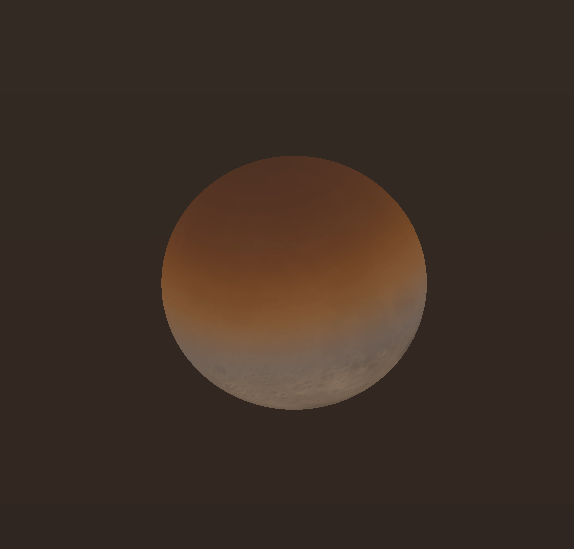
The partially eclipsed Moon at 7:40 a.m. January 31, 2018 from Traverse City, MI as simulated by Stellarium.
For more on the eclipse see yesterday’s post: https://bobmoler.wordpress.com/2018/01/30/01-30-2018-ephemeris-looking-for-tomorrows-lunar-eclipse/.
On to the planets
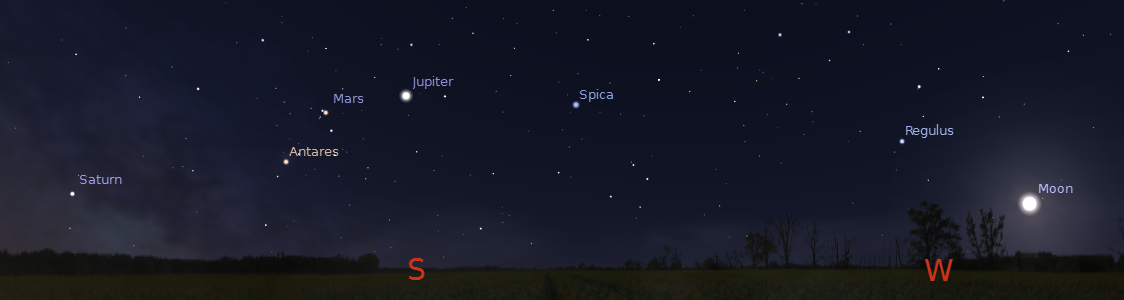
Morning planets and the partially eclipsed moon at 7 a.m. this morning, January 31, 2018. Click on the image to enlarge. Created using Stellarium.
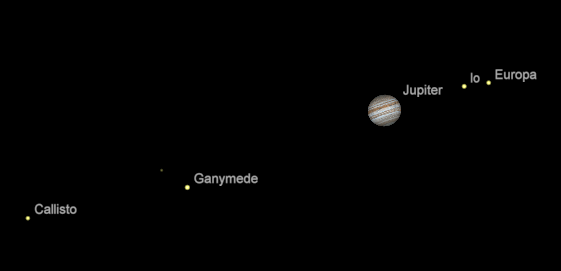
Jupiter and its moons at 7 a.m. this morning January 31, 2018. Created using Cartes du Ciel (Sky Charts).
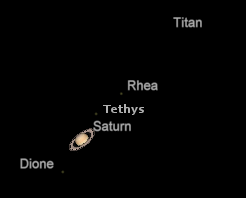
Saturn and its brighter moons at 7 a.m. this morning January 31, 2018. Created using Cartes du Ciel (Sky Charts).
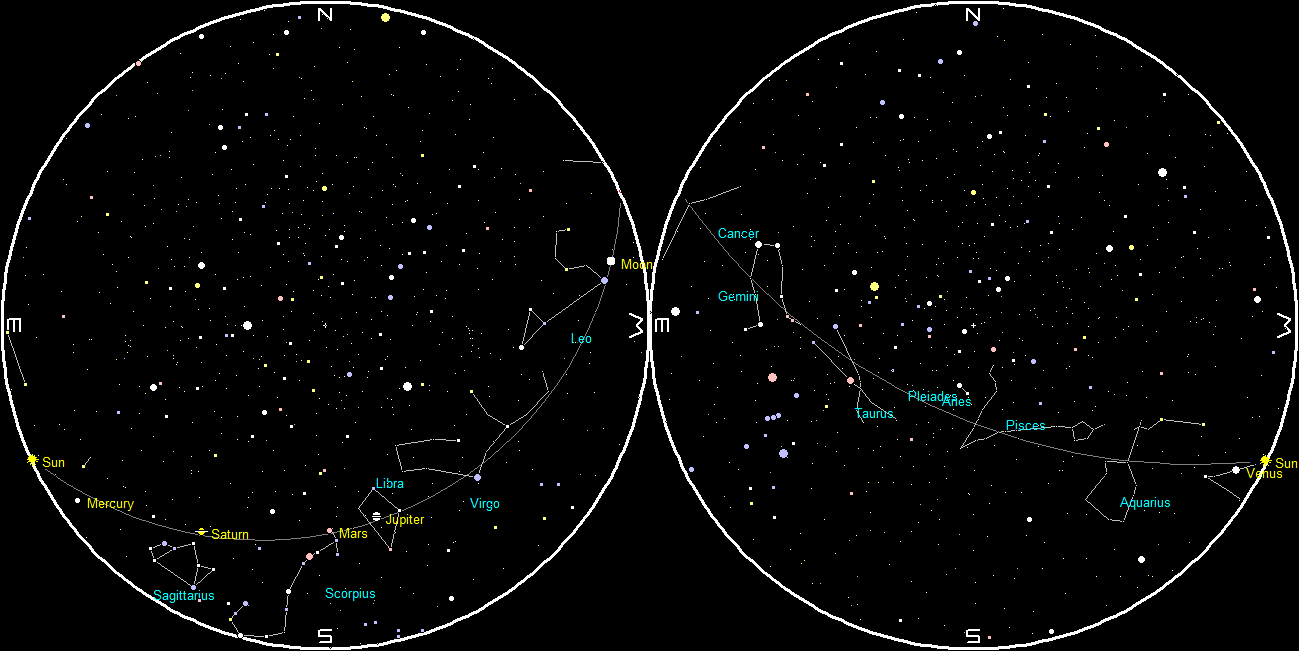
Planets at sunset and sunrise of a single night starting with sunset on the right on January 31, 2018. The night ends on the left with sunrise on February 1st. Click on the image to enlarge. Created using my LookingUp program.
01/24/2018 – Ephemeris – Our weekly look at the bright planets
Ephemeris for Wednesday, January 24th. The Sun will rise at 8:10. It’ll be up for 9 hours and 30 minutes, setting at 5:40. The Moon, at first quarter today, will set at 1:38 tomorrow morning.
Let’s take our weekly look at the bright planets. All of the bright naked eye planets save one are in the morning sky now, but Venus sets only 14 minutes after the Sun. At 7 this morning Jupiter is in the south-southeast and is a lot brighter than Mars, below and left of it. Saturn is very low in the southeast. Jupiter will rise at 2:44 a.m. tomorrow with Mars following at 3:30. And Saturn will rise at 6:15. Saturn’s rise times will increase by 3 to 4 minutes each morning. It will be in a lot better position to spot in the coming weeks. The morning sky you’ll see at 7 a.m. will be the same stars as in the early summer sky with the summer triangle in the east. Scorpius is rising with the red star Antares below and left of Mars.
The times given are for the Traverse City/Interlochen area of Michigan. They may be different for your location.
Addendum
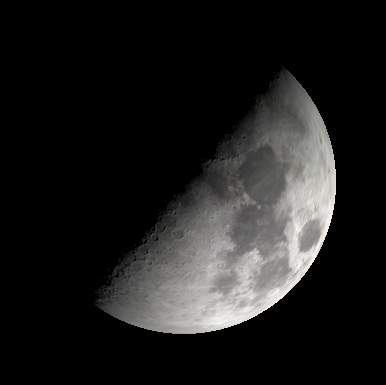
The first quarter Moon as it might be seen in binoculars at 8 p.m. tonight. January 24, 2017. Created using Stellarium.
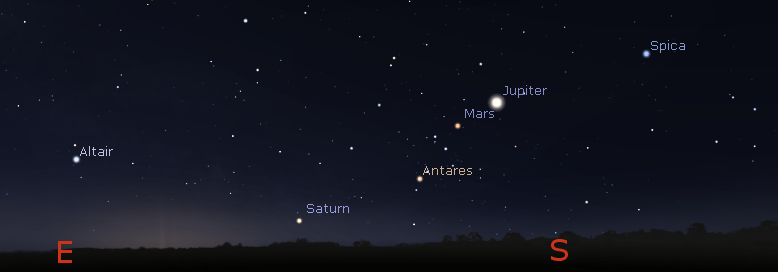
Jupiter and Mars are easily visible, but Saturn is low in the southeast at 7 this the morning, January 24, 2018. Click on the image to enlarge. Created using Stellarium.
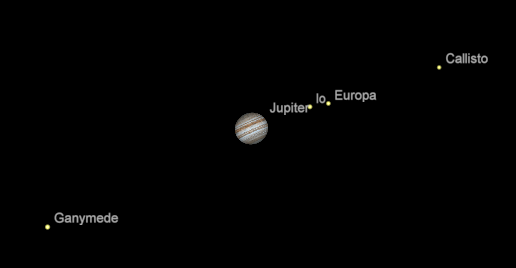
Jupiter and its moons at 7 a.m. this morning January 25, 2018. Created using Cartes du Ciel (Sky Charts).
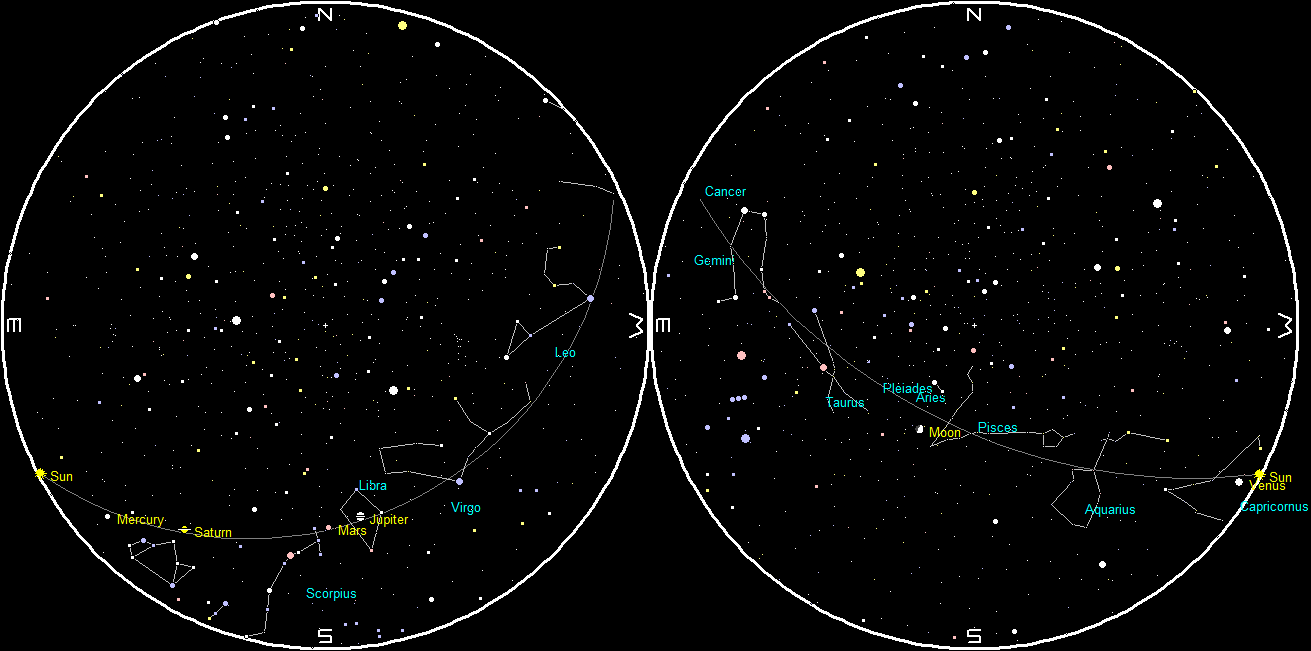
Planets at sunset and sunrise of a single night starting with sunset on the right on January 24, 2018. The night ends on the left with sunrise on the 25th. Click on the image to enlarge. Created using my LookingUp program.
01/17/2018 – Ephemeris – Our weekly look at the bright planets
Ephemeris for Wednesday, January 17th. The Sun will rise at 8:15. It’ll be up for 9 hours and 15 minutes, setting at 5:31. The Moon, 1 day past new, will set at 6:17 this evening.
Let’s take our weekly look at the bright planets. All of the bright naked eye planets save one are in the morning sky now, but Venus sets 2 minutes after the Sun. At 7 this morning Jupiter is in the south-southeast and is a lot brighter than Mars, below and left of it. Saturn is just rising in the southeast. Jupiter will rise at 3:07 tomorrow with Mars following at 3:35. And Saturn will rise at 6:39. Saturn’s rise times will increase by 3 to 4 minutes each morning. It will be in a lot better position to spot in the coming weeks. The morning sky you’ll see at 7 a.m. will be the same stars as in the late spring sky with the summer triangle just rising. Scorpius is rising with the red star Antares below left of Mars, and Orion as I mentioned yesterday has fled over the western horizon.
The times given are for the Traverse City/Interlochen area of Michigan. They may be different for your location.
Addendum
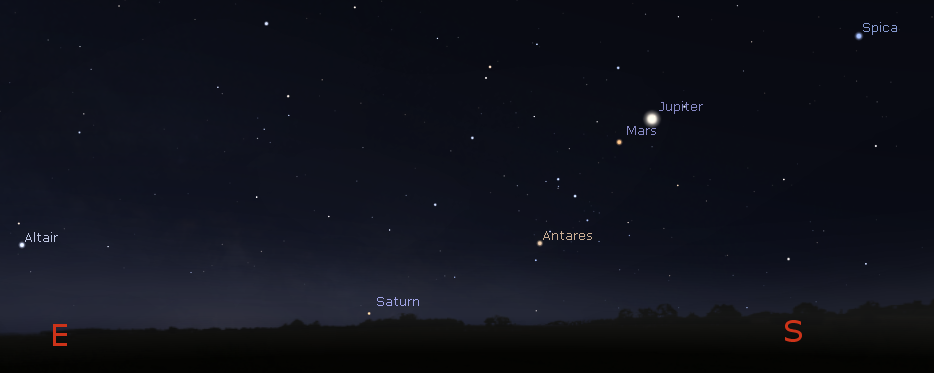
Jupiter and Mars are easily visible, but Saturn is low and problematic at 7 in the morning. Created using Stellarium.
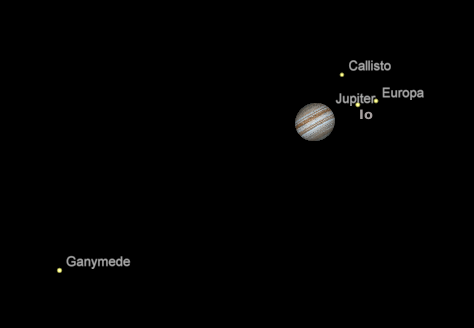
Jupiter and its moons at 7 a.m. this morning January 17, 2018. Io and Europa will be eclipsed and occulted by Jupiter after this time.
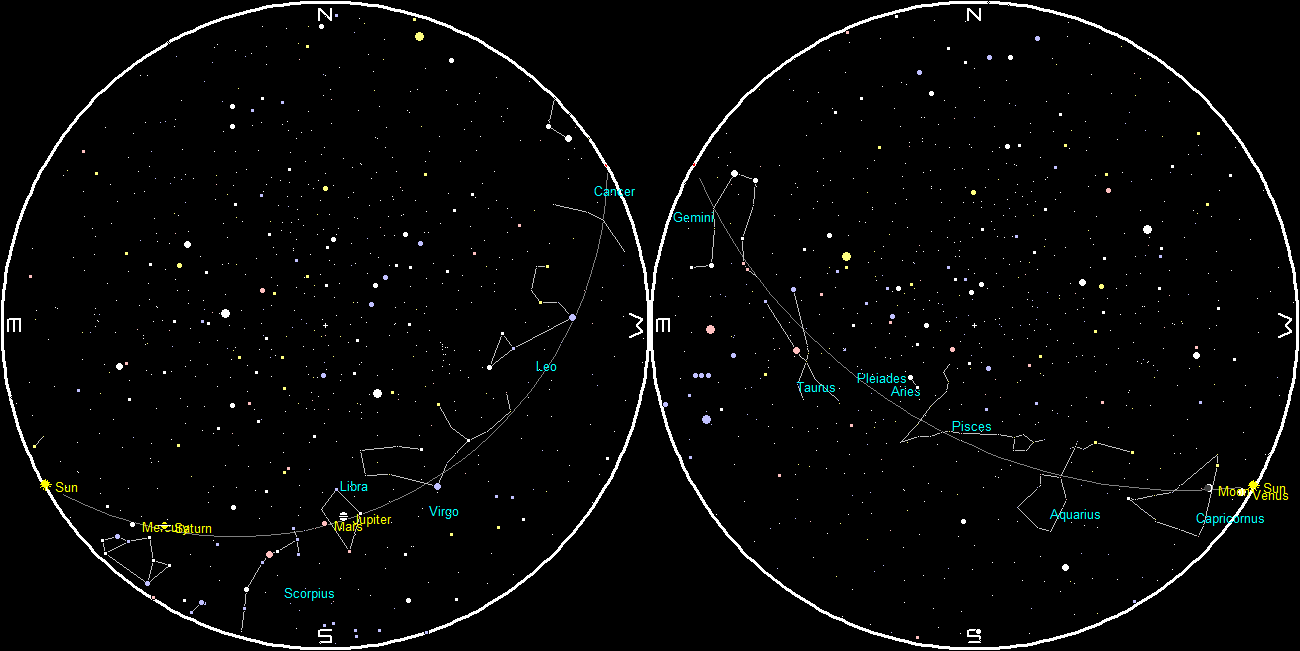
Planets at sunset and sunrise of a single night starting with sunset on the right on January 17, 2018. The night ends on the left with sunrise on the 18th. Click on the image to enlarge. Created using my LookingUp program.

