Archive
04/11/2012 – Ephemeris – Where are the bright planets this week?
Ephemeris for Wednesday, April 11th. The sun will rise at 7:04. It’ll be up for 13 hours and 18 minutes, setting at 8:23. The moon, 2 days before last quarter, will rise at 2:19 tomorrow morning.
Let’s see what’s happening with the bright planets for this week. Venus and Jupiter have separated quite far apart in the western sky after sunset. Jupiter is below Venus, the brighter planet. Jupiter will set at 10:22 p.m. followed by Venus at 12:37 a.m. Venus is 55.2 million miles away and closing. Mars is high in the southeast to south in the evening with its unmistakable bright reddish color. It’s in the constellation Leo the lion now. It is 75 million miles and moving away. Mars will pass due south at 10:46 p.m. and will be setting in the west at 5:40 a.m. Saturn will rise at 8:30 p.m. just to the left of the bright star Spica in the east southeast. It will pass due south at 2:02 a.m. All the bright planets except Mercury are now visible in the evening.
* Times are for the Traverse City/Interlochen area of Michigan. They may be different for your location.
Addendum
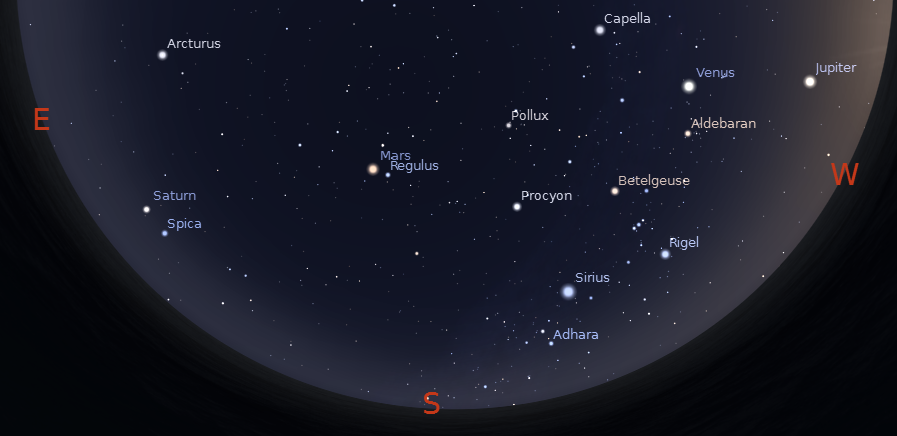
Sky and planets at 9:20 p.m. April 11, 2012. Created using Stellarium.
04/04/2012 – Ephemeris – Where are the bright planets this week?
Ephemeris for Wednesday, April 4th. The sun will rise at 7:17. It’ll be up for 12 hours and 57 minutes, setting at 8:14. The moon, 2 days before full, will set at 6:13 tomorrow morning.
Let’s see what’s happening with the bright planets for this week. Venus and Jupiter are separating in the western sky after sunset. Jupiter is way below Venus, the brighter planet. Jupiter will set at 10:41 p.m. followed by Venus at 12:28 a.m. It is 59.6 million miles away and closing. Mars is in the southeast to south in the evening with its unmistakable bright reddish color. It’s in the constellation Leo the lion now. It is 71.1 million miles and moving away. Mars will pass due south at 11:16 p.m. and will be setting in the west at 6:10 a.m. Saturn will rise at 9:01 p.m. just to the left of the bright star Spica in the east southeast. It will pass due south at 2:31 a.m. All the bright planets except Mercury are now visible in the evening.
* Times are for the Traverse City/Interlochen area of Michigan. They may be different for your location.
Addendum
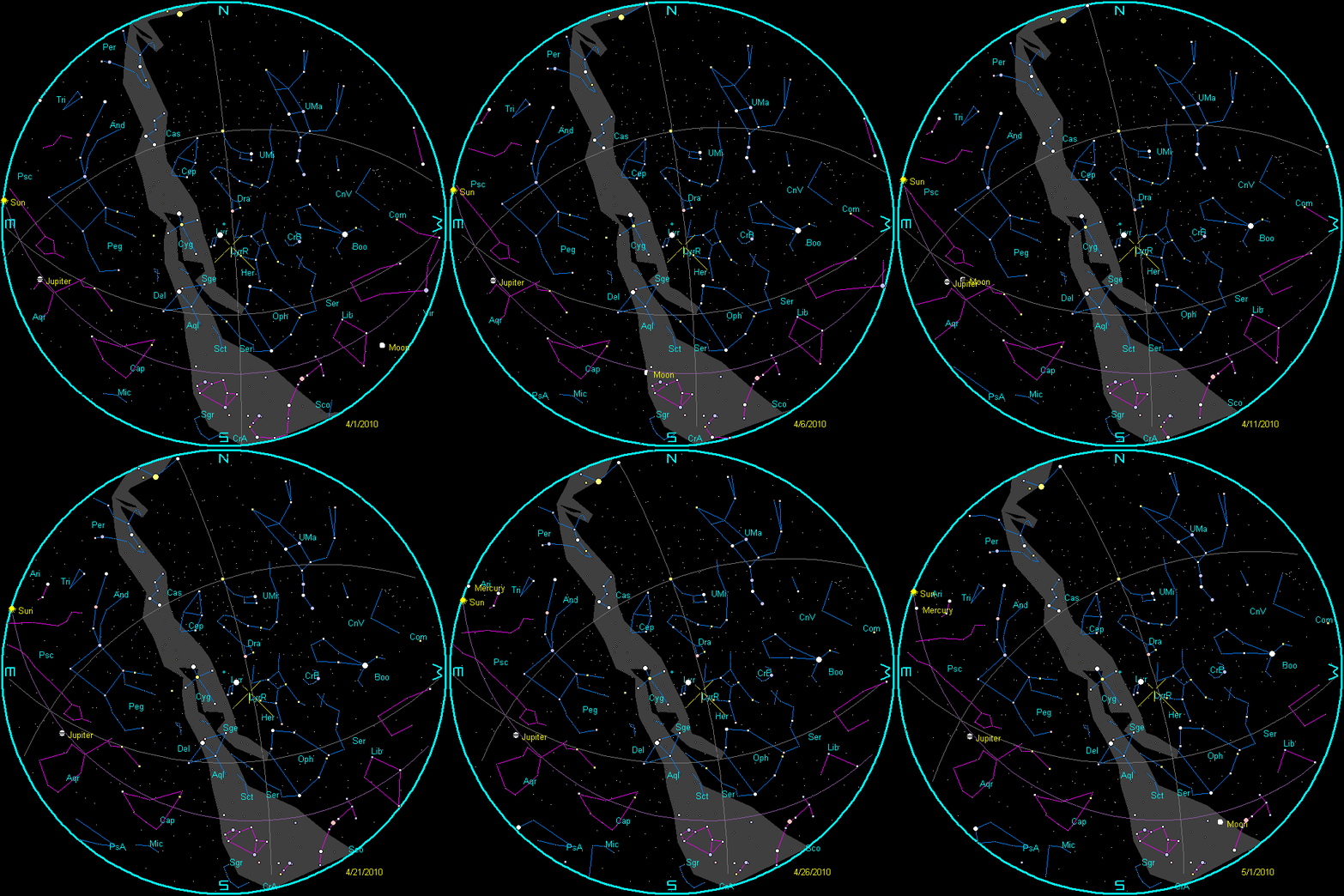
Animation of the planets and moon at sunrise for April 2012
Click on the images to enlarge.
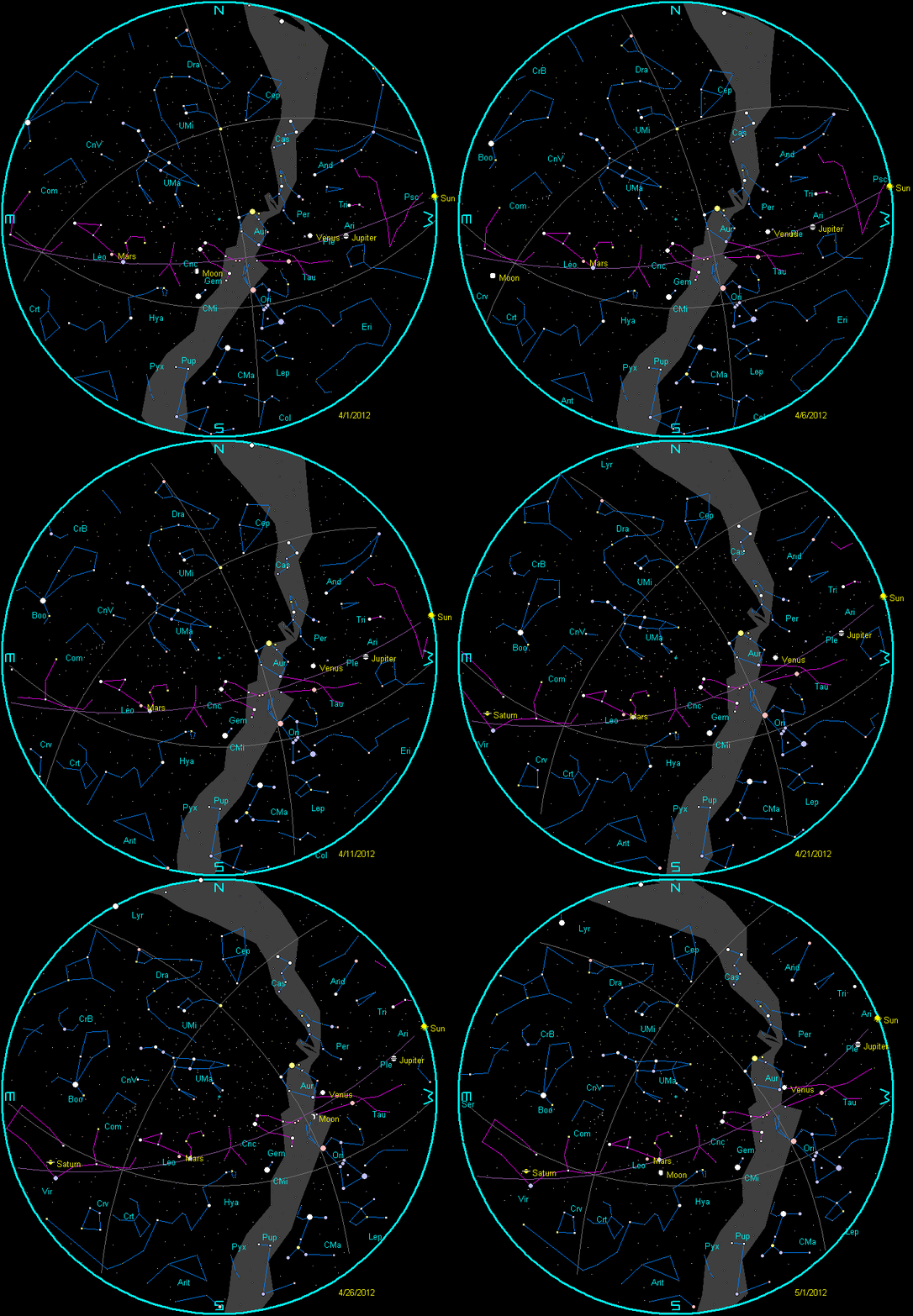
Animation of the planets and moon at sunset for April 2012
03/28/2012 – Ephemeris – Where are the bright planets this week?
Ephemeris for Wednesday, March 28th. The sun will rise at 7:29. It’ll be up for 12 hours and 35 minutes, setting at 8:05. The moon, 2 days before first quarter, will set at 2:10 tomorrow morning.
Let’s see what’s happening with the bright planets for this week. Venus and Jupiter are separating in the western sky after sunset. Jupiter is below Venus, the brighter planet. Jupiter will set at 11:01 p.m. followed by Venus at 12:20 a.m. Mars is up in the southeast in the evening with its unmistakable bright reddish color. It’s in the constellation Leo the lion now. It is 68.3 million miles and moving away. Mars will pass due south at 11:43 p.m. and will be setting in the west at 6:37 a.m. Saturn will rise at 9:31 p.m. just to the left of the bright star Spica in the east southeast. It will pass due south at 3:01 We have 4 bright planets visible in the evening.
* Times are for the Traverse City/Interlochen area of Michigan. They may be different for your location.
Addendum
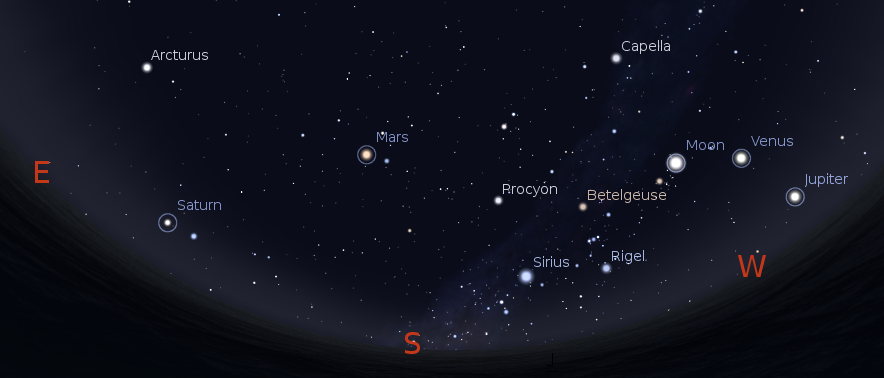
The stars and planets at 10:30 p.m. on 3/28/2012. Created using Stellarium,
03/14/2012 – Ephemeris – Where are the bright planets this week?
Wednesday, March 14th. The sun will rise at 7:55. It’ll be up for 11 hours and 52 minutes, setting at 7:47. The moon, at last quarter today, will rise at 3:35 tomorrow morning.
Let’s see what’s happening with the bright planets for this week. Mercury will make a brief appearance in the west after sunset. It will set at 8:54. Venus and Jupiter are brilliant in the western sky after sunset. Jupiter will be just below left of Venus, the brighter planet. Jupiter will set first at 11:40 p.m. followed by Venus at 11:53. Mars is up in the east in the evening with its unmistakable bright reddish color. It’s in the constellation Leo the lion now. It is 63.5 million miles and moving away. Mars will pass due south at 1:04 a.m. and will be setting in the west near sunrise. Saturn will rise at 10:31 p.m. just to the left of the bright star Spica in the east southeast.
* Times are for the Traverse City/Interlochen area of Michigan. They may be different for your location.
Addendum
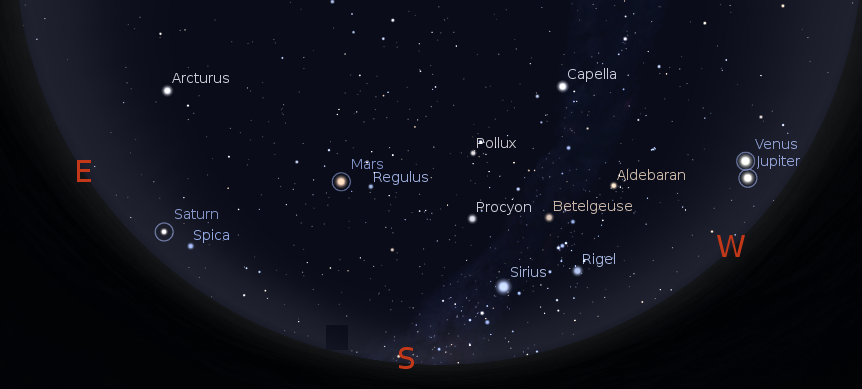
The planets at 11 p.m. March 14, 2012. Created using Stellarium.
03/09/2012 – Ephemeris – The moon will pass Spica and Saturn tomorrow
Ephemeris for Friday, March 9th. The sun will rise at 7:04. It’ll be up for 11 hours and 36 minutes, setting at 6:41. The moon, 1 day past full, will rise at 8:47 this evening.
The moon will be passing by the bright star Spica and the planet Saturn tomorrow evening. They will make a neat triangle with the moon at the point below. I should remind everyone that the moon will only pass these object from our point of view. We are lining up the nearby moon, only a quarter million miles away with Saturn, nearly a billion miles away, and Spica trillion and trillions of miles away. Though the heavens appear as a sphere overhead, it is unimaginably deep. The ancients called the heavens the firmament, meaning that it was literally solid. It was, according to Genesis, placed there to divide the waters above from that below. We find now that time is as deep into the past as space is deep, some 13.7 billion years.
Not mentioned in the program: Daylight Time will start at 2 a.m. Sunday March 11th at 2 a.m.
* Times are for the Traverse City/Interlochen area of Michigan. They may be different for your location.
Addendum
Below is The moon below Spica and Saturn at 11 p.m. on Saturday, march 10, 2012.
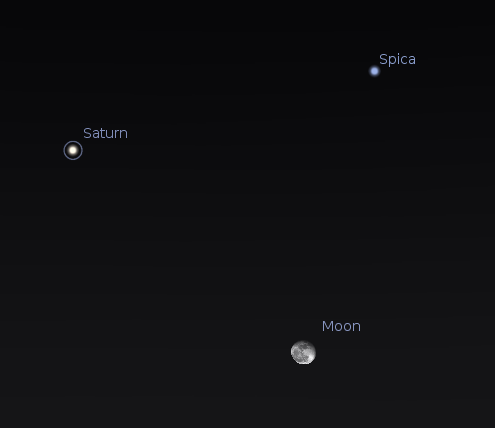
The Moon, Spica and Saturn at 11 p.m March 10, 2012. Chart created using Stellarium.
03/07/2012 – Ephemeris – Where are the bright planets this week?
Ephemeris for Wednesday, March 7th. The sun will rise at 7:08. It’ll be up for 11 hours and 30 minutes, setting at 6:38. The moon, 1 day before full, will set at 6:47 tomorrow morning.
Let’s see what’s happening with the bright planets for this week. Mercury will make a brief appearance in the west after sunset. It will set at 8:15. Venus is brilliant in the western sky after sunset and will set at 10:39 in the west. Jupiter the second brightest planet after Venus is located just above it. They are approaching each other. Jupiter will set at 10:57 p.m.. Mars is up by sunset in the east and is in the constellation Leo the lion. It is 62.6 million miles away . It’s now as bright as most first magnitude stars. Mars will pass due south at 12:37 a.m. and will be setting in the west at sunrise. Saturn will rise at 10:00 p.m. just to the left of the bright star Spica in the east southeast. The moon will appear near it on Saturday evening.
* Times are for the Traverse City/Interlochen area of Michigan. They may be different for your location.
Addendum
Below is Mars a photo by Scott Anttila.
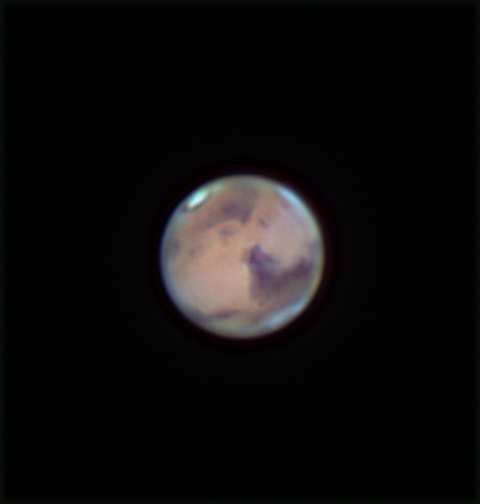
Mars on the morning of March 5, 2012 by Scott Anttila
Scott’s description: “Near 100% illumination, Syrtis Major, the Horse Tail, small polar cap, clouds all around the equatorial area. It is a quick and dirty processing of the Image. There might be more detail that can be teased out when I have more time.”
Syrtis Major is the large dark area. The name means Great Swamp. i am unfamiliar with the Horse Tail. I’m guessing that it’s the linear dark feature on the lower left of the image. If so the proper name is Sinus Sabaeus. Sinus is “Bay”. Ther are no bays or swamps on bone dry Mars or for that matter seas on the moon. The names were established before the nature of these features were known.
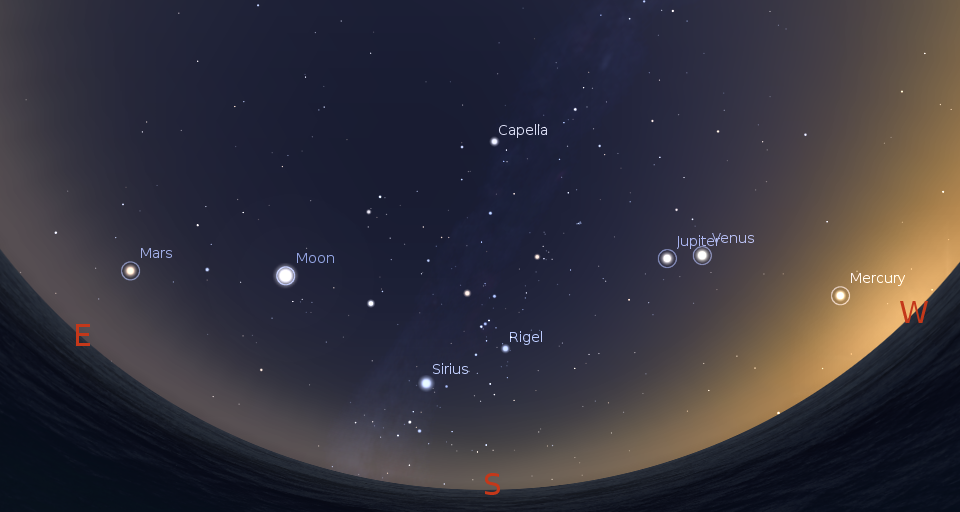
The sky after sunset showing all the evening planets. Created using Stellarium.
This is from Monday, but still pretty close to tonight’s view.
02/29/2012 – Ephemeris – Where are the bright planets this week?
Ephemeris for Wednesday, February 29th, the leap day or intercalary day. The sun will rise at 7:20. It’ll be up for 11 hours and 8 minutes, setting at 6:29. The moon, at first quarter today, will set at 2:28 tomorrow morning.
Let’s see what’s happening with the bright planets for this week. Venus is brilliant in the western sky after sunset and will set at 10:23 in the west. Jupiter the second brightest planet after Venus is located high in the west as it gets dark and is seen against the stars of the constellation Aries. Venus is now approaching it. Jupiter will set at 11:21 p.m.. Mars is the up and coming planet. It will rise near sunset in the east and is in the constellation Leo the lion. It is 62.8 million miles away . It’s now as bright as most first magnitude stars. Mars will pass due south at 1:14 a.m. Saturn will rise at 10:29 p.m. just to the left of the bright star Spica in the east southeast.
* Times are for the Traverse City/Interlochen area of Michigan. They may be different for your location.
Addendum
Mars in approach. These photos of Mars from earlier posts by Scott Anttila shows Mars approaching, or rather being approached by the earth over the last two months.
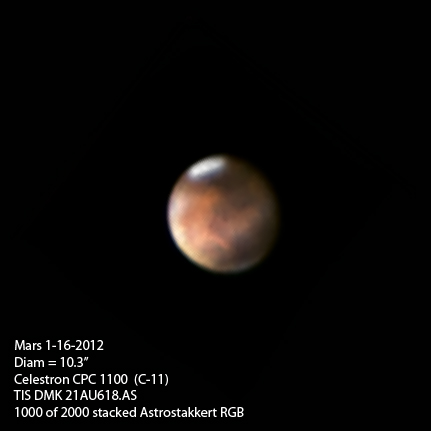
Mars 9 days ago. Photograph by Scott Anttila
Besides getting larger in approach, Mars is becoming more full. Also notice that the north polar cap is shrinking as northern summer proceeds.

Mars on February 6, 2012. Photograph by Scott Anttila

Mars on February 20, 2012 at 5:57 UT (12:57 a.m.). Photograph by Scott Anttila.
Mars will reach opposition from the sun on March 3rd, and will be closest to the earth on the 5th, at just a teensy bit closer than today at 62.6 million miles.
For more on the martian seasons check out this blog post with video by the Planetary Society’s Emily Lakdawalla.
02/22/2012 – Ephemeris – Where are the bright planets this week?
Ephemeris for Ash Wednesday, Wednesday, February 22nd. The sun will rise at 7:32. It’ll be up for 10 hours and 47 minutes, setting at 6:20. The moon, 1 day past new, will set at 7:31 this evening.
Let’s see what’s happening with the bright planets for this week. Venus is brilliant in the western sky after sunset and will set at 10:08 in the west. Jupiter the second brightest planet after Venus is located high in the west as it gets dark and is seen against the stars of the constellation Aries. Venus is approaching it now. Jupiter will set at 11:39 p.m.. Mars is the up and coming planet. It will rise near sunset in the east and is below the hind end of the constellation Leo the lion. It is 64.0 million miles away and closing and is getting brighter. It’s now as bright as most first magnitude stars. Mars will pass due south at 1:52 a.m. Saturn will rise at 10:58 p.m. just to the left of the bright star Spica in the east southeast.
* Times are for the Traverse City/Interlochen area of Michigan. They may be different for your location.
Addendum
Mars on February 20, 2012 at 5:57 UT (12:57 a.m.). Photograph by Scott Anttila.
We are nor a couple of weeks from the opposition of Mars with the sun on March 3rd. (March is named for Mars, by the way.) It will be closest on March 5th at 62.6 million miles.
02/15/2012 – Ephemeris – Where are the bright planets this week?
Ephemeris for Wednesday, February 15th. The sun will rise at 7:43. It’ll be up for 10 hours and 27 minutes, setting at 6:10. The moon, 1 day past last quarter, will rise at 3:45 tomorrow morning.
Let’s see what’s happening with the bright planets for this week. Venus is brilliant in the southwestern sky after sunset and will set at 9:52 in the west. Jupiter is the second brightest planet after Venus. It’s located high in the southwest as it gets dark and is seen against the stars of the constellation Aries. And Venus is approaching it now. Jupiter will set at 12:03 a.m.. Mars is the up and coming planet. It will rise at 7:54 p.m in the east and is below the hind end of the constellation Leo the lion. It is 66.1 million miles away and closing and is getting brighter. It’s now as bright as most first magnitude stars. Mars will pass due south at 2:27 a.m. Saturn will rise at 11:26 p.m. just to the left of the bright star Spica in the east southeast.
* Times are for the Traverse City/Interlochen area of Michigan. They may be different for your location.
02/10/2011 – Ephemeris – The moon will be near Saturn Sunday morning
Ephemeris for Friday, February 10th. The sun will rise at 7:50. It’ll be up for 10 hours and 12 minutes, setting at 6:03. The moon, 3 days past full, will rise at 9:52 this evening.
Sunday morning the moon will pass Saturn in our sky. The ringed planet is just to the left of the bright blue-white star Spica in the constellation of Virgo. Saturn and Spica rise around midnight now. Saturn will be best seen in the evening this spring and early summer. Its rings are still opening up from their edge on passage in 2009. Saturn’s rings can be seen in any telescope with 20 power or over. In fact in sturdily mounted binoculars, Saturn will appear not point-like as stars do but may appear somewhat oblong, due to its rings. The rings are not solid, a fact that’s been known for a few centuries. A solid disk would be tour asunder by the tidal forces on it by the difference in the gravitational forces across the rings.
* Times are for the Traverse City/Interlochen area of Michigan. They may be different for your location.
Addendum
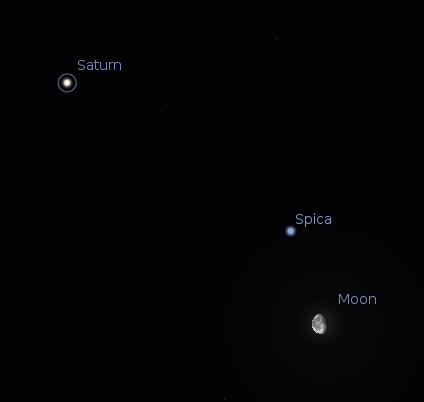
Saturn, Spica and the moon at 6 a.m. February 12, 2012. Created using Stellarium.

